DRP News Bulletin

DRP: 30 Sept. 2019: Constitutional status of Water a state subject under threat

Under India’s constitution, water is supposed to be STATE subject. That seems to be under serious threat. First it happened with Waterways Act in 2015 (this was opposed by a number of ministries at centre and number of states, but the bill still got passed). Now the three new bills, as listed below are further threatening this. The advocates of centralisation, including the World Bank and the Central govt big dam lobby, have been wanting to change the constitutional status, but they have not succeeded so far, but now effectively, they could achieve that objective if all these bills are passed.

3 Water Bills Threatening Federalism Three Bills are presented by the Centre in the recently concluded session: a) River Basin Management Bill, 2019 proposing 13 River Basin Authorities for various river basins in our country, b) River Water Disputes Bill, 2019, to have a dispute resolution committee DRC, and c) Dam Safety Authority Bill, 2019, which significantly shift rights and authority of the States over rivers to the Centre.

With these Bills staring at federalism, the new question emerging is: Who will have final say on the water in rivers; the Centre or the States, the Peoples’ representatives or bureaucrats? https://countercurrents.org/2019/09/three-water-bills-threatening-federalism  (25 Sept. 2019)

The Interstate River Water Dispute Bill is making it mandatory for the Central government to make such scheme. Under the Act, the Central government maintains a data bank and information system at the national level for each river basin. The Bill provides that the Central government will appoint or authorise an agency to maintain such data bank.

This amendment Bill is a mix of some good provisions which are very much required, and over-centralisation of power. Some States like Tamil Nadu and Odisha have expressed apprehension of appropriation of more powers by the Centre. https://countercurrents.org/2019/09/interstate-river-water-dispute-bill-2019-more-centralisation-of-centres-power   (26 Sept. 2019)

Continue reading “DRP: 30 Sept. 2019: Constitutional status of Water a state subject under threat”
DRP News Bulletin

DRP: 23 Sept. 2019: World Rivers Day; Several Moves to Conserve Rivers in India

GANGA Uttar Pradesh Floodplain set to be demarcated for 1st time State government has demarcated the Ganga’s floodplain and submitted a final report to the Jal Shakti ministry. The NMCG under Jal Shakti ministry would be the final authority to decide the floodplain. Once the report is approved, the centre would notify Ganga’s floodplain in the state for the first time.

In the first phase, the river stretch from Haridwar till Unnao has been covered. At least 200 metres from the embankment in the city and 500 metres from the embankment in rural areas might be marked as the river’s floodplain. A floodplain is the maximum area that a river has flooded in 25 years. Though the river may not rise that high every year but the demarcating it will mark the area that a river may engulf.

After the floodplain demarcated, it would further be divided into ‘no-development’ and ‘restrictive’ zones. The activities for each of the zones would be defined by the Centre and state government. If any activity is allowed in the ‘no development’ zone, it would be agriculture but on the condition that no fertilizer would be used, said sources in the state government. https://timesofindia.indiatimes.com/city/lucknow/gangas-floodplain-set-to-be-demarcated-for-first-time/articleshow/70877778.cms  (28 Aug. 2019)

Continue reading “DRP: 23 Sept. 2019: World Rivers Day; Several Moves to Conserve Rivers in India”
DRP News Bulletin

DRP: 16 Sept 2019: Wire Exposes How ill thought River Navigation was Pushed by the government

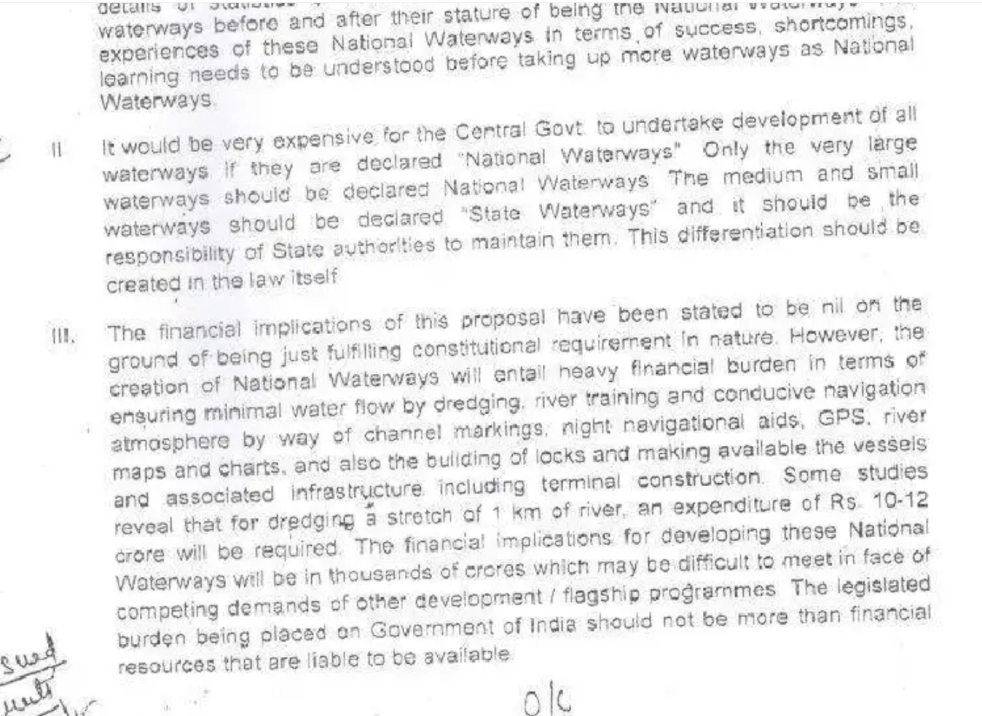
FANTASTIC piece of work that shows how Ministtry of Finance, NITI Ayog, MoWR and MoEF raised objections to the National Waterways bill, but it was bull dozed by Gadkari, without even sharing the comments with cabinet.

पोत परिवहन मंत्रालय को यह चेताया गया था कि व्यापक विचार-विमर्श के बिना किसी जलमार्ग को राष्ट्रीय जलमार्ग घोषित करना सही नहीं होगा. इतनी बड़ी संख्या में राष्ट्रीय जलमार्ग विकसित करने पर न सिर्फ केंद्र सरकार पर आर्थिक बोझ पड़ेगा बल्कि पर्यावरण को भी गहरा नुकसान होगा, जिसे कभी ठीक नहीं किया जा सकता है. द वायर द्वारा सूचना के अधिकार (आरटीआई) के तहत प्राप्त किए गए आधिकारिक दस्तावेजों से ये खुलासा हुआ है कि वित्त मंत्रालय ने एक ही बार में इतने सारे जलमार्गों को राष्ट्रीय जलमार्ग घोषित करने के फैसले को लेकर कड़ा ऐतराज जाहिए किया था.फाइल नोटिंग और आधिकारिक पत्राचारों की करीबी जांच से यह भी पता चलता है कि वित्त मंत्रालय की टिप्पणियों को केंद्रीय कैबिनेट के सामने विचार के लिए रखा ही नहीं गया और कैबिनेट ने बिना इसके ही राष्ट्रीय जलमार्ग विधेयक, 2015 के प्रस्ताव को 25 मार्च 2015 को मंजूरी दे दी थी.

– देश के 106 जलमार्गों को राष्ट्रीय जलमार्ग घोषित करने के फैसले को लेकर केंद्र के दो प्रमुख विभाग नीति आयोग और वित्त मंत्रालय ने कड़ा विरोध जताया था.

– पांच फरवरी 2015 को भेजे अपने जवाब में नीति आयोग ने कहा कि जिन जलमार्गों को राष्ट्रीय जलमार्ग घोषित करने का प्रस्वाव रखा गया है, उसे लेकर ये चर्चा नहीं हुई कि आखिर किस आधार पर इन्हें राष्ट्रीय जलमार्ग घोषित किया जा रहा है.आयोग के यातायात विभाग ने अपने पत्र में लिखा, ‘सबसे पहले किसी भी नदी को राष्ट्रीय जलमार्ग घोषित करने के लिए कुछ व्यापक मापदंड जैसे कि उद्योगों से संपर्क, पर्यावरण प्रभाव आकलन, पूरे साल में पानी की मौजूदगी, नौपरिवहन इत्यादि तय किए जाने चाहिए.’

Continue reading “DRP: 16 Sept 2019: Wire Exposes How ill thought River Navigation was Pushed by the government”
DRP News Bulletin

DRP: 9 Sept 2019: Sand Mining issues proliferate even in monsoon

One expects that River sand mining issues will be minimal in monsoon, with riverbeds flooded, but that is far from the case, as we can see from this week’s bulletin. Recent news include the positive story of Dakshin Kannada deputy commissioner being remembered for curbing illegal sand mining; Institute of Engineers demanding curb in sand mining around the 90 year old Krishna Raj Sagar dam on Cauvery considering its safety; in Tamil Nadu, the most dangerous place in the context of sand mining, there is the news of police forcing activists to apologise; While the TN minister is in denial mode about illegal sand mining round Chennai; firing between sand mafia and police in Rajasthan leading to two deaths and several injuries; in MP, a video is in circulation showing police negotiation with sand mafia; new sand mining policies in several states including Andhra Pradesh, Madhya Pradesh and Bihar and in Delhi the DJB has written to NGT to take steps to curb illegal sand mining downstream of Hathnikund barrage. And there is more.

That’s a lot of news during monsoon on River Sand mining. Unfortunately, there is no light at the end of the sandy tunnel. There is no effective policy or action on the horizon either from the states, centre or judiciary. It seems a lot more focused work is required on this issue.

Continue reading “DRP: 9 Sept 2019: Sand Mining issues proliferate even in monsoon”
DRP News Bulletin

DRP: 19 August 2019: Anyone for better Rainwater management?

Southwest Monsoon provides about 75% of our water and yet we have not learnt how to manage that rain water, without creating avoidable flood disasters, without using submergence as weapon to displace people as is being attempted in case of Sardar Sarovar Project in Gujarat, without allowing water to flow to Pakistan, which is against all the rhetoric of the top most government persons and without the needless push for more big dams or interlilnking rivers or such mega centralised projects and programs? If we go through this week’s DRP News Update, it does not seem like we have. All the contrary elements are there for all to see.

It is certainly possible to manage the rain better so that more of it is available beyond the monsoon in a decentralised manner, as decentralised as the rainfall itself. The elements of it all well known:  harvest rain where it falls, recharge groundwater, create local water systems, desilt existing such systems, protect wetlands, forests, increase soil’s capacity to hold moisture through increasing carbon/ organic conent of the soils (we know how this can be achieved), use the created large reservoirs judiciously, ensure all the dams in a basin are filled up simultaneously and not sequentially, ensure water flow in the river for maximum period as that will also help recharge groundwater, reduce deforestation in the catchments, increase forest area in the catchments where possible, protect local water systems everywhere including Urban areas, protect flood plains and ensure rivers have capacity to carry floods that it is required to carry, have better and more accurate rainfall forecasts (including riverbasin wise/ sub basin wise forecasts), coordinated actions across river basins and states. There is some minor improvements here and there as we see in this bulltin, but no major change.

It’s more optimal rain water management that will help better water security, sustainable water availability, food production, livelihoods and agricultural security, among others. What is the road map to learn this and learn fast? There is no immediate light to the end of the tunnel.

Continue reading “DRP: 19 August 2019: Anyone for better Rainwater management?”
DRP News Bulletin

DRP: 12 August 2019: URGENT REVIEW OF FLOOD MANAGEMENT REQUIRED

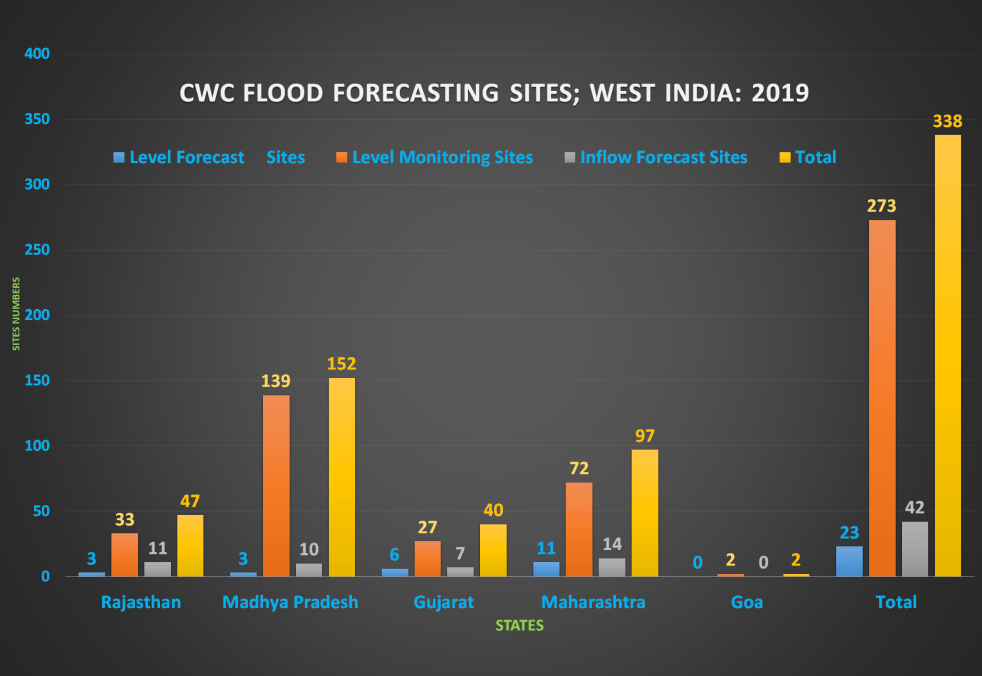
It’s great to see the top edit in THE TIMES OF INDIA today (Aug 12, 2019) calling for urgent review of flood management in India. Indeed the current floods can be a big wake up call.

TOI Edit rightly says: “Similarly, there’s also an urgent need to upgrade dam management in the region. Despite heavy rain warnings, why couldn’t Maharashtra and Karnataka coordinate to release dam waters downstream as a pre-emptive measure? We need much more proactive and punctilious supervision of dam waters.” Indeed there is need to fix the responsibilities of failures in Dam Management, including forecasting failures, Violations of rule curves, mismanagement of reservoirs and lack of information sharing and coordination.

Continue reading “DRP: 12 August 2019: URGENT REVIEW OF FLOOD MANAGEMENT REQUIRED”
DRP News Bulletin

DRP: 5 Aug 2019: Why Dam Safety Bill and ISWD Amendment won’t help

India urgently needs a lot of effective work on Dam Safety, but the bill before the Parliament makes CWC (Central Water Commission) as focal point of Dam Safety, but CWC has conflict of interest and poor track record. The Bill does not provide any real independent oversight, nor clearly defined norms of complete transparency in the dam safety matters, and there is no role of the vulnerable communities, the most important stake holders. The Bill also tends to centralise the power with the Union govt, and states legitimately suspects this. https://www.indiatoday.in/india/story/dam-safety-bill-2019-why-evokes-opposition-stakeholders-1576391-2019-08-02 (Aug 2, 2019)

The Interstate Amendment Water Disputes Amendment Bill before the Parliament is basically tinkering with the existing system, which will not change anything fundamentally. It needs to be understood that disputes arise when an upper riparian state (or a country) build a large dam or diverts the massive amount of water, leading to lower availability of water for the lower riparian state (or country). When it comes to resolution, the tribunals look at a river as a channel of water and its distribution, ignoring that it is a complete ecosystem and that water in a river depends on the state of its basin and catchment area. It also depends on the extraction of groundwater. These aspects are ignored by the tribunals. Moreover, a state does not represent a river basin or all its stakeholders (the people using river water), which is why the Narmada tribunal’ award created a conflict between the states and their people. The central government’s impartiality is suspect and would have a great bearing on the resolution process. https://www.indiatoday.in/india/story/interstate-river-water-disputes-bill-2019-1575531-2019-07-31   (1 Aug. 2019)

Continue reading “DRP: 5 Aug 2019: Why Dam Safety Bill and ISWD Amendment won’t help”
DRP News Bulletin

DRP: 1 July 2019: If Govt is serious about water, begin with sustaining groundwater lifeline & watersheds

For several decades now, groundwater has been India’s water lifeline. It is going to remain India’s water lifeline for long time to come. So when Prime Minister Modi called for people’s movement on water conservation during his MANN KI BAAT Radio program on June 30, 2019 (http://pib.nic.in/PressReleseDetail.aspx?PRID=1576353), the first thing the people would expect the government to do is to acknowledge the reality that groundwater is India’s water lifeline and make the sustenance of that water lifeline as the focus of all National Water Policies, programs and plans.

India also urgently needs a National Urban Water Policy that would also define what is a water smart city. The government will need to show it is serious by putting in place rainwater harvesting and groundwater recharging systems at ALL government buildings and lands across the country and show that these are functioning.

The government will also need to bring back the watershed development as the focus of its work on water conservation and reverse the wrong steps this government took five years back (see the detailed report below).

The government also needs to urgently start work on restructuring of water institutions of India, starting with CWC. Unless people see the government’s seriousness through actions, the one listed here are the initial steps, there is little likelihood of credibility of what the government says.

With rainfall in June 2019 during the South West Monsoon already showing a deficit of massive 33%, the fifth highest deficit in last 100 years, its possibly the most opportune time to take these steps on URGENT BASIS.

Continue reading “DRP: 1 July 2019: If Govt is serious about water, begin with sustaining groundwater lifeline & watersheds”
DRP News Bulletin

DRP: 17 June 2019: If the Rains Fail; Is the Nation Ready?

Indian Express, one of the India’s leading and most respected National Newspapers, has an editorial on the above subject on June 17, 2019. The Edit has some rather dire warnings: “If current conditions persist — the US Climate Prediction Center has forecast an 81 per cent chance of El Nino, the abnormal warming of the equatorial eastern Pacific Ocean waters known to adversely impact rainfall in India, continuing till July and 66 per cent up to August — kharif crop production will take a hit.”

The monsoon, after its rather reluctant entry into Kerala, so far is already 43% deficit till June 17. Out of 36 meteorological divisions, 18 had large (over 60%) deficiency and 13 more had 20-60% deficiency, so 31 of 36 sub divisions already faced over 20% rainfall deficit. If the El Nino prediction of US Climate Centre comes true, we could be in for meteorological, agricultural and even hydrological drought, considering our water management situation.

Continue reading “DRP: 17 June 2019: If the Rains Fail; Is the Nation Ready?”
DRP News Bulletin

DRP: 10 June 2019: Some real solutions from Bihar, Punjab, Karnataka as Centre indulges in name plate change

(Feature image from Hindu file photo of a kalyani filled with weeds in the vicinity of Devanahalli Fort near Bengaluru.) 

Even as the Union government is AGAIN busy changing the name plate of Ministry of Water Resources, some real water solutions emerge from Bihar, Karnataka and Punjab.

Punjab Many takers for ‘Phagwara technique’ of paddy direct seeding Some farmers had experimented last year with a direct seeding technique of paddy, developed by a Phagwara-based farmer, which reduces water requirement by 90%. Seeing the results — low water usage and high yield — many more farmers have signed up for the same this year. As they require much less water for the first two to three weeks, these farmers have also managed to sow paddy much before the schedule fixed by the Punjab government.

Continue reading “DRP: 10 June 2019: Some real solutions from Bihar, Punjab, Karnataka as Centre indulges in name plate change”