
More than a decade after Gangetic dolphins (platanista gangetica) was granted the status of national aquatic animal, the rare mammal species continue to face multiple threats impacting their habitat and population in Ganga rivers. Just in past one year, the year when the Prime Minister of India declared the Project Dolphin, six dolphins were found dead for unnatural reasons in three states along the Ganga. In addition to Gangetic, river dolphin were killed in three other states.
Continue reading “Gangetic dolphin deaths in 2020”Tag: Ganga

DRP 250121: UN warns about aging Dams & Floods in changing climate
A new UN report released on January 21, 2021 UN has warned the major big dam owning counties about the aging population of fast silting up dams in changing climate and urgent need to start working on decommissioning of uneconomical large dams. Among the few countries that UN has warned includes India with its third largest number of big dams. The added problem in India is the ill maintained and ill operated large dams that UN report did not look into. Indian dams are sanctioned based on highly under estimated siltation rates, there is practically no transparency and accountability in operation of Indian dams and dam almost every year get away with creating avoidable flood disasters. This latest problem is not just related to old dams, but even the newest celebrated ones like the Sardar Sarovar Dam as happened in Gujarat in late August-early Sept 2020. No legal regime exists in India for dam safety, either structural safety or operational safety. And in changing climate, with increasing frequency of higher intensity rainfall events, such risks are already increasing multi-fold.
Continue reading “DRP 250121: UN warns about aging Dams & Floods in changing climate”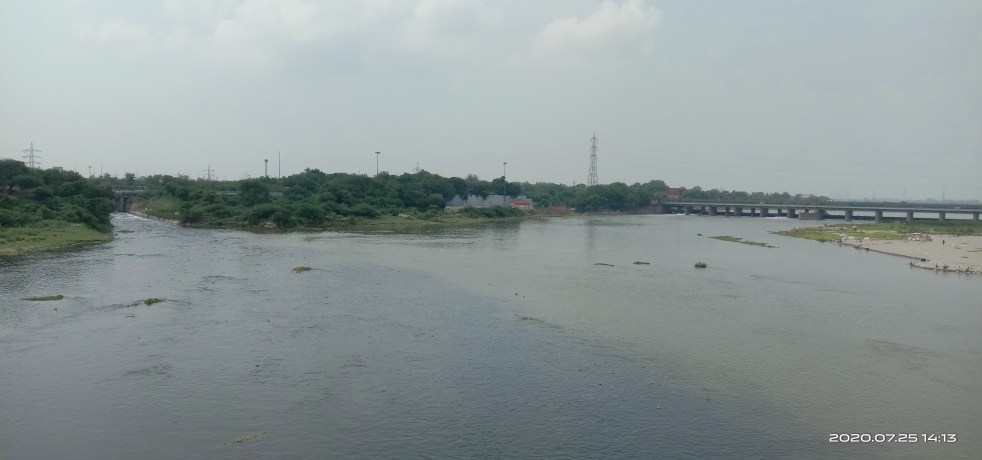
DRP 180121: Is there any hope for Yamuna from Delhi, SC actions?
Yamuna is again in headlines in this week’s Bulletin. It carries the Nov 2020 announcement of Delhi Govt plan to clean river by 2023 and the action by the Supreme Court. There is nothing very convincing, path breaking or new in what the Delhi Govt has announced, such announcements keep coming every few years and then tend to be forgotten, to be renewed with announcement of new deadlines in this case. Unfortunately, the Supreme Court action is not particularly different. One only needs to remind the apex court and everyone else that in 1994, the SC had taken up Yamuna case suo moto. No impact on the river could be achieved till around 2017, when the SC decided to handover the case to NGT. It is not clear what exactly has prompted SC to take it up again, but the move does not inspire confidence considering the past track record.
We hope we are wrong and the Delhi Plans and the SC move does lead to better days for Yamuna. In the meantime, the Yamuna Monitoring Committee set up by the NGT is doing its role, but one wishes, their hands and plans as strengthened and pushed by the NGT, which does not seem to be the case currently.
Continue reading “DRP 180121: Is there any hope for Yamuna from Delhi, SC actions?”
DRP 110121: Big question marks over viability of Ganga waterway
[Feature image: A cargo stuck in Ganga in Balia, image source Dainik Jagran, June 2018. https://www.jagran.com/uttar-pradesh/ballia-stuck-cargo-ship-in-the-ganges-for-a-month-18139816.html]
This latest episode described below once again raises big question marks over the viability, feasibility and desirability of pushing Ganga as the National waterways. Its economic viability has been questioned many times earlier and this episode only reinforces it. The ecological viability is dependent on refusal to conduct any environmental impact assessment in any credible, transparent or participatory way, while the massive adverse impacts on the river, its biodiversity including the National Aquatic animal Dolphin as also on the livelihood of millions of fisher people and boats people are all known, but being ignored by the Ministry of Inland waterways headed by and pushed by Mr Nitin Gadkari rather blindly. The only way to resolve the issue is if there is an independent, informed assessment, which can happen only if the judiciary were to step in. Will they?
Continue reading “DRP 110121: Big question marks over viability of Ganga waterway”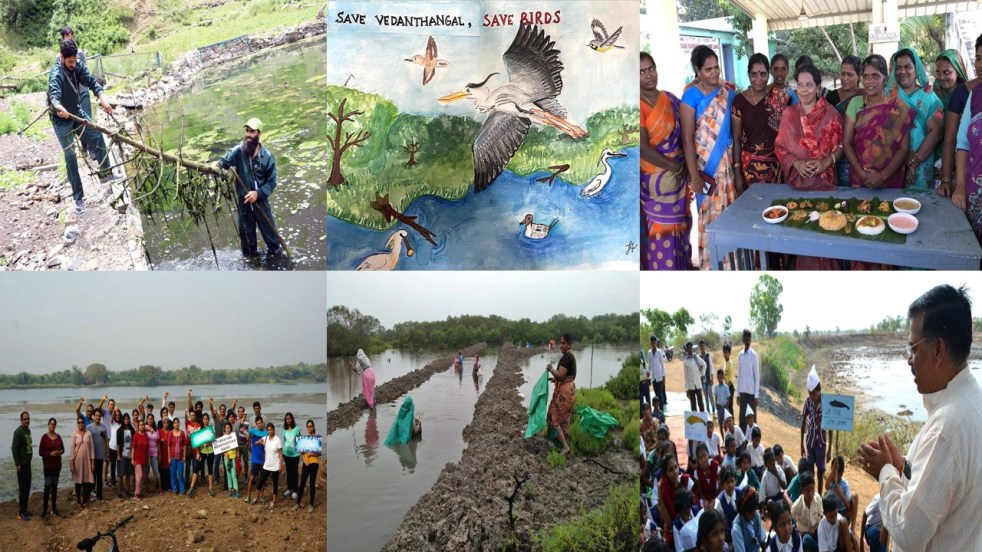
Wetlands 2020: Positive Developments
Pondicherry Collector led the revival of over 300 waterbodies The then District Collector and present Secretary to the Chief Minister, A. Vikranth Raja, stepped in with the idea of digging into revenue records to locate the region’s traditional water bodies. It all started with a query raised at the meeting. When someone asked if Karaikal had the capacity to store 7 tmcft of river water allotted by the Cauvery Water Disputes Tribunal, “the response from officials was an emphatic no,” says Selvaganesh, Assistant, District Collectorate of Karaikal.
In June 2019, in the tiny coastal enclave of Karaikal, administration officers brainstormed about putting in place a sustainable water resource management model for the town’s two lakh people. They found 549 ponds within a small territory spread over 157 sq. km. 40% of these water bodies were in various stages of extinction. Most of them turned out to be dumping yards.
Continue reading “Wetlands 2020: Positive Developments”
DRP 040121: Bangladesh declares Halda River as Fisheries Heritage
Bangladesh has declared the whole 81 km long Halda River, a tributary of Karnaphuli River in Chittagong in South East Bangladesh. The Halda river is also famous for breeding pure Indian carp. This is the only pure Indian carp breeding field of Bangladesh, perhaps in South Asia. This is a remarkable river conservation decision that has a lot of lessons for much bigger India where no river has been protected as fisheries heritage. This is great way to begin the first weekly DRP Bulletin of 2021 and we hope the Indian government, civil society and judiciary will take due note of this.
Controversy is never far away from any such river conservation efforts as is evident from the news about proposal for a Halda River based water supply project for industrial estate that has been opposed by the Fisheries ministry, water resources ministry, the River Conservation Commission, the Department of Environment and independent researchers.
Continue reading “DRP 040121: Bangladesh declares Halda River as Fisheries Heritage”
Inland Fish, Fisheries, Fisher-folks: 2020 Overview
Inland fisheries support millions of people and remains a major source of nutrition for a very large number of poorest people. This includes riverine fisheries, reservoir fisheries, wetland and local water body fisheries. Here we try to provide an overview of developments in this sector during the year 2020.
The overview has following sections: Policy & Governance in Centre, followed by in States, some positive developments, Covid-19 & Fishing Community, Fisher folks’ struggles, New Fish Species, Invasive fish, Fish Deaths & Pollution, Over fishing & Extinction, Studies related to inland fisheries.
Continue reading “Inland Fish, Fisheries, Fisher-folks: 2020 Overview”
Dammed Fisheries of India
Far out in the estuary of Aghanashini, as Ismail Bhai spread out Indian Mackerel for drying, a carpet of silver spread out before us. “We fish in the river but the Bangde we catch in the sea also have their links to Aghanashini. We owe her everything”. Estuary of the modest, free-flowing Aghanashini supports around 5000 fisherolk. In the neighboring dammed Sharavathi, fish diversity plummets, so do dependent livelihoods. But rivers like Aghanashini are a rarity now.
Continue reading “Dammed Fisheries of India”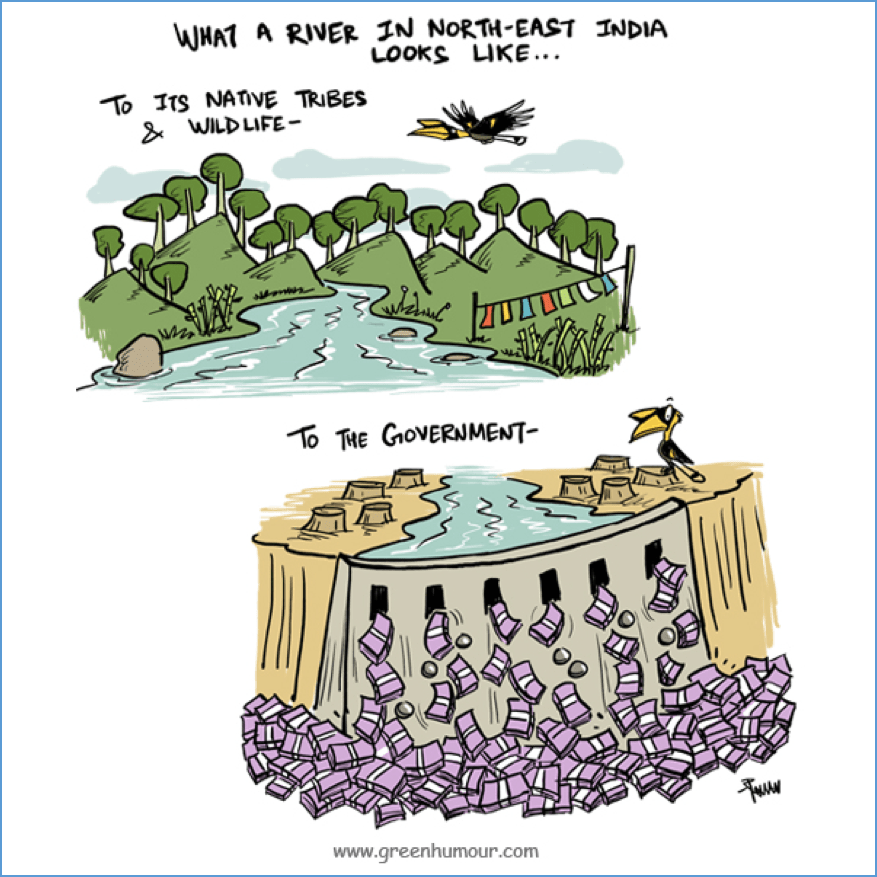
Dams, Rivers & People 2020 through the eyes of the Cartoons
A good cartoon can say a lot more than words and possibly more effectively. As in 2019[i], we are sharing the key events on the issues that we focus on namely Dams, Rivers, Environment and People using cartoons. As you can see, we have sourced them from the various internet sources during the just concluding year 2020.
Continue reading “Dams, Rivers & People 2020 through the eyes of the Cartoons”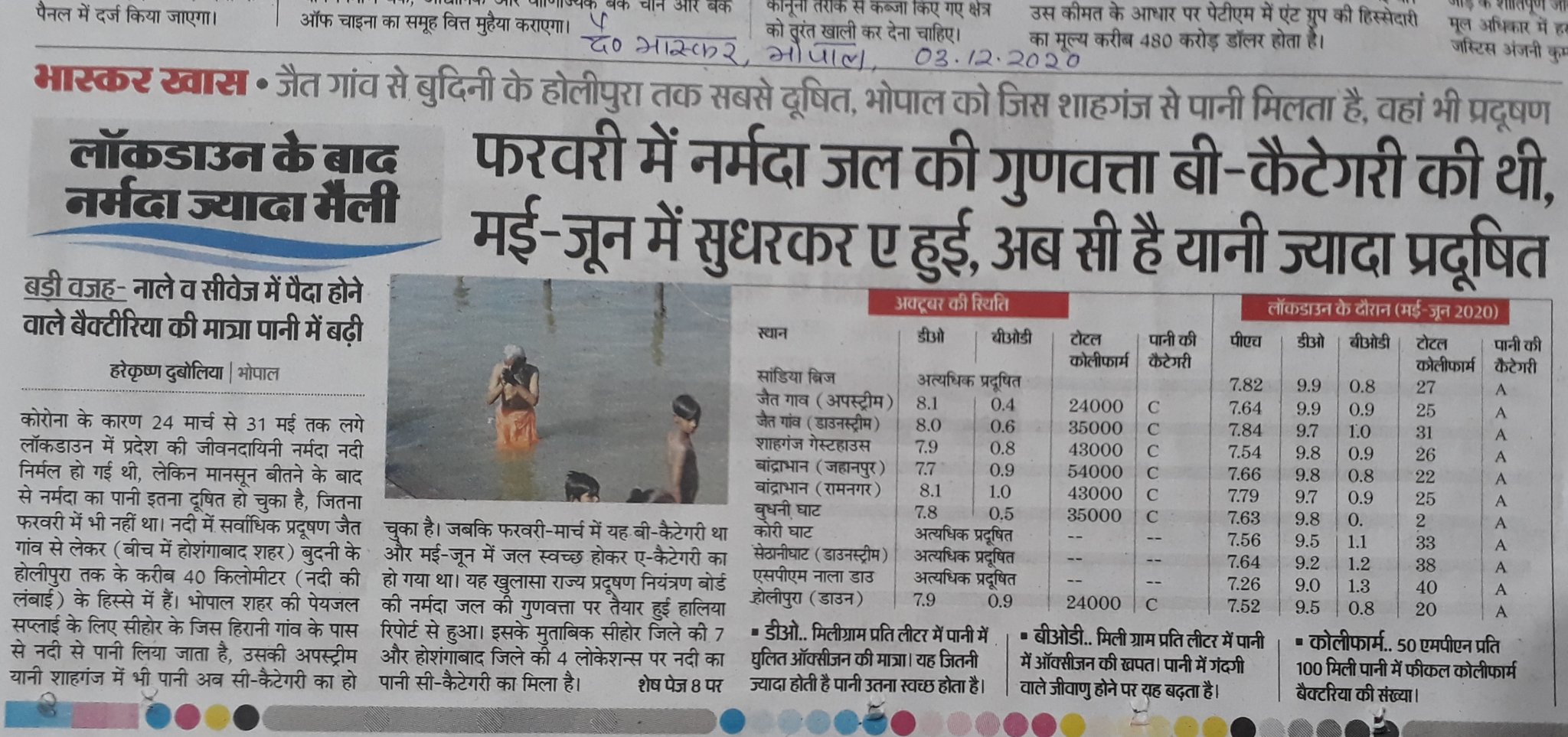
DRP: 28 Dec. 2020: Five Positives of outgoing Corona year
The outgoing year 2020 is likely to be remembered as Corona year as Covid 19 pandemic has been the most influential aspect of the year. However, there have been many positives of the outgoing year. We identify five biggest positives as we see them.
Firstly, the complete lockdown that we experienced during March-April 2020, to slow down the spread of the Covid 19 infection showed, among many other things that it is indeed possible to clean up our rivers and also indicated the way forward: tackle industrial pollution. Unfortunately, those clear lessons have not been learnt by the government, its been busy in ease of doing business, not even understanding that in changing climate, clean rivers are going to be a major resource that will help people adapt.
The second notable positive was the major across the country protests, particularly from the younger generation against the government’s attempt to bulldoze the completely anti- environment amendment to the EIA notification. The protests along with the judicial orders have so far stopped the amendment from getting implementation. The government will do well to abandon any attempt to push them.
Similar to the protests against amendments to EIA notification were the protests against trying to bulldoze the massive Etalin Hydropower project in Dibang Valley in Arunachal Pradesh, at the cost of lakhs of trees and biodiversity rich forest and river and against the wishes of the people of Arunachal Pradesh and North East India. Here again it was good to see that the campaign has so far been successful.
India Rivers Week 2020 organised Zonal and National dialogues on river sand mining in India, in which large number of groups and stakeholders from across the country participated and has created a new wave of awareness and energy on this very important but so far largely ignored issue. We are hopeful that this energy will lead to change in governance of river sand mining in India.
Continue reading “DRP: 28 Dec. 2020: Five Positives of outgoing Corona year”
