
In a number of ways the Supreme Court order this week that the municipal commissioners and chief officers can be prosecuted for releasing untreated pollutants from the cities to the rivers and other water bodies is path breaking. Can it help fix accountability of release of such untreated sewage? Can it help ensure that cities stop doing this and cities not only have adequate sewage treatment facilities, but also that cities have to ensure that the STPs function to ensure that no untreated sewage ends up the rivers and other water bodies?
Continue reading “DRP: 2 Dec. 2019: SC says Municipal Commissioners to be prosecuted under WP Law”Tag: Flood
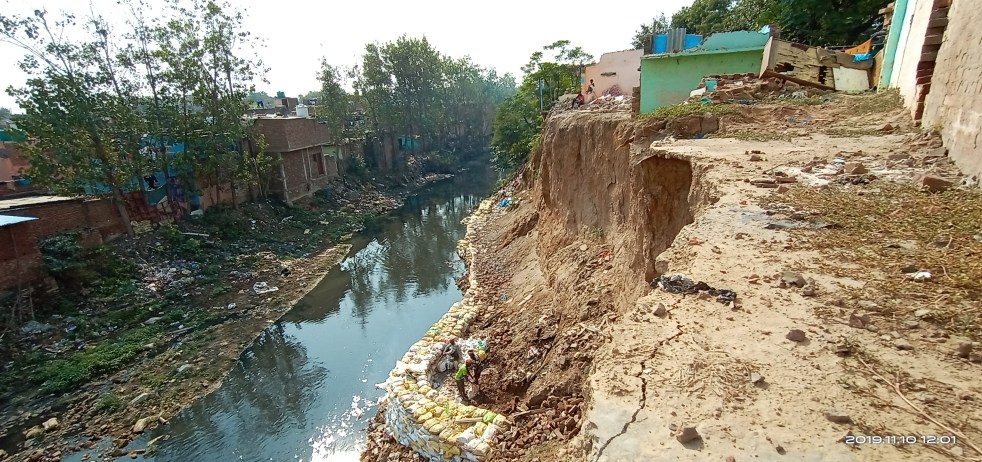
Chandigarh: Faidan Pind Drain Shows Ugly Side of ‘City Beautiful’
Union Territory of Chandigarh enjoys ‘City Beautiful’ tag for better planned urban development. Undoubtedly the city has wide roads, abundant green patches, well planned residential sectors, public amenities, cyclist tracks etc.; however dumping of solid waste and untreated sewage around its periphery shows that the city performs poorly in managing its water and natural sources.
The story of Faidan Nizampur also known as Faidan Pind drain near Airport is an apt example showing that while city manages to get beautiful tag, the rivulets and lives of people around it have turned miserable by increasing pollution load and other issues.
Continue reading “Chandigarh: Faidan Pind Drain Shows Ugly Side of ‘City Beautiful’”

DRP: 18 Nov. 2019: River capacities are changing, but who is monitoring?
River carrying capacity is such a crucial factor in deciding if certain areas will be flooded and with what severity. This capacity is constantly changing, more so in tropical climate and high silt carrying rivers of South Asia, as new research shows. However, most models that are used in India, including by CWC, assume steady state situation. Nor are there constant and credible efforts to assess the river cross sections and river conveyance capacities and put them in public domain. The study shows how important it is that we wake up to this reality and ensure credible, consistent monitoring and assessments by credible independent agencies at the earliest. This has become even more urgent, the study underlines, since in changing climate, the rainfall patterns are changing fast.
Continue reading “DRP: 18 Nov. 2019: River capacities are changing, but who is monitoring?”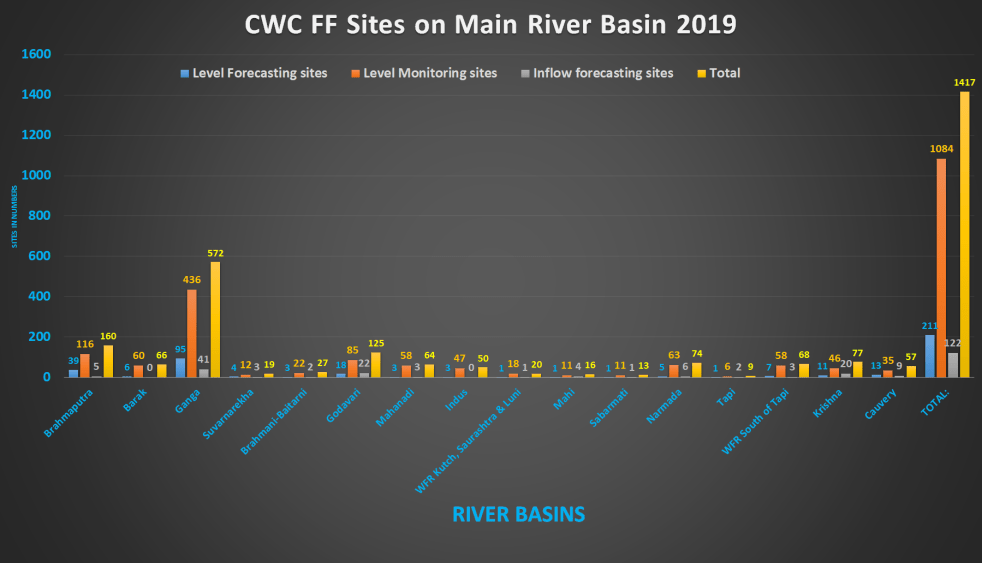
2019 All India summary of CWC flood forecasting sites
This article provides and overview of flood forecasting work of Central Water Commission (CWC) in 2019 after looking closely at each site details for the five regions of India: North East[i], East[ii], North[iii], West[iv] and South[v] India.
The table below provides an overview of number of Level Forecasting, Level Monitoring and Inflow forecasting sites as per CWC’s FF website during 2019 floods for all the states and regions of India.
Continue reading “2019 All India summary of CWC flood forecasting sites”
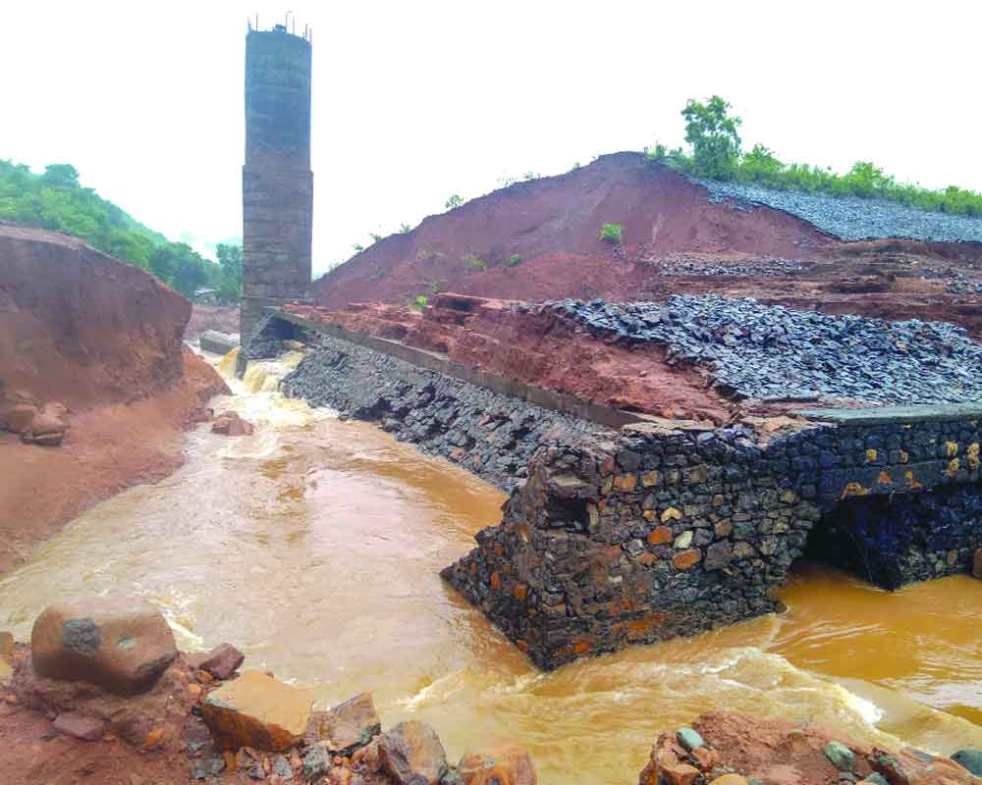
2019 Monsoon: Instances when Dam Safety Came into Question
The South West Monsoon in 2019 in India brought the highest rainfall of last 25 years and issues related to heavy rainfall continue even to the end of October 2019. Here we have listed major instances during the monsoon when there were question marks over safety of dams either due to structural safety or due to wrong operations of the dams. Some issues of breaches of embankments/ canals are also included here. As we can see, the instances come from across the country, including North East, North, West, Centre, South.
Continue reading “2019 Monsoon: Instances when Dam Safety Came into Question”
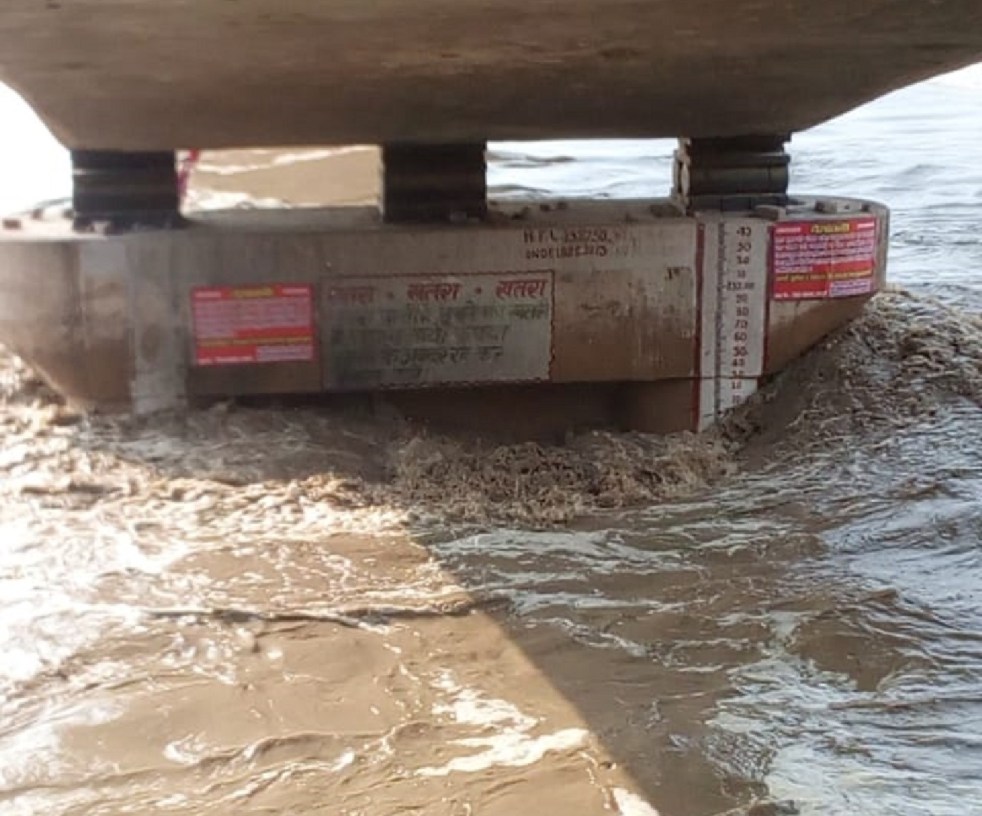
Rivers That Reached New Highest Flood Level during Monsoon 2019
In the monsoon season of 2019 Indian rivers have crossed Highest Flood Level (HFL) at around 37 Level Forecasting and Level Monitoring sites across the country. This account attempts basin wise details and description of HFL breached by the rivers.
Brahmaputra Basin (Assam)
In Brahmaputra basin 2 sites, 1 Aie NH Xing Level Monitoring site on River Aie in Barpeta district of Assam and Dhubri (Level Forecast) site on River Brahmaputra in Dhubri district of Assam narrowly crossed the HFL in July 2019.
Also River Barak at ANIPUR site in Karimganj district on May 24 and River Brahmaputra at Goalpara site in Goalpara district rose close to the HFL level on July 17, 2019. As per CWC (Central Water Commission) FF Website, Goalpara site has not crossed HFL since 1954.
Continue reading “Rivers That Reached New Highest Flood Level during Monsoon 2019”

DRP: 28 Oct 2019: Growing opposition to Large Hydro Projects
As can be seen from the news reports from Jammu & Kashmir, Assam, Arunchal Pradesh, Karnataka, among others, the opposition to Large Hydro Projects and Big Dam is growing all over India. These projects are neither economically viable, nor Socially-environmentally sustainable. There are much better options exist and hope the governments takes informed, democratic decisions. Going by the agenda and minutes of the recent Expert Appraisal Committee on River Valley Projects and other decisions, this hope seems far fetched at the moment.
Continue reading “DRP: 28 Oct 2019: Growing opposition to Large Hydro Projects”

DRP: 21 Oct. 2019: Opposition to restarting work on Lower Subansiri HEP without addressing Assam people’s concerns
With work on NHPC Ltd’s 2,000-MW Lower Subansiri hydro power project restarting after a wait of almost eight years, anti-dam organisations led by the All Assam Students’ Union (AASU) and Krishak Mukti Sangram Samiti (KMSS) vowed to launch an intense resistance movement to stop further construction of the project. AASU, in a statement, alleged that work on the Lower Subansiri project at Gerukamukh along the Assam-Arunachal Pradesh border has been started ‘treacherously’, risking the lives and property of people living in the downstream area. AASU said a scientific study on the possible impact of the dam in its downstream areas besides a cumulative impact study must be completed before expediting work at the dam site.
Continue reading “DRP: 21 Oct. 2019: Opposition to restarting work on Lower Subansiri HEP without addressing Assam people’s concerns”
South India Overview of CWC Flood Forecasting Sites 2019
Flood Forecasting (FF) is one of the important activities of Central Water Commission (CWC), which is undergoing expansion and improvement, but there is still a huge scope for improvement. In order to better understand the CWC’s flood monitoring and forecasting work, in this article, we have given an overview of CWC’s flood forecasting and monitoring sites in South India, the last region to be covered for 2019 flood season. It includes state wise list of CWC’s Level Forecast, Inflow Forecast and level monitoring sites in South Indian states of Andhra Pradesh, Telangana, Karnataka, Tamil Nadu, Puducherry (no FF sites) and Kerala. Similar report has been published for North India[i] and North East India[ii], East India[iii] and West India[iv]. Continue reading “South India Overview of CWC Flood Forecasting Sites 2019”
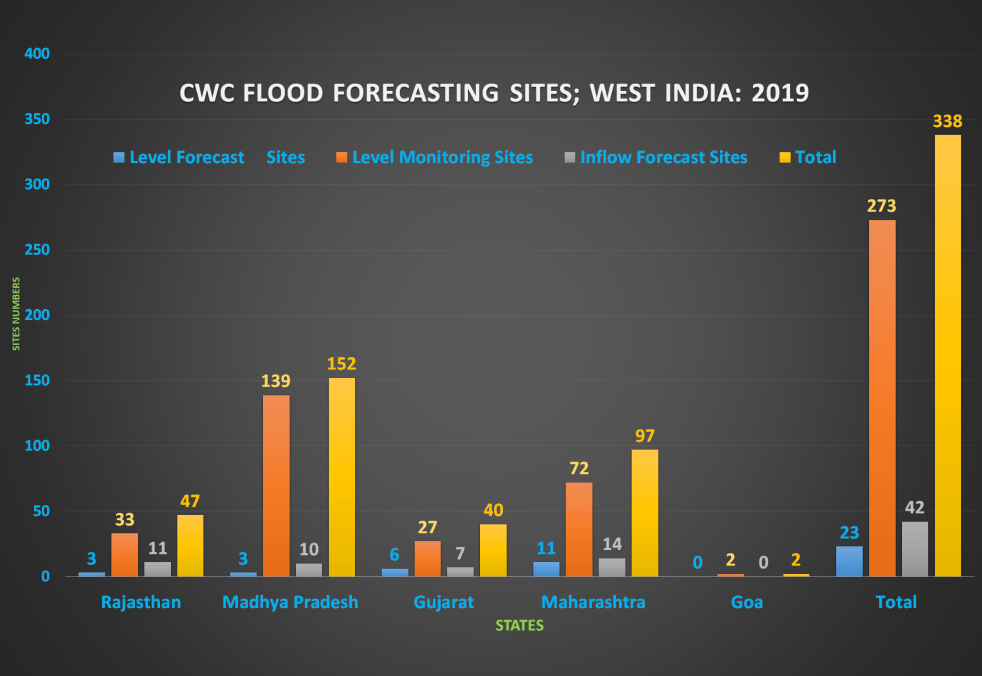
WEST INDIA: Overview of CWC Flood Forecasting Sites 2019
Central Water Commission (CWC) is the only agency doing flood forecasting in India. This article attempts to present an overview of CWC’s flood forecasting and monitoring sites in West India. It includes state wise list of CWC’s Level Forecasting, Inflow Forecasting and level monitoring sites in 5 States in West India: Rajasthan, Gujarat, Maharashtra, Madhya Pradesh, Goa. Similar report has been published for North India[i] and North East India[ii] and East India[iii]. A similar effort was made last year which can be seen here: Overview of CWC Flood Forecasting Sites 2018: WEST INDIA.
Continue reading “WEST INDIA: Overview of CWC Flood Forecasting Sites 2019”
 SANDRP