Dams

Yamuna River 2016: Unjustified Dams, Hydro Projects

The first part of 3-part blog series throws light on impact of dams and hydro projects in upper reaches of the River and the imminent dangers of climate change that have jeopardized the entire eco-system around the Yamuna rivers. 

The second part would bring forward the plight of severely polluted and threatened Yamuna tributaries in the mainland of Haryana, Uttar Pradesh (UP), Rajasthan and Madhya Pradesh (MP). The third and concluding part would detail the status of ongoing and planned cleaning and rejuvenation projects launched in 2016.  

Continue reading “Yamuna River 2016: Unjustified Dams, Hydro Projects”

Dams · DRP News Bulletin

DRP: 11 Oct 2016 (Is there any justification for DESTRUCTION of Panna Tiger Reserve?)

Is there any justification for DESTRUCTION of Panna Tiger Reserve? Can we save our Natural Heritage like the Panna Tiger Reserve (PTR) from being destroyed in the name of baseless, questionable, non transparent, undemocratic and manipulated projects like Ken Betwa inter linking ? It will facilitate export of water from Bundelkhand to OUTSIDE Bundelkhand. Whatever little benefits are claimed, some of them are already available and much more can become available at much lower costs, faster and without destroying the Forests and Tiger Reserve. The project will actually lead to destruction of Ken catchment and hence the Ken River itself. Watch this FASCINATING, AWESOME story of tigers of PTR. This BBC film where Raghu Chandawat is the story teller and Pradip Kishen is lending his voice, tells the story of Tigers of Panna till 2003, it seems. Please watch and let us all try to save it from destruction that is now writ large in terms of Ken-Betwa Link Project (KBLP). One more short film by wildlife biologist Koustubh Sharma illustrates how the Daudhan Dam under KBLP will submerge and destroy the PTR.

Meanwhile, a new analysis of rainfall data reveals that monsoon shortages are growing in river basins with surplus water and falling in those with scarcities, raising questions about India’s Rs 11 lakh crore plan to transfer water from “surplus” to “deficit” basins. According to Himanshu Thakkar of SANDRP river basin interlinking should be considered only after exhausting the local potential for harvesting rain, recharging groundwater, watershed development, introducing better cropping patterns (non water-intensive crops) and methods (such as rice intensification), improving the soil moisture-holding capacity and saving and storing water. Raising alarm over significant increase in ground water use, increasing reliance and fast declining ground water table, he warns that inter-basin links would actually reduce groundwater recharge because forests would be destroyed, the river flow stopped and the local systems neglected.

Continue reading “DRP: 11 Oct 2016 (Is there any justification for DESTRUCTION of Panna Tiger Reserve?)”
Dams · DRP News Bulletin

DRP: 26 Sep 2016 (Victory to tribals protest; Jispa HEP calls back staff)

Finally, tribals struggle wins, sends Jispa HEP company packing up Facing stiff opposition from the tribal community against the construction of 300 MW Jispa Dam in Lahaul-Spiti valley has forced the Himachal Pradesh Power Corportaion Ltd (HPPCL) to suspend the project for the time being. The dam which was declared a project of national importance now has residents from 14 villages oppose it. HPPCL has invested Rs 3 crore and has stated that it would begin study work only when locals extend their support.

Since 2009, people from the Todh valley in Lahaul-Spiti district were opposing the Jispa Dam project proposed over Bhaga river, a tributarJy of Chenab at Jispa village. The government had sanctioned Rs 7,000 crore for this project but local residents did not allow officials to work in smoothly for three years now.

Confirming the development, managing director, HPPCL, D K Sharma told that some people were continuously opposing the project without realizing that construction of project could have ushered development in the area. He said constant opposition of local people had resulted into wastage of limited human resource so HPPCL board had decided to withdraw the manpower as project was only at investigation stage.

Continue reading “DRP: 26 Sep 2016 (Victory to tribals protest; Jispa HEP calls back staff)”
Dams · DRP News Bulletin

DRP: 19 Sep 2016

EAC Panel Visiting the site in Dec 2015

Centre EAC defers clearance to Yadadri Power project The Expert Appraisal Committee (EAC) under the Ministry of Environment has deferred its decision for granting environmental clearance for the 8,000 MW Yadadri Thermal Power Station in Telangana by TSGENCO due to a “lackadaisical” approach in preparing documentation. The EAC said the Environmental Impact Assessment (EIA) report was incomplete and there was lack of clarity on many issues raised by the Committee earlier. EAC on Thermal Power Companies has in its minutes meeting held on 29-30 2016 held the EIA consultants guilty of cut & paste jobs which can be found here.  At some places, it is mentioned that coal will be transported from two ports and in some other places, four ports are mentioned. Hence, complete and specific details regarding coal import ports and coal transportation routes were not given. Further it is also observed that two important sections of the EIA report- “risk assessment” and “disaster management plan”- are almost entirely generic and contain hardly any site or project specific aspects.

Continue reading “DRP: 19 Sep 2016”
DRP News Bulletin

DRP: 5 Sept 2016: Is there hope for India’s Environment from Mr Anil Dave?

ENVIRONMENT GOVERNANCE

Is there hope for India’s Environment from Mr Anil Dave? Most shocking statements from India’s environment Minister. He says let us do Ken Betwa link when the project has NONE of the statutory clearances from his own ministries. The independent committees are yet to appraise the project and yet he is saying: “This Ken-Betwa river link we should do it and have an impact assessment after five years. If it is good, then great, if not they don’t go for other linkages.” Is there any hope for India’s environment? As he says, YE SAB CHALTA HAI!!

http://www.dnaindia.com/india/interview-won-t-put-a-cap-on-new-dams-in-uttarakhand-river-linking-should-go-ahead-anil-dave-2251391 Continue reading “DRP: 5 Sept 2016: Is there hope for India’s Environment from Mr Anil Dave?”

Dams · DRP News Bulletin

DRP: 16 Aug 2016 (When shall We Start Respecting Our Rivers & Provide Space to Them)

In absence of clear and strict laws to define the rivers zone and demarcate flood plains, our rivers are increasingly becoming subject to exploitation. When the river spaces of our National River Ganga & Yamuna River which flow through National Capital are not well protected, then the plight of other rivers across country can be understood.

This week, there are two news reports which again are highlighting this cause. Interestingly in both cases, legal fight is going on in green tribunal which indirectly deals with the issue though with no success so far. In  fist case, NGT has directed Govt. of Uttarakhand to demarcate floodplains of Ganga river from its origin in Gomukh till Roorkee, a 65-km long stretch in the state. The tribunal has posted the matter for the next hearing on Oct 20 and asked the state government to submit its compliance report by then. The bench also sought a report on the total number of hotels on the 65-km stretch from the govt. The green panel allowed the state govt to take the help of Roorkee-based National Institute of Hydrology for identification of flood plains. Construction on flood plains and inside river zones is a sure invitation to disaster such as Kedar Nath Floods in 2013 when human made infrastructures erected very much inside river zones were raised down like sand dunes  by enraged rivers. It is sad and even more worrisome that we have learnt nothing from such events.  

In second incident Govt. of Uttar Pradesh has drawn green tribunal’s ire over constructions in floodplainsThe apex court for environmental issues, expressed its dissatisfaction over the manner in which State Govt filed its report on the distance of various real estate projects from the Yamuna flood plain zone in the city. Coming down heavily in the state govt and various Agra authorities, Agra Development Authority (ADA) & irrigation department, it stated that “authorities were expected to act fairly and judicially while complying with its directions.” The tribunal appointed registrar general Mukesh Kumar Gupta as local commissioner and asked him to file a correct position of flood plains and the distances of the various projects. Meanwhile,  ADA has been asked to produce the original records before the tribunal on the next date of hearing, Aug 19.

Floods & floodplains are integral part of a river eco-system. Both has essential role to play in smooth functioning of multiple ecological processes that takes place throughout  the journey of a river. It is abused of floodplains that our cities are facing flood threats. It is surprising to see how govts have so far failed in protection of flood plain.

With incidents of excess rainfall, cloud burst & land slides happening at increased frequency, it is time to define our river zone and flood plain clearly in the own interest of human being.

Continue reading “DRP: 16 Aug 2016 (When shall We Start Respecting Our Rivers & Provide Space to Them)”
Dams · DRP News Bulletin

DRP: 18 July 2016 (Remove inefficient Farakka Barrage: Bihar CM)

Bihar CM  demands removal of Farakka barrage CM Nitish Kumar on July 16 demanded removal of Farakka barrage on river Ganga, saying “the disadvantages of the barrage appear to be higher than its benefits”. Raising the issue of Bihar’s share in Ganges waters at the 11th Inter State Council meeting in New Delhi, Nitish also sought the Centre’s intervention to ensure uninterrupted flow of water from the states of upper co-basin so that the entire length of Ganga has continuous supply of water even during lean season. The meeting was chaired by PM Narendra Modi and attended by CMs of different states and union ministers. The CM also told the meeting that responsibility to ensure the required water availability at Farakka barrage has been put solely on Bihar. Presenting Bihar’s views Nitish further added that about 16% of the catchment area of river Ganga is in Bihar, but in the lean season 3/4th of the total water flowing in Ganga comes from rivers of Bihar. Estimated 400 cusecs of water flow is received at the Uttar Pradesh border of Bihar in river Ganga. However, at Farakka barrage, 1500 cusecs of water flow is to be ensured, which is achieved mainly through the water contributed by the rivers of Bihar. Indeed, during lean season, not even 400 cusecs of water flow is available at the border of Bihar. In this regard, Centre’s intervention is required to ensure uninterrupted flow of water from the states of upper co-basin, so that the entire length of Ganga river in Bihar has continuous supply of water even during lean season. Nitish also demanded formulation of an effective National Silt Management Policy, saying such a body at the national level is essential for silt management as well as for ensuring uninterrupted flow of water not only in Ganga, but all the other rivers.

Continue reading “DRP: 18 July 2016 (Remove inefficient Farakka Barrage: Bihar CM)”
CGWB · Urban Water Sector

Groundwater of Pune: An Over-exploited and ungoverned lifeline

While more than allocated and more than enough water supply from Khadakwasla Project Complex steals the water supply show in Pune, water below the ground remains pretty much out of sight and out of mind for Pune Municipal Corporation (PMC) and everyone else. Roughly estimated use close to one thousand million cubic feet (TMC) remains not just ungoverned but completely unacknowledged. Though groundwater use forms an important component of non-potable water use in the city total quantity of the groundwater extracted remains unassessed. Drilling of borewells has been going on unregulated and groundwater level has been falling at the rate of quarter of a meter per annum. Neither PMC nor any other State agencies like Maharashtra Water Resources Regulatory Authority (MWRRA functioning as State Groundwater Authority) or Groundwater Survey and Development Agency (GSDA) is governing the resource and have taken any concrete steps for its conservation. Continue reading “Groundwater of Pune: An Over-exploited and ungoverned lifeline”

Dams · DRP News Bulletin

DRP: 20 June 2016 (MoWR invites suggestions on National Water Framework & Model Ground Water Bill)

Centre Suggestions invited on Draft National Water Framework Bill and Draft Model Bill for Conservation, Protection, Regulation and Management of Ground Water   Ministry of Water Resources, River Development and Ganga Rejuvenation has uploaded the draft national water framework bill and draft model bill for conservation, protection, regulation and management of ground water on its website (http://mowr.gov.in). The  Draft  National  Water  Framework  Bill  provides  an  overarching  national  legal framework based on principles for protection, conservation, regulation and management of water as a vital and stressed natural resource, under which legislation and executive action on water at all levels of governance can take place. The comments/suggestions/views from all Individuals/Experts /Organizations/Institutions on the above bill may be sent to jspp-mowr@nic.in or sjcpp-mowr@nic.in latest by June 25, 2016. The Draft Ground Water Model Bill is based on the principles of subsidarity, equitable distribution in an integrated approach. The State should act as a public trustee of ground water, which should be treated as a common pool resource to make sure that groundwater is protected, conserved, regulated and managed. The comments/suggestions/views from all Individuals/Experts/Organizations/Institutions on the above bill may be sent to dirgw-mowr@nic.in or pratul.saxena@nic.in latest by June 25, 2016.

Continue reading “DRP: 20 June 2016 (MoWR invites suggestions on National Water Framework & Model Ground Water Bill)”

Dams

Community Driven Water Conservation Initiatives In 2016 Drought

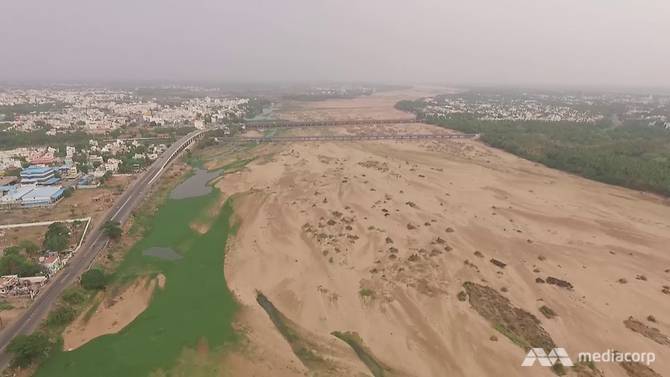
In 2016, India has been witnessing one of the severest droughts after independence. The phenomena has led to a ‘never before’ kind of water crisis across the country. As a result the surface water sources are under severe stress and aquifers beneath ground have been over drafted. An already depressed agrarian community is worst hit. Thousands of parched villages have been dotting the rural landscape. Many somewhat immune urban centers are also facing the wrath of heat.

However there is no dearth of inspiring tales in the field of water conservation pan nation presenting a ray of hope amid gloomy scenario. The exemplary works being done by several villages, people and organizations across the country offer some lasting solutions to growing water scarcity. So here is an attempt to present a State wise account of drought hit areas which have been wading through the water crisis sound and safe by reinventing the community driven and local water harvesting practices.

Continue reading “Community Driven Water Conservation Initiatives In 2016 Drought”