Dams · DRP News Bulletin

DRP: 22 May 2017 (SOLVE SILTATION OF GANGA OR REMOVE FARAKKA DAM TO REVIVE GANGA: BIHAR CM)

Bihar Chief Minister Nitish Kumar again has urged the central govt to remove the Farakka barrage in West Bengal and make a countrywide policy on silt management for letting river Ganga to flow freely.

“Siltation is destroying Ganga’s ecology and health. It’s due to heavy deposits of silt on the riverbed that stream of the river is being badly affected,” Kumar said at a two-day national seminar on ‘Obstacles in the Incessant Flow of the Ganga’.

Speaking on the occasion, Swami Avimukteshwara Anand criticised Union Water Resources Minister Uma Bharati for doing absolutely nothing for the cause of the river Ganga and said she seems more interested in her chair rather  than the river. He also criticised  Prime Minister Modi for claiming that he is son  of Ganga, but doing nothing positive for the river. Swami ji said Nitin Gadkari seems bent on further destroying the river in the name of National Waterway.

Addressing the seminar Nitish Kukar said that Bihar’s demand for the framing of national policy on desiltation of the Ganga and clearance of silt in the state is not a political issue, as the matter is related to larger environmental and biodiversity issues facing the people.

He added, “Concrete steps have to be taken to ensure incessant flow of the Ganga. Otherwise, cleanliness of the river is not possible.” Referring to the need to protect biodiversity, he said conservation of the Ganga dolphins is dependent on the cleanliness of its water. He added the Farakka barrage constructed across the river in West Bengal has led to slow flow of water between Buxar to Bhagalpur, and consequent annual flood and waterlogging during the monsoon.

Nitish recalled the devastating flood that the state had witnessed in the Ganga basin last year and said Bihar had spent Rs 1,058 crore over the last five years to prevent soil erosion. He appealed to the Centre to frame a sound policy on silt management, stressing that it should be prepared by making on the spot survey and assessment of the prevailing situation. Nitish said even the report of the committee headed by Madhav Chitale had accepted the problem of siltation facing the Ganga.

Continue reading “DRP: 22 May 2017 (SOLVE SILTATION OF GANGA OR REMOVE FARAKKA DAM TO REVIVE GANGA: BIHAR CM)” →
Dams · DRP News Bulletin

DRP: 8 May 2017 (Inspiring: How Kerala Panchayat brings a dying river back to life)

The Kuttamperoor stream in Kerala, connecting the Pampa and Achankovil rivers, had been a nearly stagnant, shrunken cesspool of dumped waste and weeds for more than a decade. Some weeks ago, it was resuscitated as a flowing river, thanks to the will of the Budhanur gram panchayat in Alappuzha district, and the commitment of 700 local men and women who worked to bring the river back to life under the MGNREGA.

The Kuttamperoor was once a full 12 kilometres long and, at places, over 100 feet wide. The river originates from Achankovil at Ulunthi, near Mavelikkara, and flows through Ennackad, Budhanur, Kuttamperoor, Mannar, and Pandanad before merging with the Pampa at Nakkida near Parumala in Pathanamthitta district.

Continue reading “DRP: 8 May 2017 (Inspiring: How Kerala Panchayat brings a dying river back to life)” →
Dams · DRP News Bulletin

DRP: 1 May 2017 (Ken Betwa won’t help, here is what CAN help Bundelkhand)

Union Water Ministry has launched an extensive water conservation program for drought prone areas of Bundelkhand, Marathwada, Kalahandi, Bolangir and Koraput in Odisha on April 28, 2017 at Bandri, Sagar Madhya Pradesh. As per report, the Water Ministry has prepared a master plan for artificial recharge of ground water in Bundelkhand region.

In UP region of Bundelkhand, around 1100 percolation tanks, 14000 small check dams/Nala bunds and 7200 Recharge pits/shafts have been identified. In MP region of Bundelkhand, around 2000 percolation tanks, 55000 small check dams/Nala bunds and 17000 Recharge shafts have been identified. She said as a part of ground water exploration, 234 wells in UP are proposed to be constructed in five districts of Bundelkhand i.e., Banda, Hamirpur, Jalaun, Chitrakoot and Mahoba. As a part of ground water exploration, 259 wells in MP are proposed to be constructed in six districts of Bundelkhand.

Continue reading “DRP: 1 May 2017 (Ken Betwa won’t help, here is what CAN help Bundelkhand)” →
Andhra Pradesh · Dams · Karnataka · Maharashtra · Telangana

STOP DIVERSION OF WATER FROM DROUGHT HIT KRISHNA BASIN

Release water from Koyna & Tata dams to drought hit Karnataka, Telangana & Andhra Pradesh

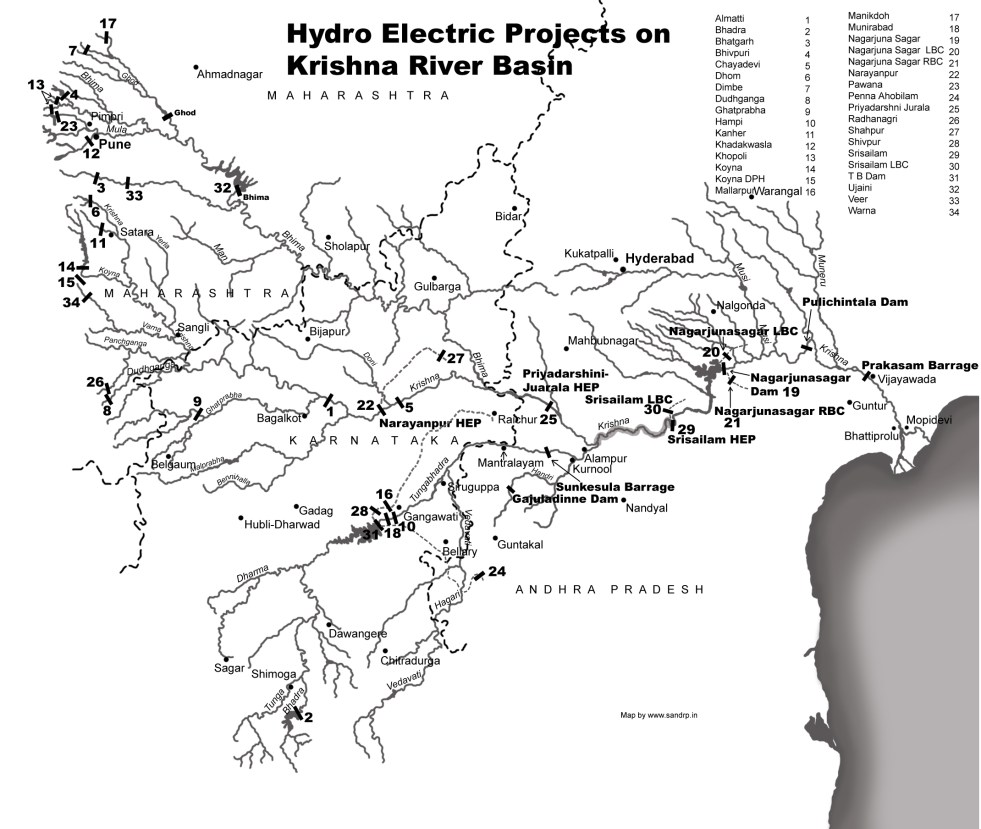
Large parts of South India, including parts of Karnataka, Andhra Pradesh and Telangana are facing unprecedented drought and water scarcity. However, Maharashtra is sending OUT billions of liters of water FROM drought hit Krishna basin to High Rainfall Konkan region to flow to the sea. Continue reading “STOP DIVERSION OF WATER FROM DROUGHT HIT KRISHNA BASIN” →

Dams · DRP News Bulletin

DRP: 24 April 2017 ( NHPC says Dams have no adverse impacts anywhere in the world! Admits, Hydro is no longer viable for private sector)

Centre Getting forest clearance is not a problem now: NHPC Chairman In an interview, taking a dig at its private peers, NHPC chairman KM Singh said that NHPC is the only company in the county that has the capability to execute hydro projects. He also said that in the NDA regime green clearances come easy, while local agitation by NGOs is the biggest threat. He further stated that there has been no negative impact of building a dam, not just in India, but anywhere in the world.

Continue reading “DRP: 24 April 2017 ( NHPC says Dams have no adverse impacts anywhere in the world! Admits, Hydro is no longer viable for private sector)” →
Dams · DRP News Bulletin

DRP: 23 Jan. 2017 (Unjustified Ken-Betwa Link Costs: Bundelkhand To Gain Nothing, Panna To Lose Its Tigers)

SANDRP Blog Little for Bundelkhand, lot for contractors in Ken Betwa river-link The official executive summary of the Detailed Project Report of KBLRP on NWDA website says: “The main objective of the Ken-Betwa link project is to make available water to water deficit areas of upper Betwa basin through substitution from the surplus waters of Ken basin.” Upper Betwa basin (Raisen and Vidisha districts of MP) is not in Bundelkhand. So KBLRP is essentially facilitating export of water from drought prone Bundelkhand to area outside Bundelkhand, which, in fact is well endowed with over 900 mm of average annual rainfall.

The DPR further says, a third o the surplus water will be utilized for “enroute irrigation of 0.60 lakh ha. in the districts of Tikamgarh and Chhatarpur of MP and Mahoba & Jhansi of U.P.” The claim in the minutes of Expert Appraisal Committee meeting of Dec 30, 2016 that “It is proposed to provide irrigation facility in 6,35,661 ha of area in Panna, Chhatarpur, Tikamgarh Districts of Madhya Pradesh and Banda, Mahoba and Jhansi Districts in Uttar Pradesh” needs to be put in context here. Firstly, this claim is far in excess of what the presumed surplus water can irrigate.

Continue reading “DRP: 23 Jan. 2017 (Unjustified Ken-Betwa Link Costs: Bundelkhand To Gain Nothing, Panna To Lose Its Tigers)” →
Dams

Yamuna River 2016: Unjustified Dams, Hydro Projects

The first part of 3-part blog series throws light on impact of dams and hydro projects in upper reaches of the River and the imminent dangers of climate change that have jeopardized the entire eco-system around the Yamuna rivers. 

The second part would bring forward the plight of severely polluted and threatened Yamuna tributaries in the mainland of Haryana, Uttar Pradesh (UP), Rajasthan and Madhya Pradesh (MP). The third and concluding part would detail the status of ongoing and planned cleaning and rejuvenation projects launched in 2016.  

Continue reading “Yamuna River 2016: Unjustified Dams, Hydro Projects” →

Dams · DRP News Bulletin

DRP: 11 Oct 2016 (Is there any justification for DESTRUCTION of Panna Tiger Reserve?)

Is there any justification for DESTRUCTION of Panna Tiger Reserve? Can we save our Natural Heritage like the Panna Tiger Reserve (PTR) from being destroyed in the name of baseless, questionable, non transparent, undemocratic and manipulated projects like Ken Betwa inter linking ? It will facilitate export of water from Bundelkhand to OUTSIDE Bundelkhand. Whatever little benefits are claimed, some of them are already available and much more can become available at much lower costs, faster and without destroying the Forests and Tiger Reserve. The project will actually lead to destruction of Ken catchment and hence the Ken River itself. Watch this FASCINATING, AWESOME story of tigers of PTR. This BBC film where Raghu Chandawat is the story teller and Pradip Kishen is lending his voice, tells the story of Tigers of Panna till 2003, it seems. Please watch and let us all try to save it from destruction that is now writ large in terms of Ken-Betwa Link Project (KBLP). One more short film by wildlife biologist Koustubh Sharma illustrates how the Daudhan Dam under KBLP will submerge and destroy the PTR.

Meanwhile, a new analysis of rainfall data reveals that monsoon shortages are growing in river basins with surplus water and falling in those with scarcities, raising questions about India’s Rs 11 lakh crore plan to transfer water from “surplus” to “deficit” basins. According to Himanshu Thakkar of SANDRP river basin interlinking should be considered only after exhausting the local potential for harvesting rain, recharging groundwater, watershed development, introducing better cropping patterns (non water-intensive crops) and methods (such as rice intensification), improving the soil moisture-holding capacity and saving and storing water. Raising alarm over significant increase in ground water use, increasing reliance and fast declining ground water table, he warns that inter-basin links would actually reduce groundwater recharge because forests would be destroyed, the river flow stopped and the local systems neglected.

Continue reading “DRP: 11 Oct 2016 (Is there any justification for DESTRUCTION of Panna Tiger Reserve?)” →
Dams · DRP News Bulletin

DRP: 26 Sep 2016 (Victory to tribals protest; Jispa HEP calls back staff)

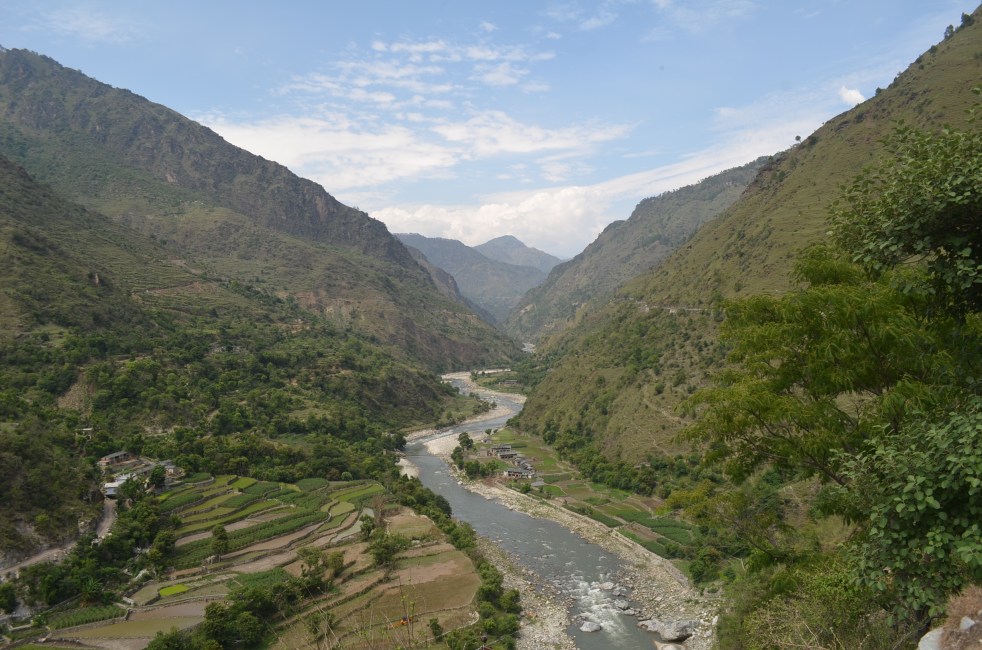
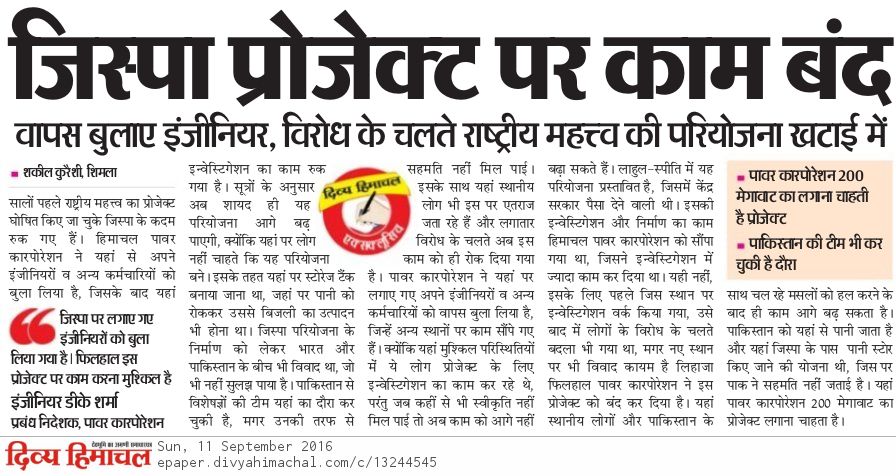
Finally, tribals struggle wins, sends Jispa HEP company packing up Facing stiff opposition from the tribal community against the construction of 300 MW Jispa Dam in Lahaul-Spiti valley has forced the Himachal Pradesh Power Corportaion Ltd (HPPCL) to suspend the project for the time being. The dam which was declared a project of national importance now has residents from 14 villages oppose it. HPPCL has invested Rs 3 crore and has stated that it would begin study work only when locals extend their support.

Since 2009, people from the Todh valley in Lahaul-Spiti district were opposing the Jispa Dam project proposed over Bhaga river, a tributarJy of Chenab at Jispa village. The government had sanctioned Rs 7,000 crore for this project but local residents did not allow officials to work in smoothly for three years now.

Confirming the development, managing director, HPPCL, D K Sharma told that some people were continuously opposing the project without realizing that construction of project could have ushered development in the area. He said constant opposition of local people had resulted into wastage of limited human resource so HPPCL board had decided to withdraw the manpower as project was only at investigation stage.

Continue reading “DRP: 26 Sep 2016 (Victory to tribals protest; Jispa HEP calls back staff)” →
Dams · DRP News Bulletin

DRP: 19 Sep 2016

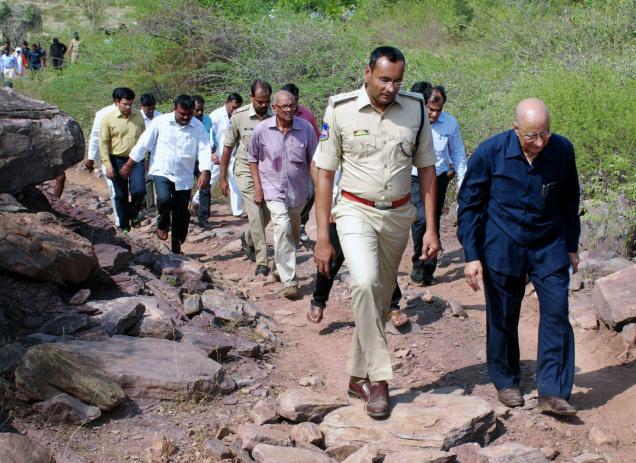
EAC Panel Visiting the site in Dec 2015

Centre EAC defers clearance to Yadadri Power project The Expert Appraisal Committee (EAC) under the Ministry of Environment has deferred its decision for granting environmental clearance for the 8,000 MW Yadadri Thermal Power Station in Telangana by TSGENCO due to a “lackadaisical” approach in preparing documentation. The EAC said the Environmental Impact Assessment (EIA) report was incomplete and there was lack of clarity on many issues raised by the Committee earlier. EAC on Thermal Power Companies has in its minutes meeting held on 29-30 2016 held the EIA consultants guilty of cut & paste jobs which can be found here.  At some places, it is mentioned that coal will be transported from two ports and in some other places, four ports are mentioned. Hence, complete and specific details regarding coal import ports and coal transportation routes were not given. Further it is also observed that two important sections of the EIA report- “risk assessment” and “disaster management plan”- are almost entirely generic and contain hardly any site or project specific aspects.

Continue reading “DRP: 19 Sep 2016” →