Arunachal Pradesh · brahmaputra · China · Climate Change · Dams · GLOF · Hydropower · Landslide · Landslide dam · Siang

The Riskiest Place to Dam a River: Medog, SUMP and the Untamed Yarlung Tsangpo Gorge

Introduction

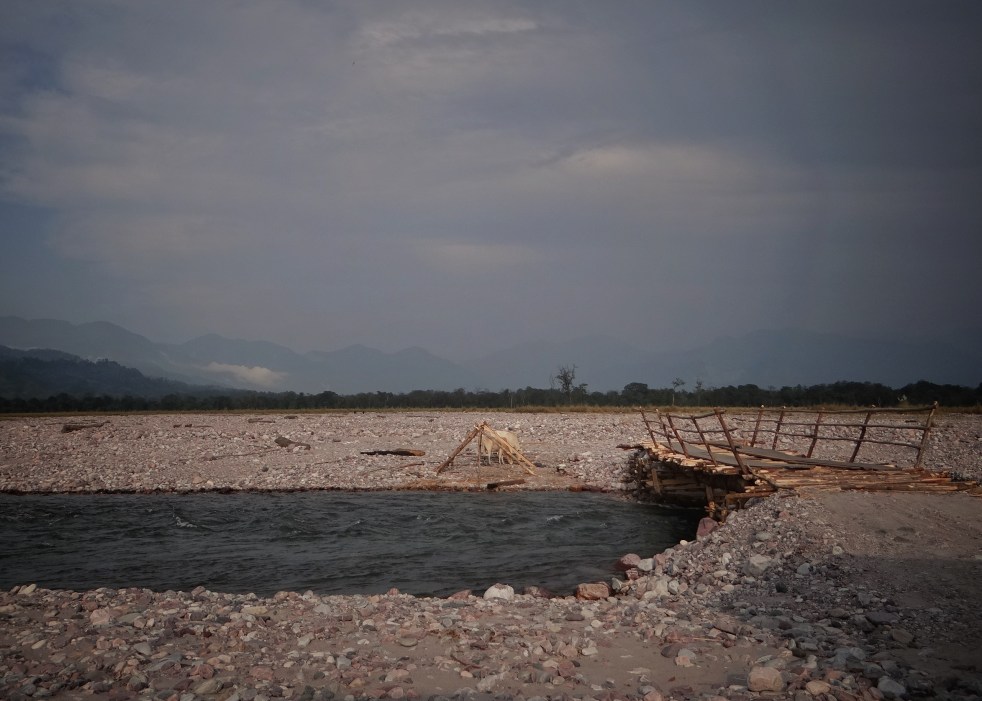
Protests are erupting in Arunachal Pradesh against India’s proposed 11,000 MW Siang Upper Multipurpose Project SUMP[1], a project pushed as if fait accompli to withstand the possible impacts of China’s 60,000 MW Medog Hydropower Dam System, World’s largest hydropower project.

China, aside from the curated media briefs and speeches from the July 2025 groundbreaking ceremony on the Tibetan Plateau, has shared no details of the project: no official information on location of the dams, their storage or discharge capacities, operational aims, etc.[2] Chinese media and even its scientists go on to laud the project in bombastic terms[3] while hinting perhaps they do not have the details either[4]. China hails this as advancing its “national security, ecological, energy, livelihood and international cooperation”[5] ambitions. In its media, the storage capacity of the largest dam is sometimes quoted 16 BCM, while India seems to have estimated it at 5.5 Billion Cubic Metres (BCM).

Continue reading “The Riskiest Place to Dam a River: Medog, SUMP and the Untamed Yarlung Tsangpo Gorge” →
Rainfall

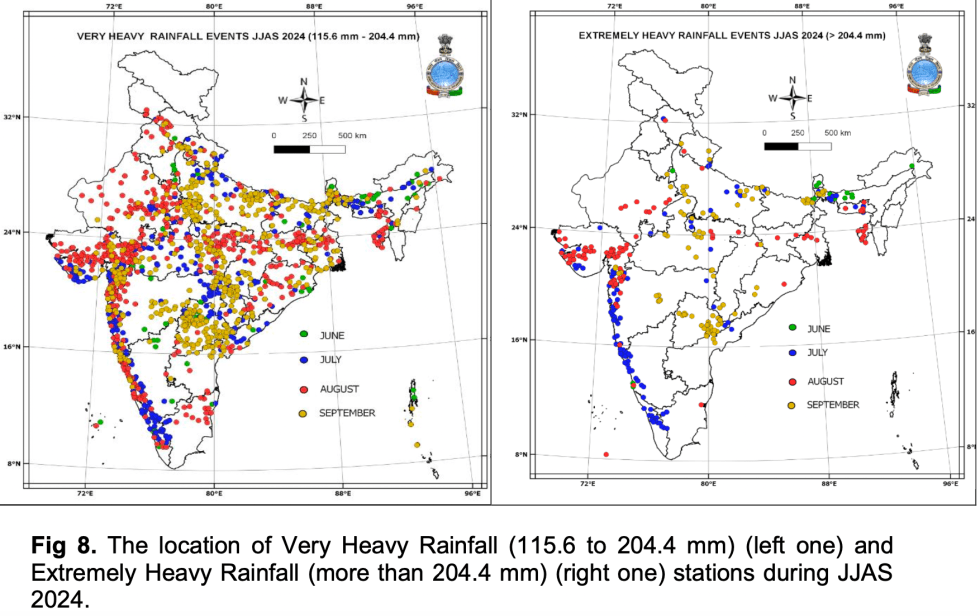
High Rainfall days in India’s districts in SW Monsoon 2024

An analysis of the daily district wise rainfall data from India Meteorological Department (IMD) for India’s South West Monsoon 2023 shows that there were 2176 instances when a district rainfall of a day was above 50 mm. Such high rainfall instances included 1759 instances when rainfall was 50-100 mm, 329 instances when it was 100-150 mm, 64 times it was 150-200 mm and 24 times above 200 mm. Out of 717 districts of India, 531 districts or, about 74% of the districts experienced such high rainfall days during SW monsoon 2023.

Continue reading “High Rainfall days in India’s districts in SW Monsoon 2024” →
Dams · DRP News Bulletin

DRP: 6 June 2016 (India to be power surplus for next 3 yrs: why govt continue to pursue hydro projects)

India will not have power deficit situation in FY17 India won’t need any new power plants for the next three years as it is flush with generation capacity, according to a government assessment. The country can manage for the next three years with existing plants that are currently under-utilised, and those that are under construction and upcoming renewable energy projects, assessment made by the power ministry for reviewing  the National Electricity Policy shows. Govt declares for the first time in history that India is POWER SURPLUS in 2016-17 with 3.1% power surplus in peak hours and 1.1% power surplus in off peak hours, both figures in 2015-16 were -3.2% during peak hours and -2.1% in peak hours. The western and Southern regions will be power surplus, but Northern, Eastern and Northeastern regions will have deficits. At the same time Power Minister Piyush Goyal says that Big hydro power units may come under renewable energy According to Minister the Centre has begun studies to decide whether to include big hydro power plants under the ambit of renewable energy. When India will be energy surplus for next three years why then Govt. of India is continue to pursue disastrous hydro projects on ground.  Where ASSOCHAM is asking Arunachal govt.  to do away with adverse tax policies on Hydro power to boost construction of hydro projects in the State. NHPC has also   raised relief amount for Kishanganga HEP around Rs 60 lakh and Rs 70 lakh to each family for the land acquired. And despite Delhi Govt. openly rejecting water from Renuka dam NGT panel has visited the area to look into the rehabilitation issue. 

Continue reading “DRP: 6 June 2016 (India to be power surplus for next 3 yrs: why govt continue to pursue hydro projects)” →