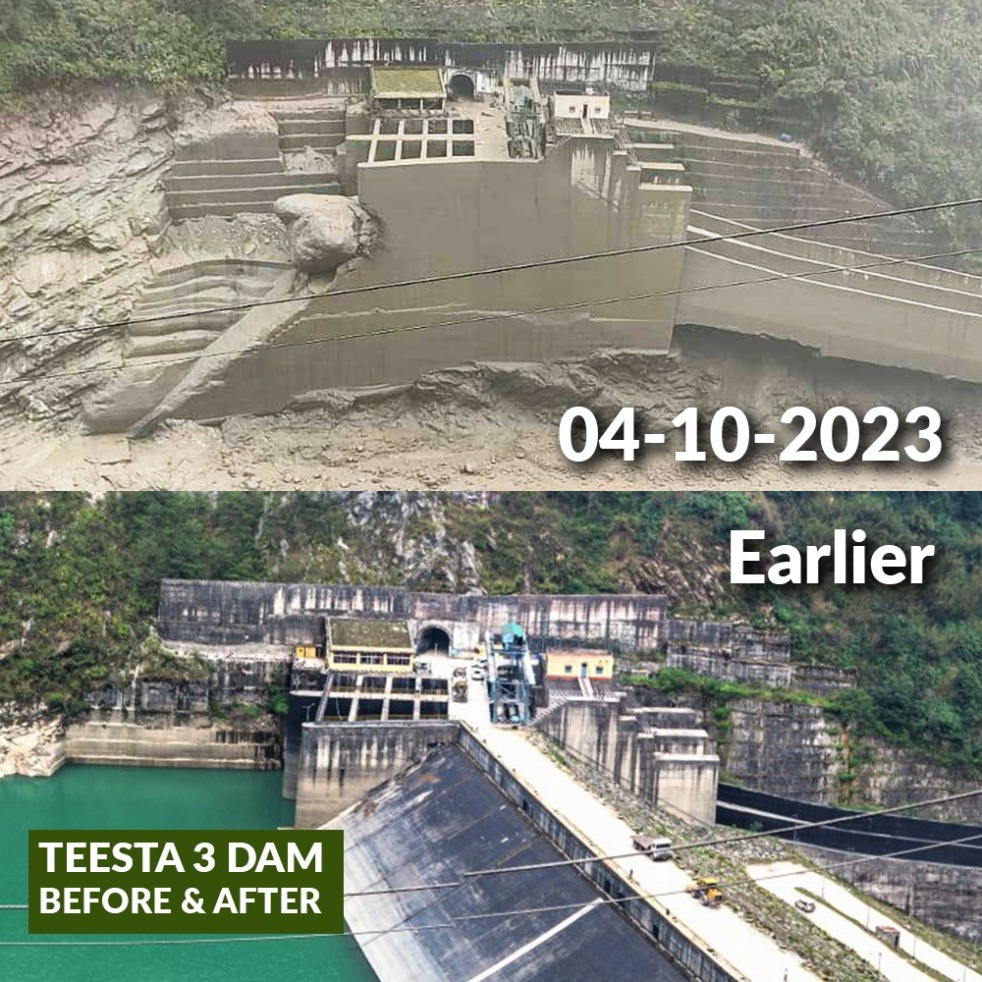
A Glacial Lake Outburst Flood (GLOF) that originated at South Lhonak Glacial Lake at around 00.40 hours on Oct 4, 2023, washed away the 60 m high dam of Sikkim’s biggest hydropower project, the 1200 MW Teesta 3 HEP. The flood has brought unprecedented disaster all along the river in Sikkim and further downstream in W Bengal and then Bangladesh. Central Water Commission (CWC) reported early in the morning of Oct 4 that there was cloud burst at the site of the lake burst, the cloud burst could have played the role in triggering the lake burst. (Feature image above: A combination of before after photos of Teesta 3 dam put together by Siddharth Agarwal.)
Continue reading “Glacial Lake FLood destroys Teesta-3 Dam in Sikkim, brings wide-spread destruction”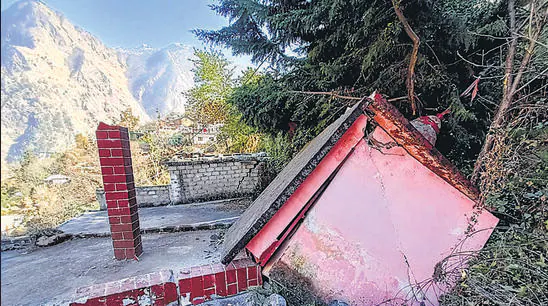
DRP 021023: Why this culture of opaque governance around Joshimath?
(Feature Image: A temple collapses after the gradual ‘sinking’ of Joshimath in Chamoli district, on Jan. 08, 2023. PTI/HT)
It is clear that the Union and the Uttarakhand government did not want the reports prepared by different national institutes related to Joshimath Sinking, to be made public and the state High Court had to order it to do so. The government’s view of the report is clear from that. It took the judiciary so many months to finally order the report to be made public. What is it that the government wanted to hide? Why? From whom? Why is there this culture of opaque governance even in disaster management related issues? Is it growth fundamentalism that is driving the government as the single most factor? Or is it the arrogance and adamant attitude of the governance, not wanting to consider any questions raised against their decisions? Why is there so little faith in the people, society and transparent, accountable governance? Why is the judiciary allowing such a culture to prevail generally?
These are some of the key questions that arise from this and other such episodes.
Continue reading “DRP 021023: Why this culture of opaque governance around Joshimath?”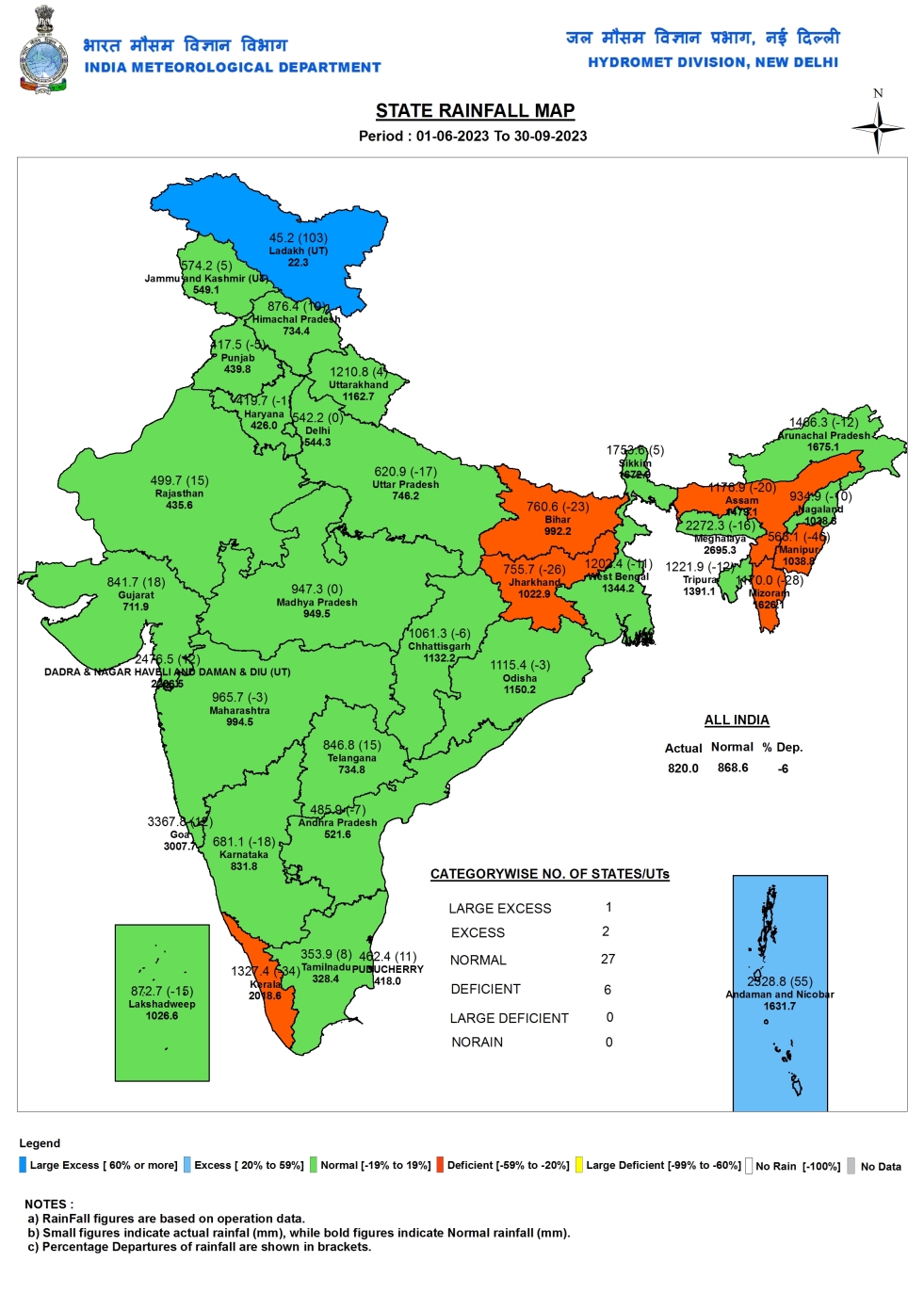
SW Monsoon 2023: District wise rainfall in India
In the just concluded South West Monsoon 2023, India received 820 mm (925 mm in SW Monsoon 2022[i]) rainfall, about 94.45 % (106.5% in 2022) of the Normal SW Monsoon rainfall of 868.6 mm or 5.55% (6.5% above normal in 2022) below normal SW Monsoon rainfall as per India Meteorological Department (IMD). This rainfall will now be categorised as below normal rainfall though the distribution has been unprecedented, both temporally and spatially.
Continue reading “SW Monsoon 2023: District wise rainfall in India”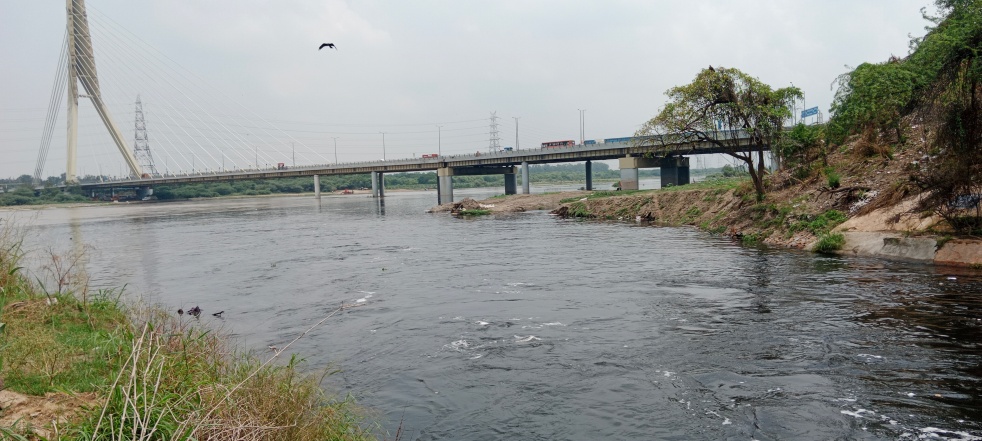
DRP 250923: World Rivers vs Indian Rivers on Rivers Day 2023
(Feature Image: Najafgarh drain loaded with polluted water joining River Yamuna downstream Wazirabad barrage in National Capital in June 2023: SANDRP)
Sept 24 is celebrated as the World Rivers day since 2005, the tradition started by river advocate Mark Angelo, who used to celebrate BC (British Columbia in Canada) Rivers day since 1980. There is some good news for rivers across the world in terms of decommissioning of dams, improving environment flows, movements to clean rivers, improve fish migration, protection of flood plains, room for the river, decommissioning of channelisation projects, among others.
Continue reading “DRP 250923: World Rivers vs Indian Rivers on Rivers Day 2023”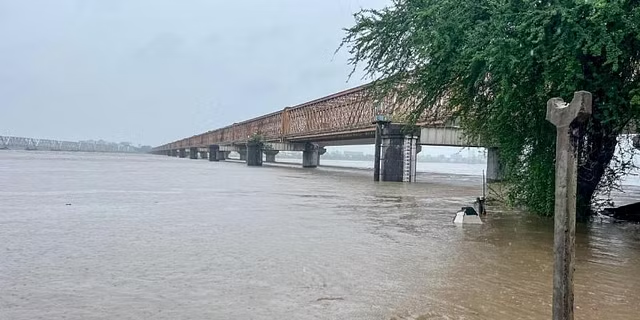
18 high flood levels breached in Western India in Sept. 2023
(Feature Image: The water level of the Narmada river near Golden Bridge rises to 35 feet due to heavy rains, in Bharuch on Sept. 17, 2023. ANI/TNIE)
Several of Narmada basin districts in Madhya Pradesh have witnessed heavy to very heavy rainfall spells between September 14 to 16, 2023 resulting in severe flood situation along the river in Madhya Pradesh and Gujarat and resultantly leading to breaching of Highest Flood Level (HFL) at 13 sites in Narmada Basin alone. Similarly, there have been at least 5 more HFL breaches during the same period in western India.
Continue reading “18 high flood levels breached in Western India in Sept. 2023”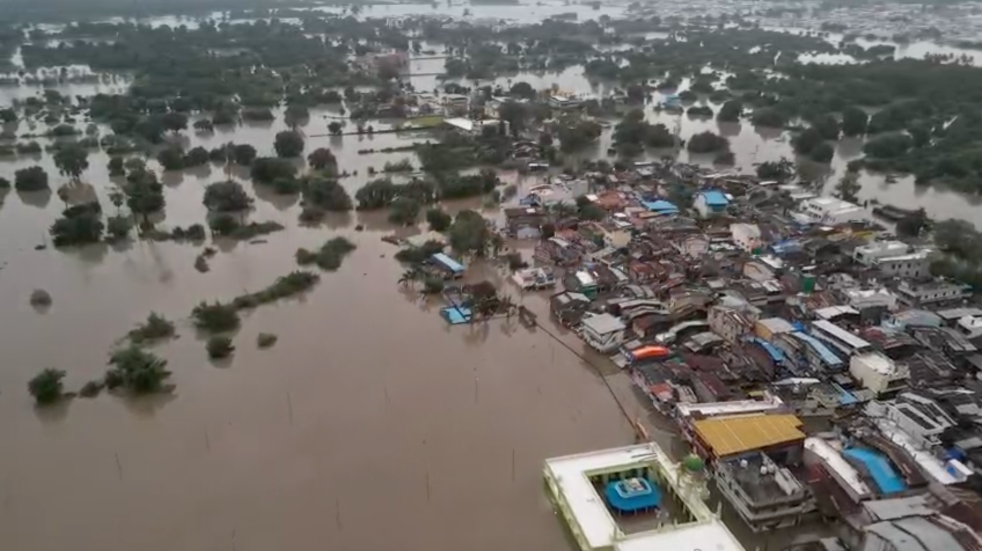
सरदार सरोवर परियोजना निर्मित बाढ़: रिवर बेड पावर हाउस को 6 सितंबर से क्यों बंद कर दिया गया?
सरदार सरोवर परियोजना (एसएसपी) बांध के अनियोजित संचालन से 16 सितंबर, 2023 की रात से शुरू होकर गुजरात और मध्य प्रदेश में आई बाढ़, कई जिलों के लाखों लोगों के लिए अकल्पनीय आपदा बनकर सामने आई है। इस बांध निर्मित बाढ़ से हुए नुकसान की अभी भी पूरी जानकारी उपलब्ध नहीं है। इस बीच इस टाली जा सकने योग्य आपदा का एक और दिलचस्प पहलू सामने आया है। चौंकाने वाली बात यह है कि 6 सितंबर से 16 सितंबर 2023 तक एसएसपी के 1200 मेगावाट रिवर बेड पावर हाउस (आरबीपीएच) में कोई बिजली उत्पादन नहीं हुई।
इसका मतलब न केवल लगभग 270 मिलियन यूनिट (एमयू जिसकी कीमत यदि 3 रुपये प्रति यूनिट के निचले दर से भी आंकी जाए तो लगभग 80 करोड़ रुपये से अधिक है) के बिजली उत्पादन का नुकसान हुआ। साथ ही इस मात्रा में बिजली उत्पादन हेतु बांध से 1200 क्यूमेक्स या, 42000 क्यूसेक की दर से प्रतिदिन पानी छोड़ा जाता जिसकी मात्रा इन दस दिनों में लगभग 12000 क्यूमेक्स या 4.2 लाख क्यूसेक होती, यदि यह सारा पानी को 24 घंटे की अवधि में छोड़ दिया गया होता। एसएसपी बांध में इतनी मात्रा में कम पानी भंडार करके इस बाढ़ के प्रभाव को बड़े पैमाने पर कम किया जा सकता था।
Continue reading “सरदार सरोवर परियोजना निर्मित बाढ़: रिवर बेड पावर हाउस को 6 सितंबर से क्यों बंद कर दिया गया?”Avoidable flood disaster from unaccountable Sardar Sarovar operation: Why was River Bed Power House stopped since Sept 6?
The avoidable flood disaster brought in Gujarat and upstream Madhya Pradesh, starting from the night of Sept 16, 2023 by unaccountable operation of the Sardar Sarovar Project (SSP) Dam has created unimaginable impacts for lakhs of people in several districts, the full contours of the damage are still not fully available. But another intriguing aspect of this man-made disaster has come to light. Shockingly, there was no power generation at the 1200 MW River Bed Power House (RBPH) of the SSP from Sept 6 to Sept 16. This not only means loss of power generation of about 270 million units (MU), worth over Rs 80 Crores even at low price of Rs 3 per unit), but also it would have meant release of 1200 cumecs or, 42000 cusecs and over ten days, this would have meant reduction of about 12000 cumecs or 4.2 lakh cusecs from peak discharge for 24 hours, and this itself would have hugely reduced the flood disaster.
Continue reading “Avoidable flood disaster from unaccountable Sardar Sarovar operation: Why was River Bed Power House stopped since Sept 6?”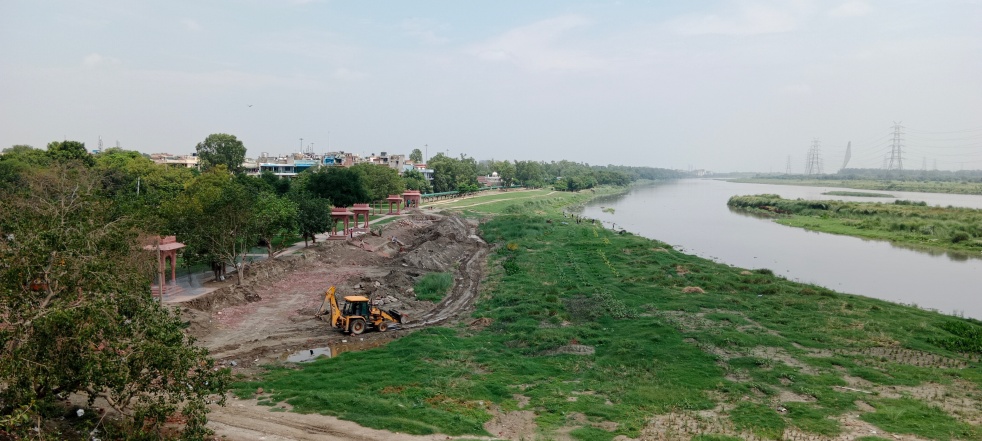
DRP 180923: Floodplain loss, the biggest in Asia, disaster in the making
(Feature Image: Ongoing ghat work along Yamuna at Qudsia ghat, ISBT Dellhi. SANDRP, June 2023)
A floodplain, according to the US Federal Emergency Management Agency, is “any land area susceptible to being inundated by floodwaters from any source”. According to the report “Human alterations of the global floodplains 1992–2019”, over 460,000 sqkms of floodplain area was lost to agriculture, while another 140,000 sqkms was redeveloped to new areas over the existing floodplain. Continent-wise, Asia lost the biggest area of floodplains — a little over 200,000 sqkms — among all the continents. It was followed by South America (92,000 sqkms) and Africa (73,000 sqkms).
Continue reading “DRP 180923: Floodplain loss, the biggest in Asia, disaster in the making”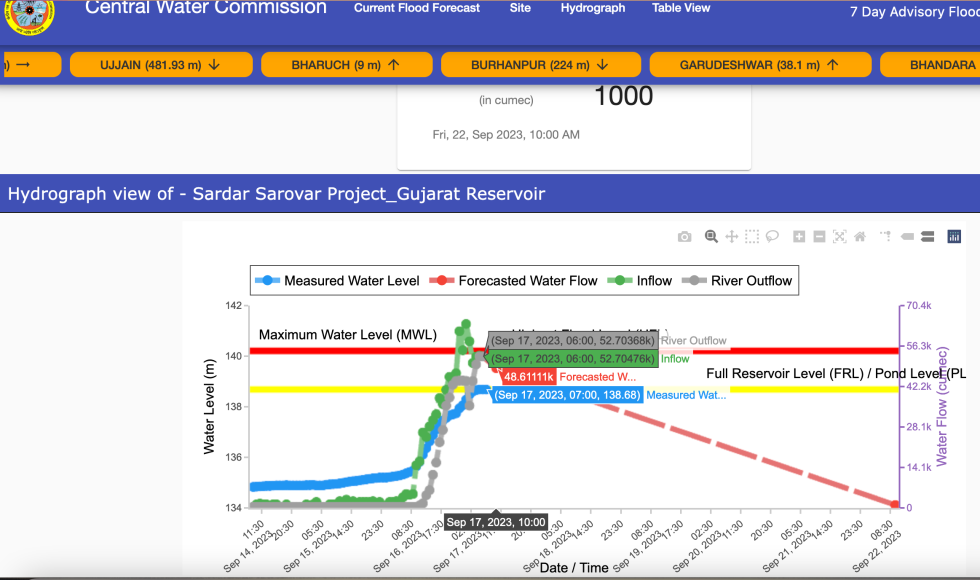
सरदार सरोवर बाँध संचालन की लापरवाही से गुजरात में फिर आई बाढ़
सरदार सरोवर परियोजना (एसएसपी) बांध संचालन अधिकारियों की लेटलतीफी और गैर-जिम्मेदार व्यवहार से गुजरात में बाँध के निचले इलाके एक बार फिर ऐसी बाढ़ की मार झेल रहे हैं जिसे काफी हद तक टाला जा सकता था। भरूच में गोल्डन ब्रिज पर जल स्तर आज 17 सितंबर, 2023 को उच्चतम बाढ़ स्तर (एचएफएल) के करीब पहुंच रहा है, लेकिन अगर एसएसपी अधिकारियों ने समय रहते उपलब्ध जानकारी के आधार पर और बाँध संचालन नियमों जैसे रूल कर्व सिद्धांत का पालन कर कार्रवाई की होती तो इस बाढ़ का एसएसपी बाँध से ऊपरी और निचले दोनों क्षेत्रों में बहुत कम प्रभाव होता।
Continue reading “सरदार सरोवर बाँध संचालन की लापरवाही से गुजरात में फिर आई बाढ़”Unaccountable Sardar Sarovar operators again bring avoidable floods in downstream Gujarat
Late, lethargic and unaccountable actions of Sardar Sarovar Project (SSP) Dam operators have once again contributed to huge and largely avoidable downstream floods in Gujarat. The water level at Golden Bridge in Bharuch is approaching HFL (Highest Flood Level) today on Sept 17, 2023, but these floods could have been significantly lower and much less disastrous both for SSP upstream and downstream areas if SSP authorities had taken action earlier based on actionable information available and based on sound reservoir operation principles of following a rule curve.
Continue reading “Unaccountable Sardar Sarovar operators again bring avoidable floods in downstream Gujarat”
