Even as the government is set to review 6 of the foundational environmental laws of India, the Union Ministry of Environment, Forests and Climate Change (MoEFCC, formerly MoEF) has been issuing a slew of orders, circulars and Office Memorandums (OM)[1] lately for “streamlining” Environmental and Forest Clearance process.
Having said that, there is no doubt that the system of Environment and Forest clearance needs to be made stronger, accountable, transparent, democratic and informed. Ironically, the only way the government has sought to do this is to make the system more industry-friendly. A vast majority of orders passed lately by MoEFCC are pro-industry and anti-environment. Drop by drop, such orders and circulars are making it impossible to rely on the original Environment acts and Notifications as the orders have interpreted Acts in convenient ways. At the same time, the misleading, non-compliance, hiding of information, willfully providing wrong information is rampant from project proponent side, with MoEF taking no firm action. We have illustrated this with very few examples below.
When this is a known case, accelerating clearance process, ignoring necessary studies and bypassing checks and balances is only accelerating our fall to the bottom.
Take an example of OM issued on the 7th October, 2014 titled “Seeking additional studies by EACs/ SEACs during appraisal of project beyond the Terms of Reference (ToRs) prescribed under EIA[2] Notification 2006”(No. 22-A3/ 2O14-IA-III).[3]
In a nutshell, this OM states that “It has been brought to its notice” that Expert Appraisal Committees (EAC for short. EAC is at the center, considering Environmental Clearances for bigger projects) and State Expert Appraisal Committees ( SEAC for short. SEAC is at State level, considering smaller projects for Environmental clearance) have been asking for “additional studies which do not form a part of TOR” and this “delays the whole process and is against the spirit of EIA Notification (2006)” It further says that EAC/ SEAC should address all issues at the primary scoping clearance stage [4]itself, based on Form I submitted by the proponent and meeting of proponent with EAC and should ensure that “no fresh issues are raised later” and that additional information/ additional studies should be asked only if it is proved to be “inevitable”.
This OM clearly seems to be brought out due to pressure from project-related ministries state and industry lobby. We need to understand that EACs and SEACs were asking for Additional Studies in very rare cases. EACs like the one on River valley and Hydropower projects have a clearance record of 100% and rarely asks for additional studies. So what was the need for this specific OM?
This OM does not serve any purpose other than discouraging the committees from asking additional information or studies post TOR stage and is a regressive step.
In reality, the very need for asking such additional studies or information is due to severely compromised information provided by the proponents themselves at the Scoping Clearance stage.
Looking at the EC process it seems hiding information, providing false information, misleading the EAC and even committing blatant violations has become the norm rather than an exception. In very rare cases, when this is exposed before EAC, they have asked for additional studies (instead of taking any strong action, for example rejecting the application or postponing decision till the studies are done, as per the Law and prudent decision making norms). The OM is effectively stating that EACs should process applications based on any shoddy information they receive and should close their eyes even when critical issues surface later in the process. This is like accelerating a flawed process, in a race to the bottom.
Rather than passing such OMs, the Ministry needs to ensure that all the steps of EC process are complied with. That’s not the case today and that’s a more pressing problem than the additional studies. It is this non-compliance that is damaging the “Spirit of EIA Notification 2006” about which the MoEF seems to be least concerned. There is no need for any additional OMs to fix these issues, only real concern for spirit of EIA Notification and other related laws.
Below we give a few examples which indicate the gaping holes in the current system is and how “not asking for fresh information or additional studies” will result in severely flawed environmental decision making.
Basic Project Information (Form I & PFR) has been incorrect, false or incomplete on many occasions:
The OM states that the EACs/ SEACs should base their TORs on basic project information (in the form of Form I & Pre-feasibility Reports – PFR) submitted by the proponent and a brief meeting with the proponent. (Note here that there is no role for any external agency and the Ministry is fully relying of the proponent for project information submitted at this stage.) Form I asks limited questions and a number of times, the answers provided by the proponent are incorrect, incomplete or misleading. Seems to be a sure way to make wrong decisions, doesnt it?
For example:
Sonthi Lift Irrigation Scheme in Karnataka, the Form I took the MoEF for a royal ride. The project was already significantly finished, in violation of the EIA notification and EPA (1986) when the officials approached MoEF for “Scoping” Clearance! And even after pointing out all the blatant violations, the MoEF accepted the project, with no action taken again the violators (Karnataka Neeravari Nigam Limited). We had pointed this out at many stages, see SANDRP’s submissions and notes: https://sandrp.in/Sonthi_Lift_Irrigation_Nov_2013.pdf
In case of 1750 MW Lower Demwe Project in Arunchal, which is part of a string of projects in Lohit Basin with huge cumulative impacts and downstream impacts on Assam, the Form I says “No cumulative impacts”.
In case of 72 MW Rolep project in Sikkim, Form I does not clarify that the project falls is a high landslide and flashflood zone, when landslides and flash floods have occurred at the site itself.
In case of Shirapur Lift Irrigation Scheme in Maharashtra, the Form I was a joke as the half-finished project with canals has been sitting idle for many years in Solapur, blatantly violating EPA,1986. Not only does the Form I hide that the project is nearly finished, is also states that the project “does not affect important ecological areas” or “areas for sensitive species”, when the canal of the project will take 92 hectares from Great Indian Bustard Sanctuary. Incidentally, the MoEF has a special plan for protection of the Great Indian Bustard! (See SANDRP’s submission at TOR Stage https://sandrp.in/irrigation/ShirapurLIS_SANDRP_Sbmsn_to_EAC_Jan2013.pdf)
These are only a few indicative examples and the violations are on a huge scale. We and others have pointed this out to the EAC and MoEFCC over the years, but no action was taken, thus encouraging the developers. We have not heard of a single instance when the MoEFCC has rejected the proposal based on problems with Form I/ PFR and as per the Clause 8 (vi) of EIA Notification 2006, which is reiterated in the present OM.
And now the Ministry wants EAC to take action only based on such information, and without any further studies!
No action is taken when EIA is prepared violating granted Terms of Reference (TOR):
The Ministry is saying that asking for additional information is against the spirit of EIA Notification 2006. The same Ministry does not bat an eyelid when projects are recommended EC (Environment Clearance) by EACs even when they violate the TORs based on which the project received first stage clearance! Is that not against the spirit of EIA Notification?
Here too, SANDRP has pointed this out a large number of times, but this has not been acknowledged in most cases. Some examples:
TORs issued for Sach Khas Project in Himachal Pradesh had specifically asked for study of impact of sudden release of huge quantities of water for generating hydropower (Peaking) on biology of the river. This was not done by WAOCOS, but the EAC and hence the MoEF did not consider this point, even after SANDRP made a specific submission on it. See SANDRPs note: https://sandrp.wordpress.com/2014/08/19/sach-khas-hydro-project-in-chenab-basin-another-example-of-wapcoss-shoddy-eia/
Again this is just an indicative list, showing the extent of real problems.
No action was taken when EIA was plagiarized
There have been multiple occasions when EIA is exceedingly shoddy and even plagiarized! In these cases too, although it has been brought to the notice of EAC/ MoEF, no action has been taken.
For example: In case of Mohanpura Irrigation Project in Madhya Pradesh, plagiarising in WAPCOS EIA was pointed out to the EAC by SANDRP and individual researchers (see : https://sandrp.wordpress.com/2013/11/15/mohanpura-dam-in-madhya-pradesh/) but the MoEF took no action against the agency.
No action was taken when EIA provided misleading information
There are several such examples but the most recent example, is 3000 MW Dibang Project in Arunachal. The EIA agency and Project Proponent has issued misleading information about the impact of the project on the downstream Dibru Saikhowa National Park in Assam. The report states that the water level rise or fall at Dibru Saikhowa due to sudden water release from all projects in the upstream Arunachal Pradesh will be less than one meter, when a different study also considered by EAC shows that this fluctuation when all upstream projects hold back and release water will be 7-8 feet (more two meters)! SANDRP had pointed this discrepancy, but the EAC did not even take a note of this in the meeting and actually recommended clearance to this project! (https://sandrp.wordpress.com/2014/10/06/manipulating-environment-forest-clearances-for-dibang-project-deja-vu-lshp-history-repeated-will-it-be-tragedy-or-comedy/)
To reiterate, the above is a brief, indicative list. SANDRP and other organizations routinely look at the EC process, and we are overwhelmed at the level of non-compliance happening at the proponent end as well as EAC and MoEF level.
The affected communities see how their submissions are either misrepresented in the EIAs, or just not considered by the EAC even when objections are loud and clear in Public hearing reports (like in case of Dibang EIA).
MoEFCC further denigrates the Public Consultation Process
By ordering that no additional information should be sought after TOR stage, the MoEF is deriding the importance of Public Hearing which take places as a part of the Environment Impact Assessment Study, after TORs have been granted. Like in the case of Dibang, major issues raised by affected people have not been raised either in Form I or in TORs or in the EIA and need additional studies.
Now by discouraging additional studies, the MoEFCC is suggesting that even public consultations are immaterial. No more studies, after TOR please! This is an insult of the public consultation process which should form the heart of appraisal and assessment process.
For the same reason, in many countries public hearing is conducted before granting Terms of Reference. In the absence of any such provision, simply stating that additional studies should not be recommended after TOR stage is a seriously regressive step.
Project application documents not availalble in public domain
For basic transparency in Environment appraisal process it is necessary that all the documents (Form 1 and PFR at TOR stage & EIA-EMP and Public consultation documents at EC stage) that accompany the application for environmental clearance are put out in public domain well in advance ( at least ten days) before the projects are discussed by EAC.
Ironically, MoEFCC does not have any legal requirement in this regard and it was Central Information Commission that in 2012 directed the MoEFCC to ensure that. But this is not happening. In fact the projects that are on the EAC agenda are many times not even listed on the relevant environment clearance website (http://environmentclearance.nic.in/).
When this was brought to the attention of the MoEFCC’s concerned officials and EAC, they have taken no action in most cases. The situation has particularly worsened since June 2014, after the new BJP-led government came to power at the centre. It is on areas like these that we need MoEFCC to be pro-active. ( Pass some OMs here!)
In the end The system of Environmental Appraisal and Clearance today lacks accountability, transparency, democratic norms and compliance. Some of the major reasons for asking for additional studies is when the Form I, PFR and EIA do not adequately address issues.
In order to bring in speed and accountability in the appraisal process, there is a need to:
Blacklist and debar EIA consultants which provide plagiarized, misleading or false data in EIA reports
Reject applications based on false or misleading Form I – PFR
Reject applications which do not conform with TORs granted
Consider submissions received from civil society and affected groups at the time of TORs and EC process carefully and consider these as inputs and help for a holistic appraisal, not as adversaries. Invite organisations/ individuals in the EAC meetings when those specific projects are discussed.
MoEFCC needs to ask EAC to show application of mind while appraising projects, submissions, public hearing processes and considering proponent’s response. This serious consideration by the part of EAC should be reflected unambiguously in the minutes of the EAC meetings.
MoEFCC needs to appoint as members and chairpersons of EAC only such persons with a track record indicating knowledge, experience and independence on environment issues. A recent NGT order asked MoEFCC to do exactly, this, but MoEFCC has yet to implement this order.
MoEFCC needs to ensure that all the relevant documents for projects on EAC agenda are put in public domain at least ten days in advance of the EAC meeting, as directed by the Central Information Commission. In absence of such documents in public domain, the EAC should not be considering the projects. (MoEFCC should in fact come out with a notification on this!)
Reject projects which have violated EPA (1986) and EIA Notification (2006). Here too, the MoEFCC regularizes blatant violations by passing OMs.
Most of the above is enshrined in the EIA Notification (2006) and the Environment Protection Act (2006) and there is no need for passing any OM for this, but such steps will automatically make the EC process not only efficient and swift, but also responsive, pro-environment and pro-people.
And this should be the main concern of Ministry of Environment, Forests and Climate Change.
[4] Scoping clearance stage is first stage of Environmental Appraisal Process when the EAC grants Terms of Reference (TOR) to the project based on which Environment Impact Assessment is carried out later
Guest Blog by: Ritwick Dutta (ritwickdutta@gmail.com) Environmental Lawyer, Managing Trustee,
Legal Imitative for Forest and Environment, New Delhi
The review of Environmental Law is currently being undertaken by the High Level Committee (HLC) constituted by the Ministry of Environment, Forest and Climate Change. The task is huge and requires a much more detailed, comprehensive, real and effective consultative process than what is currently being done. The Committee is well within its right to say that such a task cannot be undertaken within such a limited and unrealistic time frame (2 months) and without the required expert composition.
The committee must give suggestions only on how to strengthen environmental law in India and not dilute environmental laws. Undermining environmental law is disastrous for the people, environment and even for economic development. It is pertinent to point out some events which have occurred in recent times which reflects on how the decisions on environment have had disastrous consequences both for the people and the economy.
Contrary to what is generally projected by the Industry Associations and a section of the press, environmental laws are not the cause of slow economic growth. Rather speedy and hasty approvals have been the cause of both environmental, social and economic loss and damage. It is imperative to focus on some facts which would be relevant.
The Ministry of Environment and Forest and its various expert committees never reject a project totally. Even if the approval is declined in one meeting it is presented in a subsequent meeting with minor modification. One can cite the recent case of Dibang Hydro Electric project in Arunachal Pradesh which was recommended for forest clearance despite being rejected twice by the Forest Advisory Committee.
An analysis of the approvals granted by the Regional Office of the MoEF based on recommendation of State Advisory group, the rate of approval is 78 Percent [See report of EIA Response Centre, study from January to April, 2014 at Annexure IIm, see the end of the blog]
The Expert Advisory Committee (EAC) constituted under the EIA Notification 2006 undertakes the task of appraisal at remarkable speed and hasty manner. It is worth quoting from the Judgments of Courts and Tribunals on the manner in which appraisal is done by the Expert Committees.
A. Samata Versus Union of India [National Green Tribunal , Appeal No 9 of 2011,] [Thermal Power Plant in Andhra Pradesh]
‘For a huge project as the one in the instant case, a thermal power plant with an estimated cost of Rs. 11,838 crore, covering a total area of 1675 acres of land, the consideration for approval has been done in such a cursory and arbitrary manner even without taking note of the implication and importance of environmental issues. On the same day the EAC took for appraisal not only the thermal power plant in question, but also other projects which would be indicative of the haste and speedy exercise of its function of appraisal of the project.
“As regards the functioning of the EAC, from the response of the MoEF to the RTI application referred to hereinbefore, it appears that the EAC granted as many as 410 mining approvals in the first six months of 2009. This is indeed a very large number of approvals in a fairly short time. We were informed that the EAC usually takes up the applications seeking environmental clearance in bulk and several projects are given clearance in one day. This comes across as an unsatisfactory state of affairs. The unseemly rush to grant environmental clearances for several mining projects in a single day should not be at the cost of environment itself. The spirit of the EAC has to be respected. We do not see how more than five applications for EIA clearance can be taken up for consideration at a single meeting of the EAC. This is another matter which deserves serious consideration at the hands of MoEF.”
C. Gauraxa Hitraxa Pauchav Trust Vs Union of India [Appeal No 47 of 2012 of NGT] [Pipava port, Gujarat]
“The relevant observations in the EAC meeting reveal that the presentation made by the Project Proponent was accepted as “gospel truth””
D. Sreeranganathan K.P and ors Vs Union of India : [Appeal No 172 -174 of 2013] [Aranmula Airport, Kerala]
“The Tribunal is able to notice a thorough failure on the part of the EAC in performing its duty of proper consideration and evaluation of the project by making a detailed scrutiny before approving the same……The EAC is constituted consisting of a Chairman and number of members who are experts from different fields only with the sole objective of national interest in order to ensure establishment of new projects or expansion of already existing activity without affecting the ecological and environmental conditions. Thus, a duty is cast upon the EAC or SEAC as the case may be to apply the cardinal and Principle of Sustainable Development and Principle of Precaution while screening, scoping and appraisal of the projects or activities. While so, it is evident in the instant case that the EAC has miserably failed in the performance of its duty not only as mandated by the EIA Notification, 2006, but has also disappointed the legal expectations from the same.
The above list is only illustrative and there are many other judgments reflecting the situation with respect to haste with which approvals are granted.
While undertaking any review the Committee must keep into account the following facts, issues and ground realities.
India’s Environmental law are a result of people’s struggle, international convention, commitments and judicial pronouncements and is aimed at ensuring sustainable development. Most provisions of the India’s environmental law have been an outcome of International Conventions pursuant to Article 253 of the Constitution eg, the Public Hearings and Environment Impact Assessment became part of India’s legal framework pursuant to the Rio Declaration of 1992 and the National Green Tribunal was set up pursuant to India’s committment to Principle 10 of the Rio Declaration.
‘Principle on Non-Regression’ has to be applied while undertaking review.
The principle of non-regression is understood as the requirement that norms which have already been adopted by states may not be revised in ways which would imply going backwards on the previous standard of protection.[2] This principle has been traditionally recognized in the area of human rights – that is, once a human right is recognised it cannot be restrained, destroyed or repealed. This theme is echoed in almost all the major international instruments on human rights, including the Universal Declaration of Human Rights. [3] Environmental rights are closely related to human rights as well, including cultural and social rights, and can be interpreted to apply in the context of environmental protection as well. In addition, the principle is increasingly being invoked in the context of environmental protection. The European Union has adopted this view through a resolution: [4]
97. Calls for the recognition of the principle of non-regression in the context of environmental protection as well as fundamental rights.
The Resolution of the UN General Assembly as the outcome document of the Rio+20 United Nations Conference on Sustainable Development reflects the acceptance of this principle as well:[5]
20. We acknowledge that since 1992 there have been areas of insufficient progress and setbacks in the integration of the three dimensions of sustainable development, aggravated by multiple financial, economic, food and energy crises, which have threatened the ability of all countries, in particular developing countries, to achieve sustainable development. In this regard, it is critical that we do not backtrack from our commitment to the outcome of the United Nations Conference on Environment and Development. We also recognize that one of the current major challenges for all countries, particularly for developing countries, is the impact from the multiple crises affecting the world today.
Therefore, the principle of non-regression applies as a human and fundamental right, as well as under the principles of environmental law – like “sustainable development” and precautionary principle”.
The concept of Sustainable Development has to be comprehensively understood and cannot be equated only with economic growth. The Rio Declaration of 1992 has to be comprehensively understood and read not in isolation but as a whole. Public hearings (Principle 10), EIA (Principle 17) Precautionary Principle (Principle 15), Compensation and liability regime (Principle 13) are the core of Sustainable Development and have been incorporated as part of national law. The aim should be to further include these in various laws in a comprehensive manner. Rule of law, the right to participate effectively in matters which concerns one’s life.
Expert Committees, Advisory Committees, Appellate Forums constituted of Bureaucrats do not inspire confidence. This Committee must recommend that any committee or appellate forums should not have any bureaucrats. The working of the National Environment Appellate Authority (NEAA) is a classic example of failure due to the fact that retired IAS and IFS officials were made vice chairman and member. The Delhi High Court in Vimal Bhai versus Union of India [CM No. 15895/2005 in W.P. (C) 17682/2005 has held:
“The list produced by the petitioners of appeals before the NEAA shows that most of the appeals disposed of thus far have in fact been dismissed, comprised as it is of retired bureaucrats, minus the Chairperson and Vice Chairperson. The NEAA is, therefore, at present neither an effective nor an independent mechanism for redressing the grievances of the public in relation to the environment clearances granted both either the State or the Central Government.”
Conclusion:
There is clearly a need to review environmental laws. Yet neither the objective and purpose is clear of the present exercise. The Environment (Protection) Act, 1986 has numerous notifications issued under it. It ranges from EIA Notification to rules regulating the use of Plastics and microorganisms. Will the present review cover all these? These are issues which needs clarity. In addition, the Committee has to genuinely interact with all concerned persons across the country. The present process cannot be called consultative at all.
India’s environment has already impacted negatively due to hasty decisions as evident from numerous decisions of the Courts, the least this HLC can do is not to prepare a hasty report based on limited one sided information and limited public interaction.
[Earlier Blog on HLC: https://sandrp.wordpress.com/2014/09/26/review-of-environment-laws-is-necessary-but-the-tsr-subramanian-hlc-lacks-credibility/]
Ritwick adds in post script: So far as ELMA is concerned, it is not even in a form that can be called as a Bill. The ELMA has many dangerous provisions and the sole aim is to manage the progressive provisions in all the other laws. ELMA gives overriding powers to the environmental authority to pass any direction. The thrust of ELMA is to ensure that those who approach the courts for redressal of their grievances face the threat of penalty. I feel that one of the most problematic provisions of ELMA is the fact that it combines all clearances (CRZ, EC and FC) into one (Single window) with very limited scope for appeal. The Appeal will have to be filed within 30 days of approval and before a Board constituting of two serving or retired secretaries to the Government! The process without doubt was a hurried one.
State Advisory Groups (SAGs): Recommendations for Forest Clearance during January-April 2014
The Forest (Conservation) Rules, 2003 under the Forest (Conservation) Act 1980, provide that proposal involving forest land of more than forty hectare shall be sent by the State Government to the Secretary to the Government of India, Ministry of Environment and Forests (MoEF) while proposals involving forest land up to forty hectare shall be sent to the Chief Conservator of Forests or Conservator of Forests of the concerned Regional Office (RO) of the MoEF.
RO is empowered to scrutinize and sanction the proposals involving diversion of forest area up to 5 hectare. In respect of proposals involving diversion of forest area above 5 hectare and up to 40 hectare and all proposals for regularization of encroachments and mining up to 40 hectare, the proposals are examined by the RO in consultation with State Advisory Group consisting the representatives of the State Government from the Revenue Department, Forest Department, Planning and /or Finance Department and concerned Department (User Agency).
State Advisory Groups (SAGs) are constituted by the Ministry of Environment & Forests, Government of India, under the Forest (Conservation) Act, 1980 for each State and Union Territory.
The view of the Advisory Group are recorded by the Head of the RO and along with the same, the proposals are sent to Ministry of Environment & Forests, Government of India, New Delhi for consideration and final decisions.
The meeting of the State Advisory Group (SAG) is normally held once in a month at concerned State Capital as per a pre-decided schedule for each State and Union Territory.
Agenda and minutes of SAG meetings are uploaded on the MoEF website.
In this report, we have analysed minutes of SAG meetings all over the country from January to April 2014. During the period, minutes of meetings in 10 states are available in public domain.
As per the information available on MoEF website, there were 16 meetings during this period of four months in which 541 ha area has been recommended for diversion. These meeting happened in Gujarat, Maharashtra, Madhya Pradesh, Uttarakhand, Andhra Pradesh, Karnataka, Kerala, Punjab, Tamil Nadu and Odisha. Gujarat leads with maximum diversion of 138 ha followed by Maharashtra with about 100 ha diversion.
It is interesting to note that Transmission Line is at top of the table taking maximum recommendation for diversion, 142 ha (26 %) closely followed by Roads with 138 ha (25 %). If we include Railways which takes 56 ha (11%), it is conspicuous that ‘linear intrusion projects’ are taking 62 per cent of the total recommended diversion.
The total number of projects considered by SAGs during the period was 41 of which 32 were recommended, i.e.78 per cent. It is alarming to note that not even one project was declined by SAG!
Every possible violation of norms, procedures, law and democratic governance is being committed in pushing clearances for the India’s largest capacity hydropower project, which involves India’s highest dam proposed so far & North East India’s Largest capacity reservoir: the 3000 MW Dibang Multi Purpose Project in Arunachal Pradesh. The players involved in these violations include the Union government of NDA led by BJP (UPA earlier), including its cabinet and Union Ministry of Environment, Forests and Climate Change (MEFCC), Ministry of Power, State government, the project developer company NHPC Ltd, the Expert Appraisal Committee (EAC) and Forest Advisory Committee (FAC).
The project will need more than 4700 hectares of biodiversity rich Forest area with several Schedule I species in Arunachal Pradesh. It will also have significant downstream impacts on the people & environment of Arunachal and Assam and Dibru Saikhowa National Park. Most of its impacts have not been either properly assessed or considered by the developer, EIA agency or the EAC & MEFCC.
Déjà vu: We did the same for Lower Subansiri HEP! It seems the government is indulging in the same blunders that the previous NDA government[1] indulged in over a decade ago while clearing the then-largest capacity hydropower project: the 2000 MW Lower Subansiri Hydropower Project (LSHP), also in Arunachal Pradesh. Environment clearance for LSHP came on July 16, 2003 and stage I forest clearance came on June 10, 2003. Exactly the same set of players were involved in manipulating LSHP clearances over a decade ago. The developer is also the same: NHPC. The government at centre is again led by NDA.
Aaranyak environmental group of Assam, in a letter dated May 16, 2002 to the then-Chief Justice of India had highlighted the violations involved at various stages in the decision making of LSHP including during public hearings, in conducting EIA, in giving environment, forests and wildlife clearances. Almost all the issues that Aranayak letter raised then are applicable in case of Dibang with even greater force. But it seems in the twelve years since 2002 when that letter was written, our environmental governance has only degenerated.
The fate of the LSHP is a lesson in itself. After spending over Rs 5000 crores (Rs 50 Billion), the work on the project came to a standstill in December 2011. It has remained stalled for 34 months since then, following India’s biggest Anti dam People’s movement so far. This is unprecedented in India’s hydropower history. NHPC Ltd has been trying every possible trick to resume the construction work on LSHP, without genuinely trying to address the issues people’s movement has been raising.
Dr Mite Linggi, Representative of Kere A Initiative for Cultural and Ecological Security said exactly that at the public hearing of Dibang Project on March 13, 2013: “It is evident that the 2000 MW Lower Subansiri Project is stalled since Dec 2011 because the technical, environmental and social concerns of the people of Assam were not considered earlier… Ignoring downstream concerns will only ensure that this project to will meet the same fate as Subansiri Lower Project (2000 MW and get stalled by people of Assam.”
It seems none of the players have learnt any lessons from the blunders committed in LSHP’s decision making. If this is how Dibang Project is being pushed down the throat of the people of Dibang Valley, Arunachal Pradesh and the North East India, they will have no option but to oppose the project and the Dibang Project may have the same fate as that of LSHP. Those who have been involved in the decision making now will then be held accountable for the wrong decisions and manipulations.
Dam site and the Dibang River Basin (Source – EMP)
THE DIBANG PROJECT
The foundation stone of 3000 MW Dibang Multipurpose Project on Dibang River was laid on 31st January 2008, by Prime Minister Manmohan Singh[2] when the project had no clearances, showing utter disregard the former PM had for statutory clearances or environment or affected people. The project affects Lower Dibang Valley and Dibang Valley districts of Arunachal Pradesh, and significantly, several districts in downstream Assam.
Considering the fact that Dibang has the largest installed capacity for a project in India, involving highest dam in India and biggest reservoir in North East India so far, one expected the EAC to be much more diligent while considering the project and even more so considering the experience of the LSHP. But that, it seems, was expecting too much.
The first thing that would strike any one who goes through the EAC and FAC documents is that the basic parameters of the project are yet unclear even as the EAC and FAC have recommended clearances, within the span of a week, under pressure from their political masters. Unbelievably, these two committees functioning under the same Ministry have recommended clearance for differing capacities, differing heights, differing submergence areas and so on!
This is because the NHPC knowingly misled the EAC in its meetings by presenting the 288 m height (above the deepest foundation level) dam with 545 m elevation at Full Reservoir Level (FRL) and 3.75 Billion Cubic Meters (BCM) of storage capacity at FRL. The same NHPC, in FAC meeting on Sept 22, 2014 provided sensitive analysis with dam height reduced upto 40 m, but this was not even mentioned before the EAC!
Let us review the how the EAC and FAC dealt with the project.
A. ENVIRONMENTAL CLEARNACE FOR THE DIBANG PROJECT:
The Expert Appraisal Committee (EAC) of the MoEF, which holds the distinction of having a zero rejection rate for the projects it appraises, recommended Environment Clearance to 3000 MW Dibang Multipurpose Project in its 77th meeting on 16th Sept, 2014.
The Project was given TOR (Terms of Refence) clearance on 17.8.2009. Public hearings in Lower Dibang and Dibang Valley districts were held on 11.3.2013 and 13.3.2013 respectively, with huge protests from affected people. The EAC earlier considered the project in 68th meeting in Sept 2013, in 73rd meeting in March 2014, in 74th meeting in May 2014 and now in 77th meeting in Sept 2014.
Some key questions that arise as to how the EAC arrived at the positive recommendation:
1. Was there any Public Hearing in downstream Assam? Was there proper public hearing in Aruunachal Pradesh?
Although Dibang Multipurpose project will have impacts in the downstream Assam, as accepted by NHPC Ltd, WAPCOS and recorded in EAC minutes, no public hearing has been conducted in Assam, in complete violation of the EIA notification which clearly states that in all affected districts public hearings must be held. The submissions from Assam were not discussed during EAC minutes. The people of Assam have been completely ignored in the decision-making about a project that will affect them. Several people who spoke at the Dibang Public Hearing in Arunachal Pradesh in March 2013 raised this issue, but MEFCC and EAC failed to do anything about this even after SANDRP submissions to EAC also raised this issue.
Even in Arunachal, the public hearing process has seen several violations, leading people to oppose the project and the public hearings, see the quotes from the public hearings given below. Consequently, the public hearings were disrupted by the local people and had to be cancelled several times. The MEFCC, unfortunately, has no concern for the quality of the whole consultation process and sees it as only a box to be tick marked. The EAC does not even look at issues related to public hearings.
View of One of the affected villages show the rich forest that the project will destroy (Source – EIA)
2. Were the issues raised at public hearing in March 2013 addressed?
No. As is clear from the report of the public hearing for the project held at Roing and New Anaya on March 11 and 13, 2014 respectively, the affected people raised a lot of critical issues about the project, EIA, EMP and Public hearing.
In the Minutes of the 68th meeting of EAC held in Sept 2013 and the 73rd EAC meeting held in March 2014, there is one paragraph (same para in both minutes) on public hearings: “Concerns Raised During Public Hearings It was explained that in general, the people were satisfied with the EIA and EMP reports and proposed R&R plan and community and social development plan. R&R plan has been formulated in line with the State R&R Policy, 2008. They took keen interest in knowing the R&R package and community and social development (CSD) plan. However, during public consultation prior to public hearing and during public hearings of Dibang Multipurpose Project, in addition to community and social development plan more infrastructural development in both Lower Dibang Valley and Dibang Valley Districts were sought viz., up gradation of District Hospitals in both districts, financial assistance for schools, colleges and polytechnic, and construction of cultural museum at Roing and ITI at Anini etc. Besides this for downstream people, the main concern was protection of downstream area in case of dam break / high flood. Keeping this in view, a lump sum provision of Rs. 17100 lakhs has been proposed for consideration of MoEF for mitigative measures at downstream and other infrastructural facilities as raised during public hearings in addition to R&R and CSD plan.”
The claim that “in general, the people were satisfied with the EIA and EMP reports and proposed R&R plan and community and social development plan” is a complete lie, as we see from the quotes from the official public hearing minutes below.
It seems the EAC members have not bothered to read the public hearing report, and they have willingly or unwillingly been misled by the NHPC and EIA agencies. To illustrate the critical issues raised at the public hearings, we are giving below some quotes from the official public hearing report. Most of these reports remain unaddressed in the EIA-EMP submitted to the MEFCC, but MEFCC and EAC has not bothered to check this.
Shri Lokha Elapra, President, All Idu Mshmi Students Union: “Poor planning of mitigation from impacts during construction phase. Mitigation measures fail to address issues of demographic impacts, socio-cultural concerns and preservation of traditional land and livelihood… EMP does not have any provision to address this. EIA and EMP does not have any mitigation measures to preserve nor compeansation for permanent loss of mithun grazing areas, fishing grounds and medicinal plants thus endangering the loss of Mishmi Takin (rare Animal), Mishmi Monal (rare Bird) and Mishmi Teeta (rare medicinal plant)… Flood control of Eze (Deopani River to protect Roing Township… A cumulative impact study in the Dibang river basin must be undertaken.”
Shri Raju Mimi, Member, Mishmi Scholar’s Association: “NHPC had undermined the seismic design parameters as recommended by the experts of IIT Guwahati, Guwahati University and Dibrugarh University in respect of the Subansiri Dam. In this regard can the community members of the affected areas be certain that such careless disregard for dam safety be not repeated by NHPC in this case? All the documents related to dam design and safety be made public. Also, the documents should be peer reviewed by independent group of scientists. Ecological concerns like extraction of boulders from ecologically sensitive Important Bird Area (IBA). No impact assessment made regarding this in the EIA report… Hence a cumulative impact study in the Dibang river basin must be commissioned. Socio-economic concerns like the catchment area treatment (CAT) plan will restrict land use resulting in loss of land and livelihood. NHPC must ascertain such losses and compensate the people affected by CAT… There is possibility of loss of land by destabilization of soil due to the huge reservoir. What mechanisms will be implemented to address these losses? ”
Shri Kelo Pulu, President IMCLS: “Environment Monitoring Cell to assess and review the various mitigation measures as mentioned in the EMP is not convincing. Therefore, the Government of Arunachal Pradesh should immediately notify the formation of an independent Committee consisting of less than 5 members of local Idu Mishmi people.”
Shri Moba Riba: “Conduct Public hearing at Dambuk Sub division.”
Shri Jibi Pulu: “Additional EIA-EMP must be undertaken to ensure the minimum impacts to the ecology of Dibang area. The Community people will lose an area of 10390 ha that will be required for CAT plan. This area being grazing area of Mithun will be lost. The EIA does not have any data or estimate/ valuation of this resource. Without any compensation the livelihood rights cannot be taken away from the community. EIA studies about wildlife conservation is inadequate. EIA studies carried out regarding assessment of economic and medicinal plants is not project specific nor community focused. It does not have any reference, assessment and compensation of economically valuable plants like Piper mellusa and Paris polyphylla. The impact of 1950 earthquake of 8.7 magnitude.. Is the dam axis and reservoir standing along the seismic fault line? The impoundment of the drainage system by building dam will have major effect.. Hence, EIA studies on downstream impact particularly study of Deopani drainage and its siltation status is absolutely necessary.”
Dr Mite Linggi: “As recommended by the Planning Commission Committee we demand for a Dam safety design panel for an independent assessment of safety of Dibang Dam. There are lacunae in EIA-EMP reports. This must be rectified.”
Shri MartinLego: “Resistance capacity of the mountains which fall in the reservoir is not studied. Dam should be able to withstand flashflood. Construction of flood protection works with RCC wall supported by vegetative cover on both banks of Dibang River… Our demands must be fulfilled then only we will support.”
Shri Mibom Pertin, President Adi Bane Kebang (ABK):“Till date no initiative has been taken by the State Government, the district administration or the NHPC to educate the people… the EIA EMP must be modified/ rectified wherein safety measures and actions to be taken in case of dam break… Until and unless the above points are fulfilled the holding of this public hearing is strongly opposed by ABK.”
Shri Jowar Moyang: “Demand to establish a family dossier of the entire downstream people… Downstream not reflected in the EIA/EMP and DRP therefore, a separate guideline be made to include the downstream within the defined local area. The demands placed above must be addressed to within three months of this hearing or else will protest against the construction of the project.”
Shri Nun Pertin, President, Dibang Adi Students’ Union (DASU): “Downstream people are unaware of the project benefits, impacts and other issues which are mandatory to be known before the commencement of the project. Therefore, public hearing in this regard must be conducted within blocks and subdivision of Lower Dibang Valley. This must be furnished in written assurance form within one week’s time. ”
Shri Anjite Menjo, Zilla Parishad Member, Iduli Anchal Block and Shri Chiliko Meto, ZillaParishad Chairperson: “Environment Monitoring Cell to assess and review the various mitigation measures as mentioned in the EMP is not convincing. Therefore, the Government of Arunachal Pradesh should immediately notify the formation of an independent Committee consisting of less than 5 members of local Idu Mishmi people… Hence a cumulative impact study in the Dibang river basin must be commissioned.”
Dr Mite Linggi, Representative of Kere A Initiative for Cultural and Ecological Security (KICES): “It is evident that the 2000 MW Lower Subansiri Project is stalled since Dec 2011 because the technical, environmental and social concerns of the people of Assam were not considered earlier. Report of the Planning Commission appointed Committee of Dr C D Thatte and M S Reddy has raised several serious concerns about the downstream impacts of the 2000 MW Subansiri Lower Project. Therefore, keeping this in mind, it is absolutely important that public consultation in Assam is carried out before the Dibang project gets environment clearance. Public consultation in Assam is not only necessary to address the concern of the people, but it is a pre-requisite for the people of Dibang Valley in the upstream… Ignoring downstream concerns will only ensure that this project to will meet the same fate as Subansiri Lower Project (2000 MW and get stalled by people of Assam. Rights of the people to use Catchment Area will be denied. Will compensation be included for them? Is it possible for NHPC Ltd to formulate new criteria for all those villages perched atop to include within affected families?”
Shri Lokha Elapra, President, All Idu Mishmi Students’ Union (AIMSU): Raises most of the critical issues raised above including need for Cumulative Impact Asessment, inadequate EIA-EMP, Impacts of demographic changes, lack of assessment of loss of grazing land, fishing right. “We do not want to be refugees in our land.. We the Idu Mishmi have a way of living where we live independently. Past history is proof of it. We had never been ruled and can never be ruled under any circumstance or vice versa. The plot which the NHPC Ltd claim giving free of cost is by virtue forcefully asking us to live in that piece of land where the PAFs are not satisfied.”
Shri Athupi Melo, Ex-ZPM, Anelih-Arju Block and Representing New Endoli village: “Public hearing on Dibang Multipurpose Project (3000 MW) was postponed 10-14 times earlier as the consent of the public was not taken before preparing EIA and EMP reports. The NHPC Ltd had cheated the entire affected people by concealing information and letting the awareness remain within the high reach people only. The NHPC Ltd as per their survey has shown 5 villages, 72 families, 243 persons, 938.8 ha of agriculture land as to be affected by the project. Do they know that the storage reservoir will submerge the land mass which belongs to another 34 villages of the valley?”
Shri Kupu Miku-ASM Arzoo and Representative of Apako village: “Had been resisting NHPC Ltd for the last ten years. Nothing was made known as to how much land would go and how much compensation would be provided.”
Shri Rezina Mihu, General Secretary, All Idu Mishmi Students Union (AIMSU): “It has been six yeas of resistance till this morning. The former President of AIMSU sacrificed his life fighting against the Dibang Project… the EIA-EMP is still not upto the mark.”
This selection of quotes from the Public hearing and reading of NHPC response, EIA-EMP and EAC minutes show that not only NHPC has failed to satisfactorily respond to most of these issues, the EAC and MEFCC has not even bothered to check the veracity of the claims of NHPC and uncritically accepted the NHPC claims. Inadequate response to the issues raised at the public hearing means that environmental clearance given to the project is legally untenable.
Anxious afffected people outside the public hearing Hall in March 2013 (Source – PH Report)
3. Has there been proper Environmental Impact Assessment of the project? Kalpavriksh, SANDRP, affected groups from Assam and Arunachal have made several independent submissions to EAC on the inadequacies of the EIA (Environmental Impact Assessment). SANDRP itself sent four different submissions (dated Sept 20, 2013, April 2014, May 2014 and Sept 12, 2014) highlighting various inadequacies of the EIA including:
Lack of compliance with the Terms of Reference of the EIA
Lack of basin wide cumulative impact assessment
Impact of mining of materials for the project not assessed
Lack of downstream impact assessment (more details below)
Lack of assessment of how climate change will affect the project and how the project will worsen the climate change impacts.
Lack of options assessment
Severe Impacts of Migration of Outsider on Local Tribal Community not assessed
Impact of the project on disaster potential in the project area as well in the downstream including Assam not assessed
Impact of changing silt flows downstream not assessed
As noted above, large number of speakers at the public hearing also pointed out the inadequacies of the EIA-EMP.
4. Are downstream impacts on Assam & Arunachal Pradesh Studied?
No credible study of the impact of the dam, dam break and peaking on Assam and Arunachal Pradesh in the downstream has been done.
Several speakers at the public hearing raised this issue of inadequate downstream impact assessment, as can be seen from the quotes from the public hearing listed above.
It may be mentioned here that the biggest issue plaguing the LSHP is lack of downstream impact assessment, and the EAC, MEFCC, NHPC or the EIA agencies (WAPCOS, which by now is notorious for doing substandard studies and National Productivity Council). Even Assam and Arunachal Pradesh state governments also seem least bothered. Also, it seems no lessons have been learnt after Larji mishap when 25 students were washed away due to demand-driven water releases by upstream hydropower project.
5. Has the impact of Peaking on Downstream Assam & Arunachal Pradesh studied?
NO
This is despite the fact that submissions were sent to the EAC from several organizations and individual also from Assam, drawing their attention to impact of peaking in downstream Assam, especially in lean season (winter) when flow fluctuations will range from 111 cumecs (Cubic meters per second) to about 13 time rise in volume at 1441 cumecs in a single day. Fluctuations can happen twice or thrice in a single day.
6. Has the impact on Dibru Saikhowa National Park in the downstream Assam studied?
NO
The EAC has shown zero application of mid in this respect. There are several hydropower projects being constructed on the three main tributaries of Brahmaputra upstream of Dibru Saikhowa National Park in Assam. All these hydropower projects will undertake peaking operations. EAC has considered these projects separately, as a part of basin studies and as a part of downstream impact studies on Dibru Saikhowa National Park.
In all these studies, the level fluctuation at the National Park when the three major projects in the upstream undertake peaking operations is different, as per the convenience of the project proponent! EAC has considered all these studies without raising any questions about this convenient difference in figures even when the contradictions were brought to EAC’s attention by SANDRP.
The EAC has recommended Clearance to Dibang Multipurpose Project accepting the contention of the NHPC that “water level fluctuation in Dibru Saikhowa National Park (DSNP) will be less than one meter.”
However, the same EAC has considered EIA of Lower Siang HEP (by WAPCOS) where the fluctuation at Dibru Saikhowa when all projects are peaking is said to be 8 feet (2.38 meters)
The Report on “Effect of Peaking power generation by Siang Lower HEP, Demwe Lower HEP and Dibang Multipurpose HEP on Dibru Saikhowa National Park” also by WAPCOS states that level difference when all three projects are peaking is estimated to be 34 mts i.e. 7.67 feet. (Page 26)
EAC did not question these glaring differences in these models even when a submission highlighting these points was sent to the EAC on 13.09.14, before the 77th EAC meeting. The submission is not mentioned in the minutes, neither discussed, also violating Hon. Delhi High Court Orders (Utkarsh Mandal Case).
7. EAC decision violates its mandate; MEFCC & NHPC guilty of misleading EAC.
During the entire appraisal process, the EAC has failed to pose any difficult questions to NHPC, has not taken a stand supporting Assam, has not even initiated discussion in that direction, has turned blind eye towards submissions it received raising critical concerns, has overlooked contradictions, has overlooked precautionary principle and welfare of people in the downstream Assam and has refused to learn any lessons from the LSHP experience or the Larji Mishap.
While discussion about height reduction of Dibang upto 40 meters were initiated in MEFCC/ NHPC since Feb 2014, the MEFCC or the NHPC has not brought this proposal to the attention of the EAC and the EAC has taken absolutely no notice of this and has not even asked for this 40 m height reduction. The only reference we can find to the height reduction proposal is in the minutes of the 73rd EAC meeting, where too there is reference to only 10 m ht reduction. And yet, there is no mention of this in the minutes of the 77th EAC meeting where the EAC recommended clearance to the project.
This alone is sufficient to make the EAC decision legally untenable and make both MEFCC and NHPC guilty of not informing the EAC about these developments more than six months after they were initiated.
The EAC on its part has not shown the will to ask for a realignment of the project to minimize its downstream impacts, peaking impacts and submergence impacts. Such biased conduct and the decisions of the EAC, sidelining genuine concerns are in complete violation of the mandate given to EAC and extremely damaging to environmental governance of the country and are a reason for increasing conflicts, delays, protests and strife underlining its callousness towards environmental impacts and local resistance.
The issues that FAC raised while rejecting the Forest clearance are the very issues that EAC should be concerned about since they are under their mandate. But not only EAC did not raise them on their own, but even after they were brought to the EAC’s attention by SANDRP, the EAC failed to even discuss those issues.
8. Issues on Dibang raised in earlier EAC meeting remains unanswered
The decision making paragraph of the minutes of the EAC meeting of Sept 16-17, 2014 on Dibang Project reads: “After critically examining the proposal and considering the response to various issues raised in the earlier EAC meetings, the project was recommended by EAC for accord of Environmental Clearance to Dibang Multipurpose Project. However, EAC suggested that 20 cumec flow may be released towards e-flow in the 1.2 km diverted stretch as 15 cumec gives just sufficient quantity. EAC noted that beyond this 1.2 km, adequate flow will be available from TRT which will be minimum in the order of 85 cumec at 80% rated discharge of one turbine.”
It is clear that this paragraph does not reflect any application of mind by EAC if the response provided by NHPC to the various issues raised by EAC and others’ submissions to EAC are adequate. Even in this paragraph, it is not clear what is the basis of EAC decision to recommend 20 cumecs flow downstream of the dam and not the norm that EAC is following for other projects (30% in monsoon, 20% in lean season and 20-25% in non monsoon non lean season). Nor is it clear what is the basis and impact of operation of one of the (there are 12 turbines, each of 250 MW installed capacity in this project) turbine at minimum 80% capacity round the clock. This non application of mind on the part of the EAC is the norm of EAC and not an isolated incident.
In fact, reading through the minutes of all the EAC meetings since Sept 2013 where Dibang EC (Environment Clearance) was discussed, it is clear that while EAC has raised a large no of questions and reported some of the information submitted by NHPC, no where can we find application of mind of the EAC where it is stated that the information/ responses provided by NHPC is adequate or not. The uncritical acceptance by the EAC about the information/ responses provided by the developer is another noteworthy feature of EAC decision.
Let us illustrate this. The minutes of the 73rd EAC meeting held in March 2014 says: “A detailed fisheries (also flora and fauna) survey was conducted by Centre for Inter-Disciplinary Studies for Mountain and Hill Environment (CISMHE), Delhi University in the month of December 2013.” Immediate question than arises is, why were the fisheries and other surveys done only in one month and not across the year as is the normal practice? What were the outcomes of the study? You will find neither critical questions, nor any answers in the EAC proceedings.
Here is another example. The minutes of the 74th EAC meeting held in May 2014 says: “It was informed that fluctuation in the water level at upstream of Dibang-Lohit confluence due to peaking operation will be about 17 cm which is almost negligible considering the size of the river.” Shockingly, the EAC does not even ask: A. If this estimate is sound and if it is consistent with conclusions of other studies; B. What will be the level fluctuation at different points along 60 km stretch of the river upstream from this point to the project site and what will be the impact there of. EAC’s such uncritical acceptance of apparently contradictory and inadequate responses from the developer is the norm and not an isolated incident. Considering that EAC was considering the largest installed capacity project of India, highest dam of India and biggest reservoir in North East India so far, one expected the EAC to be more diligent. This was even more so considering the experience of the LSHP.
To further illustrate, the minutes of the 74th EAC held in May 2014 says: “The point-wise reply to the two representations submitted by Kalpavriksh was submitted to MoEF and EAC members and the same was also presented before EAC during the meeting.” Similarly, the minutes of the 73rd EAC meeting held in March 2014 says: “point-wise replies to the issues raised by Shri Chow Rajib Gogoi, Secretary, All Tai Ahom Student Union, Jorhat and Shri Pushp Jain, Director, EIA Resource and Response Centre (ERC), New Delhi were also given”. But in both cases, there is not even a word as to whether EAC discussed the NHPC response and if they did what was their conclusion about adequacy or acceptability of the NHPC responses.
As far as four separate submissions sent by SANDRP to EAC on Dibang Project are concerned, EAC neither mentioned them, nor did it seek NHPC’s response on them.
Considering all this, the decision of the EAC to recommend EC to the Dibang Project is clearly wrong, based on inadequate appraisal, in the absence of application of mind and legally untenable.
Active Lanslide zone in submergence area of Dibang Project (Source – EIA)
B. FAC DECISIONS ON DIBANG PROECT
It has been reported[3] that the Forest Advisory Committee of the MoEF has recommended clearance to 3000 MW Dibang Multipurpose project in its meeting on Sept 22, 2014, though the minutes of the FAC meeting are as yet unavailable. This decision is reversal of FAC’s clear rejection to the project twice in past 2 years[4] in addition to MEFCC’s rejection letter to the project as late as on the 28th August 2014.
MEFCC was pressurized by the Cabinet Committee on Investment, Ministry of Power and even unrelated Ministries like Ministry of Mine, Ministry of Steel and Ministry of Coal into clearing the Dibang project. FAC itself was under pressure of the MEFCC minister and its highest officials to clear Dibang at any cost.
Relevant papers regarding height reduction proposal by NHPC were not uploaded on FAC Website in advance of the Sept 22, 2014 Meeting.
It is unclear if even the FAC Members had these documents, which form the basis of project consideration.
The height reduction proposal was not available to the EAC members a week earlier before EAC recommended clearance to the project.
FAC’s recommendation on Dibang project is clearly an undemocratic and illegal decision in the absence of prior information in public domain for all concerned, and when all the original objections raised by FAC while rejecting the project twice remain unaddressed.
Let us look at the timeline of FAC decision making on Dibang Project:
12.06.13: FAC rejects Dibang FC (Forest Clearance) Proposal. Reasons: “huge forest area with very good forest cover, irreparable and adverse impact on general eco-system of the area by felling of more than 3.5 lakhs of trees, several other HEP have been proposed in the same river valley apart from Dibang HEP, unavailability of study on cumulative impact of all the HEP, etc. The Committee is also of the opinion that ecological, environmental and social costs of diversion of such a vast track of forest land, which is a major source of livelihood of the tribal population of the State, will far outweigh the benefits likely to accrue from the project.”
13.08.2013: Meeting of Secretary, Ministry of Environment and Forests and the Secretary, Ministry of Power held and it was decided that proposal will be considered again after exploring the possibility to reduce the requirement of forest land for the project.
9.12.2013: Project discussed by the Cabinet Committee of Investment which nearly ordered fast clearance for Dibang Project. It stated: “Ministry of Environment and Forests may grant the requisite clearance for diversion of forest land expeditiously.” Such direction from CCI was clearly in violation of the Forest Conservation Act 1980 which clearly defines the process for forest clearance and where CCI has no role.
10.02.14: NHPC revises proposal and submits two alternatives, reducing height by 5 m and 10 meters respectively. Marginal decrease in submerge of forest land due to 10 meters reduction. NHPC Officials say any further reduction will not be possible.
Revised Diversion proposal with reduction of 10 mts height and 445 hectares forest area submitted to MoEF with new proposal for total diversion of 4577.84 hectares.
29th-30th April 2014: Revised proposal discussed in FAC with 10 meters reduction. The revised proposal was incomplete in many basic respects like absence of maps, CAT Pan, FRA compliance, identified land for Compensatory afforestation, etc. In addition, the FAC noted that the region is home to Schedule I species, the reduction in forest loss due to decrease in height in minimal and will not have substantial ameliorative impact, It said “Such a marginal reduction in requirement of the forest land for the project may not be able to reduce the adverse impact of project on such a biodiversity rich mature forest ecosystem to the extent which could make the project environmentally as well as socio-economically viable in forest dependent tribal society of Arunachal Pradesh”. FAC also noted that impact of reduction of dam height on its economic feasibility was not put before the committee.
16.06.2014: Secretary Power writes to Secretary, MEFCC on 16.06.2014 to review the decision of FAC and accord the Stage-I forest clearance. Such direction from letter was clearly in violation of the Forest Conservation Act 1980 which clearly defines the process for forest clearance and where Power Ministry secretary has no role.
19.06.2014: Joint meeting held between Ministry of Mine, Ministry of Steel, Ministry of Environment Forests and Climate Change and Ministry of Coal, attended by the Ministers and Secretaries of the respective Ministries, as well as Secy, Ministry of Power wherein it was decided that a report on sensitivity analysis of dam height reduction by 40 meters shall be submitted to MoEF and action will be taken only after that.
24.06.2014: Secy, Ministry of Power writes to MEFCC & submitted a report on the sensitivity analysis on the dam height reduction upto 20 meters. However, MEFCC maintained that that as decided in the meeting the sensitivity analysis report was not submitted by the project proponent.
28.08.14: MEFCC sends letter rejecting Forest Diversion Proposal of Dibang Multipurpose Project on the basis of 10 meters height reduction, rich forest, social impacts and also downstream impacts on Assam, including Dibru Saikhowa.
5.09.2014: MEFCC writes to (NHPC/ Min of Power) to submit sensitivity analysis of reduction by 40 meters.
08.09.14 (This letter of 08.09.14 was uploaded on MEFCC FAC website on the day of the FAC meeting, 22.09.14): NHPC submits letter to MEFCC about sensitivity analysis for height reduction from 5m-40 meters. While it highlights the loss in installed capacity (780 MW) and loss in revenue due to 40 m reduction, it downplays the fact that 40 mts reduction will bring down forest land requirement by 26%. It concludes, without substantiation that “Decrease in dam height and consequent sacrifice in power generation beyond 10 mts reduction is not commensurate with saving forest land” and further recommends only 10 mts height reduction, which proposal the MEFCC had rejected in its Apr 29-30, 2014 meeting.
21.09.14: No sensitivity Analysis uploaded on MoEF FAC Website. SANDRP sends a submission urging FAC not to consider the project in the absence of this analysis in public domain as it violates CIC orders. People affected by the project have no idea of this analysis which is the basis of decision making in the next day’s meeting.
22.09.14: Day of the Meeting: Suddenly Additional Information document accessed (and downloaded) on 21.09.14 changes, with two additional pages and letter from NHPC about sensitivity analysis is uploaded ON THE DAY OF THE MEETING.
23.09.14: News that FAC has recommended clearance to Dibang was already public.
CONCLUSION As noted earlier, the Dibang Project is the largest capacity hydropower project, the highest proposed dam and largest proposed reservoir of North East India. One expected all concerned to be diligent in taking decisions on such a project. However, it is clear from this narrative that the process of environment and forest clearance for the Dibang Project is fundamentally flawed, inadequate and in violation of all norms of democratic and informed governance. Significantly, it is also illegal and untenable. Such manipulative decision-making has led to flawed decisions of environmental and forest clearances in case of LSHP in 2003, with the project stalled by people’s agitation since 34 months now. If the Dibang Project, which is bigger than LSHP in every respect and with much greater impacts, is pushed in such a manner, it is likely to face the same fate as that of the LSHP. We hope that the final decisions related to Dibang Project will be more informed, diligent, democratic, unbiased and objective. Admittedly, such hope seems rather farfetched at this moment.
[1] This is not to state that the UPA government that ruled India during the 2004-2014 decade was in anyway more sensitive to environment or democratic concerns. In fact part of the EC and FC time line and some of the manipulations happened before May 2014 when the current government took over. However, it is apparent that the current government has indulged in much more violations and manipulations and pressurized the statutory bodies (including FAC & NBWL reconstitution).
[5] A video titled “Dibang Resistance (Arunachal Pradesh)” depicts the protest and blockade by local people against the Dibang dam. The video can be viewed here: https://www.youtube.com/watch?v=m8TCUKh2hQY
[6] Mimi, R., “The Dibang Multipurpose Project, Resistance of the Idu Mishmi” published in “Water Conflicts in Northeast India – A Compendium of Case Studies” edited by Das, Partha J. et. all, 2013
The Union Ministry of Environment, Forests and Climate Change (MEFCC) in the BJP led new government at the centre has, through Office Memorandum (OM no 22-15/2014-IA.III) dated Aug 29, 2014 constituted High Level Committee (HLC) under the chairpersonship of former cabinet secretary TSR Subramanian, “to review various acts administered by Ministry of Environment, Forests and Climate Change”. Let us try and look at this proposal on its merits.
Firstly, it should be noted that the HLC has a far-reaching mandate to review the core legislations that are supposed to protect India’s environment, including the Environment Protection Act (1986), the Forest Conservation Act (1980), the Wildlife Protection Act (1972), the Water (Prevention and Control of Pollution) Act (1974) and the Air (Prevention and Control of Pollution) Act (1981). Considering that these acts are the back bone of MEFCC’s environmental governance, the recommendations of this committee can have far reaching impact on India’s environmental governance.
Secondly, there are no doubts that India’s environmental laws and governance needs to be reviewed and strengthened. While the industry and vested interest lobbies have been claiming that MEFCC’s work is a hindrance to India’s development and growth, the reality is quite the opposite. MEFCC provides environment clearance (for projects covered under EIA notification of Sept 2006, which is the current notification and which excludes large number of projects from requirement of environment clearance), forest clearance, wildlife clearance, coastal zone clearance and also certifies if the projects applying for CDM (Clean Development Mechanism under the United National Frame Convention on Climate Change) are sustainable development projects.
The committee has been explicitly constituted for reviewing the five environmental laws. These laws need to be strengthened so that there is inclusive, democratic, bottom up process in which people have a decisive role. The governance related to the laws thus needs to be changed in this context so that there is greater transparency, accountability and participation and better compliance is achieved. This is what we mean when we say we need to improve the environmental governance.
MEFCC’s zero rejection rate With respect to giving any of these clearances, the MEFCC has almost zero rejection rate in most crucial sectors. For example a review[1] of the functioning of the Expert Appraisal Committee on River Valley and Hydropower project shows that the committee has not rejected almost any of the proposals that came its way in last seven years. The MEFCC has not rejected any of the proposals that applied for CDM status. Even in other sectors, the MEFCC has rejection rate below 3%, if at all and projects for which clearances have already been given like coal mining, are far from being implemented.
States already have enormous powers Some people have been claiming that states do not have sufficient powers in environmental decision making and hence the powers need to be delegated to the states. The fact is that the states already have enormous powers in environmental governance, including in all clearances. The pollution control regime is completely under the states. The states are empowered to clear several categories of projects in the context of all the clearances. The state pollution boards are supposed to give consent to establish and operate, before which no project can operate, they are also supposed to conduct public consultations even for projects requiring central clearances. Before National Wildlife Board clears a project, State Wildlife Boards need to clear the projects. Consent of Forest Officials from the states is mandatory before Forest Clearance application is processed to higher levels. Which state in India has shown exemplary conduct to inspire confidence that they are in a position to achieve necessary environmental governance? We do not know of any. Unless the capacity of states in this regard is increased, we cannot improve environmental governance in India only in the name of entrusting it in the hands of the states.
Is MEFCC responsible for delays? This is another bogey raised against the MEFCC. The fact is that the EIA notification has clearly defined timelines that says that if MEFCC fails to respond within the timeline, the project can be deemed to have secured the clearance. The fact of the matter is that no project has claimed or gotten such deemed clearance, since most project developers are uninterested in fulfilling even the minimalist demands of MEFCC. On the other hand, most dams and hydropower projects get delayed beyond the promised time frame even after getting the clearances! For any objective person, the claim that MEFCC is responsible for delays and lengthy procedures is clearly a bogey.
Do projects need too many clearances? Another argument made by some is that MEFCC needs too many separate clearances for the same project, which leads to delays. This is again not borne out by facts and clearances that are required now are bare minimum. Except environmental clearance, rest of the clearances do not need public consultation process. Even in case of environment clearance, except the projects covered under EIA notification, rest of them do not need public consultations. The five clearances that MEF gives as listed above are required under each specific law and it is completely justified that separate appraisal process is required for each of them as the issues considered and sectors affected are specific in each case, which cannot be clubbed. We need to strengthen each one of these appraisals, rather than weakening them or clubbing them together.
EAC lacks credible independent members or chairpersons It is public knowledge that most of the people who are appointed on the various committees that appraise the projects for clearances are those who are ready to toe the official line without raising too many uncomfortable questions. There are known cases when the chairman of the EAC or member of FAC were found to have direct conflict of interest with their involvement in companies whose projects they were to consider for clearance. Recently, NGT has ordered that the chairs of the EAC cannot be generalist administrators but must have domain knowledge and experience. The lack of credible independent members in these committees is a major reason why the Ministry manages to clear almost anything that comes its way.
Poor quality impact assessments It is also well documented how most of the environment & social impact assessments, environment management plans or the cumulative impact assessments are shoddy, inadequate, incomplete, cut paste or dishonest efforts. Even media has reported several cases, environment groups have repeatedly sent detailed analysis and critiques of these assessments, but the ministry and its committees have the distinction of not rejecting any of such assessments or recommending punitive action against the agencies that are submitting such dishonest or problematic reports.
Public consultations in name sake Under the EIA notification of Sept 2006, the projects are supposed to have public consultations which include public hearing at each of the affected project districts. Here again there have been several documented cases how the public hearings are hijacked by the project developers, they are conducted by partisan government officers and there is no application of mind from the MEFCC to ensure that the issues raised at the consultations are addressed. Several observers, including a former environment minister has accepted that these consultations are largely for namesake only, a box to be ticked. Even when all the people present at the public hearings have said that they do not want the project, it has no impact on the decision of giving clearance to the project.
Non-existent compliance All the clearances given are conditional, and the project developer is supposed to follow these conditions and implement environment management plan. However, how is compliance to these conditions and management plans, a very crucial aspect, to be achieved? The project developer is supposed to submit six monthly compliance reports, but there are no consequences if they do not do that for years! The officials at MEFCC or their regional offices do not have the time to go through these reports and check if these indicate adherence to the required measures and norms prescribed. Neither do these agencies take steps when the compliance reports do not follow the norms. They are never known to have taken any steps in this regard. The monitoring visits from regional offices of the MEFCC are always preplanned and the project developers get away with window dressing at best. There are no surprise visits. Even after monitoring visits, the MEFCC has never taken any steps when MEFCC finds lack of compliance.
We have narrated this list of known problems to show how lax is our environmental governance and how necessary it is to strengthen it rather weakening it. If the review is being done with a view to strengthen the environment governance, it would be welcome.
Review of functioning of institutional set up in environmental governance The review of functioning of institutional set up responsible for environmental governance also becomes imperative after such a long period since these institutions were set up. For example, state and central pollution control boards were set up under the Water Act of 1974, but we do not have experience of a single river or even a tributary of a river having been cleaned up because of the efforts of the pollution control institutions. This failure is a major reason for the state of our rivers today, including the Ganga.
New Issues In addition to the need for strengthening the environmental governance, the review of environmental laws and institutional architecture connecting with their implementation is also necessary in view of the emerging new issues. For example issues like climate change, need for cumulative impact assessments, need for environmental flows in the river, need to protect, preserve and rejuvenate rivers (a proclaimed priority of the current government) or assessment of impact of projects on disaster potential of the area were not as important and urgent as they were when these laws were formulated.
CURRENT REVIEW What I have written above provides sufficient ground for need for review of laws and institutional set up for environmental governance in India. For this we need a credible independent team with clearly defined terms of reference and transparent, participatory and confidence inspiring process. Let us see if the review set up under the HLC qualifies to achieve such a review.
Sinisterly ambiguous TOR Firstly, if we read the four Terms of Reference (TOR) given to this committee under the above mentioned OM, the first TOR says the review will assess status of implementation of the act vis a vis “the objectives”. But the TOR does not define what is meant by “the objectives”. The second TOR is not problematic as it says the review will “examine and take into account the various court orders and judicial pronouncements relating to these acts”. The Third TOR is the most sinister. It says the HLC will recommend specific amendments in the acts, “so as to bring them in line with current requirements and to meet objectives”. The trouble is, neither “current requirements” nor “objectives” have been defined. Without defining them, these are open to any interpretation that is suitable to the committee! Such ambiguous TORs which are open to manipulation are completely unacceptable and do not inspire any confidence in this exercise.
Constitution of HLC The committee chaired by former cabinet secretary T.S.R. Subramanian has four members (including the chair) and two secretaries (both government officials). The constitution of the committee and criteria for selection of the members has remained completely non transparent, which itself raises many questions.
Among the four members, two are former bureaucrats and two are with legal backgrounds. None of the members are either expert in environmental issues or environmental governance. None of the members (including the chair and the secretaries) are known to have fought for or campaigned for or worked for improving environmental governance in India. There are no credible, independent non-governmental members or independent experts here.
Viswanath Anand, one of the two former bureaucrat members of the HLC and former environment secretary, does not inspire confidence due to his track record either as environment secretary (1997-2000) or as Vice Chair of National Environment Appellate Authority (2002-2005). His tenure at NEAA was described by the Delhi High Court as “a one-man show” in the absence of a chairman and three technical members of the authority.[2] Media further reports: “Very few appeals were admitted by Anand during his three-and-a-half-year stint at NEAA. In the Loharinag Pala case, he drew sharp criticism from the Delhi High Court for “adopting a very hyper-technical approach in rejecting the petitions” and overlooking “that these petitioners deserve to be heard on merits”. The court quashed Anand’s order and reinstated the appeal.” That says a lot. There are several other narrations about the role played by Mr Anand at NEAA[3]. Mr Anand is also on Coca Cola India’s Advisory Council on Environment and Sustainability[4], which seems to be in conflict with his role in HLC.
Appointment of Mr Hardik Shah (one of the two secretaries) as the Member Secretary of Gujarat Pollution Control Board was challenged in Gujarat High Court by RTI activist Amit Jethwa before he was killed, as per Indian Express report, see link in End Note 2 bleow.
Considering the non-transparency in its appointment and known background of some of the members, the constitution of the committee too does not inspire any confidence that it will help improve environmental governance in India.
Process of participation The MEFCC has said that within a month, that is by Sept 27, 2014, people can send submission to the committee in less than 1000 characters (or an email)! This is completely ridiculous and shows how non-serious the government and the HLC is about the submissions. This article, with already more than 13000 characters would clearly disqualify for submission to the HLC! Besides the issue of length, there is not even a clearly defined process that tells the people what will happen to their submissions and how are they sure to know that their submissions will be even acknowledged and responded to or even read. The process of participation is completely unacceptable. The whole process limits the participation to only English speaking and writing people who have access to internet, leaving out vast majority of the people out of the review process.
Conclusion It is clear from all accounts that the HLC does not carry any credibility or inspire in any confidence for any objective person. The best course for the MEFCC is to dissolve the HLC and restart the process keeping in mind the comments from groups and individuals without vested interests. The government should in the first place institute a credible independent review of the experience with environment laws, institutions and governance in India. This has also been highlighted by organisations like ESG. The report of this exercise should then be made available to all the gram sabhas in local languages. It is only based on such a report that a review of the environmental laws, institutions and governance be taken up, in which then the people and groups on ground can participate. At least 50% members of the review process should be women, when today there are none.
We have looked at this process purely on its merit, without looking at what the new BJP led government at the centre has done over the last four months. The government has been very busy diluting and dismantling whatever little exists in terms of environmental governance in India. If we add that track record to this analysis, then the conclusion is loud and clear: The formulation of HLC is aimed at completely dismantling the laws and institutions related to environmental governance in India. This is not a good sign for the future of this country and her people.
Himanshu Thakkar, SANDRP
ht.sandrp@gmail.com
Another blog on this issue: https://sandrp.wordpress.com/2014/10/10/strengthen-and-not-dilute-environment-laws-submission-to-the-mefs-hlc-to-review-environment-laws/
POST SCRIPT 1:
Those who agree may send this to hlc.moef2014@gmail.com, Sept 27, 2014 is the last date for sending submissions, but we need to keep sending submissions on these lines even after that deadline.
Post Script 2: Press Release from Environment Support Group, Bangalore after the meeting with HLC in Bangalore on Sept 27, 2014:
Press Release : Bangalore : 27th September 2014
(Attached PDF with pictures)
High Level Committee of Ministry of Environment and Forests and Climate Change walks out of Public Consultation in Bangalore
The High Level Committee headed by Mr. T. S. R. Subramanian, former Union Cabinet Secretary, constituted by the Union Ministry of Environment and Forests and Climate Change to review environment, pollution control and forest conservation laws, invited the public at large for a consultation between 12 and 1.30 pm today (27th September) at Vikas Soudha, the high security office complex of the Government of Karnataka. Advertisements to this effect had been issued by the Karnataka Department of Forest, Ecology and Environment in various newspapers on 21st September 2014, followed up by various press releases inviting the public to interact with the Committee.
When various individuals and representatives of public interest environmental and social action groups turned up for the meeting, the police prevented their entry at the gates. It was only following a spot protest that the police consented to allow them to participate in the consultation. Despite this indignifying experience, all who gathered proceeded to the meeting hall with the intent of engaging with the High Level Committee.
The meeting commenced with introductory remarks by the Chairperson Mr. Subramanian. Broadly, he shared that the intent of the Committee was to hear views from across India on the type and nature of changes that were required in the environmental and forest protection laws. He stated that the Committee had the mandate of the Government to propose necessary changes that would help improve the quality of life and environment. But he said the need to ensure develop was primary, as the country was very poor (over 80% were poor he claimed) and thereby it is found essential to streamline environmental clearance processes that thwarted growth. Mr. Subramanian also shared that it was a matter of concern to the Government that several development projects were getting mired in litigation on environmental grounds, leading to needless delays. Concluding his introductory remarks he shared that the Committee is not in any manner guided by the Ministry and their recommendatory report would be submitted to the Union Government. The Committee’s proceeding, he clarified, were not open to the public, unless the committee decided to engage with the public. Responding to a question, Mr. Subramanian said that nothing that was submitted to the Committee would be shared with anybody, and that only the report would be submitted to the Government. Mr. Subramanian also said that the Ministry never proposed a public consultation exercise, but he had suggested this should take place.
Mr. K. N. Bhat, Senior Advocate and a member of the Committee, shared that there were a variety of submissions the Committee had received and each of this would be considered. He aired that environment and development should go side by side and the objectives of the laws if not found sufficient to address current needs, need for their review exists. The industry in particular, he said, had raised concerns over delays in environmental and forest clearances when the Committee met with them.
On these introductory notes Mr. Subramanian asked the members of the public to suggest changes to the existing environmental law framework. Officials assisting the Committee did not provide any rationale for the Ministry proposing changes to existing laws. The Committee also did not have any procedure, excepting online submissions of opinions on the Ministry’s website (limited to 1000 words).
When the turn of the public came, a submission was made by the Karnataka Planters Association about procedural difficulties in securing forest clearance and conforming with pollution control norms, and sought amendments for the benefit of plantations. Thereafter, Mr. A. C. F. Anand, an RTI Activist, suggested that all environmental laws must be translated so that it would be understood by all and thus the compliance rates improved.
Speaking next, Mr. Leo F. Saldanha of Environment Support Group requested the Committee to address the basis for its functioning, and whethere the TOR constituting the Committee was sufficient for such a massive and onerous task that involved fundamentally reviewing all environmental laws that were intricately linked to Right to Life, Clean Environment and Livelihoods. He sought to know what it meant, as is main TOR, ““(t)o recomment specific amendments needed in each of these Acts so as to bring them in line with current requirements to meet objectives”.
Mr. Subramanian responded that neither he nor any other members of the Committee were influenced by the TOR in any manner and that they worked per their own understanding of the mandate given to them by the Government. But when Saldanha pressed to know how a Committee consisting of high ranking former civil servants, a former Judge and a Senior Advocate could at all have agreed to such vague terms, Mr. Subramanian reacted dismissively. He claimed that this was a non-substantive issue and sought to move on to hear others. Saldanha argued that it is disturbing that Mr. Subramanian unilaterally rules a legitimate concern over vague and weak TORs as being of trivial concern, when, in fact, it would have been fit and proper for the Committee to have first explained in the interest of public accountability and transparency how they found the terms rationale and acceptable to them. And in case the terms were acceptable, then the High Level Committee, unshackled as it were by the bureaucratic norms of the Ministry, could have provided a clear note on the nature of the reforms being considered and also explicated on the procedure of consulting and receiving criticisms from various sectors, peoples, regions, geographies, etc.
Mr. Vinay Sreenivasa of Alternative Law Forum submitted that the process by which the Committee was conducting the consultation was rather opaque. The vague TOR and the fact that the Committee was constituted by a Government that sought to belittle the importance of the National Wildlife Board and rush pet projects through the clearance mechanism, seemed to suggest the entire exercise appeared to be merely ritualistic. Ms. Aruna Chandrasekhar of Amnesty International – India sought to know what specific amendments were being proposed or demanded by industry/corporate sectors, and requested the Committee put it all out. But Mr. Subramanian waved away this request too.
Prof. Puttuswamy wanted to know how a High Level Committee sought to improve environmental laws when notifications of Ministry were being issued to dilute the laws. To which Mr. Subramanian responded saying he is not a “Postman” for the Ministry. Ms. Priti Rao, meanwhile, asked for decentralised solid waste management. Mr. Vijayan Menon shared that even though he was not an official, he had walked into the Committee’s immediately preceding engagement with Government officials where a clear set of amendments were being proposed. He expressed surprise that this presentation was not being made for the benefit of the general public.
Ms. Bhargavi Rao of Environment Support Group wanted to know how law could be reformed when forest officials are unaware of biodiversity protection laws that had been passed over two decades ago and asserted that this rushed exercise in reviewing environmental laws had all the trappings of making light of people’s fundamental rights and concerns. Justice A. K. Srivatsav (Retd. Judge of the Delhi High Court) and a Member of the High Level Committee stated at this juncture that the public must have confidence in a Committee in which a senior retired Judge is a member. By which time Mr. Subramanian had remarked several times that the public was wasting the Committee’s time and there was no point continuing with this procedure. Several who had gathered protested such an assessment by the Chairman of the High Level Committee. Mr. Srinivas of Mavallipura sought to speak, saying he represents a community impacted by mal-development and waste dumping in his village, and he too was brushed aside.
At this point, Mr. Subramanian got up and said “We will end the joke here!” and walked out. He was followed by the rest of the Committee.
When Mr. Subramanian walked out, it was 1 pm. Members of the common public who had travelled great distances to engage with the Committee protested Mr. Subramanian taking them for granted and dismissing their views as of trivial concern. They demanded that the Committee return to hear the public and as advertised remained in the Hall till 1.30 pm. Neither did the High Level Committee return, nor did any official of the Ministry of Environment and Forests or Karnataka Environment Department come back to explain to the public why the High Level Committee had behaved in this manner. In fact, throughout the engagement with the public, not one Karnataka Government official was present in the Hall.
The undersigned are deeply disturbed by the manner in which the T. S. R. Subramanian headed High Level Committee has treated this public consultation process. The undersigned demand that the Ministry of Environment and Forests and Climate Change call off this exercise as it has all the markings of being a ritual exercise. In its place the undersigned demand that the Ministry must constitute a Committee that has a clear rationale for reform and Terms of Reference that are democratic, consultative and transparent. In particular, the following demands are made:
Environment Ministry must first come out with a White Paper discussing the nature of the reforms that it proposes in environmental, forest conservation and pollution control laws.
On the basis of such a Paper, an accessible Committee must be constituted that would hear peoples responses across the biologically, culturally and linguistically diverse country and also from various sectors equally.
The membership of the Committee should be so constituted that it would reflect diverse concerns and sectos, and in particular ensure that members conversant with tribal and human rights, environmental management, conservation biologists, biodiversity, risk assessment, planning, etc., and not merely ex-bureaucrats or members of the legal fraternity were included Particularly important is the need to ensure there is adequate representation of women on the High Level Committee, which presently is constituted only of men.
The process of the consultation to be followed has to be meaningful and conform with Principle of Prior and Informed Consent, even if this is not a consenting process.
The timeline for the Consultation mechanism for such a critical review has to be reasonable as laws sought to amended, or tweaked, fundamentally affect theRight to Life and Livelihoods, and Right to Clean Environment.
The entire process has to be transparent, all meetings must be recorded publicly, none of the deliberations must be in camera (as it appears to be the case now), and all proceedings, submissions, minutes and reports must be in the public domain.
Adequate facilities must be made to ensure that anyone interested can participated with dignity and without being inhibited by language or geographical location. To ensure this, the process must be devolved by enlisting the support of State and Local Governments.
Signatories:
Mr. Leo Saldanha; Environment Support Group, leo@esgindia.org. Cell: 9448377403
Mr. Vinay Sreenivasa; Alternative Law Forum. Cell: 9880595032
Ramaswmay Iyer, Former Secretary, Union Ministry of Water Resources wrote this email letter to Chairman of HLC Shri T S R Subramanian, we are publishing this here with his permission:
I hold you in high regard and was pleased when you were appointed Chairman of the High Level Committee to review the enviromental laws. I hoped that you would save the environmental laws from decimation. I am beginning to lose that hope.
It is amply clear why the HLC has been set up. This government and in particular Minister Javadekar (who is Minister not for environment butagainst environment) are firmly convinced that environmental laws are playing havoc with ‘development’. What is needed in their view is quick clearance. Both those words are important. The clearance must be quick in all cases, and it must be a clearance in all cases, not a rejection in any instance. In other words, the whole exercise should be reduced to a formality or a ritual. Of course a simpler way of achieveing the objective would be to scrap the clearance procedure altogether, and repeal all the environmental laws. However, that is not easy, and such a move may have a political cost. The next best thing to do is to extract all the teeth from the laws and weaken and dilute them to the point of virtual repeal. It is for such an exercise in emasculation that the MoEF has set up the HLC. I thought that you would not be a party to such an exercise in disingenuousness. I believed that you shared the environmental and ecological concerns of many of us to some extent, if not wholly, and that the environmental laws of the country were safe in your hands. I am not so sure now, after reading reports of what happened at the ‘Public Hearing’ at Bengaluru. It appears that your views on ‘Environment vs Development’ are the same as those of Minister Javadekar. I deeply fear that the report of your HLC will do immense harm to the country. Are you prepared to live with that possibility?
I can only hope that I am wrong. If I have misjudged your position, I am ready to aplogise without reservation.
I am copying this to a few friends.
Best Wishes.
Ramaswamy R Iyer
A-10 Sarita Vihar
New Delhi 110076
Tel: 91 11 26940708
41402709
E-Mail: ramaswamy.iyer@gmail.com
POST SCRIPT 4:
Source: The Times of India, Sept 29, 2014
Forum demands reconstitution MoEF’s committee
Correspondent : Vinobha KT
MANGALORE: Activists in Dakshina Kannada urged that the review of environmental laws must never be done in haste.
Activists expressed their views before the High Level Committee of Union ministry of environment and forests (MoEF) headed by former Union Cabinet Secretary TSR Subramanian during its meet to receive suggestions and objections at deputy commissioner’s office here on Sunday.
The Acts to be reviewed by the centre include Environment Protection Act, 1986, Forest Conservation Act, 1980, Wildlife (Protection) Act, 1972, Water (Prevention and Control of Pollution) Act, 1974 and Air (Prevention and Control of Pollution) Act, 1981.
Karavali Karnataka Janabhivriddi Vedike members said that they are deeply concerned about the haste with which the TSR Subramanian Committee has been set up by the Union Ministry to review five of India’s most important environmental laws.
In a memorandum, Vedike members urged the committee to undertake a study of the effectiveness of the existing laws and their proper implementation, not just from the perspective of obtaining speedy clearances for industrial projects, but from that of protecting the environment and the rights of the poor.
“As concerned citizens, we would like to assert that review of environmental laws must never be done in haste. Protection of the environment concerns is our very survival and must not be seen as an impediment in the drive for industrialisation. Any review must be done in a transparent manner, involving all the stakeholders. The MoEF has a duty to uphold the constitutional right of every individual to livelihood and a clean environment. Economic growth benefiting the rich at the cost of life-sustaining ecosystems must not be seen as development. In view of such concerns, we urge the Government to revamp the review process,” members stated in the memorandum.
Vedike coordinator Shreekumar said seeking to make changes in environmental laws, which are meant to protect important rights enshrined in the Constitution such as Right to Life, Clean Environment and Livelihoods in such haste under vague terms of reference is indeed disturbing. “Recent statements emanating from the Union Government as well as the MoEF have been displaying a dangerous haste with respect to granting environmental clearances for industrial projects with scant respect for environmental protection. Expediting clearances is serving only the interests of corporate powers. The haste and thoughtlessness with which the current review is being undertaken raises the apprehension that it is meant to facilitate such policies,” Shreekumar said urging reconstitution of the committee by including experts in the fields of environmental science, social sciences, natural sciences and environmental law, also giving adequate representation to various stakeholders such as farmers, fishers and tribals.
River Netravathi in the upper reaches Photo: Parineeta Dandekar, SANDRP
Like a many-headed serpent, Yettinahole (Netravathi) Diversion Project refuses to die. Every time one of its head is cut, it grows a new head.
Following criticism of the Project Report [i](based on which Karnataka Government had already made budget provisions in 2013), a new DPR of the project has been prepared in December 2013 by EIT RIP JV [ii] which tries to amend blatantly illegal stands taken earlier. However, after scratching the surface, it is clear that the DPR is just as illegal and dangerous as the interim Project Report was.
Yettinahole, or rightly the Netravathi Diversion Project has always been a political project, visualized to earn political mileage and brownie points. Veerappa Moily originally from Dakshin Kannada, moved to Chikkaballpur constituency in 2009, from when he started pushing the project strongly. As the Environment Minister, Moily also laid the foundation stone of the project in Chikkaballapur, just before the Loksabaha Elections in March 2014 [iii]. Strategically, the stone was laid in Chikkaballapur and not in Hassan, from where the water actually be diverted. No political party has opposed the project consistently.
Even before a complete DPR, Karnataka 12-14 Budget of the Congress Government allocated nearly 2800 crores for this scheme. The current govt lost no time and directly awarded contracts worth nearly 1000 Crores to Hindustan Construction Company, in a joint venture with GVPRL, without any clearances or any public consultations[iv].
Before the laying of the foundation stone of the project, SANDRP had presented a detailed analyses if the Project Report proving how the project is violating Environmental Protection Act by evading Environmental Clearance.[v] A number of eminent personalities from Karnataka had jointly written to the MoEF to appraise the Project for EC. In response to this, the MoEF had written to the Karnataka Govt and Karnataka Neeravari Nigam Limited (KNNL), seeking clarifications on the nature of the project. Although this move was triggered due to the submission made by SANDRP and other groups, we never saw KNNL’s response despite specifically asking for it. We only saw MoEF’s lame justification, bailing out KNNL and Karnataka Government and turning a blind eye to the huge impacts of the project.
Students protesting against Yettinahole Project Photo: DaijiWolrd
When Karnataka CM Siddramaiah was about to lay the foundation stone along with Mr. Moily, SANDRP wrote an open letter to him[vi], as the Environment Minister, asking a direct question as to how can he himself formally initiate a scheme which is blatantly violating laws governed by his own Ministry. Following this, the ceremony was cancelled[vii], only to be held surreptitiously later.
During all this, there was huge and unprecedented opposition to the project from Dakshin Kannada and Mangalore. Farmers, students, workers, women groups all came together, united in their opposition against a project that would divert their Netravathi. People stopped trains, organized hundreds of dharnas, boycotted voting, organised signature drives, etc. Leaders in all hues came together in a rare show of discontent. On the day of foundation stone laying, people in Dakshin Kannada voluntarily observed a strict Bandh. Funnily enough, even the beneficiary district of Chikkaballpur opposed the project as the 2.82 TMC water that it would be getting after so much of fanfare was too meager, in the face of the grand promises of lush fields and no worries.
More Protests against the Project Photo: The HinduProtest in Hassan against Yettinahole Photo: The HinduProtesters stopping a train Photo: News Karnataka
Despite these unprecedented protests and in the face of 2014 Loksabha Elections, foundation stone was laid on a dais in Chikkaballapur. The dais was burgeoning under the weight of several political strongmen.
This event stands out as an example of undemocratic behavior for an elected government.
Foundation Stone laying Ceremony Photo: The Hindu
The Government of Karnataka did not hold a single public meeting in Dakshin Kannada, trying to understand and address people’s apprehensions. When eminent personalities from Dakshin Kannada planned to hold a National Consultation on Yettinahole Diversion in NIT Suratkhal in August 2013, the meeting was cancelled at the last minute due to political pressure on the organizers.
As things stand now, the project does not have Environmental Clearance, Forest Clearance, Wildlife Clearance, has not started rehabilitation and resettlement of over 10 villages that it will submerge, but its work can start at any moment.
SANDRP accessed the Detailed Project Report (DPR) of the Project from local activists, who obtained it under RTI. Analysis of the DPR reveals a number of issues. KNNL has drastically changed the initial Project Report, avoiding mention of contentious issues we had raised like hydropower generation, irrigation component, etc., thus strongly vindicating the objections raised. However, going further, it is clear that these changes are cosmetic. Deeper problems and severe unstudied impacts of the scheme remain.
SANDRP analyzed 4 volumes of the DPR and Annexures of the Project. What follows is some myth busting about the Yettinahole Detailed Project Report.
1. What is the Current Project? Is it different from the last Project Report?
While the Project Report of June 2012 was titled: ‘Scheme for diversion of flood water from Sakleshpura (West) to Kolar/ Chikkaballapura Districts (East)’, the DPR dated December 2013 has taken out all the random stuff on Kolar and Chikkaballapura and simple calls it as “Yettinahole Project”.
Current Project as per the DPR, is divided in Two Phases.
Phase I: 8 weirs will be built in the Western Ghats, on the streams Yettinahole, Kerihole, Kadumanehole and Hongadahalla. It also includes several pump houses next to weirs, raising mains that run for several kilometers are nearly 5 kms wide, 3 Delivery Chambers (DC) and a gravity canal taking waters from Weirs 3, 4 and 5 to Doddanagara (DC 3) in the Western Ghats forests.
From the weirs, 85 cumecs (Cubic Meters per second) water will be drawn 24*7 in the six months of June-November.
This will be delivered through 4 Delivery Chambers with the last DC: DC 4 at Haravanahalli.
Phase II: From DC 4, water will be diverted to a canal running 274 kilometers, cutting across the ridge line dividing Cauvery and Krishna Basins and culminating at a Balancing Reservoir at Byragondlu and Thumbadi, in Koratgere Taluk. Thumbadi Reservoir will store about 3 TMC water and will submerge nearly 700 hectares of land and three villages[viii] while Balancing Reservoir at Byragondlu will store 5.7 TMC water and will submerge 7 villages [ix]and an area of about 2000 hectares. The Reservoir at Devaranyadurga, which was proposed in the Project Report has been replaced by these two.
It includes construction of several storage tanks and reservoirs for en route water supply. It will also delivery water to T.G. Halli and Hesarghatta Reservoirs, which supply water to Bangalore. It also plans to supply water to Devanhalli Industrial Area.
The project envisages constructing 7 additional storage reservoirs and 10 major canals. Water will also be used to fill morethan 500 Minor Irrigation (MI) Tanks in many districts and taluks.
It is amazing how the project envisages filling MI Tanks to 50% capacity: The DPR says that water will be pumped and released to the highest point and an additional sluice gate will be made to all MI tanks to let water flow into the cascading MI tank. This sounds highly impractical.
The project also includes constructing over 100 bridges in villages and nearly 100 road brides on major roads.
So although details have changed, the basic of the project remain the same. There is no change in Western Ghats, except for the fact that not 24 TMC, but 47 TMC water will be pumped now!
Survey markings in Sakaleshpur on peoples homes. People had no idea why the survey was carried out and no information was given. Photo: Parineeta Dandekar
2. What is the cost of this current Project? Can the cost be borne easily by KNNL or Karnataka Government?
The cost of the Project as per DPR stands at nearly 13000 Crores as per 12-13 price line. This exceeds the entire 13-14 years’ budget of the Karnataka Water Resources Department, which stands at 8007 Crores and is nearly five times the annual budget of KNNL, the implementing agency.[x] This is a colossal amount of money to spend to convey approximately 7 TMC water to Kolar and Chikkaballapur and other nonspecific projects.
3. Who are the Main Beneficiaries? Will Kolar and Chikkaballpur really get 24 TMC water as promised?
The supposed beneficiaries of the project are several towns, villages, cities and industrial areas[xi] and No, Kolar and Chikkaballapur again lose out and get only about 7 TMC water.
4. Then who will be getting this water?
The DPR puts out a diffuse list of beneficiaries ( see Annex below) including Bangalore urban area through TG Halli and Hesarghatta Reservoir and the Devanhalli Industrial Hub. There are no population projections or future need calculations for this region like all other regions and at no place does the DPR say that water will go to Bangalore. However, TG Halli and Hesaraghtaa reservoirs are both used by the Bangalore Water Supply and Sanitation Board [xii]for Bangalore City and in the last Budget, the government had itself stated that water will be used for Bangalore Urban Area’s needs.
How Bangalore treats its local water bodies Photo: The Alternative
A review of beneficiaries:
Bangalore gets 3 TMC water: The DPR says that about 3 TMC water will be released to TG Halli and Hesargahtta Reservoirs and for the Devanhalli Area.
Minor Irrigation Tanks and hence irrigation gets maximum water at 9 TMC: Nearly 9 TMC water will be used for filling more than 500 MI tanks upto 50% of their live storage capacity. This water will be supposedly used for “groundwater recharge”. There are several participatory, cheap and sustainable ways for recharging groundwater, which seem to have been rejected in favor of long distance transfer. In any case, this groundwater recharge will be used for agriculture, as most of the agriculture there depends on groundwater and hence, the project qualifies for Environmental Clearance.
The project is being pushed for the drought affected taluks in Kolar Chikkaballapur and Tumkur and even a brief glance at the calculation shows that even in 2023-24, the drinking water demand of these places cumulatively will be just 12 TMC! Then why are we diverting 24 TMC water, double of the ten years’ estimate?
5. What is the basis for diverting 24.01 TMC?
The report provides no justification about why 24 TMC is supposed to be diverted. In fact, after population calculations and making provisions for drinking water supply for the beneficiary districts and villages, the DPR simply states : “This has resulted in a balance availability of 8.9 TMC” . This is a strange statement to make. What is meant by “balance availability”? Is there compulsion for diverting 24 TMC by hook or by crook from the Western Ghats?
6. 24 TMC Diversion? No 47 TMC Diversion!
The project envisages diverting 85 cumecs (Cubic Metres per second) water[xiii], purportedly for six months of June-November. The DPR states that pumps will function 24*7 during this period. Even a simple, back-of-the-envelope calculation indicates that 85 cumecs diversion leads to nearly 47 TMC diverted over six months and not 24 TMC, as is claimed.
7. Was there a detailed hydrological study to arrive at 24 TMC diversion?
The proponents have no flow data from individual streams. The 13,000 Crores project is to be based on shoddy hydrology data.
They have used gauge data from Bantwal across Netrvathi, which is approximately 60-70 kilometers downstream and in a completely different eco-region from the hills. This gauge data is simply extrapolated based on catchment area of each stream. This is highly unscientific.
The earlier Project Report used an entirely different method for calculating this yield, based in rainfall in individual catchments. Interesting to see that although to different methods were used by two different reports, divertible yield is exactly the same to the last decimal point of 24.01 TMC!
The fact of the matter is that there have been no scientific studies to find out the level of safe diversion. The DPR makes a fantastic statement in conclusion to the effect that:
“According to the revised computations, the divertible yield has been assessed as 22.14.TMC. However, Prof.Rama Prasad , who has conducted the Hydrology studies has opined that the yield of 22.14 TMC at 50% dependability is very much on a conservative side and 24.01 TMC of divertible yield is available across the streams. This has been taken note off and for the present proposal, 24.01 TMC of water has been considered as the divertible yield from the selected streams to proceed further regarding finalization of the scheme in total.”
This just shows the random way in which divertible yield has been fixed!
8. How about the downstream Impacts of this diversion, which was the main reason for protests in Dakshin Kannada and Mangalore? Were the impacts studied?
There has been NO assessment of downstream water needs or impacts of this diversion on the downstream people or ecosystems. The DPR just ‘assumes’ that there will not be any impact on downstream users of ecology!
This is evidently misleading. One example of the problem in such assumption is that the flow data of Hongadahalla maintained by KPCL (given in Annex) indicates that flow in streams like Hongadhalla in August near the gauging point, has not exceeded even 20 cumecs. However, the according to the DPR[xiv], arrangement has been made to divert a whopping 30 cumecs from Hongadhalla from Weir 7 during June-November. This means that in the downstream, the rivulet will be rendered dry.
9. Was Impact Assessment for Western Ghats conducted?
The project proponent has not even clarified as to what will be forest land required for diversion. The section on Impact Assessment in the EMP deals largely with the beneficiary region without dealing with impacts on Wesetrn Ghats at all. There has been no study on eflows as per the HLWG (High Level Working Group on Western Ghats/ Kasturirangan Committee Report)report, no study of estuarine fisheries, no study of drinking water needs.
Cornered Wildlife in Sakaleshpur, leading to crisis Photo: News 24 7
10. Will there be profound impacts in the downstream region?
Yes. Yettinahole Project will “divert” water out of the basin and unlike most other irrigation or hydropower projects, the water will be permanently lost from the basin. The ecosystem and livelihoods in the downstream are closely linked to the hydrology of the Netravathi. In fact even in June, which is supposed to be a “peak season” for diversion, Mangalore and other parts of Dakshin Kannada have been facing water shortages[xv]. In addition, there are several estuarine and riverine fishermen dependent on the Netravathi for their livelihoods. There are many industrial areas, SEZs coming up in Mangalore which will be needing more water. While there has been a prospective study of the population and water demand growth of the beneficiary region in the DPR, there has been not even a mention of Mangalore and its increasing needs in the future in the DPR, highlighting the bias of the proponents.
There are several functioning mini hydel projects on the individual streams as well as tributaries which depend on the assured flow from upstream. They have not even been consulted before this decision was taken.
Drying Thumbe Dam which supplies water from Netravthi to Mangalore town Photo: The Hindu
11. Will there be a severe impact on Ecology and Wildlife?
The project falls within 10 kms boundary of the Pushpagiri Sanctuary, one of the specific World Heritage Sites in the Western Ghats[xvi]. The entire region has exceptional biodiversity. The project also affects the Mysore Elephant Reserve.
The region has exceptional fish biodiversity, with several new species [xvii]being discovered from the region. There have been efforts to declare this area as a specific fish sanctuary.[xviii]Despite this, the Environmental Management Plan of the DPR states that the fish diversity in most streams is “Poor”. This is a very irresponsible and misleading statement.
Man Animal Conflicts in Sakaleshpura are on a rise. Mega infrastructural activities envisaged in Yettinahole Project will worsen the situation further. There has been no mention of this.
Canara Pearlspot, an endangered fish of many such species found in Netravathi Photo: Arkive.org
12. Considering the impacts and the strong opposition from Dakshin Kannada, were any public consultations held?
No. there has not been a single open public consultation held by the proponents or the Karnataka Government in the affected region. This indicates lack of respect for democratic values and transparency. Shockingly to the question: “ Have-public debates about utility of projects been held and the response thereof outlined in the Report?” has been answered as “Yes” in the DPR.
In fact there has been no such report in the DPR.
The DPR also states: 1.14: “Many public meetings have been held by the Govt. to make the people aware of the importance of the scheme both in the initial reaches and the end reaches of the project.”
More protest Marches in Mangalore Photo: Daiji World
This is entirely false as no such meeting has been held on Dakshin Kannada where informed discussions can be held.
To conclude:
Yettinahole diversion or Netravathi Diversion Project is an extremely costly ( 13000 Crores +) project of the Karnataka Government. It has been based on weak hydrology, nonexistent impact assessment of the downstream region, no Forest Clearance, no Wildlife Clearance and no public consultations. It is violating Environment (Protection) Act 1986, Forest (Conservation) Act 1980 and Wildlife (Protection)Act 1972. As has been proved by SANDRP, Karnataka has violated Environmental Laws in the recent past[xix].
The project provides no justification for diverting 24 TMC, plans to divert more volume than that, most of which is meant for urban areas and irrigation, without options assessment of cheaper and more sustainable options.
The project has illegally awarded tenders worth Rs 1000 crores without clearances.
In the interest of ecology, downstream population of Dakshin Kannada, public resources, wildlife, World Heritage sites and even future generations, at least until we have basis for informed decisions including a credible EIA, SIA, Options assessment and participatory decision making process, Projects like Yettinahole need to be shelved. Already multiple PILs against the project have been filed in the High Court and routed to the NGT. We hope NGT will also take a strong view on the serious issues involved here.
Severe downstream impacts and drying up of streams due to Yettinahole project reminds one of the tale of Sage Durvasa, meditating on the banks of the Tunga, not very far from Dakshin Kannada. Durvasa loved the river and was known for his short temper. As Bheema dammed the flowing River, Durvasa was agitated to see dried up river bed in the downstream. Yudhishthira saw this and advised Bheema to break the dam himself, to avoid the wrath of Sage Durvasa. Bheema relented and broke the dam, to allow the free flow of the river once more. (One of India’s first decommissioned dams?)
Let us hope that Netravathi flows unhindered and continues to support human and non-humans alike like she has been doing for centuries. Even for the areas claimed to be benefiting from the project, there are cheaper, sustainable and credible options available than this mega project.
Tumkur district comprising of areas in Palar and Pennar basins including Chiknayakanahalli and Sira Taluks along with selected villages in Tiptur and Gubbi Taluks.
Hassan district comprising of villages in Arasikere taluk
Chikamagalore district comprising of selected villages in Kadur taluk
Ramanagara district
Bangalore Rural district comprising of Nelamangala, Doddaballapura, Devanahalli and Hoskote Taluks
Augmenting the water to T.G.Halli reservoir
Augmenting water to Hesaraghatta reservoir
Drinking water supply to Devanahalli Industrial area and surrounding areas
Providing water for tank filling purposes to fill selected M I Tanks to their 50 % capacity (average) in the M I tanks falling under Palar and Pennar basins and Arasikere taluk
Above: Child playing on the Ghormara island in Sunderbans, which is being increasingly affected by rising sea levels Photo: Phys.org
Global ocean levels have risen by about 19 cms in the past century[i]. Over 1961-1993, the global average sea level rose at a rate of 1.4 mm per year. But in the recent past, the rate of rise has gone up. Over 1993-2003, it was observed that the average rate of rise more than doubled to about 3.1 mm per year[ii]. As the earth gets warmer, the threat of land inundation due to sea level rise also increases.
So what is the cause of this rise? According to scientists, this is caused due to thermal expansion of the ocean water and due to melting of glaciers and of ice caps. The amount these have contributed to the above is only speculative as the data available for such estimations is spotty and does not date back far enough. But what is somewhat known is the loss this creates and might create in the future in terms of land inundation, though not really accounting for the loss in the lives of various people, especially the ones living along coasts. The problem today is not that this is happening, the problem is that we do not seem to be doing enough to mitigate the impacts of the sea level rise, nor do we seem to do anything to adapt to it.
In the case of the Indian subcontinent, according to a report published by a group of ecologists led by Dr. M Zafar-ul Islam, there may be a loss of about 14,000 sq. km. of land in case the sea levels rise by one metre[iii]. The report also warns that marine intrusion might affect 18 of the 48 eco-regions in India. This report mainly assesses the losses in the case of sea levels rising by one metre and six metres. In the one metre scenario, which is the estimated rise by 2100, the Sundarbans may lose about half of their area, while the Godavari-Krishna mangrove region is estimated to lose about a quarter of its land. It is also estimated that seven protected areas – Bhitarkanika, Chilka Lake, Point Calimere, Interview Island, Lothian Island, Sajnakhali and Pulicat Lake- would be about 50% flooded in case of a 1 metre riseiii.
The Bhitarkanika Mangrove System is a rich repository of biodiversity, while providing shelter from coastal erosion Photo from Vagabound images
In the Sundarbans part of the largest riverine delta of the world, the villagers are struggling to protect their lands as more and more land is being claimed by sea water, sinking villages. The people living on the banks of these islands have observed that the river has widened and is eating into the island on a regular basis, constantly reshaping them. A study by Professor Sugata Hazra, director of the School of Oceanography, Jadavpur University, found that the total land area of 6402.090 sq. Kms of Sunderbans in 2001 was found to be reduced to 6358.048 sq kms in 2009. This would mean an approximate loss of about 44.042 sq kms. This has led to the displacement of approximately 7,000 people in the last 30 years according to this study[iv], but this seems like an under-estimation. The MoEF’s (Union Ministry of Environment and Forests) Climate Change Assessment report, also called 4 X 4 report (since it looks at 4 Sectors in 4 most vulnerable regions), prepared by the Indian Network of Climate Change Assessment, quoted a 2000 study by Goodbread and Kuehl, which said that the rise in sea level can be attributed partially to the subsidence of the Ganga-Brahmaputra delta at the rate of about 4mm/year, as estimated by sedimentological studies[v].
From Peter Caton’s remarkable Photo documentation of the Sea Level rise in Sunderbans Photo: Peter Caton/ Greenpeace
Deltas as sinking as sediments are trapped by dams The sinking of deltas due to upstream interventions are also contributing to impacts felt in the coastal areas, in addition to the impacts due to rising sea levels. In many cases like the above, part of the driving force for effective rise in sea levels is the sinking deltas due to the absence of sediments from the upstream. According to a report by SANDRP earlier this year, the Ganga-Brahmapuptra delta, carrying one of the highest sediment loads of the world, has experienced a 30% reduction in sediment over the past century. Thus the impacts seen in case of the Sundarbans is a mix of two factors: rising sea level and delta sinking. The driving force behind sinking deltas is damming of rivers in the upstream, which blocks sediments from entering the river channel and effectively, the Delta. The reduction in water flow to the deltas due to upstream diversions adds to this.
These dams trap the sediment that should have come downstream with the river and deposited on the delta. Moreover, due to water diversions in the upstream, less and less water is flowing in the deltas, and less flow means less capacity to carry sediment to the deltas. Due to these reasons, the deltas are experiencing reduced silt deposit which then leads to their sinking and the sea eating away the remaining area. According to the report, in the last 50 years, the combined annual sediment flux of the large Chinese rivers has reduced from 1800 million tons (Mt) to about 370 Mt mainly due to the construction of a large number of dams[vi]. The Yellow river delta in China is sinking so fast that the local sea levels are effectively rising by upto 25 cms/year, nearly 80 times the global average.i
It is also interesting to note that in places like Jakarta, Indonesia, which is home to almost 10 million people, the heavily populated areas have sunk by as much as six and a half feet as groundwater is pumped from the earth to drink[vii]. This increases their risk of flooding and even more so if the groundwater levels continue to drop. With this drop in groundwater levels, the river flow in downstream areas decrease. This reduces the capacity of the river to carry silt, thus making the condition even worse[viii].
An estimated half a billion people live on or near deltas, constituting the highly vulnerable populations. The government needs to alter its development plans to suit the vulnerabilities and needs of these people. With its constant imposition of building large dams and barrages without taking into account the impacts they are going to have downstream, the government is just adding to the existing impacts and threats faced due to climate change. Moreover the governmnet anyways refuses to acknowledge that large sections of Indian people, particularly the poor and weaker sections are suffering due to the impacts of climate change, it refuses to identify people who are vulnerable to climate change, it refused to compensate them when they suffer for no fault of theirs and it refuses to demand from the climate polluters in the west and within India to pay for the losses.
Reports: IPCC In the recent past, there has been much interest in sea levels rising and some research has gone into this direction. The Intergovernmental Panel on Climate Change has been assessing and publishing about the various impacts of climate change and through their assessment reports, but it is not the only body doing this. In fact, it has come under a lot of criticism lately with people outside the body, especially ones who use semi-empirical models for study, showing that the figures of the IPCC under estimate the risk at hand.
In the 4th Intergovernmental Panel on Climate Change (IPCC) report, 2007, global sea levels were observed to be on the rise with the projected rise being about 18-59 cms by 2100. After facing criticism for this figure seen as an underestimation, IPCC came out with a 5th report on climate change. In this, the predictions of global rise in sea level have gone up by 50% and now stand at 28-98 cms by 2100. This is the wide range. For high emissions, the IPCC predicts that there will be a rise by 52-98 cms, whereas, even with emission reductions, the rise is predicted at 28-61 cms[ix]. These projections are made for the global sea level for 2081-2100 relative to 1986-2005. This then puts a lot of low-lying areas at the risk of flooding. These estimates are speculative to some extent due to the complexities inherent to the models used for study and spotty data. These estimates are also likely to be under estimates.
Other reports predict higher sea level rise The models that the IPCC uses for study are process models. This range given by them is derived from these models in combination with climate projections and literature assessment of glacier and ice sheet models. Some other studies done using ‘semi-empirical’ models, give different results. These studies look at how temperatures have changed over hundreds of years and the way sea levels have corresponded to it. They extrapolate based on this and their figures have come to be almost twice as high as what the IPCC found. They argue that the sea levels will rise by as much as 2 metres, and cause floods affecting roughly 187 million people[x]. The IPCC has dismissed these models as divergent and inaccurate, perhaps themselves adopting a more conservative approach than they should.
Not being able to put a finger on it: One of the problems pointed out about the IPCC is that it does not provide the upper limit for sea level rise. For instance, if the collapse of marine-based sectors of the Antarctic ice-sheet is initiated, then the sea level could rise by several times more than projected during the 21st century[xi]. Scientists have estimated that the ice caps in the poles and Greenland hold enough water to raise sea level by 65 metresi. In the case of Greenland, scientists have assessed that the entire island is losing weight. The warm shore water is causing glacier calving into the sea. In a recent press release on a study conducted on ice sheets in Antarctica and Greenland, Veit Helm, glaciologist at the Alfred Wegener Institute (AWI) in Bremerhaven said that ice sheets are losing volume at the rate of about 500 cubic km per year[xii]. This study found that the volume loss in Greenland has doubled since the year 2009. At the same time, the loss of the West Antarctic sheet has tripled. This then means that the estimated rise in sea levels needs to be relooked at.
It is the responsibility of the governing authorities to take measures to try and minimize the damage that is occurring and will occur from climate change and its own skewed development projects. The government needs to identify, acknowledge and safeguard the already vulnerable communities and not make them more vulnerable in the face of the dangers they face from climate change. There is a need to integrate these climate change warnings and mitigation measures into planning and development, especially in the coastal areas. This is clearly not happening. There is little effective steps from Indian government to protect mangroves, deltas, or coastal areas either from dams and diversions in the upstream or from sea-level rise in the downstream. On the contrary, the government plans are for accelerating the dam construction in the upstream and destructino of mangroves due to coastal projects. India’s National Action Plan on Climate Change or the state Action Plans on Climate Change do not have any credible assessments or mitigation or adaptation plans in this context.
There have been increased instances and intensities of tsunamis, floods and cyclones in the recent past. In the case of rising sea levels and deltaic changes, the warnings have been there for a long time. It is not going to be a sudden catastrophe, but is a well established danger which lurks on our coasts. Therefore, there is no excuse to let it go unaddressed. There is no excuse for inaction.
To
Sushri Uma Bharati
The Honourable Minister
Ministry of Water Resources, River Development and Ganga Rejuvenation
Government of India
New Delhi
minister-mowr@nic.in, psmwr-mowr@nic.in, mod-mowr@nic.in, secy-mowr@nic.in, mwp@nic.in
Copy to:
1. Shri Santosh Kumar Gangwar, Minister of State for Water Resources, River Development and Ganga Rejuvenation
2. Shri Alok Rawat, Secretary, Ministry of Water Resources, River Development and Ganga Rejuvenation and ex-officio Chairman of the Narmada Control Authority
3. Shri A. Mahendran, Executive Member (Additional Charge), Narmada Control Authority
Respected Madam,
We the undersigned are deeply concerned about the recent decision of the Narmada Control Authority (NCA) to raise the height of the Sardar Sarovar dam by 16.76 metres taking the height to the designed final height of 138.68 metres.
We think this decision of the NCA is unjustified and unwise. 1) It will cause huge additional displacement, when rehabilitation of the people affected even at the current height is incomplete. 2) As everybody agrees and experience has shown, even at current height, Gujarat is in a position to take the water stored to virtually any part of the designed command area, and can draw its share of water as per the Narmada Water Disputes Tribunal (NWDT) award. Moreover, it has been able to utilise only a small portion of the water available at current height. So there are no compelling reasons for raising the height on this count.
Under these circumstances, the decision taken by the newly formed government at the centre and the NCA to raise the height of the dam within two weeks of oath by the new government is a hasty, unwise and disastrous decision. We earnestly appeal to you and the government to immediately withdraw the decision to raise the height of the dam.
More importantly, the issues related to the dam have festered over more than 30 years of its troubled history because governments have tended to take a legalistic stand rather than initiate an inclusive dialogue on the substantive issues about the project amongst all concerned, particularly those adversely affected. We appeal to you to start such an inclusive process of reflection and dialogue to arrive at a broad social consensus on four critical issues about the Sardar Sarovar Project (SSP) as outlined below.
1. Height of the dam: What is the height of dam needed for Gujarat to utilise its share of Narmada waters and take water to all its designated command? As already mentioned above, Gujarat is in a position to take water anywhere in the designated command area. There are studies and alternatives which indicate that Gujarat may be able to utilise its share of Narmada waters at current height and no further height increase may be required on this count. Doing away with the installation of the 16.8 meter high gates does not have any structural implications for the dam. So far as power generation is concerned, major power benefit is transitional, falling off as the states utilise their share of water and final residual power benefit is small. Moreover, even today, as per Central Electricity Authority (CEA) figures, at current height SSP generated 5,882 Million Units of Power in 2013-14, which is more than what SSP was envisaged to generate. The biggest beneficiary of power generated at SSP is Madhya Pradesh, but it forms a small percentage of its present power capacity and generation while virtually the entire brunt of massive displacement has to be borne by it. So, it may be optimal for Madhya Pradesh to trade off much of its transitional power benefit with the greatly reduced submergence and displacement with a dam at the current height. Thus there is a distinct possibility that optimal solutions exist at current height and they need to be explored.
2. Equitable distribution, sustainable use and participatory and efficient management of stored water: Given the ability to carry water to all parts of Gujarat at current height, it is more important to concentrate on issues of how water is used now. Criticism on these counts comes from some of the strongest proponents of the project. The project has been criticised, among other things, on account of gross underutilisation of the stored water, irrigation water not reaching the drought prone areas of Kachch, Saurashtra and North Gujarat, diversion of water for unplanned uses (for example, river front development, urban and industrial use south of Sabarmati), non existence of water users’ associations (WUAs) for most part of the command, lack of proper drainage in the command area, and inefficient and inequitable use.
3. Status of displacement and rehabilitation: There is a large gap in the perceptions and articulations of state and various groups and individuals including those from the adversely affected, both about the exact numbers involved as well as about the quality of rehabilitation. While the authorities have generally been claiming satisfactory rehabilitation, there is every indication that the rehabilitation even at current height falls quite short of what is legally required or what basic human justice demands. Since the submergence and displacement that would take place between 121.92 metres and 138.68 metres would be massive, there is every indication that effective rehabilitation would be intractable and virtually impossible. It becomes much more urgent to bridge this gap and come to a consensus on the actual extent and quality of rehabilitation already carried out before causing further massive displacement.
4. Environment and Climate Change: Environment and climate change issues that are important in the long run have not been given due attention. Downstream impacts of SSP on environment and livelihoods have not been properly assessed, environment-flows and requirements have not been studied and management plans have not been formulated or implemented. Climate change experts emphasise the importance to reevaluating the costs, benefits, impacts and optimality of projects and it is high time we initiated studies and discussion on these with respect to the SSP. If rejuvenation of rivers is to receive a central place in water resources development and the Narmada is to remain alive these issues need to be brought into discussion and resolved as soon as possible.
Good governance entails making socially and environmentally just decisions within a deliberative democratic framework and it is the lack of this that has resulted in three decades history of conflict and polarisation around SSP. We sincerely hope you will put us on a path of better governance, the professed aim of the new government, by revoking the decision to increase the height of the SSP from the current 121.92 m to 138.68 m and initiating a comprehensive dialogue on the substantive issues surrounding it.
Yours sincerely,
A. C. Bhagabati,
A. Latha,
A. Vaidyanathan,
Achyut Das,
Amita Baviskar,
Ashish Kothari,
Bharat Patankar,
Brij Gopal,
Devaki Jain,
Dinesh Abrol,
Dunu Roy,
Ghanshyam Shah,
Himanshu Thakkar,
Himanshu Upadhyaya,
K. J. Joy,
Kanchan Chopra,
M K Prasad,
Mamata Dash,
Manoj Mishra,
N. C. Narayanan,
Nafisa Bharot,
Prashant Bhushan,
Rajeswari Sarala Raina,
Ramaswamy R. Iyer,
S. Janakarajan,
Sanjay Kak,
Seema Kulkarni,
Sharachchandra Lele,
Shripad Dharmadhikary,
Sudarshan Iyengar,
Sudhirendar Sharma,
Suhas Paranjape,
Vimalbhai,
Viren Lobo.
Names added subsequently:
Persis Ginwalla,
Rohit Prajapati
V N Sharma
For any further details and follow up please contact:
Ashish Kothari (chikikothari@gmail.com);
Himanshu Thakkar, (ht.sandrp@gmail.com);
Himanshu Upadhyaya (himanshugreen@gmail.com);
K. J. Joy (joykjjoy2@gmail.com);
Shripad Dharmadhkari (manthan.shripad@gmail.com);
Suhas Paranjape (suhas.paranjape@gmail.com)
Even after multiple appeals by various experts, organizations and local people, Expert Appraisal Committee (EAC) set up by Ministry of Environment & Forest (MoEF) has once again chosen to ignore alarms of changing climate such as disaster of Uttarakhand in 2013 and has continued to consider Hydro Power Projects on Chenab Basin for Environmental Clearance (EC) before the Cumulative Impact Assessment of Chenab Basin has been accepted by MoEF. While on one hand the State Government of Himachal Pradesh has promptly appointed a committee headed by Chief Secretary to supervise and monitor all the progress and to “sort out” problems of getting various clearances “without delay in single window system”[i], on the other hand overall transparency of the Environmental Clearance Process has been steadily decreasing.
Sach Khas HEP (260 + 7 MW) (located in Chamba District of Himachal Pradesh) was considered by EAC in its 76th meeting held on August 11, 2014. Even though the project was considered for EC, no documents were uploaded on the website. Website does not even list the project under “Awaiting EC” category. This is in clear violation with MoEF norms, basic norms of transparency and Central Information Commission (CIC) orders. There are no fixed guidelines for documents to the uploaded, the time by when they should be uploaded and rules that project cannot be considered if the documents are not uploaded.
SANDRP recently sent a detailed submission to EAC pointing out several irregularities of the project. The comments were based on reading of the Environmental Impact Assessment (EIA) report available on the HP Pollution Control Board Website (which cannot be substitute for putting up the documents on EAC website). Environmental Management Plan (EMP) of the project is not accessible at all! Non availability of EMP on the HP Pollution Control Board website too is a violation of EIA notification 2006.
The EIA report which is prepared by WAPCOS is another example of a poorly conducted EIA with generic impact prediction and no detailed assessment or quantification of the impacts. Moreover since EMP is not available in the public domain, there is no way to assess how effectively the impacts have been translated into mitigation measures. Violations of Terms of Reference (TOR) issued by EAC at the time of scoping clearance is a serious concern.
Project Profile
Sach Khas HEP is a Dam-toe powerhouse scheme. The project has a Concrete Dam & Spillway with Gross storage of 25.24 MCM, Live Storage of 8.69 MCM and Reservoir Stretch at FRL of 8.2 km (approx.) Three intakes each leading to 5.8m diameter penstocks are planned to be located on three of the right bank non-overflow blocks. Three penstocks offtaking from the intakes are proposed to direct the flows to an underground powerhouse on the right bank of the Chenab river housing 3 units of 86.67 MW turbines with a total installed capacity of 260 MW. The project also proposes to construct 2 units of 7 MW each to be installed to utilize the mandatory environmental releases. The EIA mentions (p 2.19) that the HP government has allocated 3.5 MW Hydropower project on Chhou Nala in the project area to the project authority, so this is integral part of the project.
Sach Khas Hydro Electric Project was considered before completion of Cumulative Impact Assessment of Chenab Basin
Chenab basin may have one of the highest concentrations of hydropower projects among all basins in India[i]. The basin has over 60 HEPs under various stages of planning, construction and commissioning in states of Himachal Pradesh (HP) and Jammu and Kashmir (J&K). 49 of these projects are planned or under construction in Chenab in HP and of which 28 projects of combined generation capacity of 5,800 MW are at an advanced stage of obtaining (Environment Ministry) clearances[ii]. MoEF sanctioned TORs for Cumulative Impact Assessment (CIA) of the HEPs on Chenab in HP in February 2012 however the project specific ECs were delinked from the CIAs[iii].
MoEFs Office Memorandum dated May 28 2013 states, “While, first project in a basin could come up without insisting on cumulative impact study, for all subsequent hydro-power projects in the basin, it should be incumbent on the developer of second/ other project(s) to incorporate all possible and potential impacts of the other project (s) in the basin to get a cumulative impact assessment done.”
We had pointed out in our submission against Kiru & Kwar projects in Jammu & Kashmir that CIA of all the proposed, under construction and operational projects and carrying capacity assessment (CCA) of the Chenab River basin to see if it can support the massive number of HEPs in safe and sustainable way is one of the first steps before considering clearances to HEPs in this region. Looking at the fragility of the Himalayan ecosystem, considering any hydropower project in the basin without these studies will be an invitation to disaster[iv]. This fact has been repeatedly highlighted by multiple organizations and experts including SANDRP.
Sach Khas EIA Study: Gross violation of TOR
The EIA violates several stipulations of TOR issued on Feb 22, 2013, which also included the stipulations of EAC in Sept 2012 and Nov 2012 meetings where the project TOR was considered and also Annexure attached with the TOR. This has severely affected the overall quality of the EIA report.
About assessing the impacts of the project on wild life the TOR said: “Reaching conclusion about the absence of such (Rare, Endangered & Threatened) species in the study area, based on such (conventional sampling) methodology is misleading” as such “species are usually secretive in behavior”, “species specific methodologies should be adopted to ascertain their presence in the study area”, “If the need be, modern methods like camera trapping can be resorted to”. None of this is shown to be done in any credible way in EIA.
TOR also recommends intense study of available fish species in the river particularly during summer (lean) months with help of experimental fishing with the help of different types of cast and grill nets. There is no evidence in EIA of any such intensive efforts detailed here. In fact the field survey in summer moths was done in May June 2010, years before the EAC stipulation.
TOR (EAC minutes of Sept 2012) state “Chenab river in this stretch has good fish species diversity & their sustenance has to be studied by a reputed institute.” This is entirely missing. TOR (EAC minutes of Sept 2012) states “During the day, the adequacy of this discharge (12 cumecs) from aquatic biodiversity consideration needs to be substantiated”. This again is missing. TOR said 10 MW secondary station may be a more desirable option. This is not even assessed. TOR said Impacts of abrupt peaking need to be assessed. This is also not done. Site specific E-Flow studies and peaking studies stipulated by TOR are missing. TOR states that Public Hearing / consultations should be addressed & incorporated in the EIA-EMP. However there is no evidence of this in the report.
TOR also required following to be included in EIA, but many of them found to be missing: L section of ALL upstream, downstream projects; Project layout showing all components with A-3 scale of clarity and 1: 50000 scale; drainage pattern map of river upto project; critically degraded areas delineated; Demarcation of snowfed/ rainfed areas; different riverine habitats like rapids, pools, side pools, variations, etc;
Contradictions in basic project parameters
The EIA report provides contradictions in even in basic parameters of the project components: So section 2.1 on page 2.1 says, “The envisaged tail water level upstream of the Saichu Nala confluence is 2150 m.” This i s when the TWL is supposed to 2149 m as per diagram on next page from the EIA. Section 2.3 says: “River bed elevation at the proposed dam axis is 2145m.” At the same time, the tail water level is 2149 m. How can Tail water level of hydropower project be higher than the river bed level at the dam site? This means that the project is occupying the river elevation beyond what HPPCL has allocated to it. Page 23 of EIA says: “…the centerline of the machines in the powerhouse is proposed at 2138.00m…” So the Centre line o the power house is full 11 m BELOW the tail water level of 2149 m? How will the water from power house CLIMB 11 m to reach TWL level?
EIA report unacceptable on many fronts
Dam ht of 70 m was stated in TOR, however the report states it to be 74 from river bed. The submergence area, consequently has gone up from 70 ha at TOR stage to 82.16 ha, as mentioned in Table 2.2 of EIA. Total land requirement which was 102.48 ha as per TOR ha has now increased to 125.62 ha, with forest land requirement going up to 118.22 ha. This is a significant departure from TOR that should be requiring fresh scoping clearance. Part of the field study has been done for the project more than four years ago and rest too more than three years ago. There are not details as to exactly what was done in field study. EAC had noted in their meeting in Sept 2012, while considering fresh scoping clearance for the project, “EIA and EMP should be carried out afresh keeping in view the drastic changes in the features due to increase in installed capacity of the power house.” (Emphasis added.) The EIA report is thus unacceptable on multiple fronts.
No cognizance of Cumulative Impacts
CIA of the entire Chenab basin including HP and J&K is not being considered, which itself is violating MoEFs Office Memorandum dated May 28 2013. The OM states that all states were to initiate carrying capacity studies within three months from the date of the OM No. J-11013/I/2013-IA-I. Since this has not happened in case of Chanab basin in J&K, considering any more projects in the basin for Environmental clearance will be in violation of the MoEF OM.
On Cumulative Impact Assessment, the OM said, “While, first project in a basin could come up without insisting on cumulative impact study, for all subsequent hydro-power projects in the basin, it should be incumbent on the developer of second/ other project(s) to incorporate all possible and potential impacts of the other project (s) in the basin to get a cumulative impact assessment done.” The EIA of both the projects does not include the cumulative impacts.
The project is located between Purthi HEP upstream and Duggar HEP downstream. Elevation difference between TWL of Purthi (2220m) and FRL of Sach Khas (2219m) is barely 1 m. The horizontal distance between them is as less as 117m. This is clearly unacceptable and in violation of the minimalist EAC-MoEF norms.
Elevation difference between TWL of Sach Khas (2149m) and the FRL of Duggar (2105 m) is 44 m and the horizontal distance is 6 km. This is thus a cascade of three among many other projects in the basin.
Even so the report does not even mention the other two projects. EIA study is project specific and no cumulative impacts are assessed along with the other two projects. The EIA does not provide a list of all the HEP projects taken up in the Chenab basin in HP state[i]. The MoEF sanctioned TORs for conducting Cumulative Impact Assessment (CIA) of Chenab In February 2012. EAC considering any further project in Chenab basin before completion of the CIA study of the basin by a credible agency (not WAPCOS) and finalised in a participatory way will be in violation of the MoEF order of May 2013.
EIA report completely misses out on the detailed analysis of cumulative impacts in terms of disaster potential of the area and how the project will increase that; impacts on flora, fauna, carrying capacity, livelihoods; cumulative downstream impact, cumulative impact of hydro peaking. impacts on springs and drainage pattern; impacts of forest diversion on environment, hydrology and society and implementation of the Forest Rights Act; changing silt flow pattern in different phases, impacts of mining, tunneling, blasting etc. Impact of reduction in adaptive capacity of the people and area to disasters in normal circumstance AND with climate change has not been assessed. Project makes no assessment of impact of climate change on the project even when over 60% of the catchment area of the project is snow-fed and glacier fed. Options assessment in terms of non dam options as required under EIA manual and National Water Policy are missing.
Generic impact prediction
Impact prediction is too generic with no detailed assessment, which is what EIA is supposed to do. Impacts have not been quantified at all. The EIA report merely states the likely impacts in 2 or 3 sentences. Several important impacts have gone missing. None of the serious impacts have been quantified. For an informed decision making and effective mitigation and EMP quantification of impacts is essentially a pre requisite. Following are some such incidences:
Impacts of blasting & tunneling: TOR for the impacts on “Socio-economic aspects” says, “Impacts of Blasting activity during project construction which generally destabilize the land mass and leads to landslides, damage to properties and drying up of natural springs and cause noise pollution will be studied.”(p.196 of EIA Report). The total area required for Underground Works is 2.44 Ha. The project proposes underground power house with an installed capacity of (260+7). There are three TRTs proposed of length 99.75m, 113.13m, and 132.35m. Even so the impacts of blasting for such huge construction are simply disregarded in the EIA report by stating that “The overall impact due to blasting operations will be restricted well below the surface and no major impacts are envisaged at the ground level.” (p.165). While assessing the impacts of blasting on wild life the report states that direct sighting of the animals has not been found in the study area and the possible reason could be habitation of few villages. No attempt has been made to assess impacts of blasting like damage to properties, drying up of springs etc. This is a clear violation of TOR.
Impacts of Peaking & diurnal flow fluctuation: In the lean season during peaking power generation the reservoir will be filled up to FRL. As stated in report, this will result in drying of river stretch downstream of dam site of Sach Khas hydroelectric project for a stretch of 6.0 km, i.e. upto tail end of reservoir of Dugar hydroelectric project. The drying of river stretch to fill the reservoir upto FRL for peaking power will last even upto 23.5 hours, after which there will continuous flow equivalent to rated discharge of 428.1 cumec for 0.5 to 2 hours. Such significant diurnal fluctuation with no free flowing river stretch will have serious impacts on river eco system. There is no assessment of these impacts. Instead the report projects this as a positive impact stating “In such a scenario, significant re-aeration from natural atmosphere takes place, which maintains Dissolved Oxygen in the water body.” This is absurd, not substantiated and unscientific.
International experts have clearly concluded that: “If it is peaking it is not ROR”[ii]. In this case the EIA says the project will be peaking and yet ROR project, which is clear contradiction in terms.
Impacts on wild life: EIA report lists 18 faunal species found in the study area. Out of them 8 species are Schedule I species and 8 Schedule II species. Even so while assessing the impacts of increased accessibility, Chapter 9.6.2 b(I) of the report mentions “Since significant wildlife population is not found in the region, adverse impacts of such interferences are likely to be marginal.” If the project has so many schedule I and II species, the impact of the project on them must be assessed in the EIA. Moreover, massive construction activities, the impacts of long reservoir with fluctuating levels on daily basis, high diurnal fluctuation and dry river stretch of 6km on wild life could be serious. But the report fails to attempt any assessment of the same.
Impacts on geophysical environment are missing: The project involves Underground Works of 2.44 Ha. This involves construction of underground powerhouse, three headrace tunnels and several other structures. This will have serious impacts on the geophysical environment of the region and may activate old and new landslides in the vicinity of the project. The report makes no detailed assessment of this. Generic comments like “Removal of trees on slopes and re-working of the slopes in the immediate vicinity of roads can encourage landslides, erosion gullies, etc.” (p.176) have been made throughout the report. Such generic statements can be found in every WAPCOS report. Such statements render the whole EIA exercise as a farce. Project specific, site specific impact assessment has to be done by the EIA. Considering that the project is situated between Purthi HEP upstream and Duggar HEP downstream, a detailed assessment of the geophysical environment and impact of all the project activities is necessary. Further since the EMP is not at all available in public domain, it is difficult to assess what measures are suggested and how effective measures to arrest possible landslides have been suggested.
No assessment for Environmental Flow Releases
TOR states that the minimum environmental flow shall be 20% of the flow of four consecutive lean months of 90% dependable year, 30% of the average monsoon flow. The flow for remaining months shall be in between 20-30%, depending on the site specific requirements (p.192). Further the TOR specifically states that a site specific study shall be carried out by an expert organization (p.193).
The TOR also mandated, “A site specific study shall be carried out by an expert organisation.” However completely violating the TOR, the EIA report makes no attempt for the site specific study to establish environmental flows. Instead it proposes to construct 2 units of 7 MW each to be installed to utilize the mandatory environmental releases. This completely defeats the basic purpose of the environmental flow releases. Such flows will help neither the riverine biodiversity, nor fish migration nor provide upstream downstream connectivity.
Socio-economic profile of the study area and Rehabilitation & Resettlement Plan are missing
TOR specifies a detailed assessment of socio-economic profile within 10 km of the study area including demographic profile, economic structure, developmental profile, agricultural practices, ethnographic structure etc. It also specifies documentation sensitive habitats (in terms of historical, cultural, religious and economic importance) of dependence of the local people on minor forest produce and their cattle grazing rights in the forest land. As per the TOR the EIA report is required to list details of all the project affected families.
Report however excludes assessment of socio economic impact of the study area. The total land required for the project is 125.62 ha, of which about 118.22 ha is forest land and the balance land 7.4 ha is private land. There are cursory mentions of habitations in the study area. Chapter 8.7 ‘Economically Important plant species’ states that in study area the local people are dependent on the forest produce such as fruits, timber, fuel wood, dyes and fodder for their livelihood. However the EIA report does not even estimate the population displaced due to land acquisition and impact of the various components of the project on livelihood of the people. Further detailed study is then out of question. This is again gross violation of TOR.
The EIA says (p. 21 bottom), “Five low level sluices with crest at 2167m of size 7.5m width and 12.3m height are proposed for flood passage. Drawdown flushing of the reservoir shall be carried out through these sluices for flushing out of the sediment entrapped in the reservoir. Detailed studies on sedimentation and reservoir flushing can be taken up at detailed planning stage.” The MDDL of the project is 2209.3 m as mentioned in the same para. This means the project envisages sediment flushing by drawdown to 2167 m (sluice crest level, the sluice bottom level wll be 12.3 m below that), about 42.3 m below the MDDL. This is clearly not allowed under PCA order cited above on Indus Treaty.
Impact of 3.5 MW Chhou Nala HEP to be constructed for the project not assessed
The EIA mentions (p 2.19) that the HP government has allocated 3.5 MW Hydropower project on Chhou Nala in the project area to the project authority, so this is integral part of the project. But the EIA does not contain any impacts of the SHP. The stream on which this is planned is extremely important for the people as drinking water schemes, irrigation Kuhls and gharats of Rai, Chhou and Thandal villages are located on this stream in the proposed project area. Thus the project will have huge impacts, but there is no assessment of these impacts. This is another glaring omission of EIA. It was shocking to read that the resident commissioner said at the public hearing that this question is not part of Environmental Public hearing, when it is very much part of it.
Public hearing report
At several places either no information is given or misleading information has been presented. For example the project representatives mis-informed the people at PH that 15-20% water will be released, when minimum water they need to release is above 20%. DFO said that soil will be spread over the muck disposal site for tree planting over it, but there is no provision of this in EIA-EMP. Many questions were provided with vague answers or no answers at all. No clear answer was given when asked if the muck dumping sites have been decided in consultation with the local people, implied answer is clearly that local people have NOT be consulted. When asked about agreements to ensure that the company implements EMP and Social Management Plan as required, there was no promise that such an agreement will be signed with the village gram sabhas. The affected people raised the issue of erosion impact of diversion tunnel, but no specific response was provided in response to this issue. When a resident of Chhou village raised the issue of vulnerability of the village to the landslides, no clear answer was given by the project developer. When the same person asked that our cremation ground is going under submergence, what is the company planning about it, the project developer replied that IF the cremation ground goes under submergence, we will think about this. This only shows that the project developer and EIA consultant have not even done an assessment of such basic aspects. The PH report accepts that close to 100 workers are already working without even basic sanitation facilities, this is clear violation of EIA notification further the EIA Agency fails to mention this.
EIA is full of cut and paste, generic statements, no actual assessments
Out of nine chapters of EIA, only the last chapter is about impacts assessments! So out of 170 pages of nine chapters, only 31 pages of chapter 9 is supposedly about impact assessment and there too mostly there is no real impact assessment, mostly only generic statements that can be included in any EIA. There are several unnecessary sections in the EIA like chapter 3 on “Construction Methodology” which is unnecessary in EIA. In most other sections too, the information is just cut and paste from DPR. By way of impact prediction, the EIA report is only listing them doing absolutely NO ASSESSMENT and no quantification of impacts is attempted. Further since the EMP is not available in the public domain, it is impossible to assess if the measures provided in the EMP are effective. Such EIA is definitely not acceptable.
No proper referencing The EIA does not provide references to the specific information, without this it is difficult to cross check which information is from which secondary sources and how credible it is and which information is from primary survey.
Conclusion
This is another most shoddy piece of EIA by WAPCOS.
Moreover, as we can see the EIA has not done several impact assessments, has violated large no of TORs on several counts, the EIA-EMP are not available on EAC website, the project parameters have undergone changes necessitating fresh scoping clearance as mentioned in TOR but that has not happened, baseline study is 3-4 years old, EAC stipulation of fresh EIA-EMP has been violated, Project is using larger riverine stretch than given by HP govt, there is no proper referencing, hydrology is weak, EMP is not available on HPPCB website in violation of EIA notification, among several other issues listed above. Every conceivable serious problem can be found in this EIA of WAPCOS.
It is full of generic statements that can be pasted in any EIA without any attempt at project specific impact assessment. SANDRP has been pointing to EAC and MoEF about such unacceptable EIA by WAPCOS for several years, but neither EAC, nor MoEF has taken any action in this regard. SANDRP has once again urged to EAC and MoEF to reject this EIA and recommend blacklisting of WAPCOS and to issue fresh scoping clearance for the project as mentioned in the TOR since the project parameters (dam height, submergence area, land requirement, etc) have gone through significant changes.
We sincerely hope the EAC will not only take serious cognition of these and not recommend clearance to the project, but also direct the project proponent and EIA consultant to implement other recommendations made above.
Prime Minister of India and Chairperson, National Board for Wildlife
Shri. Prakash Javadekar,
Minister of State of Environment, Forests and Climate Change (IC) and
Chairperson, Standing Committee, National Board for Wildlife
Shri. V. Rajagopalan,
Secretary, Ministry of Environment, Forests and Climate Change
Shri. S. S. Garbyal,
Director General of Forests and Special Secretary,
Ministry of Environment, Forests and Climate Change
Subject: Request to urgently amend the flawed constitution of the National Board for Wildlife (NBWL) as indicated in Notification issued by MoEF dated 22 July 2014 & not hold any meetings based on this flawed notification.
Respected Prime Minister, Hon. Minister and Sirs,
It is with great concern that we write to you about the constitution of the new NBWL as indicated in the Government Notification dated 22ndJuly 2014.
The term of the previous NBWL and its standing committee ended in Sept 2013, as was noted by the then chairperson of the standing committee and recorded in the minutes of the latest (Sept 2013) meeting of the standing committee (see: http://www.moef.nic.in/sites/default/files/MOM-30-NBWL-04.09.2013.pdf): “At the outset, Hon’ble Chairperson while welcoming all participants to the 30th Meeting of Standing Committee of NBWL expressed deep appreciation of the contribution of the non-official members in the meetings of the Standing Committee of NBWL and their selfless dedication for the cause of conservation. She added that the present term of NBWL was coming to an end on 5th September 2013 and that the discussions and deliberations made by the present members during the Standing Committee of NBWL meetings had helped the Chair in taking judicious decisions.” (Emphasis added.)
So country was without NBWL and standing committee for more than the ast ten months and the country expected that the government would constitute a proper NBWL honouring the letter and spirit of the Wildlife Protection Act and the need to protect wildlife and biodiversity in protected areas. The concerned people of the country stand disappointed by the July 22, 2014 notification.
At the outset, the Notification dated 22 July 2014 is ambiguous about the constitution of the NBWL and its Standing Committee. It is not even available on MoEF website. The notification seems to be in violation of the Wildlife Protection Act in letter and spirit and is not in the interest of the wildlife, biodiversity or protected areas in the country. A comparative reading of Sept 2003, May 2007 and Sept 2010 notifications of the MoEF about constituting NBWL further strengthen this view.
The notification only mentions a small subset of the NBWL members as listed in the Wildlife (Protection) Amendment Act, 2002. The limited list is in violation of the Wildlife (Protection) Act, 1972 and its subsequent amendment in 2002 by way of the Wildlife (Protection) Amendment Act, 2002. The Director General of Forests is on record having said that this is the entire NBWL. (Please see:http://www.thehindu.com/todays-paper/tp-national/tp-otherstates/new-national-wildlife-board-flouted-wlpa-guidelines/article6261988.ece) This confirms the illegality of the notification.
We would respectfully like to submit that a notification issued by the government cannot override or violate an Act passed by the Parliament, with the ascent of the Hon. President of the Union of India.
Main points of divergence between Wildlife (Protection)Amendment Act, 2002 and the Notification issued on 22nd July, 2014 are as follows:
Clause (e) of the Wildlife Protection Amendment Act, 2002 states:
“(e) five persons to represent non-governmental organisations to be nominated by the Central Government”
However, the Notification dated 22 July 2014 does not nominate any NGO. The only name notification gives for NGO member, namely GEER is not an NGO.
The nominated “Gujarat Ecological Education and Research (GEER) Foundation, Gandhinagar, Gujarat” is a Gujarat Government organisation and not an NGO. Its website is http://www.geerfoundation.gujarat.gov.in, says, it has been “set up in 1982 by the Forests & Environment Department, Government of Gujarat” and the Chairperson of its board is Chief Minister of Gujarat while majority board members too are from Gujarat Government. Thus GEER stands disqualified from being nominated as an NGO.
Clause (f) of the Wildlife (Protection) Amendment Act, 2002 states:
“(f) ten persons to be nominated by the Central Government from amongst eminent conservationists, ecologists and environmentalists”
However, the notification dated 22 July 2014 replaces this by just two people.
“(i) Prof. Raman Sukumar,
(ii) Dr. H.S. Singh.”
Clause (v) of the Wildlife (Protection) Amendment Act, 2002 states:
“v) one representative each from ten States and Union territories by rotation, to be nominated by the Central Government”
However, the notification dated 22 July 2014 replaces this with just five states.
In view of the above, the notification dated 22 July 2014 violates Wildlife (Protection) Amendment Act 2002 and should be urgently taken back. Any meetings or any decisions taken by this board will not stand legal scrutiny.
Apart from the legal issue, it is important for a board like NBWL to have a broader regional representation of independent experts, NGOs and members and this was one of the the objectives behind nominating these members on the NBWL and its standing committee. We hope that the government will appreciate this issue. Indian Wildlife, biodiversity and its habitat like the protected areas, forests, rivers, wetlands, etc., are under tremendous pressure and we hope the new government is committed to conserve our rich wildlife heritage.
We therefore look forward to urgent action on the points mentioned above by immediately taking back the 22nd July 2014 Notification and replacing it with a notification that spells out constitution of NBWL respecting the WLPA in letter and spirit and also respecting India’s wildlife and its dwindling habitat. We hope that no meetings of the NBWL happen before a correct constitution of the board.
Looking forward to your response on the points raised above.
Yours sincerely,
No.
Name/ Organisation
Location
1.
Kalpavriksh Environment Action Group
Pune
2.
Dr. Bhaskar Acharya, Researcher, Bangalore
Bangalore
3.
Dr. Sunil K. Choudhary
University Dept. of BotanyT.M.Bhagalpur UniversityBhagalpur-812007, India
4.
Dr. Rajeev Raghavan South Asia Co-Chair, IUCN SSC/WI Freshwater Fish Specialist GroupMember, IUCN SSC Red List CommitteeMember, IUCN WCPA/SSC Joint Task Force on Biodiversity and Protected Areas
5.
Shripad Dharmadhikary
Pune
6.
Himanshu Thakkar, SANDRP 86-D, AD block, Shalimar Bagh, Delhi, 09968242798
Delhi
7.
Lyla Bavadam
8.
Ranjana Pal
9.
Dr. Latha Anantha, River Research Centre,
Kerala
10.
Cara Tejpal, Conservationist
Delhi
11.
Girish A. Punjabi, Researcher,
Pune
12.
Nachiket Kelkar, Ecologist
Bangalore
13.
Shardul Bajikar, Ecologist, Mumbai
Mumbai
14.
Adv. Indavi Tulpule
Murbad, Thane
15.
Anand Arya
Delhi
16.
Vijay Diwan, Aurangabad Social Forum
Aurangabad
17.
Manshi Asher, Himdhara,
Himachal Pradesh,
18.
Jitn Yumnam, Citizens Concern for Dams and Development, Committee on the Protection of Natural Resources in Manipur, Centre for Research and Advocacy
Imphal, Manipur
19.
Samir Mehta, River Basin Friends
Mumbai
20.
Bharat Seth, International Rivers
Delhi
21.
Joy KJ, SOPPECOM
Pune
22.
Deepali Nandwani
23.
Ravi, Namita and Medha Potluri.
24.
Jagdeep Chhokar
25.
Nitu.S
26.
Munish Kaushik
27.
Ramanathan Sriram
28.
Soma Jha
29.
Dr. V K Gupta
30.
Sabyasachi Patra
31.
Manoj Gupta
32.
Sarita Kumar
33.
Dipu Karuthedathu,Member BNHS, Co-Moderator of keralabirder egroups
301, Jaya Emerald, Maruthinagar, Bangalore
34.
Aditya Panda Naturalist | Wildlife Conservationist | Photographer
Maharashtra SBWL The State Board for Wildlife has been formed under the Section 6 of the Wildlife Protection Act (1972) (and its subsequent Amendment in 2002) in all states of the country. The main functions of this Board are conservation and protection of wildlife in Protected areas, selection and appraisal of areas to be declared as sanctuaries, etc. It also appraises proposals which affect Protected areas or buffer zones around Protected areas and only after the recommendation of the State Board for Wildlife (SBWL), is the proposal forwarded to the Standing Committee of the National Board for Wildlife.
In Maharashtra, Chief Minister is the Chairperson of the Board, while chief wildlife warden is the member-secretary. Forest minister is the vice-president of the board and minister of state for forest, FDCM (Forest Development Corporation of Maharashtra) managing director, head of forest force (HoFF), field directors of tiger reserves, principal secretary (forest), and principal secretary (tribal development) among others are on the board.
Apart from the government representation, the SBWL also has sizable representation from reputed Wildlife Experts and organizations, some of which have been the members of the SBWL for more than a decade now. Some members include: Sanctuary Asia editor Bittu Sahgal, Bombay Natural History Society’s (BNHS) Dr. Asad Rehmani, Satpuda Foundation’s Kishor Rithe, Bharati Vidyapeeth’s Dr. Erach Bharucha, Executive Director of Wildlife Protection Society of India (WPSI) Belinda Wright, Wildlife expert Anish Andheria, Wildlife Conservation Trust’s (WCT) Hemendra Kothari, Eco-Pro president Bandu Dhotre, MLAs Anandrao Gedam from Armori and Jagdishchandra Valvi, Honorary Wildlife Warden of Pune Anuj Khare etc.
SBWL minutes, Agenda not in public domain Due to some problematic projects considered in the NBWL from Maharashtra, SANDRP tried to access the minutes of the SBWL to understand it’s functioning and decision making. We could not find the minutes in the open domain, the minutes should have been available on the website. Even the agenda and minutes of the National Board for Wildlife which recommends Wildlife Clearance, Expert Appraisal Committee of MoEF which recommends Environmental Clearance or the Forest Advisory Committee which recommends Forest Clearance are available in public domain.
RTI gets no reply We wrote to the Principal Secretary, Revenue and Forests, and PCCF, requesting them to share the minutes but we received no response. We wrote to some members of the SBWL for the minutes, we received no response. ( We could not write to all members as the constitution of the Board and list if members too is not available in the open domain).We contacted the media persons who wrote on SBWL meetings, but they did not have access to minutes. In the meantime, many problematic projects like Gargai Project involving 750 hectares inside the Tansa Sanctuary, Nardawe Irrigation Project, Shirapur Lift Irrigation Scheme, which involved clear violations, were recommended by the SBWL. We wrote about these projects and violations involved to some members, but received no response.
Nardawe Dam is more than 60% complete and has violated EPA (1986), EIA Notification (2006), Forest COnservation Act (1980), FOrest Rights Act (2006) as well as WPA (1972). This project was recommended by the SBWL in its last meeting Photo: SANDRP
Finally we filed an RTI for all past agenda items and minutes of the SBWL. We filed this RTI in April 2014 with the Wildlife Department, Nagpur. Again we received no response. When we called the PIO, Wildlife Division, we were told “There are 32 PIOs in the department, How on earth would they know where our application is?” We talked with the Principal Chief Conservator of Forests, but he asked us to file an RTI again as the original application was untraceable at the office. We filed a new application, even this time we did not get a response in the mandated 30 days. To cut the long story sort, we received half of the information we asked for 3 months after the application. In the meantime we were also told by the office that these proposals are considered by NBWL again, so why are you worried?
Of the 8 Meetings of the SBWL conducted, we received agenda notes and minutes for 4 meetings exactly over 4 years: from 4th meeting in 20.02.2009 to the 8th Meeting in 20.02.2014. The decisions of the SBWL in these meetings on WRD projects are compiled in the table at the end of this report.
As we will see below there are many concerns about the way SBWL is functioning. This is worrisome because the current 33-member committee has ample number of non-government representatives, some noted wild lifers who are passionate about their work. Some of these organisations and individuals have been a part of the SBWL for more than decade now. Although the SBWL is not functioning transparently and accountably, we hear no protest from these members or demands that SBWL needs to function in a transparent way in the open domain. Neither is any dissent minuted in the SBWL meeting minutes.
At the same time, we are aware that some members are trying to fight this situation and have been raising issues, this too gets hidden due to lack of transparency about the functioning of the Board.
Some of the major issues about the functioning of SBWL include:
Many projects are cleared despite clear violations. There is nothing in the minutes to reflect if SBWL members are aware of the ground realities.
Decisions taken in an earlier meeting are changed in the next with no explanations given.
Contradictory decisions being taken, no consistency in decision making.
SBWL Members do not respond to submissions, even if they outline serious issues.
Agenda and Minutes not in open domain. Forest Officials do not share these even when requested
Minutes of the SBWL meetings have no discussions, only decisions.
SANDRP analyzed agenda items of 4 meetings from 2009 to 2014 which were provided to us under RTI. During this period, the SBWL did seem to be taking some good decisions and initiatives about wildlife conservation. This mainly included declaration of new Protected Areas and some conservation reserves. This is commendable, although here too we see only a few members of the SBWL being active on these proposals.
On the other hand, SBWL’s decision making about sanctioning projects is seriously problematic. As SANDRP deals with issues concerning rivers and dams, we are specifically looking at these examples as illustrated below:
Ignoring clear violations: In the 8th meeting the SBWL (on 20.02.14) recommended:
Alewadi Irrigation project in Buldana, 1 km from Melghat Tiger Reserve
Ar Kacheri Irrigation project in Buldana, 1 km from Melghat Tiger Reserve
Shirapur Lift Irrigation Scheme in Solapur parts of it inside Great Indian Bustard Sanctuary, Solapur
Nardawe Irrigation Project, Sindhudurg, 2.5 kms from Radhanagari Sanctuary
It can be seen that part of Shirapur Lift Irrigation Project was completed back in 2009. The project was considered by SBWL in its Feb 2014 meeting . Photo: SANDRPCanals of Shirapur LIS completed and close to Great Indian Bustard Sanctuary Photo: SANDRP
Shockingly, ALL of these projects are already under construction when they came before SBWL, in clear violation of WPA (1972) and Supreme Court Orders. Projects are supposed to obtain the Wildlife clearances before even starting survey works and of course before initiating the work. And the fact that no-one raised the issue of these violations seems to indicate that either the members did not know of this ground reality or they chose to ignore it.
In this case, all of the projects are in violation of the WPA and should undergo necessary punitive action. But what we see in the minutes is that all these projects are recommended for clearance! This indicates the serious issues with the SBWL. When the same projects were considered for Environmental Clearance by the EAC of the MoEF, this committee did not clear these projects and passed strictures against GOM for violations. Note that this was BEFORE these projects were considered by the SBWL.
In April 2014, SANDRP sent an email to some members[1] of the SBWL as well as the Chief Minster, Principal Secretary and PCCF, drawing their attention to the violations, strictures passed on these projects by MoEF’s Expert Appraisal Committee on River Valley Projects[2], requesting the SBWL to take back their recommendation of clearance to these violating projects. But we have received no response till now.
Hugely Contradictory Decisions:
While considering the Tambadi Irrigation Project in Roha, Raigad (Buffer Zone of Phansad Sanctuary) in the 7th SBWL Meeting on 24.1.13, the SBWL passed strict comments on the Water Resources Department , Maharashtra (WRD), stating that:
“All members were of the opinion that no proposal of Irrigation Department should be recommended as the department did not comply with the instructions about mitigation measures which should be taken up like construction of over passes and steps in canals within wildlife corridors. It was reiterated by the Board that unless required action is taken, no proposal would be considered by the board.”
Please note this is the part of the APPROVED minutes circulated to the members on the 7th March 2013. Reading this, anyone would get an impression that all further projects from WRD would not be considered. Shockingly, Action Taken Report for the same project attached to the Agenda of the 8th Meeting (20.02.14) states that: “As decided in the 7th meeting a committee comprising 4 members has been constituted to study this and….it came out with possible mitigation measures.”
Firstly, approved minutes do not reflect this decision and secondly, the approved minutes had taken a completely opposite stand than what is decided. This indicates serious problems in not only minuting the meetings but also inconsistency in decision-making.
Similarly, the committee considered diversion proposal of Savarde Irrigaton project in its 5th Meeting on the 28.06.11.
Dr Asad Rahmani after conducting a Site visit to the project recommended several strong conditions for the project which included:
Cumulative impact assessment of major and medium projects on Radhanagari Wildlife Sanactuary,
Permission from Western Ghats Expert appraisal Panel headed by Prof Gadgil and
WRD to give in writing that no new project impinging directly or indirectly or Radhanagari Sanctuary will be taken up.
WRD provided no responses on this.
When the proposal was discussed for the third time in NBWL on the 24th April 2011, the CCF told the NBWL that Maharashtra Government agreed with ALL conditions raised by Dr. Rahmani, except the one on sharing water[3]. The WRD had still not provided any response.
This indicates that the Maharashtra Government, especially WRD (Water Resources Department) is not bothered about any statutory clearance related processes surrounding its projects and that the GOM (Government of Maharashtra) has agreed that no new WRD projects will be undertake affecting Radhanagari Sanctuary.
Disturbingly, the same SBWL considered Nardawe Irrigation Project in its 8th meeting, which was affecting Radhanagari Sanctuary and also cleared it, without even mentioning its earlier commitment from WRD.
Add to this the fact that Nardawe Irrigation project was an ongoing project which had violated Forest Conservation Act (1980), Environment Protection Act (1986) and EIA notification 2006.
State Level Appraisal Bodies facing problems in Maharashtra Exactly one year back in July 2013, the Chairperson and majority members of the State Expert Appraisal Committee resigned together stating political and industrial pressures as the reasons.[4][5]
When SANDRP talked with some present and past SBWL members, it was clear that there are several serious issues and hindrances in functioning of SBWL. Agenda is not sent even a week before the meeting giving the members no time to understand the projects, in some meetings agenda was put on the table at the time of the meeting. It is significant to note that the Agenda notes received by SANDRP under RTI do not carry dates.
Many of the meetings are “clearance” meetings where projects are set out, expected to be cleared, like the 8th Meeting before the Lok Sabha Election, which had a number of proposals from WRD, when it was stated by the SBWL itself that it will not consider any further proposal from WRD. Not surprisingly, 4 project considered and recommended by the SBWL in its last meetings were in violation of the WPA (1972) as noted above.
At the same time, some active members on the condition of anonymity stated that many members do not raise voice against problematic projects and it is left only to a few members, who raise issues all the time. Some members are happy being a part of a board which is headed by the CM and attend meetings where CM is present and will not raise issues. Some members and organizations have to be in the good books of the Forest and Environment Departments as well as the politicians.
We have stated upfront that the SBWL has also taken some commendable decisions, like the formation of new protected areas. However there is no denying the fact that functioning of SBWL is seriously problematic, opaque, non-transparent and contradictory.
It is high time that the Forest Officials, bureaucracy, politicians as well as the non-officials members take steps to improve the functioning of SBWL. Many of their current decisions will not stand legal scrutiny. The SBWL is a regulatory body and its functioning needs to be governed with some ‘rules of business’, rather than be arbitrary. For starters, the SBWL needs to put their agenda notes and minutes in open domain and invite comments on the same, as is being done by several other decision making bodies.
Dam projects considered in the past 4 Maharashtra SBWL Meetings
No
Name
District
PA Affected
Decision & issues
Meeting
1.
Kukadi Left Bank Caal through GIB Santuary
Ahmedanagar- Solapur
Great Indian Bustard Sanctuary
Recommended
4th20.02.09
2.
Survey & Invstigation for Savarde Irigation Project
Kolhapur
Radhanagari Wildlife Sanctuary
RecommendedMinutes note no new projects of WRD to be considered
5th28.06.11
3.
400 MW Humbarli Pumped Storage HEP
Satara
Koyna Sanctuary
Recommended
5th28.6.11
4.
Baglinga Irrigation Project
Melghat Sanctuary
Recommended
6th7.6.12
5.
Survey and investigation Gargai Dam Project
750 hectares inside Tansa Sanctuary
Recommended.No discussion of site visit, further studies, etc.
6th7.6.12
6.
Dams at Chena and Yeoor for drinking water of Thane
Thane
80 hectares inside Sanjay Gandhi National Park
Not recommended.Thane EE gave letter that after Shai, no new drinking water source will be required till 2031
6th7.6.12
7.
Survey & Investigation for dams at Deokhinpada Vasai. Water supply of Vasai Virar
Tungareshwar Sanctuary
Recommended.CCF refused recommendation, but SBWL recommend clearance for Survey and investigation
6th7.6.12
8.
Tambadi Irrigation Project
Roha, Raigad
Phansad Sanctuary
Initially stated that no project to be considered from WRD, but later suggested mitigation measures for the project
7th24.1.13
9.
Khindsi Feeder Canal Pench Irrigation Project
Nagpur
Pench Tiger Reserve
Recommended after site visit and mitigation measures
7th24.1.13
10.
Raperi Irrigation Project
Washim
Recommended
7th24.1.13
11.
Naradwe Irrigation Project
Sindhudurg
Radhanagari Sanctuary
Recommendeddespite clear violation and ongoing work. Despite SBWLs decision of not considering projects in Radhanagari WLS
7th24.1.13
12.
KholsapadaIrrigation tank
Wasai, Thane
Tungareshwar WLS
Recommended
8th20.02.14
13.
Patiya Irrigation Project
Amravati
Melghat Tiger Reserve
Recommended
8th20.02.14
14.
Shirapur LIS
Solapur
Great Indian Bustard Sanctuary
Recommended(Clear violation, nearly 75% scheme is complete)
8th20.02.14
15.
Alewadi Irrigation Project
Buldana
Ambabarva Sanctuary
Recommended(Violation: Work has started, MoEF has passed strictures)
8th20.02.14
16.
Ar Kacheri Irrigation Project
Buldana
Ambabarva Sanctuary
Recommended(Violation: Work has started, MoEF has passed strictures)
8th20.02.14
Current Constitution of the Maharashtra SBWL as per the RTI Response from Wildlife Department
Chief Minister
Chairperson
Minister, Forests
Vice Chair
State Minister for Forests
Member
Anandrao Gedam, MLA, Gadchiroli
Member
Jagdishchandra Valvi, MLA,
Member
Representative, BNHS (Dr. Asad Rehmani)
Representative from Sahyadri Nisarg Mitra, Chiplun, Ratnagiri
Member
Representative from Satpuda Foundation (Dr. Kishor Rithe)
Member
Dilip Yardi, Aurangabad
Member
Anuj Khare, Pune
Member
Devaji Tofa, Mendha Lekha, Gadchiroli
Member
Dr. Erach Bharucha, Pune
Member
Prakash Amte, Hemlkasa, Gadchiroli
Member
Anish Andheria, Mumbai
Member
Hemendra Kothari, Wildlife Conservation Trust
Member
Ramratan Bhart Bapu Raut
Member
Gopal Bodhe, Mumbai
Member
Papa Patil, Sangli
Member
Bittu Sahgal, Sanctuary Asia
Member
Ms. Belinda Wright, WPSI
Member
Principal Secy, Forests and Revenue
Member
PCCF
Member
Principal Secy, Tribal Development Department
Member
Managing Director, MTDC
Member
Representative Police, not below the rank of Superintendent
Member
Representative from Armed Forces ( not below the rank of Brigadier)
Member
Commissioner, Animal Husbandry, GOM
Member
Commissioner, Fisheries Development
Member
Representative from WII, Dehradun
Member
Representative from Botanical Survey of India
Member
Representative from Zoological Survey of India
Member
Principal Chief Conservator of Forests (Wildlife) Nagpur
Member Secy
Forests inside Tansa Sanctuary which will be submerged if Gargai Dam comes up. The dam has survey and investigation clearance from SBWL Photo: SANDRP
Balganga Dam, nearly complete in the buffer zone of Karnala Bird Sanctuary,without any permission from the SBWL or NBWL Photo: SANDRPCanals of Shirapur Lift Irrigation Scheme, adjacent to Great Indian Bustard WLS. Photo: SANDRP
END NOTES:
[1] We could not send a letter to all the members as even the information about constitution of the Board and its present members is not available in the open domain.
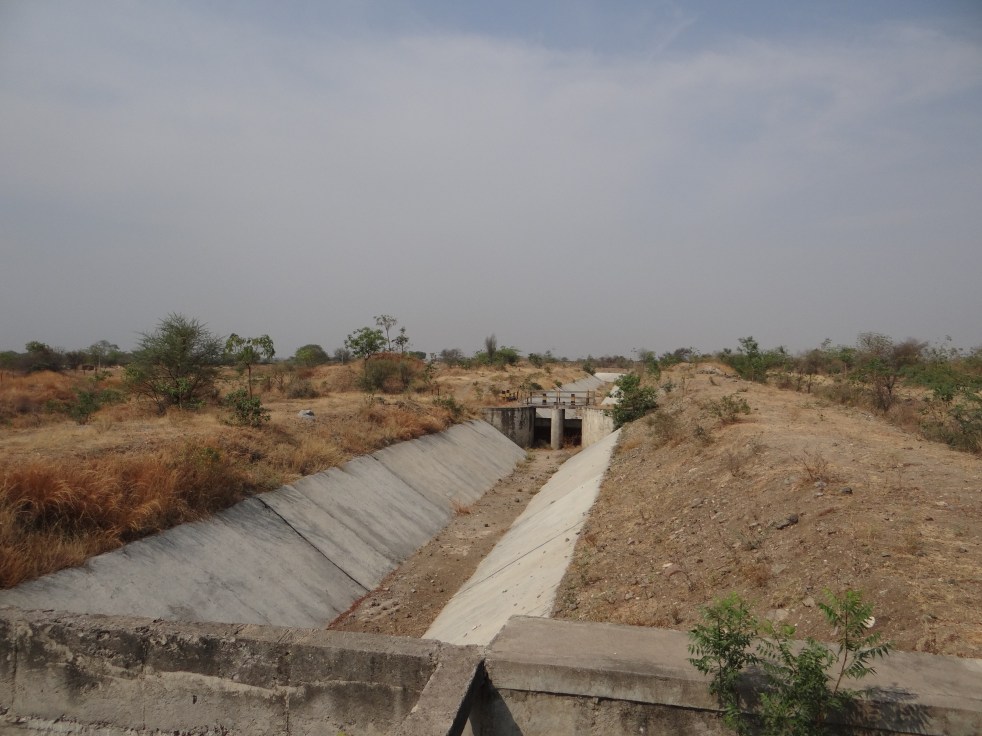
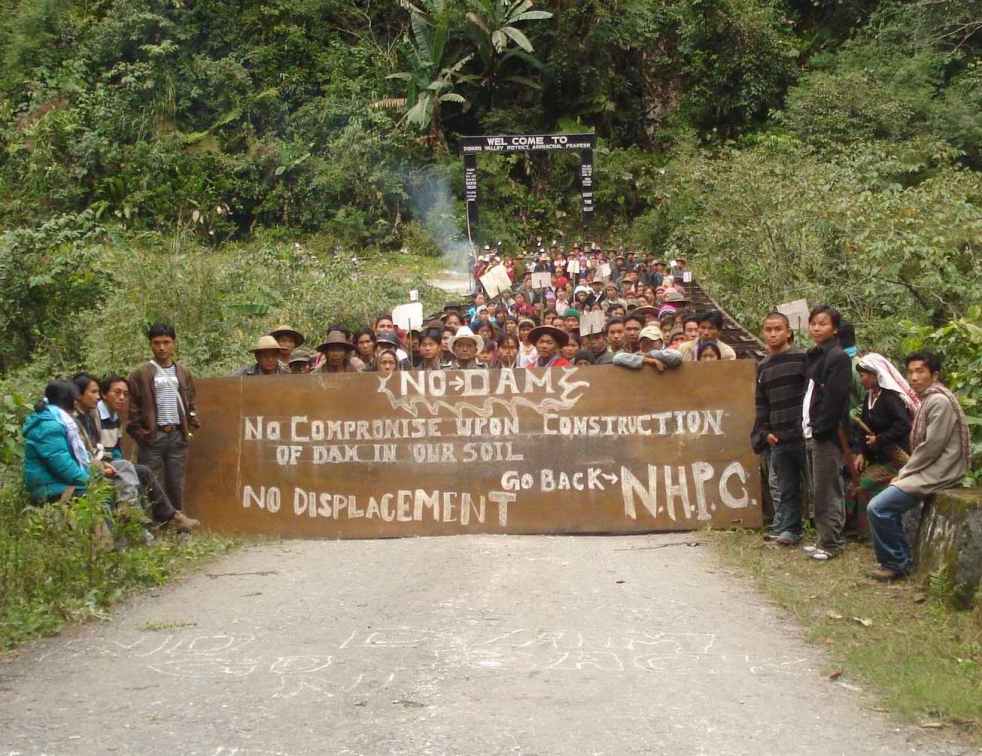
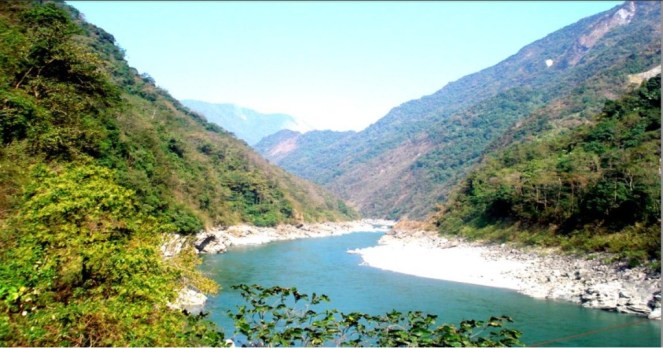
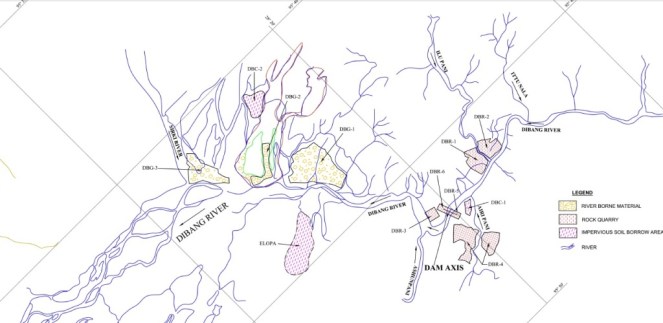
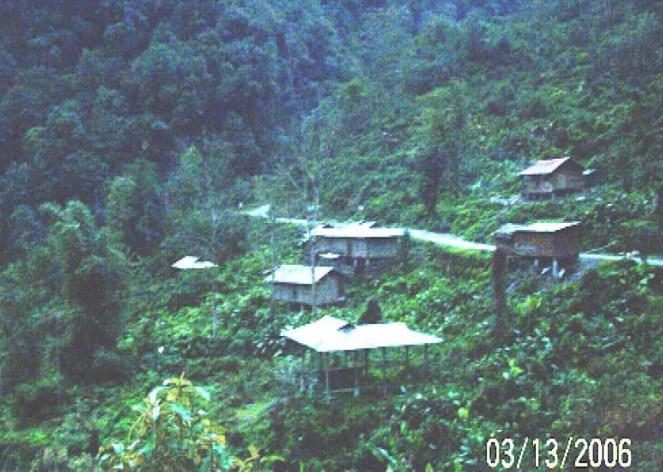
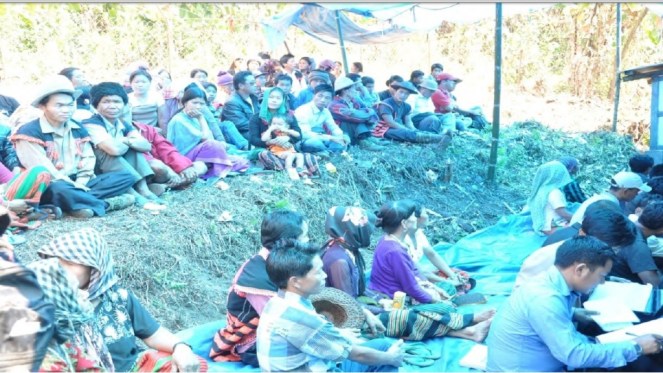
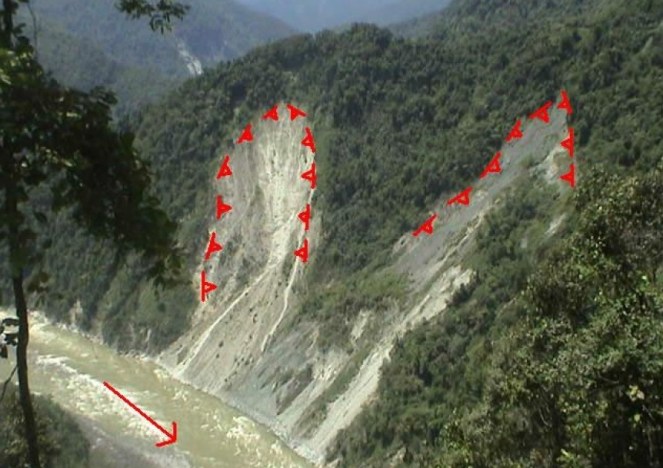
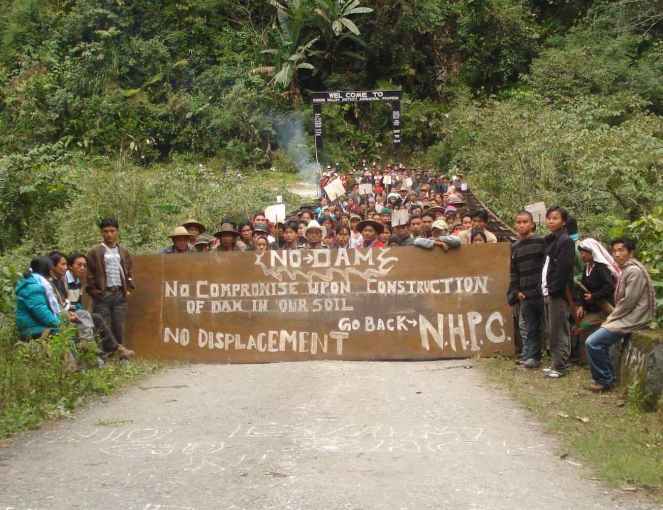
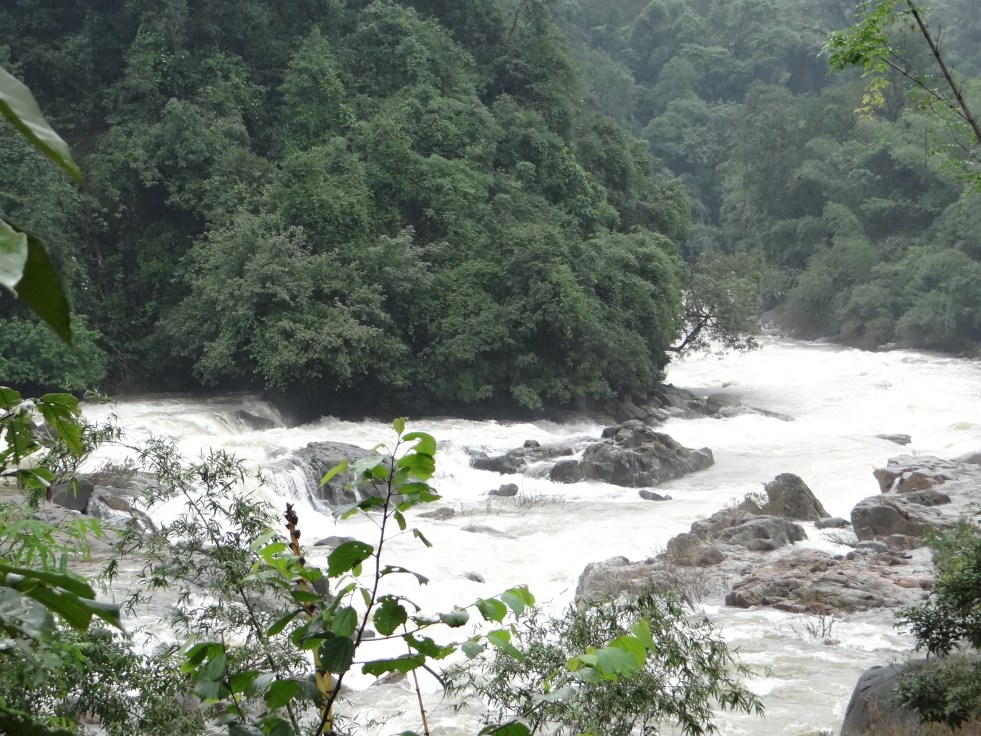
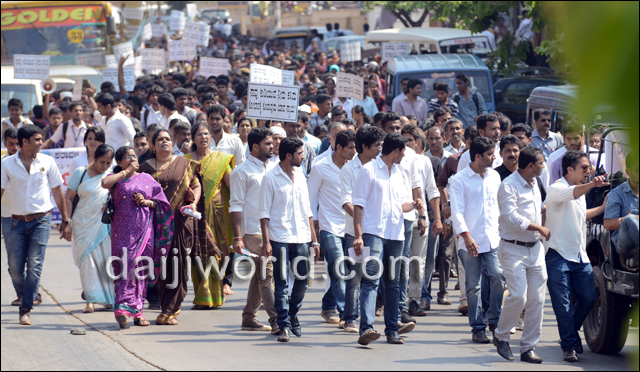
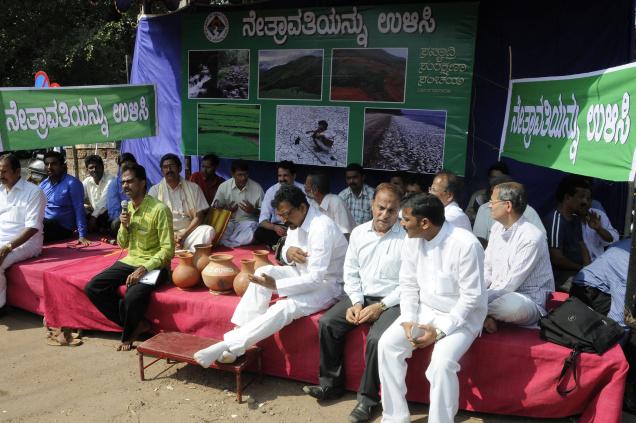
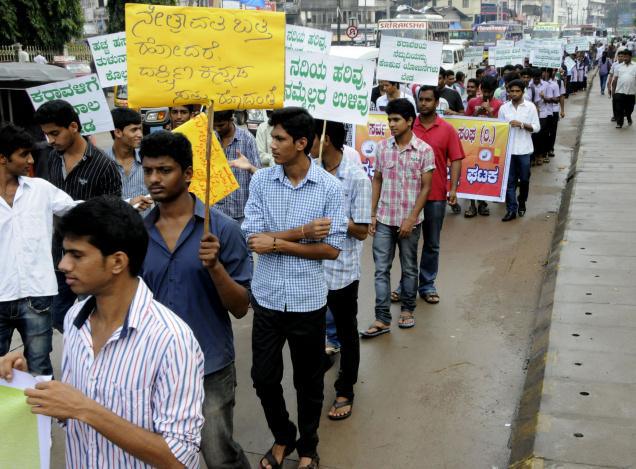





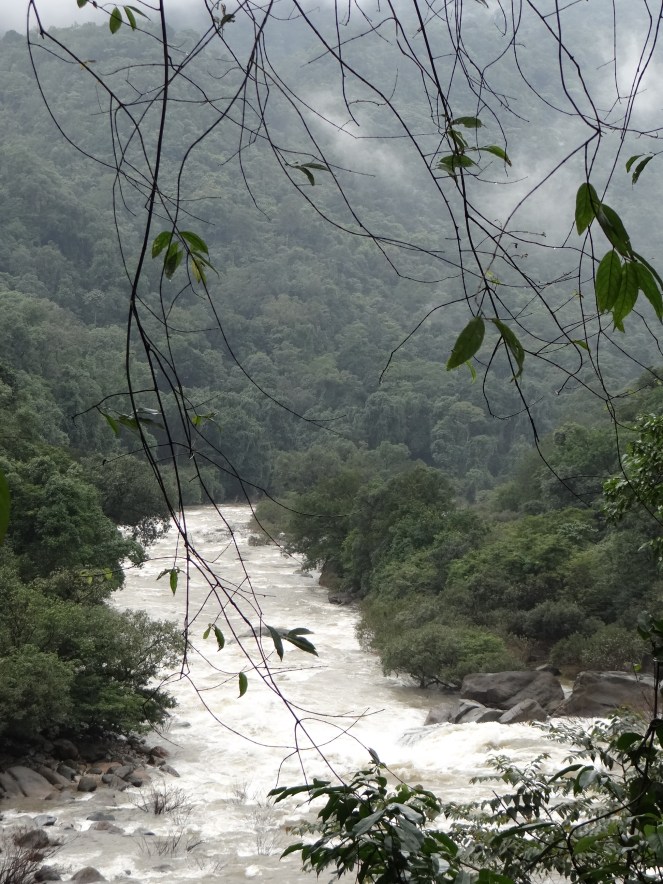
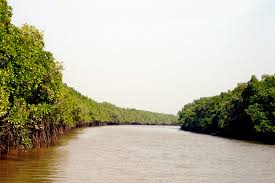

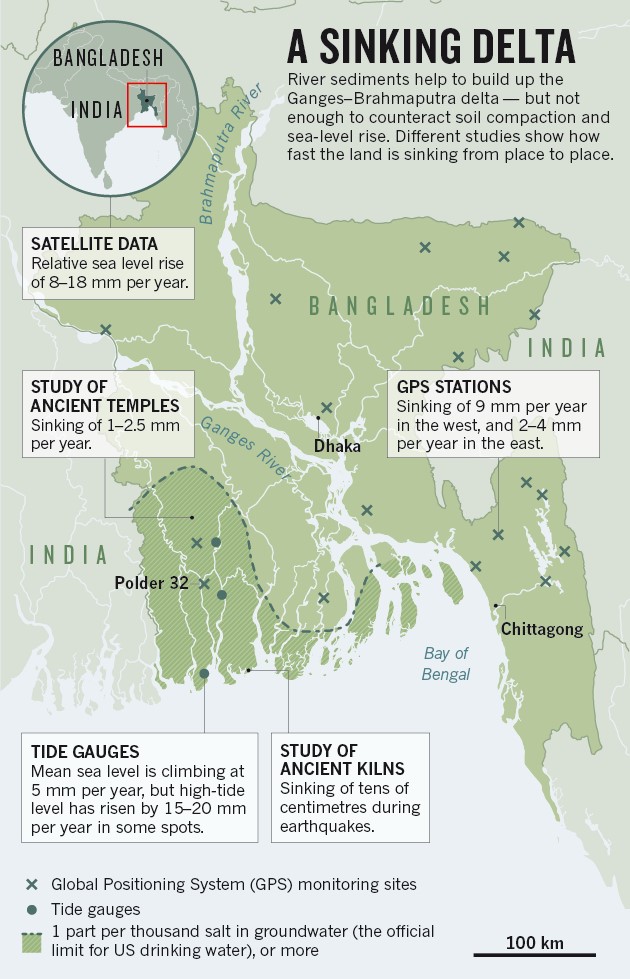
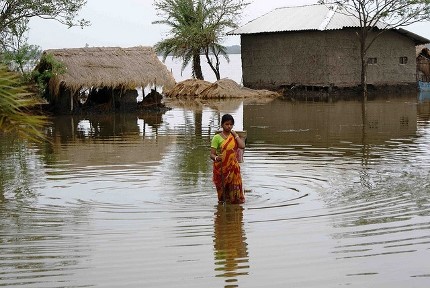


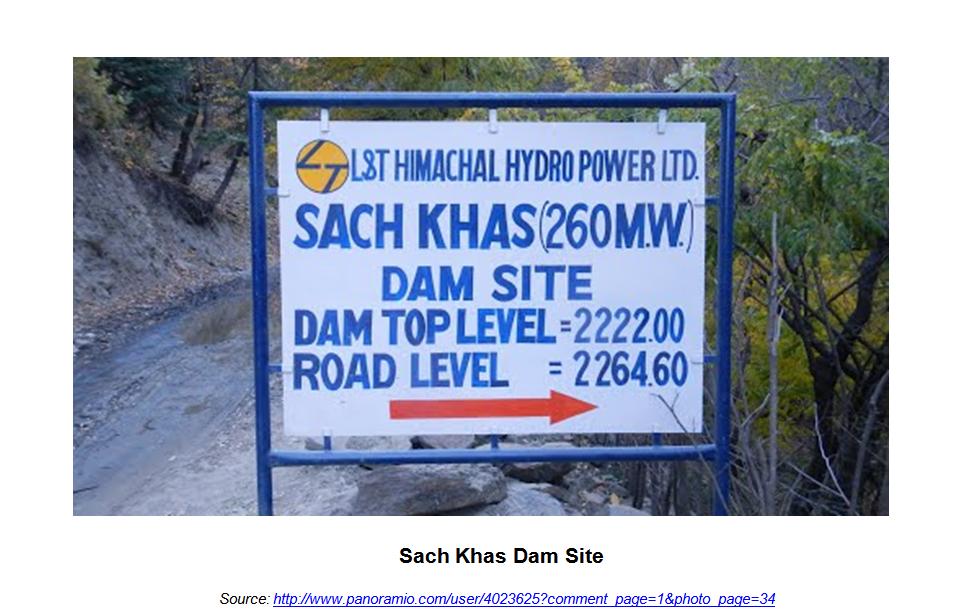
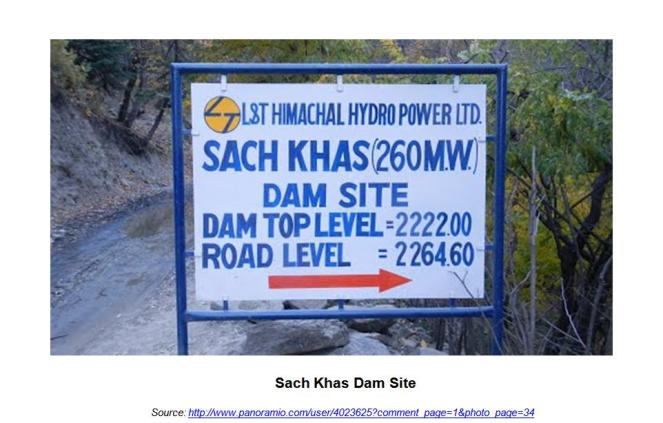

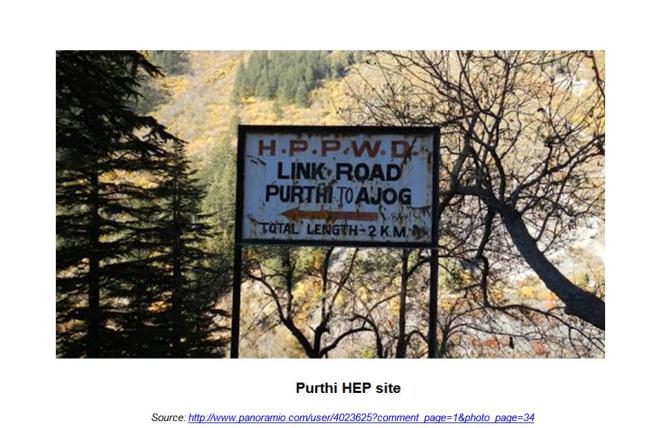
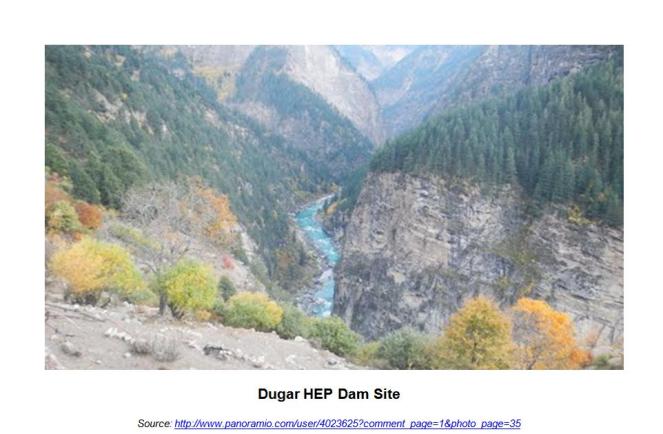
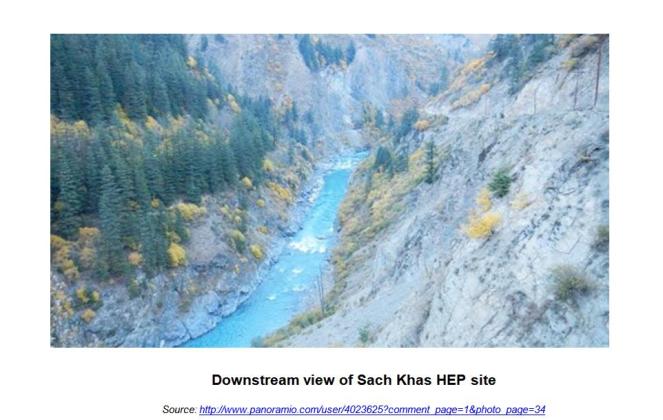


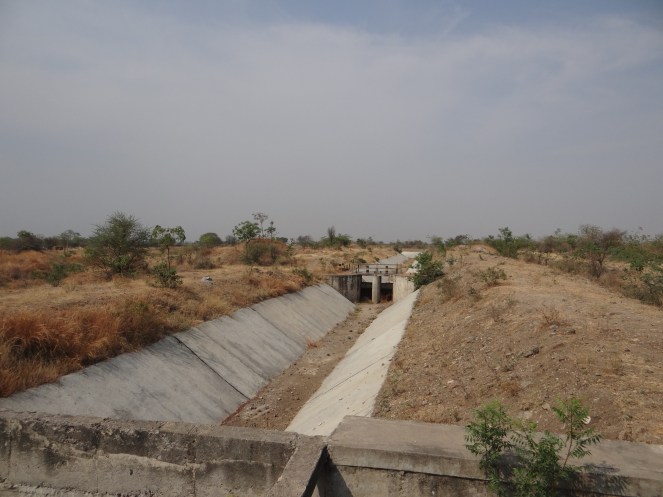


 SANDRP
