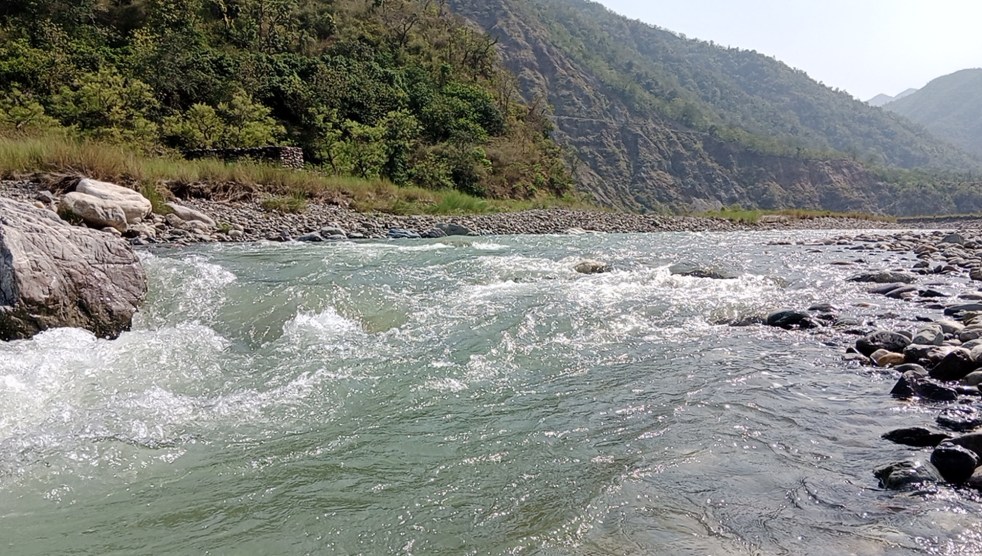
As we welcome the new year on its first day, it is also worth looking back at the year just gone by. Some of the major trends of 2023, relevant to us here were: Larger number of dam disasters, including spillway disasters and hydropower project disasters; more severe dam flood instances including in Gujarat, Himachal Pradesh, Punjab, among others; rather low hydropower generation, raising questions about dependability of hydropower projects; very huge number of pump storage projects getting sanctioned by the Expert Appraisal Committee of MoEF on River Valley Projects, raising question mark over their viability; record breaking high temperatures and changing rainfall patterns with 5.5% deficit rainfall in SW Monsoon and 19% below normal rains in Post Monsoon period; increasing trend of unregulated sand mining with media more frequently using the term sand mafia; increasing instances of disastrous urban floods including Bangalore, Chennai and Delhi; river front development getting pushed even as people’s protests like in Pune increasing; question marks about compromised decisions of the Expert Appraisal Committee that includes people involved in conflict of interest.
There have also been numerous positive developments, including the successful mission to rescue the 41 workers trapped in Silkyara tunnel even though question mark about the disaster remains; High Court asking that the reports related to the sinking Joshimath; Meghal river revival effort by communities in Gujarat as reported in this bulletin; Dibang Resistance getting the Bhagirath Prayas Samman and beginning of decommissioning of the biggest dam in US, among others.
Incidentally, 2024 is the golden jubilee year of the Water Pollution Act of 1974. The act led to creation of institutional architecture of state and central pollution control boards. Unfortunately, these institutions have abjectly failed to achieve cleaner rivers or other water bodies, their state only getting worse with every passing year. It’s time to review and revamp the law and governance of these institutions urgently to make them more democratic, participatory, transparent and accountable.
One only hopes there is a sincere attempt to learn from these major positives and negatives of 2023 even as we welcome the new year.
HYDRO POWER PROJECTS
SANDRP Blog 2023: EAC & FAC Decisions on Dams, Hydro, Irrigation Projects This annual overview examines minutes of meetings held by Expert Appraisal Committee (EAC) for River Valley and Hydropower Projects between 15 December 2022 and 24 November 2023 for consideration of Dams, Hydroelectric Power (HEP), Pumped Storage Hydro Projects (PSP) and Irrigation related proposals seeking Terms of Reference (TOR) and Environment Clearance (EC) approvals. The report further analysis various water projects related proposals considered by the Forest Appraisal Committee (FAC) between 27 December 2022 and 18 December 2023 for Forest Clearances (FC). https://sandrp.in/2023/12/30/2023-eac-fac-decisions-on-dams-hydro-irrigation-projects/ (30 Dec. 2023)
Report NGT forms committee to study if higher Himalayas can be declared as ESZ Taking suo motu cognisance of a science article on the higher Himalayas, suggesting that due to constant damage and deterioration of natural conditions of the area, it must be declared as an “Eco Sensitive Zone,” the NGT has formed a joint committee for a factual report on the issue.
-The members of the committee will be a senior representative of the MoEF, an expert nominated by the Director of GB Pant Institute of Himalayan Studies, and a Professor nominated by the Director of IIT Roorkee, who is an expert in the field of Civil Engineering. The Committee shall examine the matter, if necessary, visit the site concerned, collect relevant information, study the matter, and submit a detailed factual report with all relevant materials within three months, said the NGT.
-The Himalayan rivers contribute 10% of the total global sediment budget, where 44% of total sediments are stored in the glacially scoured Higher Himalayan valleys. “Therefore, it is considered that the Higher Himalayan valleys are sediment-surplus and transport-limited,” observed the NGT. Studies in the Satluj basin indicated that the Higher Himalayan paraglacial valleys have been the source of sediments for the last 14,000 years. These sediments sometimes damage the hydropower project gates constructed in the Higher Himalayas.
-“For example, the radial gates of the Vishnuprayag Hydropower Project in the Alaknanda Valley were damaged during the June 2013 floods and, more recently, during the July 2023 Beas floods, the Malana dam gates were obstructed by sediments in the Parvati Valley,” observed NGT. “Unusual weather events in the Himalayas are showing an increasing trend. This is manifested by the rise in the frequencies and magnitude of springtime forest fire events, avalanches, flash floods, and landslides,” added the NGT. https://www.thestatesman.com/india/ngt-forms-committee-to-study-if-higher-himalayas-can-be-declared-as-eco-sensitive-zone-1503254630.html (30 Dec. 2023)
Himachal Pradesh Despite mishaps, No geological study for 500-Mw Dugar HEP The FAC advised NHPC Limited to carry out a study through the Wadia Institute of Himalayan Geology, an autonomous government-run institute based in Dehradun, to ascertain the geological fragility, if any, of the project site. But, NHPC Limited rejected the advice saying that it already has the consent of the Geological Survey of India. It also said that the project report has been vetted through agencies including the Central Electricity Authority (CEA), Central Water Commission (CWC) and the National Committee on Seismic Design Parameters. https://www.newsclick.in/despite-mishaps-himalayan-range-no-geological-study-500-mw-dugar-hep (30 Dec. 2023)
28 HEP projects stalled Government stated that 174 hydro projects had been completed, 58 were under construction and 28 were stalled due to multiple factors. The stalled projects have a total capacity of 189.85 mw. Out of the 28 stalled projects, 9 are in Kullu district, 6 in Shimla, five in Chamba, 4 in Mandi, 2 in Kangra and 1 each in Kinnaur and Lahaul Spiti districts, the government mentioned in its reply.
– The government further stated that a total 953 hydroelectric projects had been allotted on BOOT basis to the private and joint sectors. The state government earned Rs 1,407 crore in the form of free power royalty in the financial year 2022-23, it added. The state government also earned Rs 103.2 crore this year till November 15 through contributions made by project developers to the local area development authority.
– In the last around five years, many big companies have surrendered hydro projects, allotted mostly in the Chenab basin, after having lost interest in investing in the financially “unviable” hydro power sector. Last year, the Himachal government had also cancelled 26 hydro projects after the companies to which these were allotted failed to implement them.
– The state government also had to extend the deadlines thrice for submitting bids for its proposed 25 new hydro projects due to lack of interest shown by the companies last year, stated the government. These 25 hydro projects, ranging from 5.8 MW to 205 MW, are proposed in Chamba, Kinnaur, Kullu and Lahaul Spiti districts on the Chenab, Beas, Satluj and Ravi basins. Meanwhile, according to the latest figures released by the directorate of energy, presently, the total capacity of the hydro power projects, which have been commissioned in Himachal Pradesh, is 11,154.48 MW. https://timesofindia.indiatimes.com/city/shimla/28-hydropower-projects-stalled-in-hp-kullu/articleshow/106278588.cms (26 Dec. 2023)
Expedite forest clearances for hydel projects: CM CM Sukhvinder Singh Sukhu today (Dec. 31) ordered the setting up of a committee to expedite forest clearances that had been delaying hydropower projects of over 11,000 MW. Chairing a review meeting of the Power Department, Sukhu expressed concern over delay in getting clearances for hydropower projects under the Forest Conservation Act (FCA) and the Forest Rights Act (FRA). He ordered the constitution of a body consisting of Forest and Energy Departments to streamline FCA and FRA clearances. The deputy commissioners and DFOs would also identify land in their respective districts for compulsory afforestation, he added.
The CM directed to complete 800-MW Parvati & 100-MW Uhl stage-III hydropower projects by 2024. He would take up the issue during his meeting with the Union Power Minister so that the state could get its legitimate right and generate additional revenue, he added. He said the power project authorities would give 20 per cent royalty to the state for the first 12 years, 30 per cent for the next 18 years and 40 per cent for the remaining 10 years, as per the amended policy of the state government. He also affirmed support for the power projects below 5 MW so as to ensure their timely completion. https://www.tribuneindia.com/news/himachal/expedite-forest-clearances-for-hydel-projects-cm-576942 (31 Dec. 2023)
Arunachal Pradesh Pact for Rs 13k cr hydropower project in Lohit basin State govt on Saturday (Dec. 30) signed an agreement with the Tehri Hydropower Development Corporation India Ltd (THDCIL) for developing the 1,200-mw Kalai-II hydroelectric project in the Lohit river basin at a cost of Rs 13,000 crore. The Kalai-II project was initially allotted to an independent power developer in 2009 but it did not take off due to various reasons. This is the first project to be taken up by THDCIL, a CPSU, in the state.
In August, the state government signed agreements with three central PSUs — NHPC, SJVN and NEEPCO — for developing 12 hydropower projects, having a combined capacity of 11,517 mw, in Subansiri, Dibang and Siang basins. With the allotment of Kalai-II project to THDCIL, the government concluded agreements for 13 projects with a total capacity of 12,717 mw in this calendar year. https://www.business-standard.com/economy/news/arunachal-govt-inks-pact-for-rs-13k-cr-hydropower-project-in-lohit-basin-123123000742_1.html (30 Dec. 2023)
Telangana Poor rains hit hydel power supply hard Massive reduction in hydropower generation in Telangana this year from Apr to Nov. The hydel power generation stood at 987.7 million units (MU), a substantial decline from the 6,058.0 MU generated in the same period last year and 5,654.7 MU during 2021-22. https://telanganatoday.com/poor-rains-hit-hydel-power-supply-hard-in-telangana (27 Dec. 2023)
Andhra Pradesh Trouble brews against pumped storage projects in Schedule-5 regions as tribals are up in arms This is one year old but detailed and still relevant report on why tribals have been opposing Pump Storage Hydro Projects (PSP) -Provisions under PESA and the FRA state clearly that any decision on a project in Schedule-5 areas without an informed discussion and the prior consent of the local Grama Sabhas would be illegal. PESA stipulates that no project in the scheduled area could even be conceived without the prior consent of local Adivasi Grama Sabhas. “In respect of these PSPs, no information has been conveyed, no discussion has taken place, there has been no transparency, and tribals in these areas have been deliberately kept in the dark,” said Human Rights Forum (HRF) AP general secretary Y Rajesh.

-Rajesh also claimed: “Moreover, the government has not even bothered to hold a discussion and prior consultation on these projects in the Tribal Advisory Council (TAC) despite this being a statutory requirement.” HRF teams in recent months visited all four sites and interacted with local people who are predominantly Adivasis.
According to estimates by the local tribals, not less than 34 habitations located in the Gondhipakalu and Errabommala panchayats in the Chintapalli mandal and P Makavaram panchayat of Koyyuru mandal would be submerged by the Yerravaram project. These projects also involve drawing water from local sources used by tribals for both domestic needs and agriculture.
The streams and water bodies from which this draw will take place are part of the catchment for various reservoirs. In the Yerravaram PSP, it is the Thandava reservoir; for Pedakota PSP, it is the Raiwada reservoir. PSPs in the Parvathipuram-Manyam district will take water from the catchment of the Suvarnamukhi river, which feeds the Vengalrayasagar reservoir. https://thesouthfirst.com/andhrapradesh/trouble-brews-against-pumped-storage-projects-in-schedule-5-region-as-tribals-are-up-in-arms/ (19 Jan. 2023)
Tripura NHPC given task of survey & investigation of four pump storage projects. https://www.tribuneindia.com/news/business/nhpc-bags-4-projects-in-tripura-575521 (26 Dec 2023)
MoEF First Hydro project in any river basin can get in principle forest clearance before a cumulative impact assessment and carrying capacity study for the basin has been done as per MoEF note to states on Dec 27 2023. https://www.hindustantimes.com/india-news/hydro-projects-can-get-in-principal-clearance-before-impact-study-govt-to-states-101704043638195.html (01 Jan. 2024)
Relevant decisions from the Minutes FAC meeting held on Dec 15 2023: –Diversion of 73.94 ha of forest land for Kareghat Minor Irrigation Tank at Kareghat, Tal. Nawapur, Dist Nandurbar Mah: The FAC observed that the project proposal has ambiguities, the proposal is incomplete and not based on actual ground situation. Keeping this in view the committee decided that the proposal cannot be accepted in its present proposition and recommended to reject the proposal. https://forestsclearance.nic.in/writereaddata/FAC_Minutes/12112512712211MoMdated18122023.pdf
DAMS
Kaleshwaram Project Ministers ask a barrage of questions at review meeting on Medigadda Ministers D Sridhar Babu, Ponnam Prabhakar and Ponguleti Srinivas Reddy questioned the rationale behind creation of a meagre ayacut of 98,570 acres after spending a huge amount of over ₹1 lakh crore on the Kaleshwaram Lift Irrigation Project (KLIP). Participating in a review meeting conducted by Irrigation Minister N. Uttam Kumar Reddy, the Ministers alleged that the Medigadda episode exposed the glaring lapses in the KLIP design, construction, operation and maintenance. They pointed out that the “faulty” design and execution of the project led to sharp escalation of the project cost, resulting in colossal waste of public money. https://www.thehindu.com/news/national/telangana/ministers-ask-a-barrage-of-questions-at-review-meeting-on-medigadda/article67688062.ece (30 Dec. 2023)
Engineer-in-Chief (Irrigation) C Muralidhar said end to end investigation was in progress into the Medigadda barrage accident and diamond cutting method was being adopted to dismantle the affected piers. “It was a tough task and cannot be done manually. It can be done by adopting blasting method, but that could impact other structures”, he said. “Finally, we have decided to opt for diamond cutting method. A private agency has been entrusted with the job and already the agency’s team has arrived” Muralidhar told a group of newsmen visiting the project on Dec 29 2023.
He also said that the work area was being cleared by constructing a cofferdam and it would be completed in ten days. End to end investigation was under progress. Totally three piers have to be reconstructed along with three crest gates, he explained. The Engineer-in-Chief further said that seepage was observed at four points in Annaram barrage as well. The problem was being attended with grouting. https://telanganatoday.com/diamond-cutting-to-dismantle-affected-piers-of-medigadda-barrage (29 Dec. 2023)
Himachal Pradesh SPCB imposed Rs 60 lakh Fine on SJVN for Illegal Muck Dumping The SPCB has imposed a fine of Rs 60 lakh for unregulated muck dumping along the Sutlej riverbank. The fine is a result of SJVN’s failure to adhere to environmental regulations and proper waste management practices near the Sunni Dam Hydro Electric Project in Shimla dist.
The SPCB disclosed that it had issued multiple notices to SJVN this year for environmental norm violations. Despite SJVN depositing the fines, there was a conspicuous lack of improvement in waste management practices at the project sites. This raised concerns about the long-term ecological impact of SJVN’s hydroelectric projects in the region. https://thenewshimachal.com/2023/12/sutlej-river-under-scrutiny-pollution-control-board-imposes-hefty-fine-on-sjvn-for-illegal-muck-dumping/ (31 Dec. 2023)
Karnataka CM to consider demand for Navali balancing reservoir CM Siddaramaiah on Saturday (Dec. 30) assured that his government would take necessary steps to construct a balancing reservoir across Tungabhadra river near Navali. Speaking at an event to launch the Rs 109-crore lift irrigation scheme at Thimmapur and Jal Jeevan Mission works here, Siddaramaiah said, “The storage capacity in Tungabhadra reservoir has shrunk due to heavy deposit of silt. The water storage in the dam has come down by 32 tmcft. There’s a long-standing demand from the farmers and the elected representatives of the region for a balancing reservoir to store Tungabhadra river water and overcome the deficit caused by the silt. The government will seriously consider the demand for the parallel balancing reservoir,” he said. The proposed Thimmapur lift irrigation project is expected to irrigate over 35,000 acres of land in 24 villages of Sindhanur taluk. https://www.deccanherald.com/india/karnataka/siddaramaiah-to-consider-demand-for-navali-balancing-reservoir-2830322 (31 Dec. 2023)
मध्यप्रदेश राजकुमार सिन्हा को बाबा आमटे सामाजिक कार्यकर्ता राष्ट्रीय पुरपुस्कार बाबा आमटे सामाजिक कार्यकर्ता राष्ट्रीय पुरपुस्कार पाने वाले वरिष्ठ सामाजिक कार्यकर्ता राजकुमार सिन्हा पिछले 30 वर्षों से नर्मदा नदी और नदी के किनारे रहने वाले समुदायों के संरक्षण की दिशा में काम कर रहे हैं। उनका संगठन, बरगी बांध विस्थपित और प्रभावित संघ, नर्मदा नदी की ऊपरी पहुंच में विनाशकारी परियोजनाओं के खिलाफ अभियान चला रहा है और बरगी बांध से प्रभावित लोगों के अधिकारों के लिए लड़ रहा है। उल्लेखलेनीय है कि श्री सिन्हा को इंडियन रिवर्स फोरम दिल्ली द्वारा नर्मदा नदी संरक्षण के लिए 2021 में राष्ट्रीय भगीरथ सम्मान भी दिया गया है। https://www.spsmedia.in/gandhian-philosophy/baba-amte-social-worker-national-award-for-the-year-2023-to-raj-kumar-sinha-of-madhya-pradesh/ (30 Dec. 2023)
INTERLINKING OF RIVERS
Report Interlinking of rivers could flood freshwater with invasive fish Max Martin: About a third of the total area in India provides suitable habitat for invasive alien fish, aiding their countrywide spread, including in biodiversity hotspots.
Using species occurrence records with select environmental variables and species distribution models, a new study by ATREE reports that 12 species of invasive fish can become widespread.
Scientists are urging for careful assessments and policy changes amidst global concern about invasive species and their effects on freshwater ecosystems and the livelihoods dependent on them.
The threatened environments listed by the new study published in The Environmental Monitoring and Assessment include the biodiversity hotspots of the Western Ghats, northeast India and the Sundarbans delta. “India’s proposed river linking projects … may cause homogenization that may threaten our native and endemic freshwater biota,” noted M. Nobinraja of S. M. Sehgal Foundation Centre for Biodiversity and Conservation, ATREE, Bengaluru and colleagues, in their new study. https://india.mongabay.com/2023/12/interlinking-of-rivers-could-flood-indias-freshwater-with-invasive-fish/ (27 Dec. 2023)
PKC Interlinking MoU finalised between Raj and MP on PKC project The Union ministry of jal shakti has finalised the agreement between Rajasthan and Madhya Pradesh on the Modified Parbati-Kalisindh-Chambal (PKC) Link project in a high-level meeting held in Delhi on Dec 27 2023. The PKC is a modified version of the Eastern Rajasthan Canal Project. The MoU was finalised during the meeting and is expected to be signed in January 2024. “This link project proposes to provide drinking and industrial water in 13 districts of eastern Rajasthan, Malwa, and Chambal regions of Madhya Pradesh. Additionally, it will provide irrigation on 2.8 lakh ha of land in both states. The Modified PKC Link Project will help in utilizing the available water resources of the Chambal Basin optimally and economically,” said a source. The DPR of the modified PKC link will be finalized by March 2024. https://timesofindia.indiatimes.com/city/jaipur/mou-finalised-between-raj-and-mp-on-pkc-project/articleshow/106335462.cms (28 Dec, 2023)
INTERSTATE WATER DISPUTES
SYL Disputes ‘No water, No land to spare’ The meeting convened by Union Minister for Jal Shakti Gajendra Shekhawat on Thursday (Dec. 28) evening, to find a ‘way in resolving the long standing issue’, is the third between the CMs of Punjab and Haryana, convened by the Centre. The latter had already mediated twice between the CMs of the two states, once on January 4 and another on August 18, 2020, but talks had remained inconclusive. These meetings have been convened on the directions of the SC, which is hearing the water dispute case. The next date of hearing in the case is in 04 January 2024.
Thursday’s (Dec. 28) meeting will see the Punjab CM proposing alternative solutions — hearing on the case be adjourned and kept pending till the hearing on the Ravi-Beas tribunal is decided; constitution of a new tribunal to re-evaluate the availability of Ravi-Beas waters with new terms and references, keeping in mind the severe depletion of groundwater and river water in Punjab; and including Punjab as beneficiary in the Sharda Yamuna Link canal project. Sources in the government say that the CM will demand a review of the Yamuna Water Sharing Agreement of 1994 between Delhi, Uttar Pradesh, Rajasthan and Haryana, and seek Punjab’s inclusion for share of water.
Punjab will also highlight how in 1981, when the SYL canal was first envisaged, Haryana and Rajasthan got a much higher share of the Ravi and Beas waters, though they did not have any riparian rights on these rivers. He will also point out that though the state was initially allocated 17.17 MAF of water, but it was later reduced to 13.25 MAF. Moreover, the severely depleting groundwater table in the state will make it impossible for Punjab to give away any more of its river waters. https://www.tribuneindia.com/news/punjab/no-water-no-land-to-spare-for-syl-punjab-not-to-budge-from-its-stance-575934 (28 Dec. 2023)
Farmer groups protest against meeting Ahead of a meeting to discuss the contentious SYL canal issue, five farmer outfits of Punjab held a protest opposing this meeting in Phase-6, Mohali, on Thursday (Dec. 28) and blocked Dara Studio Chowk.

A meeting to address the SYL canal matter took place on Thursday (Dec. 28), involving Union jal shakti minister Gajendra Singh Shekhawat and the chief ministers of Haryana and Punjab at a five star hotel in Chandigarh. A team assembled by the Union government participated in the meeting. https://www.hindustantimes.com/cities/chandigarh-news/mohali-traffic-hit-as-farmer-groups-protest-syl-canal-meeting-101703790337579.html (29 Dec. 2023)
MoJS to file affidavit in SC over on ground situation The Union Ministry of Jal Shakti will file an affidavit in the Supreme Court outlining the details of its meeting with the CMs of Punjab and Haryana at Chandigarh on December 28 regarding interstate water disputes, particularly the on-ground situation concerning the SYL canal. The next hearing in the apex court is scheduled for January 4, 2024. “The court had assigned the responsibility to the secretary ministry of Jal Shakti to work out an amicable solution to the vexed problem with the chief secretaries of both the states. The secretary tried by involving both Punjab and Haryana but nothing could happen on the count. Then the court asked the minister to intervene and reach to some solution and find out the exact on ground situation on the matter. Punjab has told that a receiver was appointed a long back on the issue and there is status quo for long on the status of SYL. The court will be apprised about the outcome of the meeting”, said union minister Gajendra Singh Shekhawat. https://timesofindia.indiatimes.com/city/chandigarh/jal-shakti-ministry-to-file-affidavit-in-sc-over-on-ground-situation-on-syl-after-meeting-with-punjab-haryana-cms/articleshow/106408105.cms (30 Dec. 2023)
RIVERS AS NATIONAL WATERWAYS
Andhra Pradesh IWA being strengthened Addressing the stakeholders during a meeting jointly organised by APIWA and AP Chambers here on Wednesday (Dec. 27), Dilip Kumar explained the AP Inland Waterways Act and the emerging opportunities.
Asserting that the State government in its endeavour to boost inland water transport has set up an exclusive vertical Authority (APIWA) headed by a Chief Executive Officer for the development of waterways and for implementation of the Inland Vessel Act 2021 to ensure safe vessel movement, he said that various projects to facilitate movement of domestic and export-import cargo of cement and power plants in the State through inland waterways are under formulation.
Stating that Andhra Pradesh has about 57 small, medium and large rivers with huge river delta spread over the length and breadth of the State and a vast coastline of 975 km which could be tapped for immense port-led development by integrating Inland Water Transport (IWT) with coastal shipping, APIWA chief executive officer SVK Reddy said of these, eleven rivers/canals for a length of about 1,555 km is assessed to have potential for development as waterways for economic freight transport. About 978 km of this to be part of declared National Waterways, he added. https://www.newindianexpress.com/states/andhra-pradesh/2023/dec/28/inland-watertransport-in-andhra-pradesh-being-strengthened-2645650.html (28 Dec. 2023)
IRRIGATION
Maharashtra Discharge of water from Koyna dam initiated again he discharge of 1,050 cusecs of water from Koyna dam in Satara district has been initiated into Krishna river to cater to the irrigation demand of Sangli district. The farmers from Sangli’s Kadegaon, Khanapur and Atpadi tehsils complained that the rabi crops are starting to die due to water shortage. The release of water from the Koyna dam was stopped on December 22, and since then the Tembhu lift irrigation project, which lifts water from the Krishna river to the drought-prone areas of the Sangli district, came to a standstill.
The public representatives from the Sangli district caused a huge uproar over the decision of the irrigation department to stop the discharge from the dam. The public representatives claimed they had been assured by CM Eknath Shinde and WRD minister Devendra Fadnavis that there would be a regular water supply from the Koyna dam. This year, due to rainfall deficiency, the dam was not filled to 100% of its capacity and the reservoirs dug up in the drought-prone areas remained dry. On Wednesday (Dec. 27) morning, the lift irrigation has been made operational once again and water will be carried through canals and sub-canals to irrigate over 40,000 hectares in the district.
As many as 41 villages and 321 hamlets from Sangli district are facing drinking water shortages. To ensure that the villagers get water for drinking, the district administration has deployed 40 water tankers. Similar is the situation in the neighbouring Satara district where 64 water tankers have been deployed to provide drinking water to 68 villages and 257 hamlets. https://timesofindia.indiatimes.com/city/kolhapur/discharge-of-water-from-koyna-dam-initiated-again/articleshow/106336126.cms (28 Dec. 2023)
Odisha Irrigation dept confirms Jan 1 for rabi water release Despite the resolution made during an Apex committee meeting at Borigumma on November 20, where it was decided to release water for the rabi season covering 25,700 hectare of land from January 1, the lack of communication caused distress among farmers. Normally, authorities are expected to inform pani panchayat headquarters in advance about the scheduled irrigation date, allowing farmers to prepare for cultivation. However, as of now, pani panchayats have not received any information about the water release date in their ayacut limits. Adding to the confusion, conflicting dates of January 1 and January 5 are circulating in the village areas, leaving farmers anxious about the uncertainty of the water schedule for their croplands. https://www.newindianexpress.com/states/odisha/2023/dec/31/odisha-irrigation-department-confirms-jan-1-for-rabi-water-release-2646440.html (31 Dec. 2023)
Tamil Nadu 118 acres of PAP canal irrigation zone in TN diverted from farming In Udumalaipet, Tiruppur district, approximately 118.66 acres of farmlands in the PAP canal irrigation zone have been re-purposed for non-agricultural use, according to revenue records. Farmers who own land near the repurposed areas expressed fear that the shrinking of agriculture land area would affect release of water from the PAP irrigation system. Of the 428.32 acres of farmland originally designated under PAP irrigation areas in these villages, only 309.66 acres are still utilized for agriculture, highlighting a significant conversion of 118.66 acres for commercial purposes. https://www.newindianexpress.com/states/tamil-nadu/2023/dec/28/118-acres-of-pap-canal-irrigation-zone-in-tn-diverted-from-farming-2645505.html (28 Dec. 2023)
Rabi crops in South under threat The water level in India’s major 150 reservoirs declined for the 12th consecutive week with the storage dropping below 60 per cent in the northern region and heading to below 40 per cent in the southern region, data from the Central Water Commission (CWC) show. https://www.thehindubusinessline.com/economy/agri-business/indias-rabi-crops-in-south-under-threat-as-resevoirs-level-plunges/article67683935.ece (28 Dec. 2023)
URBAN RIVERS
Uttar Pradesh Cities beside river banks to be developed under ‘RCA’ Under a joint River Cities Alliance (RCA) initiative of the Ministry of Jal Shakti (MoJS) & the Ministry of Housing and Urban Affairs (MoHUA), planning of development work along the rivers has begun. In the first phase, on the orders of the MoJS, a blueprint for development along the banks of Gomti in Ayodhya, Ganga in Kanpur and Ramganga in Moradabad has been prepared. Further, it will be done for other cities including Prayagraj.
Jal Nigam executive engineer Surendra Singh Parmar said that under RCA, the aim is to clean the river, develop river banks, develop river front along with some such development which will improve the economic condition. Green belt will be developed along the banks of river Ganga.
Meanwhile, experts from the Netherlands have suggested that there is no shortage of water in the city but crores of liters of water is being wasted here every day in different ways which has to be stopped. After looking at the Prayagraj city’s population and daily consumption data, it became clear that government agencies do not have accurate data of water used daily. https://timesofindia.indiatimes.com/city/allahabad/development-of-cities-in-up-under-river-cities-alliance/articleshow/106225384.cms (23 Dec. 2023)
Sabarmati; Ahmedabad 7 of AMC’s 14 STPs fail treated water tests The Ahmedabad Municipal Corporation (AMC) which has 14 sewage treatment plants across the city, bypasses an astonishing 613 MLD of sewage a day, almost 40% of the city’s total wastewater, and dumps it directly into the Sabarmati river. What is more shocking is that the wastewater that is treated by 7 of the STPs and released into the river doesn’t meet the parameters of treated water laid by the Central Pollution Control Board (CPCB) and NGT. The volume of such treated sewage water is 657 MLD, according to an internal assessment by the civic body.
– The total sewage generated in the city is 1,693 MLD, while only 1,080 MLD of sewage is treated. Only over the past two years has the AMC begun augmenting the sewage treatment capacity with the World Bank loan, which was approved recently. https://timesofindia.indiatimes.com/city/ahmedabad/civic-bodys-sewage-treatment-plants-failed-water-tests/articleshow/106278258.cms (26 Dec. 2023)
Adyar; Chennai 11 crore project to desilt river The water resources department (WRD) aims to remove 2 lakh cubic metres of silt during the period. WRD officials said they would dredge the river for about 200 metres from its mouth for a depth of 1.5 metres. “National Institute of Ocean Technology (NIOT) studied that part of the river and recommended us to desilt it for the said length to ensure smooth flow of water. We have called for tenders and the work will take place during summer,” said a WRD official.
It usually takes eight months for silt to accumulate for 1.5 metres, the official said. The WRD will remove the silt from the estuary and use it to strengthen the bunds on the northern side near Srinivasapuram area. Experts suggested better solid waste management practices upstream as well as sewage management to ensure the desilting is not a cost-intensive exercise.
GIS expert Dayanand Krishnan, who worked for GCC and Metrowater projects earlier, said they had to control pollution upstream and also use barriers to prevent solid waste from reaching the estuary. “Sludge will get accumulated if they let free sewage from drains daily. Secondly, the depth of dredging has to be accurate. If it’s dredged deeper, coastal areas would face sea water intrusion,” he added. Darwin Annadurai, environmental scientist, said WRD has to quantify the silt. “Reducing waste can restrict wastage of expense in desilting,” he added. https://timesofindia.indiatimes.com/city/chennai/11-crore-project-to-desilt-adyar-river/articleshow/106363630.cms (29 Dec. 2023)
Tunnelling under Adyar set to commence next week Starting next week, a tunnel boring machine will start building a tunnel under the Adyar river, as part of phase two of the metrorail. The machine named Kaveri, which started tunnelling from the upcoming Greenways Road metro ststion in February towards the Adyar junction metro covering 800m, has so far completed tunnelling up to 300m and is now close to Adyar river.
An official said the tunnel boring machine (TBM) will build a tunnel around 20m deep under the Adyar river up to a distance of 400m. CMRL project director T Archunan said the crown, or the top of the tunnel, will be 7m below the riverbed. “The TBM will start tunnelling under the Adyar riverbed from Monday (01 Jan. 2024). It will build the tunnel around 20m depth under the riverbed. We will build a 400m long tunnel under the riverbed and another 100m long tunnel from the river to the Adyar junction,” an official said.
When it enters the riverbed, the speed of the TBM may be slowed even further down to 1m a day. Experts said tunnelling under a waterbody may be challenging due to the water pressure. “During the planning stage, water pressure in the river is considered. The tunnel wall will be 35cm thick. If the pressure under the river is more, then the thickness may be increased to 40cm or 45cm. The tunnel boring machines also waterproof or seal the gaps between two segments and rings in a tunnel to prevent seepage,” R Ramanathan, former official of CMRL had said. https://timesofindia.indiatimes.com/city/chennai/tunnelling-under-adyar-set-to-commence-next-week-in-chennai/articleshow/106334797.cms (28 Dec. 2023)
Cooum Debris being dumped along river Residents and activists point to the lack of boundary walls along the entire stretch of the Cooum and poor enforcement as the main reason for the indiscriminate dumping of waste and pollution of the river. They have demanded stringent action against those who pollute the river. Of the 29.5 km of the Cooum from the river mouth to Paruthipattu-Anicut, the WRD and revenue departments have only demarcated boundaries for 15km. Due to this, spots along Cooum from Koyambedu to Arumbakkam do not have boundary walls. This serves as an open invitation for people to dump waste.
After the floods, more than 100 tonnes of waste, including plastic bottles, thermocol, slippers, bags, clothes and other items were collected by the corporation from the estuaries. The waste was washed away by the river to the sea during the floods and eventually was thrown back by the sea on the coast. GCC commissioner J Radhakrishnan said a total of 1.25 lakh tonnes of waste were cleared since December 4.
Civic activist Dhayanand Krishnan called for better monitoring and boundary demarcations along rivers. “Even in Adyar, post rains, garbage dumping is rampant. We need CCTV monitoring and legal action. Wherever boundaries are missing, they must be marked,” he added. https://timesofindia.indiatimes.com/city/chennai/debris-being-dumped-along-cooum-chennai-the-floods-caused-by-cyclone-michaung-have-left-the-river-banks-cleaner/articleshow/106258975.cms (25 Dec. 2023)
Patiala Ki Rao; Chandigarh Seasonal stream now Tricity’s dumping ground The condition of Patiala Ki Rao, originating from Shivalik Hills in Mohali, is even worse compared to its counterparts, N Choe and Sukhna Choe. Its journey through Chandigarh and Mohali ends after it merges with the Ghaggar river. Contrary to Patiala Ki Rao, N Choe and Sukhna Choe are originated within Chandigarh.
-A visit to Patiala Ki Rao suggested that the stretch has been narrow due to encroachments contrary to its wide area on at least four spots between villages Khuda Ali Sher and Maloya. Three temporary shops of scrap dealers, an agriculture field, and one akhara (wrestling ring) were found built on the bank of Patiala Ki Rao on the Chandigarh side. Moreover, a township has been coming up on the side of Mohali across the bridge under the New Chandigarh project near Patiala Ki Rao.
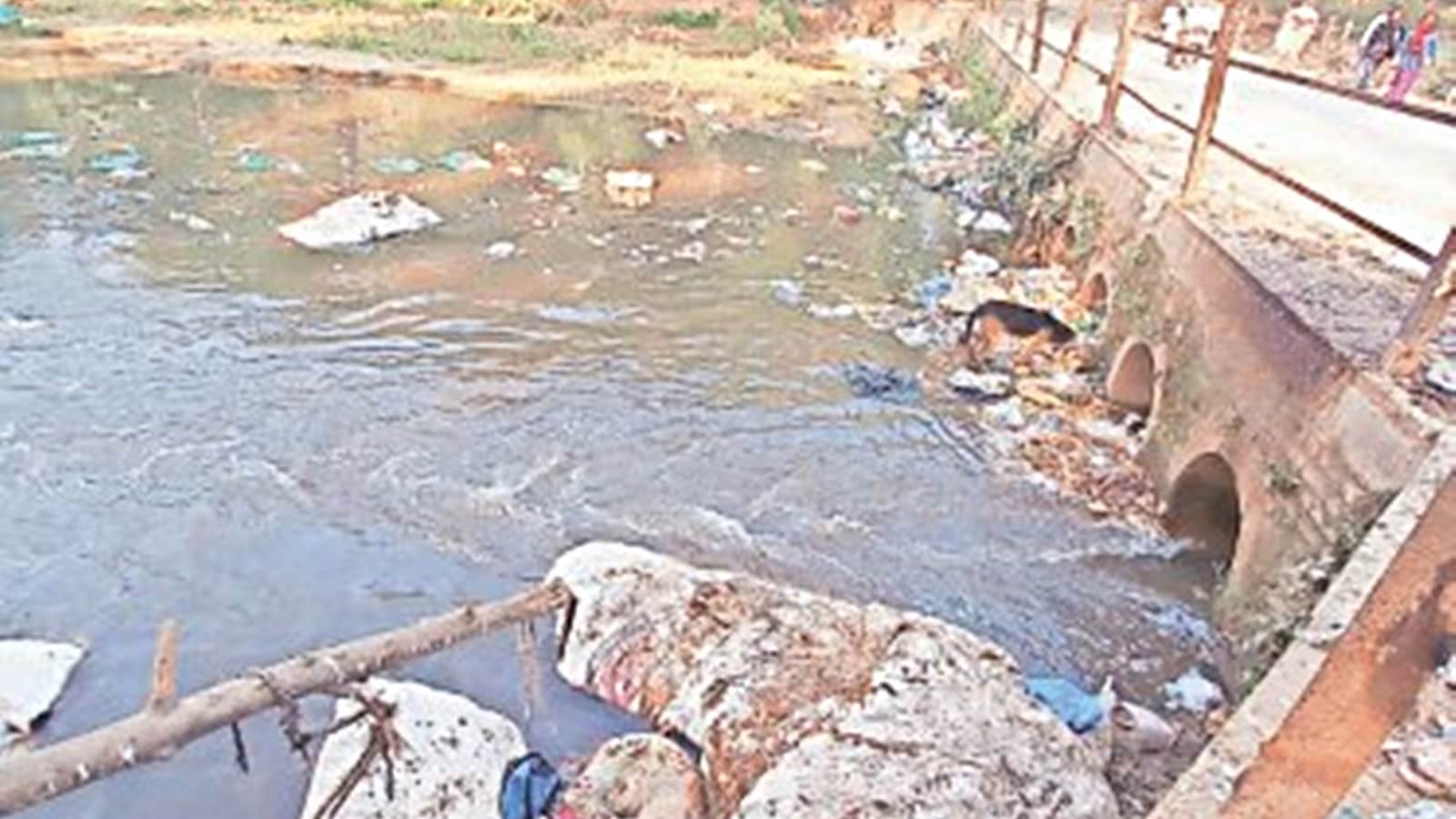
-There is also no STP which caters and cleans the sewage of water of Chandigarh villages which is further mixed into Patiala Ki Rao. The stream overflowed during every rain as the dump garbage, waste choked the natural flow of this stream. There are instances when people lost their lives after being washed away due the heavy current in the stream.
-Notably, a number of incidents of illegal mining on the bank of Patial Ki Rao under the jurisdiction of Mohali were reported earlier. Earlier, the seasonal streams N Choe and Sukhna Choe were also found battling with the problem of sewage water, garbage, and dumped concrete waste. https://indianexpress.com/article/cities/chandigarh/seasonal-stream-patiala-ki-rao-now-tricitys-dumping-ground-9084218/ (27 Dec. 2023)
Pune PMC fells over 500 trees in ’23, has no record of replantation While the Pune Municipal Corporation (PMC) has razed more than 500 trees in the past one year for various developmental works, the civic body has ‘zero’ records of the number of trees replanted against the number of trees felled. However, the PMC garden department is blaming various other departments for the lack of replantation records. As per the rules, the agency responsible for axing trees has to replant an equal number of trees to compensate for the number of trees flattened.
Jagdish Khanore, head of the JICA project, said, “For the construction of 10 STPS, we took permission from the PMC tree authority committee and cut down around 400 trees in various places.” “The contractor replanted some trees in the Phursungi area. It is now the responsibility of the contractor to take care of the replanted trees for five years as per the conditions in the tender. We have made financial provision for the maintenance of the replanted trees,” Khanore said. Surendra Karpe, senior official of the Mula-Mutha Riverfront Development Project, said, “While we cut 34 trees for a 300-metre sample stretch in the Yerawada area, we replanted trees along the riverside. As per the DPR, the figure is around 6,000…” https://www.hindustantimes.com/cities/pune-news/pmc-fells-over-500-trees-in-23-has-no-record-of-replantation-101703791953608.html (29 Oct. 2023)
RIVERS
Gujarat Community revives Meghal river, ensures water security Meghal is a small river that rises in Sasan hills in Junagadh district of Gujarat and flows into the Arabian Sea. Like the rest of the Saurashtra region, Meghal’s 54 riparian villages in Mendarda and Mangrol tehsils of the district suffered the agonies of devastating droughts for three consecutive years in the mid-eighties. The team at Aga Khan Rural Support Programme-India (AKRSP-I), which works in the region, worked to bring the community together and create a collective will to overcome this frequently occurring nature-induced adversity.
The core idea behind this was to undertake efforts to revive the river and also regulate water use to ensure year-round water supply to people living in the village. After intense efforts to mobilise people, the communities built 284 water harvesting structures and repaired the rest to bring the total to over 1,200 check dams and other structures (including boribunds, percolation tanks and recharge wells) on the 30 km stretch of Meghal river and its tributary streams. https://www.villagesquare.in/community-revives-meghal-river-ensures-water-security/ (26 Dec 2023)
Tamil Nadu GW fills up Mayiladuthurai’s Thula Kattam for utsavam Every year during the Tamil month of Aippasi, devotees throng the ghat steps in the heart of the town to take a dip in the Cauvery in the belief that their sins will be washed away in the river water. Kaveri Thula Kattam also hosts the Kaveri Pushkaram — a festival held every 144 years, its last being in 2017. While thousands of devotees then too had to deal with low flow of Cauvery water, this year, owing to reduced release from Mettur dam for aiding irrigation in the delta region, the river water hardly was at knee level at the ghat.

“We could not direct water to the Thuia Kattam for the Thula Utsavam as Cauvery water is insufficient for irrigation and groundwater recharge,” said a senior official from the Water Resources Department (WRD). Hence coming to the aid of devotees worrying about the possibility of bathing in the ghat this year, Mayiladuthurai municipality filled it up by tapping into borewells. “We are pumping groundwater from the borewells and passing it in pipelines so that devotees can shower. The devotees can also make use of the wells to bathe,” said Municipality Commissioner A Sankar. The Thula Utsavam is set to conclude on November 16. https://www.newindianexpress.com/states/tamil-nadu/2023/oct/19/amid-cauvery-shortage-groundwater-fills-up-mayiladuthurais-thula-kattam-for-utsavam-2625159.html (19 Oct. 2023)
Maharashtra University of Chicago, IBM tie up to reduce water pollution According to a press statement, IBM, in collaboration with The University of Chicago Trust in India, will spearhead efforts to aggregate fragmented water quality information, providing key government and nonprofit organizations with essential tools to democratize access to water quality data. The overarching goal is to enhance water resource management by offering contextual spatial data that illuminates potential sources of water pollution. The collaboration is part of the IBM Sustainability Accelerator, a pro bono social impact programme designed to leverage IBM technologies, including hybrid cloud and artificial intelligence.
The programme will elevate the University’s state-of-the-art methodology for measuring water quality using remote sensors, which utilises small, portable remote sensors placed directly in the water body, continuously collecting and uploading data to the cloud, to provide real-time monitoring. This approach stands in stark contrast to the traditional method of ‘grab sampling,’ where water is collected from a specific location at a particular time and sent to a lab for analysis’. What sets this initiative apart is not just the methodology of measurement but the emphasis on making complex information accessible. The collected data, while technically comprehensive, is translated into a user-friendly, pictorial format developed by researchers at the University of Chicago. This transformative step ensures that a diverse range of stakeholders, including researchers, farmers, and local communities, can easily comprehend and utilize the valuable information. https://www.deccanherald.com/india/maharashtra/university-of-chicago-ibm-tie-up-to-reduce-water-pollution-in-maharashtra-2811461 (14 Dec. 2023)
GANGA Uttarakhand Govt plans to drain out water to salvage Silkyara tunnel project The government has worked out a plan to first drain out the water accumulated in the area where the 41 workers were stuck for 17 days. Delay in pumping the water out can cause more damage to the already excavated portion. Excavation can now be carried out only from the Barkot side.
Sources said last week, top officials from the road transport ministry, NHIDCL and Navayuga Engineering, deliberated on the issue. They said the contractor told the government agencies that there was an immediate need to drain out water to protect the excavation. A number of options were discussed keeping in mind safety issues. TOI has learnt that as per one of the plans, one worker will be sent inside through the already laid pipe and he will switch on the motor installed inside the tunnel to drain out the water.
Sources said the excavation of around 450-500 metres from Barkot would start after the roadmap gets the go-ahead and it would be carried out with maximum safety precautions. They added that due to the recent mishap, the project timeline will be extended beyond May 2024. Work on this project had started in July 2018. https://timesofindia.indiatimes.com/city/delhi/silkyara-govt-plans-to-drain-out-water-to-salvage-project/articleshow/106257981.cms (25 Dec. 2023)
Investigation report reveals critical lapses Shockingly, the report unveiled that the Silkyara Tunnel had experienced approximately 21 landslides prior to the tragic incident, underscoring a failure to learn from past occurrences. Despite these warning signs, the necessary lessons were not implemented, putting the lives of workers in peril. To avert such catastrophes in the future, the investigation report has strongly recommended establishing a dedicated tunnel centre for roads and railways.
An emphasis has been placed on developing a new Standard Operating Procedure (SOP) for tunnel safety and creating a collaborative geological platform specifically tailored for project construction, particularly in the Himalayan region. The report’s findings underscore the critical need for stringent adherence to safety protocols and comprehensive measures to prevent similar accidents, emphasizing the urgency of implementing the recommendations to ensure the safety of future infrastructure projects. https://www.etvbharat.com/english/state/uttarakhand/investigation-report-reveals-critical-lapses-in-silkyara-tunnel-accident/na20231225073031561561227 (25 Dec. 2023)
Per a report by The Telegraph on December 23, a villager in Barkot told reporters that around 40 labourers had begun work on the tunnel and that “heavy equipment including auger machines, slurry machines and backhoes” were pressed into action on the morning of December 21. “They have cordoned the area off,” The Telegraph reported the villager as saying. However, the work on the tunnel – which collapsed on November 12 trapping 41 workers inside it – has resumed before an inquiry report has been prepared, reported The Telegraph. https://thewire.in/environment/no-inquiry-report-yet-but-silkyara-tunnel-work-resumes-rat-hole-miners-refuse-govt-reward-reports (23 Dec. 2023)
Due to Cost and Time Concerns, Silkyara Tunnel Project Said No to Separate Escape Tunnel: Report. https://thewire.in/government/due-to-cost-and-time-concerns-silkyara-tunnel-project-said-no-to-separate-escape-tunnel-report (20 Dec. 2023)
The infrastructure development strategy for the Himalayas should take into consideration the vulnerability of the region and the need for environment protection, writes the author of this commentary. https://india.mongabay.com/2023/12/commentary-take-a-deep-breath-and-rethink-infrastructure-development-in-the-himalayas/ (26 Dec. 2023)
Pre-wedding shoot over Ganga goes awry A pre-wedding shoot in the middle of the Ganga river in Rishikesh turned unpleasant and dangerous for a Delhi couple as they got stuck when the water level increased. State disaster response force (SDRF) commandant Manikant Mishra said that the couple has been identified as Manas Kheda (27) and Anjali Aneja (25). SDRF had received an emergency call on Thursday (Dec. 28) from the Beasi police check post in Rishikesh that said a couple had drowned in the river near the Singtoli area. A team led by rescue commander Deepak Negi reached the spot and saw that the couple had almost got swept away. However, with the assistance of locals, the SDRF team managed to pull them out. “When the couple went into the river, there was little water. They could not anticipate that the level would rise so suddenly,” an SDRF personnel said. https://timesofindia.indiatimes.com/city/dehradun/pre-wedding-shoot-in-ganga-river-turns-dangerous-for-delhi-couple/articleshow/106393424.cms (30 Dec. 2023)
Study Ganga water in Varanasi contaminated with heavy metals, says study A team of Banaras Hindu University, CSIR-Indian Institute of Toxicology Research (CSIR-IITR), Lucknow and the Academy of Scientific and Innovative Research (AcSIR), Ghaziabad, in a joint research, has found the presence of heavy metals in Ganga, putting human health and life in the city to risk. The risk to health is from metals contaminating water and aquatic life. The study, titled ‘Ecological and Health Risk Assessment of Heavy Metals Bioaccumulation in Ganga fish near Varanasi’, was published online in the Springer Nature on December 26.
According to Mishra, presence of heavy metals was observed in the river water, sediment, and edible fishes of the Ganga in Varanasi district. According to the study, sediment was particularly polluted with cadmium, posing a potential threat to species dwelling at the bottom of the river. Although the levels of heavy metals in the fish muscles were below the hazard quotient, it is evident that prolonged consumption of such contaminated fish could lead to bioaccumulation in the food chain.
This, in turn, may result in accumulation of heavy metals in human organs, surpassing the hazard index and causing various health risks to the local population. This study is of great importance because regular assessments aid identifying early signs of contamination, implementing necessary measures and raising awareness about dangers posed by toxic substances in water sources. https://www.daijiworld.com/news/newsDisplay?newsID=1154063 (31 Dec. 2023)
West Bengal Farmers’ Struggle Against a Hungry Ganga Continues For the people living in Manikchak, Kaliachak, Harishchandrapur and Ratua, this has been an all-too-familiar scenario. The locals’ name for the revered river is grim – Hungry Ganga. It has a voracious appetite for devouring hundreds of acres of cultivated land and settlements with each passing monsoon.
Nestled between the Ganga and the Fulahar rivers, Bhutni Char is a deltaic river island comprising 63 villages with a population of nearly 90,000. The Ganga stretches expansively in this area, and even in early December, the opposite bank appears quite distant when you are on one side. The gap between the Ganga and the Fulahar is gradually decreasing. Just a couple of years ago, the distance between these rivers was around 2 kilometres, now it has shrunk to a mere 800 metres.
Official data on land erosion in Malda district reveals significant losses along the Ganga, with approximately 14,335 hectares wiped out from the left bank between 1931 and 1978 and an additional 4,247 hectares eroded from 1979 to 2004. The constant shift of the Ganga’s course poses a yearly threat to a large chunk of land, with a substantial amount of it, totalling over 200 square kilometres, being lost due to bank erosion, impacting both the left and right banks of the river.
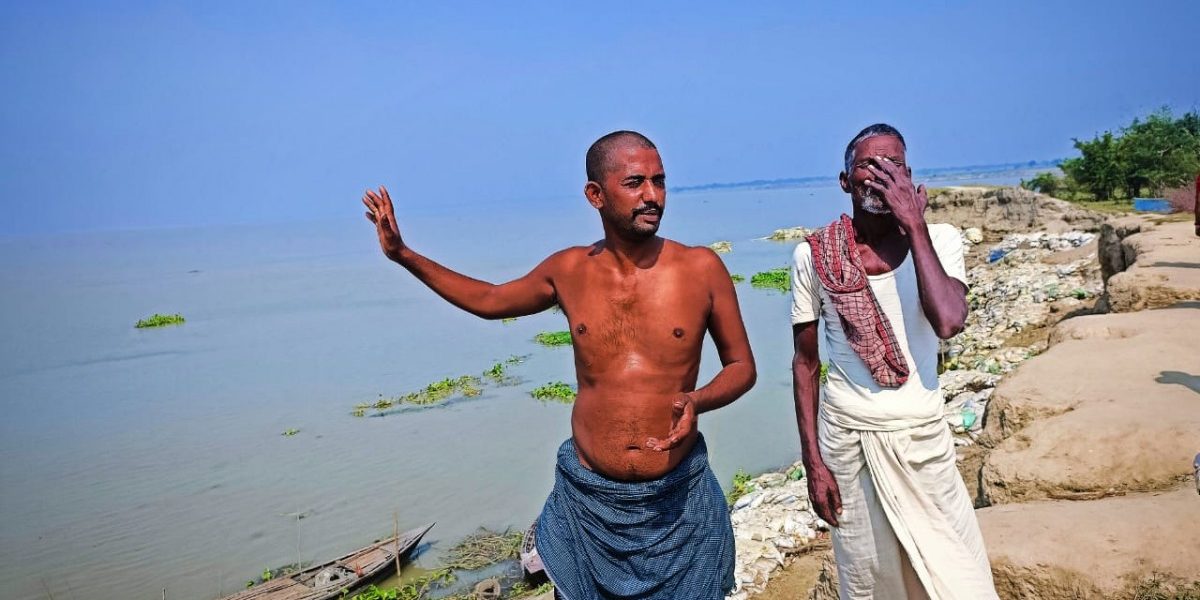
River experts highlight the Farakka Barrage’s role in contributing to the destructive effects of Ganga erosion. Constructed in 1971 with the objective of redirecting water into the Bhagirathi-Hoogly River to improve Kolkata Port’s navigability, the dam has, however, caused substantial alterations to the Ganges’ course, leading to erosion along the riverbanks. More than a hundred mouzas have submerged, affecting around 15 lakh people in two districts who face annual movements due to the recurring challenges.
The Union government’s flagship programme Namami Gange has a budget outlay of Rs 22,500 crore from 2023 to 2026 to accomplish the twin objectives of effective abatement of pollution, conservation and rejuvenation of the Ganga. The state government has repeatedly accused the Union government of not releasing the funds required for river bank management.
Ongoing displacement along the riverbank has led to a surge in the number of slums, resulting in an exceptionally high population density. The disappearance of agricultural lands has not only resulted in a scarcity of arable land but also displaced people from their primary economic activities. https://thewire.in/rights/in-bengals-malda-farmers-struggle-against-a-hungry-ganga-continues (30 Dec. 2023)
YAMUNA Delhi 156 dyeing units sealed, get notices for polluting river As many as 156 dyeing units operating in non-conforming areas have been sealed or served notices for polluting the Yamuna by discharging untreated waste into drains. DPCC has identified dyeing unit hotspots in all MCD zones. Joint teams of DPCC, MCD, Delhi Jal Board, revenue, and power departments had inspected 287 dyeing units from April 28 to December 3 and of these 129 were sealed and 27 served notices. In a report, DPCC stated that maximum units sealed were in West zone where Khyala, Vishnu Garden and adjoining areas were the hotspots. In Central and Civil Lines zones, dyeing units were found in Swaroop Nagar and Mukundpur.
Activist Varun Gulati, who lodged several complaints against dyeing units and filed a plea in NGT, said, “The chemicals used by dyeing units are released into drains which enter into Yamuna river. These chemicals are extremely harmful for aquatic lives”. Action should be taken against several illegal units which continue to operate from non-conforming areas, he added. https://timesofindia.indiatimes.com/city/delhi/156-dyeing-units-sealed-yamuna-river-pollution/articleshow/106363456.cms (29 Dec. 2023)
1.6km-long RRTS bridge is 25th on 22km stretch of Yamuna “Construction of a bridge over the mainstream of the Yamuna river for the Delhi-Ghaziabad-Meerut RRTS corridor has been completed. The total length of this bridge is 1.6 km. Of this, the length of the bridge built on the river is about 626 metres and the remaining is over the Khadar area on both the sides,” the official of NCRTC said. This is the 25th bridge to come up in the 22-km stretch of the Yamuna river from Wazirabad barrage and Okhla barrage, according to data complied by the South Asia Network on Dams, Rivers and People (SANDRP). https://timesofindia.indiatimes.com/city/delhi/1-6km-long-rrts-bridge-is-delhis-25th-on-22km-stretch-of-yamuna/articleshow/106305728.cms (27 Dec. 2023)
Ammonia rise to disrupt water supply DJB reported a high level of pollutants in the Yamuna river at the Wazirabad pond which has led to a reduction in water production by 25-30 per cent at the Wazirabad and Chandrawal treatment plants. https://www.livemint.com/news/delhi-polluted-yamuna-river-to-disrupt-water-supply-as-ammonia-level-soars-check-the-list-of-affected-areas-here-11703571105496.html (26 Sept. 2023)
RIVERS BIODIVERSITY
West Bengal Several fishing cats trapped and relocated Several fishing cats that had been trapped from Howrah water bodies and the wetlands at Banshipota near Dankuni have been released elsewhere after fishermen and villagers complained to foresters that they were depleting their stock of fish. A group of conservationists, however, have complained and written letters to the chief wildlife warden of Bengal that the relocation was taking the fishing cats away from their natural habitat through human intervention.
The Banshipota Wetlands complex in Dankuni is a marshland interspersed with continuous patches of reed beds and vegetation. It is located around 20km north of Santragachhi and has a population of fishing cats that are often spotted by residents of the area. Despite being the state animal of Bengal, fishing cats are often subject to brutal beatings and killed because of their resemblance to big cats. Many also kill them because their shrinking habitats and prey base force them to stray into human settlements and feed on livestock and fish that are reared for profit. Fishing cats, baghrol in Bengali, is listed as endangered by the IUCN and included in Schedule I of the Indian Wildlife (Protection) Act, 1972. Killing the animal can lead to five years in jail. https://www.telegraphindia.com/my-kolkata/news/several-fishing-cats-trapped-and-relocated-after-concerns-over-depleting-stock-of-fish/cid/1989548 (27 Dec. 2023)
FISH, FISHERIES, FISHERFOLKS
Kerala Mitogenome of one of most enigmatic fish species decoded Scientists have decoded for the first time the mitochondrial genome of Lepidopygopsis typus, a unique freshwater fish species of the Western Ghats, known to occur only inside Periyar Tiger Reserve. Known locally as ‘Brahmanakenda’, Lepidopygopsis typus is an example of a monotypic species (a genus having only a single species), signifying its evolutionary importance.
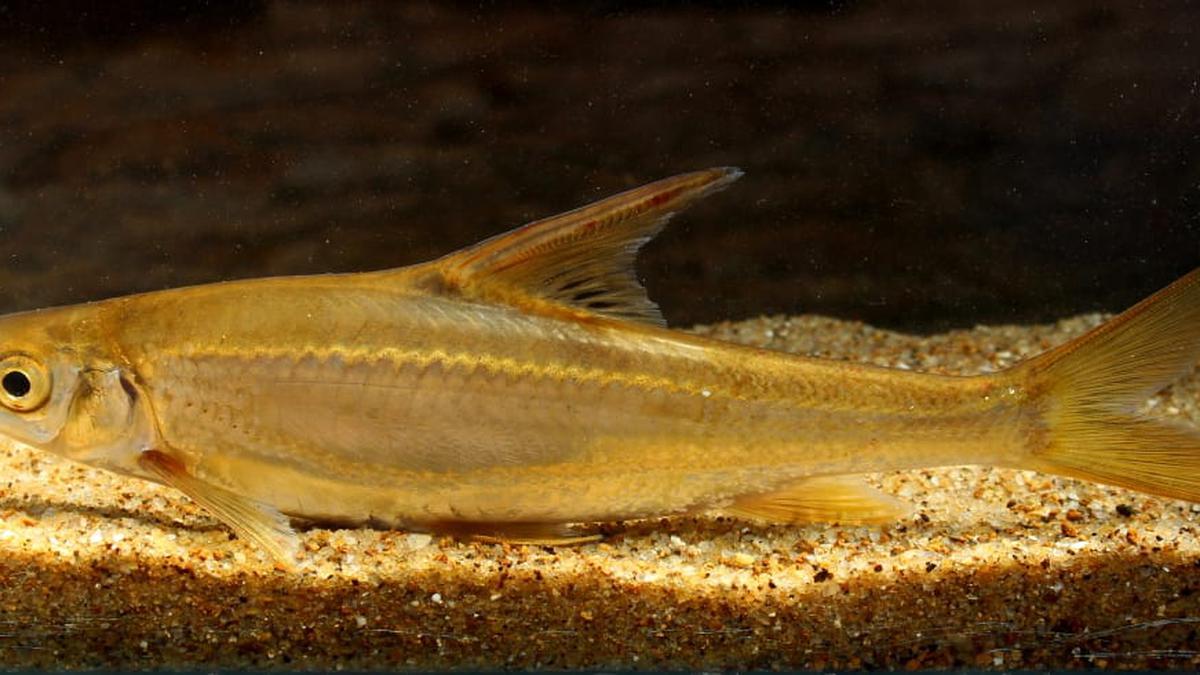
The purpose of mitogenome sequencing is to help understand the evolution of a species and how different they are from its relatives. Lepidopygopsis typus is also a species that has been listed as ‘endangered’ on the IUCN Red List owing to its narrow distribution and threats from alien invasive species such as common carp, tilapia, and African catfish.
“Lepidopygopsis typus is an example of an EDGE species — a species that is evolutionarily distinct and globally endangered. Our study reveals how the mitochondrial genome and functions of the species are distinct from other freshwater fish species of the Western Ghats, and how we can use this information to design effective conservation strategies to secure its future,” said Rajeev Raghavan. “Lepidopygopsis typus is also a relic species that could unravel the evolutionary past of the Western Ghats and hence is considered our living heritage,” he added. https://www.thehindu.com/news/cities/Kochi/mitogenome-of-one-of-keralas-most-enigmatic-fish-species-decoded/article67679701.ece (27 Dec. 23023)
Tamil Nadu An oil spill in an ignored wetland On December 3-4, Cyclone Michaung, which lingered 100 km off the coast of Chennai for about 16 hours, brought heavy rainfall to the city. It forced the Tamil Nadu government to not only deal with the problem of heavy flooding, but also turn its attention to the wetlands of the heavily industrialised Ennore-Manali region in the northern part of the city where oil had spilled over from the premises of a public sector refinery.
Even as oil from the Chennai Petroleum Corporation Limited (CPCL) refinery flooded houses and entered the Buckingham Canal and the Kosasthalaiyar river, which empties into the Bay of Bengal, at Ennore, the Tamil Nadu Pollution Control Board underplayed the extent of the ecological disaster. Since the spill occurred in inland waters, the Indian Coast Guard could confirm that the oil had entered the sea only through an aerial assessment. https://www.thehindu.com/opinion/op-ed/an-oil-spill-in-an-ignored-wetland/article67647693.ece (18 Dec. 2023)
Fisherfolk from villages around Pulicat lake threaten protests Fishermen of 40 villages around Pulicat lake have threatened to go on a strike, and take out a march towards the Secretariat if steps are not taken to reassure the public that fish is safe for consumption. Gnanamurthi, president, Vairavankuppam village panchayat said that it has been nearly a month since they had any work. The fish market at Pulicat wears a deserted look since nobody wants to buy fish from here citing the oil spill, he said. Another fisherman said that since they have not gone fishing for a month now, their reserves have depleted. “Those who have money are able to eat, but there are families that are going hungry due to loss of livelihood. If there is oil in the water and if the fish has been contaminated, nobody is going to buy it. That would only mean a waste of time and fuel for us,” he said. https://www.thehindu.com/news/cities/chennai/fisherfolk-from-villages-around-pulicat-lake-threaten-protests-demand-relief/article67674444.ece (26 Dec. 2023)
Coromandel International shuts its Ennore plant after Ammonia leak -The government has temporarily suspended the operation of the Coromandel International plant at Ennore near Chennai after an ammonia leak at its facility late at night on Tuesday (Dec. 26). The gas leak happened in the subsea pipeline outside the plant premises, which is used to carry ammonia from the ship. It happened during the pre-cooling process in the pipeline, done to pump ammonia in liquid form.
-Meanwhile, locals including fishermen form the eight affected villages in the Ennore neighbourhood are staging a protest for the permanent closure of the plant. It is important to note, the oil spill from Chennai Petroleum Corporation Limited, a subsidiary of Indian Oil Corporation and other industries happened in the same area on December 5th. https://www.newindianexpress.com/business/2023/dec/27/coromandel-international-shuts-its-ennore-plant-after-ammonia-leak-stock-price-falls-2645396.html (27 Dec. 2023)
SAND MINING
Film Bhagirath the Sandman The short film is trying to illustrate the dire consequences of indiscriminate sand mining on rivers, people and our future.
https://www.youtube.com/watch?v=frI__5cpQKs (25 Dec. 2023)
Goa Illegal sand mining wreaks environmental damage in India Demand for sand has risen dramatically in recent decades, thanks in large part to its crucial role in the construction industry. In the Indian state of Goa, sand mafias are illegally extracting the resource from riverbeds, beaches and open pits, causing major environmental challenges. https://www.dw.com/en/illegal-sand-mining-inflicts-environmental-damage-in-india/video-67832690 (27 Dec. 2023)
Odisha Miner fined Rs 228.25cr for illegal extraction The Jajpur administration has imposed a fine of Rs 228.25 crore on one person for the illegal extraction of minor minerals from the Manduka morrum quarry in Darpan tehsil. The action was taken by collector Chakravarti Singh Rathore after getting a letter from the Darpan tehsil to impose a fine of Rs 29 crore on Sarbeswar Behuria of Saroi village towards illegal extraction of minor minerals from a quarry area under its jurisdiction last month. Based on the recommendation by the tehsil authorities, the collector enhanced the fine calculating royalty, additional charges and penalty along with, District Mineral Fund (DMF), Environment Management Fund (EMF) and environmental compensation charges from Rs 29 crore to Rs 228.25 crore after adding all other penalties.
According to reports, the Darpan tehsildar in a letter to the administration recommended imposing a fine on Behuria for illegally excavating a quantity of 253273.65 cum of morrum at Manduka quarry as per the calculation by the drone survey agency, ‘Areal Construction and Geo-India Services.’ The collector also asked the tehsildar to issue a demand note to Behura immediately for blatantly violating OMMC rules 2016. https://www.newindianexpress.com/states/odisha/2023/dec/29/miner-fined-rs-22825-crore-for-illegal-extraction-of-minor-minerals-in-odisha-2645962.html (29 Dec. 2023)
उत्तराखंड काशीपुर में खनन माफियाओं ने ग्रामीणों पर कर दी अंधाधुंध फायरिंग काशीपुर के आईआईटी थाना क्षेत्र में माफिया ने अवैध खनन से भरे वाहनों को निकालने का विरोध कर रहे ग्रामीणों पर अंधाधुंध फायरिंग कर दी। फायरिंग में 4 से 5 ग्रामीण घायल हुए हैं। सभी घायलों का काशीपुर के राजकीय चिकित्सालय में इलाज चल रहा है। घायल ग्रामीणों के मुताबिक रविवार (Dec. 24) देर शाम बड़ी संख्या में खनन माफिया अवैध असलहों के साथ आए और अंधाधुंध फायरिंग की। बताया जाता है कि यूपी के खनन माफिया कोसी नदी में अवैध खनन कर उत्तराखंड के अजीतपुर क्षेत्र से ओवरलोड ट्रक ले जाते हैं। ग्रामीण दुर्घटना की आशंका के चलते विरोध कर रहे थे। आरोप है कि खनन माफिया ने विरोध के लिए धरने पर बैठे ग्रामीणों पर ताबड़तोड़ फायरिंग कर दी।
मौके पर भारी पुलिस बल तैनात किया गया है। एसपी अभय सिंह ने बताया कि आवश्यक कार्रवाई की जा रही है। इस मामले को लेकर अब पुलिस पर कार्रवाई का दवाब बना रहा है। पुलिस की ओर से मामले की जांच शुरू कर दी है। https://navbharattimes.indiatimes.com/state/uttarakhand/dehradun/uttakhand-kashipur-mining-mafias-firing-case-4-to-5-villageres-injured-know-detail/articleshow/106267582.cms ; https://www.etvbharat.com/hindi/uttarakhand/state/udham-singh-nagar/mining-mafia-gang-fired-indiscriminately-on-villagers-in-kashipur/uttarakhand20231225063852698698822 (25 Dec. 2023)
हरिद्वार एक दर्दनाक हादसे में कलियर क्षेत्र में खनन से भरे डंपर ने एक साइकिल सवार युवक को कुचल दिया। हादसे में युवक की मौके पर ही मौत हो गई। युवक की मौत पर गुस्साए ग्रामीणों ने जमकर हंगामा काटा। हादसा सोमवार (Dec. 25) सुबह का बताया जा रहा है। https://thehillnews.in/archives/24337 (25 Dec. 2023)
Uttar Pradesh 11 booked for illegal sand mining on Yamuna banks Saharanpur police booked 11 stone crusher owners for alleged illegal sand mining on banks of Yamuna river after crossing UP-Haryana border. The action was taken after a confidential report was submitted to Saharanpur DM Dinesh Chandra by the revenue and mining department. “The team found that large-scale illegal mining was being done near Aslampur village along Yamuna for which deep holes were dug,” said the DM. As per officials, the investigation team was led by tehsildar Sanjay Kumar, and it found several pits, deepest among them was a 0.72 metre deep pit in the Yamuna river, behind Modi Stone Crusher unit near Aslampur Bartha. https://timesofindia.indiatimes.com/city/meerut/illegal-sand-mining-on-yamuna-banks-11-booked/articleshow/106307216.cms (27 Dec. 2023)
Haryana At Rs 20L/acre, pvt land owners allow riverbed mining In Mahendragarh in Haryana two cases have come to light where farmers have given their private land for sand mining at the rate of Rs 10-20 lakh per acre. The private land is where the riverbed sand is available. https://www.tribuneindia.com/news/haryana/at-20l-acre-pvt-land-owners-allow-riverbed-mining-in-mahendragarh-576248 (29 Dec. 2023)
Ready SOPs in 2 months to impose green fines: NGT to HSPCB The NGT has asked the SPCB to prepare within two months SOPs for initiating environmental damage compensation on anyone involved in illegal mining in the Aravalis, saying there is “no valid justification” for not coming out with the guidelines for so long. It also asked Mukul Kumar, the director of mining and geology department, member secretary Pradeep Singh of the pollution board and a representative of the state police chief to be present at the next hearing on January 9 “for assisting this tribunal in just and proper adjudication of the questions involved in the case”.
“In the interim report, there is no mention as to initiation of proceedings for imposition on and realisation of environmental damage compensation from all persons involved in illegal mining throughout the State of Haryana, including Aravali. It may be observed here that the proceedings for imposition and realization of environmental damage compensation do not originate from and are not dependent on criminal proceedings. There is no valid justification for not initiating the same,” the order by judicial magistrate Arun Kumar Tyagi and expert member Afroz Ahmad said.
Although the order was issued on December 11, it was uploaded on the NGT portal this Sunday (Dec. 24). The tribunal was hearing a petition by the Aravalli Bachao Citizens Movement, alleging rampant quarrying of stones in the protected region despite a blanket ban on mining imposed by the Supreme Court in 2009. The NGT also directed the mining department to ensure that all vehicles transporting materials to stone crushers or screening plants in Gurgaon, Faridabad and Nuh are equipped with GPS devices by February 28 next year. https://timesofindia.indiatimes.com/city/gurgaon/ready-sops-in-2-months-to-impose-green-fines-on-aravali-miners-ngt-to-hspcb/articleshow/106258885.cms (25 Dec. 2023)
Andhra Pradesh ‘Illegal mining poses a threat to Sir Arthur Cotton Barrage’ In 2022, the International Commission on Irrigation and Drainage (ICID) has declared ‘Sir Arthur Cotton Barrage’ as a World Heritage Irrigation Structure. On Saturday (Nov. 18), BJP led by Ms. Purandeswari and Jana Sena Party together conducted a joint inspection of the ongoing sand mining at Ballanka area in Kadiyapu Lanka near Sir Arthur Cotton Barrage. Addressing the newsmen on the banks of river Godavari, Ms. Purandeswari has alleged; “Heavy machines have been deployed by replacing the local boats for the deep sand mining in the heart of the river Godavari, adjacent to Sir Arthur Cotton Barrage. The scale and methods of sand mining posed a major threat to the survival of the barrage at Dowleswaram”.
“The sand mining contract signed by the State government with the Delhi-based Jaypee Group has expired by November. The State government did not invite the fresh tenders and left the Jaypee group to have a field day in the sand mining. The CM and State government officials should offer clarity on the ongoing illegal sand mining in Andhra Pradesh”, said Ms. Purandeswari. Responding to the documents pertaining to vehicles engaged to transport sand from the river, Ms. Purandeswari has said; “The bills shown by the operators on the site contain no signature of the District Collector or the Mines Department officials. However, a huge quantity of sand is being mined and transported from the river Godavari without any vigilance”. Ms. Purandeswari has further alleged that the flower nursery owners are not able to collect and transport the soil as the vehicles used for the sand transportation are blocking their road path. https://www.thehindu.com/news/national/andhra-pradesh/illegal-sand-mining-in-godavari-river-poses-a-threat-to-sir-arthur-cotton-barrage-alleges-bjp-andhra-president-d-purandeswari/article67547087.ece (18 Nov. 2023)
DTE Placing stone crushers in ‘green’ category will create mess In July 2023, the CPCB proposed a new draft of classification criteria for industries into the red, orange, green and white categories. Delhi-based think tank CSE has reviewed the document and the proposed revisions and methodology for classification. In CSE’s view, the methodology is not full-fledged as it does not consider the impact of different types of pollution on the health of humans and occupational health impacts. Also, the fugitive emissions from process operation and material handling have been given low weightage, as compared to hazardous air pollutants and emissions from the combustion of coal or liquid fuels. https://www.downtoearth.org.in/blog/pollution/placing-stone-crushers-in-green-category-will-create-a-huge-environmental-mess-93605 (28 Dec. 2023)
WETLANDS, LAKES, WATER BODIES
Jammu & Kashmir The harrowing lives of Anchar Lake Nadru harvesters -The Nadru ( Lotus stem) harvesters face daily challenges, including the risk of infections from contaminated water splashing into their eyes, ears, or nostrils. Two lives have already been claimed by infections entering open wounds. The polluted water forces them to spend valuable time cleaning the lake, affecting both production and harvest.
-Just over two-decades ago, they were able to drink this water and use it for other domestic purposes. But now, with every kind of sewage flushed into the lake, the water has turned poisonous, leaving little hope of survival for the men involved in this business.
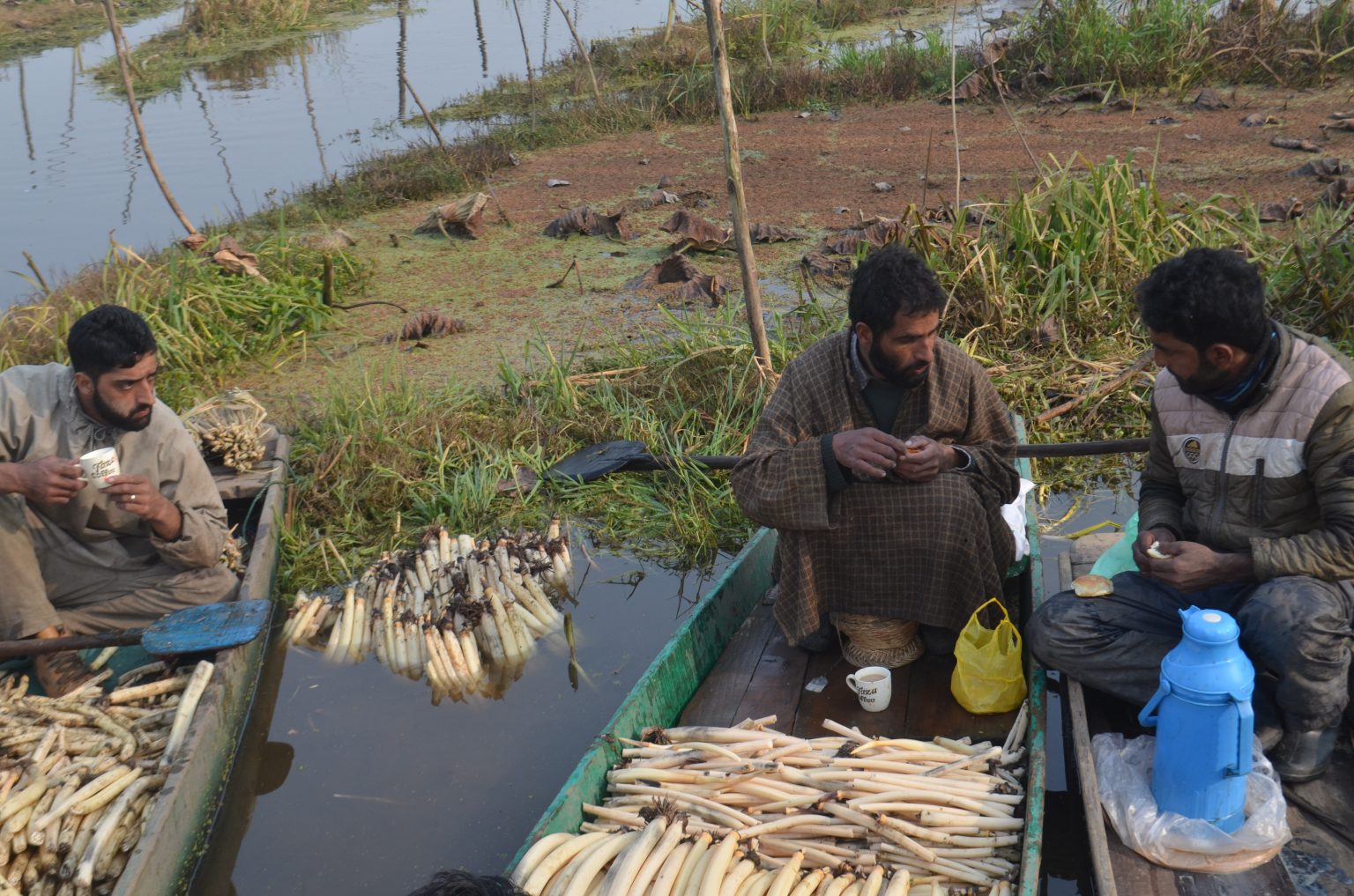
-As the men dive and start looking for lotus stems with their feet, creating wobbles in the water, the lake reveals its dirty secrets: a strong stinking smell fills the air, making it nearly impossible for outsiders to stay there.
-Pollution forces the farmers to clean the waters on a daily basis, consuming much of their time and affecting the harvest, they say. “We have to remove the weeds, the algae and other unwanted layers that could hamper both the production and the harvest,” says Altaf.
-The makeshift dam near Sangam Kadlebal keeps breaking, affecting the water levels in the harvesting portion. Over 200 men are required to tie that 300-feet makeshift dam. The government must reduce the size and build a proper dam with a control unit, farmers demand. Tying up the dam takes a whole day, meaning, losing their one day of earning. Low water levels make it almost impossible to harvest lotus stems, they say. https://www.greaterkashmir.com/kashmir/struggling-for-survival-the-harrowing-lives-of-anchar-lake-nadru-harvesters/ (29 Dec. 2023)
Rajasthan Govt. proposes to develop 5 wetlands as Ramsar sites The state government has proposed developing five wetlands in the state for the Ramsar site tag and sent a proposal regarding this to the Union environment ministry. Officials said that the proposal was sent earlier this month and is being reviewed by the central government. The State Wetland Authority has proposed Khinchan bird sanctuary in Jodhpur, Chandlai in Jaipur, Kanwas Pakshi Vihar in Kota, Lunkaransar in Bikaner, and Menar Lake in Udaipur district. Officials said that all five of these wetlands fall in the Central Asian Flyway, used by migratory birds that start flying to this region from November onwards and stay here till February for warmer temperatures. Before this, Sambhar Lake was declared as a Ramsar site in March 1990 and Keoladeo Ghana National Park was given the Ramsar tag in October 1981.
At some of these sites, action is being taken by the SPCB to stop industrial effluents from being released into the water and efforts are also on to stop encroachments. “At Chandlai Lake in Jaipur, with the help of SPCB, four industries were shut down in the region that were releasing effluents in the lake. Measures are being taken to maintain the air and water quality of these wetlands so that the overall ecosystem can be managed,” said a senior official. https://timesofindia.indiatimes.com/city/jaipur/rajasthan-proposes-to-develop-5-wetlands-as-ramsar-sites/articleshow/106338889.cms (28 Oct. 2023)
Bihar Pond disappears overnight in Darbhanga A pond in Darbhanga, disappeared overnight due to alleged encroachment by land mafias. As per reports, the pond was filled with soil and the signs of its existence were completely destroyed. The pond named ‘Neem Pokhar’ situated in the Kadirabad area under Vishwavidyalaya Police Station is a government pond used by villagers for breeding fish and other purposes. Despite locals alerting authorities about suspicious soil-filling activities, the police arrived only after the pond had been completely filled, highlighting the audacity of land mafias in encroaching on both land and water bodies with apparent impunity. https://assamtribune.com/national/bihar-pond-disappears-overnight-in-darbhanga-replaced-by-hut-1512701 (31 Dec. 2023)
WATER OPTIONS
Water conservation in era where flooding, drought collide This report talks about how treated sewage is recycled in cities of India, including for drinking water in places like Bangalore, Chennai, Delhi, Devanhalli and Surat. https://www.hindustantimes.com/india-news/water-conservation-in-era-where-flooding-drought-collide-101703788059661.html (30 Nov. 2023)
Chennai How Chitlapakkam remained flood-free during recent rains The Chitlapakkam Rising Team and RWAs in the area diligently record flooding observations, properly identify sources of floods and work out technical solutions that are put forward to the State government every year. Our efforts have borne fruit, as during the recent heavy rainfall caused by Cyclone Michaung, our area did not get flooded. On December 5th, the day after record rainfall caused havoc in Chennai, Chitlapakkam remained largely flood-free — even after 50 centimetres rainfall was recorded within 48 hours in our locality. What would have earlier taken a week to drain, this time within 12 hours of the downpour, the most flood-prone streets were free of inundation.

With its persistent efforts, the Chitlapakkam Rising team and more than 15 RWAs have shown how community participation in active governance can produce amazing results. Our goal is to work with the government to make our town 100% water-resilient and flood-free. https://citizenmatters.in/chitlapakkam-flood-mitigation-chennai-floods-lake-rejuvenation-38414 (22 Dec. 2023)
Jharkhand IAS officer transformed Gumla into ‘Ragi Capital of India’ A district known for its extreme poverty has undergone a remarkable transformation thanks to one IAS officer. Gumla (Jharkhand) deputy commissioner (DC) Sushant Gaurav won the PM’s Award for Excellence in Public Administration earlier this year for his work in transforming Gumla from a poverty-stricken district into the ‘Ragi Capital of India’. https://www.moneycontrol.com/news/trends/how-an-ias-office-transformed-a-poverty-stricken-jharkhand-district-into-ragi-capital-of-india-11966541.html (28 Dec. 2023)
GROUNDWATER
Report Arsenic; fluoride in groundwater: NGT issues notices to States, UTs The NGT has issued notices to 24 states, including Kerala, and four Union Territories in a matter regarding the presence of arsenic and fluoride in groundwater. To advertise here, Contact Us The green panel observed that the presence of these metals or chemicals are “very serious” and requires “urgent preventive and protective steps”.
NGT bench said the CGWA, responsible for regulating groundwater, did not take any independent steps on the grounds that water is a state subject. But its contention had been rejected by a 1997 Supreme Court verdict and a 2022 tribunal order, the bench said. “We are surprised that after such a long time, even today, the CGWA (Central Ground Water Authority) has the audacity of shirking away from its own statutory responsibility and obligations and taking such flimsy grounds which have already been rejected by the apex court itself,” it said.
“The issue raised in the present matter with regard to the presence of arsenic and fluoride in groundwater in such a large number of states and districts is very serious and requires urgent preventive and protective steps by all authorities concerned,” the tribunal added. The tribunal made parties or respondents in the matter 28 states and Union Territories along with the Central Ground Water Authority and the MoEF. “Let notices be issued to all the above respondents,” the bench said, seeking their response within a month. The matter has been listed for further proceedings on February 15. https://english.mathrubhumi.com/news/kerala/arsenic-and-fluoride-in-groundwater-green-tribunal-issues-notices-to-kerala-other-states-uts-1.9185723 (26 Dec. 2023) https://www.livelaw.in/environment/national-green-tribunal-arsenic-fluoride-toxic-groundwater-state-governments-central-ground-water-authority-responsibility-245407 (27 Dec. 2023)
. 230 districts in 25 states including three in Karnatka has arsenic contamination of ground water in excess of 0.01 mg/l. 469 districts in 27 states including all 31 districts of Karnataka has flouride contamination above 1.5 mg/l. https://www.deccanherald.com/india/karnataka/groundwater-contamination-ngt-slams-central-authority-for-shirking-responsibility-2825809 (26 Dec. 2023)
Study GW depletion rates in India could triple by 2080 A University of Michigan-led study found that groundwater depletion rates could triple in India in the coming decades as global temperatures increase and the amount of water needed for irrigation increases. The study was funded by a grant from NASA and was supported by the U.S. Department of Agriculture’s Agricultural Research Service. Using remote sensing — a means of obtaining data about groundwater levels through satellite imagery — the study looked at climate and crop water stress to determine how water depletion rates have changed over time in India. https://www.michigandaily.com/research/umich-study-found-groundwater-depletion-rates-in-india-could-triple-by-2080/ (30 Nov. 2023)
Gujarat Groundwater in large parts of Vadodara district in Gujarat has become poisonous with Chemical Oxygen Demand of 1500-2000.
URBAN WATER
Bengaluru Lake buffer zone encroached to make illegal roads Despite Bruhat Bengaluru Mahanagara Palike (BBMP) bulldozing unauthorised buildings over Storm Water Drains (SWDs) and lake land in the past in the Mahadevapura zone, owners and developers near Pattandur Agrahara Lake have brazenly deployed vehicles and made an illegal road for an unauthorised layout that is coming up in Mahadevapura. Activists say that, on the pretext of making the road to Sri Muneshwara temple, the developers are making such a road. According to revenue records, the said road is only a ‘Kaludari’ (walking path).
According to convenor of Namma Whitefield Sandeep Anirudhan, earlier land sharks had encroached on Pattandur Agrahara Lake. Civil society fought court battles to save the lake and filed two PILs. The tahsildar was helpful, and Bangalore Development Authority also filed a land grab case, and the State government filed a case against encroachers and got their claims stayed. The government also sanctioned Rs one crore to fence the lake in 2022. https://www.newindianexpress.com/states/karnataka/2023/dec/25/lake-buffer-zone-encroached-to-make-illegal-roads-in-bengalurusmahadevapura-2644657.html (25 Dec. 2023)
Drying BBMP borewells leave residents at mercy of tankers Two dozen villages — which are among the 110 included in Bruhat Bengaluru Mahanagara Palike limits — in Mahadevapura zone are facing acute water crisis as all BBMP borewells in the area are drying up and they’re having to depend on private water tankers. Recently, the executive engineer for Mahadevapura announced a tender for the fourth time to dig borewells in these villages. The last three tenders didn’t see any bidder. Most BBMP borewells have dried up in Ramagondanahalli, Kasavanahalli, Munnekolala, and Devarabeesanahalli. https://timesofindia.indiatimes.com/city/bengaluru/drying-bbmp-borewells-leave-residents-at-mercy-of-tankers/articleshow/106392581.cms (30 Dec. 2023)
Chennai Three-fold jump in buildings in Red Hills catchment area in 30 years Even though the Chennai Metropolitan Development Authority decided to protect Redhills Lake, a key source of water for the city, there has been a three-fold jump in buildings in the catchment areas, according to a report by IIT Madras Centre for Urbanisation, Buildings and Environment (CUBE). Although 27 villages were brought under the safe zone in 1991 and restriction imposed on construction activities, the land used for construction activities has increased to 24% in 2023, a massive jump from 7% in 1990, according to the report. https://www.newindianexpress.com/cities/chennai/2023/dec/28/3-fold-jump-in-buildings-in-red-hills-catchment-area-in-30-years-study-2645594.html (28 Dec. 2023)
Kochi An overview of highs & lows in 2023 Biomining at the Brahmapuram waste dumping yard has been a non-starter. The work has now been tendered to a new agency, Bhumi Green Energy, following allegations of a scam against the CPM-led Kochi corporation for awarding the initial contract to Bengaluru-based Zonta Infratech. The project has received cabinet approval, and the work is expected to be completed in 2024.
Kochi managed to avoid waterlogging this year to a large extent, thanks to the corporation’s efforts in canal and drain cleaning, along with the successful execution of Operation Breakthrough. Although some areas witnessed waterlogging post-rainfall, the stormwater drained away within a few hours after the rain stopped. The introduction of new machines, such as suction-cum-jetting machines, and ongoing canal renovation work are expected to further alleviate waterlogging issues in the city. https://www.newindianexpress.com/cities/kochi/2023/dec/28/thegoodbad-ugly-an-overview-of-highs-and-lows-of-kochi-in-2023-2645488.html (28 Dec. 2023)
Pune Officials look to curtail discharge & wasteful use as dam stock depletes The state irrigation department is banking on measures like curtailing water release for crops and checking its wasteful use to save on the natural resource for summer. The four key reservoirs in Pune have 3 TMC less stock now as compared to the same period last year.
The department had initiated water release from the Khadakwasla dam for winter crops last month. “We are keeping a close watch on water release. About 5.5 TMC water is expected to be released for the winter crops. With checks on water use, we are planning to end the ongoing water release a week or two early. While doing this, we will ensure that the farms receive adequate water,” an irrigation department official said. https://timesofindia.indiatimes.com/city/pune/officials-look-to-curtail-discharge-wasteful-use-as-dam-stock-depletes/articleshow/106278746.cms (26 Dec. 2023)
Vetal Tekdi: Pune’s Last Green Bastion Vetal Tekdi, Pune’s last green bastion, stands as the city’s highest point, reaching an elevation of 800 metres. The area boasts diverse ecosystems, encompassing dry deciduous forests, wetlands, and grasslands that showcase rich biodiversity.

Besides, a wide range of bird species can be spotted here, and with the onset of winter, migratory birds from as far as Europe grace the area, making it an ideal time for birding expeditions. https://www.freepressjournal.in/pune/vetal-tekdi-punes-last-green-bastion-check-stunning-photos-inside (25 Dec. 2023)
JJM/ RURAL WATER SUPPLY
Maharashtra Water dries up, anger boils over Citizens from three drought hit villages of Shahapur taluka — Fugale, Aghanwadi and Varaswadi — in Thane district have decided to boycott the Lok Sabha and state assembly elections next year. It is their mark of protest against the government that has overlooked the daily struggles of around 1200 villagers for drinking water over the last 50 years.
Villagers of Fugale, located 120 kilometers from Mumbai, expressed their resentment on December 22 by stopping officials from the local panchayat from entering their village. The officers were here as a part of the Viksit Bharat Sankalp Yatra to raise awareness about various schemes launched by the government to benefit citizens of rural India. “We will not allow any election campaign in our villages till the time the government resolves the water crisis in our villages,” said Jeeva Bhala, sarpanch of Fugale. “We cannot live on false promises given by politicians anymore.”
Their situation has become even more acute this year, as the state received poor rainfall, leading to a depletion of existing water reserves in the four wells – two have completely dried up while the other two, said villagers, have enough water to last barely 15 days. The present arrangement of walking through the forest for drinking water may not be the best option after all, as many villagers have now fallen prey to stomach bugs. https://www.hindustantimes.com/cities/mumbai-news/120-kms-from-mumbai-water-dries-up-anger-boils-over-101703876394866.html (30 Dec. 2023)
AGRICULTURE
Report Haryana, Gujarat spent nothing on organic farming: Govt States that did not spend any of the funds they received for organic farming over the last three years under the Paramparagat Krishi Vikas Yojana (PKVY), Union agriculture minister Arjun Munda said in parliament recently are Gujarat, Haryana, Karnataka, Madhya Pradesh, Punjab and Telangana. Of these, Punjab received the highest amount at Rs 18.03 crore, the information provided by Munda said. https://thewire.in/agriculture/haryana-gujarat-organic-farming-pkvy-scheme (26 Dec 2023)
FLOOD
Study Narmada, Mahanadi most prone to widespread flooding -Widespread floods experienced in the Indian subcontinent’s seven major river basins — Ganga, Brahmaputra, Godavari, Krishna, Mahanadi, Narmada and Cauvery — were examined between 1959 and 2020. With 40 flooding events recorded during the six decades studied, the researchers found that the westward-flowing Narmada and the eastward-flowing Mahanadi rivers were the most prone to frequent flooding among all the river basins in India.
– By and large, the core monsoon region in Central India showed the least variability in the distribution of total rainy days during the June to September summer monsoon months, the researchers shared. The study, led by Vimal Mishra from the Civil Engineering and Earth Sciences, also noted that the availability of wet and moist soil in the river basins contributed to a higher water flow resulting in a flood-like situation.
-Further, the study, published in the journal of the American Meteorological Society, calculated the river-wise flooding probabilities that ranged from Godavari (42 per cent), Krishna (38 per cent), Ganga (21 per cent) to Cauvery (19 per cent). The IIT-Gandhinagar researchers argued in their paper that the Brahmaputra reported less than 15 flood events during the said period. https://indianexpress.com/article/cities/bangalore/narmada-mahanadi-widespread-flooding-study-9083208/ (26 Dec. 2023)
URBAN FLOODS
Chennai Why City floods Unlike most cities, Chennai has three rivers — Kosasthalaiyar, Cooum, and Adyar — and the Buckingham Canal to carry floodwaters to the sea. Yet, the city floods every time it rains heavily. Thousands of crores of rupees have been spent on building drains, but these cannot compensate for the loss of lakes, floodplains and channels to unchecked encroachments.
The British protected the city’s waterways with strict laws. The Tamil Nadu Rivers Conservancy Act of 1884, for example, ensured no development for at least 80metres from both banks of rivers and around waterbodies. Even before that conservation was practised through kudimaramathu (community involvement in waterbody upkeep) and setting apart of floodplains around rivers (aathu poramboke), lakes (eri poramboke) and canals (odai poramboke). Most of these have vanished.
– Chennai’s biggest tragedy is what it has done to the Pallikaranai marshland, which was recently designated a Ramsar site. The marsh is now just a little more than 10% of its original 5,500 hectares. A 2017 CAG report blamed the development of the IT corridor on OMR for the marshland’s demise. The marshland is a sponge that soaks up water, but its nature is changing because of encroachments and influx of sewage. The government has also set up an 80.9hectare garbage dump in the marsh. The residential colonies in Velachery, Madipakkam, Perungudi, Perumbakkam and Pallikaranai that went under in early December have all come up on the marsh or in its vicinity. The depth of the Buckingham Canal was six feet below mean sea level when it was built; the current depth is three feet above sea level due to siltation, according to WRD. A 2021 CAG report, released this year, said the number of untenable slums in water bodies increased by 91% between 2014 and 2018, from 235 to 451. The numbers reflected on the state’s poor housing policies, it said. https://timesofindia.indiatimes.com/city/chennai/why-chennai-floods/articleshow/106274126.cms (26 Dec. 2023)
Neighbours adrift together, divided by caste Activists and residents of north Chennai say that they had to fight state apathy, along with a lot of disinformation, as it was deliberately portrayed that normalcy returned to Chennai when a part of the city was completely under water. https://www.thenewsminute.com/tamil-nadu/chennais-neighbourhoods-during-floods-adrift-together-divided-by-caste (27 Dec. 2023)
THERMAL POWER
Report Despite the MoEF 2021 notification mandating 100 per cent utilisation of fly ash by coal-fired thermal power plants, several cases have been registered with the NGT alleging its improper disposal. https://www.downtoearth.org.in/blog/environment/thermal-power-plants-are-still-not-disposing-of-fly-ash-properly-ngt-cases-show-93479 (20 Dec. 2023)
Chhattisgarh, lakhs of tonnes of fly ash, released every day from thermal power plants, is affecting the lives of the local people. Many of the ponds built to store this ash are also filled to the brim. For several years now, this ash has been utilised in road construction, for making bricks or for dumping mines that are closed. However, the large quantities of ash released every day is affecting the health of the people. https://india.mongabay.com/2023/05/fly-ash-infiltrates-the-everyday-lives-of-people-in-chhattisgarh/ (05 May 2023)
ENVIRONMENT GOVERNANCE

CLIMATE CHANGE
Opinion The Year’s Worst Climate News David Fickling Far less attention has been paid to the growing evidence that India is failing to hit its ambitious targets for clean energy. That may have the bigger impact on global emissions, though. Despite some of the lowest-cost renewable power on the planet, annual connections are stuck around 10GW to 15GW, and solar connections in the nine months through September fell 47% from a year earlier, according to Mercom India Research, a consultancy. The country needs to be adding about 40GW each year to hit its target of 500GW by 2030.
Longstanding roadblocks caused by deficient grid infrastructure and land acquisition, plus the perennial financially distressed condition of state-owned electricity distribution companies, don’t show much sign of being fixed any time soon. If the world is to prevent India’s development putting further upward pressure on global emissions, the country badly needs to achieve its ambition to enjoy the world’s first green industrial revolution. That’s looking increasingly out of reach. https://www.ndtv.com/opinion/the-years-worst-climate-news-you-havent-heard-about-4745130 (26 Dec. 2023)
Gujarat Coastline is eroding faster According to the National Center for Coastal Research (NCCR), Gujarat’s coastline is 1,945.60 km long. However, the 537.5 km of the state’s coastline is under constant erosion because of rising sea levels and climate change. This erosion rate is the highest in the country. 1,030.9 km remain stable, while 377.2 km have experienced accretion.
– Illegal sand mining in the Ambica river, north of Nani Danti village in Valsad, contributes to decreased sediment influx along the coast, exacerbating coastal erosion. Approximately 60.81 square km of land area has been eroded in the last 35 years. This erosion directly affects the livelihoods of coastal communities dependent on tourism, agriculture, and fishing. https://connectgujarat.com/gujarat/gujarats-coastline-is-eroding-faster-than-any-other-part-of-india-1511669 (26 Dec. 2023)
SOUTH ASIA
Bangladesh Officials have said that they will gauge geopolitical issues regarding Chinese offer to build a dam on or dredge Teesta river before going ahead with it, since Teesta flows from India to Bangladesh. https://indianexpress.com/article/world/bangladesh-would-gauge-geopolitical-issues-over-chinese-proposal-on-teesta-river-official-9086830/ (28 Dec. 2023)
Nepal Karnali Chisapani hydropower project estimated to cost around Rs 1.147 trillion Nepal Electricity Authority (NEA) has initiated a new study of the 10800 MWKarnali Chisapani Hydropower Project, arguably the largest hydropower project of South Asia, using its own resources. As per the current price estimates, the project is expected to cost Rs 1147 billion. The study is to be completed in 3 years.
– The reservoir of the proposed project would be two kilometres above the Karnali Chisapani bridge that connects Bardiya and Kailali districts. A 270-m tall dam would be built on the Karnali River. NEA’s current study says that it would be a ‘rock fill dam’. The reservoir would be 167 kilometres long – 100 kilometres on the Karnali river, 45 kilometres on the Bheri river, 16 kilometres on the Seti river, six kilometres on the Thuligad river. The project will affect the settlements and structures located near the river in Bardiya, Kailali, Surkhet, Achham and Doti districts. As per a study in 1989, the project will affect a total 11,570 ha area and 54,600 locals. https://myrepublica.nagariknetwork.com/news/karnali-chisapani-hydropower-project-estimated-to-cost-around-rs-1-147-trillion/ (30 Dec. 2023)
Ever-growing massive landslide threatens Chhededaha Lake Around 120 families owned land in the Padnapani area. Most of them have already lost their farmlands. Around three years ago, the landslide spreading in Padnapani and Paripatal swept away the intake of a drinking water project leaving as many as 15 households in Bhugadi village without clean drinking water. “Around 75 percent of the villages and 25 percent of the community forest area were engulfed by the landslide. The landslide swept away the locals’ farmlands, water source, forest and foot trails. The landslide is spreading every year and it will soon devour the entire settlement if not controlled,” said Dal Bahadur Dhami, chairman of ward 4 of Khaptad Chhededaha.
Khaptad Chhededaha Lake, a major tourist attraction in Sudurpaschim Province, is also at high risk from landslides. Tourism entrepreneurs who invested in hotels and lodges in the area are worried about their business as the landslide has almost reached the lake. Chhededaha Lake, which is located on the side of the Mardadi-Thamlekh road stretch straddles wards 4 and 7 of Khaptad Chhededaha Rural Municipality.
Controlling the landslide is a massive undertaking, says Dhami, and the local unit’s resources alone would not be enough to stop the landslide. The local residents complain that the government is indifferent towards controlling the landslide despite their repeated requests. The rural municipality, according to the rural municipality chief, does not have the budget to control the landslide but it is planning to plant some 20,000 samplings in the landslide-prone area in the current fiscal year. https://kathmandupost.com/sudurpaschim-province/2023/12/28/massive-landslide-threatens-bajura-s-chhededaha-lake-and-surroundings (28 Dec. 2023)
THE REST OF THE WORLD
Brazil Message from the Movement of People Affected by Dams, Brazil (MAB):
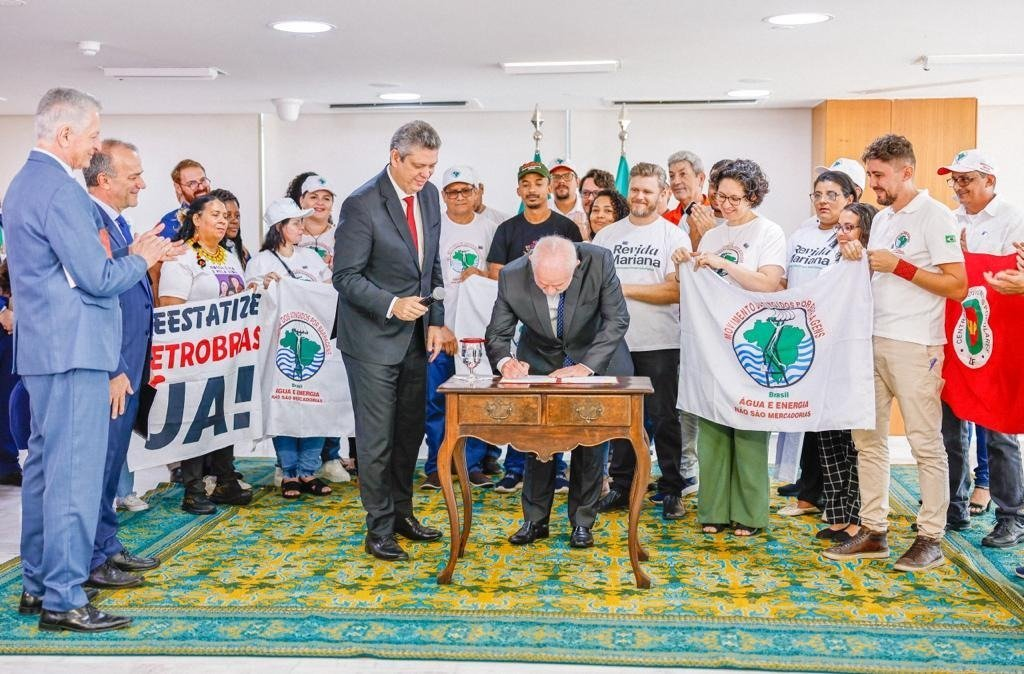
Dear partners, supporters, friends and companions of MAB
It is with great joy that we share this message.
The affected populations of Brazil achieved a historic advance, one of the most important throughout their history of struggle and organization. On December 15, 2023, the National Policy on the Rights of Populations Affected by Dams (PNAB) was signed by President Lula, becoming Law. The victory is the result of the struggle of more than 30 years by the Movement of People Affected by Dams (MAB), and of all the entities and people who have supported us in the most varied ways throughout these years.
The PNAB’s main achievement is the creation of a regulatory framework to guarantee the rights of those affected, who are currently at the mercy of Terms of Conduct Adjustment and judicial agreements, which create an asymmetry in reparations. In addition to recognizing those affected, the legislation provides for the guarantee, for example, of resettlement and full reparation for communities, in addition to initiatives aimed at economic and productive recovery, among other rights. The Bill was approved in the plenary of the Chamber of Deputies in August 2019 with strong support: 328 votes in favor, only 62 against and one abstention. In the Senate, the Project was unanimously approved on November 14, 2023, demonstrating the importance that the process of mobilizing those affected had for this achievement.
“This is a historic and unprecedented advance in Brazil and shows the Lula government’s concern in recognizing the Brazilian State’s debt to the affected populations who have historically been victims”, says Cleidiane Barreto, member of MAB’s national coordination.
USA Judge: Former owner of failed dams near Midland liable for $119M in env damage The former owner of the Edenville Dam, which failed in record rainfall in May 2020 and caused extensive flooding around Midland, is liable for nearly $120 million in damage to area fisheries and freshwater mussel populations, a U.S. District Court judge ruled on Nov 27 2023. Lee Mueller, former owner of Boyce Hydro Power LLC, was found liable for the environmental damage in a lawsuit brought against him by the Michigan departments of Natural Resources, and Environment, Great Lakes and Energy. U.S. District Judge Paul Maloney delivered the ruling as a default judgment, typically issued in favor of one party in a legal proceeding when the other party fails to appear in court or fails to take actions in the case required by the court.
– The former owner of the Edenville Dam, which failed in record rainfall in May 2020 and caused extensive flooding around Midland, is liable for nearly $120 million in damage to area fisheries and freshwater mussel populations, a U.S. District Court judge ruled Monday. Lee Mueller, former owner of Boyce Hydro Power LLC, was found liable for the environmental damage in a lawsuit brought against him by the Michigan departments of Natural Resources, and Environment, Great Lakes and Energy. U.S. District Judge Paul Maloney delivered the ruling as a default judgment, typically issued in favor of one party in a legal proceeding when the other party fails to appear in court or fails to take actions in the case required by the court. https://www.freep.com/story/news/local/michigan/2023/11/28/edenville-dam-boyce-hydro-fish-freshwater-mussels/71722983007/ (28 Nov. 2023)
Compiled by SANDRP (ht.sandrp@gmail.com)
Also see: DRP News Bulletin 25 Dec. 2023 & DRP News Bulletin 18 Dec. 2023
Follow us on: www.facebook.com/sandrp.in; https://twitter.com/Indian_Rivers


One thought on “DRP NB 010124: Looking back at 2023 as we welcome 2024”