CWC - Central Water Commission

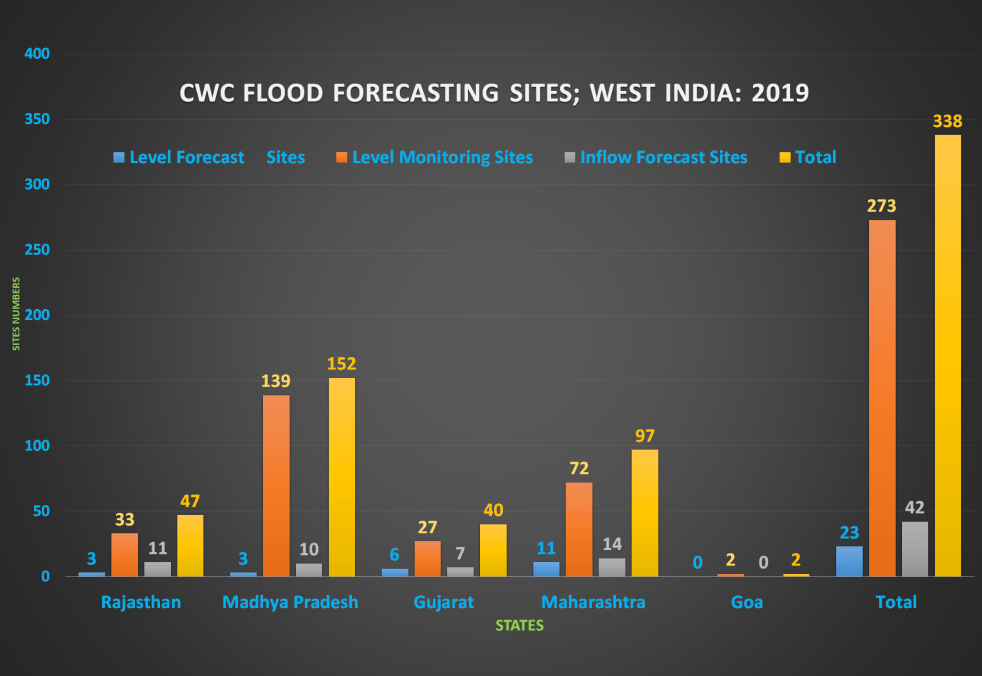
WEST INDIA: Overview of CWC Flood Forecasting Sites 2019

Central Water Commission (CWC) is the only agency doing flood forecasting in India. This article attempts to present an overview of CWC’s flood forecasting and monitoring sites in West India. It includes state wise list of CWC’s Level Forecasting, Inflow Forecasting and level monitoring sites in 5 States in West India: Rajasthan, Gujarat, Maharashtra, Madhya Pradesh, Goa. Similar report has been published for North India[i] and North East India[ii] and East India[iii]. A similar effort was made last year which can be seen here: Overview of CWC Flood Forecasting Sites 2018: WEST INDIA. 

Continue reading “WEST INDIA: Overview of CWC Flood Forecasting Sites 2019”

DRP News Bulletin

DRP: 7 Oct 2019: Patna – another of India’s water unsmart city – goes under due to man made disaster

There is a lot that Bihar and Union Govt that need to answer why did Patna go under water in spite of fully knowing its vulnerabilities. Why was the city not prepared to face this kind of situation? Some of the major man made reasons include: Sewage Pumps not working, drainage map not available, no emergency plan in place. Not too many people know that there is GANGA FLOOD CONTROL COMMISSION, sitting right in Patna, an organisation under Union Ministry of Water Resources, existing since 47 years now. WHAT HAVE THEY BEEN DOING is a mystery.

Its high time questions are asked if GFCC is doing any useful work. The government may like to brush aside the issues, saying its too high rainfall due to climate change, but that wont help. Patna is bang in the way of Ganga and it doing all kind of mindless activities including river front development, destruction of local water bodies and wetlands, and of course not knowing its drainage map. It shows abysmal failure of the World Bank funded flood management project that existed not so long ago, housed in Patna. And Patna was being funded under Smart city program to do all kinds of water unsmart activities. Over a week since the flooding started, parts of the city is still under water and now the city is facing fresh crisis in the shape of Dengue. The trouble is, there is no sign that the city, state or the country is doing anything to learn from this man made disaster.

Continue reading “DRP: 7 Oct 2019: Patna – another of India’s water unsmart city – goes under due to man made disaster”
DRP News Bulletin

DRP: 30 Sept. 2019: Constitutional status of Water a state subject under threat

Under India’s constitution, water is supposed to be STATE subject. That seems to be under serious threat. First it happened with Waterways Act in 2015 (this was opposed by a number of ministries at centre and number of states, but the bill still got passed). Now the three new bills, as listed below are further threatening this. The advocates of centralisation, including the World Bank and the Central govt big dam lobby, have been wanting to change the constitutional status, but they have not succeeded so far, but now effectively, they could achieve that objective if all these bills are passed.

3 Water Bills Threatening Federalism Three Bills are presented by the Centre in the recently concluded session: a) River Basin Management Bill, 2019 proposing 13 River Basin Authorities for various river basins in our country, b) River Water Disputes Bill, 2019, to have a dispute resolution committee DRC, and c) Dam Safety Authority Bill, 2019, which significantly shift rights and authority of the States over rivers to the Centre.

With these Bills staring at federalism, the new question emerging is: Who will have final say on the water in rivers; the Centre or the States, the Peoples’ representatives or bureaucrats? https://countercurrents.org/2019/09/three-water-bills-threatening-federalism  (25 Sept. 2019)

The Interstate River Water Dispute Bill is making it mandatory for the Central government to make such scheme. Under the Act, the Central government maintains a data bank and information system at the national level for each river basin. The Bill provides that the Central government will appoint or authorise an agency to maintain such data bank.

This amendment Bill is a mix of some good provisions which are very much required, and over-centralisation of power. Some States like Tamil Nadu and Odisha have expressed apprehension of appropriation of more powers by the Centre. https://countercurrents.org/2019/09/interstate-river-water-dispute-bill-2019-more-centralisation-of-centres-power   (26 Sept. 2019)

Continue reading “DRP: 30 Sept. 2019: Constitutional status of Water a state subject under threat”
CWC - Central Water Commission

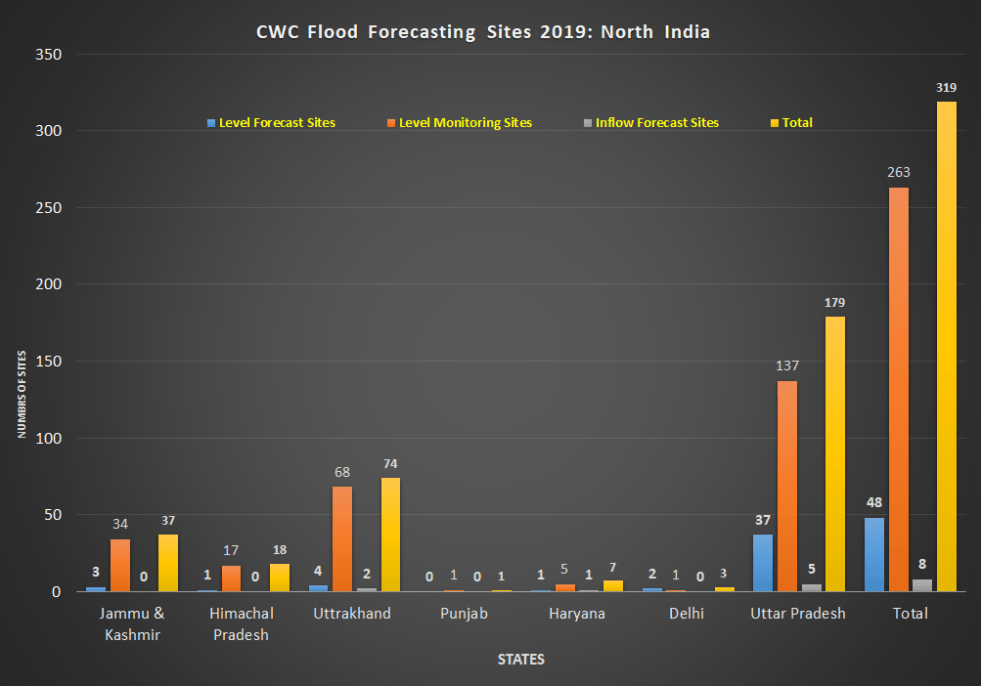
Overview of CWC Flood Forecasting Sites 2019: North India

Flood forecasting is an important activity during monsoon, considering the huge and increasing flood prone area, flood frequency, intensity and flood damages. Accurate and timely flood forecasting can hugely help reduce the damages due to floods. Central Water Commission (CWC) is the only agency responsible for flood forecasting in India. To understand the CWC’s flood forecasting better, we have compiled the list of the various flood, inflow forecasting sites and flood monitoring sites in India.

In this compilation, we have given state wise list of CWC’s flood forecasting, flood monitoring and inflow forecasting sites in North India, comprising of states of Jammu & Kashmir, Punjab, Haryana, Himachal Pradesh, Uttarakhand, Uttar Pradesh, Delhi and Chandigarh. It includes available details like name of river, sub basin, Warning level (WL), Danger Level (DL), High Flood Level (HFL), Full Reservoir Level (FRL), Maximum Water Level (MWL), as applicable. As we see below, there are many gaps in this basic information for the sites that are part of CWC’s list. A similar zonewise overview of CWC’s sites was compiled in 2018, which can be seen here. Overview of CWC Flood Forecasting Sites 2018: North India. We have brought this updated compilation for 2019 as there are large number of changes as ou can see.

Continue reading “Overview of CWC Flood Forecasting Sites 2019: North India”

DRP News Bulletin

DRP: 23 Sept. 2019: World Rivers Day; Several Moves to Conserve Rivers in India

GANGA Uttar Pradesh Floodplain set to be demarcated for 1st time State government has demarcated the Ganga’s floodplain and submitted a final report to the Jal Shakti ministry. The NMCG under Jal Shakti ministry would be the final authority to decide the floodplain. Once the report is approved, the centre would notify Ganga’s floodplain in the state for the first time.

In the first phase, the river stretch from Haridwar till Unnao has been covered. At least 200 metres from the embankment in the city and 500 metres from the embankment in rural areas might be marked as the river’s floodplain. A floodplain is the maximum area that a river has flooded in 25 years. Though the river may not rise that high every year but the demarcating it will mark the area that a river may engulf.

After the floodplain demarcated, it would further be divided into ‘no-development’ and ‘restrictive’ zones. The activities for each of the zones would be defined by the Centre and state government. If any activity is allowed in the ‘no development’ zone, it would be agriculture but on the condition that no fertilizer would be used, said sources in the state government. https://timesofindia.indiatimes.com/city/lucknow/gangas-floodplain-set-to-be-demarcated-for-first-time/articleshow/70877778.cms  (28 Aug. 2019)

Continue reading “DRP: 23 Sept. 2019: World Rivers Day; Several Moves to Conserve Rivers in India”
DRP News Bulletin

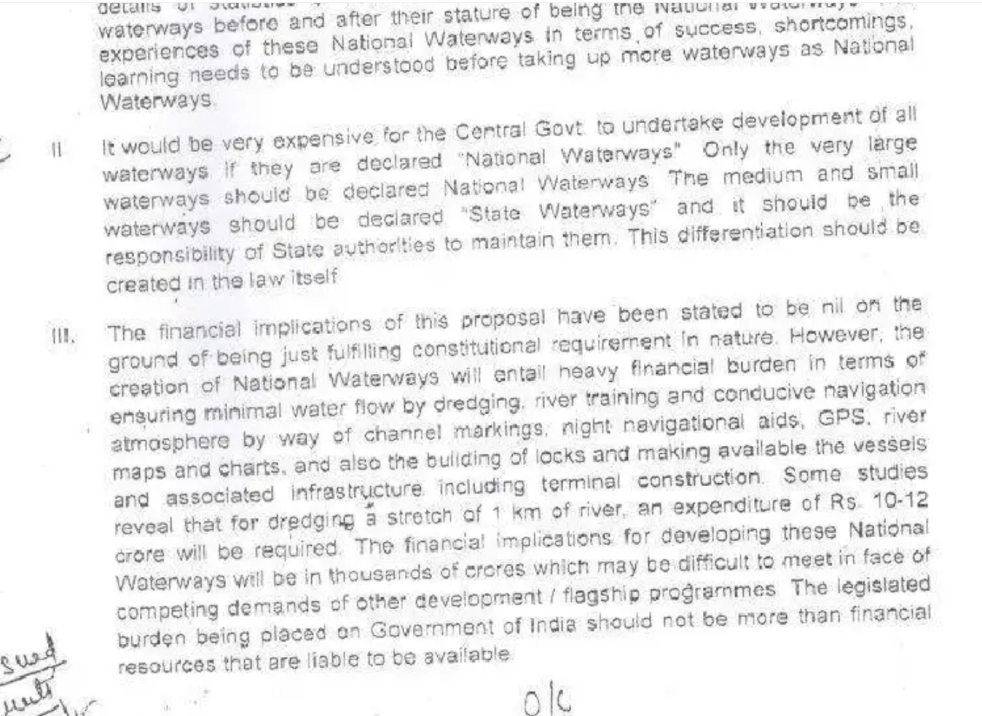
DRP: 16 Sept 2019: Wire Exposes How ill thought River Navigation was Pushed by the government

FANTASTIC piece of work that shows how Ministtry of Finance, NITI Ayog, MoWR and MoEF raised objections to the National Waterways bill, but it was bull dozed by Gadkari, without even sharing the comments with cabinet.

पोत परिवहन मंत्रालय को यह चेताया गया था कि व्यापक विचार-विमर्श के बिना किसी जलमार्ग को राष्ट्रीय जलमार्ग घोषित करना सही नहीं होगा. इतनी बड़ी संख्या में राष्ट्रीय जलमार्ग विकसित करने पर न सिर्फ केंद्र सरकार पर आर्थिक बोझ पड़ेगा बल्कि पर्यावरण को भी गहरा नुकसान होगा, जिसे कभी ठीक नहीं किया जा सकता है. द वायर द्वारा सूचना के अधिकार (आरटीआई) के तहत प्राप्त किए गए आधिकारिक दस्तावेजों से ये खुलासा हुआ है कि वित्त मंत्रालय ने एक ही बार में इतने सारे जलमार्गों को राष्ट्रीय जलमार्ग घोषित करने के फैसले को लेकर कड़ा ऐतराज जाहिए किया था.फाइल नोटिंग और आधिकारिक पत्राचारों की करीबी जांच से यह भी पता चलता है कि वित्त मंत्रालय की टिप्पणियों को केंद्रीय कैबिनेट के सामने विचार के लिए रखा ही नहीं गया और कैबिनेट ने बिना इसके ही राष्ट्रीय जलमार्ग विधेयक, 2015 के प्रस्ताव को 25 मार्च 2015 को मंजूरी दे दी थी.

– देश के 106 जलमार्गों को राष्ट्रीय जलमार्ग घोषित करने के फैसले को लेकर केंद्र के दो प्रमुख विभाग नीति आयोग और वित्त मंत्रालय ने कड़ा विरोध जताया था.

– पांच फरवरी 2015 को भेजे अपने जवाब में नीति आयोग ने कहा कि जिन जलमार्गों को राष्ट्रीय जलमार्ग घोषित करने का प्रस्वाव रखा गया है, उसे लेकर ये चर्चा नहीं हुई कि आखिर किस आधार पर इन्हें राष्ट्रीय जलमार्ग घोषित किया जा रहा है.आयोग के यातायात विभाग ने अपने पत्र में लिखा, ‘सबसे पहले किसी भी नदी को राष्ट्रीय जलमार्ग घोषित करने के लिए कुछ व्यापक मापदंड जैसे कि उद्योगों से संपर्क, पर्यावरण प्रभाव आकलन, पूरे साल में पानी की मौजूदगी, नौपरिवहन इत्यादि तय किए जाने चाहिए.’

Continue reading “DRP: 16 Sept 2019: Wire Exposes How ill thought River Navigation was Pushed by the government”
DRP News Bulletin

DRP: 9 Sept 2019: Sand Mining issues proliferate even in monsoon

One expects that River sand mining issues will be minimal in monsoon, with riverbeds flooded, but that is far from the case, as we can see from this week’s bulletin. Recent news include the positive story of Dakshin Kannada deputy commissioner being remembered for curbing illegal sand mining; Institute of Engineers demanding curb in sand mining around the 90 year old Krishna Raj Sagar dam on Cauvery considering its safety; in Tamil Nadu, the most dangerous place in the context of sand mining, there is the news of police forcing activists to apologise; While the TN minister is in denial mode about illegal sand mining round Chennai; firing between sand mafia and police in Rajasthan leading to two deaths and several injuries; in MP, a video is in circulation showing police negotiation with sand mafia; new sand mining policies in several states including Andhra Pradesh, Madhya Pradesh and Bihar and in Delhi the DJB has written to NGT to take steps to curb illegal sand mining downstream of Hathnikund barrage. And there is more.

That’s a lot of news during monsoon on River Sand mining. Unfortunately, there is no light at the end of the sandy tunnel. There is no effective policy or action on the horizon either from the states, centre or judiciary. It seems a lot more focused work is required on this issue.

Continue reading “DRP: 9 Sept 2019: Sand Mining issues proliferate even in monsoon”
DRP News Bulletin

DRP: 2 Sept 2019: Dam Floods due to SARDAR SAROVAR and other Dams

Different kinds of Dam Floods is affecting India this monsoon. Sardar Sarovar Project (SSP) Dam, thanks to decision of the Govt of India and its Ministry of Water Resources, Narmada Control Authority including its Chairperson UP Singh (Secretary, Union Ministry of Water Resources), Gujarat Govt is flooding hundreds of villages in Madhya Pradesh, displacing Thousands of families, whose rehabilitation has not been done even as per the Madhya Pradesh government. Medha Patkar and 1000 other women of Narmada Bachao Andolan are on indefinite fast. As we finslise this, the water level of Narmada at SSP Dam is already at 134.99 m and Gujarat Chief Minister has said it will be taken to Full Reservoir Level of 138.68 m this year. The Prime Minister declared his joy when water level crossed 134 M and he will shortly have occasion to celebrate again as water level crosses 135 m. There is not a word of concern for the thousands of victims of this joyous achievement from any of them. The Photo Blog by Parineeta Dandekar provides one perspective of the Narmada Valley events.

In Maharashtra, the govt has set up a committee to investigate the role of dams in floods in Sangli, Satara and Kolhapur district in August 2019, but it does not seem to have people who can speak up independently and do not hesitate to call spade when they see one.

Karnataka is yet to set up such a committee for the Krishna basin floods in that state that happened the same time and a few days latter while Maharashtra was suffering. As SANDRP has written, there seems also a case of Dam induced floods in Uttara Kannada district too in Karnataka, that will require a separate investigation. We hope that too happens soon.

The Goa Chief Minister has written to his Maharashtra counterpart that Tillari Dam of Maharashtra created floods in Goa.

Continue reading “DRP: 2 Sept 2019: Dam Floods due to SARDAR SAROVAR and other Dams”
Yamuna River

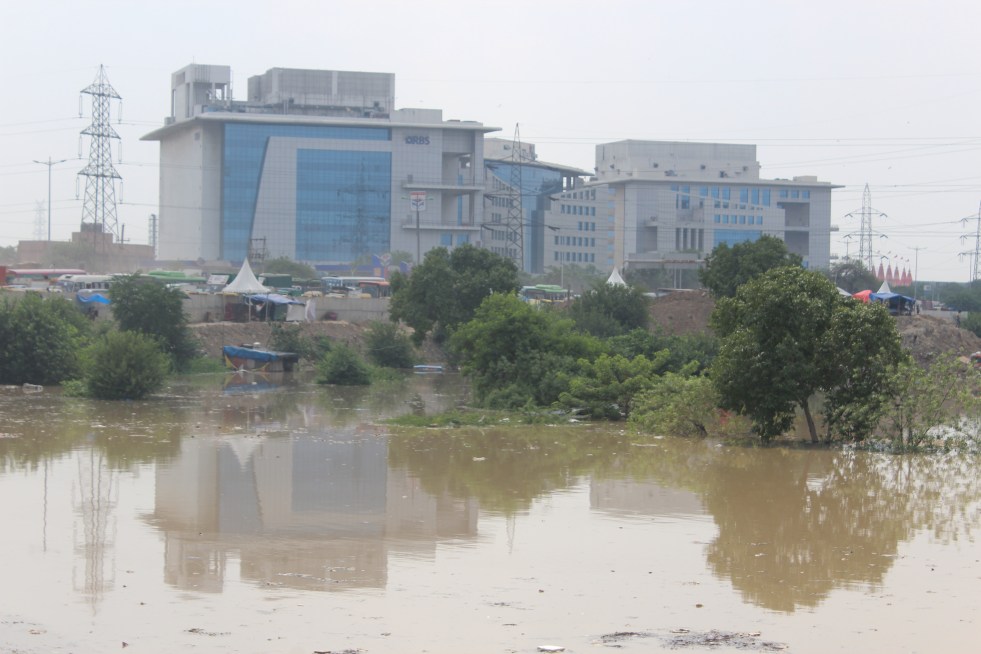
Aug 2019 Yamuna Flood: Floodplain Encroachments Exposed Again

On August 21, 2019, the first big flood spell of monsoon season 2019 has passed through Delhi. The river swelled to cross first warning level 204.00 metre and then danger level 204.83 metre at Old Railway Bridge (ORB) Delhi, finally receding from 206.6 metre which is 0.89 meter short of 207.49 Highest Flood Level (HFL) set in 1978.

The delayed and much awaited flood spell hit the city after highest ever recorded discharge of 8.28 lakh cusec water for two hours from Hathini Kund Barrage (HKB), Yamuna Nagar in Haryana on August 18, 2019 at 05:00 pm and 6:00 pm. The highest since the commissioning of HKB in 2000. The water release this year has also surpassed the discharge of 7.09 lakh cusec the previous highest discharge recorded at Taje Wala Barrage (TWB) during the highest flood recorded in River Yamuna in September 1978. The British era TWB barrage, some 6 kilometre upstream of HKB was washed away in 2010 floods.  

Continue reading “Aug 2019 Yamuna Flood: Floodplain Encroachments Exposed Again”

DRP News Bulletin

DRP: 26 Aug. 2019: Canalisation of Rivers will worsen Punjab Flood and Water Situation

Following recent Punjab floods, the Punjab Chief Minister said that the state government would go for canalisation of rivers, as if that is going to help in managing or avoiding flood disaster. This proposal seems to come out from nowhere, but considering that the CM talked about funding by the World Bank and Asian Development Bank, either this is already under discussion or these institutes have proposed this to the Chief Minister. The Proposal seems blind to the impacts, costs, risks and wider implications of the canalisation of rivers.

To avoid duplication, the excellent report in MINT below provides detailed reasons why it is a disastrous Idea. The Indian Express report below is in fact a bad example of reporting, since it does not even mention the impacts, costs or risks of the canalisation proposal. And the report that follows these two from California in USA shows how there the work is ongoing to reverse the trend and bring more flood plains in connection with the rivers at a huge cost. Why do we have to repeat the blunders of others, as propagated by the World Bank and ADB and then pay the price in reversing the blunders?

Continue reading “DRP: 26 Aug. 2019: Canalisation of Rivers will worsen Punjab Flood and Water Situation”