DRP News Bulletin

DRP 090123: Atal Bhujal Yojana just chaff without any wheat?

According to this detailed report, possibly the first independent review of the Atal Bhujal Yojana, a 5-year program of the Union govt for management of groundwater, India’s water lifeline, with over half of the project period completed, seems bereft of the fundamental aspects that the scheme itself says are necessary for any sound foundation of the scheme. The review describes it as a dish full of chaff, without almost any kernels of wheat for some sound reasons. It says hardly 18% of allocated money has been spent on Gram Panchayat level community-led Water Security Plan. Only 4% of the planned Gram Panchayat level trainings have been held, with Gujarat and Haryana holding none. Only 27% of money allocated for Gram Panchayat level Hydrogeological monitoring network has been spent. The data gathering instruments that were required from the beginning of the program have not been installed in over half the planned locations. On Information, Education and Communication activities, only 16% of allocated amount is spent.

More detailed independent review of the program implementation will help, but from the available information so far, the signs do not look particularly promising. Is it due to ineptness or lack of intention? Only time will tell.

Continue reading “DRP 090123: Atal Bhujal Yojana just chaff without any wheat?”
Hydro Power Projects

2022: Environment & Forest Clearances to Dams, Hydro, Irrigation Projects

SANDRP’s 2020 and 2021 overviews on the subject can be seen by clicking the links. You may also like to visit our 2022 overviews on (1) Dam induced floods & damages, (2) Fly ash dam breach incidents, (3) Impact of floods on Polavaram project, (4) People’s resistance against dams and hydro projects, (5) Disasters and accidents at HEPs sites, (6) Dam Safety Issues, (7) Hydro projects opposition and accidents in South Asia.

Continue reading “2022: Environment & Forest Clearances to Dams, Hydro, Irrigation Projects”
DRP News Bulletin

DRP 020123: Looking Back to Look forward to 2023

(Feature Image:-River Ken inside Panna National Park from River Stories, Walking Across India-I by Siddharth Agarwal)

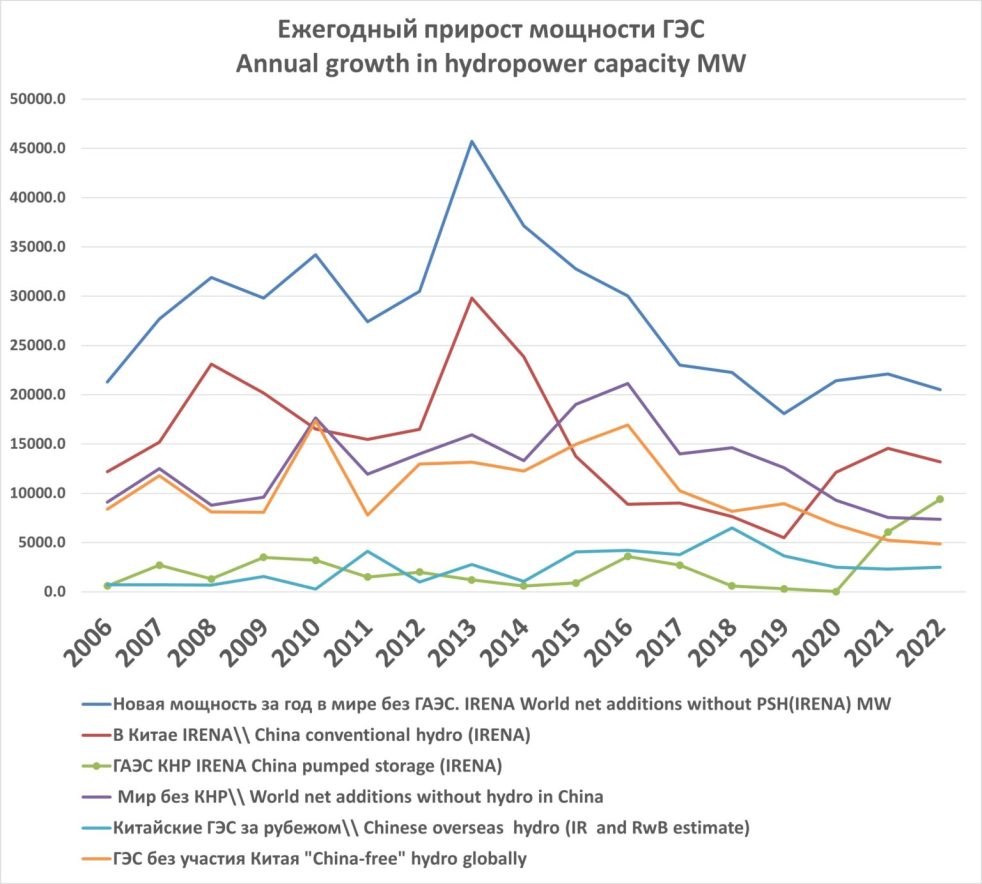
This is the first DRP bulletin of 2023 and we would like to begin on a positive note. But to remain grounded in reality we also need to look back at the events in 2022. We see a number of positives in 2022 and we hope that trend continues. The number of new dams and hydropower projects being started has remained on a declining trend. People and civil society has continued its protests against destructive projects and for more decentralised projects and governance.

Continue reading “DRP 020123: Looking Back to Look forward to 2023”
Hydro Disaster

2022: Accidents & Damages related to Hydro projects in India

In this annual review, SANDRP compiles the hydro power related accidents, disasters and damages in North West and North East Himalayan states during 2022. It also covers relevant reports revealing gradual decline in power generation by hydro power projects amid growing concerns over physical and financial viabilities of new projects. There are also reports highlighting the looming climatic and geological threats over these projects. It is good to see that taking lessons from Chamoli disaster in Feb. 2021, NDMA has officially asked central govt not to rely on hydro power.

In previous parts of yearend roundups, we have covered (1) Dam induced floods & damages, (2) Fly ash dam breach incidents, (3) Impact of floods on Polavaram project, (4) People’s resistance against dams and hydro projects. Please see links for reports tracking hydro power projects related accidents and disasters in 2021 and 2020.

Continue reading “2022: Accidents & Damages related to Hydro projects in India”
Dams · Hydro Power Projects

2022: People’s Resistance against Unviable HEPs, Destructive Dams

(Feature Image: No Means No Campaign message against hydro projects on a rock in Kinnaur. Source: ToI)

There have been many instances of opposition by local people, organizations and experts against unviable hydroelectric power (HEP) and destructive dam projects in 2022. Such instances of the resistance from across the country have been successful in a number of ways including leading to the funding agencies, corporate houses and government agreeing to withdraw from the project in many cases. This overview presents top ten stories highlighting successful opposition to hydro and dams projects in 2022 in India followed by some relevant reports on the issue. In first part of the annual overview, SANDRP has tracked the dam failures and dam induced floods incidents in India in 2022, along with separate report on unraveling of Polavaram project and another one on breaches of fly ash dams.

Continue reading “2022: People’s Resistance against Unviable HEPs, Destructive Dams”
DRP News Bulletin

DRP 191222: Question marks over viability of pump hydro projects

(Feature Image: 1772 Mw PSHPs Spain. Photo courtesy of Iberdrola/ ENR)

The question marks over viability of huge number of pump storage hydro projects (PSHP) being pushed forward in India currently were flowing in the rivers for long. This week, Moody’s investors Service (MIS) seems to have strengthened this after it downgraded Greenko Energy Holdings’ corporate family rating. It may be noted that Greenko is the biggest investor in PSHPs in India from private sector and a major part of Greenko’s new investments are in PSHP.

This makes the implications of MIS’s downgrade all the more interesting. MIS has noted that PHSPs are capital intensive and each PHSP will generate cash flow only after at least 2-3 years of construction (in reality it can be much longer than 2-3 years, the operative phrase here is at least). It also noted that the additional debt to be raised from Greenko’s capital spending, coupled with a rising interest environment will put further pressure on “GEH’s already weak financial metrics” and that Greenko’s high financial leverage due to its substantial capital spending program will keep its financial metrics below its downgrade trigger “for an extended period of time”.

Continue reading “DRP 191222: Question marks over viability of pump hydro projects”
DRP News Bulletin

DRP 051222: World Soil Day 2022: Soil where food begins

(Feature Image:-Several practical principles for soil and water conservations are important to be understood and combined. Source Wiki Farmer)

United Nations is celebrating today, i.e. Dec 5, as the World Soil day, the theme this year is “Soils: Where food begins”. The World Soil Day is held on Dec 5 each year since 2014, following the recommendation the International Union of Soil Sciences (IUSS) in 2002. The FAO Conference unanimously endorsed World Soil Day in June 2013 and requested its official adoption at the 68th UN General Assembly. In December 2013, the UN General Assembly responded by designating 5 December 2014 as the first official World Soil Day as a global awareness raising platform.

In the context of climate change, the soil organic content assumes additional huge significance. While the organic content in soils is decreasing globally, it can be reversed. If we can increase the soil organic content, it will not only help in mitigation of climate change by helping reduce the carbon in the atmosphere, it can also help in adaptation as soil with higher organic context has much greater capacity to store soil moisture, which can then be helpful in both flood mitigation (as more of the rain water is stored in the soil), and drought mitigation (soils with most moisture storage will help crops survive longer dry spells).

Continue reading “DRP 051222: World Soil Day 2022: Soil where food begins”
DRP News Bulletin

DRP 281122: Justice Lokur at IRW 2022: We need to be vocally more aggressive to make a difference

In his key note address at the final session of India Rivers Week 2022, Justice Madan Lokur, former judge of Supreme Court of India said, “Time has come we need to be a little more active and aggressive vocally to ensure that we are listened to about the problems we all are facing. Farmers struggle, the CAA amendment etc. are good examples. There is need for a political will to bring about any change. How do we generate such a political will is the issue.”

Among other messages Justice Lokur gave in his key note address at the final session of India Rivers Week 2022 on Nov 27, 2022 included: “Rivers belong to all, not a select few… We need to ensure that we are effective in our work, our messages.”

The two day, five session India Rivers Week 2022 function focused on use of rivers as waterways, organized in collaboration between India Rivers Forum (IRF is constituted by ten organizations now) and Manthan Adhyayan Kendra ended on Nov 27, 2022. The IRW 2022 sessions had a number of highlights, we will try to bring them to you in separate articles.

Continue reading “DRP 281122: Justice Lokur at IRW 2022: We need to be vocally more aggressive to make a difference”
Fish, Fisheries, Fisherfolk

WFD 2022: River Pollution Killing Fish En-Masse; New Threats to river fish

On the occasion of World Fisheries Day (WFD) 2022, this second report is on the mass fish death incidents in Indian rivers and wetlands during last year. It also presents critical reports concerning emerging threats of invasive fish, riverbed mining, pollution, encroachments, microplastic affecting rivers’ fish and fishers. The first part containing positive stories on the issue can be seen here. The third part would highlight mass fish death incidents in inland water bodies including lakes and ponds and the fourth part would cover the ongoing struggle of coastal fisherfolks and related issues. The fifth and last part on the series would highlight issues concerning aquatic bio-diversity in the country.     

Continue reading WFD 2022: River Pollution Killing Fish En-Masse; New Threats to river fish
DRP News Bulletin

DRP 141122: Jal Shakti Ministry says: Groundwater extraction down, recharge up???

This sounds so counter intuitive. The Ministry Jal Shakti on Nov 9, 2022 made some findings of its latest “National Compilation on Dynamic Ground Water Resources of India, 2022 public, strangely, without making the report public. It is not clear why the govt did not make the report public, though the counter intuitive nature of the findings provide some hint. The report claims that at all India macro level, the ministry claimed that the groundwater extraction is the lowest in 2022 since 2004, or 18 years and that the groundwater recharge has gone up.

Continue reading DRP 141122: Jal Shakti Ministry says: Groundwater extraction down, recharge up???