
The October 2021 flood disasters in two ends of India, in Kerala and Uttarakhand have a lot common. Both happened after the end of normal dates of South West Monsoon 2021. In both cases it is repeat of earlier such disasters in respective states. In both cases, there were reports by expert reports warning about the disasters. In both cases the rainfall events were broadly along the lines warned by the climate scientists, but in both cases the state was ill prepared to cope with it. In both cases, inappropriate human interventions have worsened the disasters in major ways. And in both cases disaster management seems to be absent from ground. In both cases, more precise forecasts about the rainfall quantum and location would have helped. (Feature Image above is from The Hindustan Times, Oct 23, 2021)
Continue reading “Kerala and Uttarakhand floods in Oct 2021: Did the forewarnings help?”Tag: Uttarakhand
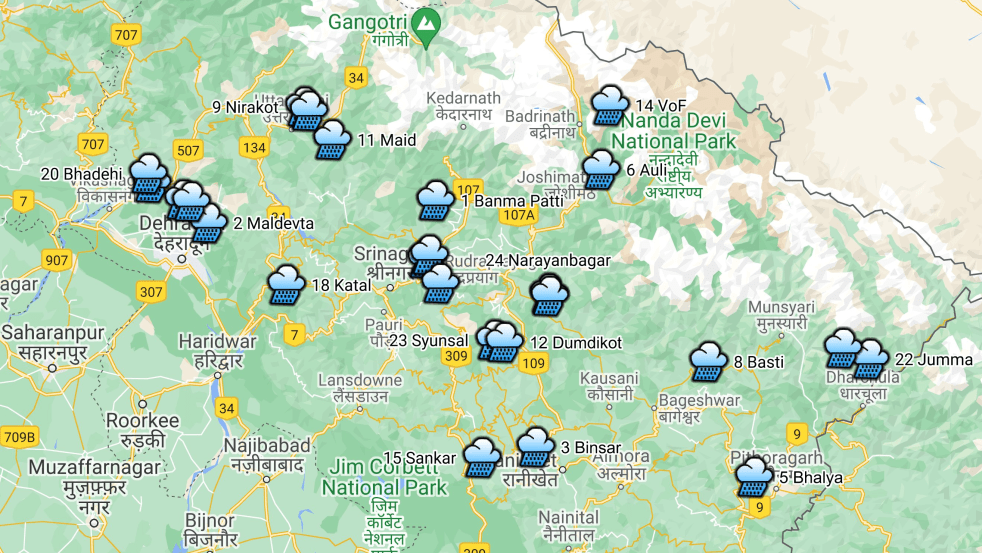
Uttarakhand: Cloud Bursts in SW Monsoon 2021
SANDRP has been compiling the extreme rainfall events termed as cloud bursts occurring during monsoon season in Himalayan states. This account brings out the status of such incidents in the state of Uttarakhand. We have already published details of at least 24 ‘cloud burst’[i] incidents in pre monsoon month of May 2021 in the state. In following parts, we would cover the other states in Western Himalaya.
Continue reading “Uttarakhand: Cloud Bursts in SW Monsoon 2021”
Open Letter to PM on Uttarakhand Hydro in Sept 2021
Open Letter to the Prime Minister, Minister of Environment and media on 09/09/2021:
Restarting seven under-construction hydro projects in Ganga Himalaya unjustified
Recently the MoEF&CC has recommended restarting the construction of seven under-construction HEPs in Uttarakhand namely Tehri II (1000 MW), Tapovan Vishnugad (520 MW), Vishnugad Pipalkoti (444 MW), Singoli Bhatwari (99 MW), Phata Byung (76 MW), Madhmaheshwar (15 MW), and Kaliganga II (4.5 MW). The news came as a shock to citizens, devotees and environmentalists who have been struggling since over a decade to preserve our national river Ganga and the Himalaya. The deeply felt concern over the fate of these two pivotal ecological systems and defining symbols of Indian culture, compel us to write this letter. Not the least, as a citizen, it is also our constitutional duty ‘to protect and improve India’s natural environment’.
Continue reading “Open Letter to PM on Uttarakhand Hydro in Sept 2021”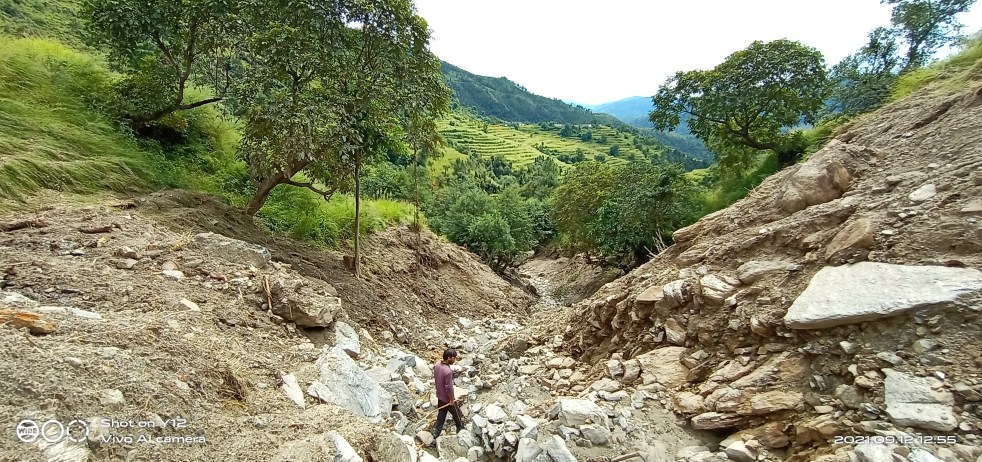
Uttarakhand: ‘Cloud Burst’ in Syunsal; Administration disinterested in rainfall monitoring
On September 7, 2021 a ‘cloud burst’ incident was reported in Syunsal village area of Patti Chauthan. The village is located in buffer zone of Dudhatoli reserve forest in Thailisain block of Pauri district forming borders with Almora and Chamoli districts.
As per villagers the incident occurred around 02.30 am early in the morning. There was heavy rainfall spell since evening of September 6 in the region. Post mid night loud thunders and lightening were also experienced but in the darkness of night, very little could be seen.
Continue reading “Uttarakhand: ‘Cloud Burst’ in Syunsal; Administration disinterested in rainfall monitoring”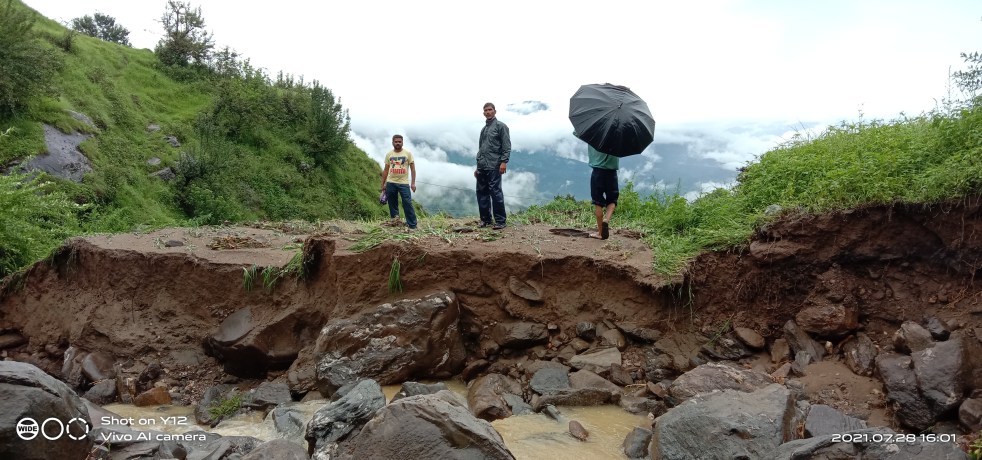
Uttarakhand: ‘Cloud Burst’ in Chauthan, Disaster Preparedness Missing Again
Excessive rainfall in the intervening night July 28-29 2021 has impacted several villages in Chauthan Patti under Thailisain tehsil of Pauri district. Fortunately there has been no casualties reported however village & public infrastructure and also the crops have suffered huge damages.
While heavy downpour lashed out the large parts of the district, the villagers of Dumdikot also reported of a ‘cloud burst’ incident causing significant destruction. The village is located at the trijunction of Pauri-Chamoli-Almora districts border.
Continue reading “Uttarakhand: ‘Cloud Burst’ in Chauthan, Disaster Preparedness Missing Again”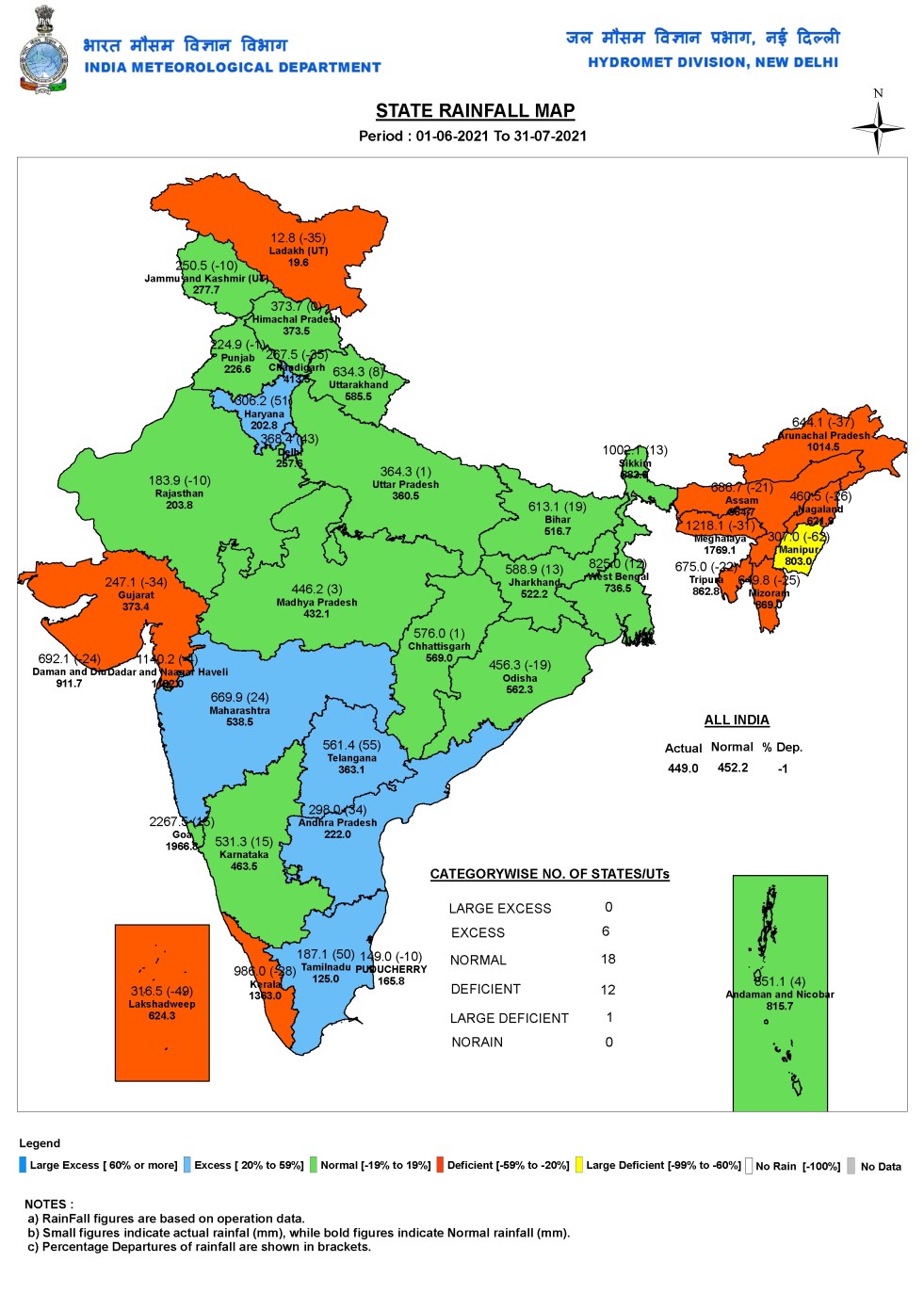
June July 2021 District Wise SW Monsoon Rainfall in India
In the just concluded month of July 2021, India received 266.1 mm rainfall, that is 6.73% below normal July rainfall of 285.3 mm, as per India Meteorological Department (IMD). This is in contrast with June 2021 rainfall, that was almost 11% surplus over Normal rainfall. Not only that surplus has been wiped out by the July 2021 deficit, the overall June July 2021 rainfall now is 449 mm, or about 0.7% below normal rainfall of 452.2 mm, as per IMD.
Continue reading “June July 2021 District Wise SW Monsoon Rainfall in India”
June 2021: District wise rainfall in India’s SW Monsoon
In the just concluded June 2021, the first month of India’s South West 2021 monsoon, India received 182.9 mm rainfall, 10.96% or about 11% more than the normal June rainfall of 166.9 mm as per India Meteorological department. In June 2020, the rainfall was 196.9 mm, or about 18% above normal and in June 2019 it was 33% below normal.
Continue reading “June 2021: District wise rainfall in India’s SW Monsoon”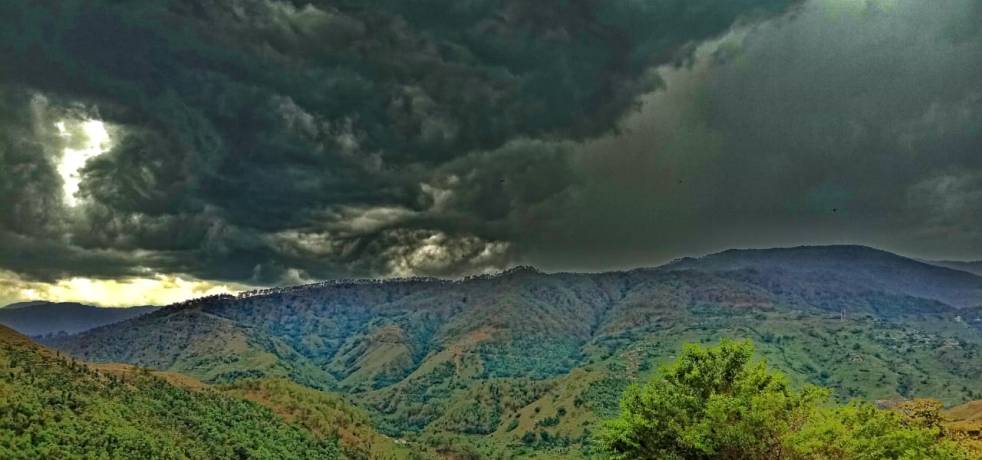
Uttarakhand: Cloud bursts in May 2021
From the beginning of May 2021, Uttarakhand has started witnessing excessive rainfall events termed as ‘cloud bursts’. Worryingly the intensity and frequency seems on higher side this time. So far there have been about 24 reported cases of ‘cloud bursts’ in the state but the monitoring, prediction and mitigation efforts are lagging far behind.
Continue reading “Uttarakhand: Cloud bursts in May 2021”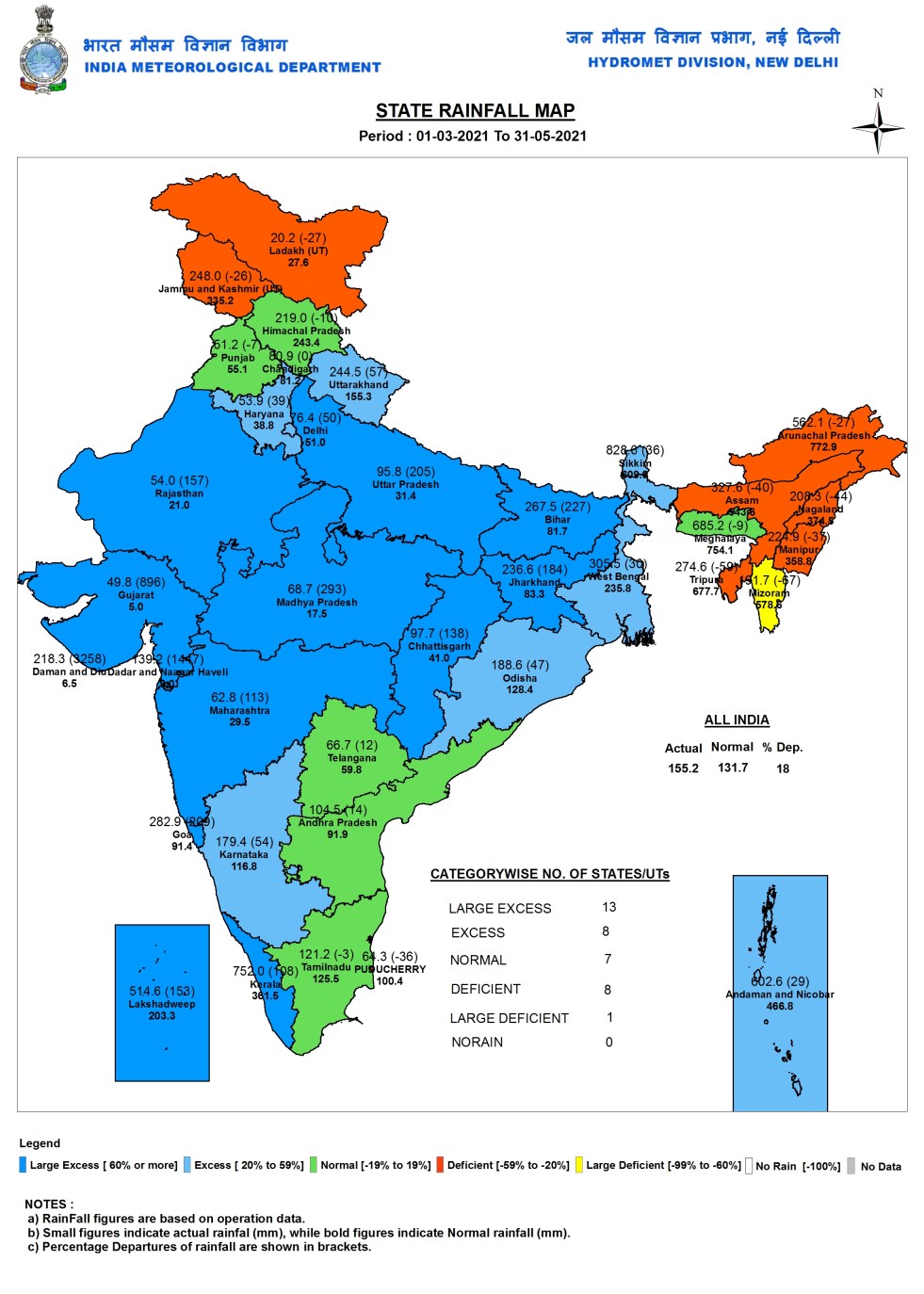
Pre Monsoon 2021 season – State Wise, District Wise Rainfall
In the just concluded pre monsoon season (March 1 to May 31, 2021) India received 155.2 mm rainfall, 18% above the normal rainfall of 131.7 mm as per the India Meteorological Department (IMD). This is similar to the case in 2020[i] when India received 158.5 mm or 20% above normal rainfall.
Continue reading “Pre Monsoon 2021 season – State Wise, District Wise Rainfall”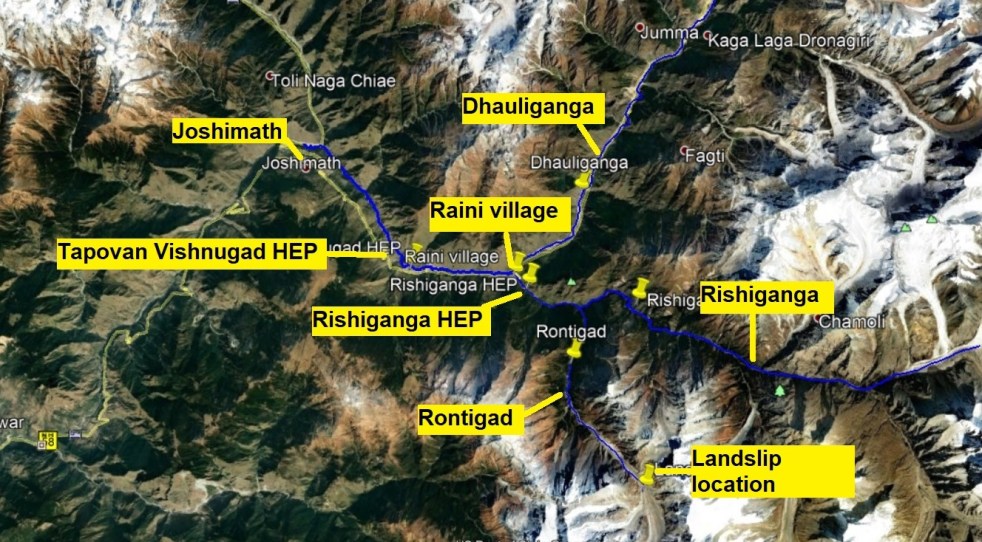
Himalayan Disasters: Early Warning Systems must, but much more needed
Guest Article by Prof S P Sati
The suggestion of a robust early warning system always echoes as and when there is a disaster in the Himalaya. Hence, the murmuring of having a state of art early warning system after the February 7th 2021 Rishi Ganga disaster is nothing new.
Several concerned scientists of the country are considering of instituting a new centre using the state of art remote sensing techniques. The centre would be dedicated to the early warning forecasting in the Himalayan region. This is heard practically after every disaster since last two decades.
Continue reading “Himalayan Disasters: Early Warning Systems must, but much more needed”
