A detailed review of functioning of Union Ministry of Environment and Forests’ (MoEF) Expert Appraisal Committee (EAC) on River Valley Projects (RVP) for 2024 by SANDRP shows that the committee or for that matter MoEF has almost non-existent rejection rate. Even when a project is not cleared, when it applies again, it gets clearance, whether the application if for stage I (Terms of Reference) or Stage II (Environment Clearance- EC) clearance. Even in some cases like Pump Storage Projects (PSP) in Western Ghats or the Hydropower projects in disaster prone Himalayas, including the disaster-stricken projects like the 1200 MW Teesta III projects in Sikkim, the scrutiny including field visits by the EAC Sub committees is minimal, not worthy calling even scrutiny.
Continue reading “DRP 200125: Whither Env Clearance Rejection rate from Expert Appraisal Committee or MoEF?”Tag: Research
DRP 130125: Will Judiciary take these matters to logical conclusion?
There are at least four cases in this past week where the judiciary has used strong words or taken up crucial issues in water, dams, hydropower projects, wetlands and riverbed mining related issues. In the case related to the safety of Mullaperiyar dam on Kerala-TN border, the Supreme Court has prodded the Centre to wake up from the slumber to ensure that National Dam Safety Authority quickly forms a panel to examine the project. This case has wide ranging repercussions not only about this project, but also functioning of NDSA and other bodies under the Dam Safety Act 2021. Indeed, there is huge question mark as to what extent NDSA and DSA has made our dams any safer.
Continue reading “DRP 130125: Will Judiciary take these matters to logical conclusion?”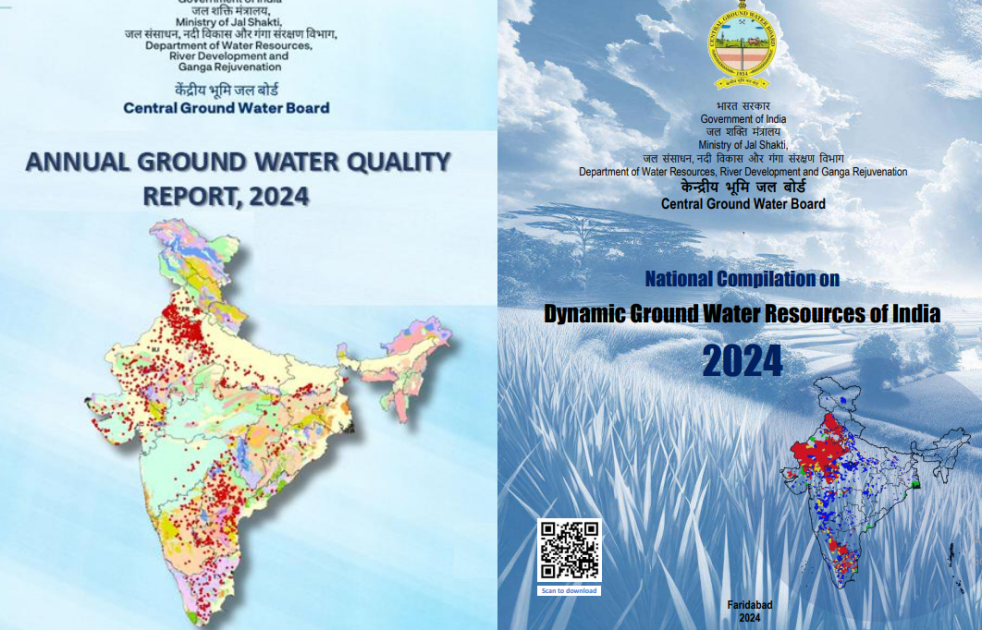
DRP 060125: Concerns about & Contradictions in CGWB’s Reports
The Central Ground Water Board (CGWB) released two important reports last week. While the Annual Ground Water Quality Report 2024 reveals rise in nitrate fluoride, arsenic and uranium contimination of groundwater resource in India, the Dynamic Groundwater Resource Assessment Report 2024 claims substantial rise in annual groundwater recharge and decline in extraction of the resource.
As per the first report, the number of districts affected by high nitrate levels in groundwater has gone up to 440 (near 56% of all 779 districts in country) from 359 found in 2017 assessment which means in 7 years 81 more districts have been found having excessive nitrate levels in groundwater. This should concern us from a number of points of view.
Continue reading “DRP 060125: Concerns about & Contradictions in CGWB’s Reports”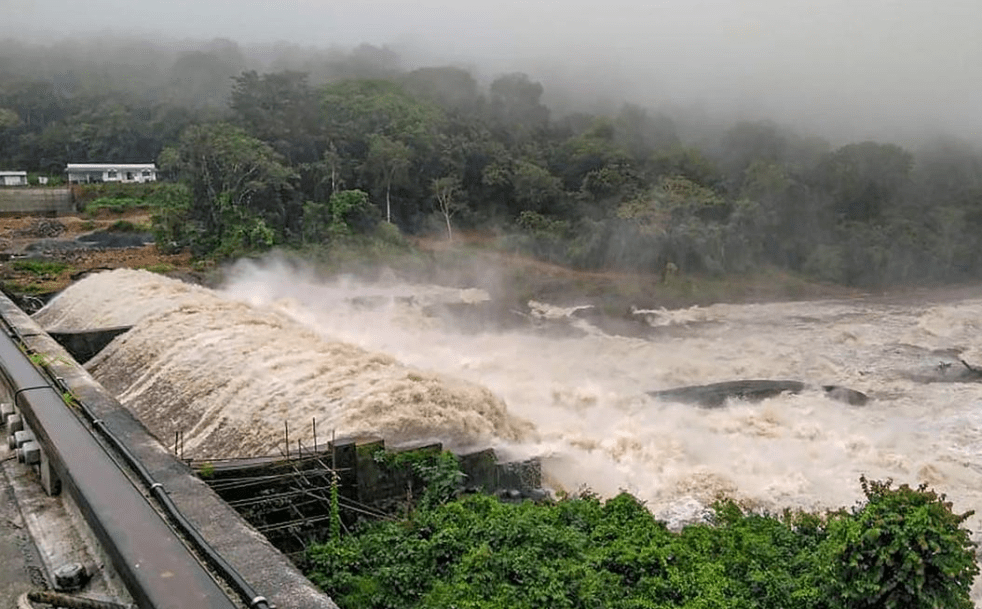
DRP 120824: Chalakudy community demand Prudent Dam Management Plan
(Feature Image: Water flows through the gates of the Peringalkuthu dam on Chalakudy river after a sluice was opened following heavy rain in Thrissur on Aug. 04, 2022. Photo Credit: PTI/The Hindu)
One of the heartening development this week is from Kerala, where Chalakudy river community held a satyagraha to demand proper integrated dam management plan in the Chalakudy River basin to minimize flood risks. It is rather rare that communities come out for such a demand. It was also great to see that the satyagraha was supported by Chalakudy Puzha Samrakshan Samiti, Chalakudy municipal chairman and also environmentalists.
The satyagraha in fact had specific demand for each of the dams included in the Paramibikulam Aliyar Project, including in Kerala and upstream Tamil Nadu. We hope the Kerala government positively responds to these demands at the earliest.
Continue reading “DRP 120824: Chalakudy community demand Prudent Dam Management Plan”
DRP 120721: Will Bhupender Yadav improve India’s Environment Governance?
It’s rather rare when some of the most well-known environmentalists of India, including Ritwick Dutta and Manoj Misra welcome the arrival of Bhupender Yadav as India’s new Environment Minister. The state of the environment governance under the outgoing minister, Prakash Javadekar has worsened so much, both in perception and substance, that possibly any change would look better. In fact Javadekar may be front runner for the label of India’s worst ever environment minister according to some analysts.
The environment appraisals, the constitution of committees including the various Expert Appraisal Committees, the Forest Advisory Committee and the Standing committee of National Board of Wildlife, the public hearings and consultation processes, the state of pollution and rivers, biodiversity, wetlands, floodplains, sand mining, to name just a few areas, were all seen going downhill on a steep slope during the Javadeker period. The monitoring and compliance remained non existent. Some would argue that was it much different before Javadekar. The point is Javadekar had no pretentions of trying to improve the environment governance. He was out to dilute every available norm and he seemed to have succeded significantly.
Even if Yadav were to genuinely wish to improve matters, how much will he be allowed to do, by the perceived imperatives of the economic fundamentalist agenda, the well-entrenched vested interests and the bureaucracy is a question that only time will tell, but there is little doubt that a lot can and needs to be done rather urgently and none of these perceived obstacles should come in the way if there is will. The climate change is making the improvement in environmental governance rather urgent.
Continue reading “DRP 120721: Will Bhupender Yadav improve India’s Environment Governance?”
DRP: 20 July 2020: Will the Supreme Court stop destruction of Ganga & Himalayas in the name of WIDER Char Dham Road?
Feature Image: Pithoragarh-Tanakpur Road widening work going and muck being dumped in Saryu river under Chardham project. (Manoj Matwal, April 2019)
The Supreme Court appointed Ravi Chopra committee has submitted the report on Char Dham Road. It has not said NO to the all weather road which is the slogan of Gadkari and rest of the Union Government. It has in fact, going by the Union Ministry of Road Transport’s’ circular, as late as 2018, suggested that the road be of 5.5 m width with necessary precautions. It has provided elaborate justifications and reasons why it took this decision. And yet twelve govt members of the committee, claiming in the name of religion (as per interview by one of these twelve members in media today) has insisted that the road should be of 10 m width. Not bothering that religion was not part of their mandate, not bothering what impact such a road will have on the Ganga (and the impact will be massive, we will know the full extent only if the impacts are scientifically assessed), on Himalayas (again starting from deforestation, landslides, flash floods and so on will be unbelievably huge) and on people and future generations. One only hopes the Supreme Court will see through the mindlessness of the economic fundamentalism being pushed in the name of religion and not allow the proposal to go ahead.
The Union Environment Ministry is clearly out to destroy even the Bhagirathi Eco-Sensitive Zone by sanctioning the Zonal Master Plan without due process and in complete violation of the letter and spirit of the Bhagirathi notification. This will further open the flood gates for destruction of remaining stretch of Bhagirathi, considered original Ganga stream as it flows from Gangotri. Again one hopes the judiciary will strike this down.
One wonders what is the NMCG, National Mission for Clean Ganga, whose mandate is Ganga rejuvenation, is doing amidst all this? Why is it silent?
Continue reading “DRP: 20 July 2020: Will the Supreme Court stop destruction of Ganga & Himalayas in the name of WIDER Char Dham Road?”
DRP: 25 May 2020: Review Environment Clearance Approval for Etalin Project
This letter from SANDRP to MoEF and ETC on Etalin Project highlights how poor has been the EIA and E-flows reports of the Etalin Project and how flawed has been the Environmental Appraisal Process by the EAC. It also shows the shoddy Dibang Basin study for Cumulative Impact Assessment cum Carrying Capacity Study, shockingly done by the same consultant that also did the Etalin EIA, showing clearly that MoEF, EAC and CWC, all of whom were involved in the process, do not understand what is conflict of interest. The E flows study done by the CIFRI (Central Inland Fisheries Research Institute) does not even provide the list of fish they found in the Etalin project area! And shockingly, the EAC approved the biggest ever hydropower project of India based on such shoddy documents. The Environment Clearance approval needs to be reviewed, the EIA, E-flows and Dibang Basin CIA needs to be rejected and fresh studies need to be commissioned. https://sandrp.in/2020/05/23/open-letter-to-moef-river-valley-eac-review-recommendation-to-grant-ec-to-etalin-hep/ (23 May 2020)
Continue reading “DRP: 25 May 2020: Review Environment Clearance Approval for Etalin Project”
DRP: 11 May 2020: Jindal accepts Etalin HEP is unviable!
This must be the defining (and predictable, this was the lead story in our DRP NB of April 27, 2020, see: https://sandrp.in/2020/04/27/drp-nb-27-april-2020-for-whom-is-this-unviable-etalin-project-being-pushed/) moment in the campaign to save the Dibang Valley now from the proposed 3097 MW Etalin Hydropower Project. The CEO of Jindal Power Ltd has said in so many words that project is NOT an attractive investment, they will struggle to find buyers for the costly power and only support from government can help make the project viable. The CEO seemed to suggest that they would be happy to sell the project to NHPC or form a joint venture with NHPC to get the govt funding for the project. Again completely on predictable line. The question then is why should government spend previous public money on such an unviable project?
So the question remains the same, the one we asked on April 27, 2020: For whom is this unviable Etalin Project being pushed?
Continue reading “DRP: 11 May 2020: Jindal accepts Etalin HEP is unviable!”
DRP: 4 Mar 2019: INDIA SAND MINING 2018; SANDRP’s NATIONWIDE REVIEW
Punjab Sand Mining 2018 Overview: SAD SAGA OF STATE FAILURE
Rajasthan: SC Banned Riverbed Mining through 2018: Centre & State Show No Concern
Gujarat Sand Mining 2018: Can Technology alone help Stop Illegal Sand Mining?
Uttar Pradesh Sand Mining 2018: Key NGT orders slap for MoEF
Madhya Pradesh Sand Mining 2018: Unprecedented Violence by Sand Mafia
Karnataka Sand Mining 2018: Hopeless, But Action Packed!
Tamil Nadu Sand Mining 2018: Story of Nexus exposed by a brave Journalists
Kerala Sand Mining 2018: How a 17 year Allapad girl became anti sand mining icon
Maharashtra Sand Mining 2018: Panegaon shows Way To stop Illegal Sand Mining
North East India Sand Mining 2018: Emerging threat to Rivers
East India Sand Mining 2018: Will NGT order help restore Subarnarekha River?
Sand Mining 2018: Telangana and Andhra Pradesh
Illegal Sand Mining Violence 2018: at least 28 People died across India
Sand Mining 2018: Is Illegal Sand Mining A National Menace?
Continue reading “DRP: 4 Mar 2019: INDIA SAND MINING 2018; SANDRP’s NATIONWIDE REVIEW”
DRP: 25 Feb 2019: Climate Bonds Initiative: Big Hydro is NOT climate solution
As about 500 global financiers meet in London on March 5-7, 2019, one of the items on agenda pushed by Big Hydro lobby is criteria to include Big Hydro as climate solution. As following Comment in Nature shows, this is completely based on lobbying efforts and not based on merit of the case. If the merits of large hydro were to looked at objectively, there is absolutely no case of inclusion of Large Hydro as climate solution. In fact, the article does not attempt to list the severe, widespread and long lasting adverse social and environmental impacts of large hydro. Today when there is BIG question mark over even economic viability of large hydro, such attempts are clearly uncalled for. Hope the global financiers will see through this lobbying effort.
The World Hydropower Congress will meet in Paris during May 14-16, 2019. Their program says:
Following over two years of discussions with industry, academia, governments and international NGOs, the Climate Bonds Initiative, an investor-focused not-for-profit is due to launch a consultation later this year on proposed green bond criteria for hydropower. This criteria is seen as key to fully unlocking the market to the hydropower sector, as to date it has been held back a lack of clarity over appropriate standards. https://congress.hydropower.org/2019-paris/programme/green-bonds-for-hydropower/
This shows that the Congress, essentially a Hydropower Lobby meeting, is also interconnected with the Climate Bond Initiative on Hydropower.
Continue reading “DRP: 25 Feb 2019: Climate Bonds Initiative: Big Hydro is NOT climate solution” SANDRP