DRP News Bulletin

DRP 271221: PM pushes unviable, destructive Hydro projects in HP

Feature Image: Renuka Dam Sangharsh Samiti members take out a protest march at Dadahu in Sirmaur district on Dec. 19, 2021. Tribune photo

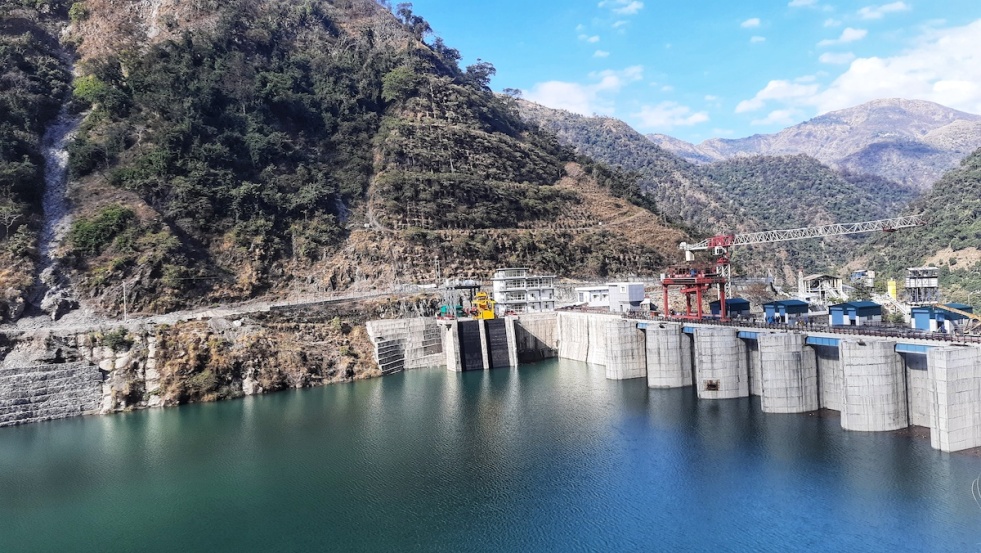
What will be the realistic cost of power from hydropower projects being pushed by the Prime Minister during this visit today to Himachal Pradesh? One indication of that comes from the 111 MW Sawra Kuddu HEP that he inaugurates during his visit. The cost of this project is already over Rs 2080 Crores, likely to go up further. Which means per MW installed capacity, the cost is around Rs 20 Crores. At this cost, the cost of power from the project is likely to be over Rs 8 per unit even without factoring in the social, environmental and increased disaster vulnerability costs that such projects impose on the fragile Himalayan Mountains. As if to also remind the active seismic zone, on the eve of his visit, there were tremors, even if mild, in Mandi.

The Renuka dam that he lays the foundation for does not even have all the statutory clearances. Its EIA has been the most dishonest exercise, as came out in the NGT hearings. What signal is the government sending by laying foundation stone for such a project? Similar are the issues with Luhri I and Dhaulasidh HEPs. The government seems to be pushing such outdated, unviable, costly and destructive projects in fragile Himalayan regions, purely on political arithmetic assumptions, but possibly need to realise that these projects are not even popular and they are also most inappropriate in the climate change context. Or is it the lure of spending such huge sums of unaccountable public money that provide opportunities for getting election funds for the party that is driving such undemocratic decisions?

Continue reading “DRP 271221: PM pushes unviable, destructive Hydro projects in HP”
DRP News Bulletin

DRP 200921: Policy needed for Urban Rivers, not Riverfronts

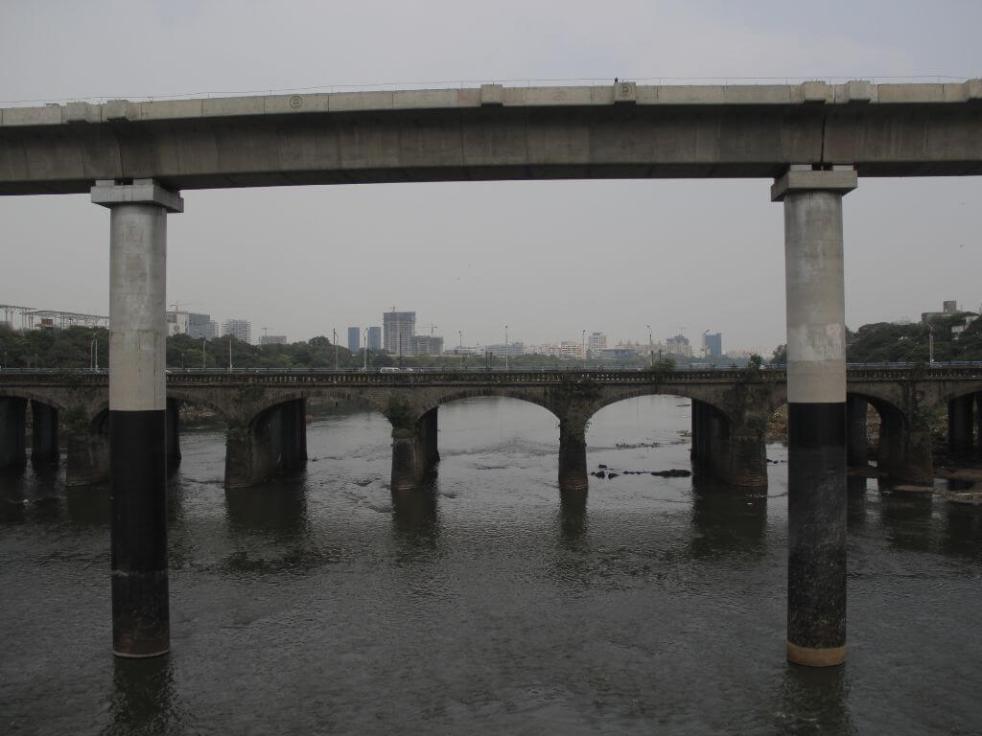
There is no doubt that India urgently needs a guidance note and policy for Environment Sensitive, Climate Adaptive and Socially inclusive Urban Rivers Planning and Development. But this is required for the Urban Rivers and not just Urban Riverfront. The NMCG attempt like that of Sabarmati and numerous other river fronts unfortunately are not bothered about rivers, they are only interested in grabbing land from the Urban Rivers and convert the rivers into concrete channels on two and in some cases three sides (include the sides and the bed of the rivers). That is clearly death knell for the rivers. There is no doubt that there is need connect the people with the rivers, not just river fronts. The NMCG and other government bodies know the difference, so it is not out of ignorance that they have come out with the guidance note for river fronts rather than one for rivers. Unless people, civil society, experts and judiciary raise these issues, the future of Urban rivers seem bleak in India, as can be seen from the stories of Urban rivers compiled here from this week. 

Continue reading “DRP 200921: Policy needed for Urban Rivers, not Riverfronts”
DRP News Bulletin

DRP 120721: Will Bhupender Yadav improve India’s Environment Governance?

It’s rather rare when some of the most well-known environmentalists of India, including Ritwick Dutta and Manoj Misra welcome the arrival of Bhupender Yadav as India’s new Environment Minister. The state of the environment governance under the outgoing minister, Prakash Javadekar has worsened so much, both in perception and substance, that possibly any change would look better. In fact Javadekar may be front runner for the label of India’s worst ever environment minister according to some analysts.

The environment appraisals, the constitution of committees including the various Expert Appraisal Committees, the Forest Advisory Committee and the Standing committee of National Board of Wildlife, the public hearings and consultation processes, the state of pollution and rivers, biodiversity, wetlands, floodplains, sand mining, to name just a few areas, were all seen going downhill on a steep slope during the Javadeker period. The monitoring and compliance remained non existent. Some would argue that was it much different before Javadekar. The point is Javadekar had no pretentions of trying to improve the environment governance. He was out to dilute every available norm and he seemed to have succeded significantly.

Even if Yadav were to genuinely wish to improve matters, how much will he be allowed to do, by the perceived imperatives of the economic fundamentalist agenda, the well-entrenched vested interests and the bureaucracy is a question that only time will tell, but there is little doubt that a lot can and needs to be done rather urgently and none of these perceived obstacles should come in the way if there is will. The climate change is making the improvement in environmental governance rather urgent.

Continue reading “DRP 120721: Will Bhupender Yadav improve India’s Environment Governance?”
DRP News Bulletin

DRP 280621: Where is the impact of lessons of the water conservation efforts that PM praises, on his govt’s water projects & policies?

When the Prime Minister Shri Narendra Modi Mentioned some exemplary water conservation efforts in his Mann ki Baat on June 27, 2021, it was not for the first time he was doing it. These are certainly most welcome.

However, these mentions raise a number of questions. If the Prime Minister considers these local water options as exemplary, which they indeed are, where do we see the reflection of the lessons from such efforts in government programs and policies? In fact why there is no reflection of such lessons in what the government does in water sector? How can the government justify the destruction of Panna Tiger Reserve, over 9000 ha of forests, some 46 lakh trees, the catchment of Ken river and large part of Bundelkhand in the name of Ken Betwa Link Project, in the same Bundelkhand. How can his government justify the destructive projects like the Char Dham Highway, the big hydro projects and so on in the same Uttarakhand where Sachidanand Bharati (who was incidentally recipient of the Bhagirath Prayas Samman of India Rivers Week) works, whose efforts the PM praised? One hope the PM and his government will be awake to the implications and lessons of the works that PM praises.

Continue reading “DRP 280621: Where is the impact of lessons of the water conservation efforts that PM praises, on his govt’s water projects & policies?”
Wetlands

Wetlands Overview 2020: Judiciary is active, but remains ineffective

The highlight of the overview of wetlands in India in 2020 here (keeping aside the Wetlands related developments in Maharashtra in 2020 and Positive wetlands related developments in 2020, on both these subjects we have published separate reports), is that the National Green Tribunal (NGT), various High Courts and even the Supreme Court have been quite active on wetlands front, but there is very little impact of this on the wetlands and their governance in India. This is basically because, and this is the second key highlight of this overview, the central and state governments have shown almost no interest, understanding or will to protect the wetlands. This is in spite of the huge number of new Indian wetlands brought under the Ramsar convention in 2020, since experience and also this overview shows that Ramsar convention does not seem to particularly help the fate of the wetlands. The third highlight of the overview is that there is a lot of civil society effort, both in terms of advocacy and work on ground for the protection of wetlands in India. In fact the legal action that we see in the NGT and Courts is largely due to their efforts. In fact whatever little positive developments we see here is coming from community and civil society efforts.

Continue reading “Wetlands Overview 2020: Judiciary is active, but remains ineffective”
Fish, Fisheries, Fisherfolk

Inland Fish, Fisheries, Fisher-folks: 2020 Overview

Inland fisheries support millions of people and remains a major source of nutrition for a very large number of poorest people. This includes riverine fisheries, reservoir fisheries, wetland and local water body fisheries. Here we try to provide an overview of developments in this sector during the year 2020.

The overview has following sections: Policy & Governance in Centre, followed by in States, some positive developments, Covid-19 & Fishing Community, Fisher folks’ struggles, New Fish Species, Invasive fish, Fish Deaths & Pollution, Over fishing & Extinction, Studies related to inland fisheries.

Continue reading “Inland Fish, Fisheries, Fisher-folks: 2020 Overview”
Sand Mining

193 dead in River Sand Mining incidents in India in 2019-20

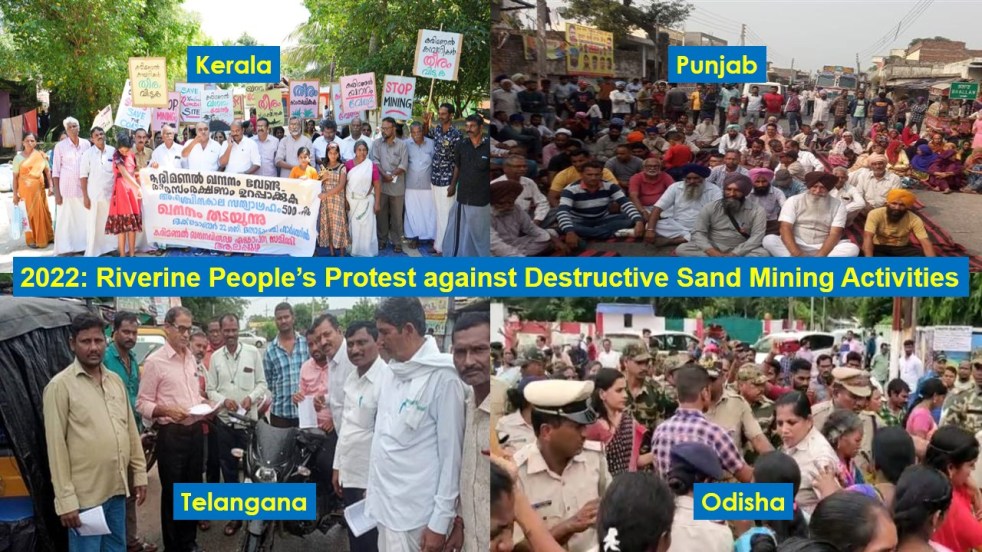
The illegal, excessive sand mining activities have been impacting river ecosystem and riparian communities adversely. Scores of villagers, young kids, reporters, activists and government officials are being attacked and killed every year for objecting to or due to unlawful and unsustainable excavation of River sand. The brazen mining is also leading to fatal road accidents which is again resulting in grievous injuries or even deaths.

The situation has only deteriorated despite several protests by locals and numbers of court orders reprimanding the central and the state governments. Political parties, politicians are directly or indirectly linked to many of these activities. 

SANDRP in its 2018 overview, could compile 28 human fatalities due to illegal sand mining operations. However that was only based on the news reports that came to our notice, the actual death toll would be much higher. SANDRP this time has prepared a more detailed account of violent incidents that have taken place since January 2019 so far causing human death and injuries. The state and zone wise brief summary of these incidents is given here and a bit more detailed report is uploaded separately.

Continue reading “193 dead in River Sand Mining incidents in India in 2019-20”
Sand Mining

Odisha River Sand Overview 2020: Another mining ravaged state

The overview presents picture of river sand mining in Odisha based on available information in public domain from past 18 months.

Illegal Sand Mining Incidents

May 2019 Brick kilns spur illegal mining Scores of illegal brick kilns operating in Samana and Habaleswar panchayats under Hatadihi block in Keonjhar district had spurred illegal mining from riverbeds. As a result, the state government was losing crores of rupees revenue. The miners had encroached upon government and pastureland and set up brick kilns without sanction of the Odisha State Pollution Control Board.

Continue reading “Odisha River Sand Overview 2020: Another mining ravaged state”
Dams · Sand Mining

Telangana Riverbed Mining 2020: Tribals, Godavari robbed

In 2019 overview, we found at least three people had died in Telangana due to illegal sand mining related incidents amid growing number of cases of illicit excavation of riverbeds. The state govt was seen laying stress on technological solutions to curb illegal sand mining and even reportedly had taken significant steps towards manufacturing and use of M-sand as a viable alternative, while its viability and impacts on environment during production remain to be fully studied and understood.  https://sandrp.in/2019/02/26/sand-mining-2018-telangana-and-andhra-pradesh/ Here we track the key developments in the state since then.

Continue reading “Telangana Riverbed Mining 2020: Tribals, Godavari robbed”

Dams · Sand Mining

Andhra Pradesh Riverbed Mining 2020: Quicksand of mismanagement

In 2019 overview, we saw the state of Andhra Pradesh experiencing all the key problems associated with sand mining; growing demand and prices, inadequate supply, illegal excavation affecting rivers and villagers and inactive govt bodies. Reports revealed Krishna and Vamasdhara rivers facing large scale mechanized mining while indiscriminate mining in Nagavali river affecting drinking water schemes in Regidi mandal. Srikakulam district and beaches particularly suffered.

There were reports showing political parties involved or facilitating illegal mining. Like other states, the Andhra govt was seen rallying on technological solutions to manage the mining. https://sandrp.in/2019/02/26/sand-mining-2018-telangana-and-andhra-pradesh/

The following overview since then show a whole range of developments. Unsustainable excavation of riverbed minerals & mismanagement show no end.

Continue reading “Andhra Pradesh Riverbed Mining 2020: Quicksand of mismanagement”