Maharashtra

Lawlessness in Maharashtra’s Water Sector

Above: Increasing height of a dam which holds no water Photo: Parineeta Dandekar

Guest post by Pradeep Purandare, pradeeppurandare@gmail.com

Irrigation Laws in Maharashtra: Politics of Non-Implementation

Laws are generally enacted to implement the policy by the ruling class & its government to promote & safeguard its own class & caste interests. However, while drafting the policy & laws, politically correct concepts & terminology in fashion is used for public consumption. New things are accepted because those come as conditions for getting the loan from donor agencies. Creating a desirable image or impression at national / international level can also be the motivation. Adopting a new policy or enacting a new law does not necessarily mean that the establishment of the day sincerely believes in that policy & law. Once the purpose of getting the loan and or creating an impression is served, government conveniently forgets implementing the policy & the law. Or, implementation is done in selective & superficial manner. Clauses / sections which were included for public consumption & which can really make the difference, if implemented in letter & spirit, are generally either put in cold storage or subsequently amended to make them more “practical & workable”. This does not happen as a result of inefficiency, callousness or indifference. This happens with purpose & by well defined strategy. This is politics of non-implementation! It is done to implement the hidden agenda. Of course, it’s not something new. It has been happening since long & in most of the walks of life. This paper makes an attempt to simply describe how politics of non-implementation is being done in water sector in general & in the field of irrigation in particular in Maharashtra – a supposedly progressive, highly industrialized & a modern State of India.

Enacting a law is not sufficient. The operative part which includes rules, notifications, agreements, government resolutions, orders & circulars as per the new Act is also equally important. If operative part is not in place, then the Act remains on paper for all practical purposes.

PLEASE SEE ANNEXURE 1 for Detailed table.

Gist of missing operative parts & its implications are given below:

In absence of rules (yes, MIA 76 does not have rules for last 37 years!) & non-issuance of basic notifications (rivers, command areas & appointment of Canal Officers), MIA 76 which is supposed to be the parent Act has remained mostly on paper. Locus standi of implementing authority i.e. Water Resources Department (WRD), therefore, can itself be questioned. The obvious result is there is no water governance. Free for all situation exists. Water theft, vandalism & tampering with canal system are rampant. Offences go un-punished. Irrigators, particularly the tail enders neither get water nor compensation. Politically influential irrigators grab all the benefits. Diversion of water from irrigation to non-irrigation, flow irrigation to lift irrigation & food crops to cash crops becomes easy. Since nothing is legally committed, nothing can legally be challenged. The overall situation is best suited for privatization. An un-notified river or command area, relatively speaking, can easily be handed over to private company. That’s seems to be the ulterior motive of missing operative part!

MMISF Act was brought in to legally provide for Participatory Irrigation Management (PIM). World Bank insisted for the enactment & made it a compulsory condition for getting the loan under Maharashtra Water Sector Improvement Program (MWSIP). WRD, therefore, had to succumb. It however did not comply in letter & spirit. Ambiguity in rules for WUAs at higher level, non formation of sub committees, delayed or non execution of agreements with WUAs, insincerity in the processes such as “joint inspection” to “handing over”, not providing measuring devices, confusion over powers of WUAs, keeping lift irrigation out of purview of the Act, inordinate delays in returning part of tariff to WUAs for carrying out maintenance & repairs and last but not the least, non involvement of WUAs either in water budgeting or in conflict resolution speak volumes about the actual implementation of MMSIF Act. Intentions of WRD are clear & obvious. It considers WUAs as just a stop gap arrangement before going for corporatization & contract farming. One can imagine WRD’s line of argument in near future. It could be as follows “We tried our level best but WUAs could not succeed. Government cannot now take the responsibility of water management. Privatization appears to be the only way out”. Incomplete legal processes thus help establishment & make tail enders vulnerable.

Maharashtra established an Independent Regulatory Authority (IRA) in water sector by enacting MWRRA Act. It’s no doubt a pioneering effort. But the actual implementation of this Act is frustrating. There was reluctance to prepare the rules. Rules were prepared after 7 years from the enactment of the Act & that too only after an order to that effect by the High Court. Prepared rules, it is alleged, are contradictory to the provisions of the Act. They have been challenged & the matter is sub-judice.[yesterday Maharashtra’s legislative council had to discuss the issue in the house & Minister for WRD had to stay the implementation of rules] State Water Board & State Water Council has been legally constituted way back in 2005 to respectively prepare & approve the Integrated State Water Plan (ISWP). Both the board & council have not yet started their functioning. Obviously ISWP which was to be prepared within one year from the enactment of the Act is still not in place even after 8 years. MWRRA as per its own Act is supposed to take decisions with reference to ISWP. But it is going ahead even without ISWP. Similarly, River Basin Agencies (RBA) have not been operationalized & issuing water entitlements by RBAs has not so far materialized. MWRRA Act has been amended in 2011 to retrospectively protect non transparent decisions of High Power Committee regarding transfer of water from irrigation to non-irrigation. Powers of MWRRA in respect of sectoral water allocation have already been withdrawn by the said amendment. Effective area under water entitlement thus has been drastically reduced. MWRRA recently decided the criteria for water tariff. But it opted for the safest path. It reduced the water tariff to avoid criticism. But in the process whether it could follow the mandate given by the Act is a moot point. Act says that water tariff should fully recover the O & M Cost & canal system should be properly maintained. Ever deteriorating condition of canals in Maharashtra, however, tell a different story. Regulation of all types of water (surface & ground water) & its uses for different purposes (drinking, domestic, industrial & irrigation) is supposed to be done by MWRRA. Nothing significant has been done so far. In fact, in case of dispute over sharing Godawari Waters between upper & lower Godawari basins, MWRRA has been a silent spectator. As a quasi- judicial IRA it could have done many things. But it preferred playing politics of non-implementation..

Very structure & framework of water governance are thus missing in Maharashtra & hence, there is no Rule of Law. Water conflicts of all types are on increase at all possible levels. Misappropriation & mismanagement is the end result.

It is necessary to develop pro-people intervention strategies & peoples participation in water sector. Implementation of existing water laws could be a necessary (but of course not sufficient) beginning. There are many provisions in the existing water laws that could help initiate pro people intervention.

Politics of ‘non-implementation by ruling class’ needs to be effectively & immediately challenged by `politics of implementation by pro people forces’. That would help promote people-centered interventions which are so urgently required to fight diversion of water from irrigation to non-irrigation & privatization of water.

Annexure 1:

Implementation of Water Laws in Maharashtra: A Critical Review

                Sections Present status Impact

MIA,76

Sec 114: Rules Rules not prepared in 37 years Act remains on paper
Sec11: River  notification Incomplete in many projects People not informed/ opportunity of being heard denied. Locus standi of WRD doubtful
Sec 3: Command  notification Incomplete in many projects —- do ——–
Sec 8: Appointment of Canal Officers Done but not operative No one takes initiative. Nobody is held responsible. Free for all situation. Water theft, vandalism & tampering with canal system are rampant. Offences go un punished. No FIR. No action.
Sec 75 to 87: Award of

Compensation

Not used at all. Irrigators don’t get compensation even if the agreed volume of water is not delivered at right time & place. No accountability for the Canal Officers.

MMISF Act, 2005

Sec 76: Rules Prepared. Excessive use of “mutatis mutandis

Ambiguity in rules for WUAs at higher level

Sec 20: Sub committees

Not formed in last 8 years Purpose of participation with decentralization & expanding the circle of knowledge & skill defeated.
Sec 21,29: Agreement Not executed in time & at all levels of WUAs

Serious complaints about not having  joint inspection in true sense, non- completion of agreed repairs & rehabilitation & reluctance by officers  to hand over the system

Purpose of delegation of powers & imbibing sense of responsibility defeated. Encroachment on powers of WUAs

Nexus between local Politicians & officers continues unabated. WRD loses its credibility. Poor quality of repairs & rehabilitation. In absence of real handing over of management to WUAs, power of water distribution remains with WRD officials. Only lip service to participation.

Sec 22: Joint inspection,

…..handing over … and

Sec 23: Measuring devices

(MD)

Not executed in time & at all levels of WUAs

Serious complaints about not having  joint inspection in true sense, non- completion of agreed repairs & rehabilitation & reluctance by officers  to hand over the system

Providing MD is not yet complete. Credibility of  measurement records is doubtful

Volumetric supply of water to WUAs mostly remains on paper.
Sec 28: Supply of water as per entitlement In absence of proper water budgeting at project level, irrigation scheduling of main system & MD, supply of water as per entitlement is an exception rather than a rule. Bulk supply of water based on entitlement given volumetrically is still a distant dream. WRD is not yet fully equipped for the purpose with compatible physical system.

Sec 30: Powers to WUAs

Not spelt out WRD officials wield the real power.
Sec 38: Competent Authority Not operative WUAs don’t get any technical advise

Sec 39 to 51: Lift Irrigation WUAs

Provisions not brought in force No control over – & regulation of – lift irrigation. Act simply not made applicable to lift irrigation..

Sec 52: Powers & functions of WUAs

Only responsibilities(& not powers) have been spelt out WUAs remain ineffective.
Sec 53: Powers & functions of Canal Officer Emphasis on powers & not on responsibilities In absence of accountability of any kind, WRD officials remain indifferent & callous
Sec 54: Sources of Funds of WUAs Water tariff collected from the members of WUA is the only source of income. WRD has promised to return substantial part of tariff to WUA. However, the promise is not being kept. Most of the WUAs are not economically self reliant. They face problems in routine maintenance & repairs of the canal system and can’t afford to maintain office & staff.

Sec 60 to 62: Offences & penalties

Not operative.

No water governance worth the name.

Sec 63 & 64: Conflict Resolutions Not operative. MWRRA indirectly attempts to bypass the powers of upper level WUAs through regulators WUAs not involved in conflict resolution. Purpose defeated.

Sec 68: Water budgeting at Project Level

Not operative. WUAs not involved in water budgeting. Purpose defeated.
Sec 70:  Water supply for  non-irrigation purposes Water entitlement issued only to select WUAs in selected projects. Unit for issuing entitlement is not project as a whole. Therefore, ineffective provision. Water supply to non-irrigation gets priority even during periods of shortage of water. Second priority given to irrigation by amending State Water Policy is not being honoured.

Sec 71: Recovery of water charges

Coercive measures not operative. Recovery of water tariff is very poor.
Sec 72: Act to apply to

Existing WUAs

Difference of opinion between WRD & Cooperative Department regarding how to operationalize the provision

Act not being applied to existing WUAs

MWRRA Act, 2005

Act amended in 2011 to retrospectively protect non transparent decisions of High Power Committee regarding transfer of water from irrigation to non-irrigation

Sec 3: Establishment of Authority

Retired bureaucrats are in control.

Powers of MWRRA regarding sectoral allocation withdrawn.

Effective area under water entitlement drastically reduced. There is hardly any regulation as per the Act. Issue of releasing water to Jayakwadi project from up – stream projects is the glaring example.

Sec 5: Selection Committee Serving bureaucrats are in control. Members of selection committee select themselves as Member / Secretary of MWRRA & join the authority soon after retirement from Government.
Sec11: Powers, functions duties of authority Selective & limited implementation. Sec 11 (f) not implemented. Project clearance even without Integrated State Water Plan [ISWP] Adhocism, confusion & regional imbalance in water resources development may further increase
Sec 12: General policies of Authority

Not implemented even when water users have moved the court of law. Several petitions pending in Mumbai High Court

Principles of Tail to head irrigation & equitable distribution of water at river basin level not implemented leading to political agitations & increased animosity within regions of the State.
Sec 13: Dispute Resolution Officers

Appointed. Not active.

In absence of information & awareness about provisions in the Act, water users don’t insist for suitable action. Hence, it is assumed that absence of complaint means absence of dispute itself.

Sec 14: Permission of River basin Agency

River Basin Agencies though exist as per law, they have not started functioning like RBAs

Since RBAs have not issued any water entitlement & not officially permitted any water use whatsoever, every water use since enactment of the Act could be, legally speaking, unauthorised & hence, illegal.
Sec 15: State Water Board

Legally constituted but not at all functioning.

SWB (Chairperson- Chief Secretary) is supposed to prepare ISWP.  Nothing happened in last 8 years.

Sec 16: State Water Council

Legally constituted but not at all functioning.

SWC (Chairperson- Chief Minister) is supposed to approve ISWP.  And then MWRRA should function as per ISWP. Nothing happened in last 8 years. MWRRA is taking decisions violating Sec 11 (f) of its own Act.

Sec 21: Special

Responsibility of

Authority

Not implemented Gravity & seriousness of issues regarding backlog in irrigation has not reduced. In fact, it has increased a lot.

Sec 22: Disputes & Appeals

Not in use by the water users. Lack of awareness.

Grievance redressal mechanism provided in the Act, if used, could reduce number of cases going directly to court of law.
Sec 23 : Directives of

Government

Not given so far Government could have used this route instead of amending the Act in haste & panic. It could have also given directions to MWRRA in case of Jayakwadi dispute.
Sec 26: Punishment for

non-compliance

Not used so far.

No effective governance

Sec 30: Rules

Prepared late only after High Court’s order. Rules to certain extent are contradictory to the provisions in the Act Discontent about Rules in Marathwada. Rules challenged in court of law. MLAs requested to challenge the rules in legislative assembly & council

References:

  1. Maharashtra’s State Water Policy, July 2003
  1. Maharashtra Irrigation Act, 1976 (MIA76),
  1. Maharashtra Management of Irrigation by Farmers Act, 2005 (MMISF Act)
  1. Maharashtra Water Resources Regulatory Act, 2005(MWRRA Act)
  1. Purandare Pradeep, “Wanted – Rule of Law”, http://www.downtoearth.com

***

– Pradeep Purandare

Retd. Associate Professor, Water & Land Management Institute, Aurangabad, Maharashtra

(The above piece is based on a paper presented at the  International Conference, Dec 19-21, 2013,Organized by College of Social Work, Nirmala Niketan, Mumbai, India)

pradeeppurandare@gmail.comhttp://jaagalyaa-thewhistleblower.blogspot.in/,  http://www.irrigationmainsystem.com

Climate Change · Dams · Maharashtra · Marathwada

Battered Maharashtra and Melting Tibet: The Climate Change Connection

Above: Nagpur or Anantnag? Hailstorms of March 2015 in Nagpur  Photo by: Atul Patne

~~

It seems like a bad deja vu.

On the 11th March last year, we wrote about hailstorms in Maharashtra. Back then, the hail, unprecedented rains, strong winds and changes in temperature had affected more than 10 lakh hectares, mainly in Marathwada and Vidarbha. After near-exact one year, we write about the issue again.

Late February and March rains have battered farmers in Vidarbha, Konkan, Marathwada and Uttar Maharashtra (Nashik, Jalgaon and Dhule Districts). Preliminary estimates state that over 8.5 lakh hectares of crops have been impacted in just 17 days and thousands of farmers and landless laborers have been affected. Continue reading “Battered Maharashtra and Melting Tibet: The Climate Change Connection”

Climate Change · Disasters

Early Spring Rains bring Climate Disaster for farmers in India

It was bit of a shock to get up to a VERY wet Sunday on March 1, 2015, having slept past midnight the previous night with a ‘dry’ weather. When I checked my inbox, the message from Manoj Misra of Yamuna Jiye Abhiyaan was waiting to provide a link to Accuweather.com site[1] and also satellite image from India Meteorology Department (IMD) site[2]. It looked ominous: “A potent storm will drop unusually far south as March begins, blasting India and Pakistan with heavy thunderstorms, flooding rain and burying mountain snow.” Northwestern India and Northern Pakistan were to face the maximum impact, but the impacts were to reach far down south right upto Karnataka. As the site said it was a rare event: “It is rare for widespread substantial rain such as this elsewhere across northern and central India”. Continue reading “Early Spring Rains bring Climate Disaster for farmers in India”

Maharashtra

Thirsty sugarcane in dry Marathwada means a loss of 2 million farmer livelihoods

Above: Gangakhed sugar factory from Parbhani Marathwada which has crushed 7 Lakh Tonnes of cane till 21 Feb 2015. Parbhani has received a mere 346 mm rainfall this year, nearly equal to what it received during epic drought of 1972

~~~

Although Marathwada region in Maharashtra is no stranger to droughts, it’s facing a singularly acute crisis this year. Kharif crops had failed in all of the 8139 Kharif villages in the region with yields less than 50% of government standards (paisewari). Rabi is under cloud too with all 396 villages assessed for production showing less than 50% yield. And yet, area under and production of water guzzler crop like Sugarcane is going up. In 2013-14, Marathwada grew over 2 lakh hectares of sugarcane and is now crushing the cane in its 61 sugar factories using thousands of lakhs of litres water every day.

Does this make any social, economic or environmental sense? No

But do we have options? It seems so. Let us see how.  Continue reading “Thirsty sugarcane in dry Marathwada means a loss of 2 million farmer livelihoods”

Maharashtra

Maharashtra scraps River Regulation Zone : Pandering to industry at the cost of Rivers and People

Above: Pollution from a River Kasardi which was denotified as it was affecting some big businesses

When Devendra Fadnavis of BJP became the Chief Minister of Maharashtra, one would have thought that the chronically polluted and encroached Nag Nadi from Nagpur, as also other rivers in the state may see better days. This was not just an optimistic hope. The Government at the Centre was making all the correct noises about being concerned about rivers, it had launched the Namami Gange Program for rejuvenation of Ganga River and had changed the name of Ministry of Water Resources to Ministry of Water Resources, River Development and Ganga Rejuvenation. Continue reading “Maharashtra scraps River Regulation Zone : Pandering to industry at the cost of Rivers and People”

Maharashtra · Mumbai

Water Smart Mumbai is possible without river links and big dams! Open Letter to CM Devendra Fadnavis

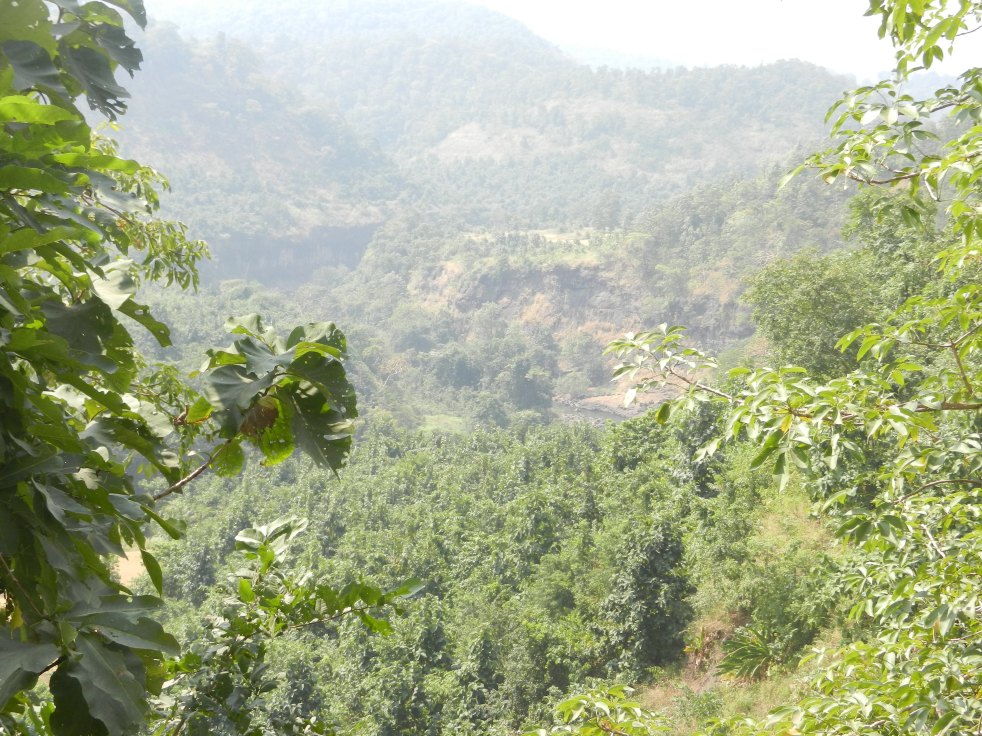
Above: Forested Valley, now lost forever for the Middle Vaitarna Dam Photo: Parineeta Dandekar 

Respected Chief Minister,

At the outset we congratulate you for leading some progressive changes in the Water Resources Department of the State. These include decisions about continuing only with those dam projects which are more than 75% complete[1], appointment of independent people with a clean image like Shri. H.T. Mendhegiri as CADA Chief Secretary, changing norms of Economic Survey Report[2], stating that only hoarding water will not be counted towards increase in irrigation potential, etc. Continue reading “Water Smart Mumbai is possible without river links and big dams! Open Letter to CM Devendra Fadnavis”

Godavari · Interlinking of RIvers · Krishna River · Telangana

Pranahita-Chevella Project: Gargantuan Project with Gargantuan Violations

Can you imagine a project-not any project, perhaps India’s largest irrigation project till date- going on for years without most statutory clearances? Can you imagine a project on which Rs 7000 Crores[1] have been spent already but its Dam height (FRL – Full Reservoir Level) is yet undecided? Can you imagine a project whose canal works are ongoing in full swing, without having any idea of the submergence? Can you imagine a Public Hearing where the Project Engineer says that the meeting is only about compensation not about environmental impacts or fundamental questions? Can you imagine a state which is set to lose thousands of hectares of rich forests, protected areas, villages for a project of a different state, but is happy to oblige? Can you imagine a Ministry which turns a stony Nelson’s Eye to a project continuing right under its nose without Environmental Clearance, Wildlife Clearance or Forest Clearance?

Continue reading “Pranahita-Chevella Project: Gargantuan Project with Gargantuan Violations”

Interlinking of RIvers

Interlinking ‘Conflicts’: Maharashtra se Gujarat tak

Above: A girl from the Par Basin. With drinking water problems plaguing her village and the impending diversion project either from Gujarat or Maharashtra, her hardships will only increase. Photo: Parineeta Dandekar

Even as the second meeting of the Special Committee for Interlinking of Rivers was held on the 6th January 2015[i], the Union Minister of Water Resources, River Development and Ganga Rejuvenation Sushri Uma Bharti sought “co-operation of various States in this project” and said that “States can discuss their apprehensions if any, in the next meeting of the committee.” She informed the meeting that on 07 January 2015, she will meet Chief Minister of Maharashtra Shri. Devendra Fadnavis to discuss Damanganga-Pinjal and Par-Tapi-Narmada link projects.

Continue reading “Interlinking ‘Conflicts’: Maharashtra se Gujarat tak”

Maharashtra

Open Letter to Maharashtra Chief Minister Devendra Fadnavis

Above: CM Devendra Fadnavis Photo from: IBN Lokmat

Dear Chief Minister of Maharashtra,

Congratulations for becoming the Chief Minister of one of the progressive States in the country.

We would have felt better if this greeting was without the smudge of Voice Vote in confidence motion. We would have liked to see that while coming into power, you and your government had no links whatsoever with tainted politics of National Congress Party, which was named in a scam that affected Maharashtra’s weakest, but in many senses, its bravest populace: its farmers. But Voice vote has raised a question mark on this. Leader of your party had called NCP as Naturally Corrupt Party!

Nonetheless, you are known to have a great public image as a proactive, scholarly leader with integrity and intelligence.The last CM we had also had a scholarly and clean image, but after resigning from the CM’s post, which he held for more than four years, he admits to his mea culpa that he did not take the firm action in the irrigation scam because he wanted to save his government from collapsing. Maharashtra’s people, besides his own party, paid the price for this.

The crucial qualities the state seeks right now as it stands on the crossroad of political upheaval and natural calamities are not only a clean image, but forthrightness, commitment to democratic & accountable governance and, more importantly, capacity for an independent and clear judgement which is not swayed by the orders of higher ups or peers.

Natural calamities made worse by government’s mismanagement and inaction have racked Maharashtra in the past few years. Right on the heels of the dam scam, came the 2012-13 drought, dubbed by some (somewhat erroneously) as the worst drought in past forty years. After this came the delayed rains, droughts and excessive rainfall in Vidarbha, the hailstorms of February and March 2014, several agricultural diseases, crash of market prices of agricultural produce and fruits. In July 2014, the Malin Tragedy underlined how vulnerable, unprepared and fragile is our Western Ghats Region. Even now, Vidarbha region is reeling from late rains and extremely poor yield of soybean.

The calamities have affected the social and political milieu of the state; they have also literally broken the backs of its farmer. You have experience in disaster management and can appreciate how meagre our response has been to the natural calamities. To the manmade calamities, too, our response has been far from satisfactory. After more than two years after the so called exposé of the irrigation scam, we still have not brought a single irrigation official or politician or contractor to book. This scam and the sheer callousness of Congress-NCP government in handling the issue was one of the main factors behind its collapse. BJP did play an important role in following up with the issue in several parliament sessions and also with the media, but its actions and demands lacked conviction and seemed to save some of the culprits that were close to the BJP.

Irrigation Scam

Isn’t it surprising that being an opposition for 15 years, the BJP played such little real role in unearthing the scam? In fact, it was reported that when some people approached Nitin Gadkari with evidence of illegalities and irregularities, they were told that he is unable to take action against Congress–NCP as “Woh hamare char kaam karte hai, aur hum unke char kaam karte hai”.

The scam came into focus due to efforts of the then-serving chief engineer of Maharashtra Engineering Training Academy (META), Vijay Pandhare, media reports, CAG, courts, civil society and activists of the then-India Against Corruption (later renamed Aam Aadmi Party or AAP)—Anjali Damaniya, Mayank Gandhi, and others. The sheer extent and the impact of the unprecedented scam shocked the nation, after spending more than Rs 70,000 crore for over 10 years there was practically no increase in area under irrigation in Maharashtra. It needs to be remembered here that the scores of mega irrigation projects which were sanctioned and received their first administrative approval even without requisite water availability studies were initiated in the period when Sena-BJP was in power.

It needs to be acknowledged that Eknath Khadse, as the leader of opposition, and you, played a significant role in following up on the scam and pressurising the government.

At the same time, there were some notable contractors, close to BJP or even MPs and MLAs of BJP who were reportedly involved in the scam. Notable examples include Ajay Sancheti of SMS Infrastructure who is also the permanent National Executive Committee Member of the BJP. Media reports showed that Sancheti was not only implicated in Irrigation Scam, but in coal block allocation scam and Adarsh scam, too!

Damaniya, member of AAP, showed through RTI that Sancheti bagged 10 contracts from VIDC worth more than Rs 3,000 crore between his older company, new company and joint ventures with others (in 2005, Sancheti’s firm, Shaktikumar M Sancheti Ltd, changed its name to SMS Infrastructure Ltd and got a fresh certificate of incorporation, Vidarbha Irrigation Development Corporation was informed of this name change. But the two companies continued to exist together, bagging contractor between them and also additionally). These include almost all big projects in Vidarbha, including Gosi Khurd, Lower Penganga, Purna Barrage, Wardha Barrage, and Pedhi Project. This was when awarding more than three contracts to one contractor was illegal. Rules were bent, huge mobilisation advances were given, scope of work was increased and cost escalations were approved to help contractors. But BJP did not seem to take any action about this.

In case of BJP MLC Mitesh Bangadiya, it was his company MG Bangadiya Infrastructure which constructed the hugely flawed 23 left bank canal section of Gosi Khurd Project, which was recommended for complete demolition by Mendhegiri Committee in their report.

It is unfortunate that BJP took no action in this regard. It is also reported that in the midst of these exposures, it was Gadkari who specifically wrote to the water resources ministry at the Centre and sought early release of funds for these very contractors. It was stated that when BJP submitted “bullock cart full of evidence” to the Special Investigation Team headed by Madhav Rao Chitale to investigate the scam, incriminating evidence against these two groups were left out.

We hope that once in power, you will immediately order a judicial or CBI probe into the scam and full enquiry into the contractors who benefitted out of it, including the ones close to BJP, as also demanded by others.

SIT and White Paper

There was a need to reject the SIT Committee Report under the chairpersonship of Chitale as it was not an SIT—it had diluted TORs and Chitale is known to biased in favour of such projects, the department bureaucracy and status quo. The constitution of the committee was only a ploy to buy more time and show a semblance of taking action on the scam. We hope that you do order an immediate CBI probe into this or a judicially appointed SIT with independent members having track record of being able to take on issues upfront, with clear TORs and with power to summon and question.

The white paper brought out by the Water Resources Department (WRD) was also a shield for guilty to hide behind, and, unfortunately, other political parties, including BJP, failed to critically analyse it.

  • We hope that after coming to power, you will hold public consultations on the irrigation scam, white paper, at the dams in question to understand the local issues and real situation. There is also a need to include several dams left out of the white paper.
  • Post facto analysis of the performance and impacts of large dams is a need for the state as we continue to hanker behind more such projects for political and contractor benefit. Maharashtra, with the largest number of big dams in the country, has one of the lowest areas under irrigation.
  • We hope that you will take action against those involved in the projects named in the SIT Report (like Gosikhurd), responsible officials, ministers and contractors who benefitted unduly from the scam. Work on all such projects should be suspended till there is logical end to scam issue.
    Equity in water distribution

Maharashtra has the nation’s largest water infrastructure in terms of projects completed. There is a need to use this existing infrastructure in an optimum way for the benefit of the poorest, neediest, farmers and in a sustainable, equitable and democratic way.

  • We hope the new government will support equitable, sustainable cropping pattern, scrap secretive diversions to urban areas, industries and unplanned water intensive crops from dams meant for agriculture, and dismantle bodies like High Powered Committee immediately.

Environmental Governance

CAG report on irrigation projects in Maharashtra 2013-14 has exposed that works of more than Rs 7,000 crore were initiated by the WRD on nearly 249 projects without requisite forest and environmental clearances. Not only did it result in locking thousands of crores of public funds, it also damaged the meagre forest cover and environment of the state without justification or informed decision making process.

  • We hope the new government takes immediate action against projects mentioned unambiguously in CAG report and officials who initiated such projects.

Implement Gadgil report on Western Ghats

The Coalition’s stand on Western Ghats report under the leadership of Madhav Gadgil was escapist. The misinformation spread about Eco Sensitive Zone and the push for self-benefitting industries in the Konkan region seems to be one of the primary reasons for Narayan Rane’s defeat.

  • We hope the new government accepts the Gadgil report without losing more time and takes steps as per the report to democratise environmental governance in the Western Ghats. As Gadgil has reiterated many a time, the report is not a blueprint but a framework which can be modified by the people themselves.
    De-politicise sugar

Depoliticize Sugar

Water politics of Maharashtra is linked to the sugar politics. We grow sugarcane in the most drought affected regions, benefitting generations of political masters of NCP and Congress.

Maharashtra’s sugar crop is most inefficient user of water as per a study of Commission for Agricultural Costs and Prices (CACP). Although the sugar barons make the right noises about working for farmers’ benefit, that is a lame argument when you take into account thousands of poor farmers who are deprived of ANY irrigation benefits because of concentration of water in the hands of the sugar lobby. Apart from creating deep schisms in the social fabric of the state, it is also making the cane farmer vulnerable to climate change and the whims and fancies of sugar barons. Per tonne rates of cane are not commensurate with the cost of water, labour and fertilisers. Significant to note here that factories in Vidarbha belonging to politicians like Gadkari reportedly offer the lowest cane rates in the state to the farmer at around Rs 1,650 tonne when the average rate are about Rs 2,200 tonne.

  • There is a need to break the sugar shackles chaining the water and agriculture sector, to give more autonomy to the proposed Sugar Development Board, with more farmers on board, not sugar barons. There is also need to stop new licences of sugar industries in the drought belt; at present, the Sugar Commissioner has no such powers. Flow irrigation to sugarcane needs to be stopped, audit of sewage treatment of sugar factories needs to be carried out and the factories have to be made zero discharge, full water reuse models. SANDRP has witnessed that even factories of powerful politicians do not have functioning effluent treatment plants despite sugar industry being in the grossly polluting category (GPI).
    There was a time when the people concerned turned a blind eye towards ills of sugar factories as they were the engines of cooperative movement in Maharashtra. That is nearly in the past now. More and more cooperative sugar factories, set up with money from government, farmers and shareholders became dens of political manipulation and are being converted into private mills at a price which is a joke of their valuation. We have 168 cooperative sugar factories, but about 36 are being liquidated, 26 have been converted from cooperative to private entities and here too there is a strong political presence.
  • We hope that once in power, BJP conducts an audit of sugar industry including water efficiency of sugarcane in Maharashtra with respect to water use, release of water for sugarcane by dams, especially in drought affected Marathwada and western Maharashtra like Ujani, Lower Terna, Manjara, Mazalgao, lift irrigation schemes on Ujani and other scarcity-hit rivers, etc.
    Climate action plan

Action on Changing Climate?

While disasters like the February 2014 hailstorms affected more than 10,000 farmers in vulnerable Marathwada and Vidarbha, we still do not have a State Action Plan on Climate Change which should have been ready years ago through people’s participation.

  • We look forward to your government to complete work on State Action Plan for Climate Change in a community driven, bottom-up, transparent and democratic manner.

The problems of climate becoming more uncertain, extreme weather events increasing in frequency and rainfall failing when due, protective irrigation is becoming a dire need. Despite absence of irrigation, dryland farming and horticulture in limited water is thriving in Maharashtra. The recent example is of the phenomenal success of pomegranate cultivation which is nearly completely on drip and is grown in some of the driest regions of the state. However, the farmers still suffer losses in the absence of processing plants and state support, which is skewed in favor of sugarcane. Same is the case with oilseeds like groundnuts, coarse millets like jowar and bajra which offer livelihood and nutritional security.

We look to the new government in supporting marginal farmers and other farmers who grow such crops as ambassadors of climate change adaptation. We also hope your government will encourage system of rice intensification for various crops.
Urban areas continue to guzzle more water, polluting and killing rivers in their wake. Unfortunately, State Pollution Control Board (SPCB) does not have a single success story to its credit. It has not cleaned a single river since its inception although receiving hundreds of crores every year from state as well as the Centre.

  • We expect the new government to conduct an immediate and open audit of the work of Maharashtra SPCB and fix responsibility for this resounding failure, order complete change of the functioning of the SPCB to make its governance directly accountable to the victims of pollution and also involving participation of the vulnerable communities and independent groups.
    Revive rivers.

River Rejuvenation

In your city, Nagpur, too, the Nag River is chronically polluted and reduced to an open drain. It could not be rejuvenated although you were a Mayor of the city twice. Now there is a move to denotify the river, which will aid setting up category red industries at its very origin, killing the river. We don’t see any political party talking about this issue.

We hope you will stop this killing of rivers as your government at the Centre has been saying that river rejuvenation is their priority, we hope it is yours too.

Incidentally, Nagpur is one of the very few cities in the state with an operational PPP water supply model. There have been too many problems and protests on this issue, we will not go into the details here, but it is again notable that the Orange City Water Supply Limited is a joint venture between Veolia and Vishvaraj Infrastructure, which is closely linked to BJP leadership. There have been no post facto studies of the efficacy of this model and the way through which tendering was done was suspicious.

  • We hope the BJP Government will democratise the governance of water supply and waste water department of the municipal bodies rather than pushing for water privatisation.
    Innovative solutions

Encouraging Local Initiatives

The 2012 and 2014 drought saw some inspiring local initiatives from farmers across the state in terms of working on new watershed structures, desilting older structures and improving distribution systems. These emerged as more equitable and even efficient solutions than larger dams. A compilation of success stories with a clear view to support local led water conservation efforts will be a shot in the arm for the water sector in Maharashtra. Although the past government tried to support smaller structures by passing government resolutions (GRs) and building strings of cement nalla bunds, watershed management is more than just a quick fix solution.

There are several other issues ailing the water-environment-agriculture milieu of the state. The Congress-NCP alliance in power earlier was lampooned because of the absolute autocracy practised in the party, the insult of public opinion and concerns, and the leaders of the coalition proving too weak to steer the state into secure and transparent governance.

We hope that through you, Maharashtra will be astride on this path. We hope that together we can work towards equitable, sustainable, corruption-free, pro-people development and governance of Maharashtra.

All the very best.

Parineeta Dandekar parineeta.dandekar@gmail.com

(A slightly edited version of this was published in Down to Earth. Please find it here: http://www.downtoearth.org.in/content/open-letter-devendra-fadnavis)

Disasters · Western Ghats

Malin Landslide Tragedy underlines the vulnerability of Western Ghats

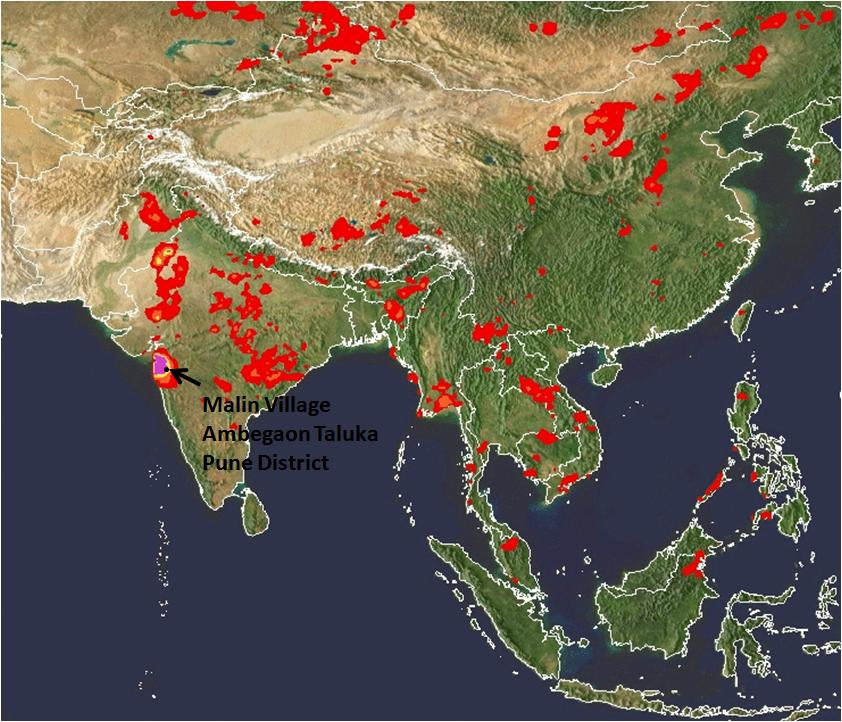
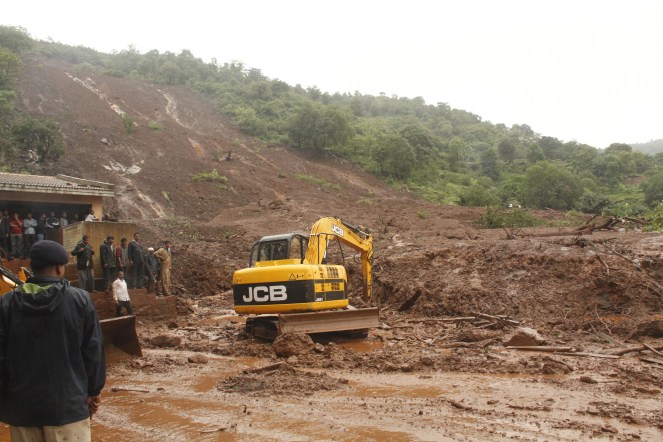
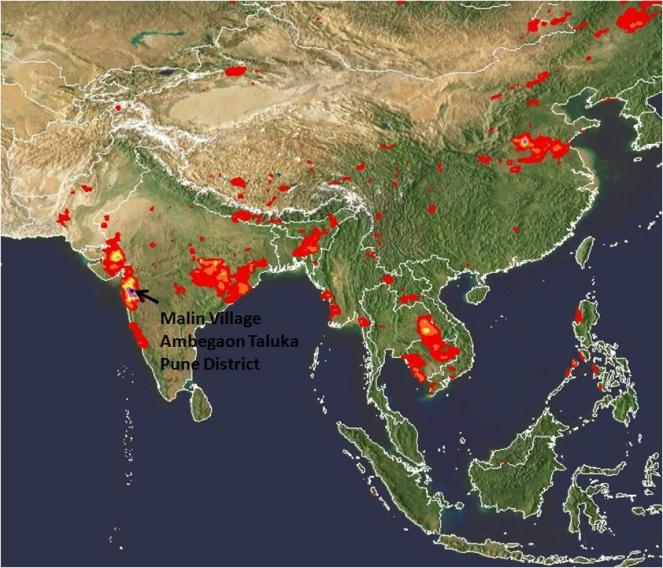
In the tragedy at a tiny village of Malin in Ambegaon, Maharashtra, as per reports till now, around 40 houses are under huge debris created by a landslide that occurred early in the morning on the 30th July 2014. The death toll till now is reported to be 44 with 150-300 missing as per different estimates. Unfortunately, the chances of survival of the missing are dim as per the Chief of Rescue operations.

Destruction at Malin Photo by Atul Kumar Kale Local activist
Photo by Atul Kumar Kale

Let us look at some key factors at play here:

VERY HEAVY RAINFALL: This region is nestled in the Northern Western Ghats which receives heavy rainfall in the monsoons. The region was receiving particularly very heavy rainfall in the week between 25th to 31st July. SANDRP had posted an alert on this on SANDRP Facebook page (https://www.facebook.com/sandrp.in) on the night of 29th July.

Cumulative rainfall in the week as recorded by NASA’s (The National Aeronautics and Space Administration of US) TRMM (Tropical Rainfall Measuring Mission, see: http://trmm.gsfc.nasa.gov/publications_dir/instant_2.html) was more than 600 mm, most of it between 29th-30th July. In fact on the 29th July, the region including Malin was shown purple in 24 hr rainfall map, which signifies the highest range of rainfall, exceeding 175 mm.

The region is still experiencing heavy to very heavy rainfall as we write this on Aug 1, 2014.

AccumulatedRainfall

scale

Malin receives very heavy rainfall on the 29th July, 9 pm by NASA TRMM
Malin receiving high rainfall on the 30th July 2014, 9 pm IST NASA TRMM

It was surprising to read report from Down to Earth about “mere 4 mm rainfall in 24 hours” before the landslide, which is clearly not the case.

With changing climate, frequency of such high intensity rainfall events is predicted to increase, making these areas even more vulnerable to disasters like landslides.

Landslide Warning

Following the very heavy rainfall in the regions around Northern Western Ghats, extending till Gujarat, NASA’s TRMM had also highlighted this region to be strongly landslide prone on the 30thof July.

See NASA TRMM Landslide Prone Area Map on the 30th July 2014 below which highlights Bhimashankar and Malin region:

NASA Landslide potential Map, 6 pm IST on July 30, 2014

The dam connection:

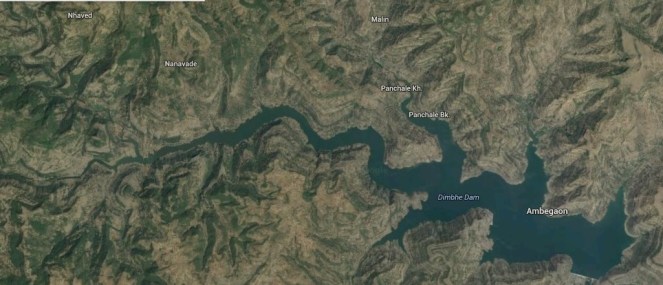
The Malin village is approximately 1.5 kms from backwaters of the Dimbhe Dam, which is an irrigation project involving a big dam completed in 2000. On the 31st July, the dam held 44% of its live storage, that is about 156 MCM (Million Cubic Meters) of water. The link between water level fluctuations in dams and landslides in the rim of the reservoir and backwaters is well documented. Some geologists have also recorded increased landslides activity in areas surrounding Dimbhe Dam in the past. ( http://timesofindia.indiatimes.com/City/Mumbai/More-landslides-likely-in-5km-radius-of-Dimbhe-dam/articleshow/39314716.cms) Even if the dam was not overflowing when the tragedy occurred, it is well known that the dams can induce such landslides around the rim in view of standing water with fluctuating levels, change in drainage pattern and underground water flow pattern.

Google map showing Dimbhe Dam and location of Malin village close to the backwaters

Key salient features of Dimbhe dam: Ht: 67.21 m; Lengh: 852 m;  Live Storage Capacity: 354 MCM (www.mahawrd.org); Reservoir Area: 1754.7 ha.

The role played by the dam and its operations on the geology of the region and its possible connection with the landslide needs to be investigated in depth.

Landslides are not entirely new for the region

The region has seen some landslides in the past (e.g. in 2006-7) according to Saili Palande Datar, an ecologist and historian with Kalpavriksh. According to Anand Kapoor of NGO Shashwat active for decades in the region, a landslide had occurred earlier than that, where some cattle were buried and people had to be rescued. In a massive landslide on July 23, 1989, in village Bhaja in Mawal about 60 km from Pune, 39 people were killed.

In the Western Ghats of Pune as well as Maharashtra, a number of landslide-related tragedies have happened. According to a resident of village Tikona Peth in the catchment of Pavana Dam in Mawal tehsil of Pune, a landslide took place in in her village July, 1994 after heavy rains. There were no casualties, four houses were demolished by huge rocks. In August 2004, one person died due to landslide in Male, near Pune, in 2004 again, a worker died due to landslide in work related to a tunnel for a lift irrigation scheme, in June 2005, 4 workers died due to landslide at a tunnel of Ghatghar hydroelectric project.

Role of large scale land modifications in the region

Indeed according to a landslide map developed by Dr. David Petley, International Expert on Hazards and Risks in the Department of Geography at Durham University, the entire region of Western ghats has experienced landslides.

Dr. Petley has also written about the Malin Landslide here: http://blogs.agu.org/landslideblog/2014/07/31/malin-landslide-1/.

Dr. Petley told SANDRP, “Large scale land use modification and deforestation is the issue here”. He further said: “I would hypothesise here that the very heavy rainfall was the trigger, thick weathered soil, the shape of the slope and poor management of development and of water. A proper investigation should be able to ascertain whether this is right, but such large-scale modification of the landscape should be resisted.”

11_08 2011 map
From Dr. David Petley: Landslide events where fatalities have occurred. We can see that Northern Western Ghats also features regularly in the map.

Landscape modifications around Bhimashankar

Bhimashankar region, the origin of river Bhima which is an important tributary of Krishna, is a high rainfall region with spectacular biodiversity. It is also home to Maharashtra’s state animal Malabar Giant Squirrel. The region is home to a vibrant tribal community which has seen several assaults on its way of life through the formation of the sanctuary, displacement caused by Dimbhe & other Dams, recent windmill projects, etc.,

In the recent years, some of the major landscape changes occurring in this region are through mechanised terracing of slopes for cultivation as well as developments related to windmill projects on mountain tops, which entail deforestation as well as road cutting on steep slopes. Although there are no windmill farms in Malin, such farms exist in the neighbouring Khed tehsil. Plans for such farms in Ambegaon are in the pipeline.

It needs to be understood that terracing for cultivation has been a traditional occupation of the tribals in this region, as in most of the Western Ghats. Not only is it an important livelihood support factor, but it has been limited by its scale, location and implementation due to its inherent manual nature. According to Anand Kapoor of Shashwat, tribals themselves do not prefer terraces made by JCBs and other machines as these are not entirely suitable for cultivation.

However, it is also a fact that now some government departments are using heavy machinery like JCBs in their bid to push terracing program. Unscientific mechanized terracing, which comes together with muck dumping, slope instability, affected drainage etc., can play a huge role in magnifying the impacts on a naturally vulnerable, high rainfall region.

In fact, a preliminary report by the Geological Survey of India (GSI) has singled out land flattening and terracing by heavy machinery as one of the primary causes for the tragedy. As per the preliminary report, a team of GSI experts noticed cracks where heavy soil erosion had occurred. The Deputy Director General of GSI has said that these cracks are a result of improper drainage system of rainwater. The flattening of land would have affected the water drainage resulting in the cracks. He says: “The slope of the hill was flattened almost halfway for agricultural purpose to such an extent that the hilltop had become unstable. The experts have also reported excessive deforestation disrupting the ecology of the hill. Added to this was the damage caused by use of heavy machinery over two years.” The Director General and Deputy Director General will be visiting the site on the 2nd and 3rd August for further analysis.

An independent credible review of the way the land levelling activities are going on under government policies and programs should be immediately instituted and till its report is available, use of heavy machines like JCB may be minimised.

Management of the region according to Western Ghats Expert Ecology Panel (WGEEP) Report and High Level Working Group Report (HLWG)

Both reports place Malin in Ecologically Sensitive Zone I and Ecologically Sensitive Area (ESA) respectively.

An ESZ I tag by the WGEEP report regulates a number of activities in the region, with participation of local communities. The report has specifically mentioned threat of landslides in this region.

While noting the impacts of windmills in the region surrounding Malin, WGEEP notes: “Apart from substantial forest destruction (including Forest Department estimates of about 28,000 trees being cut) via wide roads cutting huge swathes through Reserve Forest, the wind mill project has triggered large scale erosion and landslides through poor construction of roads with steep gradients, and all this rubble is ending up on fertile farmland and in reservoirs of tributaries of the Krishna.

The Forest Department is colluding with wind mill project operators in also illegally denying citizens access to these hills. Boards and check-posts have been put up by the company, falsely claiming to be authorized by the Forest Department. There are many traditional forest dwellers on these hills. Not only are their rights under the Forest Rights Act not being recognized, they are being illegally restrained in their movements on hills they have inhabited for centuries.”

If the WGEEP was accepted by the MoEF and state governments, this would have led to a more people-centred and ecologically-sound management of the Western Ghats region, but Maharashtra has been vehemently opposing WGEEP on the most unjustified grounds and the MoEF too has been busy downplaying the WGEEP.

While HLWG did include Malin village in its list of Ecologically sensitive Areas, however, this ESA tag did not mean much for the region it only regulates mining and red category industries. Most of the development activities that might threaten the region are not regulated by the HLWG. More importantly, HLWG has no role for the local communities in democratic decision making. There is also no mention of this region being landslide-prone in the HLWG, whereas the WGEEP specifically highlights this issue.

It is clear that HLWG is not much help for the region in avoiding tragedies like the Malin tragedy, but WGEEP report certainly would have helped.

Way forward

Northern Western Ghats which are characterized by heavy rainfall, rich biodiversity and predominant tribal population need more sensitive management approach than what it is subjected to right now. Although WGEEP had paved way for a more democratic, equitable and people-centred management of the region, the report was hidden, downplayed and finally rejected by the state as well as the central government. Episodes like Malin highlight the vulnerability and complex inter-linkages that affect the region which require a long term planning vision, integrating a number of components.

Despite this, several ill-conceived projects like townships, windmill farms, large dams and river linking projects like Damanganga-Pinjal and Paar Tapi Narmada are proposed in the region. Close to Bhimashankar region, Mumbai Metropolitan Regional Development Authority (MMRDA) as well as the Greater Mumbai Municipal Corporation are pushing more than 12 large dams. Some of these dams entail huge tunnels under the mountain ranges of Western Ghats. Despite the several risks and impacts, many of these massive dams may also escape scientific Impact Assessments or public hearings. These projects needs to be opposed and urgently dropped as there is little justification of the projects in view of huge number of options available in the cities for which these dams are proposed.

Similarly, Maharashtra Government has plans to build three huge hydropower dams in the Velhe and Mulshi region, which also falls in the Pune District. Velhe region has already seen slope instability and also falls in Seismic zone IV, making any such development highly risky there.

Let us hope that the heart-breaking tragedy at Malin is a wake-up call for all of us, paving way towards more sensitive,responsive, democratic and sustainable management of the Western Ghats. As a first step, the state and central government need to accept and implement the recommendations of the WGEEP immediately in Malin and for the entire Western Ghats.

-Parineeta Dandekar (parineeta.dandekar@gmail.com)

Western Ghats again highlisgted in Nasa Landslide potential Map for 9 pm ist 310714
Western Ghats again highlighted in Nasa Landslide potential Map for 9 pm IST 310714

End Notes and Further Reading on Developmental Pressures on Western Ghats, specifically related to water:

1. “Damning the Western Ghats”, presentation by SANDRP: https://sandrp.in/rivers/Damming_the_Western_Ghats_Presentation_SWGM_December2012.pdf

2. Interbasin Transfers in Western Ghats of Maharashtra: https://sandrp.wordpress.com/2014/05/19/interbasin-diversion-dams-in-western-ghats-unknown-impacts-and-uncertain-benefits/

3. How much does the Kasturirangan Committee report understand about water issues in Western Ghats? https://sandrp.wordpress.com/2013/04/24/how-much-does-the-kasturirangan-committee-understand-about-water-issues-in-western-ghats/

4. Living Rivers and Dying Rivers of Western Ghats, by SANDRP http://www.indiawaterportal.org/articles/living-rivers-dying-rivers-rivers-western-ghats-india-lecture-parineeta-dandekar-and

5. Video on Living Rivers and Dying Rivers of Western Ghats, SANDRP https://www.youtube.com/watch?v=oDsNQejeNeU

6. SANDRP’s report on Dams in Western Ghats for Mumbai: https://sandrp.in/Dams_in_tribal_belt_of_Western_Ghats_for_the_Mumbai_Metropolitan_Region.pdf

7. Water Sector Options for India in a Changing Climate, SANDRP: https://sandrp.in/wtrsect/Water_Sector_Options_India_in_Changing_Climate_0312.pdf