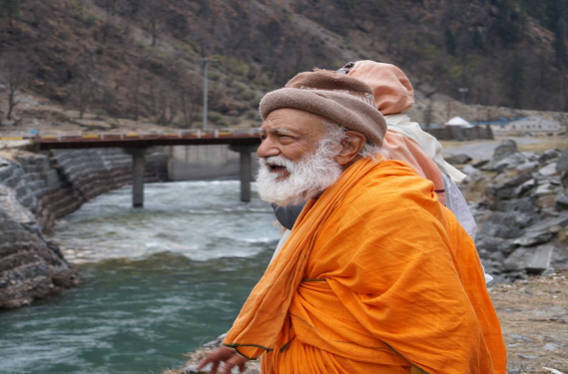
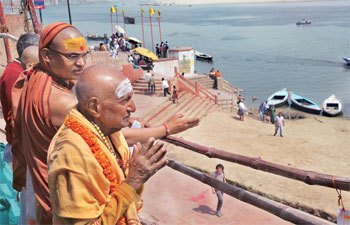
Its deeply saddening that just before 4 pm today (Oct 11, 2018), Prof G D Agarwal, now known as Swami Gyan Swarup Sanand, laid down his life for the cause of a rejuvenated Ganga. He was on FAST UNTO DEATH, as he declared through his letter to the Prime Minister on Feb 24, 2018, four months before he was to launched his fast. Continue reading “TRIBUTE TO LATE SWAMI SANAND WHO DIED FOR THE CAUSE OF GANGA RIVER”
Tag: Ganga
DRP News Bulletin 8 October 2018: “WELCOME CHANGE! Kerala Depletes Reservoir in Anticipation of Deluge from Cyclone”
In spite of all the protests against criticism of Floods worsened by Dams in Kerala in Aug, its refreshing that Kerala now accepts needs for better operation of dams with IMD red alert in three districts:
– Senior officers expressed confidence that the dams can contain the flood waters even if it rains continuously for four days. Better late than never, commented experts on the Kerala State Electricity Board’s (KSEB) decision to keep the water level low. “We’re prepared to face any eventuality. There won’t be any need to open the dam shutters even if it rains continuously for four days. We’re maintaining the water level low in major dams. The water level in Mattupatty dam is close to the full reservoir level and we’ve decided to release water from Thursday. The situation is under control and there’s no need to panic,” said KSEB chairman N S Pillai. Continue reading “DRP News Bulletin 8 October 2018: “WELCOME CHANGE! Kerala Depletes Reservoir in Anticipation of Deluge from Cyclone””
Char Dham Highway Project: An overview
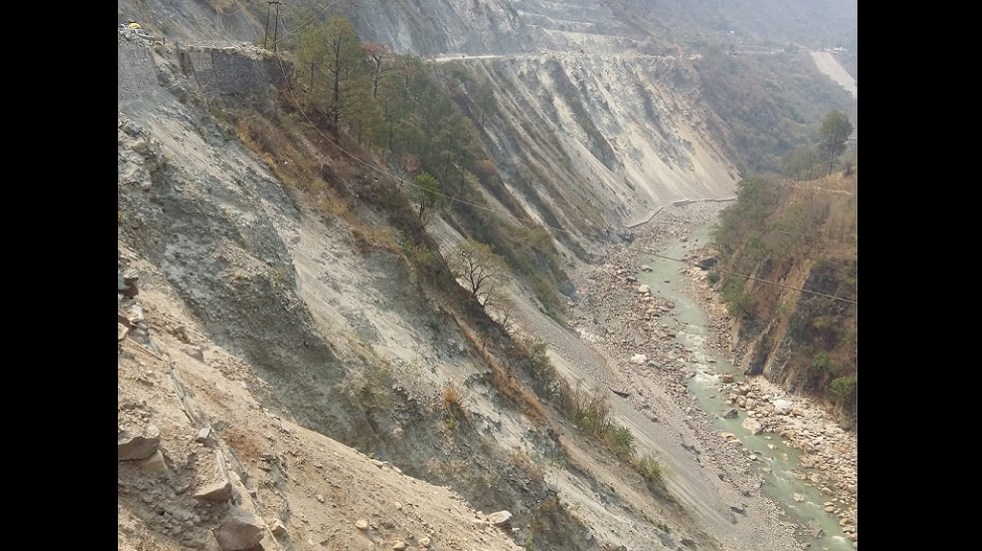
(Feature image Source Char Dham Road ProjectL Stairway to heaven or highway to hell by Siddharth Agarwal)
The Char Dham All Weather Road Project has been approved by National Green Tribunal (NGT) on September 26, 2018. The controversial project has evoked several environmental concerns right from the inception stage.
Almost more than one and half year into the unmindful implementation of the project, the risks and fears associated with the project are clearly visible throughout the construction route. In last few months, several independent reports have also raised serious concerns over the haphazard manner in which the project is being executed through sensitive hilly terrain. Continue reading “Char Dham Highway Project: An overview”
CWC Flood Forecasting: Anomalies between Website and SOP Document
Central Water Commission (CWC) is the only agency in India doing flood forecasting, it becomes very important to understand what CWC does in this regard. The CWC flood forecasting website[i] is the main media through which CWC provides the flood forecasting. CWC has also published on its website, the document giving Standard Operating Procedure (SOP) for flood forecasting in 2018[ii]. The Home page of the CWC’s flood forecasting site says that CWC provides Level forecasting for 166 sites and Inflow forecasting for 60 sites. SOP document, however, gives these figures in Table 1, but in Table 2 (as also the full list given in Annexure 1.1 of SOP document), it gives state wise break up for 182 Level forecasting and 93 Inflow forecasting sites. So we can see anomalies in these two sources even about the number of forecasting sites.
Continue reading “CWC Flood Forecasting: Anomalies between Website and SOP Document”
DRP News Bulletin 1 October 2018: Hungry Water Effect due to Dams & Unsustainable Sand Mining Worsened Kerala Floods
Dams and reservoirs make rivers sediment-starved and menacing manifold downstream. While heavy rainfall is also a key factor behind the floods, hungry water had a more pronounced effect, says D. Padmalal, Scientist and Head, Hydrological process group, National Centre for Earth Science Studies.
– “When the sediment transport is interrupted, the potential energy of the hungry water released from dams will scour the river banks downstream, uprooting trees or riparian vegetation and damaging bridges and other engineering structures,” explains Dr. Padmalal. Overloaded with silt and clay from the eroding river banks, the highly turbid and viscous water clogs drainage channels. Subsequent discharge of water from the dam will lead to inundation and waterlogging of large areas.
– Hungry water can also develop in high gradient river channels devoid of adequate quantity of sand and gravel, especially during periods of high rainfall. “Years of uncontrolled sand mining have left most of the rivers in Kerala depleted or exhausted of sand and gravel. This creates a situation similar to the release of hungry water from dams,” notes Dr. Padmalal. When the river channel has adequate supply of sand and gravel, the potential energy of the water is used to transport the mixture. The water does not scour the banks or turn muddy.
DRP News Bulletin 24 September 2018: If NGT Can’t Provide Environment Justice…
Unless immediate corrective action is taken, the NGT which has till recently served as an institution to provide environmental justice, will increasingly become an institution to perpetuate environmental injustice. If this is to happen, it will be a sad day for both India’s environment and democracy; writes Ritwick Dutta.
– Last few months have seen a massive decline in public confidence in the NGT. The first wake-up call was in July when the new chairperson of the NGT commented that around 50% of the petitions before the tribunal were filed by “blackmailers”. Nothing could be more distressing because this comes from an institution that was created to protect the rights of the people. Recently, the decision of the chairperson of NGT to rehear 18 cases, which were reserved for judgment, has raised concerns about both propriety as well as legality.
– The NGT, over the last two months, seems to have evolved four approaches to deal with litigations. First, dispose of existing cases. Second, form committees, comprising mostly people who were responsible for the problem, and outsource even adjudicatory functions. Third, refuse to entertain matters on the ground that the govt has approved the project or other hyper-technical grounds. And finally, rehear cases which were earlier reserved for judgment.
– One is not expecting the NGT to always give judgments in favour of those who approach it for protecting the environment. Rather, the cause for concern is the general reluctance of the tribunal to hear matters on merit, to consider the decision of the govt as virtually sacrosanct and submissions of project proponents as cast in stone. It must not be forgotten that the NGT is not a special tribunal, but a specialised tribunal set up to adjudicate on complex environmental issues through the use of both judicial and technical expertise.
Continue reading “DRP News Bulletin 24 September 2018: If NGT Can’t Provide Environment Justice…”
Overview of CWC Flood Monitoring Sites 2018: INDIA
Central Water Commission is the only agency doing flood forecasting in India. As per CWC’s Flood Forecasting website[i] the Data Flow Map has information about 226 Flood Forecast Sites in the country comprising of 166 Level Forecast Sites and 60 Inflow Forecast Sites. It also monitors 700 Flood sites, information made available through List Based Exploration and Hydrograph View, but no flood forecasting is done for these sites.
In order to better understand the CWC’s flood monitoring and forecasting work, SANDRP has published report of CWC’s Level Forecast, Inflow Forecast and level monitoring sites in 5 zones of North India[ii], North East India[iii], East India[iv], South India[v] and West India[vi]. Through this report, we have presented all the data at one place with links to separate zone wise reports with detailed description.
Continue reading “Overview of CWC Flood Monitoring Sites 2018: INDIA”
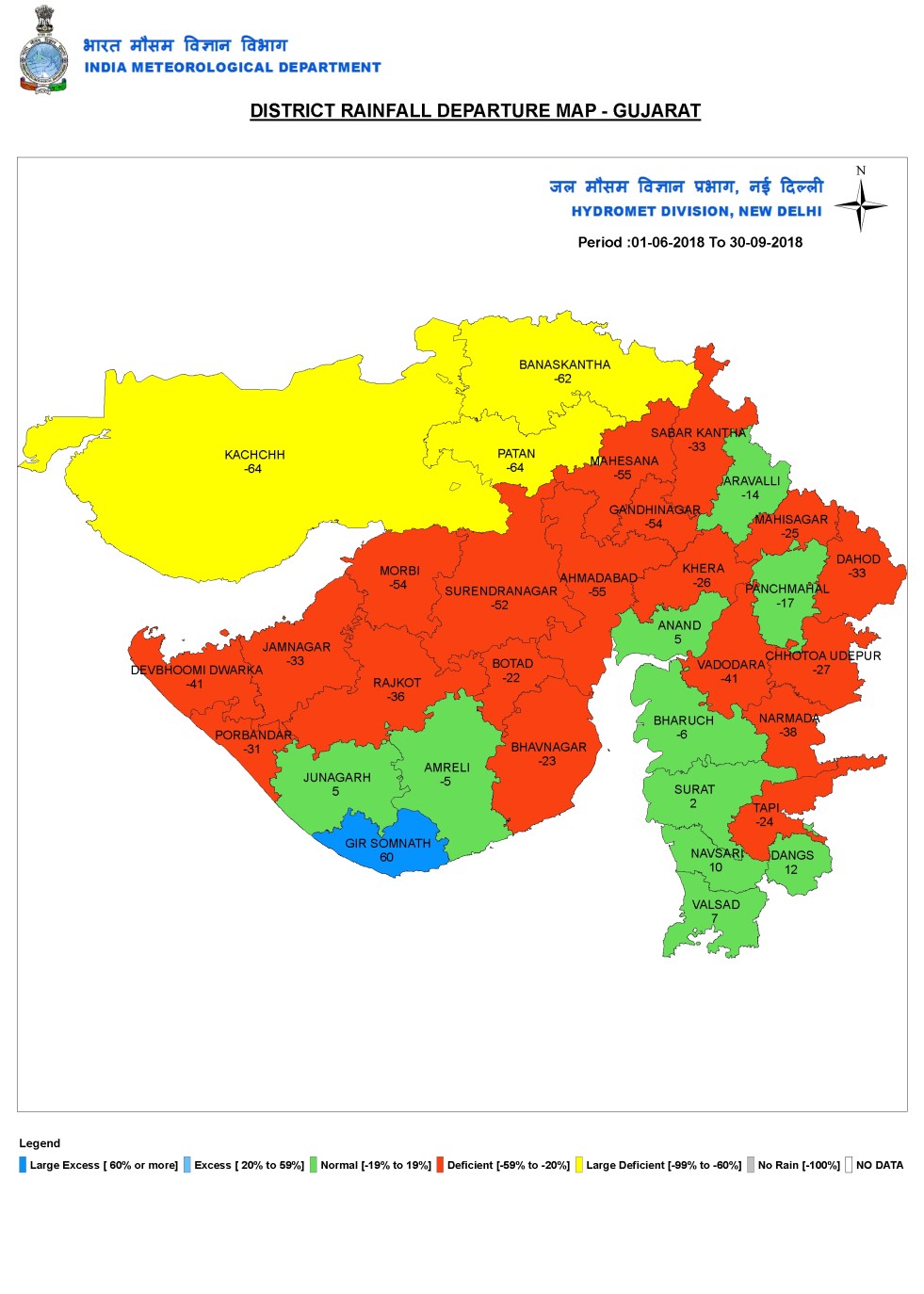
DRP News Bulletin 17 September 2018: How Much of This Drought Is Man Made?
- Gujarat suffering due to political use of water for elections in 2017.
- Rajasthan given more water for elections there in 2018. Will Punjab, Haryana suffer now?
- Kerala drought: how much could have been reduced if dams were operated more prudently?
- North Interior Karnataka is suffering, but Krishna basin dams are almost full? Issue of unsustainable cropping patterns, groundwater overuse, and neglect of recharge & regulation?
Gujarat Water scarcity looms large with state receiving only 74% rainfall so far
- Kutch and North Gujarat are likely to face severe water scarcity this year, officials said. The Kutch region has received a mere 26.51 percent of average rainfall so far, while North Gujarat has received 42.93 percent, central Gujarat 66.83 percent, Saurashtra 72.20 percent and South Gujarat the highest 94.79 percent.
- However, the Sardar Sarovar Dam is filled up to 125.82 meters, and it can provide drinking water for the entire state till the next summer, the govt said. As per Govt. storage in Sardar Sarovar Dam on the Narmada, which will be enough to meet the state’s need for drinking water through the next summer.
- The Narmada water will also be used to fill up empty dams in Saurashtra including Aji 1, Macchu 2, Vadod and Ankadia through the Sauni scheme, officials said.
- “The state govt will provide 20,000 cusecs water for the next 20 days to save the crops in water-starved areas,” Deputy CM Nitin Patel told reporters in Gandhinagar said.
- “We plan to fill up 400 big and small ponds in North Gujarat by Narmada water through canals and pipeline network of the Sujlam Suflam scheme,” he said.
- “We also plan to fill the dams in Saurashtra region and provide water for irrigation from Narmada Dam under the SAUNI scheme,” he said. https://www.firstpost.com/india/water-scarcity-looms-large-in-gujarat-with-state-receiving-only-74-rainfall-so-far-this-monsoon-says-government-5188271.html (15 Sept. 2018)
Himachal Pradesh Rajasthan quietly given extra water by BBMB to improve BJPs Poll prospects A detailed story about how BBMB, controlled by Central Power Ministry, released excess water to BJP ruled Rajasthan this poll year, which has deepened the water availability at BBMB dams this year. This is not that the first time that the water releases have happened to achieve poll objectives. https://www.huffingtonpost.in/2018/09/16/rajasthan-quietly-given-extra-water-by-bhakra-dam-board-to-improve-bjps-poll-prospects_a_23528788/ (14 Sept. 2018)
Rajasthan Rainfall deficit in many districts As per IMD, Badmer district of Rajasthan has received rainfall 48 percent below normal till Sept. 16. Similarly rainfall deficit in Hanumangarh 58 percent so far. Jallor district is facing maximum rainfall deficit of 60 per cent less than normal. Likewise the rainfall in Pali district is 35 per cent below the normal and in Jaislmer is facing a rainfall deficit of 38 per cent. In Western Rajasthan it rained only 193 mm during entire monsoon season causing a deficit of 24 per cent below the normal.
Continue reading “DRP News Bulletin 17 September 2018: How Much of This Drought Is Man Made?”
Overview of CWC Flood Forecasting Sites 2018: WEST INDIA
Central Water Commission is the only agency doing flood forecasting in India. As per CWC’s Flood Forecasting website[i] the Data Flow Map has information about 226 Flood Forecast Sites in the country comprising of 166 Level Forecast Sites and 60 Inflow Forecast Sites. It also monitors 700 other sites, information is made available through List Based Exploration and Hydrograph View, but no flood forecasting is done for these sites.
In order to better understand the CWC’s flood monitoring and forecasting work, in this article, we have given an overview of CWC’s flood forecasting and monitoring sites in West India. It includes state wise list of CWC’s Level Forecasting, Inflow Forecasting and level monitoring sites in 5 States in West India. Similar report has been published for North India[ii] and North East India[iii] and East India[iv] and South India[v]. This is the last part in the series. Continue reading “Overview of CWC Flood Forecasting Sites 2018: WEST INDIA”
TALE OF A DISASTER FORETOLD: Bansagar Dam ready to create another flood disaster along Sone and Ganga
Bansagar Dam in Sone river basin in Madhya Pradesh already full, violating the rule curve, is ready to create yet another flood disaster along Sone river in Madhya Pradesh and along Sone and Ganga in Bihar.
As per Madhya Pradesh Water Resources Department website’s Flood Report[i] on Sept 10, 2018 afternoon (5pm) (see the screenshots of the website below), ten gates of Bansagar dam were opened by 0.5 m at 11 am on Sept 9, 2018, releasing 35315 cusecs water. The gates were further opened to 0.75 m at 4.40 pm on same date to release 54315 cusecs. A bit curiously, the website is completely silent about any gate opening before that, it implies that no gates were opened this year before 11 am on Sept 9, 2018. The website says the water level at Bansagar Dam reached 341.63 m at 12 noon on Sept 9, 2018, level is given only at intervals of 4 hours during the day. The Dam FRL (Full Reservoir Level) is 341.64 m, so it is likely that when they opened the gates at 11 am on Sept 9, the dam may have already reached FRL. The water level at the dam has remained at 341.58 m till 8 am on Sept 10, 2018, just 4 cm below the FRL, as per the latest available information. Continue reading “TALE OF A DISASTER FORETOLD: Bansagar Dam ready to create another flood disaster along Sone and Ganga”