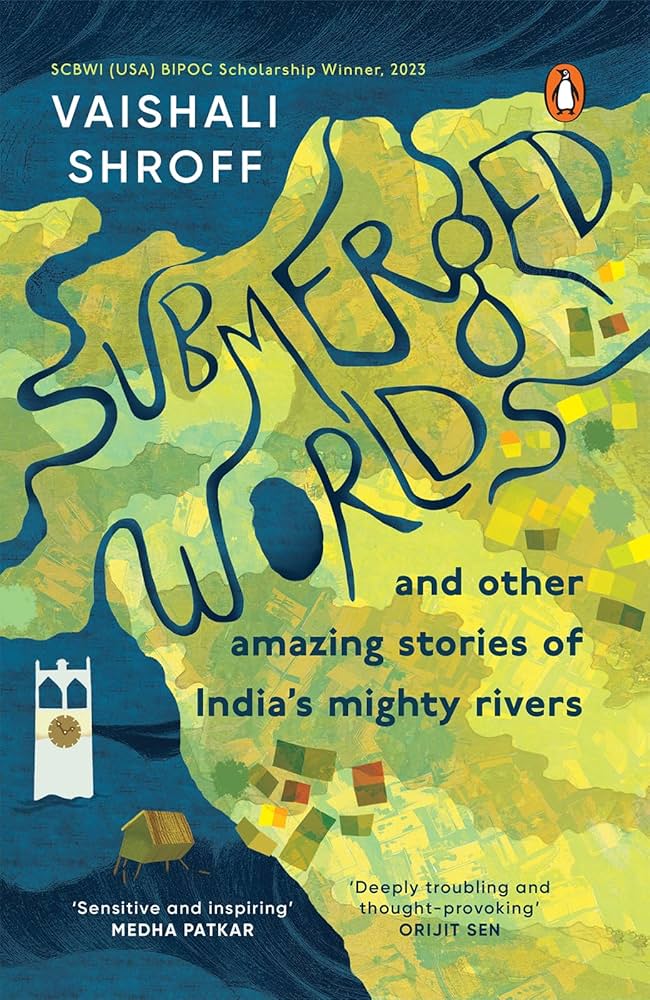
“All rivers are living entities. The job of any river is to flow. And it flows in a most systematic and sophisticated manner. As it flows, it nurtures everything around it, everything within it. A flowing river, whether it’s gurgling, bubbling and frothing on rocks and cobbled valleys or silently meandering along its course on the plains, is a happy and healthy river. Like a lap of a mother, the river allows many living beings to make a home and live together…” These introductory lines from the recently published book “Submerged Worlds and Amazing Stories of India’s Mighty Rivers” highlights the significance of a free-flowing river.
Continue reading “Book Review: Submerged Worlds & Amazing Stories of India’s Mighty Rivers”Tag: Climate Change
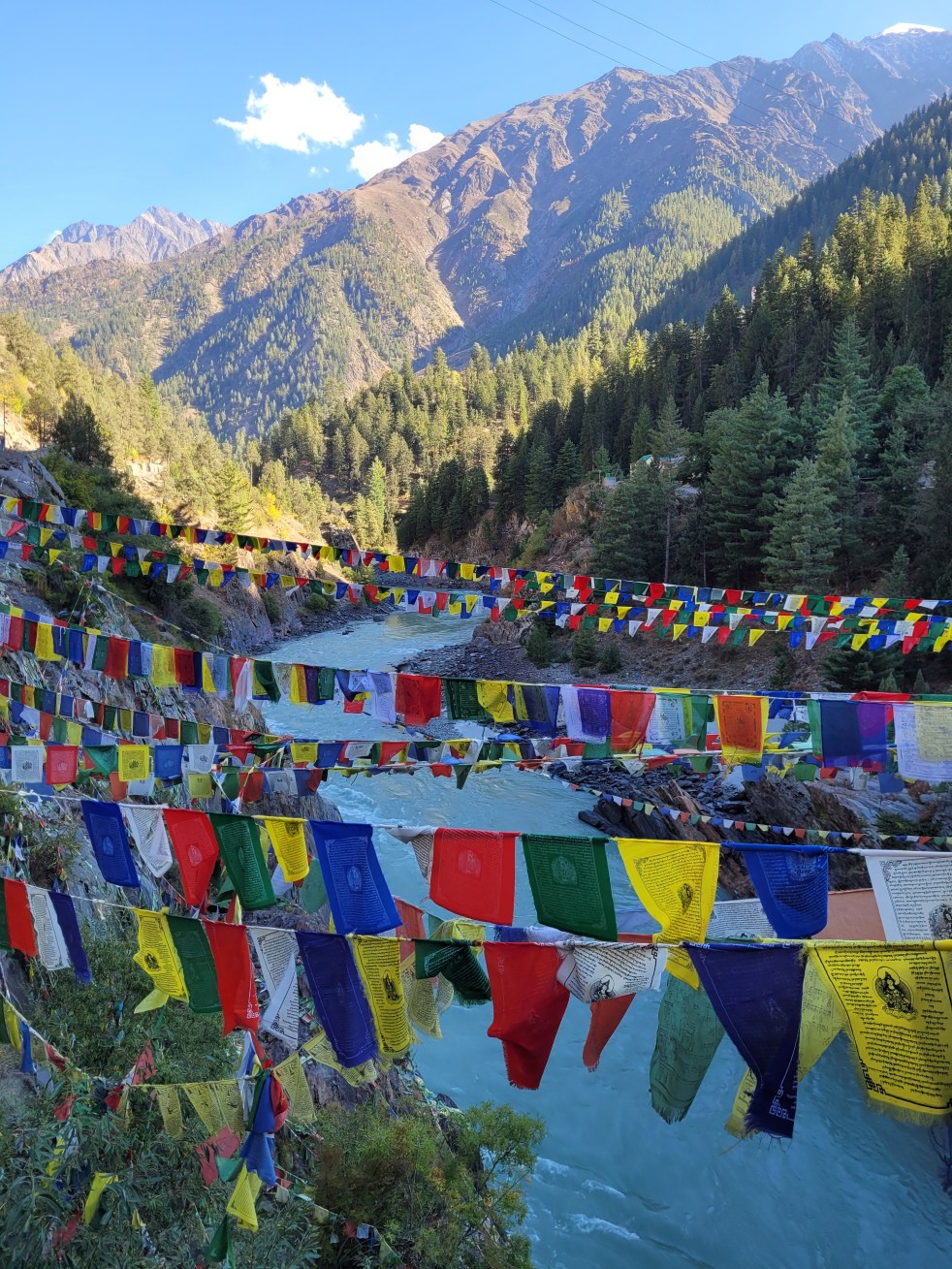
Infrastructure Projects in Chenab Basin and Climate Change: Need to Exercise Caution
The current developments around Indus Waters Treaty are deeply troubling. Following the heinous attack on tourists in Pehelgam, India has announced that Indus Waters Treaty, the only water sharing mechanism between India and Pakistan put in place in 1960, has been put in abeyance.
Continue reading “Infrastructure Projects in Chenab Basin and Climate Change: Need to Exercise Caution”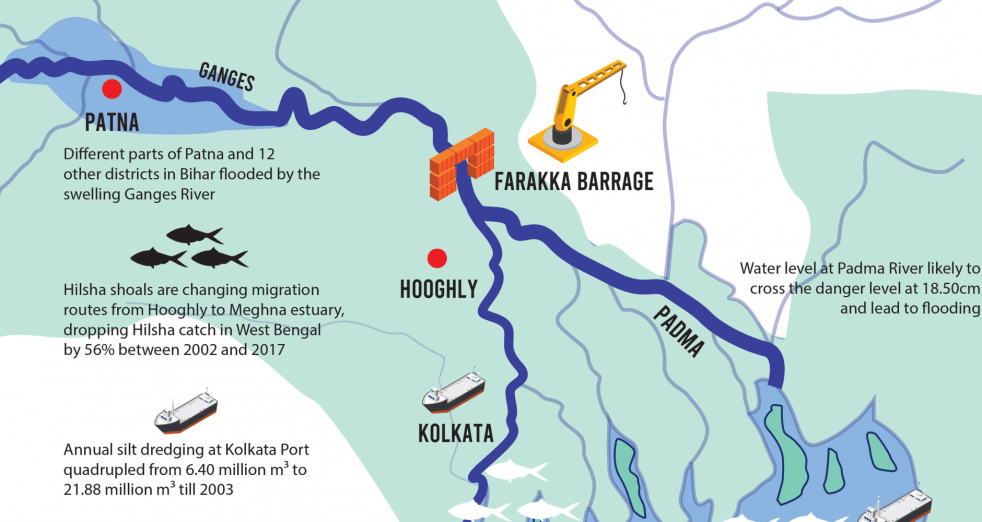
DRP 210425: Farakka Dam operation completes 50 years: A time to review?
(Feature Image: Infographic taken from Farakka now boomerangs on India: Source: TBS News, Oct. 2019)
The 2304 m long Farakka dam on Ganga in Murshidabad district in W Bengal was commissioned on Apr 21 1975 and completes 50 years today. The dam needs an independent review to assess the costs, benefits and impacts of the dam, both projected and actual and to decide about the need and form of its continued existence.
Continue reading “DRP 210425: Farakka Dam operation completes 50 years: A time to review?”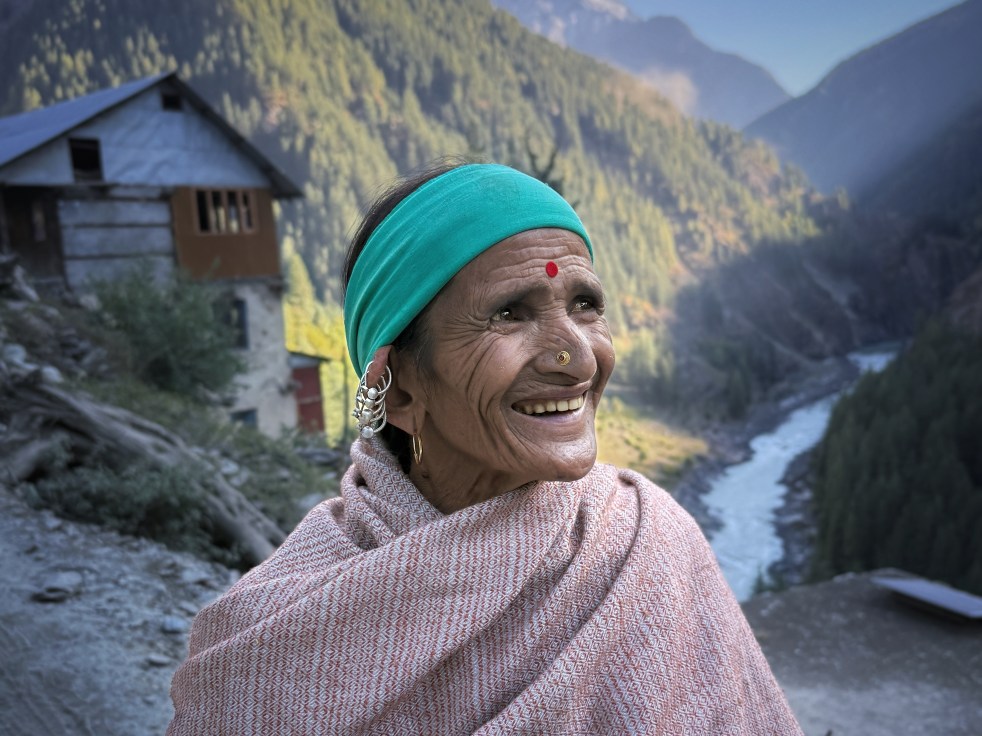
The Moon River: People’s Story of Chenab
Chenab, which translates as the Moon River is the largest of the five tributaries of River Indus. It flows for about 974 kilometers from the High Himalayas of Lahaul to the forests of Jammu and Kashmir and onto the plains of Pakistan. Its main tributaries in India include Miyar, Marusudhar and Tawi. In the vast plains of Punjab in Pakistan, it is met by Jhelum, Ravi and Sutlej to form the mighty Panjnad before it meets the Indus. Its catchment, spread across 67,430 km2, is shared between the two countries.
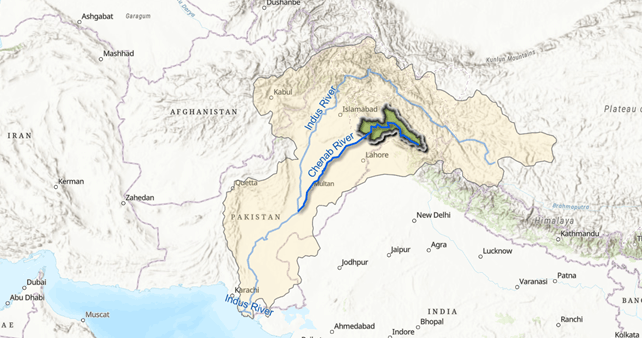
Chenab is Chandrabhaga (Crescent Moon) in its headwaters. It was the River Asikni in Rigveda, and the Acesines for the ancient Greek. From sparse mountain settlements of Lahaul to the bustling urban centers of Sialkot, more than 10 million people live and prosper along the Chenab. Hydropower projects operational and under constructions on the river have an installed capacity of more than 5000 MW (Central Electricity Authority 2024), and its canals irrigate hundreds of thousands of acres in Pakistan and India (Shakir et al).
Continue reading “The Moon River: People’s Story of Chenab”
DRP 140425: Normal SW Monsoon Rainfall forecast
(Feature Image: Skymet predicts normal monsoon with 103% rainfall of the long-period average. Source: Business Today)
The private forecasting agency Skymet has forecast Normal SW Monsoon rainfall across India on Apr 8, 2025, a week before IMD comes out with its forecast. This advance forecast by private agency, compared to IMD raises question as to how come the private agency with much more limited resources is able to achieve this.
In any case, the forecast of about 3% above normal rainfall in June Sept 2025 is welcome. The rainfall distribution forecast, both across the four months and across the four regions is also good if it comes true.
Continue reading “DRP 140425: Normal SW Monsoon Rainfall forecast”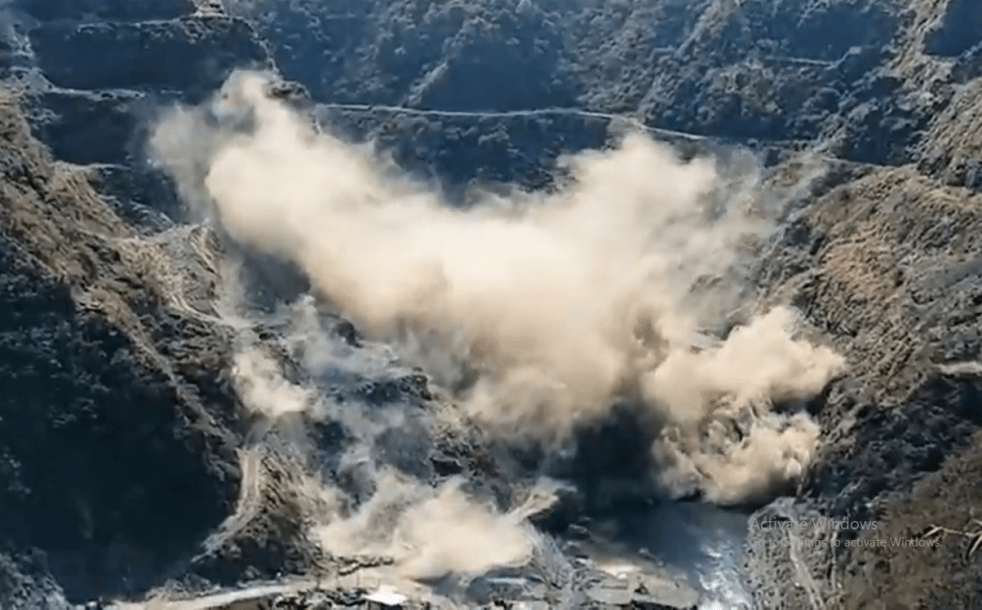
Yamuna Manthan 100425: Blasting at Lakhwar Dam Shaking Hills, Damaging River
Feature Image: Screen grab of social media video shows scale of impact of heavy blasting work at Lakhwar dam on 07 April 2025)
A viral social media video media shows the frightened impact of a huge scale blasting work done for building the main structure of controversial Lakhawar dam on Yamuna river in Dehradun district, Uttarakhand. As per the locals, the blast took place in the morning hours of April 07, 2025, and caused shaking of hills to a large extent apart from blocking the flowing course of river with enormous debris for several hours forcing the project authority to employ heavy machines to clear the blockage.
The social media post shared with the video mentioned that the heavy blast scared the birds in the area and questioned how the company was allowed to destroy the entire hill environment. The heavy blast has indeed created havoc for the aquatic life in the river and downstream projects.
Continue reading “Yamuna Manthan 100425: Blasting at Lakhwar Dam Shaking Hills, Damaging River”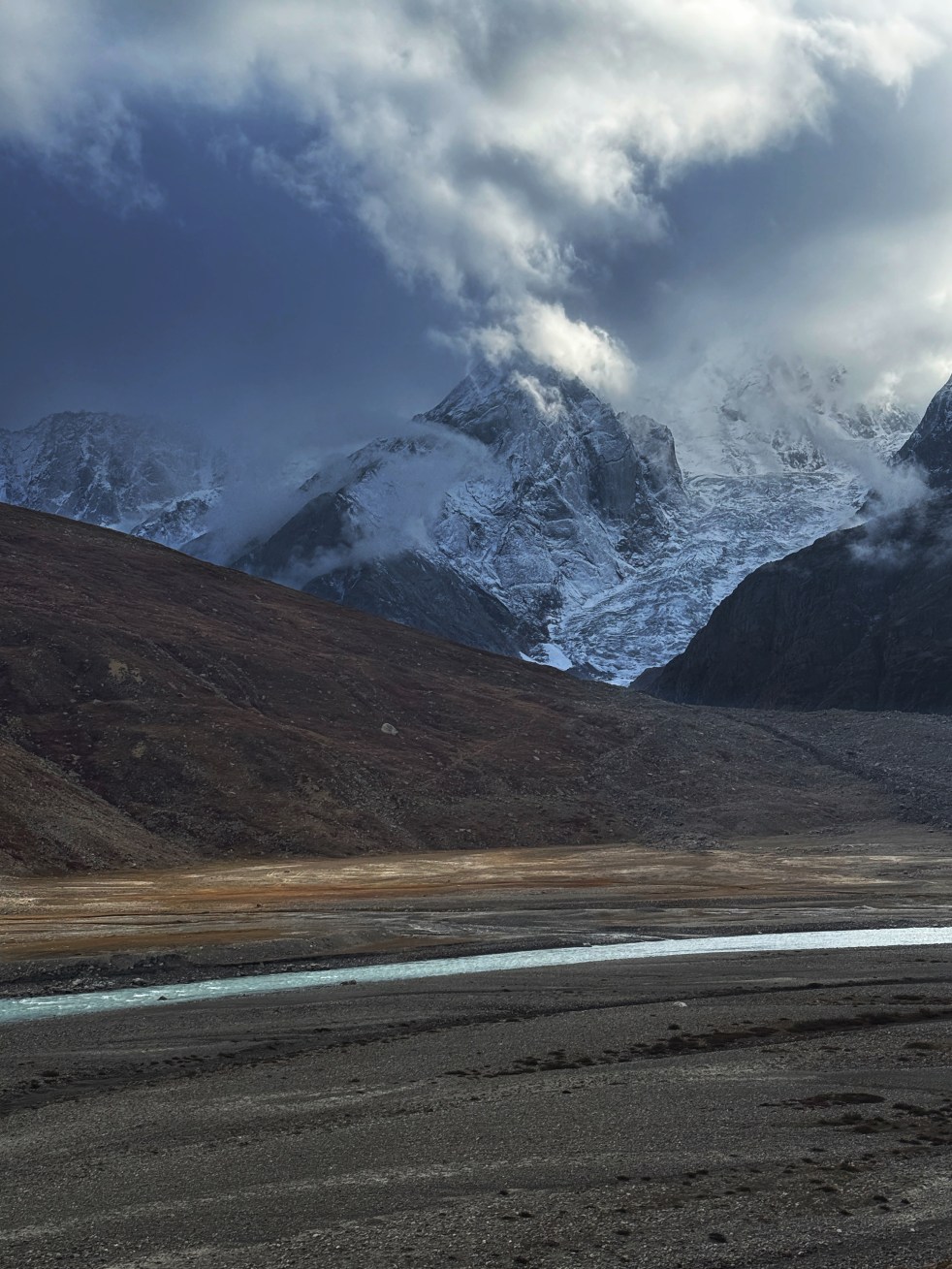
Hydropower-GLOF Nexus in Chenab Headwaters: Absence of credible studies and accountable governance
Increasing incidences of Glacial Lake Outburst Floods (GLOFs) are being experienced in the Indian Himalayas. One of the most notable examples of GLOF was the Chorabari Lake GLOF that occurred on 16th June 2013 in Kedarnath, Uttarakhand[1] which was triggered by heavy rainfall induced mass movements into the lake. The GLOF devastated villages of Kedarnath, Rambara, and Gaurikund. Around 6,000 people were officially killed, and a significant number of the deaths were linked to the GLOF. Countless bridges and roads were washed away, and about thirty hydropower plants were affected or completely devastated. Several Hydropower projects resulted in exponential losses to life and livelihoods. Whole of Uttarakhand was affected in the disaster, and a significant proportion of it was related with GLOF.
Continue reading “Hydropower-GLOF Nexus in Chenab Headwaters: Absence of credible studies and accountable governance”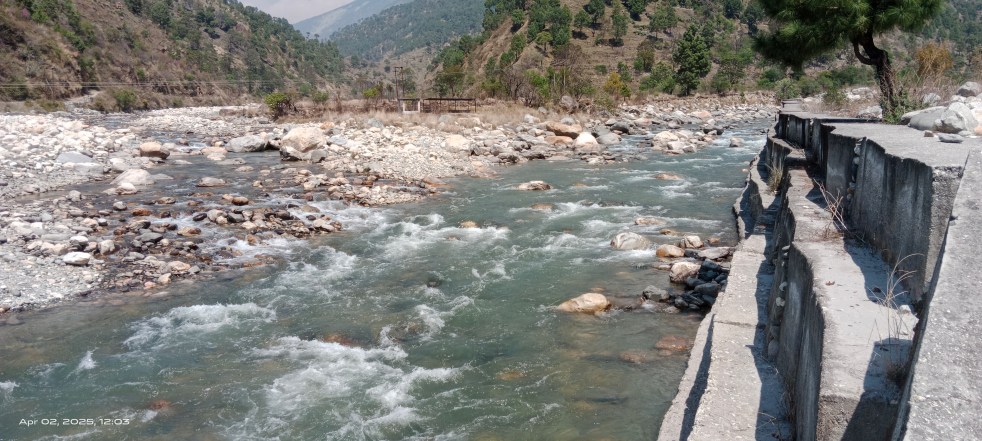
DRP 070425: New Impact of Big dams: Increased oxygen intake in inland waters
(Feature Image: Merging point of of Badiyar gaad (left) and Yamuna river (right) at Gangani in Badkot, Uttarakhand. BS Rawat/SANDRP)
New research published this week reveals a startling change: the oxygen levels in inland waters has been dramatically reducing since 1900, due to human activities including big dams and pollution. This condition leads to dead fish, collapsing food chains and reducing water quality, among other impacts.
There are simultaneous processes ongoing in inland waters leading to production and consumption of oxygen. The location and processes for both the production and consumption of oxygen has been changing during 1900 to 2010. The Global oxygen consumption in inland waters, net of production has gone up by over 100% from 0.26 Pg/year in 1900 to 0.53 Pg/ year in 2010. While earlier climate change was considered major contributor to this reduction, new research shows it is big dams and pollution that are much bigger contributors. Inland waters now pull nearly 1 billion tons of oxygen from the atmosphere every year — half as much as the entire ocean emits back.
Continue reading “DRP 070425: New Impact of Big dams: Increased oxygen intake in inland waters”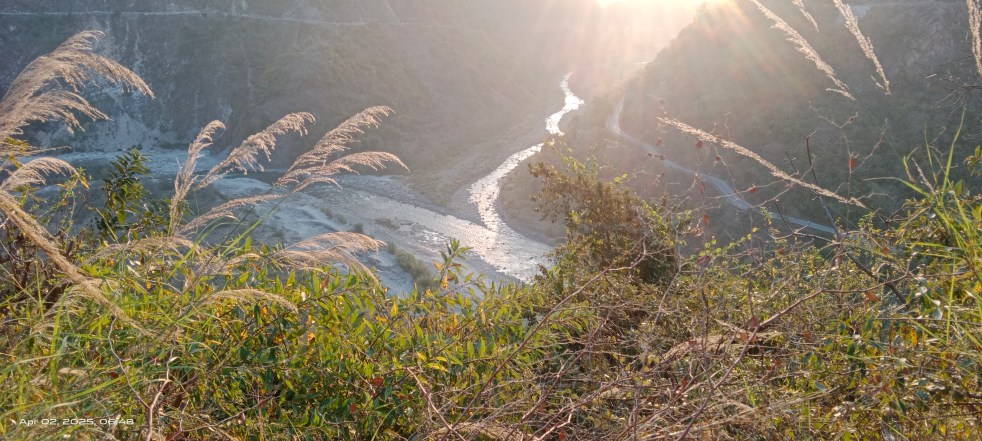
HAPPY BIRTHDAY YAMUNA Photo Blog: Springs & Streams that feed it in the Himalayas
(Feature Image: Aglar river (right) joining Yamuna upstream Yamuna bridge in Lakhwar dam site. Bhim Singh Rawat, 02 April 2025)
The sixth day of summer Navratri is believed to be the birthday of the river Yamuna, known as Yamuna Jayanti among devotees of the river. This year the day falls on April 04, 2025. Celebrating the day, we present a photo blog on springs, streams and major rivers feeding the Yamuna in its Himalayan segment. All the pics were taken by Bhim Singh Rawat, SANDRP on April 01-02, 2025.
Continue reading “HAPPY BIRTHDAY YAMUNA Photo Blog: Springs & Streams that feed it in the Himalayas”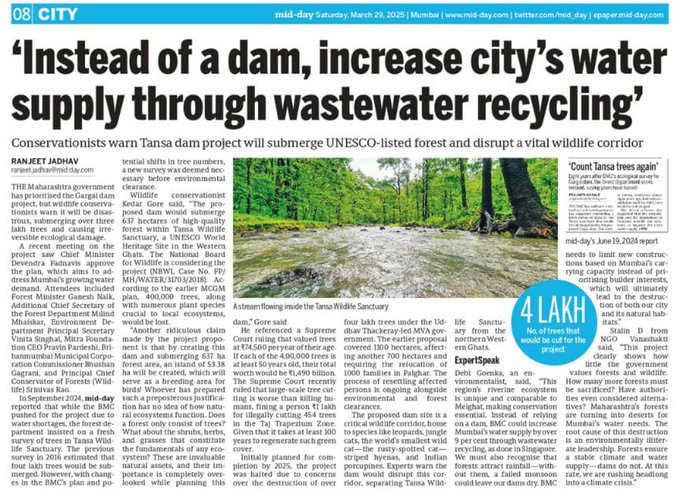
DRP 310325: Does Mumbai need Gargai Dam?
Maharashtra Chief Minister Devendra Fadnavis, brushing aside the concerns of forest officials, opposition, environment and available options this week has asked the officials to fast track the Forest and other clearances for the controversial Gargai dam for additional supply of water to Mumbai. This is shocking on several counts.
Our study earlier showed that Mumbai does not need any additional dam including Gargai if it utilizes available local resources including rainfall, reuse of treated sewage, desalinization, demand side management, groundwater recharge, among other cost effective and less destructive options. The Chief Minister of his government has not bothered to respond to these concerns or options. In fact, when our study was published, even government officials in Mumbai had supported our conclusions.
Continue reading “DRP 310325: Does Mumbai need Gargai Dam?”
