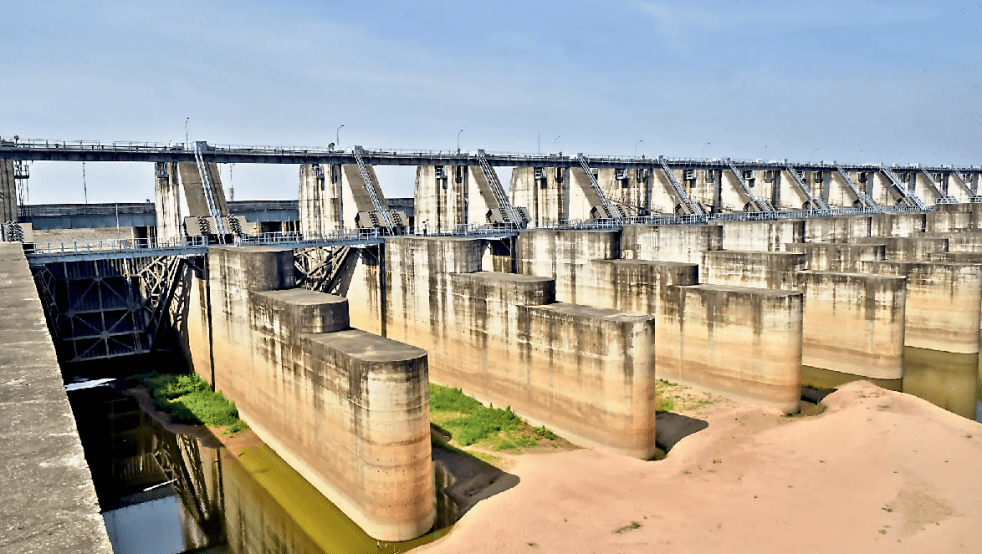
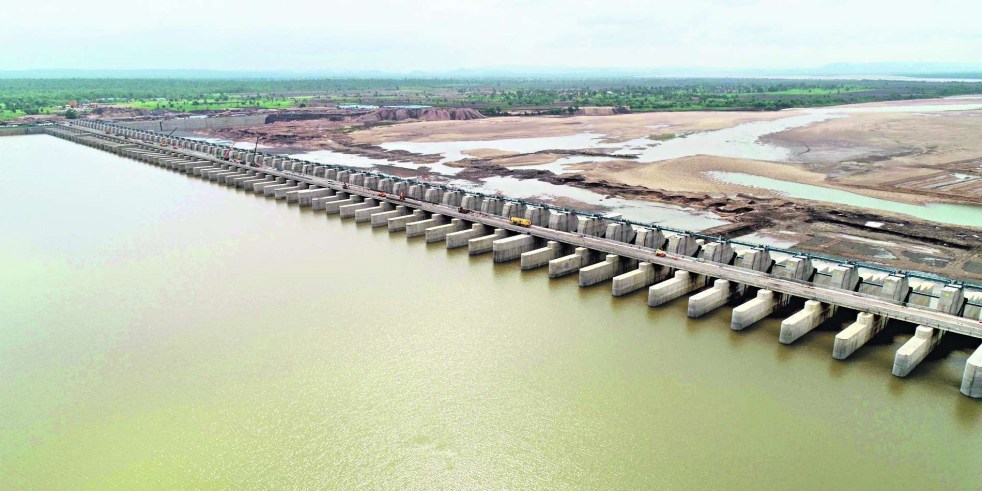
There are at least four cases in this past week where the judiciary has used strong words or taken up crucial issues in water, dams, hydropower projects, wetlands and riverbed mining related issues. In the case related to the safety of Mullaperiyar dam on Kerala-TN border, the Supreme Court has prodded the Centre to wake up from the slumber to ensure that National Dam Safety Authority quickly forms a panel to examine the project. This case has wide ranging repercussions not only about this project, but also functioning of NDSA and other bodies under the Dam Safety Act 2021. Indeed, there is huge question mark as to what extent NDSA and DSA has made our dams any safer.
Continue reading “DRP 130125: Will Judiciary take these matters to logical conclusion?”Tag: Climate Change
2024: Climate Change, GLOF impact on Safety of Hydro, Dams in India
(Powerhouse of a hydro project ravaged by cloudburst induced flashflood in Sutlej basin Shimla, Himachal Pradesh in Aug 2024. Image Source: Social Media)
This 2024 annual overview focusses on important reports highlighting the safety and sustainability issues of the hydro and dam projects in India in 2024 in the context of Climate Change, including Glacier melt and GLOFs. The compilation shows that the climate change driven extreme weather events have become significant threat for the structural safety of these projects.
This is even more relevant in inherently vulnerable areas like the Himalayas and Western Ghats from the point of view of seismic activity, young erosion prone mountain, flash floods, avalanches and landslides. Here the impact of climate change effects like more intensified hydrological cycles, cloud bursts, reduction in snow fall, glacier melts and GLOF (Glacier Lake Outburst Flood) increase the vulnerability including landslide dams and avalanche dams.
Continue reading “2024: Climate Change, GLOF impact on Safety of Hydro, Dams in India”DRP 060125: Concerns about & Contradictions in CGWB’s Reports
The Central Ground Water Board (CGWB) released two important reports last week. While the Annual Ground Water Quality Report 2024 reveals rise in nitrate fluoride, arsenic and uranium contimination of groundwater resource in India, the Dynamic Groundwater Resource Assessment Report 2024 claims substantial rise in annual groundwater recharge and decline in extraction of the resource.
As per the first report, the number of districts affected by high nitrate levels in groundwater has gone up to 440 (near 56% of all 779 districts in country) from 359 found in 2017 assessment which means in 7 years 81 more districts have been found having excessive nitrate levels in groundwater. This should concern us from a number of points of view.
Continue reading “DRP 060125: Concerns about & Contradictions in CGWB’s Reports”2024: Has NDSA made our dams any safer?
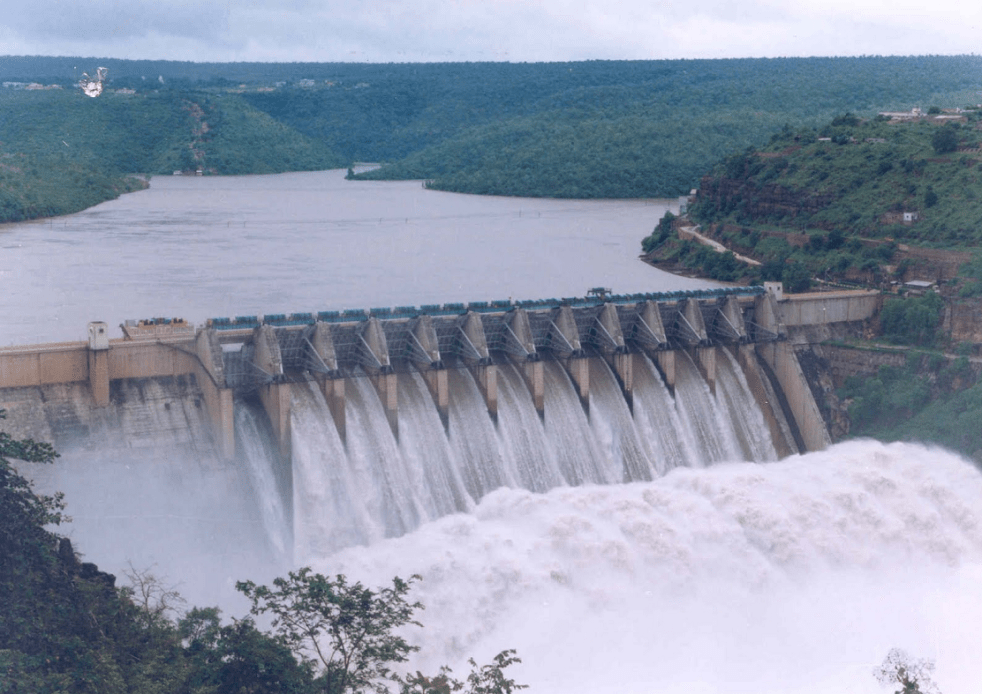
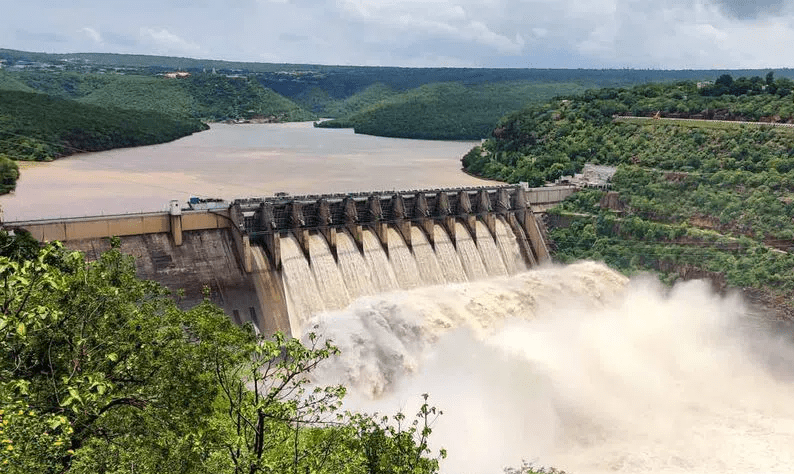
(Feature Image: Srisailam dam in Telangana. Source: Telangana Today)
This annual overview focusses on the functioning of National Dam Safety Authority (NDSA) and related institutions in 2024 to understand if the functioning of these institutions have made Indian Dams any safer? Here functioning of Central Water Commission (CWC) is also important as CWC people head all the dam safety panels. The dam safety related institutions were formed following the passage of Dam Safety Act 2021 and hence there were promises and hopes that these institutions will make our dams safer.
Continue reading “2024: Has NDSA made our dams any safer?”2024: Dam Induced Floods in Urban India
(Feature Image: A drone visual of the flood-affected areas of Vijayawada city on Sept. 6, 2024. Credit: ANI Photo/Source: Rediff.com)
Having covered dam induced flood incidents and embankment breach flooding events in part 1 and part 2, this third part on annual overview compiles media reports on manmade Urban flood disasters in India during the year 2024. While the cities of Pune, Nasik, Nagpur, Vadodara and Bharuch were affected by dam induced floods, the high discharges from Prakasam barrage and multiple breaches in Budameru river deluged the Vijayawada city. Interestingly, these urban flood episodes coincided with heavy rainfall events giving a reality check to dam and city managers.
In addition to failure in dam management, the deluge in Pune, Vadodara and Vijayawada city were particularly worsened by river front development projects and encroachment on river floodplains putting question marks on the urban planning and development works in these cities. Similarly, the breach in embankment of Munak canal in Delhi flooded several homes Bawana area during the monsoon season.
Continue reading “2024: Dam Induced Floods in Urban India”2024: Do Embankments save from floods or worsen the disasters?
(Feature Image: NDRF personnel conduct a rescue operation at a flood-affected area in Bihar’s Supaul district. Image Credit: PTI/Source Live Mint, Sept. 30)
India has seen several floods brought by breach of embankments during the 2024 monsoon. In Bihar, though the state has received deficit rainfalls, the overspilling of barrages and breaching of several embankments created widescale flood damages. Number of reports have again highlighted the ineffective and adverse role being played by flood protection structures in worsening the deluge impacts. The first part of the overview has covered dam induced flood incidents in the country during 2024 and third part has highlighted incidents of dam induced urban floods.
Continue reading “2024: Do Embankments save from floods or worsen the disasters?”2024: Dam Induced Floods in India
(Feature Image: Breach in the earth dam of Peddavagu project flooded several villages in Telangana & Andhra Pradesh on July 17, 2024. Source: DC)
India has seen several manmade flood disasters during the 2024 monsoon. The mismanagement of dams in Narmada valley including Bargi, and SSP inundated several dam affected villages despite adequate actionable advance warnings. The uninformed excess releases from DVC dams have led to flooding in large areas in West Bengal as repeatedly raised by the state government. The extensive floods in Tripura have revealed glaring loopholes in flood prevention and disaster management.
The floods in the year have also washed away or damaged several earthen dams, tanks in Madhya Pradesh and Rajasthan affecting human population, agricultural lands in their vicinity. Even during Northeast monsoon, the sudden releases from Sathanur and Veedur dams in Tamil Nadu created avoidable flood damage in downstream areas. Similarly, the states of Gujarat, Telangana, Haryana and Delhi have seen deluge due to mismanagement or breaches in the canals. The case of Narmada canal waters flooding large areas of Little Runn of Kutch is quite concerning.
Continue reading “2024: Dam Induced Floods in India”Yamuna Manthan 020125: River Dying by Design or Default?
(Feature Image: Instream mechanized mining going on in Yamuna river at Gumthala Rao near Karnal-Yamuna Nagar border in Haryana in Oct. 2024. Source: Yamauna Nadi Mitra Mandli)
This twelfth edition of monthly Yamuna updates and the first one of the new year 2025, rounds up the critical issues impacting the river eco-system during the past year. The updates of the past one month only hint towards the bleak future the river is heading to. Without addressing the adverse effects and exploring cost effective alternatives, foundation stones of two massive river interlinking projects namely Ken-Betwa and Parbati-Kalisindh-Chambal have been laid. The work of unjustifiable Renuka and Lakhwar dams in climatically sensitive and geologically fragile region of Himalaya is going on.
Continue reading “Yamuna Manthan 020125: River Dying by Design or Default?”DRP 301224: We are not studying our rivers, Global North is studying
(Feature Image: Ramganga river at Marchula, Uttarakhand. Bhim Singh Rawat/SANDRP/Sept. 2024)
Exactly three months back, on Sept 30 2024, we had highlighted the urgent need for credible river studies in India (https://sandrp.in/2024/09/30/drp-nb-300924-focus-on-river-studies/). A new research report published last week in Nature has corroborated this, showing that volume of research across global south is disproportionately small compared to need based on basic population, water withdrawals and water consumption.
Based on review of 4237 publications using machine learning and desk review of 325 publications, analysis of 4713 case studies across 286 basins, it shows that river research currently in global south is predominantly led by global North institutions, thus the river research is shaped by selection of theme and locations done by such institutions.
Continue reading “DRP 301224: We are not studying our rivers, Global North is studying”2024: Dam Affected Continue to Struggle across India
(Feature Image: Tribals in Mandla district of Madhya Pradesh protesting against Basania dam in March 2024. Image: ETV Bharat)
The part 3 of annual 2024 overview on the dams and hydro projects covers the ongoing movements of dam affected people in India. All through the year 2024, the Narmada Bachao Andolan continued peaceful protests seeking justice for Sardar Sarovar Project affected villagers. Tribals in upper Narmada Valley have also been fiercely opposing the Basania dam. The Hirakud dam displaced people have demanded formation of statutory national commission to hear their grievances.
The plight of Pong dam affected villagers have worsened as they again face displacement from rehabilitated lands due to new development projects while most of the land given to Renuka dam affected has been damaged by floods. It is indeed tragic that despite sacrificing their land and livelihoods for the ‘development’ of the country decades back, thousands of dams affected villagers are still forced to fight for promised rehabilitation.
Continue reading “2024: Dam Affected Continue to Struggle across India”