Hydro Power Projects

2022: Environment & Forest Clearances to Dams, Hydro, Irrigation Projects

SANDRP’s 2020 and 2021 overviews on the subject can be seen by clicking the links. You may also like to visit our 2022 overviews on (1) Dam induced floods & damages, (2) Fly ash dam breach incidents, (3) Impact of floods on Polavaram project, (4) People’s resistance against dams and hydro projects, (5) Disasters and accidents at HEPs sites, (6) Dam Safety Issues, (7) Hydro projects opposition and accidents in South Asia.

Continue reading “2022: Environment & Forest Clearances to Dams, Hydro, Irrigation Projects”
DRP News Bulletin

DRP NB 191222: Question marks over viability of pump hydro projects

(Feature Image: 1772 Mw PSHPs Spain. Photo courtesy of Iberdrola/ ENR)

The question marks over viability of huge number of pump storage hydro projects (PSHP) being pushed forward in India currently were flowing in the rivers for long. This week, Moody’s investors Service (MIS) seems to have strengthened this after it downgraded Greenko Energy Holdings’ corporate family rating. It may be noted that Greenko is the biggest investor in PSHPs in India from private sector and a major part of Greenko’s new investments are in PSHP.

This makes the implications of MIS’s downgrade all the more interesting. MIS has noted that PHSPs are capital intensive and each PHSP will generate cash flow only after at least 2-3 years of construction (in reality it can be much longer than 2-3 years, the operative phrase here is at least). It also noted that the additional debt to be raised from Greenko’s capital spending, coupled with a rising interest environment will put further pressure on “GEH’s already weak financial metrics” and that Greenko’s high financial leverage due to its substantial capital spending program will keep its financial metrics below its downgrade trigger “for an extended period of time”.

Continue reading “DRP NB 191222: Question marks over viability of pump hydro projects”
CWC - Central Water Commission

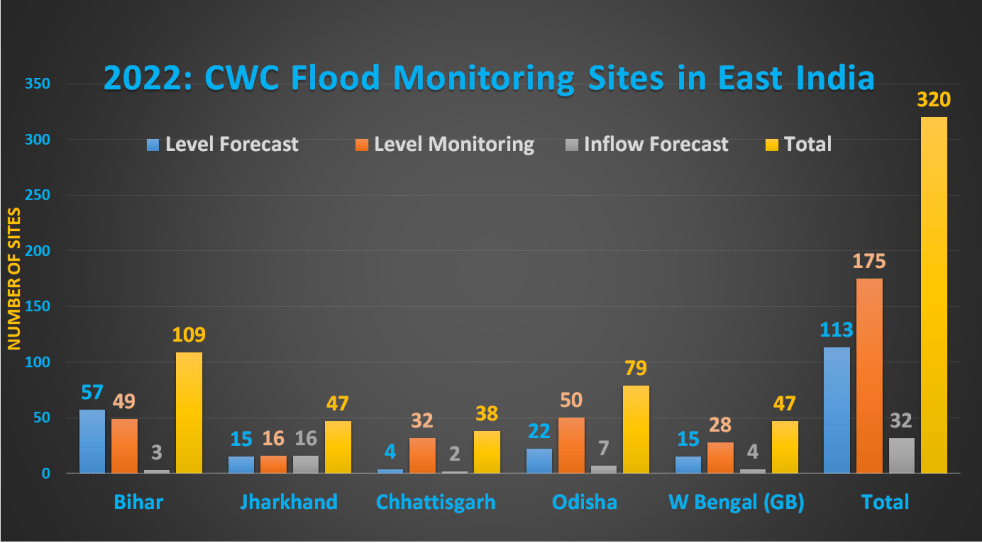
2022: CWC Flood Monitoring Sites in East India

Flood forecast and monitoring is essential part of Central Water Commission’s (CWC) work. Presently, the agency claims[I] issuing flood forecasts at 332 sites including 133 Inflow Forecast (IF) sites and 199 Level Forecast (LF) sites. Since 2018, SANDRP has been presenting critical analysis of CWC’s flood forecast website[II] in region wise manner.

In 2022 SW monsoon season, we have already published the overviews for North[III] and North East[IV] regions of the country. This third part in the series covers the states in East India including Bihar, Jharkhand, Chhattisgarh, Odisha and West Bengal (Ganga Basin). Our previous overviews for the region can be seen here (2018[V]) and here (2019[VI]). 

Continue reading 2022: CWC Flood Monitoring Sites in East India
CWC - Central Water Commission

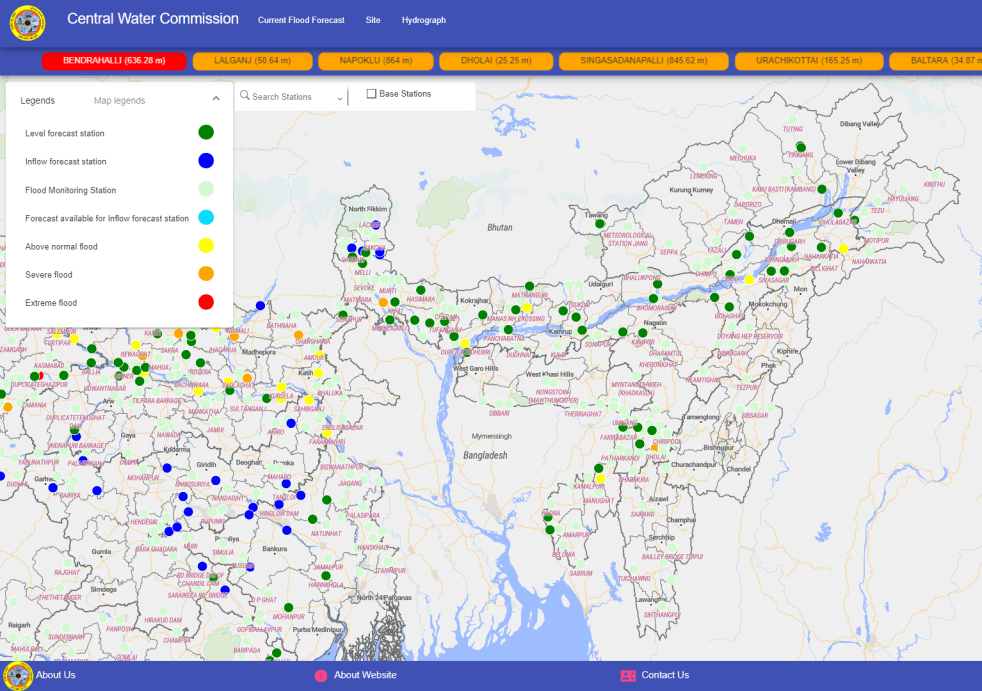
2022: Overview of CWC’s Flood Monitoring Sites in North East India

During monsoon CWC (Central Water Commission) monitors water level at several hundred sites in the county and publishes this information on its Flood Forecast website[I]. The website has three ways to get this information: Data Flow Map, List Based Exploration, and Hydrograph view. The Hydrograph view provides information for past 72 hours, supposed to be updated every hour. This is in addition to the list of current forecasts listed on the website.

Since 2018, SANDRP has been analyzing CWC’s flood forecast website in zone wise manner. After examining status of flood forecast and monitoring sites in North Indian[II] states, this overview is for North East India region covering Arunachal Pradesh, Assam, Meghalaya, Manipur, Nagaland, Tripura, Mizoram and Sikkim states. This also includes part of North West Bengal that is in Brahmaputra basin. Our 2018 and 2019 analysis on the North East region can be seen here[III] and here[IV].  .

Continue reading 2022: Overview of CWC’s Flood Monitoring Sites in North East India
CWC - Central Water Commission · Dams

2022: CWC Flood Monitoring Sites in North India

(Feature image: Bar Chart showing number of Level Forecast/Monitoring, Inflow Forecast sites in North Indian States & UTs)

Continuing analysis of Central Water Commission’s flood forecast website, SANDRP presents the details of flood monitoring sites in North Indian states comprising Union Territories of Jammu & Kashmir, Ladakh, Chandigarh, Delhi and states of Himachal Pradesh, Uttarakhand, Punjab, Haryana and Uttar Pradesh. Before this, we have prepared similar critical reports and highlighted problematic issues in flood monitoring sites in North India in 2018, 2019 and 2020.   

Continue reading 2022: CWC Flood Monitoring Sites in North India
Dams · Hydro Disaster

Uttarakhand 2021: Cloud Bursts around Vyasi HEP

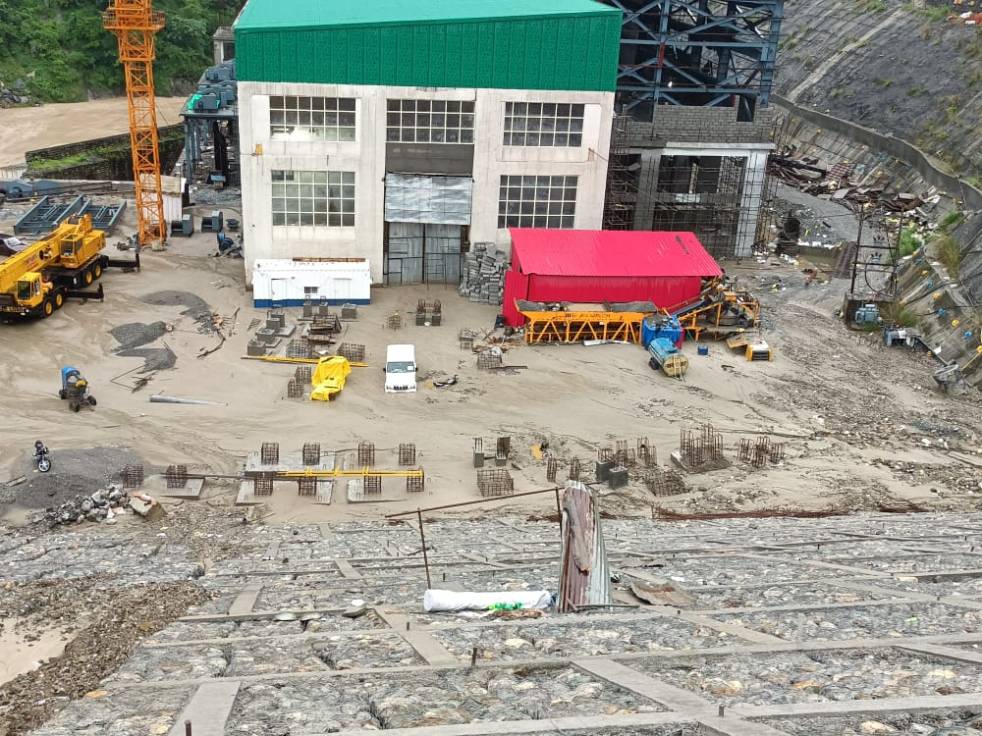
On August 25-27, 2021 the most of hilly districts in Uttarakhand witnessed intense rainfall events causing widespread destruction. Media reports and local people suggest at least seven cloud burst incidents occurring in quick succession over Binhar range in Pacchawadoon and Mussoorie hills dividing Ganga and Yamuna basins in Dehradun district. The resultant deluge has also affected the under construction Vyasi Hydro Electric Project (HEP) areas in Vikas Nagar tehsil highlighting that the project is unprepared to cope with existing & emerging disasters.

Continue reading “Uttarakhand 2021: Cloud Bursts around Vyasi HEP”
Dams · Yamuna River

Yamuna Jayanti 2020: Bridges-Connecting People, Disconnecting River?

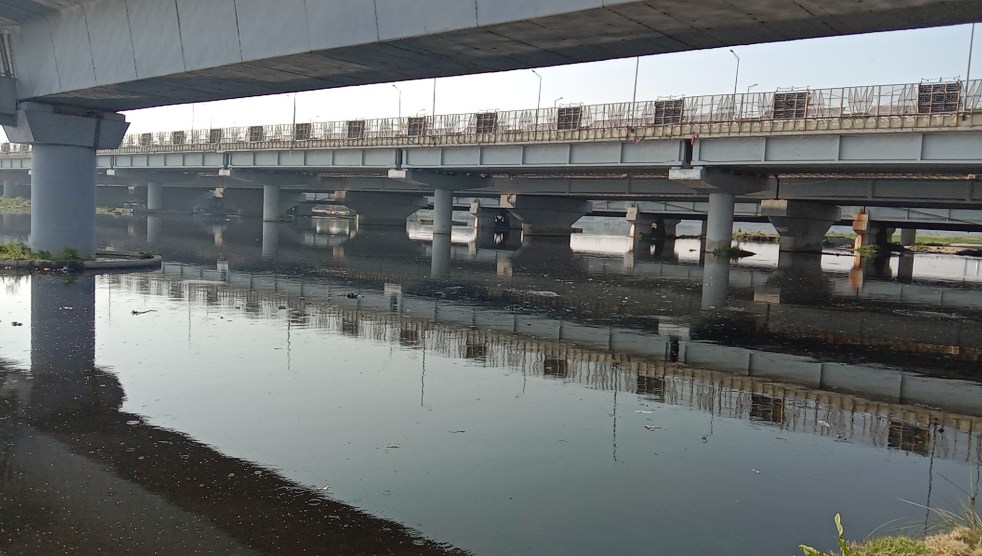
Bridges are essential infrastructure for human and cargo mobility across a river. They have also allowed us stop over and gaze on the beauty of flowing water streams without any risk of getting drowned or getting ourselves drenched in water. More and more bridges are being built on rivers without understating their impacts. There is hardly any debate or discussion on governance and decision making process or minimum distances to be maintained between two bridges or limiting the number of bridges on given stretch, considering what the river can support. This report takes a look at the situation of bridges on river Yamuna and describes few examples how they have been impacting the river eco-system. 

Continue reading “Yamuna Jayanti 2020: Bridges-Connecting People, Disconnecting River?”

Dams · Wetlands

Ramsar Wetlands in Crisis 2020: South India

Out of six states/ Union Territory in South India, three stares have five Ramsar wetlands sites which include one each in Andhra Pradesh and Tamil Nadu and three in Kerala. There are no Ramsar wetlands in Telangana, Karnataka and Puducherry. In order to understand and highlight the present day situation of Ramsar sites in India, SANDRP has compiled information on all 37 wetlands under North, West, North East and East zone. This account in the series describes the threats affecting the Ramsar sites in South Indian States.

Continue reading “Ramsar Wetlands in Crisis 2020: South India”

CWC - Central Water Commission

South India Overview of CWC Flood Forecasting Sites 2019

Flood Forecasting (FF) is one of the important activities of Central Water Commission (CWC), which is undergoing expansion and improvement, but there is still a huge scope for improvement. In order to better understand the CWC’s flood monitoring and forecasting work, in this article, we have given an overview of CWC’s flood forecasting and monitoring sites in South India, the last region to be covered for 2019 flood season. It includes state wise list of CWC’s Level Forecast, Inflow Forecast and level monitoring sites in South Indian states of Andhra Pradesh, Telangana, Karnataka, Tamil Nadu, Puducherry (no FF sites) and Kerala. Similar report has been published for North India[i] and North East India[ii], East India[iii] and West India[iv].    Continue reading “South India Overview of CWC Flood Forecasting Sites 2019”

central water commission

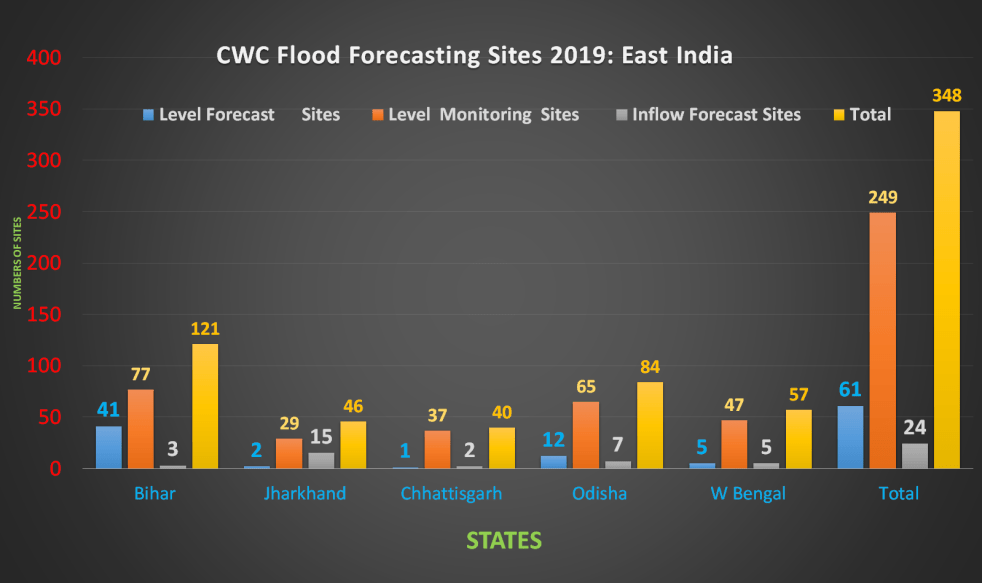
East India: 2019 Overview of CWC Flood Forecasting Sites 

Central Water Commission (CWC) is the only agency doing flood forecasting in India. CWC’s Flood Forecasting (FF) is available on its website[I]. In this article we have given an overview of CWC’s flood forecasting and monitoring sites in East India. It includes state wise list of CWC’s Level Forecast, Inflow Forecast and level monitoring sites in East India. Similar report has been published for North East India[II] and North India[III] and we hope to publish reports covering other regions of India soon. East India includes five states: Bihar, Jharkhand, Chhatisgarh, Odisha and W Bengal.

Continue reading “East India: 2019 Overview of CWC Flood Forecasting Sites “