Dams · Monsoon

Monsoon 2018 Overview: Serious Anomalies Hidden by Macro Figures

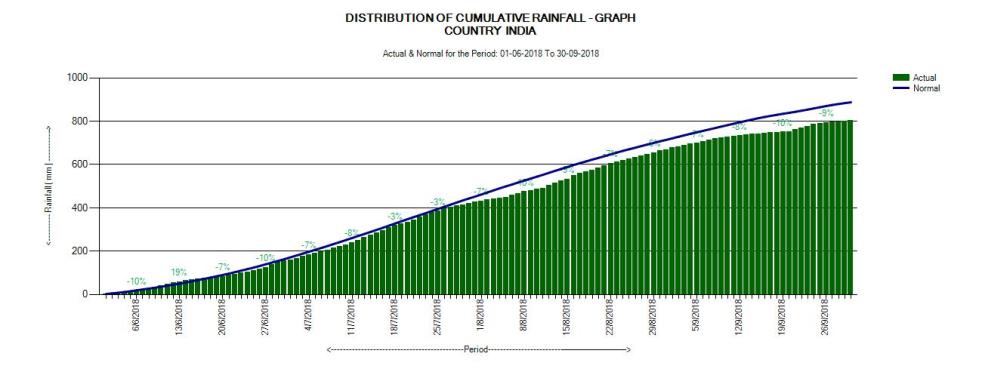
2018 becomes fifth year in a row when India’s south west monsoon has been below normal.  In the beginning of monsoon season, Indian Meteorological Department (IMD) has forecasted rains to be normal with rainfall equal to 97 percent of the long term average. However at the end of the season the overall rainfall turned out to be 91 percent, with deficit of 9 percent at national level. However, as we see in this overview, the situation as move from national to local figures, is much different, mostly much worse.

According to IMD’s State Rainfall Map (cumulative) dated 30 Sept. 2018, the country received 804.0 mm rains against 887.5 mm of normal average. Thus the south west monsoon 2018 had 9.4 percent below normal rainfall.

Continue reading “Monsoon 2018 Overview: Serious Anomalies Hidden by Macro Figures”

Dams · DRP News Bulletin

DRP: 5 Nov 2018: More Reports on Failure of Namami Gange Program 

(Feature image showing preparation of Kumbh 2019 at Prayagraj by Siddharth Agarwal of Veditum)

EDIT article in SCIENCE magazine by TUSHAR SHAH and others on Ganga: “The quickest, cheapest, and most effective way for Mr. Modi to show a less polluted Ganga by 2019 would be operating dams and barrages in the Ganga basin with the sole objective of augmenting river flows. This would be a start to controlling discharge of untreated sewage and industrial waste, which will take a long time.” http://science.sciencemag.org/content/362/6414/503  (2 Nov. 2018)

DOWN TO EARTH says about Ganga: “the river will continue to run as – and even more – polluted as ever… Till August 31, 2018, only a little more than a quarter of the total number of projects sanctioned under it (Namami Gange) had been completed… according to CPCB’s Water Quality Map, only five out of the 70-odd monitoring stations on the river had water that was fit for drinking; only seven had water that was fit for bathing…”

-“Down To Earth quotes a study report and CPCB data to say that the actual measured discharge of wastewater into the Ganga is 123 per cent higher than what has been estimated…”

-“Numerous hydroelectric projects on the Bhagirathi and Alaknanda have turned the upper stretches of the Ganga into ecological deserts, says the Down To Earth assessment. The baseflow amount of the river has decreased by a huge 56 per cent in 2016, as compared to the 1970s.”

– “about 180 MLD of sludge will be generated in the five Ganga Basin states (Uttarakhand, Uttar Pradesh, Bihar, Jharkhand, West Bengal) when they become ODF. If proper sludge management is not done, this would invariably pollute the Ganga. What should cause further concern is that faecal sludge is a bigger pollutant than sewage – while BOD of sewage is 150-300 mg/litre, that of faecal sludge would be 15,000-30,000 mg/litre.” https://www.cseindia.org/ganga-may-not-flow-clean-in-the-near-future-says-new-analysis-9085  (30 Oct. 2018)

Meanwhile, a new CAG report reveals that almost 26 million litres of untreated sewage still flows into the Ganga every day in Uttarakhand. https://www.downtoearth.org.in/news/water/uttarakhand-has-failed-to-rejuvenate-the-ganga-through-namami-gange-62027  (2 Nov. 2018)

Continue reading “DRP: 5 Nov 2018: More Reports on Failure of Namami Gange Program “
Arunachal Pradesh · brahmaputra · China · Landslide dam

Another Landslide Dam on Yarlung Tsangpo raises more questions

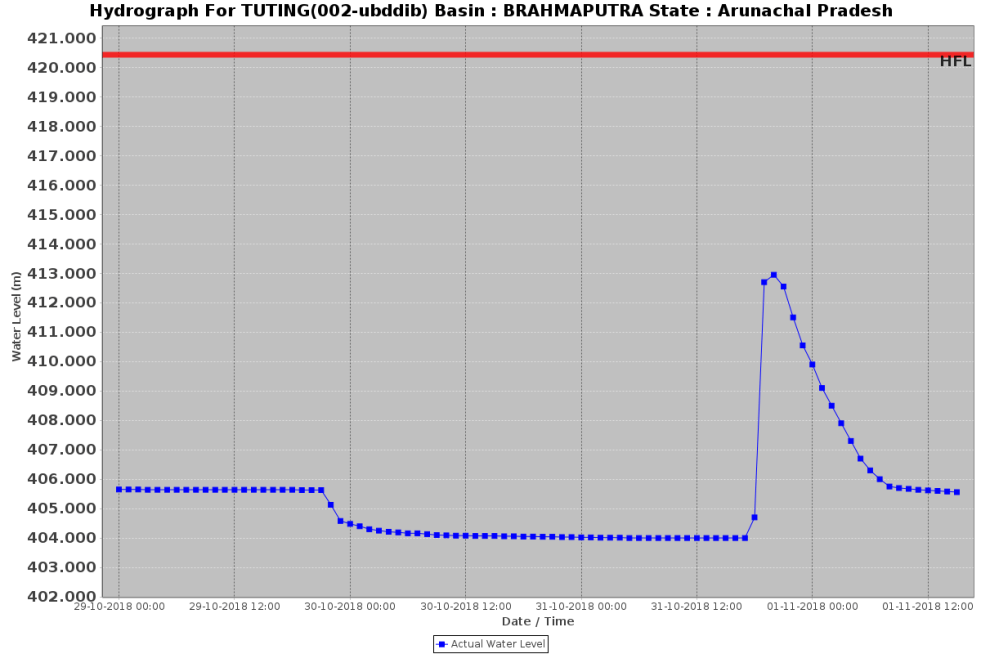
On Oct 29, 2018, another landslide dam blocked the path of Yarlung Tsangpo Dam, reportedly at the same location as the Oct 17,2018 landslide dam[i]. It breached on Oct 31, without any reported major calamity, but these repeated occurrences, twice in two weeks and third time in ten months (if we include Dec 2017[ii] landslides) raises a lot of questions. The silence of government of India institutions about the possible causes or other analysis, including by Central Water Commission, Union Ministry of Water Resources, National Disaster Management Authority or even National Remote Sensing Agency has, as expected, raised questions and speculations in Arunachal Pradesh. Continue reading “Another Landslide Dam on Yarlung Tsangpo raises more questions”

Dams · DRP News Bulletin

DRP: 29 Oct 2018: Better Paddy Options Exist For Punjab

A try-out of the technique to grow paddy without puddling at village Chehlan of Ludhiana has resulted in higher yield in comparison to puddled fields, while saving water in the process. The crop was ready for harvest days before expected time, saving irrigation water otherwise to be used for another fourteen days. This trial was funded and supervised by ATMA, a central govt.  scheme under the Union Ministry of Agriculture.

Puddling is a traditional method of flooding paddy fields with running water, whereas in non-puddling technique, ‘ridges and furrows’ are formed in soil to let water store in spaces and let it stay, thus reducing irrigation frequency.

“Not paddy but puddling is the enemy of waters of Punjab. It is wastage of water to puddle fields as most of it just evaporates. We have saved 45-50 per cent of water in non-puddled fields. Our yield has been almost 30 per cent more from fields where crop was not puddled. Also, non-puddled crop matured very early, saving at least ten days of irrigation water,” says Rupinder Singh Chahal (43) who along with his brothers Jasvir Singh (48) and Kulwinder Singh (52) experimented with ‘non-puddling’ technique on four acres this year.

Continue reading “DRP: 29 Oct 2018: Better Paddy Options Exist For Punjab”
Environment Impact Assessment · Gujarat · Narmada

Why Sardar may have been uncomfortable with the 600 feet statue

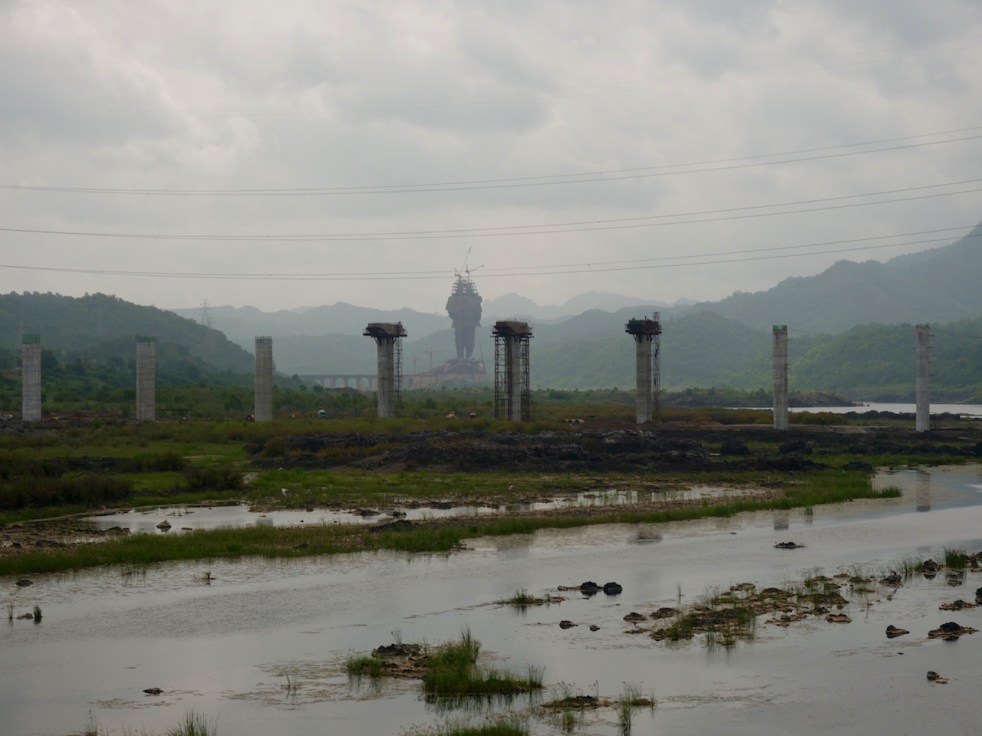
Consider the facts: The 600 feet tall statue of Sardar Patel that the Prime Minister of India will inaugurate on Patel’s Birthday on October 31, 2018 is situated bang in the middle of the Narmada river. To take up such unprecedented construction in the middle of the river would require, at the least, environment clearance, since the construction would have huge impacts on the river. No such clearance was sought or given. It would have required environmental impact assessment, environmental management plan, appraisal, public consultations, monitoring and compliance. NONE OF THIS HAPPENED.  Continue reading “Why Sardar may have been uncomfortable with the 600 feet statue”

Dams · Monsoon

Himachal Pradesh Monsoon 2018 Overview

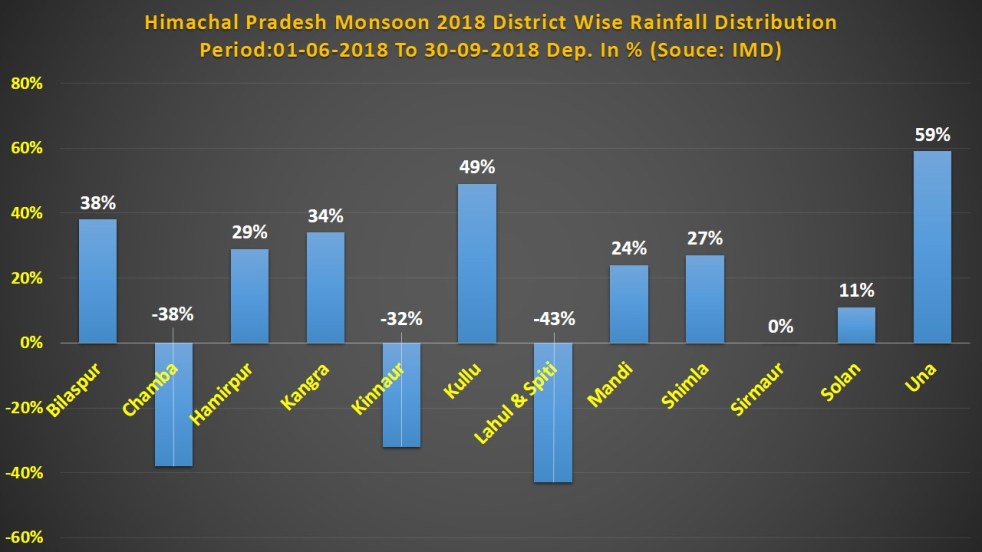
Himachal Pradesh has received 917.3 mm rainfall during South West Monsoon 2018. The amount is 11 percent higher than normal rainfall category of 825.3 mm. However at district level there is considerable variation in the distribution of rainfall. Out of 12 districts in the state, rainfall departure has been in deficit in three districts namely Chamba, Kinnaur and Lahul & Spiti by 38 percent, 32 percent and 43 per cent respectively. All these three districts are in upper part of Himalaya, the origin of many rivers & where mountains are mostly snow covered.

Continue reading “Himachal Pradesh Monsoon 2018 Overview”

Dams · Urban Rivers

Chandigarh Water Sources; Streams: The City Not So Beautiful

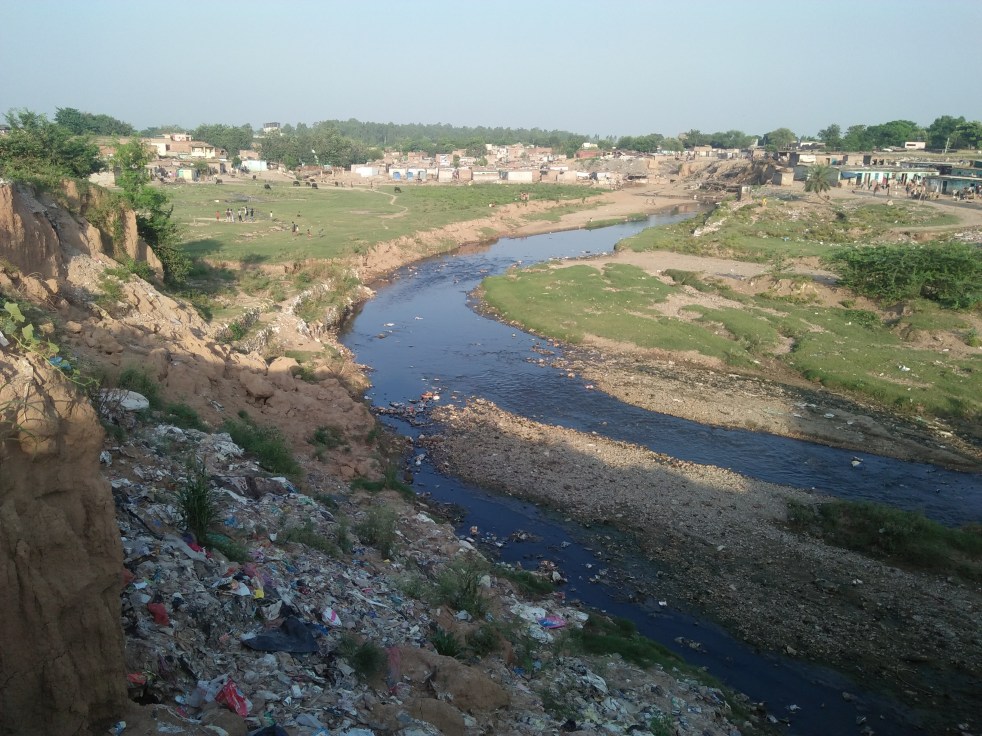
Chandigarh is widely known for its well-designed urban areas and associated amenities. No doubt, the city is relatively congestion free and cleaner. The roads are wider, sideways have adequate space for walkers and cyclists and they are mostly covered under thick tree canopy earning its tag of ‘City Beautiful’.

However less is known about and rivers. This pictorial account tries to throw some light on present day situation of water sources like wells, ponds and rivers in and around Chandigarh town.

IMG20181019130053

Continue reading “Chandigarh Water Sources; Streams: The City Not So Beautiful”

Dams · DRP News Bulletin

DRP: 22 October 2018: Looming Drought in Western India

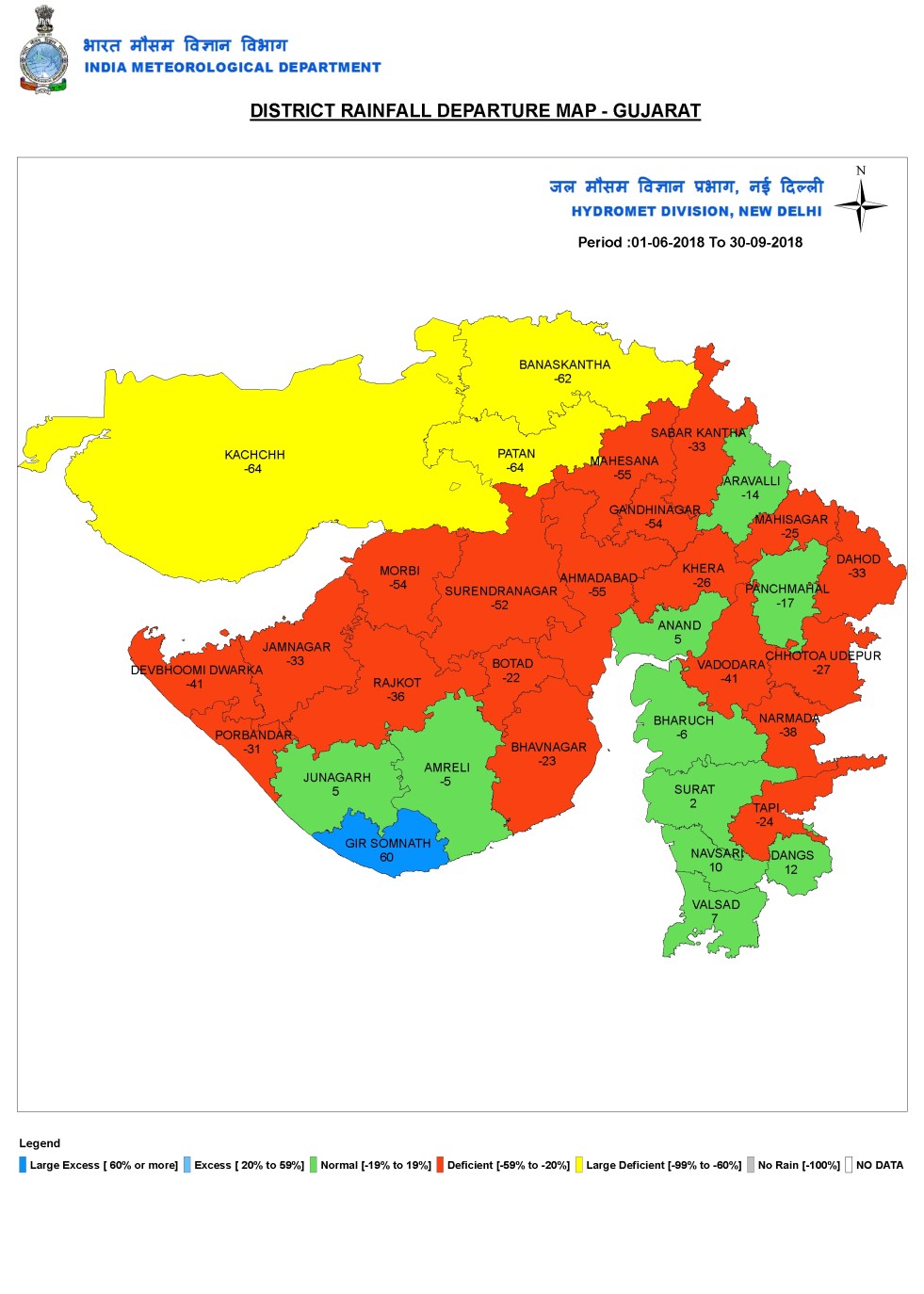
(Feature image Gujarat state cumulative rainfall during SW monsoon 2018; Source: IMD)

Maharashtra State’s groundwater surveys and development agency (GSDA) has warned of a water scarcity in 11,487 villages of 167 tehsils in the State. In its 2018-19 report, the GSDA, which comes under the department of water supply and sanitation, has said the study of the groundwater level (in comparison to the level in October in the last five years) has shown that of the 353 tehsils in the State, 13,984 villages in 252 tehsils have shown a decrease by more than one metre.

Between October 15 and 21, 380 tankers were used across the State, against 91 tankers in the corresponding period last year. A week prior to that the number was 354, and 329 tankers were used in the first week of October.

Continue reading “DRP: 22 October 2018: Looming Drought in Western India”
Indian Meteorological Department · Rainfall · Rivers

River Wise Rainfall in Monsoon 2018

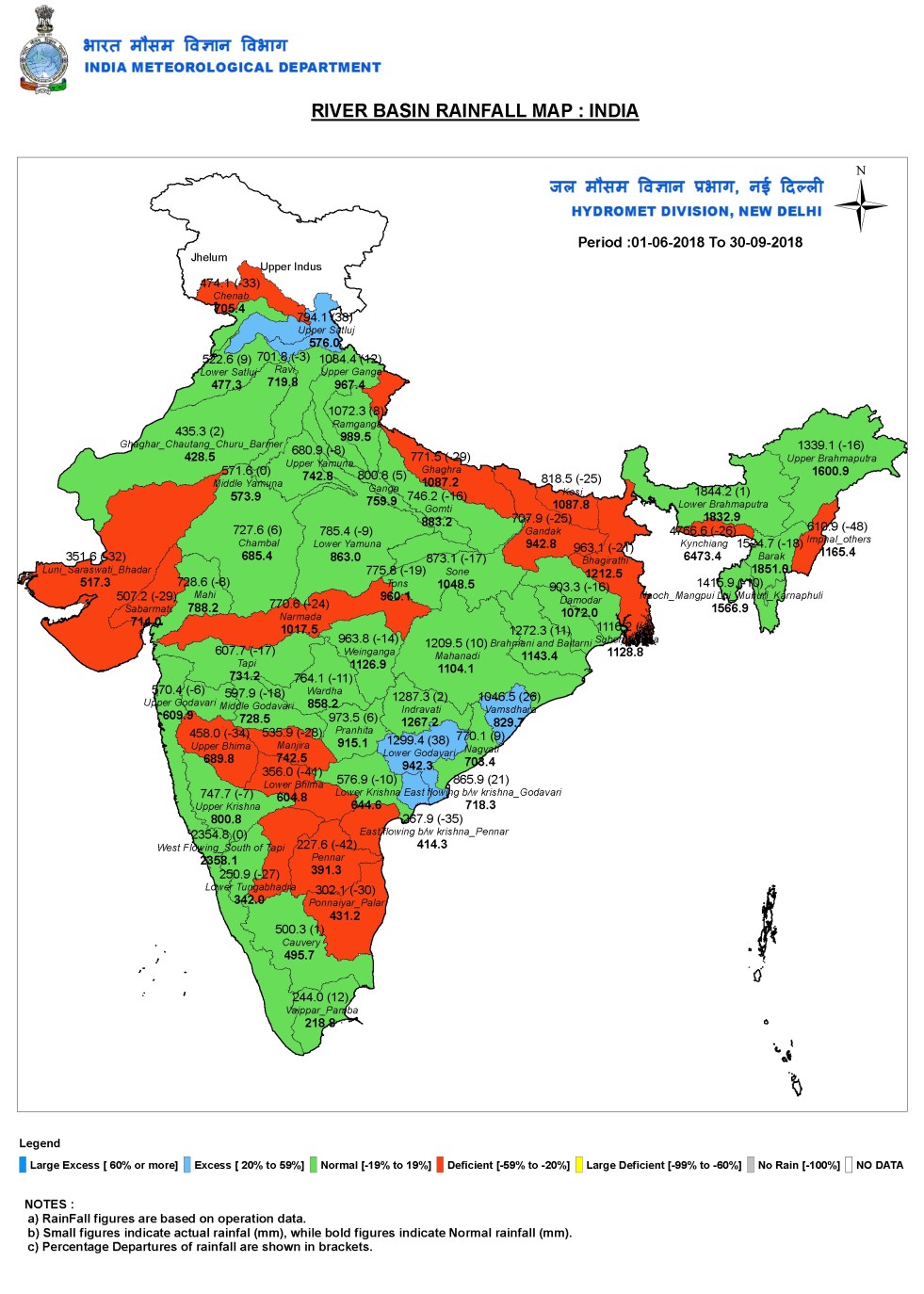
India’s most important season from water point of view, the June-Sept South West Monsoon has just ended officially on Sept 30, 2018. India Meteorological Department (IMD) reported that India received 804 mm rainfall in these four months of monsoon 2018, compared to normal rainfall of 887.5 mm. So Monsoon 2018 rainfall was 9.4% below normal, also proving IMD forecast wrong. Continue reading “River Wise Rainfall in Monsoon 2018”

Arunachal Pradesh · brahmaputra · Landslide dam

Landslide DAM on Tsangpo creates flood disaster risk for Siang

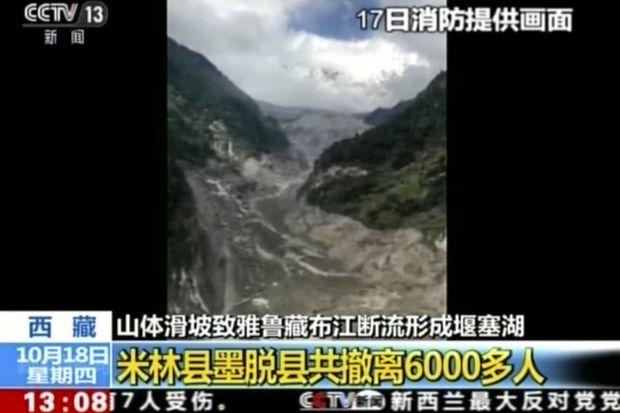
A massive dam, created by landslide in early hours (around 5 am) of Oct 17,2018 has blocked the main stream of Yarlung Tsangpo in Tibet. The reservoir behind the dam already has humungous 360 Million Cubic Meters (MCM) of water by 7 am on Oct 18, 2018 and as per latest reports (subsequently saw the CWC tweet put out at 955 pm on Oct 18,  saying  that storage had reached 484 MCM by 8 pm on Oct 18), the reservoir is still growing in size. The exact location of the landslide dam is uncertain. According to one source, the latitude longitude could be 94.93754° E, 29.74957° N, but this may not be accurate the likely location may be a few kilometers downstream from here. The Chinese media[i] has reported that the landslide dam is located at near Gyalha village in Milin or Manling county. According to some experts who visited the site, the dam could breach very soon, possibly on Oct 19, bringing massive floods along Siang river in Arunachal Pradesh. Continue reading “Landslide DAM on Tsangpo creates flood disaster risk for Siang”