Climate Change · Dams · Environment · Ganga · Narmada · Rivers

Dams, Rivers & People: 09 Nov 2015 (Maharashtra Drought-1420 more villages included in affected list)

The State will now seek a Rs. 4,300-crore package for providing succour to over 16,000 drought-affected villages. Earlier State Relief and Rehabilitation Minister Eknath Khadse had declared over 14,708 villages drought-affected. He now said that the State’s assessment by October 31 showed that drought-like conditions also prevailed in 1,420 villages in Buldhana district in Vidarbha, and they would be added to the list of drought-affected villages.

Continue reading “Dams, Rivers & People: 09 Nov 2015 (Maharashtra Drought-1420 more villages included in affected list)”

Agriculture · Climate Change · Dams · Drought · Environment · Ganga · Irrigation · Monsoon · Narmada · Rivers · South Asia

Dams, Rivers & People: Nov 02, 2015 (Festival Fishing on occasion of Kati Bihu in Assam)

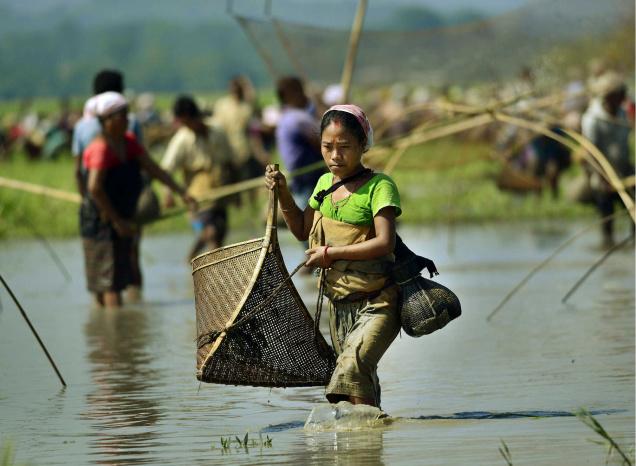
People of a village in Morigaon district of Assam fish in groups to celebrate ‘Kati Bihu’ on Sunday. The festival is closely related to agriculture, celebrated on the first day of the Kati month of the Assamese calendar. It is that time of the year when paddy grows in the fields and cultivators work hard for a good harvest.— Photo: Ritu Raj Konwar, The Hindu

Continue reading “Dams, Rivers & People: Nov 02, 2015 (Festival Fishing on occasion of Kati Bihu in Assam)”

Agriculture · China · Climate Change · Dams · Drought · DRP News Bulletin · Environment · Ganga · Irrigation · Monsoon · Nepal · Pakistan · Rivers · Sand Mining

Dams, Rivers & People: Oct 26, 2015 (Saving Tigers is Saving Rivers, Story of once dry Tamirabarani River )

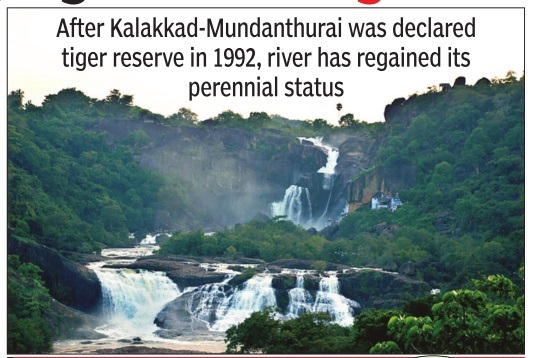
Tamirabarani teaches: Saving tiger is saving river  After Kalakkad-Mundanthurai was declared tiger reserve in 1992, Tamirabarani river has regained its perennial status. Though shorter than Cauvery and Vaigai, Tamirabarani has always held a special place in the state. It started turning dry for four months every year. People of Tirunelveli and Tuticorin thought their river too was going the way of other state rivers. But a move to save the tiger inadvertently became a save the-river policy. The Union ministry of environment and forests declared the Kalakkad – Mundanthurai area as a tiger reserve in 1992. In three years, there was a noticeable change. A study on water inflow into the Karayar river, a tributary, inside the reserve was taken up. Records show that from 1946 till 1990, the river received only 13,000 cubic feet of water annually. After the area was declared as a tiger reserve, the inflow increased to 23,000 cubic feet.

Continue reading “Dams, Rivers & People: Oct 26, 2015 (Saving Tigers is Saving Rivers, Story of once dry Tamirabarani River )”
Climate Change · Dams · Drought · Floods · Ganga · Irrigation · Monsoon · Narmada · Rivers · Sand Mining

Dams, Rivers & People: Oct 19, 2015 (Migratory birds keep away from NCR due to warm weather)

Sardar Sarovar Dam gates can’t be closed till last person displaced is rehabilitated: SC.

CIC tells centre to give Polavaram project info to RTI applicant

Scrap Renuka dam if Centre-HP row can’t be sorted out: SC

State orders release of Godavari water to drought-hit Marathwada

HC Bombay directs inquiry into release of Gangapur dam water for Shahi Snan at Kumbh Mela

Bhama Askhed dam project: Agitation turns violent

Pinjal-Gargai dam project in Mumbai faces protests

Amid heated arguments Nashik Municipal Corporation approved additional Rs 36cr for Makane dam plan

Continue reading “Dams, Rivers & People: Oct 19, 2015 (Migratory birds keep away from NCR due to warm weather)”

Climate Change · Dams · Ganga · Irrigation · Monsoon · Sand Mining · Uttarakhand

Dams, Rivers & People: Oct 12, 2015

Arunachal:-  Siang People’s Forum writes to MoEF to not allow mega dam on Siang River, State Govt. supports the cause

Assam:- Locals, CM show stiff resistance to Lower Subansiri power project

Himachal:-Jispa Dam project faces opposition

Uttarakhand:- From 60 to 7000 patients in 3 years, Uttarakhand floods play havoc with mental health

Maharashtra:- Drought-Hit Maharashtra to generate 400 mw hydropower

Himalaya:- Dams, Hydro projects & other development works may wipe out many unknown species being discovered in Eastern Himalaya

Climate Change :- The Hydropower Methane Bomb No One Wants to Talk About

Continue reading “Dams, Rivers & People: Oct 12, 2015”

Climate Change · Dams · Drought · Environment · Ganga · Hydropower · Irrigation · Monsoon · Rivers · Sand Mining

Dams, Rivers & People: Oct 05, 2015 (On Climate Agenda Govt. scale down targets but on ground still pushing hard many hydro projects)

HYDROPOWER

Hydro fast loosing sheen in renewable energy basket  and the share of hydro is likely to decline further as through the past three years, the installed capacity of hydropower projects has remained around 40,000 Mw. While the report superficially may appear as a sigh of relief nevertheless on ground Indian Govt. is still in a hurry to push many big hydro power projects particularly in North-Eastern States. Last month only Piyush Goyal Power Minister cleared the Teesta-III and spoke of clearing Subansiri too. In Siang basin Pauk, Heo, Tato-I are recently approved by MoEF Panel. Protest against 780 Nyamjang Chhu HEP is going on. Similarly several projects in Ganga, Barhamputra and Satluj basin are being cleared and constructed in plain violation of stipulated green norms. Public and private developers are repeatedly ignoring environmental concerns and not addressing the issues raised by local people.

Continue reading “Dams, Rivers & People: Oct 05, 2015 (On Climate Agenda Govt. scale down targets but on ground still pushing hard many hydro projects)”

Climate Change · Dams · Drought · Environment · Ganga · Irrigation · Monsoon · Rivers

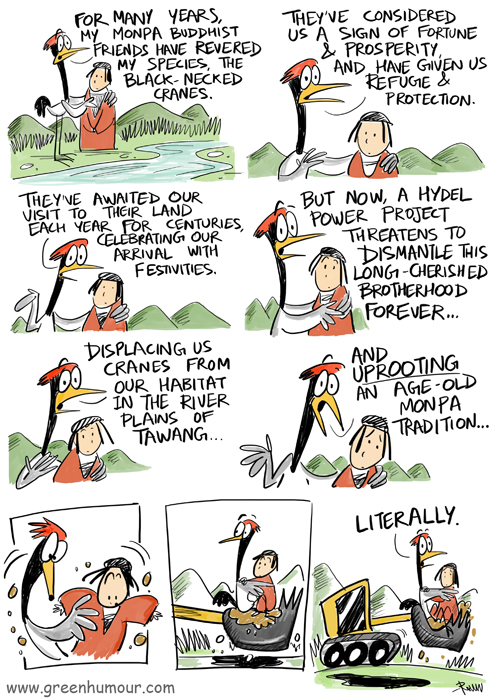
DRP News Bulletin, Sep 21, 2015: Buddhist Monpas, Black-necked Cranes & Nyamjang Chhu Project

Rohan Chakraborty’s cartoon on the threat from 780 MW Nyamjang Chhu hydel project to Black- necked Cranes revered by the Buddhist Monpas of Tawang.

HYDROPOWER

UTTARAKHAND: Hydro Power companies, BRO, PWD still dumping debris in Uttarakhand rivers, forest department under pressure as administration and judiciary stand in defence of culprits  MOST SHOCKING STATE OF AFFAIRS IN UTTARAKHAND HYDRO AND RIVERS: “SS Rasailey, director of the Nanda Devi Biosphere Reserve said, “BRO and PWD have been throwing all the road construction-related garbage into the rivers on a regular basis. Similarly, companies behind the THDC run Pipalkoti-Vishnuprayag and NTPC-run Tapovan-Vishnugad hydel projects have been doing this as well, despite the fact that all of them have to dispose waste on a separate piece of land as per the guidelines. While they show that they are following the rules on paper, in reality they don’t.” Rasailey added that while forest officials have taken up this issue, filing cases and even getting the people arrested for alleged waste disposal in Chamoli district, they have not received cooperation from the administration or the judiciary in prosecuting the big companies which are among the violators.

This story sheds light on the plight of people displaced by Tehri Dam as thousands of them are still waiting for proper compensation and rehabilitation. The woes of the displaced people never end. Himangshu Thakkar of SANDRP, who has been working on issues associated with large dams, warned of playing with rivers, “With dams, our politicians are inviting disaster and playing with the lives of people, the Himalayas, the Ganges and future generations. They didn’t learn anything from the June 2013 disaster”.

ARUNACHAL PRADESH MoEFCC massive clearance spree of Arunachal hydro power projects bound to have repercussions as there have been no public consultations in Arunachal Pradesh or Assam. Surprisingly, Subansiri river basin study was not even listed among the 14 subjects that were placed for discussion. However, this did not stop the Committee from taking a decision to go ahead with 26 projects. On 3097 MW Etalin by Jindal group on Dibang, the EAC has recommended  primary surveys only in monsoon, not in winter and pre-monsoon, which experts  say is an attempt to enable faster clearances while compromising ecological and social security as lot of use of areas by people and wildlife is in winter and pre-monsoon, not just monsoon.

Continue reading “DRP News Bulletin, Sep 21, 2015: Buddhist Monpas, Black-necked Cranes & Nyamjang Chhu Project”

Climate Change · Dams · Drought · Environment · Ganga · Hydropower · Interlinking of RIvers · Irrigation · Rivers

DRP 31 Aug. 2015: Drought hit Latur residents are not guarding gold or money but water

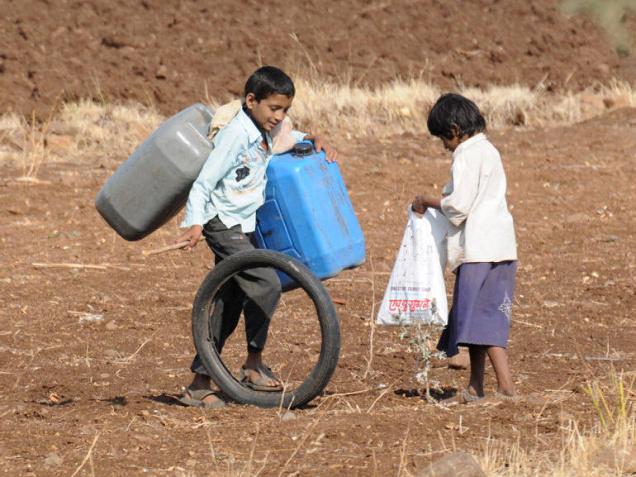
Water has become a closely guarded resource in Latur city which receives municipal supply only once every 15 days. The Dhanegaon dam which supplies water here has been at “dead storage level” for the last four years because of the meagre rains. But this year the water crisis is much worse: the arid Marathwada belt where Latur is located has reported the highest rain deficit in the entire country.

HYDROPOWER

JAMMU & KASHMIR: Eco concerns over Baglihar hydel project worry experts, locals The 900-MW Baglihar hydroelectric project continues to increase the worries of experts and inhabitants in the erstwhile Doda district comprising Kishtwar, Doda and Ramban districts as the region faces a major threat of severe climate change, courtesy successive regimes which have ignored all environmental concerns attached to the project. Torrential rain, cloudbursts and massive landslides are said to be new dangers confronting the people of the erstwhile Doda district which are mostly due to creation of the reservoir of between 30 km and 35 km in length. The region falls in Seismic Zone IV. In another interesting development referring to the All India Power Survey findings, the J&K government’s report—State Action Plan on Climate Change—states that climate change would have drastic impact on hydropower generation capacity in J&K in three possible ways. Firstly, the available discharge of a river may change since hydrology is usually related to local weather conditions, such as temperature and precipitation in the catchment area. Secondly, an unexpected increase in climate variability may trigger extreme climate events, i.e. floods and droughts, and thirdly, changing hydrology and possible extreme events may increase sediment risks. It further reveals that more sediment, along with other factors such as changed composition of water, raises the probability that a hydropower project suffers greater exposure to turbine erosion. Moreover, an unexpected amount of sediment will also lower turbine and generator efficiency, resulting in a decline in energy generated. Since the majority of power is generated from hydropower sources, there are high chances that Jammu and Kashmir may face power crisis if the projected impact of climate change happens. Higher demand of energy due to climatic variability and lower generation due to projected impact of climate change would widen the power supply-demand deficit in Jammu  and Kashmir.

Continue reading “DRP 31 Aug. 2015: Drought hit Latur residents are not guarding gold or money but water”

Alaknanda · Bhagirathi · Floods · Ganga · Mandakini · Ministry of Environment and Forests · Uttarakhand

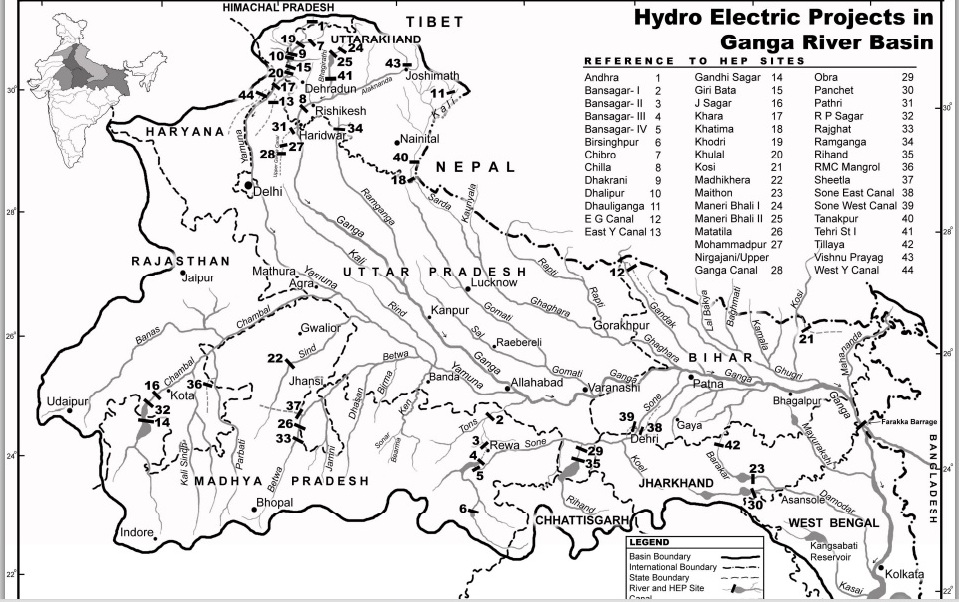
Two years of Uttarakhand Flood Disaster of June 2013: Why is state & centre gambling with the Himalayas, the Ganga & lives of millions?

Its two years since Uttarakhand faced its worst ever flood disaster during June 15-17, 2013. We remember such tragedies to ensure that we learn the necessary lessons. So that in future such tragedies are not repeated or their dimensions are reduced. One of the enduring debates since that the Uttarakhand tragedy has been about the role of existing and under construction hydropower projects in increasing the proportions of the disaster.

A lot of water has flown down the Ganga in these two years, so let us revisit the important milestones of that debate. Within two months of the disaster, a bench led by Justice Radhakrishnan gave an order on Aug 13, 2013[1], asking the Union Ministry of Environment, Forests & Climate Change (MoEF&CC) to appoint an independent panel to assess the role played by existing and under construction hydropower projects in the disaster. Continue reading “Two years of Uttarakhand Flood Disaster of June 2013: Why is state & centre gambling with the Himalayas, the Ganga & lives of millions?”

Ganga

Book Review: Why call Ganga a Machine?

Guest Blog by Ramya Swayamprakash (ramya.swayamprakash@gmail.com)

BOOK REVIEW: Ganges Water Machine: Designing New India’s Ancient River. Anthony Acciavatti; Applied Research + Design Publishing, 402 pp, March 15, 2015. ISBN: 9780982622612

I stumbled upon The Ganges Water Machine while looking for literature on urbanization and rivers in India. Written by architectural historian Anthony Acciavatti, the book is the result of a decade long journey through the Ganges basin, “an atlas — a dynamic atlas — of the Ganges Machine: a collection of transects that expose the juxtaposing layers of infrastructure and adjoining landforms” (P8). At a time, when the Ganges is seeing a surge of talk (and perhaps activity) about cleaning the river, this book is a timely inquiry in to how the Ganges river basin came to be the vast agrarian landscape that it is. This is perhaps the first time, the spatial dimensions of the multifarious historical and material processes at play in the Ganges basin with regards to irrigation have been explored. Continue reading “Book Review: Why call Ganga a Machine?”