Dams

Hydropower projects commissioned in 2015 in India: What do they tell us?

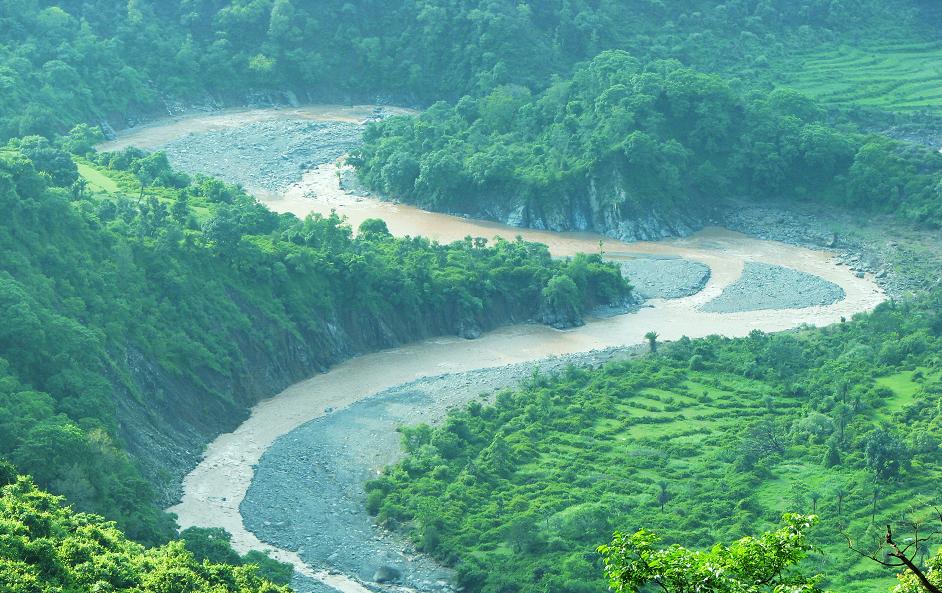
ABOVE: Rangit River in Sikkim Downstream of Jorethang Loop Hydropower Project (Photo: Mona Chettri)

Indian government continues to have very ambitious hydropower targets, even though all the evidence suggests why we should be reviewing the way we are taking decisions about hydropower projects. As per Central Electricity Authority, India has 42641 MW of installed capacity from large hydropower projects at the end of Dec 2015. The installed capacity from projects below 25 MW is not included in this figure.

CAPACITY ADDITION IN 2015: Troubled projects

During 2015, India added 1824 MW of large hydropower capacity. Some of the important projects commissioned during the year include: 800 MW Kol Dam in Himachal Pradesh (one unit each on 30.03, 31.03, 10.04, 12.06), 450 MW Baglihar II in Jammu and Kashmir, 80 MW at Lower Jurala Project in Telangana, 330 MW Srinagar HEP in Uttarakhand and 96 MW Jorethang Loop Project in Sikkim. The first project is in Central Sector, next two in state sector and the last two in private sector. Except for the 80 MW from Lower Jurala, rest of the capacity is all in Himalayan states.

If we look closely, all of these projects have had a very troubled track record and most continue to face serious problems even after commissioning. Continue reading “Hydropower projects commissioned in 2015 in India: What do they tell us?”

Dams · DRP News Bulletin

DRP: 04 Jan. 2016 (Rivers are soul of India: PM Narendra Modi)

Rivers are soul of India: Prime Minister Narendra Modi  Excerpts From text of PM’s inaugural address at 103rd session of Indian Science Congress, Mysuru Rivers have played as important a role in human history as oceans. Civilisations have been nurtured by rivers. And, rivers will remain critical for our future. So, revival of rivers is an essential part of my commitment for a cleaner and healthier future for our society, economic opportunities for our people, and renewal of our heritage. We need regulations, policy, investments and management to achieve our objective. But, we will succeed only when we integrate technology, engineering and innovation into our efforts, not just to clean our rivers now but to keep them healthy in the future as well. For this, we also need scientific understanding of the impact of urbanisation, farming, industrialisation and groundwater use and contamination on the river eco-system. River is the soul of Nature. Their renewal must be an element of a larger effort to sustain Nature.

Continue reading “DRP: 04 Jan. 2016 (Rivers are soul of India: PM Narendra Modi)”

Dams · Yamuna River

Happy Waste Free Yamuna!

In new year 2016, State Government of Uttarakhand must act against burgeoning amount of solid and liquid waste being put in Yamuna River in its home land.

River Yamuna appears flowing pollution and waste free in Himalayan stretch. But close observations go against this popular notion and paints grim picture of huge amount of waste finding its way in the river on a daily basis.  This account highlights the issue in detail and urges State Govt. of Uttarakhand (UK) to take remedial actions before it is too late to reverse the degradation of the River. 

Yamnotri is famous shrine and thousands of pilgrims and tourists frequent the place during Char-Dham Yatra held every year. These visitors, in absence of better options or for hygienic reasons prefer using bottled water, packaged foods (biscuits, snacks) and plastic disposals as food servings. As a result solid waste in massive amount is generated through the pilgrimage season which ultimately goes into the holy river. It’s worrying that this has become a norm for past many years.

Continue reading “Happy Waste Free Yamuna!”

Dams · Indus · Pakistan

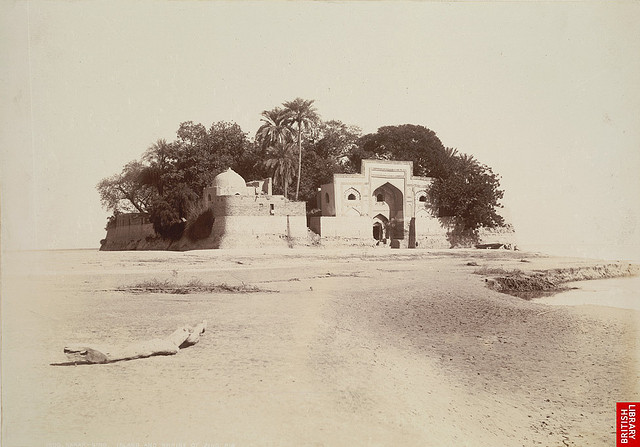
Jhulelal or Zindapir: River Saints, fish and flows of the Indus

Above: Zindapir Shrine at Sukkur Photo from: British Library

Perhaps we all have our pet projects which we wish would go on forever. I have been working on a Primer on Riverine Fisheries of South Asia for some years now (my office may disagree with the definition of ‘some’). Like a magpie collecting shiny knick-knacks, I keep collecting (quite serendipitously, or so I think) anecdotes and interviews and snippets on the subject. Continue reading “Jhulelal or Zindapir: River Saints, fish and flows of the Indus”

Dams

GROUND WATER CRISIS DEEPENED IN INDIA IN 2015

Groundwater issues made news repeatedly in the year 2015. The year saw a 14 per cent deficit in southwest monsoon increasing the dependence on ground water for agricultural, industrial and domestic use. The falling water table and pollution of surface and ground water sources made the situation critical in various parts of the country. Competing demands on the ground water led to protests and litigation. The National Green Tribunal (NGT) tried to safeguard the ground water and pushed the State machinery into action through its orders in various matters. Towards the end of the year, the Central Ground Water Authority (CGWA) came up with revised guidelines for evaluation of proposals for ground water abstraction.

Continue reading “GROUND WATER CRISIS DEEPENED IN INDIA IN 2015”

Dams

SANDRP Blog Annual Report for Year 2015

WordPress has created this annual report for SANDRP blog, see: https://sandrp.wordpress.com/2015/annual-report/

There were 148 blogs till Dec 29 on SANDRP blog this year, over 240 000 views and counting.

We are thankful to all concerned, and hope we continue to get the support in 2016. Feedback, as usual, is welcome.

VERY BEST WISHES FOR A HAPPY, PEACEFUL AND ENVIRONMENT FRIENDLY 2016!

SANDRP TEAM.

Dams · Hydropeaking · Hydropower

India’s Free Flowing Frontier Part I: Dibang at Nizamghat

What does it mean when landscapes, riverscapes, ways of life are altered forever? When a mighty, flowing river is plugged and made to stop, flow in tunnel and released as per our whims? For most of us, life and environment are so fundamentally modified that we would hardly question it. But as our worldview and our politics is set to dam some of the last free flowing rivers in the North East India into Hydro-Electricity Banks, what is at stake? Continue reading “India’s Free Flowing Frontier Part I: Dibang at Nizamghat”

Dams · Ganga

Four Boats at a River Crossing along Ganga

Above: A fisherman crosses the river with his boat. Photo: © Sameer Kumar/VBREC.

-Nachiket Kelkar (rainmaker.nsk@gmail.com)

It was a pleasant November afternoon when we were travelling down the Ganga River by boat, surveying river dolphins. Tall grass had grown on both banks through the flood recession period. The water level had become very low already. Two magnificently large concrete buildings; one, the agricultural college, and the second, the industrial office, stood precariously by the edge of a rapidly eroding bank. At the turn of this bank, the Ganges Voyager appeared in a sudden sight. British tourists with gleaming shades, sunning their fair skins to balanced tan tempered by muslin umbrellas put over brick-red wooden tables, waved at us from the deck of the Voyager. Uniformed Indian attendants confirmed that they were not waving out to any dangerous people, in a re-enactment of the old colonial days. The Voyager had fifty air-conditioned luxury rooms. Their windows were made translucent by pale mauve and white chiffon curtains artistically tied in an hourglass shape. Continue reading “Four Boats at a River Crossing along Ganga”

Dams · DRP News Bulletin

DRP: 28 Dec. 2015 (Farmers field school in Jharkhand shows the way in integrated farming)

AGRICULTURE

Farmers field school in Jharkhand shows the way in integrated farming The School has taught farmers how to use waste from their farms as inputs in their farming system. Other organic practices have improved the soil profile and water holding capacity of the fields. The schools are run throughout the cropping season. Farmers receive training on how to manage crops, waste and pests. Meaningful discussions are held in the farms on crop growth, climate, soil conditions and constraints to crop production. Based on these observations, farmers make informed decisions to increase yields and improve the soil fertility of their fields. These schools now serve as the training ground for new farmers. Indeed, improving water holding capacity of the soil is much neglected issue.

Organic manure saves crop from floods For the second year in succession, Velu, a farmer in Morappakkam near Madurantakam, has become the envy of other farmers as the organic crop raised by him survived the inundation during the recent rains.  Continue reading “DRP: 28 Dec. 2015 (Farmers field school in Jharkhand shows the way in integrated farming)”

Dams

DRP: 21 Dec. 2015 (100 people have a narrow escape as Ganga level rises after sudden release from Tehri Dam)

100 people have a narrow escape as Ganga level rises after sudden release from Tehri Dam More than a 100 people who were attending a religious discourse had a narrow escape when the water level rose suddenly in the Ganga River in the temple town of Rishikesh. According to the police, the water level increased after Tehri Dam released water, a routine exercise that is done after informing officials concerned. CD Anthwal, circle officer Rishikesh told HT that the people attending the religious discourse were rescued with the help personnel of the Jal Police (water police).

Continue reading “DRP: 21 Dec. 2015 (100 people have a narrow escape as Ganga level rises after sudden release from Tehri Dam)”