Dams

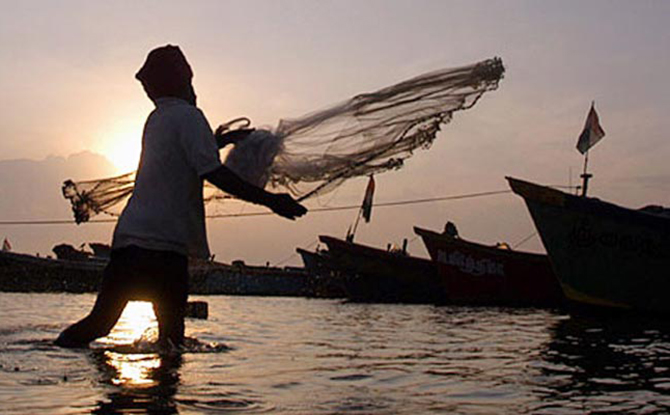
World Fisheries Day 2017: Dams, Rivers & Fisheries in India

Every year, November 21 is celebrated as World Fisheries day across the world. Fisherfolk communities organize rallies, workshops, public meetings, cultural programs, dramas, exhibition, music show, and demonstrations to highlight the importance of maintaining the world’s fisheries.

As per a recent United Nations study, more than two-thirds of the world’s fisheries have been overfished or are fully harvested and more than one third are in a state of decline because of factors such as the loss of essential fish habitats, pollution, and global warming. The World Fisheries Day helps in highlighting these problems, and moves towards finding solutions to the increasingly inter-connected problems, and in the longer term, to sustainable means of maintaining fish stocks. https://www.gdrc.org/doyourbit/21_11-fisheries-day.html

In an attempt to understand the significance of the issue, SANDRP with the help of selective media report, presents an overview of key developments and problems affecting fisheries and fisher folks at India and South Asia level.

Continue reading “World Fisheries Day 2017: Dams, Rivers & Fisheries in India” →

Dams · DRP News Bulletin

DRP: 20 Nov 2017 (GLOBAL SLOW DOWN IN HYDRO POWER PROJECTS)

It is getting increasingly clear that days of large hydro power projects are coming to an end. While in India large numbers of big hydro power projects are stalled, this week there was news from Meghalaya, Arunachal Pradesh, Sikkim and rest of North East India of cancellation or stoppage of hydro power projects. http://www.sentinelassam.com/story/main-news/0/subansiri-project-not-to-see-light-for-4-years/2017-11-12/1/325720#.WgpysVuCzIV

Pancheshwar project on India Nepal border continues to face opposition. https://timesofindia.indiatimes.com/city/dehradun/traders-oppose-pancheshwar-dam/articleshow/61705308.cms  

Nepal this week cancelled the agreement for 1200 MW Budhi Gandaki hydropower project. In Bhutan, the Prime Minister declared that they are in no hurry to go ahead with new hydropower projects. http://kathmandupost.ekantipur.com/news/2017-11-13/govt-scraps-budhigandaki-project-with-chinese-company.html  

In Pakistan, the agreement for the massive 4500 MW Diamer Bhasha hydropower company with China has fallen through. https://economictimes.indiatimes.com/news/defence/chinas-strict-conditions-force-pakistan-not-to-include-diamer-bhasha-dam-in-cpec-officials/articleshow/61660935.cms

In Mynmar, too the agreement with China for massive hydropower project stands cancelled. http://www.reuters.com/article/us-china-myanmar-energy/china-says-will-keep-talking-to-myanmar-over-stalled-dam-scheme-idUSKBN1D80X4?il=0

This is further reinforced by study by Dr. Luke Gibson, Honorary Assistant Professor of the School of Biological Sciences at the University of Hong Kong, which concludes that among so called green energy sources, hydropower is most dangerous. https://phys.org/news/2017-10-green-energy-hydropower-dangerous.html#jCp

Continue reading “DRP: 20 Nov 2017 (GLOBAL SLOW DOWN IN HYDRO POWER PROJECTS)” →
Dams

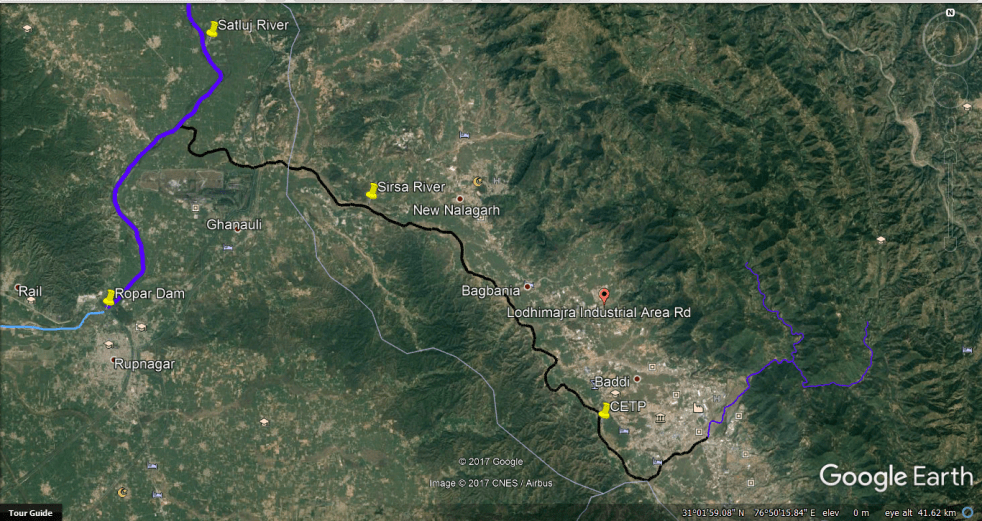
Failing CETP In Himachal’s Pharma Hub, Poisons River Sirsa & Villagers’ Lives

Last month, on October 14th, around noon, there was a massive fish kill in the Sirsa River at Sitalpur, in Baddi, Solan district. Locals of the area who witnessed the event sent in these photographs and video of hundreds of dying rohu. 

Sirsa 1

Photo and Video Credit: Pawan Bhardwaj, Baddi

Sirsa, a lifeline once, now spells doom


The Sirsa river in the Shiwalik foothills of Himachal, which flows into the Satluj, has been reduced to a drain carrying toxic industrial effluents of the Baddi Barotiwala Nalgarh Industrial hub, over the last ten years. The river has several villages located along its banks that have been impacted as a result of untreated effluents and toxic water being drained into it by more than 2000 industrial units in the region. The worst affected were the Gujjars, a pastoral community dependent on rearing cattle and buffaloes.

Continue reading “Failing CETP In Himachal’s Pharma Hub, Poisons River Sirsa & Villagers’ Lives” →

Dams · DRP News Bulletin

DRP: 13 Nov 2017 (EAC Defers To Clear Pancheshwar Dam But Ignores People’s Voices)

The minutes of expert appraisal committee (EAC) shows that Environmental Clearance  (EC) for the Pancheshwar Multipurpose Project has been deferred. The minutes were uploaded after 16 days of EAC meeting conducted on Oct 24, 2017. http://environmentclearance.nic.in/writereaddata/Form-1A/Minutes/09112017PCU6UH80Finalminutesof9thEACmeeting1.pdf

In the minutes, the EAC said that it would require to study the Environmental Impact Assessment (EIA) report for the Nepal portion of the project to get a holistic view. It also directed the project proponent to obtain wildlife clearance as the project was located 300 metres from the Ascot Wildlife Sanctuary. 

It is worth to mention that the Pancheshwar dam with a height of 315 meters is world’s second tallest dam proposed in ecologically sensitive region. Scores of media reports have underlined the unfair and politically influenced Environment Public Hearing (EPH) process, conducted during peak monsoon month in landslide ridden and disaster prone region. The venue of the EPH was also several kms away from villages going to be affected thus depriving the local people participation in essential decision making process. As a result the concerns and voices of villagers to have their voices heard. The EIA report of the project has also not mentioned several grave environmental issues of GOLFs events, cloud bursts, earthquakes etc in the catchment of the dam let alone the question of impact on endangered wildlife like Mahseer fish. 

Continue reading “DRP: 13 Nov 2017 (EAC Defers To Clear Pancheshwar Dam But Ignores People’s Voices)” →
Dams · DRP News Bulletin

DRP: 6 Nov 2017 (NGT Asks For Fresh Appraisal Of Lower Subansiri Hydro Project)

In a remarkable development, the National Green Tribunal (NGT) on October 24 has suspended the clearances given to the 1750-megawatt (MW) Demwe Lower Hydroelectric Project  (HEP) planned on the Lohit river in Arunachal Pradesh.

In its detailed order, released on October 27, the NGT ruled that the Environment Minister as Chairperson of the National Board for Wildlife (NWBL), a statutory body constituted under the Wildlife Protection Act, 1972, could not “just brush aside” the views of the majority of NBWL standing committee members.

Suspending the clearances given by the Centre and the state govt, the NGT order added that “the decision taken by the Standing Committee is not in accordance with established principles of law and hence the Standing Committee shall reconsider the issue and pass appropriate orders within a period of six months from the date of the judgment”.

Environmental clearance for the project was given by the Union environment ministry’s Expert Appraisal Committee (EAC) for river valley and hydroelectric projects back in 2009. An in-principle forest clearance for the Lower project was given in February 2012 and agreed upon in 2013.

However, the in-principle clearance of the project was opposed by a majority of the Standing Committee of the NBWL but subsequently cleared by the then-environment minister of state (independent charge), Jayanthi Natarajan, who was also the chairperson of the Standing Committee.

Natarajan is currently under the CBI’s scanner for alleged anomalies in clearance given for diversion of land in Saranda forest in Singhbhum district, Jharkhand to mining company Electrosteel during the previous UPA regime.

The NGT said that it is “of the view that either the Chairperson (Natarajan) should have given a proper reason for rejecting the objection of the majority of the non-official members or the decision ought to have been arrived at based on the opinion of the majority of the members. Even though the Standing Committee is a recommendatory body, the same being a statutory committee, is bound by the laudable principles of justice and fair play”.

Continue reading “DRP: 6 Nov 2017 (NGT Asks For Fresh Appraisal Of Lower Subansiri Hydro Project)” →
Dams

DAM BUILDING MUST BE HALTED FOR A SAFE AND SECURE WORLD

Guest Blog by Manoj Misra

Rivers in different parts of the world have been dammed to fulfill human needs like water for irrigation, industries and domestic supplies. Then there are dams that have been raised to control floods or to produce electricity.

These have often been celebrated as human victory over nature, glorified as engineering marvel and claimed variously as highest, longest etc as a matter of national pride.

But rarely has there been a holistic assessment or appreciation of what a dam does to the natural entity called river and its adverse impacts on all the associated life forms, including humans.

Continue reading “DAM BUILDING MUST BE HALTED FOR A SAFE AND SECURE WORLD” →

Dams · DRP News Bulletin

DRP: 30 Oct 2017 (Residents of Chennai Rally & Form Human Chain to Protect Wetlands)

Over 250 residents along with environmentalists, activists and members of civil societies formed a human chain at Elliot’s beach on Oct 28, asking State Govt to protect the wetlands, rivers, environment in Ennore creek area from willful destruction of govt agencies and industries. The human chain was joined by all the walk of society irrespective of age group from kids to senior citizens who were holding placards that explain the sorry state of Ennore Creek. http://www.thenewsminute.com/article/residents-chennai-form-human-chain-save-ennore-creek-70724

The Coastal Resource Centre and members of the Save Ennore campaign organized the human chain to raise awareness in the city ahead of the monsoons about the encroachments in Ennore Creek, a backwater located in Thiruvallur district. Residents from all 52 villages in Ennore, who have witnessed the ecology die a slow death, also joined the rally, hoping that the govt would react.

Industrial effluents from the thermal power stations here and domestic sewage from North Chennai have killed various fish species. More than 1000 acres of Kosasthalaiyar River’s backwaters have already been lost due to the deposition of fly ash by the Tangedco units. http://chennai.citizenmatters.in/chennai-human-chain-ennore-creek-encroachment-2862

As per the online petition, ten Lakh Chennai residents are at higher risk of disastrous flooding because Govt of Tamil Nadu has allowed Kamarajar Port to convert 1000 acres of Ennore wetlands into industrial real estate. Chennai has barely recovered from the 2015 floods. Don’t let Chennai get flooded again.

Continue reading “DRP: 30 Oct 2017 (Residents of Chennai Rally & Form Human Chain to Protect Wetlands)” →
Arunachal Pradesh · Assam · brahmaputra · Dams · Lohit River

‘Banks of the Lohit will shine’: Glimpses of a free-flowing river

Above: Lohit River, Parshuram Kund on the right. Photo: Parineeta Dandekar

Assam, Arunachal and the North East India, West Bengal and Bangladesh are riverine entities in many ways. Ancient rivers flowing through this landscape have moulded not only the mountains and the silt-heavy banks, but cultural identity of the region itself.  Rivers permeate through the literature, folklore, songs, poems, cuisine, even dressing… Bhupen Hazarika, the Bard of the Brahmaputra, likened the red ripples of the Assamese Gamcha (red and white stole)  to the braided filigree of the Red River. When Guwahati University opened on the banks of Luit, Hazarika sang “Jilikabo Luiter Paar”..Banks of the Luit will Shine. Rivers stood for revolution as they stood for Love.. Jyoti Prasad Agarwal wrote “Luitar Parore Ami Deka Lora.. Moribole Bhoi Nai.” (“We are the youth from the banks of the Luit/ We are not afraid of death”). Older poets like Parvato Prasad Baruah wrote entire books full of poems of Luit and today modern poets in Assam like Jeeban Narah  link their creative processes inextricably to rivers. Continue reading “‘Banks of the Lohit will shine’: Glimpses of a free-flowing river” →

Dams

India’s National Register of Large Dams: Shows how little we know about our dams

The Central Water Commission (CWC) of India’s Union Ministry of Water Resources periodically updates India’s National Register of Large Dams (NRLD), the latest edition seems to have been put up recently[i]. Significantly, this latest edition reports huge jump in number of large dams in India, compared to the previous editions from 2009 that SANDRP has been monitoring. The 2009 edition of NRLD had 5100 large dams and the editions from 2012 to 2016 had listed 5190 to 5170 large dams, but the 2017 edition suddenly reports that now India has 5701 large dams, a jump of over 510 from the editions in last five years. This shows that neither states had been reporting correct figures of number of large dams in India, nor was CWC bothered to collect correct basic information about large dams. Continue reading “India’s National Register of Large Dams: Shows how little we know about our dams” →

Dams · Delhi · DRP News Bulletin · Floods · Ganga · Groundwater

DRP: 16 Oct 2017: New Groundwater Guidelines threat to India’s Water Lifeline

GROUND WATER

New Draft Guidelines designed to privatise & destroy Groundwater The Ministry of Water Resources of the Union Government has on Oct 11, 2017 (see notice: http://www.wrmin.nic.in/forms/List.aspx?lid=1180&Id=6) put up draft guidelines on Groundwater management in India (see draft Guidelines: http://www.wrmin.nic.in/writereaddata/guideline-NOC-CGWA.pdf), with comment period of 60 days. The comments are to be sent to: Member Secretary, Central Ground Water Authority, West Block-2, Wing 3 (Ground Floor), Sector 1, RK Puram, New Delhi – 110066, e-mail: cgwa@nic.in.

New Draft Groundwater guidelines designed to destroy groundwater further and open floodgates for privatisation of common property resource? “Groundwater is a common property resource and should be used for greater good. But these guidelines are not doing that. Groundwater governance and management should happen in a transparent, participatory and accountable way but that too is not happening through guidelines,” Thakkar said.

Explaining, Thakkar said that the guidelines are “trying to make a system wherein state or district level authorities will be giving NOCs but whether those authorities have capacity to give NOCs after understanding the implications is the question.” “The draft guidelines also take out the need to recharge groundwater. Present regulations say that you if you take out groundwater you need to put in recharge capacity but now they are saying that’s not necessary and are only seeking charges. These things will definitely lead to further destruction of groundwater,” he added. http://www.livemint.com/Politics/irx1jFCWMFjGJk82Z8VZ2O/Govt-proposes-new-guidelines-on-groundwater-usage-by-industr.html, http://www.newindianexpress.com/nation/2017/oct/13/centre-proposes-water-conservation-fee-for-use-of-groundwater-1673480.html, http://www.newindianexpress.com/nation/2017/oct/14/townships-with-gym-club-must-pay-water-fee-1673790.html, http://www.hindustantimes.com/environment/centre-proposes-nixing-recharge-requirement-for-industries-extracting-groundwater/story-kN3iPmO9m4MIoYkUX32n7I.html  

Continue reading “DRP: 16 Oct 2017: New Groundwater Guidelines threat to India’s Water Lifeline” →