Dams · Wetlands

Ramsar Wetlands in Crisis 2020: East India

In East India there are four Ramsar wetlands: two each in W Bengal and Odisha states. There are no Ramsar wetland sites in Bihar, Jharkhand or Sikkim, the other East India states. Here we provide a status of these Ramsar sites of East India, along with the kind of risks and threats these Ramsar sites face. The objective is to ensure greater awareness about these issues and hope that this will help achieve better responses from Ramsar convention as also the governments at various levels.

Continue reading “Ramsar Wetlands in Crisis 2020: East India” →
Dams · DRP News Bulletin

DRP: 2 March 2020: Will Mumbai rise up against unwanted, destructive Gargai Dam?

Mumbai Metropolitan Region (MMR), with annual rainfall in access of 2000 mm, does not do much to harvest the rain. It does not protect its local water bodies. It does not recharge groundwater to the extent it can easily do. It does not reduce its transmission and distribution losses. It does not treat its sewage to recycle and thus reduce freshwater demand. It does no demand side management. And yet it keeps demanding more water, and for that building of more dams and thus pushing more destruction. Without any credible options assessment. It has no water policy or water vision for smart water management.

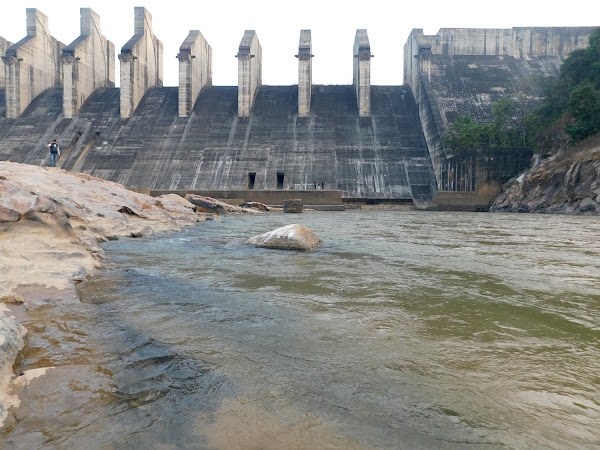
The proposed Gargain Dam that will lead to destruction of over four lakh trees in 720 ha forest mostly in Tansa Wildlife Sanctuary, is a good example of how Mumbai is fuelling such dam building and destruction. The Rs 3105 Cr project will have many other impacts, including displacement of tribals and destruction of livelihoods for thousands others. As SANDRP report showed six years ago, (https://sandrp.in/2013/12/20/dams-in-tribal-areas-of-western-ghats-for-water-supply-to-mumbai-why-are-they-unjustified/, https://sandrp.in/2013/12/18/multiple-dams-for-mumbai-region/) and as our letter to the then Maharashtra Chief Minister emphasised in 2015 (https://sandrp.in/2015/01/13/water-smart-mumbai-open-letter-to-cm-devendra-fadnavis/), MMR region does not need any of these dams.

It was good to see MID DAY news paper report and EDIT highlighting some of these issues. Will the people of Mumbai Rise up, to stop this destructive dam, being pushed in their names, the way they stood up to save the far fewer Aarey Milk Colony trees?

Continue reading “DRP: 2 March 2020: Will Mumbai rise up against unwanted, destructive Gargai Dam?” →
Dams · Wetlands

Ramsar Wetlands Crisis 2020: North East India

There are three Ramsar sites in eight states of north east India which includes Deepor Beel in Assam, Loktak lake in Manipur and Rudrasagar in Tripura. There are no Ramsar wetlands in remaining North East India states of Arunachal Pradesh, Nagaland, Mizoram, Meghalya, Sikkim. Here is an account of issues these Ramsar sites are facing.

Continue reading “Ramsar Wetlands Crisis 2020: North East India” →

Dams · Wetlands

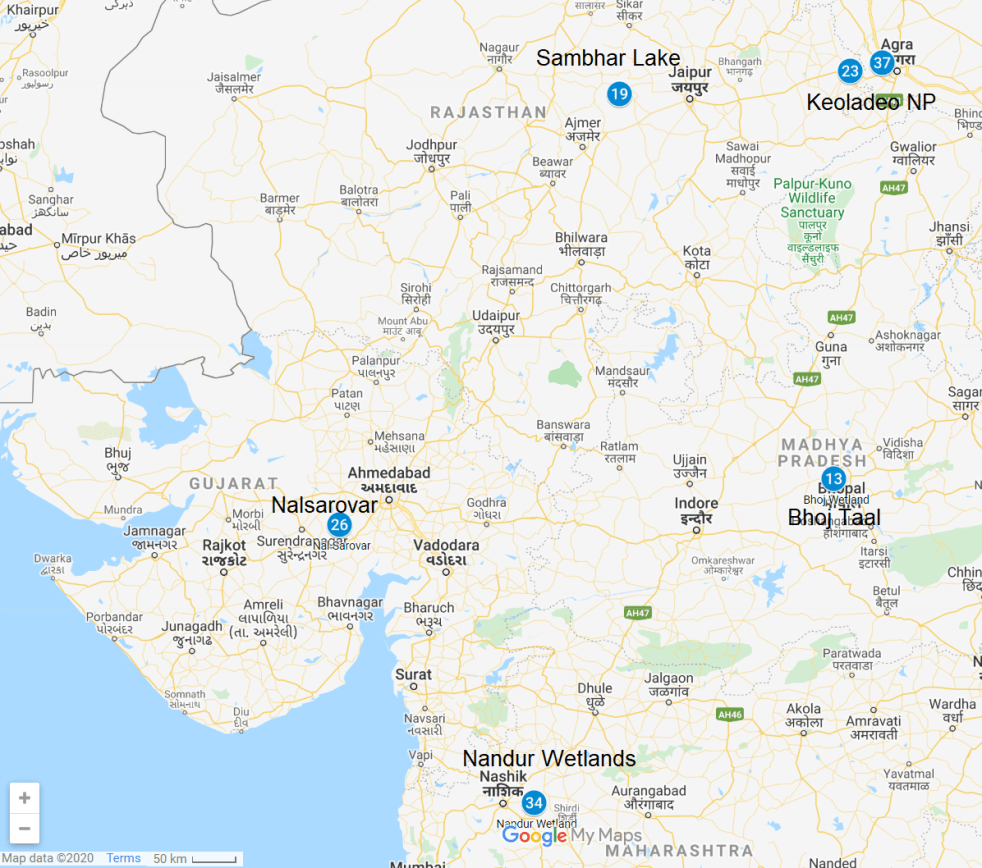
Ramsar Wetlands in crisis 2020: West India

The four state of West India have only five Ramsar sites of international importance. These includes Sambhar lake and Keoladeo NP in Rajasthan, Nalsarovar in Gujarat, Bhoj Taal in Madhya Pradesh and Nandur Madhmeshwar Wetlands in Maharashtra. There is no Ramsar site in Goa state.

Continue reading “Ramsar Wetlands in crisis 2020: West India” →

Dams · Wetlands

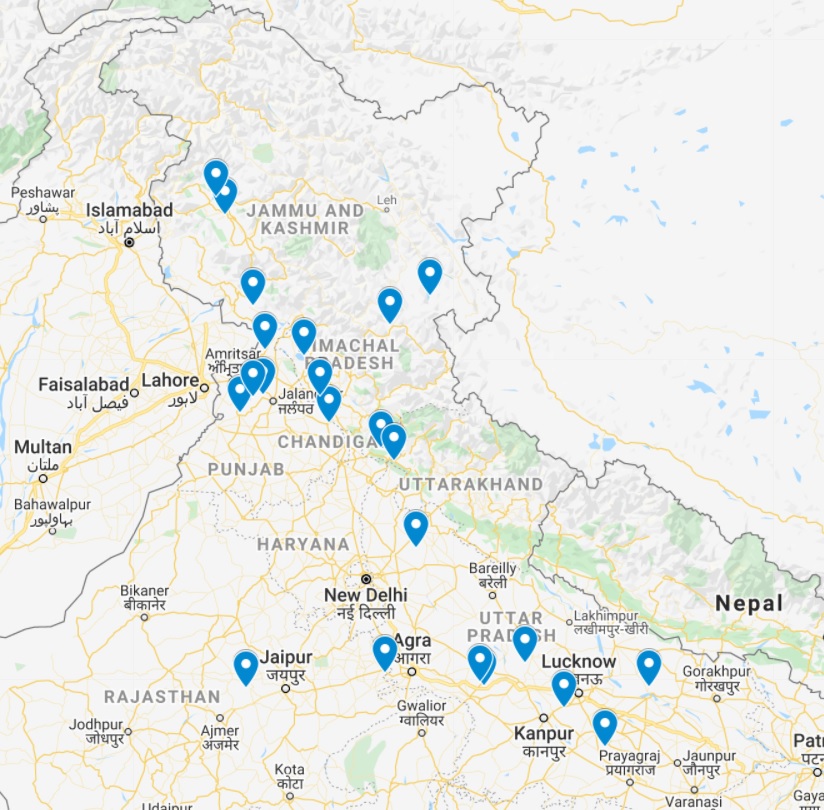
Ramsar Wetlands in Crisis 2020: North India

In the second half of 2019, ten additional wetlands of India have been recognized as Ramsar sites taking the total tally of such wetlands from 27 to 37. Does getting Ramsar tags really help the cause of wetlands protection? Here we try to show the present conditions and threats the Ramsar wetlands sites have been facing in North India. The subsequent compilation would share details of Ramsar sites in other zones of India.  

Continue reading “Ramsar Wetlands in Crisis 2020: North India” →

Dams

Uttarakhand: Road widening work in Almora, damages traditional water sources

The haphazard road construction and widening in Uttarakhand have been proving disastrous for local water sources in fragile mountain region for long. In the latest instance, the villagers of Bheta-Badoli under Dhauladevi block in Almora district have complained of road debris choking the natural stream and damaging the traditional water source of the village. 

As per local media report, around 1.5 km stretch of Almora-Ghat Panar, Pithoragarh National Highway (NH) 109 B is undergoing widening for about past one month. The work is happening with heavy machines like JCB, Pokland towards Almora near Dhyadi village some 10 km away from local market Danya.  The debris and muck generated in the process are simply being pushed down the slope, in violation of all norms.

Continue reading “Uttarakhand: Road widening work in Almora, damages traditional water sources” →

Dams · DRP News Bulletin

DRP: 24 Feb 2020: Urban Rivers Need Urgent attention: Hiding won’t help

There are large number of stories this week from all over India highlighting the crisis that Urban Rivers in India face. Urban rivers, like the Urban Water sector, exist in complete policy vacuum. There is no policy to guide the Urban water governance. Cosmetic efforts being done when President Donald Trump of USA visits India on Feb 24-25, 2020 at Yamuna (in view of his visit to Agra) or Sabarmati (visit to Sabarmati Ashram in Ahmedabad) won’t really help. The crisis not only affects the rivers, but the health, livelihoods and lives of millions and millions of city dwellers too, in addition to the downstream river users. Our Water Resources establishment has no clue, as is evident from their calling the Dravyawati river channelization in Jaipur as an example of river rejuvenation and suggesting such rivers should be given to corporates to rejuvenate in similar ways! It’s doubtful if the new National Water Policy now being formulated will help, unless it dares to suggest radical changes.

Continue reading “DRP: 24 Feb 2020: Urban Rivers Need Urgent attention: Hiding won’t help” →
Dams · Yamuna River

Despite NGT order and Yamuna Monitoring Committee-CPCB-DDA responses, action awaited about dumping on Yamuna floodplain

The floodplains of Yamuna in Delhi have been facing encroachment threats for long. In the latest incident a huge portion of riverbed underneath Nizammudin bridge towards Games village was found turned into a dumping ground on February 16, 2020. This was happening despite the protection of floodplains from encroachment and waste dumping were among key concerns of remarkable National Green Tribunal (NGT) judgement “Maili Se Nirmal Yamuna” of January 13, 2015. Continue reading “Despite NGT order and Yamuna Monitoring Committee-CPCB-DDA responses, action awaited about dumping on Yamuna floodplain” →

Dams · DRP News Bulletin

DRP: 17 Feb 2020: Case of “disappearance” of 28849 wetlands in Maharashtra

The Maharashtra government submitted an affidavit in High Court that the state has 15865 wetlands, down from 44714 in 2010. How did 28849 wetlands disappear from the very definition of wetland? While all of these wetlands may not have disappeared from ground, their disappearance from govt papers as wetlands means that they are now open to all kinds of abuse and encroachments. It along with other wetlands related stories here shows how little the governments are concerned about the wetlands.

Continue reading “DRP: 17 Feb 2020: Case of “disappearance” of 28849 wetlands in Maharashtra” →
Dams · DRP News Bulletin

DRP: 10 Feb 2020: Examples of Better Water Management Options

This week’s news bulletin has a number of examples of Better Water Management Options that India has, let us focus on the example from state. These examples come from Kerala (achieving a barren land free constituency & KERI study showing the need for desilting of Malampuzha reservoir), Tamil Nadu (lessons from implementation of System of Rice Intensification in large parts of cultivable land and also declaring the Cauvery Delta as protected agriculture zones that will help stop the problematic hydrocarbon exploration project as also, hopefully other destructive projects), Odisha (govt filing affidavit in the Supreme Court asking it to stop work on Polavaram Dam of Andhra Pradesh is hugely belated but right move), Telangana (rejecting the Godavari Cauvery River Linking proposal of NWDA for its shoddy water balance), Uttarakhand (Dehradun DM accepting in affidavit to High Court that 270 acres of river bed land is encroached in the district), Kashmir (drive to remove encroachments of Khushal Sar lake, even if selective, hopefully it will be a beginning), NGT (cancelling the township coming up in lake eco sensitive area in Bengaluru) among others. We have listed only the welcome initiatives from the govt. Even if these initiatives are taken to logical conclusion and also emulated by other states, it can go a long way in moving towards better water management.

Continue reading “DRP: 10 Feb 2020: Examples of Better Water Management Options” →