DRP News Bulletin

DRP NB 080822: Why is Centre not taking action against violations, defects of Kaleshwaram Project of Telangana?

(Feature image source: Pratidin News)

Union Water Resources or what is now called Jal Shakti minister Shri Gajendra Shekhawat made a rare and rather interesting statement this week about Kaleshwaram Lift Irrigation Project of Telangana, supposed to be the world’s biggest lift irrigation project, India’s most expensive ever irrigation project. The Union Minister publicly said that the Kaleshwaram project did not have all the clearances, project thus involved violations, and had defects, leading to submergence of three barrages and a massive power house last month. It is not clear if the Union Minister has also written to this effect to the Telangana state government and also taken action against the project. This is because the allegations made by the Union Minister are about such a huge project and are serious in nature.

If the Union Minister has done neither, as seems to be the case, he hope he is doing something on these lines soon. We do not expect a responsible Union Minister not take any action on such an important matter and is only making such statements for public consumption (incidentally, he seems to have made these statements in Karnataka, not in Telangana). Questions will be raised if the Union Minister fails to take such an action.

Continue reading DRP NB 080822: Why is Centre not taking action against violations, defects of Kaleshwaram Project of Telangana?
Art, Literature, Culture · Groundwater

Sacred Springs and Kites: Groundwater reaches the skies

Groundwater management is an area where almost all of the world seems to be faltering right now. Like in India, in Texas too groundwater is private property, and its use, regulation and conservation is a complex and often an unsuccessful task. Groundwater is a major source of water in Texas, providing about 60 percent of the 16.1 million acre-feet of water used in the state[i]. Cities like Amarillo, Bryan-College Station, El Paso, Lubbock, Houston and San Antonio use groundwater to supply water for homes and industry.[ii] This year, Texas has seen record hot months and lowering water tables with 99% of the state facing drought right now, and  21% area facing exceptional drought. Jacob’s Well, an iconic artesian spring, has officially ceased flowing for the fourth time in recorded history as a result of the ongoing drought and increased levels of groundwater pumping.

Continue reading “Sacred Springs and Kites: Groundwater reaches the skies”
CWC - Central Water Commission

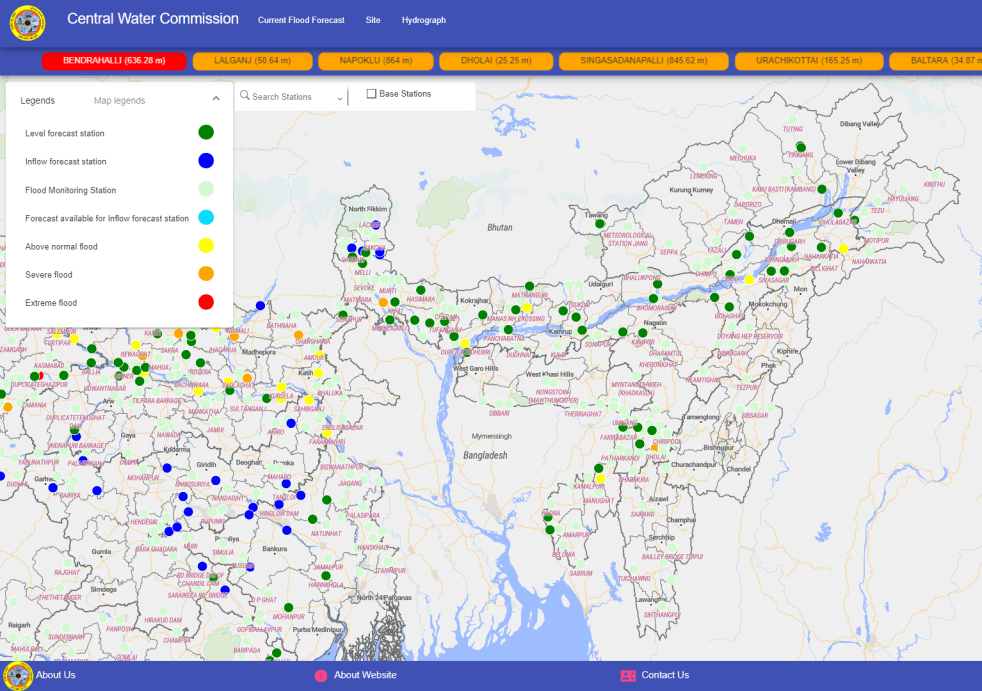
2022: Overview of CWC’s Flood Monitoring Sites in North East India

During monsoon CWC (Central Water Commission) monitors water level at several hundred sites in the county and publishes this information on its Flood Forecast website[I]. The website has three ways to get this information: Data Flow Map, List Based Exploration, and Hydrograph view. The Hydrograph view provides information for past 72 hours, supposed to be updated every hour. This is in addition to the list of current forecasts listed on the website.

Since 2018, SANDRP has been analyzing CWC’s flood forecast website in zone wise manner. After examining status of flood forecast and monitoring sites in North Indian[II] states, this overview is for North East India region covering Arunachal Pradesh, Assam, Meghalaya, Manipur, Nagaland, Tripura, Mizoram and Sikkim states. This also includes part of North West Bengal that is in Brahmaputra basin. Our 2018 and 2019 analysis on the North East region can be seen here[III] and here[IV].  .

Continue reading 2022: Overview of CWC’s Flood Monitoring Sites in North East India
Monsoon · Rainfall

June July 2022: District wise rainfall in India’s SW Monsoon

In the just concluded month of July 2022, the second month of India’s South West 2022 monsoon, India received 327.7 mm rainfall, 16.8% above the normal July rainfall of 280.5 mm as per India Meteorological department. In July 2021, the rainfall was 266.1 mm[i], about 6.7% below normal and  in July 2020, the rainfall was 257.1 mm[ii], or about 9.9% below normal.

Continue reading “June July 2022: District wise rainfall in India’s SW Monsoon”
CWC - Central Water Commission · Dams

2022: CWC Flood Monitoring Sites in North India

(Feature image: Bar Chart showing number of Level Forecast/Monitoring, Inflow Forecast sites in North Indian States & UTs)

Continuing analysis of Central Water Commission’s flood forecast website, SANDRP presents the details of flood monitoring sites in North Indian states comprising Union Territories of Jammu & Kashmir, Ladakh, Chandigarh, Delhi and states of Himachal Pradesh, Uttarakhand, Punjab, Haryana and Uttar Pradesh. Before this, we have prepared similar critical reports and highlighted problematic issues in flood monitoring sites in North India in 2018, 2019 and 2020.   

Continue reading 2022: CWC Flood Monitoring Sites in North India
Book Review · Fish, Fisheries, Fisherfolk · Rivers

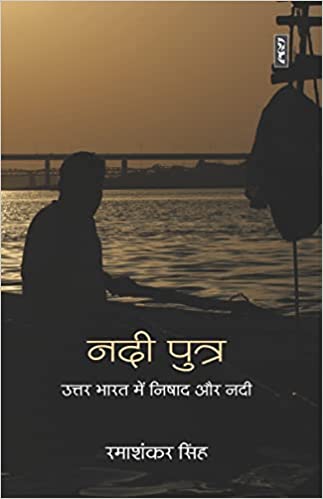
BOOK REVIEW: Rare book on Rivers and fisherfolks of North India

Guest Article by Dr. Ruchi Shree

BOOK: Ramashankar Singh (2022), Nadi-Putra: Uttar Bharat me Nishad aur Nadi, Setu Prakashan, New Delhi.

The arrival of books viz. Dipesh Chakravarty’s The Climate of History in Planetary Age (2021), Amitav Ghosh’s The Great Derangement: Climate Change and the Unthinkable (2016), A Nutmeg’s Curse: Parables for a Planet in Crisis (2021), Sunil Amruth’s The Unruly Waters: How Mountain Rivers and Monsoons have shaped South Asia’s History (2019) and numerous others has blurred the disciplinary divide between literature, politics and environment. These books have brought attention to the worsening environmental crisis worldwide and how developing countries or the global south is facing its severe brunt. As a consequence, one may notice an upsurge in literature in hindi and other regional languages around environmental issues in India. Last year, Shekhar Pathak’s book Hari Bhari Ummeed (2021) narrated the complexities of Chipko Movement at its 40 years and now this book here for review joins the club of interdisciplinary texts on environmental issues in India.

Continue reading “BOOK REVIEW: Rare book on Rivers and fisherfolks of North India”
DRP News Bulletin

DRP NB 1 Aug 2022: Dams reduce sediment load in rivers leading to higher coastal erosion

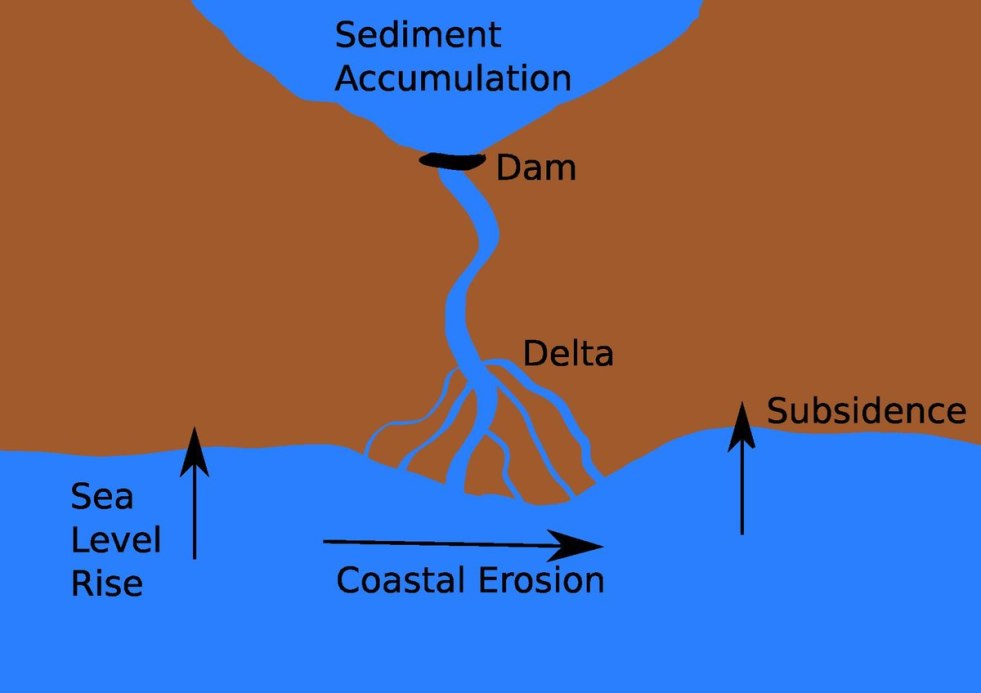
(Feature image: Delta Land Loss Mechanisms. Source Wikimedia Commons)

A new study this week has reminded us what has been known for long. Dams not only store water but also trap the sediment flowing in the river. Whatever smaller quantity of water flow from dams to downstream areas, has much lower or no silt. A lot of that silt was supposed to reach the coast, helping fight against the erosion of the coast due to sea tides and waves. With drastically lower sediment reaching the coasts, higher coastal erosion is the result. While climate change is definitely contributing to the increased coast erosion due to more frequent and higher intensity storms from the sea, the role of dams tend to work as force multiplier in increasing the coastal erosion due to less sediment reaching the coasts from river.

While a new study by a Pune University has highlighted this phenomena in case of Godavari river, peninsular India’s biggest river, this is also happening at most other rivers and where they meet the coasts. As in case of Farakka, closer the terminal dam is to the coast, greater is its effectiveness to trap the river sediment and higher is its contribution likely to be to the increase in coastal erosion.

Continue reading “DRP NB 1 Aug 2022: Dams reduce sediment load in rivers leading to higher coastal erosion”