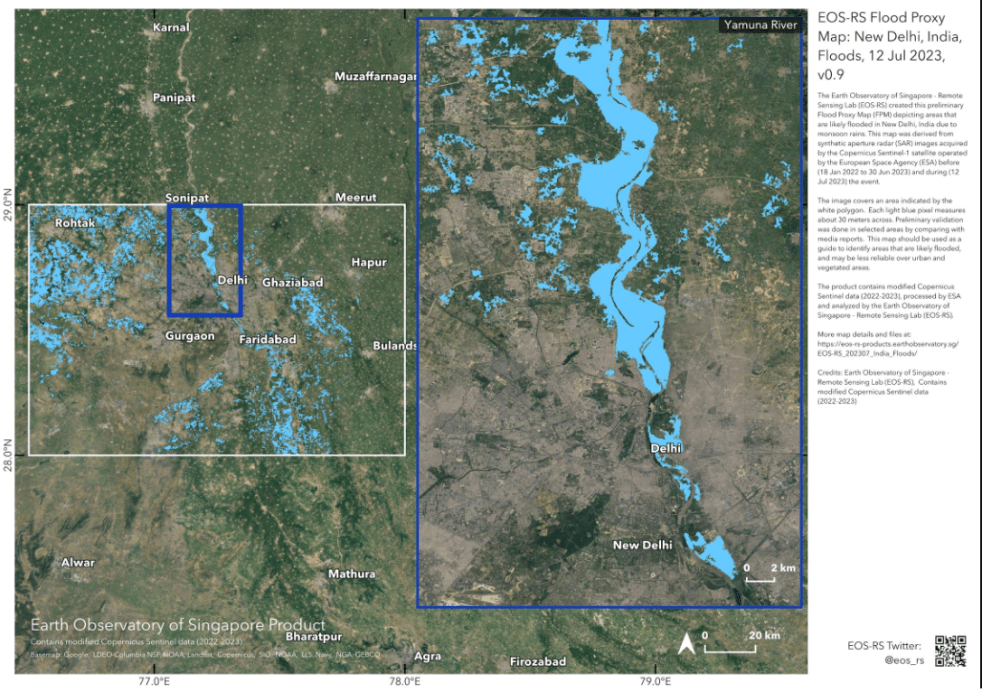
This week’s DRP News Bulletin brings two encouraging reports about revival of Kham River in Sambhajinagar district in Maharashtra. The Bulletin also brings report of Gujarat Human Rights Commission sending notice to the state and city government to uphold the environment rights of citizens in Vadodara. There is also here the news of signing of MOU for beginning of 4 km water taxi along Yamuna in Delhi upstream of Wazirabad barrage, of course without any environment or social impact assessment, any environmental clearance, any public consultation process, with blind faith in Sabarmati River Front Development model.
Continue reading “DRP 170325: Can we work for more Kham Rivers and Less Sabarmati Rivers?”Tag: Srisailam Dam
DRP 100325: “Good Floods Reduce the Risk of Bad Floods”
(Feature Image: An aerial view of the flooded collectorate ghat at the bank of Ganga river in Patna. PTI Photo/Source: The Asian Age)
This remarkable report this week, quoting the work of Gilbert F White, also considered “father of floodplain management” provide a number of lessons in flood management. These include: – “Floods are ‘acts of God’, flood losses are largely acts of man” (By ‘acts of God,’ he meant that floods are perfectly natural events);
– “Yes, floods will happen. Whether or not those floods are good floods or bad floods, whether or not they cause damage is largely up to us”;
Continue reading “DRP 100325: “Good Floods Reduce the Risk of Bad Floods””DRP 030325: Supreme Court asks: How a city can become smart without protecting the water bodies, wetlands
In a welcome development, the Supreme Court of India has asked, in the context of Ajmer City in Rajasthan, how can a city become smart without protecting the water bodies/ wetlands? How cities will become smarter by encroachments on the water bodies and wetlands? The Supreme Court bench threatened the Rajasthan government of contempt of court for non-compliance of order dated Dec 1 2023 as also the order of National Green Tribunal on Dec 13 2021.
The Supreme Court here has hit the nail and raised a very fundamental question that is relevant to all the cities across India as they are all guilty of allowing encroachments and destruction of local water bodies in their respective areas. This is a suicidal step as it has adverse impact on the cities in multiple ways and yet, most cities consider this smart and in fact get away with it. There is also no National Urban Water Policy guiding the cities solve the puzzle of multiple issues handled by multiple departments, including some by the local, state and central governments. This self-created mess in the cities comes handy for the various vested interests in encroaching more water bodies. The judiciary, so far has also not been effective in addressing this issue with any effectiveness.
Continue reading “DRP 030325: Supreme Court asks: How a city can become smart without protecting the water bodies, wetlands”DRP 240225: Unanswered questions on Ken Betwa Project
At a well-attended meeting at India International Centre in Delhi on Feb 20 2025, organised by VIDHI Centre for Legal Policy, a panel of speakers including Shri Shashi Shekhar (former secretary, Union Ministry of Water Resources) and Shri Jasbir Singh Chauhan (former Principle Chief Conservator of Forests, Madhya Pradesh) and Himanshu Thakkar of SANDRP, a number of fundamental questions were raised about the controversial Ken Betwa River Link Project. Unfortunately, no clear answers are forth coming from the authorities.
Continue reading “DRP 240225: Unanswered questions on Ken Betwa Project”2024: Has NDSA made our dams any safer?
(Feature Image: Srisailam dam in Telangana. Source: Telangana Today)
This annual overview focusses on the functioning of National Dam Safety Authority (NDSA) and related institutions in 2024 to understand if the functioning of these institutions have made Indian Dams any safer? Here functioning of Central Water Commission (CWC) is also important as CWC people head all the dam safety panels. The dam safety related institutions were formed following the passage of Dam Safety Act 2021 and hence there were promises and hopes that these institutions will make our dams safer.
Continue reading “2024: Has NDSA made our dams any safer?”India Hydro Power Projects 2020: Violations, Accidents and Corruption
This highlights Disasters, accidents, corruptions and violations taking place in hydro power projects across India in 2020 mostly as reported by media.
Continue reading “India Hydro Power Projects 2020: Violations, Accidents and Corruption”DRP: 24 August 2020: Janta Parliament discusses some serious water issues
While Indian Parliament has not met since March 2020, Civil Society Groups came together and held a Janta (people’s) Parliament from Aug 16 to 21 Aug 2020, where citizens from across the country from all walks of life enthusiastically participated. On Aug 18 there was a three hour session on Environment issues (such a session is a rarity in Indian Parliament), as part of which, there was a presentation on Water related issues where SANDRP coordinator was invited to speak. Two water related resolutions were passed among others, by the Janta Parliament, one on Flood Management and another on Urban Water Management. See below for details.
Continue reading “DRP: 24 August 2020: Janta Parliament discusses some serious water issues”2019 Monsoon: Instances when Dam Safety Came into Question
The South West Monsoon in 2019 in India brought the highest rainfall of last 25 years and issues related to heavy rainfall continue even to the end of October 2019. Here we have listed major instances during the monsoon when there were question marks over safety of dams either due to structural safety or due to wrong operations of the dams. Some issues of breaches of embankments/ canals are also included here. As we can see, the instances come from across the country, including North East, North, West, Centre, South.
Continue reading “2019 Monsoon: Instances when Dam Safety Came into Question”
DRP: 3 Sept 2018: CHINA HAS STARTED DECOMMISSIONING DAMS
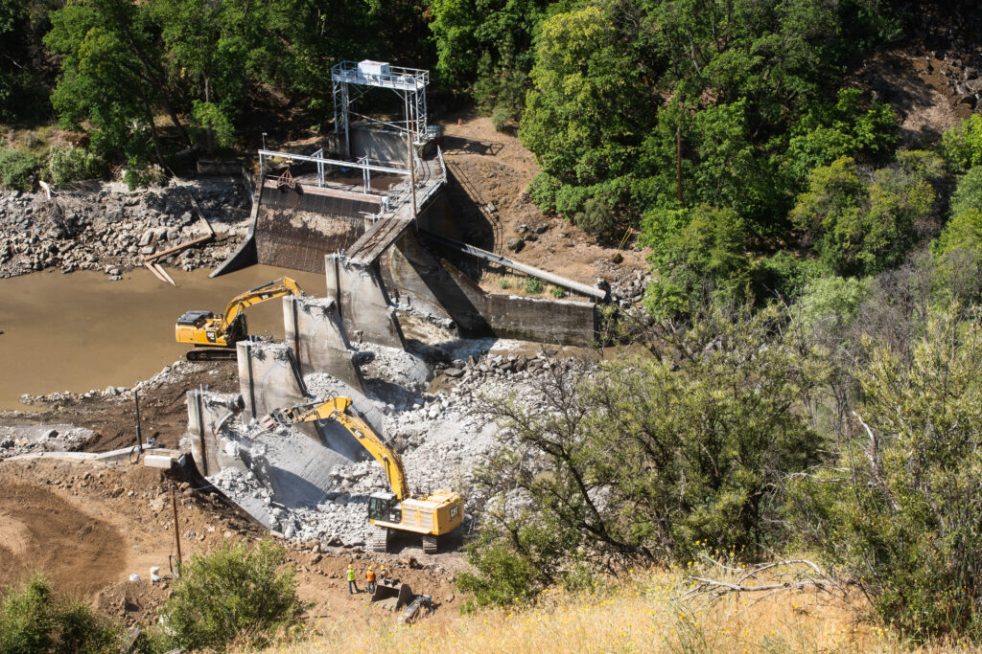
In a mountain village in southwest China’s Sichuan province, authorities have demolished seven small dam projects this year along a river to clear illegal developments in a new nature reserve. The demolition is part of a nationwide programme to close hundreds of tiny and often ramshackle dams and turbines and bring order to China’s massive hydropower sector after years of unconstrained construction.
The dams sat on an unnamed tributary of the fierce and flood-prone Dadu river, which feeds into the Yangtze, Asia’s largest and longest river, where the government says the “irregular development” of thousands of small hydropower projects has wrecked the ecology. But green groups say the campaign will not necessarily save the environment because it will not affect big state hydropower stations, which they say have caused the most damage.
On the 48 km Zhougong, authorities have already demolished small projects built in nature reserves or encroaching upon new “ecological red lines” drawn up to shield a quarter of China’s territory from development.
The government says small dams have disrupted the habitats and breeding patterns of many rare species of fish, although green groups argue the damage wrought by bigger dams is more severe, with entire towns and ecosystems submerged in water, which they say increases the risk of earthquakes, landslides and even climate change.
Continue reading “DRP: 3 Sept 2018: CHINA HAS STARTED DECOMMISSIONING DAMS”Overview of CWC Flood Forecasting Sites 2018: SOUTH INDIA
Central Water Commission is the only agency doing flood forecasting in India. As per CWC’s Flood Forecasting website[i] the Data Flow Map has information about 226 Flood Forecast Sites in the country comprising of 166 Level Forecast Sites and 60 Inflow Forecast Sites. It also monitors 700 Flood sites, information made available through List Based Exploration and Hydrograph View, but no flood forecasting is done for these sites.
In order to better understand the CWC’s flood monitoring and forecasting work, in this article, we have given an overview of CWC’s flood forecasting and monitoring sites in South India. It includes state wise list of CWC’s Level Forecast, Inflow Forecast and level monitoring sites in South India. Similar report has been published for North India[ii] and North East India[iii] and East India[iv].
Tamil Nadu There are 3 Level Forecasting, 48 Level Monitoring and 14 Inflow Forecasting sites in Tamil Nadu State. Out of total 65 sites, 19 Level Monitoring and 2 Inflow Forecasting sites are inactive. MWL information is given only for 1 Inflow Forecasting site out of 14. IRRUKKANKUDI, Sathanur and Gomukhi sites are repeated with incomplete information. Out of 48, HFL figure and date is not provided for 25 Level Monitoring sites.
Continue reading “Overview of CWC Flood Forecasting Sites 2018: SOUTH INDIA”