Dams · DRP News Bulletin

DRP: 04 Jan. 2016 (Rivers are soul of India: PM Narendra Modi)

Rivers are soul of India: Prime Minister Narendra Modi  Excerpts From text of PM’s inaugural address at 103rd session of Indian Science Congress, Mysuru Rivers have played as important a role in human history as oceans. Civilisations have been nurtured by rivers. And, rivers will remain critical for our future. So, revival of rivers is an essential part of my commitment for a cleaner and healthier future for our society, economic opportunities for our people, and renewal of our heritage. We need regulations, policy, investments and management to achieve our objective. But, we will succeed only when we integrate technology, engineering and innovation into our efforts, not just to clean our rivers now but to keep them healthy in the future as well. For this, we also need scientific understanding of the impact of urbanisation, farming, industrialisation and groundwater use and contamination on the river eco-system. River is the soul of Nature. Their renewal must be an element of a larger effort to sustain Nature.

Continue reading “DRP: 04 Jan. 2016 (Rivers are soul of India: PM Narendra Modi)”

Dams · Hydropeaking · Hydropower

India’s Free Flowing Frontier Part I: Dibang at Nizamghat

What does it mean when landscapes, riverscapes, ways of life are altered forever? When a mighty, flowing river is plugged and made to stop, flow in tunnel and released as per our whims? For most of us, life and environment are so fundamentally modified that we would hardly question it. But as our worldview and our politics is set to dam some of the last free flowing rivers in the North East India into Hydro-Electricity Banks, what is at stake? Continue reading “India’s Free Flowing Frontier Part I: Dibang at Nizamghat”

Dams · DRP News Bulletin

DRP: 28 Dec. 2015 (Farmers field school in Jharkhand shows the way in integrated farming)

AGRICULTURE

Farmers field school in Jharkhand shows the way in integrated farming The School has taught farmers how to use waste from their farms as inputs in their farming system. Other organic practices have improved the soil profile and water holding capacity of the fields. The schools are run throughout the cropping season. Farmers receive training on how to manage crops, waste and pests. Meaningful discussions are held in the farms on crop growth, climate, soil conditions and constraints to crop production. Based on these observations, farmers make informed decisions to increase yields and improve the soil fertility of their fields. These schools now serve as the training ground for new farmers. Indeed, improving water holding capacity of the soil is much neglected issue.

Organic manure saves crop from floods For the second year in succession, Velu, a farmer in Morappakkam near Madurantakam, has become the envy of other farmers as the organic crop raised by him survived the inundation during the recent rains.  Continue reading “DRP: 28 Dec. 2015 (Farmers field school in Jharkhand shows the way in integrated farming)”

Dams

DRP: 21 Dec. 2015 (100 people have a narrow escape as Ganga level rises after sudden release from Tehri Dam)

100 people have a narrow escape as Ganga level rises after sudden release from Tehri Dam More than a 100 people who were attending a religious discourse had a narrow escape when the water level rose suddenly in the Ganga River in the temple town of Rishikesh. According to the police, the water level increased after Tehri Dam released water, a routine exercise that is done after informing officials concerned. CD Anthwal, circle officer Rishikesh told HT that the people attending the religious discourse were rescued with the help personnel of the Jal Police (water police).

Continue reading “DRP: 21 Dec. 2015 (100 people have a narrow escape as Ganga level rises after sudden release from Tehri Dam)”

Dams · DRP News Bulletin

DRP: 14 Dec. 2015 (Your City can be Next Chennai?)

Our cities with their high population density and poor civic standards are vulnerable to the domino effect that can be set off by freak weather it happened in Mumbai in 2005. Last year, it was Srinagar. Now it’s happening in Chennai. Could it happen to your city?

Judging by the burgeoning urban population, and the uncontrolled growth of urban centres that fail on every parameter including drainage and garbage disposal, most of our cities are disasters waiting to happen.

As per global standards cities across the world should prepare for a 100-year flood recurrence period. In other words, they have to be ready for a severe flood situation, even if it has one-in-100 chance of occurring. But our cities guardians overlook larger flood cycle as freak weather events.

That exactly is happening in IT corridor Hyderabad which is sitting on a plan that lacks a storm-water drainage system and ‪‎Navi Mumbai International Airport in Maharashtra which will be built on the flood plains of Ghadi and Ulwe rivers. Amaravati the state capital of Andhra Pradesh is also doing away its underground water channels which drain out flood waters during stresses.

Continue reading “DRP: 14 Dec. 2015 (Your City can be Next Chennai?)”

Dams

Dams, Rivers & People: 07 Dec. 2015 (Dams sap Earth’s water, release arsenic in groundwater & fuel Climate Change)

Two new studies show that dam not only significantly increase evapo-transpiration but also worsen arsenic problem in groundwater. In the first study done by Stockholm University in Sweden researchers found that dams and irrigation significantly increase evapotranspiration, an effect that increases the loss of freshwater to the atmosphere, thereby reducing the water available for humans, societies and ecosystems on land. The researchers have compiled and analyzed data from 1901 to 2008 for climate, hydrology and water use in one hundred large hydrological basins spread over the world. In the second study done by Stanford University in Cambodia, researchers concluded that hydrological development particularly dams are responsible for release of increased and unnatural amount of arsenic in Cambodia’s groundwater.

Continue reading “Dams, Rivers & People: 07 Dec. 2015 (Dams sap Earth’s water, release arsenic in groundwater & fuel Climate Change)”

Dams

Yamuna River Story

River Yamuna is fifth longest river of India. For past many centuries the river has been integral part of Indian culture. It has been sustaining means of livelihoods to millions. Many, in pursuit of spiritual inspiration venerate it with great hope. But at present, the river is more in news for its highly polluted state. In this blog SANDRP attempts to presents the picture of the River Yamuna. The blog also briefly mentions the places of cultural, religious, historical and environmental significance on and around the river, pointing out the various factors which has led to present state of the river.  Continue reading “Yamuna River Story”

Dams

DRP: 23 Nov. 2015 – Uttar Pradesh declares 50 districts as drought hit

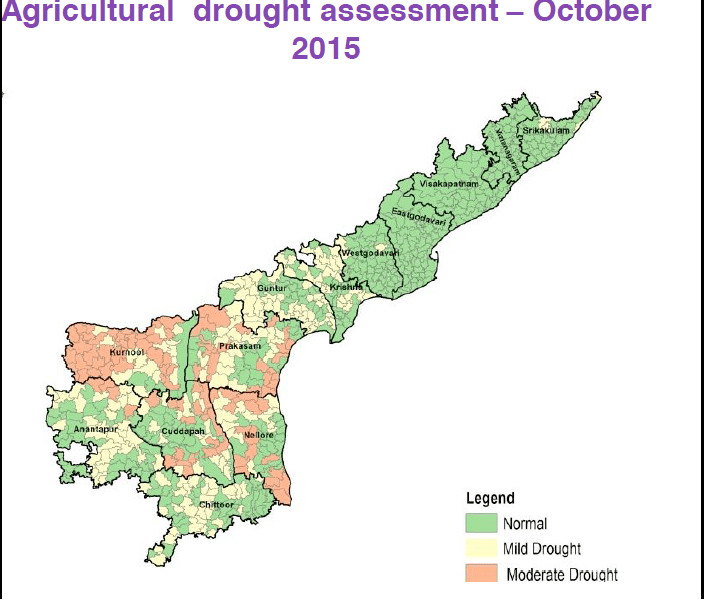
Eight Indian States have already declared drought this year. Apart from UP the other states are Karnataka, Maharashtra, Madhya Pradesh, Chhattisgarh, Odisha, Andhra Pradesh and Jharkhand.

In 2015, India witnesses many weather extremes which can be linked to Climate Change. The unseasonal rains in March, then back-to-back failure of Southwest Monsoon that has led to severe drought conditions in many Indian states. Right now Tamil Nadu, Andhra Pradesh are facing severe flood conditions caused by heavier Northeast monsoon rain. The year 2015 also saw record breaking heat. Clearly Climate Change have started unfolding abnormal weather incidences in India impacting millions of people lives who have become victim of Climate Change despite no fault of theirs. But Indian government is neither connecting these disasters with climate change, nor identifying the victims, leave aside asking for justice for these victims.

Continue reading “DRP: 23 Nov. 2015 – Uttar Pradesh declares 50 districts as drought hit”

Dams

Dams, Rivers & People: Sep 28, 2015 (The reality behind much hyped Godavari-Kirshana Interlinking project)

Godavari Krishna River Linking: Are we celebrating an illegal, unnecessary & misconceived water transfer project? SANDRP recent blog investigates and exposes the reality behind much hyped Godavari-Kirshana Interlinking project which is in true sense mere a pumping of water projects that too without required legal clearances.

Continue reading “Dams, Rivers & People: Sep 28, 2015 (The reality behind much hyped Godavari-Kirshana Interlinking project)”
Dams

Dams, Rivers & People: Sep 14, 2015

SAD NEWS: SHRI RAMASWAMY IYER IS NO MORE:

He Watered the Arid Fields of Administration with Intellectual Rigour and Honesty: Amita Baviskar payes tribute to Ramaswamy Iyer Iyer’s critical view of large dams became stronger when he was appointed to review the Tehri project in 1996 and to head the India country study for the World Commission on Dams in 1997. Subsequently, studying trans-border river conflicts between India, Nepal and Bangladesh, he began to see dams as only one element in the larger mismanagement of water by engineers impervious to social and ecological impacts. In one more news report paying tribute to him R. Uma Mahashwari writes that Ramaswamy R. Iyer used to see rivers as inextricable parts of the lives of communities 

Continue reading “Dams, Rivers & People: Sep 14, 2015”