Dams · DRP News Bulletin

DRP: 17 September 2018: How Much of This Drought Is Man Made?

  1. Gujarat suffering due to political use of water for elections in 2017.
  2. Rajasthan given more water for elections there in 2018. Will Punjab, Haryana suffer now?
  3. Kerala drought: how much could have been reduced if dams were operated more prudently?
  4. North Interior Karnataka is suffering, but Krishna basin dams are almost full? Issue of unsustainable cropping patterns, groundwater overuse, and neglect of recharge & regulation?

Gujarat Water scarcity looms large with state receiving only 74% rainfall so far

  • Kutch and North Gujarat are likely to face severe water scarcity this year, officials said. The Kutch region has received a mere 26.51 percent of average rainfall so far, while North Gujarat has received 42.93 percent, central Gujarat 66.83 percent, Saurashtra 72.20 percent and South Gujarat the highest 94.79 percent.
  • However, the Sardar Sarovar Dam is filled up to 125.82 meters, and it can provide drinking water for the entire state till the next summer, the govt said. As per Govt. storage in Sardar Sarovar Dam on the Narmada, which will be enough to meet the state’s need for drinking water through the next summer.
  • The Narmada water will also be used to fill up empty dams in Saurashtra including Aji 1, Macchu 2, Vadod and Ankadia through the Sauni scheme, officials said.
  • “The state govt will provide 20,000 cusecs water for the next 20 days to save the crops in water-starved areas,” Deputy CM Nitin Patel told reporters in Gandhinagar said.
  • “We plan to fill up 400 big and small ponds in North Gujarat by Narmada water through canals and pipeline network of the Sujlam Suflam scheme,” he said.
  • “We also plan to fill the dams in Saurashtra region and provide water for irrigation from Narmada Dam under the SAUNI scheme,” he said. https://www.firstpost.com/india/water-scarcity-looms-large-in-gujarat-with-state-receiving-only-74-rainfall-so-far-this-monsoon-says-government-5188271.html (15 Sept. 2018)

Himachal Pradesh Rajasthan quietly given extra water by BBMB to improve BJPs Poll prospects A detailed story about how BBMB, controlled by Central Power Ministry, released excess water to BJP ruled Rajasthan this poll year, which has deepened the water availability at BBMB dams this year. This is not that the first time that the water releases have happened to achieve poll objectives. https://www.huffingtonpost.in/2018/09/16/rajasthan-quietly-given-extra-water-by-bhakra-dam-board-to-improve-bjps-poll-prospects_a_23528788/  (14 Sept. 2018)

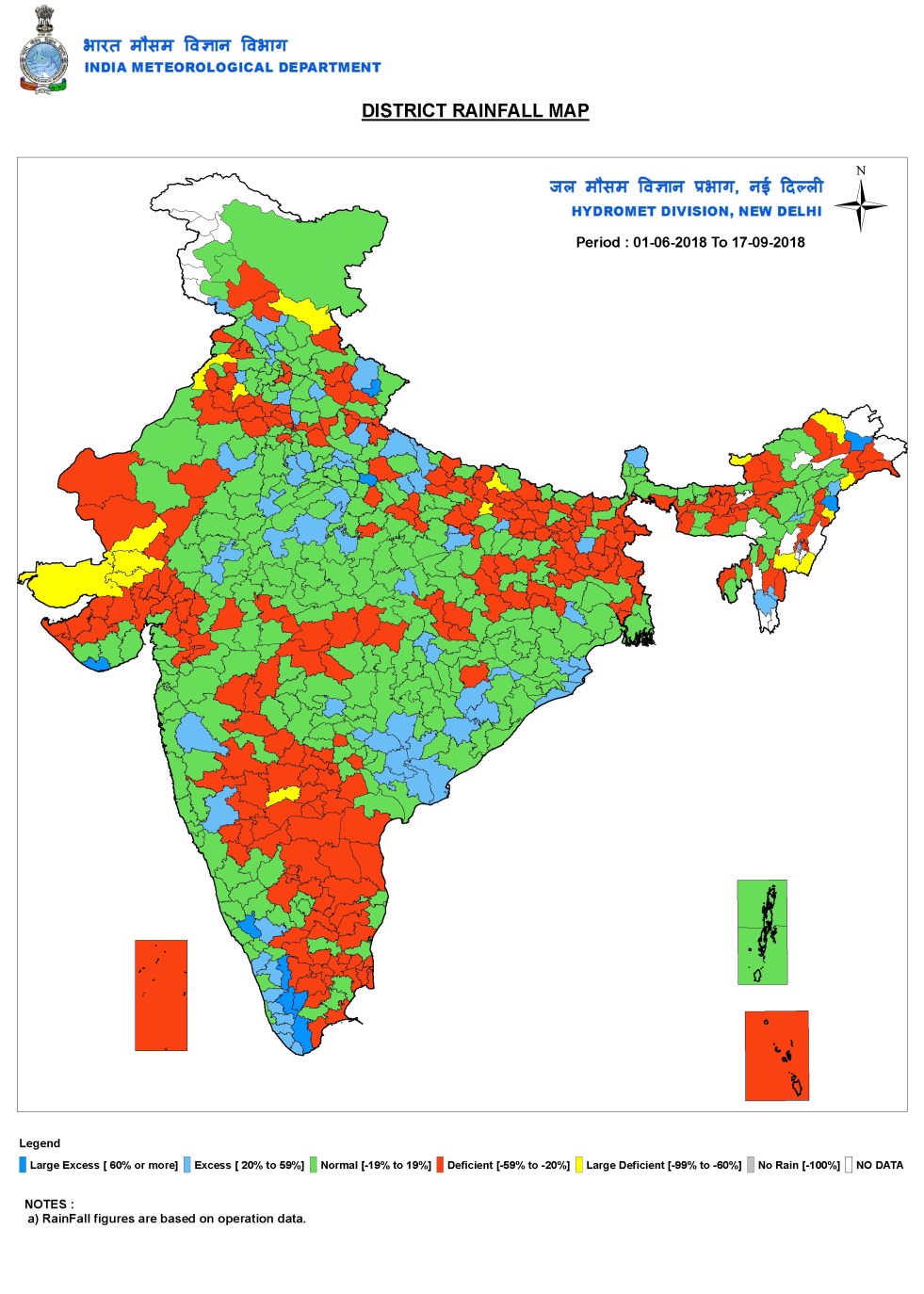
Rajasthan Rainfall deficit in many districts As per IMD, Badmer district of Rajasthan has received rainfall 48 percent below normal till Sept. 16. Similarly rainfall deficit in Hanumangarh 58 percent so far. Jallor district is facing maximum rainfall deficit of 60 per cent less than normal. Likewise the rainfall in Pali district is 35 per cent below the normal and in Jaislmer is facing a rainfall deficit of 38 per cent. In Western Rajasthan it rained only 193 mm during entire monsoon season causing a  deficit of 24 per cent below the normal.

Continue reading “DRP: 17 September 2018: How Much of This Drought Is Man Made?”
Dams · DRP News Bulletin

DRP: 10 Sept 2018: NIDM Lecture on Role of Dams in Kerala Floods

National Institute of Disaster Management, Ministry of Home Affairs, Govt of India invited Himanshu Thakkar, Coordinator of SANDRP,  to speak on the topic at IHC on Saturday. At the packed hall with participants that included members from Central Water Commission, National Disaster Management Authority, Embassies, Media and Civil Society,  the speaker explained how unwise and  unaccountable operation of dams, violating all norms, hugely contributed to the proportions of the Kerala flood disaster. Giving the example of Idukki dam, he showed, how if the dam was operated as per rule curve,  its contribution to the floods could have been reduced by over 50%. Similar is the story of other dams in Kerala.

Continue reading “DRP: 10 Sept 2018: NIDM Lecture on Role of Dams in Kerala Floods”
Monsoon

The mirage of normal monsoon

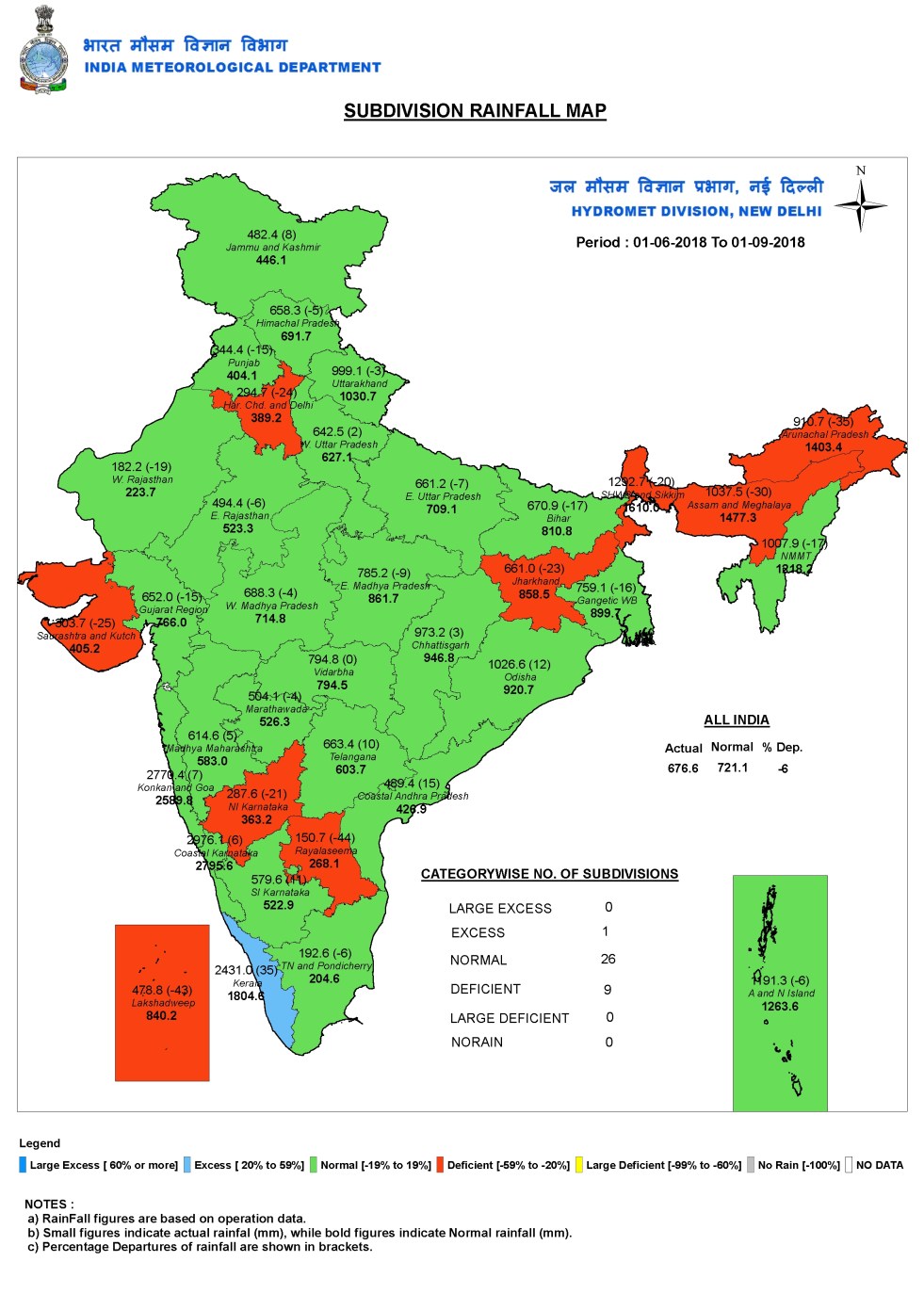
According to IMD, India is having normal monsoon this year, so far, as per rainfall till date (Sept 1, 2018). Against normal rainfall of 721.1 mm, India has received 676.6 mm rainfall, which is 6.2% below normal, considered within normal rainfall definition as per IMD. So India is having normal monsoon rainfall, says IMD. Let us check this against some ground realities.

However, East and North East India, one of the four regions for which IMD provides rainfall data, has so far had 27% below normal rainfall, while South India had 9% surplus rainfall.  Thus, while at all India level, what seems all normal, is average of different, though serious departures from normal rainfall. Let us say this is first level of mirage of normal rainfall. Continue reading “The mirage of normal monsoon”

Dams · Floods

Overview of CWC Flood Forecasting Sites 2018: East India 

Central Water Commission is the only agency doing flood forecasting in India. As per CWC’s Flood Forecasting website[I] the Data Flow Map has information about 226 Flood Forecast Sites in the country comprising of 166 Level Forecast Sites and 60 Inflow Forecast Sites. It also monitors 700 Flood sites, information made available through List Based Exploration and Hydrograph View, but no flood forecasting is done for these sites.

In order to better understand the CWC’s flood monitoring and forecasting work, in this article we have given an overview of CWC’s flood forecasting and monitoring sites in East India. It includes state wise list of CWC’s Level Forecast, Inflow Forecast and level monitoring sites in East India. Similar report has been published for North India[II] and North East India[III] and we hope to publish reports covering other regions of India too. 

Continue reading “Overview of CWC Flood Forecasting Sites 2018: East India “

Dams, Rivers & People

DRP: 20 Aug 2018: Kerala Is Recovering From Unprecedented Flood Disaster, Will It Be Cauvery Or Krishna Basin Next?

Well-known ecologist Madhav Gadgil, founder of the Centre for Ecological Sciences at the Indian Institute of Science, Bengaluru, has described the devastating floods in Kerala as a man-made disaster and a reaction to the illegal excavations and stone quarrying done over a decade. https://www.hindustantimes.com/pune-news/illegal-forest-land-acquisition-major-reason-for-floods-in-kerala-says-ecologist-madhav-gadgil-calls-it-man-made-disaster/story-vMHPKUH623GEnjyQHI09NP.html  (19 Aug. 2018)

Further speaking to various regional media, Madhav Gadgil has said that irresponsible environmental policy is to blame for the recent floods and landslides in Kerala. He also called it a “manmade calamity”. He said that the committee report had recommended to protect the resources with the cooperation of local self-govt and people, but those recommendations were rejected.

He also pointed out that quarrying is a major reason for the mudslides and landslides. Other environmentalists also point fingers at the extensive quarrying, mushrooming of high rises as part of tourism and illegal forest land acquisition by private parties as major reasons for the recent calamity. https://energy.economictimes.indiatimes.com/news/power/kerala-floods-the-ghost-of-past-environment-policy-returns/65436707  (17 Aug. 2018)

Dams should never be filled before the end of the monsoons. Because then one doesn’t have any solution but to release the water in the surrounding areas: Himanshu Thakkar, SANDRP says as one of panellist discussing role of dams in aggravating Kerala floods.

Also see, NDTV discussion on Kerala flood crisis, it included SANDRP coordinator. https://special.ndtv.com/kerala-floods-42/video-detail/kerala-floods-non-stop-special-coverage-of-the-unfolding-crisis-491815  (19 Aug. 2018)

Here is NDTV Hindi discussion on Kerala flood crisis, included SANDRP coordinator. https://khabar.ndtv.com/video/show/ndtv-special-ndtv-india/ndtv-special-coverage-on-kerala-rain-crisis-491820  (19 Aug. 2018)

Here is admission about sudden, excessive releases and not foreseeing the coming disaster. The Kerala crisis could have been contained had the state “gradually released” waters from at least 30 dams, officials said, adding that the local authorities failed to foresee the imminent danger with high rain prediction. “Such floods have probably recurred after 100 years, exposing the state’s unprofessionally run reservoir management system and unpreparedness on disaster mitigation and disaster resilience, an official pointed out. https://timesofindia.indiatimes.com/city/kochi/gradual-dam-water-release-could-have-contained-crisis/articleshow/65436339.cms  (17 Aug. 2018)

Continue reading “DRP: 20 Aug 2018: Kerala Is Recovering From Unprecedented Flood Disaster, Will It Be Cauvery Or Krishna Basin Next?”
Dams · DRP News Bulletin

DRP: 6 August 2018 (2018 is Deficient Monsoon for Lakhs of Farmers)

(Feature Image: IMD Sub-Division wise Weekly Rainfall Map 26 July – 1 Aug. 2018)

Amid news of monsoon being normal, farmers in several parts in the country have started facing irrigation water problems affecting sowing of Kharif crops. Apart from, insufficient rainfall, mismanagement of water resources is turning the situation grim for them.  

As per reports, water levels in Bhakra and Pong dams in Himachal has plunged to lowest in decades. As a result dam authority has issued advisory to lakhs of farmers in Haryana, Punjab and Rajasthan to use water judiciously. Some official also said that the beneficiary states lacks efficient water management practices which is making the situation tough for them.

The Sri Ram Sagar Project in Telangana has no irrigation water. As per state water minister, a Rs. 1100 crore work was going on to renovate the dam. Meanwhile farmers of about 24 villages have started protest demanding irrigation water form SRSP for their standing crops. Given the tense situation, the State Govt has deployed heavy police forces to control farmers agitation.

At the same time, farmers in North Gujarat farmers have lost 40% of sown crops particularly in Ahmedabad, Morbi and Surendranagar. Non availability of Narmada waters have added to the problems. It is worth to mention that mismanagement of water during past four months in Narmada dam by the authority, has worsened the plight of farmers. Meanwhile, there are reports of furious Surendranagar farmers themselves opening the dam gates going against authority.

Similarly, lack of rainfall in Beed district which is part of Marathwada in Maharashtra has affected the rural population badly. In fact, the rainfall situation in a fourth of India, including Bihar and Uttar Pradesh, was in stark contrast to the rest of the country. Overall, the southwest monsoon in 2018 was only 2 % below normal by July, 27.

The southwest monsoon in Bihar was almost 40 % below normal till July 27 and the state was set to be formally declared ‘drought-hit’. It is worth to mention that the monsoon scenario seems less than reassuring, based on Skymet latest forecast and reading between the lines of IMD Aug. 3, press release.

Continue reading “DRP: 6 August 2018 (2018 is Deficient Monsoon for Lakhs of Farmers)”
Maharashtra · Monsoon

Maharashtra Monsoon Musings – July 2018

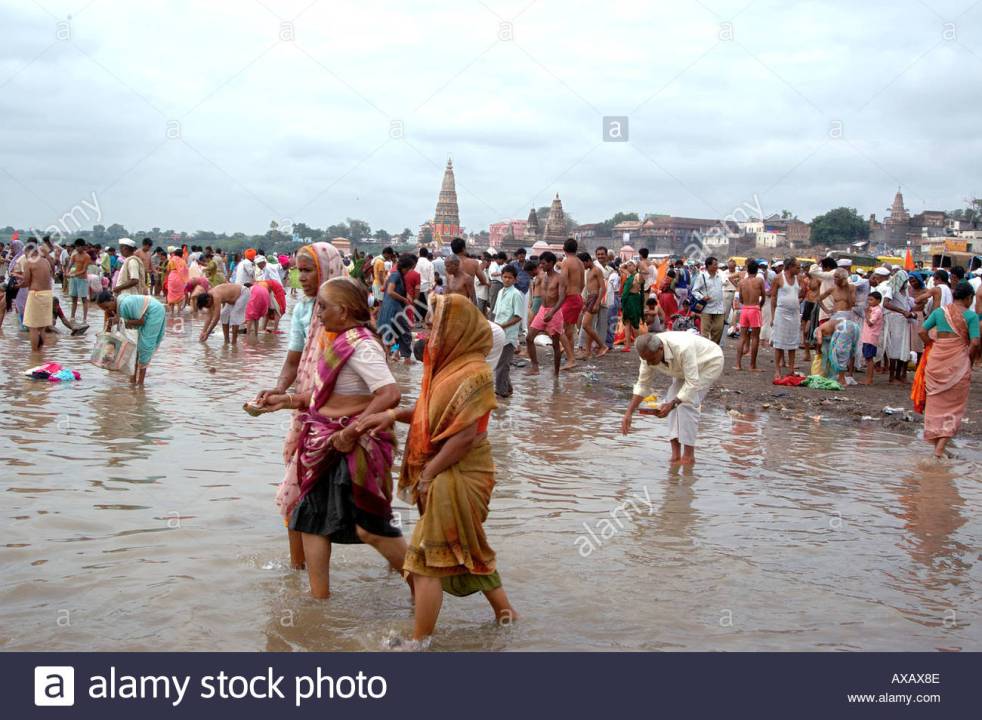
Maharashtra celebrates Ashadhi Ekadashi today[i], also called Dev Shayani Ekadashi, when god Vishnu went to sleep. Ashadhi Ekadashi is a cultural phenomenon in Maharashtra, holding a special place in the hearts of devotees and atheists alike. This is the day when the Vaari, a travelling caravan of devotees reach Pandharpur, the abode of Pandurang or Vitthal from various places in the state. Pandurang is a special god himself. He is the loving god of the farmers and cattle herders and the toiling masses of the state.  People travel to Pandharpur with tradition attire and gaiety. Ashadhi Ekadashi is supposed to fall right in the middle of monsoon as coughing Parineeta told me in the morning, enjoying the Pune rains. She also said that Farmer leader Sharad Joshi used to be unhappy with this festival as farmers left behind their fields right in the sowing season to go for the Pandharpur Vaari, away from their fields for days at end. Festivals are always fun though. Continue reading “Maharashtra Monsoon Musings – July 2018”

Cloud Burst

Uttrakhand Cloudburst Incidents 2018 

Uttrakhand is a disaster prone State. Earthquakes, Forest Fires, Flash Floods and Landslides keep occurring here round the year. The cloud burst events have also made entry to the disaster list. During past many years, local people have gradually become familiar with the term CLOUD BURST. The freak weather incident seems striking the state in increased number and frequency year after year.

Midway through the 2018 monsoon, there have already been about a dozen cloud burst events across the state. 

Continue reading “Uttrakhand Cloudburst Incidents 2018 “

Dams · Dams, Rivers & People

How India Measures Water Storages

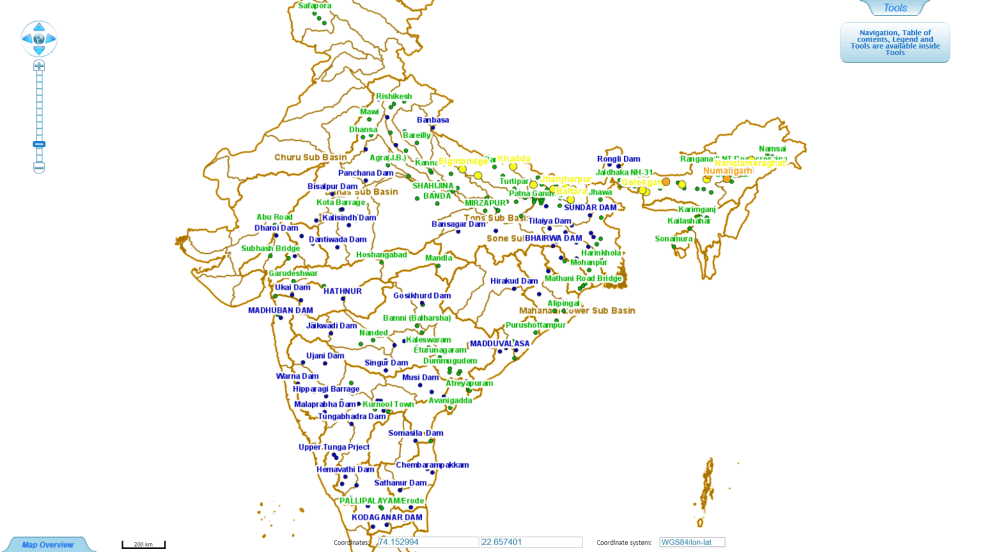
Govt and media typically report the status of water storage in India using the CWC’s Weekly Reservoir Storage Bulletin, which contain information about just 91 reservoirs in India. In this article we show that the state websites provide information about huge 3863 reservoirs, which even if not sufficient, is a huge improvement over just 91 reservoirs that CWC bulletin includes. We hope all concerned will try to improve the reservoir storage reporting.

It should be added here that this measures only surface water stored in some of the large reservoirs of India. This excludes large number of big reservoirs, lakhs of smaller reservoirs, groundwater aquifers and soil moisture storage. In spite of these limitations, this provides more accurate picture than just the 91 reservoirs of CWC that everyone in India, including media, govt monitoring and policy makers look at.

Continue reading “How India Measures Water Storages”

Dams · DRP News Bulletin

DRP: 2 July 2018: Punjab Cabinet Meets To Discuss Water crisis

In a rare event, Punjab Cabinet met to discuss water crisis on June 26, 2018. The reports before the meeting seemed to give hope that may be Punjab will look at the water crisis in a fundamental, holistic way. https://indianexpress.com/article/cities/chandigarh/punjab-government-to-firm-up-water-conservation-plan-5233826/ (June 26, 2018)

But the cabinet ended up setting up a committee to assess the ground water situation in the state and submit a detailed proposal for water conservation.

– Punjab has the highest rate of groundwater exploitation and had on average withdrawn 28.2 million acre feet (MAF) water yearly during 2008-2013. However, the yearly average replenishment of water was only 18.9 MAF.

– 73% of Punjab’s irrigated area uses groundwater for irrigation, while only 27% uses surface water. The number of tubewells had gone up exponentially from 2 lakh in 1971 to 12.50 lakh in 2015-16, with 41% of these have water availability beyond the depth of 60 metres. https://timesofindia.indiatimes.com/city/chandigarh/5-member-committee-to-assess-punjab-ground-water/articleshow/64770186.cms  (28 June 2018)

Continue reading “DRP: 2 July 2018: Punjab Cabinet Meets To Discuss Water crisis”