Dams · DRP News Bulletin

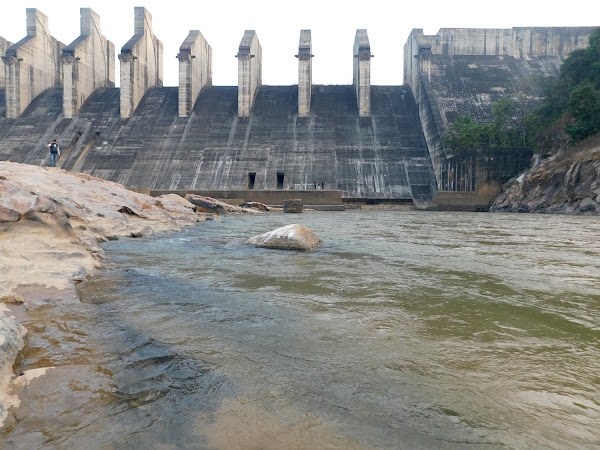
DRP: 2 March 2020: Will Mumbai rise up against unwanted, destructive Gargai Dam?

Mumbai Metropolitan Region (MMR), with annual rainfall in access of 2000 mm, does not do much to harvest the rain. It does not protect its local water bodies. It does not recharge groundwater to the extent it can easily do. It does not reduce its transmission and distribution losses. It does not treat its sewage to recycle and thus reduce freshwater demand. It does no demand side management. And yet it keeps demanding more water, and for that building of more dams and thus pushing more destruction. Without any credible options assessment. It has no water policy or water vision for smart water management.

The proposed Gargain Dam that will lead to destruction of over four lakh trees in 720 ha forest mostly in Tansa Wildlife Sanctuary, is a good example of how Mumbai is fuelling such dam building and destruction. The Rs 3105 Cr project will have many other impacts, including displacement of tribals and destruction of livelihoods for thousands others. As SANDRP report showed six years ago, (https://sandrp.in/2013/12/20/dams-in-tribal-areas-of-western-ghats-for-water-supply-to-mumbai-why-are-they-unjustified/, https://sandrp.in/2013/12/18/multiple-dams-for-mumbai-region/) and as our letter to the then Maharashtra Chief Minister emphasised in 2015 (https://sandrp.in/2015/01/13/water-smart-mumbai-open-letter-to-cm-devendra-fadnavis/), MMR region does not need any of these dams.

It was good to see MID DAY news paper report and EDIT highlighting some of these issues. Will the people of Mumbai Rise up, to stop this destructive dam, being pushed in their names, the way they stood up to save the far fewer Aarey Milk Colony trees?

Continue reading “DRP: 2 March 2020: Will Mumbai rise up against unwanted, destructive Gargai Dam?”
Dams · Yamuna River

Despite NGT order and Yamuna Monitoring Committee-CPCB-DDA responses, action awaited about dumping on Yamuna floodplain

The floodplains of Yamuna in Delhi have been facing encroachment threats for long. In the latest incident a huge portion of riverbed underneath Nizammudin bridge towards Games village was found turned into a dumping ground on February 16, 2020. This was happening despite the protection of floodplains from encroachment and waste dumping were among key concerns of remarkable National Green Tribunal (NGT) judgement “Maili Se Nirmal Yamuna” of January 13, 2015. Continue reading “Despite NGT order and Yamuna Monitoring Committee-CPCB-DDA responses, action awaited about dumping on Yamuna floodplain”

Wetlands

World Wetlands Day 2020: Positive Stories from India

On February 2, the World Wetlands Day is celebrated globally. The theme of 2020 is Wetlands and Biodiversity to emphasize the critical roles the wetlands plays for wildlife, aquatic life, and native vegetation. They also play crucial role in harvesting rainwater, recharging groundwater, providing livelihoods, acting as carbon sinks and providing cushion against flash floods thus they hold immense significance in changing climate.

This compilation puts together some of the positive developments related to wetlands that took place in 2019. It also includes few individual initiatives of lakes and water bodies cleaning from greater Noida, Chennai and Udaipur. There have been some fruitful efforts by citizen and community groups in Maharashtra, Goa and Kerala.

Continue reading “World Wetlands Day 2020: Positive Stories from India”

Agriculture · Water

ECONOMIC SURVEY 2020: WHERE IS THE GROUND REALITY?

One of the key objective of the Economic Survey is to provide an accurate account of ground realities on various aspects affecting the Economy of the country and also what has the govt been doing to address the issues that such an account throws up. From a look at the key issues that SANDRP focuses on, it seems that the Economic Survey for 2019-20 that was released on January 31, 2020 does not even attempt to provide an account of the ground realities. Continue reading “ECONOMIC SURVEY 2020: WHERE IS THE GROUND REALITY?”

DRP News Bulletin

DRP: 20 Jan 2020: India urgently needs national urban water policy

A large number of stories this week remind us that India urgently needs national urban water policy.

The water footprint of urban areas is gradually on the rise. The cities have several problems with management including destruction of water sources, groundwater exploitation, poor performance in treating and recycling the polluted water, pollution and encroachment on water bodies etc. To fulfil their growing demands new dams, barrages and check dams are being planned, proposed and built on the rivers in faraway places, which is in turn displacing and depriving the local people of equitable water share.

Even before onset of summer, the Army in Sagar district have started patrolling Chitora dam to prevent water thefts (denying farmers to take dam water for irrigation).

Continue reading “DRP: 20 Jan 2020: India urgently needs national urban water policy”
Sand Mining

Punjab Sand Mining Overview 2019: Story of Political Patronage & Goonda Tax

Sand and gravels forming riverbed materials hold immense ecological value for living and healthy rivers systems. The inbuilt water filtration capacity and absorbing characteristic of the minor minerals plays critical functions in groundwater recharge and in ensuring lean season flow in the rivers. However for over two decades the brazen illegal and mechanized mining activities across the country have been irreversibly affecting the rivers and riverbank communities. The state of Punjab is among leading states where state government has failed[I] to ensure sustainable sand mining practices. The 2019 overview the state shows strong clout of political parties over the illegal sand mining operations without sharing a thought for the rivers and public.   

Continue reading “Punjab Sand Mining Overview 2019: Story of Political Patronage & Goonda Tax”

DRP News Bulletin

DRP: 13 Jan. 2020: We need new river management

With the beginning of New Year, there have been several media reports highlighting the river revival works and floodplain protection efforts going on in different parts of country. While the community driven efforts with active support from administration and experts to revive Kasal Odha in Solapur and bring back Old Lakhandei river in Sithamarhi have been bearing fruits. The civil societies, judiciary and administration have also taken steps to protect the floodplains of Ramnadi, Indrayani, Hindon rivers.

The artificial pond efforts by NGT panel and Delhi government have also shown positive results in preventing the pollution from idol immersion pollution reaching the Yamuna river. Similarly the CPCB has raised the issue of Mahi river pollution by industries in Central Gujarat. The Karnataka High Court questioning the authority and fund collection mechanism by Isha Foundation for Cauvery Calling initiative is particularly significant. While revival of rivers is imperative task, the accountability and transparency cannot be set aside.

Continue reading “DRP: 13 Jan. 2020: We need new river management”
Cloud Burst

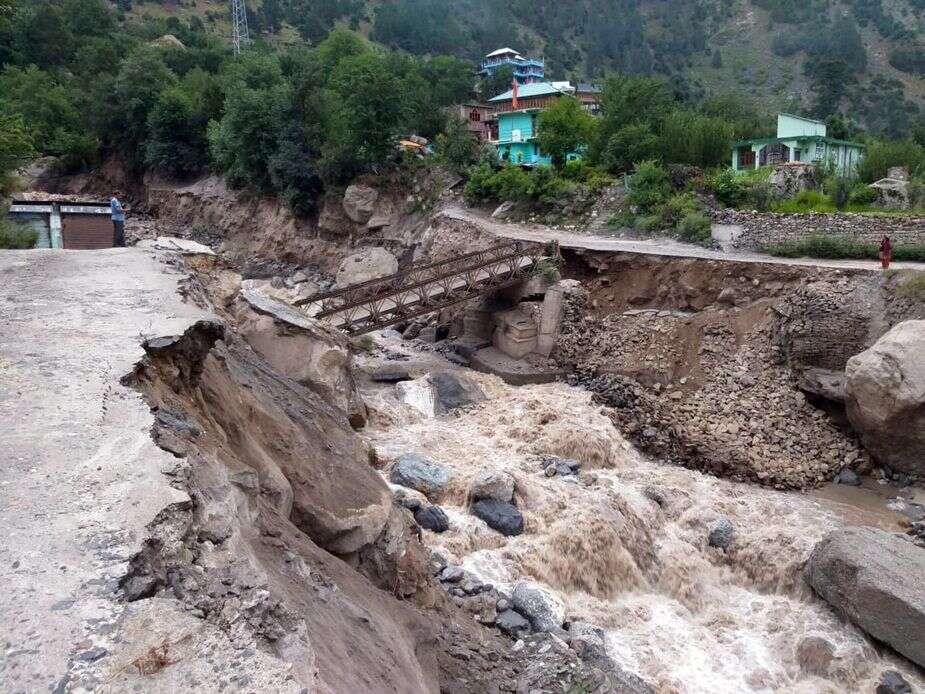
Cloud Bursts in Himachal Pradesh in Monsoon 2019

Cloud burst incidents are emerging as a major threat for the Himalayan states. Of late, the extreme weather event have been causing large scale destruction in ecologically sensitive and remotely located vulnerable hilly areas. In 2018 between May 2 and July 20, the Uttarakhand state saw around 13 cloud bursts event which have increased to 23 in 2019 monsoon season resulting in wide scale damages.

This compilation for Himachal Pradesh state shows that the state is suffering even bigger destruction of infrastructure including roads, buildings, bridges and hydro projects due to increasing cloud burst events. At the same time the monitoring and mitigation efforts are totally insufficient and inadequate. 

Continue reading “Cloud Bursts in Himachal Pradesh in Monsoon 2019”

Cloud Burst

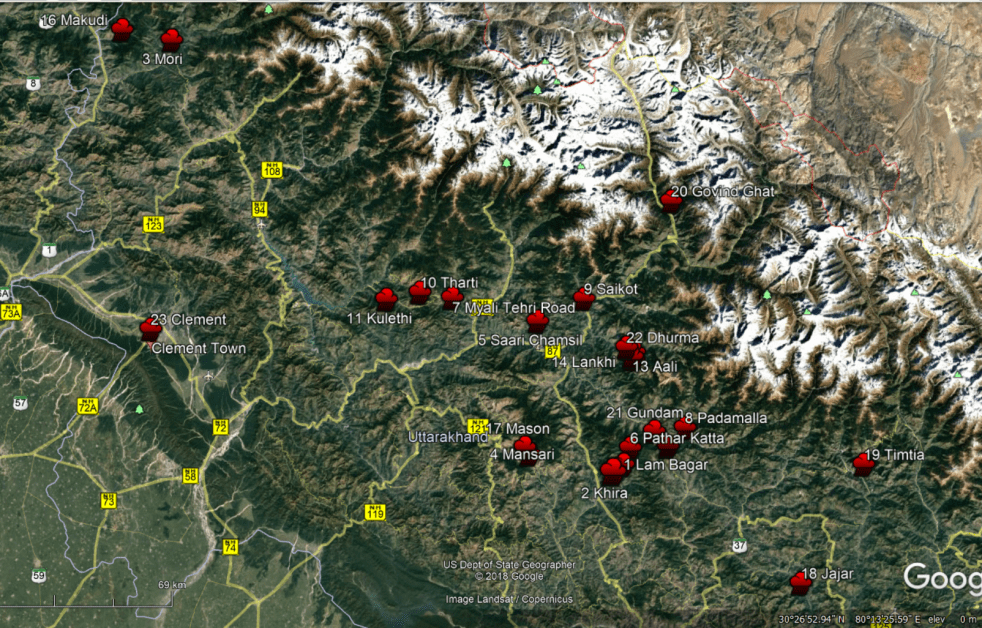
Uttarakhand Cloud Bursts in Monsoon 2019: No Doppler Radars Six Years Since 2013 Disaster

With the beginning of south west monsoon season 2019, many Himalayan states started witnessing exceptional rainfall events known as Cloud Bursts. The extreme weather event – like previous years- caused large scale destruction in ecologically sensitive and remotely located vulnerable hilly areas. This account compiles the available information about such incidents in Uttarakhand in 2019 SW monsoon.

Continue reading “Uttarakhand Cloud Bursts in Monsoon 2019: No Doppler Radars Six Years Since 2013 Disaster”

DRP News Bulletin

DRP: 9 Dec 2019: CITIZENS REPORT ON WHAT AILS GANGA REJUVENATION

 The Hindustan Times editorial on Nov 27, 2019 has rightly said the following about “a recently-released Rejuvenating-Ganga River – A Citizen-Report, by the India Rivers Week, a consortium of seven NGOs”.

“A key reason for the failure of the river cleaning projects (Ganga and Yamuna action plans), says a recently-released citizen’s report, Rejuvenating Ganga,by the India Rivers Week, a consortium of seven NGOs, was their single-point focus on the main stem of the river, while the Ganga basin actually has eight major rivers (Yamuna, Son, Ramganga, Gomti, Ghaghra, Gandak, Kosi and Damodar). The majority of the funds were spent on pollution-abatement measures on the main stem of the Ganga and on the upper Yamuna basin, which constitute just 20% of the Ganga basin.”

Continue reading “DRP: 9 Dec 2019: CITIZENS REPORT ON WHAT AILS GANGA REJUVENATION”