
National Institute of Disaster Management, Ministry of Home Affairs, Govt of India invited Himanshu Thakkar, Coordinator of SANDRP, to speak on the topic at IHC on Saturday. At the packed hall with participants that included members from Central Water Commission, National Disaster Management Authority, Embassies, Media and Civil Society, the speaker explained how unwise and unaccountable operation of dams, violating all norms, hugely contributed to the proportions of the Kerala flood disaster. Giving the example of Idukki dam, he showed, how if the dam was operated as per rule curve, its contribution to the floods could have been reduced by over 50%. Similar is the story of other dams in Kerala.
Continue reading “DRP: 10 Sept 2018: NIDM Lecture on Role of Dams in Kerala Floods”
Is there hope from National Mission for Clean Ganga? Listen to official agencies
In this second part of the Ganga article, let us listen to some official agencies about the state of Ganga River following the recent efforts.
Parliamentary Committee: Why is Ganga among the five most polluted rivers of the world? Said Parliamentary estimates committee (2016-17) for Ministry of Water Resources, Ganga Rejuvenation and River Development (MoWR for short) in a report on “Ganga Rejuvenation” submitted to the Lok Sabha (lower house of India’s Parliament) on 11th May, 2016[i]: “However, indiscriminate anthropogenic interventions like construction of HPPs[ii] in the seismically active and fragile Himalayas, diversion of 80 to 90 percent of water, discharge of extremely hazardous effluents by 144 drains and dumping of solid waste has converted the Ganga into one of the ten most polluted rivers of the world. Alarmed by the drying-polluted Ganga and taking note of the solemn resolve of the Prime Minister to rejuvenate the Ganga, the Committee decided to select the subject for in depth examination and report with a view to accelerate the work of Ganga rejuvenation.” The report also noted, “The Public Accounts Committee (2014-15) in their 8th Report on Water Pollution had expressed distress that the Ganga has become one of the five most polluted rivers in the world, despite launching of the ‘Ganga Action Plan’ and the ‘Mission Clean Ganga’ (2009) by the NGRBA[iii].” Continue reading “Is there hope from National Mission for Clean Ganga? Listen to official agencies”
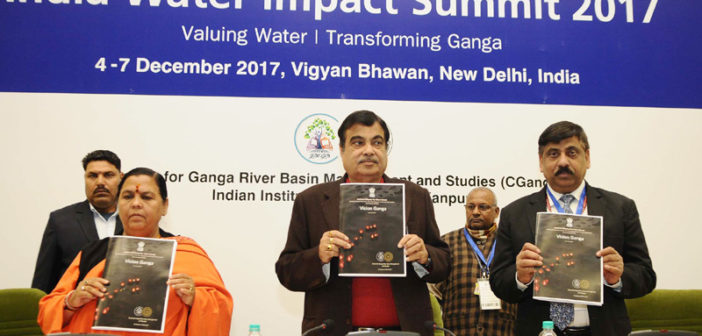
What ails Ganga: Why Namami Gange is spectacular failure
Ganga river basin’s importance is well acknowledged. The World Bank, that is funding a currently ongoing USD 1 Billion project for Ganga Clean up says in its Project Appraisal Document[i]: It’s the most populous basin in the World. 50% of India’s poor are in the five states along the main stem of Ganga: Uttarakhand, Uttar Pradesh, Bihar, Jharkhand and W Bengal. The basin of the 2525 km long river spans four countries (China, Nepal, India, Bangladesh) and 11 Indian states. More than 60 million people came to the Ganga river in the city of Allahabad for pilgrimage in January 2007 during Kumbh Mela, making it the largest gathering in the world. It will again happen in January 2019. Continue reading “What ails Ganga: Why Namami Gange is spectacular failure”

DRP: 3 Sept 2018: CHINA HAS STARTED DECOMMISSIONING DAMS
In a mountain village in southwest China’s Sichuan province, authorities have demolished seven small dam projects this year along a river to clear illegal developments in a new nature reserve. The demolition is part of a nationwide programme to close hundreds of tiny and often ramshackle dams and turbines and bring order to China’s massive hydropower sector after years of unconstrained construction.
The dams sat on an unnamed tributary of the fierce and flood-prone Dadu river, which feeds into the Yangtze, Asia’s largest and longest river, where the government says the “irregular development” of thousands of small hydropower projects has wrecked the ecology. But green groups say the campaign will not necessarily save the environment because it will not affect big state hydropower stations, which they say have caused the most damage.
On the 48 km Zhougong, authorities have already demolished small projects built in nature reserves or encroaching upon new “ecological red lines” drawn up to shield a quarter of China’s territory from development.
The government says small dams have disrupted the habitats and breeding patterns of many rare species of fish, although green groups argue the damage wrought by bigger dams is more severe, with entire towns and ecosystems submerged in water, which they say increases the risk of earthquakes, landslides and even climate change.
Continue reading “DRP: 3 Sept 2018: CHINA HAS STARTED DECOMMISSIONING DAMS”
Gujarat’s water crisis rooted in years of misplaced priorities
As things stand now, Gujarat is facing prospects of a serious water crisis that may extend till at least next average or above average monsoon. State level Rainfall so far this monsoon is 19% below average as on Sept 1. But the state level average hides the local situation.
Some of the districts that have received rainfall with high deficits, as per IMD figures till Sept 1, 2018 include: Kutch: -58%; Patan: -58%; Gandhinagar: -51%; Morbi: -47%; Ahmedabad: -48%; Surendranagar -43%; Banaskantha: -55%; Mehsana: -52%; Devbhoomi Dwarka: -40%. These district level figures indeed show massive rainfall deficit with less than a month of monsoon remaining. Continue reading “Gujarat’s water crisis rooted in years of misplaced priorities”
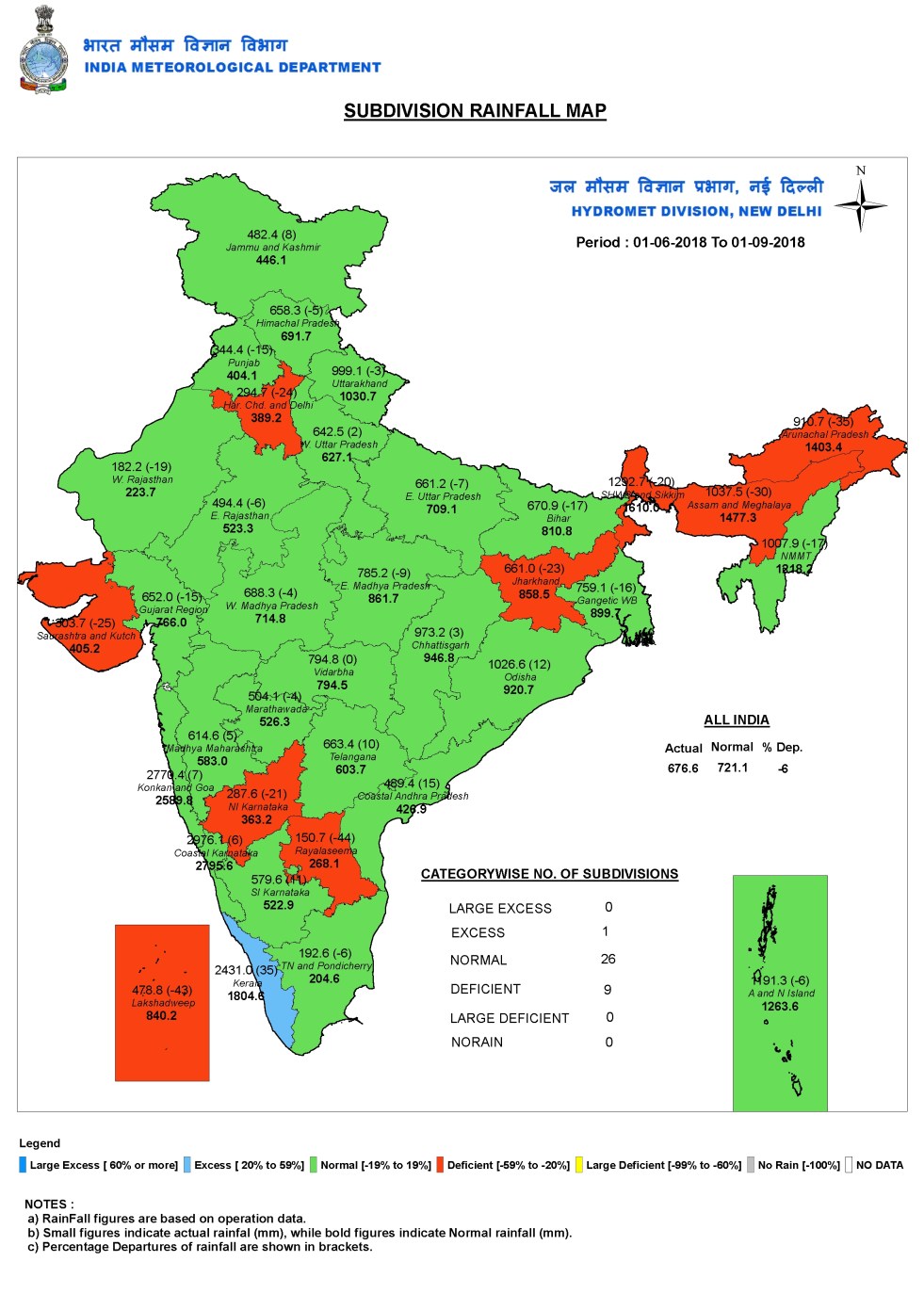
The mirage of normal monsoon
According to IMD, India is having normal monsoon this year, so far, as per rainfall till date (Sept 1, 2018). Against normal rainfall of 721.1 mm, India has received 676.6 mm rainfall, which is 6.2% below normal, considered within normal rainfall definition as per IMD. So India is having normal monsoon rainfall, says IMD. Let us check this against some ground realities.
However, East and North East India, one of the four regions for which IMD provides rainfall data, has so far had 27% below normal rainfall, while South India had 9% surplus rainfall. Thus, while at all India level, what seems all normal, is average of different, though serious departures from normal rainfall. Let us say this is first level of mirage of normal rainfall. Continue reading “The mirage of normal monsoon”
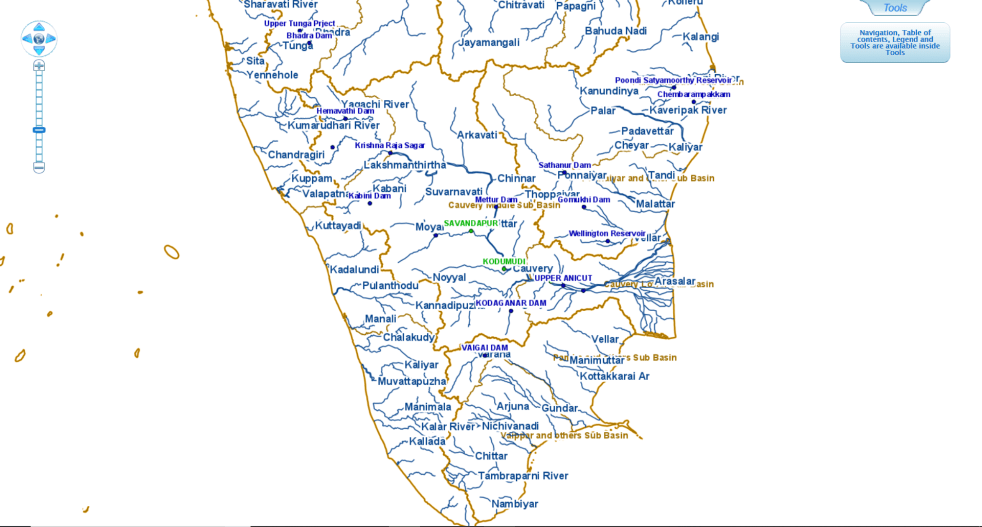
Overview of CWC Flood Forecasting Sites 2018: SOUTH INDIA
Central Water Commission is the only agency doing flood forecasting in India. As per CWC’s Flood Forecasting website[i] the Data Flow Map has information about 226 Flood Forecast Sites in the country comprising of 166 Level Forecast Sites and 60 Inflow Forecast Sites. It also monitors 700 Flood sites, information made available through List Based Exploration and Hydrograph View, but no flood forecasting is done for these sites.
In order to better understand the CWC’s flood monitoring and forecasting work, in this article, we have given an overview of CWC’s flood forecasting and monitoring sites in South India. It includes state wise list of CWC’s Level Forecast, Inflow Forecast and level monitoring sites in South India. Similar report has been published for North India[ii] and North East India[iii] and East India[iv].
Tamil Nadu There are 3 Level Forecasting, 48 Level Monitoring and 14 Inflow Forecasting sites in Tamil Nadu State. Out of total 65 sites, 19 Level Monitoring and 2 Inflow Forecasting sites are inactive. MWL information is given only for 1 Inflow Forecasting site out of 14. IRRUKKANKUDI, Sathanur and Gomukhi sites are repeated with incomplete information. Out of 48, HFL figure and date is not provided for 25 Level Monitoring sites.
Continue reading “Overview of CWC Flood Forecasting Sites 2018: SOUTH INDIA”

Overview of CWC Flood Forecasting Sites 2018: East India
Central Water Commission is the only agency doing flood forecasting in India. As per CWC’s Flood Forecasting website[I] the Data Flow Map has information about 226 Flood Forecast Sites in the country comprising of 166 Level Forecast Sites and 60 Inflow Forecast Sites. It also monitors 700 Flood sites, information made available through List Based Exploration and Hydrograph View, but no flood forecasting is done for these sites.
In order to better understand the CWC’s flood monitoring and forecasting work, in this article we have given an overview of CWC’s flood forecasting and monitoring sites in East India. It includes state wise list of CWC’s Level Forecast, Inflow Forecast and level monitoring sites in East India. Similar report has been published for North India[II] and North East India[III] and we hope to publish reports covering other regions of India too.
Continue reading “Overview of CWC Flood Forecasting Sites 2018: East India “

DRP: 27 Aug 2018: WRONG Management of DAMS Create FLOODS, Accept Officials and Experts
Accepting that reservoirs operation and flood management in India lack scientific supports, Madhavan Nair Rajeevan, Secretary, Ministry of Earth Sciences, in an interview has revealed that dams and water reservoirs need flood management systems that use scientific methods to understand when the time is right to open the gates.
“As per my understanding, no big reservoir has a decision support system. So we don’t know when to open them, how to open them… I am not attributing the Kerala floods to an individual. There is a common perception that in India most of the flood management systems are not supported by science… I am very sure we don’t have the decision support system and we need it.” https://indianexpress.com/article/india/not-just-kerala-no-scientific-dam-water-management-across-india-madhavan-nair-rajeevan-secy-earth-sciences-5322003/ (24 Aug. 2018)
In another interview he says that while Kerala records among the highest amounts of rainfall in the country, the State did not have a flood warning system in place. He added that while there were several sophisticated tools to anticipate extreme weather events, India still lacked a mechanism to effectively deploy them. https://www.thehindu.com/sci-tech/energy-and-environment/reservoirs-not-managed-using-a-scientific-decision-support-system-m-rajeevan/article24785253.ece (26 Aug. 2018)
Further in a detailed interview, he pitches for ‘decision support systems’ at dams, acknowledges the challenge of climate change, warn against repercussions of ‘fast-warming’ Indian Ocean. https://indianexpress.com/article/india/kerala-floods-m-rajeevan-ministry-of-earth-sciences-met-department-5324840/ (26 Aug. 2018)
Continue reading “DRP: 27 Aug 2018: WRONG Management of DAMS Create FLOODS, Accept Officials and Experts”
DRP: 20 Aug 2018: Kerala Is Recovering From Unprecedented Flood Disaster, Will It Be Cauvery Or Krishna Basin Next?
Well-known ecologist Madhav Gadgil, founder of the Centre for Ecological Sciences at the Indian Institute of Science, Bengaluru, has described the devastating floods in Kerala as a man-made disaster and a reaction to the illegal excavations and stone quarrying done over a decade. https://www.hindustantimes.com/pune-news/illegal-forest-land-acquisition-major-reason-for-floods-in-kerala-says-ecologist-madhav-gadgil-calls-it-man-made-disaster/story-vMHPKUH623GEnjyQHI09NP.html (19 Aug. 2018)
Further speaking to various regional media, Madhav Gadgil has said that irresponsible environmental policy is to blame for the recent floods and landslides in Kerala. He also called it a “manmade calamity”. He said that the committee report had recommended to protect the resources with the cooperation of local self-govt and people, but those recommendations were rejected.
He also pointed out that quarrying is a major reason for the mudslides and landslides. Other environmentalists also point fingers at the extensive quarrying, mushrooming of high rises as part of tourism and illegal forest land acquisition by private parties as major reasons for the recent calamity. https://energy.economictimes.indiatimes.com/news/power/kerala-floods-the-ghost-of-past-environment-policy-returns/65436707 (17 Aug. 2018)
Dams should never be filled before the end of the monsoons. Because then one doesn’t have any solution but to release the water in the surrounding areas: Himanshu Thakkar, SANDRP says as one of panellist discussing role of dams in aggravating Kerala floods.
Also see, NDTV discussion on Kerala flood crisis, it included SANDRP coordinator. https://special.ndtv.com/kerala-floods-42/video-detail/kerala-floods-non-stop-special-coverage-of-the-unfolding-crisis-491815 (19 Aug. 2018)
Here is NDTV Hindi discussion on Kerala flood crisis, included SANDRP coordinator. https://khabar.ndtv.com/video/show/ndtv-special-ndtv-india/ndtv-special-coverage-on-kerala-rain-crisis-491820 (19 Aug. 2018)
Here is admission about sudden, excessive releases and not foreseeing the coming disaster. The Kerala crisis could have been contained had the state “gradually released” waters from at least 30 dams, officials said, adding that the local authorities failed to foresee the imminent danger with high rain prediction. “Such floods have probably recurred after 100 years, exposing the state’s unprofessionally run reservoir management system and unpreparedness on disaster mitigation and disaster resilience, an official pointed out. https://timesofindia.indiatimes.com/city/kochi/gradual-dam-water-release-could-have-contained-crisis/articleshow/65436339.cms (17 Aug. 2018)
Continue reading “DRP: 20 Aug 2018: Kerala Is Recovering From Unprecedented Flood Disaster, Will It Be Cauvery Or Krishna Basin Next?” SANDRP