Dams · DRP News Bulletin

DRP: 11 July 2016 (Namami Gange proving mere an extension of Ganga Action Plan)

Ganga Manthan to Ganga Act: No progress made Chairing the 6th meeting of the National Ganga River Basin Authority on July 04  Water Minister Uma Bharti has said that a new act will be formulated for speedy implementation of Namami Gange programme. On July 06, giving a major boost to Namami Gange Programme Ms Uma Bharti has also announced that 231 projects will be inaugurated at various locations in Uttrakhand, UP, Bihar, Jharkhand, West Bengal, Haryana and Delhi on July 07. Incidentally, on July 07, 2014 NDA Govt. launched the Namami Gange programme to rejuvenate the river to be executed over five years. The project has a budget outlay of Rs 20K crore which is 10 times more than what was allocated in previous Ganga Action Plan (GAP) phase I and II. But more money and the PM minister’s zeal, notwithstanding, Namami Gange seems a carryover from its predecessor in one crucial respect.  The overwhelming emphasis on pollution abatement that had led to the GAP’s failure bedevils Namami Gange as well. In certain respects, Namami Gange is an improvement on the GAP. It seems that the govt has not learnt lessons from the GAP’s failure. The lag between sewage generation and treatment has remained between 55% & 60% even as new STPs were built under the GAP. This is because a lot of the waste is generated outside the sewerage network and is not conveyed to the STPs. A large section of the country’s urban population lives outside this network. Moreover, the STPs can only do so much. The official statistics show that the STPs are currently running at a deficiency of 55%. The problem of STPs is three-fold: underestimation, shortage and underutilization due to lack of a well-connected underground sewage system.

The problems associated with river Ganga, however, do not end or begin in its middle course dotted by factories. The upstream of the river, where Bhagirathi and Alaknanda join to form the Ganga, is part of a very fragile Himalayan ecosystem. Caution is needed in implementing the Namame Gange projects along this stretch. The Kedarnath flood of Uttarakhand is an example of what a combination of melting glaciers and mindless construction can do to a sensitive geological zone. With more than 40 dams, barrages and weirs  and many more planned aviral Ganga seems nothing more than an empty catchphrase. Ganga is the sum total of the contribution of some 12 major tributaries. Without a rejuvenation strategy for each of Ganga’s tributaries, there can be no Ganga rejuvenation.

Meanwhile, increased fishing activity and vessel traffic are proving to be the disturbing element downstream. Deploying more scientific methods for fishing and limiting it to levels enough for species’ sustenance might help without significantly affecting livelihoods. The direct consequences of climate change are also felt in the lower belts, around the Ganga Sagar region. Land is disappearing but no comprehensive plans have emerged as yet to provide for the rehabilitation of the region’s inhabitants.

Continue reading “DRP: 11 July 2016 (Namami Gange proving mere an extension of Ganga Action Plan)” →
Cumulative Impact Assessment · Dams · Ministry of Environment and Forests

Transparency in Environment Governance? Expert Meeting on River Projects does not have documents in open domain

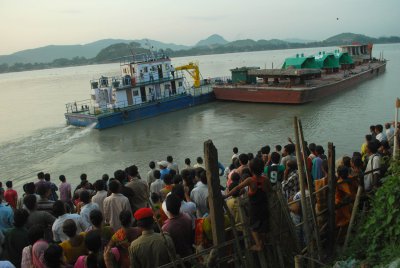
Above: Protest against Lower Subansiri Project in Assam. Basin Study of Lower Subansiri is also a part of intense debate in Assam. Now these studies are under wraps by the MoEF and CC

Non-transparent Environment Governance does not help anyone, neither is it legal. In the upcoming Expert Meeting of the MoEF and CC on River Valley Projects (read dams), documents pertaining to 6 of the 8 projects being considered are not available!

We have appealed to the new Minister to take swift action against this non-transparent and non-democratic governance in the MoEF and CC. Please feel free to send similar letters to the email addresses mentioned below. Continue reading “Transparency in Environment Governance? Expert Meeting on River Projects does not have documents in open domain” →

Dams · Environmental Laws · Ministry of Environment and Forests

The New License Raj: License to Violate Environmental Laws through Environmental Supplemental Plan

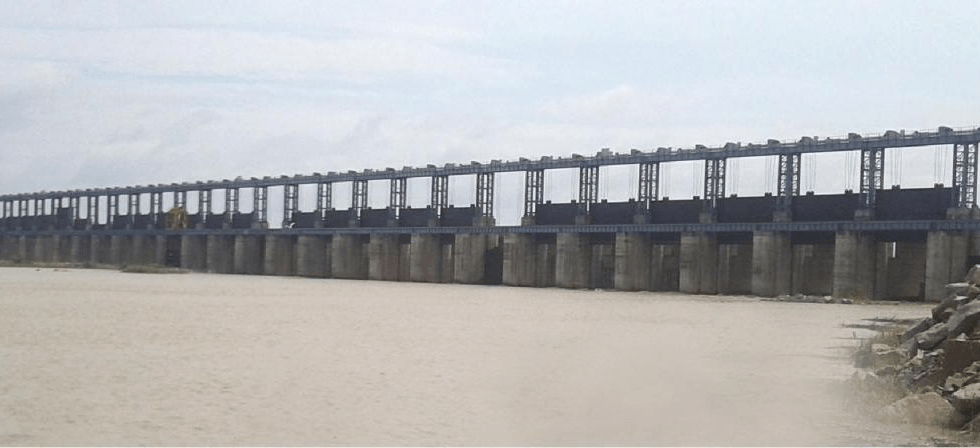
Above: Sonthi Barrage in Karnataka standing without Environmental Clearance

The Ministry of Environment, Forests and Climate Change has issued a Draft Notification which aims to “regularise” projects which have violated the basic tenet of Environment Law and Governance in the country: starting work without securing Environmental Clearance. While any such violation should be punishable to deter any contempt of the much-abused environment laws, the Ministry is seeking to do just the opposite: Regularize the violations by constituting a wishy-washy Environmental Supplemental Plan, as outlined in the Draft Notification.

This seems like one of Mr Prakash Javdekar’s last acts as Environment Minister (before he got transferred to HRD with promotion to cabinet rank) that, typically similar to his other acts during his seriously problematic two year tenure, was totally against what he was expected to do: Protection of environment. We hope the new incumbent at MoEF&CC will cancel this notification immediately.  Continue reading “The New License Raj: License to Violate Environmental Laws through Environmental Supplemental Plan” →

Dams · DRP News Bulletin

DRP: 4 July 2016 (In Proposed Hydro Policy, Govt Pushing Hydro Through Subsidies)

New Hydro Policy: Govt unjustifiably pushing hydro through subsidies A comprehensive policy to promote hydropower generation is set to be announced by September—with viability gap funding for projects, compulsory hydropower purchase obligations for distribution companies and a set of good practices that states have to follow. The idea is to address factors that currently drive hydropower costs up way above those of other sources of power and give policy support in its market development, according to a government official, who asked not to be named. The policy being prepared by the power ministry will have provisions for viability gap funding, which will help in meeting the shortfall in project costs and reducing hydroelectricity tariffs for consumers. Hydropower is expensive and in some cases more than double the cost of power from coal-based thermal plants, which is available at Rs.3-5 per unit.The ministry will also expand the scope of power distribution companies’ renewable power purchase obligations to include hydropower from projects with a capacity greater than 25 Mw. At the moment only power from those with less than 25MW is considered renewable power. According to officials, compulsory hydropower purchase from large projects will either be made part of the existing renewable power purchase obligation of distribution companies or a separate requirement, so that its inclusion does not affect the market for other renewable sources of energy like wind, solar or biomass. Govt unjustifiably pushing hydro through subsidies in proposed new hydro policy can be lead story. It is not going to help push hydro.  

Continue reading “DRP: 4 July 2016 (In Proposed Hydro Policy, Govt Pushing Hydro Through Subsidies)” →
Dams · Hydropeaking · Hydropower · Narmada

नदी के बदले नदी दे सकते है? ..on Maheshwar, Narmada and fishing communities of India

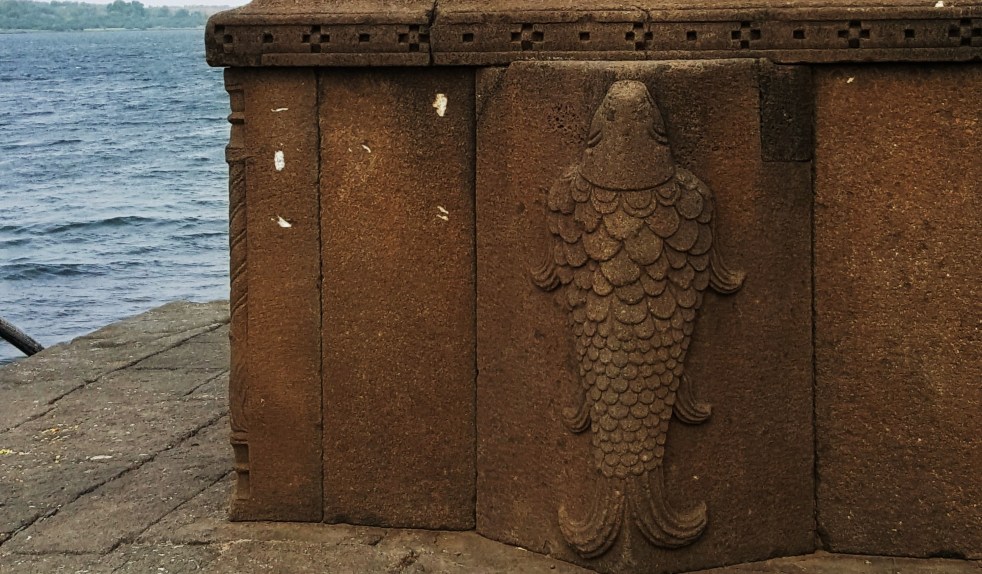
What separated Maheshwar Ghats on the mighty Narmada from most other rivers I have seen was the sheer gaiety and joy which people were experiencing, jumping in the Narmada.  The beautiful, jutting steps of the ghats were designed (and used) like diving boards by men, boys and women. For someone who had just seen a dry Godavari and drier rivers of Marathwada, this mirth was therapeutic. Ferry Boats and laidback ferrymen were relaxing on the river, bobbing up and down rhythmically. In the distance was a tiny sailboat, held together by white fluttering sails, zipping through the waters at a startling speed without the din of a diesel engine. A fisherman and his daughter were returning to their village, taking stock of their catch.. Occasional fish rose above the waters and glistened in the evening sun. Continue reading “नदी के बदले नदी दे सकते है? ..on Maheshwar, Narmada and fishing communities of India” →

Dams · National Water Ways

In the Pits: the Ganga River, dredged to death

Guest Blog by Nachiket Kelkar (rainmaker.nsk@gmail.com)

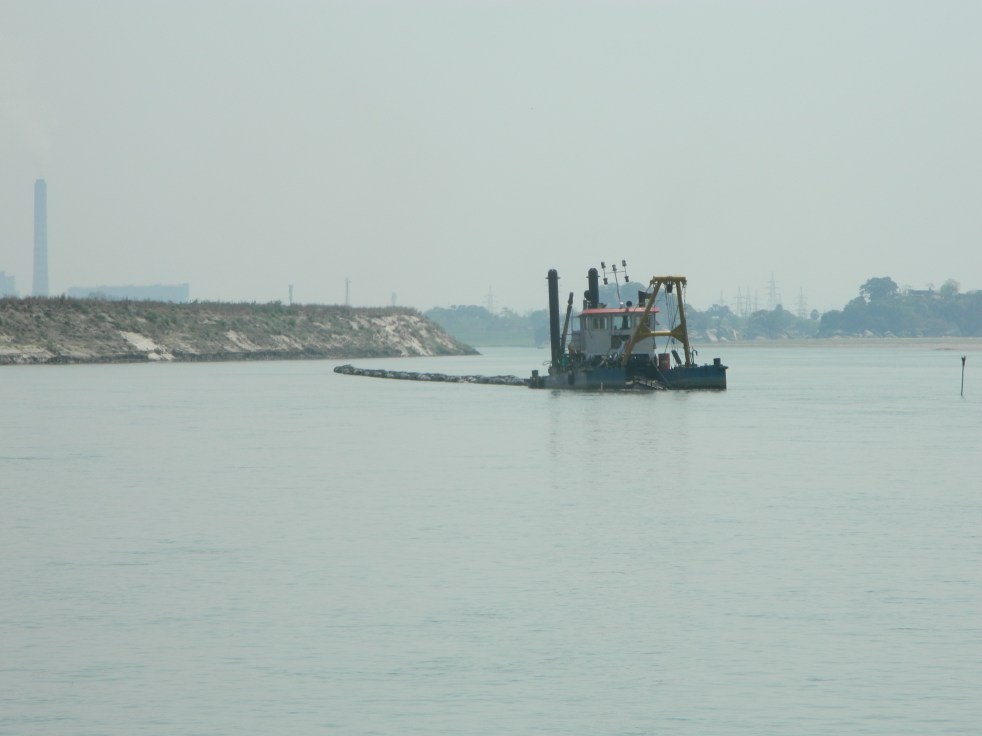
When human beings fall into manholes or die in traffic accidents on a highway they are all over the news. We pity and fear such news, and feel sad for the deceased, just because the whole event is so unfortunate. We are angered by the condition of traffic – that continues to remain appalling despite having six-lane highways that look deceptively magnificent. We wonder if these cases could have been avoided. It is therefore even more disturbing that not a single news item has covered a series of major accidents that have happened right in the middle of the Ganga River National ‘Waterway’ (India’s National Waterway No. 1; see Dams, Rivers & People: Feb-March 2016 issue: p. 1-7, 2016 for details[i]) in the last six months.

Over twenty people have died by drowning at the Barari Ghat (Image 1) at Bhagalpur in Bihar in this period. Offering prayers, taking dips, or lunging in for a calm swim, these people have slipped away as their feet have lost the ground all of a sudden. The river, scouring off the silt from under the concrete, has been catapulting their bodies into the deepening abyss on the fringes of the ghats. Many bodies have not even been found. Family members of many, whose bodies were found, must have never suspected that they would have to carry back their kin’s corpses. What made the same Barari Ghat, which people traditionally visited for years, so dangerous suddenly?

Continue reading “In the Pits: the Ganga River, dredged to death” →

Dams · DRP News Bulletin

DRP: 20 June 2016 (MoWR invites suggestions on National Water Framework & Model Ground Water Bill)

Centre Suggestions invited on Draft National Water Framework Bill and Draft Model Bill for Conservation, Protection, Regulation and Management of Ground Water   Ministry of Water Resources, River Development and Ganga Rejuvenation has uploaded the draft national water framework bill and draft model bill for conservation, protection, regulation and management of ground water on its website (http://mowr.gov.in). The  Draft  National  Water  Framework  Bill  provides  an  overarching  national  legal framework based on principles for protection, conservation, regulation and management of water as a vital and stressed natural resource, under which legislation and executive action on water at all levels of governance can take place. The comments/suggestions/views from all Individuals/Experts /Organizations/Institutions on the above bill may be sent to jspp-mowr@nic.in or sjcpp-mowr@nic.in latest by June 25, 2016. The Draft Ground Water Model Bill is based on the principles of subsidarity, equitable distribution in an integrated approach. The State should act as a public trustee of ground water, which should be treated as a common pool resource to make sure that groundwater is protected, conserved, regulated and managed. The comments/suggestions/views from all Individuals/Experts/Organizations/Institutions on the above bill may be sent to dirgw-mowr@nic.in or pratul.saxena@nic.in latest by June 25, 2016.

Continue reading “DRP: 20 June 2016 (MoWR invites suggestions on National Water Framework & Model Ground Water Bill)” →

Dams · Godavari

Borewell water in a concretized Ramkund: Has religion helped Rivers at all?

A couple of years ago, we were travelling from Dehradun to Delhi and on my left was the massive Bhimgouda barrage which diverted the Ganga through Upper Ganga Canal at Haridwar. The barrage diverted the entire river, so that the downstream of the barrage, Ganga River was bone dry. Even for an agnostic like me, it was disturbing to see the mighty Ganga dried out like this so close to her origin. But just a couple of hundred meters ahead on the right were Har ki Pauri Ghats where Pilgrims were religiously performing Ganga Arati. There was a highly colored cement statue of Ganga precariously balancing on her gharial, in the middle of the canal. Continue reading “Borewell water in a concretized Ramkund: Has religion helped Rivers at all?” →

Dams · DRP News Bulletin

DRP: 13 June 2016(Minister Threatens Stir Over Delay In Ken-Betwa Clearances)

Uma threatens stir over delay in Ken-Betwa interlinking Water Minister Uma Bharti on June 07 threatened an agitation if there were further delays to the wildlife clearances necessary for the storied Ken-Betwa river-interlinking project. This is TOO Much! Union Minister threatening to go on Fast, demanding environment clearance to Ken Betwa link! Calling it a national crime  to stop clearance to Ken Betwa link. Saying if the project is not cleared in next meeting, she will go on fast! Claiming that the link will help Marathwada!! It wont help even Bundelkhand, but the Union Minister seems to be setting completely wrong, precedent, which also ultra legal. On the other hand The Hindu has been consistently underplaying the impacts of the Ken Betwa project and over playing the official lines. Very strange to see this from THE HINDU. Before this in its June 02 meeting the expert appraisal committee (EAC) of environment ministry has deferred environment clearance for the ambitious Rs.10,000cr Ken-Betwa river linking project in its last meeting on June 2, and has sought more clarity on its wildlife & hydrological impact. The meeting could not come to a conclusion as the members of the EAC had several doubts regarding the project’s hydrological feasibility, its impact on hydrology and wildlife too and found that many serious issues related to the project are yet to resolved. In the last week of May 2016, SANDRP in a letter to EAC has written about Ken-Betwa project & why EAC should not clear this. Please help us spread the word and urgently write to EAC if you agree. Himanshu Thakkar coordinator SANDRP points out that the Ken-Betwa link, in essence, Ken-Betwa link will facilitate transfer of water from the Ken River Basin (Bundelkhand) to Upper Betwa Basin (outside Bundelkhand), so it is actually exporting water out of Bundelkhand. 

Continue reading “DRP: 13 June 2016(Minister Threatens Stir Over Delay In Ken-Betwa Clearances)” →

Dams

Community Driven Water Conservation Initiatives In 2016 Drought

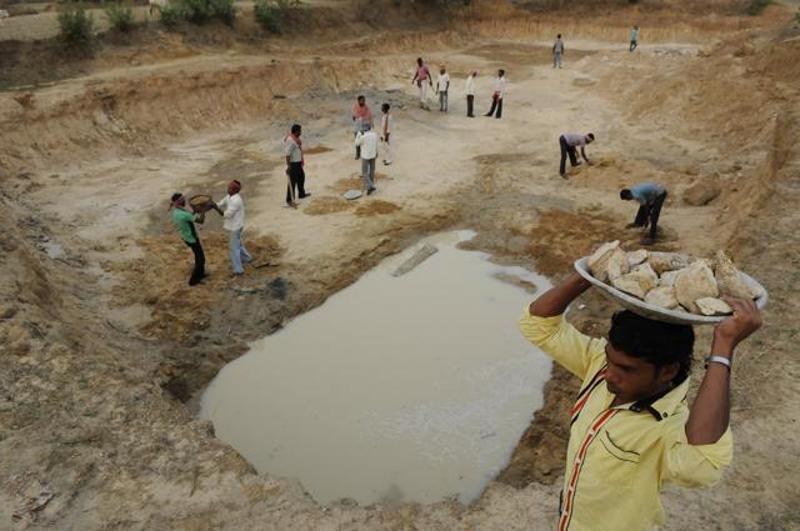
In 2016, India has been witnessing one of the severest droughts after independence. The phenomena has led to a ‘never before’ kind of water crisis across the country. As a result the surface water sources are under severe stress and aquifers beneath ground have been over drafted. An already depressed agrarian community is worst hit. Thousands of parched villages have been dotting the rural landscape. Many somewhat immune urban centers are also facing the wrath of heat.

However there is no dearth of inspiring tales in the field of water conservation pan nation presenting a ray of hope amid gloomy scenario. The exemplary works being done by several villages, people and organizations across the country offer some lasting solutions to growing water scarcity. So here is an attempt to present a State wise account of drought hit areas which have been wading through the water crisis sound and safe by reinventing the community driven and local water harvesting practices.

Continue reading “Community Driven Water Conservation Initiatives In 2016 Drought” →