
The floodplains of Yamuna in Delhi have been facing encroachment threats for long. In the latest incident a huge portion of riverbed underneath Nizammudin bridge towards Games village was found turned into a dumping ground on February 16, 2020. This was happening despite the protection of floodplains from encroachment and waste dumping were among key concerns of remarkable National Green Tribunal (NGT) judgement “Maili Se Nirmal Yamuna” of January 13, 2015. Continue reading “Despite NGT order and Yamuna Monitoring Committee-CPCB-DDA responses, action awaited about dumping on Yamuna floodplain”
Category: Dams

DRP: 17 Feb 2020: Case of “disappearance” of 28849 wetlands in Maharashtra
The Maharashtra government submitted an affidavit in High Court that the state has 15865 wetlands, down from 44714 in 2010. How did 28849 wetlands disappear from the very definition of wetland? While all of these wetlands may not have disappeared from ground, their disappearance from govt papers as wetlands means that they are now open to all kinds of abuse and encroachments. It along with other wetlands related stories here shows how little the governments are concerned about the wetlands.
Continue reading “DRP: 17 Feb 2020: Case of “disappearance” of 28849 wetlands in Maharashtra”
DRP: 10 Feb 2020: Examples of Better Water Management Options
This week’s news bulletin has a number of examples of Better Water Management Options that India has, let us focus on the example from state. These examples come from Kerala (achieving a barren land free constituency & KERI study showing the need for desilting of Malampuzha reservoir), Tamil Nadu (lessons from implementation of System of Rice Intensification in large parts of cultivable land and also declaring the Cauvery Delta as protected agriculture zones that will help stop the problematic hydrocarbon exploration project as also, hopefully other destructive projects), Odisha (govt filing affidavit in the Supreme Court asking it to stop work on Polavaram Dam of Andhra Pradesh is hugely belated but right move), Telangana (rejecting the Godavari Cauvery River Linking proposal of NWDA for its shoddy water balance), Uttarakhand (Dehradun DM accepting in affidavit to High Court that 270 acres of river bed land is encroached in the district), Kashmir (drive to remove encroachments of Khushal Sar lake, even if selective, hopefully it will be a beginning), NGT (cancelling the township coming up in lake eco sensitive area in Bengaluru) among others. We have listed only the welcome initiatives from the govt. Even if these initiatives are taken to logical conclusion and also emulated by other states, it can go a long way in moving towards better water management.
Continue reading “DRP: 10 Feb 2020: Examples of Better Water Management Options”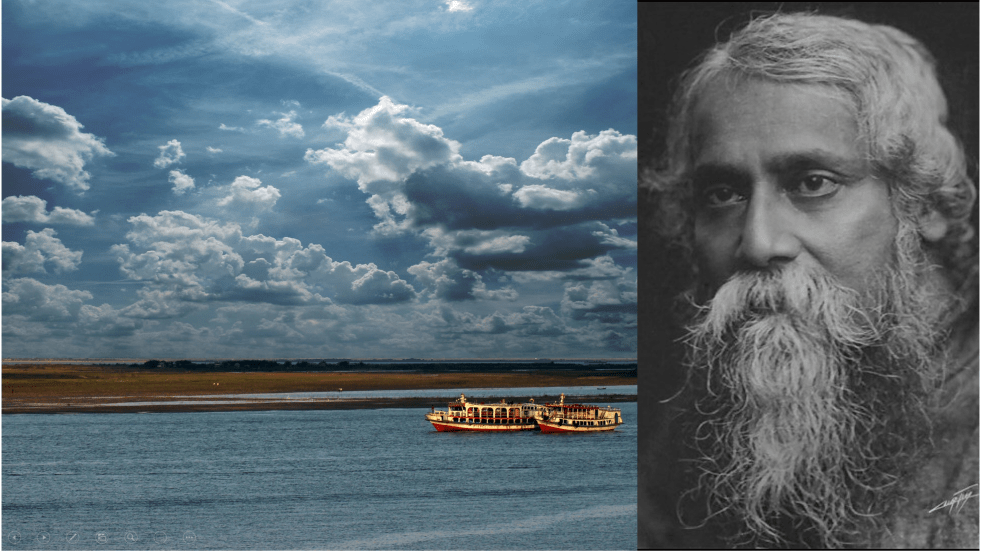
“Padma, I have seen you many, many times.”
Part 2
(Part 1 is here)
Anna Akhmatova, who translated Rabindranath Tagore’s poems into Russian in the mid-1960s, described him as “that mighty flow of poetry which takes its strength from Hinduism as from the Ganges.” [i]
Although he explored the beauty of Upnishads and revered the “sacred current of the Ganges”, Tagore was not tied to them. A beacon of Hindu-Muslim unity, his poetry took strength from myriad precious details.
While he talks of Padma’s might, he also returns with a sense of belonging to smaller rivers like Kopai and Ichhamati. Continue reading ““Padma, I have seen you many, many times.””
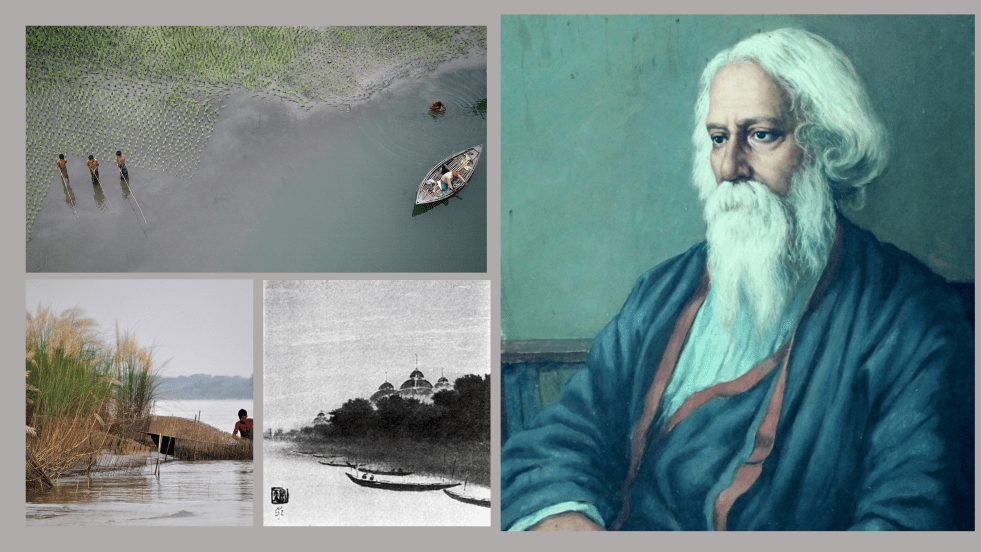
He Spoke the Language of the Rivers: Rabindranath Tagore
Part 1
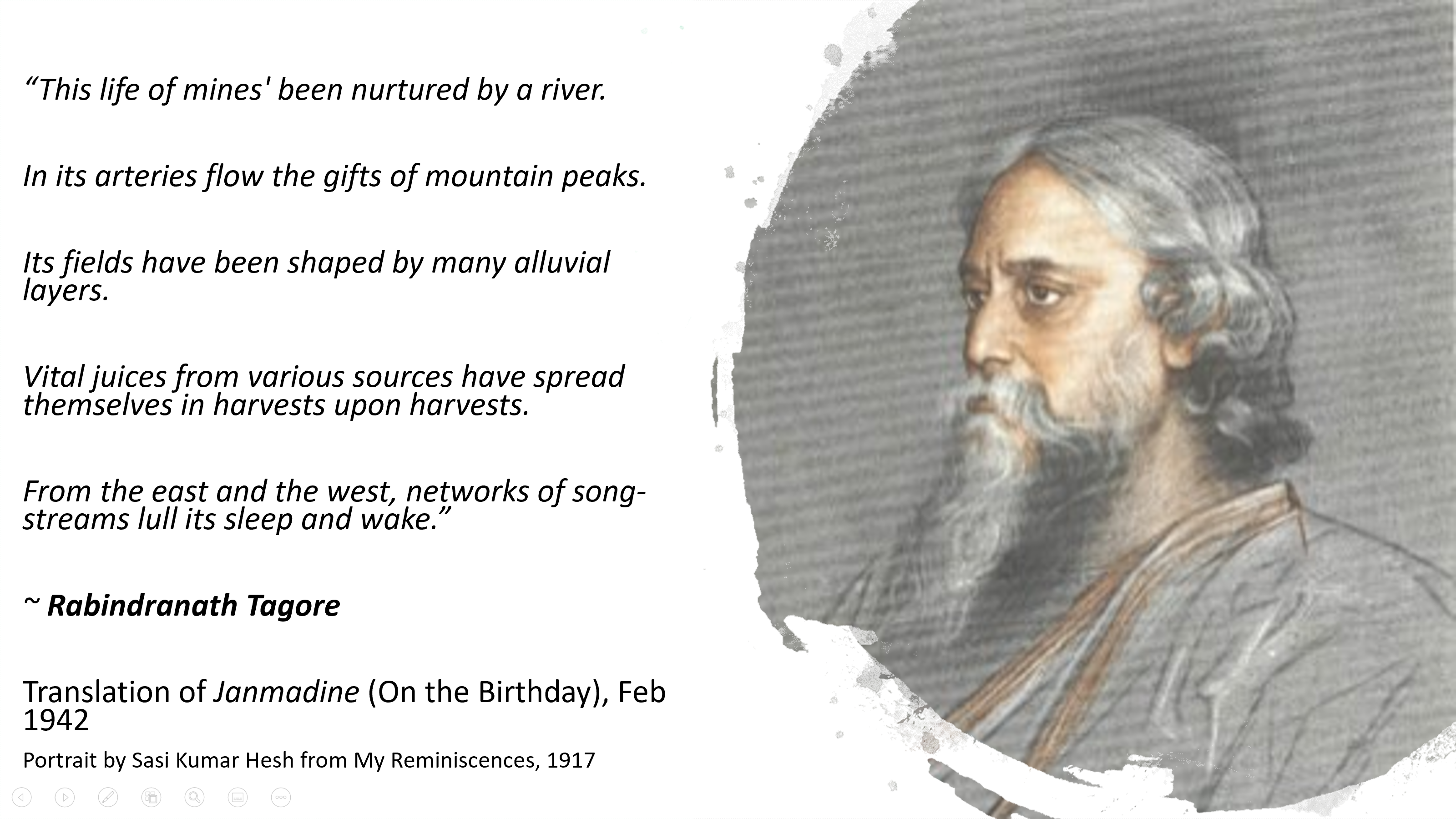
This was one of the last poems written by Gurudev Rabindranath Tagore. Bard of Bengal, Kabiguru, Bishwakabi: world knows him by many names. He reveled in life with the curiosity and wonderment of a child. In the Preface of Gitanjali (1912), Collection of poems which made him the first non-European to receive the Nobel in Literature, W. B. Yeats says, “Pearl fishers dive for pearls, merchants sail in their ships, while children gather pebbles and scatter them again. They seek not for hidden treasures, they know not how to cast nets.” This was for Tagore as much as the children. Poet, musician, novelist, painter, educator, freedom fighter, rationalist, modernist: the world was his canvas. Continue reading “He Spoke the Language of the Rivers: Rabindranath Tagore”

Saving the Dalai Lama’s Cranes: An adventure, swift as the river!
My son is twelve years old and a voracious reader. His favorites include series like Percy Jackson, Heroes of Olympus, Spy School and Space Runners. In short, nothing of the sort I read as a kid. I do not know these books and am frankly, a bit bewildered at the mix of mythology, science fiction and middle school dilemmas.
And hence, when I kept a copy of Neeraj Vagholikar’s “Saving the Dalai Lama’s Cranes” in his hands, I was a bit unsure. There were no kids here with gadgets, but a youth in robes studying to be a monk, his friend from Tawang and a wildlife biologist! Continue reading “Saving the Dalai Lama’s Cranes: An adventure, swift as the river!”

Riverscapes of a Lonely Poet: Jibanananda Das
Again I shall return to the Dhansiri’s banks, to this Bengal,
Not as a man, perhaps, but as a shalik bird, or a white hawk.
As, perhaps, a crow of dawn in this land of autumn’s new rice harvest,
I’ll float upon the breast of fog one day in the shade of a jackfruit tree.
Or I’ll be the pet duck of some teenaged girl — ankle bells upon her reddened feet —
I’ll spend the whole day floating on duckweed-scented waters.
Once again I’ll come, smitten by Bengal’s rivers, fields, to this
Green and kindly land of Bengal, moistened by the waves of the Jalangi.
Perhaps you’ll gaze at buzzards soaring, borne upon sunset breezes,
Perhaps you’ll hear a spotted owl screeching from a shimul tree branch,
Perhaps a child is strewing puffed rice on the grass of some home’s inner courtyard.
Upon the Rupsa river’s murky waters a youth perhaps steers his dinghy with
Its torn white sail—reddish clouds scud by, and through the darkness, swimming
To their nest, you’ll spot white herons. Amidst their crowd is where you’ll find me.
~ Jibananda Das, from Ruposhi Bangla (Bengal the Beautiful) Sonnet 1 Continue reading “Riverscapes of a Lonely Poet: Jibanananda Das”
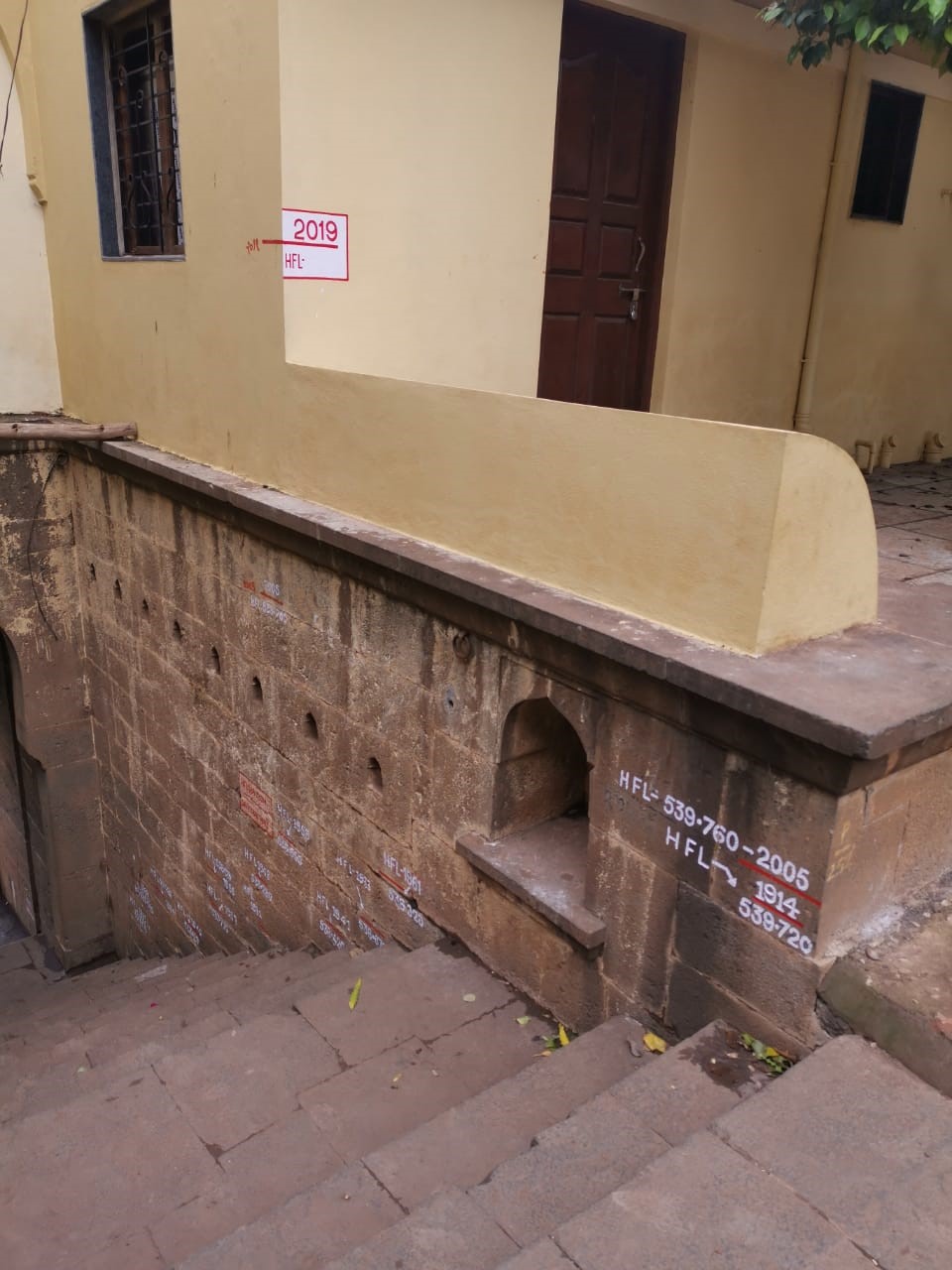
Sangli and Narsoba Wadi: Painted Red with Record Flood levels in 2019 monsoon
Sangli, on the banks of river Krishna in Western Maharashtra faced a historic flood in Aug 2019. Nearly One Lakh people were displaced and over 30 lost their lives in this district alone. While we covered the impact of floods on the agricultural and rural fabric of Sangli in the earlier photoblogs, Sangli city with a population of more than 22 Lakhs, too suffered huge losses.
Sangli-Miraj-Kupwad Municipal Corporation is on the banks of Krishna-Warna confluence in Western Maharashtra. Both rivers reached historic High Flood Levels in the 2019 floods. Warna, in Samdoli Village, Sangli District recorded an HFL of 546.9 Meters on 09 Aug 2019, breaking all previous records. Irwin Bridge, a historic bridge built in 1929 in Sangli city, recorded a river stage that the bridge had never experienced. Sangli and the nearby region are is not new to floods and has witnessed devastating floods in 1853, 1856, 1914, 2005, 2006 and latest 2019.
Same is the story downstream. Especially in the pilgrimage center of Narsoba Wadi near Kurundwad town of Kolhapur District. Situated at the confluence of Krishna and Panchaganga, floods are not new to Narsoba Wadi. In fact, there are elaborate flood rituals, in which the deity is moved to upper precincts after each flood event. But here too, 2019 floods broke all previous records, including the 1914 HFL.
Photos, videos and brief interviews by Abhay Kanvinde (taken in September 2019), show us the extent that Krishna waters had reached and all that they had swallowed in the first two weeks of August 2019.
Continue reading “Sangli and Narsoba Wadi: Painted Red with Record Flood levels in 2019 monsoon”
Impacts on cropland: 2019 Maharashtra Floods
Photo-Blog 3
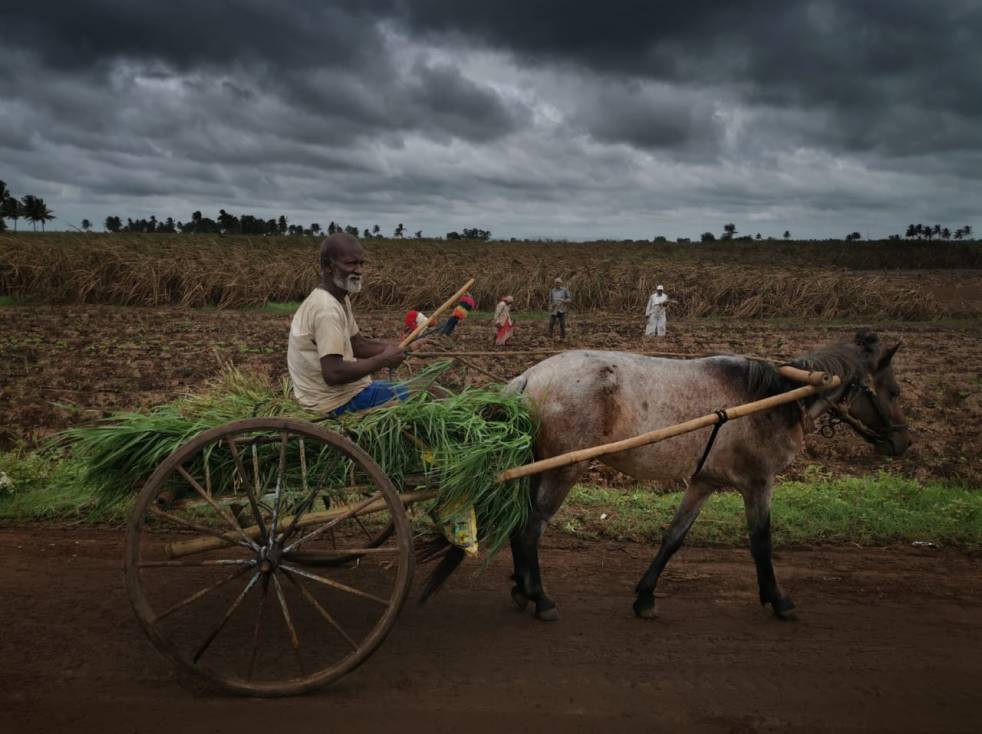
Flood-hit districts of Kolhapur, Sangli and Satara are leading agri-producers in Maharashtra. They are also the historic sugarcane growing regions of the state. Assured water availability and rich soils have made these regions prosperous cultivators of sugarcane, grapes, bananas, groundnuts and other oilseeds like soybeans and also vegetables. Continue reading “Impacts on cropland: 2019 Maharashtra Floods”
Breaching Historic Flood Levels many times over: Aftermath of Ghataprabha Floods 2019
Photo-blog 2
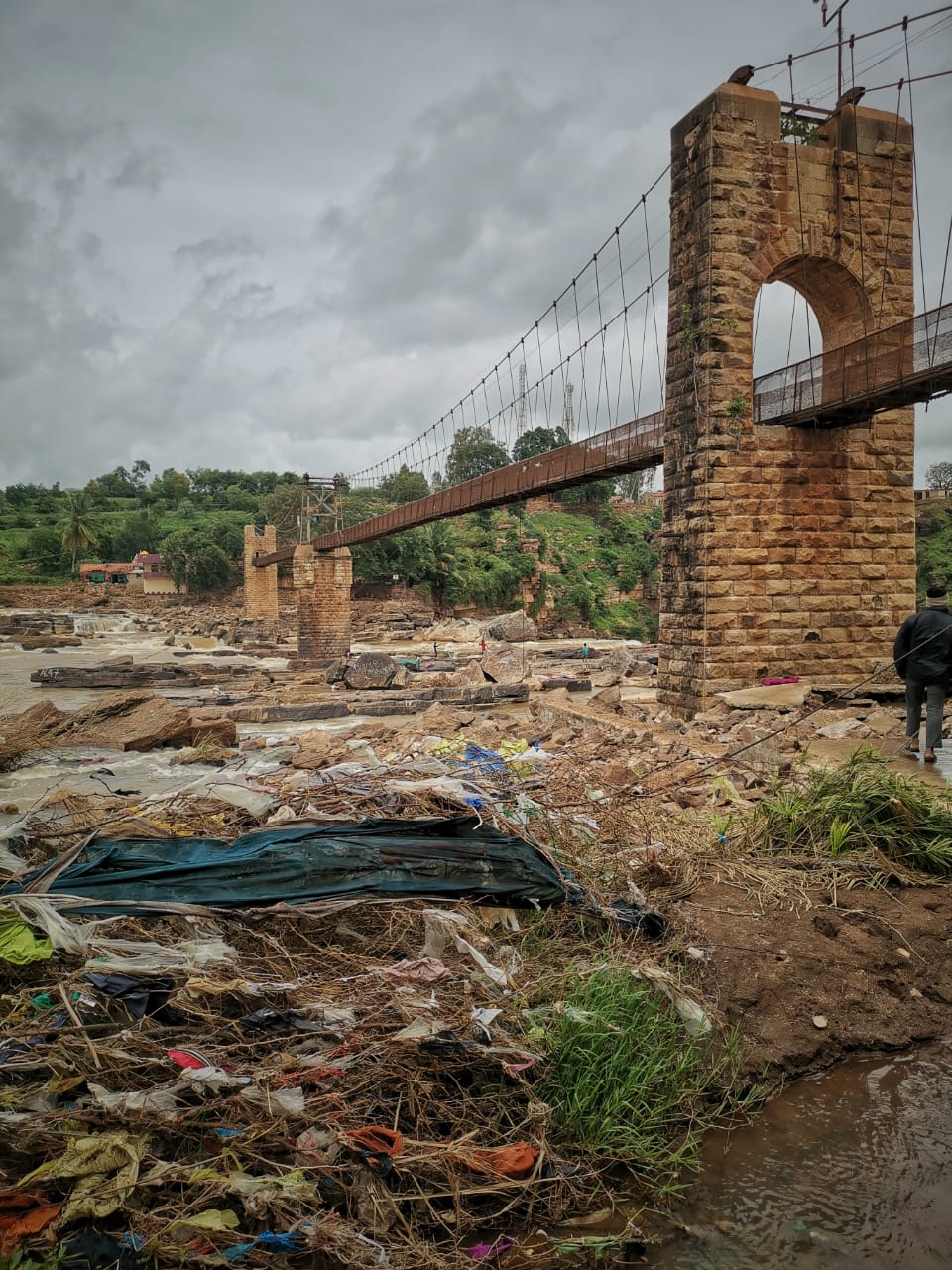
On the 8th August 2019, Krishna River itself and several of its tributaries in Maharashtra as well as Karnataka crossed their Highest Flood Levels at multiple places to set new records. Nowhere is it more stark than in Gokak Falls on the River Ghataprabha in Belgaum District of Karnataka. At Gokak Falls, the Highest Flood Level of the river was more than 553 meters and exceeded the earlier record by more than 5 meters! (For More Details: https://sandrp.in/2019/08/12/krishna-basin-floods-in-karnataka-the-role-of-dams/)
Abhay Kanvinde visited Gokak Falls, Hidkal Dam and villages along the Ghataprabha and Hiranyakeshi Rivers in Karnataka to understand and photo-document the impact of raging water levels on communities and ecosystems. Some interesting facts were thrown up in this trip. Mainly that 2019 Flood levels exceeded not only the 2005 and 2006 levels, but even the historic 1914 Flood levels, which are carefully marked by the British at Gokak Hydropower Station. Continue reading “Breaching Historic Flood Levels many times over: Aftermath of Ghataprabha Floods 2019”
 SANDRP