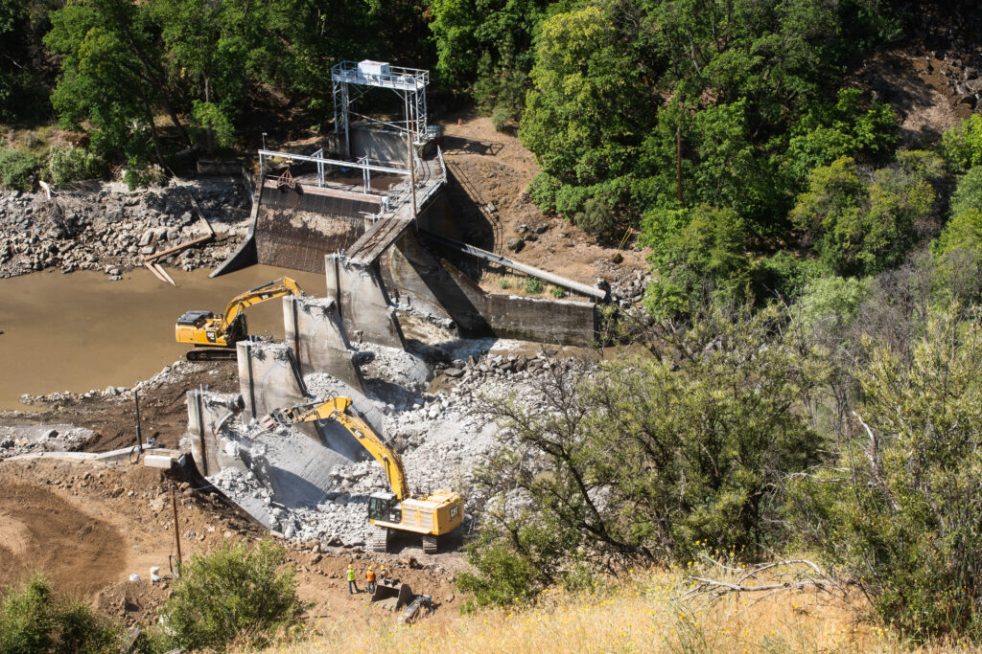
(Feature Image: Copco 2 dam removal on the Klamath River, California. Credit: Swiftwater Films, Source: American Rivers)
China decommissions hundreds of dams along Red river China has claimed to have dismantled 300 dams and decommissioned more than 90 percent of small hydropower stations along the Chishui River, also known as the Red River, a key tributary of the upper Yangtze. The move is seen as one of the largest state-led efforts to restore aquatic biodiversity in Asia’s longest river, reversing decades of hydro-infrastructure development that critically endangered native fish species, including the Yangtze sturgeon, the South China Morning Post reported.
The Chishui River, which flows over 400 kilometers through the provinces of Yunnan, Guizhou, and Sichuan, has long been considered a final sanctuary for rare and endemic fish species in the upper Yangtze. It now runs more freely following large-scale demolitions that began in 2020. By the end of 2024, 300 out of 357 dams had been removed, and 342 of 373 small hydropower stations were shut down, though structures at many projects still exist.
China’s river restoration strategy includes: A decade-long fishing ban introduced in 2020, restrictions on sand mining, and strict regulation of new infrastructure projects. In Sichuan province alone, authorities rectified 5,131 hydropower stations by the end of 2021, shutting down 1,223 of them. A key pillar of this strategy is the 10-year fishing ban imposed in 2020, which restricts commercial fishing across the main stem and key tributaries. The goal is to give fish populations time to regenerate after years of decline.
The move to dismantle these stations on the Red River signals a strategic shift, where ecological sustainability is starting to outweigh short-term energy needs, especially in ecologically critical regions.
EUROPE
Europe in a hurry to remove dams and weirs The Europe is on a river barrier-demolition spree. And it has to do it more vigorously to meet a target of making 25,000 kilometres of rivers barrier-free by 2030. Twenty-three countries demolished 542 barriers in 2024, according to data compiled by the Dam Removal Europe (DRE), a coalition of six organisations like the World Wide Fund for Nature (WWF), The Rivers Trust, The Nature Conservancy and the European Rivers Network. The barrier removal number last year was the highest since the drive started in 2020. In 2020, 11 countries removed 101 barriers like dams, weirs, culverts and sluices on rivers. In the next three years, it picked up momentum: By 2023, 15 countries had removed 487 barriers.
On July 10, 2025, the United Nations Environment Programme (UNEP) released its Frontiers 2025: The Weight of Time. The annual report flags emerging environmental issues. This year’s analysis identified ‘barrier removal for restoration’ as one of the issues. “Removing dams and barriers is an increasingly accepted strategy to restore river health, and has gained momentum, particularly in Europe and North America, where large, older dams that have become unsafe, obsolete, or economically unviable are being removed,” the report noted. In July 2023, the European Parliament adopted the “Nature Restoration Law”. It mandated 25,000 kilometres of rivers to be barrier-free by 2030.
HYDROPOWER PROJECTS
NDSA asks additional work at LSHEP, delays start The 2000 MW controversial Lower Subansiri Hydropower project will now face a six-month delay after a directive from the National Dam Safety Authority (NDSA) ordering additional safety-related grouting work. The recent delay comes after an NDSA inspection at the project site in Arunachal Pradesh’s Lower Subansiri district on June 20, where the authority flagged unfinished work on Diversion Tunnel 1.
The order is the second in recent months; a similar directive was issued on April 11, asking the National Hydroelectric Power Corporation (NHPC) to conduct grouting at the inlet sections of the diversion tunnels to address potential safety concerns. With monsoon-induced high river flows currently submerging critical sections of the tunnel, work has been rendered impossible until at least mid-October 2025, officials confirmed. The critical delay involves plugging a 30-meter section of Diversion Tunnel 1, a component vital for stabilizing the dam structure before reservoir filling can be authorized.
Not just water it is debris that is drowning Himachal One striking commonality in rain-induced tragedies in the past three consecutive years has been the dominance of the flow of debris.
SUMP reviewPK Mishra, Principal Secretary of the Prime Minster, will chair the high-level review meeting of Siang Upper Multipurpose Project (SUMP) in New Delhi on July 15. The PMO has directed Secretary (Power), to give a presentation on the progress of the project. “The primary agenda of the meeting is to assess the progress of drilling sites and other developmental and rehabilitation projects,” an official said. “The meeting will also take stock of the situation regarding the NHPC communication strategy, establishment of a model village, livelihood program, status of alternative roads, and progress of the new township,” the official added.
Local activists and affected families have opposed the proposed meeting. Ebo Mili of North East Human Rights wrote a letter to the Chief Secretary, urging them to give accurate information about human rights violations around the project. The Siang Indigenous Farmers’ Forum (SIFF) has said that the affected communities were neither informed nor invited to participate in the meeting. In protest, the organization will carry out a rally on 14 July at Geku town in Upper Siang District. Meanwhile, the villagers of Riga on July 11 have signed a MoU with the state government to support the conduct of pre-feasibility report (PFR) for the SUMP. The SIFF claimed that it is meaningless, as people from 27 affected villages are against the project.
Himachal Pradesh Lessons from Disaster Not just water it is debris that is drowning Himachal One striking commonality in rain-induced tragedies in the past three consecutive years has been the dominance of the flow of debris.
Danger Zone Deforestation in the name of development, be it for hydro-power projects, cement plants, roads or hotels, has made many areas vulnerable to natural disasters, with loose soil and plants coming down as slush in case of heavy rains. Illegal dumping of muck and debris from mega projects, especially road construction, is posing a threat following heavy rains.
Listen to mountain communities As the Himalayan region is caught in the swirl of climate chaos related disasters – floods, cloudbursts, landslides, heavy rains – made worse by big infrastructures like expressways and hydro projects, it is important to recognise and listen to community voices, knowledge and wisdom to mitigate the impact of devastation, points out Indigenous Lepcha Storyteller, Filmmaker & Researcher, Minket Lepcha.
Jammu Kashmir A dozen private hydropower projects are harnessing electricity without paying the water cess resulting in financial losses to the Union Territory. The apparent water exploitation has compounded fears among the local populace of water scarcity after the prolonged dry spell this summer.
Kerala Return of Athirappilly dam project So far the govt has not greenlighted the KSEB’s latest move, but neither has it announced the final closure of the ill-fated proposal. Perhaps, the real reason the KSEB and successive Kerala governments keep reviving the Athirappilly dam project is that it is the perfect bureaucratic comfort blanket — a project that never has to generate a single watt of electricity, only endless megawatts of paperwork, committee sittings, feasibility studies, and career promotions. (Shailendra Yashwant CANSA)
Karnataka The National Board of Wildlife (NBWL) has given in-principle approval to the controversial Sharavathi pumped storage project (PSP) in the Sharavathi Valley Lion Tailed Macaque (LTM) sanctuary. At its 84th meeting, the NBWL standing committee looked into the impact of the work on the wildlife, especially the flagship LTM. The board noted that about 12000 trees can be saved if a proposed road was built underground. It also suggested noise control measures during the construction.
Two members of the members of the NBWL, H S Singh and R Sukumar expressed concerns about the project. Singh questioned the cost-to-benefit ratio of the project and suggested that a committee of the NBWL take up site inspection. Sukumar noted that the proposal does not provide full details of the ecological loss in terms of forest cover and sought a careful examination through a thorough environment impact assessment. The minutes, however, remained silent on the suggestion of Singh for site inspection. The in-principle approval now brings the project before the Forest Advisory Committee, the “competent authority” that decides on the use of forest land.
The director of the Wildlife Institute of India also voiced concerns, emphasising that the sanctuary is part of a UNESCO World Heritage Site. The committee concluded that the proposal would be placed before the Standing Committee for final appraisal only after it receives FCA approval.
Study Restoring free-flowing rivers: Planning for longitudinal & lateral connectivity recovery –This study demonstrates how to identify priority barriers for the recovery of free-flowing rivers, integrating multiple connectivity dimensions and prioritising barriers at the catchment scale in a systematic and transparent way, overcoming previous approaches focused on longitudinal connectivity alone.
DAMS
Questions about Polavaram Banakacherla Project GVR Subba Rao here raises a number of pertinent questions about the Andhra Pradesh’s proposed controversial Polavaram Banakacheral Link Project, including about sustainability, hydrological viability, legal feasibility, over 3000 MW of power demand and availability of better options.
CWC seeks information about all water projects of Andhra Based on the Pre-Feasibility Report (PFR) of the Polavaram-Banakacherla Link Project submitted by the Andhra Pradesh government, the Central Water Commission (CWC) has asked the State government to provide the salient features of all water resources projects in Andhra Pradesh-whether approved or unapproved, under construction, or completed-along with their planned water utilisation. The CWC also requested that the project authorities submit the dependability on which these projects have been planned, an index map showing the location of existing, under-construction, and proposed/planned projects in Andhra Pradesh.
As per the Guidelines for Preparation of Detailed Project Report of Irrigation and Multipurpose Projects 2010, the minimum success rate recommended by the erstwhile Planning Commission for an irrigation project to be considered viable is 75%. “In view of this, the dependability of the proposed diversion water (200 TMC) may be computed, after accounting for the utilisation (existing, under construction and planned) and allocation as per GWDT of co-basin states including AP”.
The CWC sought clarification how floodwater is being defined and how its computation of floodwater is being done. “It may also be clarified whether it is in conformation with GWDT award? Assuming pumping rate of 510 cumec, operating 24 hours in a day, about 129 days would be required to divert 200 TMC of floodwater. Therefore, a simulation study may be carried out using floodwater discharge data at Polavaram showing whether the required number of days is available or not taking GWDT Award into account,” the communication read.
No Yettinahole work till officials are punished: FAC The Forest Advisory Committee of the Ministry of Environment, Forest and Climate Change (MoEF&CC) deferred Karnataka’s request for diversion of 274.35 acres of forest in Hassan and Tumakuru districts. The panel stated that the proposal will be considered only after action is taken against officials responsible for a string of violations. The FAC noted that largescale violations had taken place even before getting clearance. Looking into the state government’s request submitted through the Visvesvaraya Jala Nigam Ltd (VJNL), the committee pointed to the site inspection report of MoEF’s regional officers, which pointed to destruction of the forests with impunity.
The report noted that of the 274.35 acres sought, 266.87 acres had already been used. In February 2019, the Forest Department registered an FIR against VJNL executive engineer for the violations. At the time, VJNL officials stated that they were not aware of the land’s status as forest land. However, the report noted that the violations continued even after the FIR was lodged. “Scrutiny of the satellite imagery before and after 2/2/2019 (year of lodging FIR) revealed that majority of the violations happened after the forest offence case was booked” the report said. The cost of the project has already gone upto Rs 25251 Cr.
A senior forest officer, requesting anonymity, said that allowing the government to decide on punishing officials may not work. “Considering that it was the government which was pressuring officials to adopt these tactics, a court-monitored inquiry should be held to fix responsibility”, he added.
On NBA Contempt Petition on Omkareshwar Dam, MP HC notice to Additional Chief Secretary The Madhya Pradesh High Court on July 11 served notice to Narmada Valley Development Authority (NVDA) vice chairman and state additional chief secretary Dr Rajesh Rajora in a contempt petition filed by Narmada Bachao Andolan seeking proper compensation to people affected by Omkareshwar dam project.
Decisions of EAC-RVP meeting on June 30 2025 Key decisions of the MoEF’s Expert Appraisal Committee meeting on River Valley Projects held on June 30 2025:
– Damanganga (Ekdare) – Godavari intrastate link project (CCA: 12998 Ha ) in 257.85 Ha at Village Ekdare, Gonde, Shinde, etc., Sub Dist Peth and Dindori, Dist Nashik, Mah by Minor Irrigation Division – Amendment in Terms of Reference: Approved. Even though EAC made this remark: “The Committee observed that significant alterations have been made to the project’s key components without prior consultation or concurrence from the Central Water Commission (CWC). Since CWC plays an important role in reviewing the technical aspects of such projects including hydrology, the Committee felt that their inputs should have been taken before making these revisions.”
– Sirkari-Bhyol Rupsiabagar Hydro Electric Project of 120 MW in 30 ha by M/s UJVN LTD in Tehsil Munsiyari, Pithoragarh Dist (Uttarakhand) – Environmental Clearance: Deferred due to poor internet connection for online consultation with the Project Proponents.
INTERLINKING OF RIVERS (ILR)
Special Committee for ILR likely to take up Godavari-Cauvery link The meeting of the Union Jal Shakti Ministry’s Special Committee for Interlinking of Rivers (SCILR), slated for July 15, is likely to witness one more attempt on the part of the Central authorities to persuade Andhra Pradesh and Telengana to arrive at a consensus on the Godavari (Inchampalli)-Cauvery (Grand Anicut) link project.
As regards AP & Telengana, the differences are over the way the two States approach the project. While AP views the project in an unqualified way, Telangana has been raising objections on a number of counts, one of which is that the project can be taken up only after the Krishna Water Disputes Tribunal (KWDT)-II completes adjudication of the Krishna water shares. Though the Tribunal submitted its final verdict in Nov 2013, the Union government, in Oct 2023, referred a couple of more issues.
To an RTI query raised by the Satta Panchayat Iyakkam, the NWDA, in a reply on July 8, referred to the circulation of the draft Detailed Project Report (DPR) and the draft Memorandum of Agreement (MoA) for the Godavari-Cauvery link project to the States/UT concerned in January and April 2024. “Concerted efforts are being made” for signing of an MoA between the Union government and the States/UT for its early implementation. https://www.thehindu.com/news/national/tamil-nadu/special-committee-for-interlinking-of-rivers-likely-to-take-up-godavari-cauvery-link-on-july-15/article69803785.ece (12 July 2025)
INTERSTATE WATER DISPUTES
Krishna-Godavari Water Disputes Andhra CM N Chandrababu Naidu welcomed Krishna waters to his state by performing Jala Harathi at the Srisailam project on July 8. This year, the water was released three weeks before the scheduled date. A day before the release of water from the Srisailam project, the Telangana govt wrote to the secretary of the Union Jal Shakti ministry, raising alarm about the impending danger to the project. It stated that the Andhra Pradesh government has failed to take proper care and maintenance of the project, which comes under its purview. The letter stated that due to heavy inflows over the years, the plunge-pool downstream of the dam needed repairs. The Telangana government has written to the NDSA and the Krishna River Management Board (KRMB) about the danger to the dam, along with recommendations.
RBWT gets another extension The Ravi and Beas Waters Tribunal (RBWT) has got an extension of another year with effect from Aug 5, having failed to resolve the matter in more than 39 years. Though the tribunal had forwarded its report in 1987, the states concerned sought clarification on certain points under the provisions of Inter-State River Water Disputes (ISRWD) Act, 1956. The matter has been sub judice before the tribunal since then. The tribunal’s final report would be vital to an amicable resolution of the Sutlej-Yamuna Link (SYL) canal issue between Punjab and Haryana.
URBAN RIVERS
Sabarmati River Front: Erasing the River Across India, old black-and-white images of the Sabarmati River are often juxtaposed with vibrant photos of the modern Sabarmati Riverfront. This visual contrast is frequently showcased as a model of development, with the Sabarmati Riverfront serving as a blueprint for over a hundred proposed riverfront projects nationwide. These images are used to forge an implicit public consensus on a singular idea of development—shifting from a messy, evolving relationship between land and water to a rigid, one-time design intervention. The notion of regulating the unregulated has been deeply embedded into public consciousness—especially among city makers, planners, and designers. Urban rivers across India are undergoing a dramatic transformation, not only in terms of their land-water composition but in the very way we understand and define them. Here, we focus on one critical aspect of that transformation: the river’s edge.
Sabarmati’s redefinition into a static waterbody misses the essence of riverine nature. The result? Frequent flooding, stagnant water, dying fish, invasive algae, and untreated sewage pouring into what is now being called a “lake.” The new riverfront design fixes that edge, hardens it, and elevates it with eight-meter retaining walls and highways. The vocabulary of land dominates so much that planners cannot comprehend water as a system or acknowledge the people living around it. (By Mansee Bal Bhargava, Parth Patel)
Smart River Management review meet A high-level review meeting was held on July 9 in Delhi to discuss use of technology and innovations for rejuvenation of rivers across the country under the Namami Gange program. The meeting also spotlighted Managed Aquifer Recharge (MAR)—a modern strategy for groundwater replenishment. A plan was shared to use real-time hydrogeological modelling to rejuvenate rivers by increasing the base flow. Union Minister Shri C.R. Patil also reviewed two ambitious projects—Hydrogeological Modeling in the Varuna Basin and Fingerprint Analysis of Emerging Pollutants in the Ganga Basin.
Key presentations were made by IIT BHU under Smart Laboratory on Clean Rivers, developed in collaboration with Denmark, and IIT Delhi under the IND-RIVERS initiative, in partnership with the Netherlands. IND-RIVERS focuses on urban river ecosystems and a Decision Support System designed for river rejuvenation and management, with an initial focus on the Varuna river in Uttar Pradesh. The DSS, featuring advanced modules for population forecasting, water demand and supply estimates, sewage load analysis and STP priority zone identification, is anchored by the Small Rivers Management Tool. Officials said the SRMT can be scaled to other rivers and catchments.
Mula-Mutha; Pune ‘Rivers have emotions’ As the plan to develop the Mula-Mutha riverfront in Pune gathers momentum, many residents and environmental activists believe it’s a death knell for the river. Architect Sarang Yadwadkar, among those in the forefront resisting the project, thinks that Pune may be heading in the same direction as central Texas that recently saw massive flash floods. “We cannot ‘widen the rivers’ so that the water has more space. At least, we should not encroach upon the rivers and reduce it…Pune people have lost their connection with the river,” he says in this interview.
Meanwhile the ₹4,700-crore RFD project on 44.4-km stretches along the banks of the Mula-Mutha river is no longer the vibrant space for recreation and relaxation, as portrayed by the Pune Municipal Corporation (PMC). Designed to make the riverfront a cultural and recreational landmark for citizens and tourists some stretches of the riverfront, however, present a sorry picture, rather than a picturesque one.
Pavana Protests against RFD projects continue in the city. The July 13, protest follows the announcement of EC granted on July 07, to the Pimpri-Chinchwad Municipal Corporation (PCMC)’s Rs 1,440-crore Pavana river rejuvenation project. Now, once the funding plan is finalised, the project will proceed to the tendering stage and eventual implementation. Former BJP corporator Sandeep Waghere recently met CM recently urging him provide approval and funds for the project. The approval comes at a time when RFD projects in both Pune and Pimpri Chinchwad are facing strong resistance from environmentalists and residents.
Kham; Chhatrapati Sambhajinagar Once a public health hazard, the river is now revived through restoration efforts bringing clean water and new Eco Parks for local communities.
Noyyal; Coimbatore The city corporation is planning to set up pumping stations along the river’s tributaries in the city. The plan is to pump water to the STPs to prevent direct entry of sewage into the river. Once treated, pumped water would be released back into the Noyyal. The proposal is to set up a seven MLD STP near Nanjundapuram. The corporation has sought Rs100 crore from the govt for the purpose. It has sought another Rs110 crore from the govt for riverfront development. Earlier plan to set up 7 STPs along the river pathway was shunned because of the land scarcity.
RIVERS
Kerala New river basin committee The govt on July 11, has informed the High Court that it has notified an ‘Integrated River Basin Conservation and Management Plan’ (Plan) to tackle pollution in the Periyar river. The bench was informed that multiple committees have been assigned responsibilities under the plan, with the apex committee headed by the CM. The government assured the Bench that the issues raised by the High-Level Committee constituted by the Court, the SPCB, and local bodies regarding all rivers in Kerala would be addressed and resolved by this management plan.
However, HC clarified that it would continue to monitor the progress closely and warned that any further negligence would incur consequences for the responsible authorities. The HC has listed the case for further hearing on August 11 and ordered the Chief Secretary to file a comprehensive report about what the plan has achieved. Notably, it was the High Court that proposed the creation of a unified authority to monitor and tackle the rising pollution in the Periyar River. The State government initially came up with ideas to form committees but they were rejected by the Court.
Jammu & Kashmir As per an RTI revelation Kashmir has lost nearly 5.84 lakh trees along Jhelum and its tributaries over the past five years. The felled trees were identified as ‘encroachments’ on Jhelum river by the Irrigation and Flood Control (IFC) Department. The mass felling of trees is part of the flood mitigation measures undertaken by the IFC under PM Development Fund (PMDP) under which the Comprehensive Flood Management of River Jhelum was allocated Rs 399 crore.
GANGA Uttar Pradesh The Manorama river revival campaign started with community-led ‘shramdaan’. The campaign commenced in Sisai Bahlolpur village, Itiyathok block, where more than 200 individuals participated. Manorama river, stretching 115 kms, originates from Tirre Tal in Gonda and flows into the Kuwano river in Basti district. According to ancient texts, the river is named after Manorama, the daughter of sage Uddalak, and holds spiritual significance as it flows near Makhoda Dham, a revered site.
West Bengal Reviewing the status of Ganga pollution control the NGT has noted several STPs are either non-functional or not meeting the standards. The tribunal also found gaps in data, project execution and water quality. It has directed that the deficiencies and gaps, mentioned in SPCB and CPCB reports be “responded to” by way of affidavit by the chief secretary of state, the DG of NMCG and CPCB before the next hearing on October 8. The CPCB report said that out of 42 STP in 30 Ganga front towns in the state, only 31 were operational and only 7 were complying with the standards. The NGT noted that CPCB has not disclosed in its report the total installed treatment capacity of the 42 STPs and the extent of utilisation capacities.
YAMUNA States must work together: HM Chairing a high-level review meeting with top officials and Delhi CM, the Union home minister Amit Shah on July 11 called for coordinated action by Delhi, Haryana, and Uttar Pradesh to rejuvenate the Yamuna. Shah asked all three states to ensure transparency in monitoring STPs and to implement third-party quality checks of water discharged into the river.
Shah laid out a detailed roadmap that spanned upgrading Delhi’s outdated STP infrastructure, monitoring industrial and dairy waste, cracking down on illegal borewells, promoting rainwater harvesting, and increasing ecological flow in the river to restore its health. Shah, emphasized the need for drone surveys of the Najafgarh and Shahdara drains. He also called for urgent steps to manage rainwater better, asking the Delhi government to develop local reservoirs to capture monsoon runoff. Shah directed DJB to map existing borewells, regulate their use, and develop a long-term citywide water supply blueprint. Shah also asked the Delhi government to coordinate with UP to release more water upstream.
Shah directed that the current capacity of 607 MGD be increased to 1500 MGD by 2028. Shah recommended releasing treated water from the Okhla STP downstream to enhance the river’s water quality. He further said that there are many reservoirs in Delhi in which the Delhi government should make arrangements to collect rainwater.
Ganga water diversion Officials from Central and Delhi in a high level meeting on May 22 have considered a plan proposing diversion of about 500 cusecs of Ganga water to cater to deficient flows in river in Delhi stretch during lean season months. The plan under consideration proposes the diversion of water from the Upper Ganga Canal in Roorkee to the Eastern Yamuna Canal via the Deoband feeder branch. Experts, however, pointed out that diverting flows from a river to clean another river may be a short-cut measure that may not be a substitute for long-term sustained efforts, such as fixing drains or ensuring proper sewage treatment. Bhim Singh Rawat of SANDRP says, firstly, Ganga does not have any surplus water. Like Yamuna, the national river also struggles to maintain minimum flows during lean season. Transferring water from one depleted river to another is not restoration,” he said.
Barapulla drain pollution NGT during July 07, hearing has asked the DJB to disclose plans and timeline for stopping untreated sewage flow into the Barapullah drain. It has also sought details of the proposed STP. Earlier, the DJB informed the court that it has formulated short-term, medium-term and long-term plans to resolve the issue of sewage inflow into the Barapullah drain according to a submission made to the NGT on July 4. The NGT is hearing several pleas filed by RWAs demanding remedial measures to treat Barapullah and its subsidiary drains, which pass through south Delhi. On May 21, NGT sought a response from DJB.
The Yamuna is an interstate river. Improving its ecological status depends on reliable interstate cooperation mechanisms for enduring outcomes — a challenge that Delhi will need to address. (Srinivas Chokkakula, Debarshee Dasgupta)
Activists Varun Gulati and Pankaj Kumar are helping clean Yamuna by mapping pollution, monitoring drains, mobilising volunteers alongside official efforts. While Gulati relies on legal channels and surveillance, Pankaj Kumar focuses on public participation and on-the-ground action. Both Gulati and Kumar agree that claims like making the river “bathing clean” are unrealistic under current circumstances. Both activists emphasise a hard truth: the Yamuna cannot be cleaned by government machinery alone. “Officials act only when the courts force them,” says Gulati. “And even then, only if we follow up relentlessly.”
Pollution & Riverine People: Despite pollution, a peaceful boating culture thrives at Nigam Bodh Ghat, where tradition, livelihood and nature meet. Often overlooked in urban planning conversations, the Yamuna floodplains are not merely open spaces but thriving agricultural zones cultivated by local residents—many of whom have lived and farmed there for generations. For the descendants of floodplain farmers, diving is only livelihood of divers after farming was banned due to pollution. Most of these divers were raised on the Yamuna floodplain. Each retrieval is a story of risk. But for the divers, the mission remains the same: to bring someone’s son, daughter, parent or sibling back to the surface, for closure, for final rites, for peace. In Delhi, the capital of a modern republic but also the keeper of ancient faiths, thousands of devotees still descend upon Yamuna banks during festivals like Chhath Puja, risking health and life to touch what was once holy. For some, the Yamuna is not just a lifeline but its the last resort. More than 5,000 people live at Nigambodh Ghat. Their lives are tethered to a river no longer clean, no longer holy, yet, theirs. The Yamuna gives them sustenance, and a sense of continuity. It takes their health, their dignity, and often, their futures.
Haryana The Irrigation Dept plans to treat the pollution at 3 places -Kachroli, Kurar and Khojkipur- before it meets the river. About 335 ha metre water would be stored at three places, which would not only increase the ground water level, but also make micro-irrigation in 10,000 acres possible. The dept has constructed a storage reservoir-cum-match box treatment structure costing Rs 10 cr at drain no. 2 near Kurar village for this. The drain roughly carries about 80 cusec untreated effluents. The process to construct 2 more structures is underway.
The govt has also constituted a high-level committee to monitor the water quality of 11 major drains flowing into the river, status of new, upgraded and proposed STPs, progress of CETPs, completion of sewerage networks in towns under the Yamuna catchment and installation of treatment systems in villages along the river. The MoJS had flagged the issue in May. In response, the HSPCB prepared a detailed action plan, highlighting the deteriorating condition of several drains over the past three years (2022–2025) including the Ditch Drain, Panipat Drain, Sonepat’s Drain Number 6 and Budhiya Nala’s legs 1, 2 and 3.
As per HSPCB data, 12 drains meets Yamuna in Haryana. There are 90 STPs with a capacity of 1,518 MLD in the Yamuna catchment area, against the estimated generation of 1,239 MLD sewage. There are around 3,240 water polluting industries in the state, with these generating approximately 210 MLD industrial effluent. Out of these, 2,080 units have their own ETPs, while 1,180 are connected with CETPs. At present, 17 CETPs of 198 MLD capacity are operational in the state, while 7 CETPs of 126.5 MLD capacity have been proposed.
Ghaziabad The NGT on July 11, imposed an environmental fine of Rs 21.5 crore on UP Jal Nigam for failing to manage sewage pollution in Loni area. The tribunal found that the Jal Nigam has neither made any proper arrangement for sewage treatment nor has it properly fulfilled its legal responsibilities as a result the sewage is being discharged in the open and polluting Hindon river.
Agra The analysis based on World Resources Institute’s Aqueduct data (also a water risk atlas) said Taj Mahal faces water scarcity that is increasing pollution and depleting groundwater, both of which are damaging the mausoleum. A new study also finds that a 12km stretch of the Yamuna riverbed near the Taj Mahal has the highest concentration of highly toxic microplastics compared to the other three segments sampled. Meanwhile, a viral video by a Polish travel vlogger showed heaps of garbage and sewage along the Yamuna River behind the iconic Taj Mahal. Claiming the video to be old the administration also shared updated photos of the area and stated that it is being cleaned regularly.
Dehradun The boundary wall of Sheeshambada landfill site collapsed again during heavy rainfall on July 09. The wall had also crumbled down last year. The landfill is located along Asan river a tributary of Yamuna.
RIVER BIODIVERSITY
Kashmir’s aquatic life in Peril The lower stretches of the Jhelum – from south to central and north Kashmir – along with its tributaries, once teeming with native species like the Kashmiri schizothorax, are now witnessing a sharp decline in fish populations. While exotic species, such as carp, are better equipped to withstand deteriorating conditions, native fish are struggling to survive in increasingly oxygen-deprived waters. Officials say unregulated sand, soil, and boulder mining in rivers and streams has worsened the crisis. For fishing communities, the impact is already being felt.
While conditions in the lower reaches remain critical, officials say cold, glacial-fed streams in upper areas, including Lidder, Brengi, Sandran, Veth Vethustu, Aaripat, Vaishaw, Tongri Nallah, Aaripal, and Rambiara, as well as the springs in south Kashmir and other cold streams and springs in central and north Kashmir, are still supporting healthy fish populations. “These upper streams have optimal temperatures and oxygen levels. Indigenous species like snow trout are doing well there,” Shabir Ahmad said.
My Otter Diary A recent documentary ‘My Otter Diary’ follows the lives and challenges of the vulnerable smooth-coated otters in the river Kaveri, while also spotlighting human-otter conflict. A documentary reveals the connections between rivers, wildlife, and human livelihoods, showing why biodiversity conservation must extend beyond national parks. (Seshadri K S). According to a census survey conducted by the Department of Forests and Wildlife Preservation in collaboration with World Wildlife Fund (WWF)-India from March to April 2025, a total of 37 gharials had been sighted across 22 distinct locations in the Beas in Punjab. A caracal, one of the country’s most elusive and threatened wild cats, has been captured on a camera trap inside the fenced Cheetah Closed Natural Area of Gandhi Sagar Wildlife Sanctuary in Mandsaur district, Madhya Pradesh. This is the first confirmed sighting of the species in the state in nearly 20 years.
FISH, FISHERIES, FISHERFOLKS
The Union fisheries department on July 04 told the NGT that a combination of factors including pollution, dams, competition for water, and habitat loss is contributing to the decline of native fish species in the Yamuna, while exotic species are on the rise. The NGT had taken suo motu cognisance of the matter. “Dams fragment rivers and block migration routes, preventing fish from reaching spawning grounds, which can lead to local extinctions. Poor water quality from nutrient pollution and other contaminants poses a serious threat to aquatic life. Overexploitation, indiscriminate harvesting, and the use of illegal fishing gear also contribute to the depletion of native fish stocks. Additionally, encroachment of riverine land and climate change have worsened the situation,” it said. Exotic species, the report said, have likely entered the river either as aquaculture escapes or through pet releases. “These multiple pressures collectively contribute to the decline in native fish populations,” it noted.
Study Checklist of Fish Diversity in Selected Rivers of Goa This study spanning over 2 years is an attempt in that direction. Sampling in Goa’s freshwater ecosystems revealed a total of 84 species of fish belonging to 59 genera, 26 families and 12 orders. The species contribution hierarchy of major fish families in Goa’s freshwaters as revealed from the sampling effort is Cyprinidae (n = 28), followed by Nemacheilidae (n = 6) and Oxudercidae (n = 6). It reports two exotic species; Oreochromis mossambicus, and Clarias gariepinus, and eight threatened species.
A New Species of Genus Pethia from Brahmaputra Drainage Abstract -Pethia dibrugarhensis, a new species of cyprinid from the Brahmaputra River, Dibrugarh, Assam, India is described here.
RIVER POLLUTION
22 km pipeline project for industrial effluents in Sabarmati With the work on Ahmedabad-Khambhat deep sea effluent discharge project not started, the Guj govt has chalked out an interim solution: industrial effluents and sewage dumped into the Sabarmati will be treated, mixed, and then transported 22km to Miroli village near Dholka in Ahmedabad district. The water will be given to the Miroli agriculture cooperative society that has for the past few years been providing water from the Sabarmati to farmers for irrigation. The Ahmedabad Municipal Corp, Gujarat Pollution Control Board and the irrigation department will jointly prepare a detailed project report.
Karnataka Three people died on July 7 in Yadgir dist’s Surapura taluk allegedly after drinking contaminated water, officials said, an investigation has been initiated.
SAND MINING
Temporary bridge over Swan River washed away, indiscriminate sand mining blamedThe Temporary bridge over Swan River (a tributary of Sutlej River) near Algran in Ropar dist in Punjab got washed away again, like what happened last year. In July 2023 the pucca bridge had been washed away. Indiscriminate sand mining is blamed for these mishaps.
Delhi CM writes to UP CM CM Rekha Gupta has written to UP CM Yogi Adityanath urging him to take immediate steps to curb illegal sand mining in Yamuna. She has highlighted that such illegal activities are weakening the river’s embankments, thereby increasing the risk of flooding. Calling it an inter-state issue, the CM underlined the need for a coordinated and joint enforcement mechanism between the two governments to address and control illegal sand mining. In an ongoing case, the NGT has been involved in addressing illegal sand mining along the Yamuna in Ghaziabad. The NGT has taken action, including imposing environmental compensation and directing authorities to prevent further illegal mining.
In Haryana, the mining mafia in Yamuna Nagar misbehaved with a team of Enforcement Bureau. They also snatched a tipper loaded with illegal mining mineral from the possession of the bureau team and drove away with the snatched vehicle. In Uttarakhand a field visit report by CPCB which has been submitted to the High Court has acknowledged the presence of illegal mining, including the lodging of cases against illegal mining along Raiwala to Bhogpur stretch of Ganga in Dehradun. There is rise in illegal mining in Kathua, Samba districts of J&K bordering Punjab where trucks and excavators are often brought into nullahs and rivulets during the night.
Five people were injured after a vehicle driven by some sand mining operators allegedly drove over them following a clash in Nagaur district, Rajasthan on July 08. Illegal sand mining continues unabated across Rajasthan.
Though NGT imposed a complete ban on sand mining during the monsoon (June 10 to Oct 15), illegal sand extraction continues unabated in Bokaro district of Jharkhand, especially at Bhathua Ghat of the Damodar river under Harla police station. In Odisha, the NGT on July 08 has directed the Sundargarh administration to file an action taken report regarding the recovery of Rs 25.41 lakh environmental compensation from a lessee for illegal extraction of sand from the Brahmani riverbed. Maharashtra govt on July 03 announced that sand transportation will now be permitted round-the-clock across the State. Until now, sand excavation was allowed only between 6 a.m. and 6 p.m., while transportation was restricted to daytime hours.
WETLANDS, LAKES, WATER BODIES
Jammu & Kashmir The Environmental Policy Group (EPG) has expressed serious concern and deep anguish over the abrupt and unscientific release of water from the Hokersar Wetland by the Wildlife Department and the I&FC Department. In a press release, it said that this action has caused the water level—usually maintained at 4 to 5 feet—to drop sharply, leading to the drying up of vast portions of the wetland and inflicting severe ecological damage.
Lotus flowers have returned to Wular lake after three decades. The revival of the lotus is being attributed to an ongoing desilting and restoration project by the Wular Lake Management Authority. The efforts started in 2020 and desilting work has removed over 7.9 million cubic meters of silt from the lake so far, the officials said.
URBAN LAKES, WETLANDS
The World Bank approved a Rs 3,700 cr loan for the ‘Karnataka Water Security and Resilience Program’ to help revive the Bengaluru city’s 183 lakes. The program will construct 9 STPs to prevent sewage from entering lakes and drains. The treated wastewater will be reused for industrial purposes, as well as for recharging groundwater in the greater Bengaluru area. The loan has a maturity of 20 years with a grace period of 5 years. Meanwhile, the once-picturesque Manipal Lake in Udupi is rapidly deteriorating into a dump yard due to sustained neglect.
The Hyderabad High Court on July 8 refused to grant any interim relief to a petitioner who claimed that land in his possession is now submerged and located inside the recently restored Bathukamma Kunta lake in Hyderabad’s Bagh Amberpet area. Part of Bathukamma Kunta lake is full of rain water after decades. Bathukamma Kunta is one of the six lakes taken up by HYDRAA for rejuvenation. Historical satellite images since 2010 show that the lake had never had water, with all inlets and outlets closed on all sides. It remained dry even during the 2020 floods when several lakes overflowed in the city.
RTI documents reveal that the govt has sought comprehensive reports from the Thane district collector and CIDCO regarding dumping activities at Lotus Lake, a recognised 3-ha wetland in Nerul, Navi Mumbai. On the fifth consecutive Sunday, 70-80 conscious citizens gathered at Lotus Lake in Sector 27, Nerul, continuing their peaceful campaign to protect the vital wetland from further degradation.
URBAN WATER
Mumbai Western Railway has demanded a staggering Rs 395 cr from the Brihanmumbai Municipal Corporation (BMC) as Right of Way (RoW) license fees for underground water pipelines that traverse railway-owned land across Mumbai. The demand covers a 10-year period and must be paid in advance, according to documents obtained through a RTI by activist Samir Zaveri.
Ludhiana City’s plan to replace its groundwater-dependent water supply with treated canal water has hit a snag, as civic officials struggle to finalise a contractor for the pilot phase of the ₹50 crore project backed by the World Bank and AMRUT 2.0 schemes.
Delhi High Court on July 4 pulled up the DJB for supplying contaminated water in colonies. The court was hearing a plea alleging residents of Yojana Vihar, Anand Vihar, Jagriti Enclave and other adjacent areas in east Delhi received “highly contaminated potable water” mixed with sewer/sewage in their household taps. The bench directed that the work related to replacing old and damaged water supply pipes in and around these houses should be completed in any case by August 2025 and any failure would be viewed seriously by the court. The matter will be heard on Aug 13. The NGT on July 7 rapped the DJB and imposed a cost of ₹50,000 for repeatedly seeking adjournments in a case related to illegal groundwater extraction by hotels in the Capital. Finding merit in the applicant’s claim that the DJB was deliberately delaying proceedings, the bench observed that the board’s conduct was obstructing justice & directed the DJB to appear before it in person in the next hearing on Aug 12.
Four realtors in the Gurugram were fined Rs 5 crore by Haryana Water Resources Authority (HWRA) for unauthorised groundwater extraction following an order by NGT. Showers aggravated the outflow of leachate from the Bandhwari landfill, causing toxic and viscous discharge to spill into the Aravalis and form puddles over a stretch of 1 km on July 8.
JJM/ RURAL WATER SUPPLY
Maharashtra Centre withdraws support The state is now expected to bear the full cost of ongoing and future works—at a time when it is already struggling to clear pending bills worth ₹12,000 crore for completed projects. Water Supply Minister Gulabrao Patil informed the Legislative Council on July 7 that the Centre has not released any funds to Maharashtra under the JJM since Oct 2024. In a written reply to a question on the progress of the scheme, Patil said, “To ensure ongoing projects are not stalled, the state govt has sanctioned ₹2,483 crore as a special provision.”
Jammu & Kashmir The Legislative Assembly’s House Committee probing alleged irregularities in the implementation of the JJM held its third meeting on July 8, with the panel confirming that the Jal Shakti Dept has submitted documents of the schemes.
WATER OPTIONS
Punjab Harvest RW to save GW A household with a 50m² rooftop in Punjab, receiving 650mm of rainfall annually, could collect up to 19,500 litres a year (at 60% collection efficiency), enough to meet the drinking water needs of a five-member family for an entire year. Renovating Punjab’s 12,000 village ponds alone could reduce the groundwater table’s annual decline by 6cm. Installing drip irrigation on just 1% of the wheat-growing area (about 35,000 ha) could save 3cm of groundwater each year.
At the community level, a village with 1,400 people needs around 7.665 million litres of water annually for drinking and cooking. Harvesting just half the annual rainfall can meet this demand with only 2.35 ha. Even in drought years with 50% less rain, just 4.7 ha would suffice. Given that the average Punjab village spans 350 ha, land availability is not the constraint, awareness and implementation are. (SS Sekhon)
New Pilot Project: The Union Government has identified pilot projects for effective water management. The scheme aims for modernisation of the irrigation water supply network to supply irrigation water from existing canals or other sources in a designated cluster. It will make robust backend infrastructure for micro-irrigation by farmers from established source to the Farm gate up to 1 Ha with underground pressurised piped irrigation. The technology will be used for water accounting and water management. For this scheme, the Central government has allocated ₹1,100 crore, with an additional ₹500 crore provided from other projects.
URBAN GROUNDWATER
Mumbai Planners neglect Groundwater Despite the long-standing reality of tanker supply in Mumbai depending on groundwater, the city’s water supply department has persistently ignored groundwater when making policy. This neglect can be attributed largely to the historical dependence on surface water sourced from distant reservoirs, coupled with institutional inertia within the water supply department – an entity predominantly staffed by civil engineers, who typically lack the capacity or expertise required for effective groundwater management. There has been no acknowledgement of the city’s groundwater in all the calculations of Mumbai’s water demand and supply – in the Master Plan for Water Supply of Mumbai (1999), the White Paper on Water Supply of Mumbai (2009) or the Regional Plan for the Mumbai Metropolitan Region (2021).
The Central Ground Water Authority, established under the Environment (Protection) Act, 1986, aims to regulate groundwater usage primarily to conserve its level and quality across the country. As a part of this regulatory process, the authority has issued guidelines for tanker operators. Since the Central Ground Water Authority lacks its own enforcement machinery, Mumbai’s municipal corporation has been rigorously enforcing tanker-related regulations: requiring tanker operators and borewell owners to install digital water flow metres, maintain daily records of groundwater extraction, adhere to water quality standards prescribed by the Bureau of Indian standards and ensure the ownership of a 200-square-metre land around groundwater sources. But Mumbai’s municipal corporation itself has done nothing to study or understand the city’s groundwater situation.
If the municipal corporation is serious about regulating groundwater use, it must move decisively in that direction: identifying types of groundwater aquifers within the city and their characteristics, demarcating recharge and discharge zones of groundwater, setting up a mechanism to monitor groundwater levels, quality and rate of extraction, and preparing an aquifer management plan. Establishing a dedicated geohydrological unit within the municipality’s water supply division would be a crucial first step.
Mumbai does not need the recently sanctioned Gargai dam (Cost Rs 3100 Cr) and the 200 MLD desalination project (cost 3200 Cr). The municipal corporation is already investing nearly Rs 26,000 crore to build seven wastewater treatment plants that are expected to supply 2,464 million litres per day after secondary treatment – of this, 1,232 million litres per day will be suitable even for drinking purposes after tertiary treatment.
The groundwater ownership legal framework allows private landowners to sell groundwater, often resulting in over-extraction and profiteering. While the government and other public agencies invest in groundwater recharge and conservation efforts, private well and borewell owners reap the benefits without any obligation to contribute to groundwater conservation. This is particularly evident in Mumbai and other Indian cities, where water shortages have created a thriving private tanker economy.
GROUNDWATER
Karnataka In a new study, researchers from the WELL Labs in Chennai examined Aralumallige & Doddathumakuru gram panchayats in the Upper Arkavathy watershed near Bengaluru, revealing a sharp decline in groundwater levels driven by intensive agriculture.
Andhra Pradesh The panchayat raj department launched a pilot initiative titled ‘magic drains’ aimed at improving rural sanitation and aiding groundwater recharge. The project is currently being implemented in nine locations across the state, including Somavaram village in Nandigama mandal of NTR district. The magic drains concept is designed to manage sewage and stormwater more efficiently, allowing wastewater to percolate into the ground through a layered system of rocks, pebbles, and sand.
FLOODS
Himachal Pradesh Why CWC’s Forecasting is Unavailable Amidst Flood Disaster? The numbers of flood monitoring stations are inadequate and there is still only one level forecast station namely Poanta on Yamuna river in Sirmaur district in HP. espite repeated destructive flood disasters affecting the state, the CWC has set up no inflow forecast and level forecast station in the basin of four major rivers Satluj, Beas, Ravi and Chandra Bhaga. In fact, the CWC has not installed even a single flood monitoring station in Ravi basin.
Delhi Is Delhi Ready for July 2023 like Yamuna Floods? No doubt, the permanent encroachments on river floodplains are among most possible reasons behind the man-made disaster. And presently, in the name of beautification and RFD (River Front Development) drive, Delhi is further losing its precious natural resource to commercialization. Despite the fact that the floods significantly damaged these misadventures. Yet no lesson is learnt. Further the river course and floodplain in the capital area has already been totally channelized by huge numbers of existing cross-sectional and linear infrastructural projects. Still there are similar projects in execution and pipeline. Thirdly, the issue of sedimentation raising the riverbed level remains unaddressed.
Flood Alert in 41 districts of MP on July 13 The India Meteorological Department (IMD) has issued a red alert for extremely heavy rainfall in 19 districts and an orange alert for heavy rainfall in 22 others for July 13. Districts under the extremely heavy rainfall alert include: Gwalior, Morena, Sheopur, Shivpuri, Guna, Ashoknagar, Niwari, Chhatarpur, Tikamgarh, Damoh, Betul, Harda, Khandwa, Khargone, Dhar, Jhabua, Ratlam, Neemuch, and Mandsaur — where up to 8 inches of rain may fall within 24 hours. Districts on heavy rainfall alert include: Bhopal, Alirajpur, Barwani, Burhanpur, Indore, Dewas, Sehore, Ujjain, Shajapur, Agar Malwa, Rajgarh, Vidisha, Sagar, Raisen, Narmadapuram, Pandhurna, Chhindwara, Narsinghpur, Bhind, Datia, Panna, and Satna. On July 12, Chhatarpur recorded the highest rainfall, with Khajuraho receiving 6.3 inches of rain in just 9 hours, and Nowgaon recording 3.4 inches. Tikamgarh received 1.5 inches of rainfall, while Datia and Narsinghpur received about 0.75 inches, and Jabalpur, Damoh, and Mandla recorded around 0.5 inches.
Urbanization The magnitude and timing of peak river flows are shaped by a combination of natural and human-made factors. Climate change can alter rainfall patterns and soil moisture, while seismic activity like earthquakes and landslides may reshape river courses. At the same time, human interventions—such as urbanization, deforestation and the construction of large and small dams—can significantly modify a river’s flow.
India’s monsoon has grown more erratic, bringing longer dry spells punctuated by short, intense storms. “Instead of steady, moderate rainfall across the season, we now see longer dry spells broken by short, intense downpours,” said M K Roxy, climate scientist at the Indian Institute of Tropical Meteorology in Pune, who did not participate in the study. Unchecked urbanisation is worsening the impacts. “With unchecked urbanisation, even a short spell of rain turns into a flood,” Roxy warned.
A possible reason for higher frequency of early flash floods is climate change induced alteration in the rain-snow transition zone in the higher reaches which could advance spring/pre-monsoon flood peaks by several weeks in snowmelt-dominated regions, the study added. It is likely that the situation has worsened since 2010.
HFL BREACH
Madhya Pradesh River Matiyari at Katangatola station in Mandla district has set new HFL 447.13 m at 08:00 hr on 8.7.2025 which is 0.41 m higher than the old HFL 446.72 m on 8.8.2019. Matiyari a tributary of Baner river which than joins Narmada river.
URBAN FLOODS
Gurugram It was chaos that is all too familiar for people living in the Millennium City. On July 9 night, a two-hour downpour triggered a cascade of tragedies across Gurugram, leaving at least 8 people dead—electrocuted, drowned, swept into manholes or killed in road accidents. Once again, Gurugram found itself knee-deep in grief, sewage, and questions that have echoed through its flooded streets for years. What does it take for one of India’s wealthiest, fastest-growing cities to prepare for something as predictable as rain? Despite repeated warnings during the monsoon, the city’s drainage system failed to cope with the 133mm of rainfall, leading to widespread traffic congestion and flooding. Residents say rain has again exposed the utter failure of the efforts of MCG, which has spent a staggering Rs 503 crore on the city’s drainage infrastructure over the past nine years. In fact, Rs 256.21 crore — the highest expenditure — has been spent on sewer line upkeep and repairs from 2016-17 to June 2025.
Gurugram did not have a municipal corporation until 2008, nearly two decades after the suburb started out to be a city. The city had a master plan unveiled in 2007, while a “metropolitan development authority” was set up as late as 2017. Such bodies, pushed more by private developers than a real town-planning vision, had mixed-up priorities, much like a house having ambitious architects but not a sound foundation. (Madhavan Narayanan)
Delhi The PWD Minister on July 12 said that the govt will soon finalise a drainage masterplan for the city. Working on the project since 2021, the department has divided the city into three basins — Najafgarh Basin, Barapullah Basin, and Trans-Yamuna Basin — and floated tenders for each of them. “The draft reports from consultants will be submitted in the next 15 days, after which it will be studied and the work will commence,” Verma said. The consultants will present a fresh design for the drainage network with a view to making it capable enough to handle current and future stress, he added. Delhi’s drainage system, designed in 1976, is capable of handling only up to 50 mm of rain in a single day. In 2018, IIT-Delhi prepared a drainage master plan, but the govt termed it “generic in nature” and said that it provided “no clear-cut actionable points suggested.” In Nov 2021, the govt decided that for a more comprehensive drainage master plan, experienced consultants would be hired.
Defence Colony drain The Municipal Corp of Delhi (MCD) on July 04 has told the NGT that it has desilted nearly 80% of the Defence Colony’s stormwater drain and expects to finish the entire work by July 31, as per an order by the green court.
Srinagar A massive civic embarrassment unfolded in Srinagar on July 07 as several parts of the city’s historic downtown area were inundated following a brief spell of rainfall, raising serious questions over the planning, execution, and accountability of the much-hyped Srinagar Smart City project. Incidentally, Tarun Kapoor, advisor in the PMO was scheduled to arrive in Srinagar on July 07 to undertake a detailed review of key developmental projects under the Smart City project.
CLOUD BURSTS
Uttarakhand A cloudburst at Ghurma village in the Nijmula Valley in Chamoli district brought life to a halt in at least a dozen villages on July8 with river water gushing into houses and the power distribution system going off. The local administration said there was no report of casualties but the extent of damage to property would be assessed.
DISASTERS
The Central Government has approved the release of Rs. 1,066.80 crore to flood, landslides, affected States of Assam, Manipur, Meghalaya, Mizoram, Kerala, Uttarakhand. Among the six flood affected states, Assam received Rs. 375.60 crore, Rs. 29.20 crore was given to Manipur, Rs. 30.40 crore to Meghalaya, Rs. 22.80 crore to Mizoram, Rs. 153.20 crore to Kerala, and Rs. 455.60 crore to Uttarakhand, as Central share from State Disaster Response Fund (SDRF).
This year, Centre has already released Rs. 6,166.00 crore from SDRF to 14 States and Rs. 1,988.91 crore from NDRF to 12 States. In addition, Rs. 726.20 crore released from State Disaster Mitigation Fund (SDMF) to 05 States and Rs. 17.55 crore from National Disaster Mitigation Fund (NDMF) have also been released to 02 States.
ENVIRONMENT GOVERNANCE
Criminalise ecocide A well-drafted ecocide law must define the offence in terms of scale, severity and duration of environmental harm. It should apply to individuals and entities alike, including corporations and government bodies. Provisions should include criminal liability, community restitution and ecosystem restoration. It should harmonise with existing legislation. At the same time, it must introduce a higher threshold of accountability by linking intent, negligence and ecological consequence. This will ensure that the law is not just symbolic, but also enforceable and fair and that it reflects the diverse perspectives and needs of all stakeholders.
Ecocide is not just a legal omission; it is a moral blind spot. It is not merely about enacting a new law; it is about redefining what we accept as justice. As the climate crisis intensifies and natural systems approach tipping points, the need for legal frameworks that reflect our shared responsibility becomes increasingly urgent. In protecting nature, we are ultimately protecting ourselves. The time to act is not tomorrow. It is now. (GS Bajpai, Shrawani Shagun)
SOUTH ASIA
NEPAL: GLOF destroys Hydro Project, Bridge, Homes and Cars along Bhotekoshi River along Nepal-China border At least eight persons died and 18 (12 Nepalese and 6 Chinese) to 31 are missing after possibly Glacial Lake Outburst Flood (GLOF) brought floods along the Bhotekoshi river (Lhende rivulet), a tributary of Trishuli River along Nepal-China border on July 8 early morning (around 3 am) in Rasuwa district of Nepal, about 120 km north of Kathmandu. The 111 MW Rasuwagadi Hydropower project, a friendship bridge, a dry port, 23 loaded cargo containers, 6 freight trucks, 35 electric vehicles and related infrastructure got washed away. There was no rain in the area in previous 24 hours before the floods happened.
The dam site of the 111 MW Rasuwagadhi Hydropower Project and the project bridge has been washed away by the swollen river thereby completely halting the power production in the project. Similarly, the debris of flood entering the 20 MW Chilime hydropower project has completely obstructed the generation of electricity in the project. The dam site of 60-MW Upper Trishuli ‘A’ hydro power centre has also sustained damages in the flood and landslide, according to the Nepal Electricity Authority. Chilime Hydropower Company CEO Baburaja Maharajan stated that both the Bhote Koshi and Trishuli corridor projects were hit hard, with no immediate scope for resuming operations. The 19 MW Beni HEP has also sustained damage.
According to the NEA, the headworks of the Rasuwagadhi Hydropower Project were completely destroyed. Water entered the tailrace of the Chilime Hydropower Project, and two gates at the dam site of Trishuli-3A were damaged. Similarly, at the Trishuli-3B hub substation, the river changed its course and flooded the area, impacting 132 kV infrastructure and other structures. NEA reported that around 250 megawatts of electricity has been disconnected from the national grid due to the impact on Rasuwagadhi, Trishuli-3A, Devighat, Trishuli, and the privately owned Upper Mailung Tadi project—all under the Trishuli corridor.
At least 10 hydropower projects have been damaged by floods in Bhotekoshi river in Rasuwa district and Trishuli river in Nuwakot district in Nepal, authorities said on July 11 2025.
NEPAL: Flood Damages Hydro project The Kalung rivulet of Jaimini Municipality-9, Paiyuthanthap swept away the dam and powerhouse of the 4 MW Upper Kalung Khola Hydropower Project in the Dailekh District.
Yarlung Tsangpo Mega Hydro could reduce floods, increase dry season flows claims Chinese study The South China Morning Post claimed that according to a study, the impacts of dams on Yarlung Tansgpo in the downstream area will lead to increased dry season flows and reduced floods.
EUROPE
Dirtiest river was brought back to life A €5.5bn project has transformed the Emscher from ‘the sewer of the Ruhr’ to a place where nature is starting to flourish.
THE REST OF THE WORLD
Guadalupe River Floods: Understanding the tragedy along ‘The Most Dangerous River valley in the USA’ Parineeta Dandekar (she has travelled along the Guadalupe River and its tributaries in the past and some photos from those trips are included here) describes what happened at the unprecedented floods along the Guadalupe River in Texas (USA) starting on July 4 2025 and roles played by NOAA, its NWS, FEMA, Texas state and local governments. In the tragic floods whose full impacts are still unfolding, already 119 people have died and about 173 people are missing.
Water storage in dams has caused minute shifts in Earth’s poles A new study in Geophysical Research Letters finds the construction of nearly 7,000 dams from 1835 to 2011 shifted the poles about a meter (3 feet) in total and caused a 21-millimeter (0.83-inch) drop in global sea levels. Together, these dams hold enough water to fill the Grand Canyon twice. The results demonstrate another way human activities have affected the planet. The polar shift is small, but it could help scientists understand how the poles will move if major glaciers and ice sheets melt due to climate change. Scientists already knew human activities that displace enormous volumes of water can trigger polar wander. A study published in March showed that dramatic ice melt due to climate change may move the poles by 90 feet (27 meters) by the end of this century. And a 2023 study concluded that groundwater extraction between 1993 and 2010 caused a polar drift of 31 inches (80 centimeters).
Scientists build model to predict floods Australians are all too familiar with floods, and governments are scrambling to find ways to mitigate their effects. A team of CSIRO scientists has developed a detailed virtual model of one of Australia’s most flood-prone river catchments, and it’s hoped it could provide a template for managing the risks in other parts of the country.
New paradigms for tailings dams monitoring Dr Susanne Ouellet from the University of Calgary has been researching how integrating strain and seismic sensing with fibre optics can help monitor the performance of tailings dams.


Not a word about the sum total of worldwide dam forces at work. The SANDRP must update itself about the designs of dams being made invalid for safety of modern civilization’s structure. See Ramaswami Ashok Kumar.2022.INDIAN SW MONSOON INTRA-SEASONAL VARIABILITY IS CAUSED BY THE WORLD’S DAMS.blogspot.
LikeLike
Not just water but debris that is drowning Himachal. Check out the tragedy going unrecognized by these obsolete specialists: See Ramaswami Ashok Kumar.2024: Reforest Mother Earth to Live:The specialists of modern civilization are blind to the dam truth.
LikeLike