
This proposition clearly sounds simplistic and seems devoid of science or logic. But the case studies of the epidemics since 1980 and loss of forests, biodiversity and sustainability shows that this is not to be dismissed that easily. In fact the following interview with Dr Aaron Bernstein makes a powerful case to show why this indeed has a lot of science and logic behind it. It also hence makes a case that yesterday (our “normal”), is no longer a good model for better tomorrow.
Continue reading “DRP: 20 April 2020: Solutions to Covid 19 & Climate change are same?”Tag: Water
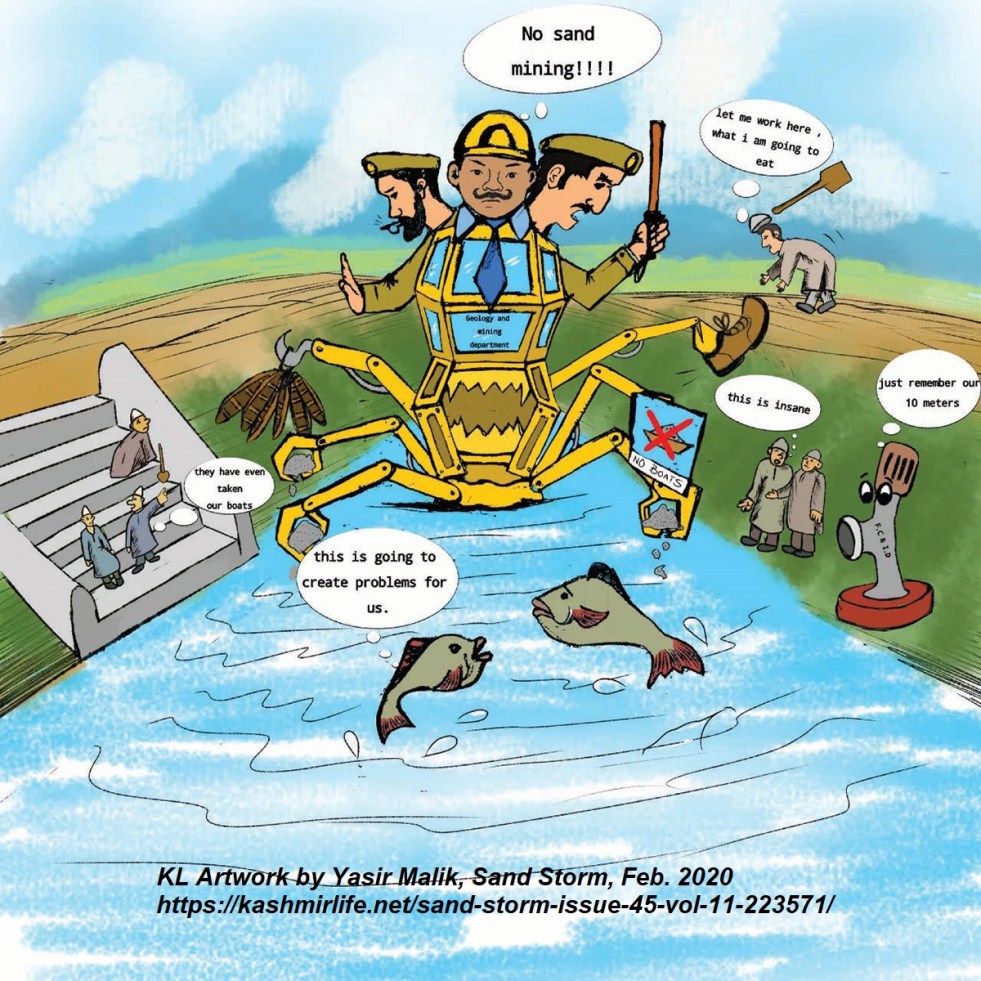
J&K Riverbed Mining 2020: Rivers exposed to mechanized mining
Unsustainable, unscientific excavation of riverbed minerals has been having significant impact on river eco-system and riparian communities for past several years. Since 2016, to develop better understanding and highlight the problems SANDRP has been preparing state wise annual overview of riverbed minerals (RBM) mining activities. Having putting together year end round up for Gujarat, Maharashtra, Goa, Rajasthan, Madhya Pradesh, Punjab, Haryana states, this compilation attempts to cover prevailing situation in Jammu & Kashmir (J&K) over the last one year. The link of 15 overviews in 2018 can be see here.
Continue reading “J&K Riverbed Mining 2020: Rivers exposed to mechanized mining”

DRP: 13 April 2020: Check dams revival in Dakshina Kannada
Zilla man, students revive check dams For the first time in decades this February, Sundara Gowda, a 55-year-old farmer in the Dakshina Kannada district, doesn’t have to spend Rs 6,000 to mine water. In the past he has had to hire an earthmover to do the digging because the rivulet that runs by his farm would dry up. This year, to his surprise, the rivulet, a tributary of the Phalguni river, didn’t dry up. Miraculously, it had plenty of water. A check dam had been built upstream at Paldyaru.
The check dam was one of many such structures built by Paljal Dharanendra Kumar, a zilla parishad member from Venoor village, with the help of student volunteers. The check dams have resulted in water in the river rising six feet for a distance of 2.5 km. The river now has 90 million litres of water and rivulets which used to run dry have come back to life. Dharanendra and his student volunteers have been zealously building check dams, called kattas, from December to February. The dams have been built at absolutely no cost to the exchequer. https://www.civilsocietyonline.com/environment/zilla-man-students-revive-check-dams/ (24 March 2020)
Continue reading “DRP: 13 April 2020: Check dams revival in Dakshina Kannada”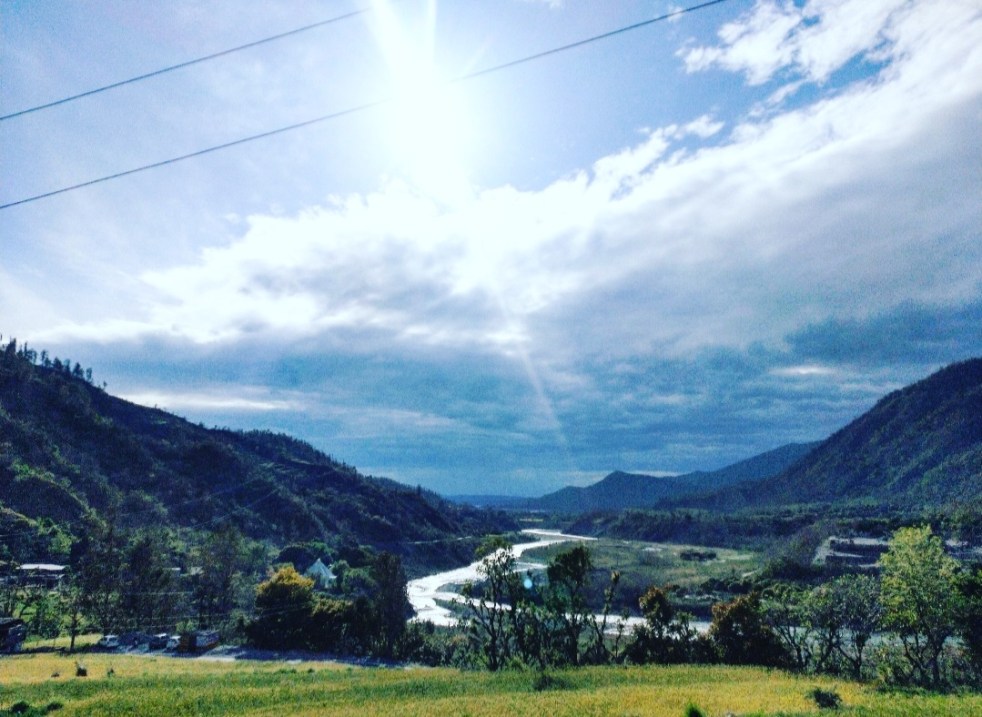
Cleaner rivers in lockdown: Lessons we can learn
Within a week of 21-day long lockdown in India that started at midnight on March 24, 2020, several reports in print, electronic and social media have been doing rounds showing remarkable improvements in water quality in many rivers in the country. Most of these are on the basis of naked eye observations in the form of pictures and videos by people.
Some of the reports quote pollution control boards’ officials and experts with some analytical data. People generally believe that the shutting down of industrial units has led to reduction in discharge of industrial effluents in the rivers, breathing fresh life in pollution laden streams. It’s right that there is halt in industrial belts and there is less industrial pollution reaching the rivers. However there are other factors contributing to the change in the scenario.
Continue reading “Cleaner rivers in lockdown: Lessons we can learn”

DRP: 6 April 2020: Ganga-Yamuna-Cauvery flow cleaner in lockdown: What can we learn?
A number of reports have appeared that show that the state of a number of rivers of India, including Hindon, Yamuna, Ganga and Cauvery has improved during the current lockdown due to Covid 19 crisis. That is indeed great news. At Kanpur and Varanasi there are reports that suggest the dissolved oxygen level has gone above 8 ppm and BOD level has gone down below 3 ppm at a number of places. While lack of industrial effluents entering the rivers due to closure of industrial units is a major reason, there are other reasons that has led to this situation, including above average winter rainfall, high snowfall now melting with onset of summer, reduction of irrigation water demand and also stoppage of sand mining along the rivers. The reduction of cultural activities including puja, bathing and cremations have also contributed to this situation.
The biggest lesson we can learn from this cleaner rivers after so many decades is that if our pollution control boards at the state and central level were doing their duty to ensure that no untreated effluents from the industries and also urban sewage enter the rivers, it is not that difficult to achieve cleaner rivers. But unfortunately there is no political will to achieve this simple and legally enforceable objective.
Continue reading “DRP: 6 April 2020: Ganga-Yamuna-Cauvery flow cleaner in lockdown: What can we learn?”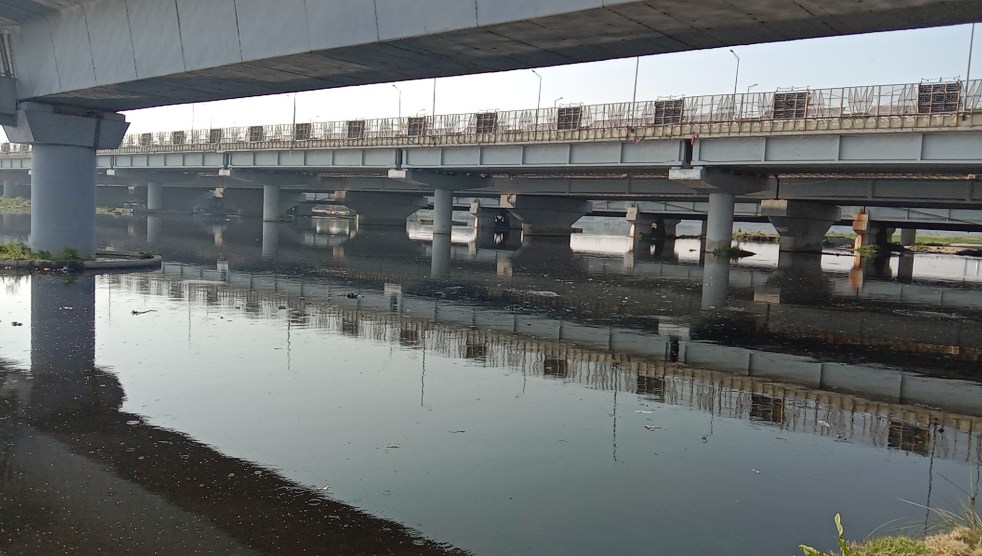
Yamuna Jayanti 2020: Bridges-Connecting People, Disconnecting River?
Bridges are essential infrastructure for human and cargo mobility across a river. They have also allowed us stop over and gaze on the beauty of flowing water streams without any risk of getting drowned or getting ourselves drenched in water. More and more bridges are being built on rivers without understating their impacts. There is hardly any debate or discussion on governance and decision making process or minimum distances to be maintained between two bridges or limiting the number of bridges on given stretch, considering what the river can support. This report takes a look at the situation of bridges on river Yamuna and describes few examples how they have been impacting the river eco-system.
Continue reading “Yamuna Jayanti 2020: Bridges-Connecting People, Disconnecting River?”
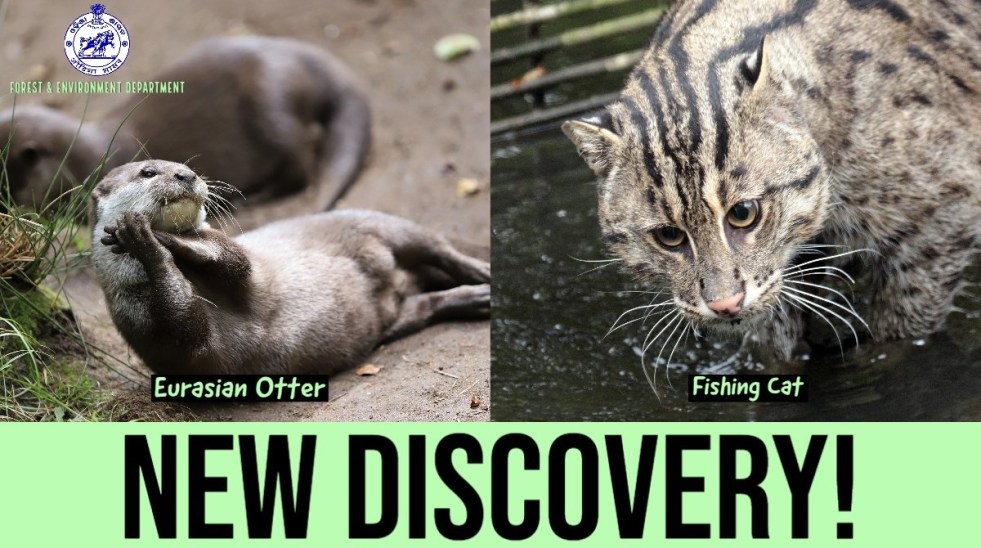
DRP: 30 March 2020: Chilika has fishing cat & otters, but why we know so little about aquatic biodiversity?
There is some good news this week. A survey has found existence of fishing cat and two otter species in Chilika lake – this was not known so far. However, this also underlines how little we know about India’s aquatic biodiversity in our rivers, lakes and deltas. Its high time we have authentic baseline survey across India, hopefully in participation with the local communities who would already know so much about this. And may be rather urgently, once we are through with the current Covid-19 Crisis.
Continue reading “DRP: 30 March 2020: Chilika has fishing cat & otters, but why we know so little about aquatic biodiversity?”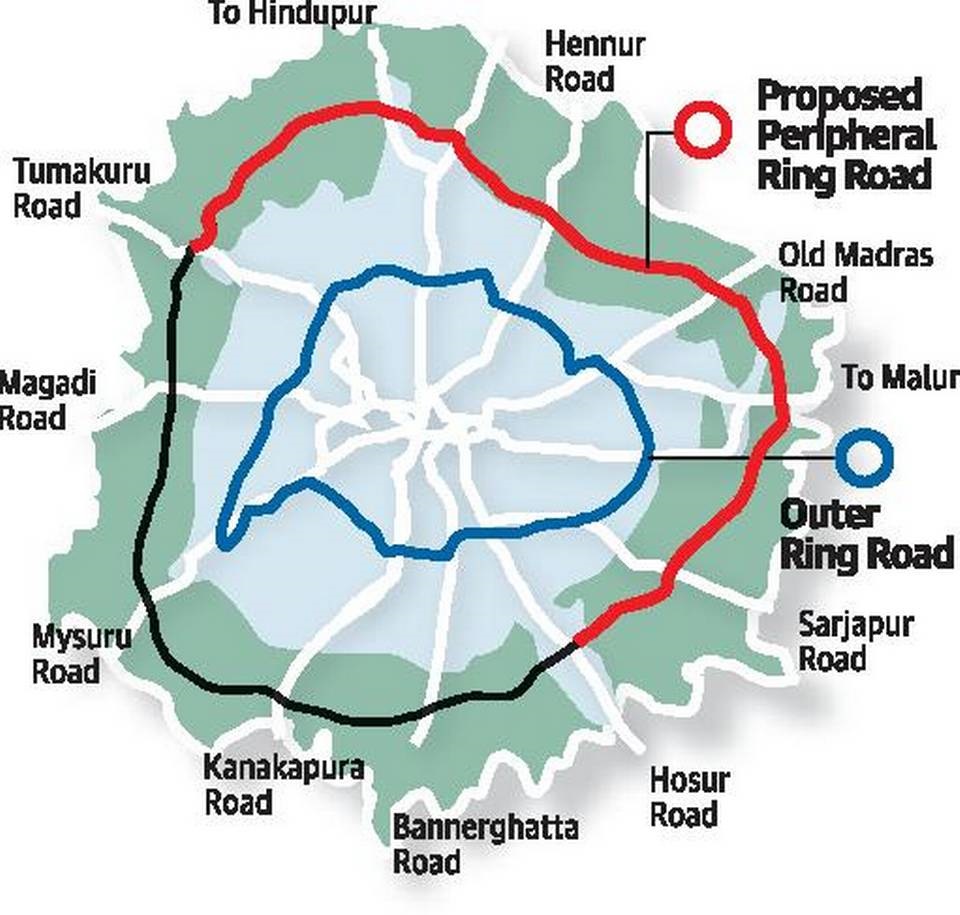
DRP: 23 March 2020: Welcome SC order asks for fresh EIA: Will Judiciary be equally strong against all fraudulent EIAs?
The Supreme Court order asking for fresh environment clearance and fresh Environment Impact Assessment for the Peripheral Ring Road project in Bengaluru is remarkable and most welcome, even though it is not directly related to water issues. The order is relevant since we have yet to find what can be called an honest Environment Impact Assessment (EIA) for River Valley Projects and yet the MoEF’s Expert Appraisal Committee (EAC) on River Valley Projects happily clears ALL the projects that come their way, even with most fraudulent EIAs. We are hoping against hope that this apex Court judgement will be a precursor to many such orders and judgements and general warning against fraudulent EIAs and EACs. We hope it is not too much to ask that the EIA be an honest effort and the EAC that does not reject fraudulent EIAs should also be dumped and members black listed. We hope we have such orders from the judiciary soon.
Continue reading “DRP: 23 March 2020: Welcome SC order asks for fresh EIA: Will Judiciary be equally strong against all fraudulent EIAs?”
World Water Day 2020: Positive Stories from Rural India
The theme for the World Water Day 2020 is ‘Water and Climate Change’. The changing climate has disrupted the water cycle in a number of ways.
The rural areas in India have facing increasing water crisis due to mismanagement, top down government projects, unequal distribution of available resources and now also climate change. However there are several individuals, groups and government initiatives that have led improvement in the situation. We have presented positive water stories from farmers and urban India in earlier WWD 2020 articles. This last compilation in the series presents the positive water actions reported from different rural areas of country in past one year, beginning with top five positive water stories. Continue reading “World Water Day 2020: Positive Stories from Rural India”
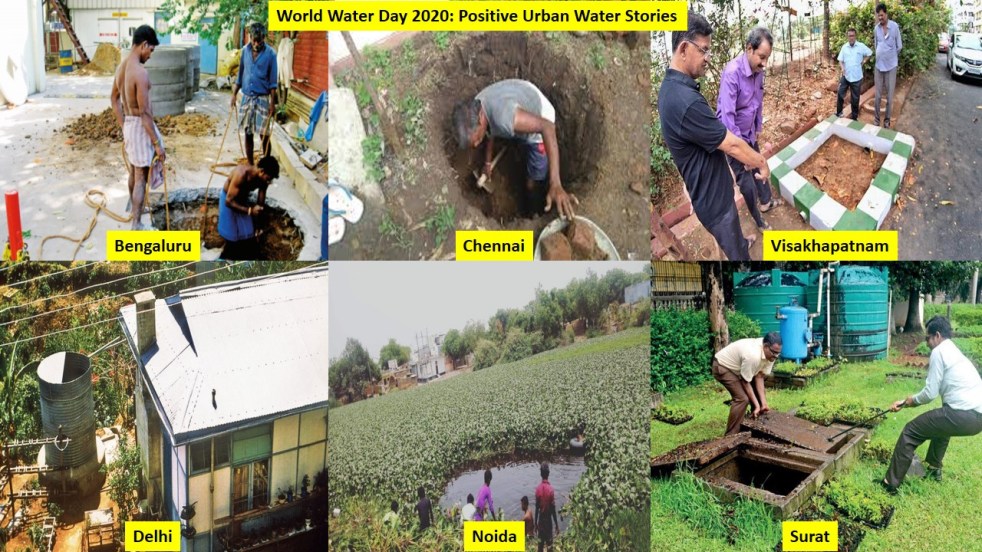
World Water Day India 2020: Top Positive Urban Stories
The theme for World Water Day 2020 is ‘Water and Climate Change’. Indeed the changing climate has been altering the earth weather system including disrupting the water cycle.
Urban areas in India are facing increasingly severe water crisis due to mismanagement of available resources, urban flooding due to blockage and encroachments of drainage channels, pollution of water sources on account of increasing solid and liquid waste. However, there are individual, civil society group and government efforts which have been helping ameliorate the situation with rain water harvesting, pond revival, wells restoration among others. Here is a compilation of positive urban water stories from for World Water Day 2020.
Continue reading “World Water Day India 2020: Top Positive Urban Stories”
 SANDRP