
This week’s DRP News Bulletin brings two encouraging reports about revival of Kham River in Sambhajinagar district in Maharashtra. The Bulletin also brings report of Gujarat Human Rights Commission sending notice to the state and city government to uphold the environment rights of citizens in Vadodara. There is also here the news of signing of MOU for beginning of 4 km water taxi along Yamuna in Delhi upstream of Wazirabad barrage, of course without any environment or social impact assessment, any environmental clearance, any public consultation process, with blind faith in Sabarmati River Front Development model.
Continue reading “DRP 170325: Can we work for more Kham Rivers and Less Sabarmati Rivers?”Tag: rivers

DRP 100325: “Good Floods Reduce the Risk of Bad Floods”
(Feature Image: An aerial view of the flooded collectorate ghat at the bank of Ganga river in Patna. PTI Photo/Source: The Asian Age)
This remarkable report this week, quoting the work of Gilbert F White, also considered “father of floodplain management” provide a number of lessons in flood management. These include: – “Floods are ‘acts of God’, flood losses are largely acts of man” (By ‘acts of God,’ he meant that floods are perfectly natural events);
– “Yes, floods will happen. Whether or not those floods are good floods or bad floods, whether or not they cause damage is largely up to us”;
Continue reading “DRP 100325: “Good Floods Reduce the Risk of Bad Floods””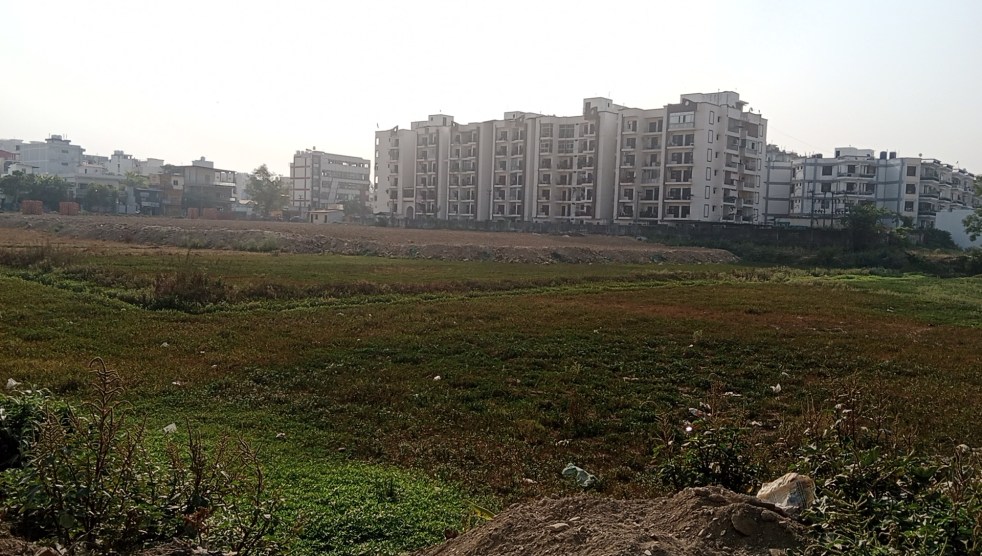
DRP 030325: Supreme Court asks: How a city can become smart without protecting the water bodies, wetlands
In a welcome development, the Supreme Court of India has asked, in the context of Ajmer City in Rajasthan, how can a city become smart without protecting the water bodies/ wetlands? How cities will become smarter by encroachments on the water bodies and wetlands? The Supreme Court bench threatened the Rajasthan government of contempt of court for non-compliance of order dated Dec 1 2023 as also the order of National Green Tribunal on Dec 13 2021.
The Supreme Court here has hit the nail and raised a very fundamental question that is relevant to all the cities across India as they are all guilty of allowing encroachments and destruction of local water bodies in their respective areas. This is a suicidal step as it has adverse impact on the cities in multiple ways and yet, most cities consider this smart and in fact get away with it. There is also no National Urban Water Policy guiding the cities solve the puzzle of multiple issues handled by multiple departments, including some by the local, state and central governments. This self-created mess in the cities comes handy for the various vested interests in encroaching more water bodies. The judiciary, so far has also not been effective in addressing this issue with any effectiveness.
Continue reading “DRP 030325: Supreme Court asks: How a city can become smart without protecting the water bodies, wetlands”
DRP 240225: Unanswered questions on Ken Betwa Project
At a well-attended meeting at India International Centre in Delhi on Feb 20 2025, organised by VIDHI Centre for Legal Policy, a panel of speakers including Shri Shashi Shekhar (former secretary, Union Ministry of Water Resources) and Shri Jasbir Singh Chauhan (former Principle Chief Conservator of Forests, Madhya Pradesh) and Himanshu Thakkar of SANDRP, a number of fundamental questions were raised about the controversial Ken Betwa River Link Project. Unfortunately, no clear answers are forth coming from the authorities.
Continue reading “DRP 240225: Unanswered questions on Ken Betwa Project”
DRP 170225: Dam Safety Slumber
(Feature Image: Srisailam dam in Telangana. Source: Telangana Today)
The Srisailam, dam one of the biggest dams of India, is facing a serious dam safety issue since over a decade, and yet, strangely, there is no resolution of this in sight. All attempts seem to downplay the issue and hide the reports & reality from public domain. It is well known that the damage to the stilling basin and plunge pool area, part of the Dam project and located just downstream of the main wall is serious and some of the cracks from the downstream are going towards the main dam. Even the National Dam Safety Authority (NDSA) visited the dam a year back, but no action plan is in sight.
Continue reading “DRP 170225: Dam Safety Slumber”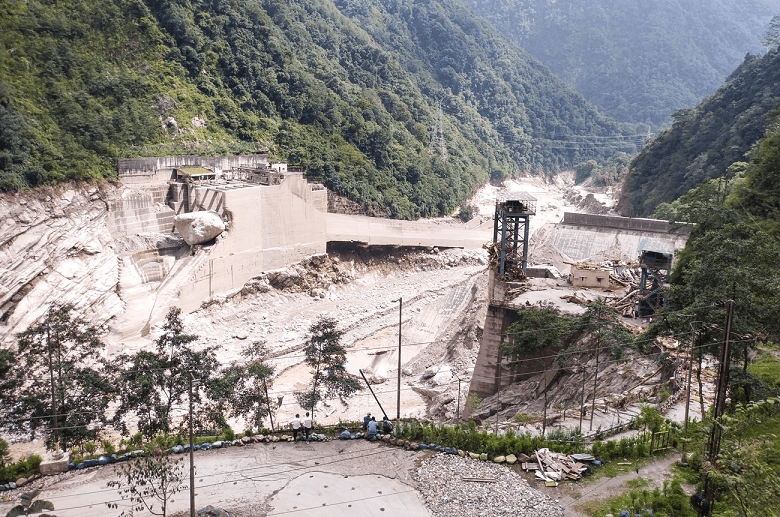
DRP 100225: EAC & MoEF’s shocking decision to clear Teesta 3 Dam raises a stir
(Feature Image: Teesta III HEP dam was washed away on the intervening night of Oct. 3-4, 2023 on account of a GLOF. The flood in the downstream was magnified by the dam disaster. Photo: Mayalmit Lepcha/Source: Sanctuary Nature Foundation)
The decision of Union Ministry of Environment and Forests (MoEF)’s Expert Appraisal Committee (EAC) on River Valley Projects on Jan 10 2025 has understandably raised a stir and earlier the EAC and MoEF reviews and reverses this decision, better it will be. The decision is shocking on a number of counts. The EAC itself had raised a number of issues related to the project in its earlier meeting, but decided to clear the project without getting satisfactory resolution of the issues.
Continue reading “DRP 100225: EAC & MoEF’s shocking decision to clear Teesta 3 Dam raises a stir”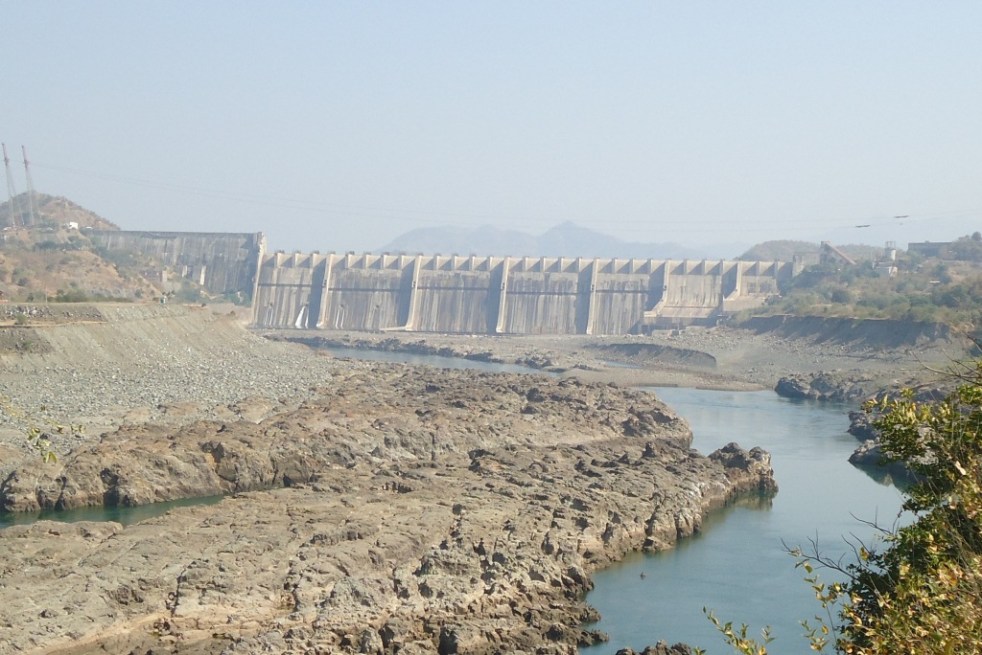
DRP 030225: Water Anarchy in Gujarat in Narmada water allocation?
A report this week quotes a Govt of Gujarat (GOG) insider saying that GOG is giving 16.7% of SSP (Sardar Sarovar Project) water for industries (with more in pipeline) against planned allocation of just 2% (0.2 Million Acre Feet or MAF). Similarly, against planned allocation of zero for Urban areas in Ahmedabad, Gandhinagar, Vadodara, Kheda and Bharuch, most large urban areas are getting Narmada water. However, the insider says, the area irrigated by the SSP is only 33% of the targeted area, with largest water quantities going to already irrigated central Gujarat. Similarly, with the Narmada Water Disputes Tribunal (NWDT) asked Gujarat to provide water for the SSP Downstream areas from its allocated share, but Gujarat keeps claiming it has no water for this and asks other states to provide water for the downstream areas from common pool. It seems the worst fears of the project critiques are coming true. The insider has in fact characterized this state of affairs as water anarchy in Gujarat.
Continue reading “DRP 030225: Water Anarchy in Gujarat in Narmada water allocation?”
World Wetlands Day 2025: Top Ten Positive Actions & Reports
(Feature Image: Villagers plant mangrove saplings in an island off Kudikadu village in Tamil Nadu’s Cuddalore district. Credit: The Print)
Marking the World Wetlands Day 2025, this article carries top ten positive reports from 2024 on protection and conservation of wetlands in India. The overview highlights some remarkable steps taken by individuals, community groups, governments for restoration of wetlands, lakes, waterbodies and mangroves in the country during the past year. We have also published three overviews on the issue including the situation of Ramsar wetlands, other wetlands and important judicial decisions regarding management of wetlands in the country.
Continue reading “World Wetlands Day 2025: Top Ten Positive Actions & Reports”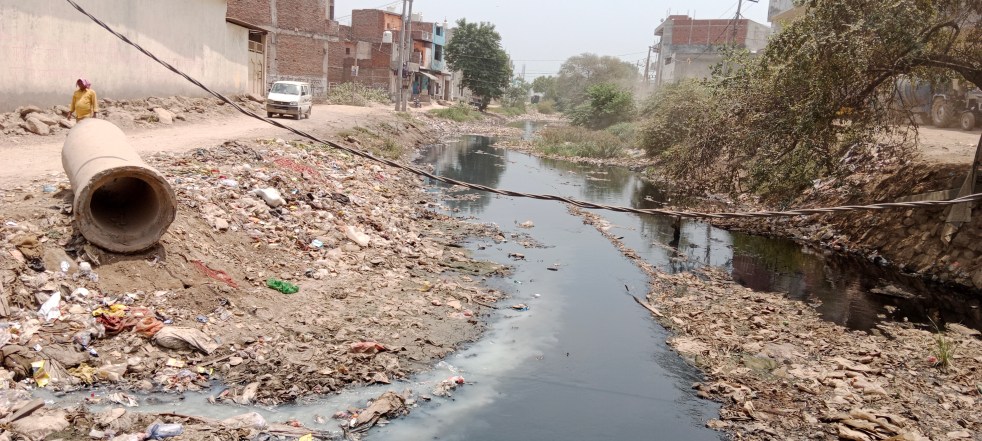
Groundwater 2024: Increasing Contamination: Tip of a Toxic-berg?
(Feature Image: Drain No 6 in Kundli, Sonipat filled with industrial effluents. BS Rawat/ SANDRP/ May 2023)
This annual overview compiles the top ten reports showing the rising contamination of groundwater resources in India during 2024. It includes some shocking facts from Punjab, Himachal Pradesh, Haryana, Gujarat, Telangana, Kerala, Ladakh, Assam, Chhattisgarh, Karnataka and W Bengal, in addition to reports from CGWB (Central Ground Water Board) a Parliamentary Committee. The contaminants reported in groundwater include nitrates, fluorides, arsenic, uranium, heavy metals (Chromium, cadmium, nickel, manganese, selenium, among others), Iron, salinity, among others. Since most people consume groundwater assuming it to be safe, what is reported here is only a tip of the proverbial toxic-berg. The easiest way forward, besides more regular monitoring and improved governance is rainwater harvesting on war footing. However, the government, busy pushing more big dams and interlinking projects, has little real priority for that.
Continue reading “Groundwater 2024: Increasing Contamination: Tip of a Toxic-berg?”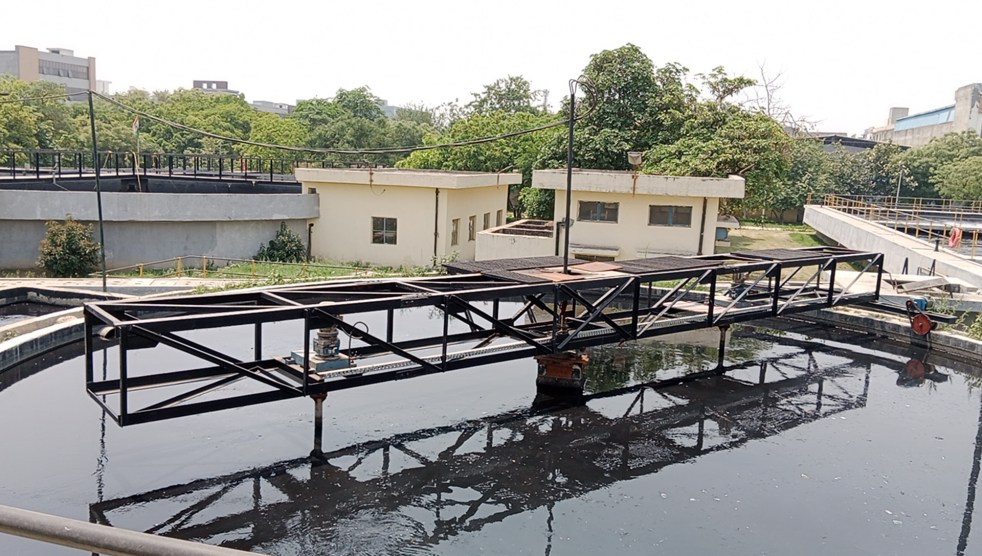
DRP 270125: India’s non-functional Sewage Treatment Plants
(Feature Image: 10 MLD Kundli CETP in Sonipat. BS Rawat/SANDRP/May 2023)
A detailed report in this week’s DRP News Bulletin below shows how India’s Sewage Treatment Plants (STPs), Govt’s main weapon against pollution of rivers in Urban areas, have been a failure for decades. It is pertinent to note that this is the golden jubilee year of Water Pollution Control Act of 1974, that led to the formation of Central, state Pollution Control Boards, and the whole water pollution control bureaucracy, institutions and legal architecture. There should be little doubt that whole architecture has abysmally failed in achieving basic objective for which it was created, including ensuring proper treatment of urban sewage.
India has spent thousands of crores of rupees on these STPs, mostly, mega, centralized projects. But there has been little effort to address governance of the STPs, to ensure that they function as required and provide the results that they have been set up for. Whether they function or not, qualitatively or quantitatively, year after year and decades after decades, there are no consequences! In fact, if treated properly, sewage can become a asset rather than nuisance that it now is. The Judiciary too, right up to the apex court, have badly failed in achieving any improvement in this eminently justiciable issue.
Continue reading “DRP 270125: India’s non-functional Sewage Treatment Plants”
