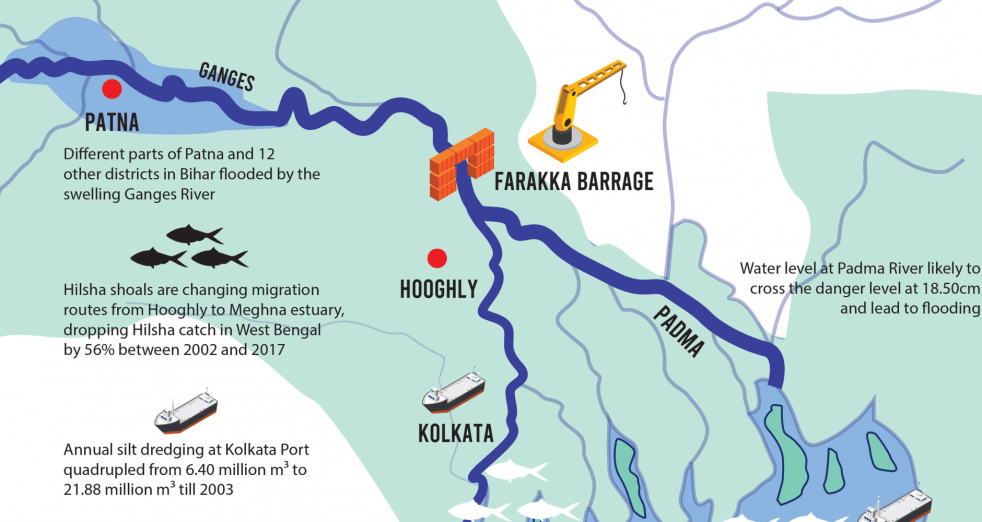
(Feature Image: Infographic taken from Farakka now boomerangs on India: Source: TBS News, Oct. 2019)
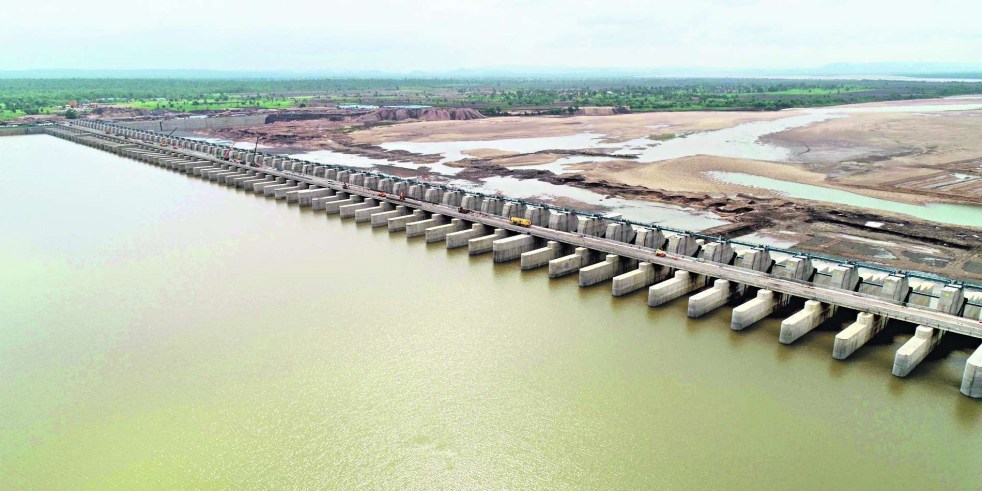
The 2304 m long Farakka dam on Ganga in Murshidabad district in W Bengal was commissioned on Apr 21 1975 and completes 50 years today. The dam needs an independent review to assess the costs, benefits and impacts of the dam, both projected and actual and to decide about the need and form of its continued existence.
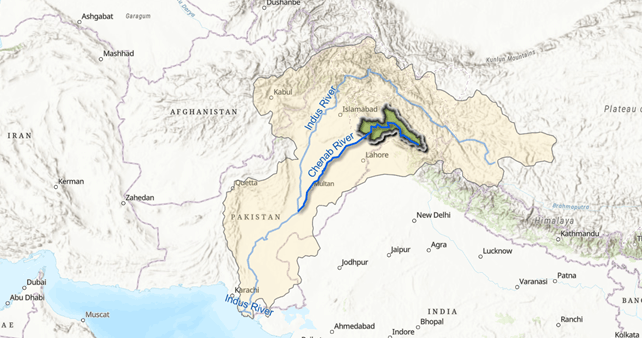
Chenab, which translates as the Moon River is the largest of the five tributaries of River Indus. It flows for about 974 kilometers from the High Himalayas of Lahaul to the forests of Jammu and Kashmir and onto the plains of Pakistan. Its main tributaries in India include Miyar, Marusudhar and Tawi. In the vast plains of Punjab in Pakistan, it is met by Jhelum, Ravi and Sutlej to form the mighty Panjnad before it meets the Indus. Its catchment, spread across 67,430 km2, is shared between the two countries.
Chenab is Chandrabhaga (Crescent Moon) in its headwaters. It was the River Asikni in Rigveda, and the Acesines for the ancient Greek. From sparse mountain settlements of Lahaul to the bustling urban centers of Sialkot, more than 10 million people live and prosper along the Chenab. Hydropower projects operational and under constructions on the river have an installed capacity of more than 5000 MW (Central Electricity Authority 2024), and its canals irrigate hundreds of thousands of acres in Pakistan and India (Shakir et al).
(Feature Image: Skymet predicts normal monsoon with 103% rainfall of the long-period average. Source: Business Today)
The private forecasting agency Skymet has forecast Normal SW Monsoon rainfall across India on Apr 8, 2025, a week before IMD comes out with its forecast. This advance forecast by private agency, compared to IMD raises question as to how come the private agency with much more limited resources is able to achieve this.
In any case, the forecast of about 3% above normal rainfall in June Sept 2025 is welcome. The rainfall distribution forecast, both across the four months and across the four regions is also good if it comes true.
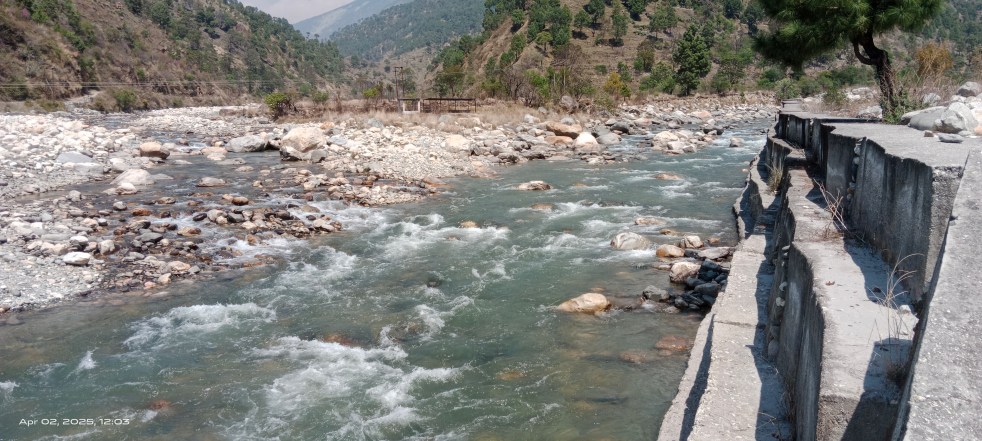
(Feature Image: Merging point of of Badiyar gaad (left) and Yamuna river (right) at Gangani in Badkot, Uttarakhand. BS Rawat/SANDRP)
New research published this week reveals a startling change: the oxygen levels in inland waters has been dramatically reducing since 1900, due to human activities including big dams and pollution. This condition leads to dead fish, collapsing food chains and reducing water quality, among other impacts.
There are simultaneous processes ongoing in inland waters leading to production and consumption of oxygen. The location and processes for both the production and consumption of oxygen has been changing during 1900 to 2010. The Global oxygen consumption in inland waters, net of production has gone up by over 100% from 0.26 Pg/year in 1900 to 0.53 Pg/ year in 2010. While earlier climate change was considered major contributor to this reduction, new research shows it is big dams and pollution that are much bigger contributors. Inland waters now pull nearly 1 billion tons of oxygen from the atmosphere every year — half as much as the entire ocean emits back.
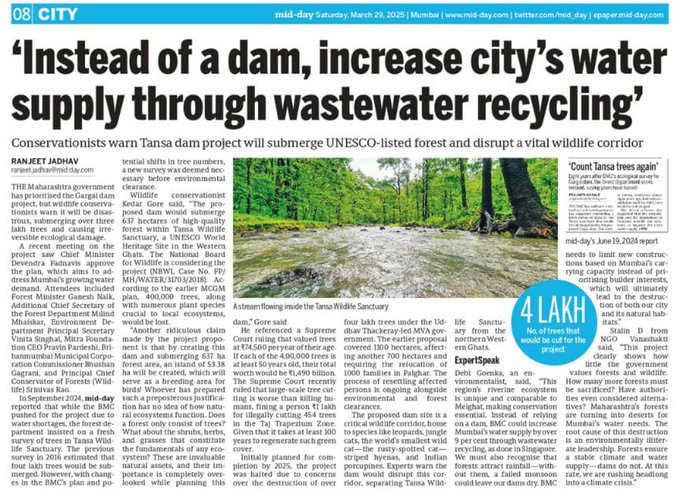
Maharashtra Chief Minister Devendra Fadnavis, brushing aside the concerns of forest officials, opposition, environment and available options this week has asked the officials to fast track the Forest and other clearances for the controversial Gargai dam for additional supply of water to Mumbai. This is shocking on several counts.
Our study earlier showed that Mumbai does not need any additional dam including Gargai if it utilizes available local resources including rainfall, reuse of treated sewage, desalinization, demand side management, groundwater recharge, among other cost effective and less destructive options. The Chief Minister of his government has not bothered to respond to these concerns or options. In fact, when our study was published, even government officials in Mumbai had supported our conclusions.
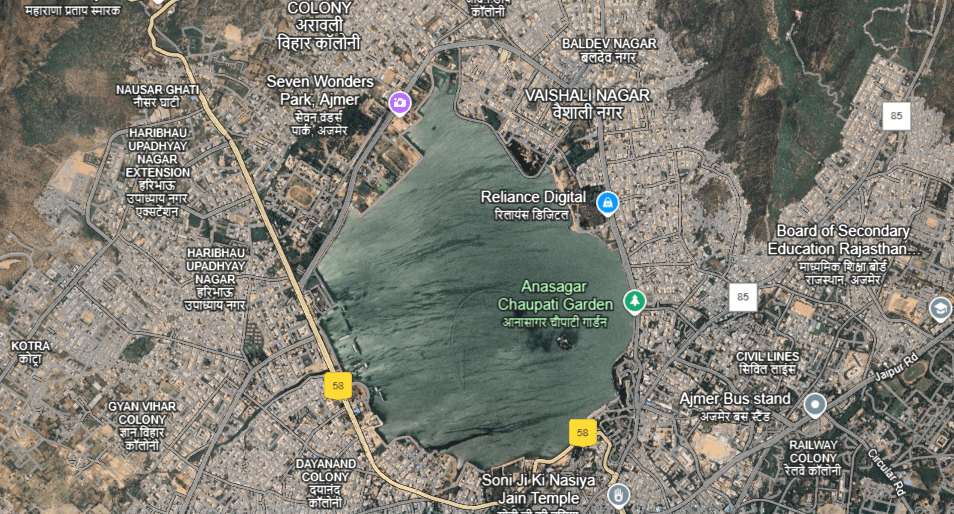
Over the last about 4 years, very interesting events are playing out in India’s judiciary regarding the encroachments in Anasagar lake in Ajmer, Rajasthan.
The first order from the National Green Tribunal came to remove the encroachments from Anasagar lake in Dec 2021, reiterated in Aug 2023 as the encroachments were in violation of the environmental regulations and Wetland Rules of 2017. Apparently, the state government with investment of Rs 12 Cr was the biggest encroacher and the investment in the encroached land continued even while NGT order was awaiting implementation.
(Feature Image: The NTU research team behind the solar-powered method to convert sewage sludge into green hydrogen and animal feed. Source: Science Tech Daily)
On the occasion of World Water Day 2025, SANDRP compiles ten studies and research papers revealing the various cost effective and efficient methods to treat sewage and recover nutrients from sewage sludge. The first part of the series highlights water efficient practices being adopted by farming communities in India and the second part covers the water sources conservation efforts being made by the rural communities in the country. The third part has focused on sewage treatment and rainwater harvesting efforts being made in various cities in the country.
(Feature Image: Members of Mount Rain drops Appartment residential Association posing for a picture at STP set up at a private gated community in Coimbatore. Source: EPS)
Rains and sewage are biggest resources available to Indian cities which can be harvesting and treated to meet the ever-increasing water needs. This can not only help significantly in checking groundwater depletion but also reduce pollution levels in urban water bodies. On the World Water Day 2025, we compile top ten media reports highlighting progress in utilizing these viable alternatives in urban India. The reports suggest that while some south Indian cities particularly Bengaluru and to some extent Chennai is taking some positive steps in this direction, there is very little action happening in the rest of cities. Interestingly, 6 of the ten top stories here are from South India and only one each from Central and North India.
(Feature Image: The Jal Saheliyon ki Jal Yatra or the ‘Water walk of Women friends of Water,’ an over 300 km-long march for water conservation started in Feb 2025. Source: Global Bihari)
Marking World Water Day 2025, this compilation highlights top ten positive efforts made during last one year by village communities and women groups in India for restoration and protection of their water resources. The report also shares some important water conservation initiatives being taken by the various governments in India. The first part of the series has covered water efficient practices being adopted by the Indian farmers.
This week’s DRP News Bulletin brings two encouraging reports about revival of Kham River in Sambhajinagar district in Maharashtra. The Bulletin also brings report of Gujarat Human Rights Commission sending notice to the state and city government to uphold the environment rights of citizens in Vadodara. There is also here the news of signing of MOU for beginning of 4 km water taxi along Yamuna in Delhi upstream of Wazirabad barrage, of course without any environment or social impact assessment, any environmental clearance, any public consultation process, with blind faith in Sabarmati River Front Development model.