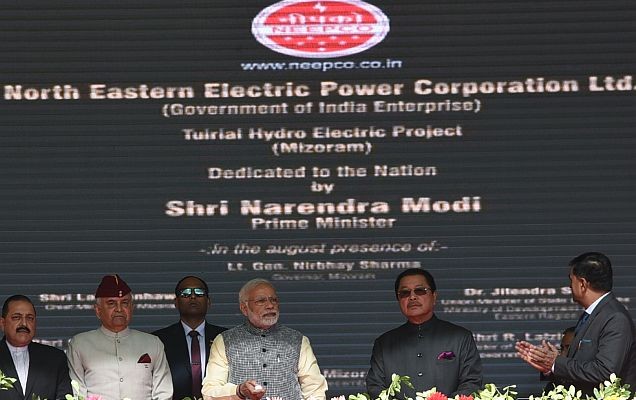
Centre Getting forest clearance is not a problem now: NHPC Chairman In an interview, taking a dig at its private peers, NHPC chairman KM Singh said that NHPC is the only company in the county that has the capability to execute hydro projects. He also said that in the NDA regime green clearances come easy, while local agitation by NGOs is the biggest threat. He further stated that there has been no negative impact of building a dam, not just in India, but anywhere in the world.
Continue reading “DRP: 24 April 2017 ( NHPC says Dams have no adverse impacts anywhere in the world! Admits, Hydro is no longer viable for private sector)”Tag: Ganga
DRP: 17 April 2017 (Bihar needs to launch Farakka Satyagarha on centenary of Gandhiji’s Champaran Satyagraha)
As the President of India is in Patna today (April 17, 2017) to remember the centenary of Gandhiji’s Champaran Satyagraha, we need to remember that the Central message of Gandhi’s Satyagraha was to fight injustice, atrocities and abuse, irrespective of the source of the atrocities.
During the international workshop on INCESSANT GANGA in Patna on Feb 25-26, 2017, Bihar Chief Minister Nitish Kumar mentioned that this is the centenary year of Gandhiji’s famous Champaran Satyagraha in Bihar. He also mentioned how Bihar has suffered the increasing intensity, duration and destructive floods due to Farakka Dam.
Continue reading “DRP: 17 April 2017 (Bihar needs to launch Farakka Satyagarha on centenary of Gandhiji’s Champaran Satyagraha)”The Sad State Of These Persons Called Ganga & Yamuna – Can State Protect Them?
Guest Blog by: Chicu Lokgariwar
It’s a girl! And another girl!
On March 20 2017, the High Court of Uttarakhand in an unforeseen move, bestowed ‘legal personhood’ on the Ganga and the Yamuna. Ten days later, as people were still trying to understand the implications of this order, the Court declared the glaciers, lakes, and wetlands of these basins as legal persons. What does this mean exactly?
The decree: As per an order passed on 20th March 2017, while ruling on a public interest litigation filed by Mohammed Salim against the State of Uttarakhand, the High Court has declared the entire length of the Ganga and the Yamuna, including their tributaries to be juristic persons.
The order states, ‘..the Rivers Ganga and Yamuna, all their tributaries, streams, every natural water flowing with flow continuously or intermittently of these rivers, are declared as juristic/legal persons/living entities having the status of a legal person with all corresponding rights, duties and liabilities of a living person in order to preserve and conserve river Ganga and Yamuna.’
Continue reading “The Sad State Of These Persons Called Ganga & Yamuna – Can State Protect Them?”
DRP: 10 April 2017 (Activists from 40 countries & all continents meet for RIVER GATHERING in Georgia)
In a most significant event, some 85 river and dam activists from 40 countries and all continents gathered in Tbilisi, Georgia (on border between Asia and Europe, between Black and Caspian Sea) during March 27-31, 2017 to share experiences about their efforts to protect the world’s rivers and join their struggles against destructive hydropower projects. The meeting was organized by CEE BankWatch Network (active in 12 countries in Eastern and Central Europe) and International Rivers.

Eight persons from South Asia, including those from India, Pakistan, Nepal and Bangladesh joined the meeting to share experiences from the region. Indian participant included SANDRP coordinator (who was also in steering committee of the meeting) and Associate Coordinator Parineeta Dandekar. A number of participants from neighboring and nearby countries like China, Myanmar, Thailand, Cambodia, Mongolia and Russia also participated. Issues related to trans-boundary rivers, small hydropower projects and multiple projects on the same rivers, decommissioning of the dams, how to achieve free flowing rivers and importance of rivers in changing climate were some of the key issues discussed at the meeting.
Continue reading “DRP: 10 April 2017 (Activists from 40 countries & all continents meet for RIVER GATHERING in Georgia)”Uttarakhand Rivers Profile
About Uttarakhand
Geographical Location- North India largely mountainous with two plains and two partly mountain districts in the south; Area- 53483 sqkm; Population- 10.12 million; River basins- 4 River basins (R. Ganga‘s basin is subdivided in the map below into R. Bhagirathi, R, Alaknanda and R. Ganga sub-basins); Districts-13; Climate- Sub-tropical to tundra
About Uttarakhand Rivers

The water quality of Uttarakhand‘s rivers is basically good, especially in the upper reaches. Downstream of some large settlements and in the lower reaches in the Himalayan foot hills the water quality suffers due to the release of untreated sewage and industrial effluents. But the state‘s ambitious program to build 450 hydro power projects threatens the survival of the river ecosystems and the lives and livelihoods of people who live in these river valleys.
DRP: 3 April 2017 (India: Power Surplus & Exporter, Record Solar-Wind Growth, Need Not Push Destructive Hydro)
Power surplus, power exporter India, with record solar& wind wind generation trend, why push more destructive hydro projects According to power ministry statement on March 29, 2017, India for the first time became NET EXPORTER OF ELECTRICITY during 2016-17, it exported 4% more power during last 11 months (April-Feb), that what it imported from Bhutan. At the same time, power plants, on a national average, are opera ting at roughly 60%, down from nearly 65% in 2014-15.
Meanwhile, the Cabinet Committee on Economic Affairs has approved the amendments in the Mega Power Policy to push 31 GW stuck projects entailing an investment of Rs 1.5 lakh crore. The stuck projects in mega power policy include hydro projects of above 350 Mw in designated states (J&K and eight NE states) and above 500 Mw in other states.
Amid this, New and Renewable Energy Ministry has added over 5400 Mw wind energy capacity in 2016-17 against the target of 4000 Mw. This year’s achievement surpassed the previous higher capacity addition of 3.423 Mw achieved in the previous year. The leading States in the wind power capacity addition during 2016-17 are Andhra 2190 Mw, followed by Gujarat 1275 Mw and Karnataka 882 Mw.
In the last couple of years, India has not only seen record low tariffs for solar power but wind power too has seen a significant drop in tariffs. The onshore wind power potential alone is about 302 Gw. Preliminary estimates show the Gujarat coastline has the potential to generate around 106,000 Mw of offshore wind energy and Tamil Nadu about 60,000 Mw.
Continue reading “DRP: 3 April 2017 (India: Power Surplus & Exporter, Record Solar-Wind Growth, Need Not Push Destructive Hydro)”West Bengal Rivers Profile
About West Bengal
Area: 88752km2; 20 districts; Population- > 91 million Topography: Mountains, Plateaus and Plains.
About West Bengal Rivers
The state of West Bengal, a land of many rivers, covers an area of about 88,752 km2 and is the home of more than 90 million populations as per census of 2011. The Ganga divides the state into two unequal hubs: the North and South Bengal. The state has been divided into 20 districts, the seven districts are within North Bengal and remaining 13 districts are in South Bengal. West Bengal is the only state of India that extends from the Himalaya in the north to Bay of Bengal in south. It offers wide topographic diversity and intricate drainage network of 29 basins. The south Bengal can further be subdivided into two geographical units taking Bhagirathi-Hugli river (the western distributary of the Ganga) as the demarcating line. The western part is called Rarh Bengal and the eastern part is described deltaic Bengal. The rivers of West Bengal have been divided into five groups: i) the rivers of North Bengal; ii) the Ganga-Padma system; iii) the Bhagirathi- Jalangi-Churni system; iv) the western tributaries to Bhagirathi and v) the tidal creeks of Sundarban.
DRP: 20 March 2017 (South India Reeling Under Severe Drought)
The drought has extended its grip in the South, with the South-West (S-W) monsoon falling significantly short and the North-East monsoon proving a total failure. Reeling under the impact of failed monsoons, Kerala, Karnataka, Tamil Nadu and Puducherry have declared themselves as drought affected. Kerala and Karnataka, which are the worst affected, are already contemplating actions such as cloud seeding to tide over the situation.
In Kerala, the S-W monsoon deficit stood at -34 per cent, and the North-East monsoon, -61 per cent. Similarly, in Tamil Nadu, the deficits were -19 per cent and -62 per cent (North-East monsoon). For Coastal Karnataka, the shortfall stood at -21 per cent and -63 per cent, respectively. Drought-like conditions are also prevailing in parts of Andhra Pradesh and Telangana.
Water levels in key reservoirs in the region are at their lowest. The water tables have declined further even as the civic administration in many cities, small towns and panchayats has been increasingly tapping groundwater to ensure supplies. The situation is so dire that the Kerala govt has directed PepsiCo to cut down drastically on the use of groundwater for its Palakkad plant. Traders in Tamil Nadu are also boycotting these fizzy after claims that foreign firms are exploiting the country’s water resources.
Continue reading “DRP: 20 March 2017 (South India Reeling Under Severe Drought)”DRP: 13 March 2017 (20 Big Hydro Projects Costing Over 30K Crore, Stalled & Stressed: Piyush Goyal)
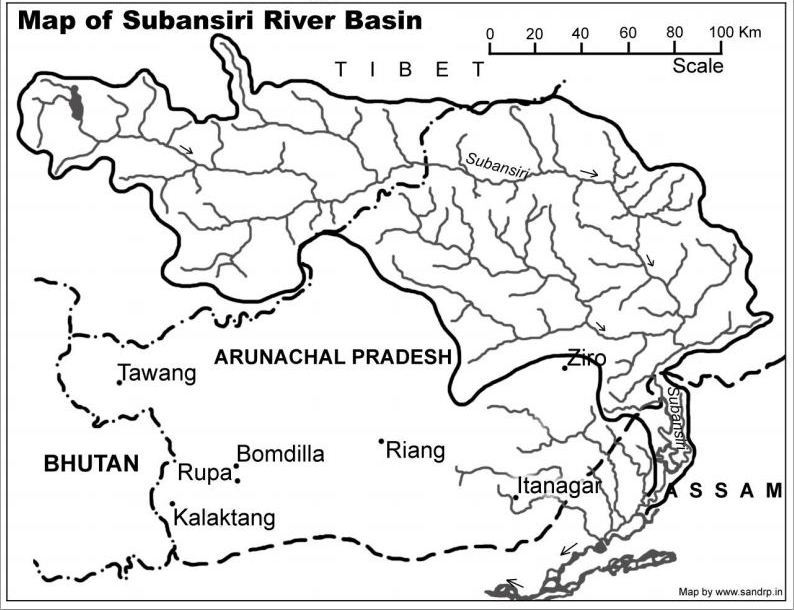
20 hydro projects stalled or stressed The Power Minister Piyush Goyal on March 09, 2017 in a written statement has informed the parliament that as many as 20 under construction HPPs totalling 6,329 MW are either stalled or stressed in the country and Rs 30,147.08 crore has already been spent on them. These projects include 2,000 MW Subansiri Lower of NHPC Ltd, 500 Mw Teesta VI of Lanco Teesta Hydro Power Ltd, 120 MW Rangit-IV of Jal Power Corp, 300 Mw Panan of Himagiri Hydro Energy Pvt Ltd, 850 MW Ratle of GVK Ratle HEP Pvt Ltd, 100 Mw Sorang of Himachal Sorang Power Ltd and 960 MW Polavaram of Polavaram Project Authority.
Continue reading “DRP: 13 March 2017 (20 Big Hydro Projects Costing Over 30K Crore, Stalled & Stressed: Piyush Goyal)”River bank failure due to sudden water flow changes
Can land, trees, structures, farms, pipes, poles, pumps etc, along a river bank several kilometers downstream collapse if water flow in the river is suddenly reduced or stopped? Yes, reduced/ stopped, not increased? This kind of river bank slump or collapse or failure is not easily understood, but it does happen. Let us see how. Continue reading “River bank failure due to sudden water flow changes”