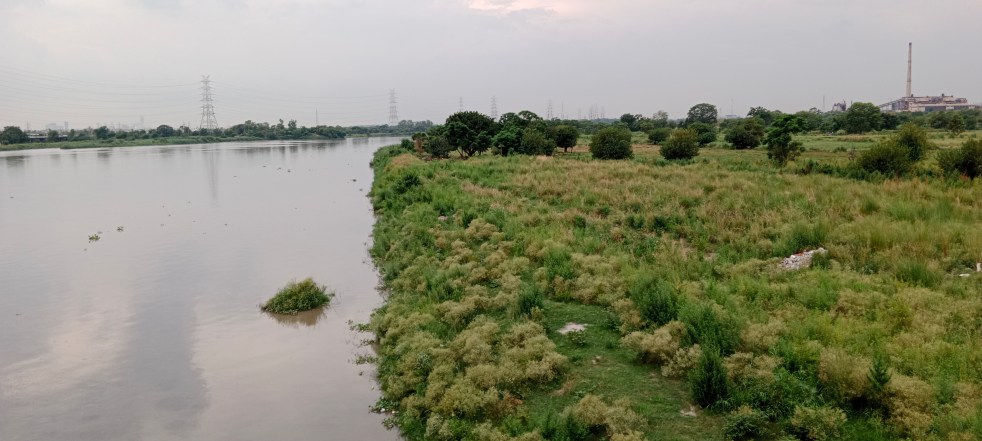
(Feature Image:- Boats tied to Yamuna river bank at Wazirabad Barrage in June 2023. SANDRP)
In this detailed interview by Questions of Cities; Bhim Singh Rawat, associate coordinator, SANDRP talks on multiple issues affecting the Yamuna and offers some corrective measures to improve the overall condition of the river. The interview has already been published by Question of Cities and can be seen here. The interview also covers possible reasons behind unusual floods in Yamuna in Delhi in July 2023 and the detailed SANDRP blog on the issue can be seen here.
(फीचर इमेज: कौशाम्बी उत्तर प्रदेश में यमुना की ऑक्स बो लेक अलवारा में भ्रमण के दौरान मनोज मिश्र। फोटो: डॉ एस आर टैगोर, दिसंबर 2012)
“मेरे जीवन काल में तो यमुना की हालत में सुधार संभव नहीं है पर आने वाली पीढ़ी शायद एक जीवित नदी देख पाएं”, यह बात मनोज मिश्र जी ने वर्ष 2013 में उस समय कही थी जब वे यमुना में आई बाढ़ का मुआयना कर रहे थे। आज यमुना नदी संरक्षण को समर्पित प्रख्यात पर्यावरणविद मनोज मिश्र हमारे बीच नहीं हैं। विगत दो माह तक करोना से जूझने के बाद, 04 जून 2023 को मनोज जी का निधन हो गया।
देश की राजधानी दिल्ली में सालभर मृत अवस्था में रहने वाली यमुना, केवल बाढ़ के समय ही थोड़ी अवधि के लिए खुद को साफ़ करते हुए उद्गम से संगम तक एकरूप में बहती है। इसे मनोज जी नदी के लिए वरदान मानते थे और सरकारों से यमुना बाढ़ क्षेत्र (खादर) को बचाने और नदी में अविरल बहाव को लाने के लिए समग्र सोच के साथ गंभीर प्रयास की अपेक्षा रखते थे। वास्तव में नदी खादर का बचाव एवं नदी में प्राकृतिक बहाव की बहाली मनोज जी के यमुना शोध एवं संरक्षण कार्य का केंद्र बिंदु रहे।
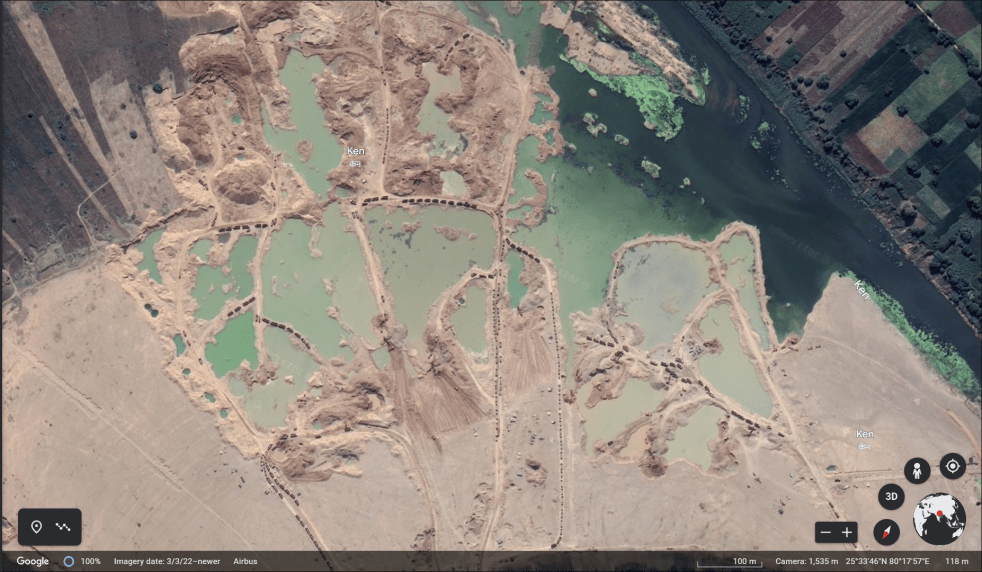
(Feature Image: March 2022 Google Earth image showing excessive mechanized mining in Ken river at Chatkan meander in Banda)
Ken river one of the important tributaries of Yamuna in lower segment has been witnessing industrial scale riverbed mining in Banda district of Uttar Pradesh. The Sentinel Hub satellite images reveal the mechanized mining of morrum (light orange colour sand) has been going on unabated at multiple locations in the district. Recent local media reports have also highlighted the illegalities and violations of the rules by the miners.
The information on Directorate of Mining & Geology website shows that there are 50 sand mine sites in Banda district of which 36 sites are closed. The complete list of 50 closed and active sand mine sites in Banda can be seen here.
As this article on corruption in large dams in India shows, it is open secret that large dams involve massive corruption, kickbacks and political funding. But the politicians from PM downwards across the party lines have understandably no interest in this issue.
But unfortunately, the large dams-corruption is not limited to politicians. The corruption in various forms plague even the media Mughals like Swaminathan Ankalesaria Aiyer and Shekhar Gupta, both known for their fundamentalist pro dam views. They too have no interest in corruption in large dams. In fact some of them have no qualms accepting sponsorships of dam contractors for their media awards! They are however, ever ready to criticize Narmada Bachao Andolan and Medha Patkar, though they have no clue about the issues they are talking about and keep using some flawed study whose reply (by Nandini Oza and Shripad Dharmadhikary) is already out in public domain. It is interesting that they have launched this fresh attack on dam critics just when Gujarat Chief Minister and country’s Home Minister have also launched attack on the NBA. Neither Gujarat CM, PM or HM is replying as to why Kutch, the main justification for Gujarat getting disproportionate share of Narmada waters, were the last to get their share of the water (even now not fully as the canal distribution system is still incomplete), almost two decades after the water rich Central Gujarat started getting Narmada waters. Nor are the pro dam media Mughals bothered about this.
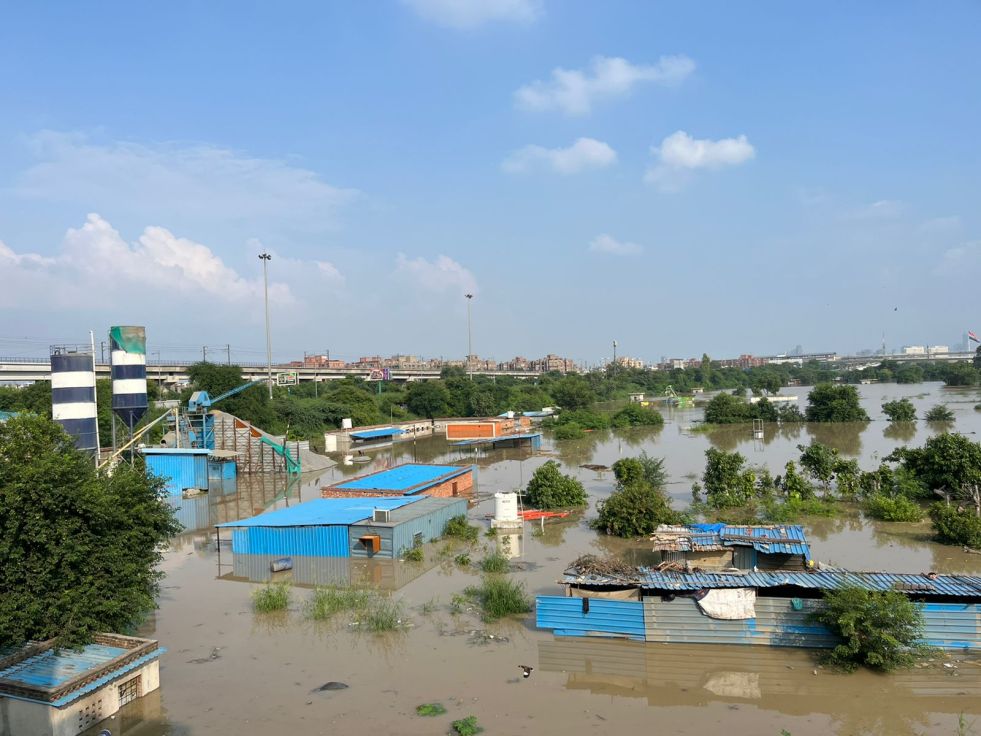
(Feature Image: RMC plants located in active floodplain of Yamuna at Noida More submerged in flood water on Aug. 13, 2022. Image Credit:- Vikrant Tongad, SAFE)
A much awaited flood spell has flowed through Delhi during August 13-14, 2022. It came after more than two months of south west monsoon. Usually by this time, Yamuna river would have witnessed two or three flood spells in national capital lending a fresh lease of life to one of the most polluted rivers of India.
The small scale flood spell in the river has invaded parts of floodplains under abuse and encroachment by government agencies in open defiance of National Green Tribunal (NGT) January 13, 2015 judgement[i]. Apart from this flood, Delhi stretch of the river has witnessed few more abnormal events in this monsoon season so far.
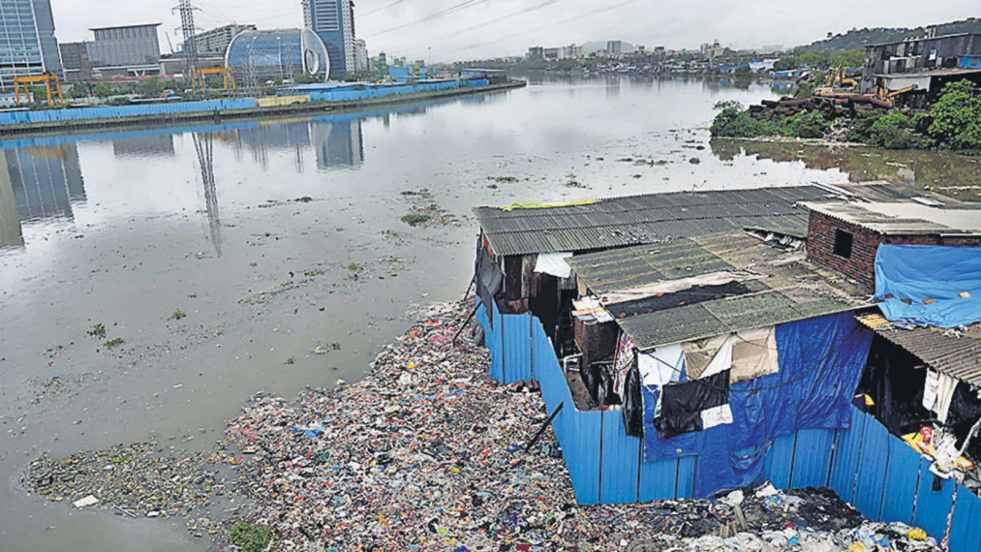
(Feature Image: The order is subject to the orders of the SC which is pending. NGT on Nov. 24, 2021ordered the BMC to deposit within three months an environmental penalty of ₹28.20 crores to the CPCB for discharging raw sewage into the city creeks, rivers and drains. HT Photo)
During past one year, the judicial bodies including National Green Tribunal, Supreme Court, various High Courts have passed several orders and made critical observation while dealing with multiple issues afflicting Urban Rivers in India. This report highlights top ten such judicial interventions across India. The stories underline that the responsible agencies particularly pollution control boards and district, state and union governments have been failing miserably in timely and efficient implementation of these judicial orders, some of which are quite remarkable. If the executive bodies do not show right spirit and seriousness in enforcing the existing rules and court orders the state of India’s urban river only go downhill.
The plight of urban rivers in India has been going from bad to worse courtesy systematic neglect and unplanned development projects. On the one hand they are being increasingly deprived of freshwater flows by diverting water for domestic supplies and on the other have been turned into dumping place for mostly untreated solid and liquid waste in massive amounts from residential areas as well as industrial pockets. Nevertheless, there are some remarkable efforts being undertaken by individuals, organizations, government departments aiming at restoration of urban rivers at some places across the country. This compilation highlights top ten such positive urban river stories taking place during past one year.
(Feature Image:-Tribals protesting against Par-Tapi-Narmada Project. The Indian Tribals)
The amazing unity and fight shown by Gujarat Tribals in their protest against the Par Tapi Narmada Link has led to both Gujarat govt and Central govt agreeing to suspend the project. However, the tribals are rightly not satisfied with the word of play indulged in by the Gujarat and Union govt so far. The central govt has said that the project will not go ahead as long as there is no consensus among the party states, but that statement is true even with or without the campaign launched against the project. The Maharashtra govt in any case is not in agreement with the project. Gujarat govt has not taken a clear decision to permanently cancel the project and without such a decision, Gujarat govt can again revive the project any minute. Same is true about the Central govt. So until both Gujarat govt and Central govt decide to cancel the project and come out with official notification to that effect, the tribals are right to continue the protest and not believe in either of the govt.
On March 5, 2022, Tata Power celebrated 100 years of operation of the Bhivpuri hydropower project in Raigad district of Maharashtra. It is possibly right time to consider by the government to ask Tata Power to return all the hydropower projects of Tata Power in that region to the government. Tatas got the right to develop these projects under a colonial agreement that handed over the public resources of land, river and rights over the project benefits to a private company like Tatas almost for free, for the company to profit from these public resources. This arrangement should have been reviewed long back, but possibly it is right time to review it now. Possibly it will be a good move in the year when India celebrates Azadi ka Amrutmahotsav!
The project transfers water from drought prone, water deficit Krishna basin to high rainfall area of Konkan. And such disastrous transfer continues even in drought years. It is high time this is reversed and the water is allowed to flow in the Krishna basin. From this perspective, the project also needs to be reviewed if at all it should continue to operate and if so under what terms and conditions.
The Europe floods this last week are unprecedented in so many respects. It has lead to close to 200 confirmed deaths so far, affected the Rhine basin areas of Germany, Belgium, Netherlands, Switzerland and Luxembourg. It is the result of worst recorded rainfall in a century, leading to unprecedented water levels that rose so suddenly that otherwise super alert and smart disaster management system could not neither accurately and in time predict the catastrophe nor remove these people from the path of the destruction. The climate scientists are seeing clear signature of climate change, though more studies are called for. The call for urgent and much more action to reverse the global warming are getting louder in a continent where possibly the climate action is most advanced.
As The New York Times reported on July 19, 2021 (Monday),
The authorities ordered new evacuations on Saturday, and heavy rains in the southern German region of Bavaria caused still more flooding on Sunday.
German meteorologists called the flooding the worst in 500 years, if not a millennium. The disaster thrust the issue of climate change to the center of pivotal elections this fall.
Belguim: Street pavements burst open, houses flattened, and entire villages were destroyed in what’s being described as one of the worst flooding disasters to hit Western Europe in more than two centuries. In Liège, Belgium’s third-largest city, water from the Meuse river overflowed Thursday evening into parts of the city center, prompting city officials to call for residents to evacuate the area or seek higher ground.
Countries like India should see this as a major and yet another wake up call to start taking action to reverse the global warming emissions. Much more can and should be done urgently.