Dams · DRP News Bulletin

DRP: 20 Feb. 2017 (Bihar Govt Demands Decommissioning of Farakka Dam)

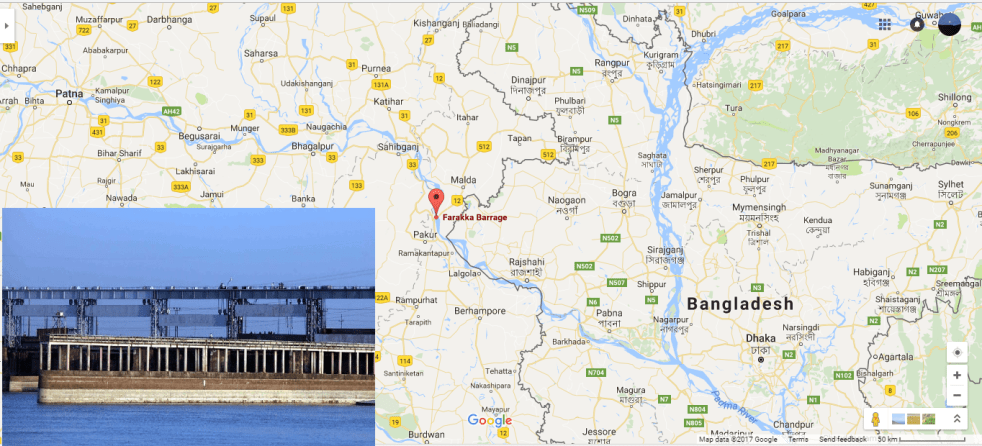
Bihar wants Farakka barrage to be decommissioned The Nitish Kumar govt has held the Farakka barrage in West Bengal responsible for heavy floods in Bihar and asked the Centre to decommission it to de-silt the heavily loaded upstream of Ganga River. The state has made the recommendation, observing that the dam is the “genesis of severe” flood consequences and responsible for “alarming” silt increase in the river’s upstream. According to sources, Nitish Kumar dispensation has made the demand before an experts’ committee formed by the Centre to work out guidelines for de-silting Ganga following last year’s devastating floods. 

As per the statement, decommissioning the barrage will help automatically de-silt the heavily loaded upstream, allowing silt to move to deltas before the sea thus helping  in restoration of deltas and its eco-system which is also getting adversely affected due to this barrage. To buttress its point, the state government has referred to Kolkata Port Trust’s data, which suggests that silt dredging at the port has increased from 6.40 million cubic metres annually from pre-Farakka days to four times, i.e. at 21.88 MCM annually, during 2003. The state government has also recommended the panel to come up with ‘National Silt Policy’ to address the problem. Bihar faced one of its worst floods as Ganga swelled in August last year, claiming lives of over 20 persons and affecting 20 lakh people.

Bihar Government has rightly asked for decommissioning of Farakka barrage and held it as the genesis of severe, destructive and prolonged floods that Bihar and other regions upstream from Farakka face year after year. Good to see that Bihar government has officially demanded decommissioning of the Farakka barrage before an expert committee of Ministry of Water Resources. Hope this starts the ball rolling to remove this unnecessary and giant dam on Ganga, which will also help the cause of fisheries (including Hilsa), downstream Bengal and also the river in general. The road cum rail line on the  barrage can continue to exist.

Continue reading “DRP: 20 Feb. 2017 (Bihar Govt Demands Decommissioning of Farakka Dam)” →
Dams · DRP News Bulletin

DRP: 13 Feb 2017 (Oroville Dam Disaster, USA: A Wake up Call for India’s aging big Dams)

Finally the Oroville Dam spillway damage has turned into a disaster. Report at this time (01:00pm, Feb. 13, 2017) finds dam level rising about 1 feet above the danger level. Water currents have started pouring out all over and around the emergency spillway which has never been put in use for last half a century. Meanwhile, more water is gushing in the dam reservoirs due to recent heavy rainfall in catchment areas upstream.

Continue reading “DRP: 13 Feb 2017 (Oroville Dam Disaster, USA: A Wake up Call for India’s aging big Dams)” →
Dams · DRP News Bulletin

DRP: 6 Feb 2017 (MSPCB Directs Reduction in Water Supply to Polluting Industries)

Maharashtra SPCB cuts 40% water supply to Taloja industries After the pollution board identified that chemical effluents from common effluent treatment plant (CETP) at Taloja were polluting the Kasadi river, the Maharashtra Pollution Control Board (MPCB) have directed to Maharashtra Industrial Development Corporation (MIDC) to cut 40 per cent of the water supply to industrial plants from February 1.

According to the letter issued to the industrial plants, earlier they were receiving 24-hour water supply but after MPCB’s directive, the plants would not receive water from 12am to 8am, effective from February 1.

Last year fishermen from the local Koli community had complained of decline in 90 per cent of fish catch from Kasadi river due to pollution. They had also alleged of inaction by authorities despite several complaints.

To highlight their plight, the fishermen then collected water samples in August 2016 from the Taloja CETP pipeline areas discharging treated waste and samples from the banks of the Kasadi river, and submitted them for a water quality test at Navi Mumbai Municipal Corporation’s (NMMC) environmental laboratory.

The samples were found failing several crucial parameters and having high levels of chloride , which is toxic to aquatic life and impacts vegetation and wildlife. Several reports had also mentioned that the pumping of industrial waste into the river had raised pollution levels 13 times higher than the safe limit. 

Taking cognizance of the complaints, MPCB issued a notice to MIDC highlighting the pollution problem on Jan. 31 2017 and informing the MIDC that until the Taloja industrial area does not start online pollution monitoring, adequate water supply would not be provided to them. The plants have two months to comply or else further action would be taken.

Continue reading “DRP: 6 Feb 2017 (MSPCB Directs Reduction in Water Supply to Polluting Industries)” →
Dams · DRP News Bulletin

DRP: 30 Jan 2017 (After 31 years, SC transfers Ganga case to NGT without achieving clean river)

SC transfers PIL on cleaning Ganga to NGT In a major development, after monitoring Ganga cleaning work for last 31 years and without achieving any cleaner river,  the Supreme Court on January 24, 2017 wrapped up a PIL on cleaning of river Ganga and sent it to the National Green Tribunal (NGT) for more effective adjudication. The apex court had been monitoring the issue for 31 years. A bench of Chief Justice J S Khehar and Justice N V Ramana said that since issues relating to municipal solid waste and industrial waste were already being heard by the NGT on a day-to-day basis, all other issues relating to sources of polluting the river should also be heard by the NGT.

The bench said that the tribunal will be required to submit an interim report to it every six months, only to give an idea about the progress made and difficulties, if any. It also granted liberty to the petitioner, environmentalist M C Mehta, to approach the court if he had any grievances in consonance with the law.

During last week hearing (January 17, 2017), the SC bench has directed the government to file a report on the construction and functioning of STPs alongside the river, which runs through five States.

It has been almost two years after the SC has voiced scepticism about the government’s self-proclaimed promise to clean up the Ganga River. Before this, in 2014, the apex court had voiced its reservations about the various efforts over the decades to return the Ganga to its pristine self, once even saying that it “does not expect Ganga to be cleaned up even after 200 years.”

Continue reading “DRP: 30 Jan 2017 (After 31 years, SC transfers Ganga case to NGT without achieving clean river)” →
Dams · DRP News Bulletin

DRP: 23 Jan. 2017 (Unjustified Ken-Betwa Link Costs: Bundelkhand To Gain Nothing, Panna To Lose Its Tigers)

SANDRP Blog Little for Bundelkhand, lot for contractors in Ken Betwa river-link The official executive summary of the Detailed Project Report of KBLRP on NWDA website says: “The main objective of the Ken-Betwa link project is to make available water to water deficit areas of upper Betwa basin through substitution from the surplus waters of Ken basin.” Upper Betwa basin (Raisen and Vidisha districts of MP) is not in Bundelkhand. So KBLRP is essentially facilitating export of water from drought prone Bundelkhand to area outside Bundelkhand, which, in fact is well endowed with over 900 mm of average annual rainfall.

The DPR further says, a third o the surplus water will be utilized for “enroute irrigation of 0.60 lakh ha. in the districts of Tikamgarh and Chhatarpur of MP and Mahoba & Jhansi of U.P.” The claim in the minutes of Expert Appraisal Committee meeting of Dec 30, 2016 that “It is proposed to provide irrigation facility in 6,35,661 ha of area in Panna, Chhatarpur, Tikamgarh Districts of Madhya Pradesh and Banda, Mahoba and Jhansi Districts in Uttar Pradesh” needs to be put in context here. Firstly, this claim is far in excess of what the presumed surplus water can irrigate.

Continue reading “DRP: 23 Jan. 2017 (Unjustified Ken-Betwa Link Costs: Bundelkhand To Gain Nothing, Panna To Lose Its Tigers)” →
Dams · DRP News Bulletin

DRP: 16 Jan. 2017 (MoEF’s Expert Committee Shows Biases)

EAC against entertaining ‘anti-development’ representations The expert appraisal committee (EAC) on river valley and hydel projects of the Union Environment Ministry has decided “not to take any cognizance of such representations” received by its members. In its Dec. 30, 2016 meeting, the committee concluded that once a project proposal reaches the EAC for appraisal, it has crossed the stage of public consultation and “the EAC should not go back in time, and should not reopen it, by entertaining unsubstantiated representations received from the people”. 

The EAC noted that in case of any clarification regarding action taken on such representations under the RTI Act, the EAC prescribed that a standard reply “action has been taken in accordance with the decisions taken in the 1st meeting of the EAC for River Valley and HEP on 30.12.2016” should suffice. “It was also felt that many of the objections raised are repetitive. Many such kind of representations have an anti-development attitude so that the projects are kept on hold or delayed. This has financial implications to the developers in particular and to the nation in general.

The committee emphasized that relevant ministries scrutinised every aspect of a project and proposed it for final appraisal only when all details were in place. If not satisfied that public consultation had been completed properly, the EAC said it could ask the project promoter to do the needful. The committee also made allowance for representations with “new points” and “grave consequences” on which comments from project proponents could be sought. The EAC considered 13 projects in its December 30 meeting and cleared eight of them.

Environmental activists, however, pointed out the impracticality of the contention that representations should be restricted to the 30-day public consultation window. Sripad Dharmadhikari also, in his blog has mentions various reasons to counter the EAC’s suspicious justifications. He also says that the fact that a body which is supposed to represent the environmental perspective displays such an attitude is the biggest critique of the EAC and the environmental clearance process that it is a part of. The newly constituted MOEF’s EAC on River Valley Projects has in their very first meeting shown anti people, anti democratic and anti environment attitude.

Continue reading “DRP: 16 Jan. 2017 (MoEF’s Expert Committee Shows Biases)” →
Dams · DRP News Bulletin

DRP: 9 Jan 2017 (India Groundwater Continues to Decline: Govt Report)

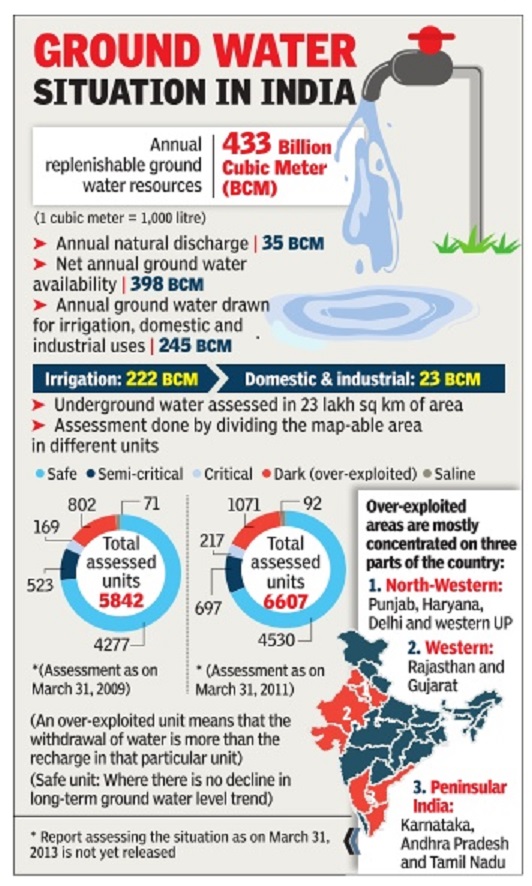
Ground water recharge plan is a non-starter Though the latest report, covering assessment of ground level situation as on March, 2013, is still being compiled, sources in the Central Ground Water Board (CGWB) hinted at further increase in the number of `dark’ (over-exploited) units. Decline in ground water level due to over exploitation of available resources had prompted the Centre in 2013 to come out with a master plan for artificial recharge of ground water, specifying how different states would go about it on priority. But majority of the states have, so far, not implemented the master plan. Only six states -MP, Gujarat, W-Bengal, UP, Chhattisgarh and Karnataka have taken follow-up actions despite the fact that the number of `dark’ units increased from 802 in March, 2009 to 1,071 in March, 2011. This not only says what the title mentions, but also shows how slow our official agencies are in even coming up with groundwater data, the latest data is for March 2011! 

Continue reading “DRP: 9 Jan 2017 (India Groundwater Continues to Decline: Govt Report)” →
Dams · DRP News Bulletin

DRP: 2 Jan 2017 (Corruption in Nepal’s Hydro Power Projects)

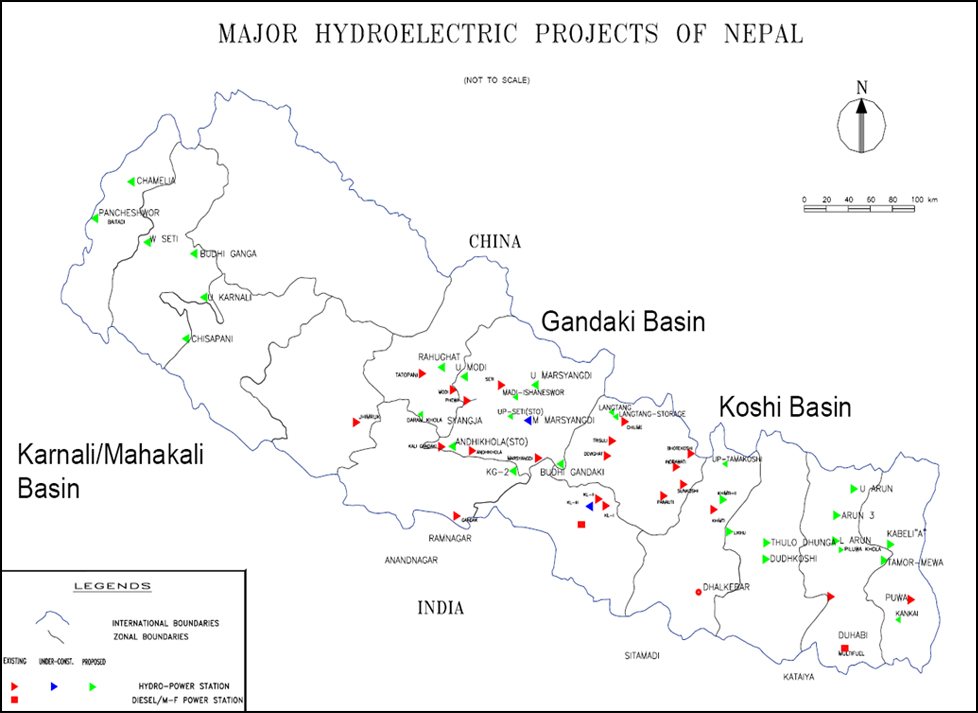
The latest report of Transparency International reveals that lack of dependable hydrological data, authentic study, action plans giving dual meaning, lack of transparency in the power purchase agreement and a failure to increase the risk-bearing capacity among power developers have remained major hindrances towards the development of hydropower sector in Nepal.

As per the report, the irregularities start from the stages of project selection and identification and this tendency further flourished in the period of a survey and the project implementation, the report states, highlighting a responsible role from the government level to control this practice.

The report also points out that environment standard violations, inadequate compensation in regard to land acquisition, false claims, unreasonable local demands, unwarranted contract variations, bias in selection of top officials like board members and CEOs during the construction, procurement, and implementation phases are working as a catalyst to bring the hydro sector under the grip of corruption.

Continue reading “DRP: 2 Jan 2017 (Corruption in Nepal’s Hydro Power Projects)” →
Dams · DRP News Bulletin

DRP: 26 Dec 2016 (Corruption & Fraud in 600 MW Kameng HEP in NE India)

In addition to allegations of fraud related to inflated bills, the officials report of Satish Verma the former chief vigilance officer (CVO) of North Eastern Electric Power Corporation (NEEPCO) mentioned that there have been numerous instances of top government officials allegedly accepting hospitality and gifts that cost the PSU lakhs of rupees. These include gifts for officials in the Ministry of Power: a teak wood cabinet for the Personal Secretary to the Union Power Minister; an iPad Air 2 for the Secretary; payment of a Vodafone bill for a Special Secretary; and a mobile handset for an Additional Secretary.

Continue reading “DRP: 26 Dec 2016 (Corruption & Fraud in 600 MW Kameng HEP in NE India)” →
Dams · Krishna River · Maharashtra · Rivers

Krishna River in Maharashtra: A Profile

Above: Menawali Ghat at Wai, Satara Dist (Photo: Sanket Deshpande)

The mighty Krishna River bears the name of Lord Krishna; the beloved dark and dusky lord worshipped throughout the country. Originating but a few kilometers from Arabian Sea, the river has chosen to flow towards Bay of Bengal becoming a lifeline of four states viz. Maharashtra, Karnataka, Telangana and Andhra Pradesh. In its journey of thousands of kilometers and thousands of years, the river witnesses an amazing diversity in language, lifestyle, food and culture.

Maharashtra is blessed to be an upper riparian state in the Krishna Basin. Sahyadri ranges of Western Ghats falling in Maharashtra are abode to early flows of Krishna River. In Maharashtra the river is perceived in a feminine form called ‘Krishna Mai’ meaning ‘Mother Krishna’. The River Krishna is one of the important rivers flowing through Maharashtra and has a tremendous religious and cultural significance. Agriculture and economy of districts like Satara, Sangli and Kolhapur thrive on Krishna mainstream.

Here we make an attempt to provide glimpse of Krishna River within Maharashtra. The article is based on Maharashtra specific river profiles that SANDRP has prepared for India Rivers Week 2016. Continue reading “Krishna River in Maharashtra: A Profile” →