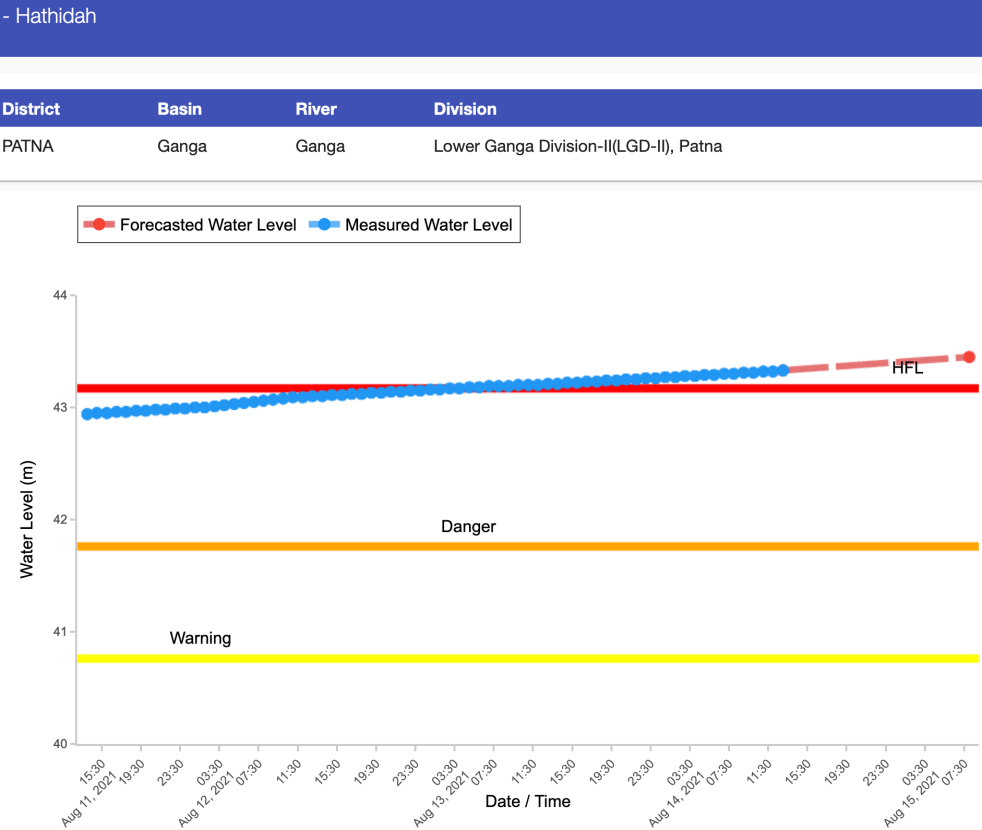
As India prepares to celebrate 75th Independence day on August 15, 2021, large parts of Bihar along the Ganga river, including Patna (flood water entered colonies near Ganga in Patna) and Bhagalpur are preparing to face unprecedented floods. In fact, Central Water Commission’s (CWC) flood monitoring site at Hathidah in Patna district crossed the HIGHEST FLOOD LEVEL (HFL) of 43.17 m at 0300 hours in early morning on Aug 13, 2021. The water level is already at 43.33 m at 1300 hrs on Aug 14. It is forecast to reach 43.45 m by 0800 on independence day still with rising trend. This is apparent from the CWC hydrograph of this site shown above.
Continue reading “Why are Patna & Bhagalpur facing unprecedented floods on India’s 75th independence day?”Category: Rivers
My mother is the river. The river is my mother.
Guest Article by Nirmala Gowda
This is time of immense grief and loss for me. Unable to face the harsh reality of my mother gasping for each breath in the ICU, I was drowning myself in work. Co-incidentally or so I think, I was working on a report analysing asphyxiation of Vrishabhavathi, Arkavathi and Cauvery rivers and suffocation of aquatic lifeforms the rivers supported. As the dissolved oxygen graph took shape, I realized : The million times I had held the dissolved oxygen meter under water to measure oxygen saturation levels across rivers was no different from the million times we plugged the oximeter to my mother’s forefinger to check for oxygen saturation levels. The realization that the very element my mother was gasping for, is the very element the rivers have long been gasping for – Oxygen and this pushed me deeper into a state of despair.
Continue reading “My mother is the river. The river is my mother.”Water on Wheels to Dying Fishes in Ganga River Basin in Bhagalpur
Guest Blog by Dr. Ruchi Shree (TMBU, Bhagalpur-Bihar)
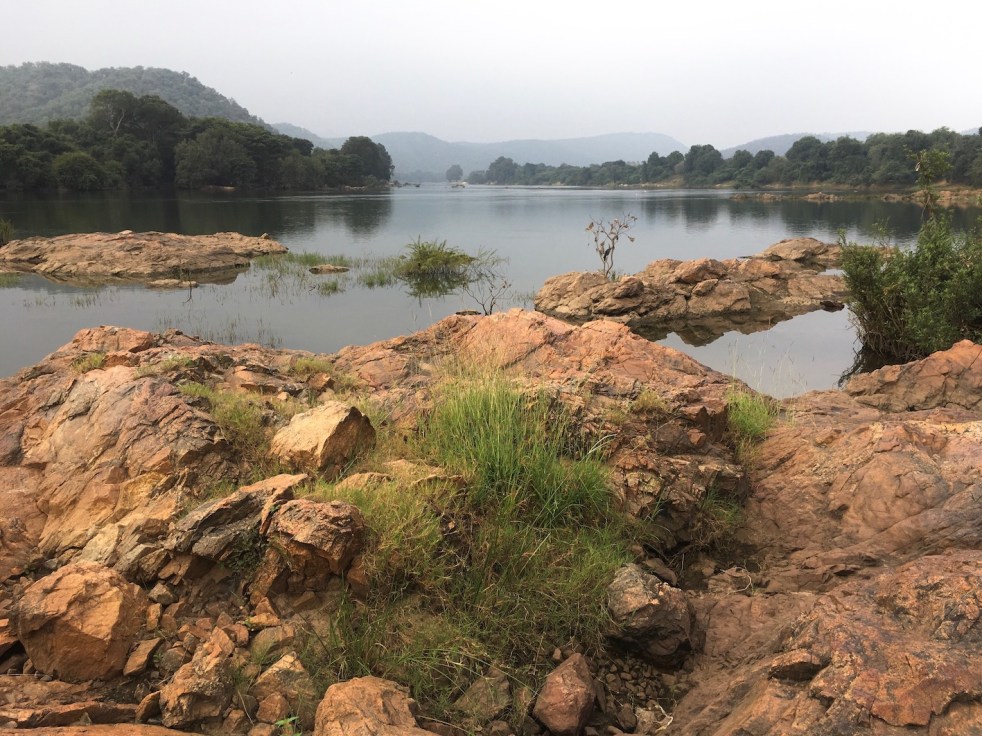
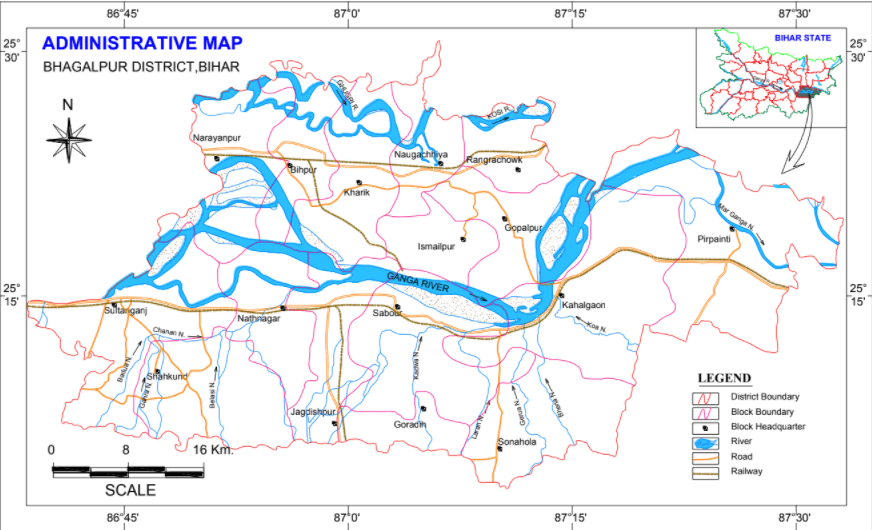
Last year, I wrote three stories on dying Champa river in Bhagalpur and challenges/ prospects of its rejuvenation[i]. That exercise helped me in exploring the city through a river which used be an important waterbody in this region but now at the verge of extinction. Situated at the banks of river Ganga, the Bhagalpur city faces three to four major problems related to water and sanitation, namely, arsenic contaminated groundwater, falling water level, recurrent floods, open drainage, etc. This year, I pedaled (cycling) in the local vicinity to make sense of ‘piped water’ and its limitations in the city. One more concern was to document the growing ecological crisis in the university area as captured and reflected in this blog. This photo essay is based on my observations over a period of last three months in Nathnagar block of Bhagalpur (south-west part of the city). Bhagalpur, a “smart city” of south Bihar is close to Jharkhand. I visited the ward no. 13 and ward no.17 of the Nathnagar block to write this story. Two pictures (near Ganga) towards the end of the blog were taken in a different part of the city i.e. in Adampur area of Bhagalpur.
Continue reading “Water on Wheels to Dying Fishes in Ganga River Basin in Bhagalpur”Massive Landslide on Yarlung Tsangpo on March 22, 2021
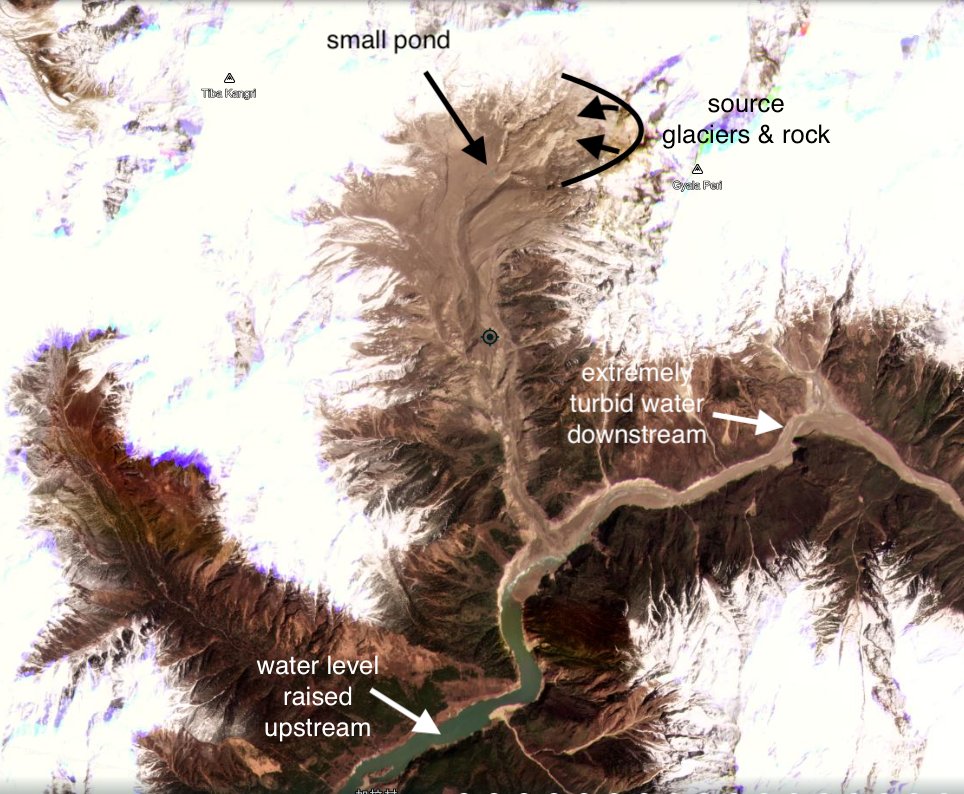
Dave Petley has on March 29, 2021[i] reported that a massive landslide has occurred along Yarlung Tsangpo river in Tibet, just upstream of Great Bend. (coordinates: 29.815, 94.932, the centre of the landslide source.)
Continue reading “Massive Landslide on Yarlung Tsangpo on March 22, 2021”HOW CAN DELHI TACKLE HIGH AMMONIA CONTENT IN ITS DRINKING WATER?
Guest Article by Manoj Misra
Note: This article is dedicated to the memory of Prof. Brij Gopal who introduced me to the concept of stream standards as different from effluent standards and often lamented former’s absence from our current water pollution control mechanisms. Prof. Gopal passed away suddenly in Delhi on 4 January 2021.
Public Health demands use of ‘Stream’ standards alongside ‘Effluent’ standards – Law provides for it but the authorities have failed to implement.
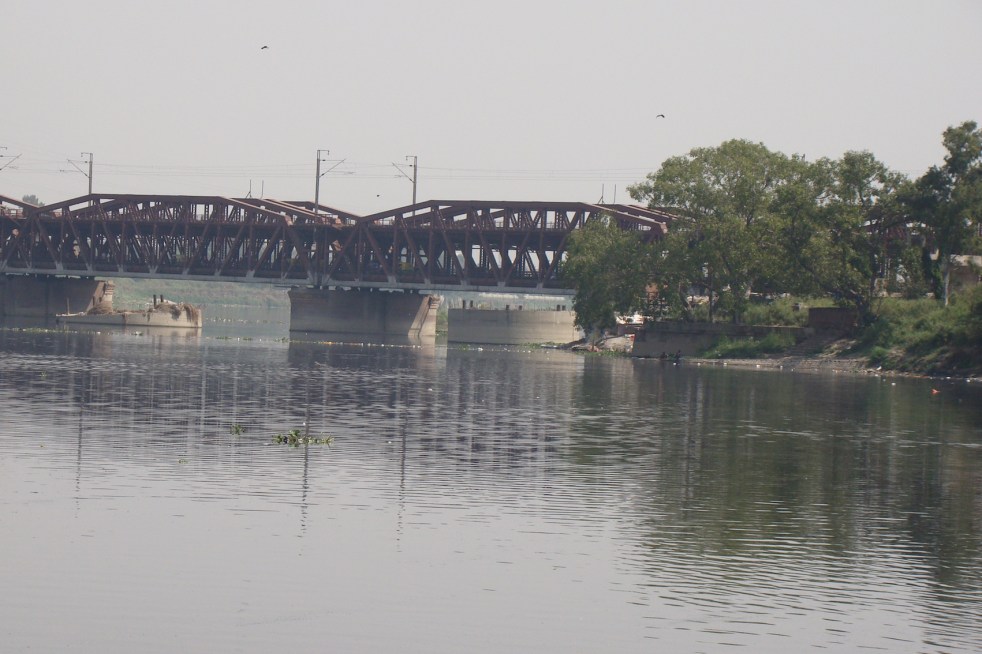
Is the city of Delhi condemned to suffer high ammonia content each winter in its drinking water supplies from River Yamuna?
Continue reading “HOW CAN DELHI TACKLE HIGH AMMONIA CONTENT IN ITS DRINKING WATER?”Why is India not demanding TEIA for the Great Bend Hydro proposal of China?
While one can never be too sure what is the exact meaning of Chinese whispers, a thoughtful response has to take into account the available facts and the context. This report tries to take stock of available facts and context of this latest episode that started at the end of November 2020 and is still going on: China’s proposed massive hydropower project on the Great Bend of Yarlung Tsangpo River just before the river enters India as Siang, a tributary of Brahmaputra river. It also reviews the key media reports published on this issue.
Continue reading “Why is India not demanding TEIA for the Great Bend Hydro proposal of China?”Blood on Sand: River Sand Mining in South Asia
The insightful River sand mining focused South Asia meeting titled “Blood on the sand: dangers of riverbed mining in South Asia” was held on Dec 11, 2020. It was one of the off shoots of the IRW 2020 held dialogues on River Sand mining in India. One of the underlining theme that reverberated through the presentations was again that people on ground must have a role in governance of sand mining, considering the failure of governance of river sand mining by all concerned departments and governments. While the discussions brought out a number of scientific insights, the role of scientific studies and assessment was another key point emphasised by all.
Continue reading “Blood on Sand: River Sand Mining in South Asia”Public Trust Doctrine must in sand mining governance: Jus. Madan Lokur at IRW 2020
Justice (Retd) Madan Lokur of the Supreme Court of India graced the Annual function of India Rivers Week 2020[i] on Nov 28, 2020, and gave his key note address on the theme of IRW 2020: “Is River Sand Mining Killing Our Rivers?” The annual function also included announcements of Bhagirath Prayas Samman and Anupam Misra Memorial Medal[ii] as also a panel discussion[iii]. We are happy to publish here what he spoke at the meeting as we feel it will benefit many more people.
Continue reading “Public Trust Doctrine must in sand mining governance: Jus. Madan Lokur at IRW 2020”IRW 2020 National Dialogue on River Sand Mining: It is possible to satisfy sand demand through legal mining, but will it be allowed?
The political economy of sand mining, with funds of major political parties coming from illegal sand mining was one of the focal points of the National Sand Mining Dialogue held on Nov 28, 2020 under India Rivers Week 2020[i]. It is this reality that may not allow the demand of sand to be satisfied through legal mining, even if it were possible. The other highlight of the Dialogue was the key note address given by Justice (Retd) Madan Lokur of Supreme Court of India. Well known environment lawyer Ritwick Dutta agreed that many of the orders of the higher courts and the National Green Tribunal (NGT) are not being implemented and revealed that unfortunately most of the judges do not want to entertain petitions that their orders are not getting implemented.
Continue reading “IRW 2020 National Dialogue on River Sand Mining: It is possible to satisfy sand demand through legal mining, but will it be allowed?”India Rivers Week 2020: Key Highlights
Chaired by Justice (Retd) Madan Lokur of Supreme Court of India, the India Rivers Week (IRW) 2020[i] ended at a well attended National Dialogue on River Sand Mining, and giving away of Bhagirath Prayas Samman (BPS) and Anupam Mishra Memorial (AMM) Medal on Nov 28, 2020. This was culmination of the process that started with the North India River Sand Mining Dialogue on Oct 31, 2020[ii] and dialogues in South Zone[iii], West Zone[iv] and East Zone[v] in the following weeks. Several hundred people participated in the regional dialogues and the recordings continue to be watched by many more on Facebook live and youtube.
Continue reading “India Rivers Week 2020: Key Highlights”