Much has been talked about PPPs (Public Private Partnerships, a euphemism for privatisation) in urban water supply sector. After National Water Policy 2012 spelled water as an economic good, PPP water projects have spurred further across cities all over India.
Concession agreement between the Municipal Corporation and the private company awarded with the contract is a mode of PPP widely used in this sector. Many municipal corporations sign concession agreements in such a way that the concessionaire gets entirely exclusive rights on using the water infrastructure for purpose of water supply and also of billing & collection. This means that the more water the concessionaire sells, the more profit it earns.
While these agreements are signed assessing the financial feasibility of the projects, realistic studies of their impact on the water use from the dams or source at the back end are missing. So how do PPP projects interact with the water sources like dams which are the source of raw water for these agreements? We conducted a brief case study of 24×7 Water Supply PPP Project of Nagpur in Maharashtra. We see a strong link between demand stress on the dams and 24 x 7 water supply promotions, indicating that the 24×7 water supply projects which are pushed widely across the country may further increase the demand stress on the dams.
The central Indian city of Nagpur has been one of the earliest cities to opt for water supply PPP. The pilot project launched in Dharampeth Zone started in June 2007 and is now in the operational phase. Before the project could be critically assessed for its performance, the NMC (Nagpur Municipal Corporation) in November 2011 extended the PPP to entire City claiming that the demo project has already been successful[i]. Concession agreement was signed with Orange City Water Private Ltd. (OCWL) which is a joint venture of Vishvaraj Environment Pvt Ltd and Veolia Water (India) Private Ltd[ii].
It has to be understood at the outset that Dharampeth ward which was chosen as a demo ward[iii] already had average water supply of 18 to 20 hours a day. This ward also has abundant open wells which are used regularly by the consumers for non-potable uses. In fact the experts say that NMC has chosen the ward with least amount of water problems so that the project can be readily showcased as a success, but with such convenient selection, the NMC did not wait for the critical assessment of the performance of demo.
Water consumption increased after 24×7 Water Supply was launched in demo zone
PPP was launched on a pilot basis in this ward claiming multiple benefits. One of the benefits of 24×7 water supply claimed repeatedly is ‘reduced burden on water resources’. Continuous supply is said to reduce water wastage arising from overflowing storage systems and open taps. It is also said to save on stored household water that is discarded when new supply comes in. Because the distribution pipe network is repaired and renewed where needed before starting 24X7, it also reduces losses arising from leaks in the old pipes.
All this is said to result in reduced water use.
In Nagpur however the case has proved to be the opposite.
Administrative State College of India (ASCI), Hyderabad conducted Impact Assessment of the Pilot Project[iv]. The study found that during the demo project the target set for increase in billed volume was 10%. In reality, there was an actual increase of about 50%. Billed volume for Bajiprabhu Nagar (an area of about 2.5 to 4 SqKM in Dharampeth zone) which was 0.440 MLD, increased to 0.504 MLD. The billed volume[v] for Dharampeth zone increased from around 22 MLD before the project to 33 MLD by March 2010. While 24X7 water is not available to the poor in many slums, meter reading and bills have gone up by two to three times in non-slum area. The NMC officials claim that the increase in total water supplied[vi] to the pilot area from 45 MLD to 52 MLD, is a natural growth.
Findings of another study in which this author was involved are on similar lines. The study shows that the leakages after replacement pipes and leakage at consumer premises due to excess pressure in fact increased the wastage multifold. In addition the taps fitted for slum connections are of poor quality and keep leaking. This adds to the wastage. Non slum connection holders point out that 24 hours availability leads to more wasteful water use. They also mention that 3 to 4 hours of water supply with good force twice a day is much preferred than 24 hours water supply.
Print media reports in September 2011 state that water demand for Demo zone was 41.25 million litres per day (MLD) while the actual supply was 92.98 MLD[vii]. The figures had been quoted from information obtained from RTIs filed by corporator Vedprakash Arya. It was alleged that the additional 51.73 MLD more than the actual requirement has been the wastage from the leaking main pipelines & leakage at consumer premises. It was also alleged that this additional water has been provided to the Demo Zone by diverting water from other zones.
Mr.Arya also shows concern about increase in the water supply quantum when the project is implemented in the entire city. He says that NMC will have to arrange for over 1,000 MLD, which is impossible.
Nagpur receives water from the Pench dam at the cost of irrigation potential
While the demand in the city has been going up with introduction of 24×7 water supply, it will be interesting to take a look at what has been happening at the source of city’s raw water.
The Navegaon Khairi dam in the Parseoni forests from which the Nagpur City receives its raw water is a part of Pench Project, which incidentally straddles the Pench Tiger Reserve. The dam was constructed in 1977. The total water available for utilization at Navegaon Khairi dam is 965 M Cum (75% dependability). PRAYAS Resources & Livelihoods Groups has conducted a detailed case study of water allocation for the Nagpur City. The report presents startling facts. As per the report, the original allocation plan shows that the project was constructed primarily for irrigation purpose, with 79% of the planned water allocated for agriculture development and 21% allocated for non-irrigation purpose. NMC started drawing 112 MCuM water from the Navegaon Khairi dam between 1982 and 84. In 2001 NMC demanded allocation of additional 78 MCuM water to supply for the increased population. Allocating this share of water to NMC would essentially have to be at the cost of loss of irrigation potential. Hence temporary permission was granted to NMC and the city was specifically asked to lower their dependence on the Pench River. The water allocation was made permanent in August 2008 on two conditions –
1) NMC should pay the restoration cost[viii] of 8445 Ha at the rate of Rs 100 000/ha
2) NMC shall undertake treatment of waste water
The current water allocation to NMC from Pench RBC (Right Bank Canal) is 255.71 MCuM.
Kanhan River to be augmented as a future raw water source
After diverting the water from irrigation to urban water supply, NMC is all set to augment a fresh water source for the city’s growing thirst. The DPR (Detailed Project Report) prepared for 24×7 water supply states that NMC has prepared the master Plan for Water Supply to meet the water supply up to 2031 from identified sources. The future source for city would be proposed barrage on Kanhan River which will meet the water demand up to Year 2031. Kochi barrage and Jamghat will be required to be developed to meet water demand beyond 2031.
Accordingly NMC has started the process of to approve the project of constructing a barrage at the confluence of Kanhan and Kolara rivers[ix]. The project aims to increase water supply from Kanhan water treatment plant, which would benefit East, North and few parts of South Nagpur. NMC had constructed water treatment plant with installed capacity to treat 240 MLD water. However, the plant cannot function to full capacity due to shortage of raw water from Kanhan River. The plant can treat water stored in the barrage throughout the year.
A proposal has been tabled before the standing committee seeking approval for Rs 1.82 crore for the work. The standing committee was to give its nod in the meeting organized on July 14 (2014).
Conclusion
Case of Pilot 24×7 water supply project at Dharampeth zone is indicating that 24×7 water supply has increased water use by the consumers. It also indicates that the problem of leakage has actually increased in 24×7 water supply. The PPP agreements are drafted in such a way that the more water the concessionaire sells the more profit it earns. Quick look at the PPP agreements of Bhiwandi, Aurangabad, Latur will confirm this fact. In case of Nagpur the more water the private player bills the more profit he earns. This increases the demand pressure at the raw water source and may result in issues like water supplied at the cost of irrigation potential, and increase in the need of dam projects, with associated social, ecological and economic impacts.
Instead of managing the demand and promoting local options like as Rain Water Harvesting, reuse of treated sewage which will reduce the demand side stress on sources like dams, 24 x 7 water supply projects are widely promoted with the assumption that they will automatically mean less water use. No comprehensive assessment of performance of these projects has been done to actually assess initial claims. As in the case of Nagpur, the model seems to promote more wasteful use of water And is banking on more sources for this.
It is also significant to note here that these efforts are funded by the centre. Out of 17 JNNURM projects sanctioned for Nagpur, (till September 2013) eight projects are water supply sector related projects[x]. All of them are proposed to augment the present water supply source and to develop a raw water source. As the situation stands now, NMC has signed concession agreement with OCWL the entire city and is looking to augment more water sources like Kanhan River. On background of poor performance by OCWL during implementation of the project, this move saw signification local protests and opposition[xi].
There is an urgent need to assess the performance of PPP water supply schemes in terms of water use by the consumers which seems to be missing in the hoopla of promotion of PPPs. The alternative of greater democratization of urban water sector by increasing transparency, participation and accountability seems to be more imperative than PPP experiments.
– Amruta Pradhan, SANDRP. amrutapradhan@gmail.com
References
– National water policy 2012
– Detailed Project Report of 24×7 pilot project
– Unpublished study by PRAYAS Resources & Livelihoods Group: Water Diversion from Irrigation to Non-Irrigation Use in Pench Project
Large dams represent a gamut of ideas around the asocial and apolitical nature of water itself, i.e., ‘modern water’[1], expert control, and national space that are stitched together to yield hydraulic bureaucracies or hydrocracies. In the 20th century, the ‘hydraulic mission’ (See Molle et all 2009) was accepted across the globe and entrusted with hydrocracies which became synonymous with the project of ‘development’. These hydrocracies have left an indelible mark on national economies and geographies, constructing massive damming projects i.e. what India’s first Prime Minister called ‘temple[s] of modern India’. The effects of these projects have been a mixed bag. In India, these ideas about water and technology formed a template through which the hydrocracy—which took the form of the Central Water Commission (CWC)— conceived, discussed, and justified technological interventions. Rivers were described as natural features without history, ecology, and society, making a case for greater technological control.
Santhal Tribal Lady Budhni inaugurating the power station at the Panchet dam in December 1959 photo Nehru memorial museum and library New Delhi Photo from: The Hindu
Using engineering voices from the Indian Journal of Power and River Valley Development (IJPRVD) and Government of India publications, I attempt to puncture the ‘tunnel vision’ of hydraulic development in India. Juxtaposing two contrasting narratives within the engineering community, the attempt is simply to bring out the spirited debate on large dams in post independence India- a fact lost in the din about which narrative won.
Except one engineer, M.Karantha who was the Chief Electrical Inspector of the erstwhile Madras Presidency, all the other engineers quoted in this post viz. A.Khosla, K.L. Vij, S.N.Gupta, Kanwar Sain etc were a part of the Central Water & Power Commission (CW&PC) before it became the Central Water Commission (CWC).[2]
Transforming Rivers into datasets Hydraulic manipulation has a long history in the Indian subcontinent. Hydraulic engineers in the 20th century recast modern irrigation as the logical conclusion of millennia long hydraulic manipulation practices- projecting irrigation, specifically dams and canals, as age-old components of the riverine landscape thus establishing continuity with the ‘unbroken’ tradition of hydraulic manipulation. This projection was selective: it did not acknowledge the colonial state’s role in establishing a radical break in hydraulic principle in the subcontinent by introducing perennial irrigation; barrages and weirs that effectively flattened a river’s variable flow. Instead, independence was projected as the watershed moment at which the millennia long project of hydraulic manipulation would reach fruition in the form of large dam projects.
Interestingly, engineers saw colonialism as helping bring modern science and technology to India; colonialism’s only limitation was ‘that it constituted an insult in that it denied that Indians could fully be partners in the enterprise of modernity’ (Klingensmith 2007: 233). Modernity in their eyes was an inevitable process, denied to India pre-independence. Modern science was a universal, emancipating category. According to S.N. Gupta: ‘[S]cientific, engineering and industrial research directed towards greater understanding and greater control of material surroundings is the keynote of the modern search for progress and power’ (Gupta 1970:3). The unfinished business of modernity, thus, was the complete control of nature, which could only be realized through the nation-state.
A System of Limits and Solutions One of the foremost challenges facing post independent India was food security. Narratives for water control underscore this challenge. There were carefully worded alarms about scarcity and impending catastrophe. Such warnings are found with striking regularity in the IJPRVDand the Silver Jubilee Souvenir of the CW&PC. For instance, S.N. Gupta asserted:
[T]he fateful year 1947- the year of India’s independence brought both responsibilities and opportunities. The country was faced with the basic question: Adequate production of food for the growing millions (S.N. Gupta 1970: 1).
The only way to meet this ever-increasing demand was to increase the area under cultivation by providing more water: The food production has to keep pace with the ever increasing requirements of population. The principal remedy for meeting this increased demand is to steadily extend irrigation facilities (Kanwar Sain 1959: 37a).
The answer was simply put: greater investment in developing water resources to ensure that the twin challenges of a rising population and looming food scarcity could be met effectively. Technology would provide solutions to tame nature for human needs.
There are two equally important elements in human progress. They are the development of spirit and character on the one hand, and the mastery of the physical world on the other… Without mastery over nature, our earth, as it stands would support but a small fraction of the present population… I submit that hunger and poverty are no longer beyond solution. The mastery over the physical world gives us the key to the problem. The most thickly populated regions on earth can be satisfactorily fed if the most effective known methods are applied. The technical possibilities of feeding the world will probably always run far ahead of the increase in population (Kanwar Sain 1957:1).This neo-Malthusian trap anticipated more than just technological problems and solutions. The rhetoric about looming scarcity and overpopulation served as a vantage point to drive home arguments for large multipurpose projects. This was an unprecedented move by Indian engineers in conceptualizing Indian rivers. Modeled on the TVA (Tennessee Valley Authority), these projects would render rivers into a ledger of flows and returns. As a complete system of inter-related projects, the aim was to ensure rivers would no longer ‘run waste to the sea’ (Khosla 1951:2). Basin-wide development therefore came to be premised on the scarcity trap. These visions of scarcity were axiomatic in two ways:
1) The ability of science and engineers to forewarn such a possibility due to the exact nature of their science and scientific method.
2) The need for planned development to ensure that fragile and unreliable natural resources could be yielded into reliable flows to provide consistent maximum returns.
Without large multi-purpose dam projects to control floods, manufacture electricity, provide water for irrigation, and utilize an ‘inexhaustible source of water supply in the form of rainfall’, all that water would go to waste (Khosla 1970a: 15). These projects would meet the pressing needs of the country:
[K]eeping in view the need of the country, priority has been accorded to projects likely to yield additional food at an early date. Large multi-purpose projects have been phased with a view to an early completion of their irrigation aspect (Dhir 1959: 57).
Indeed, as K.L. Vij stated while commenting on hydro-electric resources in India emphatically:
[E]ssentially the problem is simple, in that it resolves itself into an examination of the possibilities of utilizing “available water supplies” at the maximum possible head (Vij 1959: 64).
It was only through such a thorough examination of hydraulic heads that entire river basins could function as measures of water resources. As stocks of volumes, rivers held enormous possibilities, provided they were engineered holistically so as to ensure maximum returns.
Dr Ho-Chi-Minh, president of the Democratic Republic of Vietnam and other party members photographed at the dam site during his visit to Bhakra dam on February 8 1958 Photo: photodivison.gov.in
Burgeoning Bureaucracy It’s [sic] (the CW&PC’s) development and march towards organizational expansion has been linked up with the development and planning of projects in the country since Independence and thus the stature of the Commission today is a barometer of the progress achieved by the country in the fields of irrigation and power (Jain 1970a: 21).
Kanwar Sain summed up the times emphatically: ‘[K]ey to the production of wealth is the Kilowatt. Underlying the country’s capacity to produce anything else is our capacity to produce power’ (Sain 1959: 37b. Emphasis added). There is a clear imperative to scale up through expert-led interventions. According to H.S. Desai,
[V]iewed purely from technical angle, and given all the goodwill that such cases deserve other angles, it is felt that engineers could and should have the last word on the development of the water resources of the country (Desai and Rao, 1970: 82).
Development, it might seem, could best achieved if driven by expert-led organizations like CW&PC. This championing of a burgeoning hydrocracy helped incubate and insulate it from overt political and social questions.
Holistic Planning for Basin-wide Development Planning water resource development required rearranging rivers into basin-units instead of geographies or people. Rivers as basin-units, like the larger nation state were comparable and amenable to technological solutions for resource optimization, and wired apolitically. Sain clearly charted out a course for the same:
[T]o make effective use of waters for irrigation, navigation, power and other allied purposes, it is necessary that a careful and unified development of the whole basin is planned irrespective of that number of States or Provincial boundaries that may be involved. It is only in this manner that optimum utilization of resources of the entire water-shed can be made and waste of any potential resources of the valley eliminated. If the entire basin is not developed as a unit there is the possibility of confusion arising when each State starts controlling the river from its own point of view (Sain 1959: 37b-c).
Some of the many voices include those of M.L. Sood, A.N. Khosla and S.K. Jain:
Practically all the river systems of the country run through more than one State. Their balanced development in the interest of navigation and other objects, e.g., irrigation, hydro-electric power and flood control, demands that the entire valley is treated as one unit irrespective of State boundaries (Sood 1959:52).
Modern technology for conservation and utilization of water resources is making rapid strides. With a unified and integrated approach to the development and utilization of surface and ground waters and to problems of agriculture and irrigation, this challenge (of looming resource crunch and a steady population rise) can be met (Khosla 1970a: 14).
It has been well recognized that river basin should be considered a single unit for development of water resources (Jain, 1970:12).
A basin-based approach across rivers was thus, the most efficient means to develop the nation’s water resources: ‘[T]he water and power resources of a region, basin and sub-basin and the transfer and interchange of both water and power between regions, basins and sub-basins in the overall interest of the country and regions concerned’(Khosla 1970a:12). These arguments combined to form the basis for a National Water Grid — an idea first proposed by Sir Arthur Cotton in the 19th century. Post Independence, the grid was seen as a means to ensure that the excesses of one river basin could replenish the deficiencies of another:
Large areas in Western, Central and Southern India have a very low rainfall while in the Northern and Eastern regions heavy monsoon rains cause extensive floods and large volumes of water flow waste to the sea. The National Water Grid has been conceived for remedying this imbalance to a certain extent by transferring waters from surplus regions to deficit areas by interlinking the various river basins so that transfer of water becomes possible (Rao 1979:104).
Rivers, thus, came to be re-conceptualized as units that could be rationally developed for maximum usage through multi-purpose projects. The natural world came to be arranged as a system of excesses and deficits that could be corrected with mathematical precision to yield steady, uniform returns. To the post-independence engineering mind, the National Water Grid was not a possibility but a certainty; the question was when it would become reality & not if it is desirable, viable or acceptable:
[T]hese policies will have to be implemented sooner or later for the survival and prosperity of our country (Rao 1979:100).
Driven by a burgeoning hydrocracy, the National Water Grid would render the riverine landscape entirely legible and amenable to complete development as well as provide impetus to power sector development, with reliable flows for hydropower generation. Tapped from source to mouth, river would cease to flow freely or at all. Instead, they would populate man made lakes; the tail of one reservoir would be the beginning of another hydro-project.
Rivers were thus reified and reconceptualized as prospective models that could be reproducible; a function of heads and cusecs. The development apparatus thus acquired ‘the character of calculability’ (Mitchell 2002:92) that mediated between material realities and the abstractions of science and politics. Numerical indicators came to speak for themselves and became tangible enough to mold facts. Rivers came to be organized in a linear fashion, as reproducible units across landscapes that were framed and solved technologically.
Marking the Elisions Despite their self-assuredness, these claims faced doubts, criticisms, opposition and questions. Engineers’ own admissions about the nature of hydrology are telling:
When the position regarding the resources of the country began to be reconsidered after the attainment of Independence in August 1947, it became apparent that there was very little data to enable an accurate estimate of the power potential to the country. Even selection of schemes for immediate detailed investigations had to be done on an ‘ad hoc’ basis (Vij 1959:64; emphasis original).
Indeed, according to the Five Member Review of the Sardar Sarovar Project by Patil et al, the CWC itself admitted:
Hydrology as a discipline is different from most of the engineering disciplines. Natural phenomena, with which hydrology is concerned, though have underlying physical processes, are complex and not amenable, to deterministic approach: They do not lend themselves to rigorous analysis not offer unique solutions as are possible in engineering mechanics [sic]. Since water resource development activity cannot be delayed for want of data of adequate quality and quantity, best judgement has to be resorted to. In the field of hydrology one has to devise methods to suit the data available and come out with solutions. Accepting a solution in turn needs judgement with due consideration to sociological, economic and political situations (Patil et al, 1994:7; emphasis added, see: www.ielrc.org/content/c9402.pdf).
Development plans preceded data, in lieu of which, projections and assumptions would have to do. Until 1958, when the erstwhile Ministry of Irrigation and Power (now the Ministry of Water Resources) set up a number of gauge and discharge observation stations on the Ganges and its tributaries to assess the flow, plans for river development were based on A.N. Khosla’s pioneering formula to calculate stream flows based on certain assumptions.
Voices of dissent constantly called for a more reflexive, inclusive, and engaged process of development. M.V. Karantha, the Chief Electrical Inspector of the erstwhile Madras Presidency was an early critic. In his article in the March 1952 issue of IJPRVD, he charged that his colleagues built for themselves and for Western observers rather than for India’s villagers. He observed that in India, like in other parts of Asia, ‘it has been the small tail of urban population that has been waging the body, the rural population’ (Karantha 1952: 11). In order to realise the true embodiments of democracy, he asked engineers to realise that engineers should utilise their education and training ‘not only for own self-advancement but also for the benefit of the common man if democracy is to be real and to survive’. According to Karantha, the common man is the single most important denominator for gauging the efficacy of engineering processes and technology. He said,
[I]f we Indian Engineers are to be praised for what we have done and what we are going to do for our country, obviously the praise has to be for what we have done and what we are going to do for these majority people, the common man (Karantha 1952:11).
Karantha championed the need for local solutions because, ‘[O]ur economic and industrial problems are peculiarly our own’ (Karantha 1952:16). He was particularly critical of western models that were prescriptively and sometimes uncritically imported to India:
[O]nly if we realise that in the field of technology the problem of India is indeed very different from that of the Western countries whose practice we have been blindly adopting. Ours is a country in which the population has now grown beyond any easily manageable limit. Even our annual increase of population is as much as that of the entire population of some of the smaller nations of Europe. Our resources though not bad are like the property of a middle class man which has got to be divided amongst his dozen children. There is too little to go around to all to enable us to act as if we are engineers living in America. We have no great outside markets for manufactured good from which we can enrich ourselves for us to act as if we were the rich British or Swiss engineers. It will be a tremendous task to increase our prosperity yearly even to the extent our population is increasing yearly. It is exceedingly stupid and suicidal for a poor man to imitate a rich man. For a similar reason, it is suicidal for us to imitate our poor country the methods which the rich and prosperous Western countries have adopted. We have no tangible proof whatsoever that we can ever catch up with them for very many decades to come (Karantha 1952: 18).
Karantha was extremely anxious about a centralized bureaucracy:
It seems to be that there is often, for people in our country, a fascination for collecting more power for themselves and to believe that others can never be trusted to do things so efficiently. But more the centralization the less the touch with local conditions which alone are capable of being turned to advantage by way of cheapness and quickness of action, so essential for our country. Engineers sitting far away do not find it easy to tackle endless local problem of varied types. So they insist on standardization, however costly it be. They have also better chances of salaries and promotion, the more the services are centralised. But it is the common man that finally pays for all the costliness, delays and misunderstanding of local problems. Nor is over-centralisation the way to train our people in democracy (Karantha 1952: 20).
In a more focused critique, engineer Ram Kishore examined the financial aspects of irrigation works, asking questions of transparency, efficiency etc. He remarked that:
A large number of irrigation works and other development projects are under consideration, investigation or construction in India. Some of them have been completed. Figures of actual cost in the case of completed projects, and of estimated cost in the case of other projects are usually available with ease, through often very late; but figures of anticipated net profits and other figures for the comparison of different projects are usually not available to the public. They are worked out in Government offices but are not usually published, apparently in order to avoid or reduce criticism.
All estimates and forecasts are in their very nature approximate and liable to prove more or less wrong, or incorrect when the project has been built and developed, more specially when the time of construction and development is long. We all make estimates and forecasts, and it is very important to do so, even if they prove a hundred percent out in the end; only we should try and make our estimates as correct as possible, and also invite suggestions and criticism. All printed literature about Government Projects should be made available to the public, sufficiently in advance of their being sanctioned so that non-government engineers, and others can offer suitable criticism. This is very important in a democratic country, even though it will to some extent increase work in Government offices. It will most probably do a great deal of good. In the absence of correct information criticism, where made, is usually based on wrong information and does more harm than good (Kishore 1952: 29-30).
At first glance, it might have seemed that the development process in post independence India was undeterred. In questioning the centralizing tendencies of the bureaucracy and calling for greater transparency and locality in the planning process, these brief but powerful early critiques point to the frictions in development. Without remarking on which side and why, these critiques offer a radical puncturing to the ‘tunnel vision’ of hydraulic engineers. As a critique coming from within the engineering community itself, they point to the fact that maybe development did not have as much of a buy in as the early heady narratives might have had us believe.
These couple of critical voices cited above were not the only critical voices present in those initial years after independence, there were many others. But these are given here as examples to point out that there were voices even from within engineering fraternity that were pointing that alternative development paths were available, and that the path taken was not the only option available to the society. In fact even Pandit Jawaharlal Nehru, in his speech before the annual meeting of CBIP in November 1958, talked about disease of gigantism plaguing Indian dam establishment (see page 6 of June 2006 issue of “Dams, Rivers & People”, see: https://sandrp.in/drp/June2006.pdf).
Why did Nehru not change the course after that speech is another question. The non-accountable culture that water engineering clan was allowed to indulge in is continuing to damage to this day. But that is another story.
Works cited:
Agnew, John. “The Territorial Trap: The Geographical Assumptions of International Relations Theory.” Review of International Political Economy 1, No. 1 (1994): 53–80.
Dhir, R.D. “Utilisation of Water Resources India.” Indian Journal of Power and River Valley Development 2, No. 6 (May 1952): 1-8.
—. “Water Resource Utilisation in India: A Brief Review.” Indian Journal of Power and River Valley Development 9, Numbers 6 & 7 (June- July 1959, CW&PC Special Number): 49-51.
Gupta, S.N. “Challenges of Seventies, Eighties ….and Central Water & Power Commission.” In Central Water & Power Commission (CWPC) Silver Jubilee Souvenir. New Delhi: Ministry of Irrigation and Power, Government of India, 1970.
—. “Challenges of Seventies, Eighties, And Central Water & Power Commission.” In Central Water & Power Commission (CWPC) Silver Jubilee Souvenir, 1-3. New Delhi: Ministry of Irrigation and Power, Government of India, 1970.
Hayath, M. “Power Development in India.” Indian Journal of Power and River Valley Development 9, Numbers 6&7 (June-July 1959, CW&PC Special Number): 39-39i.
Jain, S.K. “25 Years of CWPC- A Historical Review.” In Central Water & Power Commission (CWPC) Silver Jubilee Souvenir, 18-22. New Delhi: Ministry of Irrigation and Power, Government of India, 1970a.
—. “Problems in Irrigation Development in India.” In Central Water & Power Commission (CWPC) Silver Jubilee Souvenir, 180-183. New Delhi: Ministry of Irrigation and Power, Government of India, 1970b.
Karantha, M.V. “The Engineer and the Country.” Indian Journal of Power and River Valley Development 3, No. 4 ( March 1952): 11-22.
Khosla, Ajudhiya Nath. “Central Water and Power Commission: April 1945 to April 1970.” In Central Water & Power Commission (CWPC) Silver Jubilee Souvenir, 10-17. New Delhi: Ministry of Irrigation and Power, Government of India, 1970a.
—.“My Reminiscenes of The Central Water Commission.” 20, No. 3 (March 1970b, CW&PC Special Number): 107-111.
—. “Our Plans.” Indian Journal of Power and River Valley Development 1, No. 7 (1951): 1-4.
Kishore, Ram, “Financial Aspects of Irrigation Works,” Indian Journal of Power and River Valley Development 2, No. 5(April 1952), 29-30.
Klingensmith, Daniel. One Valley and a Thousand: Dams, Development and Nationalism. New Delhi: Oxford University Press, 2007.
Linton, Jamie. What is Water: The History of a Modern Abstraction. Vancouver, Toronto: University of British Columbia Press, 2010.
Molle, François, Peter P Mollinga, and Philippus Wester. “Hydraulic bureaucracies and the hydraulic mission: Flows of water, flows of power.” Water Alternatives 2, No. 3 (2009): 328‐349.
Patil, J., Vasant Gowarikar, Ramaswamy R Iyer, L. C. Jain, and V. C.Kulandaiswamy. “Report of the Five Member Group Set Up by the Ministry of Water Resources to Discuss Various Issues Relating to the Sardar Sarovar Project.” New Delhi, 21 April 1994.
Rao, Dr. K.L. Cusecs Candidate: Memoirs of an Engineer. New Delhi: Metropolitan Press, 1979.
Rao, G.V., and H.S. Desai. “Role of CW&PC in development of inter-state rivers.” In Central Water & Power Commission (CWPC) Silver Jubilee Souvenir, 80-82. New Delhi: Ministry of Irrigation and Power, Government of India, 1970.
Reisner, Marc. Cadillac Desert: The American West and its Disappearing Water. New York: Penguin, 1986.
Sain, Kanwar. “Administrative Organisations for Water Development Projects and Inter-State Rivers in India.” In Central Water & Power Commission (CWPC) Silver Jubilee Souvenir, 166-171. New Delhi: Ministry of Irrigaiton and Power, Government of India, 1970.
—. “Developing India’s Water and Power Resources.” Indian Journal of Power and River Valley Development 9, Numbers 6 & 7 (June-July 1959, CW&PC Special Number): 37-37b &37c.
—. “The Engineer in the Developing Community.” Indian Journal of Power and River Valley Development 7, No. 3 (March 1957): 1-7.
Scott, James. “High Modernist Social Engineering: The Case of the Tennessee Valley Authority.” In Experiencing the State, by Lloyd I Rudolph and John Kurt Jacobsen, 2006. New Delhi: Oxford University Press, 3-52.
Sood, M.L. “Inland Navigation in India.” Indian Journal of Power and River Valley Development 9, Nos. 6&7 (June-July 1959, CW&PC Special Number): 45-48 & 52.
Thakkar, Himanshu “Who takes decisions for large Dams? How? Why? Who profits? Who pays? Many questions, few answers” South Asia Network on Dams, Rivers & People, October 2005 (https://sandrp.in/dams/Pol_economy_dams.pdf)
Vij, K.L. “India’s Hydro-Electric Resources and Their Assessment.” Indian Journal of Power and River Valley Development 9, Numbers 6&7 (June-July 1959, CW&PC Special Number): 63-67.
END NOTES:
[1] Jamie Linton contends that the ‘modern idea of water as an objective, homogenous, ahistorical entity is complimented by its physical containment and isolation from people and reinforced by modern techniques of management that have enabled many of us to survive without having to think much about it’. He states that the twin processes of the formulation of water as a chemical formula, i.e. H2O and the development and dissemination of the concept of the hydrologic cycle represent an important contribution to the idea of abstract, modern water. In a philosophical investigation elaborating the fundamental incompatibility of modern water with people, Linton argues that despite being produced in relation to social practice, modern water is nevertheless taken to be entirely independent of social relations. Borrowing from Bruno Latour and Actor Network Theory, he claims that the ‘fictional’ independence of water from society is at the core of the ‘constitution of modern water’. This constitution of modern water holds together ‘only so long as the appearance can be sustained in hydrological and popular discourse’. See Jamie Linton, What is Water? A History of a Modern Abstraction (Kingston and Toronto: University of British Columbia Press 2010, p. 21and 175).
[2] The Central Water & Power Commission (CW&PC) was reconstituted as the Central Water Commission in 1974 & Central Electricity Authority. The CW&PC itself had a long gestation period and was a combination of a bunch of institutions that dealt with inland navigation, power generation, and hydraulic engineering.
[3] To read the story of Budhni Mejhan, see: http://www.thehindu.com/todays-paper/tp-opinion/recovering-budhni-mejhan-from-the-silted-landscape-of-modern-india/article3481766.ece
Here is OUR TAKE ON VARIOUS PROVISIONS IN THE UNION BUDGET for 2014-15 presented by Union Finance Minister of Government of India in Parliament on July 10, 2014. This is focused on provisions related to Urban Sector. In what followed, I have given the relevant para from the budget speech, followed by my comment in italics.
Smart Cities
24. As the fruits of development reach an increasingly large number of people, the pace of migration from the rural areas to the cities is increasing. A neo middle class is emerging which has the aspiration of better living standards. Unless, new cities are developed to accommodate the burgeoning number of people, the existing cities would soon become unlivable. The Prime Minister has a vision of developing ‘one hundred Smart Cities’, as satellite towns of larger cities and by modernizing the existing mid-sized cities. To provide the necessary focus to this critical activity, I have provided a sum of `7,060 crore in the current fiscal.
Building ‘Smart Cities’ is a welcome idea provided the definition of “smart” includes zero pollution discharge; incorporation of eco-sanitation (zero sewage) and ensuring the integrity of existing water bodies as central to planning of such new cities.
Skill India
28. A national multi-skill programme called Skill India is proposed to be launched. It would skill the youth with an emphasis on employability and entrepreneur skills. It will also provide training and support for traditional professions like welders, carpenters, cobblers, masons, blacksmiths, weavers etc. Convergence of various schemes to attain this objective is also proposed.
Skill generation activity must not be in isolation as merely targeted at employability and consequent outmigration to urban / overseas centres. It must be part of a larger aim of re-establishment of village republics where skilled youth have round the year opportunities of gainful work including returns on barter basis.
PradhanMantriKrishiSinchayeeYojana
29. Bulk of our farm lands are rain fed and dependent on monsoons. Therefore, there is a need to provide assured irrigation to mitigate risk. To improve access to irrigation we propose to initiate the scheme “PradhanMantriKrishiSinchayeeYojana”. I propose to set aside a sum of `1,000 crore for this purpose.
We hope that this scheme actually results in restoration of village ponds, village level micro-irrigation facilities and wells in each farm.
Swatchh Bharat Abhiyan
30. The need for sanitation is of utmost importance. Although the Central Government is providing resources within its means, the task of total sanitation cannot be achieved without the support of all. The Government intends to cover every household by total sanitation by the year 2019, the 150th year of the Birth anniversary of Mahatma Gandhi through Swatchh Bharat Abhiyan.
This should focus on promotion of dry toilets and eco-sanitation.
Statue of Unity
33. Government of Gujarat has embarked upon the mission to build the largest statue of SardarVallabhBhai Patel. Sardar Patel stands as the symbol of the unity of the country. To support the Gujarat Government in this initiative to erect the Statue of Unity, I propose to set aside a sum of `200 crore.
We are sure that Sardar Patel would have never approved of such a wasteful expenditure. You do not need a statue to highlight either the greatness of an individual or to establish national unity. This must be reconsidered and dropped.
Watershed Development
50. To give an added impetus to watershed development in the country, I propose to start a new programme called “Neeranchal” with an initial outlay of `2,142 crores in the current financial year.
Most welcome. We hope that this becomes a people’s movement.
Urban Renewal
66. It is time that our cities and towns undergo urban renewal and become better places to live in. While developing housing and other infrastructure, both physical and economic, which can have local variations, four fundamental activities must underpin such development. These are provision of safe drinking water and sewerage management, use of recycled water for growing organic fruits and vegetable, solid waste management and digital connectivity. It is the vision of this Government that at least five hundred (500) such habitations must be provided support, while harnessing private capital and expertise through PPPs, to renew their infrastructure and services in the next ten years.
This is welcome with a caveat. It should not become an excuse for privatisation of water management in these habitations.
Climate change is a reality which all of us have to face together. Agriculture as an activity is most prone to the vagaries of climate change. To meet this challenge, I propose to establish a “National Adaptation Fund” for climate change. As an initial sum an amount of `100 crore will be transferred to the Fund.
Good and timely move.
Inland Navigation
112. Development of inland waterways can improve vastly the capacity for the transportation of goods. A project on the river Ganga called ‘JalMargVikas’ (National Waterways-I) will be developed between Allahabad and Haldia to cover a distance of 1620 kms, which will enable commercial navigation of at least 1500 tonne vessels. The project will be completed over a period of six years at an estimated cost of `4,200 crore.
We fail to appreciate the urgency of this action since a national road map for a rejuvenated Ganga is still to be devised and any such move unless it finds a good fit (most unlikely) in that road map would result in further degradation, pollution, compromising the integrity of whatever Ganga today exists downstream of Allahabad. This must be deferred till a fully participatory, transparent and merit based Ganga rejuvenation plan has been put in place.
Water Resources and cleaning of Ganga
Linking of Rivers
153. Rivers form the lifeline of our country. They provide water not only for producing food for the multitudes but also drinking water. Unfortunately the country is not uniformly blessed with perennial rivers. Therefore, an effort to link the rivers can give rich dividends to the country. It is time that we made a serious effort to move in this direction. To expedite the preparation of the Detailed Project Reports, I propose to set aside a sum of `100 crore.
Yes, rivers are our life lines. But these are living ecological entities and product of millions of years of geo-morphological processes and NOT some pipelines carrying water which could be redirected and tampered with at will. India is blessed with diversity of land forms, biomes and biodiversity that has evolved over the millennia. And it cannot be anyone’s case that all parts of India should have perennial rivers? Such presumptions are bad in science and against nature where diversity and NOT uniformity is the law. We sincerely hope that such unscientific, unethical and unnatural obsessions are laid to rest once and for all times.
Sacred Rivers
154. Substantial amount of money has been spent in the conservation and improvement of the Ganga, which has a very special sacred place in the collective consciousness of this country. However, the efforts have not yielded desired results because of the lack of concerted effort by all the stakeholders. I propose to set up Integrated Ganga Conservation Mission called “NamamiGange” and set aside a sum of `2,037 crores for this purpose.
We wholeheartedly endorse the realisation of past failures and this move on IGCM and the name – Namami Gange! But hopefully the planners also understand that we cannot remain respectful (namami) to Ganga (Maa) and yet disregard its integrity as an ecological system by interfering at will with it, in the name of either river linking or building dams and barrages on it?????
Development of Ghats and beautification of Riverfront
155. Our Riverfronts and Ghats are not only places of rich historical heritage but many of these are also sacred. To start this process in the country, I propose to set aside a sum of `100 crore for Ghat development and beautification of river front at Kedarnath, Haridwar, Kanpur, Varanasi, Allahabad, Patna and Delhi in the current financial year.
Ghat and river front at Kedarnath? Obviously the Hon’ble FM is still to visit Kedarnath……
NRI Ganga Fund
156. NRIs have been a very important contributor to the development process in India, in areas such as education, health and preservation of culture. In this context, to harness their enthusiasm to contribute towards the conservation of the river Ganga, NRI Fund for Ganga will be set up which will finance special projects.
This is a welcome step.We only hope that special projects are ecological and not infrastructural or commercial in nature?
Conservation of Himalayas
171. There is a great need to increase the capacity in the country for Himalayan Studies. I propose to set up a National Centre for Himalayan Studies in Uttarakhand with an initial outlay of `100 crore.
This is a welcome and much delayed move.
National Capital Territory of Delhi
178. In addition, to solve the long term water supply issues to the capital region, construction of long pending Renuka Dam would be taken up on priority. I have provided an initial sum of `50 crore for this.
This is again a totally unnecessary investment in the name of a city that is perhaps globally the most water provided in its class. The money should be rather used to improve water management including demand management in the city of Delhi.
India is well aware of fury of ‘Mighty Brahmaputra’[i]! The 2900 KM long river is prone to catastrophic flooding in monsoon when the Himalayan snows also melt. It is a classic example of a braided river and is highly susceptible to channel migration and avulsion[ii]. What we seem not to be aware of is the consequences of damming every single tributary at multiple sites in the name of hydro power projects.
Hydro Power projects proposed on Yarjep River
Sr. No.
Name of the Project
Installed Capacity
1
Pauk HE Project
145 MW
2
Heo HE Project
240 MW
3
Tato-I HE Project
186 MW
4
Rapum HE Project
66 MW
5
Rego HE Project
80 MW
6
Kangtangshiri HE Project
80 MW
7
Pemashelpu HE Project
91 MW
Source: EIA Reports of Pauk, Heo and Tat-I HEP
Consider this: Might Brahmaputra has large number of tributaries, one of them, albeit the main one is Siang river, constituting just 2% of the Brahmaputra basin. Siang has many tributaries, one of them is Siyom River. Siyom has many tributaries, one of them is Yarjep. & now this Yarjep river, third order tributary (when enumeration is done in tree format, starting from main river) of Brahmaputra, is to have seven large hydropower projects with total installed capacity of 888 MW. Three of the largest among these projects together came before the Expert Appraisal Committee of Union Ministry of Environment and Forests for River Valley Projects during their meeting on July 3-4, 2014. All three projects have common developer, namely Velcan Energy[iii] & common EIA (Environment Impact Assessment) consultant, namely Centre for Interdisciplinary Studies of Mountain & Hill Environment (CISMHE)[iv]. Having been established as a R&D centre by the Power Ministry, there is an issue of conflict of interest since Power Ministry agenda is to push all hydropower projects, but an EIA consultant is supposed to be an independent entity.
The story of river Yarjep in the State of Arunachal Pradesh which is a small part of Brahmaputra River System can help us understand the larger canvas of much ambitions hydro power spree the state is on.
Arunachal Pradesh government and the central government plan to make Arunachal Pradesh the ‘future powerhouse’ of the country. Siang basin is considered the largest basin in terms of hydropower potential in Arunachal Pradesh, the present estimated potential is 18293 MW it has over 18000 MW of power potential, which is planned to be harnessed by setting up about 44 hydropower projects spread throughout the basin. Department of Hydro Power Development, Government of Arunachal Pradesh has allotted 39 projects, which are at various stages of survey and investigation. Five projects are yet to be allotted which includes two major projects viz. Siang Upper Stage I (6000 MW) and Siang Upper Stage II (3750 MW), which are in investigation stage.
Such a large-scale development which is expected to take place over a period of next 10-15 years will cause huge environmental impacts and exert tremendous pressure on carrying capacity of Siang basin. Cumulative Impact Assessment and Carrying Capacity Assessment of Siang basin which was conducted by CWC as directed by Inter-Ministerial Group (IMG) in Feb., 2010 on the directions of Prime Minister’s Office (PMO). The study is yet to be approved through a credible participatory process. The study itself has very serious shortcomings[i].
There is an attempt to delink the sanctioning of the individual projects from the CIA & CCA study of the Siang Basin. Even before the report is accepted by MoEF, the ministry is considering three projects proposed in a cascade on Yarjep River of the Siang Basin. Pauk HEP (145 MW), Heo HEP (240 MW) and Tato-I HEP (186 MW), have been proposed as a cascade and were considered for EAC in its 75th meeting held on 3-4th July 2014 for grant of EC (Environment Clearance). EIA studies conducted by Centre for Inter-Disciplinary Studies of Mountain & Hill Environment University of Delhi, Delhi (CISMHE) for all the three projects were submitted to the EAC. Considering these projects is also in clear violation of the MEF order of May 28, 2013 which required that no project beyond the first project be considered in any basin without a cumulative impact study. Siang basin supports spectacular biodiversity as well as anthropological richness in India. Any decision in this basin needs to be taken carefully. Siang CIA CCS Study is a step in that direction which can guide EAC’s decision making regarding Siang Basin projects only after it is completed through a credible process.
All the three EIA reports have serious inadequacies. The EIAs have been conducted in a very project specific manner and do not reflect the cumulative nature of impacts. The EIA reports for the schemes present the respective schemes as Run of the River Schemes (ROR) even when the projects talk of peaking generation and also have large storage of water proposed. The report at several places reflects pro hydro bias. Impact prediction and assessment is highly inadequate and completely bypass the cumulative impacts. The report also shows casual approach towards prediction and mitigation of impacts. SANDRP recently made detailed submissions to EAC after reviewing the EIA reports, EMPs (Environment Management Plan) and Public Hearing reports of the three projects. Highlights of the submissions are given below.
Pro hydro bias Opening chapters of the EIA reports (Apart from Developer’s Foreword, which is inappropriate in an EIA Study) of the EIA begins with ‘Need of hydropower’ and ‘Power potential of Arunachal Pradesh’. This is not expected from an EIA. This does not lay grounds for unbiased impact assessment and supports the project implicitly from word go.
Consultants not aware of policies and Acts Para 1.5.1 the EIA says: “In the course of its development, the Tato-I HEP needs to adhere to all relevant policies and guidelines in general and the following, in particular:
i.) National Forest Policy (NFP), 1988
ii.) National Water Policy (NWP), 2002
iii.) National Rehabilitation and Resettlement Policy (NRRP), 2007
iv.) Rehabilitation and Resettlement Policy (RRP), 2008 of GoAP”.
This shows that the EIA consultants are not even aware of latest policies and Acts. For example, the latest Water Policy is National Water Policy of 2012 and latest R&R Act is that of 2013.
Misleading claim: These are NOT ROR schemes All the three EIA reports keep referring to the projects as ROR schemes. The Executive summary of all the EIA reports starts with a strange statement, “Such (“midsized ROR”) kind of projects is highly environment friendly”, which is clearly wrong and has no place in an EIA. This is not an ROR project, since it also hopes to do peaking power generation. EIA report of Pauk HEP states “2.4.1 One storage capacity in the most upstream project, Pauk, is sufficient to regulate the natural flow during the lean season, and to ensure the diurnal peaking hours of the entire cascade.” While EIA report of Tato-I states that master and slave relationship has been attributed to Heo HEP (master) and Tato-I HEP (slave) due to 94% to 98% direct dependency of Tato-I flows for power generation. The report also states that during peaking power generation for about 3 hours in lean season, ungated trench weir can supplement flows. Pauk HEP has dam with live storage of 1.67 million m3 and Heo HEP has dam with live storage of 0.15 million m3. Dam storage and peaking generation in these cascade projects disqualify them as RoR projects since the projects will be changing the downstream hydrograph, which ROR projects cannot do. The proponent and the EIA consultant are misleading the MoEF as well as investors, statutory bodies and general concerned public that this is an RoR project, thus painting a falsely benign picture of the project.
Missing aspects of impact assessment Many of crucial aspect of impact assessment are completely missing.
Word ‘Climate Change’ does not feature in EIA report or in the EMP. No assessment of the possible impact of climate change on the project and impact of the project on the local climate as well as increase in green house gas emissions from the reservoir and construction of the project has been done.
Similarly impact of the project on adaptation capacity of the local communities in changing climate has not been assessed.
Impacts of the dam on the flood character of the river, what will be the changes and how these will impact downstream areas are not assessed.
Impacts of changing silt flows downstream from desilting chamber and from silt flushing in monsoon on the downstream areas are not analyzed.
Impact on the disaster potential in the project area as well in the downstream due to construction and also operation at various stages, say on landslides, flash floods, etc. is not assessed.
Impacts of peaking generation have not been assessed. When a project operates as peaking station, there are severe impacts in the downstream and also upstream (rim stability). These impacts have not been assessed, nor is it assessed how the project will perform in the cascade development it is in.
EIA reports of the Heo and Tato-I projects conveniently adopt the site specific seismic study carried out for Pauk HEP by IIT Roorkie stating that “In view of proximity, size of the structure, similarity of lithological/ tectonic features, location in the same geotectonic block, and absence of any major additional tectonic features, it is considered appropriate”.
INADEQUATE IMPACT PREDICTION AND MITIGATION
Impacts on Fishes: The report shows quite a disregard for these migrating species. No mitigation measures for the habitat fragmentation of these species are considered. Schizothorax richardsonaii, Schizothoraicthys prograstus are the two migrating species among the eight species found in the Yarjep river. EMPs for all the projects make no provision for fish ladder or pass stating that the two species can survive in lentic as well lotic waters. The consultant has used only the schizothorax species as an indicator for assessing impact of changes in discharge, depth and velocity. Such assessment based on single species downplays the impact on other species like smaller fish, benthic macro and micro invertebrates which form an important part of the food chain which also supports the target specie. This is also in violation of original TORs.
Playing down fisheries diversity: The chapter on Fisheries compares fisheries in Yargyap, which is Siyom’s tributary with Siyom and concludes that the icthyological fauna is lesser than Siyom. That is a flawed comparison as Siyom has a bigger drainage area and is a bigger river. Siang CIA CCS Study indicates presence of additional RET fish species than EIA Report.
Non fulfillment of TOR: According to the original TORs dated 09/2008: The assessment of eflows stated: “Estimation of environmental flow for the aquatic species and river morphology”. However, the study forgets this TOR and focusses only on Schizothorax species and does not comply with the ToRs. There are issues of merit and significant impact here and the eflows assessment part of the EIA study needs to be redone.
Turbine designs also need to be changed to protect downstream migrating fish from being mortally injured by the turbine blades. Precautionary measures like bubble walls, acoustic barriers, racks etc., have to be adopted to avoid fish mortality in the turbines for downstream migration. None of these measures are even explored, although the TORs asked for measures to aid fish migration. This is not confirming to the TORs and hence this part of the study needs to be done again.
Non fulfillment of TORs:
Eflows discharge designs: The TORs state that the EIA should contain : “The design details for ensuring minimum environmental flows should be provided in the EIA/EMP report.”
Aiding fish migration: The TORs had also asked the proponent to explore ways to aid fish migration and ladders. The proponent’s response does not deal with this. In fact the proponent states: “The height of dam of Pauk H.E. project is more than 100 m so that fish ladders are not proposed for Pauk considering its feasibility.”
Although ladders may not be feasible for Pauk HEP there are a number of other ways like passes, fish lifts and a combination of ladder and lifts that can be explored to aid fish migration, as is being done the world over. Fish ladder in any case should have been considered for Heo and Tato I trench weir.
Dangerous Mitigation measures suggested Mitigation measures suggested in the EMP like River channelization are downright dangerous, indicating the flawed impact assessment by the consultant. Reinstating Habitat complexity downstream of dam stretches is one of the mitigation measures for fish conservation. Many countries are working towards reinstating this habitat complexity by introducing boulders, creating riffles, etc, while the Pauk EMP actually suggest removing boulders and channelization of river between dam and powerhouse, which will increase the impacts downstream!
Impacts of tunneling and blasting on geophysical aspects of the region: All the three EIA reports summarize the impacts on landslides in single sentence: “The HRT might disturb the water tables. In addition, blasting, quarrying and road construction activities may give rise to landslides and slips in the area.” In the EMP no specific measures have been suggested for landslides.
All the projects require about 2.7-3 ha of land for underground works such as Head Race Tunnel (HRT), adits and related works. This will involve tunneling and blasting works. No detailed assessment of impacts of tunneling and blasting works involved in this construction in terms of spatial assessment of areas to be blasted and their overlap with ecologically sensitive and geologically fragile areas has been done. Impacts of blasting on local water resources such as springs, impact on the houses, impact on wildlife has not been detailed. No preventive measures have been suggested in the management plan. This again shows non serious attitude of the EIA agency.
Free flowing river stretch: There is no mention of what is the flowing river stretch downstream & upstream of the projects. This point was raised in 34th EAC Meeting held on 19-20.01.2010 and it was observed that as there is no free stretching of river between the three contiguous projects (Pauk, Heo and Tato-I) the river will be a pull of water for a stretch of about 14 kilometers. However, the report does not talk about free flowing river stretch at all.
Unless this length is assessed and is found to be adequate for river to regain its vitality, the project should not be considered and it should be asked to change the parameters as per the need for flowing stretch between projects. In any case this stretch should not be less than 1 km between any two projects, which is the current EAC norm.
Environmental flows: Section on Environmental Flows discusses all three projects together. These three projects will change the character of at least 14 kilometers of the river and also beyond. The Environment flow should be assessed through a Building Block method which has not been done, one of the key requirements for building block method is participation of all stake holders.
It has to be noted that the Powerhouse discharges from Heo do not enter the river at all, but are intercepted by the water conductor system of Tato I which also diverts additional water through ungated trench weir. So the section of the river which carries only environmental flows is significant, highlighting the importance of holistic e-flows recommendations and not one focused on single species.
As stated in the Pauk and Heo reports, large no of data is from years 2009-10, more than three years old now and in any case before the TOR approval given in 2011. This is clearly in violation of the MEF norms.
No details of how the e-flows will be released and monitored have been given in the EIA. This is a serious lacuna as we have seen that e-flows recommendations remain on paper in the absence of clearly defined discharge mechanism and robust monitoring.
Impacts on the wildlife:Impact of clearing forests which would result in land cover change has been stated in the reports as “small in magnitude.” The EIA report categorise the impacts on wildlife as “temporary” stating that they would last up to the end of construction period only. This is clearly wrong considering that the change in downstream river flows in operation phase will have impact on aquatic and terrestrial wildlife.
The most affected animal species in the surroundings are Common leopard, Leopard, cat, Jungle cat, Barking deer, Wild boar, etc. However no detailed assessment of their habitats and corridors has been carried out. The Heo EIA report surprisingly states that “Contrarily, the diversion of water in the downstream part of the river may open new corridors for the movement of animals. It is considered as positive impact.” (p. 301 Volume-I EIA Report) Which new corridors the report is talking about when there is ZERO distance of free flowing river between the projects? There are clearly contradictions and that shows how non serious the EIA agency is.
The report also clearly does not recognize the hazard of animals getting washed away with sudden release of discharge.
No assessment of Cumulative Impacts The project lists seven projects on rive Yarjep. The report claims (clearly an unsubstantiable claim) that the cumulative impact assessment study has been conducted only for the three projects in the cascade development. The model for computing environmental-flows is site specific and focused on the Yarjep river part related to the Pauk, Heo and Tato-I HEPs only. (p. 277 Volume-II EIA Report) While report makes a brief mention of cumulative impacts on different environmental components, there is no detailed assessment of any of the cumulative impacts. This is clearly unjustified looking at the large number of hydro power projects on Yarjep River. The report has completely failed in having serious attitude towards the cumulative impacts assessment.
EIA report completely misses out on the detailed analysis of cumulative impacts in terms of
Impacts on flora, fauna, carrying capacity, livelihoods
Impact of reduction in adaptive capacity of the people and area to disasters in normal circumstance AND with climate change
Impacts on springs and drainage pattern
Disaster potential of the area
Tunneling and blasting
Muck disposal
Changed silt flow pattern in different phases
Cumulative downstream impact
Cumulative impact of hydro peaking
Implementation of measures for safe operation (e.g. as recommended by SANDRP[ii])
Mining of materials for the project
Cumulative disaster management
Geological disturbance caused
Seismic impacts
Impact of construction and operation of coffer dams and diversion tunnel
Issues with Rehabilitation & Resettlement Plan Rehabilitation and Resettlement plan of the project refers to National Policy on Rehabilitation and Resettlement (2007) and Resettlement & Rehabilitation Policy of Arunachal Pradesh Government (2008). (p. 120 Volume-II EIA Report) This is clearly wrong; the new R&R Act of 2013 has to be made applicable. The PP should be asked to redo the R&R Plan in consultation with the affected people, EMP and cost estimates and come back. The R&R Plan should also include compensatory measures for all social impacts in the upstream and downstream, not only for those who lose land or houses.
Public Hearing minutes not included: The EIA is supposed to include the full minutes of the Public hearing, which has not been included in this report, violating the legal norm. Instead, the EIA indulges in biased unwarranted statements of “Everyone Clearly supporting Pauk HEP”. The public hearing report for the Heo HEP has several shocking statements from the DC, which seems to raise the suspicion that the public hearing has not been conducted in free and fair manner and should be asked to be conducted again, this time by an independent panel.
Conclusion Looking at the fact that the Siang Basin study is yet under consideration and the EIA reports of Pauk, Heo and Tato-I projects fail to assess the project specific & cumulative impacts we sincerely hope that the EAC will not accord environmental clearance to these projects & will also call for fresh public hearings after EIAs have been redone.
We also see it alarming that all the three EIAs by CISMHE are so fundamentally flawed. If this is the way we are going to conduct EIAs, we are not even in a position to make informed decisions about such massive interventions in such fragile, vulnerable areas. Should CISMHE, having been set up by the Power Ministry itself, be doing an EIA is another question that needs answer.
[iv] Centre for Interdisciplinary Studies of Mountain & Hill Environment, a Delhi University centre, established by Union Power Ministry: http://www.cismhe.org/
Rivers are not simply rivers, but they are our cultural life lines. Freshwater of rivers, fertile land on either side and island inside them, living beings, plants and vegetation and millions and millions of human beings, laughing and singing and shedding tears of sorrow, all taking together constitute the world of rivers. Men tried to fetter these rivers and construct dams, hydropower projects, riverfronts, embankments and barrages over them, encroached the floodplains, all in the name of progress. But the rivers want to break these fetters, as if they are giving a message to mankind to break the fetters of slavery, and to live a free and natural life. Whenever obstructions are put to them or they are polluted, they break their self restraint.
GOOGLE IMAGE OF FARAKKA BARRAGE
The 2245 m long Farakka Barrage is one of the most debated river management projects though for reasons which have nothing to do with either environmental or demographic reasons. Built primarily to serve the twin purpose of regulating the amount of Ganga water to flow out from the Indian territory into Bangladesh (East Pakistan then); and to ensure that sufficient water is diverted to Hooghly river to enable the regular flushing of silt at Calcutta port, the Farakka Barrage has been more often mired in controversy as India and Bangladesh have disagreed over the share of Ganga water between the two countries. While in the recent past, some efforts have been made to resolve this contentious dispute between the two nations, no thought has been spared so far on the long term impact the barrage has already caused and continues to do on an ongoing basis.
Though the Farakka Barrage was commissioned in 1975, work on the project had been going on for long. The structure of the Barrage was completed as early as in 1971 but the feeder canal which diverts water to the Bhagirathi river (as the Hooghly is called at this point) was completed only in 1975. By this time however, the cost of the project had escalated and when it was finally completed, the Farakka Barrage cost the nation Rs. 156.49 crore. The cruel irony is that since its commissioning, the Farakka Barrage has cost the nation much more but leave alone calculating the total cost, barring a handful, no one is even willing to concede the fact that the Barrage has caused irreversible harm to environment and society. The Barrage is being maintained by the Farakka Barrage Project (with 878 employees[1]), under Union Ministry of Water Resources, with jurisdiction upto 40 km upstream of the barrage, 80 km downstream along the right bank feeder canal and in the downstream area upto Jangipur barrage[2].
The Farakka Barrage was modelled on the lines of the Damodar Valley Corporation (DVC)- one of the first major riverine projects undertaken by the Central government under the influence of Nehruvian model. Both the DVC and the Bhakra project in the northern India were reflective of the government’s viewpoint that river management projects in India needed to be modelled on western lines – with its emphasis on large dams. In fact, plans for the DVC had already been drawn up by the British before independence during Lord Wavell’s tenure as Governor General. The entire project was modelled on the lines of the Tennessee Valley Authority of America and its chief engineer was actually appointed by the government of Independent India as the Chief Administrator of the DVC. When the DVC was planned and work on it was initiated in the late 1940s & early 1950s, the government was lavish on its claims regarding the benefits from the project. For eastern India, the DVC was considered to be a panacea to several problems in areas of power, irrigation and flood control. But as experience later showed, the claims had been falsely made on all fronts: the DVC in fact, made more areas in West Bengal prone to flood than before; the project’s utility in irrigation & power generation programmes was minimal.
Faulty Projections
By the late 1950s evidence was mounting that the projections made by the planners of the DVC had got it all wrong. The greatest demerit in the DVC was the sharp decline in the discharge capacity of Damodar river: from a level of 50,000 cusecs in 1954, the figure touched abysmal level of 20,000 cusecs. By 1959, the depth of Calcutta port had declined considerably after the construction of the Maithon and Panchet dams. The discharge capacity of several other rivers in the region like Jalonshi, Churni, Mayurakshi, Ajai and Roopnarayan also declined greatly and further contributed to the rising bed of the Hooghly. The situation slowly started reaching the point of no return and by the late 1950s, large ships stopped coming to Calcutta port and instead opted for Diamond Harbour.
SANDRP MAP OF DAMODAR VALLEY DAMS
These facts were not hidden from the policy makers and planners when work on the Farakka Barrage was initiated. Yet, they chose to remain myopic and contended that the Barrage would flush out silt and mud from the Hooghly and thereby it would be possible to reclaim Calcutta port. What was ignored was the fact that till the DVC project had been initiated, the problem of Hooghly not getting desilted had never risen because of the nature and timing and force of the floods in the Damodar and Roopnarayan rivers. But, once various dams came up in the course of the DVC, these rivers lost their capacity to flush the Hooghly thereby jeopardising Calcutta port.
The Farraka Barrage was thus intended to correct a un-envisaged adverse impacts created by DVC dams. However, as events have proved, the step taken to correct a previous wrong move also turned out to be a faulty and unwise decision. However, it is not that words of caution were not available when the DVC dams or the Farakka Barrage were initially planned: they were only not heeded. To illustrate, Kapil Bhattacharya, an engineer in West Bengal contended that the amount of water that could be diverted from the Farakka Barrage into the Bhagirathi, would not be sufficient to flush the Hooghly to the level that Calcutta could once again be used as a port. He also suggested that the DVC should be modified in a manner so that water from river Roopnarayan flows into the Hooghly which would ensure regular flushing of the river. Regarding the Farakka Barrage, Bhattacharya further said that the project would reduce the water carrying capacity of the Hooghly and thereby make more areas in West Bengal prone to floods. He had further cautioned that there would be heavy silt accumulation even in river Padma on the Bangladesh side of the border and this would further make areas on the right bank of Padma flood prone.
Creating Problems at both Upstream and Downstream
An alarming development has been the steady decline of the Ganga’s depth. In 1975, when the barrage was commissioned, the depth of the river at the barrage was 75 feet. In March 1997 when I visited the area with some friends, we were shocked to find that the depth of the river was only 13 feet. In effect, this means that the bed of Ganga had risen by 62 feet in the past years. Latest report shows that Ganga has become a havoc and the erosion goes on increasing year after year at Malda and Murshidabad districts.
Actually the Ganga river system transports vast amount of fluvial sediment. The Ganga used to be desalted up to 150 feet during flood season every year. On construction of Farakka barrage natural flushing of the sediment has been obstructed.
Ganga Basin Map (source: https://sandrp.in/basin_maps/)
This alarming development has led to untold misery to the people of Gangetic region of West Bangal, Bihar and Eastern UP as the level of the bed of all tributaries of Ganga has risen steadily. As a result, thousands of Chaurs (lowlands) that previously used to remain flooded only during the monsoons, now remain submerged under water for as long as ten months. The problem of constant water logging not only leads to possibilities of the outbreak of infectious diseases, but also causes unfathomed economic and social miseries on the people in these regions. Nature of the soil becomes alkaline and already lakhs of acres of once fertile land in Bihar have now turned totally barren. The fertility of the Gangetic plains today is a poor image of yesteryears.
While the problem of submergence as a result of the Farakka Barrage is acutely felt upstream of the barrage, the problem is one of erosion downstream of the barrage. As the water discharged into the Bhagirathi and the Padma is devoid of any silt, the water tends to cut into the land more sharply than in the past. As a result the problem of soil erosion is being very acutely felt in villages and towns on the banks of the Bhagirathi.
Depletion of Fish Resources
Besides water depletion, river diversion and dam projects also wreak havoc among the fish living in these waters. These projects adversely affect the fisheries which are migratory in nature. Dams and barrages act as barriers in their migratory paths and several species have either already become extinct or are facing extinction as they breed in a particular type of water while inhabiting in a different sort. The Farakka barrage has over the years acted as a barrier to the migration of marine & deltaic fish leading to the near absence of several popular varieties in the entire northern India. As the waters of several rivers of northern states directly or indirectly flow into the Ganga, there is a similarity in the type of fish found in the rivers. There are many aquatic verities (for instance prawn) that inhabit in fresh water but breed in marine water. Likewise, there are other species – like Hilsa – that inhabit in marine water, but have migrated upstream to breed. The Ganga once used to have plenty of Hilsa but this has changed as the fish is no longer able to breed leading to the near extinction of the Hilsa in the Ganga upstream of the Farakka Barrage.
In fact, it is not just a question of Hilsa alone, but there has been a substantial drop in the fish population on the entire Ganga. Prior to the barrage, during monsoon, there used to be a very high population of eggs and spawns in this stretch (UP and Bihar upstream of Farakka) of Ganga. After catering to the local needs (there is great demand for fish in Bihar and eastern UP) a substantial amount of eggs, prawns and different varieties of fishes used to be sent to other states. Today barely about 25 per cent of the local demand is met by the fish caught in this stretch and for the rest; the people have to depend on fish caught in other states.
It has been estimated that there has been an overall decline of 80 per cent in the entire population of fish upstream of the Farakka Barrage. Large fish, once found in abundance in the Ganga and its tributaries are no longer available and millions of traditional fishermen who have made their living for generations by catching fish now face destitution. What had previously been a close relationship between the fishermen and local customers have now been replaced by a cold system comprising air-conditioned trucks and ice-laden crates of fish brought in by large companies from other states like Andhra Pradesh. This not only makes the fish beyond the reach of the poor, but also alienates traditional fishermen from their ancestral profession in a situation where they do not have the training to do other jobs.
The Farakka Barrage has adversely affected the ecology and economy of Bangladesh too. Before 1975 Ganga used to flush out the Padma basin in Bangladesh and spread the alluvial soil in agricultural fields. But the barrage has disrupted this natural process. Now tides of the sea fill sand in the bed of Padma and also fields around it. Lakes and ponds are filled with saline water. The ground water level has fallen down resulting in drying up the shallow tube wells and dug wells. The Barrage has caused serious damage to land and populace both upstream and downstream of the barrage. Corrective measures are called for immediately and if not taken then there are portents of much greater havoc both to the people and to the land.
Chain of barrages will worsen the situation
The new plan of union government[3] to built chain of barrages along Ganga, every 50-100 KM will further worsen the situation. Natural process of silt transport and distribution in flood plains will be completely obstructed and breeding of migratory fishes will be further disturbed. The government should review this plan. A high level inter-disciplinary team need to be appointed to study at length the problems that have surfaced on account of the Farakka barrage and suggest measures that can be initiated to reverse the process of the damage. This plan will not succeed in either making Ganga Navigable or help the cause of rejuvenation of Ganga that the new government claims it is committed to. Strangely, the plan was announced without any details, public participation, environmental impact assessment, social impact assessment, public participation or participatory decision making. Free flow of Ganga is essential for rejuvenation of this holy river.
Ganga Mukti Andolan
Since 1982 fisher-folk and peasants of gangetic region are contending that rivering projects like dams, barrages and embankments are leading to economic downfall on account of fish depletion, submergence and fertile tracts turning alkaline. The Ganga Mukti Andolan has its origins in the resistance to the system of ‘Panidari’in Bihar. Under this system, waterlords and power contractors had fishing rights of Ganga and its tributaries. After a long struggle zamindari (Panidari) and contract system was abolished in January 1991 and traditional fisher people were given free fishing rights in 500 KM stretch of Ganga and in all rivers passing through the Bihar state. The movement continuously raised the issue of pollution caused by factories and thermal power station. Ganga Mukti Andolan has thus, moved from a movement of social and economic equity to one that questions the very model of development that is destroying the Ganga and those who depend on it. The movement wants a new direction for river management.
(Contact address of author: Anil Prakash, Jayaprabha Nagar, Majhaulia Road, Muzaffarpur – 842001, Bihar. Mobile – 09304549662, email – anilprakashganga@gmail.com)
END NOTES:
[1]Annual Report of Ministry of Water Resources, 2011-12
Like us, rivers work. They absorb and emit energy; they rearrange the world.
(White 1995, 3)
Introduction: fixing water and rivers
Rivers have always stirred strong emotions in human beings. Constantly undercutting and eroding the very surfaces that sustain them while simultaneously depositing silt and making new geological forms, rivers have fashioned unique landscapes; sometimes finding safe alcoves and sometimes dropping off precipices yielding awe fluid edifices. As crucibles of civilization, rivers have left an indelible mark on the human imaginative landscape.
As an ecosystem, a river is a complex network of many elements. Since all of life lives downstream of a river in a one form or another, a river’s temperamentality affects the wafer delicate fabric we call life. Civilizations have hinged on floods and loathed droughts since time immemorial.
Rivers erode; relocate flotsam, and fashion new landscapes principally to remove obstructions from their paths. In the long run, a river’s ‘work of eliminating obstructions aids the human work of moving up and down rivers’. In the short run however it puts human beings at odds with the river, demanding greater human effort in overcoming the river and the river’s effort at removing the obstruction placed in its path.
Rivers also constantly accommodate; a silt-laden channel is abandoned for a fresher path or a human dam is countered by dropping the silt load into the reservoir. A ‘natural’ adjustment is seldom sudden or instantaneous, sometimes taking millennia to fashion. Over time, rivers build up enough potential energy to overcome these obstructions ¾ a new channel and/or filling the reservoir up with silt.
Yet, rivers are notorious for their furious floods that can wipe away entire cities. A human life is but a dot on a river’s timescale. It is only natural thus that human metaphors for rivers have been about movement. An ancient Roman law proscribed the containment of water: ‘Aqua currit et debet currere ut currere solebat’– water may be used as it flows and only as it flows.
Changing the fixation: Colonialism, modernity, India
The coming of modernity however changed that law fundamentally; the instrumentality of water occupied centre-stage, a river was forgotten about. The space occupied in mythology and imagination, the world inherently contained in a river was reduced to the simple and neat formula: H2O. This was river’s mighty fall in the imaginative and productive landscape. Rivers were seen as resources that needed to be harnessed in order to aid other productive ends.
In India, weirs, dams, canals all came up to bind a river’s flow to the predetermined ends. The fate of Indian rivers has always been a contested terrain. Whether it was mythology or a dam engineer’s drawing board, Indian rivers have seldom been controversy free. Indian rivers have always occupied a larger than life space in imagination.
These very imaginative landscapes were the focal point of the changing engineering landscape. Yet Indian rivers have seldom been eulogized as more than agricultural landscapes. Their productivity is tied inextricably to agriculture. Other residents of the riverine landscape ¾ human and non-human ¾ have been marginalized at best. For instance, fishermen who depend on the pulses and flows of a river do not form a part of the agricultural imaginative landscape. Even today, employment guarantee schemes such as the MNREGA do not cater to the skill sets of groups such as fishermen.
Today, across the world, dams are being taken down to free up rivers and make way for fish who have returned in promising numbers. Across the continental United States, there are many examples of how quickly rivers have recovered once dams are removed. The biggest example would be the Elwha river in Washington where Salmon are showing signs of returning after a 70 year hiatus! It is being accepted that in the long run dams don’t make sense, even fish ladders often times don’t. It is being recognized that sustaining fishing and agriculture will involve re-creating a sustainable river that is able to sustain itself. In the Indian establishment however, the dam dream continues.
Cauvery: a truly Indian river:
Cauvery Map illustration is by Ayodh Kamath showing the various interventions mentioned here
The Cauvery is no stranger to human activity. According to Government of India audits for the agricultural year 1875-6, the Cauvery Delta Irrigation System was the most productive irrigation system in the entire Indian Sub-continent showing a remarkable rate of return of 81 percent on capital investment. Interestingly, of all the irrigation works present at the time of these audits, only about 20 percent were constructed since the beginning of British rule in 1800; 80 percent of the irrigation works were pre-1800, maintained by British military (and subsequently civil) engineers. With prodigious returns on investment, it was perhaps inevitable that the colonial lens would seek to fundamentally recast the river for absolute development.
Regulating flows:
(All photos by the author)
Although heavily developed before British intervention, irrigation in the Cauvery delta was primarily inundation based. At the end of the 18th century, the Grand Anicut (at the foot of Srirangam Island) was the only masonry headwork in the entire delta; a labyrinth of streams channeled river water to individual farms. Characteristic of inundation irrigation, natural plastic materials were used to impound and direct water (i.e. timber, grass, earth), which offered greater flexibility to the wide variations in rainfall and river flow. However, as early as 1804, it was observed that the Kollidam[1] was drawing more water from the main Cauvery than the branch that actually supplied the Delta due to its higher bed slope. Early measures to ‘correct’ the problem included extensive and annual repairs on the Grand Anicut. However, none of the bunds/temporary dams to divert water proved to be effective ¾ they were routinely silted and/or taken down by the river. In 1834, drawing inspiration from the Grand Anicut, further downstream, Sir Arthur Cotton designed and directed the building of the Upper Anicut at the head of the Srirangam Island on the Kollidam. Inherently, this regulator meant that the flows of the distributaries were reversed i.e. the Cauvery carried more water than the Kollidam. Lower levels of water in the Kollidam jeopardized cultivation in the lower reaches of the delta. In order to ‘correct’ that eventuality, Cotton had submitted proposals for the Lower Anicut alongside those for the Upper Anicut. The Lower Anicut fed the Viranam Tank in South Arcot district, and irrigated Shiyali Taluk in Tanjore District. Work on the two regulators began together. Thus, the three regulators viz., the Upper, Lower and Grand Anicuts together ensured that cultivability along the Cauvery Delta was augmented and stabilized for continuous returns.
Dam(n)ing the Cauvery: Mettur
Along with the anicuts, Sir Arthur Cotton also drew the plans for a large reservoir on the Cauvery in 1834. However, it was in 1856, that earnest attempts began to think through a large dam on the Cauvery just before it entered the plains, when Major Lawford submitted proposals for the construction of a reservoir on the Cauvery near Nerinijipet (about 11 miles downstream of Mettur). From 1856 to 1901, no less than four separate proposals sought to harness the Bhavani (a tributary of the Cauvery) instead of the Cauvery (Barber 1941, 3) (Day 1873) (Sunder Raj 1941). Finally, in the early decades of the 20th century, there seemed to be some movement concerning the building of the dam.
One of the major factors that held back the Mettur Dam was the Cauvery water dispute. The Mysore Government had decided to construct a dam at Kanambadi (about 20 kms from Mysore) for irrigation and augment flows for the Sivasamudram hydroelectric station. Sivasamudram (in operation since 1905 and modeled along the Niagra falls hydroelectric station) provided electricity for the Kolar Gold Mines and Bangalore city. However, given the rain dependent nature of the Cauvery’s flow, ‘stable’ flows were needed to ensure proper running of the plant. The 1914 arbitration award however was unacceptable to Madras Presidency for it did not “provide for what were contended by Madras to be their established rights in regard to existing irrigation in the Cauvery delta” (Barber 1941, 14). While arbitration was still going on, Mysore began building the Krishnarajasagar dam in 1911. Although completed only in 1927, the dam was an important cause of disagreement since it held the Cauvery from the delta.
Between 1914 and 1924, a series of negotiations were conducted between Mysore and Madras, in which, most notably were contested the regulation of Krishnarajasagar (thereby regulating how much water was actually available for Madras). The amount of water that Madras had access to also determined the height of the Mettur dam and thus its effectiveness. It was in February 1924, that an agreement was finally reached. Given its long gestation, many figures had to be revised and on 3 March 1925, the Mettur dam was finally given a go ahead. It took nine years to build Asia’s then highest masonry dam. According to the Salem Gazetteer, 26 villages were submerged in the process and that water spread is 15346 ha.
Fishy waters:
In the late 19th century, the world over, fisheries and fish passes became an important topic of discussion in response to the growing fishing industry. In 1867, Sir Cotton alerted the Government of India about the possible damage to Indian fisheries from the weirs extant at the time in Indian rivers (Sunder Raj 1941, 342). Immediately, Dr. Francis Day was commissioned to investigate the impact on fisheries and subsequently appointed Inspector-General of Fisheries in India.
In his report on the fisheries of India and Burma, Day condemned dams as insurmountable barriers to fish passage (Day 1873, 7-14); he designed a fish passage ¾ a modified form of under sluice to allow passage of fish ¾ that was tried on the Lower Anicut on the Kollidam(Sunder Raj 1941, 342). The idea was that fish could ascend the Lower Anicut through the under sluices and reach their spawning grounds without impediments. The pass was primarily designed for the Hilsa who could not ascend it, as it was too wide (Sunder Raj 1941, 343). According to the Madras Fisheries department in 1909, the fish pass did not ensure hilsa migration because of various practical and technical difficulties; in the first place, the expenses for the construction of a fish pass were not commensurate with the expected results and secondly, sufficient water could not be provided for the efficient working of the pass (Nair 1954). In light of its operational problems, the pass was abandoned. However, according to fish biologists, the pass may not have been a great disincentive either. According to Dr. Francis Day, who surveyed fish in Indian rivers and seas, the hilsa was recorded spawning near Trichinopoly (Trichy) (Day 1873, 7-14). Colonial records indicate that the hilsa was sought to be cultivated and exported along the lines of the Salmon in northwestern United States. In fact, the hatchery at the Lower Anicut was promoted to ensure consistent fish produce for export[2]. So important was the hilsa that a stuffed specimen made its way into the exhibits sent to the Great Exhibition from the Bombay Presidency, in 1851. The hatchery was later abandoned, as it could ensure sustainable fry in large numbers.
Today, the hilsa is unknown on the Cauvery. According to fish biologists, the hilsa ascended the anicuts on the Cauvery up to Mettur to spawn overcoming the low anicuts that dotted the river delta. But the coming of the Mettur Dam formed an impassable barrier (Devanesan 1942, Chacko 1954)
Reservoir Fishing:
Mettur’s Stanley reservoir remains one of the largest reservoirs in South India and the oldest in Tamil Nadu. At its maximum the reservoir is 85 km long and over 8 km wide encompassing a shoreline of over 290 km . B Sundar Raj, the then Director of Fisheries in Madras remarks that the Fisheries Department was perhaps not consulted when the dam was being designed, to create a fish friendly design (Sunder Raj 1941, 344-45). Although the dam was not built with a fish pass/ladder, it was assumed that the Ellis surplus and gradual gradient of the surplus channel would allow for fish migrations upstream (Sunder Raj 1941, 344-45). According to Dr. Sunder Raj, the Gangetic Carp was introduced in 1928 while other carps such as rohu, mrigal and calbasu were introduced from 1948 (Sreenivasan 1998, 4). A fish seed farm was also established near the dam. This fish seed farm continues to supply fingerlings for release into the Stanley reservoir. Hatchlings are supplied to the Krishnagiri reservoir upstream of Mettur and other reservoirs in Tamil Nadu. Regulations such as the Indian Fisheries Act (1897) and Tamil Nadu Amendment (1927) were enforced to prevent fishing in certain areas below the dam as well as enforce mesh regulations to prevent the capture of small fry. Furthermore, fishing is prohibited for 2 km immediately downstream of the dam (in fact, all dams in Tamil Nadu), that stretch of the river has been declared a sanctuary in order to ensure that biodiversity is preserved. Visiting in the height of summer in May, it was observed that immediately downstream of the dam, the river seemed to flow. Given that Mettur is also a hydropower dam, freshwater is regularly released into the river as electricity is generated . Currently, fingerlings that are about 45 days old are released into the reservoir.
Fishing in Mettur today:
Today, in Mettur, fishing is organized around licenses. Fishermen are allowed to fish the reservoir if they have a valid license. Fishing licenses need to be renewed every year. Fishermen have to sell their catch to the local cooperative society, the Mettur Dam Fishermen Co-operative Marketing Society. This society in turn sells the catch to a contractor who then sells the fish to wider markets in Bengal and Kerala after retaining a certain minimum for the local market. The society buys fish from fishermen according to their weights at a guaranteed rate. Fish are graded along four categories of weight and kind. This guaranteed minimum price is pre-decided by the society every year. Every year, the society also issues a “tender for the disposal of Mettur dam fishes”. Through this tendering process, the highest bidder over the minimum price (set by the society) wins. In the last three years, the tendering process has not been initiated in Mettur leading to a monopoly by one contractor.
Currently, about 200 licenses are issued every year. Each license costs about INR 1200 and is valid for a year. Fishermen have to log their daily catch according to grade of fish caught in a ‘passbook’. Their earnings depend on the grade and quantity of fish caught.
Accessing the river: On a recent visit to the reservoir area by the author, fishermen in Mettur complained that they had no access to the river, as there is rampant poaching. Illegal fishing has long been a problem in Mettur according to fishermen. According to the contractor currently holding the tender at Mettur, while licenses are issued to only 200 fishermen, over 2000 people fish the reservoir. Most of this illegal catch makes its way directly to the local market and is sold at higher than the society stipulated prices.
Not enough fingerlings released: According to fishermen, not enough fingerlings are released into the reservoir. They claim that while crores of fingerlings can be released into the reservoir, only a few thousand are released. During a visit in May 2014, officials at the fish seed farm said that over 32 lakh (a number stipulated by the Director of Fisheries) fingerlings were released into the waters last year. Fishermen allege that the even if fingerlings are released into the reservoir, they do not have the opportunity to grow because of the rampant poaching. It is a sentiment echoed by the contractor too.
Smaller catches, no earnings: At Mettur, an initial daily catch of 4.5 tonnes was estimated in 1951, which was revised to 1.82 tonnes/day. Today, fishermen say they catch a few hundred grams of fish every day, sometimes they do not catch any fish at all. Catch passbooks revealed lower grade fish in quantity and weight were caught more regularly than a good grade fish. On an average fishermen say that they earn about INR 6000-7000 over the course of two months. Today the catch plateaus around 1-1.5 tonnes on a good day. Fishermen and contractor alike complained that the quality of fish stock has reduced in the reservoir. Where earlier, there were indigenous fish that have now been lost- from catches and vocabularies’.
Nowhere else to go: Dwindling catches have forced fishermen to migrate to other reservoirs in search of catch. Fishermen complain that they cannot avail of schemes such as MNREGA because these schemes do not cover fishing. Fish production in reservoirs is on its way down. Dwindling flows and catches are fast making fishing unviable.
Changing fishing practices: Mesh size for fishing was raised from 5 cm to 10-12.5 cm to allow capture of only large sized catla and to give major carps a chance to breed at least once before being caught (Sreenivasan 1998, 4). Today, fishermen allege that poachers use smaller sized meshes and are able to catch fry that are too small to be caught. According to the contractor, these small fry are dried and sold as dried fish to markets in Andhra Pradesh.
CONCLUSION:
Fishing in Mettur is fast becoming unsustainable for fishermen. According to the contractor, the only solution remains leasing out the entire reservoir to one contractor ¾ a practice followed in all reservoirs across Tamil Nadu, except Mettur ¾ so that everything from catch to process to marketing is under one head. The fishermen think the only solution is divesting the responsibility of releasing fry away from the fisheries department to the fishermen themselves. There is little or no memory of indigenous fish in the river. Fishermen currently fishing the waters of the reservoir have no memory of the hilsa or any of the other indigenous fish such as the Puntius dubius which also became extinct after the coming of the Mettur Dam. Fishermen who have fished the waters of the dam for over 50 years do not know of any other fish than reservoir stocked fish that they have caught.
Mettur represents (like in case of other dams and rivers in India) the privileging of agriculture and electricity needs over needs of the people and ecosystems that depend on the river in other ways, the privileging of a certain imagination over all else. While initial results based on this imagination might have seemed satisfactory to some with some claim over control over floods, some water for irrigation etc, in the long run, it has turned out to be unsustainable as flows have reduced and other impacts and options could be seen.
Today, memories of migratory fish are lost; fishing is only restricted to reservoir fishing with stocked fish. Decommissioning and deconstructing of dams in India may be a long way away. However, there is an urgent need to re-organise reservoir operations, reservoir fishing and understand the various roles that rivers flowing with freshwater play. Release of water from dams all round the year for rivers needs to be a norm for all reservoirs, old and new.
Seasonal, stricter licensing: Instead of licenses that run an entire year, it may make sense to rotate licenses amongst fishermen and giving license to fisher-people’s cooperatives to ensure greater access. This will also help in reducing poaching as more fishermen will have access to the river. In addition, the fisheries department needs to shift ownership of fishing to fishermen and not licenses.
Creating other opportunities: During my visit, fishermen pointed out that a few years ago when the fisheries department did not have enough personnel, fishermen were asked to release the fingerlings into the reservoir. That year, the catch was sustainable and higher than any other year after. In addition to fishing, fishermen who do not have the season’s license need to be encouraged to work at the fish seed farms. Fish seed farms can benefit from traditional knowledge about fish and fishing while fishermen will have another vocational avenue that uses their extant skill sets.
Creating a truly fishermen’s cooperative: Without access to the market, access to the river may not be the most beneficial for fishermen. A fishermen’s cooperative that issues licenses and controls catch would ensure that fishermen have ownership of the entire process. Through a fishermen’s cooperative, fishing would be democratized. Fishermen are already sensitive to market forces; they point out that a strong local market exists for catch.
Populating the reservoir with other kinds of fish: Reservoir fishing in Tamil Nadu is dependent on some exotic fish and rohu, katla. While a free moving river and its biodiversity may be impossible to recreate in a reservoir, the fisheries department needs to think of other fish that might also be suited for the reservoir and thus increase the diversity of fish caught with emphasis on local varieties and fished in the reservoir.
Creating a sustainable fishing policy: There is an urgent need to re-organize fishing policy of each reservoir at the reservoir level instead of at a state or national level. Fishing policy needs to be decoupled from being premised just on catch. It needs to be sensitive to the needs of the fishermen who depend on these catches as well as flows of the river that sustain these catches.
The above suggestions could go a short and long way in creating some semblance of a balance in fishing in reservoirs & rivers. However, in the long run, there is a need to look beyond dams for irrigation and hydropower. While dams and hydropower may be inextricably linked to the way in which we currently think of rivers, as the experience of the Elwha and other rivers shows, we need to start valuing the services a river provides. There needs to be an inherent sensitivity towards to the people who live along the river that needs to be built into policy and decision making processes.
White, Richard. The Organic Machine: The Remaking of the Columbia River. New York: Hill and Wang, 1995.
Linton, Jamie. What is Water? The History of a Modern Abstraction. Vancourver, Toronto: University of British Columbia Press, 2010.
D’Souza, Rohan. “Colonialism, Capitalism and Nature: Debating and Origins of Mahanadi Delta’s Hydraulic Crisis (1803-1928).” Economic and Political Weekly 37, no. 1 (March 2002): 81-105.
Peterson, Indira Viswanathan. “The Kaveri in Legend and Literature.” In Waterlines: The Penguin Book of River Writings, edited by Amita Baviskar, 77-85. New Delhi: Penguin India, 2003.
Government of India, Revenue and Agricultural Department Fisheries, January 1884
Proceedings- No. 1. Madras Draft Fisheries Bill and connected papers.1884
Sunder Raj, B. “Dams and Fisheries: Mettur and its Lessons for India.” Proceedings of the Indian Academy of Sciences – Section B 14, no. 4 (1941): 341-58.
Day, Francis. Report on the Fish and Fresh Water Fisheries of India and Burma. Report, Office of the Superintendent of Government Press, Calcutta: Government Press, 1873.
Nair, K.K. “Dams and Hilsa Fisheries.” Journal of the Asiatic Society (Scientific) 20, no. 1 (1954): 77-79.
Chacko, P.I. “Past, Present and Future of Hilsa Fisheries in the Madras State.” Journal of Asiatic Society (Scientific) 20, no. 1 (1954): 55-58.
Devanesan, D.W. “Weirs in South India and their effect on the bionmics of the hilsa in South Indian rivers – The Godavari, The Krishna and the Cauvery.” Current Science 11, no. 10 (1942): 398-99.
Sreenivasan , A. “Fifty Years of Reservoir Fisheries in Mettur Dam, India : Some Lessons.” Naga: the ICLARM Quarterly, October-December 1998.
Barber, Charles Gordon. History of the Cauvery-Mettur project (Revised edition 1987). New Delhi: Central Board of Irrigation and Power, 1941.
Kingensmith, Daniel. One Valley and a Thousand: Dams, Nationalism and Development. New Delhi: Oxford University Press, 2007.
END NOTES:
[1] Srirangam Island in Trichy district is the head of the delta. The river splits in to the Kollidam (the larger distributary) and the Cauvery.
[2] Government of India, Revenue and Agricultural Department Fisheries, January 1884
Proceedings- No. 1. Madras Draft Fisheries Bill and connected papers. P 9 and 22.
PROJECT UNABLE TO SUBMIT SATISFACTORY PROPOSAL EVEN SIX YEARS AFTER PM LAID FOUNDATION STONE!
In a remarkable decision, the Forest Advisory Committee (FAC) of MoEF has rejected the forest clearance to 3000 MW Dibang multipurpose project for the second time in its meeting held on 29 -30 April 2014. In that meeting FAC considered the Dibang multipurpose project for diversion of massive 4577.84 ha of biodiversity rich forest land which would lead to cutting down of huge 3.24 lac trees.
The World Bank has decided not to lend financial assistance to the massive Luhri Hydropower project on Sutlej River in Himachal Pradesh. The World Bank, which was to provide a huge USD 650 million to the $ 1150 million project, on its website now indicates[i] the status of the project as DROPPED. Environmental groups and local affected people under the banner of Sutlej Bachao Jan Sangharsh Samiti consider this is a major victory for the campaign to save the last remaining stretch of “free”[ii] flowing Sutlej River.
Now that the Bharatiya Janta Party (BJP) has made its manifesto for the 2014 Parliamentary elections in India public on April 7, 2014, we are in a position to make a comparative reading of manifestoes of three most prominent parties in fray at national level, namely the BJP, Congress and Aam Aadmi Party (AAP). While manifestos are largely ritualistic exercises, they are also the most important documents that declare the intentions of the political outfits, besides the other statements of the party leaders and track records of the parties and their leaders. These documents need to be read both in terms of the promises that they make as also the roadmaps that the parties provide to achieve the promises.
Overall impression In that respect, the overall impression that BJP manifesto (let us begin with a comment on BJP manifesto since all the opinion polls are giving the party an edge over others, though it is well known that opinion polls are largely doctored exercises that have proved wrong so many times) gives is one of an arrogance: both in terms of the content and the timing of the document. The BJP manifesto reads more like a laundry list of feel good factors, without any roadmap as to how the party hopes to achieve the listed objectives. The fact that the party came out with manifesto even as the voting in first phase of the elections was already underway, signals that it is not bothered to tell people why they should vote for them. There is little in the track record of the party in the states it is in power for over a decade, like Gujarat, Madhya Pradesh and Chhattisgarh, to show that it is serious on these issues in these states.
Congress manifesto, also of 52 pages like that of the BJP manifesto, provides much more details about the specific issues they list, but it is not written in particularly imaginative style, nor is it making any attempt at taking care of the negativity that has been generated around its performance over the last decade. In that sense, Congress’s manifesto makes for somewhat bureaucratic and boring reading. It also lacks in providing the big picture and a big vision.
The AAP manifesto at 28 pages is more interesting as it is not written as a marketing product pamphlet. It starts with the section on Jan Lokapal, their main plank and tries to answer why people should vote for AAP. The major highlight of the whole manifesto is that the party wants to give Gram Sabhas and mohalla sabhas a decisive say in all matters at their respective levels and in overall governance. This is a major departure from other two manifestos, besides their reliance on tackling corruption & Crony Capitalism with more seriousness and convincingly than other two parties. However, while it is more elaborate than the BJP and Cong manifestos in describing how the party seeks to change the governance in India, it seems less comprehensive. Another lacuna of the AAP manifesto’s PDF file is that it is not searchable, unlike the other two manifestos.
Having taken an overall view, let us look at some specific issues that we are concerned about.
Natural Resource Management The BJP manifesto seems to have poor understanding of the scope of ‘Natural Resources’. The manifesto lists only coal, minerals and spectrum among natural resources. The most important natural resources of land, forests, rivers, water sources and biodiversity are not even listed. It seems the party is only interested in directly marketable (as in equity market) commodities that their industry friends are interested in. Interestingly, the section starts with Gandhi’s famous quote on need vs greed, but there is no reflection of this principle in what is said here.
The Congress manifesto talks about “establishment of a clearly defined policy for fair, transparent equitable and time bound development of natural resources. The Indian National Congress will immediately put in place a Special Purpose Vehicle for this.” The fact that this comes in industries section does not sound very confidence inspiring.
The AAP has a section on natural resources that does include water and forests among natural resources along with major minerals and provides Gram Sabha pivotal role, without whose consent, decisions about exploitation of such major natural resources cannot be taken. The ownership of the minor natural resources remains with the gram sabhas in AAP scheme of things.
Environmental governance The BJP section on this issue has interesting heading: “Flora, Fauna and Environment – Safeguarding Our Tomorrow”. However, the section or the rest of the document does not tell us anything how they are going to improve environment governance in India or do they even see this need. On the contrary, by stating in Industry section that it intends to “Frame the environment laws in a manner that provides no scope for confusion and will lead to speedy clearance of proposals without delay” and talking about single window and speedy clearance elsewhere, it is clear what is their understanding is and where they intend to go. This can only be disastrous for India’s environment and environmental governance.
The Congress Manifesto claimed that it intends to set up National Environment Appraisal and Monitoring Authority. However, as Supreme Court judges promptly remarked, this is actually the order of the Supreme Court and Congress had no business of putting it on their manifesto. Moreover, Congress lacks credibility on this, since, when Jairam Ramesh, as environment minister proposed this, he was actually removed and his successor did nothing to implement this. Moreover, the environment ministry under UPA II actually filed an affidavit in the Supreme Court saying that it is not possible to set up such an authority with any teeth. The appointment of Union Oil Minister Veerappa Moily as Environment Minister, forgetting about conflict of interest and the actions that Moily as been taking subsequently including pushing the disastrous Yettinahole Diversion Project to benefit his parliamentary constituency in Karnataka takes away any credibility the party may have had. It is true that National Green Tribunal is the only major contribution of UPA on this issue, but that too is largely due to Mr Ramesh as his successor ministers tried their best to scuttle the functioning of NGT.
The AAP manifesto talks about reforming “Ministry of Environment and Forests and its agencies so that they can empower and facilitate Gram Sabhas to be effective custodians and managers of their local natural resources.” This is certainly welcome. However, there are insufficient details as to how this will be achieved. Their clubbing of Ecology and Economy in one section sounds promising at one level, again how this will be implemented without allowing ecology to be subservient to economic interests is not described.
Rivers It is well known that Inter Linking of Rivers (ILR) is high on agenda of BJP and Mr Modi. However, for some unclear reasons, they have played down ILR, saying, “Inter-linking of rivers based on feasibility.” Possibly they do not want to raise the hackles prematurely. However, the Narmada Kshipra link that was recently inaugurated and the track record of the BJP in Madhya Pradesh and elsewhere seems to suggest that BJP state governments are working at cross purposes with the national ILR plan.
The BJP manifesto says, “BJP commits to ensure the cleanliness, purity and uninterrupted flow of the Ganga on priority”, but this is not helpful, since no roadmap is given how this will be achieved. Moreover, this intentionally ignores the three biggest threats that the Ganga and other rivers face: The dams & hydropower projects, the urban & industrial pollution & encroachment. The BJP manifesto is silent on all these three threats to the river. Even on the issue of River Pollution, the only thing the party manifesto condescends to inform the readers is that “a massive ‘Clean Rivers Programme’ will be launched across the country driven by people’s participation.” No details again. Even on the issue of seemingly unsolvable urban water pollution, the only solution party can offer is more sewage treatment plants, choosing to ignore that the existing STPs are non functional most of the places. Interestingly, BJP manifesto has a section on North East India (unlike the other two manifestos) and mentions the flood problem of Assam and promises tackling the river, but without any details as to how.
It is worth noting in this context that when BJP’s PM candidate Mr Modi visited North East India in general and Arunachal Pradesh in particular he did not mention ILR or large hydropower projects in that region, knowing that local sentiments are totally against them. However, Mr Modi, while proposing his national energy plan in Madhya Pradesh in March 2014, said that North East India is heaven for hydropower projects! The manifesto again is expectedly silent on this issue!
The Congress manifesto says that “The National Ganga River Basin Authority has begun the ambitious task of cleaning the Ganga River. We will use similar models of creating empowered, well-funded agencies to clean other major rivers in the country”. Now this sounds mindless and incredible! NGRBA, five years after it was notified, has been the most ineffective, non transparent institution that has achieved no change in the state of the river. How can such an institution be used as a model for other rivers? The authors of the Congress manifesto seem completely ill informed on this score.
The AAP manifesto seems to have nothing on Rivers: a major omission of the manifesto.
Water The BJP manifesto promises piped water supply to all households! Irrespective of if all households need it or not or is it feasible or appropriate or not. The BJP manifesto claims that there will be 50% gap between demand and supply of water in India by 2050. This is totally off the mark, according to Govt of India’s National Commission for Integrated Water Resources Development, country’s water requirement will match the available resources in 2050, even considering high growth trajectory, we are going far below that level currently. The BJP manifesto writers seem to have no clue about the realities, or they are just trying to push greater market for water companies. There is one promise in this regard that is welcome: “We will promote decentralized, demand-driven, community-managed water resource management, water supply and environmental sanitation.” However, how they will promote this is not given. Moreover, this promise remains unconvincing considering they also talk about river linking.
The Congress manifesto talks about adding 1 crore ha in gross irrigated area in 12th Plan, two years of which are already over! It clearly looks impossible, but more importantly, it does not say how they will achieve it. Both Congress and BJP manifestoes talk about water conserving irrigation techniques, which is actually seems to be scam ridden and affected by crony capitalism. Congress manifesto also talks about increasing irrigation efficiency and water use efficiency in general, but without any roadmap. More worryingly, the UPA government has pushed the proposal to allow Jain Irrigation (the biggest private supplied of drop and sprinkler systems) to set up the National Bureau of Water Efficiency! Crony capitalism?
The AAP manifesto talks about giving priority to watershed development to reduce pressure on big irrigation projects, but fails to take an informed and prudent stand on performance of big irrigation projects. This is certainly a major let down of AAP manifesto.
Urban Water Issues There is nothing noteworthy in BJP manifesto in this regard, even as it plans to prioritise Urban Development. It has no clue about how to tackle Urban Wastewater as it only talks about more STPs when existing STPs are not working, including in Modi’s Gujarat.
The Congress manifesto talks about continuing the problematic Jawaharlal Nehru Urban Renewal Mission under which over Rs 70000/- crores have been spent, mostly on Urban water issues, without any attempt at democratic governance, local water options, demand side management or recycle and reuse of treated sewage. This is creating havoc on surrounding areas with displacement of tribals, destruction of forests and pushing unjustifiable dams. But it seems Congress is least bothered about it. The problem is so acute that some 18000 people in Thane to be displaced by Kalu dam meant for Mumbai have decided to boycott the polls, since the dam is being taken up without any clearances and when all the gram sabhas have passed resolutions against it. The writing is clearly on the walls for the Congress.
The only positive aspect in this regard in AAP manifesto is the proposed empowerment of Mohalla Sabhas. Let us hope they are able to show how this will work.
Climate Change It is interesting to see that Climate Change is an issue recognised by BJP and Congress manifestos, but what they say there is disappointing in both cases. BJP manifesto talks about launching a National Mission on Himalayan Ecosystem, but there is already one existing, which is supposed to be under implementation for some years, but no one seems to know what it is doing! BJP Manifesto also talks about program devised to arrest melting of Himalayan glaciers, sounds strange, since no such program is known.
The Congress manifesto promises of continued implementation of National Action Plan on Climate Change when the plan and its mission stand discredited, along with the Prime Minister’s Council on Climate Change. These are the things that make the Congress manifesto sound so bureaucratic.
AAP manifesto seems silent on climate change.
Renewable Energy It is welcome to note that BJP manifesto talks about promoting small hydro with local support and without displacement. However, it is not welcome that there is no mention of big hydro and big dams. Their promise to push infrastructure development in Arunachal Pradesh without any mention of participatory decision making with the local communities is likely to raise suspicion that this is for pushing big hydro there. The manifesto is also silent about promoting household level solar power projects.
The Congress manifesto is also silent on promoting household level solar power projects. It talks about giving new thrust to small hydro under new and renewable energy sources, but these projects need social and environmental impact assessment, the manifesto is silent on this.
The AAP manifesto is the only one that does talk about pushing decentralized renewable energy plants, which is welcome.
Tribal Development The scary part in BJP manifesto in this regard is that tribal development in India will be pushed on the lines of what has been achieved in Gujarat, Madhya Pradesh and Chhattisgarh! If this is the tribal development model for tribals in other areas, tribals all over India need to be very wary of this party.
The Congress manifesto says: “We will ensure the stringent implementation of PESA, 1996 and the Forest Rights Act, 2006 to ensure that Scheduled Tribes are empowered and brought into the mainstream.” Sounds good, but the trouble is what has Congress governments both at centre and states done? Nothing about PESA and very little to implement FRA in letter and spirit.
In that respect AAP manifesto does make such commitment and this is most welcome. This is possibly the only useful thing for tribals among all three manifestos, in addition to the fact that AAP provides separate section for Tribals, for Scheduled castes and also for Valmikis, unlike the BJP and Congress manifestos basically clubbing all under one head.
In conclusion It is apt that the last page of the BJP manifesto says “Time for Modi” and not for BJP! The Congress manifesto on last page shows Rahul Gandhi sitting with urban youth. This appeal will have limited catchment. The last page of AAP manifesto asks voters in Hindi to vote for the honest party.
This blog also hosted at: http://www.write2kill.in/himanshu-thakkar/election-manifestos-of-bjp-congress-and-aap-comparative-reading-on-environment.html
and at: http://indiatogether.org/comparing-manifestos-of-national-parties-environment.
8. Great to see hydropower projects become election issue in Sikkim: http://www.firstpost.com/politics/in-sikkim-environmental-issue-get-top-priority-1470713.html
10. EPW editorial: “The absence of any engagement with climate change in the planet’s biggest elections is shocking” http://www.epw.in/system/files/pdf/2014_49/15/King_Canutes_Land.pdf
Inter-governmental Panel on Climate Change’s (IPCC) Fifth Assessment is falling into place. On the 31st March 2014, the report titled ‘Climate Change 2014: Impacts, Adaptation, and Vulnerability’, from Working Group II[1] was issued in Yokohoma, Japan. Working Group II assesses “the vulnerability of socio-economic and natural systems to climate change, negative and positive consequences of climate change, and options for adapting to it. It also takes into consideration the inter-relationship between vulnerability, adaptation and sustainable development.”[2]
This can be called as one of the more incisive Working Group Reports from IPCC. It states unequivocally that the effects of climate change are already occurring on all continents and across the oceans and world is ill-prepared for risks from a changing climate. According to Co-Chair of Working Group II, Chris Field, “The report concludes that people, societies, and ecosystems are vulnerable around the world, but with different vulnerability in different places. Climate change often interacts with other stresses to increase risk”.[3]
The report consists of two volumes. First volume contains a Summary for Policymakers, Technical Summary, and 20 chapters assessing risks by sector and opportunities for response. The sectors include freshwater resources, terrestrial and ocean ecosystems, coasts, food, urban and rural areas, energy and industry, human health and security, and livelihoods and poverty. A second volume of 10 chapters assesses risks and opportunities for response by region. These regions include Africa, Europe, Asia, Australasia, North America, Central and South America, Polar Regions, Small Islands, and the Ocean.
The summary for policymakers paints a sombre picture: “Climate change over the 21st century is projected to reduce renewable surface water and groundwater resources significantly in most dry subtropical regions, intensifying competition for water among sectors. In presently dry regions, drought frequency will likely increase by the end of the 21st century under RCP8.5. In contrast, water resources are projected to increase at high latitudes. Climate change is projected to reduce raw water quality and pose risks to drinking water quality even with conventional treatment, due to interacting factors: increased temperature; increased sediment, nutrient, and pollutant loadings from heavy rainfall; increased concentration of pollutants during droughts; and disruption of treatment facilities during floods. Adaptive water management techniques, including scenario planning, learning-based approaches, and flexible and low-regret solutions, can help create resilience to uncertain hydrological changes and impacts due to climate change.”
“Risks are unevenly distributed and are generally greater for disadvantaged people and communities in countries at all levels of development.”
Links with water
Being an integral and cross cutting issue, water features prominently in all of Chapters of the Working Group Report. Sections on Freshwater Resources, Costal systems and low lying areas, Food Security, Inland systems, etc. include important findings. It is significant to note that dams, hydropower projects, infrastructure measures like channelization, embankments, etc., are also mentioned in nearly all the chapters of the report. Couple of references indicate dams as a possible adaptation measure, but overwhelming references point to the contrary.
The collective picture that is arising through these reference is very important. A collation and analysis of all specific references to water infrastructure projects, read in tandem with the report indicates that:
1. Dams and infrastructure projects contribute significantly to “non-climate impacts” which, after interacting with changing climate, exacerbate the overall impact on human societies and ecosystems
o Sediment Trapping by reservoirs, exacerbates impact of sea level rise
o Hydropower affects local options
o Climate change and dams together affect a greater eco-region
o Increased flow fluctuations by dams exacerbate through climate change
2. In case of Flood Protection, dams and embankments may do more harm than good. Ecological measures would fare better.
3. Dams and Hydropower projects affect biodiversity, which is critical in facing climate change challenges.
4. In the tropics, global warming potential of hydropower may exceed that of Thermal Power
5. Dams increase vulnerability of weaker sections to climate change
6. Existing Dams have to be managed sustainably, with ecological considerations
7. Hydropower itself is vulnerable to Climate Change
~~~
The references used in WG II report are peer reviewed research from several authors.The specific references given below will play an important role in debunking the simplistic myth that dams and hydropower projects are climate friendly and can be considered as de facto adaptation measures to cope with Climate Change.
Some Relevant Extracts from Working Group II Report:
Dams and infrastructure projects contribute significantly to “non-climate impacts” which, after interacting with climate impacts, exacerbate the overall impact of climate change on human societies and ecosystems
Sediment Trapping by reservoirs, exacerbates impact of sea level rise
“Most large deltas in Asia are sinking (as a result of groundwater withdrawal, floodplain engineering, and trapping of sediments by dams) much faster than global sea-level is rising.” (Chapter 24: Asia)
“Human activities in drainage basins and coastal plains have impacted the coastal zone by changing the delivery of sediment to the coast. Sediment trapping behind dams, water diversion for irrigation, and sand and gravel mining in river channels all contribute to decrease sediment delivery, whereas soil erosion due to land-use changes help increase it. It is estimated that the global discharge of riverine sediment was 16-–19 Gt/ yr in the 1950s before widespread dam construction and it has decreased to 12–13 Gt/ yr. Out of 145 major rivers with mostly more than 25-year record, only 7 showed evidence of an increase in sediment flux while 68 showed significant downward trends. The number of dams has increased continuously and their distribution has expanded globally. As of early 2011, the world has an estimated 16.7 million reservoirs larger than 0.01 ha. Globally, 34 rivers with drainage basins of 19 million km2 in total show a 75% reduction in sediment discharge over the past 50 years. Reservoir trapping of sediments is estimated globally as 3.6 Gt/ yr to more than 5 Gt/ yr (Syvitski et al., 2005; Walling, 2012; Milliman and Farnsworth, 2011). Human pressure is the main driver of the observed declining trend in sediment delivery to the coastline.(Chapter 5 Coastal systems and Low Lying areas)
“Attributing shoreline changes to climate change is still difficult due to the multiple natural and anthropogenic drivers contributing to coastal erosion.” (Chapter 5 Coastal systems and low lying areas)
“The combined impact of sediment reduction, relative sea level rise, land-use changes in delta and river management on channels and banks has led to the widespread degradation of deltas. The changes of sediment delivery from rivers due to dams, irrigation and embankments/dykes creates an imbalance in sediment budget in the coastal zones. Degradation of beaches, mangroves, tidal flats, and subaqueous delta fronts along deltaic coasts has been reported in many deltas (e.g. Nile and Ebro, Sanchez-Arcilla et al., 1998; Po, Simeoni and Corbau, 2009; Krishna-Godavari, Nageswara Rao et al., 2010; Changjiang, Yang et al., 2011; Huanghe, Chu et al., 1996; very high confidence). Deltaic coasts naturally evolve by seaward migration of the shoreline, forming a delta plain. However, decreasing sediment discharge during the last 50 years has decreased the growth of deltaic land, even reversing it in some locations (e.g. Nile, Godavari, Huanghe). Artificial reinforcement of natural levees also has reduced the inter-distributory basin sedimentation in most deltas, resulting in wetland loss.” (Emphasis added.)
“The major impacts of sea level rise are changes in coastal wetlands, increased coastal flooding, increased coastal erosion, and saltwater intrusion into estuaries and deltas, which are exacerbated by increased human-induced drivers. Ground subsidence amplifies these hazards in farms and cities on deltaic plains through relative sea level rise. Relative sea level rise due to subsidence has induced wetland loss and shoreline retreat (e.g. the Mississippi delta, Morton et al., 2005; Chao Phraya delta, Saito et al., 2007; high confidence).” (Chapter 5 Coastal systems and low lying areas)
“There have been local variations in precipitation and runoff since 1950, but changes in sediment load are primarily attributed to over 50,000 dams and vegetation changes.” (Chapter 18: Detection and attribution of observed impacts)
Hydropower affects local options
“Hydropower dams along the Mekong River and its tributaries will also have severe impacts on fish productivity and biodiversity, by blocking critical fish migration routes, altering the habitat of non-migratory fish species, and reducing nutrient flows downstream. Climate impacts, though less severe than the impact of dams, will exacerbate these changes.”(Chapter 24: Asia)
Climate change and dams together affect a greater eco-region
“For one climate scenario, 15% of the global land area may be negatively affected, by the 2050s, by a decrease of fish species in the upstream basin of more than 10%, as compared to only 10% of the land area that has already suffered from such decreases due to water withdrawals and dams (Döll and Zhang, 2010). Climate change may exacerbate the negative impacts of dams for freshwater ecosystems.” (Chapter 3: Freshwater resources)
Flood Protection: Dams and embankments may do more harm than good. Ecological measures fare better.
“On rivers and coasts, the use of hard defences (e.g. sea-walls, channelization, bunds, dams) to protect agriculture and human settlements from flooding may have negative consequences for both natural ecosystems and carbon sequestration by preventing natural adjustments to changing conditions. Conversely, setting aside landward buffer zones along coasts and rivers would be positive for both. The very high carbon sequestration potential of the organic-rich soils in mangroves and peat swamp forests provides opportunities for combining adaptation with mitigation through restoration of degraded areas.” (Chapter 3 Freshwater Resources)
“Ecosystem based adaptation (EBA) can be combined with, or even a substitute for, the use of engineered infrastructure or other technological approaches. Engineered defenses such as dams, sea walls and levees adversely affect biodiversity, potentially resulting in maladaptation due to damage to ecosystem regulating services. There is some evidence that the restoration and use of ecosystem services may reduce or delay the need for these engineering solutions. EBA offers lower risk of maladaptation than engineering solutions in that their application is more flexible and responsive to unanticipated environmental changes. Well-integrated EBA can be more cost effective and sustainable than non-integrated physical engineering approaches (Jones et al., 2012), and may contribute to achieving sustainable development goals (e.g., poverty reduction, sustainable environmental management, and even mitigation objectives), especially when they are integrated with sound ecosystem management approaches.” (Chapter 3 and Also Chapter 15 Adaptation Planning and Implementation)
Dams and Hydropower projects affect biodiversity, which is critical in facing climate change challenges
“Freshwater ecosystems are considered to be among the most threatened on the planet. Fragmentation of rivers by dams and the alteration of natural flow regimes have led to major impacts on freshwater biota.” (Chapter 4: Terrestrial and Inland Water Systems)
“Damming of river systems for hydropower can cause fragmentation of the inland water habitat with implications for fish species.” (Chapter 4 Terrestrial and Inland Water Systems)
“Freshwater ecosystems are also affected by water quality changes induced by climate change, and by human adaptations to climate-change induced increases of streamflow variability and flood risk, such as the construction of dykes and dams”. (Chapter 3: Freshwater resources)
“Hydropower generation leads to alteration of river flow regimes that negatively affect freshwater ecosystems, in particular biodiversity and abundance of riverine organisms, and to fragmentation of river channels by dams, with negative impacts on migratory species. (Chapter 3: Freshwater Resources)
“Hydropower operations often lead to discharge changes on hourly timescales that are detrimental to the downstream river ecosystem.”
“Climate change and habitat modification (e.g., dams and obstructions) impact fish species such as salmon and eels that pass through estuaries.” (Chapter 5 Coastal Systems and low lying areas)
In Tropics, global warming potential of hydropower may exceed Thermal Power
“In tropical regions, the global warming potential of hydropower, due to methane emissions from man-made reservoirs, may exceed that of thermal power; based on observed emissions of a tropical reservoir, this might be the case where the ratio of hydropower generated to the surface area of the reservoir is less than 1 MW/km2”.
“Reservoirs can be a sink of CO2 but also a source of biogenic CO2 and CH4” (Chapter 4 Terrestrial and Inland Systems)
Dams increase vulnerability of weaker sections to climate change
“A number of studies recognize that not every possible response to climate change is consistent with sustainable development, since some strategies and actions may have negative impacts on the well-being of others and of future generations .For example, in central Vietnam some responses to climate change impact, such as building dams to prevent flooding and saltwater intrusion and to generate power, threaten the livelihood of poor communities. First, the relocation of communities and the inundation of forestland to build dams limit households’ access to land and forest products. Second, a government focus on irrigated rice agriculture can reduce poor households’ ability to diversify their income portfolio, decreasing their long-term adaptive capacity. Indeed, the consequences of responses to climate change, whether related to mitigation or adaptation, can negatively influence future vulnerability, unless there is awareness of and response to these interactions. Here, the role of values in responding to climate change becomes important from a variety of perspectives, including intergenerational, particularly when those currently in positions of power and authority assume that their prioritized values will be shared by future generations. (Chapter 20: Climate-resilient pathways: adaptation, mitigation, and sustainable development)
“Some documented impacts on dams, reservoirs and irrigation infrastructure are: reduction of sediment load due to reductions in flows (associated with lower precipitation), positively affecting infrastructure operation (Wang et al., 2007); impacts of climate variability and change on storage capacity that creates further vulnerability; and failures in the reliability of water allocation systems (based on water use rights) due to reductions of streamflows under future climate scenarios” (Chapter 9: Rural Areas)
“Infrastructure (e.g. roads, buildings, dams and irrigation systems) will be affected by extreme events associated with climate change. These climate impacts may contribute to migration away from rural areas, though rural migration already exists in many different forms for many non-climate-related reasons.” (Chapter 9 Rural Areas)
“Changes in water use, including increased water diversion and development to meet increasing water demand, and increased dam building will also have implications for inland fisheries and aquaculture, and therefore for the people dependent on them” .
“In the case of the Mekong River basin, a large proportion of the 60 million inhabitants are dependent in some way on fisheries and aquaculture which will be seriously impacted by human population growth, flood mitigation, increased offtake of water, changes in land use and overfishing, as well as by climate change. Ficke et al. (2007) reported that at that time there were 46 large dams planned or already under construction in the Yangtze River basin, the completion of which would have detrimental effects on those dependent on fish for subsistence and recreation.” (Chapter 7 Food security and food production systems)
Existing Dams have to be managed sustainably, with ecological considerations:
“Suggested strategies for maximizing the adaptive capacity of ecosystems include reducing non-climate impacts, maximizing landscape connectivity, and protecting ‘refugia’ where climate change is expected to be less than the regional mean. Additional options for inland waters include operating dams to maintain environmental flows for biodiversity, protecting catchments, and preserving river floodplains.” (Chapter 24:Asia )
Hydropower itself is vulnerable to Climate Change
“Climate change affects hydropower generation through changes in the mean annual stream-flow, shifts of seasonal flows and increases of stream-flow variability (including floods and droughts) as well as by increased evaporation from reservoirs and changes in sediment fluxes. Therefore, the impact of climate change on a specific hydropower plant will depend on the local change of these hydro-logical characteristics, as well as on the type of hydropower plant and on the (seasonal) energy demand, which will itself be affected by climate change”
“Projections of future hydropower generation are subject to the uncertainty of projected precipitation and stream-flow. In regions with high electricity demand for summertime cooling, this seasonal stream-flow shift is detrimental. In general, climate change requires adaptation of operating rules which may, however, be constrained by reservoir capacity. Storage capacity expansion would help increase hydropower generation but might not be cost-effective.”
“Observations and models suggest that global warming impacts on glacier and snow-fed streams and rivers will pass through two contrasting phases. In the first phase, when river discharge is increased due to intensified melting, the overall diversity and abundance of species may increase. However, changes in water temperature and stream-flow may have negative impacts on narrow range endemics. In the second phase, when snowfields melt early and glaciers have shrunken to the point that late-summer stream flow is reduced, broad negative impacts are foreseen, with species diversity rapidly declining once a critical threshold of roughly 50% glacial cover is crossed.” (Chapter 3 Freshwater Resources)
Let us hope that these collated finding will be helpful in addressing the myth that dams and hydropower projects are climate friendly and can even be looked at as adaptation measures. Let us also hope that the Working Group III Report, which will come out in less than a week’s time from now, will have lessons for hydropower development in line with the above statements in the WG II report.
Issues with WG III, Special Report on Renewable Energy
Findings of WG II contrast strikingly with Special Report on Renewable Energy Sources and Climate Change Mitigation (SRREN) [4]brought out by Working Group III in 2011.
One of the two lead coordinating authors of this report was Dr. Arun Kumar, from AHEC, IIT Roorkee. Notably, Dr. Kumar was also a part of the team which worked on Cumulative Impact Assessment of Hydropower projects in Upper Ganga basin of Uttarakhand[5]. The state suffered huge flood and precipitation damages in June 2013 (long after the report came out) and commissioned and under–construction hydropower projects had a large role to play in compounding the impacts of the disaster[6]. Ministry of Environment and Forests as well as the Supreme Court of India rejected this report. SANDRP had published a detailed critique of this CIA report at the outset.
Amazingly, the Hydropower Section of the above mentioned IPCC Special Report on Renewable Energy severely downplays and ignores the impacts of hydropower. For example, it does not allude to peoples protests to projects, impacts of projects by blasting and tunneling, downstream impacts, impacts of peaking, associated deforestation and related development, cumulative impacts of projects in a cascade, increasing climate vulnerability of the population, seismic impacts, increased disaster vulnerability of the region, etc.,. In fact, these impacts have been some of the most-discussed issues in hydropower discourse in many countries at the moment. The report makes strange statements like “trans-boundary hydropower establishes arena for international cooperation”, when we see across the world that hydropower projects on internationally shared rivers further conflicts and strife between nations. It also downplays methane emissions from hydropower.
In all, the section appears biased towards hydropower and does not do justice to IPCC’s rigorous and objective standards. The section should not have been accepted as it stands now.
Now, the Working Group III is yet to submit its Assessment Report to the IPCC. It will be discussed by the IPCC between 7-11 April 2014, in Berlin. We hope there is true depiction of hydropower in the Working Group III report, looking at the above mentioned impacts and also keeping in mind strong statements from Working Group II report made public on March 31, 2014.
Parineeta Dandekar, parineeta.dandekar@gmail.com
~~~
[1] The IPCC Working Group I (WG I) assesses the physical scientific aspects of the climate system and climate change. Working Group II (WG II) assesses the vulnerability of socio-economic and natural systems to climate change, negative and positive consequences of climate change, and options for adapting to it. It also takes into consideration the inter-relationship between vulnerability, adaptation and sustainable development. The assessed information is considered by sectors (water resources; ecosystems; food & forests; coastal systems; industry; human health) and regions (Africa; Asia; Australia & New Zealand; Europe; Latin America; North America; Polar Regions; Small Islands). The IPCC Working Group III (WG III) assesses options for mitigating climate change through limiting or preventing greenhouse gas emissions and enhancing activities that remove them from the atmosphere. (https://www.ipcc.ch/working_groups/working_groups.shtml)


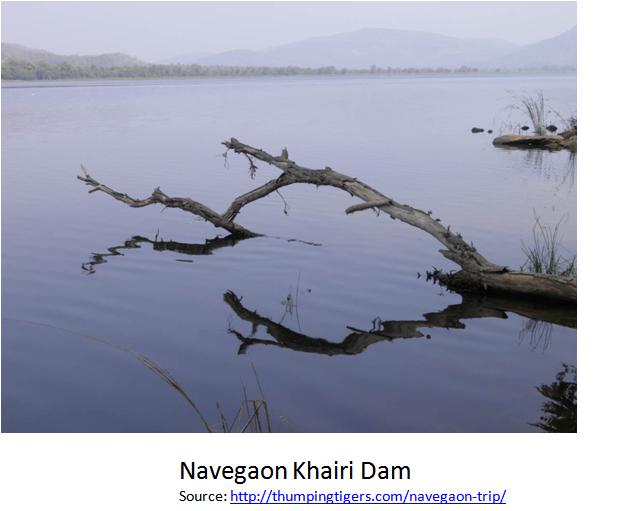
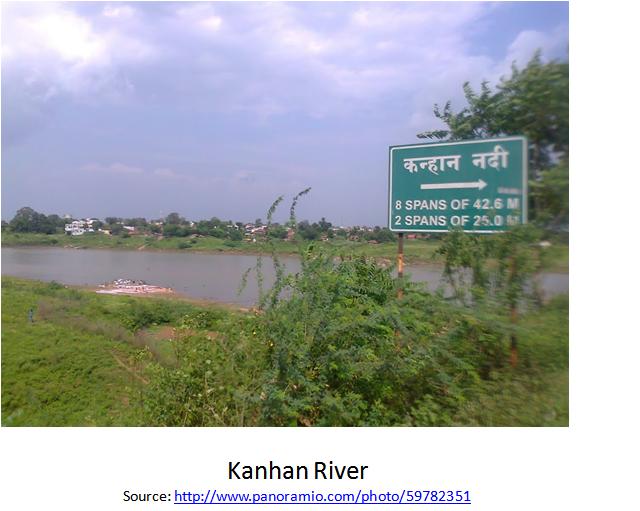
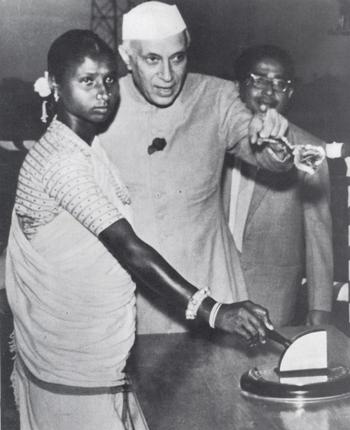

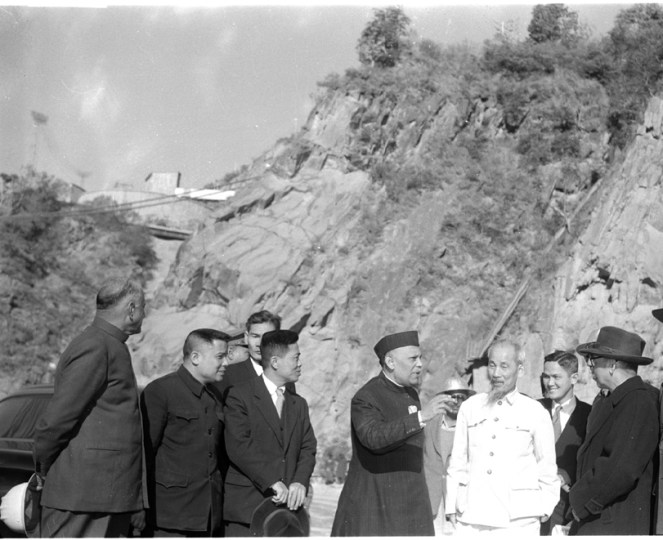


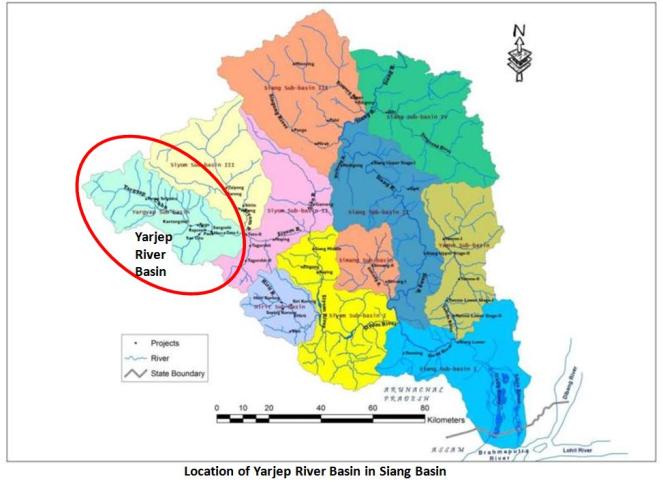


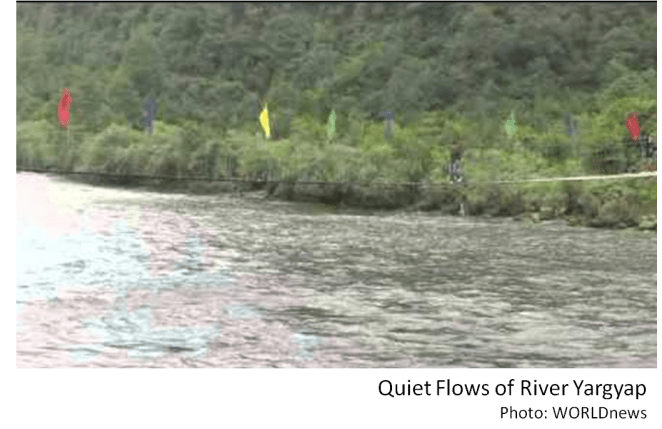

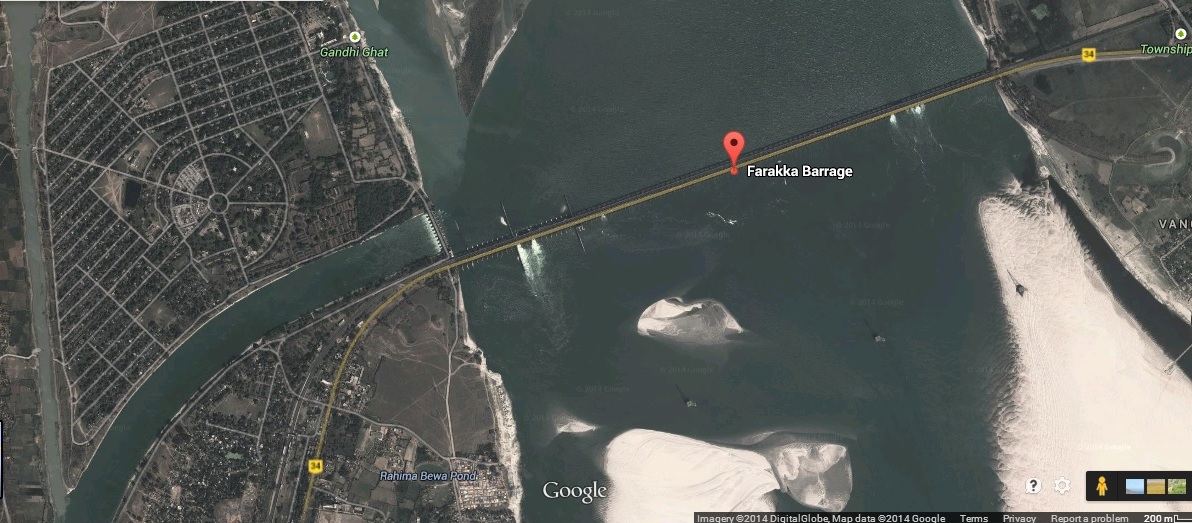
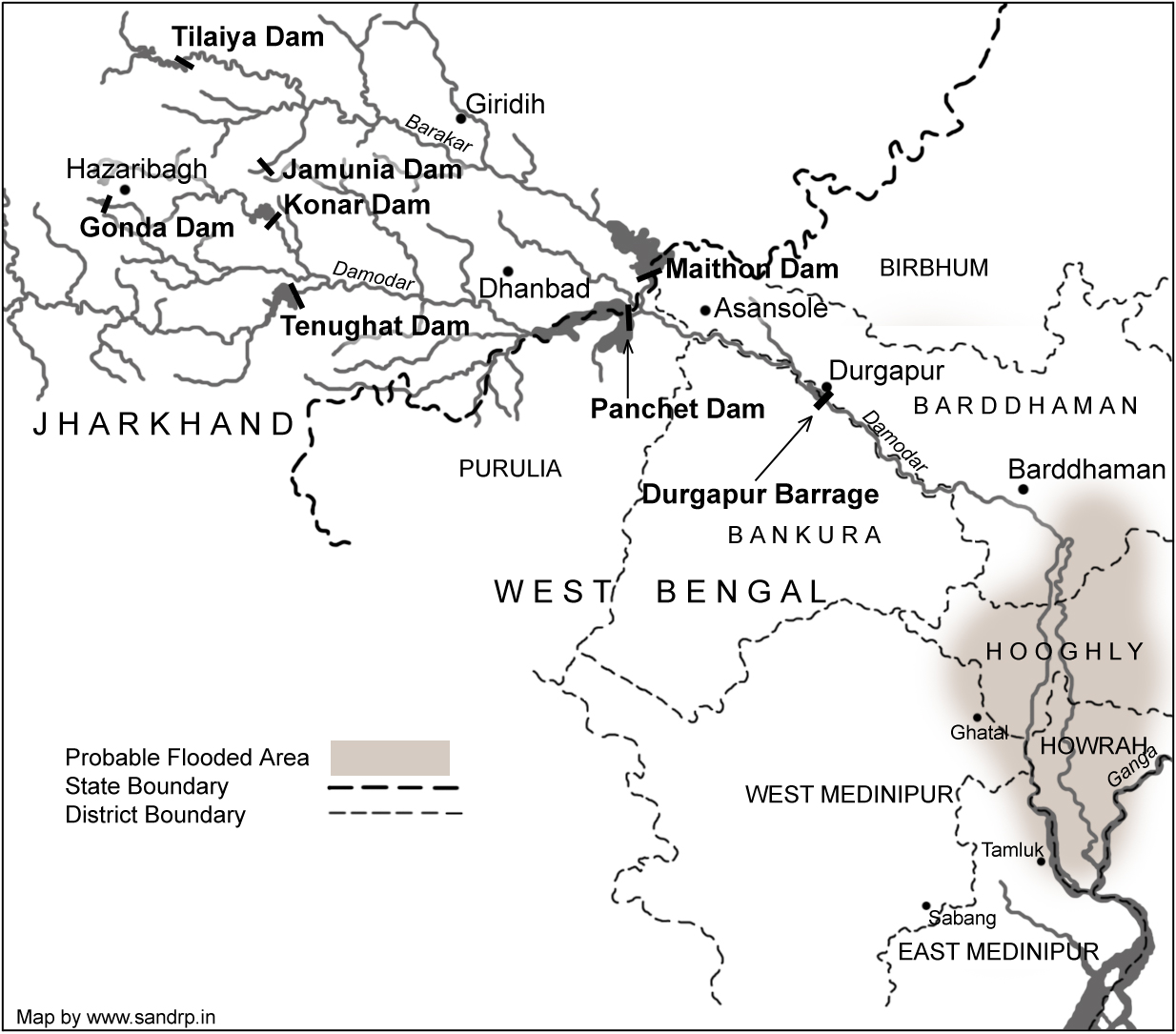
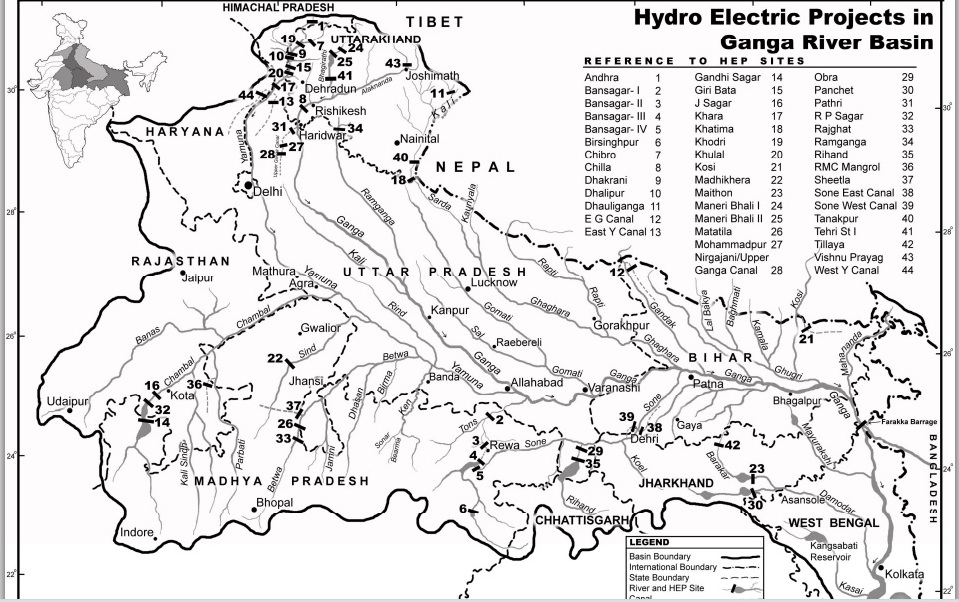


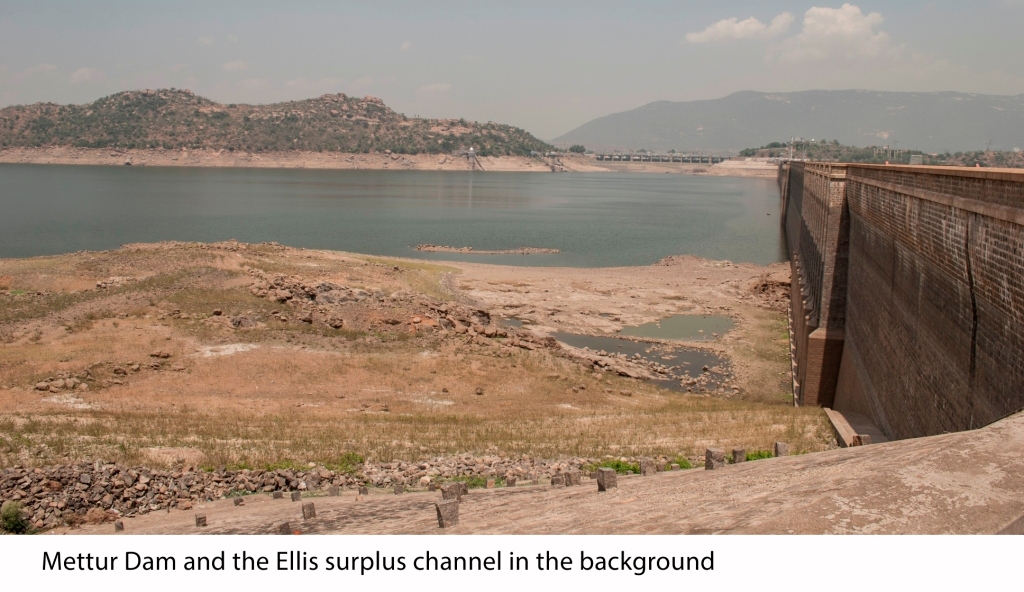


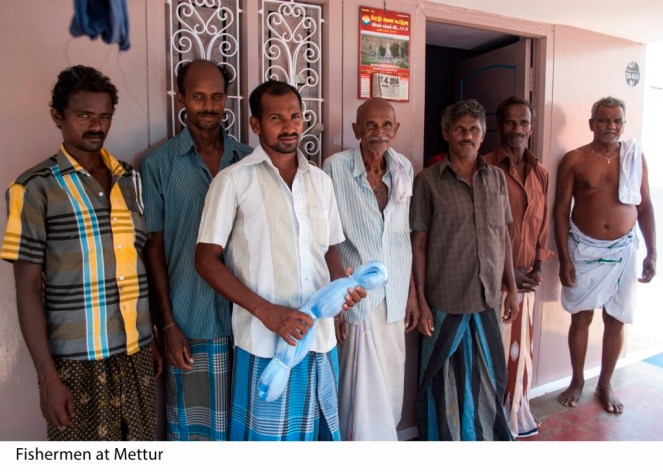


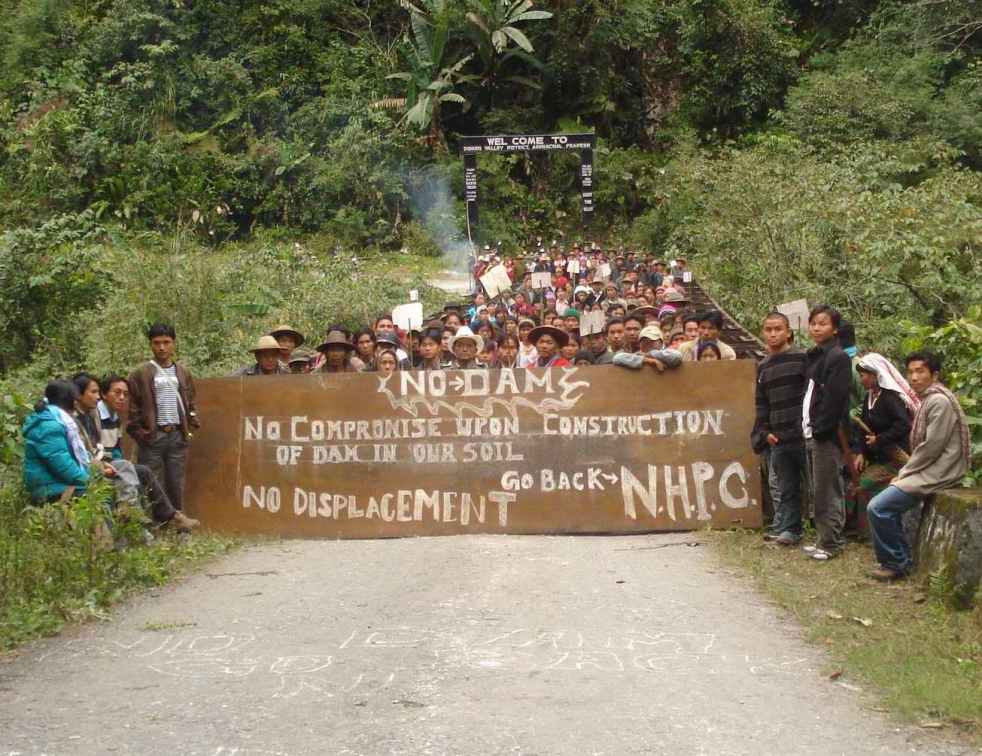




 One of the two lead coordinating authors of this report was Dr. Arun Kumar, from AHEC, IIT Roorkee. Notably, Dr. Kumar was also a part of the team which worked on Cumulative Impact Assessment of Hydropower projects in Upper Ganga basin of Uttarakhand
