Dams · DRP News Bulletin

DRP: 10 July 2017 (Private Companies Exit Unviable Large Hydro Projects)

In a remarkable trend emerging in hydro sector in Himachal Pradesh, many leading private companies have started surrendering hydro power projects allotted to them by State Govt. As per the news report, Tata Group, Reliance, Jindal and Larsen & Toubro have either surrendered or are in process of surrendering numbers of hydro projects given to them over past one and half decade. These companies are now increasingly terming the projects as  non-viable and unprofitable. 

In the last week of June, 2017, Tata group reportedly has written to Directorate Energy, expressing its desire to surrender the 450 MW Duggar power project in Pangi area of Chamba district. The project had been allotted to them in 2007-08 and post feasibility study done by its consultants the group has found the unviable. http://www.tribuneindia.com/news/himachal/tatas-give-up-chamba-power-project/428456.html

Before this the Reliance group had declined to set up  300 Mw Purty and 130 Mw Sumte Kothan hydro projects in Spiti. Following this, the State Cabinet on June 24, 2017 meeting agreed to return Rs 85 crore paid as upfront money by Reliance group. 

Similarly in recent past, the Jindal group, which was allotted the 250 MW Kutehar power project in Chamba, put the project on hold for some time without citing specific reasons. http://www.tribuneindia.com/news/himachal/reliance-power-to-get-back-rs-85-cr-it-paid-to-govt-for-2-projects/427112.html

In the latest incident, anticipating problems in evacuating power, with the market being very grim as far as buyers and power rates are concerned, Larsen and Toubro (L&T) is reported to have urged the state govt to enter into a power-purchase agreement (PPA) with it for two of its hydel projects — Reoli Dugli (Lahaul-Spiti) and Sach Khas (Pangi), located in the arduous Chenab basin.

Continue reading “DRP: 10 July 2017 (Private Companies Exit Unviable Large Hydro Projects)” →
Dams · DRP News Bulletin

DRP: 3 July 2017 (Panna Villagers Oppose Ken-Betwa Link Project)

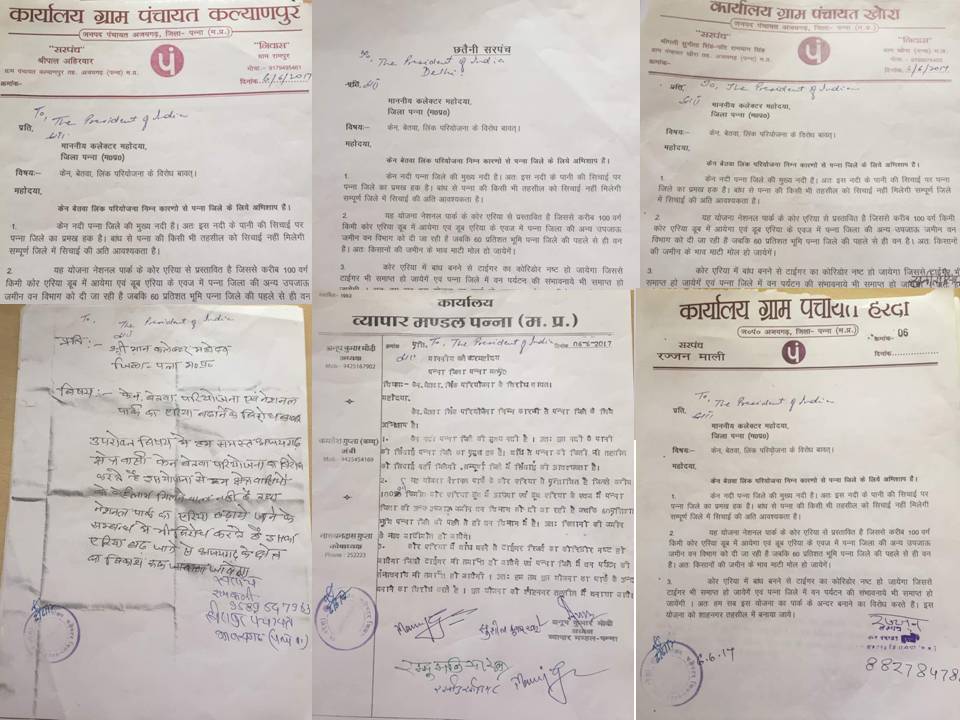
In the month of June 2017 several villages in Panna district Madhya Pradesh have opposed the controversial Ken-Betwa interlinking project. According to locals the project will destroy the Ken River which is the life line of area. Numbers of Village Panchayats have sent their memorandums to District Collector citing negative impact of the project on Panna Tiger Reserve. Many individuals and social groups including trader’s body have also criticized the project. As per locals, Panna district lacks irrigation facilities but the project proposes to transfer Ken river water to other areas. Local political parties have also supported the villagers opposition.

KBL Letters 1

Similarly worried over the scale of destruction, a group of concerned people in Panna have recently organized a meeting on the issue. Discussing the side effects of the project, the group fears that Ken Betwa interlinking project will make the Ken River dry and as a result ground water level in the area will also go down. The people revealed that there is no surplus water in the river on the basis of which the project was planned. They also cited several shortcomings in the planning of the project and stated that downstream impacts of the project has not been studied at all. The group has collectively decided to take up necessary actions to convey their opposition to the project. 

Continue reading “DRP: 3 July 2017 (Panna Villagers Oppose Ken-Betwa Link Project)” →
Dams

India’s hydro generation drops to below 10% for the first time

For the first time in independent India’s history, hydropower generation from large hydropower projects in India in 2016-17 year fell below 10% of total electricity generation and is likely to go further down in years to come. It is well known that hydropower generation as proportion of total power generation has been going down. However, this proportion is generally seen in terms of installed capacity (measured in Mega Watts), and not actual generation (measured as Million or Billion Units[i]). Continue reading “India’s hydro generation drops to below 10% for the first time” →

Dams

North-East India Rivers Profile (Brahmaputra Basin)

The profusion of rivers in the northeast India is simply unparalleled. There two major rivers Brahmaputra and Barak have been joined by tributaries in abundance – small and big, the bigger tributaries often surpassing some prime main stem rivers of other states of the country.

Interestingly, both Brahmaputra and Barak, after flowing through the length of the state, merges with other rivers at Bangladesh, to finally fall into the Bay of Bengal. On the other hands, both the rivers, notwithstanding their accompanying hydro disasters in the corresponding Brahmaputra valley and the Barak valley (also known as Surma valley) during monsoon, makes the floodplains fertile by the endowment of fine nutrient laden silt load.

Continue reading “North-East India Rivers Profile (Brahmaputra Basin)” →

Dams · DRP News Bulletin

DRP: 12 June 2017 (Rain Bearing Clouds Thinning Out Over India: IMD Study)

A recent IMD study has found that rain-bearing clouds have been thinning out across the country over the last 50 years. The study, published in the IMD journal Mausam, shows that between 1960 and 2010, annual mean low cloud cover (responsible for the bulk of the rainfall) over India has been decreasing by 0.45% per decade on an average.

According to the study, the number of rainy days is also declining during the monsoon season at an average rate of 0.23 days for every decade. This means that the country has lost approximately one rainy day over the last five decades. The study found that while the number of rainy days is decreasing, there is not much change in the total amount of rainfall. This shows a trend towards shorter, heavier bursts of rain.

That is bad news, because heavier raindrops can dislodge wheat and rice grains from their stalks while on the farm. It also means rainwater flows down a slope that much faster instead of percolating underground.

Meanwhile, a new NASA study has warned  the amount of rainfall in the Earth’s tropical regions will significantly increase as the planet continues to warm. As per study rainfall is not related just to the clouds that are available to make rain but also to Earth’s “energy budget” — incoming energy from the Sun compared to outgoing heat energy. High-altitude tropical clouds trap heat in the atmosphere. If there are fewer of these clouds in the future, the tropical atmosphere will cool.

Continue reading “DRP: 12 June 2017 (Rain Bearing Clouds Thinning Out Over India: IMD Study)” →
Dams

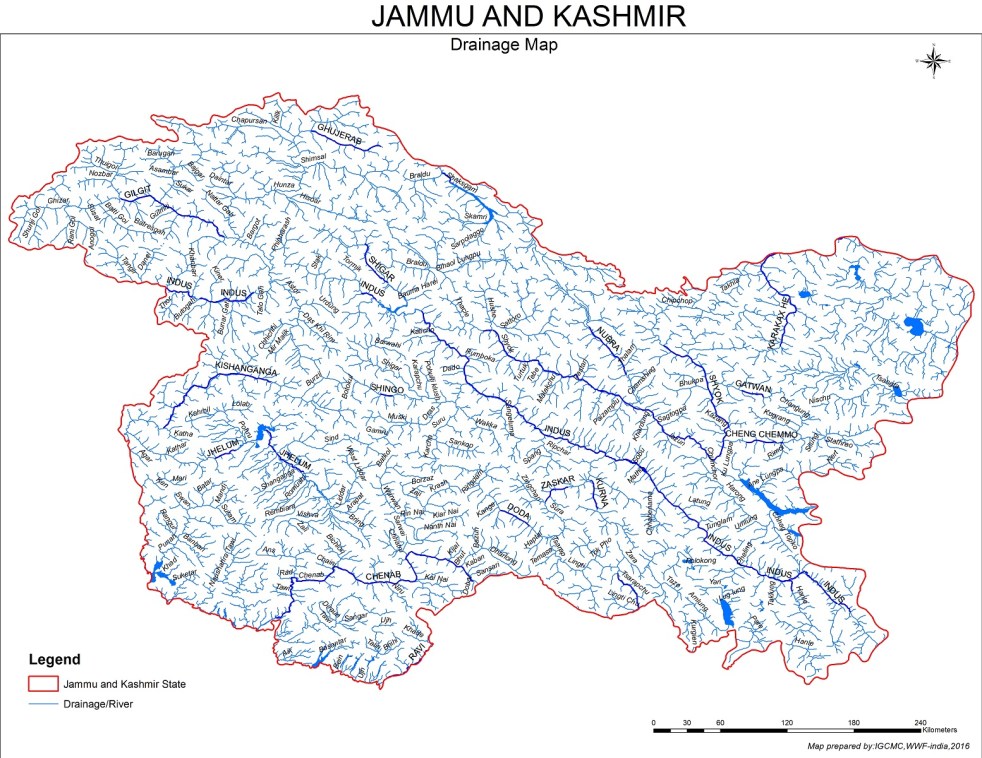
Jammu and Kashmir Rivers Profile (Jhelum and Chenab Basins)

This report discusses a few of the significant issues in the Jhelum and Chenab basin two of the main tributaries of the Indus and provides the readers a snapshot of the issues confronting the water resources development in the basins. On the basis of these factors, the health and status of the Jhelum and Chenab basins is determined using an assessment matrix providing qualitative weights to each of the indicators and influencing factors to arrive at the overall score of the river categorizing a riverscape as healthy, sick and dying.

Continue reading “Jammu and Kashmir Rivers Profile (Jhelum and Chenab Basins)” →

Dams · Ganga

About Matri Sadan Fight Against Illegal Mining In River Ganga  

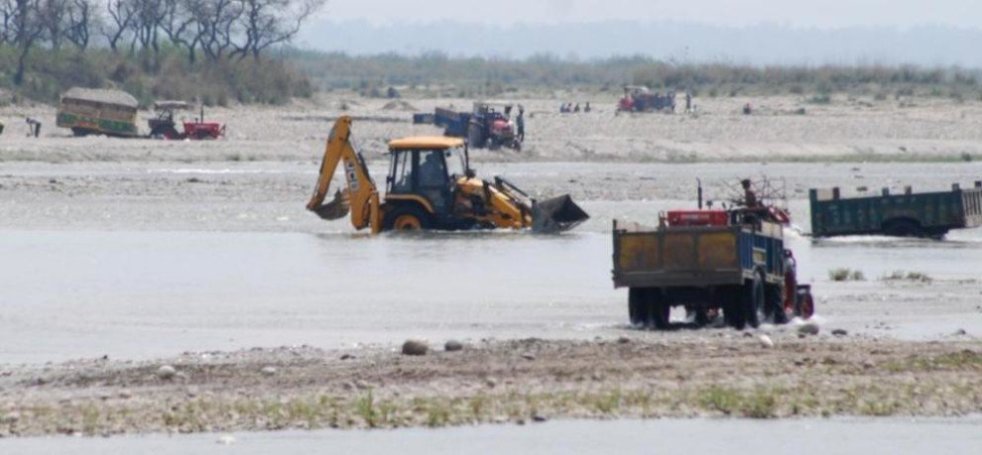
Finally on World Environment Day, Swami Shivanand has withdrawn[I] his fast unto death agitation. It was thirteenth day of his indefinite hunger strike including six days of water fast (from May 25 – 30, 2017) against illegal mining in Ganga.

The saint ended his protest around 6pm on June 05, 2017, only after receiving written assurance from the Central Government. As per information, referring to Matri Sandan repeated pleas, UP Singh Director General of National Mission for Clean Ganga has accepted that there were violations[II] of rules specially Rule No. V of Environment Protection Act during mining in Ganga. Subsequently he has asked Chairman, Central Pollution Control Board initiate criminal proceedings against the officials[III] concerned for non-compliance of the rules.

Continue reading “About Matri Sadan Fight Against Illegal Mining In River Ganga  “ →

Dams · DRP News Bulletin

DRP: 5 June 2017 (Agitation To Stop Illegal Mining in Ganga)

Today is 13th day of the Swami Shivanand fast unto death to protect Ganga River from illegal mining. The health of 70 years old Marti Sadan head is turning critical with each passing hour. If no intervention is done immediately, the Saint’s life will be in danger.  

Matri Sadan resumed its fight against rampant mining in Ganga on  May 13th, 2017 after State Government opened Ganga riverbed mining which the Ashram is strongly opposing for last many years.  

For first eleven days two disciples of the Ashram observed hunger strike. But seeing no response from Govt, Swami Shivanand himself sat on fast unto death on May 24, 2017 against indiscriminate mining of national river.  Still the Govt went ahead with Ganga mining activities stating that it was necessary to protect the city from flood. 

In response the Saint shunned even taking water. But instead of communication with the protesters, the State Govt reportedly on May 28, 2017 tried to force feed the saint to fail the agitation for which the Govt was criticized greatly.

After mounting pressure the CM of Uttarakhand is learnt requesting to stop hunger strike. Following this mining was stopped in Ganga and the saint started taking water after six days but decided to continue fast as long as Government imposes complete ban on mining in writing. 

On June 02, 2017, accusing the State Govt of blatant apathy towards Swami Shivanand’s hunger strike against illegal mining on the Ganga riverbed in the Kumbh Mela area, a group of scientists,  activists and followers have written to the PM Modi requesting the PM to intervene without delay to stop unscientific mining of the Ganga.

Continue reading “DRP: 5 June 2017 (Agitation To Stop Illegal Mining in Ganga)” →
Dams

Chhattisgarh Rivers Profile

About Chhattisgarh

The state of Chhattisgarh was carved out of the state of Madhya Pradesh in the year 2000. The total area of CG state is 135,100 sq km. The state has been divided into 27 districts. The total human population of the state is 27.94 million. 

Climate: The climate of Chhattisgarh is tropical. It is hot and humid because of its proximity to the Tropic of Cancer and its dependence on the monsoons for rains. Summer temperatures in Chhattisgarh can reach 45 °C (113 °F). The monsoon season is from late June to October and is a welcome respite from the heat.

Continue reading “Chhattisgarh Rivers Profile” →

Dams

Madhya Pradesh Rivers Profile

About Madhya Pradesh

The state of Madhya Pradesh (MP) was bifurcated in the year 2000.  The total area of MP state is 3,08,245 sq. km. The state has been divided into 50 districts and 342 sub districts. The total human population of the state is 725.97 million. (2011 census) with a decadal growth rate of 20.3%. Key centres of growth are around the urban centres of Gwalior, Indore, Bhopal and Jabalpur.

Climate

It has a subtropical climate. Hot dry summer extends from April to June followed by monsoon from July to September and winter months (November to February) are cool and relatively dry. The average rainfall is about 1,370 mm and it decreases from east to west. Summer mean maximum temperature rises to about 42.5 deg C in northern parts and the average temperature during winters is as low as 10 Deg C again in the north while it varies from 10 – 15 deg C in the south. (Source: Gosain et al in Climate Change in Madhya Pradesh: A Compendium of Expert Views – II)

Continue reading “Madhya Pradesh Rivers Profile” →