Dams · Sand Mining

Bihar Sand Mining 2020: Ruining rivers; aggravating floods

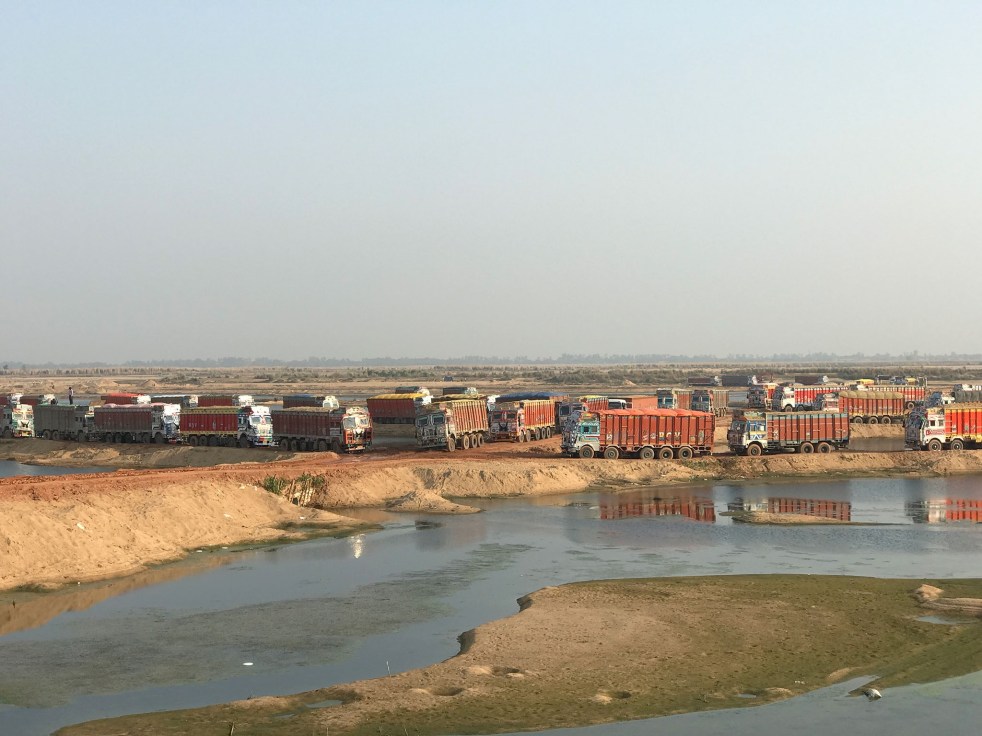
{Feature image: Up to 300 trucks a day take their fill of sand at a mine on the Sone River in Bihar state. India’s construction boom is stripping large volumes of sand, a vital ingredient in concrete, from its rivers. Environmentalists say the extraction is unsustainable, harming local hydrology and wildlife. Paul Salopek}

The 2018 review of sand mining[i] for Bihar highlighted how mismanagement by govt and then National Green Tribunal (NGT) ban on sand mining in Ganga river, Son rivers particularly during monsoon months resulted in sand scarcity and soaring prices affected public and livelihoods of mining laborers.

The video report featuring local people revealed that illegal mining was causing floods in West Champaran by damaging embankments. Similarly, the report on Gaya mentioned sand mining among reasons behind increasing air pollution. The death of four kids by drowning into sand mine pits was shocking. This compilation presents the situation after 2018 so far.

Continue reading “Bihar Sand Mining 2020: Ruining rivers; aggravating floods”
Dams · DRP News Bulletin

DRP: 20 July 2020: Will the Supreme Court stop destruction of Ganga & Himalayas in the name of WIDER Char Dham Road?

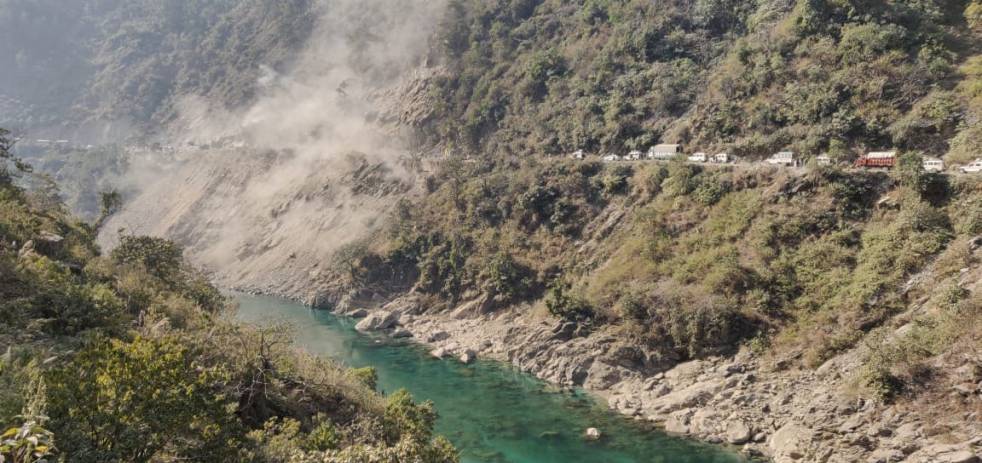
Feature Image: Pithoragarh-Tanakpur Road widening work going and muck being dumped in Saryu river under Chardham project. (Manoj Matwal, April 2019) 

The Supreme Court appointed Ravi Chopra committee has submitted the report on Char Dham Road. It has not said NO to the all weather road which is the slogan of Gadkari and rest of the Union Government. It has in fact, going by the Union Ministry of Road Transport’s’ circular, as late as 2018, suggested that the road be of 5.5 m width with necessary precautions. It has provided elaborate justifications and reasons why it took this decision. And yet twelve govt members of the committee, claiming in the name of religion (as per interview by one of these twelve members in media today) has insisted that the road should be of 10 m width. Not bothering that religion was not part of their mandate, not bothering what impact such a road will have on the Ganga (and the impact will be massive, we will know the full extent only if the impacts are scientifically assessed), on Himalayas (again starting from deforestation, landslides, flash floods and so on will be unbelievably huge) and on people and future generations. One only hopes the Supreme Court will see through the mindlessness of the economic fundamentalism being pushed in the name of religion and not allow the proposal to go ahead.

The Union Environment Ministry is clearly out to destroy even the Bhagirathi Eco-Sensitive Zone by sanctioning the Zonal Master Plan without due process and in complete violation of the letter and spirit of the Bhagirathi notification. This will further open the flood gates for destruction of remaining stretch of Bhagirathi, considered original Ganga stream as it flows from Gangotri. Again one hopes the judiciary will strike this down.

One wonders what is the NMCG, National Mission for Clean Ganga, whose mandate is Ganga rejuvenation, is doing amidst all this? Why is it silent?

Continue reading “DRP: 20 July 2020: Will the Supreme Court stop destruction of Ganga & Himalayas in the name of WIDER Char Dham Road?”
CWC - Central Water Commission · Floods

CWC flood forecasting: Inadequate, non transparent, inconsistent

As over 4 million people in the flood prone areas of North East go through second wave of floods and Ganga basin enters the long flood season, nation’s focus should be on one particular agency, Central Water Commission which is not only the only flood forecasting agency, but is also answerable in multiple other ways for the recurring flood disaster. But the flood forecasting of CWC[i] is grossly inadequate, inconsistent and non transparent.

To illustrate, let us look at the available information about CWC’s flood forecasting and compare it with happened in 2019 flood season. Out of 29 sites[ii] (7 level monitoring sites and 22 Lavel forecasting sites) where rivers crossed the previous Highest Flood Level as per CWC’s own hydrographs of last year, CWC has not updated HFL for at least 8 sites so far this year. In case Salavad in Jhalawar district in Rajasthan, on Kali Sindh river, in stead of updating the new HFL, CWC suddenly discovered this year that that the site had higher HFL achieved 35 years ago in 1985, though till last year, it listed 1996 HFL! Continue reading “CWC flood forecasting: Inadequate, non transparent, inconsistent”

Rivers

River Stories, Walking Across India – I

Guest Blog by Siddharth Agarwal

In the years 2018 and 2019, I spent months walking East across India with Paul Salopek on the Out of Eden Walk[i]. His trail started in the Great Rift Valley of Ethiopia in East Africa, roughly following the path of the early human migration out of Africa and across the globe.

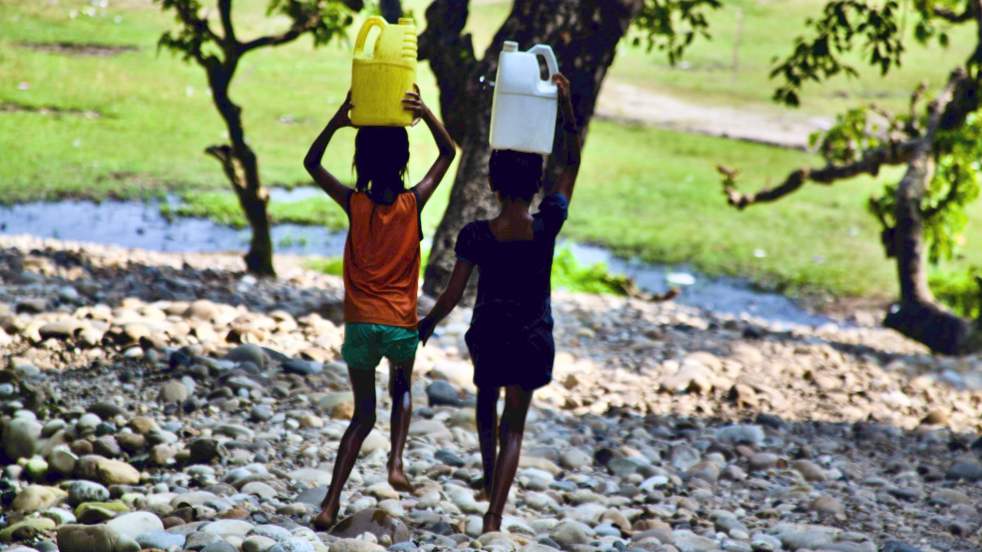
The India trail of the Out of Eden Walk started from the India-Pakistan border at Wagah, Punjab. It then moved East through the Indus Basin, followed by the basins of West flowing desert rivers like Luni, then a large chunk through the southern Gangetic plains in Central India before crossing over to the Brahmaputra basin close to Siliguri in West Bengal. The crossover to Myanmar happened at Moreh in Manipur, also incidentally very close to the basin boundary of Brahmaputra and Irrawady. He entered India in March 2018, and crossed over to Myanmar in July 2019. Continue reading “River Stories, Walking Across India – I”

Dam floods

Ireland Supreme Court holds dam operator responsible for 2009 floods

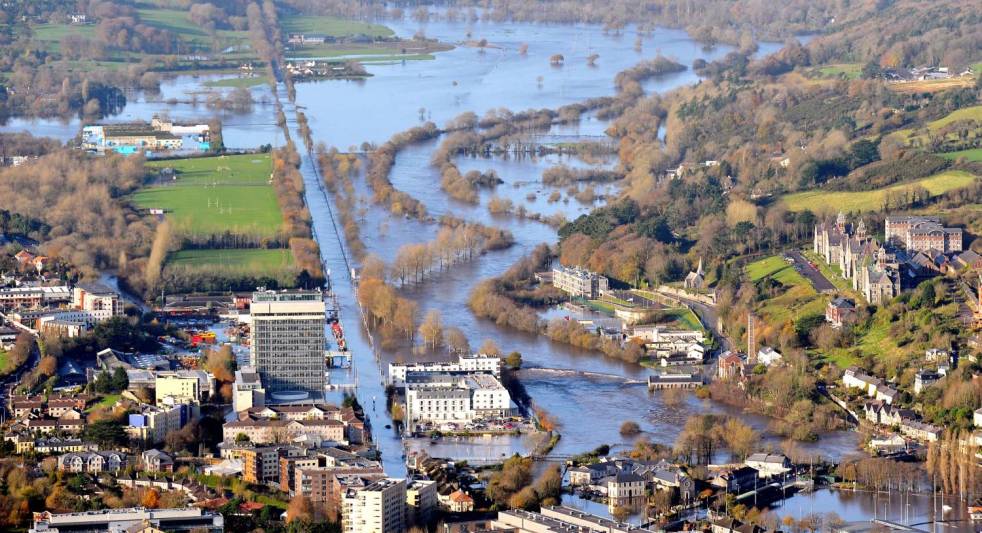
In a landmark, trend setting judgement, the Ireland Supreme Court delivered an important ruling[i]  on July 8, 2020 that the dam operator ESB (Electricity Supply Board, https://www.esb.ie/) was guilty of negligence concerning extensive flood damage to buildings on the campus of UCC.

UCC’s action over the damage is among about 400 sets of proceedings initiated against the ESB arising from the flooding. The finding of negligence by four of the five judges has implications for those cases, and wider implications for the ESB’s liability arising from its management of hydroelectric dams in the State. Aviva, UCC’s insurer sought €20m damages for losses at UCC, plus another €14m for losses suffered by other property owners. The Supreme Court had decided it should first determine whether the ESB had a liability.[ii] Continue reading “Ireland Supreme Court holds dam operator responsible for 2009 floods”

Dams · DRP News Bulletin

DRP: 13 July 2020: “Rainwater harvesting is key to solving India’s water woes”

INDEED. With all the emphasis available at our command. We are in the midst of the rainiest season and such a statement is indeed music. It would become even more melodious if one knows who said it: it was none other than Mr G. Asok Kumar, Additional Secretary & Mission Director, National Water Mission, Department of Water Resources, River Development & Ganga Rejuvenation, Ministry of Jal Shakti, Government of India who said it. Speaking on July 8, 2020, he said: “Rainwater harvesting has become inevitable in the current scenario of water scarcity across the country… The idea is to save the rainwater be it on the rooftop, compounds, and premises.” Mr Kumar also emphasised the importance of groundwater recharge. 

We can pass it as run-of-the-mill statement from the government, but one is tempted to think there is more to it than that. One wishes if there was a way to hold these officials accountable for such statements and ask as to how this translates into policies, projects and practices. There is no evidence of any of these, unfortunately. Unless we were to interpret it cynically the way Central Water Commission ideologues do: Dams are also rain water harvesting structures! By that definition, even river linking is also rain water harvesting structure!! But Mr Kumar do not seem to suggest that. So let us hold on to this statement optimistically and push the water resources establishment to implement through right policies, practices and projects. Since that is where solution to India’s water problem indeed is. Unfortunately so far there is no sign that this wisdom is accepted in any serious way by the water resources establishment.

Continue reading “DRP: 13 July 2020: “Rainwater harvesting is key to solving India’s water woes””
Book Review · Narmada

Book Review: Narmada Valley’s gripping story!

Guest blog by Abhilash Khandekar

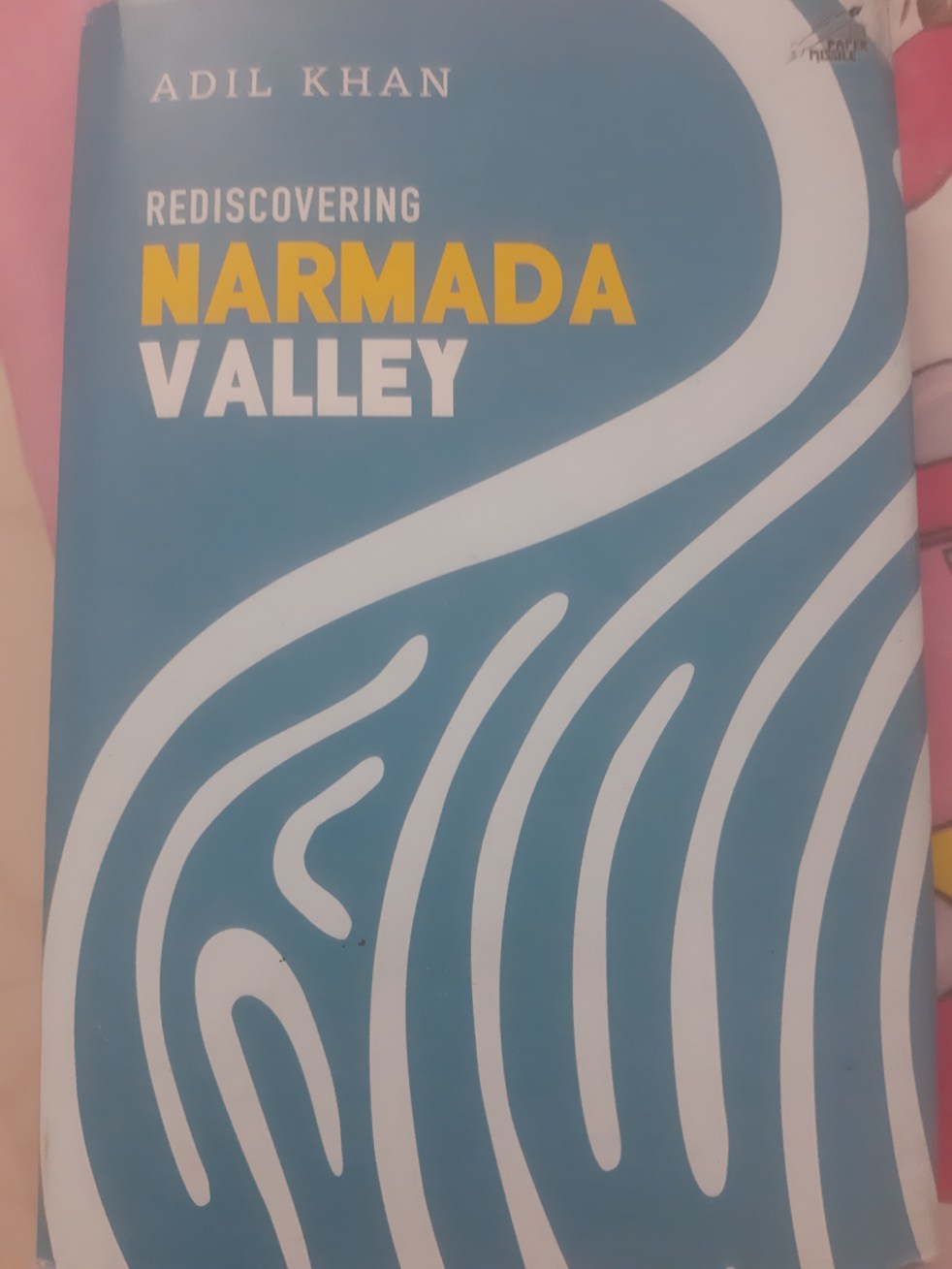
BOOK: Rediscovering Narmada Valley; Author: Adil Khan; Publishers: Niyogi Books, New Delhi; 2020; Pages-208; Price: Rs 695/-

A life-giving organism can not be controversial, but in India rivers that ought to be naturally free-flowing have been made controversial by policy makers and politicians over the past few decades. Narmada is one of them! Continue reading “Book Review: Narmada Valley’s gripping story!”

Dams · Yamuna River

Uttarakhand govt must remove illegal bridge on Yamuna to prevent flood disaster

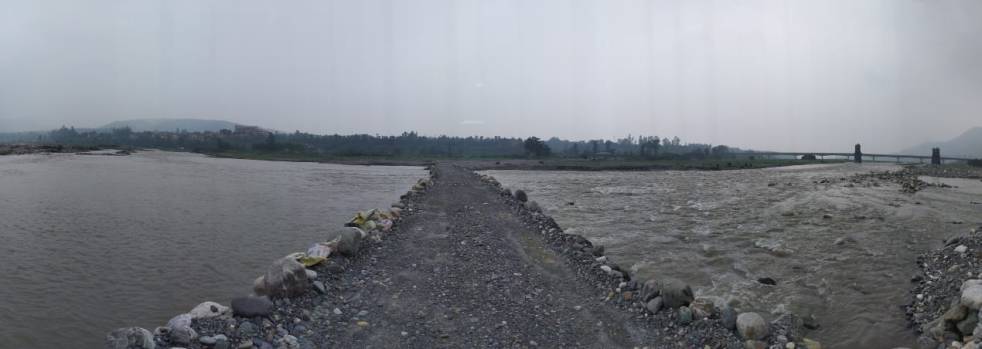
Locals of Vikas Nagar tehsil in Dehradun have shared revealing and disturbing images and videos of riverbed mining activities done in Yamuna river over past couple of months. Though in wake of ongoing monsoon the mechanized extraction of riverbed minerals (RBMs) has seen a halt since July 01, 2020, the miners have left an illegally made makeshift bridge on Yamuna river. And that’s cause of worry for local people.

“Since May we have been requesting local administration not to allow deep, in-stream and mechanized mining in Yamuna river compromising rivers flow as it could change river course and create damages during floods. But all our pleas fell on deaf ears”, says a local villager on the condition of anonymity.

He further says that, a causeway bridge built across river in the last week of May 2020 to transport the minerals has been left unattended which could lead to a flood disaster if not safely removed immediately.

Continue reading “Uttarakhand govt must remove illegal bridge on Yamuna to prevent flood disaster”

Maharashtra · Rivers

Beyond technological failure: Examining the role of religious organisations in water conservation

Guest Blog by Sachin Tiwale

Introduction 

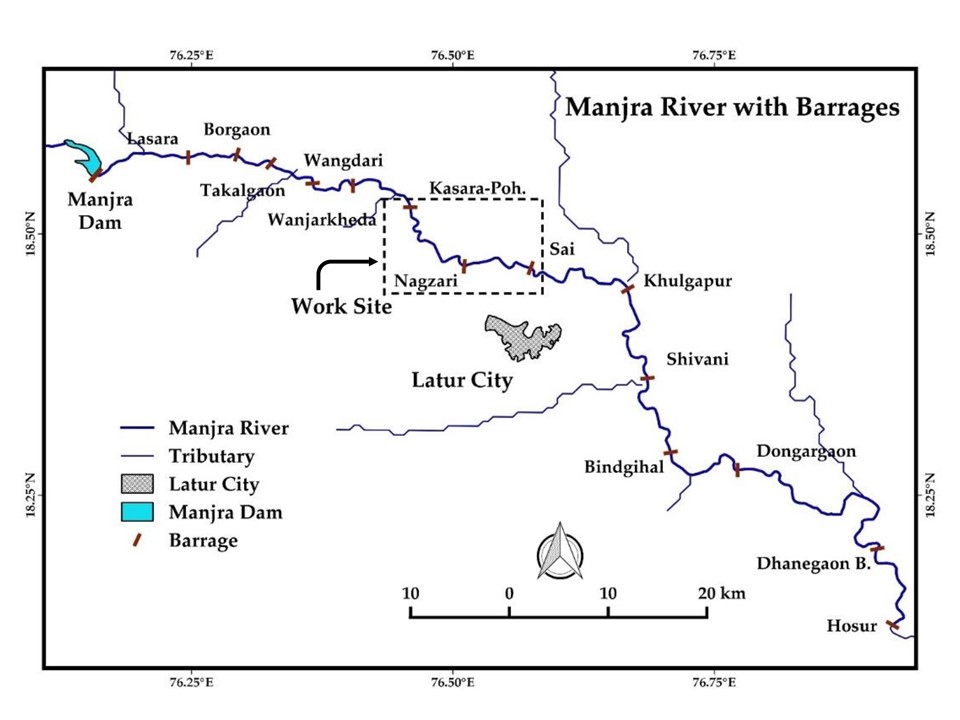
In summer of 2016, after witnessing two consecutive droughts, Art of Living (AoL) along with RSS Jankalyan Samiti, (RSS-JS) initiated Manjra River Rejuvenation program with the involvement of local leaders and residents. As a part of this program, the Manjra River channel was deepened and widened to create additional storage to meet the drinking water demand of parched Latur city of Marathwada, Maharashtra. During implementation, the leading organisations AoL and RSS-JS proclaimed rejuvenation project as a permanent measure resolving the crisis by creating storage of 18 million cubic metre (MCM) enough to meet Latur city’s water demand (Ghadyalpatil  2016; Thomas 2016). With a promise of supplying piped water every alternate day, they collected around Rs. 70 million from the people[1]. However, as described below, even after completion of massive excavation damaging river ecology, this project failed miserably. It could not even supply one drop of water to the citizens of Latur. Surprisingly, this failure is never revealed or discussed and on the contrary, the project was celebrated as a success (Samvada, 2016). Continue reading “Beyond technological failure: Examining the role of religious organisations in water conservation”

Bihar · Nepal

Story of small transboundary river: Understanding Bhikhna Thori and River Pandai on India-Nepal border in Pashchim Champaran, Bihar

Guest Blog by Eklavya Prasad, Megh Pyne Abhiyan

Last week, a note was in circulation, which listed few border related conflicts between India (Bihar) and Nepal (Parsa). Of the nine points mentioned in the note, seven were directly or indirectly related to either a river, or access to water, or flood protection works. Out of the seven, one issue was with regard to an old concern involving River Pandai, which has witnessed different dimension of cooperation and discord between communities across the Indo-Nepal border in Pashchim (West) Champaran and Parsa districts respectively. However, the note highlight the conflict as a recent one with a specific intent and that was explained as नेपाल की करतूत : पानी रोक लिया, ताकि एसएसबी के जवान परेशान हों (Nepal’s handiwork : They stopped the water to trouble the Sashastra Seema Bal (SSB) jawans). After having read the note, I decided to write this piece based on my own understanding and learnings (through direct interactions and personal communication in the past and references) about River Pandai and Bhikhna Thori, to provide a comprehensive perspective.

Continue reading “Story of small transboundary river: Understanding Bhikhna Thori and River Pandai on India-Nepal border in Pashchim Champaran, Bihar”