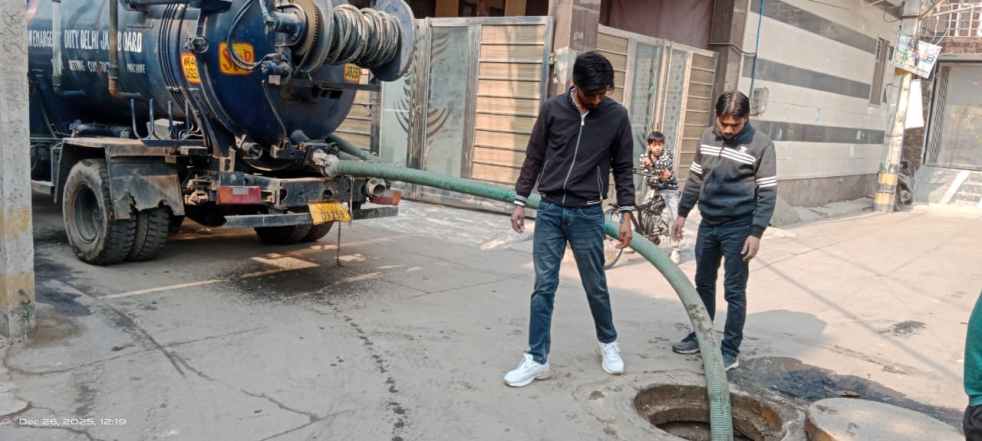
(Feature Image: Sewer line cleaning work by DJB in North West Delhi’s Sanjay Colony. Credit: Bhim Singh Rawat/SANDRP)
The Report of the Comptroller and Auditor General (CAG) of India Audit of Delhi Jal Board (DJB) for 2017-2022 highlights the fundamental issues facing Urban Water Sector in India. Unfortunately, CAG stops short of reaching the conclusion that lack of National Urban Water Policy and lack of accountable governance are the fundamental issues also plaguing DJB like other Urban Water Bodies in India.
While under estimation of sewage by around 20% and non-materialization of the planned STP capacity for four years, not testing faecal coliform in STP outlets are gross and fundamental flaws of DJB function as identified by CAG, the key point is that no one will be held accountable for any of these.
How can one expect the functioning of DJB improve without holding accountable the people responsible for such gross blunders? And how is the accountability going to enter the scene without brining fundamental change in governance? This is of course not limited to DJB, but something that plagues every Urban Water Utility. Similarly, lack of Urban Water Policy means that there is nothing to guide the Urban Water Utilities like the DJB.
DJB underestimated sewage by around 20%: CAG report The DJB underestimated the capital’s overall sewage generation by nearly a fifth, compromising efforts to clean the Yamuna, shows data from a Comptroller and Auditor General (CAG) report that examined the utility’s functioning from 2017 to 2022.
The report, tabled in the Delhi Assembly on March 23, warned that without realistic figures on the sewage generated within the capital, an effective treatment plan to reduce the pollution load on the Yamuna, where all of the sewage is discharged, would remain elusive. The report also said none of the 56 new STPs proposed to be built during Phase-II of the DJB’s Sewage Master Plan that ran from 2017 to 2021 materialised.
The report added that the board was not testing faecal coliform bacteria levels in effluents from existing STPs to aid the Yamuna clean-up. Citing “anomalies in the estimation of sewage generated in Delhi,” the report said according to the Delhi Pollution Control Committee (DPCC), the total water flow to the Yamuna from Delhi through untapped drains, STPs, and common effluent plants differs from DJB’s data.
A March 2022 report by DPCC estimated outfall into Yamuna at 892.22 MGD, including 155 MGD sewage received from Haryana and Uttar Pradesh, according to the CAG report. DJB, meanwhile, estimated that 594.25 MGD of sewage generated in Delhi ends up in the Yamuna. “Thus, there is a clear gap of 142.97 MGD in the sewage/waste-water generation estimates of DJB and that of DPCC,” the report concluded.
HYDRO POWER PROJECTS
SUHEP-affected demand fresh public hearing The Subansiri Upper Hydroelectric Project Land Affected People’s Forum has demanded that public hearing for environmental clearance of the Subansiri Upper Hydroelectric Project (SUHEP) be conducted afresh in a fair and transparent manner, ensuring equal participation of all stakeholders. The forum alleged that the public hearing conducted on 24 March in Singik Hall in Upper Subansiri district violated the provisions of the EIA notification, 2006, by denying entry to project-affected people.
Public hearing for 680 MW Athunli HEP held on April 01.
Kashmir HEP Paradox: Power Rich, People Poor Despite generating thousands of MWs, Jammu 7 Kashmir remains energy-deficient, exposing a deeper crisis of control, equity, and political economy.
Release of publication Energy Statistics India 2026 India has a huge potential for generation of renewable energy which stands at 47,04,043 MW as on 31-Mar-25. In the total potential, the Solar Energy has witnessed a staggering growth from 748,990 MW during FY: 2023-24 to 33,43,378 MW during FY: 2024-25 and is having the highest share (around 71%) followed by Wind Power (11,63,856 MW) and Large Hydro (1,33,410 MW). More than 70% of the total potential for generation of renewable energy is concentrated in 6 States viz. Rajasthan (23.70%), Maharashtra (14.26%), Gujarat (9.10%), Andhra Pradesh (9.1%), Karnataka (8.59%) & Madhya Pradesh (8.09%).
The installed-capacity for generating electricity (including Utility & Non-Utility) from the Renewable resources has also experienced a significant growth over the past years. From 90,134 MW as on 31-Mar-2016, it has risen to 2,29,346 MW as on 31-Mar-2025, a CAGR of 10.93%. The gross generation of electricity from the Renewable resources (both Utility and Non-Utility together) has also increased from 1,89,314 GWH in 2015-16, to 4,16,823 GWH in 2024-25, a CAGR of 9.17%.
DAMS
Renuka Dam oustees stall groundwork, reject Resettlement sites Oustees of the Rs 6,947-crore Renuka multipurpose dam project have intensified their protest, rejecting the land parcels earmarked for their rehabilitation at Amboya and Tokya villages in the Renuka sub-division of Sirmaur district. The agitation intensified when villagers prevented project authorities from digging 14-foot trenches to collect soil samples, an initial step towards commencing construction. The move was seen by locals as a precursor to forced displacement. Residents of Dungi Kanyod and Panar Kalyan villages, who fall in the first phase of displacement, fear imminent eviction once work on diversion tunnels begins. Authorities have already sought affidavits from six villagers, adding to the anxiety.
Kaleshwaram Dam: Union Minister remarks in Rajya Sabha and rxns Union Jal Shakti Minister CR Patil reportedly remarked that nearly ₹1 lakh crore spent on the Kaleshwaram project had been ‘washed away’ during a discussion on The Andhra Pradesh Reorganisation(Amendment) Bill, 2026, in Rajya Sabha, on Apr 2 2026. Objecting strongly, BRS MP Mr. K R Suresh Reddy said the statement amounted to a ‘gross misrepresentation’ of facts. He demanded an apology and removal of what he called false and misleading statement from the records. “The Medigadda barrage has become non-functional. This is not a political claim but a fact established by expert committees,” Union Coal Minister Mr. Kishan Reddy said, adding that public money had been misused. He accused the BRS of treating the project like an ATM.
Telangana Minister Criticises AP over Srisailam Power generation below MDDL Telangana Minister Jupally Krishna Rao on March 31 accused the Andhra Pradesh government of violating established norms in the utilisation of water from the Srisailam reservoir and undertaking power generation disregarding Telangana’s interests. He said that clear guidelines prohibit power generation once the water level in the reservoir reaches the minimum drawdown level of 834 feet (254.2 metres). He alleged that these norms were being overlooked, adversely affecting Telangana’s irrigation and drinking water requirements. The Minister expressed concern that repeated representations to the Andhra Pradesh government had not yielded results, and described its approach as unresponsive. Rao stated that the Andhra Pradesh government halted power generation only after these concerns were strongly articulated.
AP CM says reconstruction of Polavaram dam diaphragm wall completed Andhra Pradesh Chief Minister N. Chandrababu Naidu on Apr 2 said construction of the 1,372-metre-long diaphragm wall had been completed. The diaphragm wall had to be reconstructed at an additional cost of ₹1,000 crore due to damage caused during Aug 2020 floods. The reconstruction started in January 2025.
BMC Standing Com clears Gargai Dam Project The Rs 5051 Cr Gargai dam project was cleared by BMC’s standing committee on Apr 1 2026. While Shiv Sena (UBT) led by corporator Yashodhar Phanse pushed for desalination as an alternative to the dam, Congress argued that the proposal was premature. The project carries significant environmental implications, including the transplantation of around 3 lakh trees and compensatory afforestation across 658 hectares in Washim, Chandrapur and Hingoli districts. Additionally, villagers are proposed to be relocated to Devali in Wada taluka. Dam of the Project in Palghar will now come up at a revised cost of Rs. 3,065.68 crore or 1.96 per cent over the previous estimate. The 450 MLD Project entails the construction of a 972-metre-long dam on the Gargai, which is a sub-tributary of Vaitarna river.
Relevant decisions of FAC meeting held on March 24 2026 1. Diversion of 77.17 ha (originally proposed area was 50.17 ha.) for expansion of already diverted proposal for Pump Storage Project in Integrated Renewable Energy Project, Pinnapuram of Greenko Energies Pvt., Ltd., Hyderabad, Submission of additional information – violation of FCA. APPROVED
2. Diversion of 197.27 ha. of Reserved Forest for Kirthai- II Hydro Electric Project (820 MW) on Chenab river in District- Kishtwar in Jammu & Kashmir: More Info Sought: the State Government shall: (i) Inform whether any Carrying Capacity and Cumulative Impact Assessment Study has been conducted for the Chenab River Basin. (ii) If conducted, submit a copy of the study report. (iii) Submit details of the competent organization/authority that has certified the structural safety of the proposed dam. (iv) Provide a copy of the safety certificate, if issued. (v) Submit a copy of the Disaster Management Plan prepared for the project, considering that the area is characterized by moderate to steep slopes and is prone to landslides. (vi) Out of 197.27 ha of forest land proposed for diversion, 15.82 ha is proposed for muck dumping. The State Government shall clarify whether any non-forest land involved in the project has been explored for muck disposal. (vii) All the muck dumping sites are located near the banks of the River Chenab. Hence, appropriate engineering and biological measures are required to prevent erosion, siltation and any adverse environmental impacts on the river ecology. The State Government shall submit comments in this regard along with detailed mitigation measures. (viii) The State Government shall submit copy of approval of the Power Evacuation Plan of the project. (ix) As Chilgoza is endemic to this region, and as per the tree enumeration list, this species is being lost in large number due to diversion of forest land, the Forest Department must ensure to prioritize this species for plantation at the proposed CA site. The State Govt shall submit comments in this regard along with revised CA scheme for plantation of Chilgoza (x) the State Government shall: (i) Submit copies of approval of 02 clay quarries and 04 rock quarries. (ii) Submit copies of duly approved Mining Plans for all quarry sites.
3. Diversion of 740.1592 ha Reserve Forest land for Dam and Micro Irrigation System Under Munjari Major Irrigation Project in favour of Water Resource Department under Sheopur District of Madhya Pradesh: APPROVED
4. Diversion of 160.783 ha. forest land (3.626 Ha Private Forest and 157.157 Ha Reserved Forest) for Shirawta Off Stream Open Loop Pumped Storage Project (1800 MW) at Village Khandashi, Rakaswadi, Thoran, Jambhavali, Tal. Maval, Dist. Pune, Maharashtra by Tata Power Company Ltd: More Info Sought: The State Government shall submit comments with regard to taking up the Pumped Storage Proposal (PSP)/Hydel proposals in the Eco Sensitive Area.
Agenda of Expert Appraisal Committee meeting on River Valley Projects to be held on Apr 13 2026 1. Ghatghar Open Loop Pumped Storage Project II (125 MW) in 329.85 (320.07 Ha exisiting & 9.78 Ha additional) at Chondhe Bk., and Ghatghar, Sub-Dist Shahapur & Akola, Dist Thane & Ahmadnagar, Maharashtra by Mah State Power Generation Co Ltd – Terms of Reference
2. Humbarli Birmani Open Loop Pumped Storage Project (6x250MW) in 334.82 ha at Biramani, and Hatlot, Sub-Dist Khed & Mahabaleshwar, Dist Ratnagiri & Satara, Mah by THDC India Limited – Terms of Reference
3. Chentikheda Major Irrigation Project (15,300 ha CCA) in 1369.35 ha at Aroda, Pachnia, and Garhi etc., Sub-District Vijaypur & Sabalgarh, Dist Sheopur & Morena, Madhya Pradesh – Environmental Clearance
CLIMATE CRISIS
Glacial Outburst Risk from 5 Kashmir Lakes: CM The Five lakes in the Kashmir Valley have high susceptibility to glacial lake outburst floods (GLOFs), posing a threat to 2,704 buildings, 15 major bridges, road stretches, and a hydropower plant in their immediate downstream areas, a study by the University of Kashmir has found. Citing the study, CM Omar Abdullah told the J&K Assembly On March 31 that there is a need for continuous monitoring of these high-susceptibility lakes through remote sensing and targeted field assessments, as well as the installation of effective early warning systems.
The study, conducted by researchers from the department of geoinformatics, has analysed 155 glacial lakes in the Kashmir Himalaya. Of these, Bramsar and Chirsar in Kulgam district; Nundkol and Gangabal in Ganderbal district and Bhagsar in Shopian district, have been categorised as having “very high susceptibility” compared with others in the region. Researchers at the department of geoinformatics have procured high-precision, powerful tools, including robotic echo-sounding boats, with support from the union ministry of earth sciences, to know the water volume of the lake. Using this facility, he said, in-depth surveys of high-risk glacial lakes in the western Himalaya are planned for 2026.
“However, it’s important to note that a lake classified as high susceptibility simply means that, if specific triggering conditions were to occur, it may be more prone to an outburst compared to others. This does not imply that the lake is currently unstable, actively breaching or likely to fail in the immediate future,” he added.
INTERSTATE WATER DISPUTES
Legal framework governing inter-state disputes The river interlinking projects usually took a narrow view of the river’s eco-hydrology by categorising it in ‘surplus’ and ‘deficit’ river basins. At a time when many countries are decommissioning dams and other such structures to restore natural hydrological flow regimes of the rivers, India needs to balance its developmental needs with ecological integrity and the health of its river systems.
URBAN RIVERS
Clean Musi first Pointing out the historical lapses in rejuvenating the Musi river, the Forum for Good Governance (FFGG) has written to CM Revanth Reddy asking the state government to first clean the polluted river before constructing the planned 108-feet statue of Lord Shiva in it.
“In the year 2001, the Water Board prepared a scheme – “Abetment of Pollution of river Musi” and submitted to the Government of India, which sanctioned the scheme. On the whole, Rs 405 crore were spent, but the desired results could not be achieved. Meanwhile, the GHMC (Greater Hyderabad Municipal Corporation) took up the construction of a rubber dam near the High Court to control pollution at a cost of Rs 50 crore. This also did not give any results and, finally, dismantled,” explained Padmanabh Reddy.
Pune: Illegal Dumping, Parking Plague Mula-Mutha riverbed The stretch between Sangam Bridge and Bund Garden is currently being developed under the Riverfront Improvement Project by the Pune Municipal Corporation (PMC). Citizens claim that many are taking advantage of the ongoing work, and private individuals are encroaching upon the riverbed and using it for parking heavy vehicles, including private buses.
Buddha Dariya ‘shrinks’ in Ludhiana, NGT demands ‘real’ map The NGT has ordered the Ludhiana deputy commissioner to produce original revenue maps and records of the Buddha Dariya following allegations that municipal authorities are illegally narrowing the historic waterway. The NGT intervention comes amid a heated legal battle between environmental activists and the municipal corporation over the “concretisation” of the drain, which experts warn is destroying the local ecosystem. Amid claims of illegal construction and “flawed” reports, the margin for error — and for the river itself — is disappearing fast.
The tribunal has directed the deputy commissioner (DC) to submit comprehensive documentation to resolve conflicting reports regarding the waterway’s actual size. The required records include original revenue entries and maps of the area, a complete map of the Buddha Nullah disclosing its width at regular intervals across the entire contested stretch, and verification of buffer zones to ensure no illegal construction is occurring within protected boundaries. The DC has also been tasked with ensuring a total freeze on any further illegal construction within the drain or its buffer zone until the next hearing on April 20, 2026.
Examining the social costs of RFD projects The River, Cities and People book’s relevance is underscored by the scale of ongoing projects, particularly in India, where nearly 150 riverfront developments are being pursued, often drawing from the Ahmedabad model. Such initiatives call for closer examination of their social implications, especially for communities whose livelihoods are closely tied to rivers.
RIVER REJUVENATION
Sikar villages oppose mining hills to protect Girjan river The blue Girjan river snakes lazily past fields of wheat in the backdrop of the Aravallis and through the village of Deepawas in Rajasthan’s Sikar district. ‘ This Girjan river is born from these hills,.. If there are no hills, there is no river’, as they say. The Girjan trickles out of the Baleshwar Conservation Reserve (around 10 km north as the crow flies) as a stream, before merging with others to form a small river, about 10 metres wide, at Deepawas.
The Girjan flows for around 19 km in total, and then joins the Sota river that drains into the Buchara Dam. Around 40 villages including five panchayats — 60,000 people in all — depend on the river and its groundwater recharging services, says Neelam Ahluwalia of People For Aravallis.
But the Deepawas residents are losing sleep over an iron ore mine that came up on the banks of the river in 2024. They’ve seen what mines have done to other rivers in the landscape, and know the worrying transformations the Girjan, and their now-productive lands, could undergo. The villagers were clear: they would not let the mine endanger their homes by felling trees, slicing up hills and polluting their river. They petitioned the Supreme Court. In response, the Rajasthan government finally agreed that the mine was located in an area defined as the Aravallis, as per a delineation by the Forest Survey of India in 2010.
How mining has killed Kasawati River in Rajasthan Part 2 brings you what activists predict can happen to the Girjan if its fate flows along the same lines as that of the Kasawati river near Kotputli-Behror, just 20 km away. And why implementing existing regulations and protections are important for the Aravallis here. The banks of the Kasawati river near Neemod in Sikar district in Rajasthan are a striking contrast to those of the Girjan at Deepawas, just about 20 km away. This is an example of what Deepawas could become – if illegal mining is allowed to flourish.
The Kasawati, or the Krishnavati river, is a tributary of the Sahibi river and this makes it a part of the Ganga river basin. Running almost parallel to some stretches of the Kasawati is the Rajasthan State Highway 37B which connects Nim Ka Thana and Kotputli. Between the villages of Neemod and Dokan – a short seven km stretch – mining, stone crushing and washing units line either side of the road in shocking frequency.
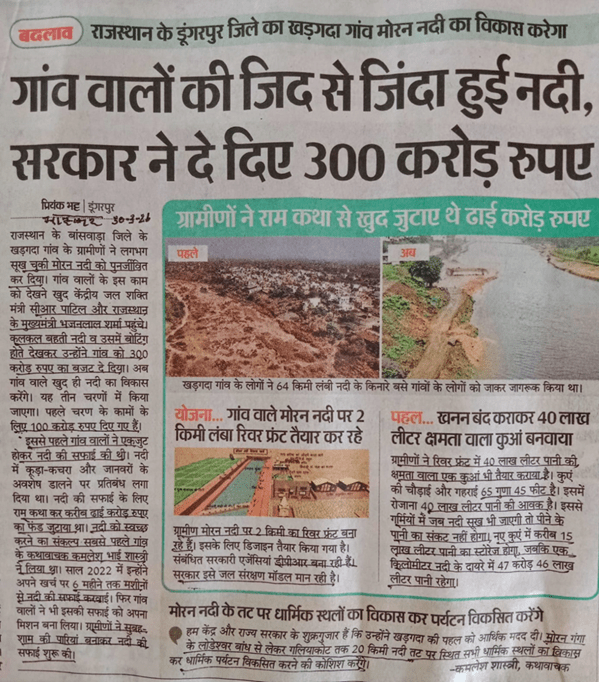
Banswada Village rejuvenates Moran River Starting from 2022, people of Khadagda village in Banswada district (Rajasthan) as per this report in Dainik Bhaskar of March 31 2026, have taken up the task of cleaning and rejuvenation of Moran River. Now Union Jal Shakti Minister and Rajasthan Chief Minister visited the village, appreciated the effort and provided more funds.
Maharashtra approves authority for river rejuvenation The cabinet on April 1 approved the establishment of Mah State River Rejuvenation Authority under which rejuvenation projects will be implemented for 54 polluted river stretches. The authority will carry out both regulatory & developmental work for reducing pollution and ensuring the conservation & rejuvenation of rivers.
Established on the lines of the National River Conservation Plan, the CM will serve as the Chairperson of this Authority, while the Minister for Environment and Climate Change will be the Vice-Chairperson. Decisions regarding the pollution control and rejuvenation of rivers such as Mithi, Kalu, Mula, Mula-Mutha, Mutha, Bhima, Pawana, Nag, Chandrabhaga, and Panchganga will now be taken. Accordingly, the authority will function as the apex decision-making body and nodal agency to promote all aspects of river rejuvenation.
“The authority will determine the priority phases for the rejuvenation of these 54 polluted rivers stretches. By integrating various schemes, it will recommend supplementary policies regarding sewage treatment, industrial effluent measures, and the demarcation of riverbank areas to prevent encroachments,” said an official from the department of Environment and Climate Change. He said that it will be responsible for preparing and implementing river basin management plans, as well as resolving issues related to land acquisition, encroachments, power supply, and contracts.
Sewage treatment gap flagged in Andhra A total treatment gap of 219.43 MLD has been identified between sewage generation and installed STP capacity across 17 urban local bodies (ULB). Of the total sewage generated, approximately 822.58 MLD originates from 17 densely populated ULBs located in and around river stretches and water bodies. To address the 219.43 MLD gap, officials said that 175.92 MLD in 11 ULBs will be covered through STPs currently under construction (284.47 MLD) or at the tender stage (46.68 MLD). The remaining 43.51 MLD gap in six ULBs is proposed to be met through new STPs under the Urban Infrastructure Development Fund scheme.
The APPCB said it had pursued the matter through a letter dated 1 March 2026. In response, the ENC-PH&ME Department, in a letter dated March 18, 2026, directed municipal commissioners to install RTPMS in existing STPs without delay. The report, dated March 24, 2026, was submitted in compliance with NGT orders issued on January 20, 2026 and July 31, 2025.
The NGT’s Chennai bench had taken suo motu cognisance of a news report published in Eenadu on January 25, 2024, which alleged that liquid waste was being discharged into rivers including the Krishna, Godavari, Swarnamukhi, Nagavali, Tungabhadra and Kundu. It also reported that incomplete STPs had led to untreated or partially treated waste being discharged into rivers and, in Visakhapatnam, into the sea.
Poonch’s waste crisis A ₹2.71 crore penalty, a decade of inaction, and a river turned toxic reveal how governance failures poison public resources. (Dr. Raja Muzaffar Bhat)
Progress made under NGP The GoI launched the Namami Gange Program (NGP) in 2014-15 for the rejuvenation of river Ganga and its tributaries up to March 2021 and has been extended to March 2026. Under the Namami Gange Program, a diverse set of interventions for cleaning and rejuvenation of river Ganga have been taken up, that includes wastewater treatment, riverfront management, ensuring e-flow, rural sanitation, afforestation, biodiversity conservation, public participation. As of Feb 2026, 524 projects have been sanctioned at a cost of ₹ 43,030 cr, out of which 355 projects have been completed.
So far, NRCP has covered 58 rivers in 100 towns spread over 17 States in the country at a total sanctioned cost of Rs. 8,970.51 crores, and sewage treatment capacity of 3,019 million litres per day (MLD) has been created. The information was given by the minister of state for Jal Shakti in reply to a question in Lok Sabha on Apr 2.
Book Review The Heads and Tails of the Ganga In The Heads and Tails of the Ganga, Vijay Paranjpye, Radhika Mulay, and Chaitrali Kulkarni trace the river’s full journey, from its icy Himalayan origins shaped by glaciers, snowfields, and permafrost to the vast, biodiverse delta where it meets the Bay of Bengal. Drawing on extensive field-based research, the book shifts attention away from familiar riverbanks to the less visible extremes of the basin—the fragile headwaters and the dynamic delta systems.
At the heart of the book is a clear argument: the Ganga cannot be understood or restored in parts. By following the river across diverse landscapes, ice, forests, floodplains, and mangroves, it presents the Ganga as a connected, living system shaped by both natural processes and human intervention. This review examines how effectively the book develops this perspective, where it offers meaningful insight, and where it leaves room for greater clarity or depth.
Ramganga pollution The NGT on April 1, 2026 directed the MoJS to file a response regarding pollution in the Ramganga river, a tributary of the Ganga. Other respondents directed to submit replies include the states of Uttar Pradesh and Uttarakhand, the Uttar Pradesh Pollution Control Board, and district magistrates of Kashipur, Moradabad, Bareilly, Badaun, Shahjahanpur and Hardoi.
The tribunal directed all respondents to file their replies. The next hearing is scheduled for August 3, 2026. The applicant alleged that the Ramganga river is subject to continuous and unchecked pollution due to large-scale discharge of untreated domestic sewage, industrial effluents, solid waste and other pollutants from municipal bodies and industries along its banks.
Resort construction on Balason river bank, Darjeeling The construction of a resort on the Balason river bank in Dudhia village, Darjeeling district, West Bengal, violates environmental norms, an application listed before the NGT on April 2, 2026 stated. The applicant raised grievances regarding the alleged illegal construction of the Balason Blues Resort & Camping at Damfetar on the river bank. The application referred to a natural disaster in Dudhia on October 6, 2025, when heavy rainfall and flooding caused severe damage to the ecosystem and loss of lives. The floodwaters nearly reached the boundaries of the resort. The principal bench of the NGT directed that the matter be transferred to the tribunal’s eastern zone bench. The case is listed for April 24, 2026.
DJB seeks NGT permission to use borewells on Yamuna floodplains The Delhi Jal Board (DJB) has approached the NGT seeking permission to operationalise over 100 borewells installed along the Yamuna floodplains, in the Capital’s O-zone, an eco-sensitive area where construction is largely prohibited, aiming to augment water supply ahead of the peak summer months. However, with over 40% of Delhi’s groundwater already “overexploited”, experts warned against excessive reliance the process. Officials said the proposal is currently under consideration and further action will depend on the NGT’s directions.
Millennium Depot riverfront project put on hold Delhi Development Authority’s (DDA) proposal to develop a riverfront at the old Millennium Depot on the Yamuna floodplain is unlikely to move forward, with officials indicating that the plan has been put on hold. The proposal, inspired by the Sabarmati riverfront in Gujarat, was first announced by former lieutenant governor VK Saxena in 2023. However, officials now say the site is likely to be repurposed by the Centre, through the Union ministry of housing and urban affairs (MoHUA), for developing a parking facility to ease congestion in the Kartavya Bhawan area.
Okhla landfill waste dumped near Yamuna One of Delhi’s three garbage mountains — the Okhla landfill — is supposed to be flattened in the next four months. But where is the waste going? In an open piece of land nearly 10km away, a spot check by TOI shows. The dumping ground is a few hundred metres from the Yamuna, and close to Madanpur Khadar Extension in southeast Delhi. This indiscriminate dumping is effectively shifting the crisis rather than resolving it. A senior official, on condition of anonymity, however, denied that they had any information about waste being dumped in an unauthorised location. He said that refuse derived material is being transported and dumped at designated sites with due permission. “The material is being sent only to two designated locations,” he added.
DDA may ease rules for ‘O-zone’ curbs in Southeast Delhi: MP Major stretches of land along the Yamuna in southeast Delhi, currently falling under a category that deems it “environmentally sensitive” open zones, may soon receive regulatory relief and clearer land use guidelines, senior DDA officials and local representatives said after a meeting on Thursday. The discussion, attended by South Delhi MP Rambir Singh Bidhuri, local MLAs, and DDA officials, focused on land use issues, implementation of land pooling, and progress of the long-pending Delhi Master Plan 2041, which is likely to be notified soon, officials aware of the matter said.Environmental activists caution that a larger O-zone is needed for regulatory protection of environmentally sensitive areas.
Delhi to track Yamuna water quality in real time from May A tender for 41 online monitoring stations (OLMS) was awarded last month, with work expected to be completed by the end of April, senior officials said. The project includes six monitors along the Yamuna and 35 across major drains. A notable exclusion from the list of OLMS was Wazirabad, where Delhi sources its drinking water, is not among the six new monitoring points. Also, to be sure, the OLMS will not measure faecal coliform, a key indicator of sewage in the water. The government official said that the parameters the OLMS is unable to cover will be monitored manually.
“We need to understand what the end-goal is. If it is data collection, we should have more stations along the Yamuna. For instance, between Palla and Wazirabad – to identify local spots where pollution is spiking,” said Bhim Singh Rawat, of the South Asia Network on Dams, Rivers and People (SANDRP). He added that how the data is used is equally critical. “STPs and CETPs have been known to violate norms, but we seldom see action against them,” he said.
Previously, similar bids were made in 2024 and 2025, and tenders were floated but remained inconclusive. The tenders stated that the project will include five years of operation and maintenance, ensuring round-the-clock monitoring and transmission of data to the DPCC server. Officials added that the manual monitoring of river and drains will continue regardless of the OLMS operations.
DJB aims at limiting pollution in Najafgarh drain to rejuvinate Yamuna DJB has drawn up a two-year roadmap to ensure that untreated waste is prevented from entering Najafgarh drain. As part of the plan, the entire stretch of the drain has been divided into 22 segments, each assigned to dedicated teams, aligned broadly with assembly constituencies. These teams will monitor pollution levels at both inlet and outlet points every month, enabling precise tracking of contamination sources. At the heart of this strategy is the monitoring of key indicators, such as biological oxygen demand, which reflects the level of organic pollution in water.
Yamuna appeared relatively ‘cleaner’ during Chhath last year Last year, just before the start of Chhath Puja, excess water discharged into the holy river from Hathnikund Barrage in Haryana diluted the pollutants and made the water appear relatively ‘cleaner’ in Delhi. This excess discharge was stopped towards the end of the festivities causing the water quality to return to hazardous levels.
Delhi Plans 100 TPD Biogas Plant to Reduce Yamuna Pollution The Municipal Corporation of Delhi (MCD) plans to set up a 100 tonnes-per-day (TPD) compressed biogas plant in the Civil Lines area to manage cattle waste and prevent it from polluting the Yamuna River. The plant will be built on an 8-acre site between the Bhalaswa and Jharoda dairy clusters. Around 6,000 cattle in the area generate large quantities of waste, with the facility designed to process 50 TPD from each dairy cluster. Experts note that about 80% of Yamuna pollution comes from domestic sewage, while 20% is from sources like dairy waste, solid waste, and small industries.
Contaminated rivers pose heightened risk: Study A study by the Birbal Sahni Institute of Palaeosciences highlights that children are highly vulnerable to toxic metal contamination in rivers, especially at the Betwa–Yamuna confluence. It found dangerous levels of metals like arsenic, lead, and cadmium, which can severely impact health. Using advanced risk modelling (Monte Carlo simulations), the study showed that in about 67% of cases, exposure levels exceeded safe limits for children—much higher than for adults.
Kanh to flow underground to keep Kshipra clean for Simhastha 2028 Gallons of polluted water from the Kanh river will soon disappear beneath Ujjain’s landscape, flowing silently through a 12-km underground tunnel before re-emerging, all cleaned up, 30 km away into the Gambhir river. The underground journey is part of the Rs 919 crore Kanh Diversion Close Duct Project, designed to ensure that the holy Kshipra river remains clean when an estimated 30 crore devotees gather for Simhastha 2028.
The project aims to stop polluted Kanh water from entering the Kshipra, a recurring problem that has drawn criticism from saints and devotees during previous Simhastha fairs. In 2016, due to water shortage and contamination, Narmada water was pumped into the Kshipra, an expensive and temporary solution. Officials said farming will continue on the land above the 100-ft-deep tunnel, making efficient use of space. Four shafts will be built along the tunnel stretch to provide maintenance and inspection access.
RIVERS BIODIVERSITY
Smooth-coated otters spotted in BNP for first time The sighting has been documented in a report titled “Smooth-Coated Otter (Lutrogale perspicillata) observation near a community reserve in Bannerghatta National Park (BNP),” prepared by A Rocha and published in the Journal of Threatened Taxa on March 26, 2026. Teams from A Rocha and the Forest Department said smooth-coated otters are known to inhabit the Cauvery Wildlife Sanctuary and may have moved downstream into BNP through seasonal rivulets that connect the two forest patches during the monsoon. Ideally, these landscapes should be linked by well-protected wildlife corridors, but BNP remains highly fragmented and vulnerable due to rapid urbanisation in Bengaluru.
During the study period, the teams also identified several anthropogenic threats, such as fishing, cattle grazing and pollution, which impacts the quality of otter habitats and their long-term survival.
FISH, FISHERIES, FISHERFOLKS
Bargi Reservoir fish output falls from 432 to just 28 tonnes In a press release issued by the Bargi Dam Displaced and Affected Association, representatives Raj Kumar Sinha and Bhuban Burman stated that fishermen from several villages in Ghansaur development block have left their homes in search of employment. According to the release, two pickup trucks carrying migrant fishermen departed after Navratri for the Bansagar Reservoir in Shahdol, the Machagora Reservoir in Chhindwara, and the Bhimgarh Reservoir in Seoni.
The crisis has been decades in the making. According to a 2021 report by Down To Earth, the Bargi Reservoir produced 432 tonnes of fish in 1994-95—but by 2020-21, production had plummeted to just 28 tonnes, a decline of over 93 percent. The reservoir, spread across 16,400 hectares, supports 54 primary fishermen cooperative societies across Seoni, Mandla, and Jabalpur districts. Of these, 18 societies are in Seoni district alone.
Toxic dumping triggers fish deaths in Sutlej Farmer organisations and environmentalists have accused municipal bodies and industrial units of dumping toxic elements into water bodies, leading to the death of a large number of fish in the Sutlej near Harike Pattan, the confluence of the Sutlej and Beas. While farmer forum Azad Kisan Morcha has threatened protests if corrective measures are not taken, Col C M Lakhanpal (retd), a member of the PAC for Mattewara Jungles, Sutlej, and Buddha Dariya, has written to Punjab chief minister Bhagwant Mann and governor Gulab Chand Kataria seeking their urgent intervention.
More dead fish found near Harike Three days after a large number of fish was found dead on the banks of the Satluj near the Harike headworks, activists from pro-environment organization Water Warriors and farmers discovered more carcasses floating on both sides of the river in Gatta Badshah village in Bathinda district on April 05 morning. Residents and activists have demanded immediate testing of water samples, removal of the dead fish to mitigate health hazards, and strict accountability to prevent future occurrences.
Quintals of dead fish found in Subarnarekha At least four quintals of dead fish were found floating in river Subarnarekha – lifeline of Jharkhand – in Bhuiyandih and Agrico on March 31, which were sold by the nearby slum dwellers to fish traders, sparking river pollution concerns and health risks to the citizens of Jamshedpur, people familiar with the matter said on April 01. Subarnarekha Multi-purpose Project (SMP) chief engineer Ram Niwas Prasad said the water in the river was already much polluted.
“Water released from Chandil Dam falls into river Kharkai after flowing for 30 kms and before its confluence into the Subarnarekha, industrial discharges and effluents are discharged into the water from Adityapur Industrial Area and Jamshedpur. This further pollutes the water,” Prasad told the media. “Another problem is the water hyacinths covering vast tracts of river Subarnarekha alongside Jamshedpur – near XLRI, water pump house area – blocking sunlight from the river surface, reducing the level of dissolved oxygen in the water and creating a conducive atmosphere for mosquito breeding,” Umesh Das, an environmentalist, said.
Dead fish surface in polluted Chelikunta lake at Tellapur Large numbers of dead fish have been reported in Chelikunta Lake in Osman Nagar near Tellapur, on the outskirts of Hyderabad. Residents state the lake is being polluted by untreated sewage from multiple sources, including construction companies. Fish are dying and locals are suffering from an unbearable foul smell, posing serious health risks to the community.
This is not an isolated incident but a persistent failure of enforcement despite repeated complaints. Continued negligence is endangering public health, groundwater quality, and the ecological balance of the lake. If immediate corrective measures are not initiated, the situation will deteriorate further, leading to irreversible environmental damage and the spread of waterborne diseases.
SAND MINING
SC stays Rajasthan Govt decision to denotify areas in Chambal Sanctuary The Supreme Court on April 02 stayed the notification by the Rajasthan Govt, which de-notified 732 hectares of the National Chambal Sanctuary without taking prior approval of the Court. The bench expressed that the State “could not have done it on their own.” A bench of Justices Vikram Nath and Sandeep Mehta was dealing with the suo motu case taken up over illegal sand mining in the National Chambal Sanctuary and the threat to endangered aquatic wildlife, including gharials.
Senior Advocate Nikhil Goel, the amicus curiae in the matter, informed the bench that in a matter pending before the NGT, a report was filed by the joint committee of the government and forest officials. In the report, precise GPS coordinates in the states of Madhya Pradesh and Rajasthan were pointed out, where the illegal sand mining had been taking place since 2022. He added that the states are yet to file their affidavit before the NGT on the steps taken.
Goel further informed that while Madhya Pradesh has defined its eco-sensitive zones, Rajasthan has not done so to date. Goel stressed that the mining mafia has a strong presence in the region, and several SDMs, police officials and forest officials were also killed in Rajasthan by the mafia.
Justice Mehta added that the state governments can easily use the provisions of preventive detention to deal with the mafia. “The problem is, the state government has completely forgotten that there is a law called Prevention Detention…” Justice Mehta explained that when the mafia was prevalent in Jaisalmer, once the preventive detention was directed, it came under control.
The bench granted 4 weeks to Madhya Pradesh to file its affidavits in the matter. The bench also requested the counsel of the Ministry of Environment and Forest to take instructions and inform the bench in the next hearing. The Court also transferred to itself the illegal land mining matter of 2022 pending before the NGT. The bench will now hear the matter on May 11.
While hearing the matter on March 20, the apex court had taken serious note of the destruction of habitats of aquatic animals due to rampant illegal sand mining in the National Chambal Sanctuary. On March 13, the top court took suo motu cognisance based on certain news reports pertaining to rampant illegal mining from the sand banks of Chambal river.
Villagers oppose Iron ore mining along Girjan river Deepawas residents in Rajasthan’s Sikar district are losing sleep over an iron ore mine that came up on the banks of the river in 2024. They’ve seen what mines have done to other rivers in the landscape, and know the worrying transformations the Girjan, and their now-productive lands, could undergo. The villagers were clear: they would not let the mine endanger their homes by felling trees, slicing up hills and polluting their river. They petitioned the Supreme Court. In response, the Rajasthan government finally agreed that the mine was located in an area defined as the Aravallis, as per a delineation by the Forest Survey of India in 2010.
How mining has killed Kasawati river The banks of the Kasawati river near Neemod in Sikar district in Rajasthan are a striking contrast to those of the Girjan at Deepawas, just about 20 km away. This is an example of what Deepawas could become – if illegal mining is allowed to flourish.
The Kasawati, or the Krishnavati river, is a tributary of the Sahibi river, a part of the Ganga river basin. Running almost parallel to some stretches of the Kasawati is the Nim Ka Thana-Kotputli Rajasthan State Highway 37B. Between the villages of Neemod & Dokan – a short 7 km stretch – mining, stone crushing and washing units line either side of the road in shocking frequency.
MP forest dept team held hostage, assaulted by sand mafia A forest department team of Son Gharial sanctuary in Sidhi’s Sihawal area was allegedly held hostage for a few hours April 01 night and assaulted by the sand mafia during a crackdown on illegal mining. Acting on a tip-off, the team reached Khuteli ghat on Son river at around midnight, when illegal mining was underway. Seeing the officials, some suspects fled, abandoning their tractors. However, a group of alleged sand mafia soon regrouped and returned to the site, surrounded the team, and held the staff hostage. The accused assaulted the forest officials and fled in their tractors at around 3am.
Indiscriminate sand mining ravages Falgu river Indiscriminate sand mining, is causing severe environmental damage to the Falgu river stretch between Bodh Gaya and Bitho village. This is despite the fact that over a decade ago, a group of environmental scientists led by late S N Chakhaiyyar, after a detailed study, had recommended a total ban on sand mining in the stretch, citing its adverse impact on ecology, water retention capacity, bridge safety and other concerns, including rising incidents of drowning in pits created by reckless miners.
Man drowns in water-filled stone quarry pit in Udupi A man from Tamil Nadu drowned in a water-filled stone quarry at Yedthadi village near Brahmavar on March 19, with police registering a case against quarry operators for alleged negligence. The complaint stated that stone extraction activities had created a large pit at the site, where rainwater had accumulated to a depth of nearly 20 feet. No safety measures such as fencing or warning sign boards had been installed around the pit. The complainant said that the tragedy could have been prevented had the quarry operators taken adequate safety precautions, especially as workers were engaged in activities nearby.
WETLANDS, LAKES, WATER BODIES
NGT flags noncompliance with directions regarding Tikamgarh Wetlands The National Green Tribunal (NGT) has expressed displeasure at the failure of authorities to comply with its earlier directions for the protection and conservation of wetlands in Tikamgarh (MP). The Tribunal observed that no sincere efforts had been made by the concerned authorities to implement the Wetland Rules, 2017, particularly in relation to the removal of encroachments, prevention of discharge and other aspects.
The NGT Central Zone Bench has taken strict action regarding the neglect of six key wetlands in Tikamgarh—Mahendra Sagar, Brandavan Talab, Gwal Sagar, Hanuman Sagar, Maharaj Sagar, and Shell Sagar. The violations were also flagged in the report of the joint committee constituted by the NGT to examine the status of the six Tikamgarh wetlands.
Acting on the report, the tribunal, in August, 2025, passed certain directions to the district collector, the chief municipal officer of Tikamgarh and the water resource development department to ensure safeguarding of these wetlands. “No sincere efforts are being made by the Tikamgarh collector, water resource development department and the chief municipal officer to comply with the directions of this tribunal in implementation of the Wetland rules, 2017, with regard to the protection and conservation of six wetlands,” the NGT central bench had observed then.
The NGT has directed formation of Task Force for effective protection if wetlands. NGT has directed the state wetland authorities (SWAs) in Madhya Pradesh, Chhattisgarh and Rajasthan to complete the demarcation process and raise boundary walls on priority. The green tribunal also sought a progress and compliance report by the next hearing on May 11.
Patkar advocates for Musahar families at Kanwar wetland Social activist Medha Patkar on April 03 visited the Kanwar wetland bird sanctuary area in Manjhaul to meet families from Musahar and fishermen communities who fear displacement from their original habitation due to the ongoing Kanwar bird sanctuary development project. She addressed a meeting organised by the local ‘Mushar Basti Bachao Sangharsh Samiti’ on the occasion.
Patkar said the Kanwar wetland, declared a Ramsar site, is of importance from an environmental perspective. She added the Land Acquisition Act of 2013 mandates participation of local gram sabhas before implementing such development projects. Stressing the delicate balance between ecology and local livelihood, Patkar said while the govt must take firm measures to preserve the environment, it also has the responsibility to protect the rights of the poor, deprived, marginalised.
WATER OPTIONS
Soil and Water Conservation in Bundelkhand About two decades back Arunoday Sansthaan (AS) as a young organization was confronted with the challenge of taking up the task of soil and water conservation in the dune like conditions of Kutra village (Mahoba district, UP). This was to be taken up on a low budget. The organization was able to complete this work to the satisfaction of experts as well as people on an exceptionally low budget by securing close community support.
After a small beginning, AS has by now been involved with the de-silting and cleaning work of nearly 210 water tanks located in widely scattered villages, most of these being in Chhattarpur district (MP). AS has also made continuing efforts to improve the water situation in several villages by digging standardized ditches called dohas in water channels, repairing of existing structures like check dams, renovation of wells, digging of farm ponds and construction of field bunds. According to Abhishek Mishra, director of Antyoday, so far about 2 lakh (200,000) trees have been planted in AS programs and projects with overall a good survival rate. This is a climate resilience that ordinary farmers are happy to accept. (By Bharat Dogra)
Over 1500-year-old water system found on Elephanta Island A stone-and-brick reservoir, believed to be over 1500 years old, has been unearthed on Elephanta Island, showing how ancient inhabitants managed drinking water despite heavy rainfall and rocky terrain that cannot retain it. Elephanta is known for rock-cut monuments, but this tank is engineered, not carved, marking a different approach to infrastructure.
GROUNDWATER
Groundwater in India: Judiciary Failing to Resolve Governance Crisis in 2025? This overview tracks the major judicial interventions concerning groundwater conservation and management in India during 2025, highlighting persistent failure to address the gaps in governance. Overall, the effectiveness of judicial responses is being undermined by delayed compliance, administrative apathy and conflicting court orders. While the judiciary is playing an important role in highlighting the crisis, its interventions have so far been insufficient to address India’s groundwater governance challenges.
Groundwater: Govts Actions to Recharge, Regulate in 2025 in India This overview highlights the top ten measures undertaken by various governments to protect groundwater in India in 2025. At the central level, the Ministry of Jal Shakti (MoJS) has a master plan for artificial recharge, targeting the construction of 1.42 crore structures. As per MoJS, 21 states and UTs have adopted Model Groundwater Management Bill 2020. The MoJS is also piloting pressurized irrigation systems and water accounting technologies to improve efficiency, especially in agriculture, which consumes 87% of extracted groundwater.
Dharapuram faces irrigation crisis amid groundwater depletion Dharapuram constituency in Tamil Nadu is facing a severe water shortage, primarily affecting irrigation and agriculture. Farmers in the region depend heavily on groundwater, but continuous over-extraction and poor rainfall have led to sharp depletion of the water table. As a result, many wells and borewells are drying up, making it difficult for farmers to sustain crops. The region’s irrigation infrastructure is limited, forcing reliance on uncertain monsoon rains. The crisis has significantly impacted agricultural productivity and livelihoods, with farmers struggling to cultivate water-intensive crops. There is growing concern over the lack of sustainable water management practices and inadequate recharge of groundwater resources.
Groundwater depletion, toxic contamination grip Malwa region Replying to a question in the Rajya Sabha by BJP MP Satnam Singh Sandhu, the Union ministry of Jal Shakti stated that, as per groundwater-level monitoring by CGWB during Nov-Dec 2025, the region comprising Barnala, Bathinda, Faridkot, Fatehgarh Sahib, Fazilka, Ferozepur, Ludhiana, Mansa, Moga, Muktsar, Patiala, Ropar, Sangrur and Mohali districts was assessed through 164 wells. Of these, 73 wells (44.51%) recorded water levels in the range of 0-10 metres below ground level.
As per the Annual Ground Water Quality Report 2025, out of 296 GW samples analysed in the Malwa region, 9.1%, 3.7% and 53% samples were found to have arsenic, iron & uranium, respectively, beyond permissible limits. As per JJM dashboard data, from Aug 2019 to March 2026, Rs 799.5 cr has been released as the central share to Punjab, with total expenditure at Rs 2,084.2 cr.
URBAN LAKES, WETLANDS
BMC to survey natural lakes The Brihanmumbai Municipal Corporation (BMC) administration has floated a proposal to carry out a survey and identify the number of natural lakes in the city that still exist. Some of the key lakes that exist in Mumbai include the Tulsi lake, Vihar lake, Powai lake, Sion Talao, Bandra Talao, Mahim Talao and Banganga Tank. Of these, the Tulsi and Vihar lakes supply potable water to Mumbai daily.
“The overall drive will be a multi stage drive. In the first stage, we will identify the locations in our own city plan where natural water bodies are marked. Then we will carry out a survey to identify the present condition of these water bodies. If they still exist, then they will be rejuvenated and developed into blue zones of Mumbai,” Avinash Dhakane, additional municipal commissioner told the Indian Express. “At present, the project is in the planning stage. Once we develop the entire modus-operandi, the project proposal will be drafted following which a tender will be floated to appoint consultants for this project,” he added.
Meanwhile civic officials said that in Mumbai’s Development Plan (DP) 1991 and 2034, there were 300 lakes likely in Mumbai. However, in the last three decades due to various infrastructure and real estate projects, several lakes were reclaimed and filled by the authorities. According to a survey report carried out by the WWF, 129 sites were identified via satellite imagery as potential sites for natural lakes in Mumbai. However, the survey stated that natural lakes could only be found in 68 locations, while 17 locations stayed inaccessible.
DPS Flamingo lake clean up drive Forest officials in Navi Mumbai removed about 2.5 T algae from the polluted DPS Flamingo Lake to improve its condition. However, experts say this is only a temporary fix, as the main issue—disrupted tidal flow—remains unresolved. Due to poor water circulation, pollutants are not flushed out, leading to stagnant, toxic water and recurring algae growth. Environmentalists warn that this has caused oxygen depletion and ecological imbalance, affecting flamingos and other wildlife. Overall, the cleanup addresses visible symptoms, but long-term restoration of natural water flow is needed to save the wetland ecosystem.
URBAN WATER
Urban Groundwater: NGT’s Struggle to Improve Governance in 2025 The tribunal has enforced several steps like sealing illegal borewells, imposing fines and given directions for improvements in monitoring to hold authorities accountable. However, the situation on the ground has largely remained unchanged due to the lack of a clear and strong institutional framework for groundwater governance in urban areas. Overall, the trend suggests that without effective governance, better coordination, stronger enforcement and integrated approach, groundwater stress in Indian cities will continue to worsen.
Over 1,000 fall ill as sewage mixes with water in Jaipur Residents of Ward 45 in Sushilpura are grappling with a severe public health crisis, as sewage-contaminated drinking water over the past week has left more than 1,000 people unwell. Children & the elderly have been the worst affected, with complaints of stomach pain, vomiting, diarrhoea and fever in most households.
The situation reflects poor civic conditions. Streets are broken and filled with foul-smelling wastewater, making movement difficult. Residents say the problem began about a month ago when an existing cement road was dug up. During the process, a sewer line was allegedly damaged, leading to wastewater flowing through the streets and eventually mixing with the drinking water supply. Notably, the sewer line was only two years old, while the water pipeline was laid around three years ago.
Kalyan-Dombivli: sewage-tainted water, 60% cuts spark protest At the peak of summer, when households need water the most, residents across Kalyan and Dombivli say they are receiving foul-smelling, sewage-mixed water, if at all. With supply slashed by over 60% in several areas, families are skipping baths, rationing every bucket, and rearranging daily routines. The simmering crisis boiled over on Mar 30, when hundreds of women gathered outside the Kalyan Dombivli Municipal Corp headquarters, demanding clean, regular and adequate water.
Domestic usage in Delhi tops groundwater extraction: Govt In reply to a question, Minister of State for Jal Shakti on April 02 said that as per data available with the CGWA, of the total groundwater extraction, around 71.88% in Delhi was for domestic purposes. However, the figure was 15.62% in Ghaziabad, 3.21% in Gautam Buddh Nagar, 18.6% in Faridabad, 11.81% in Gurugram and 13.24% in Sonepat. He said the figures represent total groundwater extraction for domestic purposes, including high-rise apartments.
The minister stated that the CGWA is involved in regulation of groundwater extraction at the central level, while 17 states and Union territories, including Uttar Pradesh, Haryana and the National Capital Territory of Delhi, have their own regulatory mechanisms. He also said the Ministry of Housing and Urban Affairs has formulated the Model Building Bye-Laws, 2016, with focus on rainwater harvesting and water conservation measures. “As per MBBL, all buildings having a plot size of 100 sqm or more shall mandatorily include complete proposals of rainwater harvesting, and, the same is being followed in Delhi,” he said.
DJB to target 1002 MGD water supply New Delhi, Water Minister Parvesh Sahib Singh on March 31 launched the DJB’s annual ‘Summer Action Plan’, focusing on improving the water distribution system, AI integration and long-term planning. Singh said that the Delhi Jal Board has deployed 1,221 water tankers this summer season to provide water to deficit areas and increase water production through additional tubewells. All the tankers will be tracked through the GPS.
Under this water production target of 1002 million gallons per day has been set this year. According to the plan, to augment the water supply, the DJB will install 436 additional tubewells soon at various locations, after which about 6290 tube-wells will be in operation. Additionally, 500 water ATMs will also be installed at places with high footfall, providing drinking water.
Sewage leakage in Palampur raises concern A chronic sewage leakage from a drain near the Nehru Chowk, outside the Press Club in Palampur, has become a serious civic health concern. Local residents and traders accuse the authorities concerned of continuously ignoring the serious issue. The drain is leaking in one of Palampur’s busiest commercial zones near the Shani Mandir market and has persisted for a considerable period despite repeated attempts by the Municipal Corporation authorities to repair and replace the damaged cross-drainage drain. Locals say that the failure to fix the leakage permanently showcases poor workmanship and the lack of accountability.
INDUSTRIAL WATER USE
Water Consumption by Data Centres in India The Ministry of Electronics & Information Technology (MeitY) reported that no concerns have been received regarding water consumption in Data Centres. As per MeitY, data centre capacity in the country has grown from 375 MW in 2020 to more than 1500 MW till 2025. The data centres in India are spread across the country and for regulation & control ground water extraction, guidelines have been issued by Ministry of Jal Shakti vide notification no. S.O. 3289(E) dated 24.09.2020 & amendment notification dated 29.03.2023. This information was provided by THE MINISTER OF STATE FOR JAL SHAKTI in a written reply to a question in Rajya Sabha on March 30 2026.
CPCB orders Shyam Metalics to shut down plant at Odisha’s Rengali The action follows multiple inspections and directions issued in May 2025, which the company reportedly failed to comply with. A fresh inspection carried out on March 17 and 18 this year revealed widespread non-compliance across air pollution control, wastewater management, hazardous waste handling and regulatory approvals, prompting the central regulator to issue the order for closure.
Serious lapses were also reported in water and effluent management. Despite a mandated zero liquid discharge (ZLD) system, inspectors found evidence of wastewater flowing through drains leading outside the plant boundary, including bypass channels and a damaged wall allegedly used for discharge diversion. The plant was also found operating without a functional sewage treatment plant as required under consent conditions.
JJM/ RURAL WATER SUPPLY
5 states got funds under JJM 2 The Union Cabinet on Mar 10 approved Jal Jeevan Mission (JJM) 2, marking the restructuring & reorientation of the mission from an infrastructure-centric approach to a service delivery model. The Cabinet has approved an enhancement of the total outlay to ₹8.69 lakh cr, with total central assistance of ₹3.59 lakh cr, increased from ₹2.08 lakh cr approved in 2019–20, reflecting an additional central share of ₹1.51 lakh cr.
On Mar 13 the Union Minister of Jal Shakti, CR Patil, emphasised that as water is a State subject, the success of the Mission depends on the accountability of State Govts in delivering reliable tap water supply to rural households. Taking forward these efforts, the Union Minister e-released the JJM 2.0 Operational Guidelines on 22 March during the culmination of Jal Mahotsav 2026.
Accordingly, funds have been released to five States, namely Uttar Pradesh, Maharashtra, Chhattisgarh, Odisha and Madhya Pradesh for the financial year 2025-26, following the fulfillment of mandatory compliance conditions. A total amount of ₹1,561.53 crore has been released. Uttar Pradesh has been released ₹792.93 crore, Chhattisgarh ₹536.53 crore, Madhya Pradesh ₹154.02 crore, Odisha ₹65.31 crore and Maharashtra ₹12.74 crore.
Building the information backbone for India’s drinking water future As India undertakes one of the world’s largest rural water supply transformations, this challenge needs urgent attention. Since the launch of the Jal Jeevan Mission in 2019, household tap water coverage in rural India has increased from 16.72% to over 81%. This achievement is not just about pipes and connections. It is about lives changed, saving over 5.5 crore hours of daily drudgery (largely for women), and preventing nearly four lakh deaths from diarrhoeal diseases. (Anuj Sharma,Manu Srivastava)
URBAN FLOODS
Pune drainage network covers only 13% of roads Rapid environmental changes and shifting rainfall patterns over the past few years have led to a sharp rise in flash floods across Pune, making life increasingly difficult for residents. Citizens say that frequent flooding during heavy rains is turning daily life into a struggle.
The city’s stormwater drainage system appears highly inadequate compared to its expanding infrastructure. While Pune has around 2,400 kilometres of roads, the total length of stormwater drains is just 323 kilometres—only about 13 per cent of the road network. Moreover, these drains are capable of handling rainfall of only 35 to 55 mm per hour, making the city vulnerable to flooding during heavier downpours.
DISASTERS
Mussoorie following Joshimath crisis? NGT notice over ‘inaction’ The NGT has issued a notice to Uttarakhand’s chief secretary over “continued inaction” on environmental concerns in Mussoorie, despite the issue being flagged in the aftermath of the 2023 Joshimath crisis. The tribunal has directed the chief secretary to file a comprehensive affidavit within four weeks detailing steps taken to implement its earlier orders. It has also asked counsel for the Uttarakhand Pollution Control Board to submit a response.
On March 24, the bench observed that despite its earlier directions, “no concrete action appeared to have been taken on the ground”. It also examined a report submitted by the additional secretary and found that it “failed to adequately address the key issues flagged in the tribunal’s May 8, 2025 order.” The matter is scheduled to be heard next on July 14.
Loving the Himalayas to deathy The operating ideology that accessibility is unqualified good and that no peak should be beyond reach turns the mountains into something to be consumed rather than reckoned with.
Counting people is not counting disaster risk Structural problems in the 16th Finance Commission’s disaster funding formula leave India’s most hazard-prone States underserved.
ENVIRONMENT GOVERNANCE
‘Equity must guide environmental justice’ Justice B.V. Nagarathna on March 28 emphasised the need to integrate equity and fairness into environmental justice, noting that environmental harms are not evenly distributed and disproportionately impact the poor and marginalized.
Addressing the Justice S B Sinha Memorial Lecture at National University of Study and Research in Law (NUSRL) on the theme ‘Environmental Justice and Climate Change: How Courts Can Lead the Way Forward’, she highlighted the evolving role of judiciary in shaping environmental governance and underlined that courts must actively respond to ecological challenges through principled interpretation of the Constitution.
Justice Nagarathna added that environmental law is also “hot” in an institutional sense, as courts and regulators must take decisions under intense public scrutiny and in the shadow of potential ecological damage that may be irreversible. This, she said, demands a form of judicial reasoning that is context-sensitive, precautionary, and anchored in constitutional values. Her remarks situate environmental adjudication as fundamentally different from conventional areas of law such as contracts, where rules are relatively stable. In contrast, environmental law requires “open-textured” principles capable of adapting to changing ecological realities.
Kerala elections: What the greens want A major recommendation in the charter is for legislation that addresses rights-based, time-bound compensation and resettlement for communities displaced by disasters or living in high-risk zones. Besides recommending several other issue-based recommendations, the manifesto also emphasises the need for environmental governance to be durable across political cycles. It proposes a Kerala Environmental Data Dashboard to provide public access to data on pollution, quarry permits, and wetland notifications, ensuring that citizens can hold leadership accountable for measurable ecological outcomes.
Scientific fraternity frustrated with Karnataka govt ignoring them Experts said there are globally recognised science institutions in Bengaluru ready to help the state govt. “We are approached only when courts order. And yet the inputs remain only on paper or for namesake,” said an expert from NIAS.
SOUTH ASIA
Book The Range of the River A Riverine History of Empire across China, India, and Southeast Asia: Tracing six major rivers across eight countries, Iftekhar Iqbal argues that these river systems formed the core of a discursive space where empires, regional political forces, ethnic groups, boaters, peddlers, explorers, merchants, and mules encountered each other in layered meanings and movements. This groundbreaking book reimagines the river not as merely a tool of empire but as a dynamic force in itself, shaping a truly transregional Asia. By weaving together diverse riverine life-worlds, The Range of the River invites us to rethink Asia’s spatial history.
THE WORLD
IRENA Annual Report: World added 18000 Mw hydropower in 2025 The International Renewable Energy Agency (IRENA) has released the first of its two annual statistical reports on renewable energy capacity additions for 2025. As is customary, a revised edition will follow in approximately four months, incorporating government-submitted data that typically undergoes more rigorous verification and tends to yield more conservative figures. Last year, for instance, a post-revision review reduced the total global hydropower capacity commissioned in 2024 by nearly half — from 15,000 to 9,500 MW.
According to the preliminary report, countries worldwide commissioned more than 18,000 MW of new hydropower capacity in 2025. Notably, and unlike most previous years, additions outside China were nearly three times higher than those recorded in China itself. Beyond its 4,800 MW of conventional hydropower, China also brought 7,300 MW of pumped-storage hydropower (PSH) online. This reflects a global trend toward the accelerated deployment of pumped storage as a means of banking energy generated by solar and wind installations. Annual PSH additions have now crossed the 10,000 MW threshold, and the figure is expected to surpass conventional hydropower commissioning soon.
The 1925 Dolgarrog disaster: how a dam collapse changed UK reservoir safety The Dolgarrog Dam disaster of 1925 was a cascade failure of two dams that changed the course of UK reservoir safety. It was the last dam disaster in the UK to result in loss of life and the final catalyst which led to the Reservoirs (Safety Provisions) Act of 1930 and heralded a new era in dam safety, construction and inspection. Here, a team of geomorphologists from the UK explain why geomorphological considerations must be an essential part of flood emergency planning and hazard assessment.
On 2 November 1925, a catastrophic dam-break flood carrying enormous boulders swept through part of Dolgarrog village and the hamlet of Porth-llŵyd, in north Wales, destroying homes, a bridge, and the local chapel. The flood entered the aluminium smelting works and power station, resulting in a power blackout across the region. After the flood, the inundated areas were unrecognisable, and the main river (Afon Porth-llŵyd) had rerouted its path. Ten adults and six children lost their lives. This devastating flood was caused by the failure of two dams impounding the Eigiau and Coedty reservoirs on the Carneddau plateau, high above Dolgarrog.
At around 8:45pm on 2 November 1925, the upstream and larger capacity Llyn Eigiau dam’s foundations failed. This was caused by a blow-out in the underlying sediments that breached the base of the dam (described in the aftermath as a ‘cauldron of emergence’) and resulted in a flood channel approximately 20m wide and 3m deep being eroded into the open moorland. Following the disaster, the Coedty dam was rebuilt. The Eigiau dam was never reinstated but has been left as a reminder of the disaster to the present day. Several key factors contributed to the failure of the upper Eigiau dam, most notably: shallow foundations, very poor quality of concrete used in the dam, among others.
This new legislation was applied to all reservoirs of a volume greater than ~ 22,730m3 and required all reservoir construction to be designed and supervised by a competent engineer, with regular inspection and certification by a competent independent engineer every ten years.
SANDRP
Also see: DRP 30 March 2026 & DRP 23 March 2026
Follow us on: www.facebook.com/sandrp.in; https://twitter.com/Indian_Rivers

 SANDRP