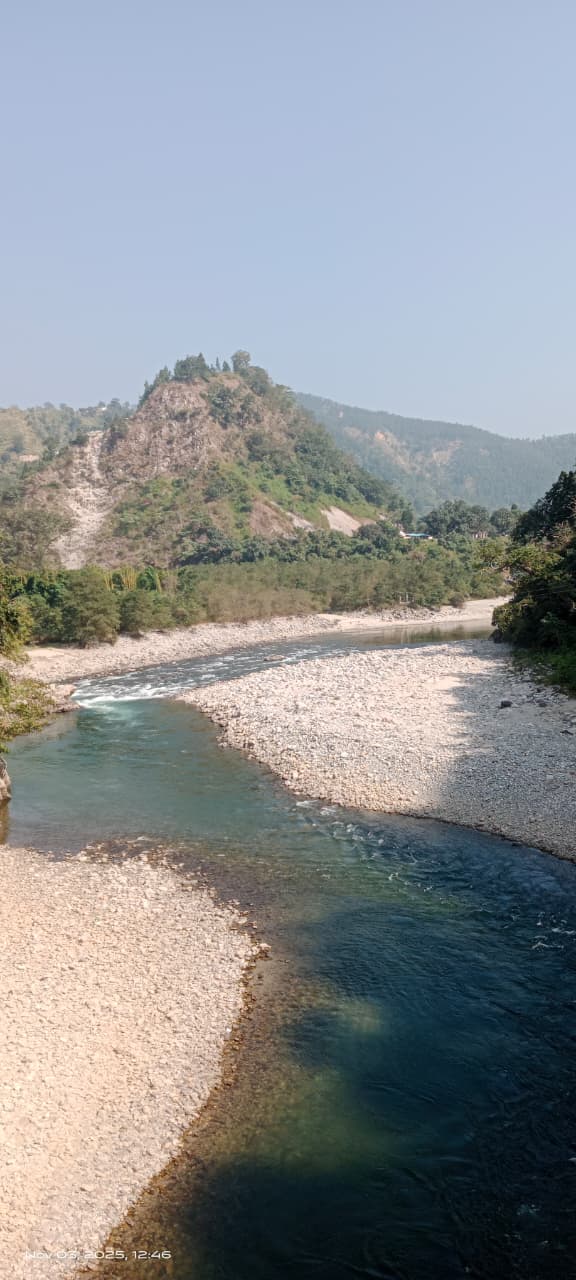
The news this week that the Union Ministry of Jal Shakti, not known for any concern for rivers, has set up the National River Research Centre (NRRC) is welcome with usual caveats. The fact that NRRC has been set up under the Wildlife Institute of India (WII), a body under Union Environment Ministry is not necessarily as positive sign since MoEF too is not known for any concern for rivers. Moreover, setting up of NRRC through NMCG and NRCD also does not provide any hopeful sign for the same reason. WII, where the NRRC has been situated for now itself has had at best mixed track record as far as rivers are concerned.
It’s true that people in India for long has felt need for an institute like NRRC, dedicated to work for the cause of the rivers, but that aspiration can have a chance of fulfilment only if the institute is set up independent of government, as an autonomous body that would promptly get all the information about rivers from all the various central (and state) government, make its own assessments and put them out in public domain, strictly working for the cause of health of India’s Rivers. The setting up of NRRC, hence, under the current arrangements, is clearly not going to fulfil the long-felt need.
Even with these riders, the fact that the government has set up NRRC can be taken as a step in right direction. The outcome its project “Assessment of ecological status of select Indian rivers for conservation planning” will be eagerly awaited. In the meantime, information about the various people and functions associated with the NRRC should be put up on an independent website, so that everyone can see how it is functioning and what functions it is taking up, how and through what people.
The PIB PR also says: “The Centre will also provide scientific and technical advice to support national and state-level decision-making on river basin management. A strong outreach and awareness programme will be led by the NCRR to highlight the ecological, social, and economic importance of rivers and freshwater biodiversity. Currently, about 100 researchers are engaged in the Centre, and one of its kind MSc courses in Freshwater Ecology and Conservation is being run at the Centre.” However, more details on each of these aspects will be eagerly awaited. Its not even known who heads NRRC, for starters!
National River Research Centre The National Centre for River Research (NCRR) is currently working in the project mode assigned to the Wildlife Institute of India (WII), Dehradun through National Mission for Clean Ganga (NMCG) and National River Conservation Directorate (NRCD) in order to cater to the need of other Indian Rivers through the project “Assessment of ecological status of select Indian rivers for conservation planning”. The research outputs generated by the Centre regarding river biodiversity and ecological health are shared with respective State Governments. These outputs are intended to serve as technical scientific baselines for on-site interventions in identified polluted river stretches and requisite reforms in existing policy frameworks for river conservation. Currently, the scope of ecological assessment covers nine rivers in the Ganga Basin and seven rivers in other basins in the country.
During its initial phase, the NCRR has prioritized ecological assessment of select major rivers and floodplain wetlands across India. This comprehensive research focus encompasses the systematic evaluation of riparian biodiversity status and identification of various anthropogenic pressures alongside pollution gradients. The Centre is also dedicated to the mapping of priority stretches for strategic conservation planning and evaluating ecological resilience to better understand the long-term impacts of climate change on river ecosystems.
Coordination is maintained through a collaborative framework involving State Governments, implementing agencies, academic institutions and non-governmental organizations. The mechanism for this coordination includes organizing regional workshops, consultative meetings and dissemination of knowledge products & research publications through both print and electronic media. This ensures that ecological findings are integrated into the broader conservation efforts of various stakeholders.
The ecological assessment of the initial sixteen identified rivers and associated wetlands is an ongoing process, with the scope being progressively expanded to other river systems. This information was provided by the minister of state for Jal Shakti Shri Raj Bhushan Choudhary in a written reply to a question in Lok Sabha on Feb 5 2026. Union Jal Shakti Minister Shri C R Patil inaugurated NRRC at WII on Jan 13 2026.
Jan 13 inauguration of NCRR The Centre will also provide scientific and technical advice to support national and state-level decision-making on river basin management. A strong outreach and awareness programme will be led by the NCRR to highlight the ecological, social, and economic importance of rivers and freshwater biodiversity. Currently, about 100 researchers are engaged in the Centre, and one of its kind MSc courses in Freshwater Ecology and Conservation is being run at the Centre.
During the inauguration, the Minister released two publications, which are outputs of the NMCG–WII Ganga Rejuvenation and Biodiversity Conservation project. The first publication, “Population Status and Conservation Action Plan for Critically Endangered Gharial (Gavialis gangeticus) in the Ganga River Basin, highlights the conservation status and concerns of the Gharial. This was followed by release of a book, “Millets for Life”, was also released, which captures the spirit of the Ganga Rejuvenation Project by linking biodiversity conservation with food and nutrition security. A report, “Conservation, reintroduction and rehabilitation of threatened turtles along Ganga River Basin in Uttar Pradesh,” prepared by TSA Foundation India, was also released. Union Minister flagged off a dolphin rescue van of TSAFI to enhance emergency response for Gangetic dolphins and other aquatic species. The Minister also inaugurated the Indian Skimmer Conservation Project of BNHS, marking a significant step towards the conservation of riverine bird species.
HYDRO POWER PROJECTS
Hydropower as mal-adaptation in Himalayas As climate risks intensify in the Eastern Himalayas, extensive hydropower infrastructure is increasingly at odds with the region’s ecological realities. The 2023 Teesta glacial lake outburst flood revealed how climate-branded infrastructure can transform natural hazards into systemic disasters. Gaps in climate-risk assessment, basin-scale planning, ecological safeguards, and disaster preparedness are pushing hydropower in the Himalayas towards maladaptation.
As the flood intersected with hydropower infrastructure along the Teesta, it revealed how vulnerability has been hard-wired into the landscape. This raises an uncomfortable question: has hydropower, long promoted as a climate solution in the Eastern Himalayas, in fact been functioning as a maladaptation? Promoted as a climate solution and a driver of development, the Teesta GLOF reveals how hydropower can transform episodic hazards into entrenched vulnerability, amplify systemic risk, and reshape ecosystems. In the rapidly warming Eastern Himalayas, hydropower has institutionalised long-term ecological and social fragility — clearly functioning as maladaptation.
One visible consequence is the rapid expansion of glacial lakes. The latest Central Water Commission (CWC) data show a 20.7% increase in lake area across India between 2011 and 2024. In the Eastern Himalayas, the report further reveals that 26–52 lakes in Sikkim and 245–254 in Arunachal Pradesh have increased in water spread, among the highest numbers in the country. These changes reflect ongoing glacier melt and accelerated high-altitude warming, prompting the CWC to flag both states for priority monitoring and early-warning systems due to the elevated risk of GLOFs.
Now, glacier melt, unstable moraines, and extreme rainfall are changing the timing, volume, and sediment loads of rivers in ways that dams — designed around historical baselines — are ill-equipped to handle. Instead, they are turning infrastructure intended to provide energy into a source of ecological and social vulnerability. Therefore, hydropower in this context ceases to be a climate solution and instead functions more as a maladaptation.
Himachal Pradesh to charge 2% revenue cess on Hydro Projects The Himachal Pradesh government has introduced a 2 per cent annual revenue cess on the total land held by hydropower projects, projecting an annual income of around Rs 1,800 crore. To this effect, the state government on Feb 5 issued a detailed notification outlining the structure and rates of land revenue to be levied on such projects. The annual levy has been fixed in a graded slab ranging from 1 per cent to 2 per cent of the project’s average market value. BBMB, NHPC, SJVN and NTPC projects are to be charged, among others.
As per the notification, the Bhakra Beas Management Board (BBMB) is to pay approximately Rs 227 crore land revenue in respect of land put to use for Non Agricultural purpose (Hydro Power Project) with effect from February 2, 2026. Other projects include Nathpa Jhakri being managed by SJVN to pay Rs 144.4516 Cr, Kol Dam-1, Kol Dam-2 in district Bilaspur and Solan to pay Rs 63 crore and Rs 38 crore annually respectively. Official data shows that more than 180 hydro power projects in districts Shimla, Kinnaur, Bilaspur, Una, Lahaul & Spiti, Chamba, Kangra, Mandi etc fall under the assessment framework. According to Himachal’s 12 December notification on land assessment, projects facing the highest cess annually include the Bhakra Dam (Rs 227.46 crore), Beas-Sutlej Link (Rs 146.92 crore), and Pong Dam (Rs 58.77 crore). Satluj Jal Vidyut Nigam could pay around Rs 283 crore yearly.
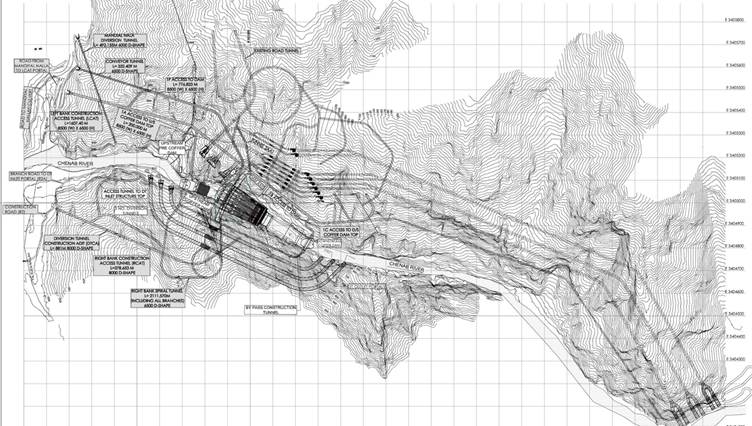
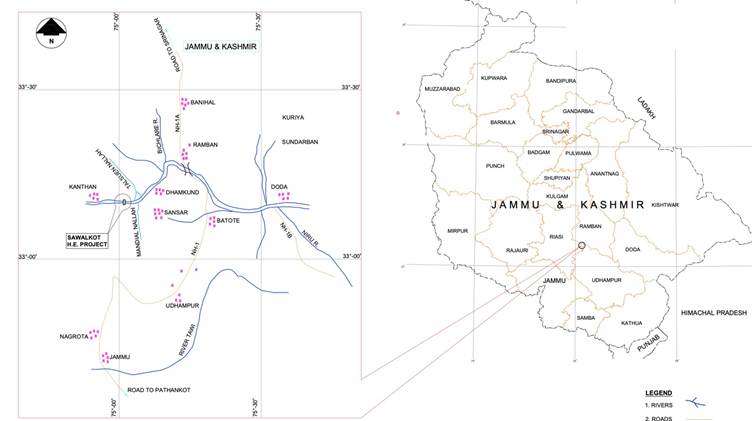
Work on Sawalkote HEP starts in J&K The work on 1856 MW Sawalkote HEP on Chenab river in J&K has started. The documents of the NHPC Limited inviting companies on Feb 5 to build this mega project in the Udhampur and Ramban districts of Jammu and Kashmir show this. The Sawalkote Hydroelectric Project, which in Stage One will see a 1,406 MW project coming up and a 450 MW project in Stage Two, is located on the Chenab River between the Baglihar Project to its upstream and the Salal Project to its downstream.
India Plans to desilt Salal HEP At Salal, a constant influx of sediment has choked the reservoir, reducing its water capacity by up to 95%. In Jan 2026, India’s power minister ordered officials to expedite removal of the sediment. Pakistan objected, saying the plan violates the Indus Waters Treaty. Scientists criticized the plan, which calls for opening sluice gates to flush out the sediment. They warn the surge of water could cause downstream flooding and that the sediments could form mucky piles, narrowing and raising the river’s bed and accelerating flows. The changes could make the river more likely to spill over its banks or cut new channels, flooding riverside communities and farmland.
“It is a gamble with downstream safety in an already unstable region,” says climate and water researcher Pratik Kad of NORCE Research’s Bjerknes Centre for Climate Research in Norway.
EC granted to Kamala HEP The EAC has recommended clearance for construction of NHPC’s 1,720 MW Kamala hydroelectric project in Arunachal Pradesh which entails felling of 23.4 lakh trees. Expressing concern over the proposed felling of trees, the panel has stressed the need for a precise and well-managed action plan for ecosystem restoration. The compensatory afforestation for the project will be carried out in various parts of Madhya Pradesh, as no degraded forest land was available in Arunachal Pradesh, as per submissions made to the panel by Arunachal forest department.
The Rs 23,764.01-crore project, which will have a 216 m high dam and a 2,600-hectare reservoir, is planned to harness the water of the Kamla river, a right-bank tributary of Subansiri.
DAM SAFETY
BBMB to assess Bhakra Dam Hills for landslide risks Bhakra Beas Management Board (BBMB) is planning to undertake a detailed geological assessment of the hills surrounding the Bhakra dam due to increasing incidents of landslides during the monsoon. The BBMB management is in the process of signing an MoU with Geological Survey of India (GSI) to conduct a comprehensive study of the slopes and hill formations around the dam structure. Formalities for finalising the MoU are underway.
The hills flanking the dam and the approach routes from Nangal have witnessed recurring landslides over the past few monsoons. Last year, heavy rainfall triggered multiple slope failures, leading to the blockage of both road and railway tracks connecting Nangal to the dam site. The disruptions affected the movement of personnel and essential supplies. Muck and debris from the slopes had even entered the power house complex of the dam.
When the Bhakra dam was constructed in the 1950s and early 1960s, the adjoining hills were reinforced using concrete supports and iron bars to stabilise vulnerable slopes. Continuous weathering, water seepage, vegetation growth, and repeated cycles of heavy rainfall may have weakened the original protective structures. Climate variability, including more intense rainfall events, has further increased the vulnerability of hill slopes. The proposed geological survey by GSI is expected to assess rock strength, fault lines, drainage patterns, and slope stability. Based on the findings, BBMB may undertake fresh reinforcement measures.
Status of Dam Safety in India post 2025 monsoon as per NDSA As per the National Register of Specified Dams (NRSD), 2025 compiled by the National Dam Safety Authority, there are 1,681 specified dams that are over fifty years old. For state-wise details of the specified dams see: https://dharma.cwc.gov.in/#/national-register-of-specified-dams-(nrsd)-2025
According to the Dam Safety Act, 2021, every owner of a specified dam is mandated to conduct every year a pre-monsoon inspection and post-monsoon inspection of each specified dam under their jurisdiction. As per this compliance, dam owning agencies have reported the pre-monsoon & post-monsoon inspections of about 6524 and 6553 dams respectively for the year 2025.
As an outcome of pre-monsoon and post-monsoon inspections, dams are being categorized into three categories on the basis of urgency of repairs/maintenance. Category-III requires minor remedial measures which are rectifiable during the year. Category-II indicates major deficiencies requiring prompt remedial measures and Category-I indicate the most serious deficiencies, which if left unattended, may lead to their failure.
As per the information provided by the National Dam Safety Authority, the post-monsoon inspection reports of 2025 indicate that three specified dams have been classified under Category-I. These include the Medigadda Barrage in Telangana, the Lower Khajuri Dam in Uttar Pradesh, and the Bokaro Barrage in Jharkhand. In addition, 216 dams have been categorized under Category-II. Of these, 69 specified dams are more than fifty years old.
Govt. of India is implementing the Dam Rehabilitation and Improvement Project (DRIP), Phase-II and III. The scheme is of 10 years duration (2021-2031), being implemented in two phases, each of 6 years duration with 2 years of overlap with external funding. The scheme envisages the rehabilitation and safety enhancement of 736 dams spread across 19 States and three Central agencies. DRIP-II has become operational from 12th October 2021, and is being co-financed by the World Bank and the Asian Infrastructure and Investment Bank. The financial outlay for Phase II is Rs. 5,107 cr, while Phase III has an allocation of Rs. 5,104 cr.
Rehabilitation and improvement works under the Scheme aim to enhance dam safety and flood-handling capacity through structural and non-structural measures. These include raising parapet walls, improving spillways, preparing O&M Manuals and Emergency Action Plans, repairing or replacing gates and hydro-mechanical components, strengthening dam structures with grouting and seepage control, and upgrading safety facilities such as access roads, lighting, catwalks, and DG sets.
Under DRIP-II, rehabilitation proposals (called Project Screening Template, PST) of 173 dams amounting to Rs. 4,744 crores have been approved. Contracts amounting to Rs. 2816 crores have been awarded by the various Implementing States/agencies. The total expenditure under DRIP-II scheme up to 31st December 2025 is Rs. 2029 crores. Major physical rehabilitation works have been completed at 35 dams.
Two Category-I dams namely Lower Khajuri Dam in Uttar Pradesh and the Bokaro Barrage of the Damodar Valley Corporation have been included under the DRIP-II Scheme for rehabilitation and safety enhancement. With regard to the third Category-I dam, the Lakshmi (Medigadda) Barrage, the State has been requested to implement the various preventive and mitigating measures recommended by the NDSA. This information was provided by Union Minister of state for Jal Shakti on Jan 29 2026.
Ageing dams a national security concern: Siddaramaiah CM Siddaramaiah called for urgent and systematic safety checks and modernization of dams across the country, warning that ageing infrastructure and climate risks have turned dam safety into a national security issue. Speaking after inaugurating the two-day International Dam and Reservoir Safety Conference 2026 at the Indian Institute of Science Feb. 13, Siddaramaiah insisted on the need for cooperative federalism in water governance. He said, Karnataka has over 230 dams.
Deputy CM DK Shivakumar said dam safety is a national priority and highlighted the Centre–state partnership under Dam Rehabilitation and Improvement Program (DRIP). “Karnataka is implementing DRIP Phase II and Phase III, covering 58 dams with an approved outlay of Rs 1,500 crore, focusing on structural strengthening, surveillance and long-term resilience,” he said.
Tungabhadra Gate Installation The installation of crest gates numbered 19 and 32 at the Tungabhadra (TB) Dam was completed on Feb. 12. With this, the installation work of three gates out of a total of 33 has now been finished. At present, the installation work is in progress for gates numbered 1, 4, 11, 17, 20, 24, 26, 27, 28, and 33 (a total of 10 gates). So far, 15 old gates have been cut and removed, and cutting work on two more gates is currently underway.
DAMS
Protests against Ken Betwa Project in Madhya Pradesh Locals from various villages under the Bijawar tehsil of Chhattarpur district in Madhya Pradesh were on Feb 10 evening protesting for various demands, including the release of activist Amit Bhatnagar and better compensation and rehabilitation for those affected by the Ken Betwa project. The protesters including tribals and women. Chhattarpur SP Agam Jain confirmed use of water canons against the protesters. A district administration official, said that Mr. Bhatnagar was arrested on the “apprehension that he may disturb the peace in the area” under Section 170 of the Bharatiya Nagarik Suraksha Sanhita.
Since Feb 6, 2026, the protesters have been staging demonstrations seeking proper compensation or a rehabilitation plan. They were also demanding the immediate release of activist Amit Bhatnagar, who was leading the protest. The villagers demanded legal guarantees for their rights, compensation of ₹15 lakh, and agricultural land. “The struggle is not limited to compensation, but rather a fight to protect water, forests, life and constitutional rights. We will not move from the dam site until our rights are ensured,” protester Suman Adivasi said. Chhatarpur district collector Parth Jaiswal said negotiations with villagers are ongoing. “Work at the dam site is currently halted due to the agitation, but we expect a resolution soon,” he said.
“We were sitting peacefully at the Bijawar tehsil office on Tuesday night when they arrested social activist Amit Bhatnagar, who was helping us with the protest. Police suddenly came and used a water cannon. They used force to disperse us. They registered FIRs against us to suppress our voices,” Rajesh Kumar, another protester, said. The villagers said that stoves would not be lit in 15 villages until their demands were met.
A woman protester named Santoshi said, “Bhatnagar is fighting for the rights of the poor and displaced. Our sit-in and demonstration will continue until his release.” Another protester said if the administration had wanted, Bhatnagar could have got bail, but officials acted out of vengeance and arrested him. Four days after the arrest, Bhatnagar was released and collector has offered to talk with the agitating people.
NGT asks govt to ensure no dumping in Kerwa Dam The Bhopal bench of NGT on Feb 6, directed principal secretary, water resource department (WRD) to form a patrolling/monitoring team of local officials to ensure that there is no illegal dumping of any building material within the full tank level (FTL) of the Kerwa dam, which affects its storage capacity and take immediate action if any illegal dumping is observed.
Clearing land of encroachments near Kaliyasot reservoir All appropriate steps have been taken by the authorities to clear the land near Kaliyasot reservoir of encroachments. This was stated in the status report filed by Madhya Pradesh. The report filed by the Bhopal Municipal Corp (BMC) had submitted a detailed status report on August 18, 2025. A total of 11 structures were identified on private land located within 33 meters of the FTL of the Kaliyasot reservoir.
BMC, through its authorised legal representative, has filed applications seeking vacation of stay orders and for early hearing and disposal of the pending writ petitions, before the High Court August 18, 2025. The report of September 16, 2025 was uploaded on the NGT site, Feb 10, 2026.
Centre to form panel to study Polavaram backwater impacts After prolonged protests and repeated requests by Telangana, the Union government has finally initiated steps to study the submergence of Bhadrachalam under the backwaters of Polavaram project. The Polavaram Project Authority (PPA) on Feb 2 2026 decided to constitute a committee to study the impact of Polavaram project backwaters, if the water is stored at the 150-ft level. The PPA wrote to Telangana officials, asking them to nominate a member to the proposed committee to study the possible flooding of Bhadrachalam.
Telangana has consistently warned that storing water up to 150 feet at Polavaram would obstruct the smooth flow of floodwaters from Bhadrachalam. Of the eight outfall regulators (sluices) in Bhadrachalam, three are located below the 150-foot level. Telangana officials expressed the fear that during flood season, the water in Godavari would not flow freely, due to the backwaters of the Polavaram and could lead to the flooding of Bhadrachalam temple town.
The issue reached the Supreme Court, which in 2023 directed authorities to take appropriate measures to prevent submergence. As per the direction of the apex court, the Jal Shakti Ministry and the Central Water Commission (CWC) have held four technical meetings. As a follow-up to the decisions taken in those meetings, a detailed study will now be undertaken to assess flooding likely to be caused by Polavaram backwaters. Sources said that based on the findings of the study, the Polavaram Project Authority may be required to put in place permanent pumping arrangements at the outfall regulators located below the 150-foot level.
What India’s irrigation debate gets wrong The evidence points to a more nuanced conclusion: dams are neither heroes nor villains. They are amplifiers. When embedded in strong institutions, they magnify growth and resilience; when embedded in weak ones, they magnify inequity and inefficiency. This insight exposes the limits of the pro- versus anti-dam framing. The real policy questions are far more specific—and far more answerable. Which projects deliver sustained benefits over time? How effectively are command areas developed and governed? Who gains from irrigation, who is excluded and why? Are indirect benefits recognised in appraisal and investment decisions? Viewed through this lens, blanket opposition to dams is as analytically weak as uncritical endorsement. (Saurabh Bandyopadhyay, Laxmi Joshi, NCAER)
1. Kamala HE Project (1720MW) in 3858.89 Ha at Village Pompulend, Boa Model, and Laa I etc., Sub-Dist Kamporijo Circle, Chambang Circle, Raga and Parsi-Parlo, Dist Kamle, Kra Daadi and Kurung Kumey, Arunachal Pradesh by NHPC Ltd – Environmental Clearance: Approved
2. Morand-Ganjal Irrigation Project in Hosangabad district of Madhya Pradesh by Narmada Valley Development Authority, Madhya Pradesh-Environmental Clearance-APPROVED Gunjal dam construction.
3. Gosaintari Close loop Pumped Storage Project (920 MW) in 283.03 Ha at Adwaria, Amghati, and Charbigha etc., Sub-Dist Rajauli & Gobindpur, Dist Nawada, Bihar by Sun Hydro Energy Private Ltd: Approved
4. Jhariya Close Pumped Storage Project (1620 MW) in 310.115 Ha at Village Barahmori, Chakaria, Sasnai etc, Sub-Dist Robertsganj, Dist Sonbhadra, Uttar Pradesh by Jhariya Ananturja Pvt Ltd – Amendment in Terms of References: Approved
5. Kishau Multipurpose Project (CCA: 102,375.95 ha and 422 MW) in 2,950 Ha at Village Bagna, Bali Koti, Bela and Bobri (234) etc., Sub Dist Shalai, Kamrau and Chakrata, Dist Dehradun and Sirmaur, Himachal Pradesh & Uttarakhand by Kishau Corp Ltd– Terms of References: Approved
6. Pailani Barrage on Ken River under Ken Betwa Link Project in 287 Ha at Village Achhraund, Amlor and Bagchha etc., SubDist Banda and Maudaha, Dist Banda & Hamirpur, UP by Ex Engr Ken Betwa Link Canal Construction Div-1 Mahoba – Terms of References: Approved for return as requested, due to change in project parameters
7. Assam/PSP-03 Close loop pumped storage project (1500 MW) in 484 Ha at Village Lipgaon and Pankumar, Sub-Dist Diphu, Dist Karbi Anglong, Assam by Assam Power Distribution Company Limited – Terms of Reference: Approved
8. Assam/PSP04 Close loop pumped storage project (1200 MW) in 372 Ha at Village Maibong, Sub-Dist Mahur and Umrangso, Dist Dima Hasao, Assam by Assam Power Distribution Company Limited – Terms of Reference: Approved
9. Kutulisinga Irrigation Project (CCA: 2540 ha) in 179.554 Ha at Village Kutulusinga, Sub-Dist Thakurgarh, Dist Anugul, Odisha – Terms of Reference: Approved
1. Velimalai Pumped Storage Hydro Electric Project (1000 MW) in 159.25 Ha at Village Alur and Velimalai, Sub Dist Kalkulam, Dist Kanniyakumari, Tamil Nadu by Tamil Nadu Green Energy Corp Ltd – Terms of References
2. Chitawad Barrage Major Irrigation Project (CCA: 65000 Ha) in 4120.67 Ha at Village Thikriya, Alot, Amri, etc, Sub Dist Mahidpur, Nagda, Ghatiya and Tarana, Dist Ujjain, Madhya Pradesh – Terms of References
3. Savitri Open Loop Pumped Storage Project (2400 MW) in 310.76 Ha at Village Javali, Dare, Haroshi, Karanje etc, Sub-dist Poladpur and Mahabaleshwar, Dist Satara and Raigarh, Mah by NHPC limited – Terms of References
INTERSTATE WATER DISPUTES
Andhra CM objects plan to increase Alamatti dam height During a meeting with the Union Jal Shakti minister in Delhi on Feb 10, Naidu cautioned that any such increase by Karnataka would have a serious adverse impact on downstream water availability for Andhra Pradesh.
Raising interstate concerns, the Chief Minister urged early resolution of the Andhra Pradesh–Odisha Vamsadhara river water dispute. He pressed for the final report of the Vamsadhara Water Disputes Tribunal to be notified in the Gazette without delay, stating that this would clear the way for the construction of the Neradi Barrage on the Vamsadhara river.
He highlighted the continuing dispute between Andhra Pradesh and Telangana over the sharing of Godavari waters and called for the immediate constitution of the Godavari Water Disputes Tribunal to ensure equitable river water allocation.
He sought reimbursement of the increased costs incurred due to capacity enhancement of the Polavaram right and left main canals and appealed for full financial assistance for Polavaram Phase II, which includes land acquisition, rehabilitation and resettlement, and construction of protective embankments. He informed the Union Minister that Phase II alone requires an additional funding of approximately Rs 32,000 crore.
He also presented proposals for the Polavaram–Nallamala Sagar Link Project, aimed at diverting surplus Godavari flood waters to drought prone regions. He requested approvals along with technical and financial support under the National River Linking Policy.
RIVERS
Drivers of Contrasting Changes in Streamflow in Indus & Ganga Basins Abstract: -Using in situ and satellite observations, and hydrological modeling, we show contrasting trends, with a ∼8% (p-value = 0.046) increase in streamflow in the Indus Basin due to rising precipitation. In contrast, a sharp decline of ∼17% (p-value = 0.008) in the Ganga Basin driven by intensive groundwater pumping during 1980–2021 and despite the overall increase in streamflow in the Indus Basin, two sub-basins, Ravi and Sutlej, faced a decline in streamflow. Three major sub-basins of the Ganga River, including Yamuna, Ramganga, and Upper Ganga, also experienced a decline in streamflow.
About 60%–80% of the streamflow decline in the Ganga Basin is attributable to intensive groundwater pumping, further amplified by weakening summer monsoon precipitation. Drought-induced groundwater pumping exacerbates river drying, especially during the dry season (October–May). Our findings highlight the dominant role of coupled climate-human interactions in driving streamflow changes and emphasize the urgency of integrated surface-groundwater management to safeguard water and food security in India.
According to the study , annual streamflow in the Indus Basin rose by about 8% over the past four decades. In contrast, the Ganga Basin saw a 17% reduction in flow over the same period.
In the Indus system, rising precipitation — particularly linked to western disturbances and variable monsoon contributions — appears to be the main driver of increased river flow. The study finds that the strongest increases are seen in the main Indus River and its western tributaries, the Jhelum and the Chenab.
However, the increase is not uniform: two eastern tributaries, the Ravi and Sutlej, have experienced significant declines despite the basin-wide upward trend. In the Ganga Basin, the picture is starkly different. Rainfall has declined by roughly 10%, while temperatures and atmospheric water demand have increased. But the dominant factor behind falling river flows, the researchers concluded, is intensive groundwater pumping for irrigation.
Using a two-step statistical attribution framework, the authors estimate that 60% to 80% of the streamflow decline in major Ganga sub-basins such as the Yamuna, Upper Ganga, and Ramganga can be traced to groundwater extraction, including pumping triggered by rainfall deficits during drought years.
The authors call for integrated management of surface water and groundwater. Treating rivers and aquifers as separate systems, they argue, is no longer viable in an agriculture-dominated region where pumping decisions directly affect river flows. “We cannot continue to indiscriminately draw on water as if it is a free resource. Water use efficiency, changes in the types of crops grown has to be seriously considered,” added Professor Mishra.
In their study, the authors recommend more adaptive irrigation practices, crop diversification away from water-intensive crops in drought-prone years, and water planning aligned with long-term climate variability. Without coordinated groundwater regulation and climate-aware management, the study warns, river drying in the Ganga Basin is likely to intensify.
Before the river grows thin A poem dedicated to letting the planet’s big and small bodies of water live.
CCEA approves road-cum-rail tunnel under Brahmaputra Cabinet Committee on Economic Affairs on Feb. 13 cleared construction of the country’s first underwater road-cum-rail tunnel under the Brahmaputra River. The 33.7-km long project will have a 15.8-km twin tube tunnel under the river.
Springs that sustains life in Yadgir-Karnataka In the Hunasagi–Baichbal valley of Yadgir district seep springs and perennial water pools have supported continuous human occupation since prehistoric times. The major water body that has sustained life here is the Hunasagi stream fed by several shallow streams, including the Baichbal stream.
Jhelum Is Calling is a documentary that highlights the growing problem of pollution in the River Jhelum and its serious impact on the environment, nature, and human life. This film is a call for awareness and responsibility, showing how human negligence and waste are slowly destroying one of the most important rivers of the region. Through visuals and storytelling, the documentary urges people to protect and preserve River Jhelum for future generations.
Himachal’s industrial waste poisoning Punjab’s waters: Study The industrial expansion in the Baddi-Barotiwala belt of Himachal Pradesh turned into an inter-state environmental issue, as untreated toxic effluents are discharged into the Sirsa Nadi, a rivulet that carries pollutants directly into Punjab. The industrial growth not only depleted local groundwater but also contaminated downstream water bodies – a “bone of contention” between the two states.
Paradoxically, the major part of the extracted groundwater by industry was again discharged as polluted water in the drainage lines and lost as run-off from the watershed to the Sirsa rivulet, creating another problem. It also found that while most industries installed the required pollution data display boards, a large number of these were blank or lacked any daily recorded data.
Radha Soami Beas dera under NGT lens The NGT has constituted a joint committee to verify the factual position regarding the allegations of tree felling, illegal construction and the use of a tea estate land levelled against the Radha Soami Satsang Beas at Parour in Kangra district. Seema Kumari, pradhan of Ghaneta gram panchayat, along with some others, filed a complaint before the NGT, drawing attention towards the alleged illegal expansion of the Radha Soami Satsang Beas complex at Parour. The complaint was filed with pictures and other proof of alleged tree felling, illegal construction, muck dumping, blocking of the flow of water channels without prior approval. The case would come up for next hearing on December 18.
Activists fighting to protect Beas River’s course in HC For the last two decades, Punjab Lok Bhalai Insaf Welfare Society president Baldev Singh Sirsa has been running a campaign to protect the Beas River’s natural course near the Dera’s premises. The next hearing on a petition in the matter was due to come up before the Punjab and Haryana High Court on Feb. 06. Commenting on Sirsa’s petition, the high court had on June 30, 2024, directed the Punjab government to address long-standing concerns over a bandh (embankment) constructed by Radha Soami Satsang Beas (Dera Beas) along the river, which petitioners claimed was causing severe erosion of agricultural land in Kapurthala district.
In observations during the hearing of the PIL, the court noted evidence from Google Maps spanning from 1985 to 2022, showing how the embankment diverted the river flow to the left bank, leading to rapid erosion on the right side in Dhilwan. “We have been shown the Google Maps from the year 1985 onwards to the year 2022…as to how on account of the construction of the bandh the water has got diverted to the left side of the river and is causing rapid erosion on the other side and depleting away agricultural land,” the court had stated.
Joint committee flags sewage discharge into Pawana river The major sources of pollution in the Pawana river in Pune, Maharashtra are sullage and/or sewage generated and discharged through natural drains from 20 villages (village panchayat groups) situated on both banks of the river. This was stated in a joint committee report dated February 9, 2026, filed in compliance with the NGT’s order of 20 August 2025 in the matter of Krunnal Narayan Gharre vs Pimpri-Chinchwad Municipal Corporation & others.
The PMRDA and Pune Zilla Parishad have identified 15 natural drains conveying sullage and/or sewage into the Pawana river along its stretch. The PMRDA has proposed 14 STP with an aggregate capacity of 5.84 million litres per day. However, commissioning of these STPs is also at the approval and/or tendering stage. “Except informing about the proposal, the PMRDA has not provided any relevant information and record in the matter,” the report stated.
Tamsa River Rejuvenation Once facing challenges of siltation, waste accumulation and encroachments, the river today stands revitalised through coordinated administrative efforts and strong community participation under the Namami Gange Program. The Tamsa flows through Ambedkar Nagar, Ayodhya and Azamgarh districts before merging with the Ganga.
NGT slams NMCG over illegal bridge in Prayagraj “The officials responsible for taking the decision and proceeding further with the construction of the bridge in violation of the River Ganga (Rejuvenation, Protection and Management) Authorities Order, 2016 without obtaining prior permission of the NMCG are required to be identified for appropriate action,” said the NGT on January 30. The principal bench was hearing a plea filed by the Bharatiya Kisan Union (Purwa) and asked the NMCG to identify the officials responsible for violating the norms. The reply of the NMCG reflects that it is intending to take action only against the project director of the Rail Vikas Nigam Limited (RVNL) which is the executing agency for the construction of the bridge. Submit the report at least one week before the next date of hearing, April 23.
The concretization of the riverbank for the project also has potential to reduce flood cushion and flood carrying capacity of the river during monsoon. The act might result in flood afflux and back flows in adjoining drains thus could become a source of flooding around ITO and Supreme Court complex as seen during July 2023 flood spell.
Damage to Yamuna floodplain forested patch The concretization of the riverbank for the project also has potential to reduce flood cushion and flood carrying capacity of the river during monsoon. The act might result in flood afflux and back flows in adjoining drains thus could become a source of flooding around ITO & Supreme Court complex as seen during July 2023 flood spell.
Concerns raised over greenery damage on Yamuna floodplains Environmentalists, including a former Secretary at the Centre, have written to the Union Environment Ministry over damage to greenery near the Yamuna floodplains at ITO ghat in central Delhi due to debris and rock dumping, reportedly for a riverfront project. When The Hindu visited the site on Thursday, several trees were found damaged. Large quantities of rocks had been dumped along a road running almost parallel to the river from ITO ghat up to Drain No. 12, which flows into the Yamuna. At least two trees were seen fully damaged and lying on the ground. Workers at the site said the stones were being used to strengthen the road so it could function as a bund during floods. They added that the road, located within the floodplains, would also be widened as part of the project.
Yamuna froths again, data missing Unlike last Oct, when Delhi govt swung into action ahead of Chhath Puja with daily inspections and heavy freshwater releases from Hathnikund Barrage, the current response is marked by silence. Delhi Pollution Control Committee (DPCC) is also yet to release any river water quality assessment for Jan or offer any explanation for the delay.
Environmentalists warn that with the river out of the political and festive spotlight, monitoring appears to be slipping. CPCB does not independently assess the Yamuna in Delhi and relies on DPCC’s data. “The Yamuna was treated like a tap – turned on for elections and festivals, then shut off,” said Bhim Singh Rawat, SANDRP. “Without year-round environmental flows and functional sewage treatment plants, frothing will remain a permanent feature.”
Yamuna still choked by toxic foam Restoring the river is essential not only for environmental sustainability but also for protecting public health, preserving biodiversity, and safeguarding the cultural and spiritual traditions that have been tied to the Yamuna for centuries. There is a limit to how much chlorine can be added as a disinfectant to treat high ammonia in untreated water.
STP in Delhi not functioning as per norms On Feb. 10, the NGT directed the Delhi Jal Board (DJB) to examine a complaint regarding a STP in Mayur Vihar, Delhi, which is allegedly not functioning in accordance with norms. It was submitted that no wind barrier has been installed to prevent odour, and that a conveyor belt remains open, contributing to odour emissions. The STP is reportedly located merely 10 to 15 metres from the main gate of a housing colony. The NGT directed that these aspects be examined by the DJB and addressed in its reply affidavit. The matter is next listed for hearing on April 28, 2026.
Delhi govt plans new bridge According to officials, with RRTS stations and the Delhi-Mumbai Expressway getting ready, traffic congestion on the Ring Road, especially near Sarai Kale Khan, is expected to increase. Currently, the Delhi-Meerut Expressway and the Delhi-Dehradun Expressway terminate near Sarai Kale Khan on the Ring Road. Soon, the DND-Sohna (Jewar) link of the Delhi-Mumbai Expressway is also set to open, officials added. “Keeping this in view, the government is planning to propose a new bridge. The location is not finalised and is being examined. PWD will study the stretch from Old Wazirabad to Kalindi Kunj to check feasibility, traffic congestion, and vehicular movement,” an official said.
Delhi gets its first Yamuna cruise from Feb 20.
RIVERS BIODIVERSITY
Better Hooghly water quality behind spurt in Gangetic Dolphin sightings in W Bengal A number of dolphins were sighted recently in Nadia, Murshidabad and East Burdwan, as W Bengal attributed the dolphin sightings to various steps taken under the state mission for clean Ganga scheme to improve the quality of the river water. Officials said over the last five years, 32 sewage treatment plants (STP) with additional treatment capacity of 554 million litres per day (MLD) were made operational, as the level of biochemical oxygen demand (BOD) of the state’s entire Ganga stretch has come down below 3 mg/L. “This is a significant improvement compared to 2018 and 2022, when BOD levels were recorded at 12 mg/L and 8 mg/L respectively,” said an official.
Since April 2025, four STPs at Maheshtala in South 24 Parganas, Raghunathganj and Jangipur in Murshidabad, and North Barrackpore in North 24 Parganas were functional. “The entire stretch of the Hooghly from Farakka to Diamond Harbour, covering nine districts along the river bank, has been upgraded to the least polluted category,” officials said. Officials said that to reduce faecal coliform levels in the river, septage is being co-treated at functional STPs that are being set up across riverside towns. A 125 KLD functional STP at the regional wastewater management centre in Baidyabati, Hooghly, was recently made operational to treat septage from nearby six municipalities of Uttarpara-Kotrung, Konnagar, Serampore, Rishra, Champdani and Baidyabati. “The facility may further reduce faecal coliform levels in the Ganga,” said an official.
311 Endangered Turtles Seized From AC First-Class Coach In Bhopal Madhya Pradesh State Tiger Strike Force (STSF), in a joint operation with the Railway Protection Force (RPF) and the Bhopal Forest Division, seized 311 rare and endangered turtles from the AC First-Class coach of the 19322 Patna-Indore Express at Sant Hirdaram railway station in Bhopal.
Investigators revealed that the racket sourced turtles from the rivers of Uttar Pradesh, primarily the Ganga and Gomti and their tributaries and transported them concealed inside AC First-Class coaches to Madhya Pradesh. The smuggling operation allegedly used the services of coach attendants to stash the turtles during transit.
World Hippo Day 15 Feb. 2026 Hippos depend on freshwater habitats. Rivers, lakes, and slow-moving streams provide safety during the day. Nearby grasslands provide food at night. This balance between water and land remains essential for survival. However, human activity now threatens this balance. Expanding agriculture uses more land near rivers. Growing communities build homes and farms in areas once filled with wildlife. As a result, hippos lose safe resting places and feeding grounds. Climate change adds another challenge. Rising temperatures and changing rainfall patterns cause rivers to shrink. During drought conditions, water levels drop quickly. Less water leads to overcrowding and stress among hippos.
SAND MINING
Submit data on illegal sand mining worth Rs 4,730 cr: SC The Supreme Court of India on Feb. 11, directed the Tamil Nadu government to submit details regarding cases registered in connection with the alleged illegal sand mining worth Rs 4730 crore. The bench of Chief Justice of India Surya Kant and Justice Joymalya Bagchi was hearing a petition filed by one M Lakshmanan calling for a Central Bureau of Investigation (CBI) probe into the allegations. The Court has asked the State to provide details of all FIRs registered in relation to illegal sand mining including FIRs which were closed based on “false allegations.”
Senior advocate Prashant Bhushan, appearing for the petitioner, submitted that a High Court case on the issue had been closed after the State assured it would stop illegal mining. But the subsequent Enforcement Directorate (ED) probe had found illegal mining worth Rs 4,730 crore. Bhushan submitted that the ED probe was shut down, citing the lack of a predicate offence. A predicate offence refers to a crime committed in service of a larger, more complex crime, most often invoked in relation to Money laundering offences.
Former minister booked in sand mining case Karur Town police on Feb. 12 booked former AIADMK minister MR Vijayabhaskar and a party cadre in an illegal sand mining case. According to sources, the Village Administrative Officer (VAO) of Andankovil East N Shanmugam on Feb. 11 afternoon lodged a police complaint stating that during an inspection conducted on Wednesday evening, revenue officials found about 12 units of river sand dumped on a vacant plot located close to the house belonging to Vijayabhaskar’s wife Vijayalakshmi. The VAO, in his complaint, stated that the sand was stored without permission.
One time scheme to regularize excess/illegal stone quarrying Tamil Nadu govt has introduced a one-time scheme to regularise excess and illegal quarrying, effective retrospectively from April 6, 2015. This scheme involves levying penalties for quarrying beyond leasehold limits and in non-leasehold areas. Activists, however, are demanding the withdrawal of this order and calling for criminal action against all illegal mining operations, and the closure of quarries found to be in violation of regulations.
Official Inaction Pushed Villagers: SC The Supreme Court on Feb. 12 granted bail to a man sentenced to 10 years’ rigorous imprisonment in a case over vandalization of a house by a mob. It was noted that the authorities’ failure to act on complaints made by some villagers regarding illegal mining/stone crushing in the area led to the incident. Expressing “anguish”, the Court called for the names and designation of officers who were there at the time of the incident.
NGT bans mining across 85 Punjab sites after village flags tender process The NGT has banned mining in all 85 sites spread across the state after an application was moved by the panchayat of Gahlri village falling in Gurdaspur district. The sites were identified by the Punjab Department of Water Resources last year. The ban will remain in effect till further orders.
Tender notices for desilting and removing of riverbed material (mining) from these sites had recently been issued by the Punjab Government. Counsel for the Gahlri panchayat had pleaded that since dredging and desilting work were meant for commercial purposes, the mandatory environmental clearances were required. It was also contended that the village was located downstream and if desilting was carried out, “lands of the villagers would be adversely affected”.
Severe erosion by River Khannaut due to sand mining The NGT Feb. 9 directed appointment of a joint committee to look into the complaint of severe erosion caused by River Khannaut running along the defence land located at Mau Khalsa village in Shahjahanpur district of Uttar Pradesh. The applicant alleged that on account of the heavy rains and illegal sand mining, the erosion is speedily encroaching upon the boundary of the defence land. The applicant has also enclosed photographs in support of the erosion of the bank of the river on account of illegal mining.
Mining threatens ecosystems Mining strips Kashmir’s riverbeds, eroding groundwater recharge, drying springs, and shrinking trout habitats, leaving Himalayan ecosystems on the brink.
Preserve Kashmir’s geological treasure! Intervention of NGT is ray of hope for protection of Karewas but government must play its role too
In a tragic road accident in the morning of February 09, a bike rider died on the spot after being hit by a dumper loaded with mining material in Dhakiya No. 1, under the Kundeshwari outpost area of Kashipur. The incident caused a stir in the area, and an angry mob set the dumper on fire. Local residents are outraged by the deaths in two separate dumper accidents within a radius of just five kilometers. People have raised questions about the speed and monitoring of heavy vehicles. Villagers reported that a dumper collision had occurred in the same area the previous night. Seeing the same situation again in the morning, people became angry. They said that the movement of heavy vehicles was causing frequent accidents.
WETLANDS, LAKES, WATER BODIES
Dal rehabilitation plan that never took off The ₹416.72-crore resettlement plan for Dal Lake dwellers had achieved “only 27% progress” in 17 years. The ambitious project, approved in 2009 under former PM Manmohan Singh, had sought to relocate at least 9,000 families from the Dal Lake ecosystem, set against the backdrop of the Zabarwan hills in Srinagar.
Instead, only 1,808 families were rehabilitated to a colony in Srinagar’s Bemina, one of the most affected areas during the massive floods of 2014. The rest stayed back, some by choice and other due to faultlines in infrastructure, compensation disputes and a High Court stay order.
All these years later, the govt has entirely abandoned that model and now it is proposing to transform 58 existing hamlets within Dal lake into “eco-friendly hamlets”. This marks a dramatic turn in the debate that has been going on for years now: are Dal dwellers protectors or polluters?
Rs 500-cr plan to save lakes in Srinagar: Govt To check pollution, five Sewage Treatment Plants with a combined capacity of 36.73 MLD are operational around the Dal-Nigeen periphery, while a 30 MLD Guptganga STP costing Rs 306 crore is under construction. Sewerage networks have been connected to 573 houseboats in Dal Lake and 148 houseboats in Nigeen Lake, along with oxidation ponds and bio-digesters to treat inflows.
A Rs 212.38-crore Integrated Management Plan for the Dal-Nigeen ecosystem, prepared with IIT Roorkee under the Prime Minister’s Development Package, will address sewerage and siltation issues. The government further said Khushalsar and Gilsar lakes, recently transferred to LCMA, are undergoing dredging and cleaning, while a Rs 41.17-crore sewer network is being laid to connect them to the Noorbagh STP.
41 cr sewer project for Khushalsar: Govt The govt informed the Legislative Assembly that a Rs 41.17 crore garland sewer network is being constructed around Khushalsar Lake under grants from the NGT. In a written reply to a question raised by MLA Mubarik Gul, the Government said the sewer network will be connected to the Noorbagh STP. The project is being executed by the Urban Environment and Economic Development (UEED) Department as part of comprehensive efforts to restore and conserve Khushalsar and Gilsar lakes.
Man reviving dying water bodies Mission Ehsaas, launched in February 2021 under the Nigeen Lake Conservation Organisation (NLCO), works to revive water bodies, restore springs, rejuvenate wetlands, raise awareness, and collaborate with local authorities. It also contributes to policy-level decisions, ensuring ecological concerns are heard.
Lakes like Nigeen, Khushalsar, and Gilsar have seen visible improvements through this initiative. But Mission Ehsaas is more than a cleanup effort; it’s about building shared responsibility for Kashmir’s natural heritage. At its core is Manzoor Wangnoo, founder of NLCO and the Mission Ehsaas initiative’s driving force. In this interview with India Water Portal, Manzoor Wangnoo reflects on what inspired Mission Ehsaas, why environmental action matters in conflict-hit Kashmir, and how community-led efforts can drive lasting change.
WATER OPTIONS
Hilly Western Ghat villages trap runoff to tackle water scarcity amid plenty In the rainiest pocket of Pune district in Maharashtra, some villages near the mountains have historically faced a dry reality by February as water simply slides off the steep hills. Through communal labour, residents in the Velhe taluk (officially known as Rajgad) of Pune, are using stone structures and farm ponds to trap runoff, allowing them to look beyond rain-fed rice for a year-round income from fruits and vegetables. While reliance on water tankers has decreased, the region’s agricultural water security is still available only to those who can afford to take risks.
Women Wetland Watch documents the city’s waterbodies As dusk falls on Valankulam, a sprightly group of birders prepares for its 25th bird watching expedition. There are teachers, a dentist, an HR professional: all of them women with a love for the outdoors. They are part of Women Wetland Watch, an initiative by city-based Siddharth Foundation, a non-profit organiation that focuses on biodiversity conservation. Armed with field glasses and mobile phones with the eBird app at the ready, they set out to count grebes, spot swamphens, and document spot-billed ducks at the wetland in the heart of the city. The team meets for birding one Sunday every month at one of the city’s wetlands.
GROUNDWATER
Maharashtra’s Groundwater and Basaltic Aquifers Hydrogeologist Vivek Grewal joins Pavan Srinath to explore how Maharashtra’s unique basalt geology shapes groundwater storage, availability and risk. The conversation explores how the Deccan Traps were formed, how vesicles, fractures and weathered rock store water, and why groundwater in Maharashtra behaves very differently from granite aquifers in South India.
Hydrogeologist Vivek takes us from mantle plumes and lava flows 65 million years ago to today’s seasonal and perennial aquifers, open wells versus borewells, recharge pits, farm ponds, and the delicate balance between upstream and downstream water security. The conversation also explores how farmers adapt cropping patterns under seasonal water constraints and why cities like Pune must identify and protect recharge zones to secure their future. https://welllabs.org/twls-vivek-grewal-pt2/ (12 Feb. 2026)
URBAN LAKES, WETLANDS
Bengaluru Lakes 2025: Buffer Zone Amended, Pollution Rising Bengaluru’s lakes, once central to the city’s water security and flood control have been under stress due to rapid urbanization, rising pollution and weak governance. The year 2025 has seen no major change in the scenario. This overview presents top ten reports from the yearlong developments affecting the water bodies including proposed amendments which could reduce lake buffer zones, prevalent encroachments, delay in restoration projects and deteriorating water quality in most of the lakes.
Karnataka yet to restore Bellandur, Varthur lakes Despite a NGT order seven years ago, and two reminders five years ago, the Karnataka government is yet to desilt, rejuvenate and revive Bellandur and Varthur lakes. The two lakes made global news because of a high level of pollutants, frothing and fire. Agitated with the snail-paced work and government agencies blaming each other, experts and former NGT-appointed committee members have now sought a detailed report of expenses and work done. They are also looking at approaching NGT again.
Durgam cheruvu: A glittering view, a gasping lake The gem-like appearance of Durgam Cheruvu hides a sinister, calculated assault. As evening lights and rooftop views sell the lake as a tourist spot, a multi-agency process seems to be killing it softly. One civic body lowers the water level to free up land, another lays a 10-metre-wide walking track on the exposed lake bed and yet another releases organically loaded effluents that fuel decay. Once a source of drinking water and part of Golconda Fort’s hydrological system, the lake is now trapped in a bureaucratic tic-tac-toe, writes Serish Nanisetti.
When a lake becomes real estate Misunderstood, misinterpreted and misguided governance and management of urban lakes in India—illustrated here through Hyderabad -demands urgent attention from Urban Local Bodies (ULBs), the political establishment, the judiciary, the builder – developer lobby, and most importantly, the citizens of Hyderabad. Fundamental misconceptions about urban lakes have shaped policies and practices that systematically misuse, abuse and ultimately erase them – often in the name of urban development. (Dr Mansee Bal Bhargava)
Sukhna catchment demolitions: HC revives contempt, review pleas Just over five years after the Punjab and Haryana High Court ordered keeping in abeyance a slew of commandments, including the demolition of constructions in the Sukhna Lake’s catchment area, a Division Bench today virtually revived the matter. The Bench of Chief Justice Sheel Nagu and Justice Sanjiv Berry made it clear that it would be appropriate to expedite the hearing of a contempt petition filed in the matter last year and also the review petition.
URBAN WATER
Govt planning complete 2 major water projects in Jammu CM informed the House that work will soon begin on two water projects, ie, lifting water from Chenab river for Jammu city and Tulbul Navigation Barrage to regulate Jehlum river water in Kashmir. “We had sent these two proposals to the Asian Development Bank but they didn’t accept them and subsequently were rejected because of the Indus Water Treaty,” he said. The CM further said that since the IWT has been kept in abeyance by the Centre, his government worked on Tulbul Navigation barrage near Sopore and lifting Chenab water near Akhnoor to meet water requirements of Jammu city.
Dehradun: Sewage tainted drinking water sickens dozens A suspected drinking water contamination incident has triggered a public health scare in the Uttarakhand capital, after several residents of Chukhu Mohalla, a densely populated neighbourhood near the city’s iconic Clock Tower, reported falling ill over the past few weeks. Locals allege that tap water supplied to the area has been contaminated with sewage, causing a spike in cases of stomach infections, vomiting, and diarrhoea. Dozens of residents are said to have sought medical treatment, with multiple individuals requiring hospitalisation.
The incident has reignited debate over urban infrastructure and water safety in rapidly growing cities. With concerns mounting among residents, calls are growing louder for a transparent investigation, timely communication from authorities, and long-term safeguards to prevent similar crises. As the probe continues, public health experts urge citizens to remain cautious, avoid consuming untreated tap water if contamination is suspected, and seek medical attention in case of symptoms.
Palwal: 12 deaths in 15 days spark concerns about water contamination At least 12 people, including five children, have died in 15 days at Chayansa in Haryana’s Palwal, prompting a health department probe amid growing concerns about contaminated drinking water and infectious disease spread. Health officials said the deaths between late January and mid-February were linked to severe liver-related complications. Preliminary findings pointed to viral hepatitis and possible water contamination.
Of 107 household water samples collected so far, 23 failed quality checks, indicating bacterial contamination and inadequate chlorination. Coliform bacteria were detected in storage tanks in another round of testing. Chlorine was found to be absent in dozens of samples before corrective steps were taken. Residents rely on water supply, underground storage tanks, and tankers. Reverse Osmosis-treated water has been brought from neighbouring areas. Irregular refilling and poor disinfection of underground tanks have raised fears of waterborne infections.
Bribe for settling bill: DJB staffer among two held CBI has arrested a Delhi Jal Board employee and another individual in a bribery case linked to the alleged settlement of a pending water bill. According to an official statement, the agency registered a case on Feb 8 following a complaint against Vinod Kumar, a peon-cum-assistant meter reader posted with the Board’s Zone-VI in Seelampur.
WATER SECTOR
Union Budget 2026-27: Water, Agriculture, Rural Livelihoods The Union Budget 2026–27 allocates ₹67,670 crore to the Jal Jeevan Mission. In FY 2025–26, allocations fell from a Budget Estimate of ₹67,000 crore to a Revised Estimate of just ₹17,000 crore. At a deeper level, however, it reflects the challenges JJM is now facing as it moves into a new phase. Spending is increasingly needed for source strengthening, water quality monitoring, electricity for pumping, skilled staff to operate systems, and verification of whether household tap connections are actually functional.
These activities are more complex to implement. They depend on the administrative capacity of state governments, timely sharing of costs by states, and the effectiveness of local institutions. Weaknesses in these areas have made it difficult to fully utilise allocated funds. The budget does not clearly set aside dedicated funding for operation and maintenance or for long-term source sustainability within JJM.
The agriculture allocations in the Union Budget 2026–27 suggest that policy remains focused on stabilising farm costs rather than driving major changes in productivity or climate resilience. Over time, however, this fixed amount loses value as farming costs rise due to higher energy prices, labour shortages, and growing climate uncertainty. The budget gives limited attention to deeper resilience measures such as crop diversification, soil moisture conservation, and risk management in rainfed areas or encouraging water efficient or climate adaptive farming practices.
The transition in rural employment scheme carries significant risks. Over nearly two decades, MGNREGS built a strong institutional framework that includes social audits, systems for registering demand, safeguards for wage payments, and grievance redress mechanisms. These features turned it into a rights based programme. The effectiveness of VB G RAM G will depend on whether these protections are retained or weakened. Any loss of transparency or worker entitlements could threaten rural income security at a time of high climate and labour market uncertainty.
AGRICULTURE
How hidden underground drainage pipes are reviving India’s black soil New research (by Raj Mukhopadhyay et al. titled, Sub-surface drainage: A win-win technology for achieving carbon neutrality and land amelioration in salt-affected Vertisols of India) shows subsurface drainage not only restores saline black soils and crop yields but also rebuilds soil carbon stocks, a positive outcome from climate change perspective. The study focuses on two villages in Kolhapur district of Maharashtra, Kavathesar and Shedshal, where subsurface drainage systems were installed in waterlogged saline Vertisols and operated for three and five years, respectively.
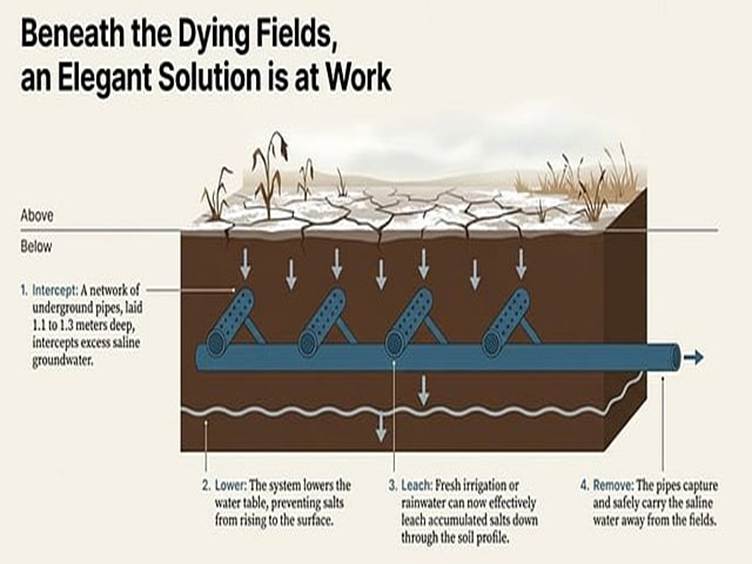
Across large stretches of western and southern India in parts of Maharashtra and Gujarat, black soils that once supported thriving sugarcane fields are slowly failing. Farmers added more water to secure crops, but over time the water had nowhere to go. Groundwater rose, salts collected near plant roots, and fields turned patchy and unproductive. In some areas, yields that once touched 200 tonnes per hectare fell sharply, pushing farmers into loss.
Yet beneath these degraded fields, an unlikely solution is at work. Buried quietly below the soil surface, networks of perforated pipes, known as subsurface drainage systems, are doing what surface interventions could not. By steadily removing excess saline water from below the root zone, they are transforming the physical, chemical, and biological health of soils.
India aims to self-sufficiency in Pulses On Oct 11, 2025, Prime Minister formally launched the Mission for Aatmanirbharta in Pulses, a six-year, Rs 11,440 crore national programme aimed at ending India’s import dependence on dal. The mission targets a scale-up of domestic production to 350 lakh tonnes and expansion of cultivation to 310 lakh hectares by 2030-31. It promises 100 per cent procurement at minimum support price (MSP) for three critical pulses – tur (arhar), urad and masoor, for four years. Nearly two crore farmers are expected to benefit through assured procurement, free seed kits, certified seeds and value-chain support.
“India is the largest producer, consumer and also importer of pulses,” says Dr Himanshu Pathak, Director General of ICRISAT. “We produce around 25 million tonnes of pulses, but we still import five to six million tonnes every year, depending on the season.” The weakness lies in productivity. Average yields for pulses hover around 800-900 kg per ha, far below their potential. “That productivity has to go up to 1.4 or 1.5 tonnes per hectare,” Dr Pathak says. “And that is entirely possible with the varieties we now have.”
One of the radical ideas in the Pulse Mission is crop substitution. India currently grows rice on nearly 44 million hectares, including 6-7 million hectares of upland, rain-fed rice where productivity is low and water stress is high. These areas, experts argue, are ideal candidates for pulses. “The amount of water used to grow one rice crop,” Dr Pathak notes, “you can grow five pigeon pea crops with the same water.” Pulses also fix atmospheric nitrogen, improving soil health rather than depleting it. In an era of climate stress, groundwater depletion and fertiliser overuse, they offer ecological security alongside food security.
The mission provides for 88 lakh free seed kits, 126 lakh quintals of certified seeds, five-year rolling seed production plans, and real-time monitoring through the SATHI portal. Procurement will be handled by NAFED and NCCF.
MONSOON
Accuracy of forecasting heavy rains in coastal Karnataka improved: Union Govt The accuracy in forecasting heavy rainfall for Coastal Karnataka improved from 80% in 2021 to 92% in 2025 for one day lead period, according to the Union Ministry of Earth Sciences. The accuracy went up from 75% to 89% for two days lead period; from 77% to 87% for three days lead period; from 68% to 80% for four days lead period; and from 72% to 79% for five days lead period, Jitendra Singh, the Union Minister of State for Ministry of Science and Technology and Earth Sciences told the Lok Sabha on Feb 4 2026.
“Similarly, for South Interior Karnataka, it (the accuracy) improved from 58% to 70%; from 51% to 65%, from 45% to 67%, from 39% to 63%, and from 39% to 63% respectably during 2021 to 2025 at Day 1 to Day 5 lead period,” the minister said.
Winter 2025-26 is a dry one in northern India. Forecasts this winter by IMD suggest that the reason could be that the storms that bring winter rain to the region are not intense. However, IMD doesn’t publish data that could help in quantifying this.
FLOOD
The Hidden Cost of Floods In North Bihar, a household typically loses assets worth Rs 2 lakh in a single flood event, finds a new study. Villages in the region face up to 60 flash floods a year.
URBAN FLOODS
Okkiyam Maduvu channel restoration nears completion The long-standing problem of inundation in parts of south Chennai is expected to ease as the project to restore Okkiyam Maduvu, a key floodwater channel, is likely to be completed by the end of this month. The 2.65 km-long channel connects floodwater from Pallikaranai marshland to the sea through the southern portion of Buckingham Canal. The aim to comprehensively restore the channel, at a cost of ₹27 crore, is part of various flood mitigation interventions by the Water Resources Department (WRD).
HIMALAYAN DISASTERS
Dharali disaster: Event reconstruction and geomorphic implications The Dharali debris flow on 5 August 2025, in Uttarakhand, India, was a catastrophic disaster that occurred in Kheer Gad, a tributary of the Bhagirathi river. It claimed approximately 60 lives and covered an estimated 3 hectares of apple orchards under debris. The damage also included at least 25–30 animals and a market comprising 65 hotels, over 30 resorts, and homestays. The present study involved the geomorphic characterisation of Kheer Gad to assess the debris flow potential of the catchment and debris flow simulation to ascertain the source, potential flow dynamics, and reconstruction.
Findings reveal that the 17 km2 Kheer Gad catchment is inherently unstable, as suggested by Melton’s ruggedness number of 0.8, significantly above the 0.6 debris-flow threshold. The trigger was not a single event, but an antecedent rainfall of ∼195 mm/30 days, which saturated glacial and landslide-derived source materials. Debris flow simulation revealed 60 kPa flow pressure, velocities of 5–10 m/s, flow height of 5–10 m, spread area of ∼18 hectare, and volume estimate of 995,580 ± 200,000 m3–1,285,260 ± 126,000 m3. These values are validated against field observations. Notably, the disaster was exacerbated by human vulnerability, given the doubling of built-up structures between 2011 and 2025, despite prior warnings in 2013. The present study provides a transferable methodology for assessing similar high-risk, glaciated basins to prevent such avoidable disasters.
Satellites warn of declining vegetation in Uttarakhand Researchers from the Aryabhatta Research Institute of Observational Sciences (ARIES), Nainital, an autonomous institute of the Department of Science and Technology (DST), along with collaborators from India and abroad, turned to GEE to track Uttarakhand’s vegetation from 2001 to 2022, along with pollution and climate responses. Satellites tracking the Himalayan landscape over the past two decades have revealed shifting vegetation patterns in Uttarakhand, highlighting both the resilience of mountain ecosystems and growing environmental pressures from climate change, deforestation, and pollution.
ENERGY OPTIONS
52,537 MW energy generation capacity added in FY 2025-26 A record 52,537 MW of energy generation capacity (from all sources) has been added in the current financial year 2025–26 (up to January 2026), the Union power ministry said in a statement on Feb. 08. Of the total installed capacity, non-fossil fuel-based capacity is now 52.25%, according to the data. In 2025-26, of the 52,537 MW added, 39,657 MW was added from renewable energy sources (75.48%), which includes 34,955 MW of solar and 4,613 MW of wind, the ministry said.
“This marks the highest ever capacity addition in a single year, surpassing the previous record of 34,054 MW achieved during FY 2024–25,” the statement said. As on January 31, 2026, India’s total installed power generation capacity stands at 520,510.95 MW, comprising 248,541.62 MW of fossil fuel based capacity; 271,969.33 MW of non-fossil based capacity; 8,780 MW of nuclear and 263,189.33 MW from renewable energy sources.
ENVIRONMENT GOVERNANCE
Protest against silicon factory turns violent Tension was prevailing in Ruksin area in East Siang district after protests by locals against the silicon factory at the Niglok Industrial Growth Centre (IGC) turned violent on Feb. 15. Two police constables and one CRPF officer were injured in a police-protesters clash. The Ruksin police detained two people for allegedly instigating the protesters to resort to unlawful activities. The incident occurred when the district administration and police, following a Gauhati High Court order, were escorting material-laden trucks that were stranded at Ruksin for several days to the factory.
It is pertinent to mention that the HC, hearing a writ petition filed by the CEO of M/s Aether Alloys LLP, passed an interim order on 5 February, directing the state government authority to ensure unhindered supply of men and materials to the silicon factory in Niglok. The HC has, however, listed the next hearing of the case on 30 April.
SC flags lapses in enforcing solid waste management rules The Supreme Court has expressed reservations about the implementation of the Solid Waste Management Rules, noting that despite successive regulatory changes, no desired results are being yielded at the ground level. The Court took note of the evolving statutory framework governing municipal waste. The earlier Municipal Solid Waste (Management and Handling) Rules, 2000 were replaced by the Solid Waste Management Rules, 2016. The Bench recorded that even these have now been superseded by the Solid Waste Management Rules, 2026, which are set to come into force from April 1, 2026. However, the Court made it clear that repeated regulatory overhauls alone will not address ground-level deficiencies. The next date of hearing is Feb. 19.
SC refuses nod to Haryana’s Aravalli Zoo Safari Project The Supreme Court on Feb. 12 refused permission to the Haryana Government to submit a plan on the proposed Aravalli Zoo Safari Project in Gurugram and Nuh districts till the definition of the “Aravalli range” was clarified by experts. Maintaining that it would not allow “anyone to touch the Aravallis”, a Bench led by Chief Justice of India Surya Kant made it clear that the issue of jungle safari would be taken up with the main matter on the “Aravalli range”.
Rs 100 cr of SBM funds unused in Haryana The CM Nayab Singh Saini government issued charge sheets to 20 officials, including an IAS officer, for failing to utilise over Rs 100 crore allocated under the Centre’s Swachh Bharat Mission. Urban Local Bodies Minister Vipul Goel ordered the action after a budget meeting revealed unspent funds and a lack of satisfactory explanations.
Rs 100 cr environmental fund lying idle: Katakey panel The Justice (retd) B.P. Katakey Commission has called for immediate measures to address the prolonged underutilisation of Rs 100 crore deposited with the Central Pollution Control Board (CPCB) for environmental restoration and rehabilitation in Meghalaya’s coal mining-affected regions. In its 35th interim report submitted before the High Court of Meghalaya, the Commission highlighted that, apart from the amounts already sanctioned, a significant portion of the fund has remained idle with the CPCB for an extended period. This delay stems primarily from the failure of Meghalaya govt departments to submit adequate and appropriate project proposals.
CLIMATE CRISIS
Over 2500 people died in floods & landslides in India and Pak during 2026 SW Monsoon According to Dave Petley blog on Feb 13 2026, In India and Pakistan, the 2025 summer monsoon generated unusual amount of landslide activity. A new open access paper (Sana et al. 2026) in the journal Landslides provides an initial commentary on these events. By their calculation, 1,528 people were killed in floods and landslides in India and 1,006 were killed in Pakistan.
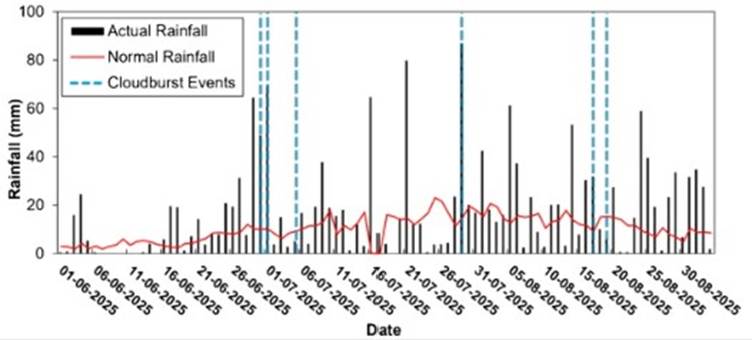
Mandi district rainfall in SW Monsoon 2025.
But Sana et al. (2026) also remind us that rainfall alone is not the cause of these landslides and floods. Vulnerability has also increased dramatically – for example, there has been a sharp decline in forest cover across much of the area. There has also been growth in urban areas, often with poor planning control, meaning that much of the population is occupying more hazardous locations. Poor quality infrastructure development (especially road building) is driving instability across large swathes of hillslopes, rendering them vulnerable to the changed rainfall patterns.
Nature’s ‘engine is grinding to a halt’ The researchers analyzed a massive database of biodiversity surveys, spanning marine, freshwater, and terrestrial ecosystems over the last century. The evidence showed that not only had the “turnover” of species in local habitats not sped up, but instead, it had significantly slowed down. Dr. Emmanuel Nwankwo, lead author of the study, explained, “Nature functions like a self-repairing engine, constantly swapping out old parts for new ones. But we found this engine is now grinding to a halt.”
SOUTH ASIA
Nepal river carries industrial waste and sewage to India The Sirsiya river, once central to daily life, agriculture and religious rituals in southern Nepal, is now heavily polluted with industrial waste and sewage, turning it into a public health hazard. Factories in Nepal’s industrial corridor discharge untreated effluents as weak enforcement, ineffective regulation and unimplemented wastewater plans allow pollution to persist. Pollution flows into Raxaul, India, contaminating water and harming crops, while residents on other side of the border say Indian efforts to treat local sewage can’t offset the influx from Nepal.
CHINA
Yangtze River shows signs of recovery The Yangtze River is showing signs of recovery thanks to a sweeping fishing ban. The ban was made more effective by the implementation of “evolutionary game theory”, which included finding alternative employment for fishers. One veteran biologist said it was the most positive freshwater conservation story he had seen anywhere in the world in 20 years. “It is really fantastic news. It is one of the first times that we can say that government measures have not just worked, but have really improved things,” said Sébastien Brosse, of the University of Toulouse in France.
THE REST OF THE WORLD
U.S. Army Corps Begins Public Review for Oroville, New Bullards Bar Dams The U.S. Army Corps of Engineers has initiated a public review process for proposed updates to the operation of Oroville Dam and New Bullards Bar Dam. The water control manuals for these federally operated reservoirs outline when and how water is stored or released to reduce flood risk while supporting other authorized purposes. Updating these manuals could have significant implications for the local environment, flood protection, and the overall management of the region’s water resources. The public scoping meeting in Marysville kicked off the National Environmental Policy Act (NEPA) process, allowing the public to provide feedback on issues, concerns, and alternative solutions that should be evaluated in the upcoming Environmental Assessment. The Corps will prepare draft water control manuals and NEPA documents by August, with a deadline for public comments on March 4 2026.
Ever heard of any such process for any dam in India?
SANDRP

 SANDRP