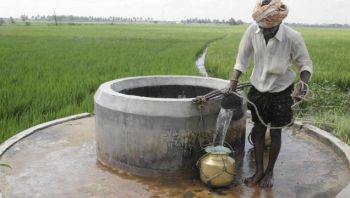
The criticisms of the National Green Tribunal (NGT) on January 30 about the report of the Central Ground Water Authority (CGWA), set up under the Environment Protection Act 1986 in late 1990s is rather mild and seems symbolic, but it has the potential of open up a pandora’s box since CGWA has essentially totally failed in doing anything effective about groundwater regulation in India.
However, what NGT has said is also worth taking note of: the CGWA report is vague, key information is not provided about over exploited areas, about which states have formed regulatory authorities, how are the regulatory authorities functioning, they staff, discharge of duties. NGT had asked key information on these and other aspects on April 28 2025, but over nine months down the line, CGWA continues to provide, vague, incomplete information. It is strange that NGT has given CGWA time till Apr 23 2026 to provide this basic information. This also shows the lax way the judicial bodies have dealt with such an important matter.
Reality is that groundwater is India’s and majority population’s lifeline, but the only agency set up to regulate groundwater use seems to have neither will nor ability or interest in regulating its use. CGWA in fact has become a licensing body for groundwater use in India. The judiciary has so far failed to ensure regulated use of groundwater and proper functioning of CGWA and state regulatory authorities. One hopes the judicial bodies become more serious in these important issues.
NGT criticizes status of groundwater report Expressing displeasure at the report filed by the Central Ground Water Authority on the status of groundwater in India, NGT Jan 30 said the report is vague. The information, such as district-wise details of units in over-exploited area of states, was not provided.
With regard to criteria for permitting developmental activities / infrastructure in over-exploited / stressed areas, no information has been provided. When asked, it was informed that the respective state ground water regulatory bodies have laid down the criteria and accorded permissions. Similar is the position with regard to other information also.
When enquired about the constitution of state-level groundwater regulatory bodies, it was informed that only few states have constituted while majority of others are yet to be formed. The counsel was unable to provide information with regard to the functioning, staff and discharge of duties by the state / UT-level groundwater regulating authorities.
In view of the seriousness of the issue which affects large part of the country, where the danger of depleting ground water is a major concern, further aggravated by the climate change issues, NGT directed CGWA to file a report providing specific information in respect of each of the points as sought vide order, April 28, 2025 and also with regard to the constitution of the state level / UT ground water regulatory authorities indicating the timelines of constitution if they have not been formed so far, along with details of EC / penalties imposed by each of the state / UT ground water authority, before the next date of hearing, April 23, 2026.
The application was registered suo moto on the basis of the news in the Hindustan Times, Oct 26, 2023. As per the said news report, some areas in the Indo gangetic region are experiencing groundwater depletion in its entire north western region and is predicted to experience critically low ground water availability by 2025.
HYDRO POWER PROJECTS
Walking the memory of mountains & rivers The Gaddis are not only shepherds. They are storytellers and living archives of mountains, forests and rivers—keepers of knowledge about climate, glaciers, pastures and passes. If they vanish from the Ravi Basin, it will not be merely a livelihood that disappears, but an entire way of knowing the river and its landscape that will be lost with them. By Parineeta Dandekar, SANDRP)
Arunachal sits on Compensatory Afforestation for Subansiri Lower HEP After over two decades since the Lower Subansiri Hydropower project of NHPC got forest clearance and six reminders from the Environment ministry, Arunachal Pradesh is yet to comply with a key condition of Subansiri’s forest clearance: raise plantations on 31.83 sq km to compensate for the forest land lost to the project. In its last reminder to Arunachal Pradesh on May 15, 2025, the Environment ministry said that “compensatory afforestation (CA) in lieu of the proposed diversion area is yet to be done even after more than 20 years despite repeated reminders,” and sought the state’s comment on how the project would be commissioned without complying with its clearance conditions.
Underlining that Arunachal Pradesh was yet to submit information on “the identification of compensatory afforestation sites, along with geo coordinates and KML files, justification for delay in carrying out CA, status of implementation till date and details of funds received” etc, the letter said the “matter has been been seriously noted” by the ministry. That was the ministry’s sixth reminder to the state which had not responded to its letters on the matter in October 2022, April 2022, December 2021, August 2020 and March 2020.
SLHEP’s Hydropeaking can wash away elephants Meanwhile, in Apr 2023, the Standing Committee of the National Board for Wildlife decided to commission a study by Wildlife Institute of India (WII) to “prepare a plan ensuring free passage of elephants” across the Subansiri river between Panir Reserved Forest in Arunachal Pradesh and Dulung Reserved Forest in Assam. In its report submitted in January 2024, the WII said the project’s hydro-peaking scenario — “a rise in water level by around 2 meters with a concomitant increase in the water velocity” — would resemble flash floods hitting the elephant corridor, which is “an extremely crucial link in maintaining the continuity of elephant habitats along the Himalayan foothills” in the region.
This flash flood-like peakings, the study warned, could “trigger behavioral avoidance” of the river corridor in two ways: by sweeping away or separating young elephants and calves from herds, and also by affecting the vegetation of the river islets that act as stepping-stones or mini-habitats to help elephant movement. Therefore, the WII recommended that the project proponent NHPC “must restrain from hydropeaking operations until a multi-seasonal hydrological modelling study in relation to impacts on elephants and its habitat are carried out.”
Hydr peaking study not commissioned Two years on, no multi-seasonal study to determine the impact of the project’s hydro-peaking on the elephant corridor has been commissioned yet. According to the minutes of the SC-NBWL meeting held on January 30, 2024, expert member ecologist Dr Raman Sukumar underlined that the east-west corridor was the most important link between elephant populations on either side. “The report submitted by the WII… has brought out the issue of peaking which should not be allowed when the animals are crossing,” he said. Asked if the Subansiri Lower project will refrain from hydropeaking operations until a multi-season study determines its impact on elephant movements, an NHPC official declined to comment.
Arunachal targets 19 Gw hydropower expansion: DCM Arunachal Pradesh has set a target to add 19 gw of hydropower capacity with an estimated investment of Rs 1.9 lakh crore as part of a strategic shift towards large and mega projects, Deputy Chief Minister Chowna Mein informed the assembly on Feb. 05. Replying to a question by BJP member Tapi Darang during question hour, Mein, who also holds the power and hydropower portfolios, said the state has declared 2025-2035 as the ‘Decade of Hydropower’ to accelerate development in the sector.
“With central support, the state is reviving 13 stalled hydropower projects with a combined capacity of 12.2 Gw and has signed MoUs with four central public sector undertakings (CPSUs) in 2023,” Mein said. Of these, three projects – Heo (240 Mw), Tato-II (700 Mw) and Tati-I (186 Mw) – have already received approval from the Cabinet Committee on Economic Affairs (CCEA), with work underway at project sites, he added. The 2,880 Mw Dibang multipurpose project is under construction and is targeted for completion by Feb. 2032, he added.
Sawalkot HEP: The NHPC has invited online e-tenders for major civil works related to the 1856 Mw Sawalkot HEP in Ramban district. The tender includes construction of diversion tunnels, adits, coffer dams, access tunnels, roads, associated dam works and hydro-mechanical works at various locations of the Sawalkot HE Project. Officials said the estimated cost of the project stands at ₹5,129.03 crore, with a completion period of 108 months (9 years), making it one of the largest upcoming hydroelectric infrastructure initiatives in the Chenab Valley region.
Sunni HEP: The SJVN has entered into a Contract Agreement for ₹837.43 Cr with Bharat Heavy Electricals Limited for the 382 Mw Sunni Dam HEP’s crucial Electro-Mechanical (E&M) works.
DAM SAFETY
Question marks over Polavaram Dam due to poor track record of MEIL? The MEIL’s (Megha Engineering & Infrastructures Ltd, the main contractor of Polavaram key components) track record includes significant collapses in Telangana projects. The retaining wall of the Sunkishala intake well and pump house complex collapsed in August 2024 due to alleged shortcuts in construction, drawing sharp criticism. Similarly, during floods, the Kannepalli pump house in the Kaleshwaram Lift Irrigation Scheme—where MEIL executed major underground pump houses—suffered severe damage, with retaining walls failing and pumps destroyed. These incidents underscore recurring issues with structural stability under pressure, fuelling fears that similar vulnerabilities could plague Polavaram.
A Jan 19–22, 2026, inspection by an independent panel—including foreign dam safety experts David B. Paul (USA), Sean Hinchberger (Canada), Gian Franco Di Cicco (USA), alongside Central Water Commission engineers—has amplified these worries. The panel flagged misalignment between CWC observations and the ECRF dam design proposed by consultant AFRY. Key issues include “bleeding” in walls, deficiencies in compaction methodology & grave risks of internal erosion & piping in the core, filter, shell & foundation—even under extreme floods.
Kaleshwaram rehabilitation soon Minister for Irrigation N. Uttam Kumar Reddy on Feb 1 stated that rehabilitation work on the Kaleshwaram barrages – Medigadda, Annaram and Sundialla – would be taken up soon with close coordination among technical institutions and design consultants. He stated that a meeting with the NDSA expert committee would be held after February 16 and instructed the officials to prepare comprehensive technical proposals covering structural, hydraulic and remedial aspects. The Minister told the engineers to proceed on a war footing to finalise designs, secure phased approvals and begin rehabilitation without delay. Safety and design integrity must not be compromised at any stage, he stressed.
SLBC Tunnel: NGRI survey yields valuable info: Officials The National Geophysical Research Institute’s (NGRI) Versatile Time-Domain Electromagnetic (VTEM) survey in Telangana’s Nallamalla forest range, where the Srisailam Left Bank Canal (SLBC) tunnel is under construction, has yielded vital information on the geographical fault lines in the area, people aware of the matter said on Feb. 02. Scientists with NGRI on Feb. 01 presented the survey reports to state irrigation minister, N Uttam Kumar Reddy, at a high-level review meeting held to discuss resumption of construction work on the tunnel, which was abandoned after it collapsed on Feb. 22, 2025, killing eight people, including two project engineers.
Reddy called for round-the-clock operations on the SLBC tunnel project with a focused approach to safety protocol and immediate mobilization and deployment of machinery. Reddy also announced the creation of an exclusive SLBC division headed by a chief engineer to expedite the tunnel construction. He directed that an independent supervision consultant be appointed to assist the chief engineer in ensuring safety, quality, and design compliance throughout construction.
DAMS
Irrigation project approved by NBWL in Panna Tiger Reserve Compensatory area for KBRLP loss The standing committee of the National Board for Wildlife (SC-NBWL) has recommended approval for the diversion of about 272 hectares of forest for the Kopra medium irrigation project in the core area of the Veerangana Durgavati Tiger Reserve in Madhya Pradesh, which was notified in 2023 to compensate for the loss of over 100 sq km of tiger habitat due to the Ken Betwa river-linking project. As part of the project, irrigation reservoirs will be constructed within the Veerangana Durgavati Tiger Reserve, along the Byarma River and the Kopra River. It aims to provide irrigation for domestic use and 9,900 hectares under Rabi crops in Sagar district, and 13 villages will be submerged.
The Kopra River is a tributary of the Sonar River and contributes to the region’s wetland and riparian ecosystem, NTCA said. According to the project details, the irrigation reservoirs will submerge 1,044.52 hectares, of which 716.62 hectares is private land, 59.90 hectares is government land, and 272 hectares is forest land within the Veerangana Durgavati Tiger Reserve.
Massive Bargi Dam canal breach in Jabalpur A breach in the right bank canal of Bargi dam has flooded nearby agricultural fields in Madhya Pradesh’s Jabalpur district. There were no casualties. The breach occurred on Feb 1 2026. Local farmers and villagers claimed the canal has been in poor condition for a long time. They alleged that officials ignored their repeated complaints on the issue, which eventually led to the breach.
Entire village displaced by Nehda dam pollution Chapariya ki Dhani (Garhwara), located in the Rohat area, about 35 kilometers from the Pali district headquarters, was once home to 30 to 35 families about 30 years ago. These families owned hundreds of bighas of land and kept dozens of animals. Gradually, the entire hamlet became deserted due to the Nehda Dam. Budharam, a resident of Chapariya ki Dhani, explains that water from factories in Pali’s industrial areas started reaching the dam. The chemically contaminated water from the dam began flooding the fields. Due to the lack of a proper drainage, the fields started deteriorating. Not only humans but also animals began to fall ill. Thirty years ago, the entire community decided to abandon the hamlet. They left their mud houses and settled in Rajpura, about four kilometers away.
The villagers said that hundreds of bighas of land were ruined due to the chemicals in the dam water. The farmers who lived there were struggling to make ends meet, but the government did not provide them with any compensation. They want to sell their land, but there are no buyers. The villagers demand that the local administration should arrange for the drainage of the chemically contaminated water from the fields. Otherwise, the flow of factory wastewater into the Nehda Dam should be stopped. Last month, retired Justice Sangeet Lodha and his team inspected the area from the Nehda Dam to the industrial area of Pali. They expressed their displeasure upon seeing the chemical-laden water in the Nehda Dam. The farmers of Rajpura village also showed them the ruined Chapariya ki Dhani and the fields filled with chemical water, hoping for a solution.
Relevant decisions of MoEF’s Forest Advisory Committee meeting held on Jan 22 2026
1 Diversion of 74.430 ha Reserved forest land in favour of Water Resource Department for the construction of Damkheda Tank Project under Khargone District of Madhya Pradesh: Canal can be underground tunnel and not clear if power supply components are forest land. More info sought. Deferred.
2 Diversion of 87.520 ha of forest land for Hidsing Irrigation Project including Alternate Road in Angul District by Water Resource Department, Govt. of Odisha: APPROVED, though the project area lies within the Mahanadi Elephant Reserve, and the Eco-Sensitive Zone of the Satkosia Tiger reserve
3 Diversion of 69.02 ha of forest land for Chentikheda Irrigation Project on Kunwari River in Sheopur and Morena district in Madhya Pradesh: Deferred for more info as the project is 1.4 km from Kuno Wildlife sanctuary, area within default Eco Sensitive Zone.
4 Diversion of 441.9 ha. of Proposed Reserved Forest for OffStream Closed Loop Pumped Storage Project (1500 MW) in Village- Lipgaon, Sub-district- Diphu, District- Karbi Anglong in Assam: Approved though “the project falls within a distance of 9.57 km from the Morat Logri Wildlife Sanctuary”
5 Diversion of 79.37 ha. of Proposed Reserved Forest (Sec-4 of IFA) for OffStream Closed Loop Pumped Storage Project (900 MW) near Tharakhunchi Village in Donka Sub-division of West Karbi Anglong District in Assam: APPROVED
INTERSTATE WATER DISPUTES
SC asks centre to set up Tribunal in one month to resolve Karnataka-TN dispute on Penniyar Water sharing The Supreme Court, today, has directed the Union Government to constitute a Water Disputes Tribunal within one month to adjudicate the Pennaiyar River Water Dispute between the State of Tamil Nadu and the State of Karnataka. The Union of India attempted to mediate the conflict through multiple rounds of discussions following earlier SC directions, but it was informed that these negotiations ultimately failed, the States were unable to reach a consensus.
The Bench of Justice Vikram Nath and Justice Sandeep Nath, while delivering the judgment has ordered, “Consequently, the plaint in Original Suit No. 1 of 2018 is returned for presentation for adjudication before the Water Disputes Tribunal, which is to be constituted by the Central Government.” The dispute pertains to the sharing of water resources of the Penniyar river and the alleged check dam/diversion raised by the State of Karnataka in the said river, obstructing the State of Tamil Nadu from enjoying the benefits of the water of the river flowing across the States of Tamil Nadu, Karnataka and moving on to Puducherry. The bench reserved judgment on December 12, 2025.
Govt unable to resolve Mahanadi issue: BJD Opposition BJD on Feb 6 attacked Odisha’s BJP govt, accusing it of lacking a clear strategy to resolve the Mahanadi water dispute allowing Chhattisgarh to construct more dams and barrages to obstruct free flow of water in the river. The allegations were made at a press conference by BJD leaders.
URBAN RIVERS
Pune: STPs in societies fall into disuse The deteriorated health of rivers winding through Pune and Pimpri Chinchwad has time and again come under the scanner in recent years. A major contributor – citizens, activists and experts alike agree – is the lack of efficient STP to treat the flow going into these waterbodies, both at the civic level and within individual residential complexes.
Muck dumping chokes Rispana Residents of Chamasari gram sabha say unregulated road-cutting debris has blocked river flow and weakened fragile limestone slopes, raising fears of landslides and flooding as the monsoon approaches. Villagers in Mussoorie’s Chamasari gram sabha say unregulated muck dumping from road construction is obstructing the flow of the Rispana river. Residents warn of heightened landslide and flood risks, citing a fatal muck slide in September 2025 and unstable slopes ahead of the monsoon. The Rispana river is a key source of drinking water and groundwater recharge for parts of Dehradun. Complaints to authorities have so far resulted in limited action, with safety measures linked to future funding.
RIVERS
Odisha villagers oppose industrial use of stream water Tension prevailed in Nuagaon panchayat under Pottangi block of Koraput on Jan. 05 as villagers staged road blockade and prevented district officials from holding a gram sabha over lifting water from the local stream for use in Nalco plant at Damanjodi. Residents of Badapadu, Nuagaon, Kakipadu, Galigabdar, Kartalamamadi, Medamgandi and nearby villages blocked the Badapadu ghat road, a key route connecting the block headquarters to the panchayat, and staged a dharna. The agitators alleged that the administration is planning to construct a project to store water of Nuagaon stream and use it for mining operations of Nalco. Diverting water for industrial use would have a negative impact on the local community and the environment, they claimed.
Budget 2026-27: More money with green ministry The Environment Ministry has been allocated Rs 3,759.46 crore for 2026-27, an increase of 8 per cent, over the current fiscal. For 2025-26, the ministry was allocated Rs 3,481.61 crore. Even the allocation for centrally sponsored programs like National Mission for a Green India was reduced to Rs 212.50 crore from Rs 220 crore in the Budget Estimate of 2025-26. The CPCB has been allotted ₹123 crore for 2026-27, up from ₹116.2 crore in the revised estimates of 2025-26, reflecting incremental support.
River rejuvenation & pollution abatement Under the Namami Gange Program, a total of 218 number of sewerage infrastructure projects costing ₹35,698 crores have been taken up for remediation of polluted river areas with STPs of 6,610 MLD capacity, out of which 138 projects with a capacity of 3,977 MLD have been completed and made operational.
Under the Centrally Sponsored Scheme of National River Conservation Plan (NRCP), 4 STPs of total 593 MLD capacity have been set up in Hyderabad for pollution abatement of Musi River in Telangana. Further, another 5 STPs of total 28.46 MLD capacity have been set up in Bhadrachalam, Mancherial and Ramagundam.
12 different institutes/ organizations have been engaged for the project “Condition Assessment and Management Plan (CAMP)” under NRCP for six river basins namely, Godavari, Krishna, Narmada, Cauvery, Mahanadi and Periyar.
Realizing the importance of reuse of treated water, a National Framework for Safe Reuse of Treated Water has been developed. Also, all the states in Ganga basin and in other river basins in the country have been directed to align their policies related to safe reuse of treated water with the National Framework. NMCG has also developed city level action plans for safe reuse of treated water for translating the policy to the ground level workable plans. The information was provided by the minister for state for Jal Shakti Shri Raj Bhushan Choudhary in a written reply to a question in Rajya Sabha on Feb. 02.
Under the Namami Gange Mission (NGM) Phase II, during 2025 (Jan to Dec), a total of 25 key sewage treatment plants with a total treatment capacity of 530 MLD have been commissioned and operationalized. Under NGM, total sewage treatment capacity of 3,977 MLD has been created as of December 2025.
For industrial pollution abatement, 3 nos. of Common Effluent Treatment Plants (CETPs) have been sanctioned, i.e., Jajmau CETP (20 MLD), Banther CETP (4.5 MLD) and Mathura CETP (6.25 MLD). Two projects, Mathura CETP (6.25 MLD) and Jajmau CETP (20 MLD), have been completed; The information was provided by the minister for state for Jal Shakti Shri Raj Bhushan Choudhary in a written reply to a question in Lok Sabha on Jan. 29.
Infrastructure push over ecological revival Budget 2026-27 allocates Rs 3,100 crore to the Ganga Mission, below earlier projections. Spending priorities show a continued focus on sewage treatment and wastewater infrastructure. Externally aided projects backed by foreign agencies see increased allocations. Ecological measures such as river flow, floodplains and livelihoods receive little direct funding
NGT seeks action on Kanpur industrial water pollution The NGT has reiterated the urgency of action as the issue was directly connected with the life and livelihood of affected residents. Fresh compliance reports were filed by the DMs concerned and the state of Uttar Pradesh. The tribunal permitted the amicus curiae to examine these reports and prepare a comparative table, indicating whether actions taken were in accordance with prescribed timelines and the progress achieved so far.
The NGT also reviewed the role of the NMCG. Brijendra Swaroop, executive director (projects), NMCG, said earlier submissions recorded by the tribunal were a result of miscommunication. He assured that the correct and comprehensive stand of NMCG would be placed on record. The state was granted 6 weeks’ time to file a detailed report. Next hearing on April 7.
Delhi owes river-led city plan The deterioration and shrinking of the Yamuna in Delhi have worsened over the decades despite thousands of crores spent. Constructions on its floodplains were ignored earlier; now, the Yamuna Action Plan itself includes riverfront development with concretisation even as long-time residents along the riverbank are ruthlessly evicted. There could not be a greater rupture of the interconnectedness between the river and the city. The way forward is to chart river-led development plans with clear flood lines, treat Delhi’s waste before discharge, and respect the river as a living entity. (Ankita Dhar Karmakar)
‘We are systematically killing Yamuna’ Although India’s vision of a river was historically been influenced by the British, urban plans in contemporary India too do not have an ecological perspective, say Dr Reema Bhatia and Meeta Kumar in this interview. Their research paper ‘Urbanising a river, twin tales of Yamuna and Delhi’ shows why the river is a composite ecological entity, how Delhi sees the Yamuna’s floodplains largely as potential real estate, and “people who live with the river are being done away with because the government wants to beautify the river”.
The relentless fighters Pankaj Kumar quit his job to work 24×7 for a clean Yamuna. Vikrant Tongad decided he would not be a silent spectator to the pollution in the river. Manu Bhatnagar chalked out a water policy with nature-based solutions. Nishant Pawar opened a school to educate children on the importance of rivers. These and similar people have passionately followed their mission to save the Yamuna in the belief that “river pollution is not just an environmental problem; it’s a social problem”. Their efforts may seem scattered or a drop in the river but every warrior of the river counts.
‘Govt claims the settlement is illegal’ What happens when a river’s relationships with people closest to it are broken and all talk of the river is reduced to drains and development, barrages and budgets? The people are invisibilised like the forgotten farmers and evicted slum dwellers along the banks of the Yamuna in Delhi. Some have lived for decades, others hold documents and maps from the British era. Regardless, many are termed encroachers and find themselves facing threats of evictions and demolitions. QoC presents a few voices. (by Ankita Dhar Karmakar)
NGT pulls up NMCG for inaction on unauthorised bridge The NGT on Jan. 30 expressed displeasure on the action to be taken by the NMCG on the construction of railway bridge between Daraganj and Jhunsi, which is stated to be on the floodplain of River Ganga and across the river. The Railways had not obtained the prior approval of NMCG in terms of River Ganga (Rejuvenation, Protection And Management) Authorities Order 2016. NGT directed NMCG to do the needful in terms of the observations made and submit the report at least one week before the next date of hearing, April 23, 2026.
NGT directs coordination between DJB and Dusib The NGT on Feb. 03 has directed coordination between Delhi Jal Board (DJB) and Delhi Urban Shelter Improvement Board (Dusib) to stop the flow of untreated sewage into the Barapullah drain that eventually reaches the Yamuna. During the hearing, DJB said it had identified eight slum clusters discharging sewage into the drain and it sought assistance from Dusib to provide only a single point of exit for the sewage. It proposed the installation of STPs there.
The NGT asked both depts to submit a report within a week of the next hearing on April 15. DJB said it proposes to install modular decentralised sewage treatment plants (DSTPs) at the discharge points of the clusters. But effective implementation requires coordination and cooperation from Dusib. DJB told the tribunal that the DSTPs are to be set up within six months. Accordingly, the tribunal directed both agencies to file their status/progress reports at least 1 week prior to the next hearing.
HC sets aside jail term The Delhi High Court has upheld the conviction of a Chandni Chowk-based sweet manufacturing unit for discharging untreated effluent into public sewers leading to the Yamuna river. The bench however set aside the sentence of imprisonment in view of the beneficial amendment to the Water (Prevention and Control of Pollution) Act, 1974, which has done away with custodial punishment.
It modified the sentence awarded to the Petitioner, sole proprietor of the unit, holding that while the offence stood conclusively proved, the subsequent legislative change replacing imprisonment with monetary penalties must be extended to pending cases as well. The case arose from an inspection conducted by the Delhi Pollution Control Committee (DPCC) on June 3, 2000, pursuant to directions issued by the Supreme Court in the Maili Yamuna matter.
On the question of sentence however, the Court took note of the Water (Prevention and Control of Pollution) Amendment Act, 2024, which replaces imprisonment with monetary penalties ranging up to ₹15 lakh. The Court directed the Petitioner to pay an additional penalty of ₹10 lakh to DPCC, over and above the ₹2 lakh already deposited.
Govt to double sewage treatment capacity by 2028 Chairing a high-level review meeting at the Delhi Secretariat, the CM on Jan. 21 directed departments to accelerate work on sewage treatment, drain monitoring, sewer network expansion and industrial pollution control. Delhi’s 37 STPs currently treat 814 MGD of wastewater. The govt now plans to raise this to 1,500 MGD, nearly doubling capacity, officials said.
Around 56 MGD will be added by upgrading existing STPs by December 2027, while 35 decentralised STPs will contribute another 170 MGD. Large new plants near major drains are expected to add 460 MGD by December 2028, ensuring that untreated wastewater no longer flows into the Yamuna.
Recognising that a significant share of pollution enters Delhi’s drains from outside the state, Gupta said coordination with Haryana and Uttar Pradesh is essential. “Six Haryana drains contribute nearly one-third of polluted flow into the Najafgarh drain, while four Uttar Pradesh drains account for 40% of pollution in the Shahdara drain. We will raise the issue with the neighbouring states,” said an official from the CM’s office. The plan also includes setting up bio-mining and silt processing plants, developing permanent ghats along the Yamuna, and stricter inspections of industrial effluent treatment facilities.
DJB to install online monitoring system in 5 major drains The initiative is part of the Delhi government’s 45-point action plan for rejuvenation of the Yamuna. The plan emphasis in-situ treatment of drains flowing into the river. Under the Yamuna rejuvenation measures, the DJB has also started installation of 40 decentralised sewage treatment plants (D-STPS), the official added. According to the project plan, the installation of OMS for in-situ works is expected to be completed within three months. The overall contract period, including the annual maintenance contract, will be three years. The five drains identified for the project are the Delhi Gate drain, Sen Nursing Home drain, ISBT drain, Defence Colony drain and Jaitpur drain. According to tender documents, CCTV cameras will be installed to ensure continuous visual monitoring of all units, including flow meters and online analysers. According to officials, the Irrigation and Flood Control Department (I&FC) is also working on desilting large drains and treating the waste flowing in them. There are around 300 sub-drains that end up in these large drains, adding to the overall pollution load.
Cruise arrives from Mumbai As the Delhi govt targets the launch of the Yamuna cruise this month, the vessel arrived on Feb. 06 in the city from Mumbai. The initiative is a part of efforts to boost riverfront tourism and recreation.
NGT acts to save Betwa river Warning that the Betwa river is facing a threat due to sustained human interference including ‘forcible sealing’ at origin and ecological neglect, the NGT has directed the Madhya Pradesh govt to roll out a scientifically designed, district-wise action plan to restore water flow in the river and protect its catchment areas. An NGT bench of Justice Sheo Kumar Singh and Expert Member Sudhir Kumar Chaturvedi was hearing a plea to revive the river Betwa, its natural resource of water and directed a number of measures stating the issue must be handled in the scientific manner. “Revival of water flow in Betwa river is the main issue which is to be handled in the most scientific manner for the very survival of the river,” the tribunal observed on January 28.
RIVERS BIODIVERSITY
Community’s efforts to conserve fish The Mechi River originates in the Mahabharat mountain range of Nepal, bordering the Darjeeling district of India. The place is incredibly peaceful. Flags mark the source, surrounded by lush greenery and dense trees. A sign in Nepali identifies the spot as the source of the Mechi River and appeals for its cleanliness. Near its source, the Mechi flows as a narrow stream. Visiting this place is a truly serene experience.
FISH, FISHERIES, FISHERFOLKS
Budget 2026–27 Proposes Integrated Development of 500 Reservoirs The Union Budget, tabled on Feb. 01, in the Lok Sabha for the year 2026-2027, proposed the highest ever total annual budgetary support of ₹2,761.80 crore for the fisheries sector. Out of the total allocation, ₹2,530 crore has been earmarked for scheme-based interventions, ensuring direct support to fishers and fish farmers. Pradhan Mantri Matsya Sampada Yojana (PMMSY) continues to be the central pillar of fisheries development, with an allocation of ₹2,500 crore in 2026–27.
Union Finance Minister Smt. Nirmala Sitharaman in her budget speech, announced that initiatives will be undertaken for the integrated development of 500 reservoirs and Amrit Sarovars to strengthen the fisheries value chain in coastal areas and enable market linkages involving startups and women-led groups together with Fish Farmer Producer Organizations (Fish FPOs).
The Union Fisheries Ministry said the country has one of the world’s largest networks of inland reservoirs, spanning about 31.5 lakh hectares, offering significant potential for inland fisheries development. “To address water conservation and livelihood challenges, the Government of India, under the Mission Amrit Sarovar, has developed 68,827 Amrit Sarovars, including 1,222 Sarovars linked to fisheries, supporting fish farming and aquatic biodiversity. The strengthening of the fisheries value chain in coastal areas is a significant intervention, as it seeks to integrate primary producers with processing, marketing and export value chains, reduce post-harvest losses, improve price realisation for fishers, and strengthen last-mile market access,” the Ministry said, adding that around 200 start-ups in the fisheries sector would be supported under the scheme.
Fisherfolk oppose Mamallan Reservoir project Fisherfolk of several villages along the East Coast Road on Monday opposed the formation of the Mamallan Reservoir. They submitted petitions at Gram Sabhas held on Republic Day and sought resolutions to be passed. According to community leader K. Bharathi, people from Kanathur Reddikuppam, Kovalam, and Nemmeli submitted petitions stating that their livelihoods would be lost if the reservoir is established. “In some places, government officials refused to accept the petitions and did not agree to pass resolutions since it was against the government proposal,” he said.
SAND MINING
What Aravalli teaches us about saving Narmada A comparison of the impacts of sand mining in the Narmada with mining in the Aravalli shows that while mining hollowed out the mountains in the Aravalli, sand mining has deepened the riverbed of the Narmada. When water sources dried up in the Aravalli, wells and handpumps along the Narmada also ran dry.
As desertification increased in the Aravalli, riverbank erosion intensified along the Narmada. When wildlife came under threat in the Aravalli, fish and turtles were destroyed in the Narmada. When the livelihoods of local farmers and pastoralists collapsed in the Aravalli, fishermen and farmers are now being affected along the Narmada. The only difference is this: in the Aravalli, the mountains died; in the Narmada, the river is dying.
In addition to mining, the obstruction of the Narmada’s flow by dams and increasing pollution are worsening the situation. Sand mining multiplies this crisis threefold. Dams trap silt, and sand mining prevents the river from replenishing itself. As a result, the river is becoming permanently weakened. (Raj Kumar Sinha)
Avavalli Mining: State has turned blind eye: HC The Punjab and Haryana High Court on Jan. 31 has directed the Haryana govt to explain how it proposes to deal with the vast extent of environmental plunder caused by unauthorized mining in Pichopa Kalan village of Charki Dadri, one of the Aravalli districts. The HC also directed the State to submit a plan to curb such rampant loot and plundering of natural resources in the name of mining.
Considering the seriousness of the matter, the Court impleaded the Union of India through the Secretary, MoEFCC, in the matter and asked it to take note of the larger concerns expressed by it. The Central govt has been asked to suggest measures to redress the situation. Pertinently, the Court noted that the mining officer intervened and recommended the cancellation of the mining lease only after the Court entertained the writ plea.
The Court further observed that the mining clearance certificate contains a large number of protections for the preservation of the environment, but nothing of it was observed as being followed at the site. The Court concluded that a deeper probe was required in the matter. However, it decided to first give an opportunity for necessary action by the State.
The Court warned that it may send the case to an appropriate independent agency if the State fails to submit a satisfactory response. In the meantime, the entire mining area has been ordered to be sealed. The Court has directed Haryana Space Application Centre to place on record a satellite imagery of the mining site in question from 2016, till date. Next hearing on Feb 25.
The Bench, in its order, noted that the inspection revealed steep cliffs instead of step-wise mining benches, complete absence of topsoil stacking, reclamation or plantation, missing green belt, lack of water sprinkling, no monitoring of groundwater levels or air quality and massive cracks on land — all in clear breach of the mining plan and environmental clearance conditions. The court also noted with concern that mining was permitted only up to three metres above the water table. But “the level of ground water table is not specified and is left to speculation. Preservation of ground water from contamination and depletion of water table, thus cannot be ensured.”
Flagging the wider public impact, the High Court said: “We may take judicial notice of environmental concerns resulting from worsening air quality as well as depleting water table, which pose serious concerns.” It observed that the case demonstrated how, “in the name of mining, such damage to environment is being carried out” and that the regulatory mechanism had “prima facie failed to check the menace.”
The division bench also questioned a mining closure order produced by the state during the hearing, terming it a possible “cover-up” aimed at legitimizing past violations under the guise of economic unviability rather than addressing environmental breaches. “The chief secretary, govt of Haryana, will ensure that the entire mining area is sealed. The sealing operation will be undertaken within 48 hours by Charkhi Dadri deputy commissioner himself and the entire process will be video graphed,” the bench said in its order released on Feb. 02.
The bench also raised serious questions about the conduct of govt officials, observing that regulatory oversight had “prima facie failed” and that connivance could not be ruled out. It noted that despite reports of accidents, landslides, and unsafe mining practices, effective action was delayed until judicial intervention.
Ravaging Shivaliks: Enforcement failure costing Punjab its shield The devastation unfolding in the Shivalik hills of Punjab’s Ropar district shows how environmental crime thrives in the gaps between policy and enforcement. Illegal mining, carried out brazenly with heavy machinery, has reportedly flattened entire hillocks in an ecologically fragile zone that forms the foothills of the Himalayas. The damage strikes at the Shivaliks’ core ecological functions — groundwater recharge, soil stability and biodiversity support. The Shivalik range is geologically young and inherently unstable. Unregulated excavation accelerates erosion, increases the risk of landslides and siltation and alters drainage patterns. Once these hills are cut and levelled, restoration is virtually impossible. What is lost is a natural shield that protects downstream plains from floods and water stress.
Punjab cannot afford to treat the Shivaliks as expendable real estate. Protecting them requires more than fines after the damage is done. It demands strict demarcation of no-go zones, real-time technology-based monitoring, accountability of officials and swift criminal action against repeat violators. Development that destroys natural safeguards is not progress; it is deferred disaster.
Khaira Bet residents protest sand mining Police remained on toes handling the situation following sand mining from the basin of Sutlej River passing from the vicinity of Khaira Bet area near Hambran town. Having failed to get action done on their earlier representations made to the district administration residents of Khaira Bet and surrounding villages organised a dharna to demand immediate cessation of the mining of sand, that according to protestors would multiply risk of mass level erosion during floods. The protestors have threatened to take the issue to Punjab and Haryana High Court in case their demand is not accepted by local administration.
Yamuna Mining: NGT forms joint committee The NGT Jan. 30 directed the appointment of a joint committee to look into the complaint of illegal sand mining in Nauraspur village, Loni, Ghaziabad on River Yamuna. The Joint Committee was directed to visit the site, ascertain the correctness of allegations about illegal mining, find out the compliance of the environmental clearance conditions of the miners and suggest punitive and remedial measures. Let the exercise be completed by the Joint Committee within a period of eight weeks and the status / action taken report be submitted immediately thereafter, said the order. Applicant submitted that though the complaints were made to the authorities but no action has been taken.
“Mining is an organized crime, involving the entire system from top to bottom—from drivers to ministers,” says Ashish Sagar Dixit, a journalist, RTI activist, and founder of Press Trust of Bundelkhand. In the 14th episode of “The Issue at Hand,” we speak with him to understand the ground reality of mining in Bundelkhand and Banda—how this network operates and its impact on local administration and politics. The Forest Department in Banda is disregarding the RTI and the NGT is directly responsible for illegal mining and the failure to plantation in the leased areas.
Anger grows over ‘illegal’ sand mining in Korapuzha Resentment is growing over “illegal” sand mining being carried out under the guise of dredging to remove accumulated silt and other sediments in the Korapuzha river in Kozhikode. Last week, protesters blocked a contracting firm from transporting sand from Mattuvayal. Fishers and local residents also demolished a temporary bridge constructed over the Azheekkal canal, which was allegedly being used to transport sand. The protesters alleged that the company had been engaged in “indiscriminate” sand mining without adequate “government oversight”.
WETLANDS, LAKES, WATER BODIES
WWD 2026: Top Ten Judicial Interventions on Wetlands in India Marking the World Wetlands Day (WWD) 2026, this overview presents top ten interventions by judiciary to protect the wetlands in India during 2025 so far. Apart from this, there have been several wetlands protection related court cases going on across the country during the year and reports of some of the relevant matters can be seen here. The judiciary has also been pursuing cases pertaining to conservation of several Ramsar wetlands in the country as covered in the first part of the overview here.
With some comforting directions and some disappointing decisions, the various judicial interventions into protection of wetlands during 2025 have painted a mixed picture. For example, the SC March 2025 order asking Rajasthan govt to remove the concrete structures of the Ana Sagar lake area is quite remarkable and has also seen a positive outcome
Satellite monitoring shows declining plant life in India’s wetlands Researchers have launched a health check of India’s water wetlands from space. A new study shows that nearly 100 of the country’s largest wetlands are seeing a significant decline in vital aquatic plants. Using high-resolution satellite data and computer modelling, a research team from the Space Applications Centre-ISRO, Gujarat University, the Indian Institute of Remote Sensing, and the Indian Institute of Space Science and Technology has developed a new way to track the pulse of 500 major wetlands across the nation. The study warns that changing rainfall and rising temperatures are directly altering the growth of underwater and floating vegetation, which could have serious consequences for biodiversity and water quality.
Of the 500 wetlands studied, significant declines were found in 88 wetlands for submerged plants (those underwater), 78 for floating plants, and 86 for emergent plants (reeds and grasses). This indicates that many of India’s most important water bodies are under severe environmental stress.
They also discovered that rainfall is the biggest driver of wetland health. In many areas, a delayed monsoon means delayed green-up of the water, which measures the amount of vegetation growing in the water. In central and southern India, the decline in submerged vegetation was particularly concerning, likely linked to human activities such as drawing too much water for farming or pollution, which made the water too cloudy for sunlight to reach the bottom. The research also showed that different plants have different preferred seasons. Most submerged plants reached their peak during the pre-monsoon (drier) months when the water was clearer and shallower. In contrast, floating and reed-like plants became most dominant during the post-monsoon period, after the rains had filled the basins and brought in new nutrients.
The ‘kidneys of south Bengal’ dying Wetlands in West Bengal’s Murshidabad district are disappearing at an average rate of 2.1 per cent per year — about one-and-a-half times higher than India’s national average and almost three times the global average, according to a new study. The paper examined 14 major wetlands in the district and found a loss of two-thirds of the wetland area over 35 years. The combined area of these wetlands had declined sharply to 1,700.2 hectares (ha) in 2025, from 5,524.7 ha in 1990. The study was based on satellite image analysis from 1990 to 2025, and was supported by field surveys conducted between 2019 and 2025.
A critical concern highlighted by the study is the collapse of natural river-wetland connectivity. Of the 14 wetlands surveyed, 13 were historically connected to nearby rivers. However, today, only four — Shial Lake, Balagachhi, Char Sujapur and Chhatiyani Beel — retained functional connections. Changes in river courses, embankment construction and large-scale encroachment have severed these links, resulting in stagnant water, reduced flushing and declining biodiversity.
Dal dwellers recognized as integral to lake ecosystem In a major policy shift, the JK govt has formally recognised Dal dwellers as an integral part of the Dal Lake ecosystem, moving away from a relocation-only approach towards an In-Situ Conservation Model. The change marks a significant departure from earlier policies that focused largely on forced relocation, particularly in Rakh-e-Arth. Under the revised approach, traditional hamlets will be conserved in situ wherever feasible, allowing residents to continue living in their ancestral settlements while participating in lake conservation efforts.
Officials said the continued presence of Dal dwellers is now officially viewed as essential for keeping the lake vibrant, functional and ecologically alive, acknowledging their historical role in navigation, lake-based livelihoods and maintenance of the water body. As part of the initiative, six hamlets have already been taken up for development under the CAPEX program, with work underway to improve basic infrastructure and living conditions.
In a major financial commitment, the government has approved an Integrated Dal–Nigeen Conservation Project worth ₹212.38 crore. The project aims to strengthen sewage management, lake conservation measures, navigation facilities and allied infrastructure, ensuring environmental protection alongside community welfare. The government said the integrated model balances ecological restoration with social justice, signalling a people-centric approach to conserving one of Kashmir’s most iconic water bodies.
NGT orders probe into Manasbal lake pollution The NGT on Jan. 30, 2026 has ordered a detailed inquiry into pollution in Manasbal Lake, directing the CPCB and the J&K Pollution Control Committee to assess the lake’s water quality and identify the sources of contamination. The tribunal asked both agencies to submit a status report and details of action taken at least one week before the next hearing. The case was filed by environmental and RTI activist Dr Raja Muzaffar Bhat, who has raised concerns about pollution and encroachment in Manasbal Lake, a notified wetland in Ganderbal district. The case is scheduled to come up again on April 22, 2026.
NGT wants MP, Raj to follow Chhattisgarh’s ‘wetland mitra’ model The NGT has observed that the concept of “Wetland Mitra”adopted by Chhattisgarh would help protecting the wetlands and directed Madhya Pradesh and Rajasthan to submit status of these water bodies. “The concept of ‘Wetland Mitra’ would be very helpful in gathering firsthand information of the wetland and to inform/communicate the status of implementation of wetland rules to the concerned authorities. This will act as an eye on wetlands for better conservation and protection of the wetlands,” the NGT said on Feb. 3. The NGT was hearing a plea by Sobran Yadav from Madhya Pradesh alleging pollution of water bodies and encroachment.
Ramsar tag eludes Telangana Despite its vast network of lakes and reservoirs, Telangana remains one of only four states in India without a Ramsar site. The other states on this list are Arunachal Pradesh, Meghalaya and Nagaland.
Rethinking wetland conservation From flood control to carbon storage, wetlands are India’s invisible lifelines. The National Water Mission’s 60th Water Talk, featuring insights from Dr. Jayshree Vencatesan, explored how protecting them is key to climate resilience, biodiversity, and community well-being.
Wetlands as a national public good There is a need to shift the focus from ‘projects’ to programs and ‘beautification’ to ecological functionality, and ensure watershed-scale governance (Dr. Soumya Swaminathan, Rupesh K. Bhomia)
RAMSAR WETLANDS
Study to identify new Chilika Lake’s mouth The restoration plan has proposed numerical model study and satellite imagery analysis to identify suitable location for opening a new mouth and inclusion of the same in the detailed project report (DPR) to be prepared in near future. The proposed bathymetry survey will determine the exact amount of desilting required. The Chilika Development Authority (CDA) and IIT Madras will also develop the DPR for the desiltation and restoration work.
The government has estimated Rs 1,126 crore for the entire restoration plan of which Rs 981 crore has been earmarked for desilitation, sea mouth opening, creek excavation, maintenance and construction of fish landing centres, while another Rs 144 crore has been proposed for different studies and development of tourism infrastructure.
Chilika’s women craft an innovation Around 14 women members of Swayamshri Producers Group from Hatabaradi panchayat in Chilika block are now crafting decorative, ornamental, stationery and daily use items from the weeds. From earrings, money purses and vanity bags to pen stands, gift boxes and file covers, the women from the fishermen community are making a number of products from the waste. They include, baskets, home decor items and weaves.
WATER OPTIONS
Breaking free from tanker water Look at any large apartment complex in the city, and you’ll find a regular stream of tankers entering to fill up the water storage sumps. Many smaller ones depend on borewells, but often in combination with tankers. Water is typically one of the biggest sources of expenditure for complexes that depend on tankers. And those costs are rising as borewells dry up, and tankers go longer distances to fetch water.
However, some apartment complexes are nearly self-sufficient in water. They’ve adopted a combination of traditional water conservation techniques – such as groundwater recharge, rainwater harvesting, and community management of resources – and they’ve used aerators, cloud-based water metering and monitoring systems, and recycling using STPs (sewage treatment plants) to reduce water consumption.
Women turn water hyacinth into livelihood What was once seen as a nuisance choking water bodies has now become a source of dignity, income, and empowerment for women in Chinnapuram village of Machilipatnam.
GROUNDWATER
Satellite study reveals 24.2 billion ton annual groundwater loss in High Mountain Asia A recent satellite-based study has uncovered alarming declines in groundwater storage across High Mountain Asia (HMA). This critical water source, is depleting at a staggering rate of approximately 24.2 billion tons per year. Led by Prof. Wang Shudong of the Aerospace Information Research Institute of the Chinese Academy of Sciences (AIRCAS), the study findings were recently published in Environmental Research Letters.
The study finds that roughly two-thirds of HMA (High Mountain Asia) experienced groundwater storage declines between 2003 and 2020. The most significant drops were recorded in densely populated, irrigation-intensive downstream basins, including the Ganges–Brahmaputra, Indus and Amu Darya basins. By contrast, some high-elevation inland regions saw localized recoveries in groundwater storage. Climatic factors account for nearly half of the observed variability in GWS, with the cryosphere playing a prominent role. Human water withdrawals, however, particularly in downstream irrigation zones, have become an increasingly major contributor to groundwater depletion—a trend that accelerated after 2010.
While glacier melt may temporarily slow groundwater losses in some areas around the 2060s, this “buffer effect” is unsustainable and is likely to be followed by a more rapid decline. If existing water-use patterns remain unchanged, a faster rate of depletion is expected, placing downstream agricultural zones at an even greater risk.
Himanshu Kulkarni and Indian Hydrogeology Dr. Himanshu Kulkarni, hydrogeologist and co-founder of ACWADAM, speaks to Veena about groundwater science in India – from basalt aquifers and rural irrigation to springshed revival in the Himalayas and participatory groundwater management.
URBAN LAKES, WETLANDS
2025: Mumbai’s Wetlands & Mangroves Need Urgent Proactive Governance Like previous years, the structural failures in the governance of Mumbai’s wetlands, lakes, and mangroves were laid bare in 2025 also. While citizens demonstrated extraordinary vigilance and courts delivered occasional relief, the action and inaction of state developmental agencies continued enabling their degradation. The declaration of DPS Flamingo Lake in Nerul as a Conservation Reserve in April 2025 was indeed a hard-won victory. Yet, this achievement was swiftly undermined when CIDCO passed a resolution to pursue de-reservation of the very same wetland.
Delhi’s Waterbodies Going Extinct Under Govt. Watch This overview tracking wetlands related developments in Delhi shows that the plight of water bodies, lakes, village ponds has only worsened over the past year. Of the 1,367 water bodies officially recorded, only 674 are visible on the ground, underscoring the failure of govt departments to protect these vital resources. Even the surviving water bodies are under threat, gradually being lost to brazen encroachments, waste dumping and unregulated construction under the watch of the very agencies responsible for their upkeep. And the systematic destruction is happening amid multiple ongoing judicial interventions particularly in the NGT.
The reports on Najafgarh Jheel, Jharoda Pond, Bhalswa Lake, Tikri Khurd Pond, Okhla Bird Sanctuary and numerous other water bodies reveal a disturbing pattern of denial, delays and blame-shifting among government agencies regarding mapping, protection, and restoration of wetlands. Unless the concerned govt agencies including the DDA, MCD, SWA and DPCC act decisively, the national capital will continue losing its water bodies
Multiple plans to revive Delhi lakes fail It has been nearly four years since the 62-acre lake was drained of water as part of the Municipal Corporation of Delhi (MCD)’s plan to renovate and redevelop the area. However, the final task – filling it with water from a STP has yet to be completed. An MCD official, on condition of anonymity, said that, although the horticulture department had completed its portion of work in the Welcome lake project, the STP had not yet become fully operational because the Delhi Jal Board (DJB) had diverted the untreated water meant for it to another project.
The lake’s restoration was planned back in 2012 by the then East MCD, with ₹22 crore allocated to it under Trans-Yamuna Area Development Board. In the first phase, ₹7 crore was allocated for an STP. In June 2022, the MCD announced it will rejuvenate 21 ponds and water bodies across the city under the Amrit Sarovar Mission for which ₹47.66 cr were sanctioned. Even though the body said that work on 18 of the sites is complete, a large number of these locations like Welcome, Aya Nagar, and Ghazipur, among others, are lying dry.
This instance perfectly encapsulates the stagnancy that preservation and restoration of Delhi’s water bodies has seen in recent years. A 2021 count by Delhi’s State Wetland Authority (DSWA) identified 1,045 water bodies in Delhi. However, a physical inspection later found many of them were either non-existent because of encroachments, or had dried up completely. In April 2024, the Delhi government added 322 sites based on satellite imagery, adding to 1,367.
In 2021, the DSWA announced plans to notify 20 major water bodies as wetlands, including the Welcome jheel. A deadline of 2022 was set for the notification of the list that also included Hauz Khas lake, Bhalswa Lake, Smriti Van (Kondli), Smriti Van (Vasant Kunj), Tikri Khurd Lake and Najafgarh Jheel. Officials, on condition of anonymity, said it was because of the delay on the land-owning agencies, particularly in sharing details of water bodies.
Another issue is that the DSWA rarely meets. The last meeting was convened in 2024, with no formal meeting taking place in 2025. No meeting has so far been scheduled in 2026. On the website, meanwhile, one can only access the minutes of the meetings until September 10, 2021.
Neeli Jheel could be Delhi’s first Ramsar site The govt is planning to get the 5.16-ha Neeli Jheel at Asola Bhatti wildlife sanctuary notified as Delhi’s first Ramsar site, environment minister Manjinder Singh Sirsa said on Feb 2, adding that the ministry is in talks with the Centre on the matter. Further, Sirsa said the govt is also in the process of identifying and protecting over 1,000 water bodies in the Capital. The minister also said that the process to identify and demarcate boundaries of 856 water bodies in Delhi is complete, another 174 have seen revival and rejuvenation. The tender to protect and revive another 22 water bodies had recently been floated and detailed estimates are being prepared for 20 more such water bodies in Delhi, Sirsa said.
Yelahanka Lake: SPCB flags 6-month timeline to divert sewage About six months are required to complete the works diverting sewage flowing into the Yelahanka Puttenahalli Lake from its northwestern neighbourhoods, a report by the Karnataka State Pollution Control Board (KSPCB) has said, recommending temporary measures to avoid pollution. The lake made headlines in 2024 when sewage from several upstream areas was brought in by a storm water drain ending at its boundary. The Yelahanka Puttenahalli Lake and Bird Conservation Trust approached the NGT. The sewage from the area will be processed in a six-mld sewage treatment plant downstream of the lake. About 85 per cent of the civil work is complete and the rest is expected to be finished in another four to five months, the report said.
Regenerating waterbodies to build resilient cities This paper argues for a shift from fragmented and cosmetic approaches to embedding urban water bodies as central to climate-resilient urban planning, thereby envisioning water-secure future cities and a flourishing urban ecology. (Soma Sarkar)
URBAN WATER
Underused STPs undermine Bengaluru’s sewage management Environmentalists urge immediate utilisation of idle sewage treatment infrastructure. Non-compliance by notified STPs in Bengaluru is pushing sewage generators towards illegal disposal, worsening environmental and public health risks.
Mysuru’s traditional water networks decline There is need a to rethink how water systems are understood, cared for, and integrated into everyday life, and ensure that Mysuru’s future flows through healthy, accessible, and resilient lakes, streams, and green spaces is a shared responsibility. There should be a beginning of deeper conversations, collective stewardship, and renewed commitment to placing water commons at the heart of the city’s future. One must seek to rebuild indigenous knowledge systems alongside contemporary tools, thoughts, and techniques to work towards re-commoning the water commons of Mysuru.
Center has taken note of Indore water death The Centre has taken note of the water contamination incident in Indore’s Bhagirath Pura and is supporting States through financial and technical intervention schemes such as AMRUT and AMRUT 2.0, the Rajya Sabha was informed on Feb. 2. In a written reply to a question, Union Minister of State for Housing and Urban Affairs Tokhan Sahu said that the area has old pipelines dating back to 1997, adding that “some of it is damaged, so the municipal administration identified the old stretches of pipeline and included them under AMRUT 2.0”.
Insects, in water at Noida society In Noida’s Sector 29, a residential society home to retired Army veterans, residents now measure daily life in sediments and insects flowing from their taps. Days without safe water have become routine, with little sign of urgency in fixing the crisis. You should read this ground report to understand how easily a water contamination emergency can take hold, and why no neighbourhood is immune.
Noida told to fix water infra Water scarcity due to inadequate supply and leakages, and a decline in the quality of water were highlighted by the District Residents Welfare Association (DDRWA) in a meeting with Noida Authority CEO Krishna Karunesh on Feb. 07. Senior vice president of the association Sanjeev Kumar said with new sectors being developed and many high-rises coming up in recent years, water has become a serious issue. There are frequent leakages and a lack of adequate Ganga water supply throughout the year. “TDS level in tap water sometimes touches 2000. It is nearly four times govt’s prescribed limits. This can lead to a major health crisis. We have asked for the water quality similar to the standards in Delhi,” he said.
WATER POLLUTION
Horse dung polluting water in Matheran The committee’s 153-page report, which was submitted before NGT, said the current horse population exceeds Matheran’s ecological carrying capacity. It recommended strict regulation and phased reduction of horses, relocation of stables outside ESZ limits, zoning of routes and protection of water catchments and continuous monitoring over 3-5 years to validate outcomes. It said seasonal variations alter pollutant pathways. NGT on Jan 30 allowed the counsel for Sthanik Ashwapal Sanghatana and Dasturi (Matheran) Ashwapal Kalyankari Samajik Sanstha time to file objections.
JJM/ RURAL WATER SUPPLY
Nal se Jal scheme hits a scam in Mahisagar, Gujarat Villagers in Gujarat are still waiting for promised tap water under the Nal Se Jal scheme, after a Rs 123 crore scam involving 620 villages came to light in 2023. Following an internal probe, the Water Supply and Management Organisation (WASMO) of the state govt filed a case in June 2024. Investigations revealed that contractors, with the connivance of WASMO officials, carried out substandard work, left projects incomplete, and manipulated documents to falsely indicate that the work had been completed.
Mahisagar unit manager Girish Agola said that while water supply had started in some villages, 185 villages remained without any water, and only parts of 200 other villages received water due to incomplete work. Residents said that even in these villages, supplies were limited to small areas, leaving the majority of households without water.
Centre cuts funds by 75% The Centre on Feb. 01 highlighted the shortcomings of states in implementing the Jal Jeevan Mission (JJM) while replying to a query on the substantial reduction in fund allocation for the scheme that aims to provide piped drinking water to every rural household. The 2025-26 budget had proposed an outlay of ₹66,770 crore for the JJM scheme, but the revised estimate (RE) slashed the allocation by around 75 per cent to ₹16,944 crore. In 2023-24, the scheme was allocated ₹70,162 in the budget estimate, but the amount was later revised to ₹22,694 crore. For 2026-27, the government has proposed to spend ₹67,363 crore on the scheme.
Replying to a query by AAP Rajya Sabha member Sanjay Singh on the sharp reduction in allocation of funds under the scheme in the revised estimate, Jal Shakti minister C.R. Patil said the states had to fulfil certain conditions and address all complaints before the funds could be released.
Karnataka failed to provide spending detail: CR Paatil Replying to a question from Congress Rajya Sabha member G C Chandrashekhar in the Upper House, the Minister said that the Centre had allocated Rs 3,804 crore to Karnataka for implementing piped water connections to rural households. However, during that period, the state did not release its matching share on time and failed to submit fund utilisation certificates to the Jal Shakti Ministry. The state also did not respond to several reminders sent by the Ministry seeking these utilisation certificates. The scheme period ended in March 2024, and the Karnataka government released funds to contractors only in April 2024, which fell in the next financial year.
MONSOON
Late snowfall raises alarm Late snow is “wet snow”, it melts quickly and does not compact into the dense, blue ice needed to sustain glaciers. This means the mountains are still in a negative mass balance, spending more ice than they earn.
The primary driver of this crisis is the changing nature of Western Disturbances. Nasa and IMD data suggest that rising global temperatures and a shifting subtropical westerly jet stream are pushing these storms further north or making them moisture-deficient. Instead of consistent, light-to-moderate snowfall throughout the winter, we are seeing long dry spells followed by sudden, intense bursts. These extreme events provide a white cover for photographs but fail to replenish the deep-seated glacial reserves necessary for the subcontinent’s long-term water needs.
The impact will soon hit home in the Indo-Gangetic plains. Himalayan snowmelt contributes about 25 per cent of the total flow of the Ganga, Indus, and Yamuna basins. As the snowpack thins or arrives too late in the season to become permanent ice, the steady spring melt becomes erratic. Initial surges from rapidly melting “wet snow” could trigger flash floods, followed by a devastating dry spell when water is needed most for the rabi harvest. Water demand is set to skyrocket as groundwater levels fail to recharge without the slow, seeping melt of mountain snow.
Invisible chemical rain falling across the planet Summary: -A new study reveals that chemicals used to replace ozone-damaging CFCs are now driving a surge in a persistent “forever chemical” worldwide. The pollutant, called trifluoroacetic acid, is falling out of the atmosphere into water, land, and ice, including in remote regions like the Arctic. Even as older chemicals are phased out, their long lifetimes mean pollution is still rising.
FLOOD MANAGEMENT
Reservoir Management Centre in Chennai An initiative has been taken recently for the integrated management of reservoirs mainly for flood control taken by the Government of Tamil Nadu. The Integrated Reservoir Management Centre (IRMC) for Chennai was inaugurated on January 6, 2026, as reported by Business Standard. The IRMC will use data driven technological tools to manage the water in the interlinked reservoirs of Poondi, Chembarabakkam and Red Hills.
HIMALAYAN DISASTERS
Study warns of Himalayan Tsunami A recent study by IIT Roorkee researchers published in Scientific Reports suggests that more than 31,000 of these lakes are growing across High Mountain Asia, many in remote, hard-to-reach regions. These aren’t small ponds either, but they are massive, sometimes covering several sqkms. Experts warn that if one of these natural dams suddenly bursts, it could unleash devastating floods similar to the Kedarnath disaster of 2013, causing widespread destruction to villages, farmland, and infrastructure. And with climate change accelerating glacier melt, it seems the risk is only rising further.
33 earthquakes hit Sikkim in 13 hours Sikkim was jolted 33 times in a span of 13 hours since 1am on Feb. 07, and even though the magnitude of the quakes was 4.5 and less on the Richter scale, experts warned that the tremors were a grim reminder of the Himalayan state’s vulnerability. The Sikkim-Darjeeling region was recently upgraded to the highest seismic risk zone VI.
ENVIRONMENT GOVERNANCE
Row over silicon factory pollution continues Locals here in East Siang district, aggrieved over the state govt’s alleged inaction in addressing their grievances regarding air and water pollution posed by the silicon factory at the Niglok Industrial Growth Centre (IGC), have tightened belts to continue their agitation until the factory is shifted from the present location.
The villagers, including leaders of the IGC Pollution-Affected People’s Forum, staged a loud protest in front of the Ruksin ADC’s office on Feb. 02. They submitted a reminder to the administration and warned the authority that they would intensify their ongoing movement by launching an indefinite hunger strike. Meanwhile, Kolkata-based eastern zone bench of NGT has taken a suo motucognisance of the case of pollution from the silicon factory running in Niglok IGC. The tribunal earlier fixed a hearing of the case on 18 Nov 2025, and on 23 Jan 2026.
Meghalaya residents shut industrial unit in Byrnihat Residents of Lower Balian village in the Byrnihat area of Ri-Bhoi district staged a protest against Shyam Century Ferrous Limited, alleging that despite a closure notice the factory has been illegally operating as clinker storage and handling facility. The protesters, comprising elders, women, and youths, marched to the factory holding placards and raised slogans condemning both the factory management and the Meghalaya State Pollution Control Board (MSPCB) for their alleged inaction.
According to villagers, the MSPCB has confined itself to office tasks, neglecting necessary field inspections despite the persistent pollution and health issues beleaguering the Byrnihat area. According to the protesters, dozens and at times hundreds of trucks were seen entering and exiting the “closed” factory premises. They claim the dust created from clinker storage has severely impacted their living conditions. The protesters also claimed that the factory has been operating without the consent of the local shnong, without a valid trading licence, and without proper authorisation to conduct clinker-related business.
CLIMATE CRISIS
Climate Change Adaptation not mentioned in Union Budget The annual budget speech for 2026-2027, on Feb 1, 2026, did not have a single direct mention of climate change, its mitigation or adaptation. While some of the provisions in the budget can be considered measures in this direction, not mentioning climate change mitigation and adaptation is clearly big omission. Particularly when so much allocation is provided for infrastructure in Urban India, which is facing increasing onslaught of impacts of climate change.
No specific measures to reduce the risks from the impacts of global warming and climate change were mentioned. For instance, specific measures to protect communities’ lives and livelihoods and infrastructure from extreme weather events such as heat waves, long-term drought, wildfires, riverine floods, flash floods, landslides or Glacial Lake Outburst Floods in the Himalayas.
The misdirected and wasteful push for Carbon Capture in the Budget India’s Union Budget 2026–27 has earmarked ₹20,000 crore for Carbon Capture, Utilization, and Storage (CCUS), but this massive allocation may be a classic case of misplaced climate priorities. Rather than driving real emissions reductions, this push risks diverting scarce public funds toward expensive, unproven technologies that could prolong fossil fuel dependency and benefit corporate interests more than vulnerable communities.
With CCUS still in its infancy and burdened by high costs and logistical challenges, the government’s “futuristic bet” could undermine faster, more effective climate solutions like scaling renewables and energy efficiency and delay meaningful progress toward India’s net-zero goals.
SOUTH ASIA
India slams Indus treaty decision favoring Pak India trashed the International Court of Arbitration’s “supplemental award” on Kishenganga and Ratle hydroelectric projects in Jammu and Kashmir. The Ministry of External Affairs stressed that since the time the Indus Treaty is in abeyance, “India is no longer bound to perform any of its obligations under the Treaty.” “No Court of Arbitration, much less this illegally constituted arbitral body which has no existence in the eye of law, has the jurisdiction to examine the legality of India’s actions in exercise of its rights as a sovereign,” the Ministry of External Affairs said in a statement.
Tibet: New satellite view suggests weaker fault lines The study findings show that the solid masses of rock in Earth’s crust and its uppermost, rigid mantle—the material that makes up our planet’s tectonic plates—are not rigid blocks as previously thought, but can shift in a flowing movement. The study also shows vertical ground movement, as seen on the map in the lead image, where the green areas have sunk by up to 5 mm over a year, while the brown areas have risen by up to 5 mm.
THE REST OF THE WORLD
Green River’s ‘uphill’ route puzzle solved? Now, researchers from universities in the U.K. and the U.S. have gathered persuasive evidence that a phenomenon called “lithospheric dripping,” which causes mountains to subside and rebound over millions of years, is likely to be the cause of the Green River’s unusual route.
In order to cut its surprising path through the Uinta Mountains, the Green River ran over land that was temporarily lowered when a lithospheric drip developed beneath the mountains several million years ago. During that time, the river eroded the mountain rock and established the channel it flows through today, including the famous Canyon of Lodore, which eventually linked it to the Colorado River.
Tyre pollution causing mass fish deaths? Last week, a district judge in San Francisco, California, presided over a three-day trial brought by west coast fishers and conservationists against US tyre companies. The fishers allege that a chemical additive used in tyres is polluting rivers and waterways, killing coho salmon and other fish. If successful, the case could have implications far beyond the United States.
Plastic pollution promotes hazardous water conditions Researchers have documented how contaminated rivers flowing into the ocean can lead to a surge of excess nutrients. In such bottom-up scenarios, excess chemicals can rapidly boost algae, which consume oxygen when they die and lead to aquatic dead zones. https://phys.org/news/2026-01-plastic-pollution-hazardous-conditions.html (01 Feb. 2026) The key takeaway is that microplastics may be tipping ecosystems toward bloom-friendly conditions by destabilizing food web dynamics and microbial balance. The findings suggest that microplastics may tip environmental conditions toward algal blooms and, overall, show that microplastics – especially petroleum-derived plastics – can destabilize microbial community structure and function.
SANDRP

 SANDRP