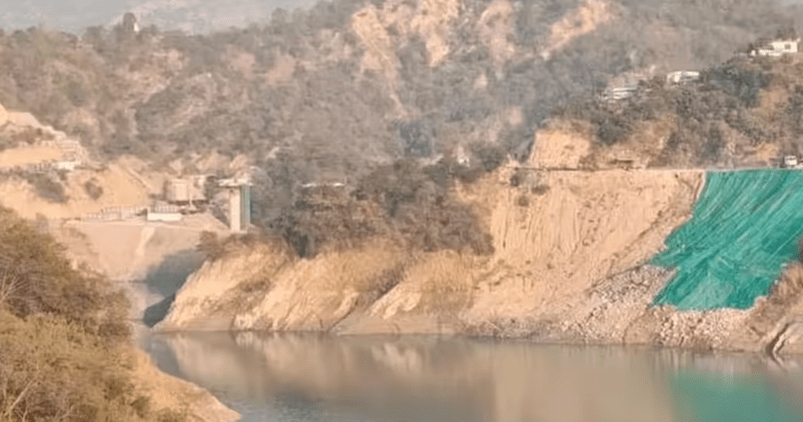
(Feature Image: Despite HC orders, NHAI, Railways continue illegal dumping of landslide debris. Source)
In a reply in Lok Sabha on Dec. 04, the Ministry of Jal Shakti has revealed that 24 reservoirs in Punjab (14), Himachal Pradesh (9) and Haryana (1) have collectively lost about one fifth of their storage capacity due to sedimentation. Indeed, for years the sedimentation has become a major problem reducing the storage capacity of dams across the country. As a solution the respective governments have mainly relied on desilting which has largely remained limited to plans and in some cases have not achieved the intended purpose. In case of Bhakra the central govt has again mainly focused on desilting as solution.
The de-siltation is a short-term measure involving complex processes making it economically unviable and practically futile exercise. First of all, India still lacks a National Silt Management Policy backed up by credible action plan. Secondly, as part of their integral functions, rivers naturally carry out silt which has multiple benefits if the symmetry is left least disturbed. However, given large scale anthropogenic interventions in rivers catchment in terms of deforestation, infrastructure construction, highway construction, road widening, dumping, riverbed mining etc. have resulted in sharp increase in sedimentation rate and gradual degradation of rivers catchment areas.
So, as long term and sustainable measure what is really required is serious intervention at catchment level to ensure minimal amount of silt enters the reservoirs. This is only possible if we have concrete action plan with sincere implementation including credible mechanism to ensure effective monitoring and compliance to norms.
As quite evident from the recent Punjab flood event also, the increasing sedimentation has multiple adverse impacts regarding management of rivers and reservoirs. At the same time reversing the trend can surely result in multiple benefits on several fronts. One only expects the parliamentarians to debate the important issue meticulously and the discussion should not be confined to one region and de-siltation only.
DAM DESILTATION
Dam Desilting status in Haryana, Punjab & Himachal According to the National Register of Specified Dams, 2025 compiled by the National Dam Safety Authority, Haryana has 3 specified dams, Punjab has 15, and Himachal Pradesh has 24.
Under the ongoing externally funded DRIP Phase-II & III Scheme, provision has been made for de-siltation of selected dams in participating States/agencies, subject to the techno-economic viability of the proposals. At present, the Punjab Water Resources Department and the Bhakra Beas Management Board (BBMB) are the implementing agencies under DRIP-II & III, whereas Haryana and Himachal Pradesh are not part of this Scheme.
The Government of Punjab has conveyed that it has undertaken the de-siltation of 13 dams located in the Kandi area using its own financial resources. At present, de-siltation works are in progress at four dams namely Chohal, Siswan, Saleran, and Thana. For the remaining 9 dams, the Government of Punjab has submitted proposals to the Government of India seeking forest clearance.
Bhakra Beas Management Board (BBMB) has, till date, not initiated de-siltation activities in its two major storage reservoirs, namely Bhakra and Pong. However, BBMB has contemplated a pilot project for de-siltation of the Bhakra reservoir under the DRIP Phase-II & III Scheme. This initiative is envisaged in a revenue-generation mode; accordingly, no separate fund requirement for the de-siltation of the Bhakra reservoir is anticipated.
In Himachal Pradesh, most dam-owning agencies undertake silt removal from reservoirs through periodic flushing operations, carried out in accordance with the provisions of the Operation & Maintenance (O&M) Manual, typically during the monsoon season.
Further, the Government of Punjab and BBMB are participating in the DRIP Phase-II & III Scheme for the rehabilitation of their dams. Under this Scheme, Punjab is undertaking rehabilitation of 12 dams with an allocation of Rs. 442 Crore, while BBMB is rehabilitating 2 dams with an allocation of Rs. 230 Crore. These two agencies formally joined the DRIP Phase-II & III Scheme recently in October 2025.
Centre constitutes Panel for Bhakra dam desilting The Union Jal Shakti Ministry has formed a 10-member committee for the Bhakra desilting project and the state government reportedly granting in-principle approval. Under the proposed plan, proceeds from the mineral-rich silt will be shared among HP, the Bhakra Beas Management Board (BBMB) and other member states as per a fixed formula. Himachal is expected to receive the largest share because the dam and its reservoir lie within the state. BBMB officials said the reservoir’s storage capacity has already fallen by about 26% since the dam was built. Each year, an estimated 39.01 million cubic metre (MCM) silt enters the reservoir, higher than the 33.61 MCM projected at the time of impoundment in 1958.
According to the proposal, Himachal Pradesh will receive its standard royalty from sand mining, while BBMB will retain any additional revenue. “If sand is sold at ₹100, the state gets its royalty—say ₹65—and the remaining ₹35 goes to BBMB,” an official explained. “This will boost income for HP, BBMB, and partner states while addressing the siltation challenge.” If approved, BBMB plans to execute the desilting as a one-year pilot project.
BBMB has identified a site at Bilaspur because here water levels remain low for 8–9 months each year, as the most feasible point for excavation. The site sits along an NHAI corridor, enabling easy loading and transportation of extracted sediment across North India. Authorities have also requested NHAI to use the material for road embankments and earth filling to reduce construction costs.
Separately, BBMB has proposed a Rs 6,500-crore, 1,500 MW pumped-storage project as an extension of the Bhakra Dam at Dobar village, about 5 km upstream from the existing structure. Planned under the PPP model on a build-own-operate basis, the project follows surveys that identified four viable sites across the reservoir.
Dam Siltation in North India Sedimentation has choked the water storage capacity of reservoirs across Punjab, Himachal Pradesh, and Haryana, with 24 dams collectively losing 4,183.6 MCM of storage, nearly 20% of their original capacity. The figures were presented by the Union ministry of Jal Shakti in the Lok Sabha in response to a question by Chandigarh MP Manish Tewari.
Himachal Pradesh shows the largest absolute reduction with sedimentation taking up 3,960.37 MCM (20.97%) of its original gross storage capacity of 18,882.974 MCM. The Bhakra reservoir alone has lost 2,568 MCM (26.02%), while the Beas reservoir has lost 1,190 MCM (13.88%). Smaller dams such as Baira (81.33%) and Chamera-I (50.1%) have also experienced sharp declines.
State | Original storage | Present storage | Loss of storage | % loss
Punjab | 3,479.7 | 3,257.5 | 222.3 | 6.4%
Himachal | 18,883 | 14,922.6 | 3,960.4 | 21%
Haryana | 13.7 | 12.4 | 1.3 | 9.2%
Hiradkud Dam Safety issue raised in Odisha Assembly The issue of silt accumulation to the extent of 27% of Hirakud reservoir making it unsafe was raised in Odisha assembly on Dec 4 2025. Responding to the concerns, Revenue and Disaster Management Minister Suresh Pujari informed the House that a Japanese firm was once engaged for silt removal, but the effort remained incomplete because of the presence of trees inside the dam.
Reservoir storage monitoring system Central Water Commission (CWC) monitors the live storage status of 166 reservoirs across the country. Of these, a Telemetry-based Reservoir Monitoring System (TBRMS) has been installed on 78 major reservoirs. However, owing to challenges associated with satellite-based technology, instead of TBRMS, reservoir data is monitored through the Reservoir Storage Monitoring System (RSMS), which was introduced in 2012 to streamline data entry by project authorities and CWC offices. In April 2025, a new web-based RSMS portal was launched, enabling automated data analysis and facilitating the generation of charts, tables, and graphs for inclusion in the reservoir bulletin.
CLIMATE CRISIS
Biodiversity – our strongest natural defender from Climate Change Conserving and restoring natural spaces and the biodiversity are essential for limiting emissions and adapting to climate impacts. Biodiversity forms the web of life that depends on -food, water, medicine, a stable climate, economic growth, among others. When human activities produce greenhouse gases, around half of the emissions remain in the atmosphere, while the other half is absorbed by the land and ocean. These ecosystems and the biodiversity they contain – are natural carbon sinks, providing so-called nature-based solutions to climate change. The Planet is suffering irreversible damage with loss of ecosystems, biodiversity and leads to extreme weather events that will worsen over time. The other irreversible damage includes pollution, deforestation and large-scale resource extraction, all driven by human activity and increasing at an unprecedented rate. Thus, conserving Biodiversity will be the strongest natural defender from the crisis of Climate Change.
HYDRO POWER PROJECTS
Impacts of Cascading HEPs in the Ravi Basin 2025 Floods in Ravi have been one of the worst on record causing extensive loss of life and property. But the collapse of Salun was something else. This tragedy highlights the vulnerability of communities and the major vacuum in environmental governance around hydropower in Himalayas.
Will SLHEP put elephants at risk? The showpiece project sits on an ‘an extremely crucial link’ in maintaining elephant habitats along the Himalayan foothills in the northeast. At its worst, the fallout could be catastrophic. Tongam Rina a journalist who has written about hydropower & dams in Arunachal Pradesh for more than 20 years: “The NBWL standing committee members will have blood on their hands if washing away of elephants is considered an acceptable trade-off to generate power from the project.”
SLHEP’s 250 Mw Unit-2 to begin commercial supply in Dec NHPC on Dec. 03 said that 250 MW Unit-2 of Subansiri Lower Hydro-Electric Project (SLHEP) is expected to begin commercial supply this month. Test synchronization of the 250 MW (Unit-2) of 2000 MW of the SLHEP with the national grid was successfully achieved on 2 Dec, the NHPC stated in a release. The commissioning process began with Unit-1 and Unit-2, which underwent mechanical run on 24 October and 6 November this year, respectively.
The synchronization of the remaining three units-Unit-1, Unit-3, and Unit-4-will proceed upon completion of the comprehensive wet commissioning tests. The three units are expected to generate an additional 1000 MW of electricity, the release stated. The final four units are scheduled for sequential connection during 2026-27, further enhancing energy supply and supporting national infrastructure, it stated.
9 bidders for GVK’s 330 Mw Alaknanda Hydro At least nine companies have bid for GVK’s 330 Mw Alaknanda Hydro project on Alakananda river in Uttarakhand state for bids ranging between Rs 3000 and 4000 Cr. The bids include those from Adani Power and JSW. The project is in huge debt and creditors hold major stake in the project with active PPA till 2045.
Desilting of Baglihar Dam underway As the gates of Baglihar Hydroelectric Power Project dam were opened, a massive volume of muddy water, silt, and wooden debris was seen gushing into the River Chenab below the dam, reflecting the extent of sediment build-up over time.
BBMB proposes 1,500 Mw PSP near Bhakra Dam The full board of BBMB had approved the concept in 2024. Since then, the organisation has already completed the tendering process for selecting consultants to prepare the Detailed Project Report (DPR). Once the DPR is finalised, the project will require mandatory environmental clearances from the Union Ministry of Environment and Forests.
The planned project would exceed the generation capacity of the Bhakra Dam itself, which currently produces about 1,379 MW. As per report, BBMB has identified Dobar village in the Shivalik foothills for the ambitious project. Engineers have pinpointed a narrow gorge in the area where a 20 million cubic metre (MCM) reservoir can be constructed. Under the proposed plan, water will be lifted from the existing Gobind Sagar Lake of Bhakra Dam to the newly carved Dobar reservoir during peak hours, to generate power.
However, BBMB’s plan is caught in negotiations with the Himachal Pradesh government, which must grant final approval. Himachal currently receives 7.5 per cent free power from BBMB’s existing projects. But in the case of hydro projects built by other central and private agencies such as NTPC and NHPC, the state secures 12 per cent free power. Sources indicated that Himachal may insist on a similar 12 per cent quota from BBMB’s new project since it falls within its territory.
Officials aware of the discussions said the matter is still under active negotiation, and a final agreement may take time. Until the power sharing structure is settled, formal approval is unlikely.
Fitch Downgrades Greenko Energy’s IDR & Note Ratings to ‘BB-‘ Fitch Ratings has downgraded India-based Greenko Energy Holdings’ (Greenko) Long-Term Foreign-Currency Issuer Default Rating (IDR) to ‘BB-‘ from ‘BB’. The downgrade is driven by continued delays in both the restoration of its Teesta III hydro project as well as the operational start of the 480MW capacity of its first pumped hydro storage (PSP) project. These delays from earlier targets reflect the lack of adequate risk assessment, resulting in weaker financial metrics.
Greenko now expects Teesta’s site restoration and resumption of partial operations to 60% capacity to be delayed to 1Q26 from its earlier expectation of November 2025. The delay was mostly caused by floods in the region, restricting site access. It expects the 480MW capacity out of a total 1.68GW in its first PSP in Andhra Pradesh (AP) state to commence operations by end-2025, pushed back from mid-2025.
Over 99,000 ha forest land diverted for projects in last 5 years: Govt Union Minister of State for Environment Kirti Vardhan Singh told the Rajya Sabha on Dec. 04 that 22,233 ha were diverted for road projects alone between 2020-21 and 2024-25, followed by 18,914 ha for mining and quarrying, and 17,434 ha for hydel and irrigation works. Power transmission lines required 13,859 ha, while railway projects saw the diversion of 5,957 ha.
Other major categories include forest village conversion (1,362 ha), drinking water projects (1,281 ha), rehabilitation works (1,508 ha), canals (80 ha), defence projects (6,042 ha), optical fibre cable (391 ha), industries (150 ha), and new petrol pumps (1,927 ha). Data show a sharp rise in certain categories in 2024-25, including drinking water schemes (376 ha), petrol pumps (42 ha), and power transmission lines (3,820 ha). The re-diversion/land use change category also saw 180 new cases that year.
The ministry said that a total of 3,826 road projects received forest clearance since 2020, the highest across all sectors. Pipelines (756), drinking water projects (676), optical fibre cable (524), hydel/irrigation (194), mining/quarrying (190) and railway projects (182) formed the next major categories.
DAMS SAFETY
Decision about Singur Dam Safety issue postponed The safety works for the stricken Singur dam, which requires urgent repairs, will follow a measured approach that will ‘balance’ the need for urgent repairs to the dam to ensure its survival, and keep the drinking water supply to Hyderabad, and to other districts under the Mission Bhagiratha programme, as long as possible. A technical committee set up by the government on Singur dam safety has recommended that against the required depletion of the reservoir to 510 metres, water will be reduced to 517.5 metres. Once this level is reached, a further examination of the damaged dam will be conducted. Full reservoir level: 523.63 m; Level on Dec. 4: 520.59 m; Depletion level required for repairs: 510.6 m.
After that, a final decision will be taken on whether reducing the water storage to 510 metres will be required. This recommendation to maintain level at 517.5 metres for the 2025-26 water year will be communicated to the government. The seven-member technical committee that met on Dec 3 saw divergent points of view with the irrigation department making it clear that it could not compromise on the dam’s safety and would need full depletion of the reservoir, while water board and MB officials maintained that without Singur water, they would not be able to supply drinking water.
HMWS&SB, and MB officials practically threw up their hands declaring that if the committee recommended full depletion, there would be a drinking water crisis in Hyderabad, as well as in erstwhile unified Medak and Nizamabad districts. While Hyderabad gets around 6.96 tmc ft per year from Singur, Nizamabad and Medak districts use around 5.7 tmc ft from the reservoir each year under the Mission Bhagiratha scheme.
Irrigation engineer-in-chief (general) Amjad Hussain, who is also the chairman of the committee, made it clear that there was an “urgency” to deplete water at the Singur dam, and that the department was being asked frequently by the National Dam Safety Authority (NDSA) on the steps being taken to save the dam. This was also echoed by the chief engineer of the department’s Central Designs Organisation M. Satyanarayana Reddy who made it clear that any comprehensive rehabilitation work could be taken up only if the water was depleted up to the crest level of 510.600 metre. Unless this was done, it would not even be possible to assess the damage. Stressing that the “dam is in a distressed condition,” the official said no repair or even assessment of damages will stand without proper investigations which will require the full required depletion of the reservoir.
Tungabhadra process to replace 33 crest gates starts Ahmedabad-based Hardware Tools & Machinery Projects Ltd company, which bagged the contract for Rs 52 crore, arrived at the dam site and offered puja on Dec. 05. The company will, however, take up full-fledged work to replace the gates only after the water level in the dam goes below the crest gate level. The current storage in the dam stands at 67 tmcft and the work will begin after the storage level goes below 40 tmcft. The work, In all likelihood, will begin in full swing by the month-end. According to Tungabhadra Board officials, a total of 15 gates are ready for installation and the remaining 18 gates will be manufactured in another three months. The officials said that it would take seven days to remove the old gate and another seven days to install a new one. It would take at least six months to replace all 33 gates.
छत्तीसगढ़ के बांधों को मरम्मत की दरकार लुत्ती बांध के टूटने से जनधन की हानि के बाद अब अन्य प्रमुख बांधों की स्थिति पर खतरा मंडराने लगा है। छत्तीसगढ़ में 28 बांधों की उम्र 50 वर्ष से अधिक हैं, जबकि 7 बांध 100 वर्ष से भी अधिक पुराने हैं। हाल ही में बांध सुरक्षा समिति ने प्रदेश के 5 बांधों को जर्जर स्थिति में शामिल किया है। इनकी निगरानी और रखरखाव पर जोर दिया है। इनमें दुधावा, मुरुमसिल्ली, रविशंकर सागर गंगरेल बांध, सोंदूर व रुद्री बैराज शामिल हैं।
राज्य सरकार ने प्रदेश के 50 साल से अधिक उम्र वाले बांधों की मरम्मत के लिए राशि का प्रावधान बजट में किया है। पूर्व जल संसाधन मंत्री केदार कश्यप ने भी विभागीय समीक्षा बैठक में भी अधिकारियों को निर्देश दिए थे कि पुराने बांधों की मरम्मत बरसात के पहले किया जाए, ताकि किसी प्रकार की अनहोनी न हो। लेकिन विभाग के अधिकारियों और इंजीनियरों की लापरवाही के चलते बांधों की मरम्मत तक नहीं हो पाई।
DAMS
Mekedatu’s feasibility yet to be established: CWMA Chairman Cauvery Water Management Authority (CWMA) Chairman S.K. Haldar said on Dec. 05 that the proposed Mekedatu reservoir of the Karnataka government could not be taken forward at this stage as its techno-commercial feasibility was “yet to be established”. He said the project was no longer before the CWMA, as the file had already been returned to the Central Water Commission (CWC).
“The Karnataka government has proposed this project, but its techno-commercial feasibility – whether it is fit to be taken up for investment – is yet to be established. Only if those aspects are established can we say whether the project will come up or not. At this stage, these things are yet to be finalised,” Mr. Haldar told reporters after inspecting the Kallanai (Grand Anicut). Earlier in the day, Tamil Nadu All Farmers’ Organisations Co-ordination Committee president P.R. Pandian requested that the CWMA not take up the Mekedatu issue for discussion in its next meeting, which has been scheduled for December 8.
New barrage on Tapi to ensure 50-year water supply for Surat Officials said the project’s design is being upgraded from an earthen dam to a coffer dam, though the final design is yet to be approved. “The state govt will contribute around 20% of the project cost. It is an important contribution and through the water body, we will be able to supply irrigation water to nearby villages,” said Rajan Patel, chairman of the Surat Municipal Corporation’s standing committee. The Gujarat govt’s water resources department is simultaneously implementing lift-irrigation schemes to benefit these villages, covering around 2,365 hectares of land.
The barrage will have a capacity of 18.73 million cubic metres, creating a 10km long freshwater reservoir, which will help meet the city’s drinking water demand until 2050. Once operational, the project will also prevent saltwater ingress into Surat and the surrounding coastal villages, a long-standing threat to groundwater sources. At least 30 villages in the vicinity will gain access to reliable drinking water and irrigation support.
Floating Solar planned over Kadana Dam Reservoir The Gujarat-based solar and hybrid power generator KPI Green Energy on Dec 2 said it has secured work order from Gujarat State Electricity Corp Ltd for Rs 489 Cr for 110 MW Floating Solar project on Kadana reservoir. The contract covers EPC of the project in 18 months, along with a 10 years operation and Maintenance agreement.
Agenda of EAC meeting to be held on Dec 10 2025 1. Hiran Closed-Loop Pumped Storage Project (1000 MW) in 300 Ha at Tala, Kanra, etc., Sub-Dist Patan & Jabera, Dist Jabalpur and Damoh, MP by Renew Green (Tnj Two) Pvt Ltd – Terms of References
2. Savitri Open Loop Pumped Storage Project (2400 MW) in 310.76 Ha at Village Javali, Dare, Haroshi, Karanje etc, Sub-dist Poladpur and Mahabaleshwar, Dist Satara and Raigarh, Mah by NHPC limited – Terms of References
3. Assam/PSP-02 Closed-Loop Pumped Storage Project (1000 MW) in 259.6 Ha at Village Baithalangso and Sardangang, Sub Dist Donka, Dist West Karbi Anglong, Assam by Assam Power Distribution Company Ltd – Terms of References
4. Gosaintari Closed-Loop pumped storage project (920 MW) in 261.13 Ha at Village Dhamni, Jhirkhi, Planki, Sarki, etc, Sub-District Rajauli and Gobindpur, District Nawada, Bihar by Sun Hydro Energy Pvt Ltd – Terms of References
Relevant Agenda of FAC meeting being held on Dec 2 20251. Diversion of 82.25 HECTARES OF FOREST LAND FOR BARODAKHURD MINOR RESERVOIR AND CANAL BY WATER RESOURCES DEPT, CHHATTISGARH UNDER KABIRDHAM DIST
2. Diversion of 9.08 HA FOREST LAND (3.339 HA PROTECTED FOREST AND 5.741 HA RESERVED FOREST) FOR MARSHALL SMALL HYDEL POWER PROJECT (24.75 MW) REWA DIST, MADHYA PRADESH for M/S MARSHALL SMALL HYDEL POWER PVT. LTD.
3. DIVERSION OF 50.745 HA RESERVED FOREST LAND for KALAMBA TANK UNDER SENDHWA FOREST DIVISION, BARWANI DISTRICT OF MADHYA PRADESH
4. Diversion of 513.4 HA FOREST LAND of WRD, RANI AVANTI BAI LODHISAGAR PROJECT, BARGI HILLS, JABALPUR FOR SHAKKARPENCH LINK COMBINED PROJECT, PHASE-1, HARD DAM UNDER CHHINDWARA DISTRICT OF MADHYA PRADESH.
5. Diversion of 243.74 HA. (SHAHAPUR DIVISION 181.45 HA AND WST NASIK DIV 62.29 HA) OF FOREST LAND (RESERVED FOREST, PROTECTED FOREST, PRIVATE FOREST) FOR BHAVALI PUMPED STORAGE PROJECT (1500 MW) of JSW Steel IN THANE & NASIK DIST IN Mah
6. DIVERSION OF 233 HA. FOREST LAND (197.0272 HA RESERVED FOREST, 26.066 HA PRIVATE FOREST AND 9.9068 HA PROTECTED FOREST) FOR SAIDONGAR-I KARJAT OFF-STREAM OPEN LOOP PUMPED STORAGE PROJECT (3000 MW) AT PALI, TAL. KOTAL KHALATI, SAIDONGAR & DHAK VILLAGE, KARJAT TALUKA, RAIGAD DIST IN MAH OF TORRENT PSP 3 Pvt Ltd
7. DIVERSION OF 107.596 HA (INCLUDING 0.99 HA FOREST LAND DIVERTED EARLIER) OF FOREST LAND FOR UPPER INDRAVATI PUMPED STORAGE PROJECT (600 MW) AT MUKHIGUDA IN KALAHANDI DIST BY ODISHA HYDROPOWER CORPORATION LTD
8. 51.99 HA (ORIGINALLY PROPOSED AREA FOR RE-DIVERSION IS 64.55 HA) OUT OF 75.7 HA PERCH DAM ALREADY DIVERTED RESERVOIR AREA FOR RESTORING THE RESERVOIR’S ORIGINAL CAPACITY AND FURTHER PROCESSING THE DESILTED MATERIAL, HOSHIARPUR DIST, PUNJAB.
9. DIVERSION OF 174.1106 HA FOREST LAND FOR TWO DIVERSION DAMS ON LOCAL NALLAH OF WAKKAL RIVER (DEWAS STAGE III) AND THE OTHER DEWAS STAGE IV IS ALSO ON A LOCAL NALLAH OF WAKKAL RIVER A TRIBUTARY OF SABARMATI RIVER BY THE DEPARTMENT OF IRRIGATION, GOVt OF RAJASTHAN UNDER TEHSIL GOGUNDA, DISTRICT UDAIPUR, Raj.
Further Relevant Agenda: – 740.16 ha forest land for Munjri Irrigation Project in Sheopur dist, MP
DAM FLOODS
2025: Dam Induced Flood Incidents in India India has witnessed several incidents of dam induced floods during south west monsoon 2025. The most remarkable and devastating episode unfolded in Punjab and Himachal Pradesh states in August 2025 largely due to mismanagement of Bhakra, Pong and Ranjit Sagar dams by BBMB. While negligence of BBMB has invited FIRs in Himachal Pradesh, warnings by Punjab govt and petition in NGT, there is no report in public domain suggesting the authority taking any credible action to make its dam operation scientific and accountable after the disaster.
2025: Dam Induced Urban Floods in India In 2025, we could find reports on two Indian cities facing the impact of dam induced floods. While the excessive discharges by Himayat Sagar reservoir severely inundated residential areas along Musi river in Hyderabad in last week of Sept 2025, the significant releases by Ukai dam authority into Tapi river affected daily life in Surat city twice in mid Aug and first week of Sept. 2025.
2025: Fly Ash Dam Breach Flood in India In 2025 we could find one incident of fly ash dam breach flood in India. The incident happened in Dindolbhantha village area near Chhirhut under Katghora tehsil of Korba district in Chhattisgarh on June 26, 2025. While the fly ash dam is located close to Ahiran river-a tributary of Hasdeo river, the power plant is located about 9km west ward near Darri reservoir on Hasdeo river in Mahanadi basin. The slurry is supplied to the fly ash pondage through pipeline.
MoJS in Parliament without supporting convincing evidence: Floods in Punjab not due to poor reservoir management The Union Ministry of Jal Shakti informed Rajya Sabha on Dec 1 2025 that the Punjab floods in SW Monsoon 2025 “were not aggravated due to poor reservoir management at major dams Pong and Bhakra”. No convincing supporting facts of figures were provided by the minister of state for Jal Shakti Shri Raj Bhusan Choudhary in a written reply.
The PIB PR asserted: “In the year 2025, there were extensive rains in the catchments of Pong and Bhakra dams leading to huge inflows of 3,49,522 and 1,90,603 cusecs into the reservoirs of two dams respectively.”
The Minister said: “As per the provisions of Dam Safety Act, 2021, for the establishment of early warning systems and the creation of frameworks to enable real-time exchange of hydrological and meteorological data, including information on reservoir inflows and outflows, National Dam Safety Authority (NDSA) has issued directions to concerned dam owners to ensure the prompt, accurate and regular sharing of real-time 3-hourly reservoir inflow/outflow data to the concerned.” (The concerned here should obviously include the people at risk and hence all this information should be promptly available in public domain, something that is neither happening, nor is required under Dam Safety Act or any other law.)
The Minister added: “Further, as per the provisions of Dam Safety Act, 2021, mandating all the Specified dam owners to have coordinated operations of cascading dams, NDSA has issued directions to State Dam Safety Organisation(s) and Owner(s) of the Specified Dams for effective communication with all stakeholders to effectively manage the flood-related disaster and to minimize the consequences and make communities more disaster resilient.” (The most important stakeholders here should include the people at risk, but no such communication is available in public domain from SDSO or NDSA. The information mentioned here must be promptly available in public domain, but is not happening, nor required under law.)
Moreover, the PIB PR said: “NDSA has also issued directions to all the State Dam Safety Organisations to ensure strict and scrupulous adherence to the approved “Reservoir Rule Curve” while operating their respective dams during the year as well as special compliance and monitoring during the period of high flood spells.” (There is no confidence inspiring mechanism to monitor and ensure adherence to Reservoir Rule curve, there is no reporting how this is being achieved, there are not consequences when they do not. Most importantly, the people at risk have no way of knowing what is the Rule Curve and how it is being adhered to or not.)
Clearly, such assertions from the MoJS is the Parliament are not useful or convincing, nor it will help improve the state of affairs.
INTERLINKING OF RIVERS
4 years Of Ken-Betwa: Whose Thirst It Will Quench, Citizens or Politicians? Former Water Resources Secretary Shashi Shekhar, for example, flatly asserted that the official claim of irrigating 10.62 lakh hectares is “coming out of the air,” contradicting ground reality. He notes that actual rainfall and hydrology data for Ken vs Betwa do not justify moving water away from Bundelkhand at all – ironically, the upper Betwa (not even Bundelkhand proper) gets much of the benefit. South Asia water expert Himanshu Thakkar of SANDRP adds that the project’s own DPR shows its “primary objective is to provide water to the upper Betwa, which is not part of Bundelkhand,” effectively siphoning Bundelkhand’s meager water to other areas… the project will be remembered less as “national importance” and more as a political vanity project that offered much hope but delivered more heartache.
Telangana opposed Polavaram-Nallamalasagar Link project of AP The Telangana Irrigation department has requested the Godavari River Management Board (GRMB) to prevent the Andhra Pradesh government from taking up any activity related to diversion of Godavari waters and to ensure that no appraisal of the Polavaram–Nallamalasagar Link Project (PNLP) is carried out in violation of the Andhra Pradesh Reorganisation Act, 2014 and the Godavari Water Disputes Tribunal (GWDT) award. The proposed diversion of Godavari waters by the AP government affects the rights and interests of Telangana, Telangana Engineer-in-Chief (general) Mohd Amjad Hussain said in his letter to the GRMB. AP govt has invited tenders to prepare DPR of the PNLP.
INTERSTATE WATER DISPUTES
Delhi seeks increased Yamuna share With the 1994 Yamuna water sharing agreement among the riparian states—Uttar Pradesh, Uttarakhand, Himachal Pradesh, Haryana, Delhi, and Rajasthan—coming up for renegotiation after the stipulated 30-year period, the Northern Zonal Council meeting on Nov. 17 saw demand for increased allocation of river water due to rising demands from all states.
The water allocation among the six states was signed on May 12,1994. Three decades later, with water shortages visible across northern India, experts say that achieving a fresh consensus seems to be even more difficult to achieve. There are also demands to reform the Upper Yamuna River Board, a body set up to govern the river from its origin until the Okhla barrage in Delhi.
Bhim Singh Rawat, a member of member of the South Asia Network on Dams, Rivers and People (SANDRP), said that all riparian states are increasing their demand for water but there is no more water available in the river. “The demands are far beyond the flow in the river. The renegotiation should not happen in unscientific way and river rights also need to be protected,” he said.
Rawat said that even government commissioned studies and expert bodies have suggested that the environmental flow in the river should be increased from 10 cumecs to 23 cumecs. “There are contradictions in government policies and its own plans. On one side, everyone wants to increase the extraction from river while on the other hand they want to rejuvenate the river. A river without flow does not exist. The 1994 agreement turned a perennial river into a seasonal river,” he said.
URBAN RIVERS
Chennai: a data-driven hope for Cooum revival The analysis revealed clear insights into the Cooum River’s crisis, including widespread encroachment, high sewage levels, and major flaws in Chennai’s wastewater system. Restoring the river is a tough task due to its complex natural geography and years of urban neglect.
Kumbh 2026: NMC to hold talks with activists The Nashik Municipal Corporation (NMC) has scheduled a dialogue with a select group of environmental activists for Dec 8 in an effort to address the escalating controversy surrounding the proposed felling of trees in Tapovan for the development of Sadhugram. This move comes shortly after a public hearing was held regarding objections raised against the plan to cut over 1,700 trees, which has led to widespread environmental concerns.
Pune: Dry cleaning units sealed for releasing effluents into Pavana The Pimpri-Chinchwad Municipal Corporation (PCMC) has sealed two dry cleaning units in Walhekarwadi and registered criminal cases against their owners for allegedly releasing effluents into the Pavana river. The action comes after residents complained of a thick layer of foam on the surface of the river last month, raising concerns about water pollution, officials said Dec. 03.
RIVERS
Climate change is killing India’s rivers more frequently A major 2025 global analysis used satellite data to show that continents are losing freshwater from rivers, lakes, wetlands and soil at an unprecedented rate. It marked a large-scale decline in terrestrial water storage and has major implications for Asia. This shift is being driven by shorter and erratic monsoon, longer dry spells, rapid groundwater depletion, reduced snowmelt, and rising temperatures that accelerate evaporation.
Experts are calling for aggressive groundwater recharge, protection of wetlands, efficient irrigation, treated-wastewater reuse, and river-basin-level planning. Without urgent action, India’s rivers may continue drying earlier each year — turning a seasonal challenge into a long-term water-security crisis.
River drought forcing of the Harappan metamorphosis Abstract: -Hydroclimatic variations are among the factors shaping the rise and fall of the Indus Valley Civilization. Yet, constraining the role of water availability across this vast region has remained challenging owing to the scarcity of site-specific paleoclimate records. By integrating high-resolution paleoclimate archives with palaeohydrological reconstructions from transient climate simulations, we identify the likelihood of severe and persistent river droughts, lasting from decades to centuries, that affected the Indus basin between ~4400 and 3400 years before present. Basin-scale streamflow anomalies further indicate that protracted river drought coincided with regional rainfall deficits, together reducing freshwater availability. We contend that reduced water availability, accompanied by substantially drier conditions, may have led to population dispersal from major Harappan centers, while acknowledging that societal transformation was shaped by a complex interplay of climatic, social, and economic pressures.
The study shows a rise in temperatures and a reduction in rainfall over the centuries. The experts studied speleothems – mineral deposits formed in caves by dripping water – in Uttarakhand, along with other caves and sites, to compare the simulated data.
India’s river crisis: Industry must lead the cleanup Many strategically significant rivers in India are heavily contaminated with untreated wastewater, especially from textile and tannery industries that release dyes, salts and hard-to-treat chemicals. Farmers in regions such as the Noyyal basin and Jojari River area are losing arable land, being forced to migrate and facing toxic exposure. Simply collecting data isn’t enough. Artificial intelligence-driven monitoring, real-time detection, predictive maintenance and stricter enforcement can help industries comply and reduce river pollution.
Western Ghats’ fading streams The dwindling flow in the Ghats will directly impact cities like Mangaluru and Udupi. Water supply dams may struggle to hold enough water during summer. But the consequences are far-reaching. As water bodies and grasslands dry up, animals will move toward villages, increasing human– wildlife conflict. Microscopic organisms—essential to the forest soil—will vanish. In the long run, the entire ecosystem may tilt beyond recovery.
“Mere slogans like ‘Save Forest’ or ‘Save Tigers’ mean nothing,” Holla says. “Tigers can survive only if their prey survive. And prey can survive only if the forests thrive.” He stresses the role of animals in forest regeneration. “The more animals move inside the forest, the thicker the forest grows. The thicker the forest is, the more safe the catchment is.”
Majuli: World’s largest river island in India Spread across 475-880 sqkm depending on seasonal floods, Majuli is India’s only island district and a geographical wonder. Formed centuries ago, by the shifting course of the Brahmaputra, it is often described as a living museum of Assamese traditions. Majuli’s beauty hides a grim reality. Once spread over 1,200 sq km, the island has shrunk drastically due to riverbank erosion and annual monsoon floods. Experts warn that if erosion continues unchecked, much of Majuli could disappear within our lifetime. The erosion not only threatens land but also endangers centuries-old art forms and livelihoods.
Odisha: Resistance against ESSAR’s iron ore project Residents of Tikarpada, Kadagada and nearby villages in Odisha’s Keonjhar district are protesting ESSAR’s proposed iron ore beneficiation project, saying it endangers their farms, water sources and way of life. Villagers allege they were stopped from attending the mandatory public hearing, even though agriculture is their only livelihood. Keonjhar, known for its mineral wealth and extensive mining activity, is now seeing growing anger from farming communities.
The project proposes a slurry pipeline from the beneficiation plant in Tikarpada, Keonjhar, to ESSAR’s pellet plant in Paradip. It will draw water from the Baitarani river — the primary source for drinking, irrigation and daily needs in these villages. Locals fear the pipeline will deplete the river and increase pollution. Villagers have held demonstrations and filed RTIs. While authorities claim 736 people attended the hearing, locals submitted over 2,000 signatures opposing the project.
Jhelum no dredging threatens lives Flooding in Kashmir is not a new phenomenon. Historical records show major floods hitting the region on July 21, 1893, followed by significant events in 1903, 1929, 1948, 1950, 1957, 1959, 1992, 1996, 2002, 2006, 2010, and 2014. Experts, however, note that such incidents have become more frequent in recent years. Over the past decade, official data from the Jammu & Kashmir Irrigation and Flood Control Department shows that water levels have crossed the danger mark at least seven times, triggering flood-like conditions across the region and signaling a growing risk of recurrent floods.
Records reveal that 2015 alone witnessed four separate floods, with additional incidents recorded in 2017, 2018, 2022, 2023, and now 2025. The 2025 surge has now exceeded all previous levels since 2014, marking the highest in more than a decade. Experts warn that without consistent dredging and proper upkeep of the river and its flood channels, the Valley remains highly exposed to another devastating flood. Despite recurrent flood threats in Kashmir, two key components of the Rs 1,623 crore comprehensive flood management plan for the Jhelum River remain stalled.
Govt fiddled with Rambiara to build industrial estate For more than a year, heavy machinery and a fleet of dumpers have been at work to lay the foundation of a new industrial estate which is coming up on some 63 acres of state land on the riverbank of Rambiara in Shopian’s Trenz, a village of apple farmers.
Godavari STP nears completion Construction of the new 50 MLD STP at the Aava area of Rajamahendravaram is progressing swiftly, with officials announcing that all works will be completed by March 2026. The project is being implemented under the Namami Godavari program. The Central Government has already released the first tranche of ₹100 crore, of which ₹89 crore has been allocated for the construction of the STP. In addition to the main 50 MLD unit, a supplementary 5 MLD plant is also under development adjacent to the site, further strengthening the city’s water management system.
Ganga: Local residents tie ‘raksha sutras’ to Deodar tree Villagers, environmental activists, political leaders tied raksha sutras — a thread that symbolises protection — to old-growth Deodar trees near Harsil in the upper reaches of Bhagirathi eco-sensitive zone (ESZ) to save them from the axe. These trees are likely to be cleared for the expansion of the 20.6-km Char Dham route between Bhaironghati to Jhala in Uttar Kashi district, people familiar with the matter said. Around 6,000 Deodar trees have been marked on the Char Dham stretch for felling after the Uttarakhand government gave its nod for the route’s widening, people aware of the details said.
Govt approves Char Dham project road widening The Uttarakhand government has given its nod to the widening of a 20.6-km stretch under the Char Dham project in the upper reaches of Bhagirathi Eco-Sensitive zone, people aware of the details said on Dec. 05). The 20.6-km stretch, called package 1, links Bhaironghat to Jhala villages in Uttarkashi district. According to a letter from the Uttarakhand Head of Forest Forces (HoFF), the stretch will involve the loss of 41.92 hectares of forest area, which includes several Deodar trees. In the letter dated November 12 to the state nodal officer, forest land, the HoFF said that the road widening is “strategically important for national security”.
NMCG launches tech-driven push The NMCG has rolled out advanced real-time monitoring, digital wetland tracking, and scientific tools. These include SMART patrolling and GIS to protect endangered species like gharials and dolphins, identify encroachments, and monitor restoration efforts. The initiative aims for data-backed decision-making, enhancing precision and accountability in safeguarding the Ganga’s ecological heritage.
Can Yamuna be revived? This detailed article by Venkatesh Dutta provides and overview of the 22 km stretch of Yamuna flowing through Delhi.
SANDRP extensively documents and advocates the protection of the Yamuna floodplains from encroachment, illegal levelling, and dumping of construction and demolition wastes. SANDRP has raised concerns about the DDA and Forest Department raising and levelling Yamuna floodplain land for projects like compensatory plantation, which is a permanent loss of floodplain area. The levelling of floodplains reduces the natural space available for river water to spread during floods, which can worsen the situation in urban areas like Delhi.
Plan to divert Ganga water to Yamuna hits farmer roadblock An ambitious plan to release 500 cusecs water from the Ganga, specifically from the Upper Ganga Canal (UGC) in Western UP into the Delhi stretch of the Yamuna to increase flow and dilute pollution has hit a roadblock with the Uttar Pradesh government raising concerns.
As the UGC is not directly connected to the Yamuna, the plan was to first divert water from the UGC to the Eastern Yamuna Canal (EYC) via an existing channel, and then divert it from the EYC to the Yamuna. The water diverted from the UGC to the EYC has to pass through three districts of U.P. The U.P. government raised concerns that farmers would protest if the water is diverted and transported through a channel to Delhi and they are not allowed to use it for agriculture, despite it passing through their area. The U.P. government also flagged that significant re-engineering will be needed for the diversion, being examined by a committee. IIT Roorkee has been tasked with conducting a study to increase the capacity of the Deoband channel in U.P., which is proposed to connect the UGC and EYC to divert water.
The same quantity of water is to be recovered downstream via the Agra canal by the U.P. government. The Delhi Jal Board (DJB) is not supposed to collect this extra water for drinking water purposes.
Untreated sewage, missing effluent plants reasons for pollution: Govt The Ministry on Dec. 01 also said that the Delhi Jal Board spent about ₹5,536 crore over the past three financial years on efforts to keep the river clean. In a written response to a question in Rajya Sabha, Minister of State for Jal Shakti Raj Bhushan Choudhary said Delhi had a sewage treatment gap of 414 MLD in August 2025, lacked common effluent treatment plants in several approved industrial areas, and continued to face delays in completing and upgrading sewage treatment projects. The Minister said under the Namami Gange program, 35 projects amounting to ₹6,534 crore have been sanctioned for Yamuna rejuvenation, aimed at creating 2,243 MLD of sewage treatment capacity. Of these, 21 projects have been completed, he said.
SAND MINING
Sand mafia blew up Manair check dam A fact-finding committee probing last month’s blast at a check dam on Manair river has alleged a deliberate, mafia-driven sabotage and demanded a full-fledged investigation into what it suspects is an organised illegal sand operation. The committee, led by V Prakash, former chairman of Telangana Water Resource Development Corporation, along with former university vice-chancellors, retired irrigation engineers and other experts, inspected the damaged structure near Tanugula village in Jammikunta mandal on Dec. 01.
The panel also hinted at high-level involvement. It suggested that “influential figures at the state level” may be shielding those behind the blast. It criticised Union minister Bandi Sanjay Kumar and Peddapalli MLA Ch Vijaya Ramana Rao for blaming the collapse on poor construction quality without conducting any inquiry, calling it an attempt to divert attention from the real culprits.
Committee members drew parallels to another incident two years ago, when farmers reportedly foiled an attempt by the sand mafia to blow up a check dam on the Hussain Miya stream in Peddapalli mandal. Explosive material was recovered at the time, but police have yet to identify anyone responsible. Given the pattern and the severity of the latest incident, the committee has demanded a comprehensive probe into all related cases and strict action against those involved in damaging public irrigation structures to aid illegal sand mining.
Gangs mining sand under Delhi officials’ noses The TOI team led by Kushagra Dixit exposes the illegal sand mining in Yamuna River between Wazirabad and Palla in Delhi one early morning. What unfolds over several hours suggests a well-oiled operation – locals say, it has revived after a three-year lull – carried out with startling ease despite repeated govt claims that no sand mining, legal or illegal, takes place in Delhi.
Mining of sand from riverbeds for use in construction is known to deepen channels, erode banks, and destabilise already fragile floodplains. Along parts of the floodplain, clear signs of erosion, sharply chiselled edges, chunks of missing soil and disturbed vegetation were seen. Locals said the riverbank here was destabilised both by this year’s heavy flooding and sand mining. “The kataav (erosion) in this part is the biggest; this was the area impacted by heavy mining a few years back. The mining has resurfaced now and is happening unabated. They often take the trolleys to some local traders,” one villager said.
“Illegal sand mining in the Yamuna floodplain, riverbed upstream of Wazirabad can even have an adverse impact on the functioning of the Wazirabad barrage, cause the rising of the riverbed even downstream of Wazirabad, and impact the character of floods in Delhi,” said Himanshu Thakkar from the SANDRP.
Himalayan rivers under severe stress from rampant mining: Study Unregulated riverbed sand mining has become a “rapidly intensifying geohazard” in the Himalayan region, triggering “profound and potentially irreversible changes to river morphology, sediment dynamics and ecological health”, a new scientific study published in Springer’s ‘The Himalayan Dilemma’ has warned. Led by researchers from IIT-Kanpur with international collaborators, the research is said to be “one of the most comprehensive assessments yet” of how excessive extraction is destabilising some of India’s most sensitive mountain rivers.
The researchers emphasised that Himalayan rivers are naturally high-sediment systems, carrying massive loads from tectonically active catchments. Large-scale in-channel mining, however, has severely disrupted this balance, they said. The study identified channel incision – the deep cutting of the riverbed – as “the most widespread geomorphic impact”, followed by riverbed coarsening, channel narrowing, bank erosion and the loss of bar deposits that once sustained diverse riverine ecosystems.
Beyond documenting impacts, the research flagged critical gaps in scientific data and monitoring that influence sustainable mining policies. To reduce risks, the researchers recommended “avoiding ecologically-sensitive zones, aligning mining volumes with natural replenishment rates, adopting patch-based rather than continuous excavation, protecting riffle-pool sequences and managing paleochannel deposits carefully to safeguard groundwater systems.”
Unscientific riverbed mining in Himachal The unplanned and unregulated large-scale mining of sand, gravels and stones from riverbeds and riverbanks has severe environmental and social impact. Riverbed mining in the Himalayan terrains has led to hill erosion and subsidence and left the river-plains much more vulnerable to flash floods because it allows loose landmass to be washed downstream, especially during the monsoon season. This has severely impacted the ecological balance of rivers and caused damage to the flora and fauna and the riparian habitats. The large-scale unscientific mining has severely impacted the river ecosystems.
Illegal Mining Spreads in South Kashmir Illegal mining and large-scale soil cutting continue unabated across several villages of south Kashmir’s Pulwama district, raising serious concerns over environmental destruction and loss of agricultural land.
The conundrum of river sand mining and biodiversity conservation in Kerala Abstract: -Many studies have shown that uncontrolled sand mining can have severe environmental consequences. Realizing these adverse impacts, the government of Kerala, India, regulated river sand mining. The construction industry in the state, the largest consumer of the mined sand, reacted by replacing river sand by manufactured sand (M-sand), which is obtained by crushing the stones quarried from the midlands and high ranges of the state. To assess the impact of sand mining ban on the biodiversity of Western Ghats, the areal expansion of 72 quarries within a 10 km buffer of protected areas was analysed. Using GIS and Google Earth Pro’s Historical Imagery tool, we compared the quarries’ average annual expansion over the three years preceding the ban with their expansion in 2016, the year the ban was fully enforced. The expansion in 2016 was 1.74 times the average annual increase over the decade, with some quarries more than doubling in area.
The researchers found that some quarries expanded five to tenfold or more during 2011 to 2021. About 17% of this increase took place in 2016. Besides causing loss of biodiverse habitat, quarrying activity involves loud noises, dust, ground-shaking blasts which could potentially harm the region’s wildlife. The study recommends that ecologically sensitive zones be designated strictly off-limits for new quarry approvals.
WETLANDS, LAKES, WATER BODIES
Wetlands conservation at Zimbabwe Ramsar Convention At the Ramsar Convention in Zimbabwe earlier in 2025, the critical role of wetlands not just as ecosystems to protect, but as vital infrastructure for resilience was reinforced. This convention resulted in the Victoria Falls Declaration, which emphasized the need for increased financial investment, speed and commitment to wetland conservation. The Report of the Global Commission on Economics of Water on valuing the hydrological cycle as a global common good further shifts priorities and discourse on how countries understand, value and govern the water cycle.
This urgency to integrate green water and the hydrological cycle into international frameworks is gaining traction in global dialogues, such as the Stockholm World Water Week. In July 2024, IWMI and partners introduced the Water Resilience Tracker (WRT) — a tool designed to help countries assess and strengthen their climate strategies to better withstand water risks. Costa Rica, Egypt, Malawi and Brazil have introduced the tracker, engaging more than 50 government and non-governmental stakeholders. Other countries, such as Ecuador, Bolivia and Indonesia, have also voiced interest in using the tracker. The WRT can become a tool to increase water action in their climate commitments.
KUFOS to set up Centre for Wetland Studies Kerala University of Fisheries and Ocean Studies (Kufos) will set up a Centre for Wetland Studies to focus on issues related to wetland conservation and protection in the state, especially the Ramsar sites. The initiative comes in the backdrop of reports of large-scale conversion of paddy lands and wetlands in Ernakulam to push real estate development. According to recent reports from the commissionerate of land revenue, Ernakulam has the largest number of applications seeking conversion, with a real estate boom in the outskirts of the city and neighbouring municipalities situated on the banks of Vembanad Lake.
Revisiting harmful algal blooms in India Summary: -We highlight the current state of Harmful algal bloom (HAB) research and monitoring in India, where ∼17% of the human population resides in the vicinity of its long coastline and is dependent on the sustainable blue economy. Through the lens of established programs from countries across the globe, we identify existing gaps and highlight four broad areas for focusing future efforts: (1) the development/employment of novel technologies for HAB research and monitoring; (2) the need for integrated observation networks and a coordinated effort across different central/state agencies and research institutes; (3) clinical studies on human health effects; and (4) public outreach and citizen science initiatives to increase awareness on this topic, including policy level interventions.
Green bloom is turning India’s waters toxic Many lakes, wetlands and coastal waters across India have started turning bright green, red or murky. Though it doesn’t seem like it, it’s a warning sign pointing to a worsening climate crisis.
WATER OPTIONS
Sewage Recycle plant in Gujarat village The Community-led greywater reuse has put Vedancha village in Banaskantha district of Gujarat as an example to be followed. The nearly 200 KL per day capacity Rs 5.55 lakh water reuse plant set up in 2019 is producing water for use for washing, irrigation, groundwater rehcarge and drinking water for the cattle. The plant treats domestic wastewater and pond water.
UP: Rise in groundwater table in Jalaun A district that once struggled for every drop is now witnessing a remarkable revival, with groundwater levels improving by 2 meters and more across several blocks. This transformation happened over the last couple of years, thousands of water conservation structures-from check dams and restored ponds to farm ponds carved out in fields-have come up in Jalaun. These have formed the backbone of the district’s water recharge system, ensuring that precious rainwater is caught, stored, and fed back into the ground.
The outcome is for all to see. In many parts of the Jalaun district, farmers did not get groundwater for irrigation even during the proper time. But today, with better water tables, tap-pumping hours have increased manifold in many blocks; in several, by 1 to 5 times. With improved electricity supply and better groundwater, farmers can today extract water for 2-3 additional hours. This decreases the cost of irrigation and stabilizes agricultural cycles.
NBS to treat laundry wastewater, generate power Researchers at the National Institute of Technology (NIT) Rourkela have developed a nature-inspired wastewater treatment system aimed at revitalising India’s traditional dhobi ghats and reducing pollution in urban water bodies. The research team tested the system at NIT Rourkela’s own dhobi ghat, which generates approximately 1,400 litres of detergent-rich wastewater daily. The researchers are now exploring collaborations with policymakers, municipal bodies, and social organisations to enable large-scale deployment, potentially transforming the future of dhobi ghats across India.
GROUNDWATER
Delhi’s ‘severe’ smog hours tripled after Punjab-Haryana groundwater policy came into force: Study A new study has found that the number of hours when Delhi recorded air quality in the “severe” category has tripled since 2010, with the shift in stubble burning timing due to the 2009 Groundwater Conservation Policy implemented by Punjab and Haryana. The 2009 Groundwater Conservation Policy in Punjab and Haryana delayed paddy sowing, shortening the harvest and planting cycle and forcing farmers to burn crop residue in early to mid November instead of late October.
The study, ‘The role of atmospheric feedback and groundwater conservation policies in degrading air quality in Delhi’, says the shift raised the daily 4 pm air quality index (AQI) by around 90 points and increased the number of “severe” hours by 275 per cent — rising from 89 hours to 334 hours after the change in burning patterns. According to the research conducted by the Indian Institute of Tropical Meteorology, the National Centre for Atmospheric Research in the United States and the Commission for Air Quality Management, the timing shift in burning of crop residue intensified Delhi’s exposure to crop fire smoke during a period of naturally poorer atmospheric ventilation.
According to the study, this new burning window coincides with cooler temperatures, weaker winds and a much lower boundary layer, conditions that trap pollution near the surface. The research notes that this shift in burning timing contributed to a significant rise in daily average PM 2.5 levels in Delhi. The study reports that in the post-2010 scenario PM 2.5 levels increased by about 60 micrograms per cubic metre, which is an increase of 36 per cent compared to the pre-2010 period.
Punjab’s 1.4 million abandoned bore wells can be a resource Punjab’s 1.4 million abandoned borewells offer a chance to mitigate flood damage and replenish depleting groundwater. Trials by the Indian Council of Agricultural Research-Indian Institute of Soil and Water Conservation (ICAR-IISWC) show that with some modification, borewells can become effective underground recharge systems. The process of converting a borewell into an artificial recharge system begins with preliminary hydrogeological assessment to understand the aquifer depth, groundwater quality and structural condition of the old well. After confirming that the borewell is safe and free from contamination, it is thoroughly cleaned by removing silt, debris and abandoned pump materials, followed by flushing with compressed air or high- pressure jetting. Damaged casings are replaced with slotted PVC (polyvinyl carbonate) pipes.
Punjab aquifers are failing & water turning toxic The CGWB ‘Annual Ground Water Quality Report 2025’ reveals that 62.5 per cent of the tested groundwater samples in Punjab exceed safe limits for uranium. Over-extraction and contamination are intimately linked. Excessive groundwater withdrawal lowers water tables, forcing deeper borewells that draw water from geologically unstable, mineral-rich strata, often laden with uranium, arsenic, nitrates or salinity. Simultaneously, decades of intensive agriculture — heavy irrigation to sustain water-intensive crops, combined with chemical fertiliser use — have accelerated leaching of contaminants into both groundwater and soils.
Diversify crops now, modernise irrigation Energy reform must be part of the answer. Smarter electricity pricing—paired with direct financial incentives—can curb over-pumping while protecting farmer incomes. Early results from Punjab’s ‘Paani bachao, paisa kamao’ pilot scheme show that such incentives work. They must be scaled up. Infrastructure, too, needs an urgent overhaul. With under a third of farmland receiving canal water, Punjab must remodel its British-era canal network to reduce dependence on groundwater. And in the face of worsening floods, many of the state’s 1.4 million abandoned borewells offer the rare opportunity of conversion to low-cost recharge structures to replenish depleted aquifers.
Making this water crisis national is the situation turning critical in Haryana, Rajasthan, Karnataka, Madhya Pradesh, Tamil Nadu, Uttar Pradesh, Delhi, and Puducherry, too.
Bihar: Doctor clarifies on uranium study The researchers did detect traces of uranium in the breastmilk of mothers living in regions with naturally high uranium levels in groundwater. The reported concentrations were below the permissible limits, hence there could be the least significant health threat from this uranium exposure. This study flags a long-standing problem – groundwater in some Indian districts needs more frequent testing. In short: it’s a water-quality issue, not a breastfeeding issue.
URBAN LAKES, WETLANDS
UP changes tack on Dhanauri, scraps Ramsar plan UP govt will not seek a Ramsar tag for the Dhanauri wetland because of its proximity to residential sectors and the Noida International Airport. Instead, YEIDA will develop the area as a biodiversity park spanning 112 hectares. While the existing 45 hectares of marshland will remain untouched, another 30 hectares will be added to complete the project. YEIDA CEO R K Singh said the Authority already holds about 25 hectares in the area, and 12 hectares belonging to the gram sabha will also be used for the project.
In June 2019, the Centre asked the UP govt to propose Dhanauri as a Ramsar site, but the state did not file a formal nomination. Despite meeting at least two Ramsar criteria – hosting more than 20,000 waterbirds annually and supporting over 1% of the biogeographic population of sarus cranes – the process remained stalled for years and eventually reached the NGT in 2023, where petitioners sought clarity on the wetland’s notification status. “There was never a compulsory direction to obtain a Ramsar tag. We were asked for updates, and we responded. The tag was never binding on us,” a YEIDA official said.
Environmentalist Anand Arya, who has long campaigned for a Ramsar tag for Dhanauri and is a petitioner before the NGT, said he is prepared to challenge YEIDA’s latest position at the tribunal’s next hearing on Dec 12. “Citing the EIA report that formed the basis for environmental clearance for the Noida airport, Arya added, “The clearance was granted with a condition that included conservation of the Dhanauri wetland and development of a sanctuary, which the authorities had accepted. If they backtrack now, we will approach the NGT and, if necessary, the Supreme Court.”
Pallikaranai marsh: Madras HC to study ground truth report The Madras High Court on Dec. 03 said it would take a decision on the PIL petition filed by an AIADMK advocate against construction of a residential complex allegedly on the Pallikaranai marshland after perusing the report of the ground truthing exercise, which is aimed at determining the boundaries of the marshland. Stating that the Supreme Court had directed undertaking ground truthing, the first bench of Chief Justice Manindra Mohan Shrivastava and Justice G Arul Murugan said, “We have asked for the report. If that report comes, we will decide what to be done on the matter.”
The bench said it has to balance both sides as “it cannot set its eyes to one side”, and so is awaiting the report. The petition — filed by advocate J Bezhnev — alleged that Brigade Enterprises Limited was given environmental clearance for constructing a high-rise residential building complex with four blocks in Perumbakkam village, on the Pallikaranai marshland, on January 20, 2025, by the state environment impact assessment authority. Within three days, the Chennai Metropolitan Development Authority issued permission for the construction. The next date of hearing was posted to December 11.
Digital boundary of Pallikaranai marsh yet to be fixed: TN to HC The identification of digital boundaries and delineation of the Pallikaranai marshland, which is a Ramsar site, is yet to be conducted, the Tamil Nadu Wetland Authority informed the Madras high court on Dec. 03. The authority will identify the zone of influence and decide what activity can be permitted in this area. Once the work is completed, a report will be filed in the court, said P Wilson, representing the authority.
Earlier, advocate-general P S Raman said 99.4% of the ground truthing exercise was completed and the remaining work would take just a day’s time. Ground truthing is a process of verifying information collected remotely, such as satellite imagery, by making on-site and direct observations. On Oct 31, the court passed an interim order restraining Brigade Enterprises Limited from proceeding further with the construction.
Expert warns of irreversible damage The Pallikaranai Marshland, one of Chennai’s last remaining natural wetlands, has long been a site of ecological tension. Its designation as a Ramsar site brought national and international recognition, along with renewed expectations for strong conservation measures. Yet the marshland continues to face intense pressure from urban development, infrastructure projects and real estate expansion.
Guj HC rejects appeal against eviction notice for encroachment on lake The Gujarat High Court on Dec 2 2025 dismissed an appeal challenging a single judge’s order which had rejected a plea against eviction notices issued to residents asking them to vacate a property over encroachment of Isanpur lake in Ahmedabad. The court noted that the notice issued by Ahmedabad Municipal Corp recorded that the appellants had encroached upon a water body. The notice asked the appellants to give peaceful vacant possession within 21 days on the ground that their construction is on a water body where no construction is permissible.
Satpula lake water quality improved: DPCC After reporting earlier this year that water at south Delhi’s Satpula Lake was failing quality norms due to eutrophication (high algal bloom), the DPCC has now told the NGT that fresh samples from both the lake and the adjoining STP largely meet the standards for propagation of wildlife fisheries. The committee added that the STP is operational and treating sewage before it enters the lake.
The update follows NGT’s August directive asking the DPCC to conduct a fresh inspection of the lake after receiving conflicting accounts on sewage discharge into the water body. NGT noted that while the DPCC had flagged poor water quality and said the STP next to the lake was non-functional, a Delhi Development Authority (DDA) report claimed the lake was in good condition and receiving only treated water.
URBAN WATER
Making policy to curb illegal groundwater extraction, DJB tells NGT The Delhi government is finalising a comprehensive borewell and groundwater extraction policy to enable action against illegal withdrawal of groundwater, the Delhi Jal Board (DJB) has informed the NGT. Submitting an affidavit, the DJB said the framework was in an advanced stage and feedback has been shared with the environment department.
The announcement was made in a fresh status report submitted to the tribunal on December 1, while responding to directions on unchecked groundwater extraction by Paharganj guesthouses for nearly a decade. DJB said that it has no statutory powers to penalise violators, but has collected ₹6.36 crore in water cess and sewerage charges. DJB added that the Voluntary Disclosure Scheme, cited by hotels and guest houses to justify groundwater extraction, never had any legal standing. It said the scheme was operationalized only through a 2014 public notice and never through any formal notification.
As per the submission, the NGT merely discussed the idea of a voluntary disclosure mechanism in 2013, followed by an advertisement, without creating a binding legal framework. The board said that even though around 11,000 registrations were received, it did not have the legal authority to process applications, impose penalties or regulate extraction. “Consequently, no penalty was officially imposed or collected from any registrant,” the report stated.
VIT Bhopal jaundice outbreak MP Higher Education Minister Inder Singh Parmar told the state Assembly on Dec. 02 over deteriorating water conditions that led to a jaundice scare. He also warned the university that he would take strict action against the management, saying the system in place was “not right from the humanitarian point of view”.
The violence on the Vellore Institute of Technology’s Bhopal campus in Sehore district on Nov. 25 was a result of the management’s attempts to cover up a jaundice outbreak, ignore complaints about the poor quality of food, and the manhandling of students, officials said.
Around 4,000 students had staged a violent protest at the VIT campus in Kothri, vandalising and setting fire to the property and vehicles over the alleged “poor” quality of food and water and other issues. The notice, dated December 1, referred to the findings of the probe panel set up in the aftermath of the violence, stating that the VIT campus is maintained like a “fort” where the management has its own laws and maintains a dictatorial attitude.
WATER POLLUTION
Himachal lacks funds for sewerage project Sewerage projects worth Rs 742 crore are currently under execution in Himachal Pradesh, and the government cannot release such a huge amount at once for completion of the projects due to financial crunch, the state assembly was informed on Dec. 05. Deputy Chief Minister Mukesh Agnihotri, responding to questions by Congress’s Kewal Singh Pathania and BJP’s Satpal Singh Satti, and Balbir Singh Verma, urged MLAs to include ongoing sewerage projects under their priority schemes. He said Pathania had secured Rs 56 crore for the Shahpur sewerage project, of which Rs 20 crore had been released, but added that releasing Rs 7 crore in a single instalment was difficult.
Rajya Sabha takes up resolution to extend water pollution law to Manipur Opposition MPs on Dec. 3 demanded that elections should be held in Manipur, as the Upper House took up a resolution to extend the Water (Prevention and Control of Pollution) Amendment Act, 2024, to the northeastern State. The resolution was moved in the Rajya Sabha by MoEF Minister Bhupender Yadav, who said the two Houses need to adopt the resolution on the central Act, since there is President’s rule in Manipur.
JJM/ RURAL WATER SUPPLY
17,036 complaints received from States, UTs: Centre The Jal Shakti Ministry on Dec. 01 said more than 17,036 complaints of financial irregularities and poor quality works have been received under the Jal Jeevan Mission (JJM) in the last three years and the current year, with Uttar Pradesh alone accounting for 84% of them.
Villagers’ struggle continues Despite being constructed three years ago in Mukoli Pathar village, Jonai Samajila, the facility has yet to deliver even a single drop of clean water to residents. Villagers say they are forced to rely on unhygienic river and well water, exposing themselves to waterborne diseases. Over time, the abandoned water facility has fallen into disrepair, with pipelines and structures overrun by thick vegetation and weeds.
Assam JJM contractors meet Governor A delegation of the All Assam JJM Contractors’ Forum met the Hon’ble Governor of Assam, Sri Lakshman Prasad Acharya on Nov. 29 to raise concerns over long-pending payments and other critical issues faced by JJM contractors in the state. The Governor stated that he would discuss the matters with the Hon’ble Union Minister of Jal Shakti, Sri C.R. Patil, and, if necessary, escalate them to the Hon’ble Prime Minister. He also instructed the concerned officials, in the presence of the delegation, to arrange a meeting with Sri C.R. Patil on 3rd December.
Gogoi alleges Rs 3500-Cr crisis in JJM Gogoi alleged widespread distress among contractors, delayed payments, and selective favouritism in clearing dues. “Outstanding bills worth Rs 3,500 crore remain unpaid. Young contractors who borrowed money to take up the projects are now facing severe financial losses,” he added. He further claimed that partial payments were made only to contractors with political connections.
SPML Infra bags ₹207 cr JJM project Infrastructure development firm SPML Infra Ltd on Dec. 6 said it has received a ₹207.38 crore project, inclusive of GST, from the Public Health Engineering Department (PHED), Jhalawar, Rajasthan. The project falls under the JJM and forms part of the Nonera Water Supply Project, aimed at strengthening water supply infrastructure across the Kota and Bundi region in Rajasthan. The contract covers construction and operational work, along with 10 years of operations and maintenance.
WATER
Kerala flags looming water crisis in new draft policy The Kerala government has released the draft State Water Policy as part of its efforts to manage water consumption. The draft, which has been circulated among different departments, warns that the long-held belief that the State is water-abundant is increasingly inaccurate. Although Kerala receives significant rainfall in two seasonal spells, its hilly terrain causes rapid runoff into the sea, leaving many regions exposed to water stress during summer.
The draft also notes that key drinking water sources—open wells, rivers, ponds, tanks, lakes and shallow aquifers—are increasingly threatened by bacteriological and chemical contamination. Safeguarding these sources, it says, must be prioritised, especially as climate shifts and unregulated land use worsen the pressure on freshwater systems.
MONSOON 2025
AI-Based Monsoon Forecasting Scheme An AI-based pilot was conducted in collaboration with the Development Innovation Lab- India on agriculturally relevant local monsoon onset forecasts across parts of 13 states in India for Kharif 2025. An opensource blended model was used, including Googles Neural GCM, the European Centre for Medium-Range Weather Forecasts’ (ECMWF) Artificial Intelligence Forecasting System (AIFS), and historical rainfall data from 125 years from the India Meteorological Department (IMD).
The probabilistic forecasts predicted only the local onset of monsoon, which is essential for taking a decision on the date of sowing of crops. Local monsoon onset forecasts were sent via SMS through the M-Kisan portal to 3,88,45,214 farmers in 13 states in five regional languages- Hindi, Odia, Marathi, Bangla, and Punjabi. No financial assistance was provided for this pilot.
Telephonic farmer feedback surveys were conducted in Madhya Pradesh and Bihar through Kisan Call Centres after the forecasts were sent. The survey revealed that 31–52% farmers adjusted their planting decisions, primarily through changes in land preparation and sowing timing, which included crop and input choice. This information was given by Minister of State for Agriculture and Farmers Welfare, Shri Ramnath Thakur in a written reply in Lok Sabha Dec. 02.
URBAN FLOODS
Newly created, restored ponds minimised flooding: GCC Deputy Commissioner (Works) V Sivakrishnamurthy said that the Corporation maintains 246 ponds and has been rejuvenating 70-80 ponds a year, completing work on 231 so far. “Around 41 new ponds have been created, which increased the GCC’s total storage capacity from 1.05 TMC to 1.10 TMC,” he added. The GCC pointed out that the combined objective of these works was to enhance groundwater recharge, increase urban storage and reduce inundation during heavy rain.
He said with more than 60 to 65% of the city lying below the sea level, SWDs alone cannot tackle the situation. That is why the civic body is also focussing on canal desilting and upgrades, and creation and rejuvenation of ponds, he said. Out of 246 ponds across the city, for the past 4 years, the city corporation worked on 231 ponds, which are mostly upgraded and created. This year alone, 31 new ponds were dug and 47 ponds rejuvenated. In addition, last year, only 32 sponge parks existed, it has now been increased to 108 parks within eight to nine months, he said. As a result, the earlier water holding capacity of 1.05TMC via ponds has been increased to 1.1TMC, which is a difference of around 1.42 billion litres.
HIMALAYAN DISASTERS
The Himalaya Dilemma The Himalaya Dilemma: Navigating Risk, Vulnerability, and Resilience in Geohazard-Prone Regions is a collaborative effort to explore and understand the multiple dangers the Himalayas face, including landslides, earthquakes, glacial lake outburst floods, terrain instability, anthropogenic landscape alterations, and ecosystem fragility.
At the heart of the volume lies the theme The Himalaya at Risk, emphasizing the urgent need to bridge the gap between hazard management, community action, policy development, and scientific research. Integrating insights from geology, geomorphology, geography, environmental science, disaster management, and sustainable development, the book offers a comprehensive overview of the region’s risk environment.
CAG flags misuse of disaster relief fund in 5 Himachal districts Large-scale irregularities amounting to Rs 22.61 crore in the utilisation of the State Disaster Response Fund (SDRF) across five districts of Himachal Pradesh have been exposed in the latest report of the Comptroller and Auditor General of India (CAG) for the period ending March 2022. The findings were presented in the Vidhan Sabha on Dec. 05 by Chief Minister Sukhvinder Singh Sukhu.
According to the report, Deputy Commissioners in these districts sanctioned Rs 10.23 crore for 823 inadmissible works. These included repairs of government offices, residential quarters, court complexes, playgrounds and construction of protection walls and wire crates, activities explicitly barred under SDRF norms.
ENERGY OPTIONS
India achieved 50% of its installed electricity capacity from non-fossil fuel sources: MNRE India has reached half of its installed electricity capacity from non-fossil fuel sources, meeting this Nationally Determined Contribution target to Paris Agreement five years early. As of October 31, 2025, non-fossil capacity stands at about 259 GW, with 31.2 GW added in the current financial year, the Ministry of New and Renewable Energy (MNRE) said. It is hereby clarified that MNRE has not issued any advisory to Financial Institutions for stopping lending to either renewable energy power projects or to renewable energy equipment manufacturing facilities.
Too much power, too little grid Top solar power producers in Rajasthan have dialled down production, after a congested grid prompted the regional regulator to step in. According to three people aware of the matter, Adani Group, NTPC Green, KKR-backed Serentica, EQT-backed Zelestra and JSW Group have had to curtail peak-hour production totalling 5GW in the second half of November alone, leading to potential losses and highlighting the slow pace of transmission capacity addition in the face of frenetic solar power growth.
On 14 November, the Northern Region Load Despatch Centre (NRLDC) cited concerns over grid security to curb the evacuation of power from the plants in Rajasthan. NRLDC said it was restricting a mandatory no-objection certificate due to “evacuation constraints” in Rajasthan, the Indian state with the highest solar power production. Out of the above 23GW capacity at five power pooling stations, with only 18.35GW is available for evacuation, the communication said. The state’s total renewable energy capacity stands at over 40GW.
ENVIRONMENT GOVERNANCE
The Degeneration of the CRZ Notification A law that was once envisioned to protect the coast has now been converted into an instrument for steady erasure of coastal assets, clearly signalling the Environment Ministry’s abandoning of its mandate to look after India’s coasts. (Norma Alvares)
NGT Regional Conference On Environment The conference will bring together judicial officers, environmental experts, administrators, academicians and civil society representatives to foster institutional collaboration and advance a unified vision for environmental protection and sustainable development. Inspired by Mahatma Gandhi’s timeless message, “Earth provides enough to satisfy every man’s needs, but not every man’s greed,” the event will focus on the urgent environmental challenges of the southern region.
CLIMATE CHANGE
The climate is breaching the wall of urban metrics The impact of extreme natural events in Asia points to a deeper problem of how ‘modern’ urban life is being defined and measured.
SOUTH ASIA
Bhutan-India-China dynamics By July 2017, its debt to India for three major hydropower projects—Mangdechhu, Punatsangchhu I, and Punatsangchhu II—had risen to approximately Rs.12,300 crore, amounting to 77 per cent of its total external debt and nearly 87 per cent of its GDP at that time. Cost overruns became a major concern: the final cost of the Mangdechhu project was nearly twice the original estimate, while Punatsangchhu I and II saw their budgets triple and their completion dates slip by more than five years.
Bhutan’s decision to open the hydropower sector to Indian private companies marks a major shift. In 2025, Tata Power, Adani Group, and Reliance Power signed agreements with Bhutan’s Druk Green Power Corporation to develop hydroelectric projects and export surplus energy to India.
CHINA
China has planted so many trees it’s changed the entire country’s water distribution Huge “regreening” efforts in China over the past few decades have activated the country’s water cycle and moved water in ways that scientists are just now starting to understand. Between 2001 and 2020, changes in vegetation cover reduced the amount of fresh water available for humans and ecosystems in the eastern monsoon region and north-western arid region, which together make up 74% of China’s land area, according to a study published Oct. 4 in the journal Earth’s Future. Over the same period, water availability increased in China’s Tibetan Plateau region, which makes up the remaining land area, scientists found.
Evaporation removes water from surfaces and soils, and transpiration removes water that plants have absorbed from the soil. Together, these are called evapotranspiration, and this fluctuates with plant cover, water availability and the amount of solar energy that reaches the land, study co-author Arie Staal, an assistant professor of ecosystem resilience at Utrecht University in the Netherlands said. “Both grassland and forests generally tend to increase evapotranspiration,” he said. “This is especially strong in forests, as trees can have deep roots that access water in dry moments.”
The results showed that evapotranspiration increased more overall than precipitation did, meaning some water was lost to the atmosphere, Staal said. However, the trend wasn’t consistent across China, because winds can transport water up to 4,350 miles (7,000 kilometers) away from its source — meaning evapotranspiration in one place often affects precipitation in another.
ASIA
Indonesia Moves to Protect Batang Toru On Dec. 6, the Indonesian Ministry of Environment suspended operations of companies responsible for deforestation in the Batang Toru River Basin in North Sumatra. Citing the hundreds of lives lost and extensive damage caused by rainfall, landslides, and catastrophic flooding – worsened by local deforestation and irresponsible development – the government has announced that companies in the region must halt operations and will be subject to environmental audits. The suspensions include two projects Mighty Earth and our local allies have been warning about for years, the North Sumatra Hydro Energy (NSHE) Batang Toru Dam and the expansion of PT Agincourt’s Martabe gold mine.
Pakkat HEP Halted After Landslide in North Sumatra Kencana Energi Lestari Tbk (KEEN) announced that the Hydropower Plant (PLTA) project in Humbang Hasundutan, Pakkat, North Sumatra, was hit by a landslide on Dec. 3. KEEN has temporarily halted this project. KEEN’s Corporate Secretary, Diana Limardi, stated that the incident occurred at 14:30 local time. “A landslide has occurred at the PLTA Pakkat project area,” she said in a disclosure to the Indonesia Stock Exchange Dec. 4.
Diana stated that there were no casualties or injuries in this incident. She mentioned that the company is currently investigating the incident. “The company will provide additional information if there are material developments related to the results of the investigation and the analysis of this incident,” she said.
In addition, Diana added that the company is currently analyzing the financial impact of this incident. However, she ensured that the company would not be fined by PT PLN (Persero) because the PLTA Pakkat had already produced 100 percent of its expected results before the incident. “The incident that occurred is also a force majeure as stated in the Power Purchase Agreement,” she said. Diana mentioned that all PLTA Pakkat have been insured, including business interruption.
One worker found dead after landslide N. Sumatra hydro power plant A joint search and rescue team has recovered one body following a landslide at the Aek Sibundong 10 MW mini-hydropower plant, in Tapanuli Utara regency, North Sumatra, while two other workers remain missing, officials said Sunday (Nov. 30). The landslide occurred on Wednesday after days of intense rainfall, part of a wider flood and landslide disaster that struck Aceh, North Sumatra, and West Sumatra last week. The severe weather triggered slope failures around the project site operated by PT Tamaris Hydro, burying three workers under soil and debris.
In first week of May 2021, at least 10 workers were killed and 3 remained missing after a landslide struck Chinese-backed Batang Toru hydropower plant on Indonesia’s Sumatra island. 13 people were buried in the landslide triggered by heavy rains. Employees were checking on the area over concerns that heavy rains could trigger landslides when the disaster struck. The Batang Toru hydropower project – part of China’s trillion-dollar Belt and Road infrastructure project – has raised opposition as it is built in an area of rainforest that is the only known habitat of the endangered Tapanuli orangutan.
How deforestation turbocharged Indonesia’s deadly floods Satellite imagery lays bare the level of destruction caused by deadly flooding and landslides in Indonesia. The deadly flooding that has killed hundreds in Indonesia was largely the result of monsoon rains and a rare tropical storm. But something else may have played a role: deforestation. Environmentalists, experts and even Indonesia’s government have pointed to the role forest loss played in flash flooding and landslides that washed torrents of mud into villages and stranded residents on roofs.
Forests help absorb rainfall and stabilize the ground held by their roots, and their absence makes areas more prone to flash flooding and landslides. Indonesia is regularly among the countries in the world with the largest annual forest loss. Mining, plantations and fires have caused the clearance of large tracts of the country’s lush rainforest over recent decades. In 2024, over 240,000 hectares of primary forest was lost, and that was less than the year before, according to analysis by conservation start-up The TreeMap’s Nusantara Atlas project.
REST OF THE WORLD
Tailing Dam disaster in Zambia The tailings dam – used to store toxic by-products from the copper mining process, including heavy metals like arsenic, mercury and lead – had collapsed into a tributary connected to the Kafue, Zambia’s longest river and a major drinking water source in Feb 2025. At least 50,000 tonnes of acidic debris spilled out into the surrounding waterways and farmland, according to the government. Some environmentalists, however, claim as much as 1.5 million tonnes was spilled, with one expert saying a full clean-up could take longer than a decade. The spill has killed the fish around the towns of Chambishi and Kitwe, made the water undrinkable and destroyed crops, farmers have told the BBC.
There are fears that, now the rainy season has started, heavy metals still sitting in the mud will further infiltrate the land and waterways, causing a second wave of pollution. Toxic metals that can cause kidney damage and cancers, as well as gastric and intestinal issues, could be carried downstream to the capital. In September, 176 farmers filed an $80bn (£58bn) lawsuit against Sino Metals and NFC Africa, the Chinese firm that owns the land the mine is on. It is one of the biggest environmental lawsuits in Zambia’s history, with the farmers alleging the spillage has already affected 300,000 households. They say the dam’s collapse was caused by a number of factors, including engineering failures, construction flaws and operational mismanagement. “According to research carried out by Copperbelt University, this could go on for even over 10 years, unless remediation efforts are put in place.”
Copper mining has been the economic backbone of this region for more than a century. The metal makes up 70% of Zambia’s exports and accounts for 15% of its GDP. The industry is set to grow further, with plans to more than triple production in Zambia by 2031, according to plans laid out by the government last year.
Drones drop tree seeds to help protect reservoir Drones have been used to distribute tree seeds around a reservoir in the Scottish Borders in a bid to protect its water quality. The Talla Reservoir near Tweedsmuir is a key water source for the city of Edinburgh. The project involves more than two million native tree seeds being sown across “inaccessible upland areas”. It is hoped they can stabilise the soil so that less organic matter is washed into the water during periods of extreme rainfall which, in turn, will make the treatment process simpler and less energy intensive. It is part of a wider 200-acre (80-hectare) woodland creation scheme on land around the reservoir. The first phase has focused on a 50-acre area where Scottish water hopes to enrich existing woodland. It could additionally see thousands of native broadleaves like aspen, rowan, oak, alder and downy birch planted at the site.
SANDRP

 SANDRP