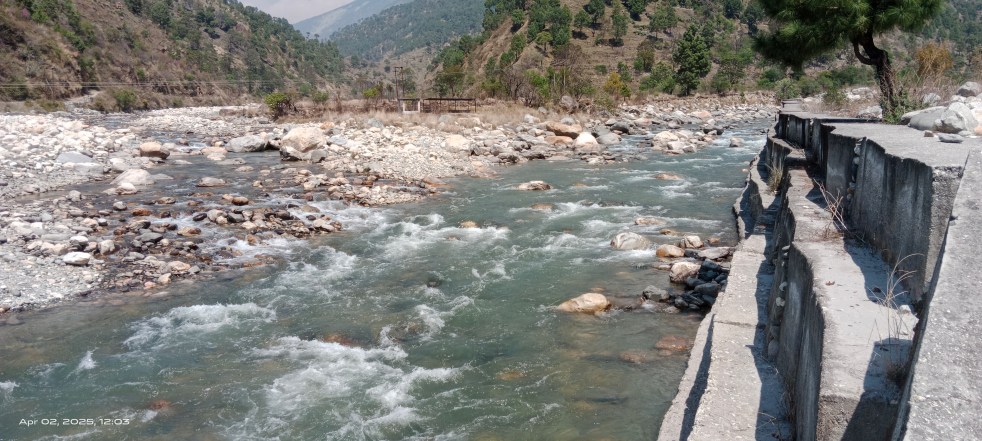
(Feature Image: Merging point of of Badiyar gaad (left) and Yamuna river (right) at Gangani in Badkot, Uttarakhand. BS Rawat/SANDRP)
New research published this week reveals a startling change: the oxygen levels in inland waters has been dramatically reducing since 1900, due to human activities including big dams and pollution. This condition leads to dead fish, collapsing food chains and reducing water quality, among other impacts.
There are simultaneous processes ongoing in inland waters leading to production and consumption of oxygen. The location and processes for both the production and consumption of oxygen has been changing during 1900 to 2010. The Global oxygen consumption in inland waters, net of production has gone up by over 100% from 0.26 Pg/year in 1900 to 0.53 Pg/ year in 2010. While earlier climate change was considered major contributor to this reduction, new research shows it is big dams and pollution that are much bigger contributors. Inland waters now pull nearly 1 billion tons of oxygen from the atmosphere every year — half as much as the entire ocean emits back.
Oxygen consumption in both the water column and sediments has increased. Benthic (i.e. at the bottom of the water body) processes dominated total oxygen consumption in the entire 110-year period, although its proportion overall decreased from 82 to 60% and showed high spatial variability.
The prolonged water residence time due to damming has not only enhanced increases in simulated oxygen and internal organic production but has also increased oxygen consumption. This is because damming increases organic matter trapping and prolongs the time for biogeochemical processes within inland-water systems, which largely enhances oxygen consumption. Consequently, the contributions of lentic (still freshwater) waters to global inland-water oxygen consumption increased nearly threefold, from 22% in the 1900s to 60% in 2010. This research thus throws fresh light on this little understood impact of Big dams.
Global oxygen consumption in Inland waters rise dramatically Oxygen in aquatic environments influences redox processes, nutrient biogeochemistry, production and consumption of greenhouse gases, water quality, biological activities, and ecosystem health. Oxygen can be produced by primary producers via photosynthesis and consumed by a series of processes including respiration of organisms, decomposition of organic matter, and nitrification. As a dissolved gas, oxygen in waters readily exchanges with the atmosphere according to its saturation state. However, global inland-water oxygen cycling is less studied and understood.
The model results show that global inland-water oxygen turnover increased during 1900–2010: production from 0.16 to 0.94 Pg/ year and consumption from 0.44 to 1.47 Pg/ year. Inland waters overall remained heterotrophic and a sink of atmospheric oxygen.
During 1900–2010, the simulated global inland-water oxygen production increased nearly sixfold from 0.16 to 0.94 Pg O2/ year. Before the 1950s, this increase was slow, and was followed by a rapid increase during the 1950s–1990s and a more tempered increase in recent times. Furthermore, oxygen production shifted from predominantly benthic production (77%) in the 1900s toward mainly pelagic production (63%) in 2010 despite high spatial heterogeneity. The shift from a benthic toward a pelagic dominance in oxygen production occurred in the late 1970s during the fastest increase in oxygen production rates.
Oxygen consumption in global inland waters: During 1900–2010, the simulated global inland-water oxygen consumption increased from 0.44 to 1.47 Pg/ year. Oxygen consumption in both the water column and sediments increased. Benthic processes dominated total oxygen consumption in the entire 110-year period, although its proportion overall decreased from 82 to 60% and showed high spatial variability. (https://www.science.org/doi/10.1126/sciadv.adr1695 Apr 4 2025)
Dramatic alteration in global oxygen cycle Rivers, lakes, and reservoirs have always been Earth’s hidden lungs — breathing life through the oxygen they cycle. But over the last century, that breath has grown shallow. A new study led by researchers at Utrecht University and published in Science Advances reveals a startling transformation: the oxygen cycle in inland waters has been dramatically altered since 1900, choked by human influence during what’s now known as the Anthropocene. Oxygen is central to life — not just for breathing, but for powering the vital cycles of carbon and nitrogen. Yet, oxygen levels in inland waters are dropping fast. This condition, known as hypoxia, is now a global crisis. It’s already manifesting in dead fish, collapsing food chains, and plummeting water quality.
Their findings are clear: inland waters now consume more oxygen than they produce. As a result, they’ve become massive sinks of atmospheric oxygen — an unexpected twist in Earth’s oxygen balance. “More farming, more wastewater, more dams, and a warmer climate — they all change how our freshwater ecosystems function,” says Wang. With excess nutrients flowing in, algae blooms thrive — only to die off and suck up oxygen as they decay.
According to Middelburg, two main human activities are accelerating this crisis: nutrient runoff from over-fertilization and the slowing of freshwater flows caused by dams and reservoirs. These changes have quietly but profoundly altered the way oxygen moves and vanishes in freshwater. Rising temperatures, while a factor, are less to blame than once thought. “Until now, the consensus in the scientific literature has always been that the rise in temperature is primarily causing this acceleration. But our model shows that warming only contributes about 10–20% to this phenomenon,” Wang explains.
The scale is staggering. Though they cover only a small slice of Earth’s surface, inland waters now pull nearly 1 billion tons of oxygen from the atmosphere every year — half as much as the entire ocean emits back. “We can’t ignore inland waters in global climate and oxygen budgets anymore,” Wang warns. “They’re changing faster than we thought, and they’re crucial pieces of the Earth system puzzle.” (https://www.businesstoday.in/science/story/global-oxygen-drain-inland-waters-now-consume-more-oxygen-than-they-produce-researchers-raise-red-flag-470844-2025-04-05)
HYDRO POWER PROJECTS
Arunachal Pradesh NEHR seeks re-evaluation of Etalin HEP EIA, SIA & land acquisition The Northeast Human Rights (NEHR) on Wednesday (April 02) requested a re-evaluation of the EIA, SIA, and land acquisition for the Etalin Hydro Project (EHP) (3097 Mw) in Dibang Valley district, citing that the project was scrapped in early 2023 due to discrepancies found in the original EIA. NEHR stated that the MOEFCC has deemed the existing EIA flawed and outdated, thereby rejecting the proposal in its current form. The ministry has requested the state government to submit a revised proposal aligns with the latest guidelines and regulations. NEHR further mentioned that the MOEFCC reminded the state government in a letter dated 22nd December (vide no. 1/60877/2023) that over ten years have passed since the initial proposal. During this period, several amendments and changes have been introduced in the guidelines and rules under the Van (Sanrakshan evam Samvardhan) Adhiniyam, 1980. https://arunachaltimes.in/index.php/2025/04/03/nehr-seeks-re-evaluation-of-etalin-hydro-eia-sia-and-land-acquisition/ (03 April 2025)
Dibang HEP: MP flags unfulfilled commitments by NHPC During Zero Hour discussion in the ongoing Parliament Session, MP (Lok Sabha) Arunachal East Tapir Gao raised serious concerns over the unfulfilled commitments of the 2880 MW Dibang Hydro Power Project, urging the Ministry of Power to intervene and ensure that the 2007 Memorandum of Understanding (MoU) between NHPC and the Arunachal Pradesh government is fully honoured. Speaking in the House, Gao emphasised that the MoU, which was meant to provide employment opportunities for locals, business contracts for local entrepreneurs, and overall economic benefits for the state, remains largely unimplemented. He pointed out that these unfulfilled promises have deprived the people of Arunachal Pradesh of their rightful entitlements, leading to growing frustration among the affected communities. https://www.easternsentinel.in/news/state/dibang-hydropower-project-mp-flags-unfulfilled-commitments-by-nhpc-seeks-support-of-power-ministry.html (03 April 2025)
Lower Subansiri HEP A promise of development or a path to displacement? As SLHEP nears full operation, its success must be measured beyond megawatts — ensuring economic, environmental, and social justice. Without equitable jobs, fair resource distribution, and sustainable livelihoods, it risks widening disparities instead of fostering inclusive growth. https://india.mongabay.com/2025/03/a-promise-of-development-or-a-path-to-displacement-commentary/ (28 March 2025)
Himachal Pradesh ALLEGED CORRUPTION IN HYDRO In his testimony before the investigation committee led by IAS officer Onkar Chand Sharma, All India Power Engineers Federation patron Suneel Grover, who is the former Managing Director of Himachal Pradesh State Load Dispatch Centre, has directly accused HPPCL Managing Director and IAS officer Harikesh Meena and suspended Director Desh Raj of “orchestrating corruption, manipulating contracts and harassing engineers who resisted their illicit dealings”.
– ‘Irregularities’ in Kinnaur, Una power projects: While deposing before the probe committee, Suneel Grover alleged large-scale embezzlement in the 450-MW Shongtong Karcham Hydro Electric Project in Kinnaur and the 32-MW Pekhubela Solar Power Project in Una, revealing how these projects were allegedly mismanaged to benefit favoured contractors.
He has alleged corruption, intimidation and financial malpractices within Himachal Pradesh’s power sector.
– Suneel Grover has alleged that Chief Engineer Vimal Negi was subjected to relentless mental harassment, pressure tactics and was forced to approve fraudulent financial dealings under duress. “When Vimal Negi refused to sign on manipulated contracts and inflated project costs, he became a target,” Grover said. “He was denied leave for over six months, burdened with excessive workload and completely isolated within the organisation. His pleas for relief were ignored, pushing him into severe mental distress.”
– Pekhubela Solar Power Project: • Cost of construction per MW: ₹6.8 crore (against the national average of ₹3.5–4 crore)
• Tariff proposed by HPPCL: ₹4.90 per unit (rejected by the HPERC, revised to ₹2.90)
– 450 MW Shongtong Karcham Hydro Electric Project:
• Approved estimated cost (as per DPR): ₹1,724.10 crore: Civil works: ₹1,165 crore; Electromechanical works: ₹504.20 crore; Transmission works: ₹54.90 crore
• Expenditure incurred up to August 2024: ₹2,230 crore (despite only 48-53% work completion)
• Estimated final cost (if completed by December 2026, which is highly unlikely): ₹4,800 crore
– In his testimony, Suneel Grover has accused Harikesh Meena of granting undue financial benefits to M/s Patel Engineers, the main civil contractor for the Shontong Karcham HEP.
He alleged that Meena attempted to release ₹450 crore as an interest-free advance to Patel Engineers, bypassing financial regulations. https://thenewzradar.com/himachal-pradesh/vimal-negi-suicide-case-himachal/ (02 April 2025)
Legal battle looms as govt decides to take over 3 SJVN hydel projects Sutlej Jal Vidyut Nigam (SJVN) is bracing up for a long legal battle following the state government’s decision to take over three hydel power projects it is constructing. “The possibility of any mutual understanding has ended with the government’s decision to take over the projects. Now, the matter will be decided in court,” said SJVN Director (Personnel) Ajay Sharma. On Apr 5, the Cabinet had approved the takeover of the 382 MW Sunni, 210 MW Luhri Stage-I and 66 MW Dhaulasidh hydroelectric projects, which had been allotted to SJVN by the previous BJP government in HP. The government has also decided to take back 500 MW Dugar and 180 MW Baira Suil hydroelectric projects allotted to NHPC. The government took the deal-breaking decision following unsuccessful deliberations between the stakeholders to sign terms and conditions afresh for implementing these projects.
– The previous BJP government gave SJVN a waiver in the free power share, especially in the first 12 years, and it was not required to return the projects after 40 years, unlike private power producers in the state. As for the relaxation given by the previous government, Sharma said the projects wouldn’t have taken off at all without these relaxations. “The Government of India gives approval for investment only in those hydel power projects where the tariff is around Rs 5.50 per unit. The tariff at Luhri and Dhaulasidh was coming to around Rs 8 to Rs 8.50 per unit. Since it wasn’t viable for us at that tariff, we sought relaxation in free power share from the previous government, which brought the tariff down to Rs 5.50 to Rs 5.75,” said Sharma. The other factor that led to the standoff between the state government and SJVN is the latter starting work on these projects without signing the Implementation Agreement. According to Sharma, SJVN had arrived at a broad understanding with the previous government for implementing these projects. “We were in the final stages of signing the IA ahead of the Assembly elections in 2022. Due to the elections, it could not be signed. The government changed and the new government refused to honour the terms and conditions agreed upon by the previous government,” said Sharma. https://www.tribuneindia.com/news/himachal/legal-battle-looms-as-govt-decides-to-take-over-3-sjvn-hydel-projects/ (07 April 2025)
NHPC begins 600 Mw commercial supply from 3 units of Parbati-II None of. the reports with this announcement of 3 X 200 MW units of Parbati-2 HEP of NHPC in Beas basin in HP say why the fourth unit is not commissioned, do not mention the massive cost and time over runs, inadequate appraisal, increases cost of power (cost of power not even mentioned), etc. https://www.tribuneindia.com/news/himachal/nhpc-begins-600-mw-commercial-supply-from-3-units-of-parbati-ii/ (31 March 2025) -According to the filing, after successful completion of trial runs, NHPC declared commercial operation of Unit-1, Unit-2 & Unit-3 (of 200 MW each) of Parbati-II hydro project (4×200 MW), Himachal Pradesh from 00:00 hours on April 1, 2025. The river is proposed to be diverted with a Concrete Gravity Dam at Pulga village in Parbati valley through 31.52 Km long Head Race Tunnel and the Power House shall be located at Suind village in Sainj valley. https://www.tribuneindia.com/news/himachal/nhpc-begins-600-mw-commercial-supply-from-3-units-of-parbati-ii/ (01 April 2025)
Odisha 2 HEPs built on forest land without permission Resentment grows in Boipariguda, Koraput as Meenakshi Hydro Power faces allegations of forest land encroachment. Local communities fear environmental harm and livelihood threats. Allegedly, permission was accorded for one but the company is constructing two more projects sans due approval. https://odishatv.in/news/odisha/hydropower-projects-built-on-forest-land-in-odisha-259258 (1 Apr 2025)
Rajasthan Protest against plan to fell trees for Shahbad PSP A group of environmental activists, concerned citizens, and the villagers have appealed to save more than one lakh trees and shrubs from being axed in the biodiversity-rich Shahbad forest situated in Baran district for the installation of a pumped storage project. The locals travelled to New Delhi to draw the attention of higher echelons of power to the issue. The Union government has reportedly given permission to a Hyderabad-based private company to set up the pumped storage project in 408 acres of the forest land. The locals have pointed out that the felling of trees would destroy the forest and adversely affect the ecology of the area, besides depriving the region’s tribal population of its livelihood.
The people’s delegation met Jhalawar-Baran MP Dushyant Singh and gave him a memorandum on the subject addressed to Prime Minister Narendra Modi. Prashant Patni, Sarpanch of Kunjed village panchayat and a delegation member, said a memorandum was also delivered to Lok Sabha Speaker Om Birla on Wednesday (April 02). The memorandum stated that the PM had given a message on the World Wildlife Day for coexistence between ecology and economy. “We do not believe in conflict between ecology and economy, but give importance to coexistence between the two,” Mr. Modi had said. https://www.thehindu.com/sci-tech/energy-and-environment/activists-protest-against-plan-to-fell-trees-in-rajasthans-shahbad-forest-for-hydro-power-project/article69409290.ece (04 April 2025)
Kerala Impact of Silent Valley Protest The success of the Silent Valley movement kindled the environmental consciousness of a whole generation of people. And as a result, the Ministry of Environment and Forests became a strong regulatory body with far more powers, new environmental guidelines were written into government statutes, environmental impact assessments became mandatory and environmental costs were weighed against development rewards for ascertaining the risks and rewards of all programmes.
However, in the past couple of decades we have increasingly squandered away the policy gains that we had made through these struggles. The checks and balances we had erected in our environment-development paradigm have been eroded (C. J. Punnathara) https://india.mongabay.com/2025/03/the-movement-that-rewrote-indias-environmental-narrative-commentary/ (21 March 2025)
Raj Kumar Chaudhary, CMD, NHPC & SJVN Limited: India’s total power generation capacity is now at an impressive 466.25 GW, encompassing a diverse energy mix that includes over 245.9 GW from thermal, 100.33 GW from solar, 48.37 GW from wind, 11.4 GW from biomass, around 5.1 GW from small hydro, 8.18 GW from nuclear and more than 47 GW from conventional hydropower, including 4,750 MW from pumped storage schemes. Hydropower, including pumped storage, presently contributes only 10 per cent of today’s energy basket. As per the reassessment study carried out by the Central Electricity Authority (CEA), the total potential of conventional hydropower is 133 GW, while the identified pumped storage potential is estimated at around 176 GW. However, with the addition of off-stream closed-loop pump storage schemes, the pumped storage potential is almost 181.4 GW.
– Currently, 28 large hydroelectric projects totalling 13,998 MW are under construction across India. Additionally, six PSPs with a combined capacity of 7,970 MW are also under construction. However, a few hydro projects with a total capacity of 1,236 MW are currently stalled. The CEA has already concurred 11 hydroelectric schemes, including PSP with an aggregate capacity of over 9,000 MW, over the past five years. Furthermore, 11 hydroelectric schemes totalling 8,036 MW and 44 PSPs aggregating over 60,000 MW are at the survey and investigation stage for detailed project report preparation.
– The all-India peak electricity demand and electrical energy requirement is projected to reach 334.8 GW and 2,280 BUs respectively by 2029-30. As per the Optimal Generation Mix Report prepared by the CEA, a generation capacity of 777 GW is projected by 2030, with hydropower accounting for 53,860 MW of capacity, or around 6.93 per cent of the energy basket. Pumped storage capacity is projected to rise to around 19,000 MW, or 2.44 per cent of the total energy basket.
– NHPC has 28 power stations with over 7,200 MW currently in operation. As of now, we are constructing various hydro projects with a capacity of 9,314 MW, which are at different stages of construction and are expected to be commissioned progressively by 2032. The 2,880 MW Dibang project will be commissioned in 2032. The 2,000 MW Subansiri Lower HEP is the second largest project under construction after Dibang multi purpose project. Three units of the project are expected to be commissioned by May 2025, with full commissioning planned for March 2026. We also plan to commission all four units (200 MW each) of the 800 MW Parbati II HEP this year.
– WRONG: For instance, projects such as the Subansiri Lower hydroelectric project (HEP) at the Assam-Arunachal Pradesh border, the Dibang multipurpose project in Arunachal Pradesh, and the Siang multipurpose project in Arunachal Pradesh will not only generate green energy but also address national concerns, especially in the light of planned upstream dams in the Tibet region. https://renewablewatch.in/2025/04/03/views-of-raj-kumar-chaudhary-hydropower-is-a-critical-pillar-in-energy-transition/ (03 April 2025)
DAMS
Polavaram Rockfill dam work begins The Polavaram project work gained pace as state govt launched work on gap-I rock-fill dam, a key structure in the project. The govt is also planning to expedite rehabilitation and resettlement (R&R) work in order to reach the target deadline for completion of the project by 2027. The gap-1 rockfill dam will be constructed about 25 metre high and 540 metre long.
Water resources minister Nimmala Ramanaidu said that NDA govt is giving high priority to R&R work along with the construction of civil works. He added that Chandrababu Naidu had deposited 800 crore in 2017. After returning to power, the CM has now deposited another 800 crore. https://timesofindia.indiatimes.com/city/vijayawada/rockfill-dam-work-begins-in-polavaram/articleshow/120021741.cms (05 April 2025)
SLBC Tunnel Collapse Focus on shifting out of parts of TBM On the 39th day of the rescue operation on Tuesday (April 01), the rescue teams focused on cutting the damaged parts of the TBM with the help of technicians from the South Central Railway (SCR) and on restoring the conveyor belt for another 100 metres inside — from 13.630 km to 13.730 km. Removal of the parts of TBM has become necessary to take up debris removal in the last 50 metres stretch of the tunnel, where the remaining six persons are suspected to be buried on the day of the accident. The last stretch is highly risky with the chances of further caving in of the tunnel due to continuous seepage of water in a large volume.
According to official sources, the rescue teams have already come to a conclusion that they would not take up debris removal manually but would do it only with the help of the machinery, particularly with mini-excavators with extended arms. The Special Officer appointed to oversee the rescue operation and coordinate with the rescue teams, Siva Sankar Lotheti held a meeting with the heads of rescue teams and reviewed the progress of rescue work. The dewatering process with a multi-stage pumping system is also in progress round-the-clock. https://www.thehindu.com/news/national/telangana/slbc-rescue-operation-teams-focus-on-shifting-out-of-parts-of-tbm-to-step-up-debris-removal/article69400520.ece (01 April 2025)
Govt planning alternative tunnel The govt is now considering building an alternative tunnel as an extension to the existing SLBC tunnel to provide additional entry and exit points for future emergencies.

However, since the tunnel falls within the Amrabad Tiger Reserve, special environmental clearance from the Centre is required. Despite this challenge, the government sees the SLBC tunnel collapse as a lesson, highlighting the need for a long-term alternative. Meanwhile, Irrigation Minister Uttam Reddy stated that despite the collapse, work on the project would resume in the next two-three months. https://www.indiatoday.in/india/telangana/story/telangana-slbc-tunnel-collapse-expert-warnings-ignored-ambitious-irrigation-project-history-2691586-2025-03-10 (21 March 2025)
Odisha Pipalapanka dam plan revival sparks outrage The Odisha govt’s revived proposal to construct a dam at Pipalapanka in Sorada block in Ganjam district at the confluence of the Rushikulya and Odangi rivers has triggered fresh protests from environmentalists and local communities, who allege the project prioritises industrial interests over ecological and human concerns. While local officials and politicians claim the project aims to provide irrigation to farmers, environmentalists alleged a hidden agenda — to supply water to industries, including the Adani Group’s port at Gopalpur.
– Prafaull Samantara recently led a 10-day padayatra (foot pilgrimage) to raise awareness about the ecological damage the Pipalapanka dam could cause and to demand the withdrawal of the project. Activists including Sudhir Raut, Bhal Chandra Sadangi, Simanchal Nahak, Aditya Rath, Sudarshan Das, Arun Jena, and Shyam Samundar Khadanga also joined the march. The Rushikulya river, which originates from the Rushimala hills in Kandhamal district, is considered the lifeline of Ganjam. Several of its tributaries — Jarau, Badanadi, Baghua, Dhanei, and Ghodahada — once ensured year-round flow but had been dammed, weakening the river from November to June. https://www.downtoearth.org.in/environment/odishas-pipalapanka-dam-plan-revival-sparks-outrage-over-threat-to-rushikulya-river (02 April 2025)
Karnataka People agitating for water CM has asked for release of 2 TMCft water from Bhadra dam as Ugadi gift and have written to Mah CM with a request to release 2 TMC ft from Warna/ Koyna dams for Krishna basin and 1 TMCft from Ujani dam for Bhima basin people in North Karnataka. Consideration of a new reservoir with 36 TMCft capacity to store Tungabhadra water to compensate for siltation in the Tungabhadra dam also being discussed. https://timesofindia.indiatimes.com/city/bengaluru/water-crisis-sparks-protests-in-kalyana-karnataka-demand-for-separate-state/articleshow/119876395.cms (02 April 2025)
Madhya Pradesh Lokayukta booked 9 more in Kundaliya dam scam After an investigation into illegal payments related to the Kundaliya Dam project, the Ujjain Lokayukta registered a case against nine more public servants for corruption on Thursday (April 04). The dam, built at a cost of around Rs 5.85 crore on the Kalisindh River, required displacement of villagers in Bhandawad, Nalkheda. Despite the case being filed, no action was taken against accused public servants, allowing them to continue using government vehicles and potentially influence the investigation.
The case stems from complaint by Dashrath Singh of Jhonta village, regarding the distribution of cash in exchange for plots in the rehabilitation package. The Lokayukta identified 107 individuals involved in embezzlement of Rs 5.85 crore, including 11 government officials. Notably, the anticipatory bail application of Naib Tehsildar Paras Vaishya was rejected by court.
During the dam’s construction, families were promised a special rehabilitation allowance of Rs 5 lakh for displacement. However, some beneficiaries manipulated documents to falsely claim payments for minors as adults, colluding with officials to obtain these funds illegally. The investigation revealed that the committee responsible for verifying documents failed to do so properly, resulting in ineligible beneficiaries receiving payments. The case against the public servants includes serious charges under the Prevention of Corruption Act and the Indian Penal Code, raising significant concerns about accountability and governance in the region. https://www.freepressjournal.in/indore/madhya-pradesh-kundaliya-dam-project-scam-nine-more-booked-by-lokayukta (05 April 2025)
Tamil Nadu Minister calls for swift DPR on Papanasam-Manimuthar dam inter-linking project Minister for Water Resources, Mines and Minerals Durai Murugan conducted a review meeting on Saturday (April 05) and instructed officials to prepare a detailed project report (DPR) for the Papanasam-Manimuthar dam-linking project and complete desiltation works in eight canal stretches in the Thamirabarani river basin expeditiously. Durai Murugan said the proposal to interlink the Papanasam and Manimuthar dams has been long-pending a demand of the public, and instructed the officials to expedite the preparation of the DPR.
He also directed them to take immediate steps to complete the desilting works in eight canal stretches in the Thamirabarani basin under a special programme. The minister reviewed the upcoming restoration of Mayilapudur anicut in Radhapuram taluk at a cost of Rs 1.3 crore, renovation of Ariyanayagipuram anicut in Mukkudal at Rs 3.68 crore, and the strengthening of the Tharuvai surplus regulator in Palayam canal, where it merges with the Pachaiyar river at an estimated cost of Rs 20 crore. He also reviewed the Rs 40-crore Kanjiparai anicut enhancement work in Radhapuram taluk and emphasised the need to initiate all these projects swiftly in accordance with the norms set by the government. https://www.newindianexpress.com/states/tamil-nadu/2025/Apr/06/tn-water-resources-minister-calls-for-swift-dpr-on-papanasam-manimuthar-dam-inter-linking-project (06 April 2025)
Mullaperiyar Dam Balasingam, the coordinator of the Periyar Vaigai Irrigation Farmers Association, expressed concerns that the portrayal of the dam in the film could stir unnecessary controversy. “The movie suggests that if the dam is damaged, Kerala will be submerged. It also includes dialogues claiming auxiliary dams are useless and that a concrete dam is unnecessary. These references should be muted,” Balasingam said, urging immediate action to address the issue. https://english.mathrubhumi.com/news/kerala/l2-empuraan-mullaperiyar-dam-controversy-1.10473808 (01 April 2025)
INTERLINKING OF RIVERS
Ken-Betwa Link ग्रामीणों ने बांध का काम बंद कराया केन बेतवा लिंक परियोजना फिलहाल उसी क्षेत्र के ग्रामीणों के लिए परेशानी का कारण बन गई है, पीड़ित और परेशान ग्रामीणों ने आज इसके खिलाफ आक्रोश जताया और बांध का काम रोककर प्रदर्शन किया। छतरपुर जिले में केन बेतवा लिंक परियोजना के तहत बांध का निर्माण कार्य चल रहा है, लेकिन आज अचानक बहुत से ग्रामीण विरोध जताते हुए साइट पर पहुंच गए और काम कर रही कंपनी के कर्मचारियों का काम बंद करवा दिया , ग्रामीणों ने कहा कि हमारे साथ जबतक न्याय नहीं होता हम काम नहीं होने देंगे।
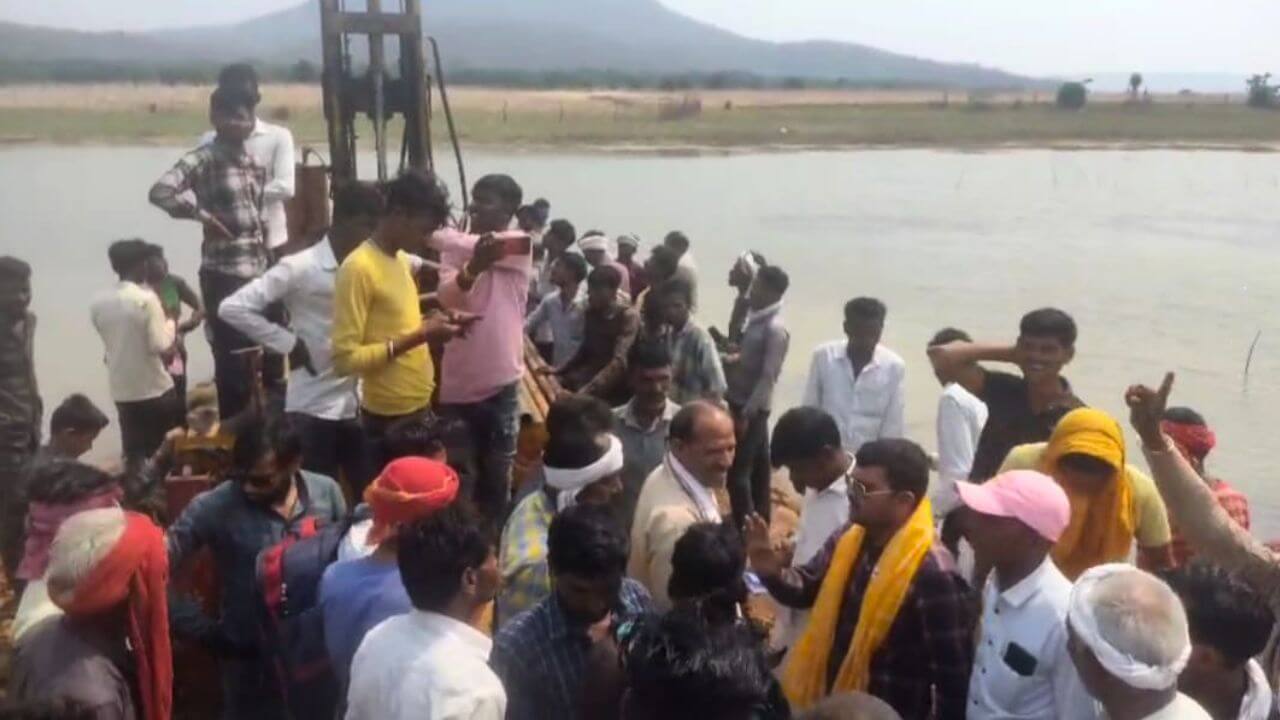
ढ़ोडन, पलकोहा ,खरयानी मैनारी ,सुकवहा सहित आधा दर्जन गाँव के विस्तापित लोगो ने आज ढ़ोडन बांध का निर्माण काम रोककर विरोध किया और काम में लगे मजदूरों को धमका कर भगा दिया , ग्रामीणों ने कहा कि हमारी जमीनों का अधिग्रहण कर लिया और हमें मुआवजा भी नहीं दिया। नाराज ग्रामीणों ने निर्माण कार्य में लगी मशीनों मजदूरों एव कर्मचारियों को पन्ना टाइगर रिजर्व पंन्ना भुसोर बेरियर के बाहर खदेड़ दिया , ग्रामीणों ने चेतावनी दी कि यदि बिना मुआवजा दिए निर्माण कार्य चालू किया तो उग्र आंदोलन होगा। https://mpbreakingnews.in/madhya-pradesh/chhatarpur/ken-betwa-link-project-angry-villagers-protested-non-receipt-of-compensation-stopped-dam-work-11-744827 (03 April 2025)
Kosi-Mechi Link राष्ट्रीय नदी घाटी मंच, कोशी नव निर्माण मंच और एनएपीएम की ओर से केंद्र सरकार के ताजा कदम के बाद इस परियोजना के खतरों के बिंदुवार उल्लेख किया गया है. https://climateeast.in/kosi-mechi-river-interlinking-project-cabinet-approval-and-napnapmm-statement/ (04 April 2025) कोशी-मेची नदी जोड़ परियोजना को कैबिनेट से मंजूरी मिलने पर नदी घाटी मंच और NAPM का बयान: https://www.facebook.com/share/p/1CNPmq8k3K/ (03 April 2025)
Godavari-Banakacherla Link Telangana to challenge Andhra’s decision in SC The Telangana govt has decided to approach the Supreme Court against two major river interlinking projects proposed by Andhra Pradesh—the Godavari-Banakacherla Link Scheme (GBLS) and the Rayalaseema Lift Irrigation Scheme (RLIS). Irrigation minister N Uttam Kumar Reddy on Friday said that these projects violate water sharing agreements and threaten Telangana’s irrigation and drinking water supply. He accused Andhra Pradesh of proceeding unilaterally, without mandatory regulatory approvals. “We will not allow Andhra Pradesh to divert our rightful share of Godavari and Krishna waters. Our case in the Supreme Court will be based on facts, law, and the fundamental rights of Telangana people,” Uttam said. https://timesofindia.indiatimes.com/city/hyderabad/telangana-to-challenge-andhras-river-interlinking-projects-in-sc/articleshow/119985476.cms (04 April 2025)
INTERSTATE WATER DISPUTES
Uttar Pradesh- Rajasthan आगरा का पानी राजस्थान द्वारा रोका गया आगरा में पिछले तीन दशकों से पानी का संकट बढ़ता ही जा रहा है, और इस पर सिविल सोसायटी ऑफ आगरा और छांव फाउंडेशन द्वारा लगातार आवाज़ उठाई जा रही है। दोनों नदियां, उटंगन और खारी, जो कभी आगरा जनपद के भूगर्भ जल के रिचार्ज का महत्वपूर्ण हिस्सा हुआ करती थीं, अब सूख चुकी हैं। इन नदियों का पानी राजस्थान द्वारा बिना उत्तर प्रदेश की सहमति के रोक लिया गया है, और इससे आगरा के कई हिस्सों में जल संकट की स्थिति गंभीर हो गई है।
सिविल सोसायटी ऑफ आगरा और स्थानीय नागरिक संगठनों की ओर से यह मांग की जा रही है कि उत्तर प्रदेश सरकार को राजस्थान सरकार से इस मुद्दे पर सख्ती से वार्ता करनी चाहिए। स्थानीय नागरिकों और संगठनों ने यह भी आरोप लगाया कि सिंचाई विभाग और प्रशासन ने इस संकट को गंभीरता से नहीं लिया है, जबकि यह एक अंतरराज्यीय जल विवाद है। उन्होंने सुझाव दिया है कि राजस्थान सरकार से यह मामला उठाकर जल बंटवारे की नीति पर ध्यान केंद्रित किया जाना चाहिए, ताकि आगरा के लोगों को राहत मिल सके। https://agrabharat.com/state/uttar-pradesh/agra-water-and-water-stopped-by-rajasthan-raised-voice-on-serious-crisis/ (06 April 2025)
RIVERS AS NATIONAL WATERWAYS
Delhi River cruise will make city tourist-friendly: Sonowal With the signing of the MoU between IWAI and various departments of the Delhi government, a new chapter begins for the development of Delhi. For promoting short-distance recreational boat tourism and ferry services, a 6km stretch of the Yamuna is being developed from Sonia Vihar (upstream of Wazirabad Barrage) to Jagatpur. This initiative is a significant step toward making Delhi a more sustainable, eco-friendly and tourist-friendly city. It not only aids in restoring the river’s ecological balance but also improves connectivity, boosts tourism and creates economic opportunities. https://www.theweek.in/theweek/cover/2025/04/05/union-minister-of-ports-shipping-and-waterways-sarbananda-sonowal-interview.html (05 April 2025)
URBAN RIVERS
Mula-Mutha; Pune Contextualizing the Chipko March With urban futures being in jeopardy due to the threats of climate change, the vision of a green city should be crucial. Instead, regressive developmental practices are being rapidly implemented in different urban centers of India. Ironically, the Pune Municipal Corporation’s website on the riverfront project claims that the river is ‘choked by development’; while at the same time venturing into concretization plans by felling trees. The contradictory messages conveyed by the local state show the gaps in imagining a sustainable urban future.
Indian riverfront development projects often take inspiration from global cities. In this process, the planners and officials often fail to incorporate the visions of the local residents. Urban development has been consistently equated with infrastructure building, without accounting for the environmental costs. With several global cities turning into heat islands, the necessity to create more green spaces cannot be undermined. Moreover, when city administrations overlook these concerns, events like Chipko March become increasingly important. https://www.ijurr.org/the-urban-now/the-right-to-sustainable-urban-life-contextualizing-the-chipko-march-in-pune/ (April 2025)
Hidden Stories: A forest that few notice New visitors to this Pune forest at the Ram-Mula confluence – the meeting point of the Ramnadi and Mula rivers – on the Aundh-Balewadi Link Road are often stunned that such a natural forest exists under the noses of high-rises.
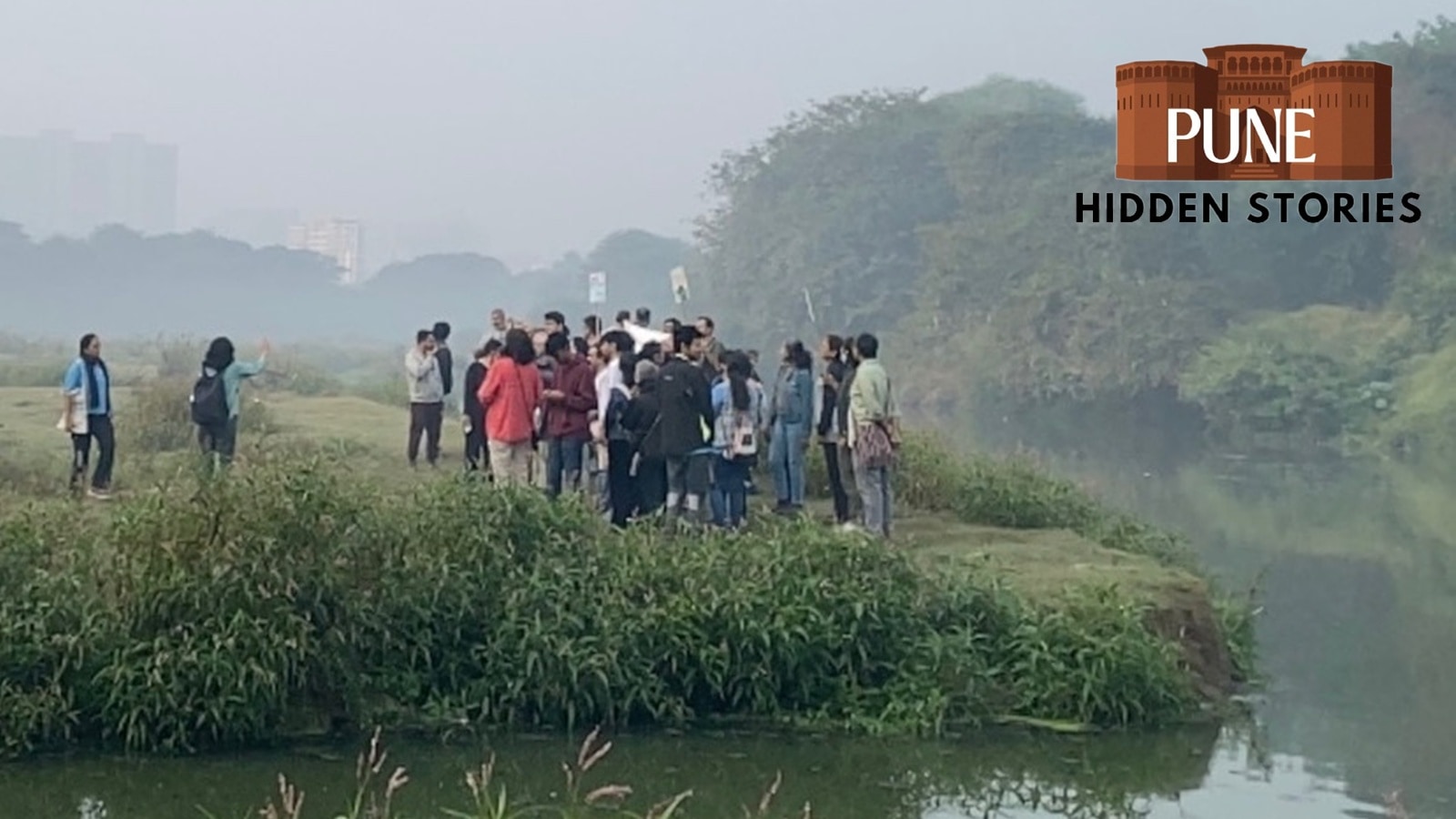
The forest has become one of the sites of citizens’ protests over the riverfront development project in the city. Hundreds of people converged here during a march in February – but most, including new residents who make up the area’s changing demography, are not aware of the forest’s significance or even its existence. https://indianexpress.com/article/cities/pune/hidden-stories-pune-aundh-balewadi-link-road-forest-9926516/ (05 April 2025)
Sabarmati; Ahmedabad Singapore firm will develop last three phases of RFD The Gujarat govt has hired a Singaporean company as a consultant to develop the last three phases of the Sabarmati Riverfront, which will be spread across state capital Gandhinagar and some parts of Gujarat International Finance Tec (GIFT) City, The Indian Express has learnt. Surbana Jurong, a company owned by Singapore government’s investment vehicle Temasek, “is preparing the master plan for phases four to six of the Sabarmati riverfront project”, a senior official said. The part to be developed by Surbana Jurong spans 16.5 km – from Narmada Main Canal to Chiloda Bridge — of the planned total 38 km riverfront, estimated to cost around `3,300 crore.
It was in 1997 that the Gujarat government formed the Sabarmati Riverfront Development Corporation Ltd (SRFDCL), a Special Purpose Vehicle for executing the project. The first phase, inaugurated in 2009, involved the reclamation of 204 hectares of land on either side of the river. Promenades, the Atal Bridge, parks, and sports infrastructure had made it the centrepiece for Gujarat.
The 1-km stretch along Ahmedabad cantonment area, which was originally part of first phase but could not be developed because it was under Defence Ministry, will also be part of second phase now that the land has been handed over to SRFDCL, officials said. Work for phase 5, which is till GIFT City, is already in progress, with the state irrigation department nearing the completion of the “diaphragm and retaining wall” along the Sabarmati. Surbana Jurong will begin its work once the wall is constructed.
The SRFDCL approved the concept planning and design of Phase 2 in October 2020, it is learnt. Phase 2 involves extending the existing riverfront by 5.8 km east and 5.2 km west — right up to the Indira Bridge. According to senior officials, the planning for Phase 2, which started after the Covid, includes an “international park” to showcase “green wealth from different countries”, a ferry service and possibly a water taxi. https://indianexpress.com/article/cities/ahmedabad/singapore-firm-will-develop-last-three-phases-of-sabarmati-riverfront-9927379/ (06 April 2025)
Vishwamitri; Vadodara SHRC directs to follow NGT order – The Commission mandated an immediate halt to ecologically destructive practices, rehabilitation of affected communities, transparent adherence to NGT orders, and public consultations with experts and residents. The order follows the Concerned Citizens of Vadodara coalition—environmentalists, ecologists, and urban planners—submitting a detailed letter to authorities, amplifying calls for accountability. The group warned that current plans to “re-section” and “desilt” the river contradict the NGT’s 2021 Vishwamitri River Action Plan, which prioritizes floodplain demarcation, systemic waste removal, and ecological restoration over structural interventions. https://www.counterview.in/2025/03/state-human-rights-commission-directs.html (16 Mar 2025)
Musi; Hyderabad Chemical waste enters Saroornagar Lake Rains are an opportunity for companies to dump their industrial waste into the water bodies, especially the Musi River, which flows from Vikarabad to Nalgonda. Despite the state government’s plans for the rejuvenation of the Musi River, the illegal dumping of domestic and industrial waste continues unabated, including at the Saroornagar Lake. The sight of white froth filling the outlet channel of the Saroornagar Lake on Friday morning, April 4, is just the tip of the iceberg. The domestic, industrial and chemical wastes generated from the upstream areas of Meerpet and Jillelaguda, not to mention hundreds of industries located on the upstream Musi river, have been causing ground, water and air pollution. https://www.siasat.com/chemical-waste-enters-saroornagar-lake-as-rain-hits-hyderabad-mid-summer-3203145/ (04 April 2025)
Govt restricts development within 100 m of Musa, Esa rivers The govt imposed fresh restrictions on development along the stretch of Musi and Esa rivers from Osman Sagar and Himayat Sagar lakes to Korremula village near Outer Ring Road (ORR). A committee of officers from different planning wings of Municipal Administration and Urban Development has been appointed to regulate unplanned development along banks of Musi and Esa. The orders were issued on March 29, 2025.
– In the orders, Principal Secretary for Municipal Administration M Dana Kishore stated a comprehensive master plan for rejuvenation and redevelopment of the Musi and Esa rivers and their surrounding areas is under preparation. In the wake of unplanned development in areas along the river banks, the government decided not to permit developmental activities within the buffer zone of up to 50 metres from the river boundary across the entire stretch. Similarly, the areas between 50 m and 100 m from river boundary will be subjected to development restriction. No new construction or building permission will be issued within this area until the comprehensive master plan is finalised. Any public infrastructure development taken up within 100 m from the river boundary, require prior approval from the Committee of Officers comprising officials from the Director of Town and City Planning, Greater Hyderabad Municipal Corporation, Hyderabad Metropolitan Development Authority and Musi Riverfront Development Corporation Limited. https://telanganatoday.com/telangana-government-restricts-developmental-activity-within-100m-from-musi-esa-rivers (03 April 2025)
RIVERS
Assam Refinery effluent discharge into Dhansiri river Environmentalist has raised concerns with the CPCB over alleged hazardous effluent discharge from Numaligarh Refinery Limited (NRL) into the Dhansiri river in Golaghat district, warning of severe ecological damage. In a letter to the CPCB Member Secretary, Apurba Ballav Goswami cited findings from a report by AGT Biosciences (OPC) Private Limited, which analysed a water sample reportedly collected from the NRL’s effluent plant on 11 March this year.
Goswami urged the CPCB to conduct a detailed investigation into NRL’s effluent treatment practices and compliance with pollution control standards as of March 2025. He also called for a cumulative assessment of the discharge’s impact on Dhansiri’s aquatic life and water quality, long-term monitoring of oxygen levels and biodiversity, and stringent corrective measures to ensure BOD, COD, and oil and grease levels remain within permissible limits. In response, NRL denied discharging effluents into Dhansiri. https://www.newindianexpress.com/nation/2025/Apr/03/assam-environmentalist-flags-refinery-effluent-discharge-into-dhansiri-river (03 April 2025)
Jammu & Kashmir Plastic waste polluting water bodies While the Ganderbal district in central Kashmir is known for its magnificent water bodies including famous nallah Sindh, flowing through the district besides many springs and streams, some of these water bodies are being adversely affected due to pollution. Despite the concerns expressed by certain quarters, and environmental experts, nothing concrete is being done in this direction. The condition of some water bodies is deteriorating due to callous approach of people, and then the official apathy towards the issue. https://www.greaterkashmir.com/kashmir/environmental-alert-garbage-plastic-waste-polluting-ganderbals-pristine-water-bodies/ (03 April 2025)
Dying springs The story of Kashmir’s dried springs is complex — a tale of poor environmental management and the tough consequences of neglect, mixed with the strong spirit of a people determined to reclaim their heritage. It is a story filled with tears and sadness, but also filled with hope. Each volunteer, every clean-up event, and the collective voice of local communities signal a promise that past mistakes will not shape the future. https://planetforward.org/story/essay-kashmirs-dying-springs/ (April 2025)
Maharashtra HC overturns 30-yr-old conviction in water pollution case The Bombay High Court on April 2, acquitted a director and manager of a company who were almost three decades ago sentenced to 18 months’ rigorous imprisonment for allegedly discharging highly polluting sewage effluents from their Panvel factory into a stream. The Maharashtra Pollution Control Board (MPCB) had pursued legal action against numerous companies and their executives for breaching the Water (prevention of pollution and regulation) Act, claiming they discharged heavily contaminated untreated waste and sewage into water bodies within a restricted zone.
The court established that criminal charges must be precise, detailing the accused’s specific involvement, and cannot be applied solely based on their position within the company. Justice Milind Jadhav’s ruling noted the charges against the two executives lacked specificity, and the MPCB failed to follow mandatory protocols for water sample collection and analysis. The court quashed both the trial court’s conviction from December 31, 1996, and its subsequent confirmation by Raigad’s additional sessions court in August 2002. The court emphasised that the twin-sample collection procedure, which includes built-in verification measures, must be strictly followed. https://timesofindia.indiatimes.com/city/mumbai/hc-overturns-30-yr-old-conviction-of-co-execs-in-water-pollution-case/articleshow/119991376.cms (05 April 2025)
Rajasthan जोजरी नदी का क़हर जोधपुर और बालोतरा ज़िले के कई गांव जोजरी नदी में छोड़े जा रहे औद्योगिक कचरे से जल प्रदूषण की चपेट में हैं. इन गांवों के लोगों का कहना है कि खेत सूख रहे हैं, मवेशी मर रहे हैं और ज़िंदगी जीना मुश्किल होता जा रहा है.
जोधपुर और बालोतरा के गांवों में जोजरी नदी के ज़रिए फैल रहे इस केमिकल युक्त पानी की समस्या विधानसभा से लेकर एनजीटी और सुप्रीम कोर्ट तक पहुंच चुकी है. सरकार, प्रशासन और प्रदूषण नियंत्रण विभाग की ओर से कार्रवाई और समाधान के दावे ज़रूर किए जा रहे हैं, लेकिन गांवों में अब भी राहत नहीं पहुंची है. https://www.bbc.com/hindi/articles/c62g799m13mo (07 April 2025)
YAMUNA SANDRP Photo Blog Streams that feed river in Himalayas The sixth day of summer Navratri is believed to be the birthday of the river Yamuna, known as Yamuna Jayanti among devotees of the river.
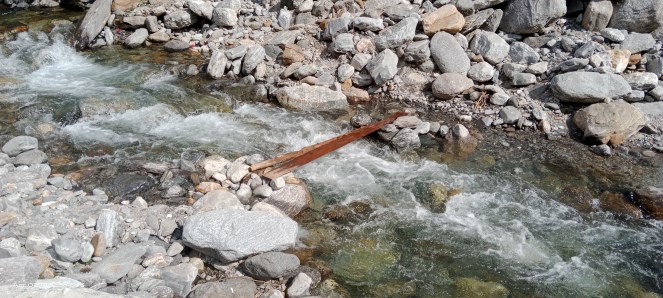
This year the day falls on April 04, 2025. Celebrating the day, we present a photo blog on springs, streams and major rivers feeding the Yamuna in its Himalayan segment. https://sandrp.in/2025/04/03/happy-birthday-yamuna-photo-blog-springs-streams-that-feed-it-in-the-himalayas/ (03 April 2025)
Delhi Budget fails to raise hope Bhim Singh Rawat, Associate Coordinator at the South Asia Network on Dams, Rivers and People (SANDRP), described the new budget as offering no meaningful reforms, instead allocating more funds to activities that have failed in the past. “No clear timeline has been set, raising doubts about the government’s commitment to real change,” he said. Rawat also called for stronger political will, greater transparency, and meaningful public participation. He stressed the need for an urban water policy that includes rainwater harvesting, decentralised STPs, and conservation of water bodies. “There is neither funding nor a roadmap for ensuring environmental flow in the river,” he said. “With excessive water diversions, the Yamuna is turning into a seasonal river. Expanding Delhi’s water supply must not come at the cost of the river’s survival.” https://thepatriot.in/environment/experts-divided-over-govts-rs-500-crore-push-to-clean-yamuna-as-accountability-deadlines-remain-vague-68090 (03 April 2025)
Over 12 lakh sqm floodplain encroached: DDA to NGT The DDA has informed NGT through a report dated Apr 2 that over 12 lakh (12,34,981) square metres of the Yamuna floodplain, spanning a 22 km stretch from Wazirabad to Madanpur Khadar, are encroached upon. However, DDA said that it had reclaimed 1,459 acres in 2024 after removing various encroachments. The encroachments include jhuggis, govt offices, two towers near a CNG pump, temples, a gurdwara, masjid dargah peer residential areas, gaushalas, akharas, workshops, Ladakh Budh Vihar monastery market, and Nigam Bodh Ghat. NGT had previously pulled up DDA on Feb 6 for not complying with its 2019 order to clear encroachments, despite directives from the Delhi High Court and the Supreme Court. The tribunal also sought comprehensive details of encroachments across the 22km-Yamuna stretch. https://timesofindia.indiatimes.com/city/delhi/over-12-lakh-sq-metres-of-yamuna-floodplain-encroached-dda-informs-ngt/articleshow/119988807.cms (04 April 2025)
River to be guarded by Territorial Army “Delhi govt has requested Territorial Army to protect Yamuna,” Water minister Parvesh Verma said on Thursday (April 04). “We don’t want to put fines but want to educate people that why they should not throw garbage in Yamuna or why they should save water,” he added. The proposal has been extensively discussed, and a formal request to the Territorial Army is expected soon. While speaking on the issue, a senior official from the Ministry of Defence also said, “An official communication regarding such is not known to us yet, but yes, if asked, Territorial Army’s arm, Ecological Task Force, is dedicated to such tasks and is capable of protecting the River Yamuna.”
In a related development, Delhi Lieutenant Governor V K Saxena launched an intensive campaign to clean the Yamuna floodplains, which included inducting a 94-member company of the territorial army to ensure the cleaned stretches remain encroachment-free. https://economictimes.indiatimes.com/news/india/river-yamuna-to-be-guarded-by-territorial-army-in-delhi/articleshow/119966706.cms (04 April 2025)
Upcoming riverfront Delhi will soon have a new riverfront on the western banks of the Yamuna, where the Millennium bus depot was built during the Commonwealth Games in 2010. The riverfront, the eleventh in floodplain restoration projects along the 22-km course of the Yamuna in the city, will have spacious plazas with landscaped lawns and a fountain as the centrepiece.
The new riverfront will come up on a 45-hectare land between the railway overbridge and Meerut Expressway and is likely to be completed within a year. The land, taken for a bus depot, was returned to DDA by Delhi Transport Corporation last year.
“We conceived the restoration plan but the NGT had some concerns and we put it on hold. Now we have got NGT’s clearance and DDA has started work at the site,” said Saxena. He added that the new riverfront will have a shopping site, toilets, parking area, and topiary gardens. The place can also be used for big events by setting up a stage.
Ropeway project: The survey to create a cable-car facility across the Yamuna has begun and the survey agency will identify suitable sites for the installation of the ropeway system to carry passengers. “We conceived this project while exploring alternative modes of non-polluting public transport in the city. Work is underway and we expect to implement the project soon,” LG said. The cable cars will operate within fixed hours and will each carry around 50 passengers. DDA, which is in charge of the Yamuna floodplain, will locate the site of the ropeway in the vicinity of metro stations on either side of the river and will install the system without encroaching on or concretising the eco-sensitive floodplain, the LG’s office claimed. https://timesofindia.indiatimes.com/city/delhi/delhis-upcoming-riverfront-and-infrastructure-developments/articleshow/119988795.cms (04 April 2025)
Piazza, park to shopping centre near Sarai Kale Khan A central piazza, a topiary park, a local shopping centre along the lines of that in the Sunder Nursery, along with two parking areas and a river promenade will come up over an area of 25 hectares, sources said. Unlike the Sabarmati waterfront in Ahmedabad, it will not see any concrete or permanent construction. “Any concrete that exists at the site or remnants of the bus depot are being cleared. Only ecologically suitable materials will be used. We have seen success with these materials in the other sections of the floodplain,” said a senior government official. “All these projects were undertaken by the DDA and in none of these was any concrete used. The Baansera park, for example, has a café made of light-weight steel frame, bamboo and glass,” the official said.
While the plan to build a riverfront at the Millennium Park Bus Depot has been under consideration for many years, sources said a detailed blueprint was shared with the Centre recently and work will begin soon. The Yamuna and its floodplain are part of the O Zone, where any permanent construction and concretisation is not allowed as per court orders. Some major projects, however, such as the Commonwealth Games project as well as flyovers have come up in this area as exceptions.
“The project here will not use any glass either. The idea is to make it as eco-friendly as possible. While several parks alongside the river have come up already, the idea is to make the riverfront project the centerpiece of the entire project,” said an official. The buffer of vegetation between the edge of the river and the bund alongside the redeveloped parts will be riverine grasses suited to the area. Depressions to store water will be made to store excess river water.
A former DDA official, who worked closely on the redevelopment projects in other sections of the floodplain, said the key is to remember that the Yamuna will flood every few years and to plan the projects accordingly. “Each section that has been redeveloped has been a learning experience. Soon after the Asita East Park was opened to the public, we saw significant flooding in 2023. The area was under two metres of water. But we were very happy. This is why the floodplain exists and this is why no permanent structure should be built on it. After the water receded, most of the plants and grasses survived. We also learnt that the ones that did not survive were not suitable for the area,” the official said.

Talking about the difference in riverfront projects in other parts of the country and in Delhi, the official said, “We have to remember that Yamuna is an alluvial river, which deposits a lot of silt and floods on a regular basis. These characteristics have to be kept in mind while planning any activity on its banks.” https://indianexpress.com/article/cities/delhi/piazza-and-park-to-shopping-centre-delhi-to-soon-get-its-riverfront-near-sarai-kale-khan-9915273/ (31 March 2025)
Sarai Kale Khan, Wazirabad to get a makeover soon Around a dozen spots along the 22-kilometer-long stretch from the Wazirabad to the Okhla barrages will be turned into parks, ghats, cafes, and hike trails, becoming major tourist attractions. Five such public places have already been developed in the last two years and six more will be added to the list as part of the DDA’s plan in the next couple of years, the Indian Express has reported.
The total area under redevelopment in this stretch spans 1,660 hectares. Out of this, 740 hectares have already been developed, including Asita East and West, Kalindi Aviral (which encompasses Baansera Park), Vasudev Ghat, Amrut Biodiversity Park, and Yamuna Vatika near Rajghat. Among the new projects, the riverfront near Sarai Kale Khan—developed on the site of the old Millennium Park Bus Depot—is expected to have the most public interaction.
Additionally, the national capital will soon see the Kalindi Biodiversity Park adjacent to the DND Flyway, the Mayur Nature Park near the Nizamuddin Bridge, and a new eco-tourism area near Rajghat. The DDA’s biggest challenge will be connecting all 11 projects through a network of walkways and cycle tracks.
The report cited a senior government official as saying the project is facing hurdles as many parts of Yamuna floodplains are encroached upon and also due to other existing projects coming in the way of linking all the riverfront which is the end goal. “For now, we aim to complete all 11 projects. The linkage will be planned after,” the official added. https://www.indiatvnews.com/news/india/shopping-center-walking-trails-yamuna-banks-at-sarai-kale-khan-wazirabad-in-delhi-set-for-major-makeover-details-2025-04-01-983349 (1 April 2025)
Illegal water mafia draining Yamuna Anindya Chattopadhyay investigates clandestine operations at nightfall on Yamuna riverbed opposite Mayur Vihar. TOI was on the riverbed abutting Noida Link Road at Mayur Vihar to witness the operations of the water suppliers under cover of darkness. At 8.30pm, even as the road connecting with DND and flanked by a few shops and dwellings remained desolate except for some street dogs, JCB excavators levelled the path for water tankers. Soon after, a succession of tankers rumbled their way past. Workers disembarked and deployed robust pipes, whose ends were attached to borewells. By 10pm, a methodically orchestrated operation was under way — surreptitious and expeditious.
A mechanical droning marked the start of pumping and water surged into the vehicles. It took around 30 minutes to fill a tanker. As one heaved away, another drove into position. A man stood by, entering details of the tankers in a register. A nursery caretaker cautioned the TOI photojournalist. “Leave immediately. No one dares confront the suppliers. They can prove menacing,” he whispered. A lorry operator audaciously confided, “We fill our tankers with around 2,500 litres of water and drive to south Delhi areas, where we supply water where needed.”
While Delhi Jal Board said it was not involved in any water exaction in the Mayur Vihar area, clearly indicating that the operations witnessed by TOI was illegal, the exploitation of the Yamuna groundwater is criminal in the background of the capital’s sinking water table.The following morning, TOI revisited the site. Daylight showed evidence of the clandestine activity of the previous night. The register keeper slumbered beside a submersible switchboard. A generator, pipes, electrical cables and distribution pipes in the open from the trees. https://timesofindia.indiatimes.com/city/delhi/illegal-water-mafia-draining-yamuna-fueling-delhis-water-crisis/articleshow/119895404.cms (02 April 2025)
Report Decoding history, myth & politics Despite the tales, myths and grandeur, Yamuna is now often synonymous with pollution and filth. Also known as Kali Nadi (dark river) or Kalindi, in reference to Goddess Kali, its current state reflects the very colour it is named after owing to decades of pollution. And here, it also imbibes a political colour.
Strangely, the river’s decay in Delhi began when it became the source of drinking water with the setting up of the water pumping station after which piped water began to be supplied to Shahjahanabad. “And by the 1890s, the British also introduced the sewage system in Shahjahanabad, after which sewage began to flow into the Yamuna,” says Hashmi. So, the water is pumped out from one side and sewage dumped into it on the other, what does it leave the river of? (Shubhangi Shah) https://www.theweek.in/theweek/cover/2025/04/05/yamuna-river-cleaning-project-explained.html (05 April 2025)
Opinion Yamuna needs comprehensive cleansing of sewage and stronger water flow: Jeevesh Gupta. https://www.theweek.in/theweek/cover/2025/04/05/yamuna-needs-comprehensive-cleansing-of-sewage-and-stronger-water-flow.html (05 April 2025)
Noida Authority to build new corridor along Yamuna The Noida authority has decided to build a new 35km road to decongest the Noida-Greater Noida Expressway, where traffic is expected to rise after the Noida International Airport in Jewar opens in May, officials said on Monday, adding that the decision was taken during the authority’s board meeting on Friday. “Once the DPR is finalised, we will decide whether to make a six-lane elevated road or an eight-lane road,” said Vijay Rawal, general manager of the Noida authority. The Noida authority had wanted to build a 35km elevated road along the Yamuna, above the embankment road, and approached NHAI to fund the project but NHAI said it was not interested in the project, authority officials said. https://www.hindustantimes.com/cities/noida-news/noida-to-build-a-new-corridor-to-decongest-noida-greater-noida-expressway-101743445515628.html (31 March 2025)
Mathura Where Yamuna becomes a goddess While rivers in India are part of the sacred geography, especially for the Hindus, the significance of the Yamuna in Mathura feels magnified. Here, it ceases to be a holy river or just a river used as a garbage dump but assumes a character of its own. Here, the Yamuna becomes a daughter, sister, wife and mother, as women often do. Here, the river becomes a ‘she’. Sitting on the step of a ghat, Laljibhai Shastri, a spiritual storyteller, talks fondly of the holy river. “She is a mother, but she is also a maharani (queen). Even Radha couldn’t earn the title. Yamuna is one of Krishna’s wives,” he says.
The river often assumes a political character, too, such as last year, when while campaigning during the Lok Sabha polls, BJP’s Hema Malini, now MP from Mathura, performed puja at Vishram Ghat and said that cleaning the river would be her “top priority in her next tenure”.
While signs of the river’s worsening condition are visible, the city residents blame Delhi. “However, with so many drains emptying into the river, it is only a matter of time when the river here, too, turns bad,” says Chaturvedi.
The UP govt has unveiled a master plan for a complete makeover of the city by 2031, thus developing it as a tourist destination. A 30km Yamuna riverfront is the centre piece of that plan. (Shubhangi Shah) https://www.theweek.in/theweek/cover/2025/04/05/in-mathura-the-yamuna-becomes-a-goddess-revered-as-one-of-lord-krishnas-wives.html (05 April 2025)
Agra Yamuna takes on many avatars -This is Bateshwar, a sleepy town in rural Agra, where a record 101 Shiva temples, of which 42 still stand, dot the bank of Yamuna, all in one line. The river water, although not crystal clear, is alive, and the many white-hued temples on one side make for a serene watch. A little girl can be seen praying to the river as she climbs the steps and enters one of the temples. A sadhu, meanwhile, rests on the banks, before disappearing into the temple complex as the morning sunlight fades and the temperature soars. As one climbs the steps to visit the many temples, a board warns, ‘Yamuna mein gandagi daalkar paap ke bhagidaar na bane [Do not partake in sin by polluting the Yamuna]’.
The temples are said to be 400 years old and were built by King Badan Singh of the Bhadawar dynasty, who shifted his capital from Mai to Bateshwar. Goswami, meanwhile, points out the temples’ ceilings with stunning frescos painted with traditional vegetable paints. Some even carry the Mughal-style fresco, and some temples have mosque-style domes and minarets. “Bateshwar is also the only place where the river flows backward,” says Goswami. Not only Hindus, this temple town is revered by Jains, too, as it is where Bhagwan Shri Neminath, the 22nd Teerthankar of Jains, was born. (Shubhangi Shah) https://www.theweek.in/theweek/cover/2025/04/05/in-agra-the-yamuna-takes-on-many-avatars-historical-cultural-religious-and-political.html (5 Apr 2025)
RIVERS BIODIVERSITY
Report Dolphins in troubled water Dolphins continue to be poached for their flesh and blubber, from which oil is extracted to use as fishing bait. Other times, they collide with boats or get caught in fishing lines and die. Nachiket Kelkar of the Wildlife Conservation Trust said that many fishermen often didn’t report accidental deaths of dolphins fearing legal trouble.
River cruise tourism, which has picked up in India in the past decade, has further threatened their habitat. Dozens of cruise trips operate on both the Ganges and Brahmaputra rivers. “There’s no doubt that disturbances from cruises will gravely impact the dolphins, which are sensitive to noise,” conservationist Ravindra Kumar Sinha told The Guardian newspaper. Mr Sinha believes that increased vessel traffic could push Gangetic dolphins towards extinction, much like it did to Baiji dolphins in China’s Yangtze river.
Their poor eyesight and slow swimming speed make river dolphins especially prone to collisions with boats and other obstacles. Adding to their vulnerability is their slow reproductive cycle – they mature between six and 10 years of age and females typically give birth to just one calf every two to three years. http://bbc.com/news/articles/cg70pprzegyo (6 April 2025)
Himachal Pradesh Woolly flying squirrel found in Miyar valley A Spokesperson of the Forest Department here today informed that the Wildlife Wing of the Forest Department has successfully captured the first-ever photographic evidence of the elusive Woolly Flying Squirrel (Eupetaurus cinereus) in the Miyar Valley of Lahaul and Spiti district. This rare documentation was made during a camera trapping survey conducted from 10th October to 4th December, 2024. In addition to the Woolly Flying Squirrel, the camera traps also recorded images of several other key species, including the snow leopard, red fox, Himalayan wolf and mountain weasel. These animals were observed in rocky cliff zones and transitional habitats just above the tree line areas typically favoured by the Woolly Flying Squirrel.

– These findings not only shows the rich biodiversity of the Miyar Valley but also provide crucial insights into the high-altitude ecosystems of Himachal Pradesh. Such discoveries also show the importance of continued conservation research and the need to protect these fragile and unique habitats. https://himachalheadlines.com/environment/first-photographic-record-of-woolly-flying-squirrel-captured-in-miyar-valley/ (05 April 2025)
Maharashtra Eurasian otter captured in camera The Eurasian Otter was identified in the Koka range of NNTR during species-level occupancy analysis of the Phase-IV data. The discovery is credited to wildlife biologist Ankit Thakur, under the leadership of NNTR field director Jayaramegowda R and deputy director Pawan Jeph, claimed the officials involved in Phase-IV monitoring. The last documented report of the species in the region was in 1978 by veteran naturalist and forest officer Maruti Chitampalli in the southern areas of present-day Gondia district. This new photographic evidence now provides proof of the species’ presence in NNTR after nearly five decades. In India, the Eurasian Otter’s distribution remains fragmented, primarily confined to the Himalayan foothills, Western Ghats, and parts of Northeast India. https://timesofindia.indiatimes.com/city/nagpur/in-a-first-eurasian-otter-captured-on-camera-in-nntr/articleshow/119722323.cms (29 March 2025)
340 Indian star tortoises released to natural habitat 340 Indian Star Tortoises have been released back into the wild in the Central Chanda Forest Division on April 5. This marked one of the largest organised releases of this species in the state, following an intensive rehabilitation process that began in late 2024. With this release, the reserve forests of Chandrapur has emerged as a home for Indian Star Tortoises rescued from the illegal wildlife trade. https://www.hindustantimes.com/cities/pune-news/340-indian-star-tortoises-released-to-natural-habitat-by-forest-department-101743878291190.html (06 April 2025)
W Bengal Conserving fishing cats outside protected areas Nabarun Guha A recent study has found the presence of a sizeable population of fishing cats outside protected areas in southern West Bengal. As these sites are close to human settlements and commercial fish cultivation areas, the fishing cats are highly susceptible to retaliatory killing and road accidents. Researchers and conservationists emphasise the need for better awareness campaigns and road safety systems to prevent killings, and conserving suitable habitats and dispersal routes. https://india.mongabay.com/2025/03/conserving-fishing-cats-outside-protected-areas/ (31 Mar 2025)
FISH, FISHERIES, FISHERFOLKS
Meghalaya New species of snakehead found When Farham Sangma, a fish hobbyist from Meghalaya, collected a peculiar-looking fish from a remote stream in South Garo Hills four years ago, he had no idea that he was holding a species unknown to science. Now, the fish has been officially recognized as Channa nachi, a new species of snakehead, highlighting the incredible biodiversity of Meghalaya’s freshwater ecosystems.
-Channa nachi was found in a shallow, slow-flowing stream that feeds into the Simsang River system near Chokpot village, a waterbody with a substrate of sand, leaf litter, and pebbles—an ideal habitat for lesser-known aquatic species. The stream is also home to other freshwater fish species such as Schistura reticulofasciata, Dario kajal, Pseudolaguvia sp., and Barilius bendelisis, but Channa nachi stands out for its striking appearance and distinct characteristics.

-The scientific name Channa nachi is also deeply connected to Meghalaya’s indigenous culture. The name “nachi” comes from the Garo language, where it is used as a vernacular term for the fish. This choice reflects the deep relationship between the Garo people and their aquatic biodiversity, reinforcing the significance of local knowledge in scientific discoveries.
-As more snakehead species are being discovered in the mountain streams of the Eastern Himalayas, scientists emphasize the need for standardized species descriptions using both morphological and molecular data, ensuring that future identifications are scientifically robust and well-documented. http://hubnetwork.in/meghalaya-fish-hobbyists-find-turns-out-to-be-a-new-species-of-snakehead/ (27 March 2025)
SAND MINING
SANDRP Interview Unsustainable sand mining in Kashmir Rivers: Dr. Raja Muzaffar Bhat Local communities need to know the laws and rules governing Riverbed Mining. What I have observed is that they are ignorant of these issues and Govt officers, Police mislead them once they are bribed by the people involved in illegal mining. For 3 years the Govt officers and police kept telling people around Doodh Ganga, Shali Ganga, Sukhnag, Romshi and Sasara that contractors have valid permission but that proved to be wrong. NGOs working on environmental issues must focus on riverbed mining and support activists and small NGOs working in this sector. https://sandrp.in/2025/04/04/unsustainable-sand-mining-in-kashmir-rivers-dr-raja-muzaffar-bhat-interview/ (04 April 2025)
Jammu & Kashmir Springs drying up due to illegal riverbed mining Data from the government highlights a sharp intensification of riverbed mining in recent years, mirroring the concerns voiced by communities. During 2021-22, leaseholders extracted 0.47 million tonnes of sand and minor minerals from 37 designated blocks. By 2022-23, this figure had more than doubled, with 1.14 million tonnes extracted from 72 blocks. The surge in extraction is largely attributed to the growing demand for construction materials, driven by extensive infrastructure projects across the valley.
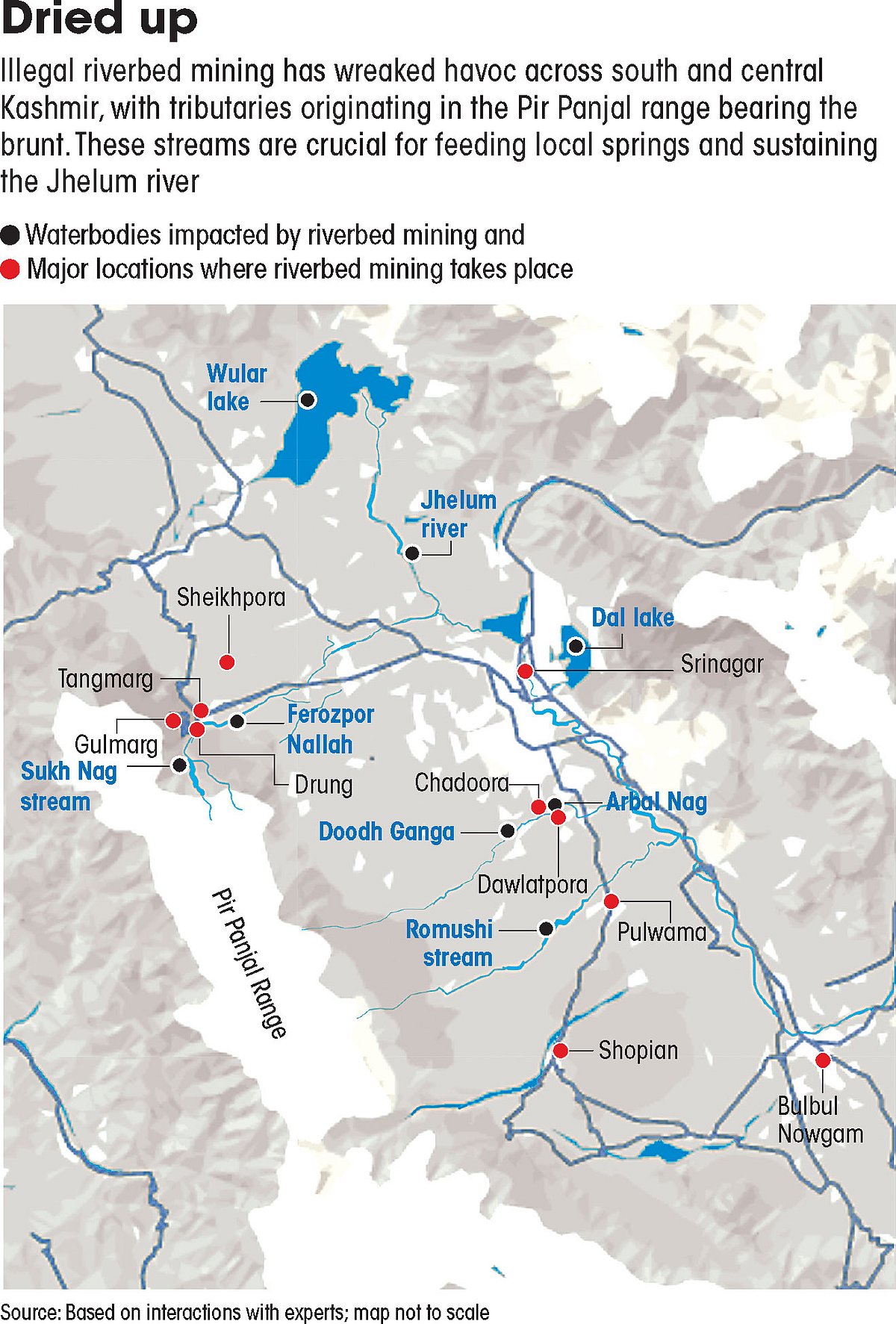
-The 2022-23 annual report from the Directorate of Geology and Mining cites several large-scale initiatives as primary contributors: the widening of national highways, the construction of the Srinagar ring road and the Delhi-Katra expressway, railway developments, projects under the Border Roads Organisation, the Pradhan Mantri Gram Sadak Yojana and the establishment of an All India Institute of Medical Sciences in Kashmir. The report acknowledges that these developments “imposed immense pressure on rivers.” (Raja Muzaffar Bhat) https://www.downtoearth.org.in/mining/scarred-by-mining (03 April 2025)
Punjab Govt amends Minor Mineral Policy The Punjab Cabinet on Thursday (April 3, 2025) approved amendments to the Punjab Minor Mineral Policy, which aims to enhance supply of raw materials in the market, reduce illegal mining and corruption, according to an official statement. The statement further said that the amendments to the policy would also reduce consumer prices for the public, increase State revenues, and eliminate any potential monopoly in the mining sector.
“The amendment stipulates Crusher Mining Sites (CRMS), thereby enabling crusher owners who possess land with gravel to now obtain a mining lease. This move is expected to curb the illegal transportation of material from other states and increase the availability of crushed sand and gravel (bajri) in the market, which are essential for development activities in the state,” it said. It added, “Similarly, Landowner Mining Sites (LMS) will facilitate the Landowners with land containing sand deposits to apply for a mining lease and sell the material in the open market at the government’s notified rates.”
Previously, many mining sites remained non-operational due to lack of consent from landowners as they were unwilling to allow unknown individuals to mine their land. The introduction of LMS will increase the number of operational mining sites, which will in turn boost market supply and state revenue. This move will also prevent monopolies in the mining sector, the statement added. https://www.thehindu.com/news/national/punjab/punjab-amends-minor-mineral-policy-to-curb-illegal-mining-corruption/article69408449.ece (03 April 2025)
Govt hopes to make ₹ 700cr by hiking royalty With Punjab enhancing the royalty on sand and gravel from 73 paise per cubic foot to Rs 1.75 and Rs 3.20 per foot, respectively, the state hopes to mop up Rs 700 crore from the sand mining. The government, it is learnt, has been discussing increasing the royalty on sand and gravel for quite a few months. However, it was finalised only a few days ago with Punjab Cabinet putting its stamp on the decision on Thursday.
Sources said that decision did not come easily. “There was a huge pressure from the contractors. The royalty on sand was 73 paise. Now it has more than doubled. It was shocking that while selling sand at Rs 35 per cubic foot, the contractors were paying only 73 paise as royalty to the government. Now, the exchequer will get at least Rs 1.75 per cubic foot.” The state has been earning not more than Rs 350 crore from mining annually. The state has 73 operational public
During the SAD-BJP government, when mines were auctioned through reverse bidding system, the annual revenue from sand was not more than Rs 35 crore. After former CM Amarinder Singh’s government took over, the revenue increased to Rs 300 crore. Ever since, it has not gone beyond Rs 350 crore. During 2017 Assembly elections campaign, its AAP Arvind Kejriwal had promised that a revenue of Rs 20,000 core would be generated annually from the mines. However, even after raising the royalty, the government would not be able to touch Rs 1,000 crore and it would have to take some other measures.
Post militancy, when Punjab witnessed fast development, cash flow and investors, the sand business boomed. It also gave birth to “politician-sand miners nexus. ” The business is now linked with several politicians as the sand mafia is alleged to run the business with political patronage. http://indianexpress.com/article/cities/chandigarh/punjab-hiking-royalty-sand-private-landowners-mine-9926117/ (05 April 2025)
Ending illegal sand trade calls for more Will these changes genuinely root out corruption, or are they merely a reshuffling of power? One of the most striking aspects of the amendment is the expansion of mining rights. Private landowners can now extract and sell sand and gravel while panchayats will gain similar privileges under district administration oversight. The government justifies this by arguing that increasing legal sources of sand will naturally undercut the black market. However, without proper checks and balances, there is danger of the new system enabling local power structures to simply shift corruption to a decentralised model. This will render regulation even more difficult.
The increase in royalty — from 73 paise to Rs 1.75 per cubic foot for sand and Rs 3.20 for gravel — is expected to boost state revenue beyond the current Rs 350 crore annually. But with mining now open to individual landowners, ensuring compliance will be challenging. Will local authorities have the capacity to monitor small-scale mining operations effectively? Or, will this become another avenue for underreporting and tax evasion?
Punjab has long struggled with illegal sand mining, often linked to politically connected mafias. The real test of this policy will lie in its enforcement. If it is not accompanied by stringent monitoring and technological tracking — such as satellite surveillance and digital permits — illegal mining could persist under new disguises. For now, the policy appears ambitious. But the fear of it being another temporary distraction from Punjab’s deeper corruption problem is real. http://tribuneindia.com/news/editorials/mining-policy-revamp/ (05 April 2025)
Rajasthan HC cracks down as mafia operations surge Illegal sand mining continues to thrive across Rajasthan, with mafia networks fearlessly extracting, stockpiling, and transporting sand in broad daylight. The growing crisis has led to severe environmental damage and legal concerns, prompting the Rajasthan High Court to take decisive action.
The High Court has granted the Central Bureau of Investigation (CBI) full authority to probe illegal sand mining and related mafia activities. It has also stated that the CBI may seek assistance from the Central Reserve Police Force (CRPF) or other states if necessary, News18 Hindi reported. The court has made it clear that the CBI has complete autonomy in investigating cases related to illegal sand mining. It has also directed state agencies to cooperate fully with the probe.
According to media reports, negligence by the mining department and local authorities has emboldened the sand mafia, which operates heavy trucks recklessly through narrow village streets. Even in school zones and densely populated areas, these vehicles travel at high speeds, increasing the risk of fatal accidents. Villagers’ complaints to local authorities often go unresolved, as government departments shift responsibility among themselves.
A report indicates that Rajasthan has recorded nearly 10,000 cases of illegal sand mining over the past five years. When including all types of mineral-related illegal extraction, transportation, and storage, the total number rises to 44,000 cases. Bhilwara district has reported the highest number of illegal sand mining cases. Notably, 24 people—including Border Home Guards—have lost their lives in mafia-related violence. However, government compensation has been provided to only six families. https://www.cnbctv18.com/india/illegal-sand-mining-in-rajasthan-booming-mafia-presence-24-deaths-10000-cases-in-five-years-red-clay-mining-19575180.htm (18 Mar 2025)
Goa CS liable for ignored sand mining complaints: HC The chief secretary of Goa will be held liable for contempt if any officers ignore and fail to act on complaints of illegal sand extraction, the high court has said. The division bench, comprising justices Bharati Dangre and Nivedita Mehta, which is hearing a second contempt petition on illegal sand extraction, has told the authorities to tighten their vigil. The authorities include police, the mining department, the revenue department, and specifically the heads of the flying squad that carries out raids.
The HC has permitted the Goa River Sand Protectors Network to immediately report any illegal sand mining to the Additional Collector-II, who shall act as the nodal officer. “…we expect the officer to act with a sense of responsibility and also keep in mind that any inaction on the part of any of the officers, despite the fact that the act of alleged illegal sand extraction is brought to its notice, is ignoring it, then the chief secretary of Goa will be held liable for contempt,” the HC said.
The court had directed the North Goa collector to issue a show-cause notice to the Bicholim mamlatdar seeking his explanation on the delayed action on a report of illegal sand extraction. The court expressed surprise that after repeated complaints in June and July, the mamlatdar conducted a site inspection only on Aug 13, 2024, and reported that no activity was going on. http://timesofindia.indiatimes.com/city/goa/chief-secretary-liable-for-ignored-sand-mining-complaints-hc/articleshow/120024497.cms (06 April 2025)
HC issues notice to Bicholim Mamlatdar In a contempt petition concerning the illegal sand extraction activities in Goa, the High Court has directed the North Goa Collector to issue a show cause notice to the Bicholim Mamlatdar. The notice demands an explanation from the Mamlatdar as to why he did not take timely action based on a report submitted by the Sankhali Talathi regarding the rampant illegal sand extraction at Virdi, located along the river Valvanti. https://www.heraldgoa.in/goa/goa/mamlatdar-faces-hc-wrath-over-illegal-sand-extraction/421223 (04 April 2025) The notice is to inquire why he failed to act promptly on a report submitted by the Sankhali Talathi regarding illegal sand extraction at Virdi, located along the river Valvanti. The next hearing for the case is scheduled for 29th April. https://www.prudentmedia.in/legal/sand-mining-hc-raps-bicholim-mamlatdar/32794.html (3 Apr 2025)
Karnataka Staff shortage hampers curbing illegal sand mining Official records indicate that 70% of authorised positions in the department remain unfilled. Of the 39 approved staff positions in the office of the deputy director of mines and geology department in the district, 27 posts continue to be vacant as the govt has not proceeded with recruitment. Official data available with the TOI shows that out of two sanctioned posts of senior geologists, one remains vacant, while four out of seven sanctioned posts of geologists are also not filled. Similarly, three out of four sanctioned posts of second-grade assistants are not filled. While the department has five sanctioned posts of drivers, four remain vacant. No action has been taken to fill the vacant posts in the department due to a govt circular dated Nov 25, 2024, which bars direct appointments for the posts where reservation is applied. https://timesofindia.indiatimes.com/city/mangaluru/staff-shortage-hampers-curbing-illegal-sand-mining-operations-in-karnatakas-dakshina-kannada/articleshow/119952618.cms (03 April 2025)
Tamil Nadu CBI team searches properties linked to VV Minerals A 20-member team of the CBI reportedly searched properties linked to VV Minerals, which exports processed beach sand, and its promoter S. Vaikundarajan at Keeraikkaaranthattu near Thisaiyanvilai on Saturday (April 05). The searches were conducted in connection with the alleged illegal mining of beach minerals worth over ₹5,000 crore. https://www.thehindu.com/news/cities/Madurai/illegal-beach-sand-mining-cbi-team-searches-properties-linked-to-vv-minerals/article69416339.ece (06 April 2025) CBI sleuths raid multiple locations over alleged illegal mining of beach minerals. https://www.deccanherald.com/india/tamil-nadu/cbi-sleuths-raid-multiple-locations-in-tamil-nadu-over-alleged-illegal-mining-of-beach-minerals-3479837 (05 April 2025)
WETLANDS, LAKES, WATER BODIES
Report Declining waders indicate deterioration of wetlands A decade-long study in southwestern India found that rising salinity, temperature shifts, and nutrient imbalances disrupted fish populations, leading to a significant decline in wading birds like egrets and herons. Conservation efforts such as wetland restoration, pollution control, and sustainable fishing are essential to maintaining healthy habitats for wading birds and preserving biodiversity. https://india.mongabay.com/2025/04/declining-waders-indicate-deterioration-of-wetlands/ (03 April 2025)
Tamil Nadu Understanding risks with & without mangroves -A new study computes the ability of mangroves in Pichavaram and Muthupet in Tamil Nadu, to mitigate coastal exposure to environmental hazards such as storms, cyclones and floods. The researchers also conducted inundation modelling studies for three different sea level rise scenarios — low, medium and high— to calculate resulting changes in mangrove covers. Monitoring the impacts of human activities on mangrove deforestation, analysing the effectiveness of current policies and governance, including financial mechanisms for conservation, and focusing on genetic diversity is important, say experts. https://india.mongabay.com/2025/03/understanding-coastal-risks-with-and-without-mangroves/ (31 March 2025)
India’s first winner of a Ramsar wetlands award Jayshree Vencatesan has helped restore 44 wetlands in Tamil Nadu. It’s hard work, she says, but perhaps the hardest part was being a rare woman in the field. https://www.hindustantimes.com/lifestyle/art-culture/it-takes-time-patience-meet-india-s-first-winner-of-a-ramsar-wetlands-award-101743838978885.html (5 Apr 2025)
WATER OPTIONS
Tamil Nadu PWRM revives 15 defunct wells The initiative, an off-shoot of the Tamil Nadu-based Cuckoo Movement for Children, which strives to make childhood meaningful, has revived 15 defunct wells across the state over the past four years with crowd-funding. It is helmed by Manjari and her team that includes M. Mari Muthu, K. Rahuraman, V. Muthu, C. Bala Gurunathan, A. Arun Kumar and S. Mohan. Manjari, an architect, recently won the Doshi We Know Fellowship 2024-25 for her work.

“Wells become unusable for various reasons,” says Manjari. “They may be closed due to conflicts arising out of caste tensions; due to sand or rock filling them up over the years or simply because people have forgotten their existence owing to piped water connections.” But the earth remembers. Despite being forgotten, water continues to spring forth from a well. The Public Well Revival Movement identifies such wells, reminding people in the village or town of its existence. After necessary permissions from local authorities, citizen’s collectives, and the Forest Department are sought, it sets out to revive them with help from the locals themselves. https://www.thehindu.com/society/tamil-nadu-villages-sustainable-drinking-water-public-well-revival-movement-madhu-manjari-selvaraj/article69302007.ece (04 April 2025)
Modi lauds Veerapandi CETP In his ‘Mann Ki Baat’ address on March 30, PM Modi highlighted the large-scale generation of textile waste in the country and praised the Veerapandi common effluent treatment plant (CETP) in Tirupur, which has been operating for 25 years. P Gandhirajan, managing director of Veerapandi CETP, told TOI that the plant was one of the largest textile CETPs in Asia, with an installed capacity of 12 MLD. He said the plant was established in 1999 by a group of 75 dyeing units in the Veerapandi cluster. According to him, each member unit invested in the project based on their effluent discharge level.
Spread across 11.58 acres, the plant initially treated wastewater using lime and ferrous sulphate, before discharging it into the Noyyal river. However, in 2005, following a directive from the Madras high court, the plant implemented a zero liquid discharge system, which includes pre-treatment, reverse osmosis and evaporators to ensure complete wastewater recycling. After the commissioning of zero liquid discharge system, the plant is recycling 12 MLD of water daily, producing reusable salt and brine solution for industrial use, preventing environmental pollution, safeguarding groundwater quality, and conserving freshwater resources. “The recycled water is supplied back to the dyeing units within an 8km radius through a dedicated pipeline, based on their effluent discharge share,” Gandhirajan said. https://timesofindia.indiatimes.com/city/coimbatore/modi-lauds-veerapandi-common-effluent-treatment-plant-in-tirupur/articleshow/119771322.cms (31 March 2025)
Gujarat Sujlam Suflam 2.0 launched CM Bhupendra Patel on Apr 4 launched Sujalam Sufalam 2.0, an extensive water conservation campaign that will be conducted across the state from April 4 to May 31. The campaign will involve deepening existing ponds, desilting check dams, repairing canals and implementing rainwater harvesting, among other activities, through six govt departments with public participation.
– The official govt statement claimed that since 2018, the state govt undertook 1,07,608 projects, including deepening ponds, desilting 24,086 check dams, and cleaning 66,213 kilometres of canals, resulting in a significant increase in water storage capacity and employment generation. https://timesofindia.indiatimes.com/city/ahmedabad/gujarat-chief-minister-launches-sujalam-sufalam-2-0-from-mehsana/articleshow/119987795.cms (04 April 2025)
GROUNDWATER
Punjab ‘Early paddy transplantation likely to worsen water crisis’ The state is staring at faster depletion of groundwater with nearly 14 lakh tubewells likely to pump out billions of litres of extra water for irrigation after the government allowed paddy transplantation from June 1. The crop is cultivated on 31 lakh hectares in the state, of which 73 per cent is irrigated by tubewells. Since 2014, the transplantation of the water-guzzling crop usually started on June 15, a move aimed at reducing stress on groundwater by factoring in the monsoon season.
Experts have advocated pushing paddy transplantation beyond June 20 as the crop needs huge amount of water throughout the irrigation period that lasts till September-end. According to official data, every tubewell extracts 30.24 lakh litres of groundwater per week with an average eight hours of power supply. This means the 14 lakh tubewells are likely to pump out 4,385 billion litres of groundwater per week.
PSPCL figures show 13.94 lakh tubewell connections in Punjab, a majority of which are located in the districts with overexploited groundwater. A PSPCL official said the advancing of the date is likely to push the power subsidy bill of the government, which has set aside a whopping Rs 20,500 crore for it in the current fiscal. Nearly 10 per cent of the state’s total budget is allocated to providing free power to various consumers out of which free electricity to farmers for tubewell operations will cost nearly Rs 10,000 crore — the highest subsidy allocation for any sector.
The official said the state is likely to touch the peak power demand of 17,500 MW from June 4. The official said average power subsidy in Punjab is around Rs 10,000 per acre annually. This goes up as high as Rs 20,000 per acre in areas like Sangrur, Barnala and Patiala, where water depletion rate had been historically high. https://www.tribuneindia.com/news/punjab/punjab-early-paddy-transplantation-likely-to-worsen-water-crisis/ (05 April 2025)
Kerala Cardamom farming turns unsustainable In Kerala, 6 out of every 10 hectares of farmland are dedicated to coconut, rubber, rice, cardamom, and other cash crops. While they have brought economic prosperity, they come at an environmental cost—depleting water resources and stripping the soil of nutrients. https://www.thenewsminute.com/kerala/gambling-with-groundwater-in-idukki-cardamom-farming-turns-unsustainable (31 March 2025)
Report Thirsty crops draining groundwater across country Farmers in Tamil Nadu, Gujarat, Rajasthan are growing more water-thirsty crops – rice, wheat, and onion – draining groundwater. https://www.ndtv.com/india-news/sip-by-sip-water-guzzling-crops-drain-indias-groundwater-7997301 (24 March 2025)
Uttar Pradesh ‘Excess fluoride’ in Sonbhadra’s groundwater The issue of excess fluoride in Sonbhadra’s groundwater was first discovered in 2013. The administration has made arrangements to supply treated surface water to the affected villages via over 800 tankers. When the PM launched the Jal Jeevan Mission in 2019, the same thing was done on a large scale. A detailed study on the district’s water sources was conducted, following which 12 schemes were prepared to provide clean water to the locals, says the DM.
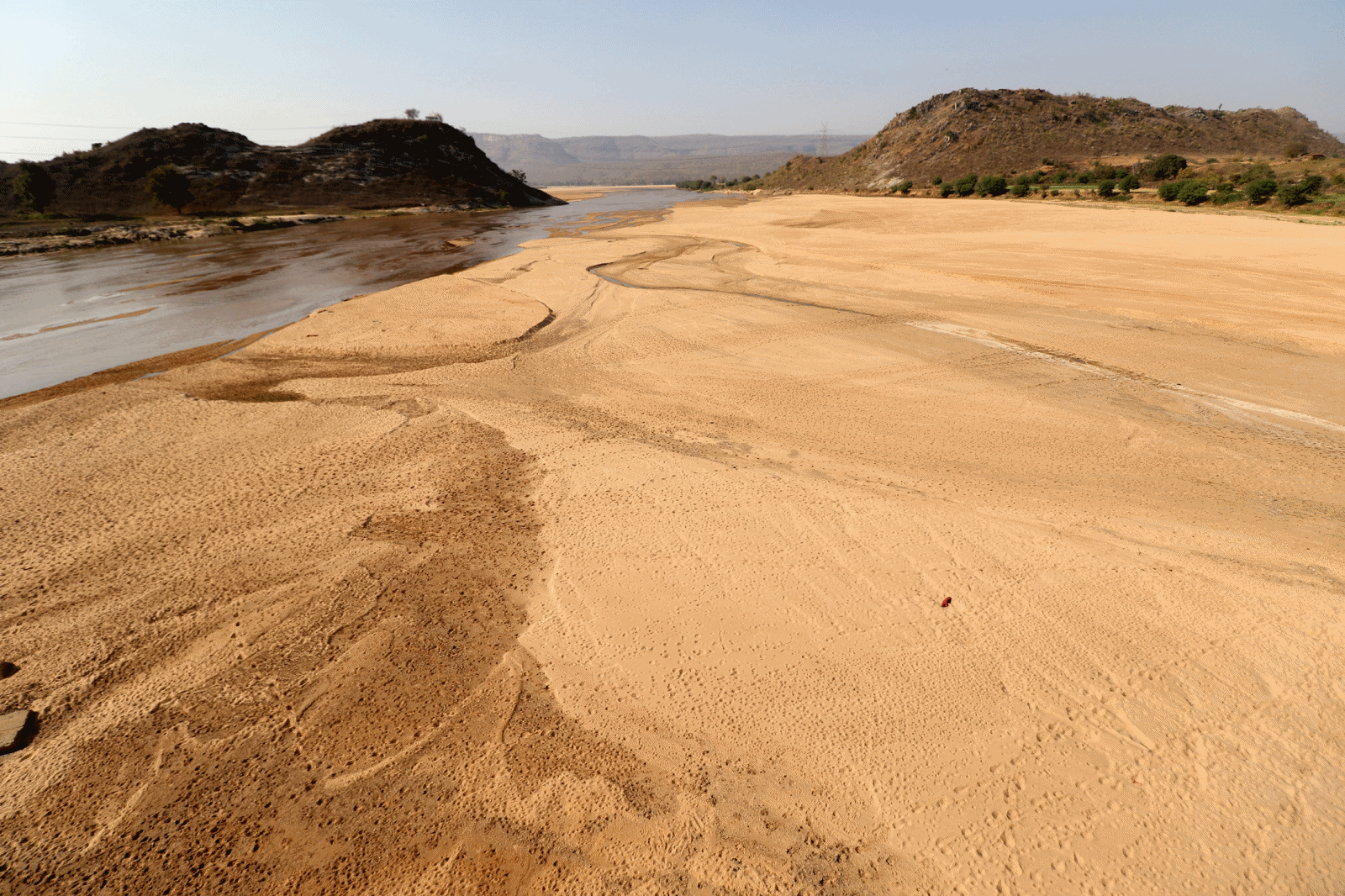
The locals say they still depend on borewells and hand pumps to meet their potable water needs. The locals say they have been advised to avoid boiling groundwater since “boiling increases fluoride concentration”. Amresh Yadav says, “We were first promised clean water in 2013. Then, the incumbent BJP government promised to supply clean drinking water to our homes. Though we have been getting water for 30 minutes daily since the DM’s visit, it is insufficient. I’m afraid the government’s pipeline project will remain incomplete, forcing us to rely on groundwater once again.” https://indianexpress.com/article/long-reads/sonbhadra-groundwater-excess-fluoride-residents-sicker-govt-report-9916047/ (03 April 2025)
Haryana Tanks battle polluted groundwater In Haryana, groundwater pollution has led people to build underground tanks that are fed by expensive water tank services whose costs escalate in summer. Ashok Kumar talks to residents to understand the extent of the problem, and to government officials, who claim that piped water supply has solved the issue.
“Farmlands are irrigated with water from the PAP. As the area falls under fertile land catehory, no land owner is given permission to set up a poultry farm as it will affect environment. A poultry farm will needs at least one lakh litres of water per day. Also, the farm will attract house flies. For these reasons, we are objecting to setting up the poultry farm,” said Velu Mandrachalam, district secretary of Tamilaga Vivasayigal Sangam, Coimbatore. https://www.thehindu.com/news/national/haryana/tanks-battle-polluted-groundwater/article69409464.ece (04 April 2025)
Goa 65% increase in groundwater extraction in 12 years The report titled ‘Dynamic Groundwater Resources of Goa, 2023’ highlights that the groundwater extraction increased from 4,114 hectare-metres (ham) in 2011 to 6,775 ham in 2023. The surge in extraction is attributed to a rise in the number of abstraction structures, including borewells and other manmade systems. Bardez and Mormugao talukas have recorded the highest groundwater extraction levels compared to the availability of resources. The total rechargeable fresh groundwater resources have been estimated at 39,624.4 ham, with the annual extractable resource pegged at 31,699.5 ham. The report states that domestic use accounts for 56% of groundwater extraction (3,818.8 ham), followed by irrigation at 37% (2,484.8 ham), and industrial purposes at 7% (471.5 ham).
A comparison between 2020 and 2023 shows a 2% increase in rainfall recharge, recharge from other sources has decreased by 40%. Of the total recharge from all sources (39,624.4 ham), rainfall remains the major contributor with 35,951 ham, followed by water conservation structures (1,349.2 ham) and surface water irrigation (815.8 ham). The availability of groundwater for future use across Goa stands at 24,740.2 ham, with Mormugao taluka recording the lowest availability at 1,021.7 ham and Salcete taluka the highest at 3,040.6 ham. The report emphasizes that while groundwater availability remains sufficient for now, continuous monitoring and sustainable management practices are essential to prevent over-extraction and maintain resource balance. https://www.daijiworld.com/news/newsDisplay?newsID=1276659 (4 Apr 2025)
Karnataka Depletion continues As per the latest Dynamic Groundwater Resource Assessment – 2024, 45 taluks across Karnataka have been classified as severely overexploited, with 27 of them in Bengaluru Urban, Bengaluru Rural, Chikkaballapur, Kolar, Ramanagara, and Tumakuru. Kolar topped the list with an extraction rate of 193%, followed by Chikkaballapur (164%), Bengaluru Rural (147%), and Chitradurga (144%). The findings are part of a larger assessment covering 237 taluks statewide, where groundwater extraction has crossed sustainable limits. While 45 taluks are categorised as overexploited (exceeding 100% usage), another 15 are listed as critical (90–100%), 33 semi-critical (70–90%), and 144 fall in the safe category (under 70%). Water quality too is a major concern. The report flags contamination in 85 taluks, identifying 17 for high salinity, 41 for excess nitrate, 15 for fluoride, and 12 for traces of uranium.
Activists have long raised red flags, especially in chronically affected areas like Kolar and Chikkaballapur. “People have to dig borewells for more than 700 feet at many places in these districts and still get contaminated water. These districts have no alternative sources for drinking water,” said R Anjaneya Reddy, president of Shashvatha Neeravari Horata Samithi. Reddy alleged that the CGWB has been flagging overexploitation in these areas since 1987, but successive govts have failed to offer permanent solutions. “Kolar, Chikkaballapur, Bengaluru, Bengaluru Rural & part of Tumakuru dists were identified for overexploitation of groundwater. Govts have spent money on measures like creation of check dams, but to no avail,” he said. Calling for urgent intervention, he said: “A comprehensive program to rejuvenate all water bodies—lakes, ponds, rainwater drains—& remove encroachments be launched.”
Responding to the findings, minor irrigation minister NS Boseraju said, “CM Siddaramaiah has allocated Rs 1,000 crore more for the minor irrigation department. We will construct more scientific check dams at logical places and introduce more schemes to recharge groundwater.” https://timesofindia.indiatimes.com/city/bengaluru/bluru-extracts-187-of-its-groundwater-reserves-kolar-tops-in-state/articleshow/120024887.cms (06 April 2025)
Tamil Nadu Farmers oppose proposed poultry farm Farmers in Sultanpettai continued their protest against the setting up of a poultry farm at Vanjipuram near J Krishnapuram for the third consecutive day on Friday. They said waste from the farm will affect the ground water and pollute air. According to farmers, a businessman has obtained permission to set up a poultry farm in the village and rear over 1 lakh chicken. With pollution control board giving approval on April 2, farmers staged a protest. https://www.newindianexpress.com/states/tamil-nadu/2025/Apr/05/sultanpettai-farmers-oppose-proposed-poultry-farm-fear-air-and-water-pollution (05 April 2025)
URBAN LAKES, WETLANDS
Hyderabad Kancha Gachibowli: Crisis of urban planning Hyderabad’s conflict is now part of a larger national pattern—one where citizens are reclaiming the right to shape sustainable, humane urban futures. There is now a growing demand for a dedicated Urban Forest Protection Act, akin to heritage laws, to recognise urban green spaces as critical assets for climate resilience, biodiversity, and community well-being.
At the heart of the conflict is a fundamental question: Who gets to shape the city—and for whom? Urban sociologists point to similar flashpoints in Mumbai’s Aarey Colony, Bengaluru’s Turahalli Forest, and Delhi’s Ridge. The common denominator? A developmental paradigm that prioritises vertical construction over inclusive, ecological urbanism.
In a time of climate emergency and civic disconnection, the Kancha Gachibowli resistance reminds us that progress must be rooted in care, conscience, and community. The fight is not just to save a forest but to reimagine the city itself—as a shared space where nature and people coexist. (Amal Chandra) https://www.downtoearth.org.in/forests/a-city-against-its-forest-kancha-gachibowli-and-the-crisis-of-urban-planning (04 April 2025)
CM promised lake protection but now damaging them Yunus Lasania explains the issues behind the controversial clearing of 400 acres of green lungs including a lake and biodiversity rich area next to Hyderabad University by the Telangana govt, crushing a students protest in the process and argues why Telangana govt needs to find a relatively barren land in stead. https://theprint.in/opinion/hyderabad-heart/revanth-reddy-was-all-about-lake-protection-last-year-this-year-hes-encroaching-on-them/2576016/ (03 April 2025)
Kancha Gachibowli is ecological heritage Highlighting that the KGF has largest grasslands of all the green spaces in and around the city, the report brought to fore that the forest is last home for grassland birds like the Indian Hoopoes, Oriental Skylarks butterflies like the Grass Yellows and Darts. “The grassland is also the last home for the Indian Roller (Telangana’s State Bird) within Hyderabad”. The report highlighted Murricia hyderabadensis, a unique spider, which is endemic to the KGF, discovered in 2010. “It is found nowhere else in the world,” it said.
Preserving KGF ensures the well-being of the lake and hillock ecosystem that Hyderabad thrives upon. According to the report, the KGF has the largest native grasslands of all the green spaces and only home to Hyderabad’s endemic tree-trunk spider ‘Murricia hyderabadensis’. As for tree diversity, the KGF has over 72 species with only forest home to Marking Nut (Semecarpus anacardium) known as Chaakali Jeedi (Washerman’s Nut) in and around Hyderabad. This tree is extensively sought by the washermen community for decades, it said, adding that “with these trees gone, there is a history and culture that is wiped out”. https://telanganatoday.com/absence-of-forests-will-increase-temperature-from-1-4-degree-c-in-hyderabads-kancha-gachibowli-ecological-heritage-report (01 April 2025)
SC stops tree felling Expressing shock at the large-scale felling of trees in hundreds of acres of land in the Kancha Gachibowli area in Hyderabad, the Supreme Court on Thursday (April 3) ordered to stop all sorts of developmental activities carried out there. The PIL-petitioners argued that the government was proceeding in blatant disregard of two Supreme Court judgments viz. TN Godavarman Thirumulpad v. Union of India and Ashok Kumar Sharma v. Union of India and Others where all states were directed to form committees for identification of forest and forest-like areas as per the dictionary meaning of forest. It was further their case that the land was being auctioned to set up an IT park, yet no environmental assessment was conducted as per EIA notification, 2006. https://www.livelaw.in/top-stories/supreme-court-kancha-gachibowli-hyderabad-telangana-tree-felling-288352 (03 April 2025) The Court further warned that in case its directions are not complied with in letter and spirit, the Chief Secretary of State would be personally held responsible for the same. The case concerns a 400-acre parcel of land in Kancha Gachibowli village, which the State proposes to auction through the Telangana Industrial Infrastructure Corporation (TGIIC) to develop IT infrastructure. https://www.barandbench.com/news/litigation/telangana-chief-secretary-will-be-sent-to-prison-supreme-court-warns-over-kancha-gachibowli-tree-felling (03 April 2025)
MoEF seeks report The MoEF has sought a ‘factual’ and an ‘action taken’ report on the “illegal” felling and “removal” of vegetation in 400 acres of Kancha Gachibowli in Rangareddy district by the Telangana Industrial Infrastructure Corporation (TGIIC), on Wednesday (April 3, 2025). In a communication to the Additional Secretary (Forests) here, Assistant Inspector General of Forests S. Sundar stated that there have been various reports in the print and social media alleging damage to wildlife found in the said land, its lakes and unique rock formation. https://www.thehindu.com/news/national/telangana/environment-ministry-seeks-report-on-illegal-felling-and-removal-of-vegetation-in-kancha-gachibowli-land/article69403308.ece (02 April 2025)
Govt forms committee The Telangana government has announced the constitution of a ministerial committee to resolve the long-pending Kancha Gachibowli land dispute. The CM announced the decision of the state on X amid cases against the deforestation of the 400-acre land in the Telangana High Court and the Supreme Court. https://www.siasat.com/kancha-gachibowli-land-row-telangana-govt-forms-committee-for-resolution-3202799/ (03 April 2025)
Auction plan scraped The protests, backed by activists, local residents, and students, raised concerns about deforestation of Kancha Gachibowli, which, according to protesters, has already suffered significant ecological damage due to recent tree-felling. The student union, on the other hand, said that 100 acres in exchange for over 1,600 acres was not a fair deal. “Why can’t they let things be as they are? We are fighting a battle for our land and university and we will not let it go so easily,” said Umesh Ambedkar, president of the UoH student union. https://timesofindia.indiatimes.com/city/hyderabad/auction-plan-scrapped-kancha-gachibowli-to-turn-into-2k-acre-eco-park/articleshow/119990795.cms (05 April 2025)
Mumbai Citizens continue a decade-long fight to conserve an urban lake The struggle to save DPS Flamingo Lake dates back to 2010-11 when residents raised alarms over debris dumping threatening to reclaim the wetland. The lake’s ecological issues began gaining attention when the Navi Mumbai Environment Preservation Society (NMEPS) and Vinod Kumar Punshi in the Bombay High Court filed a PIL in the Bombay High Court in 2013. The PIL raised the issue related to the destruction of wetlands and mangroves in Navi Mumbai, including concerns related to DPS Flamingo Lake. In November 2018, the high court restrained CIDCO from “..destructing the DPS lake in any manner by carrying on any development activity” in the area covered by the lake. CIDCO was also directed to remove the debris and ensure free creek water flow into the lake. https://india.mongabay.com/2025/04/flamingo-lake-in-navi-mumbai-faces-a-threat-as-citizens-fight-for-conservation/ (02 April 2025)
Flim Wetlands of Mumbai A film “Wetlands” in collab with Forest Dept’s Mangrove Foundation as 2025 marks and celebrates a decade of its foundation this year! The film is on Broadcast TV & OTT and it is now available to be viewed at: https://www.youtube.com/watch?v=eGLoiS5TNOo (01 April 2025)
Ajmer SC reviews admin’s proposal for new wetlands The Ajmer district collector Friday (April 05) submitted an additional affidavit to the Supreme Court, detailing plans to create two new wetlands within the city limits. The submission was made during proceedings related to the Anasagar Lake matter, where the court had previously instructed local officials to remove the Seven Wonders replicas and the food court near the water body. The court will examine the new wetland proposal on April 7, alongside assessing existing structures’ compliance with environmental guidelines and previous tribunal decisions.
District collector Lok Bandhu presented comprehensive wetland development and rehabilitation plans, following the Supreme Court’s March 17 directive. The govt’s proposal includes expanding a 2-hectare water body near Hathikhera in Ajmer into a 10-hectare wetland at Foy Sagar Lake (renamed as Varun Sagar by present BJP govt). Additionally, the administration plans to convert two existing Tabiji area ponds, spanning 6 hectares, into a 19-hectare wetland complex (split into 10 and 9 hectares). Tabiji village is nearly 12-km from Ajmer on the Beawar route. https://timesofindia.indiatimes.com/city/jaipur/sc-reviews-ajmer-admns-proposal-for-new-wetlands/articleshow/120024247.cms (06 April 2025)
Nainital Why Naini lake facing record low levels Destruction of recharge zone, construction in catchment area, increasing temperatures, changing rainfall and snowfall pattern, and failure. of governance and judiciary responsible for the state of Naini lake in Uttarakhand. https://indianexpress.com/article/explained/explained-why-naini-lake-is-seeing-record-low-water-levels-this-year-9916944/ (01 April 2025)
Delhi State responsible for wetlands’ maintenance: MoEF The reply dated April 02, from the ministry came after the tribunal in 2024 took suo motu cognizance of a Sept 2024 TOI report titled “NHAI has made highway at protected pond site in Delhi: Activists”. The article pointed out that NHAI built Urban Extension Road-II over the pond in Goyla Khurd village, situated in Delhi’s south-west district. The pond was among the list of over 1,000 ponds meant to be protected. he ministry said it identified over 2.3 lakh wetlands nationwide in 2021, and their safeguarding falls with the respective state govt, which in this instance, is the Delhi govt. Earlier this year, the DPCC and Delhi state wetland authority held DDA answerable for handing over a listed pond to NHAI, over which a highway was constructed, impacting the water body. https://timesofindia.indiatimes.com/city/delhi/state-responsible-for-wetlands-maintenance-environment-ministry-to-tribunal-on-goyla-khurd-pond/articleshow/119984288.cms (4 April 2025)
NGT directs DDA, MCD resolve dispute “The issue of maintenance of the pond cannot be kept pending on account of any dispute between the DDA and MCD without action to clean it,” said an NGT bench headed by justice Prakash Shrivastava in its March 24 order. The DPCC has been instructed to inspect the pond within six weeks and submit a water sample report. https://www.hindustantimes.com/cities/delhi-news/ngtdirects-dda-mcd-to-resolve-dispute-clean-south-west-delhi-pond-101743444615221.html (31 March 2025)
URBAN WATER
Bengaluru City extracts 187% of its groundwater reserves The Dynamic Groundwater Resource Assessment – 2024, jointly released by the Central Ground Water Board (CGWB) and the Karnataka Ground Water Directorate (GWD),has painted a grim picture of the deepening crisis. https://timesofindia.indiatimes.com/city/bengaluru/bluru-extracts-187-of-its-groundwater-reserves-kolar-tops-in-state/articleshow/120024887.cms (06 April 2025)
Cauvery on Wheels to deliver tanker water soon The Bangalore Water Supply and Sewerage Board (BWSSB) is working to implement ‘Sanchari Cauvery – Cauvery on Wheels,’ a first-of-its-kind initiative in India, to provide BIS-certified drinking water at residents’ doorsteps. With groundwater levels dropping, private water tankers are increasing their rates, causing financial strain on residents. To address this issue, BWSSB has introduced an app and a website for booking tanker deliveries at fixed, discounted rates. The service will offer tracked tankers with OTP-protected deliveries, fair pricing and reliable water access. https://timesofindia.indiatimes.com/city/bengaluru/cauvery-on-wheels-to-deliver-tanker-water-in-bengaluru-soon/articleshow/119954255.cms (04 April 2025) Meanwhile, how far has the Cauvery Stage V reached? Here’s a status update. https://citizenmatters.in/promise-of-cauvery-stage-v-bengalureans-to-be-worry-free/ (07 April 2025)
RWH tank contimination: Residents fall ill Residents of Purva Palm Beach in Kyalasanahalli, north Bengaluru, have reported a surge in vomiting and diarrhoea cases, allegedly due to contaminated water from rainwater harvesting tanks. The 15-tower complex, home to over 3,500 residents, relies on three 1.5-lakh-litre rainwater tanks and water tankers, as it lacks borewells. Residents said these tanks, filled with mud and insects, have not been cleaned. https://www.deccanherald.com/india/karnataka/bengaluru/residents-in-gated-community-fall-ill-contamination-in-rainwater-tank-suspected-3474854 (03 April 2025)
Chennai Blame game on closing free drinking water outlets While the GCC has said that the responsibility of supplying water from Amma Kudineer outlets was transferred to the Metropolitan Water Supply Board in 2023, the latter has alleged that no such transfer order was issued. https://www.thenewsminute.com/tamil-nadu/chennais-free-drinking-water-outlets-shut-down-govt-depts-resort-to-blame-game (03 April 2025)
Tiruchy Corp to stop waste discharge into Uyyakondan canal The Tiruchy city corporation which has drawn up an action plan to rejuvenate the Uyyakondan canal, has a formidable task ahead of it. The 2025-26 civic budget highlighted its efforts to address the issue of untreated sewage flowing into the canal. The action plan includes strengthening canal banks and stormwater drains, with a budget allocation of Rs 110 crore for these projects.

According to the budget, at 32 locations, untreated wastewater from stormwater drains is directly discharged into the canal. The corporation said it will take measures to stop this flow, but sources have indicated that the actual number of such locations may be higher than officially reported. So far, the corporation has successfully stopped untreated sewage flow at six of the 32 identified locations, with further updates expected in the coming days, sources said. https://www.newindianexpress.com/states/tamil-nadu/2025/Mar/31/tiruchy-corporation-to-stop-waste-discharge-into-uyyakondan-canal-by-march-2026 (31 March 2025)
Hyderabad Qutb Shahi-era Gulzar Houz turns into a plastic waste dump Once a testament to the glory of Hyderabad, Gulzar Houz today is a forgotten remnant of its glorious past. Located in the very center of the Old City, this ancient fountain, constructed in the Qutb Shahi times, was previously a fresh water source. Now, it has become a non-functional structure, a repository of plastic litter and stagnated water. https://www.siasat.com/qutb-shahi-era-gulzar-houz-turns-into-a-plastic-waste-dump-3203086/ (04 April 2025)
Water demand surges in Hyderabad, HMWSSB warns against illegal pump usage. https://www.siasat.com/water-demand-surge-in-hyderabad-hmwssb-warns-against-illegal-pump-use-3202631/ (03 April 2025)
Mumbai BMC’s move trigger a man-made water crisis The BMC has now asked the well owners to obtain a fresh CGWA licence – a mandate as per the latest CGWA guidelines that came into force in 2020. The civic body in its notices has maintained that it will take legislative action against well operators who continue to supply water to tankers without having a new CGWA licence. This move will affect the tanker business entirely. Daily these tankers supply 200-2000 MLD of water in different pockets of Mumbai. This water is being used for commercial purposes as well as in ongoing infrastructure works such as the road concretisation, coastal road project, Metro works, bullet train project. Besides, the tanker water is also being used for other important purposes like cleaning of railway coaches, maintenance of public roads, laws and gardens, maintenance of banquet halls and commercial public spaces like lawns.
If the BMC disallows the well owners to supply water to tankers, water will not reach for these activities leading them to stop work and maintenance. A similar incident took place in 2023 when the entire city loomed under the water crisis for five days after the Mumbai Water Tankers Association (MWTA) went for a strike. At present, MWTA has 1,800 registered tankers with it. Each tanker has a capacity of 500-20,000 litres and each borewell caters to 10-15 tankers depending on the water table. https://indianexpress.com/article/cities/mumbai/explainer-bmc-issue-notice-mumbai-well-owners-man-made-crisis-9926852/ (05 April 2025)
Water crisis: Residents demand halt on new projects On March 28, the Kharghar Cooperative Housing Societies Federation, which has 505 housing societies as members, wrote to CIDCO, saying all societies were facing water shortage and providing details of 125 housing societies that were facing a 30-50% water cut. Residents were managing somehow using water supplied by tankers and feared the situation would become far worse if new projects were sanctioned without any alternative source of water, the federation stated in the letter. https://www.hindustantimes.com/cities/mumbai-news/acute-water-shortage-halt-new-projects-kharghar-hsg-societies-to-cidco-101743535246894.html (02 April 2025)
Lucknow Carter formed on road 11-m deep, 6-m wide crater in Vikas Nagar; officials blame erosion Municipal officials stated that erosion due to faulty underground sewer lines had caused the incident. Lucknow Municipal Corporation (LMC) quickly barricaded the affected section and diverted traffic to alternate routes. Municipal commissioner Inderjit Singh stated that the incident occurred on a road under the jurisdiction of the public works department (PWD), but attributed the collapse to poorly constructed sewer lines by Jal Nigam. “Last year, a similar cave-in occurred on this very stretch, and we had to step in then as well. Jal Nigam’s substandard work continues to create problems for the city,” Singh rued. Officials explained that the sewer lines failed to vent hazardous chemical gases, which eroded the sand supporting the road. https://www.hindustantimes.com/cities/lucknow-news/11m-deep-6-m-wide-crater-in-vikas-nagar-officials-blame-erosion-101734374580322.html (17 Dec. 2024)
Delhi SC panel clears underground reservoirs in ridge The central empowered committee of Supreme Court has given approval to Delhi Jal Board for use of an area of 1,580 square metres of geomorphological ridge for the construction of an underground reservoir in New Rajinder Nagar. The project will involve felling of 40 trees and transplantation of 20 trees. The committee has also given the nod to DJB to use parts of the ridge for replacement of pipelines inside a DDA park in place of existing pipelines in Naraina Vihar as well as the construction of the Naraina underground reservoir. However, the apex court will give the final permission for the project, which aims to improve water supply in the command area of the Chandrawal water treatment plant. Ridge Management Board approved the project in April 2024. DJB said that due to the aged condition of the existing pipelines, their replacement had been proposed. https://timesofindia.indiatimes.com/city/delhi/sc-panel-nod-to-underground-reservoirs-construction-in-ridge-area/articleshow/119910085.cms (02 April 2025)
Govt mulls pipeline to solve water supply issues The DJB is working on a plan for laying an 11-kilometre pipeline to address the occasional disruption of water supply in Delhi due to a rise in the Yamuna’s ammonia levels, officials said on Friday (April 04). Work on details and cost estimates of the project, estimated to cost Rs 300 crore, is underway. The proposed pipeline will stretch from the Haiderpur water treatment plan (WTP) to the Waziarabad barrage, they said. The pipeline is planned to supply raw water, if required, to reduce ammonia levels in the Wazirabad pond. This will also help in situations when it is required to completely avoid drawing raw water from Wazirabad, a senior DJB official said.
“According to the plan, a 2,400-millimetre diameter pipeline will be laid from the DJB’s Haiderpur WTP, which gets its raw water from the carrier line channel (CLC), also known as Munak canal, that runs from Karnal in Haryana to Haiderpur. This line provides around 680 cusecs of raw water to several other WTPs,” he said. The proposed project will be under the Centre’s Atal Mission for Rejuvenation and Urban Transformation (AMRUT) scheme. It is likely to be completed in two years, the officials said. https://theprint.in/india/delhi-govt-mulls-pipeline-to-solve-water-supply-issues-stemming-from-high-ammonia-levels-in-yamuna/2578610/ (04 April 2025)
FC contamination in AIIMS drinking water Faecal bacterial contamination in drinking water was discovered in the lab analysis of samples collected during weekly testing at AIIMS at two locations: the National Centre for Ageing Block and the boys’ hostel. The analysis confirmed the presence of bacteria originating from human or animal excreta in the drinking water, which was being consumed by over 100 students. Sources indicated that such contamination was unprecedented in the previous 10 years. https://timesofindia.indiatimes.com/city/delhi/faecal-bacterial-contamination-found-in-aiims-drinking-water-supply/articleshow/119880272.cms (02 April 2025)
WATER POLLUTION
IWP Difference between water contamination & pollution Chapman (2007) defines contamination as the presence of a substance where it should not be or at concentrations above normal levels while pollution is contamination that can result in adverse biological effects on humans and plants and animals that depend on this water for their survival. All pollutants are contaminants, but not all contaminants are pollutants.
Pollution is mainly caused due to human activities, whereas contamination can be human induced or occur naturally in the environment. The extent of damage is usually higher in pollution compared to contamination because pollutants can disturb the balance of the ecosystem on a broader scale compared to contaminants. Pollution usually impacts the larger environment, while contamination may occur on a limited scale or within a particular substance or body and can be easily mitigated. https://www.indiawaterportal.org/faqs/water-contamination-and-pollution-growing-challenge-health-and-biodiversity (17 Oct. 2021)
JJM/ RURAL WATER SUPPLY
Meghalaya JJM facing delays -The latest commitment was to finish the scheme by December 2025, but with April 2025 already here, several key components—amid allegations of corruption—are yet to be completed. According to the JJM Dashboard, 5,29,885 households (81.98 per cent) have been provided with tap water connections since the scheme’s launch, out of a total target of 6,50,914 households in Meghalaya. https://theshillongtimes.com/2025/04/01/jjm-completion-faces-delays-despite-govts-assurances/ (01 April 2025)
Madhya Pradesh शिवपुरी के लोगों ने घर के कमरे को बना दिया कुआं जिस बस्ती की बात हो रही है, उसका नाम है लुधावली, वार्ड क्रमांक 16 और 17 के अंतर्गत आता है, लेकिन सुविधाओं के मामले में ये किसी ‘मान्यता प्राप्त’ शहर का नहीं, बल्कि चंद्रमा पर बसी किसी कॉलोनी का हिस्सा लगता है. हां कोई पानी की टंकी नहीं है, कोई हैंडपंप नहीं है, कोई बोरवेल नहीं है. अगर कुछ है तो उम्मीद — और वो भी ज़मीन के नीचे कहीं गड़ी हुई. इसलिए वे अपने ही घर के कमरों को खोदकर पानी निकाल रहे हैं. आप सोच रहे होंगे कि अगर कुआं ही खोदना है तो घर के बाहर खोद लेते घर के अंदर ही क्यों…तो जनाब इसका जवाब ये है- इन मजबूरों की मजबूरी ये है कि उनके पास अपने घर के अलावा कोई जमीन नहीं है.
जिस बस्ती में लोग प्यास से जूझ रहे हैं, उसके बिल्कुल बाजू में गौशाला क्षेत्र है.वहां मानीखेड़ा डैम से पाइपलाइन आ चुकी है, नल भी हैं, पानी भी है। मतलब, पानी के पाइप भी ‘राजनीति’ से निर्देशित होते हैं—जैसे कि GPS हो, जहां वोट हैं वहीं मोड़ते चलो. हद तो ये है कि नगर पालिका कहती है, “बस्ती अवैध है, वहां कुछ नहीं कर सकते.” इन परिवारों की हालत 8 साल से एक जैसी है. न पीने का पानी, न सुनवाई, न बदलाव. मीडिया आया, हेडलाइन बनी, कुछ फोटो खिंचे, लेकिन सिस्टम की प्यास न बुझी, न इंसान की. स्थानीय निवासियों की काफी जद्दोजहद के बाद नगर पालिका के अधिकारियों के मुंह से ये शब्द निकले-“प्रयास कर रहे हैं. मॉनिटरिंग कर रहे हैं.जल्द निराकरण करेंगे.” https://mpcg.ndtv.in/madhya-pradesh-news/water-problem-in-jyotiraditya-scindias-shivpuri-people-are-digging-wells-in-their-homes-8085000 (04 April 2025)
8 killed after inhaling toxic gas in 150-year-old well A routine well-cleaning activity turned into a disaster in Kondawat village when eight people died after inhaling toxic gas. The incident happened on Thursday (April 03) when villagers were preparing the well for idol immersion as part of the Gangaur festival celebrations. Five villagers initially descended into the 150-year-old private well to remove accumulated sludge. However, they soon started sinking into the swampy residue. Seeing them struggle, three more villagers rushed in to help but were also overcome by the toxic gases and got trapped. https://www.ndtv.com/india-news/8-killed-after-inhaling-toxic-gas-in-150-year-old-well-in-madhya-pradesh-8081315 (04 April 2025)
According to this report the Bhimkund reservoir in Chhattarpur district has for the first time in living memory, has gone 12 ft deep.
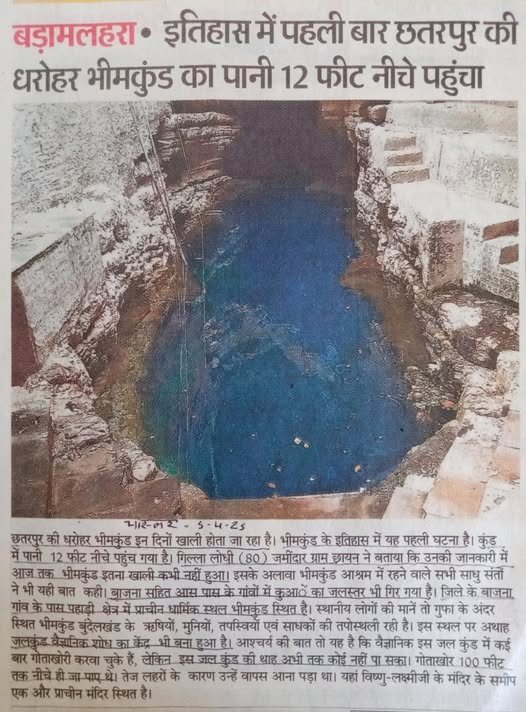
MONSOON
Study Increase in rainfall in Western Ghats A recent study by researchers at the Central University of Kerala (CUK) has revealed a significant increase in monsoon rainfall in the Western Ghats over the past 800 years. By reconstructing Indian monsoon patterns over the last 1,600 years, the study provides key insights into long-term climate variations in the region. The research led by Dr. K. Sandeep, Associate Professor in the Department of Geology, was conducted in collaboration with research scholars KV Reshma and GH Aravinda. The findings were published in Quarternery International. https://www.thehindu.com/news/national/kerala/study-reveals-rainfall-increase-in-western-ghats-over-800-years/article69396157.ece (31March 2025)
FLOOD
Telangana 12 districts prone to flood and drought In at least 12 districts in Telangana, all rural districts, the forest cover is less than 10 per cent. Areas with minimal tree canopy density are often considered ecologically degraded as they fail to meet even the basic requirement, as per the Forest Survey of India report 2023. This was also mentioned in the socio-economic survey that was tabled during the recent Assembly session. Karimnagar district has a minimum of 2.29 per cent forest cover, Jogulamba Gadwal (2.32 per cent); Hanamkonda (3.4); Warangal (3.53); Jangaon (4.44); Suryapet (4.67); Narayanpet (5.43); Sangareddy (6.76); Wanaparthy (7.07); Siddipet (8.78); Nalgonda (9.57) and 9.66 per cent forest cover in Yadadri Bhuvanagiri. These areas are more prone to floods, droughts, and desertification. https://www.deccanchronicle.com/southern-states/telangana/12-ecologically-degraded-districts-in-telangana-are-prone-to-floods-and-droughts-1869936 (31 March 2025)
LANDSLIDES
Arunachal Pradesh NH-113 damaged due to heavy rains The National Highway 113, a critical road connecting the Indo-China and Indo-Myanmar borders, has been cut off at Monpani (KM 78+000) along the Arrowa-Khupa-Hayuliang section in Anjaw district, following continuous heavy rainfall. The downpour has caused severe cracks and structural distress, disrupting connectivity in the region. The district administration has issued an advisory urging commuters to exercise caution, avoid nighttime travel, and report any further deterioration at the affected junction. https://www.indiatodayne.in/arunachal-pradesh/story/arunachal-nh-113-connecting-indo-china-indo-myanmar-borders-cut-off-due-to-heavy-rains-1192661-2025-04-02 (02 April 2025) According to officials, approximately 10 meters of road have been washed away, disrupting a crucial lifeline for both the residents of Anjaw district and security personnel stationed along the Line of Actual Control (LAC). The damage has effectively cut off communication with one of India’s most remote districts near the China border, raising concerns over logistical support and emergency response efforts. The roadblock has also halted army convoys heading toward strategic locations like Walong and Kibithu, key areas along the Indo-China border. Officials indicated that restoration work could take time, as additional land acquisition might be required to ensure a stable and long-term repair of the damaged route. https://www.sentinelassam.com/north-east-india-news/arunachal-news/arunachal-landslide-in-anjaw-district-cuts-off-road-access-disrupts-army-convoys (03 April 2025) A border district, Anjaw is one of the remotest districts of the state, and the Tezu-Hawai road, the lifeline of the district, often gets washed away during the monsoon season due to heavy rainfall. https://arunachaltimes.in/index.php/2025/04/03/anjaw-cut-off/ (03 April 2025)
ENVIRONMENT GOVERNANCE
Report NGOs can’t stop every project: SC These unfortunate observations of the Supreme Court are possibly based on misconceptions that all projects branded renewable have no environmental impacts, which is clearly not true. The key issue is taking informed decisions after credible impact assessments and following due consultative process. https://timesofindia.indiatimes.com/india/ngos-cant-stall-every-project-citing-ecological-concern-supreme-court/articleshow/119888896.cms (02 April 2025)
MoEF tells NGT star-rating for SEIAA ‘given up’ The Union environment ministry has “given up” on a star-rating system it had introduced in January 2022 to evaluate expert environmental bodies in states on their efficiency and promptness in granting prior environmental clearances to industry and infrastructure projects, according to an order by the NGT’s southern zone bench in Chennai. The Centre informed the NGT of its stand as part of the proceedings of a plea which had challenged an office memorandum (OM) rolling out the star-rating system. The ministry’s stand now makes the January 2022 “inoperative”, a bench of judicial member Justice Pushpa Sathyanarayana and expert member Satyagopal Korlapati said in their order, which was passed on March 27 and made public on Thursday (April 03). https://indianexpress.com/article/india/environment-bodies-star-rating-system-centre-ngt-9924323/ (04 April 2025) The star-rating system, introduced on 17 January 2022, was designed to rank State Environment Impact Assessment Authorities (SEIAAs) on a 0-to-7 scale based on their speed and adherence to timelines in approving projects under the 2006 Environment Impact Assessment (EIA) notification.
The ministry had described it as a tool to promote “ease of doing business,” following a November 2021 meeting chaired by then Cabinet Secretary Rajiv Gauba. “This is intended as a mode of recognition and encouragement as well as for prompting improvements where needed,” the original office memorandum (OM) had explained.
The fishermen’s association challenged the OM, stating it was arbitrary and risked diluting environmental scrutiny. Although the Centre claimed last year that the system had never been implemented, it defended the rationale behind it, maintaining that it aligned with the EIA process. https://www.newindianexpress.com/states/tamil-nadu/2025/Apr/05/centre-drops-star-rating-system-for-state-environmental-bodies-after-tn-fishermens-legal-challenge (05 April 2025)
Uttar Pradesh Forest dept makes way for Adani project awaiting green nod Adani’s subsidiary, Mirzapur Thermal Energy (UP) Private Ltd (MTEPL), has gained access to its controversial power plant site through a forest department road – without obtaining the required forest clearance that would precede such arrangements. This was revealed in an affidavit submitted to the National Green Tribunal by the MoEFCC on March 20.
Meanwhile, the 1,600-megawatt power project exists in a regulatory limbo. It awaits both forest and environmental clearances, yet the Uttar Pradesh forest department has permitted the company to use approximately 1.5 to 2 kilometers of forest land – twice charging fees totaling Rs 16,650 for usage. The first payment of Rs 5,000 was made on August 16, 2024, followed by Rs 11,650 on December 30, 2024. This access road falls in the 8.35 hectares of forest land for which the MTEPL awaits MoEFCC approval. The forest ministry affidavit acknowledges that the “status of the forest diversion proposal for 8.3581 ha is pending” with its regional office. https://www.newslaundry.com/2025/04/03/up-forest-dept-makes-way-for-adani-project-awaiting-green-nod (03 April 2025)
Report Forest restoration is booming but biodiversity isn’t Global efforts to restore forests are gathering pace, driven by promises of combating climate change, conserving biodiversity and improving livelihoods. Yet a recent review published in Nature Reviews Biodiversity warns that the biodiversity gains from these initiatives are often overstated — and sometimes absent altogether. Forest restoration is at the heart of Target 2 of the Kunming-Montreal Global Biodiversity Framework, which aims to place 30% of degraded ecosystems under effective restoration by 2030. But the gap between ambition and outcome is wide. https://news.mongabay.com/short-article/2025/03/forest-restoration-is-booming-but-biodiversity-isnt/ (31 March 2025)
Great Nicobar The government’s plan to build a shipping hub on the island is an assault on its natural and cultural integrity. (Ramachandra Guha) https://scroll.in/article/1081027/ramachandra-guha-ignored-by-the-national-media-a-disaster-is-unfolding-in-great-nicobar (06 April 2025)
CLIMATE CHANGE
Report Rising warming threaten economy Most Climate Change impact assessment models often contain a fundamental flaw — they assume a national economy is affected only by weather in that country. Any impacts from weather events elsewhere, such as how flooding in one country affects the food supply to another, are not incorporated into the models. Most prior research predicts that even extreme warming of 4°C will have only mild negative impacts on the global economy by the end of the century — between 7 per cent and 23 per cent.
– But future climate change will increase the risk of weather shocks occurring simultaneously across countries and more persistently over time. This will disrupt the networks producing and delivering goods, compromise trade and limit the extent to which countries can help each other.
– We found if the Earth warms by more than 3°C by the end of the century, the estimated harm to the global economy jumped from an average of 11 per cent (under previous modelling assumptions) to 40 per cent (under our modelling assumptions). This level of damage could devastate livelihoods in large parts of the world. https://www.downtoearth.org.in/economy/global-warming-of-more-than-3c-this-century-may-wipe-40-off-the-worlds-economy-new-analysis-reveals (02 April 2025)
SOUTH ASIA
Report Gorge between China & India on hydropolitics These reports suggest the first of the project’s two dams will be a flow-regulating large – but not “mega” – dam possibly built near a Tibetan town named Menling, more than 250 kilometers upstream from the disputed border. The second, a smaller 20- to 50-meter-high dam, is being constructed near Pe (Chinese: Pei) at the top of the bend, still 200 kilometers from the border. Reports claim that water from the smaller dam will be diverted into tunnels under the Himalayas and run through 12 turbines before entering a small tailings dam and then re-entering the Yarlung Tsangpo near Metok. It would also integrate solar and wind production. This design would take advantage of both the river’s steep descent, and its course around a horseshoe bend, bringing the lower reach within 40 kilometers of its upper reach. This design would save the region’s critical infrastructure. Upstream from Menling, a cascade of dams is being constructed. The region’s largest and Tibet’s fastest-growing city, Nyingtri, a gateway to the plateau serviced by a newly built high-speed railway line and freeway, sits between Menling and Pe. Downstream from Pe is the core area of the Yarlung Tsangbo Grand Canyon National Nature Reserve.
– Fan Xiao, a senior engineer at the Sichuan Bureau of Geological Exploration, suggests that the tunnels will run beneath the Tamnyenla Pass, with turbines on the Shirang River, just below the fortified ridge that marks the Line of Control between India and China. If correct, this means Indian soldiers will overlook the project from their bunkers. Another possibility is a tunnel that runs beneath the Doshong Pass to the Doshong River, near an existing road tunnel.
– Chinese engineers have also used the same tunneling technology to build the smaller Polo Dam on the upper reaches of the transboundary Zayul (Lohit) River, 90 kilometers above the China-India border. Curiously, this dam, completed in 2016, has caused no alarm in India despite its location much closer to the border than the Pe dam. Plans to enlarge the Polo Dam have also gone unnoticed.
– The Indian response to their misreading of the Chinese plans has been to push ahead with their own dam on the river, the 11.2 GW Siang Upper Multipurpose Project (SUMP). SUMP would be India’s biggest power producer, but its position at the base of the gorge means it will require a large reservoir, produce less power, and could potentially be more dangerous.
– One of the main reasons it may be more dangerous is the amount of silt it will collect. The gorge produces nearly half the entire Brahmaputra Basin’s sediment. Heavy sediment makes dams less efficient and more dangerous. The Chinese project’s decision to position the Pe-Metok dams above the gorge prevents them from being inundated with this sediment. SUMP’s position at the gorge’s base will exaggerate the sediment threat. Positioning the dam there is a curious choice, as the Arunachal Pradesh government insisted that one of the Chinese dam’s main drawbacks would be its sediment flow retention.
– This is not the only time it seems Indian officials and the public sphere have underestimated the gorge. As Nilanjan Ghosh, Jayanta Bandyopadhyay, Sayanangshu Modak have explained, the China-India memorandum of understanding on water data-sharing requires China to provide India with readings from gauge stations in the rain shadow on the Tibetan Plateau, rather than through the gorge, where seven times as much rain and snow falls. Commentators then regularly use these distorted figures to suggest the inflows from the river into India are minimal. Recent studies show that the Yarlung Tsangpo contributes 20 percent of the Brahmaputra’s flow, which is by far the most of any of its tributaries, and this may increase to 30 percent due to climate change.
– The epicenter of the strongest terrestrial earthquake on record, the 8.7 magnitude Assam-Tibet earthquake (1950), sits between Pe, the SUMP site, and the Polo Dam.
– The other major issue that is not regularly discussed in either Chinese or Indian media is that these dams are all being built on minority (or Indigenous) lands. They are dotted with sacred sites and have supported Tibetan, Monpa, and Adi people for millennia. Adi people have been protesting dams on their land for years. In an ideal world, both nations would co-develop a transboundary network of smaller, pumped-storage hydropower projects that would do less to disrupt these communities, be more sustainable, and be less likely to cause or fall victim to earthquakes. Such a project would join the long list of the Yarlung Tsangpo Gorge’s “world-beating” attributes. – (By Ruth Gamble and Hongzhang Xu) https://thediplomat.com/2025/04/the-gorge-between-china-and-india-on-hydropolitics/ (02 April 2025)
Medog dam: A river under siege China’s planned $137 billion Medog dam on the Yarlung Tsangpo poses ecological, seismic, and strategic risks for India and particularly the northeastern states, threatening water security, river ecology, and geopolitical stability. https://www.indiatodayne.in/assam/story/a-river-under-siege-1192078-2025-04-01 (1 April 2025)
IWT Future of treaty The first dispute related to the Salal Dam on the Chenab River. In I974, Pakistan objected to the design of the plant which, it alleged, violated the provisions of Annex D of the IWT on the designs of permissible Indian hydroelectric plants (HEPs). The Indus Commission having failed to find a solution, the dispute was discussed by the foreign secretaries. India agreed to design changes sought by Pakistan and an agreement was signed by the foreign ministers in April 1978.
– The second dispute arose in 1985 and relates to what India calls the ‘Tulbul Navigation Project’ and Pakistan calls the Wullar Barrage. The project provides for the construction of a barrage on the Jhelum River at the mouth of the Wular Lake, 30km north of Srinagar in Indian-administered Kashmir. In 1986-7, Pakistan opposed the project on the ground that it would create water storage exceeding the limit allowed by the IWT. India asserted that the barrage was not solely for power generation but also for regulating water release to ensure year-round navigation between Srinagar and two other towns. However, in 1987, India suspended work on the project. Since then, multiple high-level meetings between India and Pakistan have failed to resolve the dispute. Meanwhile, improved road links have reduced the project’s urgency. https://www.thenews.com.pk/print/1297326-future-of-the-indus-waters-treaty-part-ii (3 Apr 2025)
Nepal Climate crisis washing hydro hope In Sept 2024, torrential rains tore through Nepal’s largest power plant, causing over $13m in damage. Six months later, the 456 MW Upper Tamakoshi Hydropower Project – once a symbol of national energy pride – is still not fully operational, while power shortages have returned across much of the country. This is not an isolated failure. As floods, landslides and unpredictable rainfall become more frequent in the Himalayas, experts say Nepal’s clean energy transition – almost entirely dependent on hydropower – is dangerously exposed to the very climate risks it hopes to solve.
– Nepal’s energy strategy depends on a fragile foundation: the mountainous, disaster-prone country generates 90 per cent of its power from run-of-river hydroelectric projects, which rely on consistent rainfall and stable weather. These conditions are now disappearing. In the past three years alone, climate-related disasters, like flash floods and glacial lake bursts, have caused billions in losses to Nepal’s hydropower sector. In some years, droughts have slashed power generation by up to 40 per cent compared to forecasts.
– Even when electricity is produced, a lack of infrastructure means much of it goes to waste. In 2023, about 20 hydro projects lost more than $21m worth of electricity simply because there weren’t enough transmission lines to carry it. During monsoon months, more than 100 MW of electricity is regularly dumped. Today, per capita electricity consumption in Nepal is just 400 kWh, among the lowest in South Asia. The government wants to raise that to 1,500 kWh by 2030 while reducing reliance on firewood and imported fuels. But the scale of transformation required is immense. https://www.independent.co.uk/climate-change/news/nepal-hydropower-energy-transition-floods-b2725991.html (04 April 2025)
Pakistan Artificial glaciers boost water supply Farmers in the Skardu valley, at an altitude of up to 2,600 metres (8,200 feet) in the shadow of the Karakoram mountain range, searched online for help in how to irrigate their apple and apricot orchards. “We discovered artificial glaciers on YouTube,” Ghulam Haider Hashmi told AFP. They watched the videos of Sonam Wangchuk, an environmental activist and engineer in the Indian region of Ladakh, less than 200 kilometres away across a heavily patrolled border, who developed the technique about 10 years ago.
Water is piped from streams into the village, and sprayed into the air during the freezing winter temperatures. The water must be propelled so that it freezes in the air when temperatures drop below zero, creating ice towers,” said Zakir Hussain Zakir, a professor at the University of Baltistan. The ice forms in the shape of cones that resemble Buddhist stupas, and act as a storage system — steadily melting throughout spring when temperatures rise. https://timesofindia.indiatimes.com/world/pakistan/artificial-glaciers-boost-water-supply-in-northern-pakistan/articleshow/120037430.cms (06 April 2025)
THE REST OF THE WORLD
Chile Role of Indigenous women in protecting Biobío A key voice in the fight to protect the Biobío comes from Maben Lebu, a Pehuenche women’s organization advocating for Indigenous rights, environmental justice, and gender equality in decision-making.
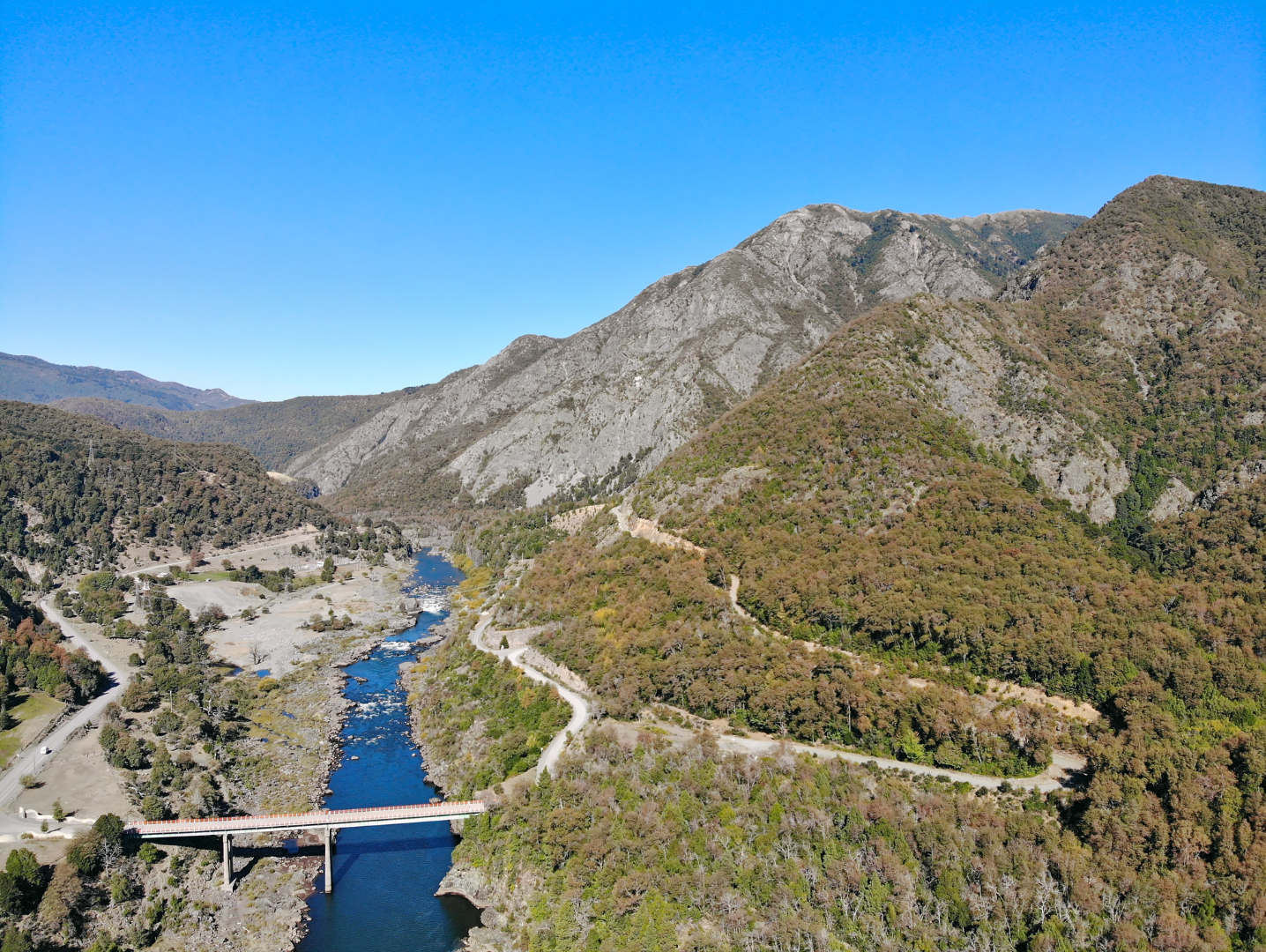
Their activism has been instrumental in resisting large-scale hydropower projects and amplifying the voices of Indigenous women, who are often most affected by environmental destruction. https://www.internationalrivers.org/news/the-biobio-river-a-lifeline-under-threat-and-the-fight-to-protect-it/ (03 April 2025)
SANDRP
Also see: DRP 31 March 2025 & DRP 24 March 2025
Follow us on: www.facebook.com/sandrp.in; https://twitter.com/Indian_Rivers

 SANDRP