
(Feature Image: A drain falling into Ganga in Varanasi. Source: Amar Ujala)
A number of reports given below from this week shows that Ganga River water is not fit for even bathing at a number of locations in Uttarakhand, Uttar Pradesh, Bihar and W Bengal. These are all official statements, mostly given in reports submitted to judicial bodies or statements by the judicial bodies.
This shows how little progress has been achieved by the government, including by the Prime Minister, central and concerned state governments including by schemes like Namami Gange and scheme of National Mission for Clean Ganga and expenditure of tens of thousands of crores of rupees. This is in spite of the promises given in the past by the Prime Minister and Union Ministers including Nitin Gadkari to clean the river by deadlines that have come and gone.
The worst part is that if we look at the trajectory of various work being done in this regard, we see no hope of any improvement in the foreseeable future unless there is major change in the way this problem is dealt with. But how will such a major change happen?
GANGA Bihar NGT warns of calling CS if complete report not submitted within 6 weeks A bench of NGT Chairperson Justice Prakash Shrivastava, while noting Bihar’s report dated February 17 this year, said 20 out of the state’s 38 districts had submitted their reports with incomplete and partially wrong information.
-In an order passed on February 19, the tribunal said, “We make it clear that if the complete requisite information is not furnished before the tribunal, we may be required to direct personal appearance of the Chief Secretary.” The matter has been posted on May 1 for considering the state’s report.
-The NGT was hearing a matter related to prevention and control of pollution in the Ganga in Bihar. The green tribunal had last year taken up the issue of pollution of the Ganga and its tributaries in five states. https://indianexpress.com/article/india/ganga-pollution-bihar-ngt-warns-calling-chief-secy-complete-report-not-submitted-6-weeks-9186155/ (28 Feb. 2024)
River water unsafe even for bathing: Govt report Almost all major rivers passing through Bihar are unsafe even for bathing, revealed the annual survey report on health of rivers recently tabled by the State Pollution Control Board (SPCB) in the state legislature. The report, based on sample checks at 98 points of the rivers, including Ganga, Sone, Kosi, Bagmati, etc, in 27 districts showed excessive presence of faecal coliform bacteria in water. The World Health Organisation (WHO) norms stipulate that river water with more than 1000MPN/100ml faecal coliform bacteria should not be used even for irrigating crops, as uncooked agricultural produce could make people vulnerable to various kinds of diseases. According to the BSPCB report, based on sample survey conducted until last December, samples of Ganga water carried 92,000 MPN/100ml faecal coliform bacteria (FCB) across its stretch from Buxar to Bhagalpur, barring Lakhisarai, where FCB count was recorded at 28,000. Likewise, Sone river water contained 35,000 FCB at Rohtas and 3,500 FCB at Arwal, while Gandak water had presence of 92,000 FCB at Saran and Vaishali, 54,000 at Muzaffarpur and 13,000 at Gopalganj. https://www.hindustantimes.com/india-news/ganga-water-unsafe-even-for-bathing-says-bihar-govt-report-on-river-pollution-101708956775437.html (26 Feb. 2024)
Uttarakhand Officials face criminal charges for sewage negligence After reviewing status reports of STP across the state, the NGT found that 3 districts– US Nagar, Champawat, and Bageshwar have no operational STPs. In the remaining ten districts, less than half sewage generated was treated before being released into the river. According to the report US Nagar is the third largest (117 MLD) sewage-producing district in the state after Dehradun and Haridwar. “The estimated sewage generation in all 13 districts is around 700 MLD and not even 50% of this is treated appropriately. The influx of tourists and pilgrims leads to an increase in sewage generation,” NGT said.
-NGT criticised the lack of diligence in setting up STPs and rebuked UKPCB for its inaction. It said, “We are surprised to see that despite the discharge of untreated sewage into the rivers in Uttarakhand, no preventive, punitive and remedial action has been taken. The state pollution control board has remained a silent spectator, forgetting its statutory responsibility. This situation is alarming and needs to be deprecated.”
-The UKPCB has been instructed to recover environmental compensation for past violations and to impose penalties for future violations. It must submit a compliance report within two months as per the NGT’s directives. https://timesofindia.indiatimes.com/city/dehradun/officials-face-criminal-charges-for-ganga-sewage-negligence/articleshow/108056710.cms (29 Feb. 2024)
NGT fines govt for releasing untreated sewage into the Ganga and tributaries. https://www.livehindustan.com/uttarakhand/story-ngt-condemns-inaction-of-uttarakhand-pollution-control-board-on-ganga-pollution-9404866.html (26 Feb. 2024)
West Bengal Entire river stretch unfit for bathing: NGT A bench of NGT Chairperson Justice Prakash Shrivastava noted that reports were filed by the DM of North 24 Parganas, Murshidabad, Nadia, Malda, Hooghly, Purba Burdhaman, Howrah, Purba Medinipur and South 24 Parganas. “On perusal of these reports, we, in general, find that no adequate facilities for treatment of sewage generated per day have been set up and that even the timeline for achieving the target of 100 per cent treatment of sewage has not been disclosed,” the bench, also comprising judicial member Sudhir Agarwal and expert members A Senthil Vel and Afroz Ahmad, said.
-In an order passed on February 21, the bench said, it was “surprising ” that not even a single STP was set up in some districts like Purba Medinipur. “The condition which has been reflected in these reports is far from satisfactory and shows that 258.67 MLD of untreated sewage is directly flowing in river Ganga in the state of West Bengal,” it said.
-The green panel directed the DMs of nine districts, through where the river’s mainstream flowed, to file affidavits setting a deadline for achieving the target of 100 per cent treatment of sewage generated every day. The DMs also have to disclose the manner and extent of utilisation of funds received from the NMCG, besides steps taken for demarcation of floodplains in their districts, the tribunal said.
-The tribunal directed the NMCG to carry out a performance audit of each of the districts on generation and treatment of waste and the extent of pollution each was causing in the river. “We do not find any progress in the reduction of discharge of pollutants to River Ganga in any of the districts. Therefore, if in the next report, sufficient progress is not shown then the tribunal may not have any option but to impose Environmental Compensation (EC),” the tribunal said It ordered the DMs concerned and the NMCG to file fresh reports within eight weeks and posted the matter for further proceedings on May 2. https://www.telegraphindia.com/west-bengal/entire-stretch-of-river-ganga-in-west-bengal-unfit-for-bathing-national-green-tribunal/cid/2003611 (28 Feb. 2024)
Varanasi 128 MLD wastewater flowing into Ganga: NGT The NGT bench noted a report by the VMC, according to which around 28 MLD of untreated sewage is flowing into the Ganga. “In the report, it also has been disclosed that within the Varanasi Municipal Corporation (VMC) and the expanded area, 522 MLD sewage is generated and there are seven STPs, the designed capacity of which comes to a total of about 422 MLD,” the bench, also comprising Expert Members A Senthil Vel and Afroz Ahmad, said. “Hence, even if we presume that the STPs are functioning to their designed capacity, there is a gap of about 100 MLD,” the bench added in an order passed last month. “Hence, let the fresh action taken report be filed by the UPPCB at least one week before the next date of hearing (on April 4),” the tribunal said. https://www.business-standard.com/india-news/128-mld-domestic-industrial-wastewater-flowing-into-ganga-in-varanasi-ngt-124030400942_1.html (04 March 2024)
NGT orders Govt to tackle flood plain zones NGT has directed the government to provide a report detailing the measures undertaken for the demarcation of floodplain zones along the Varuna and Assi rivers, both tributaries of the Ganga, in Varanasi district. The green panel was hearing a petition alleging that the local civic body failed to delineate the floodplain zones of these rivers, leading to continuous encroachments.
The plea also accused unauthorized discharge of sewage into the rivers. A bench led by NGT Chairperson Justice Prakash Shrivastava took note of a report from the VMC indicating that 15 drains were releasing partially-treated sewage into the Varuna, adversely affecting its water quality. https://sundayguardianlive.com/legally-speaking/ngt-orders-up-govt-to-tackle-varanasi-flood-plain-zones (03 March 2024)
-The bench also noted a report by the VMC was “absolutely silent” regarding the steps taken for the demarcation of the Varuna and the Assi’s floodplains in Varanasi district, it added. The NGT also directed the UPPCB to file a new report disclosing the action taken against the “defaulting authorities”. The matter has been posted to April 26 for further proceedings. https://www.business-standard.com/india-news/ngt-asks-up-to-disclose-demarcation-of-ganga-s-floodplain-zones-in-varanasi-124030200154_1.html (02 March 2024)
वरुणा–असि नदी सफाई: दो साल में 21 मीटिंग सरकारी फाइलों और कागजात तैयार करने का नायाब उदाहरण देखना हो तो असि और वरुणा नदी से अतिक्रमण हटाने के लिए गठित निष्पादन समिति के मीटिंग मिनिट्स से बेहतर शायद ही कुछ हो। फरवरी 2022 से जनवरी 2024 के बीच 21 बैठकों के मिनट्स के कंटेंट एक जैसे ही हैं। चार फॉर्मेट में बने मीटिंग के मिनट्स में दिखाए गए ज्यादातर एक्शन प्लान भी कॉपी पेस्ट ही है। यही कारण है कि 23 नवंबर 2021 को एनजीटी के आदेश पर गठित निष्पादन समिति के 21 और निगरानी समिति की छह बैठकों के बाद भी निर्णय धरातल पर नहीं उतर पाए। https://www.amarujala.com/uttar-pradesh/varanasi/assi-and-varuna-rivers-encroachment-remove-not-result-same-point-in-meeting-2024-03-01 (01 March 2024)
Uttar Pradesh 29 STPs not complying with standards Of the 111 operational STPs, 29 were not complying with the effluent discharge standards fixed by the MoEF, shows a report available with the NMCG, the apex body that implements the government’s ambitious Namami Gange scheme. The monthly progress report for Uttar Pradesh for the period September-October 2022 shows that these 29 non-complying STPs accounted for 15 per cent (532.18 MLD) of the total sewage treatment capacity (3,663.4 MLD) in the state and were located along the main stem of river Ganga and its tributaries. This is significant in view of the gap in sewage treatment capacity in the state. https://indianexpress.com/article/india/clean-ganga-29-sewage-treatment-plants-in-up-8376982/ (13 Jan. 2023)
HYDRO POWER PROJECTS
Report Hydel push can’t ignore Teesta III failures In part 2 of this series, M Rajshekhar explores how India is pushing for dams with a broken system, one that creates winners and losers as seen in the aftermath of Teesta III. Eighteen years after the country liberalised power generation, it’s useful to study what hydro-criminality has produced. Its primary output, as this report will argue, is a skewed distribution of risks and rewards. Teesta III illustrates that point to perfection. There are lessons to be learnt from its collapse. https://carboncopy.info/indias-new-hydel-push-cant-turn-blind-eye-to-teesta-iii-failures/ (1 Mar 2024)
Arunachal Pradesh Subansiri dam will wash away elephants crossing downstream “The hydro peaking scenarios that were provided by NHPC to WII indicate a rise in water level by around 2 meters with a concomitant increase in the water velocity in and around the demarcated corridor area.

The potential threats of this indicated hydro-peaking scenario to elephants are twofold: (i) Despite being good swimmers, elephants, particularly the calves and young elephants are vulnerable to flash floods that could sweep elephants away, resulting in separation and even drowning. (ii) recurrent incidences of elephants being swept during river crossing could trigger behavioural avoidance of the vulnerable stretches resulting in functional loss of the corridor.” https://www.eastmojo.com/assam/2024/02/25/subansiri-dam-will-wash-away-elephants-crossing-downstream/ (25 Feb. 2024)
Sikkim Why was Teesta 3 dam sold to Greenko? BJP legislator and party president Dilli Ram Thapa demanded transparency from the state government, questioning why the project was sold without public consent and urging for a “white paper before code of conduct” to clarify the circumstances. https://www.eastmojo.com/sikkim/2024/03/03/why-was-teesta-stage-3-dam-sold-to-greenko-sikkim-cm-answers/ (3 March 2024)
Himachal Pradesh Shanan HEP lease ends On March 1 2024 Union Power Ministry has issued an order to maintain status quo about ownership and operation of the Shanan hydropower project in Mandi district of Himachal Pradesh. The 99 year lease from HP to Punjab was to end on March 2 2024.. https://www.tribuneindia.com/news/punjab/shanan-power-project-to-stay-with-punjab-for-now-lease-ends-today-596272 (2 March 2024)
Punjab govt moves SC The Punjab government on Friday (March 01) moved the Supreme Court seeking an urgent hearing of its suit against the Himachal Pradesh government’s attempt to take control of Shanan Hydropower Project from the Punjab government on the expiry of a 99-year lease that expires this month. A Bench led by Chief Justice of India DY Chandrachud agreed to take up the matter on Monday (March 04) after advocate Shadan Farasat mentioned the Punjab government’s plea for urgent listing. https://www.tribuneindia.com/news/punjab/punjab-moves-supreme-court-against-himachal-pradeshs-attempt-to-take-control-of-shanan-hydropower-project-596130 (1 March 2024)
Avalanche obstructs Chenab flow An avalanche hit a village Lahaul and Spiti district in the wee hours of Sunday (March 03), obstructing the flow of Chenab and triggering an alert in the adjoining area, officials said. The flow of Chenab river was obstructed following an avalanche at Dara Waterfall near Jasrat village in Lahaul and Spiti. The district, located at a high altitude, reported heavy snowfall in the past 24 hours. Residents of adjoining villages of Jobrang, Rapi, Jasrath, Tarand and Tharot have been advised to stay cautious and inform the nearest police post in case of emergency, said SP Lahaul and Spiti Mayank Chaudhary.
– Incidents of multiple avalanches occurred in Lahaul and Spiti at Seli Nallah in Rashel village, Faldi Nallah in Jobrang, Cho Veer Mod in Lohni and Tatha Nallah near Udaipur village. An avalanche was also reported near Karcham helipad in Sangla in Kinnaur district, the officials said.
– Meanwhile, heavy snow and rainfall in Himachal Pradesh in the past two days have triggered over half a dozen avalanches and landslides, leading to closure of over 500 roads, including five national highways, they said. https://www.tribuneindia.com/news/himachal/avalanche-in-himachal-pradeshs-lahaul-and-spiti-obstructs-chenab-flow-500-roads-closed-as-snow-rain-lash-state-596836 (03 March 2024)
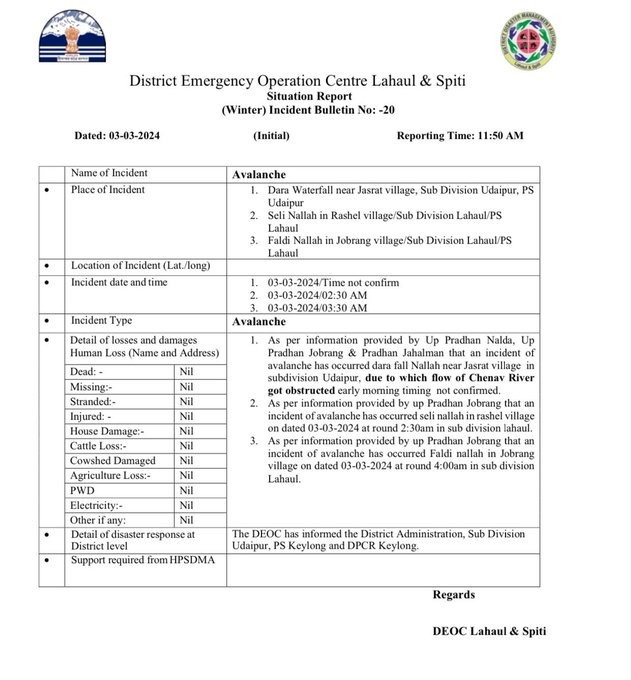
The flow of the Chenab was obstructed following twin avalanches in the tribal Lahaul-Spiti district of Himachal Pradesh today. The first avalanche occurred between Jasrath and Jobrang villages of Lahaul valley, while the second happened between Triloknath and Shenur. The district administration has sounded the alert for those living downstream beyond Jasrath village in the district. Residents of Jobrang, Raape, Tadang, Thirot and others had been advised to exercise caution and inform the nearest police post in case of an emergency, said SP Mayank Chaudhary. https://www.tribuneindia.com/news/himachal/twin-avalanches-block-chenab-flow-in-lahaul-spiti-downstream-areas-on-alert-596933 (04 March 2024) लाहौल-स्पीति के इतिहासकार मोहन लाल ने बताया कि चिनाब नदी में हिमस्खलन गिरना नई बात नहीं है लेकिन घाटी में हो रहे भारी हिमपात से चारों और हिमस्खलन गिरने की आशंका बनी हुई है जिससे लोगों में भी खौफ का माहौल है। इससे पहले मार्च 1996 में भी चिनाब नदी का पानी रुका था। तब नदी में जमा हुए हिमस्खलन की बर्फ तेजी से पिघल गई थी व बनी झीलों का पानी तिंदी क्षेत्र को बहा ले गया था। https://himachal.punjabkesari.in/himachal-pradesh/news/avalanche-disrupts-flow-of-chandrabhaga-river-in-lahaul-spiti-1949001 (03 March 2024) लाहौल घाटी में भारी बर्फबारी के दौरान थिरोट-कमरिंग के बीच वामतट की पहाड़ी से डिमरू नाले से भारी हिमस्खलन हुआ और बड़ी मात्रा में बर्फ चिनाब नदी में जा गिरी। इससे चिनाब नदी की धारा का बहाव करीब चार घंटे रुका रहा। https://www.amarujala.com/shimla/avalanche-flow-of-chenab-river-stopped-for-four-hours-in-lahul-2023-01-25 (25 Jan. 2023)
NHPC Capex in hydro sector RP Goyal, Director (Finance), NHPC, says “as of now, installed capacity is 7,000 MW plus and we are working on 9,000 plus megawatt hydro projects and around 1,300 megawatt in solar. So, by the end of FY27, except Dibang, all the ongoing projects will be commissioned and our capacity will be more than doubled by end of FY27.” https://economictimes.indiatimes.com/markets/expert-view/80-of-total-capex-will-be-in-hydro-sector-15-20-in-solar-and-hybrid-green-energy-sector-rp-goyal-nhpc/articleshow/108011254.cms (26 Feb. 2024)
DAMS
Madhya Pradesh बसनिया बांध का शिलान्यास करने से आदिवासी आक्रोशित; विरोध में प्रभावितों की महापंचायत 5 मार्च को
प्रधानमंत्री द्वारा विडियो कान्फ्रेंसिंग के माध्यम से विकसित भारत, विकसित मध्यप्रदेश के अन्तर्गत 19961 करोड़ रुपये से अधिक की कई विकास परियोजनाओं का आधारशिला रखेंगे। जिसमें नर्मदा नदी पर प्रस्तावित 5500 करोड़ रुपये की बसनिया, राघवपुर और अपर नर्मदा बांध सिंचाई परियोजना भी शामिल है। ज्ञात हो कि मंडला और डिंडोरी जिला संविधान की पांचवी अनुसूची (आदिवासी क्षेत्र के लिए विशेष व्यवस्था) के तहत वर्गीकृत है, जहां पेसा कानून एवं नियम प्रभावशील है।परियोजना प्रभावित गांव की सभी ग्राम सभाओं ने इस परियोजना के विरोध में प्रस्ताव पारित किया है। इसके बाद भी परियोजना का उद्घाटन करना जो आदिवासियों को पेसा नियम के तहत प्राप्त संवैधानिक अधिकारों का हनन है।
इस शिलान्यास के विरोध में आज प्रभावित गांव ओढारी में सैकड़ों महिला एवं पुरूषों ने नर्मदा नदी में संकल्प लिया कि हम अपनी जल-जंगल और अपनी धरती दाई को डूबने नहीं देंगे।”कोई नहीं हटेगा, बांध नहीं बनेगा” का उपस्थित लोगों ने उद्दघोष किया।बसनिया (ओढारी) बांध विरोधी संघर्ष समिति के अध्यक्ष बजारी लाल सर्वटे ने कहा कि जितनी जमीन डूब में आ रहा है, उससे मात्र 2437 हेक्टेयर अधिक में सिंचाई होगा।जबकि सच्चाई यह है कि जितने रकबा में सिंचाई का दावा किया जाता है, उससे औसत 60 प्रतिशत रकबा सिंचित हो पाता है।संगठन के उपाध्यक्ष तितरा मरावी ने बताया कि प्रदेश सरकार के हठधर्मिता के खिलाफ आगामी 5 मार्च को गांव ओढारी में बसनिया बांध प्रभावितों का विशाल महापंचायत आयोजित किया जाएगा।आज के कार्यक्रम में चिमका टोला, दरगढ, बरझङ, दुपट्टा, धनगांव, ओढारी, बिलग्रा आदि गांव के राजेन्द्र कुलस्ते जीवन लाल सोयाम फूलचद पट्टा सुखलाल आर्मो घोपत पंद्रो महेश परस्ते संतोष यादव गुलबंता बाई तेकाम ओमती आर्मो जननी बाई मरावी की विशेष उपस्थिति थी। बजारी लाल सर्वटे (9300509691) तितरा मरावी (9111411084)
Kaleshwaram Project Medigadda Not Safe: Central Officer Current Affairs Sriram Vedire, adviser to the Union jal shakti minister and chairman of the task force on interlinking of rivers, told a press conference that storing any water at any of the Kaleshwaram barrages would be a recipe for disaster. Vedire also said the CWC never gave permissions for Kaleshwaram Lift Irrigation Scheme (KLIS), something the BRS claims it received.
– On the demand to store water at Medigadda and pump it to upstream Annaram barrage, Vedire said before doing anything of this sort, geotechnical studies were a must to understand exactly what the barrages were built on. “Have they been built on sand, rock, limestone, clay or something else?” he said. Part of Medigadda was built like a floating structure on sand. Where they hit a rock, they built those sections like rigid structures with piles driven into the rock. “This has resulted in different strength characters across the barrage, making it weak in some places,” he said.
– He said: CWC never approved KLIS designs. When a state has its own Central Design Organisation, as Telangana does, CWC does not look into designs. CWC did not give investment clearance as BRS government never answered its queries. Contrary to BRS’ claims, CWC never approved proposal to lift additional 1 tmc ft water from KLIS. Godavari River Management Board also notified that the lifting of third tmc ft was not approved. CWC found BRS government’s justifications unsatisfactory, `30,000 crore additional cost not justified. Aware that not providing information that NDSA sought is punishable, BRS government did not provide all records on Medigadda. https://www.deccanchronicle.com/nation/current-affairs/storage-at-barrages-will-be-disastrous-jal-shakti-ministry-adviser-883796 (29 Feb. 2024)
MoJS adviser faults BRS govt. for Medigadda failure Lack of proper geo-physical investigation of the sub-surface strata of the river bed (Godavari) where Medigadda and two other barrages of Kaleshwarm project were constructed, before taking up execution of the project component, had led to the present position of sinking of some piers of the barrage and seepage and leakage problems at Annaram and Sundilla barrages, Shriram Vedike, Advisor to Union Jal Shakti Minister said addressing a press conference here on Feb 29 2024. He said the Central Water Commission (CWC) had never approved the designs and investment cost of Kaleshwaram. The issue was mentioned clearly in the technical advisory committee (TAC) clearance for the project.
– He said the funding agencies such as REC and PFC had stopped ₹28,000 crore loan for the third tmc ft lifting component of Kaleshwaram project as it was unapproved. It was included in the unapproved projects list in the gazette notification of Godavari River Management Board as it was meant to lift 195 tmc ft water over 65 days against in 96 days at 2 tmc ft a day. However, as per CWC report, availability water was for 120 days. Mr. Sriram stated that the MoJS had approved a committee led by former Chairman of CWC J. Chandrashekhar Iyer to take up geo-physical and technical investigation into the Medigadda damage in a month’s time with necessary cooperation from the State Government. The panel would soon take up the task. https://www.thehindu.com/news/national/telangana/mojs-adviser-faults-brs-govt-for-medigadda-failure/article67900797.ece (29 Feb. 2024)
NDSA panel set up to probe piers of Medigadda The National Dam Safety Authority (NDSA) has constituted a committee led by former chairman of Godavari River Management Board (GRMB) Chandrasekhar Iyer to investigate and suggest measures on sinking of piers of Medigadda barrage. The committee is expected to visit the barrage next week and start investigations. https://timesofindia.indiatimes.com/city/hyderabad/panel-set-up-to-probe-piers-of-medigadda-barrage/articleshow/108151969.cms (02 March 2024)
The NDSA has constituted a six-member committee for inspection and study of the designs and construction of Medigadda, Annaram and Sundilla barrages of the KLIS. The committee, headed by J Chandrashekar Iyer, former chairman of Central Water Commission, will submit its report to the national dam safety authority in four months. The committee has U.C. Vidyarthi, scientist, Central Soil and Materials Research Station Pune), R Patil, scientist, Central water and Power Research Station, Shiv Kumar Sharma (CWC), Rahul Kumar Singh, Director (NDSA) and Amitabh Meena, Director, NDSA as the official members. https://telanganatoday.com/ndsa-constitutes-committee-for-kaleshwaram-to-submit-report-in-four-months (03 March 2024)
The NDSA team will arrive in Telangana for its inspection on March 6 2024, irrigation minister N. Uttam Kumar Reddy said. The minister was in Delhi to meet with central officials to discuss river water and irrigation issues related to Telangana. https://www.deccanchronicle.com/nation/current-affairs/ndsa-team-to-visit-telangana-to-examine-barrages-884041 (03 March 2024)
Barrage burden: No repairs yet, KLIS future hangs fire M Shyam Prasad Reddy, president of Telangana Retired Engineers Association, said Medigadda and other barrages were constructed with ‘secant pile’ technology. But before adopting the technology, the govt should have checked whether any geographical studies, foundation studies, etc., were done. But in this case, no such attempts were made, he said.
– He said without conducting a thorough investigation for the reasons behind the sinking of piers, one cannot come to any conclusions on repairs. “The govt, without wasting time, should appoint a committee with experts, who have experience in dam safety, designing, construction and other relevant fields to know the reasons for the damages to the barrages. The committee should suggest permanent and short-term measures to carry out the repairs immediately,” Shyam Prasad said. Going by vigilance and CAG reports, officials noticed damages in Medigadda in 2019. The state was expected to have taken up maintenance works after the first flood, but repairs did not happen. https://timesofindia.indiatimes.com/city/hyderabad/barrage-burden-no-repairs-yet-klis-future-hangs-fire/articleshow/108027636.cms (27 Feb. 2024)
KTR’s Medigadda Solution of Cofferdam Dangerous, Reckless: Expert Rama Rao seems to have taken over the mantle of a dam designer, suggesting a “cofferdam solution”, which experts warned against. In fact, the solution is fairly simple, claimed Rama Rao at a presser on Tuesday (Feb. 27), declaring that all that was required was to build a cofferdam to impound water, and then lift this water from Medigadda to the upstream Annaram barrage, and from there pump it to the rest of the project’s systems. Engineering experts have called this proposal “reckless, and dangerous” and one that could result in the barrages getting destroyed further.
– “The reality is Annaram is in a worse shape than Medigadda with Annaram’s downstream aprons and flood dissipation blocks destroyed. And the recent leak was a really bad one and now that there is no water there, it appears ok. But the fact is if water is stored there, then it will be a case of plugging one leak only to find another one springing up, threatening the whole structure,” an expert with decades of engineering experience in the irrigation department said. Incidentally, the designs of all three Kaleshwaram barrages — Medigadda, Annaram, and Sundilla — are the same.
– “Irrespective of who says what, no storage of water must be allowed at any cost at any of these barrages. This will spell their doom as stored water pressure will lead to more scouring hitting the downstream piles that will lead to cavities under the foundations. The only thing that should be done is to leave the gates open, let the water flow through as it comes,” an engineer who was part of the construction of the Medigadda barrage said. “A complete redesign of the downstream structures is required and when this is done, the upstream water pressures and behaviour must be taken into account which means work may be required on the upstream sides of the barrages too. Only when this is done can the barrages get some safety,” the engineer said. https://www.deccanchronicle.com/nation/ktrs-medigadda-solution-of-cofferdam-dangerous-reckless-expert-883710 (28 Feb. 2024)
Medigadda Collapse: KCR’s Hands-On Decisions Likely Cause Part of the answer to the question as to why the Medigadda barrage of the Kaleshwaram project began sinking probably had its roots in a decision taken by the then Chief Minister and irrigation minister K. Chandrashekar Rao in 2019. This decision of his could also hold the key to the reason for the rush to complete the project, which may have eventually contributed to the Medigadda disaster. Rao, who had on multiple occasions claimed that he designed the Kaleshwaram project, was probably not making up this claim, as indicated by documentary evidence on inspection notes of his visit to Kaleshwaram project works on January 1 and 2, 2019. The document – Lr. No. CMO/Irr/KP/01/2019 dated 01.01.2019 – says “during the inspection and reviews, the following instructions were given by the Hon’ble Chief Minister.”
– Among these ‘instructions’ is this one: 2.4 In order to increase the pace, working agency (L&T) requested to permit to put 10 x 10 (feet) concrete blocks downstream of barrage (Medigadda) for energy dissipation instead of 1.5 x 1.5 (feet) blocks for early completion of barrage works. Working agency has informed that these kind of bigger concrete blocks are being used in Polavaram project in AP State. Engineer-in-Chief (irrigation) is instructed to examine the request of the Working Agency, and take a decision as per technical and operational feasibility.
– What happened next: The ‘working agency’, L&T Construction in this case, used 10X10 feet blocks with a surface area of 100 sq. ft as flood dissipation blocks on the downstream side of the Medigadda barrage, against the originally designed 1.5 x 1.5 feet blocks with a surface area of 2.25 sq.ft. When floods came to the Godavari river on which the barrage was built in 2019, not many months after Medigadda was inaugurated by Chandrashekar Rao in June 2019, and then a much greater flood in 2002, the larger than originally designed for concrete blocks were dislodged and carried away by the flood water. “The thing is the large surface area of the 10 x 10 blocks meant that they acted like sails and the water just picked them up and carried them away downstream. Had the blocks been of the originally planned size, instead of being carried away, would have interlocked and stayed put, or in a worst-case scenario as happened at Annaram, gotten dislodged,” sources well-versed with such technicalities told Deccan Chronicle.
– The Consequence: With the washing away of these oversized flood ‘dissipation’ blocks, the pressure of water stored at Medigadda resulted in formation of pipes under the foundations washing away the sand bed on which the foundations stood, eventually leading to collapse three piers of Block 7 of the barrage, and also put a question mark over the safety of the rest of the barrage structure.
– Why L&T needed to finish work quickly (from the same document): 2.1 The Chairman of L&T assured that Medigadda Barrage works including bridge over barrage, approaches on both sides of bridge, excavation of diversion channel simultaneously in all respects shall be completed latest by 15 of April, 2019. The Agency will take necessary steps to augment men and machinery.
– 2.2 Working agency is instructed to increase concrete form works, boom placers to pour 10,000 cubic metres per day at Medigadda barrage to complete barrage works within the target date of completion.
– Why construction was asked to be speeded up: Apparent plans to inaugurate the barrage in June by Chandrashekar Rao. It was inaugurated on June 21, 2019 by the then Chief Minister who also held the irrigation portfolio in his second term in office. https://www.deccanchronicle.com/news/current-affairs/medigadda-collapse-kcrs-hands-on-decisions-likely-cause-883986 (2 March 2024)
L&T got Medigadda certificate based on non-existent record -Vigilance and Enforcement (V&E) wing have raised serious questions on the legality of the completion certificate issued to L&T which built the now-stricken Medigadda barrage of the Kaleshwaram project. https://www.deccanchronicle.com/nation/lt-got-medigadda-certificate-based-on-non-existent-record-883991 (2 March 2024)
I wasn’t Irrigation Minister: KTR Soon after filling of water in Medigadda and two upstream barrages of Kaleshwaram Project of. Telangana, irrigation department engineers started noticing problems including seepage from under the foundations of the barrages, and slow development of cracks in the barrage structures, and these were reported to their higher ups in the chain of command. The then chief minister K. Chandrashekar Rao held the irrigation portfolio for his entire second term in office, when the problems at the barrages began getting reported. https://www.deccanchronicle.com/nation/politics/i-wasnt-irrigation-minister-ktr-on-medigadda-problems-883559 (27 Feb. 2024)
INTERLINKING OF RIVERS
Some details of PKC link MOU:

IRRIGATION
Maharashtra Parbhani villagers raise pitch for water from Jayakwadi dam As the water release from Jayakwadi dam is on for two barrages in the downstream areas benefiting a group of villages in Chhatrapati Sambhajinagar and two other districts, villages from Parbhani district on Wednesday started an agitation demanding similar discharge to tide over water scarcity in their areas. They said GMIDC authorities must release water for Dhalegaon and Tarungavhan and a few other barrages at the earliest. https://timesofindia.indiatimes.com/city/aurangabad/parbhani-villagers-demand-water-release-from-jayakwadi-dam/articleshow/107899408.cms (22 Feb 2024)
URBAN RIVERS
Sabarmati; Ahmadabad AMC polluting river The state government has issued notices to 61 entities in and around Ahmedabad city for releasing polluted water into the Sabarmati river in 2022 and 2023, Minister of State for Forest and Environment Mukesh Patel informed the Assembly Tuesday (Feb. 27) in reply to a starred question raised by Congress MLA Shailesh Parmar. Ironically, the Ahmedabad Municipal Corporation is among the 61 entities served notice, the minister added. https://indianexpress.com/article/cities/ahmedabad/amc-sabarmati-pollution-gujarat-9184750/ (28 Feb. 2024)
Pavana; Pune River enters in most polluted category The Pavana River, a crucial water source for Pimpri-Chinchwad, has hit alarming pollution levels, now categorized as ‘priority 1’ by the CPCB. This means it’s among the most polluted rivers, demanding immediate action from authorities. Previously, it held a less polluted ‘priority 2’ status. https://www.mypunepulse.com/pavana-river-enters-most-polluted-category-urgent-action-needed/ (25 Feb. 2024)
Gomti; Lucknow कुकरैल नदी के करोड़पति कब्जेदारों पर चला बुलडोजर हाईकोर्ट का आदेश मिलते ही एलडीए ने 23 पोकलैंड और जेसीबी की मदद से 24 अवैध शोरूम और दुकानों को ध्वस्त कर दिया। एलडीए ने सबसे पहले लखनऊ व्यापार मंडल के महामंत्री सोहेल हैदर अल्वी के बेसमेंट सहित तीन मंजिला ताज फर्नीचर शोरूम को गिराना शुरू किया। कुछ ही देर में उसके बगल स्थित सम्राट फर्नीचर शोरूम भी ध्वस्तीकरण की जद में आ गया। https://www.jagran.com/uttar-pradesh/lucknow-city-bulldozer-action-on-millionaire-encroachers-of-kukrail-river-in-lucknow-six-teams-took-action-23663007.html (27 Feb. 2024)
RIVERS
Study Global prevalence of non-perennial rivers & streams Abstract: -Here we predict that water ceases to flow for at least one day per year along 51–60 per cent of the world’s rivers by length, demonstrating that non-perennial rivers and streams are the rule rather than the exception on Earth. Leveraging global information on the hydrology, climate, geology and surrounding land cover of the Earth’s river network, we show that non-perennial rivers occur within all climates and biomes, and on every continent.
Our findings challenge the assumptions underpinning foundational river concepts across scientific disciplines9. To understand and adequately manage the world’s flowing waters, their biodiversity and functional integrity, a paradigm shift is needed towards a new conceptual model of rivers that includes flow intermittence. By mapping the distribution of non-perennial rivers and streams, we provide a stepping-stone towards addressing this grand challenge in freshwater science. https://www.nature.com/articles/s41586-021-03565-5 (16 June 2021)
Report Cleaning of 6 major river basins on cards: Shekhawat -Following the success of the Ganga River Basin Management Plan framed by a consortium of seven IITs led by IIT Kanpur, the government on Wednesday (Feb. 28) signed agreements with different technical institutes for preparing the outlines of river basin management plans for the Narmada, Godavari, Krishna, Cauvery, Periyar, and the Mahanadi. The agreements were signed between the institutes and the National River Conservation Directorate (NRCD) under the Ministry of Jal Shakti. The Mahanadi River Basin Management Plan will be undertaken by IIT Raipur and IIT Rourkela, Narmada by IIT Indore and IIT Gandhinagar, Godavari by IIT Hyderabad and NEERI Nagpur, Cauvery by IISc Bengaluru and NIT Trichy, and the Periyar River Basin Management Plan by IIT Palakkad and NIT Calicut. https://www.deccanherald.com/india/cleaning-of-six-major-river-basins-on-cards-shekhawat-2914550 (28 Feb. 2024)
Mountains of plastic achoking Himalayan States Microplastic deposition and accumulation has been found in the Himalayan mountains, rivers, lakes and streams. These microplastics can be trapped in glaciers for a long time and released into rivers during snow melting. The Indian Himalayan Region is a critical source of water in the subcontinent, feeding a number of major rivers of India that include the Indus, Ganges and Brahmaputra river systems. Unscientific plastic disposal is causing soil and water pollution in the Indian Himalayan Region and impacting its biodiversity, which is having an adverse impact on the fresh water sources that communities downstream depend on. https://www.thehindu.com/opinion/lead/mountains-of-plastic-are-choking-the-himalayan-states/article67910881.ece (04 March 2024)
BRAHMAPUTRA Children of the Big River Some of the earliest human inhabitants of the Brahmaputra Valley were the Kacharis, who were subsequently called different names in the various regions they inhabited. In present-day North Cachar Hills, they are the Dimasas, which translates to “sons of a big river”. The big river referred to is the Brahmaputra (called Dilao in Dimasa).

– “We came from far-off lands, possibly Mongolia, walking, running, and swimming our way and settling in areas of Dimapur and Maibong,” says Gopendra Kemparai of Hajong village in Assam’s Dima Hasao district. The legend goes that the Dimasas inhabited hills north of the Brahmaputra and gradually expanded through central Assam. As early as the 13th century, Dimasa influence extended from the Dikhu to the Kallang rivers, and also included the Dhansiri Valley and the North Cachar Hills. However, by the end of the 15th century, Ahoms (Tai-Ahom is another ethnic group) took over the capital, Dimapur, forcing the Kacharis to retreat further south and establish a new capital at Maibong. Their kingdom survived until the death of Govindacandranarayaṇa, the last Dimasa king, in 1830, and then the East India Company took charge. Dimasas are a Scheduled Tribe of India. They live mainly in Dima Hasao and Karbi Anglong districts, “Autonomous Districts” under the Sixth Schedule of the Indian constitution, giving them powers to govern themselves based on their customary rules.
– The gaon budha (village headman), Norendo Langthasa, narrated the story of how the waterfall got its name Bendao Baiglai (bendao refers to two sisters and baiglai to jump). Listening to the story, I wondered why storytelling and mythmaking have been part of human existence, especially among indigenous peoples and local communities living close to nature. Perhaps because they help us make sense of our surroundings, make them come alive, help people belong and connect to their ancestors and surroundings. After listening to the local story, I realised the waterfall was not just a picturesque spot but a site of unfolding mystery. It was alive. https://roundglasssustain.com/wild-vault/brahmaputra-dimasa (23 Feb. 2024)
Arunachal Pradesh NGO cleans river As a part of the World Wildlife Day celebrations, NGOs-the Youth Mission for Clean River (YMCR) and Abralow Memorial Multipurpose Society-with the support of Itanagar Smart City Development Corporation Limited-cleaned the Yagamso River at the Energy Park stretch here on Sunday (March 03). Volunteers removed approximately 800 kilogrammes of garbage from the river.
Legacy waste was carefully loaded onto a truck and subsequently disposed of at the Hollongi dumping ground. The wet and biodegradable waste found a more sustainable destination in nearby compost pits. The river cleaning initiative is part of the broader Yagamso River Rejuvenation Project, aiming to restore and maintain the health of the waterbody. https://www.sentinelassam.com/north-east-india-news/arunachal-news/ngo-cleans-river-as-part-of-world-wildlife-day-celebrations-in-itanagar (04 March 2023)
Maharashtra Godavari ‘assaulted’ in town which owes its existence In just a kilometer’s distance are the origins of two mighty rivers: one flows to the east for nearly 1500 kms, through three states and nourishes millions, the other flows to the west for just about 150 kms, has a small course but again nourishes millions. Does Godavari really originate at the foot of the fig trees? Does she disappear and then appear at Ganga Dwar and then at Kushawarta? We do not know.Searching for the origin of a river is like searching for a wellspring within us. We may not find one single origin. But the journey to the उगम makes us more aware and conscious of all the interconnections that make a living entity: ancient trees, mountains, groundwater, people and their stories. And that is not a small feat. https://www.counterview.net/2024/02/river-godavari-assaulted-in-town-which.html (Feb. 2024)
Odisha NGT panel to probe encroachments Mahanadi bed The Principal bench directed the joint committee to meet within two weeks, undertake visits to the site, look into the grievances of the applicant, associate the applicant and representative of the project proponents concerned, verify the factual position and suggest appropriate remedial action to the concerned authorities. As the facts and circumstances of the case and the place of actual cause of action came within jurisdiction of NGT’s eastern zone bench, the principal bench transferred the case for listing of the matter before that bench on April 23. https://www.newindianexpress.com/states/odisha/2024/Feb/26/ngt-panel-to-probe-encroachments-on-mahanadi-river-bed-in-odisha (25 Feb. 2024)
GANGA Uttarakhand Patanjali institute gets second project under clean Ganga mission The Centre has awarded the Haridwar-based Patanjali Organic Research Institute (PORI) a Rs. 50 lakh project for conducting a study in 12 months to prepare SoPs for transforming sludge generated from STPs into bio-solids for natural farming. “The project has been considered to be funded under National Ganga Plan (NGP) – Component Non-EAP Component of Namami Gange Program II,” it said.
The project proposal titled “Study for Management of Sludge and Transformation into Biosolids” has been approved by the NMCG’s executive committee (EC), which met under the chairmanship of Director General G Asok Kumar on February 13, shows the records of the meeting. This is the second project the NMCG has awarded to PORI under the Namami Gange scheme. In December 2022, the NMCG had awarded a project worth Rs 4.32 crore to Haridwar-based Patanjali Research Institute (PRI) and PORI for “scientific exploration” of floral diversity near the banks of Ganga. The latest project awarded to PORI is significant as NMCG has sanctioned 198 STPs with a targeted capacity of 6,208 MLD, which can generate an estimated 1,570 metric tonnes of sludge. https://indianexpress.com/article/india/patanjali-institute-gets-second-project-under-clean-ganga-mission-9194080/ (04 March 2024)
YAMUNA Delhi Dying Yamuna stays invisible in budget CM Arvind Kejriwal had announced in Nov 2021 that he would rejuvenate the Yamuna and take a dip in the river in Feb 2025. However, the budget for 2024-25 makes no mention of the Yamuna. In fact, the issue related to the environment — air and water pollution and forests — found no reference in finance minister Atishi’s budget on Monday (March 04). The budget allocated for forests and environment for 2024-25 is Rs 295 crore, while the amount in the last financial year was Rs 263 crore. The allocation might have been less last year, but the Yamuna had got a special mention when then finance minister Kailash Gehlot committed to clean the river through a six-point action plan though he placed no deadlines for this. The plan included trapping major drains, stopping discharge of sewage into the river and 100% sewage treatment, among others.
Even earlier, in the 2022-23 budget speech, then finance minister Manish Sisodia had assured that the Yamuna “will be completely clean in two years”. These claims have remained far from reality and around 29% of the total sewage remains untreated. Even the portion being treated by the sewage treatment plants does not meet the expected standards. The river continues to be polluted and its water has tested terribly high for faecal coliform and has no dissolved oxygen, indicating that the river is virtually dead. https://timesofindia.indiatimes.com/city/delhi/choking-in-dirty-froth-a-dying-yamuna-stays-invisible-in-budget/articleshow/108214764.cms (5 March 2024)
Economic survey: Yamuna stays polluted The Delhi government in the latest Economic Survey has revealed that the Yamuna’s water quality continues to remain poor, meeting the primary water quality criteria for outdoor bathing only at Palla and Wazirabad, the survey said. It said this was largely down to over 200 MGD of sewage still entering the river, for which STPs were being upgraded in the Capital. The latest sewage treatment data shared showed that Delhi was generating 792 MGD of sewage at present, but it was only able to treat 565 MGD at the 37 existing STPs, leaving a gap of 227 MGD.
“The DO is nil at four locations — downstream of Wazirabad and at five locations namely ISBT, ITO, Nizamuddin, Okhla and Asagarpur, the water quality did not meet BOD and faecal coliform norms. The reasons for deterioration of water quality of Yamuna downstream of Wazirabad is due to non-availability of fresh water and discharge of partially treated wastewater from the drains out falling into river Yamuna,” said the survey, adding that 10 cumecs of water is released by Haryana by Hathanikund during the lean season, but most of it evaporates or percolates before reaching Wazirabad. https://www.hindustantimes.com/cities/delhi-news/delhi-economic-survey-no-of-better-air-quality-days-go-up-but-yamuna-stays-polluted-101709319256450.html (2 March 2024)
NGT imposes ₹10K penalty on DPCC member secy The NGT has imposed a penalty of Rs 10,000 on member secretary, Delhi Pollution Control Committee, for not submitting an action taken report of a joint committee related to encroachment on Yamuna floodplains. Activist Gauri Maulekhi, in a 2023 plea, alleged that about 60 dairy farms, with approximately 1,000 cattle, operating illegally on Yamuna floodplains in Delhi were causing environmental pollution. https://timesofindia.indiatimes.com/city/delhi/ngt-imposes-10k-penalty-on-dpcc-member-secy/articleshow/107866564.cms (21 Feb. 2024) एनजीटी के अध्यक्ष जस्टिस प्रकाश श्रीवास्तव की बेंच ने आदेश में कहा, हमारे पास डीपीसीसी के मेंबर सेक्रेटरी पर 10 हजार रुपये का जुर्माना लगाने के सिवा और कोई विकल्प नहीं बचा है। सेक्रेटरी दो हफ्तों के भीतर रकम एनजीटी के रजिस्ट्रार जनरल के पास जमा करा दें। यह निर्देश भी दिया गया कि 24 अगस्त 2023 को जो आदेश दिया गया, उसके मुताबिक संयुक्त समिति अपनी रिपोर्ट छह हफ्तों के भीतर पेश करे। अगली सुनवाई अब 19 अप्रैल को होगी। एनजीटी ने वास्तविक स्थिति जानने और स्थिति में सुधार के रास्ते सुझाने के लिए एक संयुक्त समिति बनाई थी, जिसने स्टेटस रिपोर्ट के लिए दो बार वक्त मिलने के बावजूद ऐसा नहीं किया। जो रिपोर्ट आई, वो किसी सब कमिटी के नाम से थी। https://navbharattimes.indiatimes.com/metro/delhi/other-news/illegal-dairies-on-the-banks-of-yamuna-fine-imposed-on-dpcc/articleshow/107928345.cms (23 Feb. 2024)
‘Resolve the ITO barrage issue at the earliest’ The flooding in Delhi last year had exposed the lack of coordination between the state governments in managing the discharge from the three barrages. It also highlighted the issue of lack of maintenance of the ITO barrage due to the tussle between the Delhi and Haryana governments. Built by the Punjab government in the 1960s — when Haryana was still part of Punjab — the barrage is meant to provide water to two thermal units of Indraprastha Power Generation Company. While the barrage is located in Delhi, its maintenance is still with the Haryana government. The flooding last year was caused by the jamming of five sluice gates, which were jammed due to the lack of maintenance. At that time, the Haryana government had reportedly cited the “failure of IPGCL authorities to provide maintenance and operation cost apart from capital investment as per requirement”. https://theprint.in/india/governance/house-panel-urges-centre-to-ensure-synchronised-flow-from-3-yamuna-barrages-to-prevent-floods-in-delhi/1957365/ (07 Feb. 2024)
Haryana NGT forms panel to check discharge of untreated sewage The NGT on Wednesday (Feb. 21) formed a three-member committee to check alleged discharge of untreated sewage in open or in a drain emerging in Yamuna by two private residential societies in Panipat and submit report within six weeks. The bench of Justice Prakash Shrivastava, chairperson and expert members A Senthil Vel and Afroz Ahmad were hearing an application filed by activist Varun Gulati. The case will be heard again on May 1. https://www.hindustantimes.com/cities/chandigarh-news/ngt-forms-panel-to-check-discharge-of-untreated-sewage-in-yamuna-101708629939979.html (23 Feb. 2024)
Prayagraj कुम्भनगरी बसाने के लिए गंगा–यमुना के बहाव पर होगा अध्ययन वर्ष 2025 में महाकुम्भ के लिए 45 दिनों तक संगम की रेती पर तंबुओं की नगरी को सुरक्षित बसाने के लिए मेला प्राधिकरण ने भारतीय सूचना प्रौद्योगिकी संस्थान (ट्रिपलआईटी) के विशेषज्ञों को अध्ययन का जिम्मा सौंपा है। जिसके तहत सैटेलाइट मैपिंग की मदद से संस्थान के विशेषज्ञ पिछले एक दशक में गंगा और यमुना में हुए कटान का अध्ययन कर यह पता लगाएंगे कि संगम तट पर कहां और कितनी बड़ी तंबुओं की नगरी बसाई जाए। क्योंकि कटान का सही अंदाजा न होने के कारण बाढ़ या बारिश के कारण अक्सर संगम तट पर मेला बसानेकी तैयारी पिछड़ जाती है। https://www.livehindustan.com/uttar-pradesh/prayagraj/story-study-will-be-done-on-the-flow-of-ganga-yamuna-to-establish-kumbhanagari-9457085.html (04 March 2024)
Mathura यमुना प्रदूषण के स्थायी समाधान के लिए बनेगी रणनीति विश्व धर्म रक्षक दल के विजय चतुर्वेदी ने आगामी अभियान के बारे में बताया कि आज तक 40 लाख करोड़ रुपये नालों की सफाई पर खर्च कर यमुना प्रदूषण के नाम से हड़प किए जा चुके हैं। यमुना जल तो अमृत के समान हैं, उसे शुद्ध या ट्रीटमेंट करने की कोई आवश्यकता नहीं है। प्रशासन के पास गंदे नालों के जल को अन्यत्र ले जाने के लिए कोई ठोस योजना नहीं है। विश्वधर्म रक्षक दल के विजय चतुर्वेदी ने बताया कि 3 मार्च को बंगाली घाट पर सर्वदलीय एक बैठक बुलाई गई है, जिसमें सभी संस्था के सदस्य आगामी रणनीति बना कर प्रशासन को घेरेंगे। https://www.amarujala.com/uttar-pradesh/mathura/strategy-will-be-made-for-permanent-solution-to-yamuna-pollution-mathura-news-c-369-1-sagr1009-109471-2024-03-01 (01 March 2024)
Agra यमुना से प्रदूषण मिटाने के लिए अनोखा प्रदर्शन यमुना की दुर्दशा देख गाजीपुर के ब्रजभूषण दुबे परेशान हैं। गले में तख्ती टांग फरियाद कर रहे हैं कि यमुना को बचा लो। तख्ती पर लिखा है कि यमुना मैया को मार डाला आगरा में। इसके लिए वे नगर निगम को दोषी बता रहे हैं। कहते हैं कि मुझे यमुना मैया ने बुलाया है कि मैं उन्हें बचा लूं। https://www.bhaskar.com/local/uttar-pradesh/agra/news/yamuna-maiya-killed-in-agra-132669183.html (03 March 2024) बृजभूषण ने प्रशासनिक अधिकारियों के साथ सांसदों, मंत्रियों और नेताओं को कठघरे में खड़ा किया है. बृजभूषण का कहना है कि यमुना की स्थिति सुधारने के लिए राज्यसभा सांसद नवीन जैन को जिम्मेदारी उठानी चाहिए. https://www.etvbharat.com/hi/!state/agra-news-social-worker-did-a-unique-protest-to-improve-condition-of-yamuna-ups24030400745 (04 March 2024)
FISH, FISHERIES, FISHERFOLKS
Srinagar Tapestry of Dal Lake’s Decline and Fishing Community’s Struggle -The present condition of the Dal is the result of a complex mesh of activities happening throughout the past few decades, as the surge of residents and tourists has grown exponentially. The findings from the interviews of Hanji people are in congruence with what the research and the local reporting have been suggesting that sewage dumping, population rise and mismanagement is causing irreversible damage to the Dal.
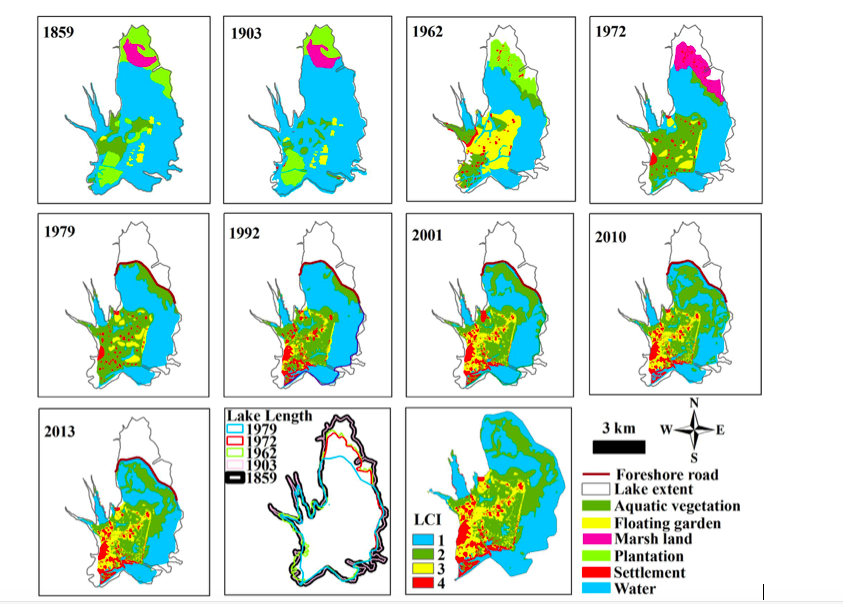
-While the beautification of Dal is thriving – with proper roads, footpaths, and new shops opening to cater to the growing population of tourists – the lake itself is slowly dying, and with that, the Hanji community is also slowly being removed from their ancestral fishing grounds. https://thewire.in/labour/the-drowning-jewel-tapestry-of-dal-lakes-decline-and-fishing-communitys-struggle-in-kashmir (01 March 2024)
West Bengal Decline in fish varieties in the rivers The degraded state of Bengal’s rivers are posing a threat to more than 23 million people dependent on freshwater fish for their livelihoods. https://scroll.in/video/1064593/eco-india-what-is-causing-a-decline-in-fish-varieties-in-the-rivers-of-bengal (03 March 2023)
Karnataka Fish shortage crisis impacts fisheries sector In Udupi, Dakshina Kannada, and Uttara Kannada districts, an unprecedented drought has hit this year, unlike anything seen in the past four years. Boats are not catching fish as anticipated, with many remaining anchored. Unplanned fishing holidays are being declared during the fishing season itself to mitigate the burden of potential losses. https://www.daijiworld.com/news/newsDisplay?newsID=1171789 (29 Feb. 2024)
DTE Poor regulation of aquaculture endangers human health In an order passed recently, the Madras High Court, recognising that illegal aquaculture farms were causing damage to agricultural activities and the environment, ordered the closure of all illegal aquaculture farms in the state of Tamil Nadu within six months. The court ordered the prosecution and punishment of all offenders as contemplated under the Coastal Aquaculture Authority Act, 2005, which prescribes punitive measures for carrying on coastal aquaculture without registration.
This order is a step towards acknowledging the environmental damage that results from illegal aquaculture. While this decision of the court is commendable, environmental damage is only one concern associated with under-regulated aquaculture. Risks to human health are another dimension of this issue.While the Madras High Court order is a step in the right direction, a lot more operational controls need to be mandated in aquaculture to minimise its hazardous health impacts. There is an imminent need for aquaculture laws and policies to recognise the interconnectedness between fish health and the health of fish consumers. https://www.downtoearth.org.in/blog/governance/poor-regulation-of-aquaculture-endangers-human-health-94787 (04 March 2024)
SAND MINING
Tamil Nadu ED can summon any person: SC The observations in focus were made by the top court today (Feb. 27) while dealing with a plea by the ED against a Madras High Court order staying the summons issued to five of the district collectors in Tamil Nadu in connection with a probe into an alleged sand mining scam. The Tamil Nadu government had challenged the ED summons before the Madras High Court and a division bench of the High Court had stayed the summons. This interim order was challenged by the ED before the Supreme Court. Today, the Supreme Court lifted the stay and ordered the district collectors to appear before the ED in adherence to the summons issued to them. https://www.barandbench.com/news/ed-can-summon-any-person-those-summoned-expected-respect-and-respond-supreme-court (27 Feb. 2024)
The Supreme Court on Feb 27 directed four District Collectors in Tamil Nadu to appear & respond to the summons issued by the Directorate of Enforcement in the “illegal” sand mining case, saying the State’s legal fight against the central agency was “strange, unusual and prima facie misconceived”. https://www.thehindu.com/news/national/supreme-court-asks-tamil-nadu-district-collectors-to-obey-ed-summons-in-sand-mining-case/article67892592.ece (27 Feb. 2024)
Uttar Pradesh CBI summons ex-CM in illegal mining case The case pertains to illegal mining between 2012 and 2016 in Hamirpur district. The CBI entered the scene in July 2016 following a directive from Allahabad HC, which said natural resources could not be permitted to be looted and asked the agency to probe suspected collusion of govt officials. CBI had claimed that senior UP officials had cleared 13 projects in a single day on Feb 17, 2013, in gross violation of laid down procedures. https://timesofindia.indiatimes.com/india/cbi-summons-akhilesh-yadav-in-illegal-sand-mining-case/articleshow/108084272.cms (29 Feb. 2024)
Madhya Pradesh Allegations of illegal mining shroud mega Ravidas memorial A ₹100 crore Sant Ravidas memorial being built in Sagar district has become mired in controversy after the local BJP legislator wrote a letter to the district administration, alleging that the foundation of the memorial has been constructed on material that has been “illegally mined and excavated”. PM Modi lay the foundation stone of the memorial on August 12, 2023, with the project spread across 12 acres in Badtuma village.
-“Illegal excavation and mining is being carried out continuously for construction work including the Sant Ravidas memorial, railway over bridge, and other construction work in the assembly constituency. There is illegal mining that is being carried out in Pali, Semra Lahariya, Ranipura, Maswasi and Shyampucha Guda village. This illegal mining is being done with the collaboration of the mining dept and agencies that are carrying out the work. I have informed the department about this matter orally and through letters, but the department is taking no action,” he said. https://www.pressreader.com/india/hindustan-times-east-up/20240225/281805698867245 (25 Feb 2024)
Punjab Ex-CM flags diggers’ use for mining in Sutlej Former CM Charanjit Singh Channi, going live on social media, has alleged that large-scale mining was being done in the Sutlej riverbed using heavy machinery, including Poclains and JCBs, near Ropar today (Feb. 25). Ropar Mining XEN Harshant Verma said there was no mining going on in the area of Ropar district near the spot claimed by the former CM.
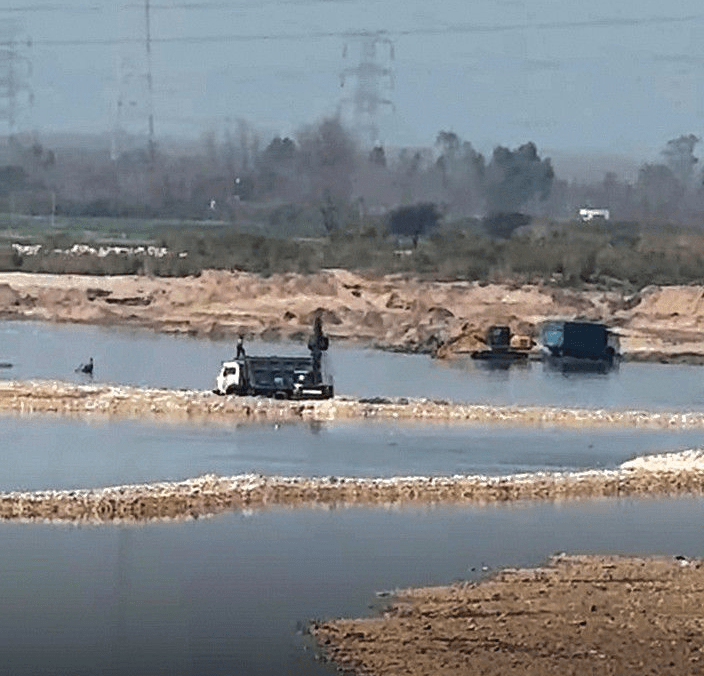
The mining sites, however, were operational in the area falling under the jurisdiction of Shaheed Bhagat Singh Nagar district, he said. SBSNagar DC Navjot Pal Singh Randhawa said there were two operational mining sites adjoining the district and he had sent two teams of officials to find any violation in the area. https://www.tribuneindia.com/news/punjab/charanjit-singh-channi-flags-diggers-use-for-mining-in-sutlej-594488 (25 Feb. 2024)
Himachal Pradesh नदी में फंसे खनन करने गए ट्रक और ट्रक्टर पांवटा साहिब के रामपुर घाट क्षेत्र में यमुना और गिरी नदी के संगम पर लगभग एक दर्जन ट्रक बाढ़ के पानी में फंस गए. शनिवार (March 02) को पूरा दिन और रातभर हुई मूसलाधार बारिश की वजह से यमुना और गिरी नदियां उफान पर आ गई हैं. नदियों में बाढ़ जैसी स्थिति बन गई है. ऐसे में यहां अवैध तौर पर नदी में खनन करने घुसे ट्रक फंस गए. ट्रकों के साथ लगभग 12 लोग भी यहां फंसे गए थे, जिनका प्रशासन ने रेस्क्यू कर लिया है. जानकारी यह भी मिली है कि यहां नदियों के उफान में और भी कई ट्रक और ट्रक्टर फंसे थे, लेकिन किनारों पर कम बहाव होने की वजह से बाकी ट्रक और ट्रक्टर यहां से सुरक्षित निकलकर भाग गए.
नदी में फंसे इन ट्रकों ने यहां हो रहे अवैध खनन और नदी के बीचों-बीच अवैध ट्रांसपोर्टेशन की भी पोल खोल कर रख दी है. दरअसल नदी के इन हिस्सों में ना तो खनन की इजाजत है और ना ही यहां से ट्रकों और ट्रक्टरों के आवागमन की इजाजत है, लेकिन यहां खनन माफिया के हौसले इतने बुलंद हैं कि वह हर स्थिति में नदी में अवैध खनन भी करता है और अवैध रूप से ट्रांसपोर्टेशन भी किया जाता है. अब देखना यह होगा कि अवैध रूप से नदी में घुसे इन ट्रकों पर प्रशासन कोई कार्यवाही करता है या इन्हें ऐसे ही छोड़ दिया जाता है. https://zeenews.india.com/hindi/zeephh/himachal-pradesh/himachal-pradesh-weather-update-mining-trucks-and-tractors-stuck-in-yamuna-river/2139213 (03 March 2024)
Delhi खनन से मंडराया खतरा, हाईकोर्ट ने मांगा जवाब उत्तरी दिल्ली के वजीराबाद व बुराड़ी थाना अंतर्गत यमुना नदी किनारे पिछले कई वर्षों से लगातार रेत खनन व पानी दोहन माफिया सक्रिय हैं. रेत खनन और पानी दोहन के चलते यमुना पुस्ते पर लगातार भारी वाहन, ट्रक, ट्रैक्टर, ट्राली,JCB और आधुनिक मशीनों की आवाजाही से यमुना बांध कई जगहों से कमजोर हो चुका है. वहीं अब यमुना नदी के साथ-साथ यमुना पुस्ते पर भी लगातार हादसों में मरने वाले लोगों के आकड़ो में बढ़ोतरी होते जा रही है.
एक शिकायतकर्ता ने इन मामलों को लेकर हाईकोर्ट में याचिका दायर की है. इस याचिका पर हाई कोर्ट ने संज्ञान लेते हुए दिल्ली पुलिस के उच्च अधिकारी समेत रेवेन्यू डिपार्टमेंट के डीएम एसडीएम व एमसीडी के कई बड़े अधिकारियों से यमुना नदी में हो रहे अवैध रेत खनन और पानी दोहन को लेकर जवाब मांगा है. उन्हें आने वाले तीन हफ्ते के अंदर स्टेटस रिपोर्ट दाखिल करनी होगी. रिपोर्ट में अवैध रेत खनन को रोकने के लिए दिल्ली पुलिस , राजस्व सरकार और नगर निगम द्वारा उठाए गए कदमों का उल्लेख होना चाहिए. जिसको लेकर सभी प्रशासनिक अधिकारियों में अब हड़कंप मच गया है. https://zeenews.india.com/hindi/india/delhi-ncr-haryana/delhi-hc-reprimands-police-and-revenue-department-over-sand-mining-in-yamuna/2139151 (03 March 2024)
Fatehpur दो ट्रक आपस में टकराए, यमुना नदी की रेलिंग तोड़कर लटके यमुना नदी पुल पर भीषण सड़क हादसा हो गया। आपस में टकराये दो ट्रक दोनों पुल की रेलिंग तोड़कर लटक गए। एक ट्रक को जिला प्रशासन ने सुरक्षित निकाला, एक ट्रक देर रात तक नही निकाला जा सका। ललौली थाना क्षेत्र के दतौली यमुना पुल पर शनिवार (March 02) देर रात करीब 10 बजे के आस पास पुल के ऊपर दो ट्रकों की आपस में टक्कर हो गई। हादसे के बाद दोनों ट्रक चालक कूदकर अपनी जान बचाई। लेकिन दोनों ट्रक पुल की रेलिंग तोड़कर पुल पर लटक गए। समय रहते कुछ ट्रक चालकों ने एक ट्रक को रस्सा की मदद से खींचकर निकाल लिया। https://www.balliatak.com/uttar-pradesh/fatehpur/fatehpur-news-two-trucks-collided-with-each-other-breaking-the/article-10234 (03 March 2024) https://www.bhaskar.com/local/uttar-pradesh/fatehpur/news/road-accident-on-yamuna-river-bridge-in-fatehpur-132667573.html (03 March 2024)
Banda बांदा में कुछ दिन पहले यमुना नदी का पुल चालू हुआ था और कल ट्रक को ओवरटेक करते समय डंपर रेलिंग तोड़कर नदी के लटक गया। हादसा देख पुल पर वाहन चालकों और ग्रामीणों की भीड़ लग गई और लोगों की मदद से डंपर में फंसे चालक को बाहर निकाला गया। पूरा मामला बांदा जनपद के तिंदवारी थाना क्षेत्र अंतर्गत https://www.bhaskar.com/local/uttar-pradesh/banda/news/dumper-hanging-after-breaking-the-railing-of-yamuna-bridge-132672560.html (04 March 2024)
बिहार रोहतास की सोन नदी में फंसे 28 ट्रक रोहतास जिला के डेहरी क्षेत्र में एक साथ 28 ट्रक फंसने का वीडियो सामने आया है। खबर है कि इंद्रपुरी सहायक थाना क्षेत्र के कटार में सोन नदी में 28 ट्रक फस गए हैं। पिछले 40 घंटे से इन ट्रकों को निकालने की कवायद चल रही है, लेकिन अभी तक कोई सफलता हाथ नहीं लगी है। हारकर अब प्रशासन के लोगों ने भी हाथ खड़े कर दिए हैं। लिहाजा अपने-अपने ट्रकों को पानी में डूबता हुआ देख ट्रक मालिकों के पास सिवाय मायूसी के कुछ भी नहीं है। नदी में फंसे ज्यादातर ट्रक उत्तर प्रदेश के हैं। फिलहाल ट्रकों को निकालने के लिए कोई व्यवस्था नहीं की जा रही है।
दो ट्रक पहले ही जल समाधि ले चुके हैं और बाकी बचे 28 ट्रक सोन नदी के बीच में धीरे-धीरे डूब रहे हैं। ट्रक को निकालने के लिए अगर इसे जरा भी टस से मस किया जाता है तो ट्रक नदी के बालू में और धंसने लगता है। इन ट्रकों को निकालने के लिए बालू और सीमेंट की बोरियों को लगाकर रास्ता बनाए जाने का काम कल शुरू किया गया था। लेकिन बीती रात बनाए जा रहे ऐसे एक रास्ते को भी पानी की तेज धार बहा ले गई। बता दें कि एक जुलाई से सोन नदी में नेशनल ग्रीन ट्रिब्यूनल के निर्देश पर बालू का खनन कार्य बंद हो गया है। ऐसे में बालू खनन में लगी एजेंसी ने भी हाथ खड़े कर दिए हैं। किनारे पर खड़े ट्रक मालिक और ट्रक ड्राइवर अपने-अपने ट्रकों को बस डूबते देख रहे हैं। https://www.indiatv.in/bihar/rohtas-son-river-28-trucks-stuck-and-two-drown-katar-balu-ghat-2023-07-01-971655 (01 July 2023)
WETLANDS, LAKES, WATER BODIES
Jammu & Kashmir Wetlands declared off-limits In a public notice issued on March 01, the Wildlife Warden, Wetlands Division, Kashmir, stated that protected areas and adjoining areas under the Wetlands Division jurisdiction, including Hokersar WLR, Hygam WLR, Shallabugh WLR, Mirgund WLR, Chattlum WLR, Fashkoori WLR, Manibugh WLR, and Kranchoo WLR, “are declared Out Of Bounds for the general masses without valid permission in view of the migratory season.” It warned that “any person found venturing inside these Wetland Conservation Reserves illegally without valid permission shall be dealt with sternly under the relevant provisions of the Wildlife Protection Act, 1972.” https://www.dailyexcelsior.com/kashmir-wetlands-declared-off-limits/ (02 March 2024)
WATER OPTIONS
Andhra Pradesh Reviving the traditional tank irrigation systems While encroachment, siltation, poor maintenance of traditional irrigation tanks limit farmers in Andhra Pradesh from accessing water in the command areas, strengthening WUAs shows a promising way forward to ensure maintenance of tanks at the community level and ensure water security for farmers. The study evaluated the performance of system and non system tanks from Srikakulam district of the North Coastal Andhra region and Chittoor district of the Rayalaseema region.
– Despite the benefits they provide, India’s total irrigated area from tank sources has declined by around 59 percent from 4.56 million hectares (m ha) in 1960–61 to 1.89 m ha in 2013–14. However, the net tank-irrigated area accounts for 13.30 percent in Andhra Pradesh, 16.57 percent in Tamil Nadu and 6.16 percent in Karnataka of the total net irrigated area of 28.79, 26.72 and 40.32 m ha respectively according to 2019-2020 figures. https://www.indiawaterportal.org/articles/reviving-traditional-tank-irrigation-systems-andhra-pradesh (28 Feb. 2024)
Karnataka Desilting Lakes Enhanced Agriculture and Groundwater In a striking contrast to the acute water crisis in Bengaluru, Moodabidri taluka in Dakshina Kannada district stands as a beacon of hope, thanks to a decade-long initiative led by Professor TV Ramachandra from the Indian Institute of Science (IISC), Bengaluru. The significant turnaround in Moodabidri’s water scenario was brought about by desilting all 32 lakes in the region and creating new water bodies, a move that not only averted a looming water crisis but also had a profound impact on local agriculture and groundwater levels. https://bnnbreaking.com/world/india/reviving-water-security-how-desilting-lakes-in-karnataka-enhanced-agriculture-and-groundwater (28 Feb. 2024)
Bengaluru The author of this article advocates use of tap aerator, that can reduce the flow of water from a tap from 12-18 LPM to 3-6 LPM (3 for handwash tap and 6 for kitchen tap) on mass scale, making it compulsory to save water. https://www.deccanherald.com/india/karnataka/bengaluru/a-million-litres-a-day-solution-to-bengaluru-s-water-crisis-2920215 (04 March 2024)
GROUNDWATER
Study Changing nature of groundwater in global water cycle Abstract: In recent decades, climate change and other anthropogenic activities have substantially affected groundwater systems worldwide. These impacts include changes in groundwater recharge, discharge, flow, storage, and distribution. Climate-induced shifts are evident in altered recharge rates, greater groundwater contribution to streamflow in glacierized catchments, and enhanced groundwater flow in permafrost areas.
Direct anthropogenic changes include groundwater withdrawal and injection, regional flow regime modification, water table and storage alterations, and redistribution of embedded groundwater in foods globally. Notably, groundwater extraction contributes to sea level rise, increasing the risk of groundwater inundation in coastal areas. The role of groundwater in the global water cycle is becoming more dynamic and complex. Quantifying these changes is essential to ensure sustainable supply of fresh groundwater resources for people and ecosystems. https://www.science.org/doi/10.1126/science.adf0630#sec-2 (01 March 2024)
Report Solar revolution in farming depleting groundwater How a Solar Revolution in Farming Is Depleting World’s Groundwater. Farmers in hot, arid regions are turning to low-cost solar pumps to irrigate their fields, eliminating the need for expensive fossil fuels and boosting crop production. But by allowing them to pump throughout the day, the new technology is drying up aquifers around the globe.
– There is a solar-powered revolution going on in the fields of India. By 2026, more than 3 million farmers will be raising irrigation water from beneath their fields using solar-powered pumps. With effectively free water available in almost unlimited quantities to grow their crops, their lives could be transformed. Until the water runs out.
– The desert state of Rajasthan is the Indian pioneer and has more solar pumps than any other. Over the past decade, the government has given subsidized solar pumps to almost 100,000 farmers. Those pumps now water more than a million acres and have enabled agricultural water use to increase by more than a quarter. But as a result, water tables are falling rapidly. There is little rain to replace the water being pumped to the surface. In places, the underground rocks are now dry down to 400 feet below ground. That is the effective extraction limit of the pumps, many of which now lie abandoned. To keep up, in what amounts to a race to the bottom of the diminishing reserves, richer farmers have been buying more powerful solar pumps, leaving the others high and dry or forcing them to buy water from their rich neighbors.
– Water wipeout looms. And not just in Rajasthan. Solar pumps are spreading rapidly among rural communities in many water-starved regions across India, Africa, and elsewhere. These devices can tap underground water all day long at no charge, without government scrutiny.
– But Balasubramanya says technology could come to the rescue. If PV pumps had to be sold with sensors that allowed monitoring of their output, then regulators could directly limit their use. Whether governments would do that in practice, given the conflicting priorities between immediate food production and longer-term management of water, is another matter. https://e360.yale.edu/features/solar-water-pumps-groundwater-crops (27 Feb. 2024)
URBAN LAKES, WETLANDS, WATER BODIES
Hyderabad Durgam Cheruvu: Govt gets 2 weeks to propose action plan The High Court on Friday, March 1, pulled up the Telangana government over a delay in implementing strategies to restore the Durgam Cheruvu lake. The HC has issued a two-week notice to the state to specify its action plan for the restoration of the Durgam Cheruvu lake after dead fish were found floating in it due to pollutants and sewage.
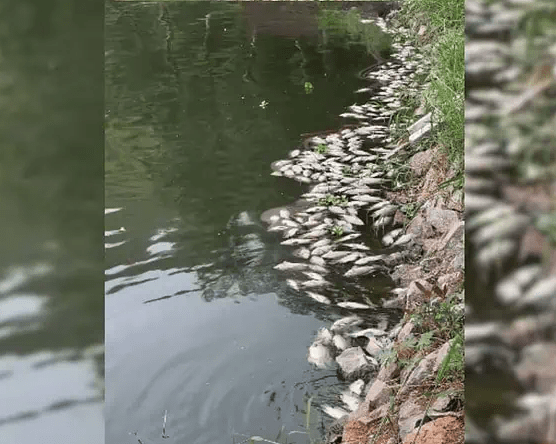
-An expert committee, chaired by Atul Narayan Vaidya of NEERI, was recently appointed by the court to investigate the degradation of Durgam Cheruvu and propose effective restoration measures. The panel does not include members of the Hyderabad Metropolitan Development Authority (HMDA) or the Telangana Pollution Control Board (PCB) as the High Court expressed no faith in them, accusing the bodies of being complicit in the deterioration of the Durgam Cheruvu Lake. The HC also warned them against attempting to influence the panel or stifle the probe.
-The court has also noted the increased encroachments on the full tank level and buffer zones of the Durgam Cheruvu Lake and demanded answers for ways to remove them, aside from desilting the lake. The court yet again expressed its dissatisfaction over the working of the PCB and stated that it would initiate action against it if did not take up necessary measures to restore the Durgam Cheruvu lake. The case will now be taken up on March 11. https://www.siasat.com/durgam-cheruvu-lake-pollution-telangana-govt-gets-2-weeks-to-propose-action-plan-2985628/ (02 March 2024)
What’s the action plan to restore Durgam Cheruvu, HC asks state On Friday (March 01), advocate general (AG) A Sudarshan Reddy furnished a report to the court expressing the govt’s readiness to implement all the measures suggested by the committee. However, he sought a week’s time to know the stand of the pollution control board (PCB) in the matter. But the bench pointed out that when the state was ready to cleanse the lake then there was no need for it to wait for the opinion of one of its departments. “Instead of seeking the opinion of PCB, better seek an action taken report from them,” the bench said.
-Stating that the court had no independent mechanism to verify ground realities, the bench said it would ask the same NEERI committee to monitor implementation of measures suggested by it. “There are more than 200 illegal structures that have come up on the lake’s full tank level (FTL) and buffer zones. Tell us when you will remove them. Tell us how you will proceed further from here,” the bench told the AG while taking note of govt assurance to desilt the lake after obtaining expert advise. https://timesofindia.indiatimes.com/city/hyderabad/telangana-high-court-asks-state-for-action-plan-to-restore-durgam-cheruvu/articleshow/108152037.cms (02 March 2024)
Chennai NGT asks why Chitlapakkam lake encroachments left untouched Despite a Madras high court order to remove all encroachments, the water resources department had only removed 74 encroachments, as against the total 403 encroachments. Initially, WRD told the high court that all encroachments had been removed. However, after RTI replies revealed that the encroachments had not been removed entirely, the authorities were constrained to file an additional affidavit with real numbers. The NGT noted that the TOI article pointed out that instead of complying with the court order in its entirety, the WRD was carrying out restoration work at a cost of 25 crore on the available area of the lake, thereby legalising the encroachments. The principal bench transferred the case to the southern bench and posted the matter for hearing on April 15, and directed the departments to file their response before that. https://timesofindia.indiatimes.com/city/chennai/ngt-asks-why-chitlapakkam-lake-encroachments-left-untouched/articleshow/108172533.cms (03 March 2024)
Bengaluru ‘Lake rejuvenation or deluge of debris,’ question citizens In a recent situation, members of the Citizens’ Movement have expressed apprehension and raised concerns over ongoing work near the Halanayakanahalli Lake. Residents allege that officials from the Panchayat have initiated digging activities with a excavator within the lake premises, and disturbingly, all the debris generated is being dumped directly into the lake. The lake, which had been neglected for several years, faced a severe crisis in 2019 when it dried up due to multiple encroachments. In response to citizens’ complaints about encroachments, authorities conducted a survey and successfully removed the encroachments, leading to the restoration of the lake. However, the recent activities have left residents worried about the lake’s future once again. https://bangaloremirror.indiatimes.com/bangalore/civic/lake-rejuvenation-or-deluge-of-debris-question-citizens/articleshow/108116233.cms (01 March 2024)
Mumbai ‘Nerul’s Lotus Not A Wetland: Govt This has left environmentalists in the satellite city baffled. “It’s shocking that this affidavit ignores the Supreme Court orders protecting 2.01 lakh wetlands of size more than 2.25 hectares and also the official memorandum issued by the MoEF. These wetlands were saved by the Bombay High Court order of November 1, 2018 as they are a part of National Wetlands Inventory and Assessment Atlas and protected by the Supreme Court order of February 2017 and October 2017,” activists said.
-Meanwhile, the Thane District Collectorate has stated that a report to declare Lotus Lake as a wetland has already been submitted to the government. However, the CIDCO administration has raised an objection, stating that the site is not a wetland on the basis of the Maharashtra Remote Sensing Applications Centre map and other documents. https://www.freepressjournal.in/mumbai/navi-mumbai-neruls-lotus-lake-not-a-wetland-claims-govt-dept-in-bombay-high-court (29 Feb. 2024)
NMMC’s Decision to Reallocate Protected Water Body Land Draws Ire In a contentious move, the Navi Mumbai Municipal Corporation (NMMC) is under fire for de-reserving plots on protected water bodies, a decision that has environmentalists expressing deep concerns. The move is part of NMMC’s new development plan, the first in over three decades, designed to shape the city’s growth for the next twenty years. However, critics argue that this decision appears to be thinly veiled, favoring the real estate sector over environmental conservation efforts. Local environmentalists, including B N Kumar, the Director of NatConnect Foundation, have expressed dismay, terming the decision a “major environmental shock.” Kumar emphasized the shortsightedness of the approach, underscoring the crucial role wetlands play in biodiversity, the livelihoods of local fishing communities, and their function as vital water absorbers. Kumar recalled the irony of suggesting the name “Flamingo City” for Navi Mumbai in 2019, a time when municipal initiatives were focused on flamingo conservation. https://pune.news/city/mumbai/navi-mumbais-controversial-move-de-reserving-water-body-plots-sparks-environmental-criticism-147601/ (02 March 2024)
Noida Nod to plant 30k saplings around ponds Greater Noida The water bodies that have been identified where plantation exercise will be carried out, are located in Sadullapur, Khedi, Vaidpura, Sheorajpur, Kailashpur and Sunpura, in Greater Noida. “We are looking forward to planting around 30,000 saplings of different species including Arjun, Ashoka, Jamun, Pilkhan, among others, around these water bodies, and have already received around 10,000 saplings. The cost of all the work being done to preserve these ponds is being borne by us,” local environment activist and treasurer, Society for Protection of Environment & Biodiversity, Pradeep Dahalyia added. https://www.hindustantimes.com/cities/noida-news/gnidas-nod-to-planting-30k-saplings-around-ponds-101709317639933.html (2 March 2024)
URBAN WATER
Bengaluru Govt to take over all private tankers All private water tankers and borewells will be required to register with the Bengaluru Water Supply and Sewerage Board (BWSSB) before March 7. The government will issue a formal circular after a meeting with the mines and geology, minor irrigation, police and transport departments on Monday (March 04) at noon, Shivakumar said. https://www.deccanherald.com/india/karnataka/bengaluru/karnataka-government-to-takeover-private-water-tankers-in-bengaluru-amid-severe-water-shortage-deputy-cm-2919285 (02 March 2024)
Decoding water woes Experts say a weak southwest monsoon, encroachments on water bodies, reduced levels in Cauvery basin reservoirs, failure in enforcing rainwater harvesting systems, and an inadequate number of sewage treatment plants are among the primary reasons for the current water crisis.
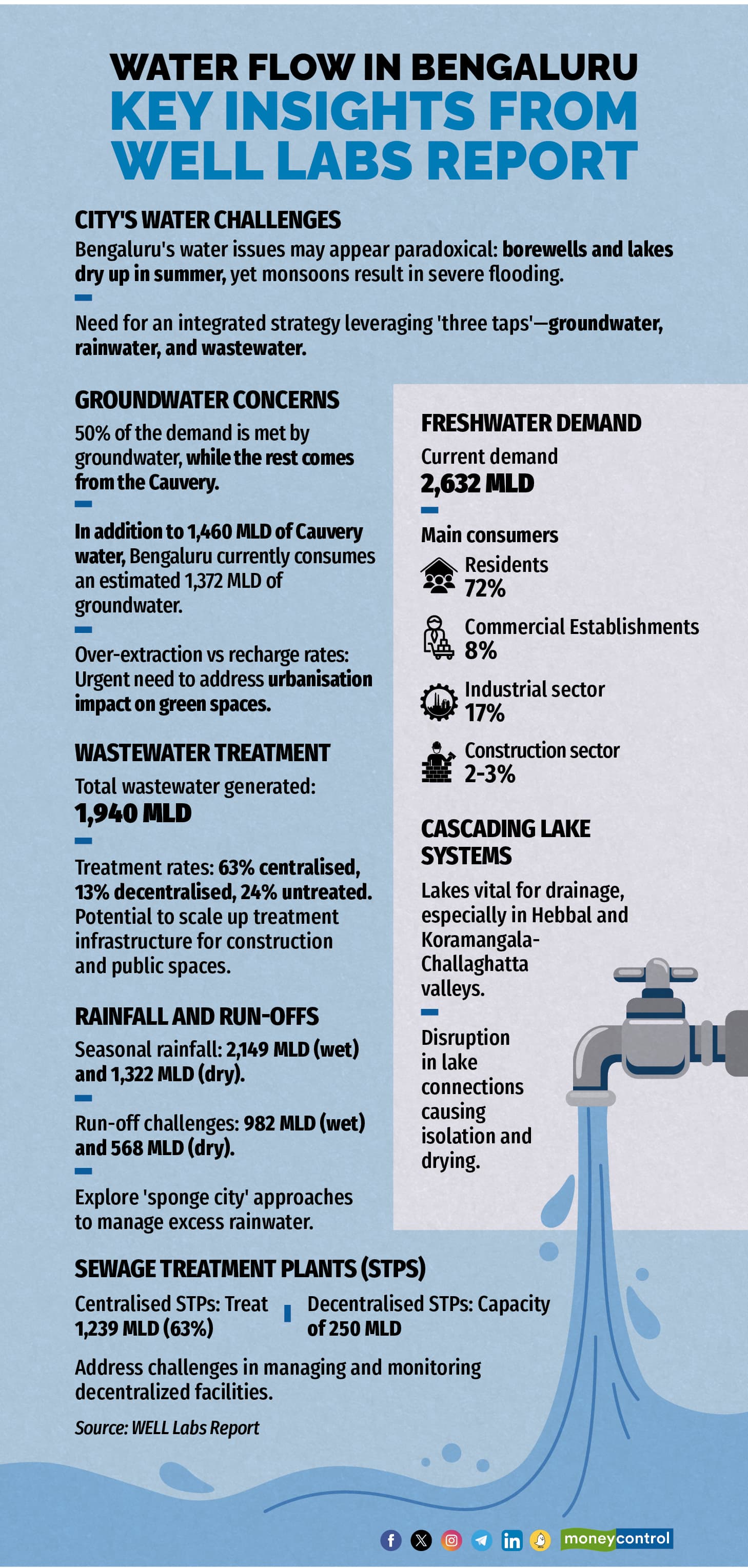
https://www.moneycontrol.com/news/technology/first-floods-now-dry-days-decoding-tech-hub-bengalurus-water-woes-12374331.html (29 Feb. 2024)
Mangaluru Water scarcity despite full Thumbay dam Every day, 160 MLD of water is pumped from the Thumbay vented dam. However, by the time it reaches Mangaluru city, the available quantity decreases to 120 MLD. The primary reason for this reduction is the presence of numerous large holes drilled into the main pipeline by miscreants at various locations. With over 110 illegal perforations along the main pipeline, approximately 40 MLD of water is lost, leading to a shortfall in the city’s water supply.
-The majority of these large holes are drilled by wealthy individuals to divert water for use in their commercial establishments and auditoriums. Additionally, water theft occurs for agricultural purposes. As a result, residents of the MCC who dutifully pay taxes are left with insufficient water. In response to the acute shortage of drinking water in the city, the MCC administration formed four teams to disconnect illegal connections. However, within a few days, offenders re-drilled holes into the main pipeline, exacerbating the situation. https://www.daijiworld.com/news/newsDisplay?newsID=1171387 (28 Feb. 2024)
WATER POLLUTION
Tamil Nadu Worker cleans sewage without safety gear, supervisor sacked A sanitary supervisor was sacked by the city civic body after a video of one worker cleaning sewage without safety equipment went viral on Friday (March 01). The video showed a sanitary worker clearing plastic waste from sewage with his bare hands. Following this, Erode Municipal Corporation officials ordered an inquiry. Sources said that out of the 1,800 sanitation workers in the Erode Corporation 400 are permanent employees. https://www.newindianexpress.com/states/tamil-nadu/2024/Mar/03/tamil-nadu-worker-cleans-sewage-without-safety-gear-supervisor-sacked (03 March 2024)
WATER
Survey Only 46 of 485 cities supply potable water to people A national level survey by govt has found that only 46 cities (municipal areas) out of 485 supply clean drinking water to their citizens. The ranking of cities is based on test results of 25,000 samples lifted across these municipal areas and response of 5.2 lakh urban households will be announced next week. The survey was launched in Sept 2022 and field assessments were conducted from Dec 2022 to Nov 2023, which included direct field assessment, citizen feedback collection, data reconciliation and data validation exercise. https://timesofindia.indiatimes.com/india/only-46-of-485-cities-supply-potable-water-to-people-government-survey/articleshow/108120955.cms (1 March 2024)
Kerala Water Authority warns of water crisis in several districts Officials say situation will worsen by April and Kasaragod will be the worst hit, despite 12 rivers. The government has also roped in the Kerala State Council for Science, Technology and Environment (KSCSTE) to launch a survey to find pockets with the drinking water crisis. “We will complete the survey in two months. Summer is the ideal time for launching this survey. The plan is to take necessary intervention in those pockets to ensure drinking water during the summer,” said K P Sudheer, the council’s executive vice-president. “It’s high time we conserve rainwater. There should be coordinated efforts by various agencies in the sector to adopt water conservation measures and avert the imminent crisis,” Dinesan Cheruvat, joint managing director, KWA, said. https://www.newindianexpress.com/states/kerala/2024/Feb/28/kerala-water-authority-warns-of-water-crisis-in-several-districts (29 Feb. 2024)
Karnataka Water Theft With Pipes Uncovered At KRS Dam Despite clear evidence of daylight water theft at the KRS Dam, authorities have been sluggish in conducting investigations, drawing widespread criticism. Prompted by local media inputs, officials have finally initiated raids. In addition to confiscating motors and pipelines, authorities have disconnected illicit electrical connections supplying water to farm houses and resorts. Questions have arisen regarding unequal treatment in the Cauvery issue, with farmer leaders expressing outrage over the lack of action against influential individuals while farmers and residents grapple with water scarcity. They lamented the delayed response from the Mandya District Administration, despite the declaration of a ban on water release. https://starofmysore.com/water-theft-with-pipes-uncovered-at-krs-dam/ (02 March 2024)
Report Nilgiris Reel Under Water Shortage, Climate Change Over the last five decades, the rainfall pattern has been changing in Nilgiris; there have been short, intense spells with drop in average rainfall in particular years, says S. Vishwanath, a water expert and educator based in Bengaluru. As per the department of Horticulture and Plantation in Nilgiris, the average rainfall for the district is 1,522.7 mm per annum. “The aquifers are not recharged and so the springs do not flow,” Vishwanath told India Spend. “If the springs do not flow, reservoirs do not fill up. Then, there is shortage of water both for nature and living beings. The springs affect the wetlands and bogs which in turn impacts the grasslands also. Moreover, with the recharge zones being altered, there is a chance of forest fires since the soil moisture is deficient. Temperature also increases because there is not enough humidity.” https://www.indiaspend.com/earthcheckindia/nilgiris-reel-under-water-shortage-climate-change-897217 (29 Feb. 2024)
MONSOON 2024
SANDRP Blog Winter 2024: District wise Rainfall in India In the just concluded 2024 Winter Season (January 1 2024 to February 29 2024), as per India Meteorological Department (IMD), India received 33% below Normal Rainfall (it was 45% below normal in winter 2023, 44% above normal rainfall in winter 2022 and 32% below normal rainfall in winter 2021.

This is coming on top of 5.55% below normal in SW Monsoon 2023 and 9% below normal rainfall in Post Monsoon season 2023. We provide here state wise, district wise distribution of rainfall in India in Winter 2024. https://sandrp.in/2024/03/01/district-wise-winter-2024-rainfall-in-india/ (01 March 2024)
DTE Long-range forecasts can be climate adaptation tool for farmers Providing farmers with highly accurate information (at least four to six weeks ahead) about the onset of monsoons can lead to a change in their behaviours over how much to plant, what to plant or whether to plant at all, making such forecasts an important climate adaptation tool for the agricultural sector, new research done in two districts of Telangana has shown. The researchers from University of Chicago tracked farmers across 250 villages in Medak and Mahabubnagar districts of Telangana. They looked into how the forecast information impacts their beliefs about the monsoon onset pre-harvest, their up-front investment decisions and their well-being at the end of the growing season. A significant research point was how their behaviour compared to that of those who received insurance. It was found that while insurance encourages optimistic farmers to invest more, it does not guide smarter choices.
– The 28th Conference of Parties (COP28) to the United Nations Framework Convention on Climate Change Presidency also identified improved weather forecasts as one of seven “shovel-ready” priority tools to help address the impact of climate change on food security and agriculture. “They were willing to pay as much for the forecast as for an insurance product that pays out approximately 20 per cent of average crop revenue under a late monsoon,” the authors said. These findings underscore the fundamental differences between insurance and forecasts and suggest that they could be used as complementary climate adaptation strategies: Forecasts let farmers make the right investments for the coming year, while insurance protects farmers against downside risk, concluded the study. https://www.downtoearth.org.in/news/agriculture/how-accurate-long-range-forecasts-of-monsoon-onset-can-be-climate-adaptation-tool-for-farmers-94743 (29 Feb. 2024)
Report IMD warns of severe summer season -The IMD director general said that of late, the transition from winter to summer temperatures has been quicker than usual. “We have observed that spring is arriving early. It is because winter is diffusing sooner than before. A milder winter end is nothing but spring. This is being seen globally due to global warming,” said Mohapatra.
-The IMD forecast went into some detail on the El Nino phenomenon, saying that majority of climate models gave indicated it will persist through March-May 2024 and then transition to ENSO-neutral thereafter. There are high chances of La Nina establishing during July to August.
-IMD also reported that it was the second warmest February since 1901 when it comes to night/minimum temperatures for the country as a whole. For south peninsular India it was the warmest February since 1901 both in terms of day and night temperatures. This is mainly because of extreme rain deficiency recorded in the region in February, scientists said.
-January had ended with a rain deficiency of 58% with 91% rain deficiency over northwest India. But in February, Peninsular India recorded a 91% rain deficiency– 15th lowest since 1901 and 4th lowest since 2001. A total of eight WDs impacted the Western Himalayan region in February compared to normal of 2-3. Out of eight WDs, six WDs were active and caused rain/thunderstorm and hail storm over plains of north and central India. https://www.hindustantimes.com/india-news/a-hot-summer-ahead-for-india-predicts-imd-101709315800488.html (02 March 2024)
LANDSLIDES
Understanding fatal landslides at global scales But most interestingly, natural and anthropogenic landslides have quite different characteristics. So, for example, fatal landslides triggered by natural variables generally tend to occur in the highest portions of the topographic profile (i.e. at higher elevations in the mountain chain), where there is less human disturbance. Local slope gradients tend to be steep. On the other hand, anthropogenic fatal landslides cluster at much lower elevation on slopes in which the local gradients are less steep, but human intervention is higher. There is much more work to do on these datasets, especially in light of continued changes to climate, the land surface and the population on a global and regional scale. (Dave Petley) https://eos.org/thelandslideblog/fatal-landslides-1 (04 March 2024)
ENERGY OPTIONS
Report Cabinet okays outlay of Rs 75K cr for rooftop solar units Government on Feb 29 approved an outlay of Rs 75,021 crore to assist one crore households install rooftop solar systems under the PM-Surya Ghar scheme launched by PM Modi on Feb 13, envisaging 300 units of free power each month. Cabinet approved financial assistance of 60% of the cost of a 2 kilowatt (kW or 2,000 watt) solar system and 40% of additional system cost for units with 2-3 kW capacity.
As per a govt statement, at current benchmark rates this will translate into a subsidy of Rs 30,000 for a 1 kW system, Rs 60,000 for a 2 kW system and Rs 78,000 for a 3 kW system. Households will be able to access collateral-free loans at low interest rate (7%) for setting up rooftop solar systems up to 3 kW. No assistance will be given to systems above the capacity of 3 kW. Cabinet also decided a ‘solar village’ will be set up in each district to act as role model for adoption of rooftop solar in rural areas. https://timesofindia.indiatimes.com/india/cabinet-okays-outlay-of-rs-75000-crore-for-rooftop-solar-units-to-benefit-1-crore-homes/articleshow/108118741.cms (1 Mar 2024)
ENVIRONMENT GOVERNANCE
Green Humour by Rohan Chakravarty on the plight of Indian cities.
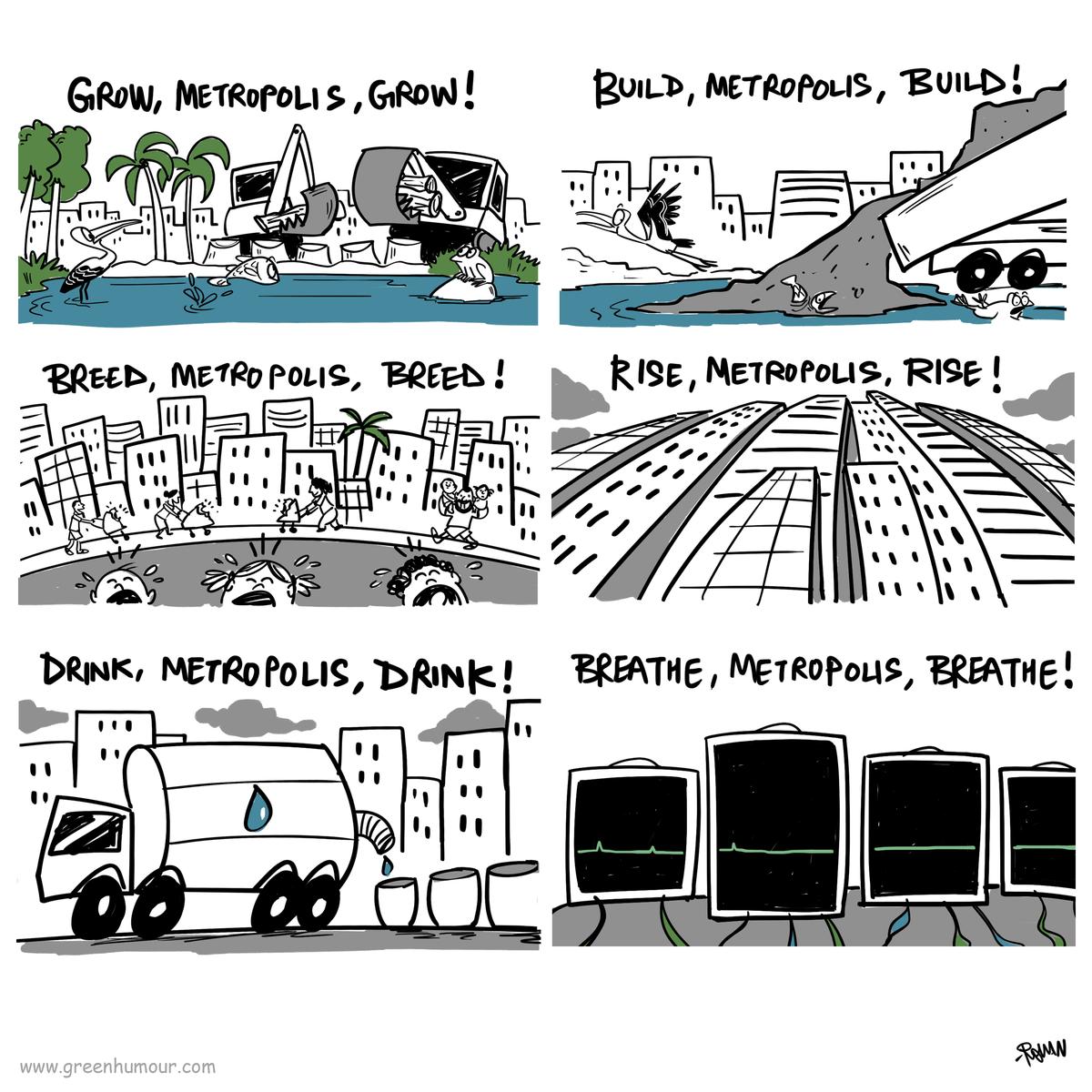
https://www.thehindu.com/sci-tech/energy-and-environment/green-humour-rohan-chakravarty-plight-of-indian-cities/article67887562.ece (29 Feb. 2024)
Uttarakhand A legacy of planning fallacies and perjury The presence of the Main Central Thrust (MCT) and Main Boundary Fault (MBF) between Mohand Hills and Mussoorie poses consistent seismic threats to Dehradun. Additionally, all 13 districts of Uttarakhand fall under the category of “earthquake-prone” areas, adding to the dual challenge faced by the Doon Valley– a deteriorating environment and the looming threat of earthquakes.
-To summarise, the people of Uttarakhand have faced decades of misguidance in urban planning and urbanisation policies. This is a particularly troubling situation given the state’s fragile environmental condition. (SC Ghildial, former chief town planner) https://timesofindia.indiatimes.com/blogs/voices/uttarakhand-a-legacy-of-planning-fallacies-and-perjury/ (01 March 2024)
CLIMATE CHANGE
Study Himalayas to see drought, plains to witness floods The Himalayan region is set to witness lasting drought for over a year if global temperatures increase by 3 degrees Celsius, reveals a new study. A team led by researchers at the University of East Anglia (UEA) in the UK revealed new findings about climate in the Himalayan region. The study, published in the journal Climatic details the increasing risks to human and natural systems at a national scale as the level of global warming increases.
– The study predicts that about 90 per cent of the Himalayan region will experience drought that may last for more than a year if global warming increases by 3 degrees Celsius. The report highlighted that over 50 per cent of the agricultural land in each of the countries investigated has been projected to be exposed to severe droughts spanning more than a year over 30 years. https://www.livemint.com/news/climate-change-in-india-himalayas-to-see-year-long-drought-plains-to-witness-floods-if-global-warming-is-not-checked-11709192200650.html (29 Feb 2024)
90% of Himalayas face year-long drought -A collection of eight studies — all focusing on India, Brazil, China, Egypt, Ethiopia, and Ghana — shows that the risks of drought, flooding, declines in crop yields, and loss of biodiversity and natural capital greatly increase for each additional degree of global warming. It found that in India pollination is reduced by half at 3-4 degrees global warming compared to a quarter reduction at 1.5 degrees. Limiting warming to 1.5 degrees Celsius allows half the country to act as a refuge for biodiversity, compared with 6% at 3 degrees. https://www.thehindu.com/sci-tech/energy-and-environment/global-warming-90-percent-himalayas-face-year-long-drought-at-3-degrees-says-study/article67898431.ece (29 Feb 2024)
Jammu & Kashmir Avalanche link with climate change As the latest avalanche shows, long dry spells and higher temperatures are making the Himalayan region of Kashmir far more disaster-prone. This year there was limited snowfall in early winter, much to the disappointment of holidaymakers and tour operators. The Kashmir valley endured a prolonged dry spell. It was only on 28 January, 2024 that Gulmarg was finally blanketed by its first major snowfall, breaking a two-month dry spell. January 2024 was one of the driest and warmest Januarys recorded in the past 43 years, according to the meteorological department. Avalanches occur when a layer of snow collapses and slides downhill. Such events are more likely during periods of elevated temperatures, which hinder the accumulation of snow.
– Irfan Rashid, assistant professor at the Department of Geoinformatics, at the University of Kashmir, highlights the significant “heat in the system” due to the prolonged dry spell in the valley. He notes that temperatures were above normal during these months and the accumulated heat was not able to dissipate. “The late snowfall was watery (snow-water equivalent) and it began melting rapidly,” he explains, adding “When the water content in the snow is high, it will resist settling down – thus increasing the risk of avalanches.” https://www.thethirdpole.net/en/climate/kashmir-avalanche-what-is-the-link-with-climate-change/ (23 Feb. 2024)
Report Scientists find new hack to deal with a warming planet Government scientists have cooked up a new concept for how to potentially cool an overheating Earth: Fiddle with the upper atmosphere to make it a bit drier. Water vapour — water in its gas form — is a natural greenhouse gas that traps heat, just like carbon dioxide from burning coal, oil and gas. So, researchers at the National Oceanic and Atmospheric Administration and NASA figure if they can just inject ice high up in the air, water vapour in the upper atmosphere would get a bit drier and that could counteract a small amount of the human-caused warmth. It’s just the spark of an initial idea, said the lead author of a study in Wednesday’s journal Science Advances.
– At its maximum, injecting 2 tons a week, it could conceivably take out enough water vapor to reduce heating a small amount, about 5 per cent of the overall warming created by carbon from the burning of fossil fuel, Schwarz said. It’s not much and shouldn’t be used as an alternative to cutting pollution, he said. Schwarz is not quite sure about what side effects could occur, and that’s the problem, other scientists said. Purposely tinkering with Earth’s atmosphere to fix climate change is likely to create cascading new problems, said University of Victoria climate scientist Andrew Weaver, who wasn’t part of the study. https://www.livemint.com/science/news/scientists-find-new-hack-to-deal-with-a-warming-planet-heres-how-11709173209781.html (29 Feb. 2024)
SOUTH ASIA
India-Nepal Official dialogue silent on landmark Pancheshwar project India and Nepal have not managed to make any forward movement on the stalled negotiations over the Pancheshwar Multipurpose Project (PMP). On Feb 28 2024, Foreign Secretary Vinay Mohan Kwatra met his Nepali counterpart Sewa Lamsal here. A press note issued on this meeting mentioned the two sides discussed “multifaceted cooperation” but it did not include any reference to PMP. However, the discussion to kickstart the Pancheshwar project will require political courage and bureaucratic foresight on both sides, which is yet to emerge. https://www.thehindu.com/news/national/nepal-india-official-dialogue-is-silent-on-the-landmark-pancheshwar-project/article67896573.ece (28 Feb. 2024)
Bhutan Reservoir filling ceremony marks milestone in PHPA-II project The reservoir filling for the 1,020 MW Punatsangchhu-II Hydroelectric Project Authority (PHPA-II) marks a significant milestone. Over next five months, the Punatshangchu will gradually fill the reservoir. Once the dam is fully impounded, it will store approximately 7 million cubic metres of water.
– Many lives have been lost, and countless workers have been injured or disabled during the construction of the project. They were remembered. Despite the project’s initial commissioning target of 2017, unforeseen geological challenges, flash floods, and the Covid-19 pandemic led to schedule delays and cost overruns, including the discovery of a major shear zone at the dam foundation. Rajesh Kumar Chandel, the managing director, highlighted the collapse of the downstream surge gallery (DSG) as a significant challenge that once threatened the project’s feasibility. Foundation stone was laid in 2010.
– As of January 31, the project has achieved an overall physical progress of 96.83 percent, with major components nearing completion. The project aims to commission all six generating units by the end of 2024, with a focus on completing major civil works by June 2024. Total expenditure has been Nu 83 B till date. https://kuenselonline.com/reservoir-filling-ceremony-marks-milestone-in-phpa-ii-project/ (24 Feb. 2024)
Bangladesh Fishing Ban: Protective Measure or Poverty Trap for 43,000 Fishermen The implementation of a two-month fishing ban in the Padma-Meghna sanctuary, a measure aimed at protecting the aquatic ecosystem and enhancing hilsa production, has sparked a complex debate between ecological conservation efforts and the livelihoods of thousands of fishermen.
Spanning from March 1 to April 30, this prohibition affects 43,000 registered fishermen in Chandpur, who find themselves caught between the necessity of environmental stewardship and the harsh reality of economic survival. https://bnnbreaking.com/world/bangladesh/fishing-ban-in-padma-meghna-sanctuary-protective-measure-or-poverty-trap-for-43000-fishermen (28 Feb. 2024)
ASIA
Iran Reactivating ancient landslides through reservoir construction A known potential issue with the construction of reservoirs is the reactivation of ancient landslides that have lain dormant in the landscape. There are literally hundreds of documented examples, but as dam construction continues at a high pace, this problem continues to recur.
– There is a very good example described and analysed in a recent edition of the journal Engineering Geology (Vassileva et al. 2023 – available open access). This focuses on a very interesting example in March 2019 at Hoseynabad-e Kalpush village in north–central Iran, caused by the construction of a dam and the subsequent impounding of the lake.
– The final failure was triggered by exceptional rainfall in early 2019, generating horizontal movement of over 40 m in parts of the slope. Movement finally ceased in October 2021. The landslide at Hoseynabad-e Kalpush village is a beautiful example of a failure that was caused by dam / reservoir construction, but triggered by rainfall. The higher groundwater levels that resulted from impoundment of the reservoir reactivated the landslide, which then failed during heavy rainfall. There are many lessons here for other places around the world. https://eos.org/thelandslideblog/hoseynabad-e-kalpush (29 Feb. 2024)
MEKONG Where Have All the River’s Fish Gone? The amazing ecosystem of the Mekong, ranked the third in the world for biodiversity, has come under immense pressure from 12 dams built in China, and a cascade of nine dams being developed downstream in Laos. Two dams in Laos – the huge Xayaburi and the Don Sahong – have so far been completed.
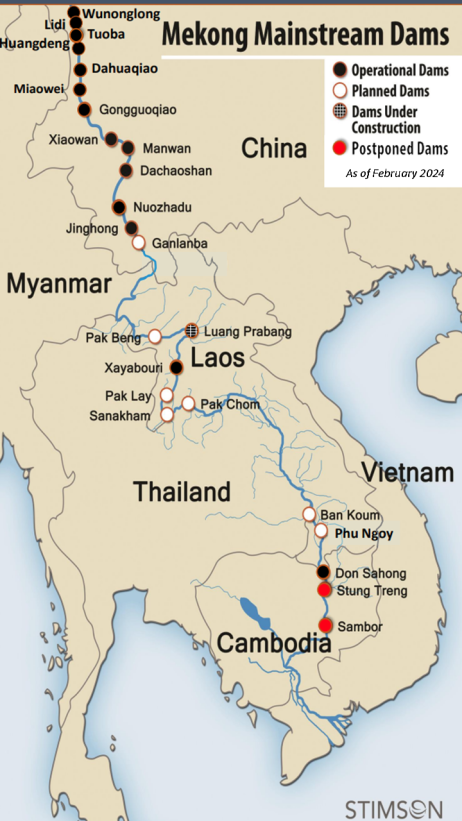
-Friend, an associate professor at the University of York and a former Mekong River Commission (MRC) consultant told The Diplomat, “Despite the substantial scientific evidence on the critical importance of fisheries to food security, nutrition and the devastating impact of dams on fisheries, there has been no shift in hydropower policy.”
-The MRC’s longstanding narrative of actively promoting sustainable hydropower as an engine of economic development sharply contrasts with the latest research from the MRC’s own Fisheries Department, which showed that the fisheries of the Mekong are in steep decline.
-The MRC Secretariat helped legitimize hydropower dams through its Sustainable Hydropower Development Strategy, a basin-wide strategy approved by the four member states. Within this strategy the developer of the Xayaburi dam in Laos – the first dam to be built on the lower Mekong – was advised to deal with a feisty chorus of opposition in 2011. During the MRC consultation process, the Thai dam developer was persuaded to invest in modern fish ladders and sediment technology, which helped the project to eventually go ahead.
-But despite the MRC’s strong belief in the technology, the utility of fish ladders has recently been challenged by several of their fisheries consultants. Dr. Eric Baran, a Mekong fisheries specialist and a frequent MRC consultant, delivered a presentation to a water governance forum in July 2023 with the title “The False Hopes of Fish Passage at High Dams on the Mekong.” After 25 years of research on tropical rivers in Asia, he concluded, “There is still not a single case of a successful fish passage and (fish) population sustainability” through the use of fish ladders. https://thediplomat.com/2024/02/where-have-all-the-mekong-rivers-fish-gone/ (29 Feb. 2024)
THE REST OF THE WORLD
USA Momentum around removing dams growing The removal of four Klamath River dams along the California-Oregon border is in the spotlight — and for good reason. It is the largest dam removal in our nation’s history. At the other end of the state, a series of smaller dam removals is moving forward with less fanfare. A coordinated effort throughout the Cleveland National Forest and elsewhere in Orange County to remove 80-plus barriers is almost complete. From the sediment-filled Matilija Dam to the seismically unsafe Potter Valley Project complex on the North Coast, momentum around removing dams that do more harm than good is growing.
– Whenever possible, let tribes lead the way. Dam removal is a racial justice issue, one that aligns with state efforts to address longstanding wrongs against tribal communities.
– Dam removal takes a lot of resources and careful planning, but compared to the vast benefits healthy rivers provide, the investment and effort are worth it. Removing defunct dams throughout the state will improve our resilience in the face of increasing weather extremes. New understandings open the door to working with — rather than against — nature. https://www.sacbee.com/opinion/op-ed/article285749541.html (26 Feb. 2024)
Method for understanding GHG emissions from HEP reservoirs developed Researchers at the U.S. Department of Energy’s Oak Ridge National Laboratory (ORNL) are working on new efforts to understand and predict the amount of methane and carbon dioxide coming from hydropower reservoirs.
The ORNL team is collecting data from reservoirs across five southeastern states to better understand how seasonal variations, algae growth, reservoir operations and other factors may impact emissions. https://www.hydroreview.com/world-regions/north-america/ornl-scientists-develop-method-for-understanding-ghg-emissions-from-hydropower-reservoirs/ (19 Feb. 2024)
UK WWF shelved report exposing River Wye pollution -Since 2018, WWF UK has received more than £6m in donations from the supermarket chain Tesco, which has faced action from campaigners over the decline of the Wye because many of the intensive poultry farms in the river’s catchment area are in its supply chain. The charity was due to publish a report on fixing the food system, which included the impact of intensive chicken farming on the river. One source claimed the proposed 2022 report was pulled after concerns were raised about the potential fallout. https://www.theguardian.com/environment/2024/mar/02/wwf-shelved-report-exposing-river-wye-pollution-to-keep-tesco-happy (2 March 2024)
SANDRP
Also see: DRP 26 Feb. 2024 & DRP 19 Feb. 2024
Follow us on: www.facebook.com/sandrp.in; https://twitter.com/Indian_Rivers

 SANDRP