
(Chest nut clutivators removing water hycinth from Giri taal of Kashipur in US Nagar, Uttarakhand in April 2023. Bhim Singh Rawat/SANDRP)
As the world approaches the World Wetlands Day on Feb 2, we notice a proliferation of news related to wetlands, but mostly bad news in this week’s DRP NB: Loktak lake in Manipur facing impact of inland waterways project, the Supreme Court having to intervene for the Futula lake in Nagpur, TN Govt telling NGT that 38% of Pallikaranai marshland is under encroachment, in Bangalore, NGT is asking for response from KSPCB and others regarding the lake buffer zone encroachment. There is also a lot of bad news about the worsening state of our rivers, including Ganga.
One piece of good news is that people have come out with their own plan for restoration of Ennore wetland in TN. In Assam, Maguri Motapung Bill is regaining biodiversity after earlier being polluted by oil spill, but that is only control of damage earlier. Similarly, while it is good news that SC has intervened to protect Futula lake in Nagpur, but the fact that the govt wanted to encroach on it in the name of “temporary” construction is not at all good news.
In fact, the crux of the matter is that we see no sign of the government working for the cause of rivers and wetlands, after putting name plates for 75 wetlands as Ramsar wetlands. In fact the state of Loktak lake of Manipur, one of the oldest Ramsar sites, is an indication, if any was required.
The theme of the World Wetlands Day 2024 is appropriately, Wetlands and Human wellbeing. But that slogan is little understood and even less seen in the functioning of the government and governance of the wetlands.
Manipur Loktak fishermen express concern over Govt’s push for inland waterways project The All Loktak Lake Areas Fishers Union, Manipur (ALLAFUM), has questioned the Manipur government’s unilateral decision to advance the proposed Loktak inland waterways improvement project. The fishermen’ union contends that the state government’s move lacks consultation with the local fishing community residing in and around the peripheral areas of the Loktak Lake, the largest freshwater lake in South Asia, in Manipur’s Bishnupur district. They expressed concern over the potential adverse effects on the lake’s ecology and the traditional livelihoods of numerous fishermen families. https://www.icsf.net/newss/manipur-loktak-fishermen-express-concern-over-govts-push-for-inland-waterways-project/
Socio-Political & Environmental dynamics of Loktak For many reasons, whether empirical or scientific, Loktak Lake in India’s far east Manipur State has been embroiled deep in controversies of sorts during these past four decades and continuing. One amongst the declared seventy five Ramsar sites in India, Loktak finds itself in a complicated situation on ground that has given it the status of an ‘aging lake’, perhaps kicking hard to keep itself afloat despite the many forms of pressures upon it, of which anthropogenic influences is paramount. The main ‘bone of contention’ is the Ithai Barrage which is seen as the root of all issues in the lake.
– Their voice of dissent also reflects upon the pitiable conditions under which Manipur’s flagship mammal species – the Sangai, Manipur Brow-antlered Deer Rucervus eldii eldii – and the other wildlife are faring amid their deteriorating habitat in Keibul Lamjao National Park, which is often described as the ‘only’ floating national park in the world! The twists and turns continue to this day even as this feature is being written, with the lake managers always on the lookout for excuses to throw out the fishing community from Champu Khangpok floating island village. In one word, the fishers are “occupiers”, so say the lake managers. At this point of time, there are no alternatives for the fishers than to fight back as best as they can – for their rights to life in their territory of life. (Salam Rajesh) https://vikalpsangam.org/article/socio-political-and-environmental-dynamics-of-manipurs-loktak-ramsar-site/ (24 Jan. 2024)
Tamil Nadu Ennore residents release ‘people’s plan’ to restore wetlands & livelihoods A couple of weeks after the State government announced allocation of ₹40 crore for the restoration of Ennore Creek as part of the Tamil Nadu Coastal Restoration Mission, a ‘People’s Plan for Eco-restoration of Ennore Wetlands’, prepared by Coastal Resource Centre, a city-based non-governmental organisation, with inputs from residents and fishers of the region, was released on Jan 27, 2024. At an event organised by Ennore People’s Protection Group, the first copy of the plan was received by retired Odisha High Court Chief Justice S. Muralidhar, Justice (retd) K. Kannan of Punjab & Haryana High Court, and Justice (retd) D. Hariparanthaman of Madras High Court. They will also head a high-level people’s advisory committee to gather people’s suggestions to restore Ennore and convey them to the State government.
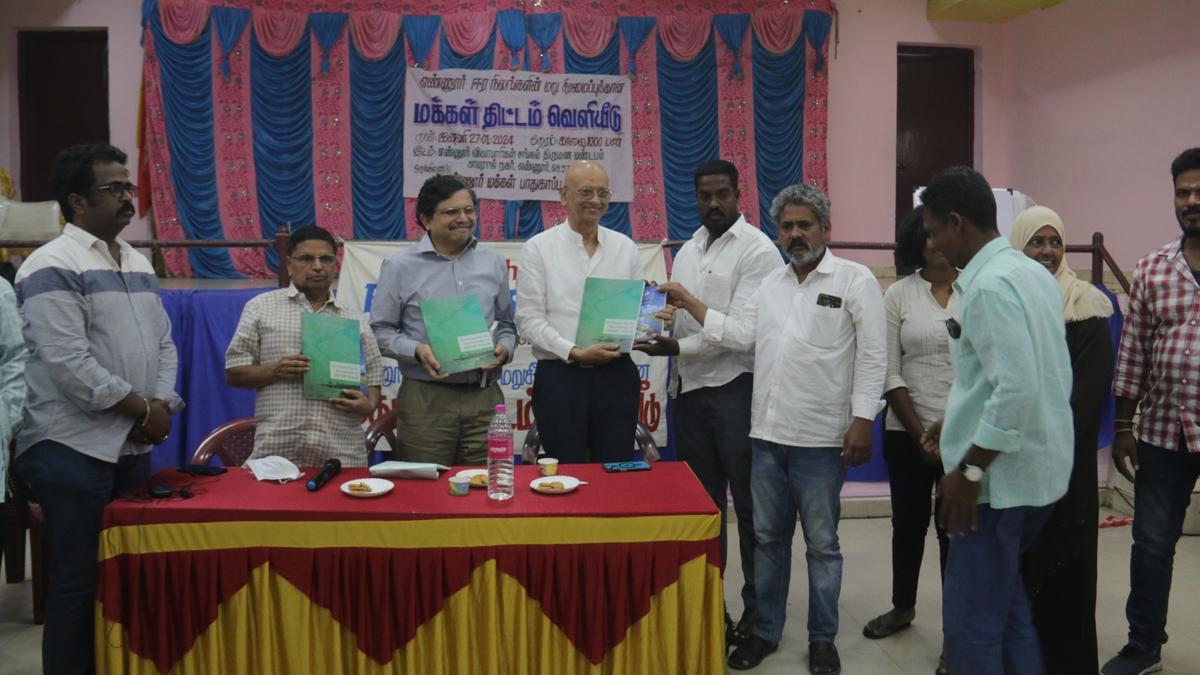
– As per a release from the Coastal Resource Centre, the retired judges said that the people’s plan could guide the government in aligning its plans for the region with the aspirations of local communities. The plan draws from stories and anecdotes from local fishers, salt pan workers, and other Ennore residents about people’s way of life, their culture, rituals and beliefs, cuisine, and the Kosasthalaiyar river — all of which have been lost due to the takeover of the region by industries. https://www.thehindu.com/news/cities/chennai/ennore-residents-release-peoples-plan-to-restore-wetlands-and-livelihoods/article67783639.ece (27 Jan. 2024)
Maharashtra Don’t mess around with nature: SC The Supreme Court on Jan 25 2024 took exception to the alleged encroachment of Nagpur’s heritage wetland in Futala lake by civic authorities, ostensibly to promote tourism and commercial activities, and stopped all construction activities around the lake while warning Maharashtra government not to “mess around with nature”. A bench of Chief Justice D Y Chandrachud, and Justices J B Pardiwala and Manoj Misra ordered status quo at the wetland and directed no further construction activities at the site after senior advocate Gopal Shankaranarayanan, appearing for NGO Swacch Association of Nagpur, said that though the 225-year-old heritage lake is categorized as wetland in the Wetlands Atlas of India, the Bombay HC permitted the construction activities after the state took the stand that it was a man-made lake and not a wetland. Shankaranarayanan said what was even more disturbing is that the state’s stand conflicted with an earlier recording of the lake as wetland by the SC. He said the two lakh wetland identified by governments on SC order included Futala Lake, also known as Telangkhedi Tank. “It is a wetland as well as Grade I Heritage Precinct. The said tank was constructed in the year 1799 by one Shri Gyanoji Bhosale. The total area of the tank along with its catchment is about 200 hectares. Maintaining the wetlands is of prime importance to the protection of environment and ecology,” the counsel said. https://timesofindia.indiatimes.com/india/dont-mess-around-with-nature-supreme-court/articleshow/107161254.cms (26 Jan. 2024)
PIL In HC Seeking Protection Of Wetlands, Mangroves Environmentalists are seeking legal action as a result of the City and Industrial Development Corporation’s (CIDCO) persistent failure to protect the city’s wetlands and mangroves. The mangroves surrounding the T.S. Chanakaya lake in Nerul, Navi Mumbai, have sustained repeated damages. As a result, a new public interest litigation (PIL) has been filed in the High Court (HC). Since around 200 mangroves were discovered to have been purposefully destroyed, activists have been mobilising to save the lake from encroachments since mid December.
The petition, which was submitted on January 3, lists the various incidents of damage observed near the wetlands. Additionally, CIDCO has been held solely responsible for the damage that has gone unchecked. According to petitioner Kanchan Purohit, “The destruction of the wetlands began when CIDCO decided to have a golf along with nine residential towers on five plots falling under Coastal Regulation Zones (CRZ). Even though NMMC is the planning authority, CIDCO continues to act independently and cause more damage to the environment. Therefore, in the interest of the City’s flora and fauna I decided to get the PIL filed.”
The petition asks the HC to order a stop to all planned or ongoing construction within 100 meters of the hazard lines and the High Tide Line (HTL). It further demands that the state government publish notices and warnings to the public, discouraging them from investing their hardearned money in projects located in CRZs, and that the HC order MCMZA to stop processing any applications for construction in CRZ areas. within the city, it also requires the installation of permanent fencing. https://english.jagran.com/maharashtra/environmentalists-file-pil-in-hc-seeking-protection-of-wetlands-mangroves-in-navi-mumbai-10127593 (16 Jan. 2024)
Chalo Chanakya Citizens’ Movement Gains Momentum In the ongoing battle to preserve the T.S Chanakya wetland and mangrove, the ‘Chalo Chanakya’ citizens’ movement marked its 6th edition on January 28, 2024. The peaceful yet impactful protest witnessed a significant turnout, with notable figures from society, students, and residents joining forces against the human-induced devastation of Navi Mumbai’s Chanakya Wetland and adjacent areas and collectively called for immediate government action:
1. Handover all wetlands mentioned in the National Wetlands Atlas to the state wetlands authority.
2. Expedite the transfer of the remaining mangroves to the Mangroves Cell.
3. Advocate for the punishment of culprits, including builders and officials, involved in the conspiracy to destroy mangroves for personal gain.
4. Call for the arrest of officials responsible for permitting 17 buildings on Chanakya Lake, disregarding the Bombay High Court order protecting the lake.
Sunil Agarwal announced that these critical issues will be further addressed on a larger platform during ‘Run for Flamingos Season 3’ scheduled for February 11, 2024, urging participants and Navi Mumbai residents to register and show their support. https://www.newsband.in/article_detail/chalo-chanakya-citizens-movement-gains-momentum (29 Jan. 2024)
Tamil Nadu 38% of Pallikaranai marshland is under legal & illegal occupation: Govt to NGT Nearly two years after the Southern Bench of the NGT called for a survey of the Pallikaranai marshland, the Tamil Nadu government has completed a detailed assessment of the occupants of the marsh through a differential global positioning system (DGPS) survey.
According to the State counsel, who presented the map drawn by the Survey Department before the Bench on Monday (Jan. 22), of the total extent of 1,206.59 hectares (ha) of the Ramsar-designated Pallikaranai marshland, the Forest Department has 749 ha. The remaining 38% is legally and illegally occupied by several public and private institutions besides the Greater Chennai Corporation (GCC), which is in possession of 173.56 ha.
The Bench directed the GCC, which operates a huge garbage dump yard and has recently proposed an ‘eco-park’, to find an alternative place and allow the marshland to be restored to its original state. It was said that 40 acres of the dump yard has been reclaimed through biomining and will be handed over to the Forest Department. The counsel appearing for the civic body said another 100 acres was planned to be reclaimed by the end of 2024.
As per the data, the other major occupants of the Pallikaranai marshland are the Electronics Corporation of Tamil Nadu Limited (ELCOT) (163.25 ha) and the Railways (46.92 ha). Another information technology (IT) park, Chennai One, illegally occupies 5.85 ha, said the State counsel. Referring to the companies, Mr. Korlapati said: “They can go to Siruseri. There’s a lot of land for IT companies there.” As for the Railways, the Bench said nothing could be done and asked the counsel to direct them to pay for maintenance.
The National Institute of Ocean Technology (NIOT) and the National Institute of Wind Energy (NIWE) each occupy 20.71 ha and 1.93 ha respectively. “NIOT and NIWE are the government, they cannot encroach. You can give them an alternative piece of land to shift to,” the State counsel was told. Besides the institutions, residential areas, such as Kamakshi Nagar and Quaid-e-Millath Nagar (10 ha), Ambedkar Nagar (4.88 ha), Pari Nagar (3.24 ha), Mahalakshmi Nagar (2.91 ha), Maposi Nagar (2.38 ha), and Kandan Nagar (3.92 ha), have been built on the marshland, which continues to be polluted by sewage from residences and the waste from GCC’s dump yard.
Ordering the State government to think of eviction options for these areas, the Bench sought a detailed response on the matter and has listed the case for hearing on February 9. https://www.thehindu.com/news/cities/chennai/survey-shows-38-of-pallikaranai-marshland-is-under-legal-and-illegal-occupation-tn-government-tells-ngt/article67766200.ece (22 Jan. 2024)
Pallikaranai Marshland threatened by pollution Despite its international acknowledgement, the area is confronted with various threats and faces the potential loss of its Ramsar designation if swift measures aren’t implemented to counteract the pollution and misuse it experiences. As an ecologically sensitive zone, it has been consistently under threat from pollution emanating from nearby industries, indiscriminate garbage dumping, and encroachments. Over time, its expanse has dwindled significantly from an initial area of over 5,000 hectares to a mere 600 hectares. https://thesouthfirst.com/featured/pallikaranai-marshland-a-crucial-haven-for-migratory-birds-threatened-by-pollution/ (21 Jan. 2024)
Assam तेल कुएं में विस्फोट के तीन साल बाद पुराने रूप में लौट रही मगुरी मोटापुंग बील असम में साल 2020 में बाघजान तेल कुएं में विस्फोट से जैव विविधता, मछलियों की आबादी, आर्द्रभूमि मगुरी मोटापुंग बील और अहम पक्षी क्षेत्र (आईबीए) से चलने वाली आजीविका पर गंभीर असर पड़ा। हालांकि, कुछ जानकारों का कहना है कि तूफान के बाद मानसून ने कुछ प्रदूषकों को बहाने में मदद की है और आर्द्रभूमि बेहतर तरीके से ठीक हो रही है। लेकिन, स्थानीय समुदायों का कहना है कि ठहरे हुए पानी में रिकवरी के निशान ना के बराबर है। सरकारी अधिकारी आर्द्रभूमि को उसके पुराने रूप में बहाल करने के लिए प्रबंधन योजना में प्रगति का भरोसा देते हैं। लेकिन जानकार असर के ज्यादा व्यापक अध्ययन की मांग कर रहे हैं, क्योंकि इलाके में दूसरे तेल क्षेत्र भी हैं। https://hindi.mongabay.com/2024/01/24/three-years-after-an-oil-well-blowout-this-assam-wetland-is-slowly-coping/ (24 Jan. 2024)
NGT seeks response from KSPCB, others on lake buffer zone encroachment The NGT has sought replies from the member secretary SPCB and two others in a case regarding alleged encroachments on a lake’s buffer zone in Mahadevapura in east Bengaluru. The tribunal was hearing the matter where it had taken suo motu cognisance of a newspaper report claiming unauthorised construction of roads in the Pattandur Agrahara Lake’s buffer zone. https://www.hindustantimes.com/cities/bengaluru-news/bengaluru-lake-buffer-zone-encroachment-ngt-seeks-response-from-kspcb-others-101706195756846.html (25 Jan. 2024)
The case adds to the ongoing challenges faced by civic authorities and environmental activists in preserving Bengaluru’s water bodies and green spaces against unauthorised encroachments.
Sandeep Anirudhan, convenor of citizen organisation Namma Whitefield, told this reporter that this is not the first time the Pattandur Agrahara lake has faced encroachment issues. The local community had previously fought legal battles to protect it, filing two public interest litigations. Thanks to concerted efforts, including legal action by the BDA, the state government filed a case against encroachers and obtained a stay on their claims. The government also allocated Rs one crore for fencing the lake in 2022.
However, fresh reports have emerged of owners and developers near the lake openly defying regulations. Developers had submitted that they are constructing a road to the Sri Muneshwara temple. The said road has been designated as a Kaludari (walking path) in revenue records. Anirudhan claimed that the road was, in fact, illegal. It will connect to a new unauthorised layout in Whitefield, he added. This is happening even before the lake fencing has been finished. https://www.downtoearth.org.in/news/water/bengaluru-ngt-seeks-responses-on-alleged-encroachments-in-pattandur-agrahara-lake-s-buffer-zone-94121 (26 Jan. 2024)
HYDRO POWER PROJECTS
Sikkim How a hydropower boom turned into a bane This second part looks into how many other hydropower projects (besides Teesta III HEP that was subject of first part) were also plagued with similar problems.

What the 2009-2010 CAG report also noted was the potential revenue the state would lose out on because of the poor terms of agreement. https://www.eastmojo.com/news/2024/01/26/eastmojo-investigation-how-a-hydropower-boom-turned-into-a-sikkims-bane/ (26 Jan. 2024)
Roads connecting north Sikkim cut off due to October flood restored partially: BRO Roads connecting north Sikkim cut off due to October flood restored partially, says BRO, but current load bearing capacity is 20 T and not ususal 70 T, said BRO Add DG (East) PKH Singh. The Roads were damaged following GLOF on Oct 3-4 2023 that washed away the massive Teesta 3 dam.
– Roads from Chungthang to Lachen and Naga to Toong were completely washed away along with bridges at Zeema, Chungthang and Toong, the lifelines of north Sikkim, completely damaged, Singh said. “Restoration work has commenced on all the stretches in Sikkim with a temporary road up to Toong bridge for carrying materials being constructed,” he said.
– A 190 ft-long bailey bridge was constructed at Chungthang in Nov 2023 and the road up to Lachung opened for traffic even though very heavy vehicles have not been allowed. “A footbridge has been built at Toong with the help of the local population and a 400 ft long modular bridge will be inaugurated by February 23 this year in the area”, the official said. Blockades due to 10 landslides between Lachen and Zeema have been cleared, he said. A modular bridge at Sanklang is under construction and it is scheduled to be ready by March 31. “The aim is at establishing permanent connectivity with North Sikkim by mid-April next year though the construction of permanent bridges may take two to three years,” Singh said. https://www.hindustantimes.com/india-news/roads-connecting-north-sikkim-cut-off-due-to-october-flood-restored-partially-bro-101706350243051-amp.html (27 Jan. 2024)
Arunachal Pradesh Siang HEP will go-ahead only after obtaining consent of people: CM Pema Khandu on Tuesday (Jan. 23) said that the proposed Siang hydropower project will be given the go-ahead only after consultations and obtaining the consent of the people. “I know apprehensions are there, which are valid. I promise that all due processes of consultation will take place for the proposed project and only with people’s consent it will go ahead,” Khandu said in a public meeting here in Upper Siang district. https://arunachaltimes.in/index.php/2024/01/24/siang-hydropower-project-will-be-given-go-ahead-only-after-obtaining-consent-of-people-cm/ (24 Jan. 2024)
Himachal Pradesh Generation at hydel projects drops by 85% in rain-deficit “With a rain deficit of 99.7% so far in January, there has been a significant reduction in water levels in the state’s five perennial river basins, Chenab, Ravi, Sutlej, Yamuna and Beas, adversely affecting generation in all power projects,” said principal secretary (power) Bharat Khera. He added that there was no need to panic as Himachal was buying electricity from other states.
-The rivers have the potential to produce 27,436 megawatts (MW) of power annually. So far this year, 11,153 MW has been harnessed, of which 7.6% is under control of the Himachal government. The rest is harnessed by the Centre.
-Power production in winter usually declines to 40% in all river projects, but this time generation has dropped by 90% in the 1,500MW Nathpa Jhakri hydel plant, the largest underground hydropower project in the country. At present, only one of its six turbines is operational.
-The water flow in the Sutlej has fallen to 70 cusecs. “We require 450 cusecs water flow to run the turbines 24 hours. Just 70 cusecs water fulfills need to run one unit,” said Manoj Kumar, operations head at the project.
-Himachal’s daily electricity requirement ranges from 360 to 370 lakh units. It has seen a sharp drop in generation from 2,500 lakh units to a mere 450 lakh units a day due to deficit rainfall caused by scanty rainfall and freezing glaciers.
-To meet its power requirements, the hill state buys 25 to 30 lakh units daily from the open market every winter. Additionally, it relies on Punjab for 200 lakh units daily as a banking measure. In the banking measure, Himachal supplies electricity to other states, and instead of accepting monetary payment, it takes back the power to meet its deficit in winter months. https://www.hindustantimes.com/cities/chandigarh-news/generation-at-hydel-projects-drops-by-85-in-rain-deficit-himachal-101705691668971-amp.html (22 Jan. 2024)
Report New research analyzes state violence in India’s coal war The Himalayas, for instance, have been reframed as a site for the development of more than 100,000 MW of hydroelectric dams to mitigate carbon emissions. “Both fossil fuel and low-carbon transitions, however, draw upon forms of state violence and land expropriation to expand extractive industries,” author of the study (https://www.tandfonline.com/doi/full/10.1080/17565529.2023.2264259) Mukul Kumar (Asstt Pof, California University) says. Peaceful, nonviolent movements that challenge the expansion of extractive energy industries are far too often criminalized or subjected to police violence. India is in the midst of multiple violent energy transitions toward both increased fossil fuel and low-carbon energy extraction that further marginalize Indigenous (Adivasi) and frontline communities of Dalits, landless farmers, and artisanal fishers.” https://phys.org/news/2024-01-state-violence-india-coal-war.html (23 Jan. 2024)
Andhra Pradesh Stage set for laying foundation for 2 PSHPs The New & Renewable Energy Development Corporation of Andhra Pradesh (NREDCAP) has set the stage for laying the foundation soon for the pumped storage hydropower projects (PSHPs) at Chitravathi and Gandikota in the Sri Sathya Sai and Kadapa districts respectively by CM Y.S. Jagan Mohan Reddy. Adani Green Energy Limited (AGEL) is the developer of both the projects having 2×250 MW & 4×250 MW capacity respectively. https://www.thehindu.com/news/national/andhra-pradesh/stage-set-for-laying-foundation-for-two-pumped-storage-hydropower-projects-in-andhra-pradesh/article67776238.ece (25 Jan 2024)
Report The direct use of energy (electricity and fuel) in agriculture in Indira rose from 28.75% in 2009-10 to 37.1% in 2019-20. https://energy.economictimes.indiatimes.com/news/power/electricity-use-in-agriculture-sector-jumps-to-37-1-per-cent-since-2009-10/107146126 (25 Jan. 2024)
DAMS
Gujarat Bhadbhut barrage on Narmada estuarykilling a way of life In Bhadbhut village, one gets the impression that they are looking at the last generation of fisherfolk here who have come out with their boats to catch fish in the waves. The village is situated in Gujarat’s Bharuch district at the spot where the Narmada river meets the Gulf of Khambhat, an inlet of the Arabian Sea. The construction of the Sardar Sarovar Dam (SSD) in 2017 caused a reduction in the flow of freshwater in the Narmada. As a result, fish became scarce. The income of fishers went down. The Bhadbhut barrage is being constructed 125 kilometres downstream from the SSD and about 25 km before the river merges with the sea. It is about 30 per cent complete. The fisherfolk look at the direction of the dam site with despair. Once it is completed, the remaining fish, fishers and boats in the area will also be gone, they say.

-Himanshu Thakkar, an environmental activist, dam and water expert, said the Bhatbhut barrage was needed to mitigate the SSD’s ill effects. This is the second mistake being made to correct the first one, he said. Thakkar remembered that 250 fishermen from Bharuch district in 40 boats had showed black flags when Prime Minister Narendra Modi came to lay the foundation stone of the Bhadbhut barrage in 2017. “After the SSD, they are now building the barrage at Bhadbhut to mitigate the problem of increased salinity in the lower reaches of the Narmada. There was no public hearing for this. There was no talk of monitoring the environment. What impact the two dams will have on the river and the community remains to be seen,” said Thakkar. Regarding pollution in the river and sea due to industrial wastewater, he said, “In 1974, the Water (Prevention and Control of Pollution) Act was promulgated. 2024 is the golden jubilee year of this legislation. We have completely failed to control pollution. Why don’t companies treat and recycle their industrial wastewater?”
-Kamlesh S Madhiwala, a lawyer and president of the Bharuch District Machhimar Samaj, a non-governmental organisation, said, “The Bhadbhut barrage will affect the livelihood of 15,000 fisher families. Last year, Hilsa worth Rs 1,000-1,200 crore was traded in Bharuch. Fishing families earned between Rs 5 lakh and Rs 15 lakh. Everyone is at risk of unemployment. When you do not have the means to provide employment to so many families, why are you taking away their traditional employment? For whom are they building dams?” https://www.downtoearth.org.in/news/environment/just-transition-in-petrochemicals-bhadbhut-barrage-coming-up-on-the-narmada-estuary-in-bharuch-is-killing-a-way-of-life-94130 (29 Jan. 2024) The same report by Varsha Singh can also be seen in Hindi here. https://www.downtoearth.org.in/hindistory/river/dam/for-whom-are-bhadbhut-dam-being-built-question-of-fishermen-of-narmada-94098 (25 Jan. 2024)
Kaleshwaram Project Expert committee to study Medigadda & other barrages CM A Revanth Reddy on Jan 27 2024 said that a committee of experts drawn from Central Water Commission, National Dam Safety Authority and state irrigation department will be constituted soon to study quality of works in Medigadda, Annaram and Sundilla barrages under the Kaleshwaram project. He also ordered a thorough study to assess the structural stability of Medigadda, Annaram and Sundilla barrages and suggest steps to be taken to repair or construct new pillars in the aftermath of sinking of piers. The experts committee will take up work based on the study report, he said. The CM warned the irrigation department against rushing with temporary repairs and making similar mistakes. “Only after taking into account all the technical aspects, a decision should be taken on further repairs and restoration measures. A meeting will be held within 2-3 days with irrigation minister N Uttam Kumar Reddy also participating in it along with me,” the CM said. https://timesofindia.indiatimes.com/city/hyderabad/expert-committee-to-study-medigadda-other-t-barrages-hyderabad/articleshow/107196292.cms (28 Jan. 2024)
‘Engineers Kept Mum When Barrage was Cracking up’ The ongoing probe by the vigilance and enforcement wing of the Telangana state police has revealed that there appeared to be not an ounce of professionalism on the part of the engineers, involved in the construction of the Medigadda barrage, or for that matter the Annaram and Sundilla barrages upstream of Medigadda, which are feared to be ‘going the Medigadda way’.
– As per the contract with L&T, which built the Medigadda barrage, the company is responsible for the operation and maintenance of civil structures for a period of five years. Even if the company was not doing its job, it is a mystery why irrigation officials never raised any questions.
– Flood pressure dissipation blocks weighing up to 20 tonnes each were thrown afar during the 2019 floods, the aprons on which water flows once released from the gates began suffering damage and water began seeping out from under the foundations leading to eventual sinking of Block 7.
– “The designs were faulty, the construction was of poor quality and there was no maintenance worth mentioning, since its completion,” sources, familiar with the findings of the ongoing probe, said. And it is absolutely shocking that no one involved in the project appeared to have taken into account the cost of its failure, the sources added.
– With all 11 pillars of Block 7 developing cracks and stresses – with most damage suffered by pillar no 19, along with the adjacent pillars 20 and 21 – the sources said that the ongoing probe has more or less come to the conclusion that “these are not something that can be dismantled and rebuilt. The fact is that the blocks adjacent to the damaged one are also under stress. What happened at Medigadda is a humiliation of the entire Telangana irrigation department.” https://www.deccanchronicle.com/nation/medigadda-engineers-kept-mum-when-barrage-was-cracking-up-vigilance-probe-findings-879465 (23 Jan. 2024)
Kaleshwaram project not economically viable: CAG According to the confidential report of the CAG as per the guidelines of the Union jal shakti ministry, an irrigation project can be considered economically viable only if the Benefit Cost Ratio (BCR) is 1.5 in normal areas. It means, for every rupee spent on the project, the benefit should be ₹ 1.50. The CAG audit analysis in 2022 disclosed that the BCR was inflated by under-projecting the annual costs and overstating the value of annual benefits expected from the project. The recent CAG audit analysis revealed that the BCR of the project is only 0.52, taking into consideration the annual costs, including interest on capital, operation and maintenance costs, electricity consumption costs and depreciation on civil works, pumps/motors and pipelines. “This means that every rupee spent on the project would yield a meagre benefit of 0.52 paise, indicating that the project is not economically viable,” the report said. https://www.hindustantimes.com/india-news/kaleshwaram-project-not-economically-viable-says-cag-101706124599298.html (25 Jan. 2024)
Maharashtra Adani Energy drops plan to use Patgaon dam water The Adani Green Energy Limited company has decided not to use water from the Patgaon dam for its 2,100MW pumped water storage plant. The dam is located in the Bhudargad tehsil of Kolhapur district. The company has written a letter to Kolhapur district collector Rahul Rekhawar, informing that the decision has been taken in view of the sentiments of the public and representatives of the public.
– The letter, dated January 23, has also been forwarded to district guardian minister Hasan Mushrif and Radhanagari MLA Prakash Abitkar, both of whom have been vocally in favour of local Bhudargad farmers’ sentiments. The farmers had strongly opposed allowing the company to use the water from the dam for power generation. The opposition had also led to the forest department cancelling its permission given to carry out the soil testing and other groundwork in the forest areas connecting the dam and lower reservoir site, which is located in Anjiwade village of Kudal tehsil, Sindhudurg district. M/s Adani are exploring possibilities of shifting the location. https://timesofindia.indiatimes.com/city/kolhapur/adani-energy-drops-plan-to-use-patgaon-dam-water/articleshow/107159843.cms (26 Jan. 2024)
INTERLINKING OF RIVERS
Report Interlinking of Rivers: Solution or recipe to ecological imbalance? This raises questions about the need and impacts of the ILR proposals, though it could have raised the issue of pathetic EIA for the Ken Betwa LInk and the lack of all clearances in a credible way.

Rajasthan-Madhya Pradesh MoU on Modified Parbati-Kalisindh-Chambal-ERCP Link Project An MoU was signed by Rajasthan and MP with Ministry of Jal Shakti (MoJS), Govt. of India (GoI) On Jan 28 2024 at New Delhi for implementation of the “Modified PKC-ERCP” (integration of original PKC with Eastern Rajasthan Canal Project of Rajasthan), which is the second project under the national perspective plan of interlinking of rivers (ILR) program of Government of India. The MoU was signed today on 28.01.2024 by Dr. Rajesh Kumar Rajora, ACS, WRD, Govt. of MP, Sh. Abhay Kumar, ACS, WRD, Govt. of Rajasthan and Smt. Debashree Mukherjee, Secretary, DoWR,RD&GR, MoJS, GoI on broad planning of the Parbati-Kalisindh-Chambal (PKC) link duly integrated with Eastern Rajasthan Canal Project (ERCP) and preparation of its DPR. The Union Minister of Jal Shakti, Sh. Gajendra Singh Shekhawat, Sh. Mohan Yadav, Hon’ble Chief Minister of Madhya Pradesh and Sh. Bhajan Lal Sharma, Hon’ble Chief Minister of Rajasthan graced the occasion. Sh. Shriram Vedire, Chairman of the Task Force on Interlinking of Rivers and other officials of MoJS and states of Madhya Pradesh and Rajasthan were present on the occasion.
– The various components of Modified PKC link including areas of benefit shall be firmed up at DPR stage in consultation with both the states. The preparation of DPR of this Modified PKC-ERCP link is already in progress. Based on the outcome of DPR, a Memorandum of Agreement (MoA) would be finalized amongst the States of Rajasthan, Madhya Pradesh and Union Government, covering the scope of the work of the link Project, sharing of water, exchange of water, sharing of costs & benefits, implementation mechanism and arrangements for management and control of water in Chambal basin etc. to be signed by Hon’ble Chief Ministers of both the States and Hon’ble Minister of Jal Shakti for the implementation of this link. https://pib.gov.in/PressReleseDetailm.aspx?PRID=2000254 (28 Jan. 2024)
Godavari-Cauvery Linking Change of power in Telangana may delay interlinking project The signing of MoU between stakeholder States for the Godavari-Cauvery rivers interlinking project is likely to be delayed with change of government in Telangana, said senior officials in Ministry of Jal Shakti. Already, there is an air of disagreement in Telangana over using Inchampalli to divert Godavari river surplus to water into Cauvery.
– The Ministry of Jal Shakti has formally approved Tamil Nadu’s proposal seeking change in terminal point from the original Grant Anicut (Kallanai) in Thanjavur to Mayanur Kattalai barrage in Karur. The reason why the State insisted on the change was the Grand Anicut was in lower elevation, while Mayanur was in higher elevation. “The Cauvery-Vaigai-Gundar link canal starts from Mayanur. So, during surplus years, it would easy for us to supply water to drier regions in south if the terminal point of Godavari-Cauvery interlinking project was changed to Mayanur,” Saxena said. https://www.newindianexpress.com/states/tamil-nadu/2024/Jan/24/change-of-power-in-telangana-may-delay-godavari-cauvery-rivers-interlinking-project (24 Jan. 2024)
INTERSTATE WATER DISPUTES
Tamil Nadu-Karnataka Help set up panel to settle water dispute between TN, K’taka, SC directs Centre The Supreme Court on Jan 22 2024 directed the Centre to help the warring states of Tamil Nadu and Karnataka to settle their inter-state water dispute with regard to Pennaiyar river by setting up a negotiation committee to facilitate talks and directed the committee to submit a report to the Centre within three months. A bench of justices Hrishikesh Roy and PK Mishra passed the order after the Centre informed the Court that soon after the Congress government took charge in Karnataka last year, the Ministry of Jal Shakti received a letter from Karnataka’s deputy CM DK Shivakumar in June last year indicating that the state government was keen to have talks with the Tamil Nadu government with a view to resolve the outstanding issue. This was followed a month later by another letter addressed by chief minister Siddaramaiah to PM Narendra Modi.
– The bench said, “We deem it appropriate to direct the Ministry of Jal Shakti to constitute a fresh negotiation committee under the Inter State River Water Disputes Act, 1956 and endeavour to reach a negotiated settlement of the inter-state water dispute over Pennaiyar river.” Further, the order said, “The Committee should furnish a preliminary report to the Union of India within three months on the outcome of this exercise.” The Court was hearing a suit filed by the Tamil Nadu government against the Karnataka government challenging the alleged diversion of water from the Pennaiyar river for various purposes including construction of a reservoir across Markandeyanadhi (tributary of Pennaiyar) project for drinking water purposes, diversion of surplus waters of Varthur tank, lift irrigation scheme at Ellamallappa and pumping scheme at villages Belahalli and Thattanur villages.
– Senior advocate Mohan Katarki appearing for Karnataka told the Court that in January 2020 a negotiation committee was constituted by the Centre but nothing progressed in the matter as it met only twice following which it became defunct. The Tamil Nadu government led by senior advocates V Krishnamurthy and G Umapathy objected to the change of stand by the Centre. In May last year, the Centre had agreed to constitute the Pennaiyar inter-state water dispute tribunal within a month after concluding that there was no scope for negotiations. https://www.hindustantimes.com/india-news/help-set-up-panel-to-settle-water-dispute-between-tn-k-taka-sc-directs-centre-101706038172179-amp.html (24 Jan. 2024)
URBAN RIVERS
Pune ‘Rights of Rivers’: 3-Day Campaign For Sewage-Free Rivers In a bid to raise awareness about the importance of having “clean and sewage-free” rivers, Pune River Revival, a coalition of over 60 organisations and individuals, is organising a three-day campaign from January 26 to January 28. The coalition, committed to the ecological well-being of the city’s rivers, has named the campaign “Rights of Rivers,” with a primary focus on seven rivers in the Bhima basin, namely Mula, Mutha, Ramnadi, Pavana, Indrayani, Bhama, and Bhima.
Santosh Lalwani, a key organising member of the event, stated, “Internationally acclaimed river expert Parineeta Dandekar will inaugurate the event, while Rajendra Singh, known as the ‘Waterman of India,’ will be present as the chief guest during the concluding ceremony on January 28. RJ Sangram will be the guest of honour for the three-day environmental event.”
Explaining the aim of the event, Lalwani said, “It has been organised to spread awareness among the public and governmental bodies and help them understand the preservation of natural, free-flowing clean rivers that remain untouched by sewage and pollution.”

During the campaign, “We also plan to collect water samples from various locations along the seven rivers as we also need to educate youth about climate change and ecological degradation. For this event, we have invited colleges and schools too so that the message of river cleanliness reaches future generations,” he said.
The three-day campaign will include various activities, including commemorating 700 days of chain fasting for river rights through a 24-hour mass fasting initiative at specific locations along the rivers. Some participants will be fasting partially in solidarity with the chain fasting movement, Lalwani shared. Additionally, the event will feature river-side cleanups, selfies, vlogs, street plays, and other artistic displays. There will be a contest, “Selfie with the river,” as part of the environmental campaign aimed at inspiring the youth, he concluded. https://www.freepressjournal.in/pune/rights-of-rivers-pune-river-revivals-3-day-campaign-for-sewage-free-rivers-from-january-26 (23 Jan. 2024)
Shailaja Deshpande of Jeevitnadi said Pune River Revival has been working towards ecological rejuvenation of rivers. “Along with awareness drives, a day-long fast will be held on January 27 to draw attention towards the issues of rivers,” she said. The campaign will be held at Mula, Mutha, Ramnadi, Pavana, Indrayani, Bhama and Bhima rivers.
Vivek Velankar of Sajag Nagrik Manch, a citizens’ group, said a significant amount of untreated water is flowing through rivers from the city, leading to water contamination. “As per estimate, only 30% to 40% of treated sewage goes to rivers, the rest is untreated sewage. The Pune Municipal Corporation (PMC) should spend more money on sewage treatment and cleaning of rivers instead of allocation of funds for river beautification,” Velankar said. https://timesofindia.indiatimes.com/city/pune/awareness-drive-on-river-conservation-from-jan-26-28/articleshow/107022707.cms (21 Jan. 2024)
Pune campaign concludes with pledge for river restoration. River Researcher Parineeta Dandekar stated – India must lead the world for executing “Rights of Rivers”. India has always respected rivers as “Living Entities”. She gave references from Ramayan, Rugveda and also narrated Sanskrit Shlokas which defines River as – water which flows with rhythm, which makes a sound and is full of life in the water and on the banks. However our rivers are far worse than any other countries in the world. A third party vigilant monitoring system on Water treatment plants, Sewage treatment plants and also decentralized Effluent treatment plants and additional sewage treatment plants, efficient storm water drains is required. However the so called “Guardians of rivers” MPCB or any state level PCB as well as Water Resource Departments or local governing bodies do not take the responsibility. https://www.punekarnews.in/pune-rights-of-rivers-my-responsibility-campaign-concludes-with-pledge-for-river-restoration/ (28 Jan. 2024)
Chandigarh Garbage choking UT’s choes: NGT issues notice to MC In a suo-motu matter based on a report by The Indian Express that had highlighted garbage choking N-choe, the NGT has issued a notice to the commissioner Municipal Corporation (MC), Chandigarh, and sought a reply before the next hearing on March 20. In a three-part series first published on December 15 titled ‘How garbage is choking N-choe in Chandigarh, The Indian Express had shed light on the poor state of three seasonal streams – N-choe, Sukhna Choe, and Patiala-ki-Rao – where sewage water, garbage, including solid and wet waste, along with carcasses of dead animals, were being indiscriminately dumped. https://indianexpress.com/article/cities/chandigarh/express-report-garbage-choes-ngt-mc-commissioner-9122807/ (23 Jan. 2024)
Musi; Hyderabad RFD: CM meets planners in Dubai A Revanth Reddy on Sunday (Jan. 21) held detailed discussions with top global urban planners and designers, mega master plan developers and architects in Dubai. The marathon back-to-back meetings were primarily focused on developing the 56-kilometre stretch of Musi riverfront, green urban spaces and exploring commercial linkages and investment models. The meetings in Dubai were an extension and continuation of the meetings with over 70 various major global design, planning and architecture firms, consultancies and experts.
During the discussions, the global firms showcased their work in aligned areas, expertise and their past and present projects which were underway in Europe, the Gulf countries and in major cities globally. “Almost all firms expressed interest in partnering with Hyderabad, and Telangana. They will be visiting Telangana in coming days for further consultations,” the CMO said. https://timesofindia.indiatimes.com/city/hyderabad/musi-riverfront-revanth-meets-planners-in-dubai/articleshow/107039679.cms (22 Jan. 2024)
The Greater Hyderabad Municipal Corporation (GHMC) is set to conduct a drone survey along the Musi River as part of the Musi Riverfront Beautification Project. The survey aims to identify flooding areas, encroachments, and households, crucial for preventing frequent flooding and revitalizing the deteriorating Musi River. To carry out the survey, GHMC will engage a private agency through a bidding process, allocating Rs 49.55 lakh for a 15-day survey. The selected agency will use drones to gather detailed data, focusing on structures within the buffer zone and the maximum flood level of the river. https://www.siasat.com/hyderabad-ghmc-all-set-for-drone-survey-of-musi-riverfront-2962808/ (24 Jan. 2024) CM A Revanth Reddy sought the builders’ community to support his vision for developing the proposed Musi River Front on the lines of the Thames River Front in London and he would ensure a new Hyderabad would be the cynosure of all eyes. https://www.thehindu.com/news/national/telangana/revanth-seeks-builders-support-for-musi-river-front-development-and-infra-in-telangana/article67785654.ece (28 Jan. 2024)
Chennai MGR canal full of mud and bricks, width down to 2-ft Several illegal buildings and huts have come up inside the MGR canal and construction material has been dumped in it, reducing the width from 10-ft to 1-ft on important stretches. Large parts of the 1.7-km-long canal, which starts at KK Nagar and goes through MGR Nagar and West Jafferkhanpet before draining into the Adyar river, are encroached and on stretches beneath Ayyavu Fourth Street, mud dumped inside has reduced width to just two-and-half feet. Fresh bricks have been placed for construction. On Bharathidasan Salai and in interior parts of MGR Nagar, only a wall separates houses from the canal. https://timesofindia.indiatimes.com/city/chennai/mgr-canal-full-of-mud-and-bricks-width-down-to-2-ft/articleshow/107038268.cms (22 Jan. 2024)
Mumbai Residents worry on untreated chemical effluents in water bodies Residents of Nerul and Seawoods in Navi Mumbai are concerned about chemical factories releasing untreated effluents into nearby water bodies, causing pollution. The issue has been raised by residents in various areas of Navi Mumbai, but officials have shown little interest in addressing the problem. https://www.hindustantimes.com/cities/mumbai-news/chemical-effluents-in-water-bodies-worry-navi-mumbai-residents-101706094891159.html (24 Jan. 2024)
RIVERS
GANGA Report Modi’s Drifting Flagship Schemes Renamed Namami Gange, the project was announced in May 2014 as Modi’s “life’s mission”. As per a 2021 report, only 20% of the sewerage plant of the Rs 20,000 crore scheme was completed. The National Mission for Clean Ganga expects to add 7,000 million litres of sewage by 2026. https://thewire.in/government/modis-drifting-flagship-schemes-and-failed-guarantees (21 Jan. 2024)
Article Pollution crisis is totally manmade Fascinating narration and video of journey of and along Kali-Sharada and Ghaghra by Vidya Bhushan Rawat.
https://www.counterview.net/2024/01/pristine-rivers-before-they-merge-into.html (24 Jan. 2024)
Uttar Pradesh 26% STPs not complying with standards: report Of the 111 operational STPs, 29 are not complying with the effluent discharge standards fixed by the MoEF, shows a report available with the NMCG. The monthly progress report for September-October 2022 shows that these 29 non-complying STPs accounted for about 15 per cent (532.18 MLD) of the total sewage treatment capacity (3,663.4 MLD) in the state and were located along the main stem of the Ganga and its tributaries.
As per the report, there are 119 STPs in UP with a sewage treatment capacity of 3,663.4 MLD against the estimated sewage generation of 5,500 MLD — leaving a sewage treatment capacity gap of 1,836.6 MLD. Of the 119 STPs, 111 are operational, shows the report. This affects the gap further. To add to it, 29 STPs are not working up to the standards notified by the MoEF&CC, further widening the sewage treatment capacity gap in the state, shows an analysis of the report.
Of the 29 non-complying STPs, 7 are under Jal Nigam (Rural), 22 under UDD (Urban Development Department) and other agencies, shows the report shared by the state govt to the NMCG on November 21, 2022. The 7 non-complying STPs of UPJN-Rural account for a combined sewage treatment capacity of 188.5 MLD and are located along the main stem of Ganga and its tributaries in different districts, including Kanpur, Hapur, Mathura and Bulandshahr. The remaining 22 non-complying STPs under UDD/others account for 343.68 MLD and are located across Firozabad, Chitrakoot, Varanasi, Lucknow, Ghaziabad, Meerut, Mathura and Greater Noida. https://indianexpress.com/article/india/26-stp-up-ministry-standards-report-8382335/ (15 Jan. 2023)
Opinion Tears of Ganga The govt claims that the Namami Gange project to clean the Ganga is on course to meet the targets and objectives but, according to scientific studies conducted by experts, the water quality is continuously deteriorating in many stretches of the river. It raises several questions about where the money purportedly being spent in the name of the holy river is going. (Jayanta Bhattacharya) https://tatsatchronicle.com/tears-of-ganga/ (5 Jan 2023)
Kanpur Notice to KMC for discharging untreated effluent CPCB recently issued notice to Kanpur Municipal Corporation (KMC) for discharging untreated effluent (without bio remediation treatment) of several nullahs into Ganga. The CPCB has imposed a fine of Rs 5 lakh per month which has been calculated as Rs 40 lakhs in two months. The CPCB has taken cognizance of the effluent discharged from Ganda Nullah, Arra, Pipouri, Panki Thermal and Halwa Khandad nullahs into river Pandu which is a tributary of Ganga. It has imposed a fine at the rate of Rs 2 lakh per month against Panki Thermal Nullah and Halwa Khandad nullah and Rs 10 lakh against the remaining four nullahs. Thus, a total of Rs 50 lakh fine has been imposed against six nullahs. https://timesofindia.indiatimes.com/city/kanpur/notice-to-kmc-for-discharging-untreated-effluent-into-ganga/articleshow/107022719.cms (21 Jan. 2024)
Ayodhya सरयू नदी ने कभी रास्ता बदला तो राम मंदिर का क्या होगा? मंदिर निर्माण में उसकी ऊपरी सुरक्षा के साथ ही जमीन के नीचे भी सुरक्षा कवच तैयार किया गया है. मंदिर की 20 फीट ऊंची प्लिंथ पर रिटेनिंग वॉल का निर्माण किया गया है. प्राकृतिक आपदाओं से बचाने के लिए रिटेनिंग वॉल एक सुरक्षा कवच की तरह तैयार की गई है. यह सुरक्षा दीवार मंदिर की तीन दिशाओं पश्चिम, उत्तर और दक्षिण में बन रही है. इस दीवार को 12 मीटर जमीन के अंदर गहराई तक बनाया गया है. इसमें ग्रेनाइट के पत्थर लगाए गए हैं, क्याेंकि उनमें पानी को सोखने की क्षमता अधिक होती है.
दरअसल यह सारी कवायद करने का कारण यह है कि अयोध्या सरयू नदी के तट पर बसी है. मंदिर की नींव की खुदाई हुई तो यहां नीचे भुरभुरी बालू की सतह मिली. जिससे राम मंदिर की मजबूत नींव बनाने की चुनौती खड़ी हो गई थी. राम मंदिर को सरयू नदी की बाढ़ और उसके मार्ग बदलने पर सुरक्षित करने के लिए उसके चारों तरफ रिटेनिंग वॉल (क्रंकीट की दीवार) का निर्माण किया गया है. ताकि भविष्य में सरयू नदी का कटान मंदिर की ओर बढ़े तो उसे कोई खतरा पैदा ना हो. दरअसल, शोध में पाया गया कि सरयू नदी अब तक पांच बार अपनी दिशा बदल चुकी है. https://hindi.news18.com/amp/news/knowledge/ram-mandir-ayodhya-what-will-happen-to-ram-mandir-if-saryu-river-ever-changes-its-course-know-what-is-the-preparation-8006204.html (22 Jan 2024)
Barabanki नगर के बीच से गुजरे जमुरिया नाला और रेठ नदी के किनारों पर अतिक्रमण के ध्वस्तीकरण को लेकर गुरुवार को आपात बैठक बुलाई गई। इसमें जमुरिया नाले के बीच से 25 मीटर के दायरे को खाली करवाने पर 234 घर और पक्के निर्माण दायरे में आएंगे। ऐसे ही रेठ नदी को पहले चरण में 50 मीटर के दायरे को खाली करवाने पर 14 निर्माण ध्वस्त करने पड़ेंगे। डीएम सत्येंद्र कुमार की ओर से बुलाई गई बैठक में सिंचाई विभाग के अलावा विनियमित क्षेत्र, नगर पालिका परिषद नवाबगंज व बाढ़ कार्य खंड के अधिकारी शामिल हुए। डीएम ने बताया कि पिछले साल अगस्त 2023 में इस सकरे जमुरिया नाला व रेठ नदी के उफान से करीब 100 करोड़ रुपये का नुकसान हुआ था। इस मामले में हाई कोर्ट की डबल बेंच पहले से ही ध्वस्तीकरण के आदेश पारित कर चुकी है। अनुपालन न होने पर नाराजगी भी जताई है। https://navbharattimes.indiatimes.com/state/uttar-pradesh/barabanki/barabanki-248-structures-to-be-demolished-on-banks-of-reth-river-and-jamuria-drain/articleshow/107164256.cms (26 Jan. 2024)
Uttarakhand 62% dip in Dehradun Basmati acreage in 5 years The cultivation of Dehraduni Basmati rice in the Doon valley has drastically reduced by 62% between 2018 and 2022. Factors such as summer temperatures, poor soil fertility, water scarcity, changing rain patterns, and unplanned development have contributed to the decline. https://timesofindia.indiatimes.com/city/dehradun/doon-basmati-rice-cultivation-declines-by-62-in-5-years/articleshow/107093164.cms (24 Jan. 2024)
अटाली गांव के स्रोत सूखने से पेयजल समस्या से परेशान ग्रामीणों ने ब्यासी में अनिश्चितकालीन धरना शुरू कर दिया है। ग्रामीणों का आरोप है कि रेल विकास निगम की ओर ऋषिकेश-कर्णप्रयाग ब्रॉडगेज रेल लाइन के लिए अटाली गांव के नीचे से बनाई जा रही रेलवे सुरंग के कारण पेयजल स्रोत सूख गए हैं। पेयजल स्रोत सूखने से ग्रामीण गधेरे से सिर पर पानी ढोकर ला रहे हैं। अटाली गांव में सिंचाई नहर भी सूख गई हैं। जिससे काश्तकारों की कई बीघा भूमि बंजर हो गई है। बल्याखान के ग्रामीण भी पेयजल का संकट झेल रहे हैं। ग्रामीणों ने गूलर में धरना देकर रेल विकास निगम के खिलाफ आक्रोश जताया। कहा कि रेलवे के सुरंग निर्माण किए जाने से ग्रामीणों के पेयजल के स्रोत सूख गए हैं। इससे पेयजल के साथ खेतीबाड़ी और पशुपालन प्रभावित होने लगा है।
ग्राम पंचायत अटाली की प्रधान दीपा देवी, कौडियाला की प्रधान कुसुम राणा ने कहा कि रेल विकास निगम की ओर से अनियोजित ढंग से काम किया जा रहा है। जिससे गांव के पेयजल स्रोत सूख गए हैं। ग्रामीणों की ओर से कई बार रेल विकास निगम के अधिकारियों को पेयजल आपूर्ति के लिए कई बार पत्र लिख दिया है। कई बार वार्ता भी हो चुकी है। लेकिन समस्या का समाधान नहीं हो सका है। कहा कि जिन प्रभावितों के मकान में दरारें आई हैं उनको मुआवजा नहीं दिया गया है। स्थानीय निवासी प्रवीन पुंडीर ने कहा कि सिंचाई गूल सूखने से किसानों की आजीविका पर संकट आ गया है। https://www.amarujala.com/uttarakhand/rishikesh/villagers-troubled-by-the-drinking-water-problem-have-rishikesh-news-c-5-1-drn1030-336105-2024-01-25 (15 Jan. 2024) अटाली गांव में पेयजल आपूर्ति की मांग को लेकर ब्यासी में पांच दिन से धरना दे रहे स्थानीय लोगों ने आंदोलन समाप्त कर दिया है। गांव में अस्थाई व्यवस्था के रूप में जल निगम ने पेयजल आपूर्ति कर दी है। अन्य मांगों को पूरा करने के लिए रेल विकास निगम के अधिकारियों ने एक महीना का समय मांगा है। https://www.amarujala.com/uttarakhand/rishikesh/the-local-people-who-were-protesting-in-beasi-for-five-rishikesh-news-c-5-1-drn1031-338099-2024-01-29 (29 Jan. 2024)
YAMUNA Delhi 161 illegal colonies on O zone making river water toxic One of the major interventions to keep the Yamuna clean was providing sewer connections from all unauthorised colonies. But 161 colonies in the O zone of the floodplain, with 2.3 lakh households, have been recently identified as unattached to a sewer network. This means that sewage from these areas continues to flow untreated into the river, contaminating its water. Delhi Jal Board officials attributed the drawback in providing these colonies access to the sewer network to problems of getting no objection certificates from the various agencies involved. They are yet to provide approval for construction of sewage-related infrastructure. https://timesofindia.indiatimes.com/city/delhi/161-illegal-colonies-on-o-zone-making-river-water-toxic/articleshow/107128534.cms (25 Jan. 2024)
Govt to hold Yamuna aarti daily Being developed on the western banks of the river opposite Kashmere Gate ISBT, Vasudev Ghat along the Yamuna is nearing completion. Once ready, Yamuna aarti will be organised at the ghat daily on the lines of Ganga aarti in Varanasi. The project is being executed by DDA and includes a ghat, a pedestrian walkway, a bathing place and landscaping in Charbagh style with baradaris (pavilion-like structures) and chhatris (canopies).
Raj Niwas officials said many structures such as baradari and chhatri and two elephants made of pink sandstones have already been installed along with a huge bell weighing 300kg. “The development of Vasudev Ghat is a part of the restoration of the Yamuna floodplain on either side of the river. The way Yamuna Vatika, Baansera and Asita have been developed along the river, Vasudev Ghat is also coming up in a similar fashion,” an official said. He added that a total of 16 hectares of the floodplain- a stretch of 1.5km from Yudhishtir Setu in the north till Nigambodh Ghat in south – is being developed with extensive landscaping.
The new ghat will have stairs going down towards the river where people will be able to sit and watch the river. The riverfront of the ghat will be around 150 metres long. While the work on Vasudev Ghat had started last year, officials said it was severely impacted due to the floods in the Yamuna in August. Officials said around one and half feet thick layer of silt was collected in and around the baradaris and other structures developed at the ghat. “It took some time to clean the area and restart the development work, which pushed the deadlines. The work now is going on at a steady pace and we hope the ghat will be ready for aarti within a few weeks,” said the official. https://timesofindia.indiatimes.com/city/delhi/delhi-to-hold-yamuna-aarti-daily-on-lines-of-varanasi-vasudev-ghat-almost-ready/articleshow/107096494.cms (24 Jan. 2024)
Noida Authority to build 8 new STPs to treat drain water The decision comes 3 years after the NGT in February 2020 ordered that sewage in drains also be treated as all these sewers empty untreated sewage into the Yamuna and Hindon rivers, thereby polluting the river waters and also contaminating the groundwater table. The work on 6 of these STPs will begin in the next 2 months after the authority selects the construction company & will be completed within 18 months of starting work on the ground, officials said.
These 8 STPs will be small, with a capacity to treat around 8 MLD of sewer, and have a tentative budget of ₹2 crore each. However, the final estimates will be approved in the DPR to be submitted next week by NEERI. Apart from eight STPs, NERI has also suggested in situ treatment of a few drains. Noida authority already has 8 STPs in sectors 51, 54, 123 and 168 to treat around 210 MLD sewer. The authority treats the sewer from residential, industrial and other areas at these STPs and the treated water is released into drains, which empty into the Yamuna. https://www.hindustantimes.com/cities/noida-news/noida-to-build-8-new-sewage-treatment-plants-to-treat-drain-water-101705949241392.html (23 Jan. 2024)
RIVERS BIODIVERSITY
Report India to sign global pact to protect endangered river dolphins Since the 1980s, the combined populations of river dolphin species have plummeted by 73%. With the Global Declaration for River Dolphins, 14 countries (six of them in Latin America) are expected to join forces to protect the six surviving species of this aquatic mammal that inhabit the world’s rivers and are under some category of threat. So far, nine of the governments involved have signed the declaration. The declaration comes at a critical moment for these animals. In September 2023, the death of more than 150 river dolphins in one of the most important lakes in Brazil raised international concern. https://india.mongabay.com/2024/01/india-one-of-the-nine-countries-to-sign-global-pact-to-protect-endangered-river-dolphins/ (23 Jan. 2023)
Study Sikkim emerges as ‘Himalayan Jewel’ for plant diversity, species density Sikkim takes the spotlight, not only boasting the highest plant diversity but also claiming the title for the highest species density, as revealed by a comprehensive study on data synthesis for biodiversity science. This study focused on a database highlighting the plant diversity of the Indian Himalayan Region (IHR). Conducted by a research team from the Centre for Biodiversity & Taxonomy at the University of Kashmir, the study was led by Dr Anzar A Khuroo, Associate Professor at the University.
The study’s findings revealed that Sikkim recorded the highest number of plant species (5090), followed by Arunachal Pradesh (4907) and Uttarakhand (4352). In terms of species density, Sikkim once again claimed the top spot with a value of 0.717 species per square kilometre, followed by Darjeeling (0.667 species/sq km), Nagaland (0.143 species/sq km), and Tripura (0.130 species/sq km). Jammu and Kashmir recorded the lowest value of 0.015 species per square kilometre. The study identified 374 endemic species in Arunachal Pradesh, followed by Assam (199) and Uttarakhand (165). Tripura had the lowest number of endemic species (18). Arunachal Pradesh also recorded the highest number of threatened species (96), followed by Assam (59) and Sikkim (44). Once again, Tripura had the lowest number of threatened species (21). https://www.eastmojo.com/news/2024/01/28/sikkim-emerges-as-himalayan-jewel-for-plant-diversity-species-density/ (28 Jan. 2024)
FISH, FISHERIES, FISHERFOLKS
Ennore Creek Residents of Ennore continue to protest against Coromandel International Limited, one month after ammonia leaked from the fertilizer unit in the late hours of December 26, 2023, demanding that it be shut. Despite meeting and writing to several officials, who assured the villagers of action against the company, they have not received any detailed report on how the leak happened, or when the last safety drill was conducted even as a police case was registered against 20 protesters. https://www.thehindu.com/news/cities/chennai/a-month-since-ammonia-leak-in-ennore-residents-continue-protest-seeking-action-beyond-hollow-assurances/article67772638.ece (24 Jan. 2024)
To prepare for such disasters, the People’s Plan, collated by the Coastal Resource Centre, recommends industries and the government publish offsite and onsite emergency preparedness plans and conduct annual drills and training programmes for community members and officials.
Another recommendation to tackle illegal sewage discharge into the Kosasthalaiyar river includes identifying where untreated sewage enters between the Cooum and Ennore estuaries, intercepting and treating sewage, and using treated wastewater for industrial purposes. The plan also showed the loss of biodiversity, livelihood, and even the cuisine of the Ennore locals. Many varieties varieties of fish and oysters are no longer found in the water bodies, says the report. https://timesofindia.indiatimes.com/city/chennai/residents-have-a-plan-for-restoring-ennore-wetlands/articleshow/107196269.cms (28 Jan. 2024)
On the day the nation celebrated its 75th Republic Day, our city marked a rather grim milestone. A whole month has passed since the ammonia gas leak incident unsettled Ennore. Still, the residents’ demand that the Coromandel fertilizer plant, which was blamed for the leak, be closed has still not been met, and the protest pushing for this demand has also entered its second month. Despite these announcements, the residents have vowed to continue the protest till the plant is closed. https://www.newindianexpress.com/cities/chennai/2024/Jan/27/ammonia-leak-ennore-stir-enters-second-month (27 Jan. 2024)
The decision to sustain their protest weighs heavily on Ennore’s residents, largely fishers from a cluster of villages. Continuous protest means sacrificing work, facing government opposition, and confronting a powerful industrial group like the Murugappa conglomerate. https://www.thenewsminute.com/tamil-nadu/for-residents-of-chennais-ennore-its-no-happy-new-year (26 Jan. 2024)
Govt failed to hold CPCL liable for Ennore oil spill In an interview with TNM, retired judge K Kannan, who headed a committee to look into the Ennore oil spill, talks about his assessment of the situation and how the state government has let down the local residents.
-There are umpteen orders, from NGT courts to the High Courts, and when someone says we will file another case, that is not what the victims want. What is lacking is executing the orders already issued by the courts.
-Any development that causes very serious health concerns for people and is hazardous is not development, it is the antithesis of development. Abatement of activity at CPCL must happen immediately. They must rework and find out all safety issues, all leakage issues or whatever is happening. The accountability must happen in ways that are for people to see.
– The level of your strength and your own invincibility, how you roll out your services and how is it perceived in terms of the larger benefit also determines how you will be dealt with. If you’re seen as vulnerable, you will be gone, they will chase you away. But then, wherever a state is involved, the response is always less. If it’s a state that is involved, it sees itself as invincible, it is too big to be seen because courts take action against them. I am quoting a sitting judge, therefore I’m not saying anything new.
-For example, during the construction of Goa airport, the Airports Authority of India (AAI) had breached all environmental regulations and Justice Chandrachud, who was heading the bench, declined to give permission. Six to eight months later, everything is alright. So the sitting judge said that the Supreme Court will wink at the big ticket cases and that’s it. They know they’re big. https://www.thenewsminute.com/tamil-nadu/tn-govt-failed-to-hold-cpcl-liable-for-ennore-oil-spill-justice-k-kannan-interview (23 Jan. 2024)
Stop Ennore from ‘becoming another Bhopal’, fishermen associations Fishermen associations have urged CM M.K. Stalin not to create another Bhopal-like disaster at Ennore in north Chennai. They want the production of fertilizer using ammonia at the private industrial unit at Periyakuppam to be stopped permanently. “They cannot continue to play with the lives of people. We don’t know how the company got permission to operate at a location that is thickly populated and has hundreds of other industrial units nearby. If the leak had gone unnoticed, thousands of people would have died in their sleep that night,” said K. Bharathi, a fisherman community leader.
Around 15 association leaders met recently and resolved to continue their fight against the unit. Residents of 33 fishing villages in Chennai and Tiruvallur are taking part in an indefinite protest demanding that the company be shut down permanently. Nanjil Ravi, another leader of the fisherman community, said even small companies that use ammonia were more careful with their storage. “We did not see the company helping residents in any way on the night of December 28, 2023, when the leak happened. If the quantum of gas that leaked had been more it would have definitely affected the marine environment as well. The sea has been advancing, and right now, the company is just 15 m away from the shoreline. It is high time that it is shifted from the location,” he said. https://www.thehindu.com/news/cities/chennai/stop-ennore-from-becoming-another-bhopal-fishermen-associations-urge-chief-minister/article67763238.ece (22 Jan. 2024)
Villagers taking on a billionaire’s port plan Thousands of villagers are fighting a proposal to expand a port owned by billionaire Gautam Adani, one of the world’s richest men. The villagers, most of whom make a living through fishing, say the port expansion in Kattupalli – a small village located in Tiruvallur district along the Bay of Bengal coast – would submerge their lands and wreak havoc on their livelihoods. Adani Ports denies this.
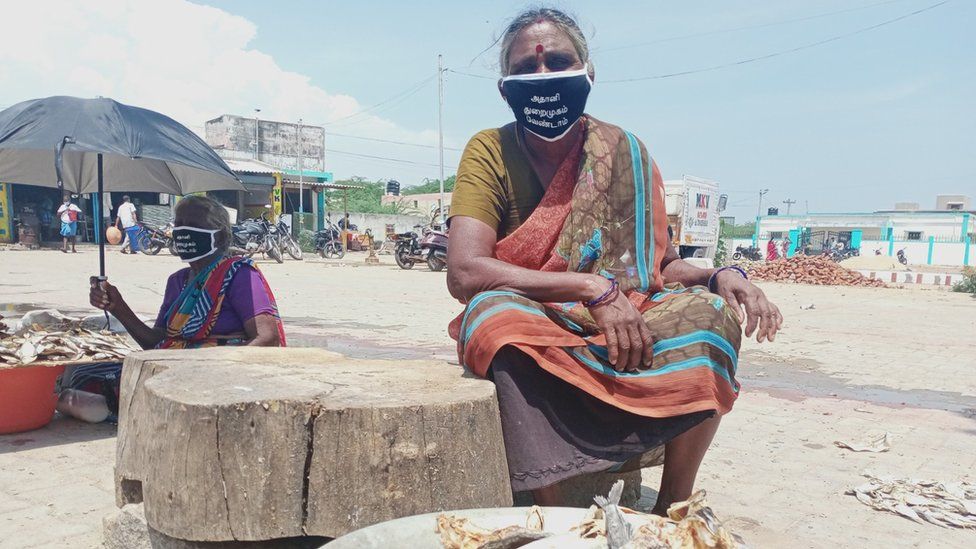
The 330-acre multi-purpose port – originally built by Indian conglomerate Larson & Toubro (L&T) – was acquired by Adani Ports in 2018. The company later proposed to expand it more than 18-fold to an area of 6,110 acres by claiming portions of land along the coast. According to the company’s master plan, the expansion would increase the port’s cargo capacity from 24.6 metric tonnes to 320 metric tonnes per year and develop new rail and road networks that would boost trade connectivity in the region.
But fisher people in at least 100 towns and villages located on the coast say this would gravely impact their work. “The number of fish varieties found here has already gone down significantly. Any kind of expansion would further deplete its population,” claims Rajalakshmi, a fisherwoman from the region. The expansion has met with resistance from environmentalists as well, who claim the plan would lead to massive coastal erosion and a loss of biodiversity, especially of the indigenous fish species and the crabs, prawns and small turtles found in the region.
Environmentalist Meera Shah claims it could also “destroy” Pulicat lake, the second-largest saltwater lake in the country. At the moment, the coastal stretch acts as a barrier between the lake and the Bay of Bengal. But the region has been experiencing widespread environmental pollution and coastal erosion in recent years, Mr Shah added. If more construction is undertaken here, the coast would shrink further, “leading the lake and the sea to merge”. https://www.bbc.com/news/world-asia-india-67942639 (24 Jan. 2024)
SAND MINING
Haryana Daring mafia: Stone crusher owners cock a snook at govt Daring indeed for the mafia to open the seal from SPCB and restart the illegal operations of screening plants and stone crushers in Yamuna Nagar. Rather than acting as a deterrent, the Haryana government’s action against owners of some stone crushers operating illegally in Yamuna Nagar — and, in all probability, elsewhere too — is proving to be counterproductive. The SPCB had sealed 75 screening plants and stone crushers for violating air and water pollution norms. But several of these units are back in business after breaking the seals. This not only shows the audacity of the erring miners but also smacks of political and administrative patronage. Last May, 89 stone crushers of Yamuna Nagar had been caught misusing the e-Ravana portal, which was set up to tackle the mafia, but the criminal nexus continues to thrive.
This flagrant flouting of the rules, despite the ban imposed by the NGT or the HSPCB and the verdicts pronounced by the courts against unlawful mining, calls for a swift crackdown on the culprits. Otherwise, the very purpose of deploying the government machinery to enforce mining rules and regulations and punish those violating them will be defeated.
There is a bigger cost of the illegal crushing of stones and gravel and quarrying, which The Tribune has been regularly reporting from across the state. Significantly, some hillocks of the Aravallis have been wiped out, irreparably impacting the ecology and biodiversity of the region. Residents of the areas in the vicinity of the polluting units are the worst sufferers as they are grappling with skin, respiratory and other diseases caused by contaminated air and water. https://www.tribuneindia.com/news/editorials/daring-mafia-583816 (23 Jan. 2024)
Illegal mining: Ex-MLA among 13 booked The Enforcement Directorate (ED) has got an FIR registered against 13 persons, including former INLD MLA Dilbag Singh, for allegedly carrying out illegal mining and causing damage to environment, besides other violations. On the complaint of Naveen Aggarwal, Joint Director, Gurugram Zonal Office (ED), the case was registered at the Pratap Nagar police station on January 19. The firms related to them allegedly committed several violations to undertake mining business. https://www.tribuneindia.com/news/haryana/illegal-mining-ex-mla-among-13-booked-583156 (21 Jan. 2024)
Fake eRawana receipts worth Rs 8.4 crore for purchasing boulders, gravel and sand, and diversion of the Yamuna for illegal mining are at the heart of the ED action on illegal mining in Haryana. The raids included those conducted on the premises of a former MLA of the INLD, Dilbag Singh, who was arrested in the case, and sent to judicial custody on January 23. As per the ED, eight FIRs were registered at the Pratap Nagar and Bilaspur police stations, Yamunanagar. The main FIR was dated October 14, 2022, against Om Guru Screening Plant, a mineral dealer, at Belgarh village of Yamunanagar. https://www.tribuneindia.com/news/haryana/illegal-mining-fake-erawanas-worth-8-4-cr-at-core-of-ed-probe-584957 (28 Jan. 2024)
Jammu & Kashmir Unregulated mining degrading rivers, worsening floods & destroying livelihoods A rise in mechanised excavation of riverbed minerals along the Jhelum and its tributaries has devastated local communities. As mineral production nearly doubled between 2021 and 2023, multiple rules were violated, including those on maximum depth of mining riverbeds and curbs on mining near embankments. The resulting changes in river morphology have caused flash floods and destruction of apple orchards in some places, and drying up of irrigation channels elsewhere. https://article-14.com/post/an-unregulated-mining-boom-in-kashmir-is-degrading-rivers-worsening-floods-destroying-livelihoods-65b7288ced999 (29 Jan. 2024)
बिहार बालू के बढ़ते खनन से बिगड़ती नदियों की सेहत, बढ़ता अपराध बिहार में रेत के अत्यधिक व अवैध खनन से सोन, किउल जैसी नदियों की सेहत प्रभावित हो रही है। घाटों की नीलामी के बावजूद उन्हें पर्यावरण मंजूरी मिलना एक जटिल प्रक्रिया है। बिहार में वर्तमान में मात्र 80 घाटों को पर्यावरण स्वीकृति हासिल है। सारण, भोजपुर, पटना, जमुई व वैशाली ऐसे जिले हैं जहां रेत खनन से जुड़े सबसे अधिक अपराध घटित होते हैं। राज्य में मात्र आठ महीने में 1,273 गिरफ्तारियां रेत के अवैध कारोबार से जुड़ी हैं।

खनन विभाग ने अपराध पर नियंत्रण के लिए 1200 सुरक्षा बलों का अपना अतरिक्त कैडर बनाने का प्रस्ताव गृह विभाग को भेजा है। नए सिरे से बालू घाटों की नीलामी से 2753 करोड़ रुपये के राजस्व की प्राप्ति हुई है, जबकि आधे घाटों की नीलामी अभी बाकी है। बिहार प्रदूषण नियंत्रण बोर्ड के द्वारा रेत खनन से नदियों की सेहत पर पड़ने वाले असर का आकलन या अध्ययन नहीं किया जाता। https://hindi.mongabay.com/2024/01/23/deteriorating-health-of-rivers-in-bihar-linked-to-escalating-sand-mining-activities/ (23 Jan. 2024)
Odisha Dharmasala stone mining under NGT scanner NGT has constituted an expert committee to probe alleged illegal stone quarrying at Rahadpur in Dharmasala tehsil of Jajpur district. The tribunal’s east zone bench ordered the probe on Monday (Jan. 22) while considering a petition which alleged illegal quarrying in the form of excess mining is being carried out close to two minor irrigation projects (MIPs). Mining is being carried out near Nischinta reserve forest, alleged Babuli Jena and other residents of the nearby area in the petition. Advocate Sankar Prasad Pani argued on behalf of the petitioners. “Considering the allegations made, we deem it appropriate to constitute a committee to elicit the veracity of the allegations. The Committee shall inspect the site in question and submit its report within four weeks on affidavit with regard to the allegations made,” the bench directed. In the order, the NGT said it has been alleged illegal and uncontrolled blasting for stone mining has been causing damage to houses, roads, agricultural land and ground water and pollution. https://www.newindianexpress.com/states/odisha/2024/Jan/25/dharmasala-stone-mining-in-odisha-under-ngt-scanner (25 Jan. 2024)
Tamil Nadu Shell out more for building material from next month People in Coimbatore, Erode and Karur planning to build a house would have to shell out more as the Crusher and Quarry Welfare Association (CQWA) has decided to increase the price of blue metal, M-sand and P -sand (fine variety) from February 1. K Chandra Prakash, president of the association, said the price has been increased by Rs 500 per unit due to several factors including hike in royalty and labour charges. “The state government has doubled the royalty and power tariff. Moreover, we are facing difficulties due to the GST regime. Tax on lorries and hike in price of machinery spare parts are also reasons behind the decision,” he said.
Chandra Prakash added that the price hike is being implemented in Coimbatore, Erode and Karur districts since the other districts have done it before Pongal. “When compared to the prices in Chennai, it is much less here. The price hike in Chennai is Rs 1,000 per unit as they have to take these materials for a distance of 100 km. However, we are getting materials from within 40-45 km in the district.” A sub-dealer from the city said, “Currently, M sand and P sand are sold at Rs 4,300 and Rs 5,300 per unit respectively.” https://www.newindianexpress.com/states/tamil-nadu/2024/Jan/25/shell-out-more-for-building-material-from-next-month-in-tamil-nadu (25 Jan 2024)
Report Inside crime rings trafficking sand Organized crime is mining sand from rivers and coasts to feed demand worldwide, ruining ecosystems and communities. The environmental impacts are substantial. Dredging rivers destroys estuaries and habitats and exacerbates flooding. Scraping coastal ecosystems churns up vegetation, soil and seabeds and disrupts marine life. In some countries, illegal mining makes up a large portion of the total activity, and its environmental impacts are often worse than those of legitimate operators, Beiser says, all to build cities on the cheap. https://www.scientificamerican.com/article/sand-mafias-are-plundering-the-earth/ (01 Feb. 2024)
WATER OPTIONS
Kerala As weeds choke waterways, women turn hyacinth into handloom A group of 70 women based in Kodungallur has now made this possible by making products from the processed blades of water hyacinth (Eichornia crassipes) stems collected from waterbodies choked with weeds. Through this unique initiative, the plant has found a new place in showrooms and boutique shops after it was recast as bags, purses, flowerpots, tablemats, cushion covers and other utility products.
The women’s group includes differently-abled persons and is part of Kottappuram Integrated Developed Society which facilitated the venture. They collect the long stems of the weed from the stagnant water, dry it, remove the piths after peeling the stem, dye it and weave it in the loom to make products which have good takers. Apart from their own retail outlets, the women display these at exhibitions and sell them through B2B online marketing. https://timesofindia.indiatimes.com/city/kochi/as-weeds-choke-keralas-waterways-women-turn-hyacinth-into-handloom/articleshow/107192830.cms (28 Jan. 2024)
West Bengal Drought solutions in agri lie in smartly bridging demand-supply gap of water Climate change is no longer a remote occurrence; its impact is now evident in daily life. The women from the Hirbandh block of Bankura district demonstrated that the crucial element for enhancing resilience lies indeed at the local level. Utilizing indigenous knowledge, preparedness, and fostering community unity can effectively address climate change distress to a significant extent. (Sourangshu Banerjee) https://www.thehindubusinessline.com/economy/agri-business/drought-solutions-in-agriculture-lie-in-smartly-bridging-the-demand-supply-gap-of-water/article67782441.ece (27 Jan. 2024)
Andhra Pradesh Drought-prone Anantapur witnesses rise in water level The difference is not only the unrelenting farmer’s faith, but also the water management initiatives taken up over River Chitravati in the last six years. ‘Project Jaldhara’ taken up by S.M. Sehgal Foundation, in association with Coca Cola India Foundation, improved livelihoods of 6,750 beneficiaries in the belt of villages that are not only known to be perennially drought-prone in the undivided Anantapur district, but also were actually inching towards desertification. Paddy is grown in 180 out of 280 acres in Koduru village alone. From an unpredictable groundnut yield, the farmers stand as a personification of self-confidence today, growing paddy, maize and having diversified into coconut farms.
“There is a 35% increase in the area under irrigation and 75% rise in crop yield, while 82% of farmers have witnessed improved yield quality,” asserts Anjali Makhija, trustee and chief executive officer of S.M. Sehgal Foundation. All the check dams are carefully monitored by the 92 members formed into seven Water Management Committees, including 17 women. In fact, Coca-Cola India Foundation received a national award from the Ministry of Jal Shakti for this water stewardship project. Nineteen families that have migrated to Bengaluru in search of livelihood have recently returned home. This ‘reverse exodus’ is also attributed to the water initiative. https://www.thehindu.com/news/national/andhra-pradesh/drought-prone-anantapur-witnesses-rise-in-water-level-ushers-in-reverse-exodus/article67775495.ece (25 Jan. 2024)
GROUNDWATER
Opinion Multi-pronged strategy needed to conserve groundwater SK Sarkar: On the supply side, aquifer recharge of groundwater occurs through rivers, rainfall percolation and natural water bodies. However, the speed of groundwater recharge is slow from the last two sources; worse, rivers are shrinking due to mismanagement. Major rivers like Ganga, Narmada and Cauvery have experienced contraction, leading to a reduction in the recharge potential.
– The Supreme Court’s recommendation to designate groundwater as a common pool resource under the ‘Public Trust Doctrine’, with states as trustees, should be promptly adopted. However, in many states, panchayats have little role in groundwater management. Relevant state departments often retain control over groundwater irrigation management, citing a lack of technical knowledge and expertise among panchayats. This must be reconsidered, emphasising increased participation of the people in groundwater management. Panchayats should be given incentives for groundwater conservation and penalties should be imposed for failing to meet the targets. https://www.tribuneindia.com/news/comment/multi-pronged-strategy-needed-to-conserve-groundwater-583415 (22 Jan. 2024)
Punjab 18 mths on, Zira still fights for clean water, air The protest against a distillery and ethanol project for allegedly contaminating the groundwater has completed 18 months but is far from over, with the battle for cleaner air and water being fought on the ground and in courts. A two-member bench of NGT in its order in the previous hearing on January 19 had observed that one of the members was of the view that in view of the nature and magnitude of the questions involved in the case, the matter may be heard by a larger bench. The case was adjourned to February 14. https://timesofindia.indiatimes.com/city/chandigarh/protest-against-distillery-18-mths-on-zira-still-fights-for-clean-water-air/articleshow/107159838.cms (26 Jan. 2024)
URBAN WATER
Bengaluru Treated sewage: Boon or bane? A report by the Environmental Management Policy and Research Institute (EMPRI) on heavy metal contamination among vegetables warned that farmers should not be allowed by law to grow greens and vegetables using drainage and effluent waters. Since most vegetables and greens come to Bengaluru from neighbouring districts of Kolar, Chikkaballapur and Bengaluru Rural, the attention has turned to the project that pumps secondary treated sewage water to these districts. There are two such treated sewage supply projects, from the Koramangala-Challaghatta (KC) Valley and Hebbal-Nagawara Valley. Water goes to Kolar, Chikkaballapura and Bangalore Rural districts. The Minor Irrigation Department looks after the project. The Bangalore Water Supply and Sewerage Board (BWSSB) treats the water, and the Karnataka State Pollution Control Board is supposed to monitor the quality. https://www.deccanherald.com/india/karnataka/bengaluru/boon-or-bane-2756356 (4 Nov 2023)
Video Report A report sampling 20 groceries stores in Bengaluru found high concentrations of heavy metals in vegetables grown using wastewater. https://scroll.in/video/1062456/eco-india-how-bengalurus-polluted-lakes-are-affecting-its-food-chain (21 Jan. 2024)
Hyderabad Alarm bells ring for water supply Both States of Telangana and Andhra Pradesh had initially agreed to restrict their utilisation of water drawn from the Nagarjuna Sagar Dam exclusively to meet the drinking water needs, but AP did not stick to the commitment so far. Much of the last spell of water releases given for AP were diverted for meeting the irrigation needs, according to Irrigation officials. It will be an uphill task to take water from the Nagarjuna Sagar project once the water level touched down to the MDDL level of 510 ft. An approach canal has to be dug to draw water from the project by gravity to meet the irrigation needs, they added. https://telanganatoday.com/alarm-bells-ring-for-hyderabad-water-supply (23 Jan. 2024)
Pune PMC to examine quality of treated water amid builder concerns Taking cognizance of concerns voiced by builders about the inadequacy of treated water from STPs for construction purposes, the Pune Municipal Corporation (PMC) is set to initiate a comprehensive examination of water quality from STPs. It may be mentioned that it is mandatory for builders to use the treated water from STPs for undertaking construction. The testing process, scheduled to span the next 8 days, aims to provide clarity on the suitability of treated sewage for construction. The evaluation won’t be limited to treated water alone. Bore well water, a commonly used alternative, will also undergo testing concurrently.
Earlier, Mirror reported that construction projects are facing challenges in incorporating treated water into their processes, leading to dissatisfaction within the construction industry. Following these reports, a meeting was convened between civic officials from the water supply, construction, electricity, PWD and representatives from the construction industry. While civic authorities asked stakeholders from the construction industry to use treated water from STPs, the latter asserted that chemical elements present in water from STPs could have adverse impacts on the quality of construction.
This concern has forced a large number of builders in the city to cease using treated water, resulting in a 50 per cent reduction in water consumption. The looming threat of low rainfall and the possibility of extreme heat this year further exacerbate the challenges, as available water storage is expected to be limited. The reluctance to utilise treated water for construction poses a substantial challenge for municipal corporations in water planning. To address the situation, a decision has been made to assess the quality of the water. https://punemirror.com/pune/civic/pmc-to-examine-quality-of-treated-water-amid-builder-concerns/cid1705891355.htm (22 Jan. 2024)
The civic body has issued notices to 200 sites’ developers seeking explanation as to why work should not be stopped as they were not using sewage treatment plants’ water for construction activities. According to data, a total of 326 construction projects are underway in PMC areas and 128 of them are using STP water. The remaining 208 are not using it. So, notices have been issued to them. The civic data shows nearly 240 tankers are used for construction works daily. Of them, only 70 carry STP-treated water.
A PMC official said a dedicated cellphone application had been developed for transportation and management of tankers carrying treated water. Developers and other commercial establishments can use the app titled, “PMC STP Tanker System”, to get STP water. “The details of registrations on this app is used to calculate the demand and supply of STP water,” the official said.
In January 2022, PMC had passed an order making the use of treated water for activities like concrete mixing and curing buildings mandatory in the city limits. This was done in a bid to save about 100 MLD water. At present, around 5 lakh litres of treated water is used for various activities. PMC aims to increase its use to up to 20 lakh litres against the backdrop of water shortage and inadequate rainfall so far this year. https://timesofindia.indiatimes.com/city/pune/pmc-notice-to-200-building-sites-developers-over-not-using-treated-water-for-construction/articleshow/101121431.cms (20 June 2023)
PMC provided 16 crore litres of treated sewage water for construction activities in the last year, with 16,714 tankers dispatched to various stakeholders. The solid waste department instructed contractors and builders to use treated sewage water last year. Aniruddha Pawaskar, chief superintendent engineer of the water supply department, said action has been taken against 25 people for using drinking water for vehicle washing and other activities. https://www.hindustantimes.com/cities/pune-news/pune-municipal-corporation-provides-16-crore-litres-of-treated-sewage-water-for-construction-activities-in-last-year-101683394604527.html (06 May 2023)
Mumbai Water projects worth ₹855cr for Bhiwandi, Kalyan launched The PM inaugurated ₹303 crore worth projects for the twin city of Kalyan Dombivli, ₹426 crore projects for Bhiwandi city, and ₹126 crore for Ulhasnagar City during the function to launch housing for economically weaker sections in Solapur under the Amrut 2.0 scheme.
Out of ₹303 crore, 10 reservoirs will be constructed at the cost of ₹48.45 crore in Kalyan Dombivli municipal areas, and Rs 24.47 crore have been allocated for strengthening the distribution system in KDMC region. Similarly, 152.62 crore have been allocated for the construction of a water treatment plant and ₹77.58 crore for a dam in Mohili area in Kalyan. Civic officials said rising urbanisation and growing population in the KDMC areas requires strengthening the water supply distribution. The population in KDMC municipal areas has been estimated at 22 lakh.
In Ulhasnagar, a project of ₹126.58 crore was sanctioned in which four reservoirs will be constructed and water pipe installation for 114 km. In Bhiwandi, 100 MLD of water will be provided under the Amrut 2.0 scheme at the cost of ₹426 crore. Kapil Patil, Panchayati Raj Minister said, “ The Bhiwandi residents will not face any problem relating to water supply for the next 30 years.” https://www.hindustantimes.com/cities/mumbai-news/water-projects-worth-rs-855-crore-for-bhiwandi-kalyan-launched-101705916969499.html (22 Jan. 2024)
Shimla Notification for new township at Jathia Devi issued The Himachal Pradesh Urban Development Authority (HIMUDA) proposes to set up a mountain township at Jathia Devi to function as a satellite township to the state capital. The aim is to decongest Shimla by shifting some offices and creating housing societies. HIMUDA has already acquired 35 hectares land and 100 hectares more is being acquired for the long pending project. The area is located in the suburbs of the state capital and is as such witnessing a lot of construction activity which needs to be regulated as per construction norms. https://www.tribuneindia.com/news/himachal/notification-for-new-shimla-township-at-jathia-devi-issued-584102 (24 Jan. 2024)
WATER
MoJS Conference on ‘Water Vision @ 2047- Way Ahead’ concluded The two days ‘All India Secretaries’ Conference on Water Vision @ 2047 – Way Ahead’ concluded at Mahabalipuram, Chennai (Tamil Nadu) on Jan 24 2024. 32-States and Union Territories, 30-Secretaries and more than 300 delegates participated in this conference, sharing their best practices and action taken on the 22 recommendations of “1st All India Annual State Ministers Conference on Water” held on 5th and 6th January, 2023 at Bhopal, Madhya Pradesh.
– The said 22 recommendations include prioritizing drinking water and its source sustainability, building climate resilience, both demand & supply side management, enhancing water storage both at large & small scale, application of state-of-the-art technology, increasing efficiency of water utilisation, intensifying water conservation programs at every level, monitoring river health & maintaining environmental flow, undertaking appropriate flood management measures and all these interventions with enhanced people’s participation. https://pib.gov.in/PressReleasePage.aspx?PRID=1999446 (25 Jan. 2024)
Tamil Nadu HC seeks status report on plea to restore water channel, course The Madurai Bench of the Madras High Court on Jan 23 2024 directed the authorities concerned to file a status report to a public interest litigation petition that sought a direction to authorities to restore a water channel and a water course and prevent sewage being let into the water course in Thiruppachethi in Sivaganga district. A Division Bench of Justices D. Krishnakumar and R. Vijayakumar sought a report to a petition filed by Ramalingasamy Mutt in Thiruppachethi in Thirupuvanam taluk. The petitioner said that till recently there existed a water course from Thiruppachethi North kanmoi for water supply for irrigation in the village.
– The Highways Department had put up a road over bridge in Thiruppachethi connecting the road leading from Narikudi to Thiruppachethi on Madurai Rameswaram Highway. The authorities removed the existing water channel and water course, through which rainwater and surplus water from kanmoi would flow, the petitioner said. The petitioner said that when this was objected to the authorities promised to restore the water channel and water course. However, sewage was being diverted into the rain water drain. The sewage entered the agricultural fields and the coconut grove. The authorities concerned should restore the water channel and the water course and prevent sewage being let into the water course, he said. The court adjourned the hearing by three weeks. https://www.thehindu.com/news/cities/Madurai/hc-seeks-status-report-on-plea-to-restore-water-channel-course/article67769728.ece (23 Jan. 2024)
MONSOON 2024
Report Rain deficiency 100% in 6 states, 2 UTs At least six states and two union territories have recorded a nearly 100% rain deficiency in January after a large deficit in December – the two peak winter months for north India — and the season is likely to end on a dry note, weather experts said.
In January so far, there has been no rain or snow in Delhi, Punjab, Haryana, J&K, Ladakh and Chandigarh. Uttarakhand and Himachal Pradesh have recorded 99% rain deficiency. Some northeastern states that recorded significant rain deficiency during monsoon months have also recorded 100% rain deficiency in January. These include Manipur, Mizoram and Tripura, data from IMD showed. In December, J&K recorded a 79% rain deficiency; Himachal Pradesh 85%; Uttarakhand 75%; Punjab 70% and Haryana 54%.
The meteorological reality has been starkly in contrast to what the IMD predicted on January 1, when it said monthly rainfall for January 2024 over north India — consisting of 7 meteorological subdivisions (East & West UP, Uttarakhand, Haryana, Punjab, Himachal, J&K and Ladakh) — was likely to be above normal (>122% of Long Period Average). https://www.hindustantimes.com/india-news/rain-deficiency-100-in-6-states-2-uts-says-imd-101705948045973.html (23 Jan. 2024)
Himachal Pradesh Most rainless Jan since 1901 Three main reasons behind lack of snowfall – drastic fall in the number of Western Disturbances; prevailing El Niño conditions, and the absence of a strong jet stream https://www.thehindu.com/sci-tech/energy-and-environment/himachal-pradesh-lowest-snow-cover-since-1901-explained/article67775173.ece (25 Jan. 2024)
This month is all set to go into history as one of the driest January ever in the state. As per the record of the last 123 years, this month, with a precipitation deficiency of minus 99 per cent, is the second driest January. The only instance when January had seen even lesser precipitation was way back in 1966, with a precipitation deficiency of minus 99.6 per cent. https://www.tribuneindia.com/news/himachal/no-rain-himachal-set-to-record-driest-january-in-123-years-584629 (26 Jan. 2024)
January has never been this dry since 1901. Now there is some forecast of Western Disturbances from Jan 25 to 27. https://www.tribuneindia.com/news/himachal/dry-spell-likely-to-be-over-after-jan-25-583820 (23 Jan. 2024)
Jammu & Kashmir Prolonged dry weather impacts key sectors J&K experienced a rainfall deficit of 79%, recording 12.6 mm rainfall in December 2023, much below the average of 59.6 mm, as per the official data from the India Meteorological Department. The region has been experiencing temperatures 6-8°C above the winter average. On January 13, Srinagar recorded a maximum temperature of 15°C, the highest January temperature in the past two decades.
The prolonged dry spell has negatively impacted crucial water sources, particularly the Jhelum river and its streams. Substantial decreases in water levels in surface sources have been noted. Less rain, no snow and high temperatures are impacting agriculture, horticulture, and winter tourism and also increase the risk of forest fires and glacial floods, say experts. https://india.mongabay.com/2024/01/prolonged-dry-weather-impacts-jks-key-sectors-forests-glaciers-and-water-bodies/ (22 Jan. 2024)
Three Western Disturbances may break Kashmir’s dry spell, says weather forecaster. https://www.greaterkashmir.com/gk-top-news/three-western-disturbances-may-break-kashmirs-dry-spell-says-weatherman/ (23 Jan. 2024)
FLOOD 2024
Study Projected Increase in Widespread Riverine Floods in India under a Warming Climate Abstract Widespread floods simultaneously affect several subbasins in a large river basin and pose severe challenges to disaster management and flood mitigation efforts. India is highly susceptible to widespread flooding as the country receives more than 70% of annual rainfall in the four-month period from June to September. However, the potential impacts of climate change on the drivers and frequency of widespread floods in India remain unexplored. We use observations, climate model simulations, and a hydrological model to examine the drivers and changes in widespread floods under a projected future climate. The observed increase in extreme precipitation does not translate to flooding in most river basins in India due to its fragmented nature.
Translation of extreme precipitation to flood depends on the catchment area. We examined the changes in the widespread floods in Indian river basins using a hydrological model and climate projections. Robust increases in intense precipitation area and frequency are projected under the warming climate. Furthermore, hydrological model simulations indicate a profound increase in widespread floods in Indian river basins under a warming climate. The increase in widespread floods in a warming climate can pose challenges for flood mitigation and management in the future. Consideration of spatial extent of extreme precipitation and catchment area can enhance flood monitoring and prediction efforts. In addition, increases in extreme precipitation may not always lead to rise in flooding. https://www.sciencedirect.com/science/article/abs/pii/S0022169424001288 (24 Jan. 2024)
DISASTERS
Report कम और मध्यम आय वाले देशों में आपदाओं से तबाही का खतरा ज्यादा प्राकृतिक आपदाओं और जलवायु परिवर्तन की वजह से मूलभूत ढांचों और इमारतों को होने वाला सालाना औसत नुकसान लगभग 700 बिलियन डॉलर यानी लगभग 5800 करोड़ रुपये के बराबर है। कम आय वाले देशों में स्वास्थ्य और शिक्षा से जुड़े आधारभूत ढांचे खासतौर पर आपदाओं और बढ़ते खतरों के प्रति संवेदनशील होते हैं। साल 2021 में विकसित देशों में आधारभूत ढांचों में निवेश 8.3 प्रतिशत बढ़ा जबकि विकासशील देशों में यही निवेश 8.8 प्रतिशत कम हो गया। जलवायु से जुड़े उपायों को अपनाने के साथ-साथ अगर आधारभूत ढांचों की फंडिंग को लचीला रखा जाए तो इस अंतर को भरा जा सकता है। https://hindi.mongabay.com/2024/01/26/low-middle-income-countries-have-deficits-in-infrastructure-but-carry-greatest-risk-of-destruction-from-disasters/ (26 Jan. 2024)
LANDSLIDES
Himachal Pradesh NHAI, SJVN ink pact on slope protection In a bid to find an effective and lasting solution for key endeavours like slope protection and tunneling in various projects in the state, a memorandum of understanding (MoU) was signed between the National Highways Authority of India (NHAI) and the Satluj Jal Vidyut Nigam (SJVN) in Delhi. A high-level committee comprising experts from the IITs, Ministry of Road Transport and Highways, experts from the Border Roads Organisation and Engineers India Limited (EIL), a leading engineering consultancy have examined the damaged highways and submitted detailed suggestions on their restoration. https://www.tribuneindia.com/news/himachal/nhai-sjvn-ink-pact-on-slope-protection-583823 (23 Jan. 2024)
Preliminary assessment of series of landslides and related damage by heavy rainfall during July 2023. https://link.springer.com/article/10.1007/s10346-023-02209-1 (27 Jan. 2024)
THERMAL POWER
Tamil Nadu TTPS shutdown: Tangedco faults VOC Port for losses to the tune of Rs 350 cr According to sources, the VOC Port had begun levelling the bunds of the peripheral dykes from April 2023, to lease the land to manufacturing industries, but did not take consent from the power plant authorities and ignored earlier warnings. “Since the peripheral dyke area was levelled, the torrential rain on December 17 and 18 flooded the ashes from the ash dykes into the TTPS premises, choking both cooling water channels (each nearly two km long with a depth of five to eight metres) for more than a km,” an official said. These channels feed seawater for all units.
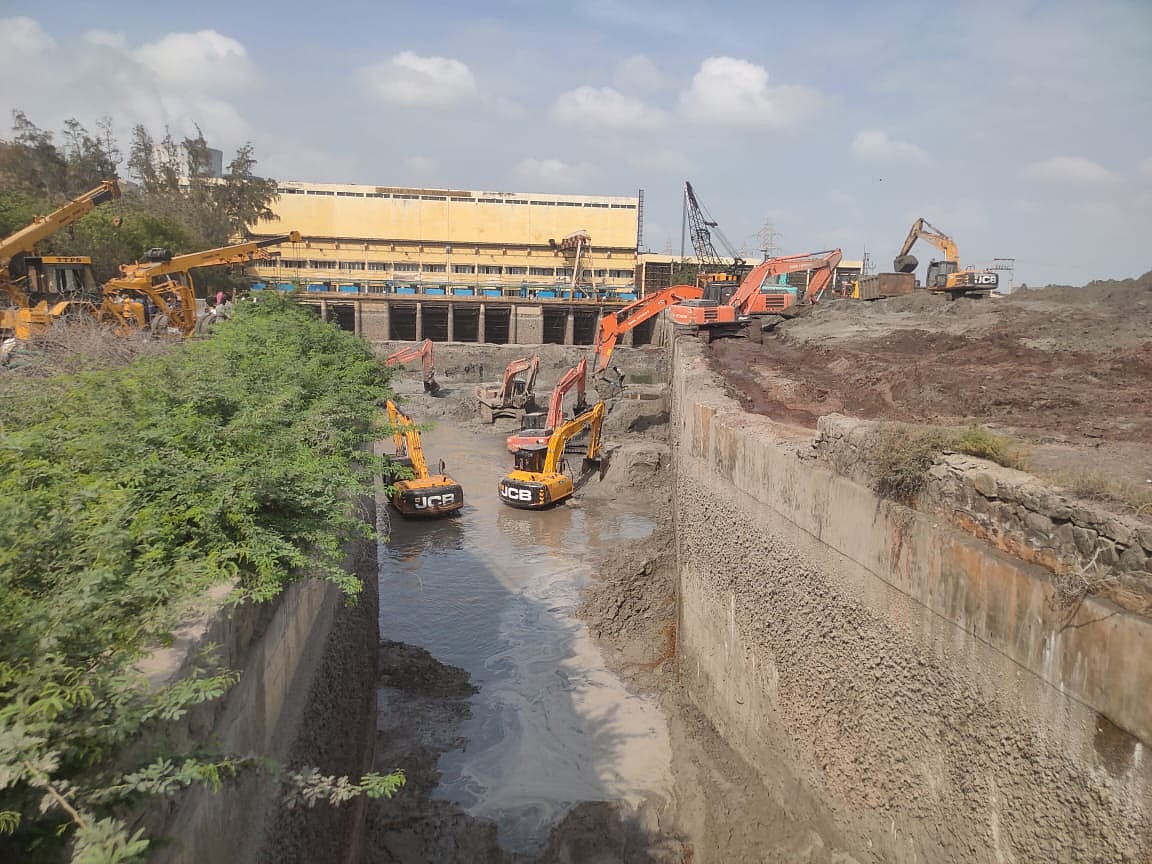
A top official said that a high-level meeting of revenue, industries, renewable energy, finance, and Tangedco departments, and VOC port chairman was held on October 10, 2022, to discuss the port’s proposal to divert the peripheral dyke area for industrial purposes. “It was decided that the VOC Port shall hold back levelling activities until a final decision is taken by Tangedco, following expert consultation by the TTPS,” he added.
Another official in the know of the developments noted that there were 11 letter communications with VOC Port, including four written by Tangedco’s chief managing director himself urging the central entity to immediately stop levelling works. One of the communications, accessed by TNIE, warned the VOC Port against further levelling the peripheral ash dyke given its proximity to the TTPS units, and the intensifying northeast monsoon. “Any losses caused by the unauthorised works at peripheral dyke should be borne by the VOC Port authority,” the letter had mentioned.
The last communication sent to VOC Port, flagging the dangers of levelling the dykes without permission, was on December 13, four days before rains submerged the city. As a result, TTPS officials said, the daily generation of 25.2 million units of electricity across all five units was hampered. Over 52 heavy machinery were pressed into service for a month to clear the choking water channels.
This man-made disaster could have been averted, had the VOC Port authority heeded to Tangedco’s communications. “TTPS incurred a daily production loss of Rs 10 crore, which totals to Rs 170 crore, temporary measures cost more than Rs 50 crore, and an additional estimate of Rs 100 crore for restoration works. It totals to around Rs 350 crore,” said a top official. https://www.newindianexpress.com/states/tamil-nadu/2024/Jan/21/thoothukudi-thermal-power-station-shutdown-tangedco-faults-voc-port-for-losses-to-the-tune-of-rs-350-crore (21 Jan. 2024)
ENVIRONMENT GOVERNANCE
Report NCST head flagged grave concerns with new Forest Rules Over the last two years, the union environment ministry amended the Forest Conservation Rules and the Forest Conservation Act, the former in June 2022 and the latter in December 2023. Both moves were widely criticised for making it easier to give away forest land to corporate interests, thereby undermining the rights of forest-dwelling communities. When Harsh Chouhan the chairman of the National Commission for Scheduled Tribes a constitutional tribal affairs body flagged issues with the amended rules, his concerns were dismissed without discussion – and he later resigned eight months before his term and the commission is now ‘defunct’. https://www.newslaundry.com/2024/01/29/exclusive-head-of-constitutional-st-body-flagged-grave-concerns-with-new-forest-rules-before-early-resignation (29 Jan. 2024)
Assam NGT issues notice to govt for illegal diversion of forest land The NGT recently issued notice to the State of Assam after a news item alleged that forest officials bypassed mandatory procedures under the Forest (Conservation) Act to illegally divert 44 hectares of protected forest land for Commando Battalion headquarters in Barak Valley. The report alleged that Assam government’s top forest officials had illegally diverted 44 hectares of protected forest land for a Commando Battalion headquarters in Barak Valley bypassing the mandatory procedures under the Forest (Conservation) Act. The report further stated that Inner Line Reserved Forest, established in 1877, is a sprawling 1,10,000-hectare expanse, known for its rich biodiversity, including endangered species like the Hoolock Gibbon, Slow Loris and Clouded Leopard and it serves as a crucial habitat for Elephants, Tigers, and a variety of birdlife. https://www.barandbench.com/news/ngt-issues-notice-assam-anews-report-alleges-illegal-diversion-forest-land-commando-battalion-hq (25 Jan. 2024)
CLIMATE CHANGE
Tamil Nadu A village nurtures traditional food systems in response to climate change The once-predominant reliance on traditional crops such as white corn and millets in the Tamil Nadu village of Kuralkuttai underwent a significant shift during the Green Revolution, altering the village’s agricultural landscape.

A village youth organisation, Eegai Kuzhu, works with the community to revive disappearing crops, document ancestral food habits and promote sustainable farming practices. Eegai Kuzhu, along with the Biodiversity Management Committee, document local biodiversity, conduct tree censuses and have established a seed bank, contributing to climate-resilient farming practices in Kuralkuttai. https://india.mongabay.com/2024/01/a-village-nurtures-traditional-food-systems-in-response-to-climate-change/ (10 Jan. 2024)
SOUTH ASIA
India-Bhutan PTC commences power supply from Nikachhu HEP PTC India Limited has started power supply from Bhutan’s Nikachhu HEP to Assam under a long term PPA signed in 2014. This marks a new era in bilateral energy trade between Bhutan and India. https://energy.economictimes.indiatimes.com/news/power/ptc-india-commences-power-supply-from-bhutans-nikachhu-hydro-project-to-assam/107160049 (26 Jan. 2024)
India-Nepal Key Agreements Some interesting highlights of this article by someone working in Nepal embassy in Delhi: -However, the financial investment by India in Nepalese hydroelectric projects has encountered irregularities, leading to significant delays, exemplified by the notable case of the Pancheshwar Multipurpose Project (PMP), which is running more than a decade behind schedule due to currency liquidity issues.
– Before the meeting, the Indian communication to the Nepalese delegation explicitly outlined that certain matters, including border disputes concerning Limpiyadhura, Kalapani, and Lipulekh, the Eminent Persons Group Report of 2018 (EPG-2018), and aspects related to the 1950 treaty, were not to be raised by Nepal. https://www.indiandefencereview.com/news/diplomatic-success-unraveling-the-key-agreements-between-india-and-nepal/ (26 Jan. 2024)
Nepal Lack of disaster preparedness causing severe damages to HEPs -On June 14, 2023, the employees working in the under-construction Super Hewakhola hydropower project at Chainpur, Sankhuwasabha, went to sleep after having dinner. The heavy flood in Hewakhola at around 9:30 PM not only washed away 18 workers along with their tents built on the river bank, but also damaged more than half a dozen structures of the project. Of the 18 individuals working on the project, only four bodies were recovered, leaving others unaccounted for.
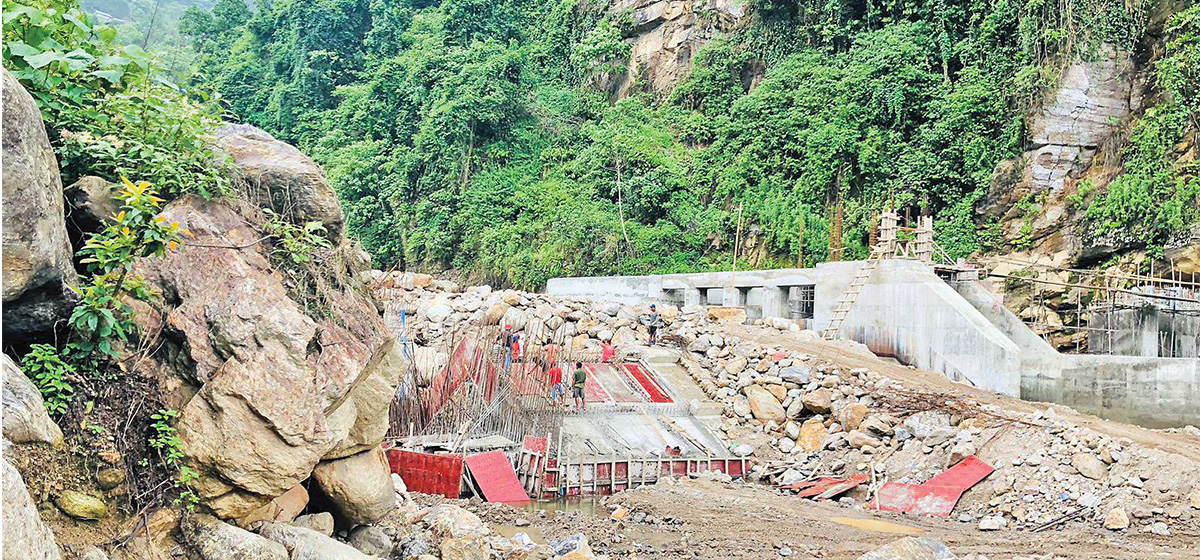
– According to Chairman Tamang, the flood damaged more than half a dozen physical structures such as the project’s dam, power house, and water storage pond, resulting in a loss of Rs 220 million. He estimates that it will require Rs 500 million to rebuild the structure damaged by the flood.
– In Eastern Nepal, the continuous floods from June 13, 2023 to June 22 caused damage to 11 hydropower projects with a total capacity of 107.54 megawatts. The data released recently by Independent Power Producers Association Nepal (IPPAN) shows that 20 hydropower projects under construction in Sankhuwasabha, Bhojpur, Panchthar, Taplejung with a total capacity of 369.33 megawatts have suffered damages due to floods. According to IPPAN, the flood in eastern Nepal caused damage to the physical structure of 31 hydropower projects, causing a loss of more than Rs 8 billion. In eastern Nepal, there was heavy rainfall before the onset of monsoon. Spokesperson for the department, Sunil Pokharel, says that the heavy rainfall in eastern Nepal triggered landslides.
– The department’s weather radar shows rainfall exceeding 60/70 mm per hour during floods at various places of Sankhuwasabha. A record 141.6 mm of rain was recorded at Num station of Sankhuwasabha on June 13. A record rainfall of 49.4 mm was also witnessed at Phidhim station in Panchthar. Num station in Sankhuwasabha recorded 50.2 mm of rain on June 14, 22 mm on June 15 and 123 mm on June 16. On June 17, it rained very less i.e, 9 mm. It rained 111.4 mm on June 18 and 387.4 mm on June 19. A record of 183.6 mm of rain was recorded in the two hours of midnight on June 20. Water Resources Engineer Narendraman Shakya says that there has been a lot of damage to hydropower projects in eastern Nepal due to heavy rains.
– On June 15, 2021, floods damaged 26 hydropower projects in the Madi Corridor, Dordi Corridor and Marsyangdi Corridor. At that time, 10 hydropower projects in operation and 16 under construction projects were damaged. It was estimated that the damage was more than Rs 5 billion. Before the flood on June 15, 2021, the construction of the 44 MW capacity Super Madi hydropower project in Kaski district was 95 percent completed. However, due to the severe flood that occurred on June 15 on Madi river, the construction period of the project was extended and the financial burden also increased.
– By the end of June 2019, 95 percent of works of the 25 MW capacity Upper Dordi ‘A’ hydropower project had been completed. The project was set to be operational later the same year. But on July 24, 2019 the severe flood in Dordi River caused damage to the physical structure of the 25 MW Dordi ‘A’ hydropower project in Dordi Rural Municipality of Lamjung. A total of six workers who were engaged in the construction of the project died after being swept away by the flood. The condition of four people swept away by the flood is still unknown. First, the damaged structure could not be rebuilt after being destroyed by the flood, and the flood that occurred on June 15, 2021 caused further damage to the dam area of the project. Due to the flood, the project started producing electricity commercially only 34 months after the scheduled time, i.e. from December 3, 2022. The cost of the project (initial cost Rs 3.96 billion) increased to Rs 6.65 billion when the construction period of the project was extended due to floods. https://myrepublica.nagariknetwork.com/news/lack-of-flood-preparedness-inflicts-severe-damage-on-hydropower-projects/ (27 Jan. 2024)
Govt mulls removing hydro capacity restrictions Currently, Nepal hydropower developers are forced to restrict the optimum capacity of the projects because the Nepal Electricity Authority (NEA) signs power purchase agreements (PPA) with the projects that can generate electricity in full capacity for at least 4.8 months, which are known as Q40 projects. A government-formed committee, however, suggested the NEA to sign PPA with projects irrespective of how long they can generate maximum energy. The committee was formed to suggest policies on PPA. “We have suggested the NEA to sign a PPA with any project irrespective of the project’s generation capacity,” said Sandeep Kumar Dev, joint secretary at the energy ministry, who headed the committee. “The policy of buying power only from the projects designed as Q40 or more will lead to underutilisation of the country’s hydropower potential.”
– As per the Directive on Licensing Electricity Projects-2075, the hydropower plants that apply for survey licence need to be designed on the basis of Q45 (flow exceedance). The Department of Electricity Development charges a licence fee based on Q45 initially. However, the department has been accepting Q40 projects too based on the study of the project and signing of power purchase agreement with the Nepal Electricity Authority, according to the department officials. He said that the design of the projects at around Q25 would help the hydropower projects to optimise capacity. According to Dev, their suggestion has already reached the board of the NEA, which is chaired by the energy minister, and it should decide on the matter. Government mulls removing hydro capacity restrictions. https://kathmandupost.com/national/2024/01/23/government-mulls-removing-hydro-capacity-restrictions (23 Jan. 2024)
Govt explores tapping flood-risk glacial lakes for clean power Efforts to drain some of the excess water building up in the Glacial lakes, to lower surging disaster risk, also present an opportunity to boost clean power production, by installing small hydropower generators in the drainage channels. Since 2017, 175 households in Langtang and Kyanjin, two villages in the high Kyanjin Valley, have been able to tap clean hydropower from efforts to drain the Kyanjin glacial lake for cooking, lights and other energy needs. The hydropower project, which cost $448,000, was paid for by the Hong Kong-based Kadoorie Charitable Foundation.
– Nepal has looked at generating power from glacial lake draining since at least 2016, when Dhananjay Regmi, a glacier expert at Tribhuvan University, recognised the possibility while leading work on efforts to reduce lake levels and cut disaster risk near Mount Everest. Working with colleagues, he studied four Nepalese glacial lakes – Thulagi, Lower Barun, Lumding Tsho and Hongu-2 – and produced a study showing hydropower generation was possible as part of drainage efforts.
– “There are two benefits to us: first, the risk of outburst will be reduced, and second, we get energy at the same volume throughout the year,” Regmi said. He has focused in particular on Thulagi glacial lake, about 200 km (125 miles) from Kathmandu in Manang district. The 2.5-km-long (1.55-mile) lake is 73 metres (240 ft) deep and holds 36 million cubic metres (1.27 billion cubic feet) of water, according to Regmi’s 2017 report – enough to fill more than 14,400 Olympic swimming pools. https://www.context.news/climate-risks/nepal-explores-tapping-flood-risk-glacial-lakes-for-clean-power (23 Jan. 2024)
But finding money for such double-benefit projects and putting them into operation is not easy. Nepal, working with the UNDP is seeking $50 million from the Green Climate Fund, with co-financing from the government, UNDP and the private sector, to lower water levels and cut the risk of floods from the Thulagi, Lower Barun, Lumding Tsho and Hongu-2 lakes. The proposal does not include plans to also generate hydropower.
Chiranjeevi Chataut, the director general of Nepal’s Department of Energy Development, said making such generation projects work in the high Himalayas is too challenging, one reason the country is not making plans for them. Still, “if any private sector (applicants) are interested, we can discuss,” he said. Mr. Regmi admitted working at high altitudes could be difficult and costly, but said such generation could be helpful in regularising year-round hydropower supplies. https://www.thehindu.com/news/international/nepal-explores-tapping-flood-risk-glacial-lakes-for-clean-power/article67775054.ece (25 Jan. 2024)
In Nepal, last winter was also dry with just 12.9mm of rain, the lowest precipitation recorded in the last 15 years, according to news reports. Data shows that 12 out of the last 18 winters had less than average rainfall, and eight out of those 12 winters experienced droughts. https://www.hindustantimes.com/opinion/view-from-the-himalayas-in-nepal-a-worrisome-decline-in-snow-and-rainfall-this-winter-101705930365732.html (22 Jan. 2024)
Pakistan People of Indus: Portraits from a changing river Bashiran Bibi feels that the character of the Indus has changed tremendously since that time, “as if the free-flowing river has been tamed by dams and barrages”, which have cost her family their culture and identity. But Bashiran Bibi still believes in the power of the Indus as a river of life, and in Hazrat Khizr – who is described in Islamic and other traditions variously as an angel, a mystic, and a saint. He is also known as the guardian of the river. She sings: “Oh my beloved, the boat is ready, Come, let’s go together across the river, God will help us!”
Over thousands of years, the Indus has sheltered civilisations and washed them away too. Today, for the people living along its length, the river remains at the core of their lives. As the Indus reaches its end, spreading shallow and wide across the delta in Sindh before vanishing into the Arabian Sea, the connection between the people and the river is at its strongest, “like nowhere else along the river,” according to Hassan Abbas, a prominent water expert currently focusing on water supply and drainage issues for Pakistan’s main cities.

Here, people revere and trust the river spirit, known as Udero Lal or Jhule Lal, Zinda Pir, Sheikh Tahir or Hazrat Khizr, depending on their religion. “We have altered the river’s natural flow. [But] we must never forget that nature’s power far surpasses that of humans,” says Abbas. He adds that people used to coexist harmoniously with nature until engineering interventions began to make their mark: “The disruption in the flow of dissolved salts, suspended silt and water can be attributed to these structures, and this should be a matter of great concern.” https://www.thethirdpole.net/en/culture/people-of-the-indus-portraits-from-a-changing-river/ (24 Jan. 2024)
Bangladesh Arsenic in drinking water to rise with sea levels “Over 165,000,000 people live in Bangladesh; approximately 97% of Bangladeshis drink well water. Approximately 49% of Bangladesh’s area has drinking well water with arsenic (As) concentrations that exceed the 10 micrograms per liter (μg/L) World Health Organization (WHO) guideline,” the authors of the study wrote. Scientists say global heating due to human-caused climate change will lead to extreme weather, sea level rise and flooding, which will speed up the release of arsenic into the well water nearly half the country relies on. The study, “Sea level rise from climate change is expected to increase the release of arsenic into Bangladesh’s drinking well water by reduction and by the salt effect,” was published in the journal PLOS One.
– Bangladesh had its first chronic arsenic poisoning case from drinking well water in 1993, which WHO described as the “largest mass poisoning of a population in history,” The Guardian said. According to Frisbie, sediments washed down from the uplift of the Himalayas contain arsenic.
– “So all the sediments from the Ganges, Brahmaputra, Meghna, Irrawaddy [and] Mekong river basins are rich in naturally occurring arsenic,” Frisbie said. “It wasn’t a problem when people drank surface water, because the surface water is in communication with the oxygen in the atmosphere and that makes the arsenic insoluble and removes it from the water. But the deep well water does not communicate as well with the oxygen in the atmosphere. And that’s why all of a sudden giving people access to these deep water wells has been a tremendous public health crisis.” Frisbie said approximately 45 percent of the country’s wells have water with five times or more the maximum WHO limit for arsenic. https://www.ecowatch.com/arsenic-bangladesh-drinking-water-sea-level-rise.html (18 Jan. 2024)
CHINA
Satellite images show new dam threatening neighbors’ freshwater supply China appears to have completed the construction of a new dam in the country’s southwestern border regions according to new satellite imagery. Mapcha Tsangpo River, which translates from Tibetan as “peacock,” is known as the Ghaghara in India and the Karnali in Nepal. It is a significant and perennial source of freshwater water supply to the populations in western Nepal and in the India’s northern plains.

– Newsweek’s analysis of imagery from Sinergise’s Sentinel Hub website, which renders photographs captured by the Sentinel-2 satellite of the European Union’s Copernicus earth observation program, found construction at Mapcha Tsangpo began in July 2021. The dam north of the town of Burang, in Tibet’s Ngari prefecture, is now complete and visible in images taken this month from Earth orbit. (Photo caption: China’s new dam near the town of Burang town in its southwestern Tibet Autonomous Region is complete, according to satellite imagery seen on January 18, 2024.) https://www.newsweek.com/china-dam-building-himalayas-border-neighborsindianepal-fresh-water-supply-1862617 (22 Jan. 2024)
The dam is stated to be built in the north of the town of Burang (Tibetan: Purang), home to the multi-religiously sacred Mt Kailash in Tibet’s Ngari prefecture. It is now completed and visible in images taken this month from Earth orbit, the report said. The concrete structure is roughly 18 miles north of Nepal’s border town of Hilsa and approximately 37 miles east of the Indian border. Hilsa has roughly 51,000 residents, but Nepal’s wider western region is home to more than 4 million people. The Mapcha Tsangpo is so-called because of its flow from a rocky passage resembling the beak of a peacock. Besides, Beijing is building yet another dam north of the Burang site, construction for which began in Dec 2022, the report said., citing China’s official Xinhua news agency. The project could further control Tibet’s river system upstream from the Mapcha Tsangpo. https://www.tibetanreview.net/chinas-new-dam-near-mt-kailash-a-threat-to-india/ (23 Jan. 2024)
THE REST OF THE WORLD
USA Explained Treated Sewage in Taps in California California state of USA on Dec 29 2023 passed regulation to allow treated sewage to flow into drinking water lines. It requires six stage process with stringent regulation.
The utilities have plans to set up plants for this once the regulation are cleared by OAL. Colorado already has passed similar regulations in Jan 2023 but it does not have any plans so far. Arizona and Texas are also likely to pass similar regulations. This video explains all this. https://www.youtube.com/watch?v=oqQksdtYPeA (10 Jan. 2024)
Compiled by SANDRP (ht.sandrp@gmail.com)
Also see: DRP News Bulletin 22 Jan. 2024 & DRP News Bulletin 15 Jan. 2024
Follow us on: www.facebook.com/sandrp.in; https://twitter.com/Indian_Rivers

 SANDRP
One thought on “DRP NB 290124: Wetlands and Human Wellbeing: So little reflected in wetlands governance”